Saturday, November 7, 2026
Home Blog Page 531

Astronomers spot mysterious ‘iron bar’ in well-known Ring Nebula

Researchers have spotted a large cloud of iron atoms in the shape of a bar stretching about 3.7 trillion miles (6 trillion km) long across the face of the nebula

A composite image of Ring Nebula obtained by the WEAVE (WHT Enhanced Area Velocity Explorer) instrument on the William Herschel Telescope, located on the Atlantic Ocean island of La in Spain’s Canary Islands where the bright outer ring is made up of light emitted by three different ions of oxygen, while the “bar” across the middle is due to light emitted by a plasma of four-times-ionized iron atoms, in this undated handout picture, obtained by Reuters on January 16, 2026. Roger Wesson et al/Handout via REUTERS

International News via Reuters:

The Ring Nebula, a stunning celestial structure residing in our neighborhood of the Milky Way galaxy, was discovered by French astronomer Charles Messier in 1779 and has been studied extensively ever since. But that does not mean we have it all figured out.

Researchers have spotted a large cloud of iron atoms in the shape of a bar stretching about 3.7 trillion miles (6 trillion km) long across the face of the nebula, which is a glowing shell of gas and dust expelled by a dying star, and are searching for an explanation.

They said it is possible the iron atoms, collectively comparable to the mass of Earth’s molten iron core, are the remnants of a rocky planet that was vaporized when the star threw off its outer layers, though they cautioned that such an explanation is mere conjecture at the moment. The inner rocky planets of our solar system, potentially even Earth, could face the same fate when the sun goes through these same death throes billions of years from now.

The researchers made the observation using a new instrument called WEAVE, short for WHT Enhanced Area Velocity Explorer, on the William Herschel Telescope, located on the Atlantic Ocean island of La Palma in Spain’s Canary Islands.

“It is exciting to see that even a very familiar object – much studied over many decades – can throw up a new surprise when observed in a new way,” said astronomer Roger Wesson of Cardiff University in Wales and University College London, lead author of the research published in the journal Monthly Notices of the Royal Astronomical Society.

“It’s a classic object for professional and amateur astronomers alike to observe,” Wesson said. “Although it’s too faint to see with the naked eye, it’s quite easy to spot with binoculars. In a small telescope, you can see the ring-like appearance.”

The Ring Nebula, also called Messier 57, is located about 2,600 light years from Earth in the constellation Lyra. A light-year is the distance light travels in a year, 5.9 trillion miles (9.5 trillion km). It is believed to have formed roughly 4,000 years ago, very recently in cosmic time.

It is familiar even to beginning students of astronomy.

“You’ll find it in many astronomy textbooks,” University College London astronomer and study co-author Janet Drew said.

That is why the iron bar is so intriguing.

“No other chemical element that we have detected seems to sit in this same bar. This is weird, frankly. Its importance lies in the simple fact that we have no ready explanation for it, yet,” Drew said. “The origin of the iron might trace back to the vaporization of a planet. But there could be another way to make the feature that doesn’t involve a planet.”

“A planet like the Earth would contain enough iron to form the bar, but how it would end up in a bar shape has no good explanation,” Wesson said.

The nebula formed when a star about twice the sun’s mass ran out of nuclear fuel in its core, swelled up into what is called a red giant and expelled its outer layers before becoming a compact stellar remnant known as a white dwarf, approximately the size of our planet.

“From the perspective of Earth, it has the appearance of a ring, although it’s believed that it’s actually more like a cylinder of material that we are seeing end-on. It’s made up mostly of hydrogen and helium, with small quantities of heavier elements,” Wesson said.

About 3,000 such nebulas are known in our galaxy. Studying them lets astronomers examine the life stage of stars when chemical elements forged by nuclear processes inside them are released into interstellar space to be recycled and contribute to the next generation of stars and planets.

“We look forward to getting more data to follow up on this discovery, to try to unravel this new problem and work out where the iron bar has come from,” Wesson said.

Reporting by Will Dunham; Editing by Daniel Wallis
BHP refused permission to appeal UK judgment over 2015 Brazil dam collapse

In November, London’s High Court ruled BHP was legally responsible for the collapse of the Fundao dam in Mariana, southeastern Brazil, which was owned and operated by BHP and Vale’s Samarco joint venture

International News via Reuters:

BHP was on Monday refused permission to appeal against a ruling that it is liable for the 2015 collapse of a dam in southeastern Brazil, in a London lawsuit potentially worth tens of billions of pounds.

In November, London’s High Court ruled BHP was legally responsible for the collapse of the Fundao dam in Mariana, southeastern Brazil, which was owned and operated by BHP and Vale’s Samarco joint venture.

BHP’s application for permission to appeal that ruling was denied by the High Court, though BHP can still apply directly to the Court of Appeal.

The claimants’ lawyers have previously valued the lawsuit, one of the largest in English legal history, at up to 36 billion pounds ($48.26 billion) and were seeking nearly 200 million pounds in legal fees after their initial victory.

The initial stage of the case was to determine whether BHP was liable to the claimants, with a further trial to decide on damages to be paid due to begin in October, with a ruling likely at some point in mid-2027.

Hundreds of thousands of Brazilians, dozens of local governments and around 2,000 businesses sued BHP over the collapse of the Fundao dam, which was Brazil’s worst environmental disaster.

The collapse unleashed a wave of toxic sludge that killed 19 people, left thousands homeless, flooded forests and polluted the length of the Doce River.

Judge Finola O’Farrell ruled last year that BHP should not have continued to raise the height of the dam, which ultimately caused its collapse.

($1 = 0.7459 pounds)

Reporting by Sam Tobin; editing by William James

London stocks fall after Trump issues tariff threat to European nations

The blue-chip FTSE 100 was down 0.6% as of 1038 GMT

International News via Reuters:

London shares fell on Monday after U.S. President Donald Trump threatened tariffs on Britain and seven other European nations unless the U.S. was allowed to buy Greenland, rattling investors and undermining recent trade agreements.

The blue-chip FTSE 100 was down 0.6% as of 1038 GMT. The domestically focused mid-cap index dropped 0.9%, set for its worst one-day fall since late November. 

Trump said on Saturday he would impose an additional 10% levy from February 1 on goods imported from Denmark, Norway, Sweden, France, Germany, the Netherlands, Finland and Britain, rising to 25% on June 1 if there was no deal on Greenland.

The announcement unsettled global markets, with volatility returning to trading floors. 

Major EU states condemned the tariff threats as blackmail, and France proposed responding with a range of previously untested economic countermeasures. 

British Prime Minister Keir Starmer, meanwhile, called for calm discussions to resolve the stand-off.

The tariff threats also cast a shadow over trade deals the U.S. struck with Britain in May and the EU in July. Both limited agreements have already drawn criticism for their lopsided nature, favouring Washington.

Losses were broad-based across London’s stock market, with banking and healthcare shares weighing most heavily on the FTSE 100.

Luxury retailers too dropped on the day, with Burberry and Watches of Switzerland Group leading the losses with falls of 2.8% and 1.5%, respectively. 

However, precious metal miners surged 2.5% as gold and silver hit record highs amid a flight to safety. Aerospace and defense stocks also climbed 0.4%.

 Among other movers, WH Smith jumped 9% after the travel retailer named ex-Balfour Beatty chief Leo Quinn as executive chair, replacing Annette Court in a leadership shakeup aimed at reviving the business and restoring investor confidence.

Reporting by Ragini Mathur in Bengaluru; Editing by Harikrishnan Nair

UK Starmer calls for ‘calm discussion’ to avert trade war with US over Greenland

After telling Trump that his threatened tariffs were wrong on Sunday, Starmer doubled down to say he would use “the full strength of government” to try to stop the U.S. decision

International News via Reuters:

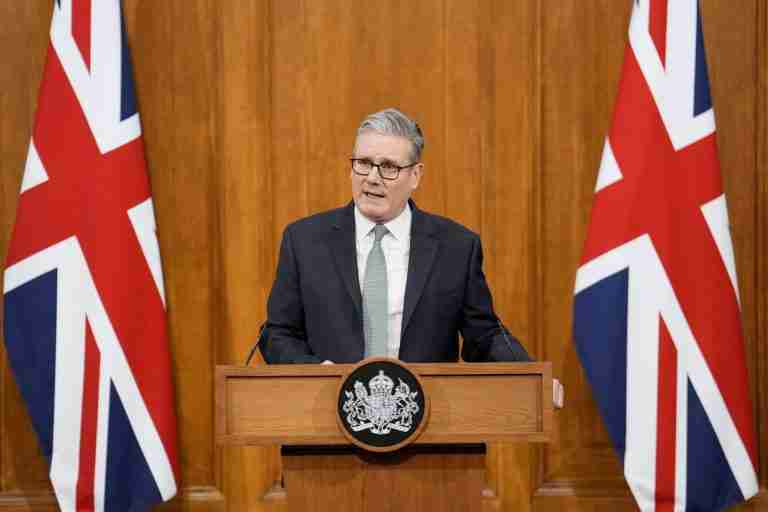
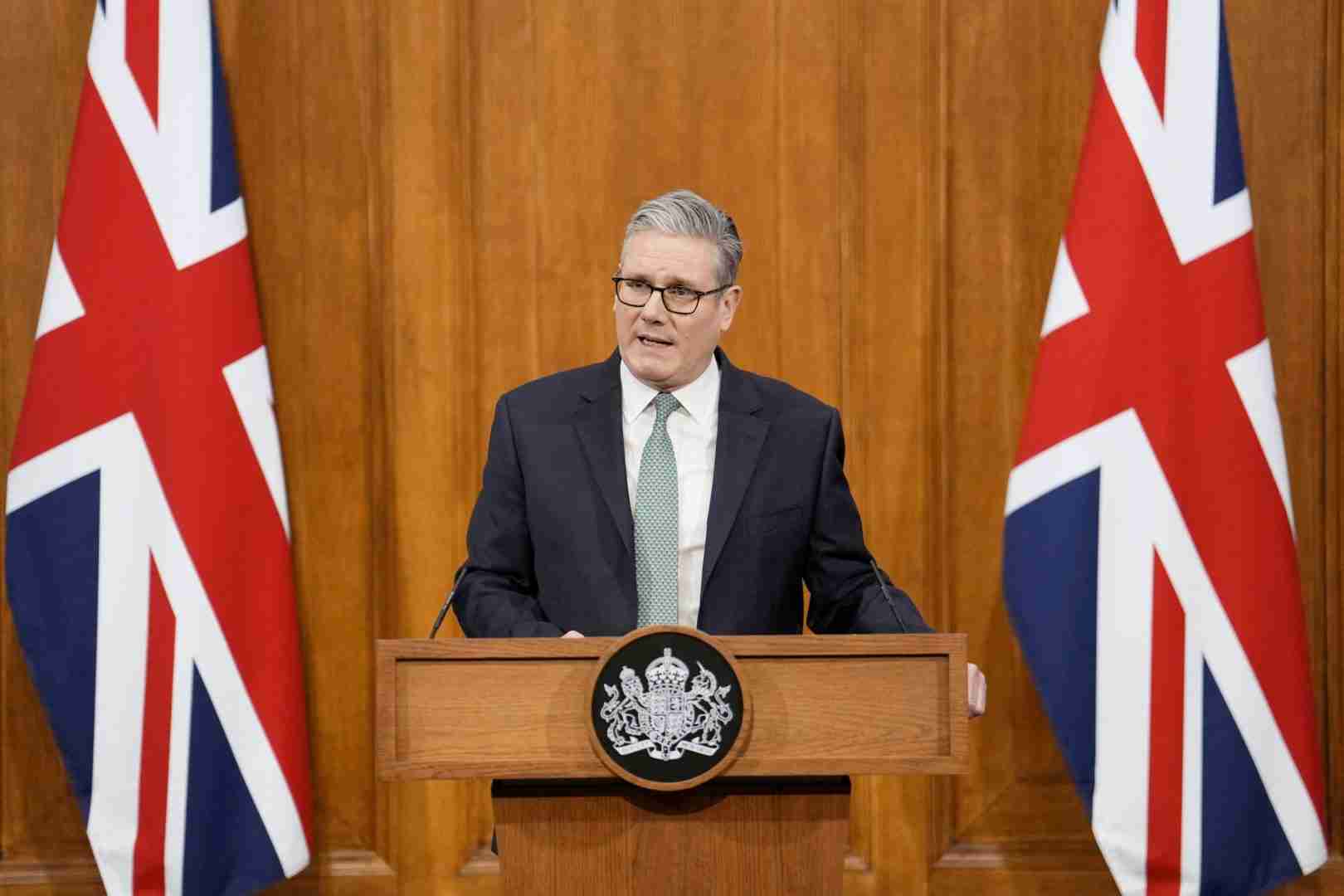
British Prime Minister Keir Starmer called on Monday for calm discussion to avert a possible trade war with the United States over Greenland, appealing to President Donald Trump to respect alliances such as NATO rather than undermine them.

All but ruling out retaliatory levies against the United States if Trump carried out his threat to impose tariffs on imports from Britain and seven other countries unless the U.S. was allowed to buy Greenland, Starmer sought to de-escalate the war of words.

He used an early morning press conference to set out what he described as the values underpinning his approach towards Trump, which has been criticised by opposition politicians for being too weak, by saying “pragmatic does not mean being passive”.

STARMER SAYS TARIFFS SHOULD NOT BE USED AGAINST ALLIES

After telling Trump that his threatened tariffs were wrong on Sunday, Starmer doubled down to say he would use “the full strength of government” to try to stop the U.S. decision, one, he said, that could only hurt already stretched households.

“Tariffs should not be used against allies in this way,” Starmer said, adding that he was not looking to escalate a tariff war at this point.

“A tariff war is in nobody’s interests, and we have not got to that stage. And my focus, therefore, is making sure we don’t get to that stage.”

Trump threatened tariffs on imports from the eight countries which sent small numbers of military personnel to Greenland last week, following Trump’s repeated statements he wanted to take over Denmark’s vast Arctic island to ensure U.S. security.

Starmer said he told Trump on Sunday those forces were “clearly there to assess and work on risk from the Russians”. He said he hoped that there was now “real clarity” about that.

The British prime minister signalled his approach would differ from that of the European Union, which has discussed options to respond, including a package of tariffs on 93 billion euros ($107.7 billion) of U.S. imports.

Instead, he said, Britain should work to nurture a relationship with the United States that was crucial for UK security, intelligence and defence, while disagreeing with the tariff threat and working diplomatically to avert it.

Starmer said the threats risked causing a “downward spiral” for Britain, in terms of trade and the weakening of alliances.

“I do not want to see that happen,” he said, but he added: “That doesn’t mean that we put to one side our principles and our values. Quite the contrary, we’re very clear about what they are.”

Starmer has built a solid relationship with Trump and in May last year he became the first leader to secure a deal to lower some tariffs.

Asked if he thought Trump was genuinely considering military action, Starmer said: “I don’t, actually. I think that this can be resolved and should be resolved through calm discussion.”

Reporting by Sam Tabahriti, William James, Alistair Smout, Elizabeth Piper, Catarina Demony, Sarah Young, James Davey, Paul Sandle; Writing by Kate Holton and Elizabeth Piper; Editing by Sarah Young and Andrew Heavens

Euro zone finance ministers to nominate new ECB vice president

The six are Portugal’s Mario Centeno, Latvia’s Martins Kazaks, Estonia’s Madis Muller, Finland’s Olli Rehn, Lithuania’s Rimantas Sadzius and Croatia’s Boris Vujcic

International News via Reuters:

Euro zone finance ministers aim to nominate on Monday a successor to European Central Bank Vice President Luis de Guindos, whose term expires at the end of May, with six candidates vying for the job.

The six are Portugal’s Mario Centeno, Latvia’s Martins Kazaks, Estonia’s Madis Muller, Finland’s Olli Rehn, Lithuania’s Rimantas Sadzius and Croatia’s Boris Vujcic.

The successful candidate will need the support of at least 16 of the 21 euro area countries, representing at least 65% of the population of the euro zone.

The ECB and the European Parliament will then be consulted before EU leaders take a final decision on the appointment at a summit in March. Neither institution can veto the appointment, however.

Once a new ECB vice president has been chosen, a process to replace most of the European Central Bank’s executive board by the end of 2027 will begin, including the position of President Christine Lagarde, whose term expires at the end of October next year.

The six-person ECB board, appointed by EU leaders, has so far been dominated by men from the big four euro zone members – France, Germany, Italy and Spain. The former communist countries in the east that make up a third of the bloc have never held a seat.

Lagarde, a former French economy minister, is the first woman to have led the six-member board that oversees the ECB’s day-to-day operations. Since its inception in 1998, women have held 19% of all ECB board member terms.

The vice president’s job may be seen as the least important of the four upcoming seats, as those of the chief economist, head of market operations and president must all be replaced by the end of 2027 as their non-renewable terms expire.

Reporting by Jan Strupczewski; Editing by Hugh Lawson

Britain eases rules for companies to raise funds

The Public Offers and Admissions to Trading Regime removes the requirement for listed companies to publish costly and time‑consuming prospectuses in most cases when raising additional capital.

International News via Reuters:

Britain’s revamped framework for raising capital came into force on Monday, aiming to make it easier and cheaper for listed and private companies to secure funds as it replaces the EU-inherited prospectus regime.

The Public Offers and Admissions to Trading Regime, set out by Britain’s financial regulator last year, removes the requirement for listed companies to publish costly and time‑consuming prospectuses in most cases when raising additional capital.

The reforms are part of a wider package of changes from the Financial Conduct Authority (FCA) intended to boost the appeal of the London Stock Exchange after a prolonged downturn in new share issuance.    

Just nine companies floated on the LSE’s main market last year, far below historic levels, according to exchange data.

Under the new rules, companies will only be required to draw up a prospectus if issuing shares equal to 75% of their existing capital, compared with the current 20% threshold. Jonathan Parry, a partner at law firm White & Case, said the move would help streamline fundraising for listed companies and allow them to compete more effectively for deals.

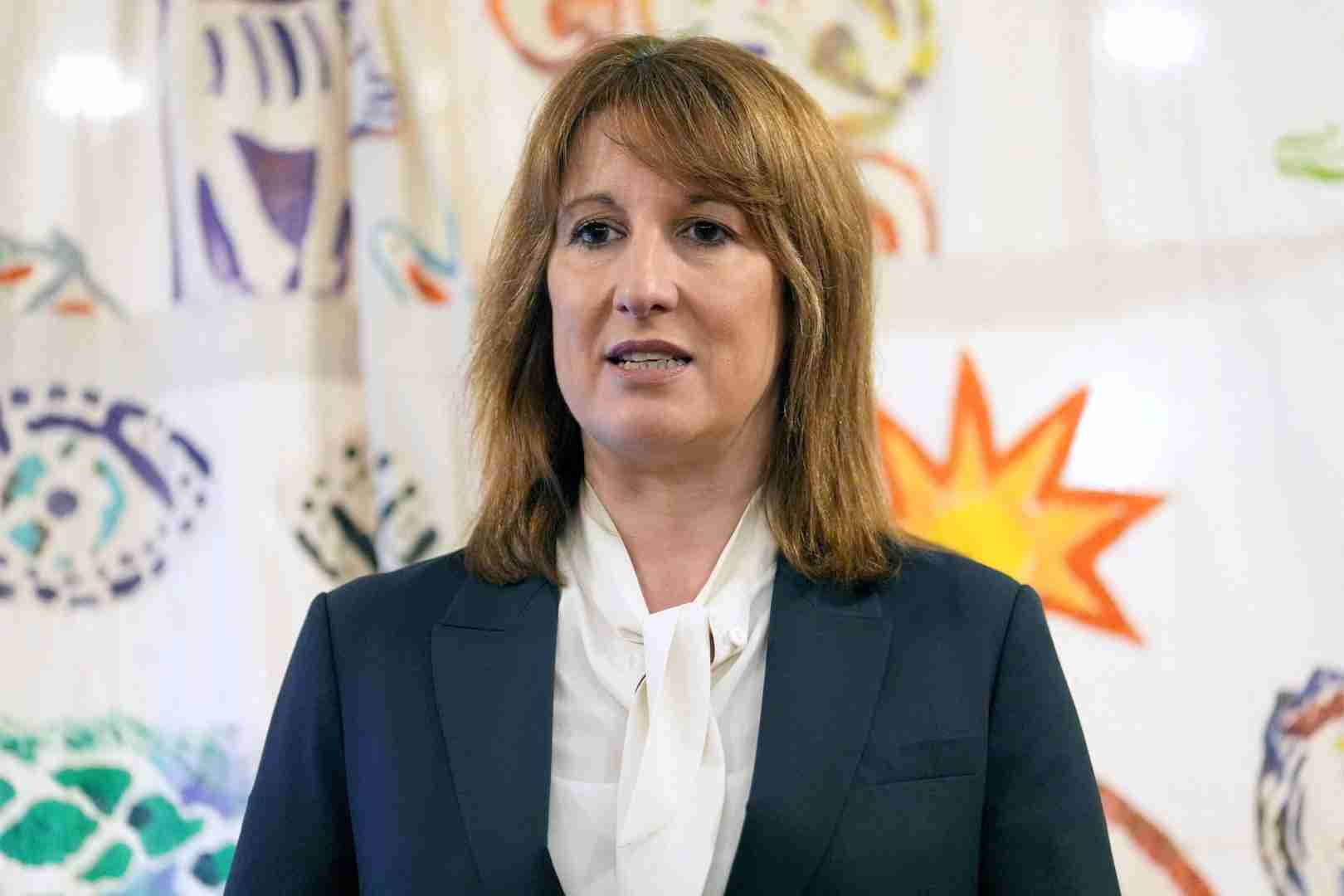
Finance minister Rachel Reeves withdrew from an LSE event on Monday at the last minute to join Prime Minister Keir Starmer at an emergency press conference over President Donald Trump’s plan to implement tariffs until the U.S. is allowed to buy Greenland.

According to pre-released excerpts of her speech, Reeves had been expected to say: “By cutting paperwork and speeding up access to capital, these reforms back the entrepreneurs, innovators and investors who drive our economy – while preserving the high standards and investor protections that make the UK one of the most trusted markets in the world.”

Pointing to the regulatory changes and record highs for the FTSE 100 share index, Reeves had also been due to say that the City of London financial hub is set for a “new golden age.”

The FCA told Reuters it expects the new rules to make a noticeable difference. “We got early feedback from advisors and from investment banks about deals … which couldn’t have been done under the old rules. So we knew pretty quickly that these rules would be effective,” Jamie Bell, head of capital markets, said.

The regulator estimates the reforms will save companies around 40 million pounds ($54 million) a year.

Three lawyers told Reuters that although the reforms were welcome, their impact may be limited because issuers seeking U.S. investors will still have to meet U.S. standards.

“These changes are a major unburdening under UK law, but for larger offerings U.S. liability still applies and no FCA reform changes that,” Nicholas Holmes, partner at Pinsent Masons, said.

As a result, many fundraisings well below the 75% threshold are still likely to require issuers to produce documents similar to a prospectus, Holmes said. 

To encourage greater participation from retail investors in fundraising, the FCA will also push companies to issue corporate bonds in smaller, more investible sizes.

LSE’s Chief Executive Julia Hoggett said: “The FCA’s world‑leading Prospectus Rules will make it easier, faster and more efficient for companies to raise capital and create value in doing so, while opening the door for more retail investors to participate in the growth of exceptional British companies.”

($1 = 0.7463 pounds)

Reporting by Phoebe Seers. Editing by Mark Potter and Susan Fenton

Gunners & City breeze through; Nolan Helps Bradford Win

Football: Bermudians in action in UK leagues

Arsenal and Manchester City clinical displays ensured their progression to the Adobe Women’s FA Cup fifth round, while Aaliyah Nolan proved the difference for Bradford City.

Arsenal extended their remarkable streak of reaching the fifth round every year since 1993 with a 2-0 win over Aston Villa. At Meadow Park, Shaun Goater watched from the Villa dugout as the hosts broke through shortly after the interval. Kim Little turned provider for Stina Blackstenius to poke home the opener, before the Gunners’ captain doubled the lead herself on the hour mark to secure a professional victory.

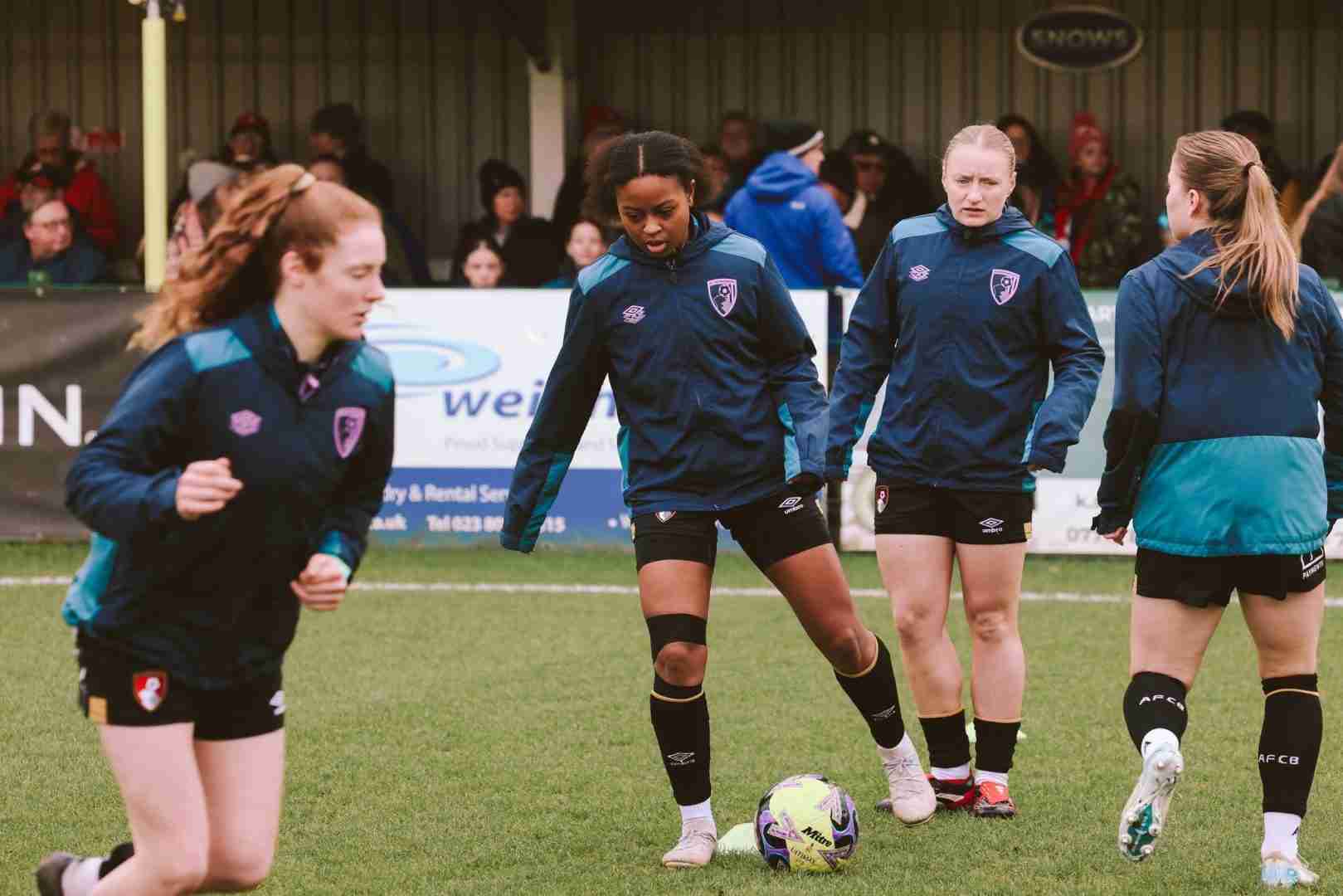
On the south coast, Manchester City’s top-flight pedigree was too much for AFC Bournemouth in a 6-0 rout. Despite a bright start from Kenni Thompson and her teammates, City hit three goals in a devastating four-minute burst before half-time. Khadija ‘Bunny’ Shaw, Lauren Hemp, and a Laura Coombs double gave City a commanding 4-0 lead. Substitute Vivianne Miedema added two more in the second half to cap off a ruthless display.

Meanwhile, in the North East Regional Women’s Football League, Bermudian forward Aaliyah Nolan was the hero for Bradford City Women. Nolan led the line with constant intensity at the Horsfall Stadium, helping her side secure a gritty 1-0 victory over Sunderland Women. The win keeps the Bantams firmly in the hunt for promotion as the regional season enters its final stretch.

No Wrong Turns This Time for Mbelenzi

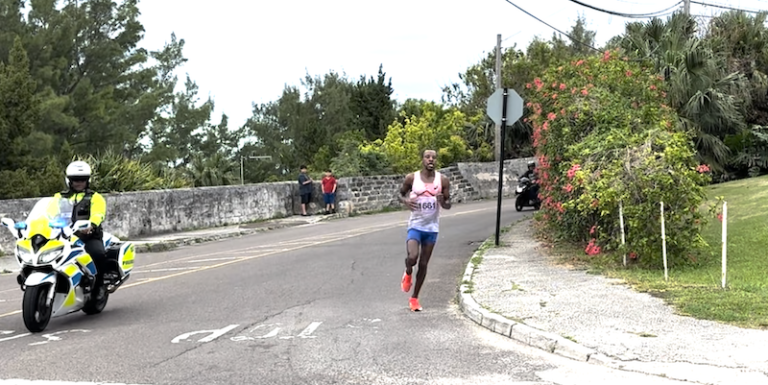
Dennis Mbelenzi stayed on course and out front to win the PWC Men’s Marathon at the Chubb Bermuda Triangle Challenge.

This time, Dennis Mbelenzi knew exactly where he was going.

In the PWC Men’s Marathon at the Chubb Bermuda Triangle Challenge, Mbelenzi stayed firmly on course and out in front, leading from the early miles to the finish to claim victory in 2:29:07. After recent races elsewhere that proved how quickly a wrong turn can change everything, Sunday’s run was a straightforward reminder of what happens when preparation, pacing, and direction all align.

PWC Men’s Marathon

  1. Dennis Mbelenzi – 2:29.07
  2. Ian Tibbals – 2:32.29
  3. Ciaran McGonagle – 2:52.52

PWC Women’s Marathon

  1. Natasha Harvey – 3:26.32
  2. Annie Ford – 3:29:50
  3. Song Tonnu – 3:31:42

PWC Men’s Half-Marathon

  1. Andrew Wacker – 1:07.45
  2. Aaron Willingham – 1:08.06
  3. Jp Flavin – 1:09.16

PWC Women’s Half-Marathon

  1. Ellie Stevens – 1:20.31
  2. Anna Vess – 1:21.41
  3. Natalie Whitty – 1:22.40

Collision Middle Road, Cobbs Hill

A woman was taken to hospital after being trapped in her vehicle when a small truck

At approximately 11:45 am on Sunday, 18 January 2026, police and other first responders were dispatched to reports of a collision on Middle Road near the junction with Cobbs Hill Road in Warwick involving a small truck and a car.

Details remain limited at this time. However, it is believed the truck was approaching the Middle Road/Cobbs Hill Road junction when it reportedly suffered mechanical issues and collided with a car traveling in the westbound lane.

The female driver of the car had to be extricated by Fire Service personnel and was the only person reported injured. She was transported to King Edward Memorial Hospital for treatment of injuries unknown injuries.

Traffic is currently being managed around the scene while police work to clear the roadway.

Opinion: Budget priorities, investing in Bermudians and revitalizing tourism

by Dwayne Robinson JP, MP Shadow Minister of Tourism, Culture and Transport 

The budget statement is fast approaching and despite the Opposition’s efforts, the government has not provided specific information on how the CIT receipts will be allocated.

For the benefit of Bermuda funds must be spent on training Bermudians in tourism and hospitality.

Conventions used to extend our tourism season and provided necessary income for workers and the island, yet The Progressive Labour Party Government has not made the necessary investment in this critical area. The government must focus on increasing our capacity to complement Fairmont’s inventory, which will strengthen Bermuda as it re-enters the market with enhanced capacity and tenacity. 

We also know that restaurants are one of our core hospitality offerings. They have been hit tremendously with global pressures, especially US tariffs which have raised their expenses. In an industry with such a thin profit line, these shocks can be catastrophic.

We cannot hope for Bermudians to enter an industry that feels uncertain in these dire economic times. I urge the Government to work with the industry to curate some new targeted temporary support options to help restaurant’s get back on their feet after one of their worst years.

Our hotels are also grappling with increased costs but one of the main issues cited by them is transportation. This problem is shared by locals who care nothing for the intricacies but simply want a ride from A to B. Now enters the proposed ride share solution. The population seems to support it while taxi drivers largely oppose the idea.

The Government cannot continue to divide Bermudians on this issue. Direct additional funding for increased traffic officers at TCD and improve enforcement of our transport laws. It is unwise to add a new layer to an industry that is suffering from lack of enforcement. Those who transport people around our island are crucial ambassadors and we must make sure operators are given a fair playing field.

There is also the approaching issue of our available workforce compared to what is required by the tourism/hospitality industry to function effectively. The opening of Fairmont Southampton will present 700 plus job opportunities. The industry that is already stretched finding workers will be pushed into full-fledged cannibalism.

The Government has acknowledged our workforce problem and has pledged to tackle it. However, Bermudians quietly pack up and emigrate to other jurisdictions. 

We can try to stem this tide by trying to extend our tourism season past the three Golden months. One way is by investing in our creatives and artist. This goes past tourism investment orders. We need to invest in our concert and performance venues’ infrastructure. Use some of this anticipated surplus to invest in stipend or universal basic income scheme to help our creatives sustain themselves and provide further amenities for Bermudians and tourists. Working towards enticing tourists to Bermuda on the slow season months and improving earning prospects for the industry.

We can use some of this potentially ‘once in a lifetime’ additional revenue to shore up our neglected second pillar of our economy. In the face of an evolving world our hyper dependence on International Business may yield higher profits for Government but lower jobs for Bermudians as things become more automated. Investing in our tourism industry which still requires and prefers a human touch will provide lasting benefits for the future generations.

Hospitality and tourism training to get Bermudians employed in these culturally significant positions. 

Opinion: History repeats. Echoes of the 1930s resurface in 2026

by Christopher Famous, JP, MP, Backbencher

In the 1930s a group of folks with far right, outright racist ideologies, created a populist movement and somehow transformed or took over established political entities. They play to the emotions of those who feel left behind, thus creating a nationalist agenda.

Surprise surprise, they win an election.

Upon taking office, they waste no time in putting their policies in place with zero regard for things such as;  rule of law, individual rights or human rights. Simultaneously, they enrich themselves from government deals and outright theft.

Anyone who openly opposes them is castigated, arrested, or shot. In an attempt to change the demographics of their country, countless persons are put on railway trains taken to far off lands. After a short period of time very few remain who dare speak out against them. With this unrestrained power, they figure they should push the envelope and well, threaten to take over other countries with brute force.

Some countries speak out against these flagrant threats against national sovereignty. Somehow. many other countries decide to take the route of appeasement, claim neutrality, hoping “this too shall pass”. 

Effectively, the world hears the deafening “silence of the lambs”.

That silence is interpreted as compliance, and within short order the aggressors use false pretence to  invade countries in their close proximity on September 9th,1939 and lay claim to the natural resources.. By the time the world truly wakes up, nearly an entire continent has been captured and colonised. Some 6 years later, 80 million persons have died and centuries old empires have now been broken beyond repair.

The lesson that is supposedly learned, is that appeasing bullies did not work well for anyone in their proximity.

Same playbook

Some 90 years later, a small group began yet another populist movement based on racist and national identity. They gain traction, take over a long established political entity and go on to win an election. Like their predecessors, they too enact their policies with zero regard for rule of law, individual rights or human rights. They too enrich themselves off of government contracts and out right theft.


Using the same near century old playbook, many who openly oppose them are castigated, arrested and some, even shot in cold blood. In attempts to change the demographics of their country, countless individuals are taken from their homes, schools, work places, out of their vehicles, bound and chained and flown to remote countries not of their origin.

After a short period of time there are very few remaining who dare speak out openly against them. With this unrestrained power, they figure they should push the envelope and well, threaten to take over other countries with brute force.

On January 3rd, 2026 they used false pretense to invade a country in their proximity and then lay claim to the natural resources. With no one opposing them and feeling emboldened, they then publicly begin to lay claim to other territories in their region.

Once again the world takes no action. Once again the world adapts appeasement. Once again the world hears the deafening “silence of the lambs”.