Saturday, November 7, 2026
Home Blog Page 552

‘Harsh truths must be faced if we are to heal’

If we can’t talk openly about race, networks, opportunity, and accountability, says Ben Smith, how can we talk about hopelessness and why young men turn to drugs and violence?

Statement by Ben Smith, Shadow Minister of Education and Sport and OBA MP for Constituency #8, Smith’s South

Recently, I wrote about race, privilege, and responsibility. These are topics that are never easy, rarely comfortable, and never simple. I knew the piece would spark a reaction, and it did. Some people thanked me for saying what needed to be said. Others disagreed strongly. A few were upset.

That’s okay because if Bermuda is going to fix the problems that are hurting us, then we must be willing to talk openly even when it’s uncomfortable, even when it challenges what we’ve always believed.

This conversation cannot end with one opinion piece.

It must continue until we can start to heal as a community.

We are losing people on our roads at a rate that should warrant a national emergency.

We are losing others to gang violence, retaliation, and violent crime. Families are being torn apart by drug addiction and alcohol abuse.

People are self-medicating to numb pain and growing frustration.

Some are selling drugs because they feel suppressed by an economy that leaves them behind.

Residents are leaving the island in droves because they can’t wait for change to happen.

If we want things to be different, first we must admit that these problems exist. While some may call this doom and gloom, we cannot afford to continue to keep the reality hidden while we see the results impacting our island. When we avoid difficult conversations, these issues don’t go away, they get worse.

The first op-ed wasn’t written to blame or divide. It was written to open eyes and open doors to a new kind of national conversation. Time to have a conversation grounded in honesty, fairness, and empathy.

If we can’t talk openly about race, networks, opportunity, and accountability, then how can we possibly talk about:

·         why many young men feel they have no future

·         why drugs feel like the only income that can cover the cost of living

·         why anger turns to violence

·         why hopelessness leads to self-destruction

Every problem in our country is connected.

And every solution starts with truth.

Our island needs hope.

Hope is not pretending everything is fine.

Hope is saying, “Things can get better if we do the work.”

Bermuda can heal, but we need leadership that is brave enough to name our challenges and compassionate enough to walk with people through them.

If we are serious about healing, then we must do the following:

1. Build real community connections

Relationships. Mentorships. Safe spaces for young people. More cross-cultural interaction.

2. Strengthen support systems

Addiction services, mental health support, counselling, and early intervention must be expanded and fully funded.

3. Create economic pathways

Not only academic routes, but trades, apprenticeships, and real job pipelines so young people see legal income as achievable.

4. Restore expectations

Responsibility, respect, and hard work must be taught and modelled. We have to hold our people accountable because we are competing with the world and cannot accept excuses.

5. Open doors, not just for one group, but for all

Networks must be shared.Opportunities must be fair. Privilege must be used to uplift, not exclude.

Some of these solutions will be political issues, but they’re also human issues.

We all need to be human before party and choose our community before politics.

Some will try to reduce this conversation to “OBA versus PLP.” But this moment is bigger than party lines. Bermuda does not need more slogans or more blame.

Bermuda needs courage, honesty, and solutions.

I want the OBA to stand for:

Truth. Responsibility. Compassion. Opportunity. Unity. Accountability.

We cannot recover as a country until we heal as a community. We cannot heal if we only talk to the people who already agree with us.

My message is simple:

Let’s talk.

Let’s listen.

Let’s be honest.

Smatt’s 30-year-old swimming record remains the gold standard

Bermuda’s swimming record books have undergone a significant overhaul in recent seasons, but a handful of historic times remain untouched, serving as a powerful reminder of the island’s aquatic legacy.

Following the publication of the 2025 short course benchmarks, a closer look at the Bermuda Amateur Swimming Association (BASA) archives reveals that some of the most enduring records now stretch back nearly four decades.

The longest-standing record in the current books belongs to 1992 Olympian Jennifer Smatt. Her performance in the 11-12 Female 200m Breaststroke has stood for nearly 39 years. Clocked on June 1st, 1987, Smatt’s time of 2:47.10 remains the gold standard for that age group. It is a mark that has survived multiple generations of rising stars and remains one of the most formidable challenges for any young Bermudian breaststroker. Smatt’s dominance in that era is further highlighted by her influence on the senior ranks; although many of her open records were eventually lowered by the likes of Lisa Blackburn, her youth mark from the late eighties remains the ultimate outlier in an era of rapid technical progression.

While Smatt holds the title for the oldest individual mark, the year 2009 remains the most prolific for records that refuse to fall. This period, often cited as a “Golden Era” for Bermudian swimming, saw three major stars establish times that have now passed the 15-year milestone. Kiera Aitken, one of the island’s most decorated Olympians, enjoyed a legendary weekend in Castellon, Spain, in November 2009. Within a 72-hour window, she set a trio of Female Open backstroke records that still stand today. Her 50m time of 27.72, her 100m at 59.31, and her 200m mark of 2:09.09 have outlasted over a decade and a half of challengers, including current standout Madelyn Moore.

On the men’s side, Jason Mastalir carved his name into history during a blistering four-month stretch in early 2009. Competing across Canada in Halifax, Toronto, and Quebec City, Mastalir set the 17-18 and Male Open records for the 400m, 800m, and 1,500m freestyle. His 1,500m time of 16:11.50, set in April 2009, remains the fastest ever swum by a Bermudian in a short course pool. The archives also feature younger age group marks that have proved surprisingly resilient. Megan Lau holds two of the most durable records in the 8 & Under category, with her 800m freestyle and 400m individual medley times both dating back to early 2009.

In the 11-12 Male division, Jesse Washington’s explosive 50m freestyle sprint of 26.81, set in March 2012, has now officially crossed the 13-year mark. Washington, who went on to become a staple of the national team, set a standard for sprint speed that continues to elude the island’s current crop of pre-teen talent. These enduring benchmarks serve as both a tribute to the icons of the past and a daunting target for the stars of tomorrow.

Gallery sees record number of visitors

Free admission to the National Gallery will continue through 2026

The Bermuda National Gallery is offering free admission for all visitors in 2026. The initiative, which has been generously supported by a grant from The Christian Humann Foundation for the past four years, allows equitable access for all to BNG’s world-class exhibitions, and to Bermuda’s national art collection, which is cared for by the Gallery.

Close to 15,000 people visited the Bermuda National Gallery in 2025 to enjoy four exhibitions, ranging from photography to painting, printmaking and puppetry: Bending Light: Photographs by Seth de Roulet,Andy Warhol: Portraits from the Factory, A Study in Light & Colour: Selections from the David White Collection and The Art of Michael K. Frith: From Pencil to Puppet.

The Foundation’s support allows visitors to return to the Gallery throughout the year free of charge. BNG has been offering free admission since 2022, during which time visitor numbers have tripled. Jennifer L. Phillips, Executive Director of the Bermuda National Gallery, said, “We are so appreciative of The Christian Humann Foundation’s longstanding support of BNG. In particular, their sponsorship of our Free Admission initiative has a tangible impact – museum attendance numbers have increased year over year since the programme’s inception, and in 2025 we welcomed a record number of visitors to the Gallery.”

A spokesperson for The Christian Humann Foundation said, “We are delighted to continue the Christian Humann Foundation’s legacy of supporting the arts through our partnership with BNG in 2026. Our hope is that everyone in the community will come out, experience these incredible exhibits, and leave feeling inspired by the arts and all that BNG brings to Bermuda.”

Alongside free admission, the Bermuda National Gallery offers free tours for classes and camps. Over 500 students visited the Gallery in 2025 and 1,400 BNG Kids Activity booklets, which are produced to accompany each exhibition, were distributed. From January through to April, BNG will also be offering free transportation for schools island-wide, made possible by the Hamilton Princess Hotel & Beach Club. Schools can sign up online at www.bng.bm.

The Gallery will be opening four new exhibitions in 2026, beginning with a solo show by California-based Bermudian artist Soleé Darrell in March. This will be followed by an exhibition exploring the work of Frederick L. Hamilton (American, 1900-1989), who grew up in Bermuda and was one of the first photographers to take arial shots of the island. BNG’s flagship exhibition, the Bermuda Biennial, also returns, this year juried by Akili Tommasino, Curator, Modern and Contemporary Art at The Metropolitan Museum of Art and Julie Crooks, Curator, Arts of Global Africa and the Diaspora at the Art Gallery of Ontario, as does the Junior Bermuda Biennial in celebration of our youngest artists age 5 to 17. 

The Bermuda National Gallery is situated on the first floor of City Hall & Arts Centre, Hamilton. The museum is open Tuesday-Friday 10am to 4pm and Saturdays 10am to 2pm. For further information visit www.bng.bm

European allies working on plan should US move on Greenland

A German government source said separately that Germany was “closely working together with other European countries and Denmark on the next steps regarding Greenland”

International News via Reuters:

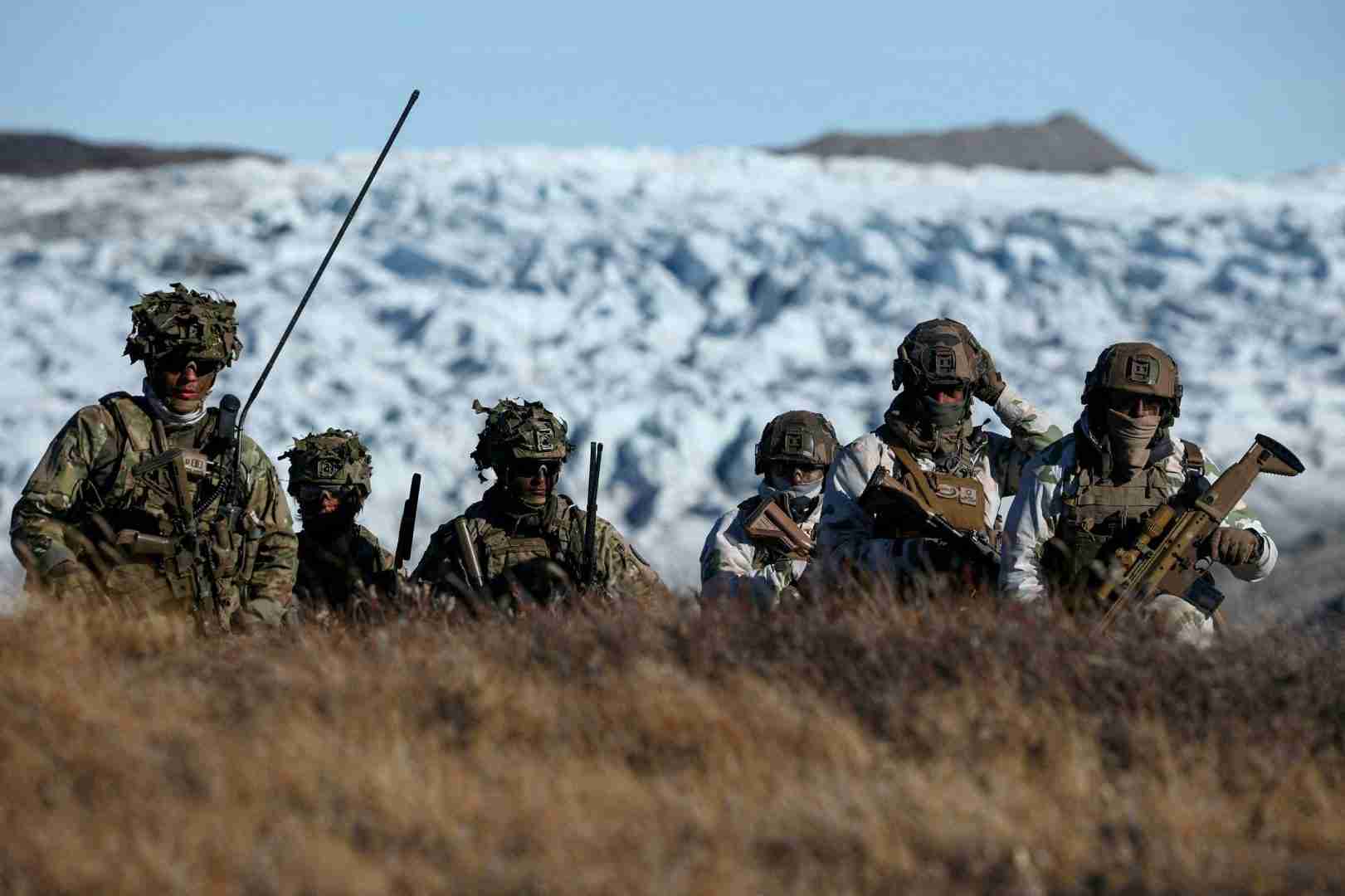
Allies including France and Germany are working closely on a plan on how to respond should the United States act on its threat to take over Greenland, as Europe seeks to address U.S. President Donald Trump’s ambitions in the region.

A U.S. military seizure of Greenland from a longtime ally, Denmark, would send shock waves through the NATO alliance and deepen the divide between Trump and European leaders.

French Foreign Minister Jean-Noel Barrot said the subject would be raised at a meeting with the foreign ministers of Germany and Poland later in the day.

“We want to take action, but we want to do so together with our European partners,” he said on France Inter radio.

A German government source said separately that Germany was “closely working together with other European countries and Denmark on the next steps regarding Greenland”.

Leaders from major European powers and Canada have rallied behind Greenland this week, saying the Arctic island belongs to its people, following a renewed threat by Trump to take over the territory.

TRUMP RENEWS GREENLAND AMBITIONS

Trump has in recent days repeated that he wants to gain control of Greenland, an idea first voiced in 2019 during his first presidency. He argues the island is key for U.S. military strategy and claims Denmark has not done enough to protect it.

The White House said on Tuesday that Trump was discussing options for acquiring Greenland, including potential use of the U.S. military, in a revival of his ambition to control the strategic island, despite European objections.

Barrot suggested a U.S. military operation had been ruled out by Washington’s top diplomat.

“I myself was on the phone yesterday with U.S. Secretary of State Marco Rubio (…) who confirmed that this was not the approach taken … he ruled out the possibility of an invasion (of Greenland),” he said.

A U.S. military operation over the weekend that seized the leader of Venezuela had already rekindled concerns that Greenland might face a similar scenario.

A senior U.S. official, speaking on condition of anonymity, said this week that Trump and his advisers were discussing a variety of ways to acquire Greenland, including a purchase. Greenland and Denmark have said the island is not for sale.

Denmark’s Foreign Minister Lars Lokke Rasmussen and his Greenlandic counterpart, Vivian Motzfeldt, have requested an urgent meeting with Rubio to discuss the situation.

“We would like to add some nuance to the conversation,” Rasmussen wrote in a social media post. “The shouting match must be replaced by a more sensible dialogue. Now.”

DENMARK REJECTS CLAIM RUSSIAN, CHINESE SHIPS STALK GREENLAND

The world’s largest island but with a population of just 57,000 people, Greenland is not an independent member of NATO but is covered by Denmark’s membership of the Western alliance.

The island is strategically located between Europe and North America, making it a critical site for the U.S. ballistic missile defence system for decades. Its mineral wealth also aligns with Washington’s ambition to reduce reliance on China.

Trump has repeatedly said Russian and Chinese vessels are stalking waters around Greenland, which Denmark disputes.

“The image that’s being painted of Russian and Chinese ships right inside the Nuuk fjord and massive Chinese investments being made is not correct,” Rasmussen told reporters late on Tuesday.

Vessel tracking data from MarineTraffic and LSEG show no presence of Chinese or Russian ships near Greenland.

Reporting by John Irish in Paris, Andreas Rinke in Berlin, Terje Solsvik and Nerijus Adomaitis in Oslo; Writing by Niklas Pollard; Editing by Ros Russell

France mounts bid to exempt fertilisers from EU carbon border levy, document shows

The EU’s carbon border levy, which came into force on January 1, imposes CO2 emissions fees on imports of steel, fertilisers and other goods

International News via Reuters:

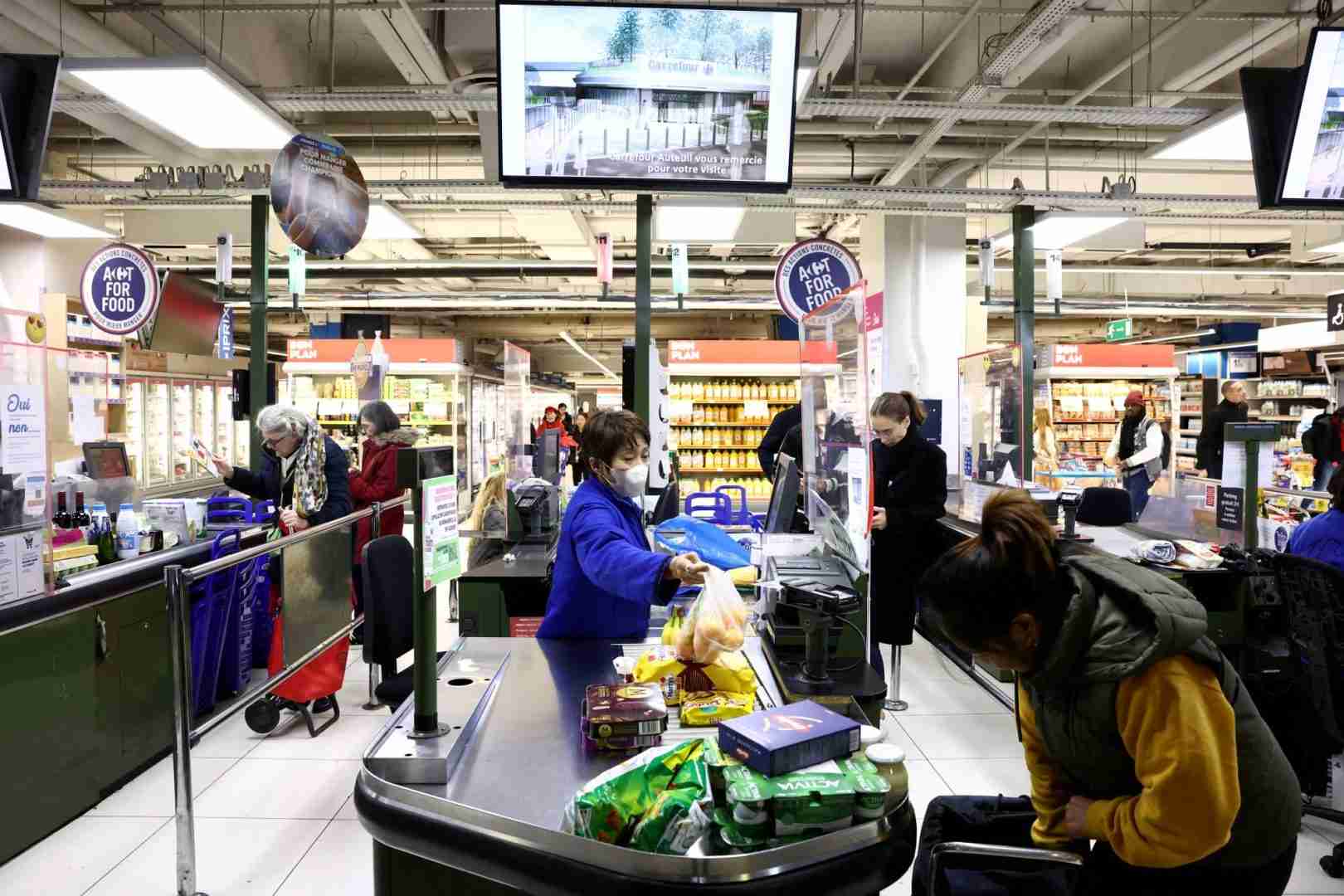
France is seeking support from other governments for a push to exempt fertilisers from the European Union’s carbon border levy, which it argues is needed to protect struggling European farmers, a draft document seen by Reuters showed.

The EU’s carbon border levy, which came into force on January 1, imposes CO2 emissions fees on imports of steel, fertilisers and other goods to ensure they do not have an unfair advantage over goods made in Europe, where producers already have to pay for their CO2 emissions.

A draft statement prepared by France and circulated to other EU governments called on the European Commission to temporarily postpone or suspend the carbon border fee for fertilisers.

“Such a postponement would ease tensions in the crop farming sector and give economic operators time to restore satisfactory fertiliser supply conditions for the 2026 crop year,” said the draft statement, seen by Reuters.

The statement said France supports the EU carbon border levy, but warned applying it to fertilisers would hike costs for farmers already struggling with weak cereal crop prices and higher costs from tariffs on Russian fertiliser imports. 

“Farmers’ organisations have been warning of severe tensions over fertiliser supplies for several weeks,” it said.

“We have high hopes of winning our case,” a French agriculture ministry official said.

It was not immediately clear which other governments would back the statement.

EU countries’ agriculture ministers will discuss the issue at a meeting in Brussels on Wednesday, convened by the EU to convince wavering member countries to sign up to a contentious free trade deal with South American bloc Mercosur.

France has consistently opposed the deal.

While removing fertilisers from the EU carbon border tariff would ease costs for farmers in Europe, it could deal a blow to Europe’s own fertiliser producers whom the border levy was supposed to support, by preventing them being undercut by cheaper imports from countries with weaker climate regulations.

Reporting by Kate Abnett; Additional reporting by Gus Trompiz, Sibylle de La Hamaide; Editing by Jan Harvey

Euro zone inflation eases to 2% before likely move below target in 2026

Inflation in the currency bloc slowed to 2.0% in December from 2.1% a month earlier, in line with expectation for 2.0% in a Reuters poll of economists

International News via Reuters:

Euro zone inflation slowed as expected last month, hitting the European Central Bank’s 2% target before likely moving lower in the coming months as falling energy costs offset lingering domestic price pressures, Eurostat data showed on Wednesday.

Inflation in the currency bloc slowed to 2.0% in December from 2.1% a month earlier, in line with expectation for 2.0% in a Reuters poll of economists, as energy prices continued to pull down overall price growth, offsetting a pick up in food inflation.

A more crucial figure on underlying prices, which exclude volatile food and energy costs, meanwhile eased to 2.3% from 2.4% on a modest slowdown in services and industrial goods inflation.

Price growth has hovered on either side of the ECB’s 2% target for most of 2025 and the bank sees it near this level for years to come, even if most of this year and next could be spent below target.

While some policymakers have expressed concern that low readings could perpetuate anaemic inflation by deflating wage demands, most appear to have taken a relaxed view, arguing that the dip is temporary and mostly caused by energy volatility.

Indeed, the ECB last month signalled it was in no hurry to adjust policy any further, cementing market expectations that it would keep its 2% deposit rate steady through all of 2026.

Still, figures going deeply under 2% could reignite the debate over easing, but only if they raise the prospect of persistent undershooting, since monetary policy works with long lags and would do little in the near term.

In any debate, the ECB will need to reconcile a host of forces that will tug inflation in opposing directions.

Falling energy costs, a strong euro, surging Chinese imports and moderating wage demands could all pull prices lower.

But increased defence spending, Germany’s fiscal splurge, a tight labour market, healthy domestic demand, and geopolitical stress could push prices up.

These forces make projections especially uncertain and will likely prevent the ECB from giving any guidance beyond the short term, suggesting that rate cuts will not be taken off the table, even if more easing cannot be ruled out.

The ECB will next meet on February 5.

Reporting by Balazs Koranyi

Intense heatwave grips Australia’s southern states, fans bushfires

Meteorologists said the conditions were at their worst in six years, when catastrophic bushfires destroyed wide swathes of southeastern Australia, killing 33 people, in what became known as the Black Summer

International News via Reuters:

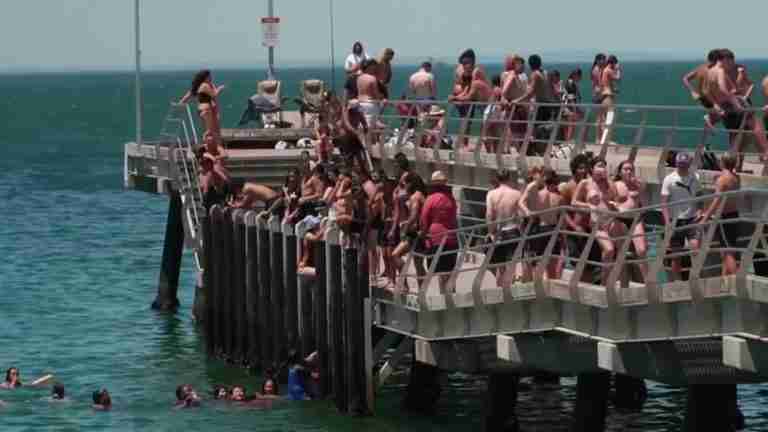
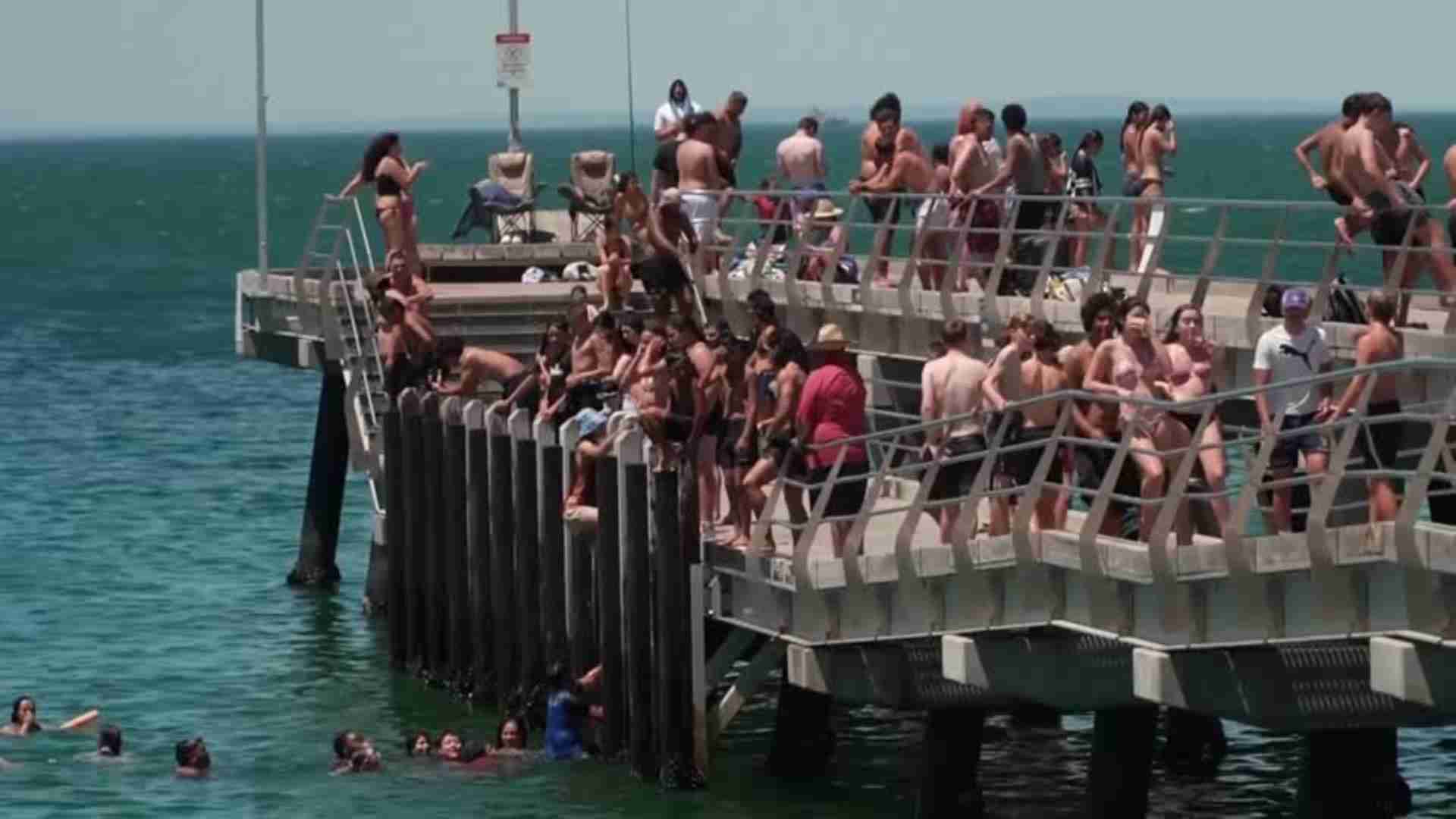
Australia’s south sweltered through a brutal heatwave on Wednesday that delivered temperatures above 40 degrees Celsius (104 degrees Fahrenheit) in some cities, triggering health warnings, straining power grids and causing bushfires to flare.

Meteorologists said the conditions were at their worst in six years, when catastrophic bushfires destroyed wide swathes of southeastern Australia, killing 33 people, in what became known as the Black Summer.

The nation’s weather bureau issued severe or extreme heat warnings for the states of New South Wales, Victoria, South Australia and Tasmania. It also warned of extreme fire danger across Victoria and South Australia.

“These elevated fire dangers are being driven by a very hot air mass that extends all the way from Western Australia with maximum temperatures in excess of 45 degrees,” said Senior Meteorologist Sarah Scully.

In Victoria, where temperatures reached up to 44 C, and 41 C in the state capital Melbourne, authorities advised residents to stay indoors and keep hydrated.

Victoria’s Emergency Management Commissioner Tim Wiebusch said firefighters were battling several fires across the state and conditions would worsen on Friday.

“We already have a statewide advice warning message out for severe to extreme intensity heatwave, and are now seeing those conditions kick in across the state,” he said.

“We are particularly wanting Victorians to make sure they are alert to their conditions, make sure you are staying in cool places.”

Temperatures also soared to 31 C in Sydney, 32 C in Perth and 43 C in Adelaide.

Some public spaces like libraries extended their opening hours to help residents stay cool, while others like the Monarto Safari Park were forced to shut for the day. More than 2,000 homes lost power in Adelaide.

“I think psychologically you have to keep calm in the heat and not panic. It’s only two or three days. And then it goes down again,” Adelaide resident Valdine Tuckwell told national broadcaster ABC.

Reporting by Christine Chen in Sydney; Editing by Michael Perry

Opinion: What many people don’t know about diabetes care in Bermuda

NAB Third Sector Spotlight: Bermuda Diabetes Association  

Image of Lori Rockhead, Executive Director, Bermuda Diabetes Association. All photos supplied.

By Lori Rockhead, Executive Director, Bermuda Diabetes Association 

When most people think of the Bermuda Diabetes Association, they think of education – nutrition advice, healthy lifestyle guidance, and information on diabetes prevention and management. That work is essential. But it’s only part of our story. 

What many don’t realise is that we provide frontline, wraparound diabetes support that often fills critical gaps in our healthcare system – especially for those who are uninsured, underinsured, or struggling to access consistent support. 

Diabetes is one of Bermuda’s most pressing public health challenges. Approximately 1 in 8 adults in Bermuda lives with diabetes – twice the OECD average – and an estimated equal number are at risk of developing the condition. Simply put, 25% of Bermuda’s adult population has diabetes or is at risk of developing diabetes. It affects people of all ages and backgrounds, and when left untreated, the consequences can be life-altering complications: heart disease, vision loss, kidney failure, amputations and strokes. But we do know that early intervention and management can change this story – helping people live longer, healthier lives. 

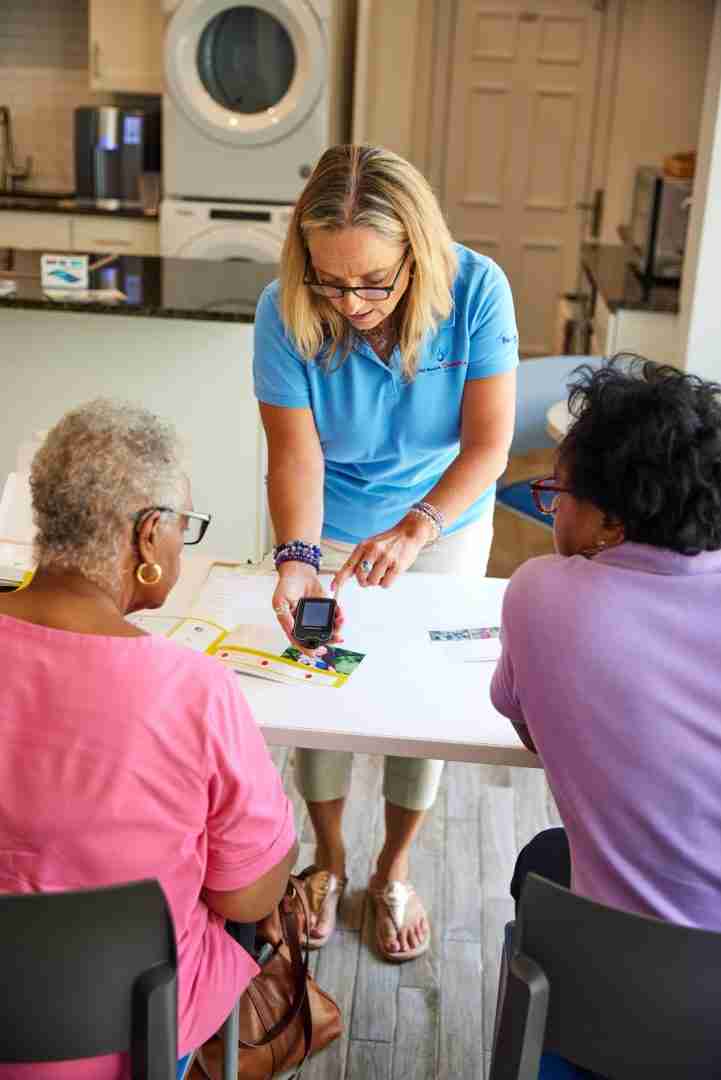
Sara Bosch de Noya (Head Diabetes Educator) is providing education on how to use a continuous glucose monitor.    

Unfortunately, not everyone in Bermuda has access to the care they need. Socio-economic factors mean some of our community members are more vulnerable than others. And for those with limited or no insurance, essentials such as medications, eating a healthy diet, and glucose monitoring, can be simply unaffordable. 

At the Bermuda Diabetes Association, our mission is grounded in a simple principle: 
Everyone should have access to quality diabetes care and affordable medication. Our vision is a healthier Bermuda – where prevention, access and fair treatment for everyone is at the centre of how we respond to all chronic disease. We believe prevention and early diagnosis can transform lives and change the trajectory of health outcomes. And we believe in meeting people where they are – without judgement or stigma – and helping them to live their best possible life. 

One of the most impactful – and least-known – aspects of our work is that we operate a full-service community pharmacy that is a social enterprise. 

Our BDA Community Pharmacy, which is located on 22 Princess Street, is open to everyone – not just those with diabetes – and offers a full range of prescription medications, free delivery, blister packaging to support safe, consistent medication use, and we have kept our dispensing fee at $15 since 2008.      

What makes this model unique is how the pharmacy feeds directly back into community care. Proceeds from our pharmacy are reinvested to support people living with diabetes who cannot afford their medications. In the past year alone, we filled over 1,300 prescriptions free of charge, valued at over $135,000 – ensuring that essential medication reaches those who would otherwise go without. 

Three pharmacy team members are (from left to right) Melissa Levy (Head Pharmacist), Alexis Moreno-Fox (Pharmacy Technician) and Marsha Anderson (Pharmacist) 

And while many people know that our registered dietitians provide medical nutrition counselling, what’s often overlooked is that we don’t charge co-pays for this service – and we offer it completely free for those without insurance. Around this service, we wrap a network of support including: 

  • Peer support for people navigating daily life with Type 1 and Type 2 diabetes 
  • Community cooking classes 
  • Medication reviews with our pharmacist educator  
  • Early screening for prediabetes and diabetes-related complications 
  • Financial support for children with Type 1 diabetes to attend summer camp  

This integrated model recognises that diabetes care isn’t just about providing our clients with information – it’s about providing access to evidence-based services and helping people to improve their health. 

It’s not charity. It’s equity in action. 

Every year, the Bermuda Diabetes Association supports hundreds of individuals and families through direct services, education, and outreach. The results are tangible – people feel more confident managing their health. Complications are caught earlier; and financial barriers are reduced or eliminated altogether. 

We don’t do this work alone. Diabetes is complex and impact is strengthened through deep collaboration with healthcare providers, employers, social agencies and nonprofits across the island. These relationships help us coordinate care, extend our reach, and ensure people receive support at the right time in the right way. This year, in conjunction with Vision Bermuda, we provided financial support to 30 people to receive ophthalmologist assessments, of which 17 received vision-saving treatment. 

This is prevention and care, working together. 

A healthier Bermuda is possible – but it requires sustained investment in prevention, access, and community support. By expanding education, protecting access to care, and standing with those affected by diabetes, we can reduce the long-term burden of this condition and improve lives across the island. Whether you use our pharmacy, support our programs, partner with us, or advocate for equitable healthcare – you are part of the solution. 

Because a healthier Bermuda benefits us all. 

London stocks retreat from record high as investors assess US-Venezuela news

Energy stocks fell 2.5% alongside a slump in oil prices after U.S. President Donald Trump reached a deal to import up to $2 billion worth of Venezuelan crude

International News via Reuters:

The UK’s FTSE 100 index edged lower on Wednesday after a run of record highs, as investors assessed U.S.-Venezuela developments and flocked to defensive utilities and real estate stocks.

The blue-chip FTSE 100 fell 0.5% by 1010 GMT. The domestically focused mid-cap index was about flat, while the pan-European STOXX 600 index was up just 0.1%.

Energy stocks fell 2.5% alongside a slump in oil prices after U.S. President Donald Trump reached a deal to import up to $2 billion worth of Venezuelan crude.

Energy stocks BP and Shell fell 2.9% and 2.2% respectively. 

The FTSE 350 index of precious metal miners led losses, down 2.4%, after gold slipped more than 1%. [GOL/]

UK stocks had started the year on a strong note. The blue-chip FTSE topped 10,000 points for the first time last week as investors also priced in Bank of England rate cuts later this year. Tuesday’s record high was the fourth in five sessions.

The FTSE small-cap index was down 0.1% after coming within 0.5% of its all-time high from 2021 earlier in the session.

“Small caps are clearly more attractively valued than large caps in the UK,” said Joachim Klement, head of investment strategy at Panmure Liberum, in a note on Tuesday.

“Our analysis indicates that solid earnings growth will boost total returns in the UK, but the FTSE 250 may lag the FTSE 100 and FTSE Small Cap.”

Among individual stocks, Topps Tiles rose 1.5% after the tile retailer reported a 3.7% rise in first-quarter revenue, helped by resilient demand from builders and contractors.

Edinburgh Worldwide Investment Trust was up 1.8% after top shareholder Saba Capital renewed its call for investors to elect a new, independent board after a “suspiciously timed” sell-down of the trust’s SpaceX stake.

Reporting by Tharuniyaa Lakshmi in Bengaluru; Editing by Sahal Muhammed

More travel chaos to hit Europe as cold snap brings more snow

Authorities in the Netherlands told people to plan to stay at home if at all possible on Wednesday, with a fresh blizzard expected to arrive overnight

International News via Reuters:

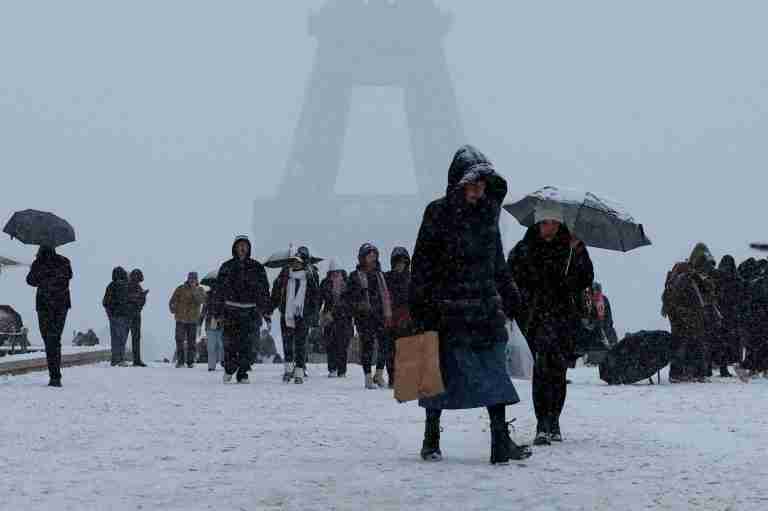
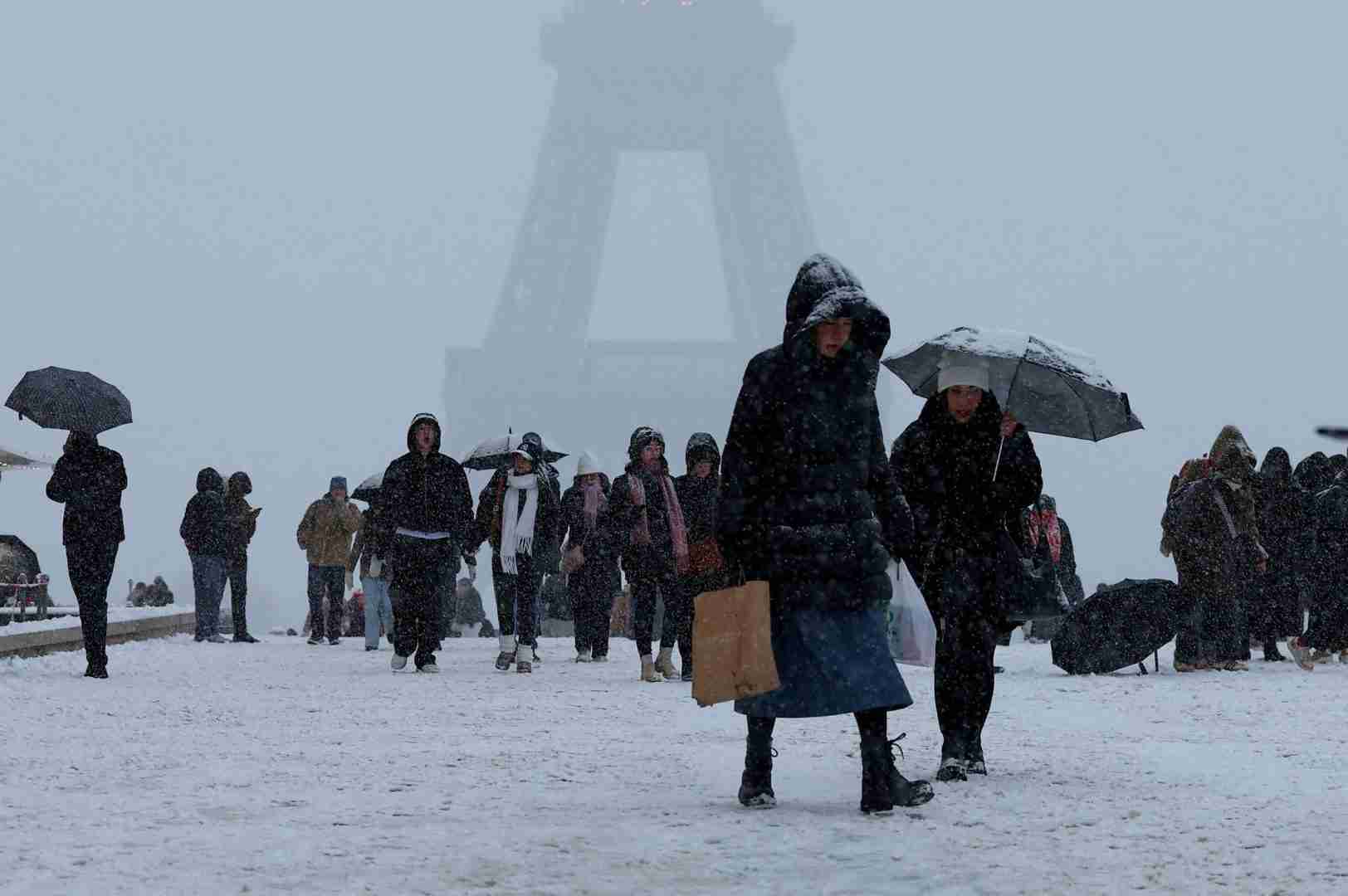
More flights will be cancelled, trains will run late and roads will be blocked by snow across Europe in coming days as a cold snap is forecast to worsen, bringing even more heavy snowfall after several days of travel disruption.

Authorities in the Netherlands told people to plan to stay at home if at all possible on Wednesday, with a fresh blizzard expected to arrive overnight.

French Transportation Minister Philippe Tabarot said on Tuesday that airlines had already been ordered to cancel at least 40% of flights at Paris’ main Charles de Gaulle airport the following morning, and a quarter of flights at smaller Orly.

Public transportation in the Paris region will probably also be disrupted by the snow, he added.

As snowfalls are expected again, Dutch airline KLM said it had protectively cancelled 600 flights on Wednesday to avoid last-minute cancellations that could leave travellers stranded at Schiphol airport, one of Europe’s main hubs.

KLM had already cancelled 400 flights at Schiphol on Tuesday and told travellers whose flights had been called off to stay away from the airport to prevent overcrowding.

“We haven’t experienced such extreme weather conditions in years,” spokesperson Anoesjka Aspeslagh said.

A BIRTHDAY IN TRANSIT

Stranded at Schiphol, Simiao Sun said she feared she would spend her 40th birthday in transit. She had been told she would have to wait three days for a rescheduled flight to Britain where she lives.

“My child would miss school and we would both miss work, so I’m queuing here…hoping to get a slightly earlier flight.”

KLM said it was offering alternative flights where possible and doing everything to help travellers, but was “overwhelmed with inquiries”.

On top of that, all domestic rail services in the Netherlands were suspended early on Tuesday after an IT outage hit the rail network.

Trains began running in parts of the country after 0900 GMT, but problems persisted around Amsterdam, with high-speed Eurostar services from Amsterdam to Paris either cancelled or late.

Roads in France were gradually clearing on Tuesday after snow caused severe accidents all over the country, killing at least five people, according to BFMTV news station.

Traffic in the Paris area hit a record 1,000 kilometres of jams on Monday evening.

SNOW FALLS OVER LARGE PARTS OF EUROPE

In Germany, temperatures fell well below minus 10 degrees Celsius (14 degrees Fahrenheit) in the south and east early on Tuesday. Much of the country was covered in snow.

In Britain, the Meteorological Office said winter weather hazards could continue throughout the week for most of the country. Temperatures overnight to Tuesday had fallen as low as -12.5 degrees Celsius in Marham, Norfolk, in eastern England, marking the coldest night of the winter so far.

Heavy snow and rain have also caused havoc across the Western Balkans, closing roads, cutting power and causing rivers to flood. A woman died in the Bosnian capital Sarajevo on Monday after a tree overburdened with wet snow fell on her.

Reporting by Bart Meijer in Amsterdam, Inti Landauro in Brussels, Louise Rasmussen in Paris, Thomas Seythal in Berlin and Daria Sito-Sucic in Sarajevo; Editing by Michael Perry, Richard Lough, Alexandra Hudson and Nia Williams

UK builders suffer longest downturn since global financial crisis

The S&P Global/CIPS Purchasing Managers’ Index (PMI) for the sector came in at 40.1 in December, not much higher than its 5-1/2-year low of 39.4 in November

International News via Reuters:

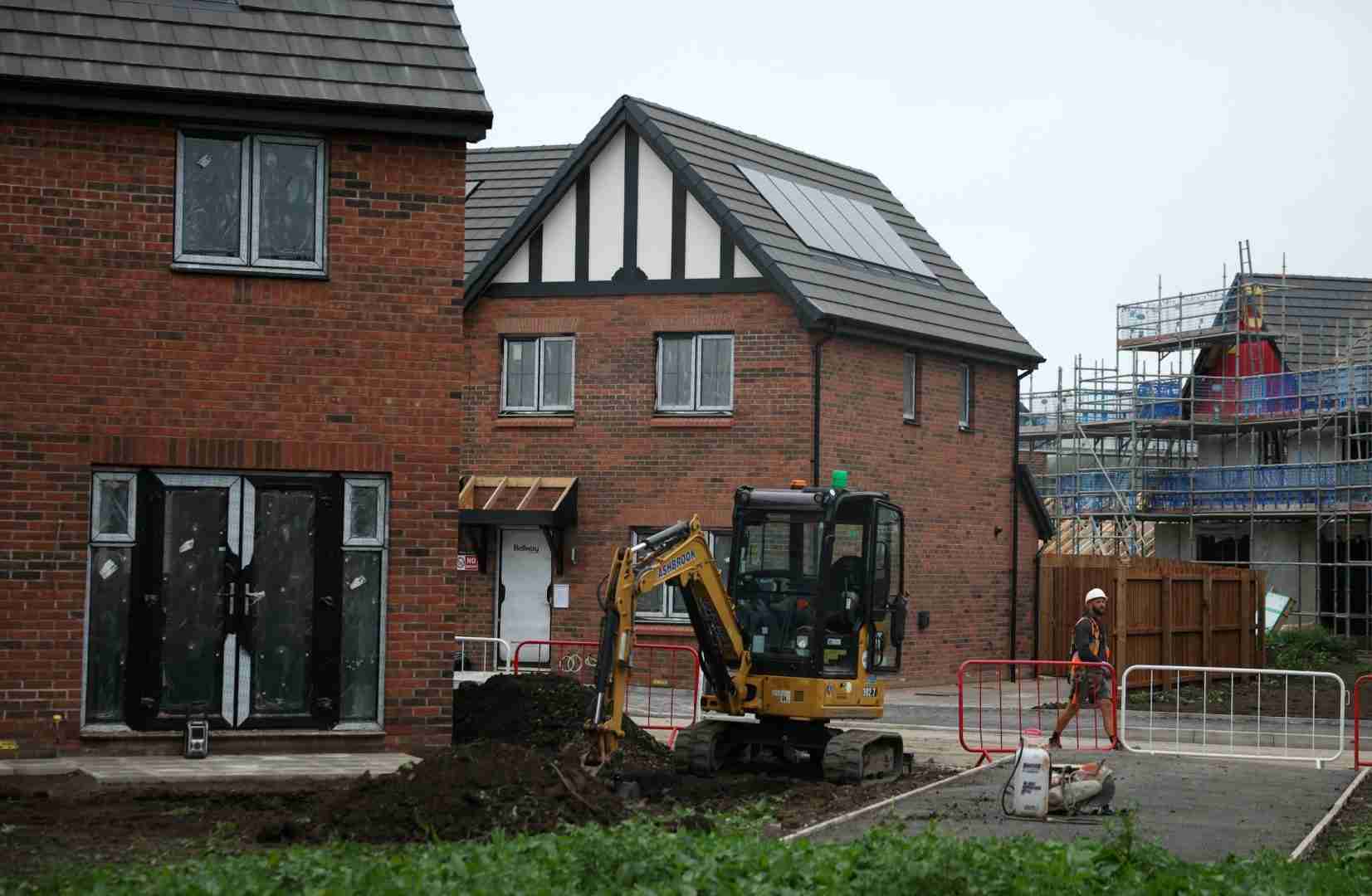
British construction output contracted for the 12th month in a row in December, its longest such run in almost two decades, but there were signs of optimism about 2026, an industry survey showed on Wednesday.

The S&P Global/CIPS Purchasing Managers’ Index (PMI) for the sector came in at 40.1 in December, not much higher than its 5-1/2-year low of 39.4 in November.

The drop extended the sector’s downturn to 12 months, its longest unbroken run of contractions since the global financial crisis of 2007-09.

Wednesday’s reading was below a median forecast of 42.5 in a Reuters poll of economists and the 50 level that separates growth from contraction.

“UK construction companies once again reported challenging business conditions and falling workloads in December, but the speed of the downturn moderated from the 5-1/2-year record seen in November,” said Tim Moore, economics director at S&P Global Market Intelligence.  

“Many firms cited subdued demand and fragile client confidence. Despite a lifting of budget-related uncertainty, delayed spending decisions were still cited as contributing to weak sales pipelines at the close of the year.”

Some recent business surveys have shown similar worries about demand, investment and hiring ahead of finance minister Rachel Reeves’ second annual budget in late November, which included 26 billion pounds ($35 billion) in tax rises although the introduction of most of them was delayed.

Output in the commercial sector in December dropped at the sharpest pace in more than 5-1/2 years. While the downturn in civil engineering eased, it remained the weakest performing category in December. 

The residential building activity subindex dropped to 33.5, the weakest reading since May 2020 when lockdowns during the coronavirus pandemic halted construction work. Britain’s government is trying to boost the pace of house-building.

However, firms showed signs of confidence about the outlook with business activity expectations for the coming 12 months hitting their highest since July, helped by the prospect of lower borrowing costs as well as the lifting of uncertainty about Reeves budget.

Rising infrastructure spending and weaker inflationary pressure also raised hopes of a turnaround. 

Total new orders and employment in December fell but to a lesser extent than in November. 

The all-sector PMI – which includes previously published services and manufacturing reports for December, as well as the construction data – edged up to 50.4 from 50.1 in November.

($1 = 0.7394 pounds)

Reporting by Suban Abdulla; Editing by William Schomberg and Hugh Lawson