Focus on supply chain efficiency and import cost drivers
Minister Lightbourne tours Meyer cargo operations and Hamilton port to advance cost of living initiative
Minister of Home Affairs, the Hon. Alexa Lightbourne, JP, MP, has toured key cargo operations at the Hamilton Container Port and aboard the M/V Bermuda Islander as part of Government’s ongoing cost of living initiative.
The visit, conducted with Meyer Group CEO Cheryl Hayward-Chew and the Meyer Freight team, supported the Ministry’s review of import logistics and the supply chain that delivers goods to Bermuda’s shelves. It follows the recent Cost of Living Summit and forms part of a structured programme of industry engagement.
Minister Lightbourne was guided by George Butterfield, Vice President of Freight, and Konika Spence, Assistant Manager of Meyer Freight. Onboard the vessel, Captain Dmytro Sefer and Chief Officer Dmytro Keyshnikov outlined sailing schedules, weather considerations, and the planning required to maintain reliable service.
At the Hamilton Port, the Minister met with Polaris Holding Company Ltd. CEO Randy Rochester and observed container discharge operations, port coordination, and local trucking logistics.
“Seeing each handoff in real time sharpened the picture,” Minister Lightbourne said. “When we improve predictability and reduce avoidable delays, we lower costs that ultimately affect families and small businesses.”
The Ministry said insights from the visit will inform practical policy options aimed at improving efficiency, transparency, and pricing across the import supply chain, advancing Government’s broader cost of living relief efforts.
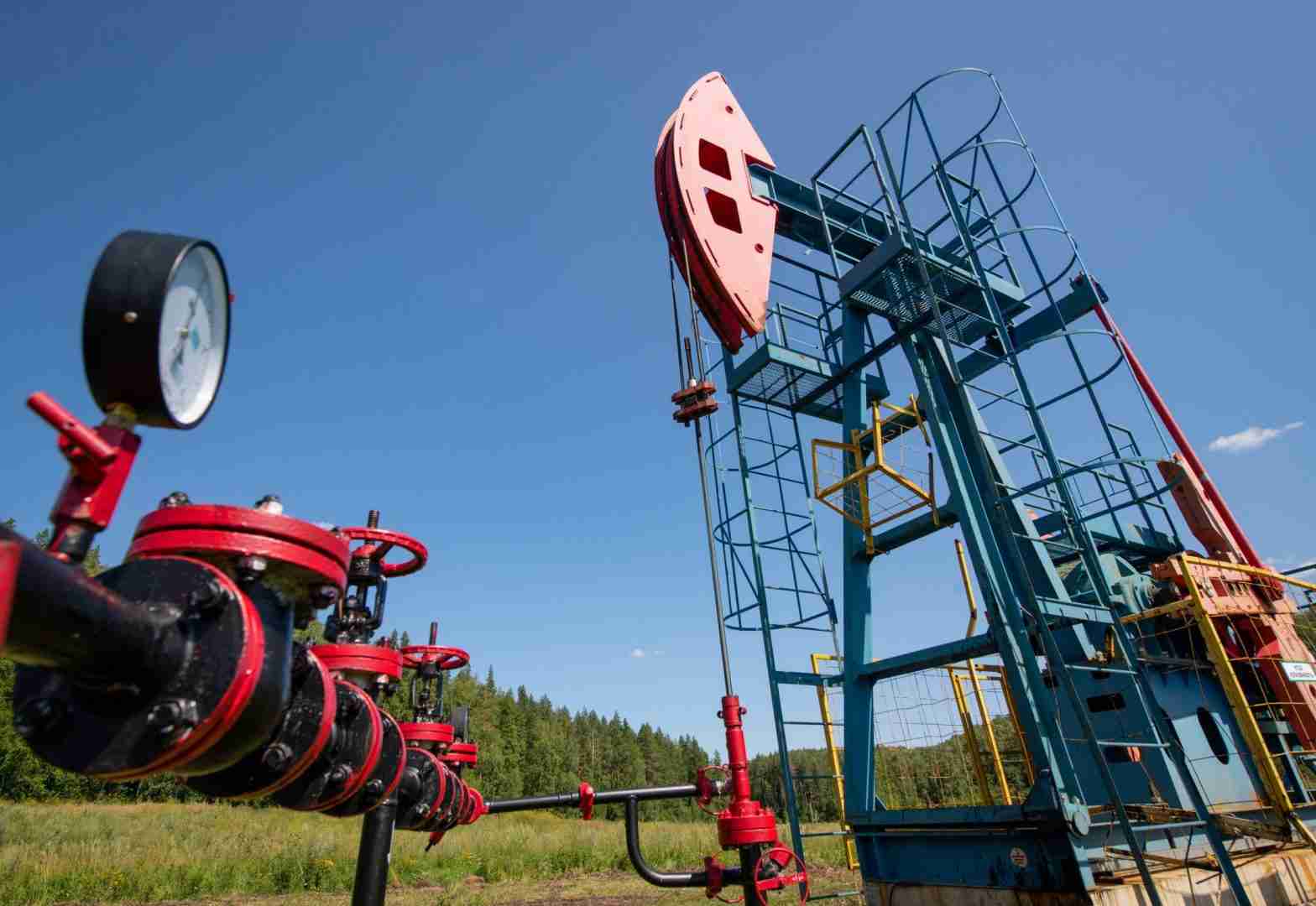
Brent crude futures gained $1.11, or 1.84%, to $61.58 a barrel by 1124 GMT. U.S. West Texas Intermediate crude rose by $1.04, or 1.84%, to $57.56
International News via Reuters:
Oil prices rose on Monday after the U.S. intercepted an oil tanker in international waters off the coast of Venezuela and tensions in Russia’s war against Ukraine remained high, with both developments raising fears of supply disruption.
Brent crude futures gained $1.11, or 1.84%, to $61.58 a barrel by 1124 GMT. U.S. West Texas Intermediate crude rose by $1.04, or 1.84%, to $57.56.
Market participants now see a risk of disruption to Venuezuelan oil exports because of the U.S. embargo, having previously been complacent in that regard, said UBS analyst Giovanni Staunovo.
Venezuelan crude accounts for about 1% of global supply.
Growing supply from the U.S. and the OPEC+ producer group have largely offset worries over supply disruption elsewhere to keep Brent futures around $65 a barrel in the second half of 2025, though prices have eased in the past month because of oversupply concerns.
Oil prices have been supported by developments off Venezuela, alongside the simmering Russia-Ukraine tensions in the background in an otherwise very bearish market, said June Goh, analyst at Sparta Commodities.
The U.S. Coast Guard is pursuing an oil tanker in international waters near Venezuela in what would be the second such operation over the weekend and the third in less than two weeks if successful, officials told Reuters on Sunday.
A rebound in oil prices has been sparked by U.S. President Donald Trump’s announcement of a “total and complete” blockade of sanctioned Venezuelan oil tankers and subsequent developments there, followed by reports of a Ukrainian drone strike on a Russian shadow fleet vessel in the Mediterranean, said IG analyst Tony Sycamore.
The Brent and WTI benchmarks fell by about 1% last week.
U.S. special envoy Steve Witkoff said on Sunday that talks between U.S., European and Ukrainian officials in Florida over the past three days in an effort to end Russia’s war in Ukraine had focused on aligning positions. Those meetings and separate talks with Russian negotiators had been productive, he said.
However, the top foreign policy aide of Russian President Vladimir Putin said that changes made by the Europeans and Ukraine to U.S. proposals had not improved prospects for peace.
Reporting by Jeslyn Lerh in Singapore and Sam Li and Lewis Jackson in BeijingEditing by David Goodman
The regulator said the group allegedly violated European regulations with Apple’s App Store, where it holds an “absolute dominance” in dealing with third-party developers
International News via Reuters:
Italy’s competition authority (AGCM) said on Monday it had fined U.S technology giant Apple and two of its divisions 98.6 million euros ($115.53 million) over alleged abuse of their dominant position in the mobile app market.
The regulator said the group allegedly violated European regulations with Apple’s App Store, where it holds an “absolute dominance” in dealing with third-party developers.
The watchdog opened the probe into the technology giant in May 2023, claiming the company penalised third-party app developers by imposing “a more restrictive privacy policy” on them from April 2021.
Apple said in a statement it “strongly disagrees” with the decision that it claims “disregards the important privacy protections” provided by the company’s App Tracking Transparency (ATT) prompt.
AGCM said that Apple required third-party developers to obtain specific consent for data collection and linking data for advertising purposes through the ATT screen imposed by the company.
“The terms of the ATT policy are imposed unilaterally, they are detrimental to the interests of Apple’s business partners and are not proportionate to achieving the objective of privacy, as claimed by the company,” the regulator said in a statement, adding the process does not comply with privacy regulations.
Developers were additionally forced to duplicate consent requests for the same purpose, it added.
ATT was created “to give users a simple way to control whether companies can track their activity across other apps and websites,” the tech company said, adding the rules apply equally to all developers, including Apple.
The firm will appeal the regulator’s decision and reiterated its commitment “to defend strong privacy protections”.
The AGCM said that its investigation had been complex and carried out in coordination with the European Commission and other international antitrust regulators.
($1 = 0.8535 euros)
Reporting by Cristina Carlevaro and Elvira Pollina, editing by Giulia Segreti, Kirsten Donovan
Baidu’s Apollo Go RT6 vehicles will join the London networks of the ride-hailing platforms in 2026, marking the first direct competition between U.S. and Chinese autonomous giants in a European capital
International News via Reuters:
Uber and Lyft said on Monday they were teaming up with Chinese tech giant Baidu to launch driverless taxi trials in the UK next year, reinforcing the country’s role as Europe’s leading testbed for commercializing robotaxis.
As part of the partnerships, Baidu’s Apollo Go RT6 vehicles will join the London networks of the ride-hailing platforms in 2026, marking the first direct competition between U.S. and Chinese autonomous giants in a European capital, following Alphabet-owned Waymo’s recent start of supervised tests in the city.
The UK’s emergence as a global sandbox is fueled by the Automated Vehicles Act 2024, which provides a legal framework for liability that currently eludes the more fragmented European Union. The act shifts legal responsibility for incidents from the person in the car to the “authorized self-driving entity.”
London-based startup Wayve is also preparing to launch driverless trials in 2026, leveraging a roughly $1 billion investment led by SoftBank Group and Uber, as it tests its “mapless” AI technology on London’s complex urban streets alongside its global rivals.
This momentum mirrors a broader global surge as Baidu and WeRide expand operations into the Middle East and Switzerland, while cities such as Austin, San Francisco in the U.S., UAE’s Abu Dhabi, and Wuhan, China have become major hubs for robotaxi operations.
Robotaxis promise safer, greener and more cost-efficient rides, but profitability remains uncertain. Public companies such as Pony.ai and WeRide are still loss-making, and analysts warn that the high cost of autonomous fleets could pressure margins for platforms such as Uber and Lyft.
Analysts have said hybrid networks, mixing robotaxis with human drivers, may be the most viable model to manage demand peaks and pricing.
For Lyft, the UK trial serves as a cornerstone of its international expansion following its $200 million acquisition of the European taxi app FreeNow this year.
Reporting by Akash Sriram in Bengaluru; Editing by Shilpi Majumdar
The decision was taken on Monday during a special meeting in Kuala Lumpur of Southeast Asian foreign ministers
International News via Reuters:
Thailand and Cambodia agreed on Monday to hold a December 24 meeting of defence officials towards resuming a months-old ceasefire, as fierce border fighting between them entered a third week with at least 80 people killed so far.
The decision was taken on Monday during a special meeting in Kuala Lumpur of Southeast Asian foreign ministers, who were trying to salvage a truce first brokered by ASEAN chair Malaysia and U.S. President Donald Trump after a previous round of deadly clashes in July.
Thailand and Cambodia have engaged in daily exchanges of rockets and artillery along their 817-km (508-mile) land border following the collapse of the truce, with fighting at multiple points stretching from forested regions near Laos to the coastal provinces of the Gulf of Thailand.
The top diplomats of the 11-member Association of Southeast Asian Nations urged both countries to exercise maximum restraint and take immediate steps to halt fighting, while welcoming the planned meeting on Wednesday of the General Border Committee, a long-established mechanism for bilateral talks.
“The ASEAN foreign ministers expressed hope for de-escalation of hostilities as soon as possible,” said a statement from ASEAN chair Malaysia, adding discussions would include ceasefire implementation and verification.
SIGNIFICANT STEP
The decision to hold talks is the most significant step since fighting reerupted, with neither Malaysian Prime Minister Anwar Ibrahim nor Trump able to bring the two countries to the table this time after various calls to their leaders.
Five days into the conflict, Trump said the premiers of Thailand and Cambodia had both agreed to “cease all shooting”, but the clashes continued the following day, with Bangkok launching more air strikes and vowing to keep on fighting.
China has also pressed both sides to step back, with its special envoy for Asian affairs Deng Xijun holding talks in Bangkok and Phnom Penh in recent days.
Thai Foreign Minister Sihasak Phuangketkeow said his country wanted a “true ceasefire” with a detailed implementation plan and firm commitment from Cambodia.
He said neither the U.S. nor China had been involved in the decision on bilateral talks, adding it was about Thailand and Cambodia “working things out”.
“A ceasefire cannot just be declared, it needs a discussion,” Sihasak told a briefing in Kuala Lumpur.
“The Cambodians want a ceasefire, let’s have a discussion on a ceasefire. We proposed that our two militaries should meet as soon as possible.”
The location of the meeting was not immediately clear, but Sihasak said Thailand proposed the border line in the Thai province of Chanthaburi. Cambodia’s defence ministry did not immediately respond to a request for comment.
THAI OUTRAGE OVER LANDMINES
Bangkok and Phnom Penh each accuse the other of aggression and violations of an enhanced ceasefire agreed in October in Malaysia in Trump’s presence, during which they committed to demining and withdrawing troops and heavy weapons from areas over which sovereignty has been contested bitterly for decades.
Thailand has vented its fury over what it says are landmines being newly laid by Cambodia, among the world’s most landmine-plagued countries. Phnom Penh rejects the accusation.
Cambodia’s defence ministry said Thailand had violated its sovereignty on Monday with more “armed aggression” and vowed to defend what it said was its territory “at any cost”.
Thailand’s army said Cambodia had carried out intermittent artillery attacks and used drones to drop bombs, adding Thai forces had responded with air strikes and artillery on military positions.
Monday’s ASEAN gathering was the first face-to-face meeting involving the two governments since the fighting resumed on December 8, in rare conflict between member states that has tested the bloc’s resolve.
In opening the meeting, Malaysia’s foreign minister urged the bloc to play a more forceful role.
“Our goal goes beyond de-escalating the tension. We must intensify trust-building among the conflicting parties and provide the horizons for dialogue despite the prevailing differences,” Mohamad Hasan said.
Reporting by Rozanna Latiff; Additional reporting by Ashley Tang and Mandy Leong in Kuala Lumpur and Chayut Setboonsarng and Panu Wongcha-um in Bangkok; Editing by Martin Petty, Saad Sayeed and Gareth Jones
The UK’s blue-chip FTSE 100 was down 0.4% at 1121 GMT amid quiet trading, while the domestically focussed midcap FTSE 250 index eased 0.3% from a seven-week high
International News via Reuters:
UK stocks edged lower on Monday after three straight days of gains at the start of a holiday-shortened week, as the latest data confirmed Britain’s economy grew at a sluggish pace last quarter.
The UK’s blue-chip FTSE 100 was down 0.4% at 1121 GMT amid quiet trading, while the domestically focussed midcap FTSE 250 index eased 0.3% from a seven-week high.
Official data showed GDP grew just 0.1% in the third quarter, in line with estimates, with April-June growth revised down to 0.2% from 0.3%. The figures suggest higher taxes and sticky inflation are weighing on activity, despite increased household spending and reduced savings.
The slowdown raised concerns about consumer resilience and corporate earnings heading into 2026.
Among sectors, consumer staples lagged. Beverage stocks led losses, down 2.6%, with Coca-Cola UK falling 2.1%. The personal care, drug and grocery sub-index fell 1%, with Ocado Group sliding 3.3% and Tesco down 1.3%.
Gold miners kept losses in check as Rio Tinto, Glencore, Endeavour Mining and Fresnillo benefited from gold surging above $4,400 an ounce for the first time. [GOL/]
Despite Monday’s dip, the FTSE 100 is on track for its best year since 2009 with a 20.6% year-to-date climb, buoyed by defence and financial stocks.
By comparison, Wall Street’s benchmark S&P 500 index has risen 16% so far.
Among individual stocks, North Sea-focused Harbour Energy was down 4.7% after the company said it would buy deepwater oil and gas exploration and production company LLOG Exploration for $3.2 billion.
AstraZeneca was down 0.6% after a late‑stage trial testing its blockbuster therapy Imfinzi in combination with its experimental drug ceralasertib failed to improve the overall survival of patients with advanced lung cancer.
Trading volumes usually taper off toward year-end with traders away on holidays and markets closed on December 25 and December 26 for Christmas and Boxing Day, respectively.
Reporting by Tharuniyaa Lakshmi in Bengaluru; Editing by Vijay Kishore
Sterling was up 0.48% against the dollar at around $1.3438, having ended the previous week flat after hitting a two-month high
International News via Reuters:
The pound rose on Monday, building on gains made last week after the Bank of England delivered a widely expected rate cut, but suggested that the bar for further declines was high, given persistent inflation.
Sterling was up 0.48% against the dollar at around $1.3438, having ended the previous week flat after hitting a two-month high. It is up over 1% so far this month, bringing the gain for the year to around 7%.
But the currency has struggled against the euro, which is up nearly 6% against the pound this year, set for its strongest annual performance since 2016, when the Brexit vote took place.
INTEREST RATES DETERMINE STERLING’S PERFORMANCE
Interest rates are playing a leading role in sterling’s performance. With the Federal Reserve expected to deliver at least two more rate cuts next year, the dollar is under pressure against most currencies, while the European Central Bank is widely believed to have finished cutting rates for now.
That leaves the pound with a theoretical edge over the U.S. currency, but at a disadvantage to the euro.
The BoE, meanwhile, cut rates by a quarter point to 3.75% in a narrow vote that suggested some policymakers remain concerned about the level of inflation. The decline in November to 3.2% helped to make the case for last week’s rate cut, but that rate is still well above the BoE’s 2% target and wage growth is slower, but still elevated.
Governor Andrew Bailey said after the BoE decision, the overall trend for interest rates was down, but this might not happen as quickly as some analysts expect.
Data from the Office for National Statistics on Monday showed Britain’s economy grew by 0.1% in the July-to-September period of this year. This was in line with the office’s initial estimate, while economists polled by Reuters had also forecast the reading would be unrevised.
Last week, the BoE said it expected zero GDP growth in the October-to-December period but it thought that the underlying pace of economic growth was around 0.2% per quarter.
“With the Bank of England expecting growth to come to a standstill in the last few months of the year, thanks in part to the impact of the Budget on overall confidence, it’s clear there are huge challenges to overcome if the UK’s growth story is going to become more compelling,” Danni Hewson, AJ Bell head of financial analysis, said.
Money markets show traders think the Bank will deliver at least one rate cut in the first half of the year, and place a roughly 50% chance on a second before the year-end.
Reporting by Amanda Cooper; Editing by Barbara Lewis
Fifteen people were killed and dozens injured in the mass shooting at a Jewish Hanukkah celebration at Bondi on December 14
International News via Reuters:
Australian police say homemade pipe and tennis ball bombs were thrown at a crowd at Bondi Beach before a mass shooting but failed to detonate, according to court documents released on Monday.
Fifteen people were killed and dozens injured in the mass shooting at a Jewish Hanukkah celebration at Bondi on December 14. The attack has shocked the nation and sparked calls for tougher gun laws and heightened efforts to stop antisemitism.
One of the alleged gunmen, Sajid Akram, 50, who was shot dead by police, owned six firearms. His 24-year-old son Naveed Akram has been charged with 59 offences, including murder and terrorism, according to police.
The alleged gunmen had planned the attack for several months and visited the Bondi beachside park for reconnaissance two days prior, said a police fact sheet released by the court.
Pictures included in the police report showed the father and son allegedly training with firearms in an isolated rural part of New South Wales, Australia’s most populous state which includes Sydney.
Police found a video taken in October on one of the gunmen’s mobile phone showing them sitting in front of an image of an Islamic State flag and making statements in English about their reasons for the attack, while condemning the acts of Zionists.
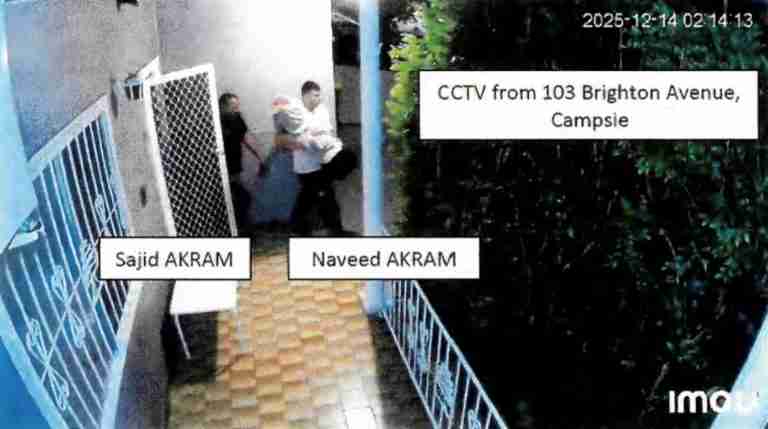
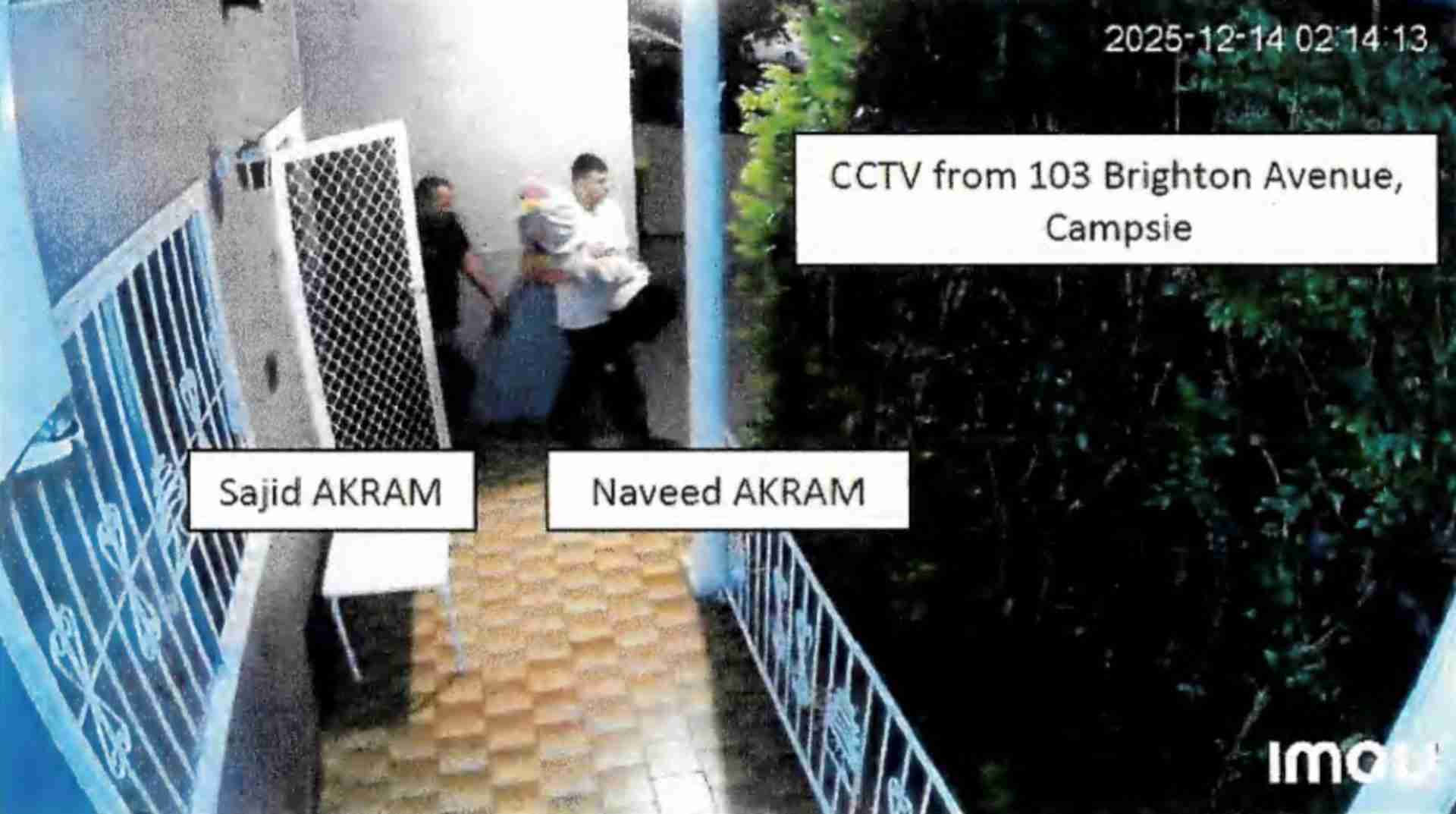
Just after 2:00 a.m. (1500 GMT) on the day of the attack, the men were captured on CCTV video carrying long and bulky items wrapped in blankets from a short-stay rental house in the suburb of Campsie to a car, said the police report.
They later drove to Bondi around 5:00 p.m. (0800GMT).
Police believe the items wrapped in the blankets were two single-barrel shotguns, a Beretta rifle, three pipe bombs, a tennis ball bomb and a large improvised explosive device.
Police allege the men threw the pipe bombs and tennis ball bomb at the crowd in the Bondi park before they began shooting, but the explosive devices did not detonate, according to the statement tendered to the court.
Police said that they later found 3D printed parts for a shotgun component at the Campsie house, bomb making equipment and copies of the Quran.
TOUGH NEW GUN LAWS
The parliament of New South Wales state was recalled on Monday to vote on proposed new laws that would impose major curbs on firearm ownership, ban the display of terror symbols and restrict protests, following the mass shooting.
The state legislation would cap the number of firearms a person can own at four, or up to 10 for certain groups, such as farmers.
Although Australia has some of the toughest gun control laws in the world after a 1996 shooting that killed 35 people, the Bondi shooting has highlighted what authorities say are gaps.
In New South Wales, there are more than 70 people in the state who own more than 100 guns, a police firearms registry shows. One licence holder has 298 guns.
The proposed legislation would also give police more powers to remove face coverings during protests or rallies. The state government has vowed to ban the chant “globalise the intifada” which it says encourages violence in the community.
New South Wales Premier Chris Minns told reporters outside parliament that he expected opposition to the legislation, which includes restrictions on public assemblies in the aftermath of a terrorism event, but said it was needed to keep the community safe.
“We have got a responsibility to knit together our community that comes from different races and religions and places from all over the world. We can do it in a peaceful way,” he said.
‘I AM SORRY’ PRIME MINISTER SAYS
Prime Minister Anthony Albanese has faced mounting criticism from opponents who argue his government has not done enough to curb a rise in antisemitism. He was booed by sections of the crowd during a memorial event in Bondi attended by tens of thousands of people on Sunday, one week after the shooting.
A poll conducted for the Sydney Morning Herald newspaper among 1,010 voters released on Monday found Albanese’s approval rating slumped 15 points to -9 from +6 at the beginning of December, the lowest since his resounding election win in May.
Albanese on Monday said he understood that some of the anger in the Jewish community in the aftermath of the attack was directed towards him and pleaded for national unity.
“As prime minister I feel the weight of responsibility for an atrocity that happened whilst I am prime minister and I am sorry for what the Jewish community and our nation as a whole has experienced,” he told reporters in Canberra.
Albanese’s government says it has consistently denounced antisemitism and highlighted legislation passed over the last two years to criminalise hate speech and doxxing. It also expelled Iran’s ambassador earlier this year after accusing Tehran of directing antisemitic attacks in Sydney and Melbourne.
Further measures to stop hate speech proposed by Albanese’s government on Monday include a new offence of adults seeking to influence and radicalise children.
Authorities on Monday started clearing flowers, candles, letters and other items placed by the public at Bondi Beach.
The tributes would be preserved for display at the Sydney Jewish Museum and the Australian Jewish Historical Society, authorities said.
Thirteen people remain in hospital, including four in critical but stable condition, health officials said.
Reporting by Renju Jose and Kirsty Needham in Sydney; Editing by Michael Perry and Raju Gopalakrishnan
Leo, the first U.S. pope, told the Church’s senior-most officials that Francis, who died in April, had been a “prophetic voice” who strived to create “a joyful Church, welcoming to all and attentive to the poorest”
International News via Reuters:
Pope Leo indicated on Monday that he plans to follow the reform agenda of his predecessor Francis, praising the late pontiff’s attempts to make the global Catholic Church more inclusive in an annual Christmas address to Vatican cardinals.
Leo, the first U.S. pope, told the Church’s senior-most officials that Francis, who died in April, had been a “prophetic voice” who strived to create “a joyful Church, welcoming to all and attentive to the poorest”.
Francis, who led the 1.4 billion-member Church for 12 years, often used his annual Christmas speech with the cardinals to deliver blistering critiques of their work.
In several lengthy speeches over the years, he listed what he called the “illnesses” and “diseases” of the Vatican’s central bureaucracy, known as the Roman Curia.
Leo, who has a more diplomatic style than his Argentine predecessor, spoke for only 15 minutes and offered no such rebukes. But he repeated many themes central to Francis’ papacy.
The pope warned officials against “falling into rigidity or ideology” in enforcing Church teachings and said the Vatican’s complex structure “must not weigh down or slow the progress” of their work.
He lamented that interpersonal conflicts sometimes mar Vatican operations.
“We observe with disappointment that certain dynamics – linked to the exercise of power, the desire to prevail, or the pursuit of personal interests – are slow to change,” Leo said.
“We then ask ourselves: is it possible to be friends in the Roman Curia?”
Leo called for “an ever more missionary Roman Curia, in which institutions, offices and tasks are conceived in light of today’s major ecclesial, pastoral and social challenges, and not merely to ensure ordinary administration.”
Reporting by Joshua McElwee. Editing by Mark Potter
A total of 15 Bermuda sailors are preparing to fly the island’s flag at the 2025 Orange Bowl International Youth Regatta in Florida. The prestigious event, hosted by the Coral Reef Yacht Club in Miami, is the largest youth regatta in the United States and serves as a vital proving ground for the world’s burgeoning sailing talent.
Bermuda’s contingent will be heavily represented in the massive Optimist Fleet, where 12 sailors are set to test their tactical skills against hundreds of international rivals. The squad includes Leo De Couto, Hudson Pitcher, Benjamin De Couto, Aaron Riker, Miguel Leite, and Ishmael Dill. They will be joined on the start line by Thomas McBain, James De Couto, Alfie Jansma, Rex Henagulph, Calypso Coulter, and Ethan Adelsberg.
While the main Optimist fleet battles for top honors, Thatcher Coulter will be the island’s sole representative in the Green Fleet, a category specifically designed to provide high-level competitive experience for less seasoned sailors.
Bermuda will also have a presence in the high-performance ILCA classes. Sean Pedro is set to battle in the ILCA 4 fleet, while Miguel Power will compete in the more physically demanding ILCA 6 Division.The regatta, which traditionally runs between Christmas and the New Year, offers these young athletes the chance to gain invaluable international experience as they navigate the challenging currents and competitive start lines of Biscayne Bay.
The estimated sales for “Avatar: Fire and Ash” landed in line with pre-weekend forecasts of at least $340 million
International News via Reuters:
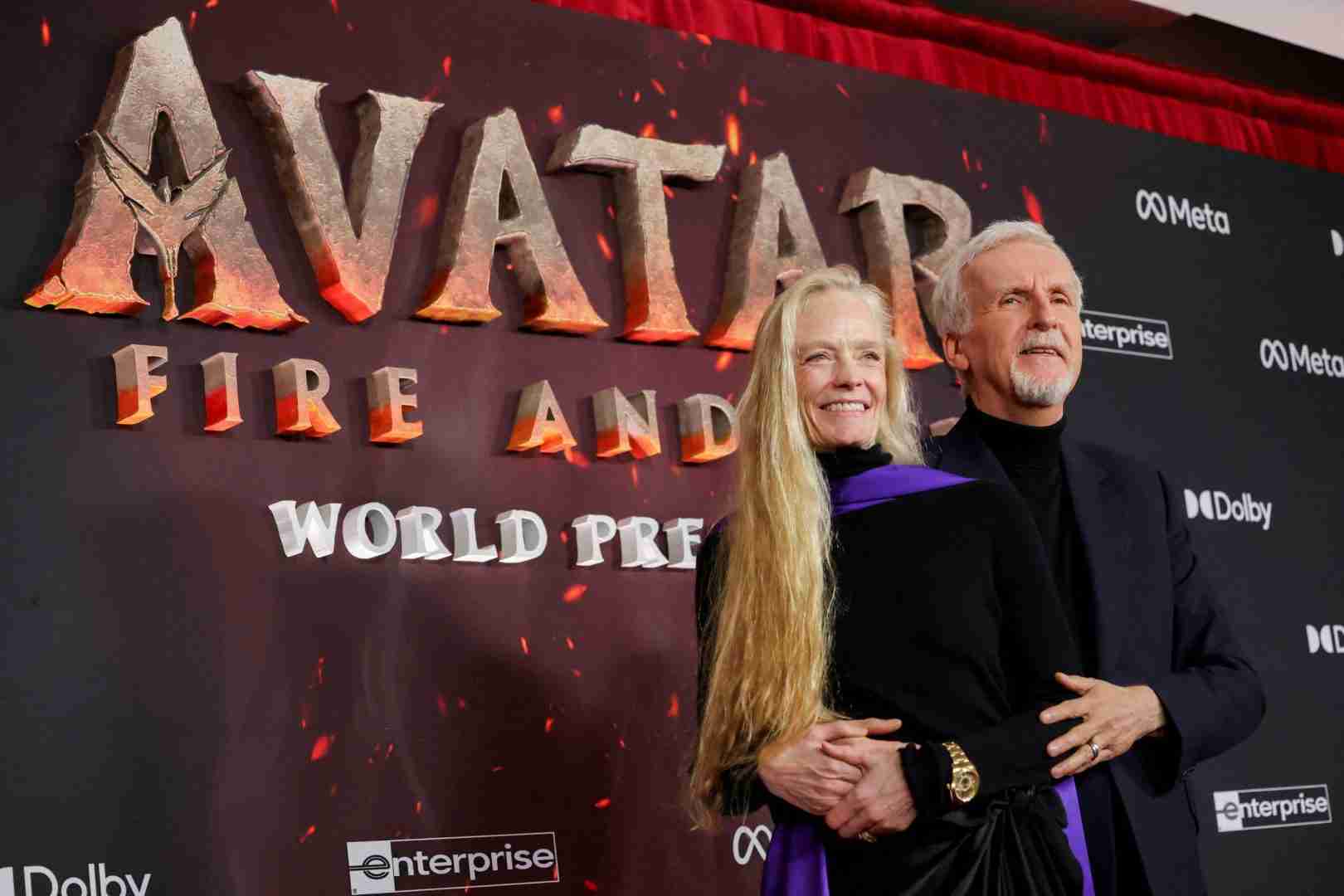
Director James Cameron’s third “Avatar” movie adventure racked up roughly $345 million in global box office sales over its opening weekend, distributor Walt Disney said on Sunday.
The estimated sales for “Avatar: Fire and Ash” landed in line with pre-weekend forecasts of at least $340 million.
U.S. and Canadian box offices accounted for $88 million of the total, Disney said.
Zoe Saldana and Sam Worthington voice the lead characters in the “Avatar” series, the story of a clan of 9-foot-tall blue people known as Na’vi who are forced to fight to protect their family and their planet.
The first “Avatar” film, released in 2009, leads all-time box office charts with $2.9 billion in global ticket sales. The 2022 sequel “Avatar: The Way of Water” ranks third with $2.3 billion.
Reporting by Lisa Richwine; Editing by Chizu Nomiyama
The programme, known as “Porte-Avions Nouvelle Génération” (PANG), is predicted to cost around 10.25 billion euros ($12 billion)
International News via Reuters:
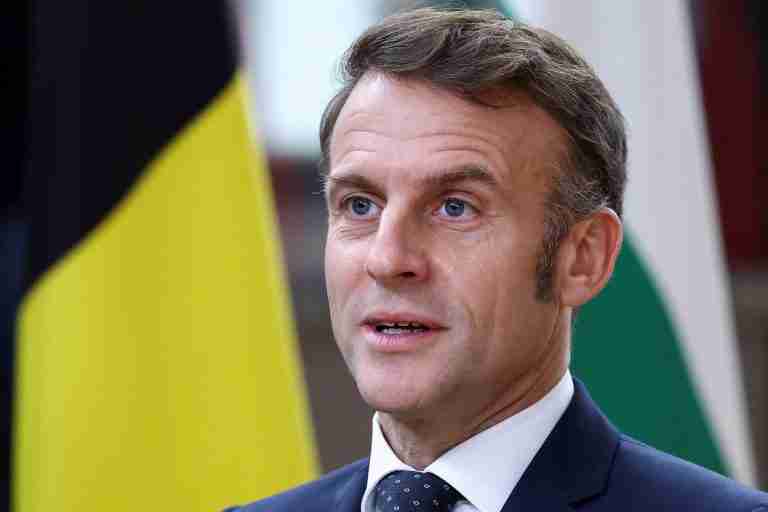
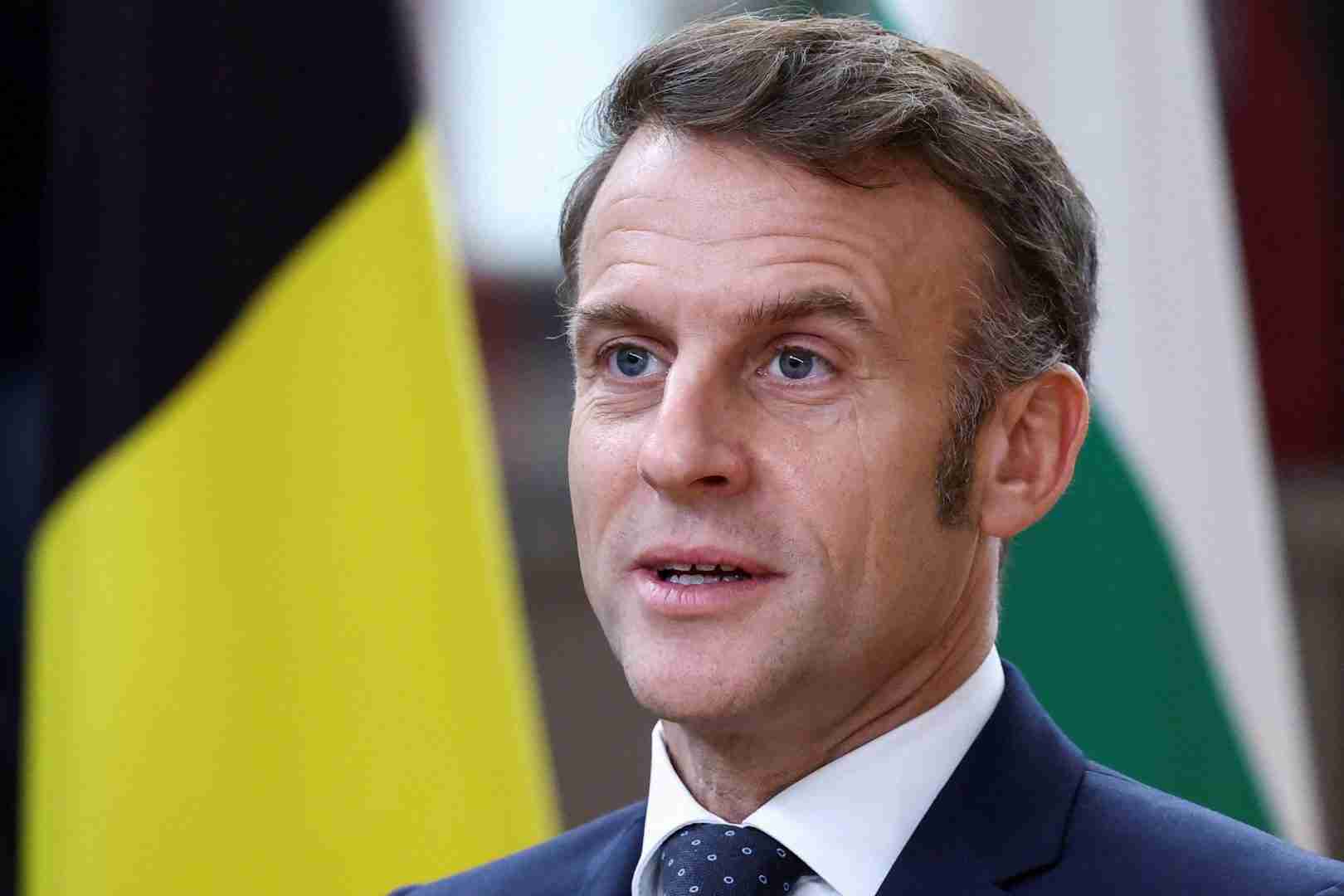
President Emmanuel Macron confirmed on Sunday plans to build a new, larger and more modern aircraft carrier to replace the ageing Charles de Gaulle carrier and strengthen France’s maritime power.
The programme, known as “Porte-Avions Nouvelle Génération” (PANG), is predicted to cost around 10.25 billion euros ($12 billion).
The French government said the new vessel would be operational by 2038, when the Charles de Gaulle aircraft carrier is expected to retire. Work on nuclear propulsion components began last year, and the final order must be placed under the 2025 budget.
The PANG, which would be the largest warship ever built in Europe, is central to France’s nuclear deterrent and Europe’s drive for greater defence autonomy amid Russia’s war in Ukraine and U.S. President Donald Trump’s reluctance to support the continent’s security.
MACRON SPEAKING TO TROOPS
Macron was speaking to troops based at a French military base in Abu Dhabi located near the Strait of Hormuz, a crucial chokepoint for global oil flows.
“The decision to launch this vast programme was taken this week,” Macron said, adding that the project would boost France’s industrial base, in particular small and medium-sized businesses.
Army Minister Catherine Vautrin said on X the carrier would enter operation in 2038 to replace the Charles de Gaulle, which entered service in 2001 after 15 years of planning and construction.
Some French lawmakers from the centre and the moderate left have recently suggested that the project to build a new aircraft carrier be postponed due to France’s strained state finances.
EUROPEAN CARRIER CAPABILITIES
France, the EU’s only nuclear power, is among the few European nations owning an aircraft carrier alongside Britain, Italy and Spain.
European capabilities remain limited compared with the United States’ fleet of 11 carriers and China’s three.
“The Chinese have just developed electromagnetic catapults to launch aircraft,” armed forces chief Fabien Mandon told the Senate in October, adding that France will buy such systems from the United States, as domestic production is not “compatible with our schedule and cost control.”
($1 = 0.8541 euros)
Reporting by Tassilo HummelEditing by Gareth Jones and Ros Russell
To provide the best experiences, we use technologies like cookies to store and/or access device information. Consenting to these technologies will allow us to process data such as browsing behavior or unique IDs on this site. Not consenting or withdrawing consent, may adversely affect certain features and functions.
Functional
Always active
The technical storage or access is strictly necessary for the legitimate purpose of enabling the use of a specific service explicitly requested by the subscriber or user, or for the sole purpose of carrying out the transmission of a communication over an electronic communications network.
Preferences
The technical storage or access is necessary for the legitimate purpose of storing preferences that are not requested by the subscriber or user.
Statistics
The technical storage or access that is used exclusively for statistical purposes.The technical storage or access that is used exclusively for anonymous statistical purposes. Without a subpoena, voluntary compliance on the part of your Internet Service Provider, or additional records from a third party, information stored or retrieved for this purpose alone cannot usually be used to identify you.
Marketing
The technical storage or access is required to create user profiles to send advertising, or to track the user on a website or across several websites for similar marketing purposes.