Packed town hall hears concerns over proposed site selection, storm safety and consultation
It was a packed house at the Western Zone Community Centre in Sandys Parish on Tuesday night for Government’s Town Hall on the proposed installation of modular housing units in the Boaz Island area. Dozens of area residents gathered to learn more about the initiative, aimed at helping to ease the housing crisis. Alisa Bernardo was in attendance and filed the below report.
The European Central Bank also delivers its policy decision on Thursday and is widely expected to leave rates unchanged
International News via Reuters:
Global shares crept higher on Thursday, after the tech sector got hit by renewed concern over AI spending, and investors prepared for a series of central bank meetings that will probably reflect the divergence in worldwide monetary policy.
Geopolitical tensions are roiling commodities markets. Oil prices extended a rebound from five-year lows after President Donald Trump ordered a “blockade” of all sanctioned oil tankers entering and leaving Venezuela. Silver hit a new record that helped pull up gold.
Sterling fell for a second day, after an unexpected drop in UK inflation on Wednesday all but guaranteed a rate cut from the Bank of England later on Thursday.
The European Central Bank also delivers its policy decision on Thursday and is widely expected to leave rates unchanged, while traders expect Japan to raise rates on Friday but are less certain about the pace of tightening next year.
Shares in Europe rose broadly, lifting the STOXX 600 by 0.1%, while U.S. stock futures rose 0.3-0.6%, suggesting there may be some respite for the benchmark indexes after Wednesday’s wash-out.
Concern over record AI spending resurfaced after Oracle announced an equity deal to support a data centre project would not include a key partner, Blue Owl Capital. Its shares tumbled 5.4%, meaning they have now lost 50% of their value since mid-September, when a deal with OpenAI sparked a 35% one-day rise.
“Oracle remained the primary source of anxiety … This latest setback deepened investor scepticism around Oracle’s aggressive AI infrastructure build-out,” said Tony Sycamore, analyst at IG, adding that he has now moved to a more neutral stance on the Nasdaq 100.
“Worries over soaring capex, heavy debt, construction delays, OpenAI’s massive cash burn, and mixed Q2 earnings have eroded confidence, positioning Oracle as the poster child of fading AI infrastructure hype.”
INFLATION SURPRISE FIRMS CASE FOR BOE RATE CUT
On the monetary policy front, Federal Reserve Governor Christopher Waller, who is expected to be interviewed by Trump as a candidate for the next chair, said the central bank had room to cut interest rates, given the signs of job market weakness.
Trump said late on Wednesday the next Fed chairman would be someone who believed in lower interest rates “by a lot.” The Fed has signalled only one rate cut next year.
Investors are also waiting for a U.S. inflation report for November later on Thursday that is expected to show core inflation at 3%.
With the Fed focused on the jobs market, the inflation report may have less impact on rate expectations than it otherwise might.
“CPI, frankly, doesn’t matter too much, with the Fed’s reaction function tilting entirely towards supporting a stalling labour market at this stage, while jobless claims probably won’t especially move the needle either, even if the initial print does coincide with the December nonfarm payrolls survey week,” said Pepperstone strategist Michael Brown.
In the currency markets, sterling fell for a second day, dropping 0.16% to $1.3353, having hit a low of $1.3313 overnight after data showed British inflation slowed more than forecast to 3.2% in November, the lowest since March. That all but cemented the case for a rate cut from the BoE.
The euro eased 0.14% to $1.1724, not far from a three-month top of $1.18, ahead of the ECB decision.
Treasuries gained modestly in price, which sent two-year yields down 2 basis points to 3.464%, while benchmark 10-year yields dropped 1.8 bps to 4.133%.
Oil prices gained for a second day as Trump’s blockade of Venezuelan energy exports remained in place. Reports that the U.S. was preparing new sanctions on Russian oil if Moscow did not agree to a Ukraine peace deal also fuelled concern over near-term supply. [O/R]
U.S. crude rose 0.6% to $56.13 a barrel, while Brent crude rose 0.5% to $60 a barrel.
Additional reporting by Stella Qui in Sydney; Editing by Shri Navaratnam, Stephen Coates and Kate Mayberry
He said Currys was planning for little change to the subdued consumer environment in 2026
International News via Reuters:
British consumer confidence and spending is muted heading into Christmas and the government’s budget last month did little to help, the boss of electricals retailer Currys said on Thursday.
“What we’re concerned about is consumers’ already high tax burden has increased further (in the budget) and that will weigh down on already muted consumer confidence and spending in the UK,” CEO Alex Baldock told reporters after Currys reported first half results.
He said Currys was planning for little change to the subdued consumer environment in 2026.
“We’re not counting on any improvement in the UK consumer outlook, confidence or spending, looking forward,” he said.
But he said he was confident Currys could still grow profit despite the tough macro backdrop.
The Taiwan arms sale announcement is the second under U.S. President Donald Trump’s current administration, and comes as Beijing ramps up its military and diplomatic pressure against Taiwan
International News via Reuters:
The United States on Wednesday approved $11.1 billion in arms sales to Taiwan, the largest ever U.S. weapons package for the island which is under increasing military pressure from China.
The Taiwan arms sale announcement is the second under U.S. President Donald Trump’s current administration, and comes as Beijing ramps up its military and diplomatic pressure against Taiwan, whose government rejects Beijing’s sovereignty claims.
The proposed arms sales cover eight items, including HIMARS rocket systems, howitzers, Javelin anti-tank missiles, Altius loitering munition drones and parts for other equipment, Taiwan’s defence ministry said in a statement.
“The United States continues to assist Taiwan in maintaining sufficient self‑defence capabilities and in rapidly building strong deterrent power and leveraging asymmetric warfare advantages, which form the foundation for maintaining regional peace and stability,” it added.
The ministry said the package is at the Congressional notification stage, which is where Congress has a chance to block or alter the sale should it wish, though Taiwan has widespread cross-party support.
In a series of separate statements announcing details of the weapons deal, the Pentagon said the arms sales serve U.S. national, economic and security interests by supporting Taiwan’s continuing efforts to modernise its armed forces and to maintain a “credible defensive capability”.
Pushed by the United States, Taiwan has been working to transform its armed forces to be able to wage “asymmetric warfare”, using mobile, smaller and often cheaper weapons which still pack a targeted punch, like drones.
“Our country will continue to promote defence reforms, strengthen whole‑of‑society defence resilience, demonstrate our determination to defend ourselves, and safeguard peace through strength,” Taiwan presidential office spokesperson Karen Kuo said in a statement, thanking the United States for the sales.
Taiwan President Lai Ching-te last month announced a $40 billion supplementary defence budget, to run from 2026 to 2033, saying there was “no room for compromise on national security”.
China’s foreign ministry expressed anger, as it does with all U.S. arms sales to Taiwan, saying it “severely undermines peace and stability in the Taiwan Strait” and demanded an end to such deals.
“By aiding ‘Taiwan independence’ with weapons, the U.S. side will only bring fire upon itself; using Taiwan to contain China is absolutely doomed to fail,” ministry spokesperson Guo Jiakun said in Beijing.
Rupert Hammond-Chambers, president of the U.S.-Taiwan Business Council, said weapons like the HIMARS, which have been used extensively by Ukraine against Russian forces, could play an essential role in destroying an invading Chinese force.
“This bundle of congressional notifications, a record in U.S. security assistance for Taiwan, is a response to the threat from China and the demand from Mr. Trump that partners and allies do more to secure their own defence,” he added.
FOREIGN MINISTER’S U.S. VISIT
The announcement followed an unannounced trip by Taiwan’s Foreign Minister Lin Chia-lung to the Washington-area last week to meet U.S. officials, according to two sources who spoke to Reuters on condition of anonymity.
Reuters was unable to determine the agenda of the meetings and Taiwan’s foreign ministry declined to comment.
Washington has formal diplomatic ties with Beijing, but maintains unofficial ties with Taiwan and is the island’s most important arms supplier. The U.S. is bound by law to provide Taiwan with the means to defend itself, though such arms sales are a persistent source of friction with China.
Trump’s penchant for dealmaking and his planned visit to Chinese President Xi Jinping next year, have kindled fears in the region of weakening U.S. support for Taiwan.
But U.S. officials told Reuters at the outset of Trump’s second term this year that they had plans to ramp up weapons sales to Taipei to a level exceeding Trump’s first term as part of an effort to deter China.
The Trump administration’s national security strategy unveiled earlier this month said the U.S. aimed to deter conflict over Taiwan by “preserving military overmatch” against China in the region, language welcomed in Taipei.
The strategy also highlighted Taiwan’s strategic importance due to its location dividing “Northeast and Southeast Asia into two distinct theatres”.
China views Taiwan as its own territory, a position Taipei rejects.
Reporting by Ben Blanchard and Michael Martina; Additional reporting by Beijing newsroom; Editing by Chris Reese and Michael Perry
Premier among those in attendance for Izola Marie Harvey’s 100th birthday celebrations
Images and media release supplied by the Government of Bermuda.
Last Sunday (Dec. 14) Izola Marie Harvey was celebrated by family, friends, and members of the community on the occasion of her 100th birthday.
The event, attended by approximately 170 people, including the Premier, the Hon. David Burt, honoured her life, legacy, and contributions to Bermuda.
In 1959, alongside her late husband Gerald Harvey, Ms Harvey became one of twenty Bermudians who formed the Progressive Group. At a time when segregation was legal and deeply rooted in daily life, the Group took deliberate and courageous action to bring about change, culminating in the Theatre Boycott of 1959, an organised and nonviolent protest that led to the ending of segregation in Bermuda.
Ms Harvey is the mother of Donna Harvey Maybury and Lisa Harvey Simmons. Her grandson, Gregg Maybury Jr., is a well-known former cricketer.
Speaking at the event, Premier Burt reflected on Ms Harvey’s lifetime of service and her lasting impact on the country.
He said, “The change that has been achieved in and by the lifetime we recognise today is nothing short of remarkable. You were not a bystander. You were an integral part of a movement that changed Bermuda forever. Today we celebrate not only the milestone of reaching 100 years but the substance and meaning of those years. On behalf of the Government I say, a happy 100th birthday to you today, Ms Harvey. I know that all Bermuda joins with me in saying not just happy birthday, but thank you.”
A quarter-point cut would take Bank Rate to its lowest level in nearly three years, although that would still be almost double the equivalent rate of the European Central Bank
International News via Reuters:
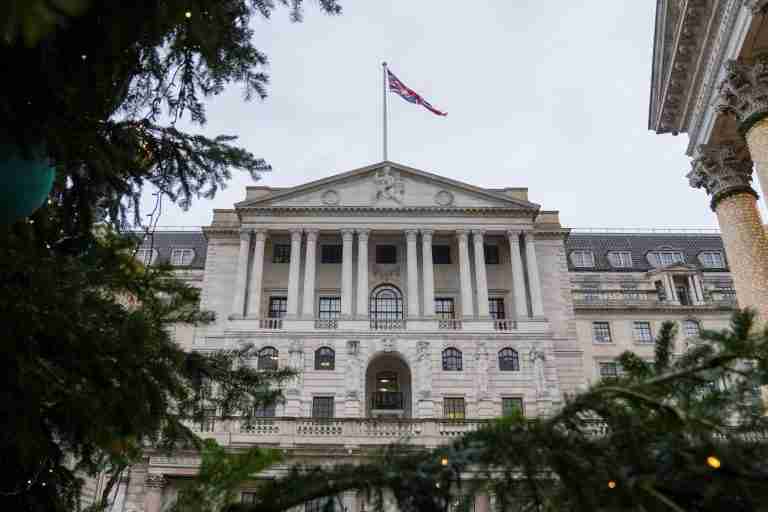
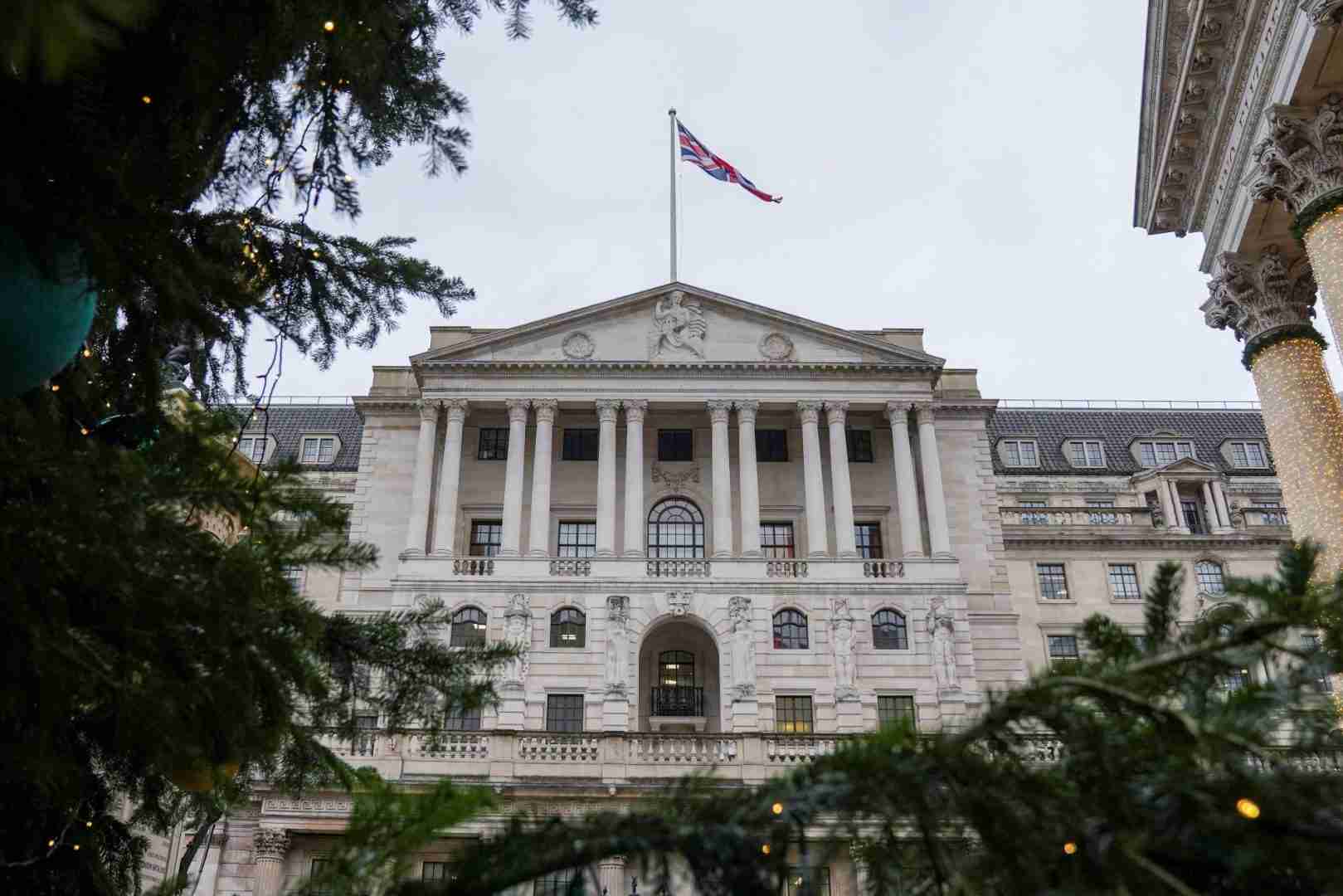
The Bank of England is expected to lower interest rates on Thursday after a sharp slowdown in inflation and a weakening in economic growth, but a string of further cuts in 2026 looks unlikely given Britain’s lingering price pressures.
Investors think the BoE will reduce its benchmark rate to 3.75% from 4% for a fourth cut of 2025, welcome news for finance minister Rachel Reeves and Prime Minister Keir Starmer who are struggling to meet promises to voters of faster economic growth.
A quarter-point cut would take Bank Rate to its lowest level in nearly three years, although that would still be almost double the equivalent rate of the European Central Bank.
British inflation remains the highest among the Group of Seven economies – in part because of Reeves’ decision last year to raise taxes on employers – even after it fell sharply to 3.2% in data released on Wednesday.
Investors are fully pricing only one more BoE rate cut in 2026, most likely by the end of April, although bets on a second one rose after the November inflation drop.
ENTRENCHED POSITIONS ON MONETARY POLICY COMMITTEE
Hetal Mehta, chief economist at wealth management firm St. James’s Place, said the different camps on the BoE’s Monetary Policy Committee were unlikely to shift their medium-term stances significantly this week.
“There’s enough ambiguity around some of the numbers going into next year for there not to be back-to-back rate cuts,” Mehta said. “The data confirms the direction of travel. It’s the magnitude (of rate cuts) that is up for debate.”
The nine members of the Monetary Policy Committee have been almost evenly split in recent months. In November they voted 5-4 to keep rates on hold.
Analysts polled by Reuters last week forecast a 5-4 split in favour of a cut at their December meeting with Governor Andrew Bailey switching sides to tip the balance.
Wednesday’s bigger-than-expected inflation slowdown – which followed data on Tuesday showing a weakening jobs market including the highest unemployment rate since 2021 – might now persuade more MPC members to vote for a cut, Mehta said.
Britain’s economy shrank 0.1% in the three months to October amid reports that businesses put investment projects on ice in the run-up to Reeves’ budget on November 26.
INFLATION PRESSURES PERSIST IN UK
But Britain is not out of its inflation problem yet.
S&P Global’s Purchasing Managers’ Index, also published on Tuesday, showed rising inflation pressures and suggested businesses were turning a corner after the budget.
Relief at the BoE over the big drop in the headline inflation rate is likely to be tempered by only a small fall in the pace of price increases in the services sector.
Furthermore, the inflation-reducing impact of Reeves’ budget – which removed green levies from power bills and froze rail fares – is likely to be only temporary.
Other major central banks are believed to be close to halting their rate cuts – the U.S. Federal Reserve last week signalled one more in 2026 while the ECB has probably already come to the end of its monetary loosening cycle.
Economists are watching closely for any change in the BoE’s language in Thursday’s statement about the prospect of further reductions, including possible changes to its recent description of borrowing costs as being on a “gradual downward path”.
“Because inflation remains above target and services components still look sticky, policymakers are unlikely to deliver a deeply dovish message,” Daniela Hathorn, senior market analyst at trading platform Capital.com, said.
“Instead, the BoE is likely to frame any cut as part of a gradual, risk-managed shift rather than a full easing cycle.”
Writing by William Schomberg; Editing by Catherine Evans
O’Neill, who will take over in April following the abrupt departure of Murray Auchincloss, will become BP’s first CEO appointed from outside the company
International News via Reuters:
Oil and gas major BP has appointed Meg O’Neill, the head of Australia’s Woodside Energy, as its next CEO to lead its effort to boost profits and refocus on oil and gas after a detour into renewables.
O’Neill, who will take over in April following the abrupt departure of Murray Auchincloss, will become BP’s first CEO appointed from outside the company in its more than century-long history and the first woman to head any of the world’s top five oil majors.
The second CEO change in just over two years is a sign that the British oil major is seeking a renewed push to improve its business after its shares and earnings for years lagged behind competitors like Exxon Mobil and Shell.
The company embarked on a major strategy shift earlier this year, slashing billions in planned renewable energy initiatives and shifting its focus back to traditional oil and gas. BP has pledged to divest $20 billion in assets by 2027 and reduce debt and costs.
“Progress has been made in recent years, but increased rigor and diligence are required to make the necessary transformative changes to maximise value for our shareholders,” new BP Chair Albert Manifold said in a statement.
When Manifold took up his post in October, he emphasised the need for a deeper reshaping of BP’s portfolio to increase profitability.
Manifold faced pressure from activist investor Elliott Investment Management, one of BP’s largest shareholders, which called for him to urgently address the company’s shortcomings and put in place “decisive and effective leadership”.
‘HIGH-PROFILE HIRE’
O’Neill, a 55-year-old American from Boulder, Colorado, has headed Woodside since 2021 and previously spent 23 years at Exxon Mobil.
“This is clearly a high-profile hire, and probably some of the change that BP shareholders have been looking for,” said Dan Pickering, chief investment officer at Pickering Energy Partners.
Under O’Neill’s leadership, Woodside merged with BHP Group’s petroleum arm to create a top 10 global independent oil and gas producer valued at $40 billion and doubled Woodside’s oil and gas production.
The acquisition took the company to the U.S., where it has expanded into onshore Louisiana liquefied natural gas.
“What this to me signals is we (BP) don’t want to sell, we want to pursue a firm-wide push in natural gas,” said Michael Alfaro, chief investment officer at Gallo Partners. “O’Neill is definitely respected, has a good track record of execution.”
Woodside shares fell as much as 2.9% after her departure was announced.
BP’s executive vice president, Carol Howle, will serve as interim CEO until O’Neill assumes the position. Auchincloss, 55, will step down as CEO on Thursday and serve in an advisory role until December 2026 to ensure a smooth transition.
BP said O’Neill’s appointment was part of long-term succession planning, but it had not publicly announced a search process before it flagged his departure late on Wednesday evening.
Auchincloss became CEO in 2024, taking over from Bernard Looney, who was fired for lying about personal relationships with colleagues.
After an ill-fated foray into renewables under Looney, BP has vowed to increase profitability and cut costs while re-routing spending to focus on oil and gas.
BP in August launched a review of how best to develop and monetise its oil and gas production assets.
During BP’s third-quarter earnings call last month, the company did not give an update on the closely-watched sale process for its Castrol lubricants unit, the centrepiece of its $20 billion asset-sale drive to slash its debt pile.
Woodside said in a separate statement that O’Neill was leaving the Australian company immediately and it had appointed executive Liz Westcott as acting CEO, while intending to announce a permanent appointment in the first quarter of 2026.
Reporting by Devika Nair in Bengaluru, Sheila Dang and Arathy Somasekhar in Houston, Helen Clark in Perth and Stephanie Kelly in Chicago; Editing by Simon Webb, Peter Henderson and Jamie Freed
Yellow toy bees topped the coffin of 10-year-old Matilda, who was remembered as a ‘ray of sunshine’ who loved animals and dancing
International News via Reuters:
Australian Prime Minister Anthony Albanese on Thursday promised a crackdown on hate speech in the wake of an attack on a Jewish holiday event at Sydney’s Bondi Beach, as the youngest of 15 victims was laid to rest.
Yellow toy bees topped the coffin of 10-year-old Matilda, who was remembered as a ‘ray of sunshine’ who loved animals and dancing.
Matilda’s middle name was Bee, which inspired attendees to wear bee stickers, and bring bee-themed toys and balloons, while some mourners wore yellow. Matilda’s family has asked the media not to use their surname.
“The tragic, so totally cruel, unfathomable murder of young Matilda is something to all of us as if our own daughter was taken from us,” said Rabbi Yehoram Ulman.
“Matilda grew up like a child would, loving what children love. She loved the outdoors, animals. She went to school, she had friends, everybody loved her.”
The alleged father-and-son gunmen opened fire as hundreds of people celebrated Hanukkah on Sydney’s famous Bondi Beach on Sunday. The attack, which shocked the nation and led to fears over rising antisemitism, appears to have been inspired by the Islamic State, authorities say.
The line outside the hall where Matilda’s funeral was held in Sydney’s eastern suburbs snaked down the street. Many mourners who could not get in watched the service on a screen outside the building.
Some were angry at the government, saying it had not done enough to combat a rise in antisemitism since the start of the war in Gaza.
“It’s like your heart’s been ripped out. It’s terrible … no one wants this,” said Jae Glover, 25, as he handed out bee stickers.
“It’s a feeling, it could have been avoided. Antisemitism has now been brewing in Australia for over two years.”
As Matilda’s small white coffin was carried to a hearse at the end of the funeral, people crowded around to say their final goodbyes.
“As the coffin was driving away, I was just whispering, ‘I’m so sorry, my baby. I’m so sorry, my baby’, because I have five babies. We failed this baby,” said Chana Friedman, 37.
Elena Marguleva said the service was “heartbreaking and devastating”, and that she had not been eating or sleeping since the attack. “I can’t come to terms with how this could possibly happen.”
GOVERNMENT PLEDGES ACTION ON HATE SPEECH
Albanese said the government will seek to introduce legislation that makes it easier to charge people promoting hate speech and violence. Penalties would be increased, cancelling or refusing visas would be made easier and a regime for targeting organisations whose leaders engage in hate speech would be developed, he said.
“Australians are shocked and angry. I am angry. It is clear we need to do more to combat this evil scourge much more,” Albanese told a news conference announcing the reforms.
Albanese’s government has said it has consistently denounced antisemitism over the last two years. It passed legislation to criminalise hate speech and in August it expelled the Iranian ambassador after accusing Tehran of directing two antisemitic arson attacks in the cities of Sydney and Melbourne.
Still, antisemitic incidents are mounting. A 19-year-old Sydney man was charged and will face court on Thursday after allegedly threatening violence towards a Jewish person on a flight from Bali to Sydney on Wednesday.
“Police will allege the man made antisemitic threats and hand gestures indicating violence towards the alleged victim, who the man knew to be affiliated with the Jewish community,” Australian Federal Police said on Thursday.
PHILIPPINES, ISLAMIC STATE LINKS INVESTIGATED
Police allege the attack was carried out by Sajid Akram, 50, and his 24-year-old son Naveed. Sajid was shot dead by police at the scene, while Naveed Akram was charged with 59 offences including murder and terror charges on Wednesday after waking from a coma. His case has been adjourned until April 2026, the court confirmed on Thursday.
The centre-left Labor government has ruled out holding a Royal Commission, a high-level inquiry with judicial powers, into the shootings for now.
On Wednesday, the leader of New South Wales, where the attack took place, said he would next week recall the state parliament to pass urgent reforms on gun laws.
Police are looking into Australia-based Islamic State networks as well as the gunmen’s alleged links to militants in the Philippines.
The Philippines’ National Security Council on Wednesday said that while Sajid Akram and his son had been in the country for a month in November, the pair had not engaged in any military training.
Islamic State-linked networks are known to operate in the Philippines and have wielded some influence in the south of the country.
“There is no valid report or confirmation that the two received any form of military training while in the country and no evidence supports such a claim at present,” Philippine national security adviser Eduardo Ano said in a statement.
Reporting by Christine Chen, Scott Murdoch and Alasdair Pal in Sydney; Additional reporting by Karen Lema and Renju Jose; Editing by Stephen Coates and Lincoln Feast
Inflation, meanwhile, has been hovering around the ECB’s 2% target, boosted by price hikes in the services sector, and is expected to stay there for the foreseeable future
International News via Reuters:
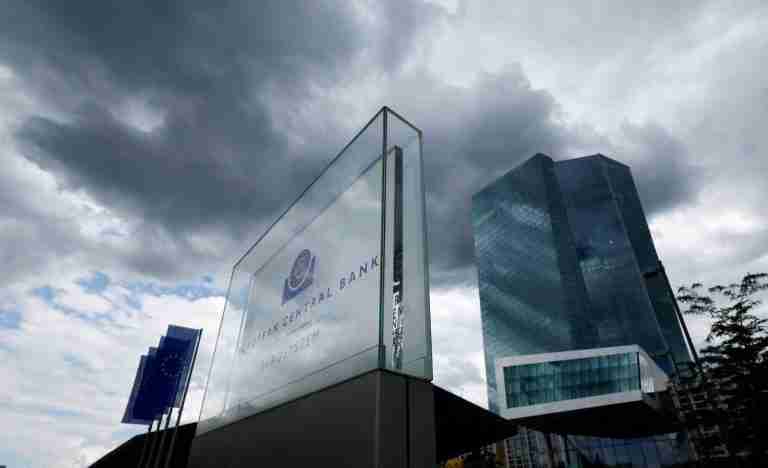
The European Central Bank is widely expected to keep its policy rates steady on Thursday and signal little appetite for cuts in the near term as the euro zone economy holds its ground in the face of global trade shocks and inflation remains stable.
Recent growth figures for the 20-country currency bloc have beaten ECB expectations, buoyed by exporters navigating U.S. tariffs more effectively than anticipated and by domestic spending that has counterbalanced a malaise in manufacturing.
Inflation, meanwhile, has been hovering around the ECB’s 2% target, boosted by price hikes in the services sector, and is expected to stay there for the foreseeable future.
That is likely to mean the ECB raises some of its growth and inflation forecasts on Thursday – effectively, though not explicitly, drawing a line under an easing cycle that saw it halve its policy rate from 4% to 2% in the year to last June.
Some members of the ECB’s Governing Council had wanted to do so at their last meeting in October.
“The haze of economic uncertainty has somewhat lifted, especially regarding trade,” Lorenzo Codogno, founder of LC Macro Advisors, said. “This will give the Governing Council greater confidence that it is in a good spot, likely eliminating any remaining easing bias.”
RATE HIKE NEXT?
ECB President Christine Lagarde may even be asked if rates are next set to go up, as some traders have started betting. But this debate is seen by many as premature given ample idle capacity in the manufacturing sector.
“I would expect Christine Lagarde to steer clear of rate hike conversations,” Spyros Andreopoulos, founder of the Thin Ice Macroeconomics consultancy, said.
Some comments from ECB board member Isabel Schnabel, chief economist Philip Lane and Lagarde herself have helped fuel some speculation about a rate hike late next year.
Financial markets have begun pricing modest chances of a rate hike late next year or early in 2027 [GVD/EUR].
But most economists polled by Reuters expect the ECB to leave rates where they are through 2026 and 2027, although the forecast range for the latter year was wide at 1.5%-2.5%.
“The reality is, the bar is probably quite high for a move in either direction in the next few meetings,” BNP Paribas chief economist Isabelle Mateos y Lago said.
HIGHER PROJECTIONS FOR GROWTH AND INFLATION
The ECB can otherwise do little but acknowledge the euro zone economy is now growing close to its potential at roughly 1.4% per year, that sentiment is recovering and that industrial output is showing signs of bottoming out.
Economists expect growth to carry forward into next year, supported by the German government’s planned investments in defence and infrastructure and a relatively tight labour market, where workers have finally seen their wages catch up with the post-pandemic surge in prices.
“A stable labour market, a growing service sector, and the German fiscal stimulus will provide a tailwind to the euro zone economy in the coming months,” Felix Schmidt, a senior economist at Berenberg, said.
Lagarde herself has said the ECB will increase its economic growth projections – which currently see GDP expanding 1.2% this year, 1.0% in 2026 and 1.3% in 2027 – and economists expect it to nudge up its core inflation forecasts for 2026-27 too.
These will be crucial to watch as they factor out the effect of a delay to the European Union’s carbon trading scheme, which will mechanistically bring down headline inflation in 2026-27 and push it up in 2028.
Among factors likely to weigh on inflation is the euro’s strength against the Chinese yuan or renminbi, which is making it even harder for the euro zone to compete with China, and against the U.S. dollar, which may fall further if the Federal Reserve cuts rates more rapidly under a new chair.
“When you look at the trade balance of Europe, it appears that the competitiveness problem is much more pronounced against China than against the U.S. For me, the exchange rate to look at is not the dollar-euro, it’s the euro-renminbi,” BNP’s Mateos y Lago said.
Reporting by Francesco Canepa; Editing by Catherine Evans and Ros Russell
Phillip Evans, a former inquiry chair at Britain’s Competition Markets Authority, was leading the case on behalf of thousands of asset managers, pension funds and financial institutions
International News via Reuters:
Major banks including JPMorgan, UBSS> and Citigroup on Thursday won their bid to block a 2.7 billion-pound ($3.6 billion) mass lawsuit over alleged foreign exchange rigging.
Phillip Evans, a former inquiry chair at Britain’s Competition Markets Authority, was leading the case on behalf of thousands of asset managers, pension funds and financial institutions.
The lawsuit, which was also brought against Barclays, MUFG and Natwest, is based on findings made by the European Commission, which fined banks more than 1 billion euros ($1.1 billion) in 2019.
The European Commission found the banks had rigged the multitrillion-dollar foreign exchange market in two separate cartels between 2007 and 2013.
Some of the world’s biggest investment banks have paid more than a combined $11 billion in fines to settle U.S., British and European regulatory allegations that traders manipulated currency rates for years.
Evans’ case was initially blocked in 2022 by the Competition Appeal Tribunal, before it was revived by the Court of Appeal the following year.
The banks appealed to the United Kingdom’s Supreme Court, which reinstated the Competition Appeal Tribunal’s decision to refuse to certify the case on an opt-out basis.
Consumer protections discussed in talks between the government and banks
Minister Lightbourne with Shawnette Griffin – SVP, Head of Retail Banking and Operations of Butterfield Bank Bermuda, and Jody Feldman – EVP, Managing Director of Butterfield Bank Bermuda
The Minister of Home Affairs, the Hon. Alexa Lightbourne, JP, MP, recently met with the leadership of HSBC Bermuda and Butterfield to discuss a range of issues related to affordability and consumer protection in Bermuda.
Minister Lightbourne outlined her Ministry’s mandate to ensure a more affordable Bermuda for all, highlighting the significant work undertaken over the past eight months to address cost-of-living pressures and strengthen fair consumer practices.
Discussions focused on the importance of affordable and adequate access to basic financial services, particularly for vulnerable members of the community. The parties explored options such as tiered banking service packages and prepaid products designed to support vulnerable customers and expand access to affordable purchases. These tools would help individuals transact more easily with a broad network of businesses and grocery stores, supporting fair and equitable participation in Bermuda’s economy.
Mortgage payments, financing for residential and community energy projects, and opportunities for partnership on consumer education campaigns were also discussed.
Minister Lightbourne with Gregory Garnier, CEO of HSBC Bank Bermuda Ltd.
Minister Lightbourne said, “Our Ministry has been tasked with helping to deliver a more affordable Bermuda for all. That requires close collaboration with our financial institutions, who are critical partners in expanding access and protecting consumers. By reviewing existing services and exploring new opportunities to improve affordability across all sectors, we demonstrate the collective effort required to make progress; particularly in the relationship with banks. Many Bermudians feel powerless in their banking relationships, and I appreciate the opportunity to meaningfully engage with senior bank executives to identify practical ways to better empower customers in Bermuda.”
Mr. Neville Grant, CEO of the Bermuda Banking Association said, “As both the Deputy Chair of the Cost of Living Commission and the CEO of the Bermuda Banking Association, we acknowledge the value of and appreciate the engagement with the Banks as key stakeholders in our community. This banking outreach is a key part of the process, and it will ensure that they are also a part of the solution. The more the banks better understand and explain the dynamics driving our cost of living, then we will be able to provide thought leadership to create practical solutions to better manage the cost of living in Bermuda. We look forward to the contributions from the remaining banks and are excited about the discussions that have been held to date.”
The Ministry of Home Affairs will continue to engage with key sectors across Bermuda’s economy to ensure that policies and practices align with the goals of affordability, fairness, and accessibility for all residents.
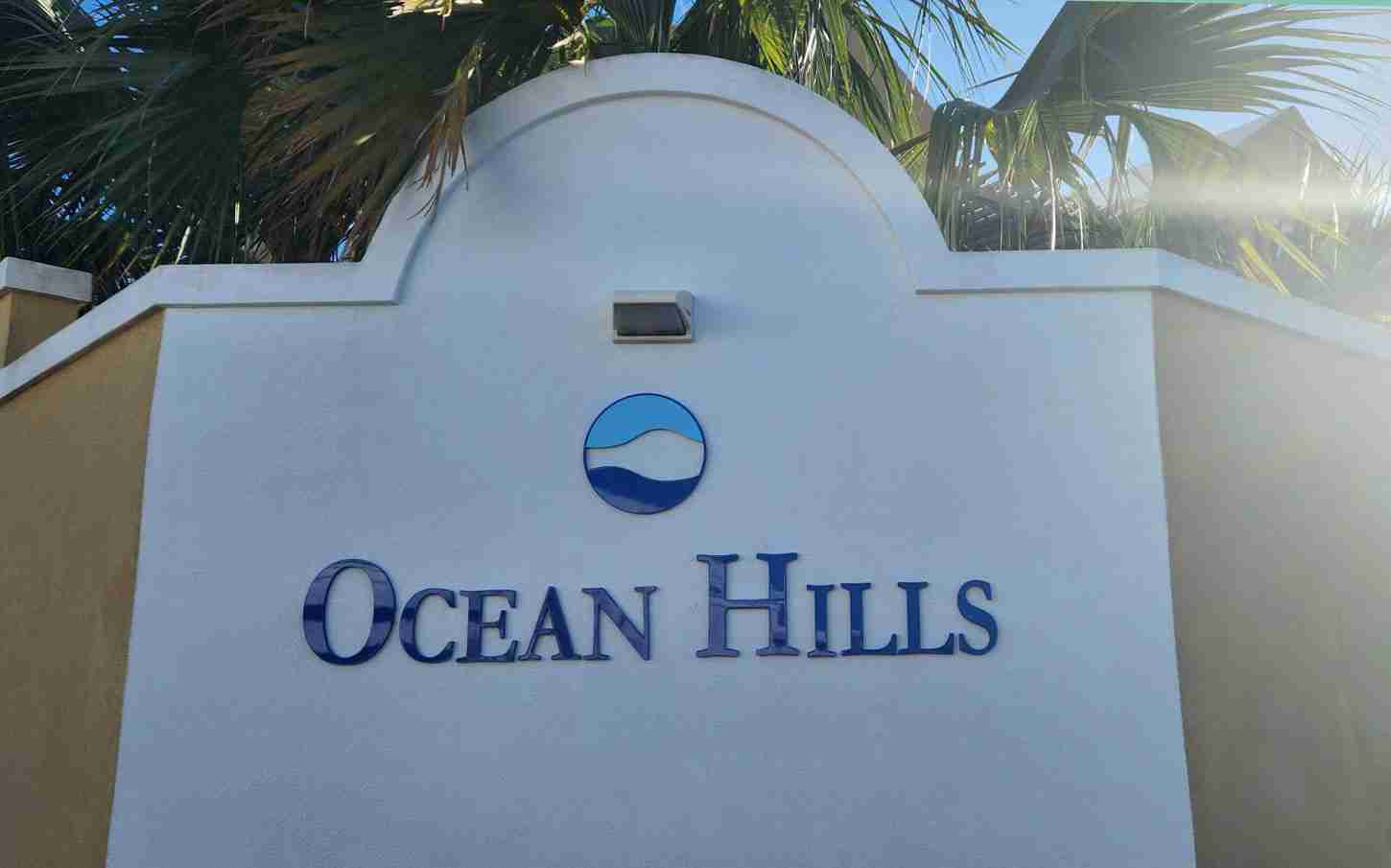
Sardis Developments III Ltd., the new owner of the former Fritholme Gardens condominium development, is proud to announce the official rebrand of the property as Ocean Hills, paying tribute to the estate’s breathtaking views and rolling topography.
The rebrand marks a new chapter for the well-established residential community. As part of this transition, Rego Sotheby’s International Realty has been appointed as the new property manager for Ocean Hills, bringing world-class expertise and a global standard of service to the estate’s operations and sales.
To date, five premium residences were on the market and two remain available, offering Bermudians, PRC’s, and EIRC holders a rare opportunity to own property in one of Bermuda’s most picturesque and thoughtfully reimagined developments.
“Ocean Hills represents more than just a name change — it is a renewed vision for the property that honours its natural environment while enhancing its value for residents and investors alike,” said Ryan Babcock, Head of Development at Sardis Developments III Ltd. “With Rego Sotheby’s International Realty managing the estate, we are confident in the future growth and prestige of this exceptional community.”
Ocean Hills offers direct access to Elbow Beach, as well as resort-style amenities including a shared pool, gym, yoga space, and an on-site beauty salon. Whether you’re seeking a primary residence, a vacation retreat, or an investment with elevated appeal, Ocean Hills delivers the best of island living.
For more information on available units or to arrange a viewing, please contact Rego Sotheby’s International Realty agents Buddy Rego at brego@regosir.com or Penny MacIntyre at pmacintyre@regosir.com.
To provide the best experiences, we use technologies like cookies to store and/or access device information. Consenting to these technologies will allow us to process data such as browsing behavior or unique IDs on this site. Not consenting or withdrawing consent, may adversely affect certain features and functions.
Functional
Always active
The technical storage or access is strictly necessary for the legitimate purpose of enabling the use of a specific service explicitly requested by the subscriber or user, or for the sole purpose of carrying out the transmission of a communication over an electronic communications network.
Preferences
The technical storage or access is necessary for the legitimate purpose of storing preferences that are not requested by the subscriber or user.
Statistics
The technical storage or access that is used exclusively for statistical purposes.The technical storage or access that is used exclusively for anonymous statistical purposes. Without a subpoena, voluntary compliance on the part of your Internet Service Provider, or additional records from a third party, information stored or retrieved for this purpose alone cannot usually be used to identify you.
Marketing
The technical storage or access is required to create user profiles to send advertising, or to track the user on a website or across several websites for similar marketing purposes.