Tuesday, November 3, 2026
Home Blog Page 670

Bermuda College to install new murals

0

Open call for submissions runs to November 21

Bermuda College has announced a new partnership with Bermuda Walls, the island’s leading public mural arts initiative, to install two large-scale murals on its campus as part of a drive to boost campus vibrancy and celebrate Bermudian identity.

A campus-wide open call is now live, inviting students to submit original mural concepts by November 21, 2025 via a Microsoft Form that includes imagery and concept details. An internal selection committee will shortlist the top five designs between November 26–28, forwarding them to the Bermuda Walls/Mural Festival team for final review. Two winning concepts will be selected in early December.

From January to February 2026, the chosen student artists will collaborate with the Bermuda Walls team to refine their designs and prepare for installation. Winners will be officially announced on Spirit Day, March 13, 2026, with mural creation slated to begin later that month.

“We are thrilled to be collaborating with Bermuda Walls to create a lasting visual legacy on our campus,” said Dr. David Sam, President of Bermuda College. “This project is about more than murals; it’s about making space for student voices, celebrating artistic talent, and connecting art with education.”

Bermuda Walls, known for transforming public spaces across the island with vibrant, large-scale works by local and international artists, welcomed the partnership. “We are delighted that the College is taking part and encouraging its students to create some bold artwork that will help enliven the campus,” said Glayson Leroy, a Bermuda Walls spokesperson. “We look forward to seeing the submissions and feel certain that we will be amazed by the creativity shown.”

Visit www.college.bm for more information.

Tanzania’s Hassan sworn into office after deadly election violence

Hassan, 65, ran against only candidates from minor parties after her main challengers from the two biggest opposition parties were disqualified from the race

International News via Reuters:

Tanzania President Samia Suluhu Hassan was sworn into office on Monday for her first elected term after winning a landslide victory in an election that set off deadly protests across the country. 

Hassan, who came to power in 2021 following the death in office of her predecessor, was declared the winner of last week’s election with 97.66% of the vote.

Wearing a red head scarf and dark glasses, she took the oath of office at a ceremony on a military base in the administrative capital Dodoma.

Hassan, 65, ran against only candidates from minor parties after her main challengers from the two biggest opposition parties were disqualified from the race.

Violent protests erupted during last Wednesday’s voting, with some demonstrators setting fire to government buildings and police firing tear gas and gunshots, according to witnesses.  

The main opposition party said hundreds of people had been killed in the protests, while the U.N. human rights office said credible reports indicated at least 10 people were killed in three cities. 

The government dismissed the opposition’s death toll as “hugely exaggerated”. Reuters could not independently verify casualty figures.

Writing by Elias Biryabarema; Editing by Aaron Ross

Pope Leo decries Sudan violence, urges dialogue and relief effort

He called on the international community to act “decisively and generously” to support relief efforts

International News via Reuters:

Pope Leo on Sunday appealed for an immediate ceasefire and the opening of humanitarian corridors in Sudan, saying he was following with “great sorrow” reports of terrible brutality in the city of Al-Fashir in Darfur.

“Indiscriminate violence against women and children, attacks on defenceless civilians and serious obstacles to humanitarian action are causing unacceptable suffering,” the pope said during his weekly Angelus address to crowds in St. Peter’s Square.

He called on the international community to act “decisively and generously” to support relief efforts.

The U.N. human rights office said on Friday that hundreds of civilians and unarmed fighters may have been killed late last month when the paramilitary Rapid Support Forces captured Al-Fashir, the Sudanese army’s last major holdout in Darfur.

The city fell a week ago after an 18-month siege, prompting tens of thousands to flee.

Pope Leo also addressed the situation in Tanzania on Sunday, saying there had been clashes with numerous casualties after recent national elections. He urged all sides to avoid violence and “walk the path of dialogue”.

Reporting by Crispian Balmer; Editing by Jan Harvey

Oil prices steady despite OPEC+ plans to pause output increases

Brent crude futures were down 1 cent, or 0.02%, at $64.76 a barrel by 0959 GMT. U.S. West Texas Intermediate crude was down 3 cents, or 0.05%, at $60.95

International News via Reuters:

Oil prices were little changed despite news that OPEC+ plans to end its supply increases, with the market weighed down by fears of an oil supply glut and weak factory data in Asia.

Brent crude futures were down 1 cent, or 0.02%, at $64.76 a barrel by 0959 GMT. U.S. West Texas Intermediate crude was down 3 cents, or 0.05%, at $60.95.

The Organization of the Petroleum Exporting Countries and its allies, known collectively as OPEC+, agreed on Sunday to raise output by a small 137,000 barrels per day (bpd) in December and to pause increases in the first quarter of next year.

Brent and WTI both fell more than 2% in October, down for a third straight month and hitting a five-month low on October 20.

ING’s Head of Commodities Research, Warren Patterson, said the OPEC+ decision appears to be acknowledgment of the large surplus that the market faces, particularly early next year.

“Obviously, (there is) still plenty of uncertainty over the scale of the surplus, which will be dependent on how disruptive U.S. sanctions will be to Russian oil flows,” he added.

RBC Capital’s Head of Commodities Strategy, Helima Croft, noted that Russia remains a key supply wild card after U.S. sanctions on Russian producers Rosneft and Lukoil as well as attacks on the country’s energy infrastructure resulting from the war in Ukraine.

A Ukrainian drone attack struck Tuapse on Sunday, one of Russia’s main Black Sea oil ports, causing a fire and damaging at least one ship.

Analysts are keeping their oil price forecasts largely unchanged as rising OPEC+ output and lacklustre demand offset geopolitical risks to supply, a Reuters poll showed. Estimates of oil market surplus ranged from 190,000 to 3 million bpd.

The Energy Information Administration reported on Friday that U.S. crude oil output rose to a record 13.8 million bpd in August.

Headwinds for Asia’s big manufacturing hubs persisted in October, business surveys showed on Monday. Asia is the world’s biggest oil-consuming region. 

Reporting by Shadia NasrallaAdditional reporting by Florence TanEditing by David Goodman

Powerful 6.3 quake kills at least 20 in Afghanistan, hundreds injured

The U.S. Geological Survey said the quake hit at a depth of 28 km (17.4 miles) near Mazar-e Sharif, a city of around 523,000 famous for its shrines and historic sites

A rescuer works following an earthquake at an unidentified location in Afghanistan, in this handout image released November 3, 2025. Afghan Red Crescent/Handout via REUTERS

International News via Reuters:

A powerful 6.3 magnitude earthquake struck near the northern Afghan city of Mazar-e Sharif early on Monday, killing at least 20 people, injuring hundreds and damaging the city’s historic Blue Mosque, authorities said, with the death toll likely to rise.   

 The U.S. Geological Survey said the quake hit at a depth of 28 km (17.4 miles) near Mazar-e Sharif, a city of around 523,000 famous for its shrines and historic sites. 

Mohammad Rahim, a survivor in Tashqurghan district close to the quake’s epicentre, said the earth shook violently for around 15 seconds.

“When we finally got outside, there was so much dust in the air that we couldn’t see anything,” he told Reuters while standing in front of a collapsed building.

His mother and brother, who were both trapped in the rubble, were eventually freed by rescue workers and other locals, he said.

At least 20 people were killed and over 500 were injured, Health Ministry spokesperson Sharfat Zaman said, but officials warned the toll could rise as rescue teams reached remote villages in the worst-hit provinces of Balkh and Samangan.

“Our rescue and health teams have arrived in the area, and all nearby hospitals have been put on standby by the leadership to treat the injured,” Zaman said.

Footage released by the Afghan Ministry of Defence showed military rescue teams digging through rubble and pulling the body of a young girl from the dirt. Reuters was not able to independently verify the location and date of the images.

The United Nations mission in Afghanistan said in a post on social media platform X it was on the ground supporting rescue efforts.

“We stand with the affected communities and will provide necessary support,” the post said.

BLUE MOSQUE

The earthquake damaged part of the Blue Mosque, considered one of the holiest sites in Afghanistan and believed to be the burial site of the cousin and son-in-law of the Prophet Mohammad, Balkh province spokesperson Haji Zaid said. 

The current structure was built in the 15th century.

Footage shared on social media and verified by Reuters showed broken masonry and tiles lying in the courtyard of the mosque, though the main structure remained standing. 

 The disaster is the latest challenge for war-torn Afghanistan’s Taliban administration, already grappling with crises including an August quake that killed thousands, a sharp drop in foreign aid and mass deportations of Afghan refugees by neighbouring countries.

The quake disrupted power across the country, including to the capital Kabul, national power supplier Da Afghanistan Breshna Company said in a statement.

The USGS said “significant casualties are likely and the disaster is potentially widespread”.

ACTIVE FAULTS    

Afghanistan is particularly vulnerable to quakes as it lies on two active faults that have the potential to rupture and cause extensive damage. 

More than 2,200 people were killed and thousands more injured after a quake and strong aftershocks in the southeast of the war-shattered country at the end of August. 

Past events with this alert level have required a regional or national level response, the system’s alert added.

Reporting by Mohammad Yunus Yawar in Kabul and Angela Christy in Bengaluru; Writing by Ariba Shahid, YP Rajesh and Alasdair Pal; Editing by Stephen Coates

Man charged with 10 counts of attempted murder after knife attack on UK train

Eleven people were injured in the mass stabbing on the train, including a member of the train crew who remains in hospital in a critical but stable condition

International News via Reuters:

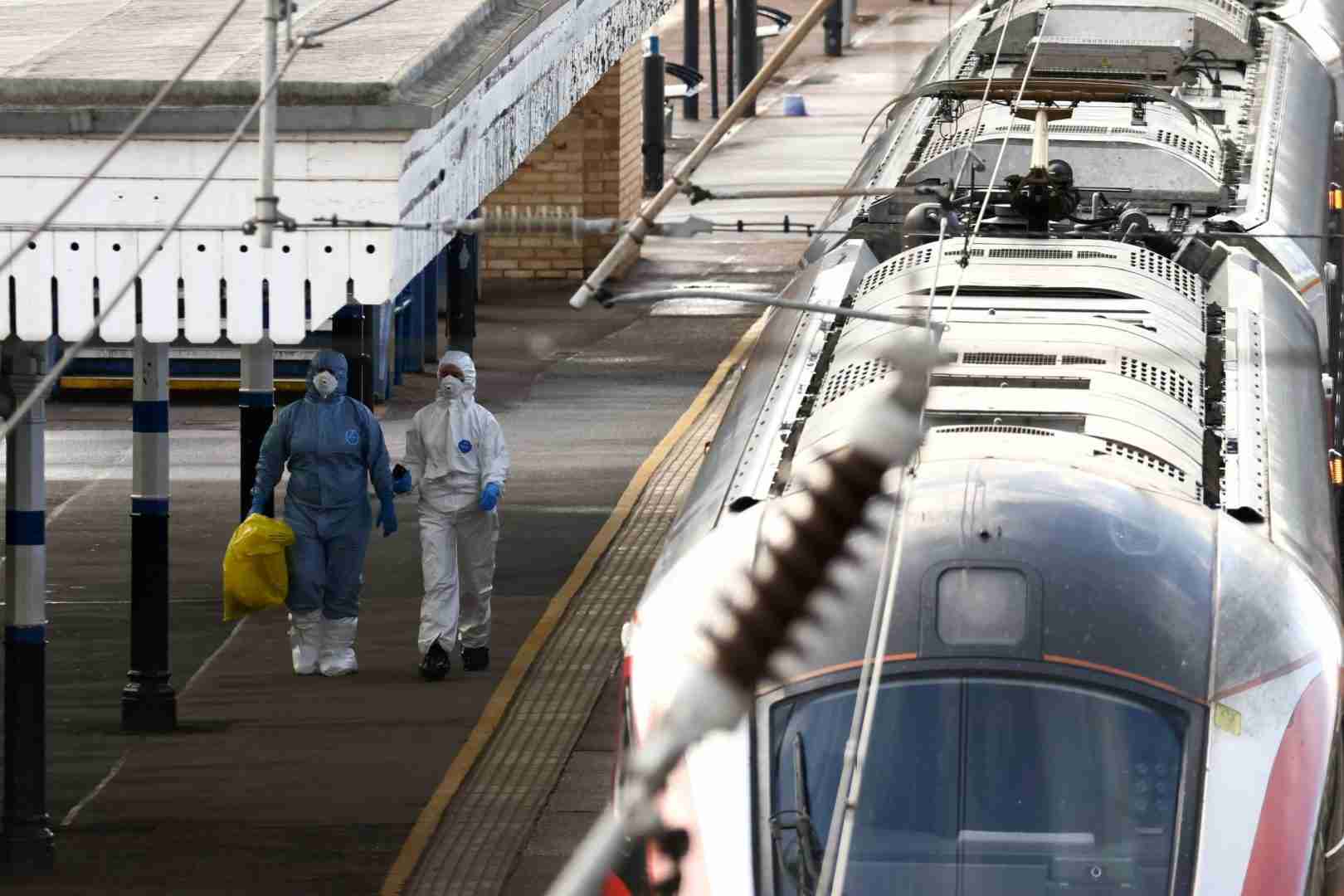
British police said a 32-year-old British man was on Monday charged with 10 counts of attempted murder over a knife attack on a train on Saturday, an incident officers had already said was not being treated as terrorism-related.

Eleven people were injured in the mass stabbing on the train, including a member of the train crew who remains in hospital in a critical but stable condition. That person was hurt while trying to stop the accused from stabbing others.

The attack, on a London-bound train which then stopped at Huntingdon about 80 miles north of London, shocked the country, and prompted statements from Prime Minister Keir Starmer and King Charles, who sent their sympathies to those affected.

Britain’s Crown Prosecution Service said Anthony Williams, 32, was charged with 11 counts of attempted murder, one count of assault occasioning actual bodily harm and two counts of possession of a bladed article.

Ten of the attempted murder charges were linked to the train attack, British Transport Police said, while the eleventh charge was connected to an incident at a station in east London earlier on the same day.

Williams, who is from Peterborough in eastern England, will appear at Peterborough Magistrates Court later on Monday, they said, adding that the charges were brought after a review of CCTV footage from the train amongst other evidence.

Transport minister Heidi Alexander confirmed on Monday the man was not known to security services. She declined to comment on whether he was known to mental health services.

Five of the injured had been discharged from hospital by late on Sunday.

Reporting by Sam Tabahriti and Sarah Young; Editing by Kate Holton and William James

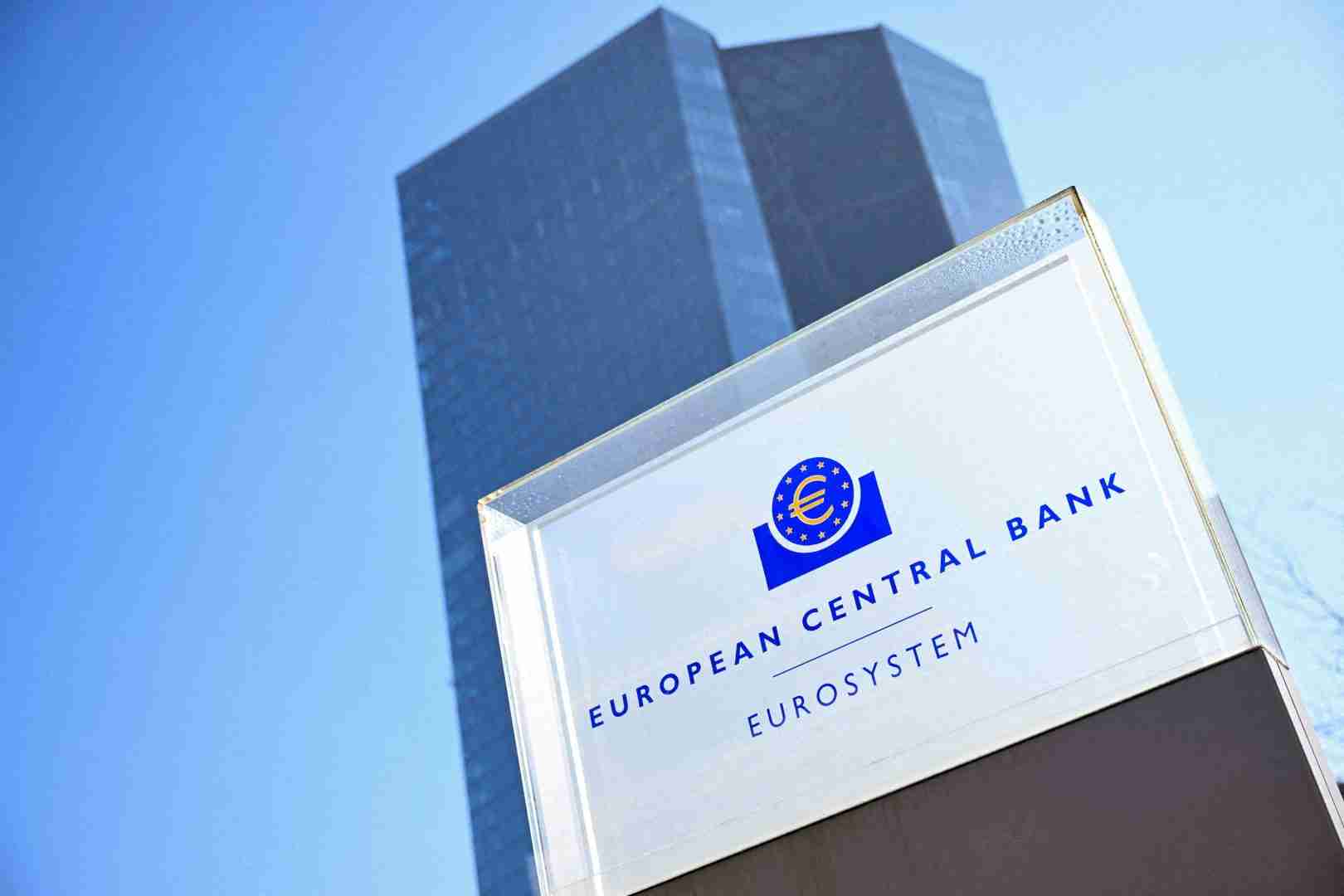
Attempts to fine-tune ECB policy could create undue volatility, Kazimir says

The ECB left rates unchanged for the third meeting in a row on Thursday

International News via Reuters:

Euro zone inflation risks are balanced and the European Central Bank should not try to fine-tune its policy because adjusting for minor deviations could itself cause market volatility, ECB policymaker Peter Kazimir said on Monday. 

The ECB left rates unchanged for the third meeting in a row on Thursday and repeated its mantra that policy was in a “good place”, a hint taken by investors to mean that policy could be unchanged for some time to come. 

“We should not try to overengineer our policy and fine-tune inflation dynamics to perfection with small moves,” Kazimir, an outspoken policy hawk, wrote in a blog post. “In trying to be overly precise, the central bank could itself become a source of volatility rather than the pillar of stability our economy needs.”

He argued that the ECB should not worry too much about small deviations from its 2% inflation target, especially because risks are broadly balanced.

Inflation looks set to dip below 2% next year, mostly on energy base effects, before a return to target in subsequent years. But some policymakers are worried that firms may lower their own inflation expectations during this dip, entrenching low price growth and making undershooting self-fulfilling.

Kazimir, however, argued that it would be a mistake to ignore upside risks, especially as recent underlying price growth figures have been a bit higher than forecast, as has wage data.

“We must recognise the presence of lingering upside risks,” Kazimir said. 

The ECB itself did not offer a new risk assessment last week but ECB chief Christine Lagarde argued that some of the largest downside risks to growth have receded given the trade deals reached with the U.S. by some of the world’s largest economies and the ceasefire in Gaza.

Financial investors see virtually no chance of a rate cut in December but still see a roughly 40% chance of a cut by mid-2026.

“Data-dependent means keeping all options open,” Kazimir said. “It means our next move — when it comes — could, in principle, be in either direction, depending on the signals we receive.”

Reporting by Balazs Koranyi; Editing by Hugh Lawson

UK factories helped by Jaguar Land Rover reopening, PMI shows

The S&P Global Purchasing Managers’ Index for Britain’s manufacturing sector climbed to 49.7 from 46.2 in September and up slightly from a provisional estimate for October of 49.6

International News via Reuters:

British factories had their strongest month in a year in October but the recovery was driven by a one-off bounce from the restart of production at carmaker Jaguar Land Rover after it was hit by a cyberattack, a survey published on Monday showed.

The S&P Global Purchasing Managers’ Index for Britain’s manufacturing sector climbed to 49.7 from 46.2 in September and up slightly from a provisional estimate for October of 49.6. 

The index was only marginally below the 50.0 growth threshold and was the highest in 12 months. 

An output measure returned to growth, led by intermediate goods which reflected the boost from JLR’s gradual reopening for companies in its supply chain. 

The headline PMI index for Britain’s manufacturing sector, which accounts for around 9% of total economic output in the country, has been in negative territory since October 2024.

Rob Dobson, director at S&P Global Market Intelligence, said the JLR-linked bounce could prove short-lived due to sluggish demand at home and abroad and companies were reliant on backlog work from previous orders.

Firms were also worried about finance minister Rachel Reeves’ next budget on November 26.

“Manufacturers seem to be stuck in a holding pattern until the domestic policy and geopolitical backdrops exhibit greater clarity,” Dobson said.

As well as the risk of higher taxes in the budget, confidence is being strained by U.S. President Donald Trump’s import tariffs. The PMI’s business confidence measure hit an eight-month high but remained below average.

Hiring fell again but the drop was the least severe in 12 months. 

Input costs rose at the slowest pace so far in 2025 and prices charged by manufacturers increased at their second-slowest pace of the year, welcome news for the Bank of England as it considers when to resume its cuts to interest rates.

A final PMI for British services firms in October is due to be published on Wednesday. The preliminary version of that survey showed it reached a two-month high of 51.1 last month.

Writing by William Schomberg; Editing by Toby Chopra

Dollar index at three-month high, testing top of recent range

The Fed lowered interest rates by 25 basis points last week, as expected, but Chair Jerome Powell signalled that may be the central bank’s last cut this year

International News via Reuters:

The dollar hovered near a three-month high on Monday ahead of economic data this week that will offer only vague clues about the health of the U.S. economy and could reinforce the Federal Reserve’s cautious stance.

The Fed lowered interest rates by 25 basis points last week, as expected, but Chair Jerome Powell signalled that may be the central bank’s last cut this year, citing the risk of making additional moves without a more robust picture of the economy.

Were it not for the ongoing U.S. government shutdown, data releases scheduled for this week, including U.S. non-farm payrolls, would have helped with that picture.

However, with government releases likely to be delayed again, investors will be left with ADP employment data and ISM PMIs, though it seems unlikely these will move the dial significantly.

A number of Fed bank presidents on Friday aired their discomfort with the decision to ease policy, and traders are now pricing in a roughly 68% chance of a 25 bp cut in December, having seen such a move as likely ahead of last week’s meeting.

The yen was at 154.1 per dollar, languishing near an 8-1/2-month low, pressured by wide interest rate differentials.

Meanwhile the euro was down 0.16% at $1.1513, its lowest in three months, and the pound was 0.4% lower at $1.3118.

That left the dollar index, which measures the currency against a basket of six other majors, up 0.16% at 99.89, its highest since August 1.

The index has traded in a tight range of between around 96 and 100 over the last six months.

“All eyes are on whether it can break out of that range, and if the rebound has legs,” said Lee Hardman, senior currency analyst at MUFG, adding that the main driver of the stronger dollar was the hawkish repricing of Fed expectations.

The pound and the yen face their own pressures.

Even though Bank of Japan Governor Kazuo Ueda last week sent the strongest signal yet that a rate hike was possible as soon as December, markets remained underwhelmed by the central bank’s gradual approach, particularly given that the Fed has turned more hawkish.

That has piled pressure on the yen, prompting jawboning from Japanese authorities to stem the currency’s slide.

The yen is approaching levels at which Japanese authorities intervened in markets in 2022 and 2024 to support the currency.

“The yen could start to see more support as markets get nervous about intervention as we get close to those levels, though I don’t think it’s enough to change things on its own,” said Hardman.

The yen was also pinned near last week’s record low against the euro, last trading at 177.4.

Sterling has softened as market expectations of another Bank of England rate cut this year increased after softer-than-expected inflation data released last month.

The BoE meets this week, with some analysts predicting a 25 basis point cut, though market pricing only reflects a one in three chance of this occurring.

The Aussie inched up 0.1% to $0.6554, supported by expectations that the Reserve Bank of Australia will hold rates on Tuesday, following an uncomfortably high reading of core inflation, while the dollar was up 0.27% to 0.8067 Swiss francs, its highest in over three weeks.

Reporting by Rae Wee; Editing by Jacqueline Wong, Kirsten Donovan

Louvre heist work of petty criminals, not organised crime, prosecutor says

French media have speculated that the robbers were amateurs, as they dropped the most precious of the jewels during their flight

International News via Reuters:

The audacious daytime robbery of historical jewels worth $102 million from the Paris Louvre museum last month was executed by petty criminals, rather than professionals from the world of organised crime, the Paris prosecutor said on Sunday.

On a Sunday morning two weeks ago, two men parked a movers’ lift outside the Louvre, rode up to the second storey, smashed a window, cracked open display cases with angle grinders, and then fled on the back of scooters driven by two accomplices in a heist lasting less than seven minutes.

With three of the four suspected thieves now believed to be under arrest and the jewels still missing, their profiles do not resemble Ocean’s Eleven-style professional gangsters, but small-time criminals from the hardscrabble northern suburbs of Paris, authorities say.

“This is not quite everyday delinquency… but it is a type of delinquency that we do not generally associate with the upper echelons of organised crime,” Paris prosecutor Laure Beccuau told franceinfo radio.

SUSPECTS ‘CLEARLY LOCAL PEOPLE’, PROSECUTOR SAYS

She added that the profiles of the four people under arrest so far – including the girlfriend of one of the suspected robbers – are not typical of organised crime professionals capable of executing complex operations.

“These are clearly local people. They all live more or less in Seine-Saint-Denis,” she said, referring to a low-income area north of Paris.

French media have speculated that the robbers were amateurs, as they dropped the most precious of the jewels – Empress Eugenie’s crown, made of gold, emerald and diamonds – during their flight, left tools and other items at the scene, and failed to set fire to the movers’ truck before fleeing.

A week after the raid, police arrested two men suspected of being the ones who broke into the Louvre – a 34-year-old Algerian who has lived in France since 2010 and was detained by police as he tried to board a flight to Algeria, and a 39-year-old already under judicial supervision for aggravated theft.

Both live in Aubervilliers, in northern Paris, and have “partially admitted” their involvement, Beccuau said last week.

Two more suspects, a 37-year-old man and a 38-year-old woman, were arrested on October 29 and charged on Saturday.

‘AT LEAST’ ONE PERSON STILL MISSING FROM HEIST GROUP

Beccuau said the 37-year-old man was believed to be part of the four-man group that carried out the heist, based on DNA found in the moving truck.

She said he had a record of 11 criminal convictions for a range of offences, including traffic-related offences, aggravated theft and an attempt to break into an automated teller machine.

She added that he was in a relationship with the 38-year-old woman and that they have children together, and that he and one of the two other men arrested had been convicted of the same robbery in 2015.

Traces of the woman’s DNA were also found in the movers’ truck, but Beccuau said these DNA traces seemed to have been transferred into the truck, possibly by a person or an object later put into the vehicle.

The prosecutor’s office said on Saturday that both deny involvement in the heist.

Asked whether authorities believed that three of the four thieves were now under arrest, Beccuau said that “at least one person is still missing”. She did not rule out there being other accomplices.

Three people who had been arrested along with the couple on October 29 have been freed without charge, the prosecutor’s office said on Saturday.

Reporting by Geert De Clercq; Editing by Jan Harvey

UK police say mass stabbing on train is not terrorist incident, two British men arrested

Counterterrorism police had helped with the initial investigation after the mass stabbing of passengers on a train in eastern England on Saturday

International News via Reuters:

British police said on Sunday that a knife attack on a train which put 11 people in hospital was not a terrorist incident, adding that two men – both British nationals – had been arrested.

Counterterrorism police had helped with the initial investigation after the mass stabbing of passengers on a train in eastern England on Saturday.

“At this stage, there is nothing to suggest that this is a terrorist incident,” Superintendent John Loveless from British Transport Police told media on Sunday.

The two men arrested on suspicion of attempted murder were a 32-year-old male, a Black British national, and a 35-year-old British national of Caribbean descent, Loveless said. Both were born in the UK, he added.

“We continue work to establish the full circumstances and motivation for this incident,” he said.

“It would not be appropriate to speculate on the cause.”

ARMED POLICE BOARD TRAIN

The arrests were made by armed police after the train made an emergency stop at Huntingdon around 80 miles (130 km) north of London.

Of the 11 people hospitalised, four have since been discharged and two patients remain in a life-threatening condition, police said.

Prime Minister Keir Starmer called it an “appalling incident” which was “deeply concerning”, while King Charles said he was “truly appalled and shocked”.

Knife crime in England and Wales has risen 87% over the past decade, with 54,587 offences last year alone, a 2% rise from 2023 and among the highest rates in Europe, according to figures from Britain’s interior ministry show.

In her statement, Interior Minister Shabana Mahmood said she was “deeply saddened”, while urging people to avoid speculation about the incident.

The government is keen to stop rumours spreading on social media following an incident in Southport in northwest England in 2024, when internet claims over the murder of three young girls sparked days of rioting across the country.

BLOOD ON ALL THE CHAIRS

Witness Olly Foster told the BBC that he was on the train which was heading towards London on Saturday evening when someone ran past him saying a man was stabbing “everyone, everything”.

“I put my hand on this chair…and then I look at my hand, and it’s covered in blood. And then I look at the chair, and there’s blood all over the chair. And then I look ahead and there’s blood on all the chairs,” he said.

Another witness told Sky News that a suspect was seen waving a large knife before being tasered by police.

Britain’s current threat level from terrorism is rated as “substantial” by security services, meaning an attack is considered “likely”.

After a number of serious attacks in 2017, Britain has had some quieter years in the 2020s, although last month three people were killed when a synagogue was attacked in Manchester.

Reporting by Ben Makori, writing by Sarah Young; Editing by Sharon Singleton and Philippa Fletcher

Jamaican farms reel from Hurricane Melissa, fueling fears of food shortages

St. Elizabeth was left reeling after the storm, which flattened fields of yams, pumpkins, potatoes, and cassava in western Jamaica and caused losses among livestock

International News via Reuters:

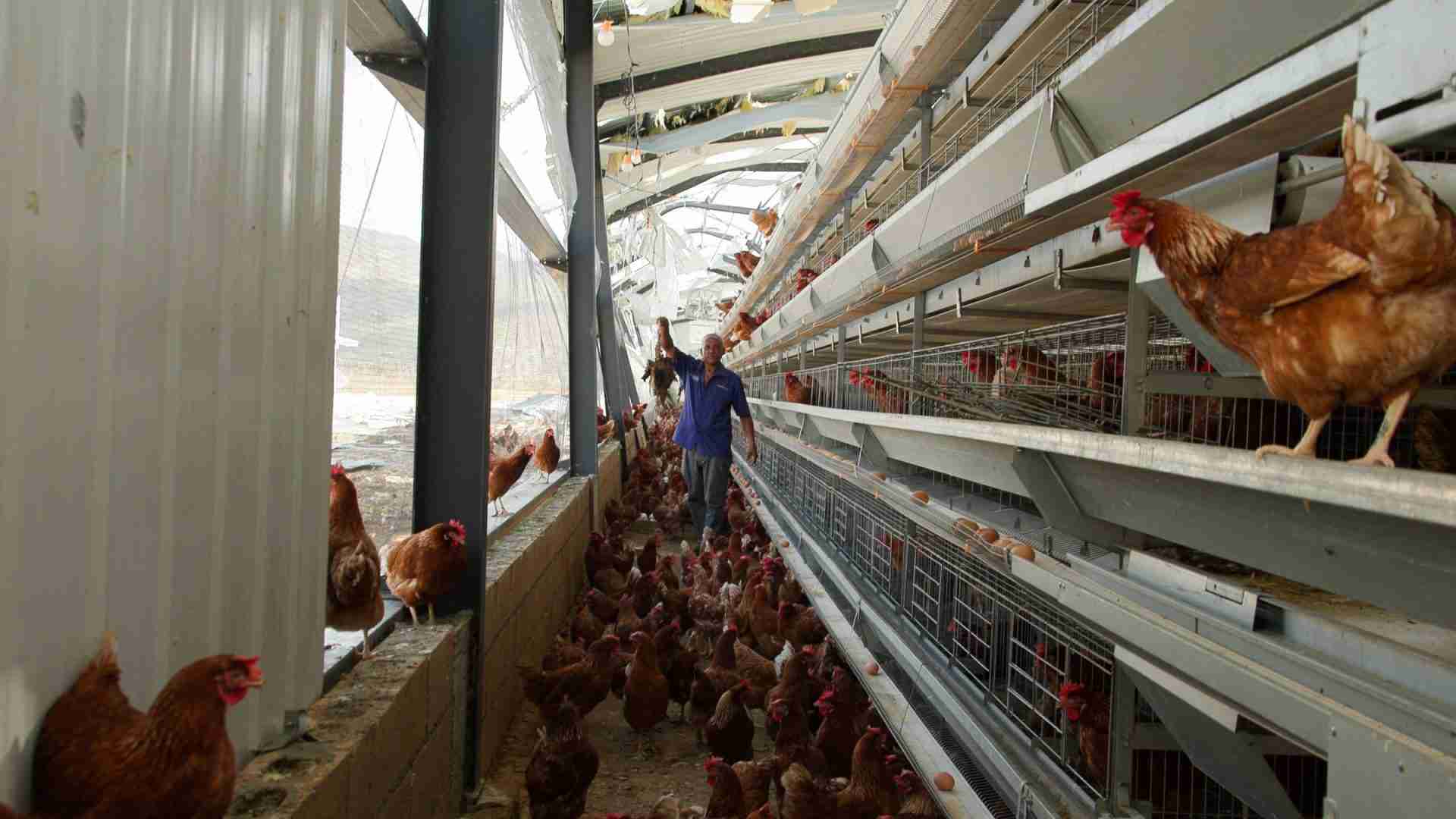
Designed to withstand 150-mph winds, the egg farm Osbourne Brumley built with his life savings in western Jamaica’s St. Elizabeth parish proved no match for Category 5 Hurricane Melissa. 

On Tuesday, Melissa’s 185-mph (298-kph) winds tore across the western side of the island, damaging Brumley’s facility and killing thousands of chickens.

St. Elizabeth, considered Jamaica’s breadbasket, was left reeling after the storm, which flattened fields of yams, pumpkins, potatoes, and cassava in western Jamaica and caused losses among livestock.

EGG SHORTAGE FEARED

The damage has stirred fears the country of 2.8 million people, where at least 28 people died because of the storm, could face shortages of food staples as farmers struggle to recover and replant.

Brumley, 69, who expects losses on his uninsured J$540-million ($3.37-million) investment, warns Melissa’s blow could trigger a “massive” egg shortage on the island.

The storm ripped the roofs from two birdhouses, collapsing the heavy metal feed silo and other equipment. With no electricity for automated feeders and staff shortages caused by the storm, Brumley fears the remaining birds will soon perish.

Brumley’s other farm in Springfield, 10 miles (16 km) away, was also destroyed. His facilities combined produced 75,000 eggs daily, supplying over 200 supermarkets across six parishes and 14 hotels.

“They’re gonna be in trouble,” he said. “There’s no other egg farm in Jamaica the size of mine.”

Before Melissa, eggs were already scarce following Hurricane Beryl, which grazed Jamaica’s southern coast in July 2024 as a Category 4 storm, damaging crops and livestock across farming parishes Clarendon, Manchester and St. Elizabeth and producing temporary shortages of vegetables and produce.

“We are going to be short on food,” said Ricardo Williams, 33, who helps his father farm cassava, corn, potatoes and pumpkins in Mitcham, St. Elizabeth.

Other farmers agreed, saying livestock losses and destroyed fields mean some crops will not return until at least February, and that where produce survives, some prices could double.

FARM PLAN COMING

Agriculture Minister Floyd Green said Melissa will have “a crippling effect on our agricultural sector” because some of the hardest-hit parishes are also the most productive. A fuller scope of the damage, he added, will not be known until assessments are completed this week.

Once the evaluation is done, Green said, a disaster-recovery task force will devise a plan to boost output from the least-affected parishes. Assistance will also come from international partners and Jamaica’s disaster-insurance funds. The country, in the interim, will rely more on imports, such as liquid eggs, to stabilize supplies.

“It’s not going to be a quick recovery,” Green acknowledged, but he expressed confidence in the resilience of farmers. “Once you provide them with opportunity and make it easy for them to start again, then they will.”

Reporting by Zahra Burton and Maria Alejandra Cardona in St. Elizabeth Parish, Jamaica; Editing by Brendan O’Boyle and Rod Nickel