Documentary showcases Bermuda’s oceans, culture, and innovation
https://vimeo.com/887564929/9efc6027aa?share=copy
Heart of the Sea was selected by 32 film festivals in total, being nominated in 2 festivals, a semi-finalist in 20 festivals, an award winner in 8 festivals, and selected by 2 festivals.
Heart of the Sea plunges audiences into the vibrant waters and rich culture of Bermuda, a vital biodiversity and ocean science hub at the heart of the Atlantic. This documentary offers an immersive exploration of how Bermuda is pioneering a blue economy—one that balances economic growth with the preservation of its precious marine heritage.
Guided by Bermudian scientists, poets, and political leaders, we embark on a journey through the island’s breathtaking seascapes and delve into its hidden underwater shipwrecks, now bustling with marine life. The film unveils the groundbreaking scientific efforts to combat climate change and safeguard these fragile ecosystems.
At the core of Heart of the Sea lies the dance of the Gombey, an iconic Bermuda ritual that symbolizing the island’s resilient spirit and diverse cultural roots. As the Gombey weaves through the narrative, it leads us toward a future where Bermuda’s oceans, communities, and economy thrive in harmony—a vision as powerful and dynamic as the dance itself.
U.S. President Donald Trump on Friday announced the change to the visa program that has long been a recruitment pathway for tech firms
International News via Reuters:
The Trump administration’s hefty new visa fees for H-1B workers have prompted high-level talks inside companies in Silicon Valley and beyond on the possibility of moving more jobs overseas – precisely the outcome the policy was meant to stop.
U.S. President Donald Trump on Friday announced the change to the visa program that has long been a recruitment pathway for tech firms and encouraged international students to pursue postgraduate courses in the United States.
While the $100,000 levy applies only to new applicants – not current holders as first announced – the confusion around its roll-out and steep cost are already leading companies to pause recruitment, budgeting and workforce plans, according to Reuters interviews of founders, venture capitalists and immigration lawyers who work with technology companies.
“I have had several conversations with corporate clients … where they have said this new fee is simply unworkable in the U.S., and it’s time for us to start looking for other countries where we can have highly skilled talent,” said Chris Thomas, an immigration attorney at Colorado-based law firm Holland & Hart. “And these are large companies, some of them household names, Fortune 100 type companies, that are saying, we just simply cannot continue.”
About 141,000 new applications for H-1B were approved in 2024, according to Pew Research. Though Congress caps new visas at 65,000 a year, total approvals run higher because petitions from universities and some other categories are excluded from the cap. Computer-related jobs accounted for a majority of the new approvals, the Pew data showed.
FIRMS WILL CUT H-1B WORKERS
The Trump administration and critics of the H-1B program have said that it has been used to suppress wages and curbing it opens more jobs for U.S. tech workers. The H-1B visa program has also made it more challenging for college graduates trying to find IT jobs, Trump’s announcement on Friday said.
The visa previously cost employers only a few thousand dollars. But the new $100,000 fee would flip the equation, making hiring talent in countries like India – where wages are lower and Big Tech now builds innovation hubs instead of back offices – more attractive, experts and executives told Reuters.
“We probably have to reduce the number of H-1B visa workers we can hire,” said Sam Liang, co-founder and CEO of popular artificial intelligence transcription start-up Otter. “Some companies may have to outsource some of their workforce. Hire maybe in India or other countries just to walk around this H-1B problem.”
BAD FOR STARTUPS
While conservatives have long applauded Trump’s wide-ranging immigration crackdown, the H-1B move has drawn support from some liberal quarters as well.
Netflix co-founder and well-known Democrat donor Reed Hastings – who said he has followed H-1B politics for three decades – argued on X that the new fees would remove the need for a lottery and instead reserve visas for “very high value jobs” with greater certainty.
But Deedy Das, a partner at venture capital firm Menlo Ventures that has invested in startups such as AI firm Anthropic, said “blanket rulings like this are rarely good for immigration” and would disproportionately affect startups.
Unlike large technology companies whose compensation packages are a combination of cash and stock, pay packages of startups typically lean towards equity as they need cash to build the business.
“For larger companies, the cost is not material. For smaller companies, those with fewer than 25 employees, it’s much more significant,” said Das. “Big tech CEOs expected this and will pay. For them, fewer small competitors is even an advantage. It’s the smaller startups that suffer most.”
INNOVATION AT RISK
The policy could also mean fewer of the talented immigrants who often go on to launch new firms, analysts said.
More than half of U.S. startups valued at $1 billion or more had at least one immigrant founder, according to a 2022 report from the National Foundation for American Policy, a nonpartisan think tank based in Virginia.
Several lawyers said startups they represent are pinning hopes on lawsuits that argue the administration overstepped by imposing a fee beyond what Congress envisioned, betting courts would dilute the rule before costs cripple hiring.
If not, “we will see a pullback from the smartest people around the world,” said Bilal Zuberi, founder of Silicon Valley-based venture capital firm Red Glass Ventures, who began his career in the U.S. on an H-1B visa.
Reporting by Aditya Soni in San Francisco and Echo Wang in New York; Additional reporting by Krystal Hu in New York; Editing by Sayantani Ghosh and Kate Mayberry
The PMI’s measure of business optimism about the coming 12 months slipped to its lowest since June
International News via Reuters:
British firms have reported a loss of momentum and confidence ahead of possible new tax increases in finance minister Rachel Reeves’ next budget in November, according to a survey that also showed another drop in hiring.
S&P Global’s preliminary UK Composite Purchasing Managers’ Index, covering the services and manufacturing sectors, slowed to 51.0 in September from 53.5 in August, not far above the 50.0 level that separates growth from contraction.
Economists polled by Reuters had forecast a softer fall to 53.0 in Tuesday’s survey.
The PMI’s measure of business optimism about the coming 12 months slipped to its lowest since June.
REEVES’ DILEMMA: RAISING TAXES VERSUS BOOSTING GROWTH
“Amid talk of further tax rises being needed in the Budget later this year, it’s not surprising to see that business expectations have worsened again in September,” Chris Williamson, chief business economist at S&P Global Market Intelligence, said.
“In the absence of an improvement in confidence, it’s unlikely that the economy will make any strong gains in the months ahead irrespective of the outlook for interest rates,” Williamson said.
Reeves is trying to chart a way between raising taxes and boosting growth in her November 26 budget.
Sterling fell by a third of a cent against the dollar immediately after the PMI was published before recovering some of that drop. Yields on British gilts also extended falls.
“Today’s data release suggests that the downside risks to activity may be growing, but we doubt it will ease the Bank of England’s growing inflation fears,” Ashley Webb, UK economist at Capital Economics, said.
“We continue to think that the Bank won’t cut interest rates at either of the next two meetings in November and December.”
SERVICES, MANUFACTURING PMI HIT MULTI-MONTH LOWS
Firms cut jobs again, reflecting “hiring freezes and the non-replacement of voluntary leavers in response to strong cost pressures and reduced workloads”.
S&P said the preliminary PMI reading for the services sector hit a two-month low of 51.9 in September, down from 54.2 in August. The smaller manufacturing PMI fell to its lowest since April at 46.2 from 47.0 in August.
The downturn in manufacturing output was the fastest since March, with some factories saying the shutdown of Britain’s biggest automaker Jaguar Land Rover had impacted activity in the automotive supply chain. The company, which was hit by cyber attacks, said on Tuesday that it was extending the closure of its factories until October 1.
Service providers reported a steep rise in output prices, which they attributed to wage pressures and efforts by suppliers to pass on higher payroll costs to consumers.
Many employers have said they are struggling to cope with the higher costs resulting from a tax increase on them in Reeves’ first budget.
However, there was a slight moderation in companies’ cost pressures this month.
Williamson said the signs of lost momentum from the PMI survey might prompt the Bank of England to take a quicker approach to cutting interest rates.
The BoE held its benchmark rate at 4% last week and it is monitoring for signs that inflation pressures are waning before it reduces borrowing costs again.
Reporting by Suban Abdulla and William Schomberg; Editing by Hugh Lawson and Joe Bavier
The Department of Education today announced the launch of a modernised Student Code of Conduct, which will be implemented across the Bermuda Public School System (BPSS).
The updated Code is the culmination of a comprehensive, multi-year review process that began in 2019. It is designed to foster a strong partnership for student success by creating safer, more respectful, and focused learning environments for every student and educator.
“This Code of Conduct represents our commitment to the safety and success of our students and the professional integrity of our educators,” said The Hon Kim Wilkerson, acting Minister of Education. “A safe and orderly classroom is the foundation of all learning. This framework ensures we are not only teaching students accountability but also affirming the right of our teachers to lead classes free from disruption. When our teachers are supported and our classrooms are secure, our students are focused and empowered to achieve their very best.”
The development of the modernised Code was a deliberately thorough and inclusive process. It involved extensive research, anonymous staff surveys that garnered hundreds of responses, and direct expert consultation. The Code of Conduct Committee, led by educator Tracy Hayward and including school leaders at all three levels of the system, engaged in numerous focus group sessions with a wide cross-section of the community.
The invaluable input from groups including school principals, school counsellors, Parent Teacher Association presidents, the Coalition for the Protection of Children, The Family Centre, a Magistrate, the Department of Child and Family Services, and officers from the Bermuda Police Service was instrumental in shaping the final document. The Department also extends its sincere thanks to the Bermuda Union of Teachers, whose executive members and school representatives participated in foundational focus groups to help guide this important work.
A key principle of the Code is that it is “Instructive, Not Punitive,” shifting the focus to restorative practices that repair harm and use misbehaviour as a teachable moment. Key features include a transparent four-level system for “Clear Expectations, Fair Responses” and a new system-wide policy on personal electronic devices – a directive from the Ministry of Education to ensure consistency and minimise distractions across all schools.
To support the successful implementation of this new approach, the Department of Education is providing ongoing professional development for all staff in restorative practices, working with training partners like Citizens Uprooting Racism in Bermuda (CURB).
The Department recognises that this represents a significant cultural shift, and the initial implementation phase will be supportive and flexible to allow time for staff and students to adapt as training is completed system-wide.
“This Code is effectively a partnership agreement between our schools and our families,” said Commissioner of Education, Mrs. Kalmar Richards. “We are committed to making this a living document, and we will partner with our stakeholders for an initial review in November to identify any areas that can be further strengthened. We urge all parents to review the Code with their children and join us in reinforcing these important values at home.”
The full 2025 Student Code of Conduct, a parent-friendly summary, and Frequently Asked Questions are now available to the public on the Department of Education website at www.moed.bm/Doe. Members of the public and Bermuda Public School families can also subscribe to the Bermuda Public Schools YouTube channel (@BermudaPublicSchools).
People piled into supermarkets, leaving little on the shelves, as panic buying set in and residents stocked up on necessities for fear that shops could be closed for two days
International News via Reuters:
Hong Kong shut down ahead of Super Typhoon Ragasa on Tuesday, the world’s most powerful tropical cyclone this year, with authorities urging people to stay at home, while most passenger flights were due to be suspended until Thursday.
People piled into supermarkets, leaving little on the shelves, as panic buying set in and residents stocked up on necessities for fear that shops could be closed for two days.
Windows in homes and businesses across the city were taped up, with residents hoping it could help reduce the impact of any shattered glass.
Ragasa, packing hurricane-force winds of up to 220km/h (137 mph), is posing a “severe threat to the coast of Guangdong”, the Hong Kong Observatory said, referring to the Chinese province that neighbours the financial hub.
It will maintain super typhoon intensity as it edges closer to the coast of Guangdong, and as it impacts Hong Kong, mainland China and Taiwan, after sweeping through the northern Philippines on Monday. It is expected to make landfall along Guangdong’s coast from midday to late Wednesday.
Guangdong authorities evacuated more than 370,000 people, the official Xinhua news agency said on Tuesday.
Hong Kong issued the typhoon signal 8, its third highest at 2.20 p.m. (0620 GMT), which urges most businesses and transport services to shut down. More than 700 flights have been disrupted, including in the neighbouring gambling hub of Macau and in Taiwan.
The weather is expected to deteriorate rapidly later on Tuesday and the observatory said it will assess whether to issue a higher warning late on Tuesday or early Wednesday.
Hurricane-force winds offshore and on high ground were likely in Hong Kong on Wednesday, with heavy rain expected to lead to a significant storm and sea surge in the densely packed city.
It warned of rising sea levels, which it said would be similar to those seen during Typhoon Hato in 2017 and Typhoon Mangkhut in 2018, both of which caused billions of dollars in damage.
Water levels will rise about two metres (six feet) along Hong Kong’s coastal areas and maximum water levels could reach four to five metres (12-15 feet) in some areas, the observatory said, urging residents to take appropriate precautions.
Local authorities handed out sandbags for residents to bolster their homes in low-lying areas, while many people stockpiled daily necessities.
A 35-year-old resident surnamed Mak said he had already bought some groceries but still needed to get more and was preparing his home for the typhoon.
“We shut the windows and doors closely at home and checked if there is leaking,” he said
While some businesses were hoping to profit from people working from home, with one bar on the outlying island of Lantau offering 20% off all drinks throughout a T8 signal.
Hong Kong’s Stock Exchange will remain open. It changed its policy late last year to continue trading whatever the weather.
STORM SURGES
At Ragasa’s peak intensity on Monday, maximum sustained winds near its eye topped 260 kph (162 mph), making it the world’s most powerful Category 5 storm in 2025.
The typhoon has since weakened slightly but is still capable of wreaking havoc on the densely populated Chinese coast as a Category 4 typhoon.Chinese authorities have activated flood control measures in several southern provinces, warning of heavy rain from late on Tuesday.
More than 11 cities in Guangdong, including technology hub Shenzhen and coastal city Zhuhai had suspended work, transport services and schools due to warnings of storm surges and high waves.
China’s Environmental Forecasting centre said that coastal waters off Guangdong would be hit by huge to extremely rough waves with heights of up to seven metres (21 feet).
Authorities in Shenzhen have prepared more than 800 emergency shelters, while in the city’s Nanshan district, teams were chainsawing tree branches along main roads in preparation for the typhoon.
“It’s just the bigger ones where there’s a risk. We’ll be out all afternoon all over the district,” said a worker surnamed Zhang, surrounded by piles of logs from behind a taped-off area of pavement
Residents in the world’s largest gambling hub of Macau also braced for significant impact. All its casinos will be forced to shut by 5.00 p.m. (0900 GMT) when the former Portuguese colony lifts its typhoon signal to 8.
Taiwan logged almost 60 cm (24 inches) of rainfall in its mountainous east and reported 25 people injured, while transport disruptions continued for a second day on Tuesday with 273 flights cancelled.
Reporting by Jessie Pang, the Hong Kong and Beijing newsrooms; Ben Blanchard and Yimou Lee in Taipei; Writing by Farah Master; Editing by Anne Marie Roantree, Neil Fullick and Michael Perry
The International Day for Universal Access to Information 2025 (formerly known as International Right to Know Day) will be observed on Sunday, 28 September. To mark both this global occasion and Bermuda’s 10th anniversary of the right to access public information under the Public Access to Information Act 2010 (PATI), the Information Commissioner’s Office (ICO) invites the public to a free panel discussion: “The Power of Public Information and Why it Matters for Environmental Justice & Housing.” Featuring perspectives from government, local charities, and the media, the event will highlight how access to public information shapes crucial issues of environmental justice and housing.
The panel will feature:
Denise Carey – Chief Executive Officer/Executive Director, Home Aaron Crichlow – Founder, Bermuda is Love Victoria Cordeiro – Director, Department of Planning, Government of Bermuda Diane Elliott – Director, Land Valuation Department, Government of Bermuda Sarah Lagan – Chief Reporter, The Royal Gazette Jason Outerbridge – Information Commissioner, Information Commissioner’s Office
Moderated by Arlene Brock, Bermuda’s first Ombudsman (2005-2014), the discussion will address opportunities and challenges in ensuring access to public information, combating disinformation, and strengthening public trust.
“Complex topics such as protecting Bermuda’s unique natural environment and tackling housing insecurity are top of mind for many in our community. Our aim is that this panel’s sharing of ideas, resources and experiences will raise awareness of the kinds of information that are publicly available and how that information can inform, inspire and empower anyone in our community to action. I thank each panel member and our moderator for agreeing to participate in this important public dialogue. We hope the public will join us in discussion, as we look at how being informed by accessing public information is essential as society contends with these very important issues”, said Commissioner Outerbridge.
Event Details: Date: Friday, 26 September 2025 Time: 5:30pm to 7pm Venue: Bermuda Underwater Exploration Institute (BUEI)
The event is free and open to the public.
Editor Notes
International Day for Universal Access to Information (IDUAI)
The International Day for Universal Access to Information (IDUAI) (previously referred to as International Right to Know Day) is observed every year on 28 September. It originated in 2002, when civil society organizations and freedom of information advocates first marked Right to Know Day to raise awareness about the public’s right to access government-held information.
In recognition of its growing global importance, the UNESCO General Conference proclaimed 28 September as the “International Day for Universal Access to Information” in 2015, and in 2019 the United Nations General Assembly adopted it with UN-level international observance.
Information Commissioners, advocates, human rights organisations, the media, public bodies, and the public in nearly 130 countries with public access to information laws celebrate the right to access information and the principles of openness, accountability and transparency on this day.
About the ICO
Since 2015, the Public Access to Information Act 2010 (PATI Act) has given Bermudians and residents the right to access public records, empowering citizens to question public authorities and to hold them accountable for the decisions that they make.
The Information Commissioner’s Office (ICO) is Bermuda’s independent public office responsible for promoting the use of, and overseeing compliance with, the Public Access to Information (PATI) Act 2010. The PATI Act gives the public a right to access records held by public authorities, subject to legally defined exemptions and administrative grounds for denial of access. Individuals who are dissatisfied with the response of a public authority may seek an independent review by the Information Commissioner. The Information Commissioner conducts a review and the decisions by the Information Commissioner are legally binding.
Further information about the Information Commissioner’s Office is available at www.ico.bm. Contact our office on (441) 543-3700 or info@ico.bm.
Bermuda Hospitals Board (BHB) is pleased to announce it has awarded a total of $191,000 in scholarships to 14 local students.
In a ceremony held in July, the students were presented certificates of their awards in front of their families and BHB leaders.
Thirteen students each received a BHB general scholarship in their speciality area, valued up to $15,000 for one year and one received the Dr Keith Cunningham award. Applicants must be enrolled in an accredited educational institution approved by a relevant licensing council and maintain at least a 3.0 or equivalent grade point average.
Six of the general scholarship recipients are medical students and received BHB Medicine scholarships. Keiazia Burchall-Busby, Ameera Gilbert and Gabriella Medeiros each were awarded $15,000 for one year. Delia Ebbin and Jade Richardson were awarded $12,000 each for a year and Calais Darrell was awarded $5,000 for a year.
Zahra Philip received the Dr Keith Cunningham Medical Technologist scholarship in the amount of $15,000 for one year.
Nursing students received one-year awards. Milahn Powell and Kaela Riley each received $15,000 and Jahkaida Francis-Hollis was awarded $12,000.
BHB Allied Health scholarships of $15,000 for one year were awarded to: Sanjayah Ible Allwood who is studying Health and Social Care; cytopathology student Zekiah Lewis and radiology student Nikia Simons.
Pharmacy student Daelynn Richards was awarded the BHB Pharmacy scholarship of $15,000 for one year.
“Submissions from all 14 awardees this year were outstanding,” said BHB Chief People Officer, Paul Jones. “I urge our students to take advantage of as many opportunities to learn as they can and then return to BHB to share their expertise.”
BHB CEO & President Scott Pearman said: “There is tremendous opportunity for immediate and future job growth for those in healthcare fields. We are proud to support these 14 scholarship recipients in realising their dream of becoming healthcare professionals.
“BHB can offer immediate employment and guarantee employment over the next five years to newly qualified registered nurses with demonstrated competencies.
“Bermuda’s high rates of chronic disease coupled with an increasing elder population, requires a broad cross section of healthcare professionals to manage their healthcare needs. This fact ensures that compassionate and highly capable graduates can secure careers in their chosen fields, here at home.”
“I thank the scholarship recipients for investing in themselves to serve the future needs of our community by taking care of Bermuda.”
Student biographies
Keiazia Burchall-Busby
College/University: St George’s University School of Medicine, Grenada
“From a young age, I encountered limitations in the healthcare system through my own experiences as a patient. This fuelled my passion to serve and drive a transformative change in our community,” says Keiazia.
“As a future physician-scientist currently engaged in genetic research, I am particularly interested in how personalised medicine can improve our community’s health outcomes and help reduce disparities in our system.”
Ameera Gilbert
College/University: University of the West of England, UK
“My long-term goal is to return to Bermuda as a qualified anaesthesiologist, where I hope to provide patient-centred care of the highest standard,” says Ameera.
Gabriella Medeiros
College/University: University of Warwick, UK
Gabriella says: “I recently graduated from McGill University (Montreal, Canada) with a First-Class Honors in Cognitive Science. In September I begin medical school at the University of Warwick in the UK, where I will fulfil my lifelong dream of becoming a doctor.
“While I am not yet certain which specialty I will pursue, I am excited to explore the many different fields of medicine over the coming years.
“Ultimately, I aspire to become a compassionate and dedicated physician, and I am committed to one day giving back to the Bermudian community that has supported me throughout my journey.”
Delia Ebbin
College/University: American University of the Caribbean School of Medicine, UK
Delia says: “I hope to pursue a career in primary care, where I can provide accessible, patient-centred care to Bermudians across all stages of life.
“I am passionate about helping to break down barriers in healthcare, including addressing medical bias and improving health equity within the community.”
Jade Richardson
College/University: Trinity School of Medicine, St Vincent & the Grenadines
Jade says she wants to “pursue a career in internal medicine focusing on providing compassionate, evidence-based care to underserved communities.”
“I’m particularly in specialising in a field that allows both clinical excellence and meaningful patient relationships,” she says.
“Ultimately, I hope to balance a fulfilling medical career with a strong commitment to mentorship, advocacy and long-term impact in global health.”
Calais Darrell
College/University: St George’s University School of Medicine, Grenada
Calais says: “My hope is to come back to Bermuda and work as either a cardiothoracic surgeon or a nephrologist. Longterm, I envision creating free community consultation clinics – especially in some of the broken-down buildings that sit unused in many neighbourhoods.
“I also strongly hope to be able to join together with my fellow Bermudian medical students currently coming up to create these collaborative, grass-roots projects as well as a potential scholarship to create hope for the generation behind us.”
Zahra Philip
College/University: Kingston University, UK
Zahra says: “My career aspirations are firmly rooted in laboratory science, with a goal of becoming a medical technologist. An eye-opening internship revealed to me just how critical the work behind the scenes is – how every precise test can shape a patient’s treatment and save lives.
“This passion drove me to pursue a degree in biomedical science, where I am not only building essential skills, but also embracing new technologies and innovations.
“I am eager to bring this knowledge back home and play an active role in advancing Bermuda’s healthcare, ensuring our community receives the best possible care.”
Milahn Powell
College/University: Trent University, Canada
Milahn is pursuing a Bachelor of Science degree in nursing. She says her long term goal is to specialise in medical aesthetics.
“I am deeply committed to providing compassionate high-quality care,” she says. “My dream is to open a medical spa that prioritises both physical and emotional well-being, offering a safe space for persons to regain their confidence and feel empowered in their own skin, especially those affected by trauma or scarring.”
Kaela Riley
College/University: Edge Hill University, UK
Kaela says: “My passion for nursing has been instilled in me since young, as I’ve always gravitated to helping others. I am keen on returning to the island to make a change in nursing within my own community.”
Jahaida Francis Hollis
College/University: Howard University, USA
Jahaida says: “I have always had a passion for working with children, and from a very young age, I knew that I would pursue a profession that would allow me to do so.
“… My goal is to provide quality care and assistance to children in need and pursuing a career as a NICU nurse represents the most effective way to achieve this goal.
“After completing my education, I aim to work daily, helping children. Seeing others suffer due to uncontrollable circumstances pains me especially children and seniors as they cannot always articulate or even understand what they are feeling.
“I know I possess the passion, empathy and values necessary to be a great nurse and I am ready to make a difference in the community by assisting children and their families during difficult times.”
Sanjayah Ible Allwood
College/University: University of Greater Manchester, UK
Sanjayah says: “I am a dedicated second-year student …, currently pursuing my undergraduate bachelor’s in health and social care. I am passionate about making a meaningful impact in the field and am committed to both academic excellence and community service.
“… My long-term goal is to break down barriers created by limited resources and social disparities, ensuring every individual in Bermuda has access to the support they need to thrive.”
Zekiah Lewis
College/University: University of Tennessee, USA
Kyra says: “My current goal is to build a strong foundation as a cytologist and histologist over the next few years gaining hands-on experience in diagnostic laboratory work.
After that I plan to pursue further training to become a pathologist.”
Nikia Simons
College/University: Keiser University, USA
Nikia is studying radiologic technology and plans to specialise in CT and ultrasound. She says: “The reason I chose this career path is because I have a passion for helping others and being a part of their healing process.”
Daelyn Richards
College/University: University of Greenwich, UK
Daelyn plans to return to Bermuda as a pharmacist “and make a meaning impact” in the field.
She is interested in advancing Bermuda’s pharmacy laws and practices and aligning local regulations with international standards. She says this will “enhance public health and ensure safe and effective medication use.”
The luxury carmaker, owned by India’s Tata Motors, has three factories in Britain which produce about 1,000 cars per day
International News via Reuters:
Britain’s biggest car maker Jaguar Land Rover (JLR) is extending the closure of its factories until October 1 following a cyberattack in early September which has left its operations paralysed and smaller suppliers struggling.
The luxury carmaker, owned by India’s Tata Motors, has three factories in Britain which produce about 1,000 cars per day.
The group is said to be losing tens of millions of pounds, with many of its 33,000 staff told to stay at home.
British business minister Peter Kyle is due to visit JLR later on Tuesday and talk to companies in its supply chain about how it can help.
“We have two priorities – helping Jaguar Land Rover get back up and running as soon as possible and the long-term health of the supply chain,” said Chris McDonald, ministry for industry, who will also attend the meetings later.
As well as wanting to keep the supply chain intact and save jobs, the government will be conscious of the hit to the economy from the shutdowns.
The S&P Global’s survey of the manufacturing sector on Tuesday showed a downturn in output, with some factories citing JLR’s shutdown impacting activity in wider automotive supply chains.
JLR is the latest victim in a string of cyber and ransomware attacks around the world. In Britain, retailer Marks & Spencer and the Co-op have been targeted by increasingly sophisticated breaches.
JLR said on Tuesday it was preparing plans to resume production even as it extended the pause.
“We have made this decision to give clarity for the coming week as we build the timeline for the phased restart of our operations and continue our investigation,” JLR said as it announced the October 1 date.
JLR, which makes the Range Rover and the Defender, said its production supported 104,000 jobs in supply chains across the country. The Unite trade union has warned of job losses and called for government support to keep companies solvent.
Reporting by Sarah Young; Additional reporting by Suban Abdulla; Editing by Kate Holton, Paul Sandle and Louise Heavens
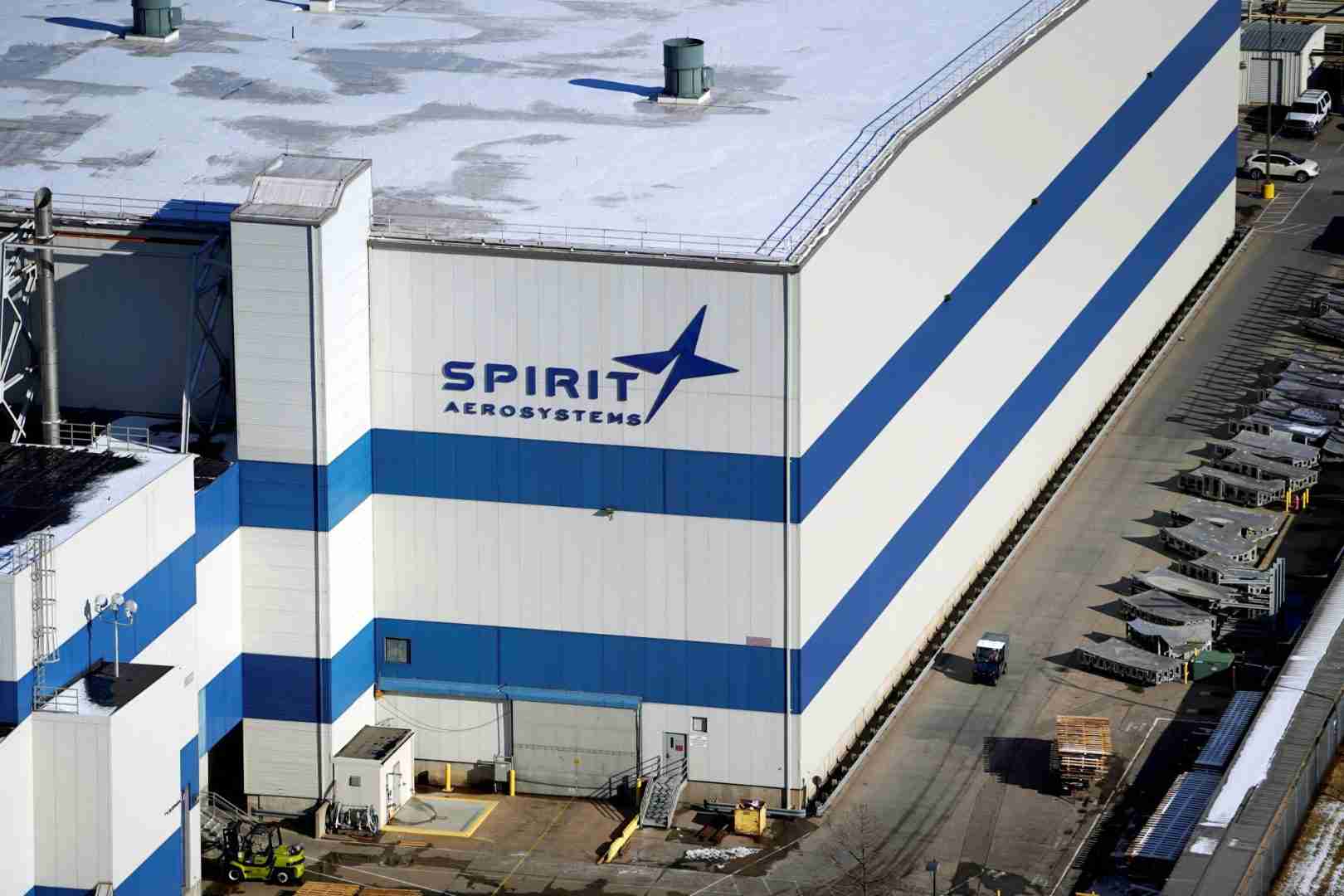
Boeing announced the $4.7 billion acquisition in July last year that would also see Airbus take on the supplier’s loss-making Europe-focused activities
International News via Reuters:
Boeing has offered remedies in a bid to secure EU approval to buy back Spirit AeroSystems, the world’s largest standalone aerostructures company, according to an update on the European Commission website.
Boeing announced the $4.7 billion acquisition in July last year that would also see Airbus take on the supplier’s loss-making Europe-focused activities.
The Commission, which acts as the EU competition enforcer, extended its decision deadline for the deal to October 14.
It is expected to seek market feedback before deciding whether to accept Boeing’s remedies or open a full-scale four-month-long investigation if it has serious concerns.
The UK antitrust authority cleared the deal unconditionally last month.
The pan-European STOXX 600 was up 0.5% at 556.3 points by 0848 GMT, with most regional bourses also moving higher
International News via Reuters:
European shares rose on Tuesday, led by wind energy stocks after a favourable U.S. court ruling for Denmark’s Orsted, while technology shares recovered from early losses.
The pan-European STOXX 600 was up 0.5% at 556.3 points by 0848 GMT, with most regional bourses also moving higher. French stocks were in the lead with a 1% rise.
Shares of Orsted jumped 7% after a U.S. federal judge ruled that the Danish offshore wind developer can restart work on the nearly finished project off the coast of Rhode Island.
“We take it as a favourable development,” said Laura Cooper, global investment strategist at Nuveen, who has a favourable outlook on the clean energy sector.
Wind turbine maker Vestas and German peer Nordex also gained about 3% each.
Retailers climbed 2%, boosted by a 17.1% surge in home improvement retailer Kingfisher after it raised its full year profit outlook.
Ireland’s Kingspan Group jumped 10.2% after announcing plans for an IPO of 25% of its data-centre unit ADVNSYS, which could leave the building materials maker debt-free.
ASM International fell 1.9% after the chip equipment maker cut its revenue target for the second half of 2025.
The broader technology index rose 0.6%, reversing early losses after Wall Street tech shares gained overnight as Nvidia said it will invest up to $100 billion in OpenAI and supply it with data center chips.
European stocks, which outperformed U.S. peers in early 2025 on defence-related gains, have since lagged as AI optimism lifted America’s tech giants.
The S&P 500 is up close to 14% so far this year, compared to the STOXX 600’s about 9.5% gain.
Healthcare was down 0.5%, with shares of drugmaker Roche and Novartis down about 1% each.
A survey showed euro zone business activity grew at its fastest pace in 16 months and separate reading showed activity in Germany grew at an accelerated pace.
French economic activity meanwhile contracted for the same period, while British firms reported a loss of momentum and confidence.
Sweden’s central bank cut its policy rate to 1.75% from 2% and said rates were expected to remain on hold for some time. Swedish stocks were last up 0.9%.
Later in the day, commentary from Federal Reserve officials would be on the radar, including from Chair Jerome Powell to assess the U.S. central bank’s rate trajectory after it cut interest rates last week.
Reporting by Shashwat Chauhan in Bengaluru and Amir Orusov in Gdansk; Editing by Sherry Jacob-Phillips and Nivedita Bhattacharjee
The smoke is shielding the delicate flower petals and pollen of canola plants from intense heat and sunlight
International News via Reuters:
Colin Penner, who farms about 3,700 acres an hour’s drive north of the U.S. border, crunched up a handful of plump canola pods and blew the chaff into a stiff prairie breeze. A small pile of tiny black seeds remained in his palm.
Last summer, high heat and harsh sun scorched canola’s yellow flowers and ruined their pollen, knocking down yields across Western Canada. This summer, smoke from nearby wildfires shrouded the July skies and protected Penner’s young crop from the sun’s burning rays, resulting in more seeds per pod and more pods per plant.
“Look at all these pods,” he said. He would wait to see what the harvest brings, but “smoke will likely be a positive thing.”
PROTECTION FROM EXTREME HEAT
As Canada’s western provinces experience the second-worst wildfire season in decades, driven by hotter and drier conditions due to climate change, some canola farmers say they are seeing an unexpected benefit to the hazy summer skies – so long as they occur in July, when the crop is flowering.
The smoke is shielding the delicate flower petals and pollen of canola plants from intense heat and sunlight, mitigating the impacts of a drought which continued through most of this summer.
The finding contrasts with scientists’ understanding that extended periods of heavy smoke have largely negative impacts on crop yields and food quality.
Reuters spoke to dozens of farmers and 10 crop experts who said the smoky skies of midsummer had mainly positive impacts for canola – although the experts cautioned that more research is needed.
Bruce Burnett, a crop analyst with the Western Producer Markets Desk trade publication, told Reuters that the smoke’s cooling effects countered high daytime and nighttime temperatures, which can hurt the crop when it’s flowering.
Canada is the world’s largest producer of canola, growing 21 million acres in a band along the country’s vast northern forests. Its seeds are crushed to make cooking oil, biodiesel and animal feed.
Canola, which is grown mainly on the cool northern plains of North America, Europe and China, and as a winter crop in Australia, does not like it hot. Scorching heat can melt its pollen, preventing fertilization and seed production. Harsh sunlight can burn off flower petals.
“We’ve had a couple of really hot Julys where we’ve had temperatures above 31C (87.8°F) and that’s where the damage occurs,” said Curtis Rempel, vice president of crop production and innovation at the Canola Council of Canada.
Smoke can lower temperature and dim sunlight, he said.
SCIENTISTS REVISITING IDEAS ABOUT SMOKE
The United Nations’ climate science panel, the Intergovernmental Panel on Climate Change, in 2022 forecast that a hotter world with shorter winters would lead to longer and more extreme wildfire seasons.
Canadian government officials said in August that wildfires were already growing longer and more intense as winters become shorter, and spring, summer and fall warmer.
Four of the crop experts who spoke to Reuters said smoke is probably mostly bad for North America’s biggest crops, like corn and soybeans, reducing heat and sunlight which the plants need to grow.
In California, smoke from wildfires has devastated wine grape production, with severe damage in 2017 and 2020.
In Ohio, researchers found mixed effects. While the smoke reduced light and lowered temperatures, average yields of corn, soybean and wheat reached a 10-year high, the researchers found.
The Canadian government is launching research next year on how wildfire smoke is affecting canola, wheat and barley, said Raju Soolanayakanahally, a senior researcher at Agriculture and Agri-Food Canada.
Despite farmers’ accounts of some benefits to this year’s canola crop, smoke can also slow and weaken crop development, Soolanayakanahally said. The haze can degrade the chlorophyll that is essential for photosynthesis and reduce the efficiency of enzymes that are critical to plants’ development.
An industry review of existing research on the effects of smoke on U.S. corn also found a mostly negative effect.
However, Mark Jeschke, Agronomy Manager at Corteva Agriscience’s Pioneer Seeds and author of the study, told Reuters further research was needed on how ground-level and airborne smoke affect corn when it is pollinating and maturing. “The timing of a stress event can matter a lot.”
SMOKE-TAINTED WINE
In 2020, when more than 8,000 fires tore across 4.3 million acres of California, most vineyards escaped direct damage from the flames. But vintners later discovered the grapes produced a slurry tainted by a foul taste and smell, making it unusable for wine. The term “smoke taint” became part of the wine lexicon.
Up to 325,000 tons of wine grapes worth more than $600 million were ruined that year, according to the California Association of Winegrape Growers.
The industry and researchers have been experimenting with treatments to remove smoky compounds from fermented grape slurry, and testing a spray that would prevent grapes-on-the-vine from absorbing smoke.
“We still have so much to do,” said Natalie Collins, the president of the California Association of Winegrape Growers.
Reporting by Ed White. Editing by Emily Schmall, Tom Polansek and Suzanne Goldenberg
S&P Global’s preliminary UK Composite Purchasing Managers’ Index, covering the services and manufacturing sectors, slowed to 51.0 in September from 53.5 in August
International News via Reuters:
The pound sagged on Tuesday after a survey showed British business activity slowed in early September, as companies reported a loss of momentum and confidence given the rising risk of tax increases later this year.
S&P Global’s preliminary UK Composite Purchasing Managers’ Index, covering the services and manufacturing sectors, slowed to 51.0 in September from 53.5 in August, not far above the 50.0 level that separates growth from contraction.
Economists polled by Reuters had forecast a more modest fall to 53.0 in Tuesday’s survey.
Sterling fell as much as 0.2% on the day to a session low of $1.34885 immediately after the survey, before tracking back to around $1.35.
It is still up around 8% against the dollar this year and nearly 5.5% against the euro, which on Tuesday traded 0.13% higher at 87.41 pence.
Strategists at BBVA noted the pound is struggling to gain much traction, even with upbeat investor sentiment and UK equities near record highs.
“We continue to see scope for sterling weakness: with markets pricing in just 7 basis points of BoE cuts by year-end, euro/sterling has upside potential. We think a BoE rate cut in the next two meetings is likely,” they said.
Part of the pound’s relative resilience against the dollar in the face of deteriorating UK data is the expectation that the Bank of England will take longer to lower rates than the Fed, given British inflation is running at almost 4%, nearly twice the central bank’s target.
Currency volatility generally was muted ahead of planned remarks later from Federal Reserve Chair Jerome Powell.
Powell is expected to reiterate the need for caution in cutting rates, a view a number of Fed officials expressed on Monday, in contrast to new Fed Governor Stephen Miran – a pick by President Donald Trump for his views on the need for lower rates – who said the central bank is misreading how tightly it has set monetary policy and risks undermining the labour market.
Back in the UK, finance minister Rachel Reeves is under growing pressure to keep Britain’s finances in check, which could result in new tax rises in her budget in November.
Reporting by Amanda Cooper; Editing by Sharon Singleton
To provide the best experiences, we use technologies like cookies to store and/or access device information. Consenting to these technologies will allow us to process data such as browsing behavior or unique IDs on this site. Not consenting or withdrawing consent, may adversely affect certain features and functions.
Functional
Always active
The technical storage or access is strictly necessary for the legitimate purpose of enabling the use of a specific service explicitly requested by the subscriber or user, or for the sole purpose of carrying out the transmission of a communication over an electronic communications network.
Preferences
The technical storage or access is necessary for the legitimate purpose of storing preferences that are not requested by the subscriber or user.
Statistics
The technical storage or access that is used exclusively for statistical purposes.The technical storage or access that is used exclusively for anonymous statistical purposes. Without a subpoena, voluntary compliance on the part of your Internet Service Provider, or additional records from a third party, information stored or retrieved for this purpose alone cannot usually be used to identify you.
Marketing
The technical storage or access is required to create user profiles to send advertising, or to track the user on a website or across several websites for similar marketing purposes.