The Bermuda Weather Service (BWS) has designated Tropical Storm Gabrielle a Potential Threat to Bermuda
The Bermuda Weather Service (BWS) has designated Tropical Storm Gabrielle a Potential Threat to Bermuda, noting the system was centered near 20.0°N, 50.3°W at 6:00 a.m. today with maximum sustained winds around 45 knots (50–55 mph).
Within the next 72 hours, Gabrielle’s nearest forecast point is projected to be about 369 nautical miles southeast of the island early Sunday (6:00 a.m.), although the track and intensity remain subject to change.
The U.S. National Hurricane Center’s 9:00 a.m. forecast holds Gabrielle on a west-northwest to northwest path through the weekend, with gradual strengthening expected.
The NHC outlook brings the system to near-hurricane strength (65 kt) by early Monday and hurricane strength (75 kt) by early Tuesday as it turns north, remaining over the open Atlantic.
Gabrielle became the seventh named storm of the 2025 Atlantic season on Wednesday after forming over the central Atlantic; forecasters initially expected little change in strength before a more favorable window for intensification later in the weekend.
While early guidance suggests Gabrielle is likely to pass east of Bermuda early next week, forecasters emphasize that the eventual distance of closest approach will determine local impacts.
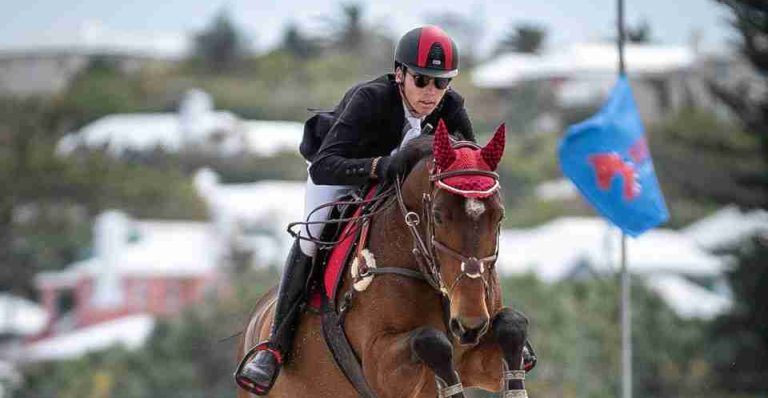
Bermudian equestrian Tyler James has concluded a successful summer on the US circuit, delivering standout performances at the Tryon International Horse Show and the Kentucky Horse Park.
Riding with team IEC, James showed impressive form with his horses, Cruise Control and Vino Blanco. At Tryon, he and Cruise Control finished third in the USHJA Jump Seat Medal, before he secured multiple top-six finishes with Vino Blanco in the Amateur Jumper.
His success continued at the Kentucky Horse Park. A third-place finish with Cruise Control in the USHJA Jump Seat Medal was particularly significant, as it qualified James for the USHJA 3’3 Adult Jump Seat Medal Finals at the Capitol Challenge Horse Show later this month.
James’ strong showings in challenging classes highlight both his competitive edge and the talent of his horses, with the upcoming finals providing another opportunity for him to demonstrate his skill on the national stage.
The stake instantly will make Nvidia one of Intel’s largest shareholders
International News via Reuters:
Nvidia on Thursday said it will invest $5 billion in Intel, throwing its heft behind the struggling U.S. chipmaker just weeks after the White House engineered an extraordinary deal for the U.S. government to take a massive stake in the company.
The stake instantly will make Nvidia one of Intel’s largest shareholders, giving it roughly 4% or more of the company after new shares are issued to complete the deal. Nvidia’s support represents a new opening for Intel after years of turnaround efforts at the famed U.S. manufacturer failed to pay off, and it sent shares soaring 30% in premarket action.
The company – once the chip industry’s flagbearer that claimed to put the “silicon” in Silicon Valley – appointed a new CEO, Lip-Bu Tan, in March. He came under fire from U.S. elected officials including U.S. President Trump, who called for him to resign due to concerns about his connections with China. That led to a swiftly arranged meeting in Washington that ended with Intel’s unusual arrangement to give the United States a 10% stake in the company.
The pact includes a plan for Intel and Nvidia to jointly develop PC and data center chips, but crucially will not involve Intel’s contract manufacturing business, known as a “foundry” in the chip industry, making chips for Nvidia. Most analysts believe that for Intel’s foundry to survive, it would need to eventually win a large customer such as Nvidia, Apple, Qualcomm or Broadcom.
Nvidia, whose must-have chips are powering a global artificial intelligence boom, said in a statement it will pay $23.28 per share for Intel common stock, a price slightly below the $24.90 at which Intel shares closed on Wednesday.
However, that is higher than the $20.47 price per share that the United States government paid for an extraordinary 10% stake it took in Intel last month.
“It’s a reflection of Nvidia looking to diversify to an extent its investment within the US and as well to gain some brownie points with the U.S. government,” said Chris Beauchamp, chief market analyst at IG Group in London.
The pact represents a potential risk to Taiwan’s TSMC. TSMC currently manufactures Nvidia’s flagship processors, business that the world’s most valuable company could one day extend to Intel. AMD, which competes with Intel for supplying chips to data centers, also stands to lose thanks to Nvidia’s backing.
Shares of Nvidia rose more than 3%. AMD slipped nearly 4%, while U.S.-listed shares of TSMC slid 2%. TSMC and AMD didn’t immediately respond to a comment request
Tan has vowed to make Intel’s operation lean and build factory capacity only when there’s demand to match it.
The deal adds to a growing reserve of capital that Intel has accumulated weeks after it announced a $2 billion investment from Softbank and received $5.7 billion from the U.S. government. David Zinsner, Intel’s chief financial officer, told investors at a Deutsche Bank conference last month that the company was in a “good cash position” and would not require much more capital until it saw significant demand for 14A, a next-generation manufacturing process that it expects to invest heavily in building.
SPEEDY LINKS
Under the deal announced Thursday, Intel is planning to design custom data center central processors that Nvidia will package with its AI chips, known as GPUs. A proprietary Nvidia technology will let the Intel and Nvidia chips communicate at higher speeds than before.
Those speedy links are a key differentiator in the AI market because many chips must be strung together to act as one to chew through massive amounts of data.
At present, Nvidia’s best-selling AI servers with those speedy links are only available using Nvidia’s own chips, but the deal would now put Intel on equal footing, giving it a chance to make money off each Nvidia server. The combined Nvidia-Intel chips could provide a major competitive challenge to AMD, which is developing its own AI servers, and Broadcom, which also has chip-to-chip connection technology and helps companies such as Google develop AI chips.
“Anything that NVIDIA decides to endorse just by association will make that stock of Intel appear attractive because it implies that Nvidia sees value in Intel,” said Peter Andersen, founder of Andersen Capital Management in Boston.
Broadcom did not immediately respond to a request for comment.
For consumer markets, Nvidia will provide Intel with a custom graphics chip that Intel can package with its PC central processors with the same speedy links, potentially giving it an edge against rivals such as AMD.
While Intel’s x86 computing architecture has lost ground in both data centers and PCs to chips with technology from Arm Ltd, it still has majority market share.
“This historic collaboration tightly couples Nvidia’s AI and accelerated computing stack with Intel’s CPUs and the vast x86 ecosystem—a fusion of two world-class platforms,” Nvidia CEO Jensen Huang said in a press release. “Together, we will expand our ecosystems and lay the foundation for the next era of computing.”
The two companies did not disclose financial terms of their technical collaboration but said they would make “multiple generations” of future products. Nvidia and Intel officials described the collaboration as a commercial arrangement under which they will provide chips to one another to create products and said there was no licensing component to the deal.
The companies declined to give a date for when the first joint products will come to market but said that their product plans prior to the joint deal have not changed.
Nvidia in recent years has entered both the PC central processor market and the data center central processor market. Intel meanwhile has tried to sell several AI chips that compete with Nvidia and has said it plans to develop an AI data center server that would compete with Nvidia.
Reporting by Stephen Nellis, Jeffery Dastin and Max Cherney in San Francisco; Editing by Sam Holmes
Rama, who was the only candidate for prime minister, received 82 votes in the 140-seat parliament
International News via Reuters:
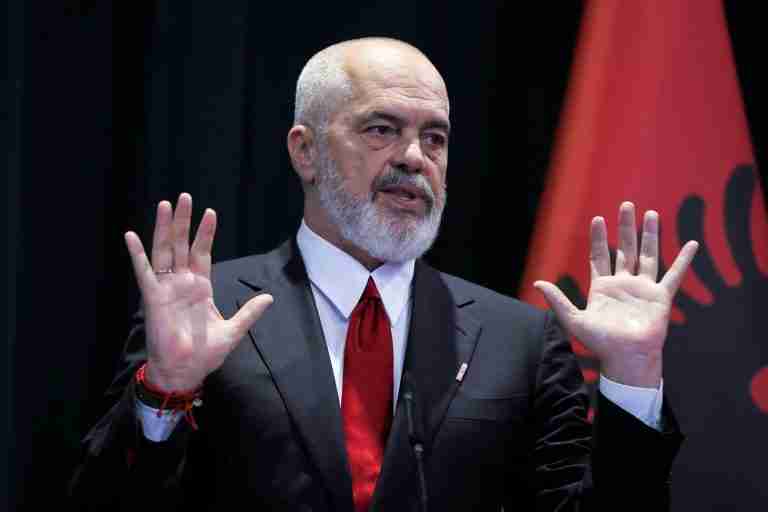
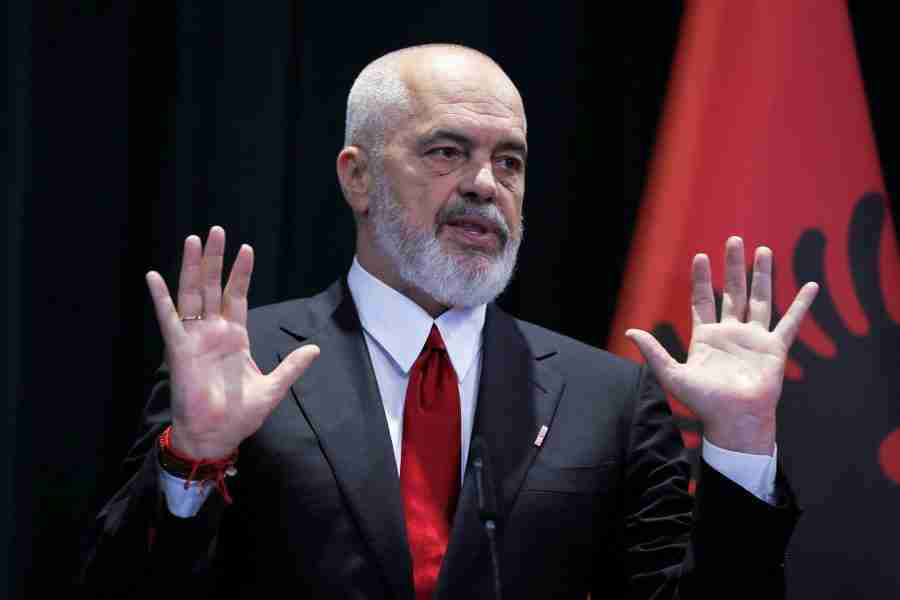
Albania’s parliament confirmed a fourth four-year mandate for Prime Minister Edi Rama on Thursday, who pledged he would make it his mission for the Balkan country to join the European Union by 2030.
Rama, who was the only candidate for prime minister, received 82 votes in the 140-seat parliament. His Socialist Party gained a majority for the fourth time in elections in May.
“Albania 2030 in the EU is the centerpiece of this mandate,” Rama told lawmakers. “European Albania is the guiding compass for every aspect of our program and the metronome for the rhythm of every reform we will undertake.”
Albania’s image has been tarnished by corruption scandals and political analysts say the country is a hub for gangs seeking to launder money from drugs and weapons trafficking, complicating its efforts to join the EU by its 2030 target.
In a surprise move, Rama last week nominated an AI-generated bot named Diella (Sun) to manage and award public tenders to private companies to address corruption concerns.
“I am not here to replace people, but to help them,” Diella said during a video address before the new government was voted in.
The appointment was criticised by the opposition as being unconstitutional as the bot is not human, does not hold Albanian nationality and could lead to more corruption.
“It’s true, I do not have any citizenship, nor do I have any personal ambition or interests.”
Opposition politicians also criticised Rama for a lack of debate before the vote on the new government.
“This mandate is based on crime, on corruption, on drugs, and on the violation of the Constitution and the laws of the country,” Sali Berisha, leader of the Democratic Party of Albania, said.
Reporting by Florion Goga, writing by Fatos Bytyci, editing by Daria Sito-Sucic and Sharon Singleton
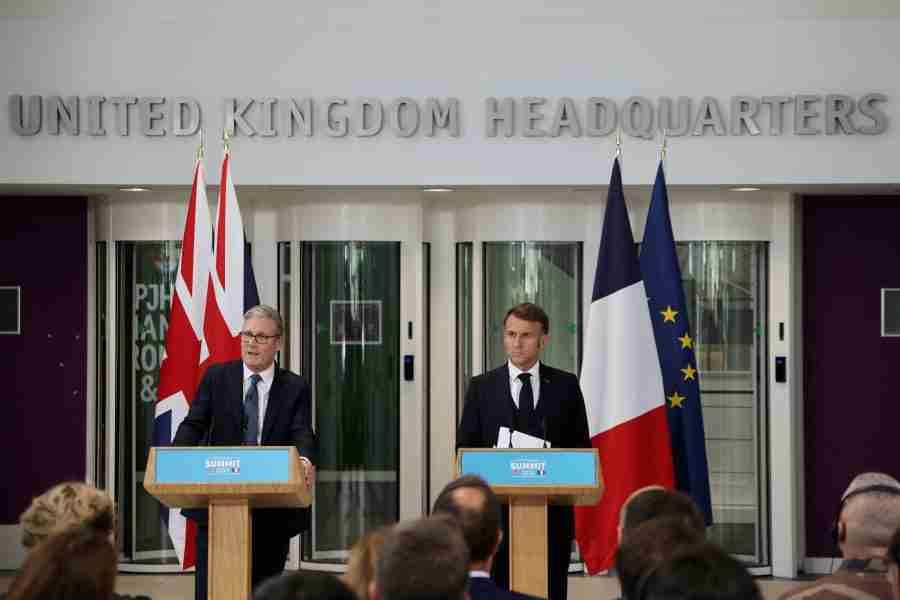
British Prime Minister Keir Starmer and French President Emmanuel Macron in July agreed to the pilot scheme
International News via Reuters:
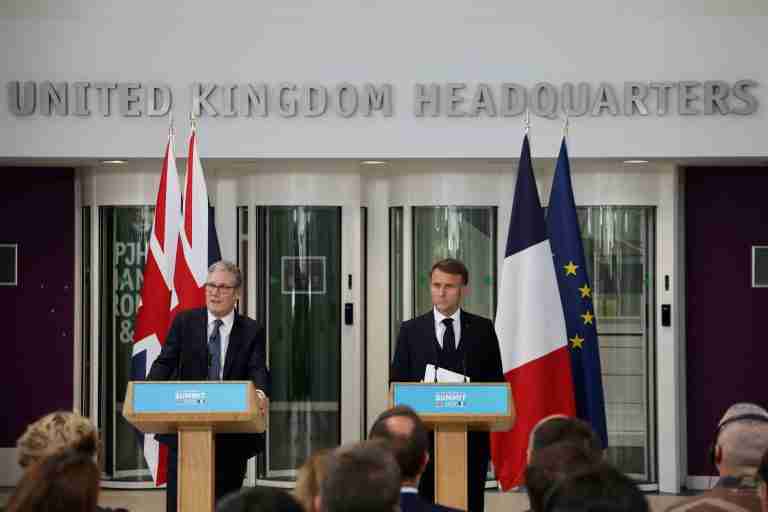
Britain has returned the first migrant to France under a “one in, one out” agreement to remove people who arrive on small boats, the interior ministry said on Thursday, after legal challenges had stalled the start of the scheme.
British Prime Minister Keir Starmer and French President Emmanuel Macron in July agreed to the pilot scheme, under which Britain deports undocumented people arriving in small boats to France, in return for accepting an equal number of legitimate asylum seekers with British family connections.
Britain’s Home Office said that a man who had arrived by small boat in August had been removed on a commercial flight, and that further flights were due to take place this week and next.
“This is an important first step to securing our borders. It sends a message to people crossing in small boats: if you enter the UK illegally, we will seek to remove you,” Home Secretary Shabana Mahmood said in a statement.
The government said that the first arrivals from France through the new legal route were expected in the coming days.
Starmer’s government faces mounting pressure to stop small boats taking asylum seekers across the Channel from Europe, a route by which more than 30,000 people have come so far in 2025.
The new policy has been delayed by legal action. On Tuesday, London’s High Court ruled one asylum seeker who arrived in Britain on a small boat could temporarily not be removed to France pending a full legal challenge.
Mahmood reiterated she would “continue to challenge any last-minute, vexatious attempts to frustrate a removal in the courts,” and the government said it was reviewing modern slavery legislation “to prevent its misuse”.
But campaigners have criticised the government’s approach and rhetoric around the policy. Kolbassia Haoussou, of campaign group Freedom from Torture, said it was harmful to dismiss late asylum disclosures as “vexatious”.
“If the government cares about justice, it must build an asylum system based on safety, compassion and access to legal support, not suspicion and stigma,” he said.
Reporting by Alistair Smout and Catarina Demony; editing by Michael Holden and Alexandra Hudson
The pound initially edged up after the BoE’s decision, but pared those gains to trade slightly lower on the day at $1.3622
International News via Reuters:
The U.S. dollar was choppy on Thursday as traders parsed the Federal Reserve’s measured stance on further interest rate cuts, while sterling held steady as the Bank of England kept rates steady and slowed the pace of its government bond sales.
The pound initially edged up after the BoE’s decision, but pared those gains to trade slightly lower on the day at $1.3622. The euro edged up 0.1% to 86.79 pence. Gilt yields dipped, leaving the 10-year bond at 4.612%, compared with 4.639% earlier on.
Sterling had briefly leaped to the highest since July 2 at $1.3726 in the prior session.
BoE policymakers voted 7-2 to slow the annual pace at which the central bank unloads the gilts that it purchased from 2009 and 2021 to 70 billion pounds from 100 billion pounds, broadly in line with a Reuters poll median forecast for it to be cut to 67.5 billion.
“As expected, the BoE has not cut rates, and it is unlikely it will ease monetary policy again this year,” said Marion Amiot, chief UK economist at S&P Global Ratings.
The euro was steady at $1.1830, after retreating from its highest level since June 2021 at $1.19185 on Wednesday in a knee-jerk reaction to the Fed announcement.
The Fed reduced rates by a quarter point on Wednesday, as expected, with Chair Jerome Powell characterising the day’s policy action as a risk-management cut in response to the weakening labour market, but said the central bank did not need to rush easing.
Analysts differed over the signals sent by the Fed. While those at Goldman Sachs said that many hints had pointed to Wednesday’s cut being the first among many, their counterparts at ANZ characterized the Fed Chair’s commentary as “not at all dovish”.
The dollar dropped to the lowest since February 2022 at 96.224 against a basket of major peers immediately after the rate decision, but sprang back vigorously to rise as much as 0.44% on the day. It was last steady at 96.96.
“The (Fed’s) revised forecasts highlighted the degree of uncertainty that remains over the outlook,” said Elliot Clarke, head of international economics at Westpac.
“The timing and scale of the forecast rate cuts also point to lingering risks for inflation.”
NORWAY CUTS RATES, YEN SLIPS AHEAD OF BOJ
The Norwegian crown was also steady in the face of an expected rate cut from the Norges Bank, its second in three months. The central bank signaled rates could continue to fall.
The euro pared gains against the crown after the policy decision was announced and was last down 0.25% at 11.5710.
Elsewhere, the dollar was 0.2% firmer against the Japanese yen at 147.215 ahead of the Bank of Japan’s policy decision on Friday.
The BOJ is widely expected to refrain from hiking rates, although markets price in a quarter-point increase by end-March, with about 50% odds of it happening within this year.
The spotlight is on an October 4 vote where the ruling Liberal Democratic Party will elect a new leader to replace outgoing Prime Minister Shigeru Ishiba, who is stepping down following a bruising defeat in upper house elections.
Data on Thursday showed that New Zealand’s gross domestic product (GDP) fell 0.9% in the second quarter from the previous three months, worse than forecast by analysts and the Reserve Bank of New Zealand.
This weighed on the New Zealand dollar as traders added to bets on policy easing by the country’s central bank, driving the currency down by 1% to $0.59055, the lowest level since September 8.
Reporting by Kevin Buckland and Jaspreet Kalra and Canan Sevgili; Editing by Sonali Paul, Gareth Jones and Frances Kerry
The Fed cut its policy rate by a quarter of a percentage point on Wednesday and indicated it will steadily lower borrowing costs over the rest of the year
International News via Reuters:
Oil prices edged higher on Thursday after the Federal Reserve cut interest rates as traders weighed the start of looser monetary policy against concerns about the U.S. economy.
Brent crude futures were up 34 cents, or 0.5%, at $68.29 a barrel by 1140 GMT. U.S. West Texas Intermediate futures added 37 cents, or 0.6%, to $64.42.
The Fed cut its policy rate by a quarter of a percentage point on Wednesday and indicated it will steadily lower borrowing costs over the rest of the year, responding to signs of weakness in the jobs market.
Lower borrowing costs typically boost demand for oil and push prices higher.
Kuwait’s oil minister Tariq Al-Roumi said he anticipates an increase in oil demand following the recent U.S. interest rate cut, with a particular rise expected from Asian markets.
Some analysts were more sceptical about a positive impact on oil prices.
“They did this now because clearly the economy is slowing down,” said Jorge Montepeque, managing director at Onyx Capital Group. “The Federal Reserve is trying to restore growth.”
Federal Chair Jerome Powell said there were rising downside risks of employment compared to inflation, but inflation risks still needed to be assessed and managed.
Persistent oversupply and soft fuel demand in the U.S., the world’s biggest oil consumer, also weighed on the market.
U.S. crude oil stockpiles fell sharply last week as net imports dropped to a record low while exports jumped to a near two-year high, data from the Energy Information Administration showed on Wednesday.
A rise in distillate stockpiles by 4 million barrels, however, against market expectations of a gain of 1 million barrels raised worries about demand in the world’s top oil consumer and pressured prices. [EIA/S]
Reporting by Anna Hirtenstein in London. Additional reporting by Katya Golubkova and Siyi Liu in Singapore; Editing by Tom Hogue and Bernadette Baum
The 61-year-old Spaniard, who spent 17 years at Inditex as CEO and executive chairman, will take on the chairmanship at Nestle half a year ahead of schedule on October 1
International News via Reuters:
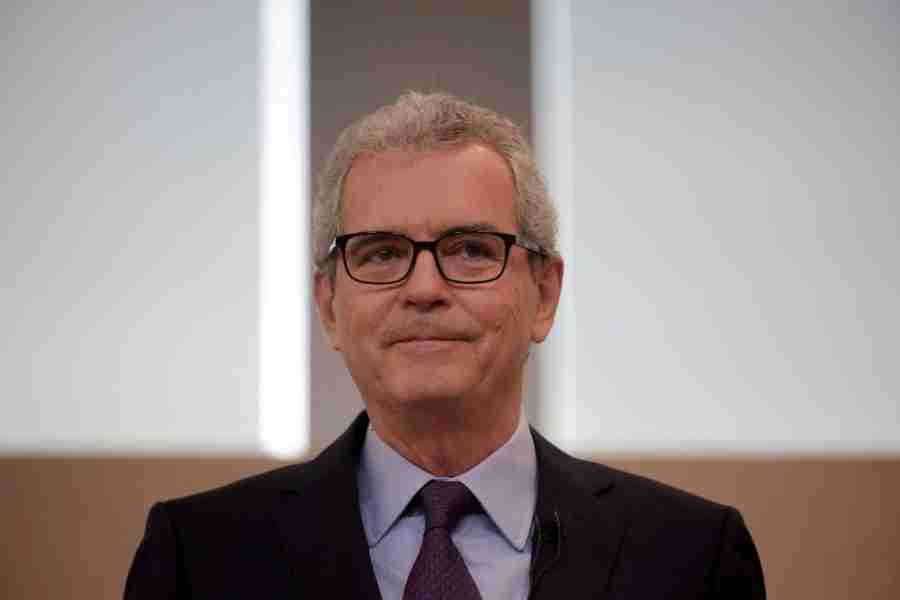
Nestle’s new chairman Pablo Isla, who helped to turn Zara owner Inditex into a world-leading fast-fashion retailer, can use his expertise in logistics, e-commerce, and consumer trends to try to revitalise the Swiss food company.
His jump from dresses and jeans to coffee and KitKats does not seem an obvious move, but Isla’s track record at Zara of speedy product launches, appealing to younger consumers, and digital know-how, stands him in good stead for the challenge, Nestle investors and a source at the company told Reuters.
The 61-year-old Spaniard, who spent 17 years at Inditex as CEO and executive chairman, will take on the chairmanship at Nestle half a year ahead of schedule on October 1, the company said on Tuesday, replacing Nestle veteran Paul Bulcke.
ISLA BROUGHT ZARA INTO DIGITAL AGE
The decision comes just over two weeks after Laurent Freixe was fired as chief executive over an undisclosed relationship with a subordinate, and amid rising investor pressure over declining sales and profit.
Investors are looking to Isla – the first Nestle chairman in 25 years to come from outside the company – to initiate rapid change, alongside newly appointed CEO Philipp Navratil, who previously led Nespresso.
“Philipp Navratil together with Pablo Isla bring expertise to drive the digital agenda of Nestle,” a person close to Isla told Reuters.
“Pablo was involved in bringing the digital and shop world together at Inditex and this expertise will drive Nestle’s digital efforts in future,” this person said, adding that Isla was impressed with Nespresso’s digital capabilities.
At Inditex, Isla drove rapid global expansion, lifting sales from 6.7 billion euros ($7.92 billion) in 2005 to 27.7 billion euros ($32.74 billion) in 2021 and boosting the Spanish company’s share price eight-fold.
Nestle’s shares are currently trading at their lowest since end-2016 and have underperformed rivals like Unilever and Danone.
While Nestle shares have lost 33% over the last three years, Unilever has gained 15% and Danone stock is 52% higher over the period.
ISLA HELPED ZARA CAPITALISE ON ONLINE SHOPPING SHIFT
When Isla joined the board in 2018, Nestle highlighted his extensive retail experience, with expertise in e-commerce, and innovative supply chain models.
At Inditex, Isla opened thousands of stores worldwide and rolled out new technologies to streamline its logistics and bring products into stores more quickly, a competitive advantage for a fast-fashion business.
One major innovation was integrating radio-frequency identification tags in each garment, enabling the business to track in real time what was selling well, to see what sizes and styles were running low, and to fulfill online orders directly from stores.
His legacy was integrated digital and physical channels that helped Zara gain from consumers’ shift towards online shopping, and a supply chain so efficient that Inditex investors call it a logistics company masquerading as a retailer.
Nestle has been making progress with ecommerce in the past few years, a trend which is expected to continue with Isla’s appointment.
The Nestle source also said the company aims to use artificial intelligence to improve its supply chain, sales and production.
A spokesperson at Nestle said: “Nestlé has more than doubled the percentage of sales from online in the last five years…. Nestlé now achieves 20.2% of total sales from online, ahead of most key competitors.”
CHAIRMAN LIKELY TO BE HANDS-ON MENTOR TO NEW CEO
Isla’s track record makes him a strong fit for the Nestle chairmanship, said Guido Stein, who teaches corporate leadership at the IESE business school in Madrid, who anticipates Isla will be a fairly hands-on, “executive”, chairman.
“He has a personal style that translates into leadership skills, as he is friendly, demanding and kind. And he leaves room for his colleagues to grow and do their work,” Stein said.
Isla, named the world’s best CEO by the Harvard Business Review in 2017 and 2018, is also no stranger to navigating complex management dynamics.
At Inditex, Isla took over as chairman in 2011 from founder and owner Amancio Ortega, and then passed the chairmanship on to Ortega’s daughter Marta in 2022.
At Nestle, he may have more freedom to make the radical changes investors have said are needed, including restructuring and shedding non-core brands.
CEO Navratil said on Thursday he wants the Swiss food company to move fast and be open to fresh ideas, in his first public comments since taking charge earlier this month.
Isla’s experience as a CEO will help him to guide Nestle’s new CEO Navratil, the Nestle source said.
“It’s good when the chairman knows what the CEO job involves. I imagine there could be a little bit of mentoring and coaching using the chairman as a sounding board, but Navratil will also have the expertise of the rest of the executive board,” they said.
($1 = 0.8461 euros)
Reporting by John Revill, Corina Pons, Aislinn Laing, Helen Reid. Additional reporting by Dave Graham in Switzerland. Editing by Lisa Jucca and Jane Merriman
The discussions have centred on licensing news and other material for use in Meta’s AI products, though some talks remain preliminary and may not result in deals
International News via Reuters:
Meta Platforms has been in talks in recent months with media firms including Axel Springer, Fox Corp and News Corp to license news content for integration into its AI products, the Wall Street Journal reported on Thursday.
The discussions have centred on licensing news and other material for use in Meta’s AI products, though some talks remain preliminary and may not result in deals, the report said, citing people familiar with the matter.
A spokesperson for Axel Springer declined to comment while Meta, News Corp, and Fox did not immediately respond to Reuters requests for comment.
Meta has been reorganizing its AI efforts under Superintelligence Labs, a high-stakes push that followed senior staff departures and a muted response to its latest open-source Llama 4 model.
Other companies, including ChatGPT-maker OpenAI and Jeff Bezos-backed startup Perplexity, have struck similar AI partnerships with news organizations.
Reuters signed a content licensing with Meta Platforms in 2024. In May, Amazon partnered with The New York Times to allow it to use the paper’s editorial content in AI products such as Alexa.
Reporting by Dagmarah Mackos in Barcelona; Editing by Jan Harvey and Bernadette Baum
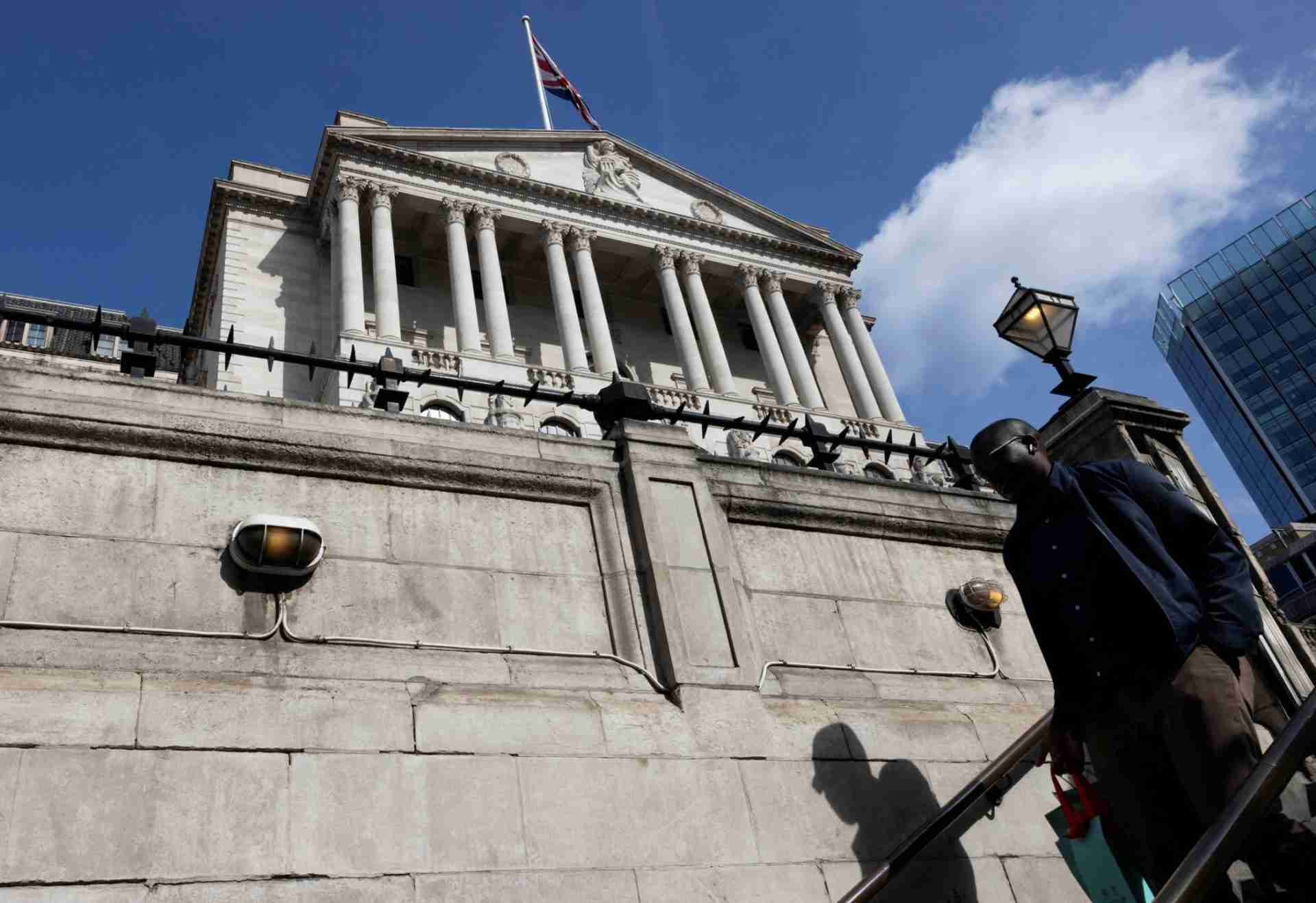
Policymakers voted 7-2 to slow the annual pace at which it unloads the gilts that it purchased from 2009 and 2021 to 70 billion pounds from 100 billion pounds
International News via Reuters:
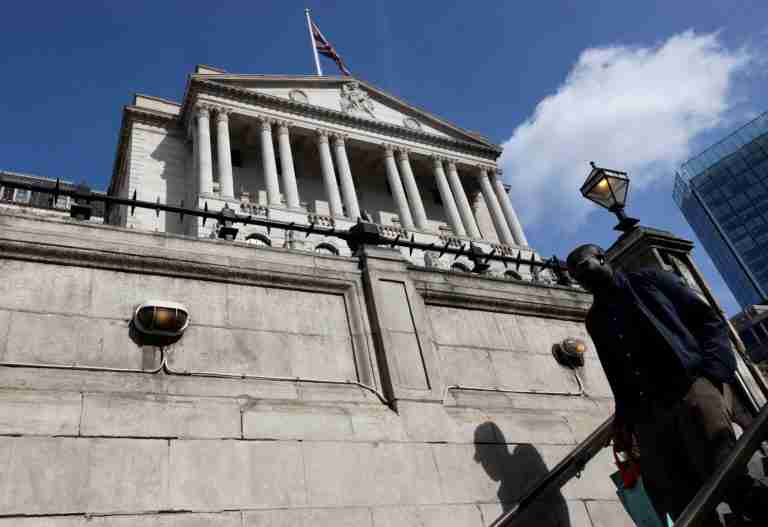
The Bank of England left rates unchanged on Thursday and said it was slowing the pace of its quantitative tightening programme and skewing sales away from long-dated gilts to minimise the impact on turbulent bond markets.
Policymakers voted 7-2 to slow the annual pace at which it unloads the gilts that it purchased from 2009 and 2021 to 70 billion pounds from 100 billion pounds ($136.47 billion), broadly in line with a Reuters poll median forecast a decline to 67.5 billion.
Sterling turned slightly negative on the day in steady trading and was last at $1.3625. The euro edged up to 86.83 pence.
Britain’s two-year gilt yield fell 2.5 basis points on the day to 3.94% compared to 3.97% earlier on, while longer-dated 30-year yields were 1 bps lower 5.42%. London’s FTSE stock index was last up 0.3% .
COMMENTS:
MICHAEL METCALFE, HEAD OF MACRO STRATEGY, STATE STREET MARKETS, LONDON:
“In contrast to the Fed, UK inflation is high enough to prevent the BoE going for further insurance cuts. And even with gilts under pressure, they chose to only modestly reduce the pace of quantitative tightening, with only a small nod to selling fewer of their longer dated holdings.
“Altogether a robust assertion of central independence and their inflation focus. With online inflation still accelerating in September, this stance doesn’t look set to change anytime soon.”
MICHAEL FIELD, CHIEF EUROPEAN MARKET STRATEGIST, MORNINGSTAR:
“Central banks are always balancing two forces: inflation and the health of the economy. Last month the decision was harder, but with the latest data showing inflation sticky, at close to 4%, this decision was easier to make.
“Economic growth is still weak in the UK, but inflation is now close to double the bank’s targeted level. Economists believe this is transitory, but cutting rates at this stage would clearly not help inflation in getting back to normalised levels.”
JAMES ROSSITER, HEAD OF GLOBAL MACRO STRATEGY, TD SECURITIES, LONDON:
“We expect another 25 bps interest rate cut in November. The decision to slow the annual pace at which it unloads the gilts purchased from 2009 and 2021 to 70 billion pounds from 100 billion pounds did not surprise us, as there was fairly broad consensus around that figure. The Bank of England has proved to be conservative in its statement, despite speculations that it might change its wording.”
LALE AKONER, GLOBAL MARKET ANALYST AT ETORO, LONDON:
“The Bank of England has decided to keep rates unchanged, highlighting the challenge of weak jobs data and stubborn inflation pressures. Cutting too soon could lead to higher inflation expectations, while holding too long risks slowing growth further.
“For everyday investors, this means savings rates are likely to stay steady for now, but mortgages remain expensive with little relief in sight. Government bond yields may stay high and the pound supported as markets scale back bets on rate cuts. In stocks, defensive sectors like consumer staples and utilities could offer stability against sticky inflation and weaker wage growth.”
KIRSTINE KUNDBY-NIELSEN, FX ANALYST, DANSKE BANK, COPENHAGEN
“It was fairly in line with expectations, both the decision and the 7-2 vote split.
“There was an absence of hawkishness. They’re not closing the door to a November cut, for example, and keeping this careful and gradual approach to easing.
“We expect cuts in November and then in February and then on hold from there. The disinflationary process is ongoing, the labour market will continue to weaken and growth will remain subdued. That is going to push them to keep cutting, just a bit more.
“With the ECB on hold and the euro area economy faring fairly well, that will push euro-sterling higher.”
STEVE CALYTON, HEAD OF EQUITY FUNDS, HARGREAVES LANSDOWN:
“Markets were pricing in a 98% likelihood that rates would stay at 4.0%, because so far, we are not seeing enough progress in bringing inflation down to give room for manoeuvre on rates. Service prices remain far above the overall 2% target and goods price inflation edged up toward 3% last month. The Bank will be watching employment and growth data closely for now, because it will worry about choking off growth if interest rates stay too high for too long, but for now, its hands look tied.”
MARION AMIOT, CHIEF UK ECONOMIST AT S&P GLOBAL RATINGS, LONDON:
“As expected, the BoE has not cut rates, and it is unlikely it will ease monetary policy again this year.
“It’s increasingly clear that firms have been adjusting to the increase in labour costs – driven by the minimum wage increase and higher NIECs, by shedding job as margins are squeezed and productivity has not kept up. Robust wage growth highlights that this is translating into a higher structural unemployment rate and pointing to the risks of higher inflation becoming more entrenched as soon as economic activity accelerates.”
LLOYD HARRIS, HEAD OF FIXED INCOME, PREMIER MITON INVESTORS, LONDON:
“With five rate cuts already behind us, the Bank of England’s decision to hold today was no surprise. Inflation remains stubborn at 3.8%, and wage growth at 4.7% keeps the pressure on. The UK is now the most stagflationary economy in the developed world. A brutal mix of high inflation, weak growth, and rising unemployment.
“This is the kind of environment where central bankers earn their stripes. But they can’t do it alone. Government policy is currently amplifying stagflation, not fighting it. Rising employer costs and tax hikes are feeding inflationary pressures and contributing to a slower economy.
“The next big moment for the BoE and for all sterling markets is the Autumn Budget. If tax rises continue, which we expect, our fear is we’ll get more of the same for the BoE to manage.”
($1 = 0.7328 pounds)
Reporting by the Reuters Markets Team; Compiled by Dhara Ranasinghe; Editing by Amanda Cooper
To provide the best experiences, we use technologies like cookies to store and/or access device information. Consenting to these technologies will allow us to process data such as browsing behavior or unique IDs on this site. Not consenting or withdrawing consent, may adversely affect certain features and functions.
Functional
Always active
The technical storage or access is strictly necessary for the legitimate purpose of enabling the use of a specific service explicitly requested by the subscriber or user, or for the sole purpose of carrying out the transmission of a communication over an electronic communications network.
Preferences
The technical storage or access is necessary for the legitimate purpose of storing preferences that are not requested by the subscriber or user.
Statistics
The technical storage or access that is used exclusively for statistical purposes.The technical storage or access that is used exclusively for anonymous statistical purposes. Without a subpoena, voluntary compliance on the part of your Internet Service Provider, or additional records from a third party, information stored or retrieved for this purpose alone cannot usually be used to identify you.
Marketing
The technical storage or access is required to create user profiles to send advertising, or to track the user on a website or across several websites for similar marketing purposes.