The Bermuda International Lon-term Insurance and Reinsurance annual conference was held at the Hamilton Princess & Beach Club focusing on industry developments and key issues within the sector
How long will it take for AI to integrate into the everyday workflow in the insurance and financial sector?
Well, it may be longer than you think.
In fact, it could take around a decade as humans enter the augmented age utilising AI technologies to carry out functions people ordinarily wouldn’t be able to.
Its according to keynote speaker and technologist Maurice Conti who spoke at BILTR’s Bermuda International Life and Annuities conference this week.
The audience was presented with insights into the future possibilities for the long-term insurance and reinsurance sector.
The U.N.’s International Civil Service Commission, which decides on the “daily subsistence allowance,” has agreed to raise it for the Amazonian city of Belem
International News via Reuters:
The U.N. will give low-income countries more money to help them attend COP30, the global climate summit set to take place in Brazil this November, in view of soaring accommodation costs in the Amazonian city of Belem.
For months, Brazil has resisted calls to move the conference out of Belem, with President Luiz Inacio Lula da Silva showing no willingness to backtrack on his promise to present the Amazon rainforest to the world at COP30.
The U.N.’s International Civil Service Commission, which decides on the “daily subsistence allowance,” has agreed to raise it for Belem, after a request from the U.N.’s climate secretariat, a spokesperson for the secretariat told Reuters.
According to a statement released by the Brazilian COP30 presidency, the allowance has been raised to $197, from $144, for 144 developing countries. The allowance covers two or three delegates per country, and 374 delegates in total.
The decision was announced this Wednesday during the third meeting between the UN’s climate body, the UNFCCC, and representatives from Brazil to discuss how to alleviate what has become an acute accommodation crisis, with hotels charging 10 to 15 times their regular rates for the conference period.
Nearly every government in the world will gather at the annual U.N. summit to negotiate how to curb climate change.
But concerns about logistics, rather than global climate policy, have dominated pre-summit meetings. Developing countries have warned that they cannot afford Belem’s accommodation prices, which have soared amid the shortage of rooms.
Brazil is racing to expand on the 18,000 hotel beds in the coastal city to host the roughly 45,000 people projected to attend COP30. It says developing countries can book more affordable accommodation at daily rates of up to $220.
Less than two months before the conference, only 79 countries have made reservations through the official COP30 platform or through other means, and 70 are still in negotiations, according to the Brazilian government. The annual COP negotiations usually involve nearly 200 countries.
Reporting by Lisandra Paraguassu, in Brasilia; additional reporting by Kate Abnett, in Brussels, editing by Philippa Fletcher
The law introduces cross-sector rules covering healthcare, work, public administration, justice, education and sport, requiring traceability and human oversight of AI decisions
International News via Reuters:
Italy’s parliament on Wednesday approved a new law covering artificial intelligence, making it the first European Union country with comprehensive AI regulations aligned with the EU’s landmark AI Act.
Prime Minister Giorgia Meloni’s government spearheaded the legislation saying it establishes human-centric, transparent and safe AI use as core principles while emphasising innovation, cybersecurity and privacy protections.
The law introduces cross-sector rules covering healthcare, work, public administration, justice, education and sport, requiring traceability and human oversight of AI decisions.
It also limits AI access for under-14s to parental consent.
“This (law) brings innovation back within the perimeter of the public interest, steering AI toward growth, rights and full protection of citizens,” said Alessio Butti, the undersecretary for digital transformation.
The government designated the Agency for Digital Italy and the National Cybersecurity Agency as national authorities on AI development, while watchdogs including the Bank of Italy and market regulator Consob retain their powers.
New criminal provisions target unlawful dissemination of AI-generated content, such as deepfakes, punishable by between one to five years in prison if it causes harm. Illegal AI use will also lead to tougher penalties for offenses including identity theft and fraud.
On copyright, works created with AI assistance are protected if they result from intellectual effort, while AI-driven text and data mining is allowed only for non-copyrighted content or scientific research by authorised institutions.
The law authorises up to 1 billion euros ($1.18 billion) from a state-backed venture capital fund for equity investments in small-to-medium enterprises and large companies active in AI, cybersecurity, quantum technologies and telecoms.
Critics have said the resources being made available are puny compared with international initiatives.
In healthcare, AI can assist diagnosis and care under conditions, with doctors retaining final decision-making and patients’ maintaining the right to be informed.
For workplaces, the law requires employers to inform workers when AI is being deployed.
($1 = 0.8440 euros)
Reporting by Crispian Balmer; Editing by Alvise Armellini
The water regulator proposed the rules under a new law, the Water (Special Measures) Act, which received Royal Assent earlier this year
International News via Reuters:
Ofwat launched a consultation on Wednesday to introduce regulatory requirements for British water companies to test whether senior executives they appoint are suitable for their roles.
The water regulator proposed the rules under a new law, the Water (Special Measures) Act, which received Royal Assent earlier this year.
The consultation, which runs until October 23, forms part of broader government efforts to rebuild trust in the water sector following years of poor performance, environmental damage and political and public backlash.
“By ensuring that those at the top of water companies meet the highest standards, we are rebuilding public trust (and) strengthening accountability,” Water Minister Emma Hardy said in a statement.
The proposed rules would require companies to assess whether those being appointed to senior positions, including chief executives, meet standards for honesty, integrity, knowledge, experience and financial soundness.
Ofwat did not elaborate how the fitness tests should be carried out under the proposed rule.
Utilities would also be required to provide regular updates to Ofwat on new senior appointments and submit annual summaries reassessing existing role holders’ compliance to the rule.
Companies failing to meet the standards would face enforcement action from Ofwat. The regulator has already demonstrated its willingness to crack down on the sector after writing to six water companies in August requesting details on executive remuneration following bonus ban breaches.
The new law has given regulators enhanced powers to ban executive bonuses and take tougher action against underperforming companies, including the ability to bring criminal charges against water bosses who break the law.
Reporting by Raechel Thankam Job and Yadarisa Shabong in Bengaluru; Editing by Leroy Leo
The San Francisco-based company has invited banks including Goldman Sachs, JPMorgan and Morgan Stanley to pitch for roles on the IPO
International News via Reuters:
Strava, the popular fitness tracking platform, is looking to hire investment banks for its U.S. initial public offering, people familiar with the matter said.
The San Francisco-based company, valued at $2.2 billion in a funding round completed in May, has invited banks including Goldman Sachs, JPMorgan and Morgan Stanley to pitch for roles on the IPO, the people said, asking not to be identified because the matter is confidential.
That financing round was led by Sequoia Capital, Square Ventures, TCV and Go4it Capital Partners, according to PitchBook.
Strava did not immediately respond to a request for comment. Goldman Sachs, JP Morgan, and Morgan Stanley declined to comment.
Founded in 2009, Strava operates a mobile application with more than 150 million active users it calls athletes across 185 countries, according to its website. By combining social networking with fitness, it rose to popularity during the pandemic, allowing users to measure and share their workouts, give “kudos” to friends and see how they stack up against elite athletes.
The listing could happen as soon as early 2026, depending on market conditions, the sources said. Strava has yet to finalize how much it plans to raise and the valuation it will seek for the IPO, the sources added.
The company, whose founders Michael Horvath and Mark Gainey met as members of Harvard University’s crew team, hired a chief financial officer last month, a move often seen as a step toward an IPO.
U.S. IPO market activity increased last week, with six deals raising more than $4 billion in the busiest period since 2021.
Reporting by Echo Wang in Palo Alto, California, Milana Vinn in New York; Editing by Dawn Kopecki and Richard Chang
Child & Adolescent Mental Health Specialist Chardonaé Rawlins will be the keynote speaker at a free workshop to be held this weekend at St. Anne’s Church Hall in Southampton.
The workshop is being co-sponsored by OBA MPs Dwayne Robinson and Linda Smith on Saturday, September 20th from 3pm to 5 pm.
Mr Robinson is the MP for constituency 30, Southampton East Central, and is Shadow Minister of Tourism, Culture and Transport. Linda Smith is the MP for constituency 31, Southampton West Central, and is Shadow Minister of Youth, Social Development & Seniors.
Mr Robinson saying: “Given the hardships we all see daily in Bermuda, Linda and I are honoured to bring Ms Rawlins’ Simply Bloom Workshop to the community on Saturday. Families young and old are invited to attend the workshop, which will cover Understanding Youth Wellbeing; Addressing Troubling Behaviours, and Building Meaningful Connections.”
Ms Smith adding, “A number of young people live in challenging circumstances, which can lead to chronic stress and trigger responses that can be difficult to understand. This workshop will provide guidance and helping tools. Family members and others interacting with young people be introduced to new ways of thinking about, and addressing, the causes of difficult or awkward behaviours.”
Mr Robinson concludes: “Regardless of age, we all interact with young people either through our jobs, family connections or just plain daily life, so this workshop is for parents, grandparents, teachers, neighbours, caregivers and anyone who interacts with children, cares about their wellbeing and our community.”
37-year-old Janae Minors, a mother of two teenagers was shot and killed yesterday inside her beauty supply store on Dundonald Street
Police today named the victim of yesterday’s fatal firearms incident as 37 year old, Janae Minors.
Ms. Minors was shot in a “targeted attack” by a lone gunman traveling on a stolen motorcycle who entered her beauty supply store on Dundonald Street yesterday, at around 4.45 p.m.
She leaves behind 16 year old and 18 year old sons and was described today as a hard worker with a vibrant, beautiful personality.
National Security Minister Michael Weeks visited the family last night at the hospital.
During a news conference today, Commissioner Darrin Simons said the death was a brazen act of criminality and added that investigators are still working to establish a motive.
The suspect was described as “short build” wearing wearing a black jacket, grey sweatpants, a black helmet and bright colored gloves.
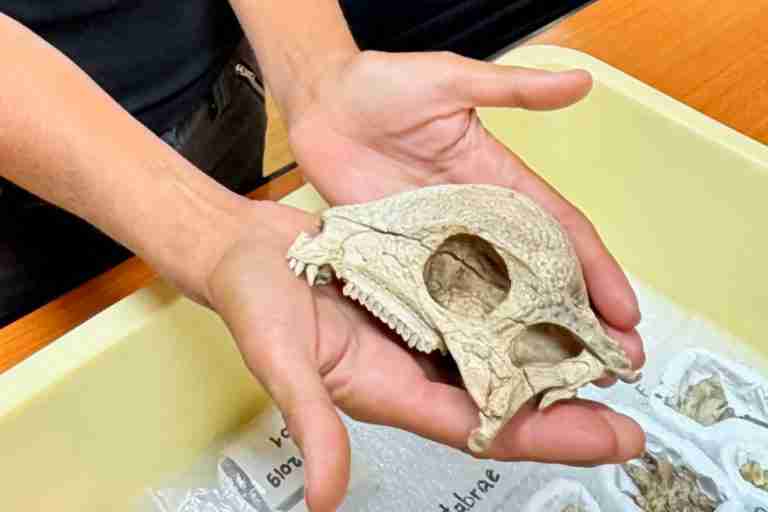
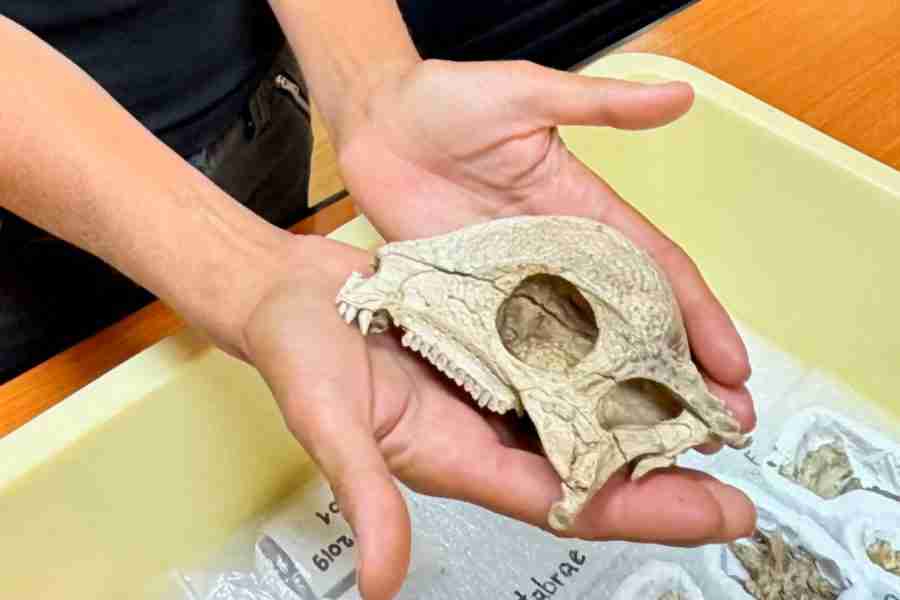
Researchers said the fossil represents a juvenile of a previously unknown species they have named Zavacephale rinpoche
International News via Reuters:
Pachycephalosaurs, two-legged plant eaters known for their bony dome-shaped skulls, are among the quirkiest dinosaurs known, and also among the least understood. A fossil found peeking out of a cliffside in the Gobi Desert of Mongolia – the oldest and most complete of any dinosaur from this group – is now changing that.
Researchers said the fossil represents a juvenile of a previously unknown species they have named Zavacephale rinpoche (pronounced zah-vah-SEF-al-ay rin-POH-shay), dating to about 108 million years ago during the Cretaceous Period. This individual was small and lightly built, with long legs, short arms and small hands – comparable in size overall to a German shepherd.
Very little is known about pachycephalosaurs (pak-ee-SEF-al-oh-sors), a group that inhabited Asia and North America during the final period of the age of dinosaurs, with the fossils known until now generally being quite incomplete – sometimes with just the skull.
The Zavacephale specimen, however, is largely complete, providing the first comprehensive look at the anatomy of these dinosaurs. Zavacephale also is the oldest of any known pachycephalosaur by approximately 15 million years.
This Zavacephalee individual was at least two years old at the time of death. Even though it was not fully grown – the equivalent of a human teenager – it already had a well-developed cranial dome, made up of thickened bone atop the skull. This feature in Zavacephale differed a bit from those of pachycephalosaurs from later in the Cretaceous. In Zavacephale, the dome was formed mostly by a single skull bone. In later pachycephalosaurs, it was formed mostly by two bones.
Zavacephale exhibited ornamentation accompanying the dome in the form of small spikes and nodes that encircled the dome and the back of its skull.
The researchers determined the individual’s age by examining growth rings in the limb bones, akin to the annual growth rings formed in trees. The study was the first to use growth rings to identify when in the life of a pachycephalosaur the cranial dome fully develops.
The dome’s purpose remains a matter of debate. Scientists among other things have hypothesized that these dinosaurs butted heads – with dome-on-dome collisions – like bighorn sheep, perhaps to establish dominance and secure mating rights.
“The consensus is that these dinosaurs used the dome for socio-sexual behaviors. The domes wouldn’t have helped against predators or for temperature regulation, so they were most likely for showing off and competing for mates,” said paleontologist Lindsay Zanno of North Carolina State University and the North Carolina Museum of Natural Sciences, senior author of the study published on Wednesday in the journal Nature.
“Were they for head-butting, grappling or just showing off?” Zanno asked. “At the end of the day, you have to hand it to pachycephalosaurs. When it comes to flashy headgear, they didn’t phone it in.”
A completely formed dome on a juvenile indicates that pachycephalosaurs engaged in social and likely mating behaviors before becoming fully grown, Zanno said.
Adults of the largest pachycephalosaurs, like the later Pachycephalosaurus from North America, could grow to around 14 feet long (4.3 meters), though adults of Zavacephale may have been less than half of that length.
The environment in which Zavacephale lived was a valley dotted with lakes and surrounded by cliffs. The remains of multiple other plant-eating dinosaurs have been found nearby as well as various fish, turtles and croc relatives.
The name Zavacephale combines the Tibetan word for “origin” with the Latin word for “head,” owing to the fact that this species is the earliest-known example of dome-headed dinosaurs.
“Before Zavacephale, our record of pachycephalosaurs was almost exclusively limited to their indestructible domes. With such scanty skeletons, we were left with holes in our knowledge of their anatomy, including basic things like what their arms would have looked like, how their digestive system functioned and how the cranial dome evolved over time,” Zanno said.
The fossil preserved gastroliths, the stomach stones that helped the dinosaur grind the plants it ate.
Scientists are trying to figure out the evolutionary ancestry of pachycephalosaurs.
“We’ve been missing transitional forms that can shed light on how their bizarre cranial domes evolved and resolve their relationships to other dinosaurs,” Zanno said.
Reporting by Will Dunham in Washington, Editing by Rosalba O’Brien
Ben & Jerry’s – founded by Cohen and Greenfield in a renovated gas station in 1978 – was acquired by Unilever in 2000 for $326 million in a deal
International News via Reuters:
Ben & Jerry’s co-founder Jerry Greenfield, part of the duo whose names shaped the popular ice cream brand over the last half century, has quit the company after a rift and public feud with parent Unilever over the conflict in Gaza.
In an open letter shared by his partner Ben Cohen on social media platform X, Greenfield said that the Vermont-based company – well-known for its social activism – had in recent years been “silenced” by Unilever, which is currently spinning off its Magnum ice cream unit that includes the Ben & Jerry’s brand.
“It’s with a broken heart that I’ve decided I can no longer, in good conscience, and after 47 years, remain an employee of Ben & Jerry’s,” wrote Greenfield, 74, who had taken on a brand ambassador role at the firm.
“Standing up for values like justice, equity, and shared humanity has never been more important, yet Ben & Jerry’s has been silenced and sidelined for fear of upsetting those in power.”
DISPUTE OVER GAZA, SOCIAL VALUES
A spokesperson for the Magnum Ice Cream Company, Unilever’s ice cream unit, said that it “disagrees with Greenfield’s perspective and has sought to engage both co-founders in a constructive conversation on how to strengthen Ben & Jerry’s powerful values-based position in the world.”
Unilever shares were unmoved on Wednesday. Unilever did not respond to a request for comment.
Ben & Jerry’s – founded by Cohen and Greenfield in a renovated gas station in 1978 – was acquired by Unilever in 2000 for $326 million in a deal that included a unique clause allowing the brand to maintain its own independent board of directors with authority over its social mission, though not over operations.
However, Unilever and Ben & Jerry’s have clashed since 2021, when the Chubby Hubby ice cream maker said it would stop sales in the Israeli-occupied West Bank. The brand has since sued its parent over alleged efforts to silence it and described the Gaza conflict as “genocide”, a rare stance for a major U.S. company.
Magnum said Greenfield had stepped down as a brand ambassador and that he was not a party to the lawsuit.
Greenfield’s departure comes as the Ben & Jerry’s founders have been calling for its own spin-off ahead of a planned listing of Magnum Ice Cream in November.
Last week Cohen held a protest in London as the new Magnum Ice Cream Company presented its growth plans, demanding Unilever “free Ben & Jerry’s” to protect its social values. That was rebuffed by new Magnum CEO Peter ter Kulve. Cohen notably did not announce he was also stepping down on Wednesday.
Greenfield said he would keep up his social fight from outside the company as he couldn’t do so from inside.
“It was always about more than just ice cream — it was a way to spread love and invite others into the fight for a better world,” he said.
Reporting by Shivani Tanna and Gursimran Kaur in Bengaluru; Writing by Linda Pasquini; Editing by Adam Jourdan, Harikrishnan Nair, Nivedita Bhattacharjee, Muralikumar Anantharaman, Aidan Lewis
The European Commission identified fragile supply chains and heavy reliance on Asian manufacturers, especially for essential drugs such as antibiotics and painkillers, as key causes
International News via Reuters:
Europeans remain at risk of running short of medicines, including common antibiotics and other vital treatments, a European Court of Auditors report showed Wednesday.
The European Commission identified fragile supply chains and heavy reliance on Asian manufacturers, especially for essential drugs such as antibiotics and painkillers, as key causes, the ECA said.
In July, European crisis chief Hadja Lahbib said the EU aims to stockpile critical medical equipment and vaccines in case of future health crises and to create a network to improve coordination among member states.
But the ECA warned that stockpiling in some countries could worsen medical shortages elsewhere in the bloc.
Shortages peaked in 2023 and 2024, with EU countries running critically short of 136 medicines between January 2022 and October 2024, the report said.
ECA said the shortages are a “chronic headache for the EU,” with the bloc still lacking a “well‑oiled system” for addressing severe medicine shortages.
Auditors found the system to prevent drug shortages lacked a solid legal framework and timely information, with the European Medicines Agency, the region’s drug regulator, having limited powers outside health crises.
“Medicine shortages can have severe consequences for patients, compromise public health and come at a high cost for doctors, pharmacies and countries alike,” said Klaus Heiner Lehne, the ECA member leading the audit.
Regulatory barriers in the EU’s medicine market hinder cross-border redistribution, worsening drug shortages and unequal access, the report said.
The Commission has proposed legal changes that aim to cut reliance on countries such as China and India and, once passed, could significantly improve the system, the report added.
Reporting by Christy Santhosh in Bengaluru; Editing by Tasim Zahid
To provide the best experiences, we use technologies like cookies to store and/or access device information. Consenting to these technologies will allow us to process data such as browsing behavior or unique IDs on this site. Not consenting or withdrawing consent, may adversely affect certain features and functions.
Functional
Always active
The technical storage or access is strictly necessary for the legitimate purpose of enabling the use of a specific service explicitly requested by the subscriber or user, or for the sole purpose of carrying out the transmission of a communication over an electronic communications network.
Preferences
The technical storage or access is necessary for the legitimate purpose of storing preferences that are not requested by the subscriber or user.
Statistics
The technical storage or access that is used exclusively for statistical purposes.The technical storage or access that is used exclusively for anonymous statistical purposes. Without a subpoena, voluntary compliance on the part of your Internet Service Provider, or additional records from a third party, information stored or retrieved for this purpose alone cannot usually be used to identify you.
Marketing
The technical storage or access is required to create user profiles to send advertising, or to track the user on a website or across several websites for similar marketing purposes.