Bermuda’s young riders Aeziah Divine and Jediah Cumbermack have concluded their campaigns at Donington Park, with a mixed bag of results in the British Superbikes.
Competing in the AJN Steelstock Kawasaki British Superteen Class, Jediah Cumbermack showed his potential with two strong finishes. In the first race, he finished in a respectable tenth place with a time of 17:03.462. He built on that performance in the second race, finishing sixth with a time of 17:04.583. His consistent improvement and top-ten finishes are a very positive sign for his season.
In the R&G British Talent Cup, it was a more difficult day for Aeziah Divine. He unfortunately recorded a “did not finish” (DNF) in his race after completing just four laps. The result is a setback for Divine, but he will be looking to put the disappointment behind him as he prepares for his next event. The experience of competing at this level, even with a difficult result, will be invaluable for the young rider’s development.
St. George’s Cricket Club has been crowned the 2025 Premier Division 40-Overs Knockout Cup champions after a victory over St. David’s Cricket Club in a final that was affected by rain and a revised target.
St. David’s won the toss and elected to bat in the match at Lord’s, which was reduced to 35 overs. They posted a strong total of 186 for 9, with Onias Bascome top-scoring with a knock of 42. The St. George’s bowling attack was led by Clay Darrell, who claimed three wickets for 39 runs.
After a rain delay, the target for St. George’s was revised to 134 runs in 25 overs. St. George’s got a promising start with Nzari Paynter top-scoring with 33, St. George’s was able to find a way to chase down the target, eventually finishing on 134 for 8 in their 21 overs. The St. David’s bowling attack, led by Justin Pitcher, was the difference-maker, with Pitcher claiming four wickets for 32 runs in a superb spell. His performance was crucial but it was unsuccessful in securing the championship for St. David’s.
A series of events will unfold over the coming months to mark the battalion’s enduring service to the island
Images: Royal Bermuda Regiment
RBR press release:
Serving and former soldiers took a trip through the decades last night as the Royal Bermuda Regiment launched its 60th anniversary celebrations at Warwick Camp. Dignitaries, including His Excellency the Governor and RBR Commander-in-Chief Andrew Murdoch, as well as Premier David Burt, were among the guests welcomed for an evening of fellowship and recognition.
It was the first in a series of events that will unfold over the coming months to mark the battalion’s enduring service to the island since its establishment on September 1, 1965. Lieutenant Colonel Duncan Simons, the Regiment’s Commanding Officer, told attendees last night: “Our 60th anniversary year is a year of opportunity.
Not only is this year an opportunity to draw attention to the Regiment as we celebrate this milestone, but it also presents an opportunity for the National Security and Defence Review, which will soon commence.
“It is my hope that this review brings greater clarity around Bermuda’s defence requirements on land and in our waters, and removes existing barriers so that we can deliver the most appropriate and efficient capability possible, and one that’s well resourced.
“It is also my hope that this exercise will chart our course for the next decade so that the service we provide to Bermuda grows stronger and becomes more attractive to volunteers, and that our Regiment, the Royal Bermuda Regiment, is increasingly valued by our people.”
The RBR is committed to providing a disciplined force dedicated to national security, civil support and community development, and speakers at the event shared their reflections on different decades of the battalion’s existence.
Major (retired) Leslie Lowe took guests back to the 1960s, telling them: “In 1965, two proud units – the Bermuda Militia Artillery and the Bermuda Rifles – were amalgamated to form a single, united force: the Bermuda Regiment.
“This was more than an administrative change, it was the start of a new identity blending traditions, skills and comradery into one body of service.”
He added: “The 1960s were also a time when Bermuda, like much of the world, was experiencing social change. The Regiment stood as a symbol of discipline, teamwork and shared purpose, welcoming members from all walks of life and providing a model of co-operation in a changing society.
“By the end of the decade, the Regiment had already established its reputation for professionalism at home and abroad. Those early years laid the foundation for everything we celebrate today – 60 years of honour, readiness and service to Bermuda.”
Major (retired) Barrett St Vincent Dill told attendees that the 1980s was a decade of “growth, discipline and international engagement” for the battalion.
He said: “We were, at that time, a fraternity, consisting of both conscripts and volunteers with long-lasting friendships, brotherhoods, commitments to common goals and aspirations united by the three Cs: conviction, commitment and courage.
“In keeping with future aspirations and ambitions, in 1981 we evolved from a fraternity to an all-inclusive organisation, welcoming women into the Regiment for the very first time, giving a further strength to the battalion.”
Maj Dill added: “The ‘80s proved that the Regiment was not just built to endure, it was built to excel, rivalling any uniformed services on the planet.”
Major (retired) Marc Telemaque, who spoke on the 2000s, said that the 21st century brought tremendous change.
He added: “Seeing the faces that are here this evening, it is clear that we are an enduring organisation, an organisation that engendered a level of pride and camaraderie that is unrivalled throughout this community.”
Guests were encouraged to participate in a legacy box project, whereby messages written by RBR members past and present will be sealed in a time capsule to be opened years from now.
Major Kenneth Wainwright, the Regiment’s Quartermaster, introduced the committee of RBR members that will facilitate a year of events to celebrate the battalion’s 60th anniversary, which will include a presentation of new regimental Colours next month.
For more information and to keep up to date with the RBR’s 60 Years of Service celebrations, visit the Regiment’s revamped website at rbr.bm
Government said the Summit is a pivotal event in its strategic pursuit of full CARICOM membership
Images supplied
Government press release:
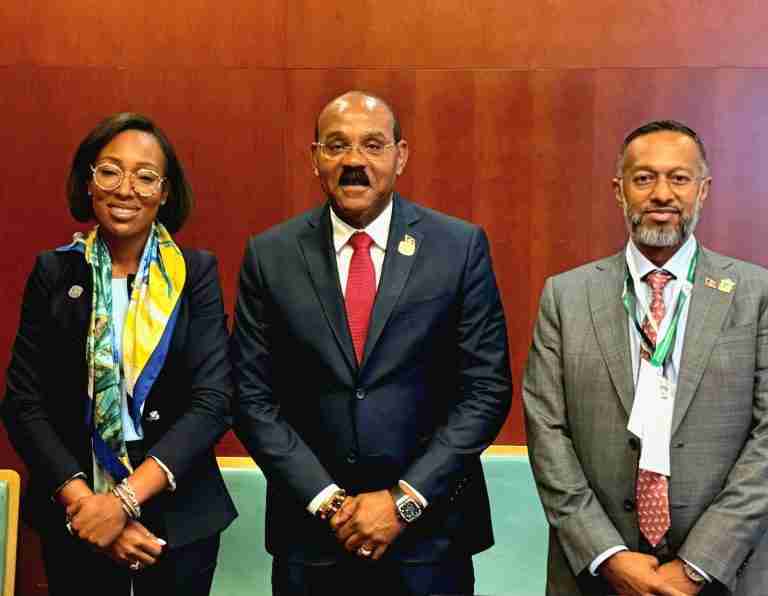
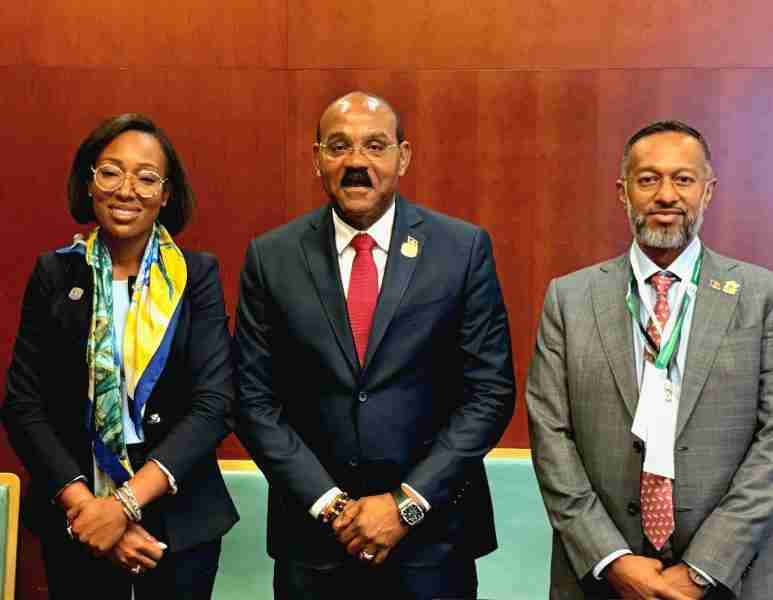
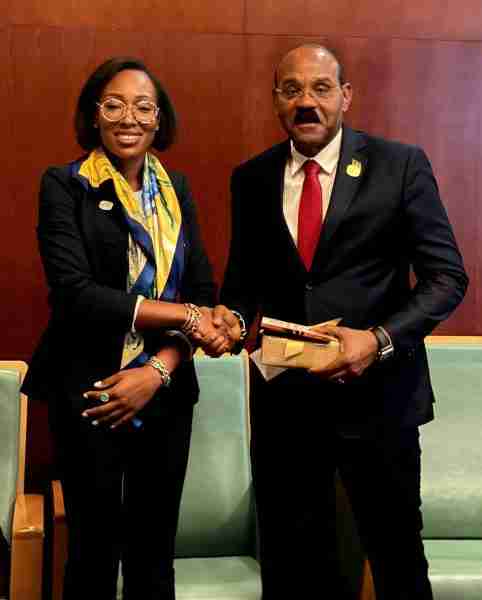
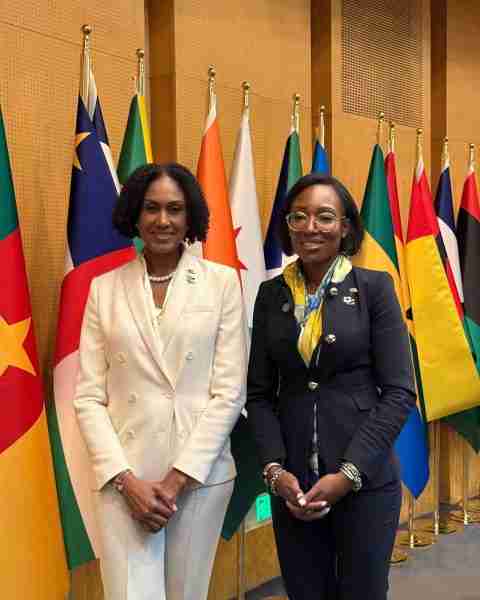
The Minister of Home Affairs, the Hon. Alexa Lightbourne JP, MP, is leading Bermuda’s delegation at the 2nd Africa-CARICOM Summit, taking place in Addis Ababa, Ethiopia from September 6 – 8, 2025.
Hosted by the African Union Commission, the Summit is a pivotal event in the Government’s strategic pursuit of full membership in the Caribbean Community (CARICOM).
The event has brought together a distinguished gathering of global leaders, that includes UN Secretary-General António Guterres and the President of Angola and Chairperson of the African Union, H.E. João Manuel Gonçalves Lourenço, among other African and Caribbean Heads of Government/State.
And Minister Lightbourne’s presence in Addis Ababa underscores Bermuda’s commitment to not only strengthening its ties within the Caribbean family but also to engaging with Africa on a broader, more impactful scale. These include discussions with the Bahamas Prime Minister the Hon. Philip “Brave” Davis, K.C., Prime Minister of Saint Vincent and the Grenadines, Dr. the Hon. Ralph Everard Gonsalves and Prime Minister of Antigua and Barbuda, the Hon. Gaston Browne.
About the 2nd Africa-CARICOM Summit:
This year’s Summit, under the theme “Transcontinental Partnership in Pursuit of Reparatory Justice for Africans and People of African Descent Through Reparations,” is the first in-person gathering of its kind.
It follows the inaugural virtual summit held in 2021, and provides a crucial platform for Afri-Caribbean leaders to discuss shared challenges and forge a common agenda on issues ranging from debt sustainability and climate change to food security and the establishment of a transatlantic air route.
While Bermuda’s current status as an observer limits formal participation in all plenary sessions, the Minister is attending key events to advocate on behalf of the island, demonstrating the value of a direct voice for Bermuda on the world stage.
Minister Lightbourne said, “As descendants of Africa, dispersed across oceans by history, our gathering in Addis Ababa carries profound meaning.
“The voices we carry from home, and the voices of the diaspora in places such as Shashemene, call Bermuda to build a future anchored in justice, equity, and solidarity, with our Caribbean and African brothers and sisters.
“The strength of this moment lies in connection. Connection between our island and the wider Caribbean family. Connection between the Caribbean and Africa. And connection between all the diaspora communities who keep alive the memory of our shared struggle and the possibility of our shared future.”
Minister Lightbourne is accompanied on this visit by the Ministry of Home Affairs Permanent Secretary, Pandora Glasford.
The minority government’s expected collapse looks set to deepen France’s problems at a critical time for Europe
International News via Reuters:
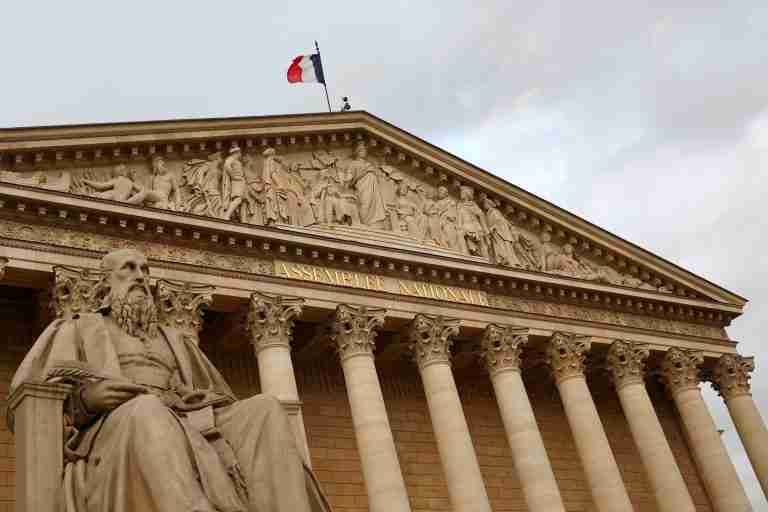
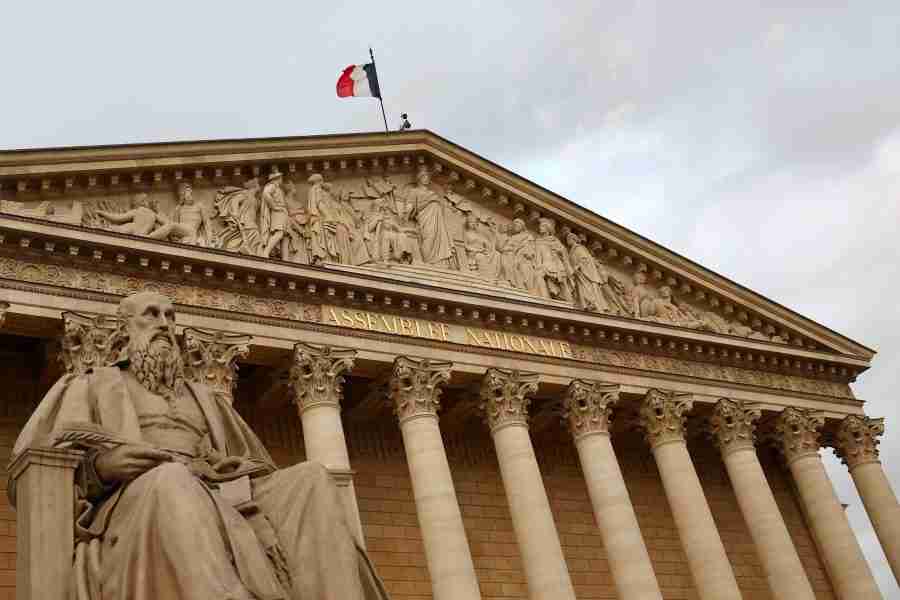
France’s fourth prime minister in less than two years, François Bayrou, faces defeat in a confidence vote on Monday, tipping the euro zone’s second-biggest economy further into political and economic paralysis.
The minority government’s expected collapse looks set to deepen France’s problems at a critical time for Europe, which is seeking unity in the face of Russia’s war against Ukraine, an increasingly dominant China and trade tensions with the United States.
The turmoil also threatens France’s ability to rein in its debt, with the risk of further credit downgrades looming as bond spreads – a gauge of the risk premium investors demand to hold French debt – widen.
France faces acute pressure to repair its finances, with last year’s deficit nearly double the EU’s 3% limit of economic output and public debt at 113.9% of GDP.
The confidence vote is slated for Monday afternoon after a debate from 1500 (1300 GMT) with an opening speech by Bayrou, followed by leaders from all political groups. The outcome of the vote could come by around 1700 GMT.
Opposition leaders across the political spectrum made clear they would stick to their plans to vote to oust Bayrou.
“I want to tell you how happy I am that the government will fall today. For many French it’s a relief,” Manuel Bompard, from the hard-left France Unbowed, told broadcaster franceinfo, echoing similar comments from other parties.
Should Bayrou indeed fall, President Emmanuel Macron will likely face the job of finding yet another government chief capable of steering a budget through parliament, less than a year after the ouster of Bayrou’s conservative predecessor Michel Barnier.
Social tensions are also heating up. A number of nebulous groups that have mushroomed online have called on the French to “block everything” on Wednesday of this week, while the mainstream labour unions are planning social action on September 18 against plans for budget cuts.
TILT TO THE LEFT?
Macron has so far ruled out dissolving parliament, as he did last year. France has been mired in a political crisis since that snap election, which resulted in an even more divided parliament.
Macron’s own alliance, already shorn of a majority since 2022, saw its numbers fall further, while the anti-immigration, far-right National Rally emerged as the biggest party. A loose coalition of left-wing parties, now deeply divided, came in as the largest bloc. No camp has a majority.
“This crisis was provoked and fuelled by President Emmanuel Macron and all those who have served him,” Marine Le Pen, head of the National Rally’s group of lawmakers, said on Sunday. “Today, the sick man of Europe, because of them, is France.”
After the fall of a conservative and a centrist as prime minister, many observers expect Macron to next look for a candidate from the ranks of the centre-left Socialists (PS).
Any such candidate would face major challenges and still need to forge a delicate alliance with the president’s liberal bloc, which opposes many of the left’s ideas, including raising taxes for the wealthiest to plug the country’s financial holes. They would also have to convince the moderate right to tolerate yet another minority government.
Laurent Wauquiez, leading lawmaker for the conservative Les Republicains (LR) party, signalled he would not call for ousting a socialist prime minister. Party chief and Interior Minister Bruno Retailleau, however, disagreed.
“There is no way we will accept a socialist prime minister”, Retailleau said on Sunday.
Like many in France, Mohamed, 80, who sells produce at the Aligre market in Paris, doesn’t think the politicians will find a way out.
“Come back in 10 days and you’ll see nothing will have changed. There won’t be a majority, there will be no budget.”
additional reporting by Elizabeth Pineau and Lucien Libert; writing by Ingrid Melander and Tassilo Hummel; Editing by Aidan Lewis
The ambulance service identified the five victims as a 50-year-old man, a woman in her fifties and three men in their thirties
International News via Reuters:
Five people were killed in a shooting at a bus stop on the outskirts of Jerusalem on Monday, Israel’s ambulance service said, while the police said the perpetrators had been killed.
It was not immediately clear who carried out the shooting or what was the motive. Palestinian militant group Hamas praised two Palestinian “resistance fighters” who it said had carried out the attack but it stopped short of claiming responsibility.
The ambulance service identified the five victims as a 50-year-old man, a woman in her fifties and three men in their thirties. It said 11 other people had suffered injuries, including six who were in a serious condition with gunshot wounds.
Israeli police said two attackers arrived by car and opened fire at a bus stop at Ramot Junction. They said a security officer and a civilian shot and killed the assailants. Several weapons, ammunition and a knife used by the attackers, who police only identified as “terrorists”, were recovered at the scene, police said.
Islamic Jihad, another Palestinian militant group, also praised the shooting but did not claim responsibility for it.
The junction is located in a part of Jerusalem that Israel captured in the 1967 war and later annexed in a move that the United Nations and most countries do not recognise.
The prime minister’s office said Benjamin Netanyahu was holding a “situation assessment” with security officials.
Reuters footage showed a heavy police presence in the Ramot area following the shooting. The ambulance service said a paramedic arriving at the scene reported that several victims were lying on the road and the sidewalk, some unconscious.
“This was a very severe scene,” the ambulance service cited paramedic Fadi Dekaidek as saying.
The Israeli military said it had deployed soldiers to the area and were aiding police in the search for suspects. Soldiers were also operating in areas of Ramallah in the Israeli-occupied West Bank to conduct interrogations and “thwart terrorism”, it said.
In October 2024, two Palestinians, one armed with a gun and the other armed with a knife, killed seven people in Tel Aviv. In November 2023, two Palestinian gunmen killed three people at a Jerusalem bus stop. Israeli security services said that the attackers in the 2023 Jerusalem shooting were linked to Hamas.
Reporting by Alexander Cornwell in Tel Aviv, Ahmed Elimam and Jana Choukeir in Dubai; Editing by Gareth Jones and Ros Russell
The blue-chip FTSE 100 was up 0.2% by 1005 GMT, while the domestically focussed mid-cap index added 0.6%
International News via Reuters:
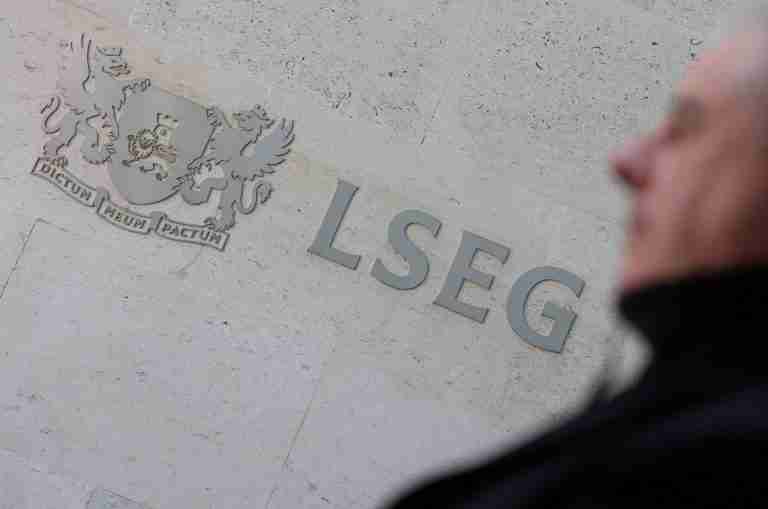
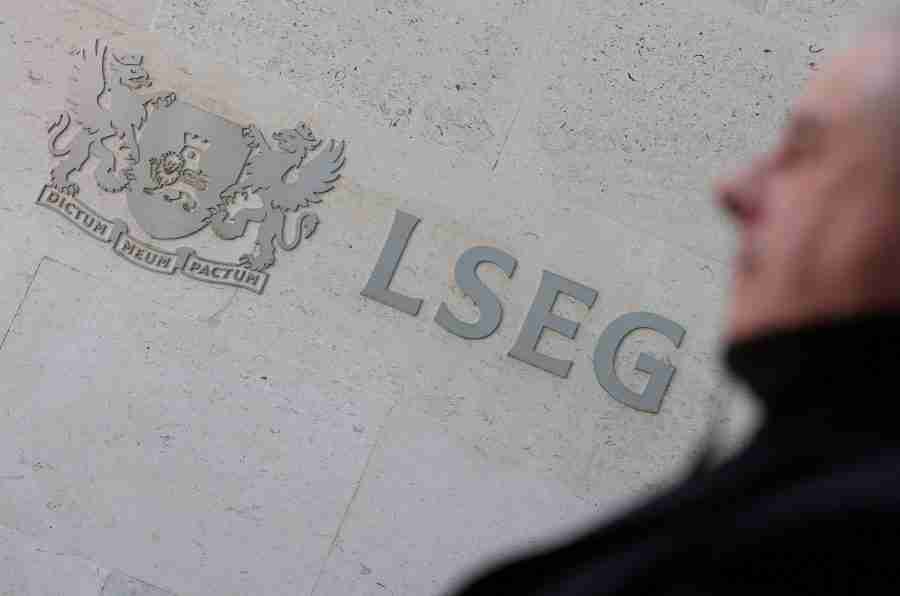
UK shares nudged higher on Monday, led by heavyweight energy and bank stocks, while losses in consumer staples and healthcare kept gains in check.
The blue-chip FTSE 100 was up 0.2% by 1005 GMT, while the domestically focussed mid-cap index added 0.6%.
Boosting the FTSE 100, energy stocks rose 1.3% after crude oil prices gained 1.9%. The prospect of additional sanctions on Russian crude after an overnight strike in Ukraine outweighed OPEC+’s planned output hike. [O/R]
Oil majors Shell and BP rose about 1.3% each.
Bank stocks advanced 0.7%, bouncing back following Friday’s slide, with top lenders Standard Chartered, NatWest and Barclays among the top performers on the benchmark index.
Precious metal miners advanced tracking higher gold prices. Fresnillo rose 1.9%. [GOL/]
Personal goods rose 2.4% with Burberry up 2.7%.
On the flip side, healthcare stocks declined 0.6%. Heavyweight AstraZeneca edged lower 0.6%.
Life insurers index fell 0.7%, weighed down by Phoenix Group that fell 6.2%, to the bottom of the FTSE 100.
The insurer said it would rebrand as Standard Life in March 2026, and reported a larger-than-expected decline in book value driven by market fluctuations.
Beverages lost 1.4%, with spirits maker Diageo down 2.2%.
Some consumer staples stocks declined. Unilever fell 1.2%, among the worst performers on the benchmark index.
In other moves, Marks & Spencer rose 2.7%, to top the FTSE 100, after Citi upgraded the retailer to “buy” from “neutral”.
PRS REIT rose 8.4%, to top the mid-cap index, after the real estate investment trust said U.S. private equity firm KKR has joined its formal sale process, but has not made an offer for the company.
Homebuilder Vistry gained 3.2% after signing a joint venture partnership with UK’s housing and regeneration agency Homes England to develop community homes.
Meanwhile, surveys showed British employers offered the lowest pay settlements in more than three-and-a-half years in July and hiring continued to slow.
The figures highlight businesses’ fears of another round of tax rises in finance minister Rachel Reeves’ November 26 budget.
Reporting by Sukriti Gupta; Editing by Shreya Biswas
The ECB is coming under pressure from lenders it oversees to ease the supervisory burden
International News via Reuters:
The European Central Bank is easing some of the checks it makes on euro zone banks, from how lenders get approval for share buybacks to how stress tests are carried out, ECB supervisor Sharon Donnery said on Monday.
The ECB is coming under pressure from lenders it oversees to ease the supervisory burden as the Trump administration promises easier rules in the United States and shadow banks gain ground in the credit business.
Writing in a blog post, Donnery listed measures the ECB has taken, including speeding up the approval of new appointments, buybacks and internal models, and reducing the amount of work demanded from banks during stress tests.
But she repeated her position that simplification should not go too far if the sector is to remain robust.
“The ECB is turning words into action and making banking supervision as simple as possible, but not simpler, to make sure banks are able to stay resilient and are well prepared to manage risks in their portfolios,” she wrote.
An ECB task-force, chaired by Vice President Luis de Guindos and also including Donnery, has recently presented a number of possible simplification measures to the Governing Council that are now being discussed by the euro zone’s 20 national central banks.
Germany’s bank regulators have proposed creating a separate regime for “small and non-complex banks”, which would subject them to a single capital requirement rather than the full array foreseen under EU rules.
Under this optional regime, banks with less than 10 billion euros ($11.73 billion) in assets, with a strong domestic focus and a small trading book would be required to have a leverage ratio – capital expressed as a percentage of total assets – “significantly higher than 3%”, the non-paper prepared by Germany’s Bundesbank and Bafin shows.
Donnery said earlier this year that the regulatory framework was already less strict for “small and non-complex” banks, although she saw scope for “more proportionality”.
The EU delayed new, global rules governing banks’ trading earlier this year as it awaited more clarity regarding the U.S. administration’s plans to deregulate its financial sector.
($1 = 0.8527 euros)
Reporting By Francesco Canepa; Editing by Joe Bavier
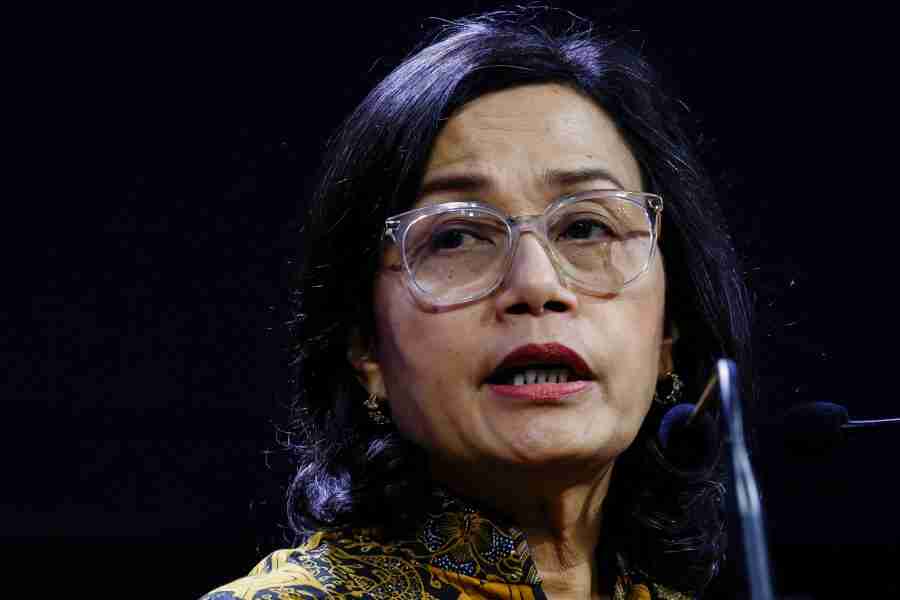
Indonesia’s well-regarded finance minister Sri Mulyani Indrawati was removed from her position on Monday as part of a broader cabinet reshuffle
International News via Reuters:
Indonesia’s newly appointed finance minister Purbaya Yudhi Sadewa said on Monday that 8% economic growth was “not impossible” and that he would find ways to quickly boost the economy.
Speaking to journalists shortly after he was sworn in by President Prabowo Subianto, Purbaya said he would push for more involvement in the economy by both the private sector and the government.
Indonesia’s well-regarded finance minister Sri Mulyani Indrawati was removed from her position on Monday as part of a broader cabinet reshuffle, with the president appointing an economist to replace her to run Southeast Asia’s largest economy amid fears of a slowdown.
Reporting by Stefanno Sulaiman; Editing by John Mair, Martin Petty
OPEC+ flagged plans to further increase production from October but the amount was less than some analysts had anticipated
International News via Reuters:
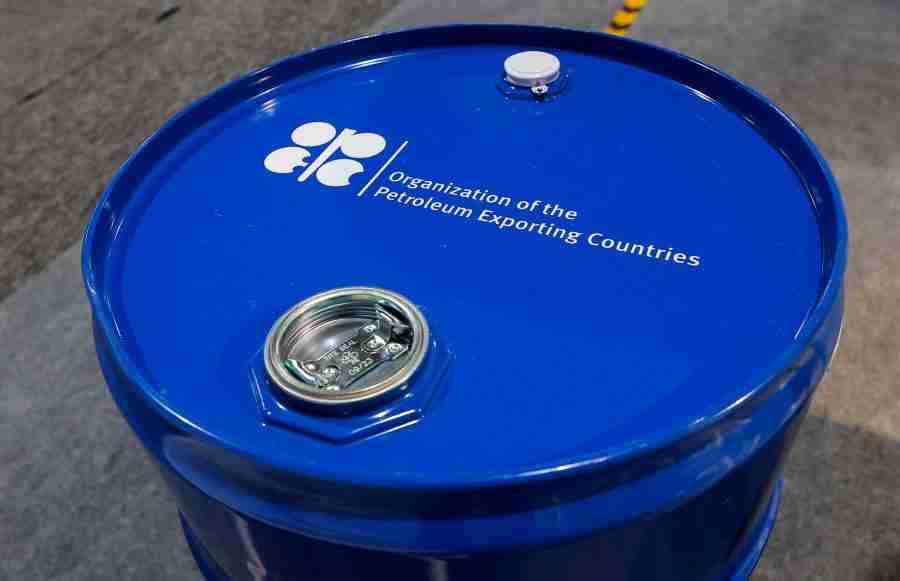
Oil prices climbed more than $1 on Monday, regaining some of last week’s losses, after OPEC+’s output hike was seen as modest and due to concerns over the possibility of more sanctions on Russian crude.
OPEC+ flagged plans to further increase production from October but the amount was less than some analysts had anticipated. Reuters reported earlier this month that members were considering another hike.
“The market had run ahead of itself in regards to this OPEC+ increase,” said Ole Hansen, head of commodity strategy at Saxo Bank. “Today we’re seeing a classic sell the rumour, buy the fact reaction.”
Brent crude climbed $1.16, or 1.8%, to $66.66 a barrel by 0858 GMT, while U.S. West Texas Intermediate crude rose $1.09, or 1.8%, to $62.96 a barrel.
Both benchmarks fell more than 2% on Friday as a weak U.S. jobs report dimmed the outlook for energy demand. They lost more than 3% last week.
OPEC+, which includes the Organization of the Petroleum Exporting Countries plus Russia and other allies, agreed on Sunday to further raise oil production from October.
OPEC+ has been increasing production since April after years of cuts aimed at supporting the oil market. The latest decision comes despite a likely looming oil glut in the Northern Hemisphere winter months.
The eight members of OPEC+ will lift production from October by 137,000 barrels per day. That, however, is much lower than increases of about 555,000 bpd for September and August and 411,000 bpd in July and June.
The impact of this increase is expected to be relatively low, because some of these members have been overproducing. So the higher output level would likely include barrels that are already in the market, analysts said.
“Expectations of tighter supply from potential new U.S. sanctions on Russia are also lending support,” said Toshitaka Tazawa, an analyst at Fujitomi Securities.
U.S. President Donald Trump said on Sunday he is ready to move to a second phase of sanctioning Russia, the closest he has come to suggesting he is on the verge of ramping up sanctions against Moscow or its oil buyers over the war in Ukraine.
New sanctions on buyers of Russian oil could disrupt crude flows, energy trader Gunvor’s global head of research and analysis, Frederic Lasserre, said on Monday.
Russia launched its largest air attack of the Ukraine war on Sunday, setting the main government building on fire in central Kyiv and killing at least four people, Ukrainian officials said.
Trump said on Sunday that individual European leaders would visit the United States on Monday and Tuesday to discuss how to resolve the conflict.
In a note over the weekend, Goldman Sachs said it expects a slightly larger oil surplus in 2026 as supply upgrades in the Americas outweigh a downgrade to Russia supply and stronger global demand. It left its Brent/WTI price forecast unchanged for 2025 and projected the 2026 average at $56/$52 a barrel.
Reporting by Anna Hirtenstein. Additional reporting by Yuka Obayashi; Editing by Shri Navaratnam, Edwina Gibbs and Joe Bavier
Nepal blocked access to several social media platforms, including Facebook, last week after they failed to register with authorities in a crackdown on misuse
International News via Reuters:
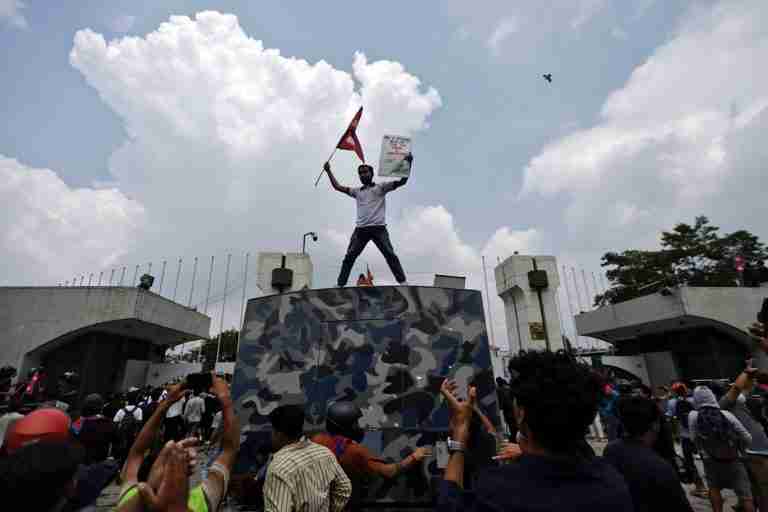
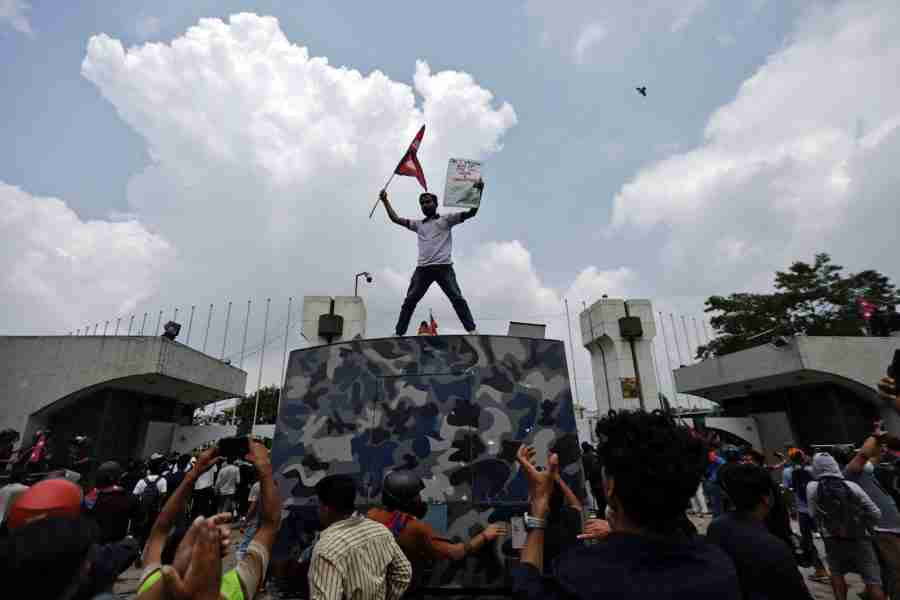
One person died as Nepali police fired tear gas and rubber bullets to disperse young people who tried to break into parliament during a protest on Monday against a social media shutdown and alleged government corruption, state TV said.
Nepal blocked access to several social media platforms, including Facebook, last week after they failed to register with authorities in a crackdown on misuse.
The government said social media users with fake IDs have been spreading hate speech and fake news, and committing fraud and other crimes via some platforms.
Authorities imposed a curfew around the parliament building after thousands of the protesters tried to enter the legislature by breaking a police barricade.
One person was killed and more than 50 injured in the trouble, state-run Nepal Television said. Local media reported that at least six people had died.
There was no official confirmation of the deaths and injuries and Reuters could not independently verify the figures.
Several protesters were injured and taken to a nearby hospital, a Reuters witness said. A group of protesters stopped a security vehicle heading towards parliament and an ambulance was set on fire, they added.
Ekram Giri, a spokesperson for Nepal’s parliament, said some protesters entered the parliament premises but did not reach its main building. They had been driven out by police and have assembled on the road outside, he said.
“We have imposed a curfew which will remain in force until 10 p.m. local time (1615 GMT) to bring the situation under control after protesters began to turn violent,” Muktiram Rijal, a spokesperson for the Kathmandu district office, told Reuters.
Police had orders to use water cannons, batons and rubber bullets to control the crowd, Rijal said.
The curfew had been extended to Kathmandu’s Singha Durbar area, which includes the prime minister’s office as well as other ministries, the residence of the prime minister and the president’s house, Rijal said.
PROTESTS IN OTHER CITIES
Police said similar protests were also organised in Biratnagar and Bharatpur in the southern plains and in Pokhara, gateway to the world’s 10th highest mountain, Mount Annapurna, in western Nepal.
Earlier on Monday, thousands of youths, including students, many in their school or college uniforms, were stopped by police from marching towards the parliament building, where demonstrations are not allowed.
Protesters carried the national flag and placards with slogans such as “Shut down corruption and not social media”, “Unban social media”, and “Youths against corruption”, as they marched through Kathmandu.
Television visuals showed some protesters throwing projectiles at police personnel who were dressed in riot gear and huddled in one place as smoke from tear gas shells filled the street. Protesters also pushed against police barricades and brought them down.
Many people in the Himalayan nation think corruption is rampant, and the government of Prime Minister K.P. Sharma Oli has been criticised by opponents for failing to deliver on its promises.
Nepal’s social media shutdown comes as governments worldwide, including the U.S., EU, Brazil, India, China and Australia, take steps to tighten oversight of social media and Big Tech due to growing concern about issues such as misinformation, data privacy, online harm and national security.
Critics say many of these measures risk stifling free expression, but regulators say stricter controls are needed to protect users and preserve social order.
About 90% of Nepal’s 30 million people use the internet.
Reporting by Gopal Sharma, Writing by YP Rajesh; Editing by Helen Popper and Saad Sayeed
Traders are fully expecting a quarter-point cut from the Federal Reserve when it meets next week
International News via Reuters:
The pound hovered largely unchanged on Monday, having posted its biggest one-day rally against the dollar in two weeks on Friday, following surprisingly weak U.S. employment data that has cemented expectations for a U.S. rate cut this month.
Sterling was last unchanged on the day at $1.3513, having risen by 0.5% on Friday, when the dollar came under heavy pressure following the August nonfarm payrolls report that showed just 22,000 jobs were created last month and far fewer were created in the prior months, too.
Traders are fully expecting a quarter-point cut from the Federal Reserve when it meets next week and a high chance of identical cuts in October and December.
The Bank of England, which also meets next week, is barely expected to deliver even one rate cut in the remainder of this year, given UK inflation remains well above the central bank’s 2% target and the economy is slowing, but without obvious signs of a more serious weakening.
This divergence creates a theoretical advantage for sterling and UK assets in general, as investors stand to benefit from higher British interest rates versus those elsewhere.
Sterling shrugged off UK Prime Minister Keir Starmer’s cabinet reshuffle on Friday after the resignation of his deputy, which did not affect finance minister Rachel Reeves.
The pound was also steady against the euro, which traded at 86.8 pence.
“There’s no UK data of note this week and few Bank of England speakers. We suspect euro/sterling can trade in a 86.50-87.00 range this week, given that next week’s BoE meeting and news on quantitative tightening plans will be far more interesting,” strategists at ING said in a note.
Against the Japanese yen, sterling rallied to one-month highs above 200, after Japanese Prime Minister Shigeru Ishiba said he would resign on Sunday.
Ishiba said he was taking responsibility for his Liberal Democratic Party’s election losses earlier this year.
Reporting by Amanda Cooper; Editing by Hugh Lawson
To provide the best experiences, we use technologies like cookies to store and/or access device information. Consenting to these technologies will allow us to process data such as browsing behavior or unique IDs on this site. Not consenting or withdrawing consent, may adversely affect certain features and functions.
Functional
Always active
The technical storage or access is strictly necessary for the legitimate purpose of enabling the use of a specific service explicitly requested by the subscriber or user, or for the sole purpose of carrying out the transmission of a communication over an electronic communications network.
Preferences
The technical storage or access is necessary for the legitimate purpose of storing preferences that are not requested by the subscriber or user.
Statistics
The technical storage or access that is used exclusively for statistical purposes.The technical storage or access that is used exclusively for anonymous statistical purposes. Without a subpoena, voluntary compliance on the part of your Internet Service Provider, or additional records from a third party, information stored or retrieved for this purpose alone cannot usually be used to identify you.
Marketing
The technical storage or access is required to create user profiles to send advertising, or to track the user on a website or across several websites for similar marketing purposes.