Monday, November 9, 2026
Home Blog Page 788

French parliament ousts prime minister, deepening political crisis

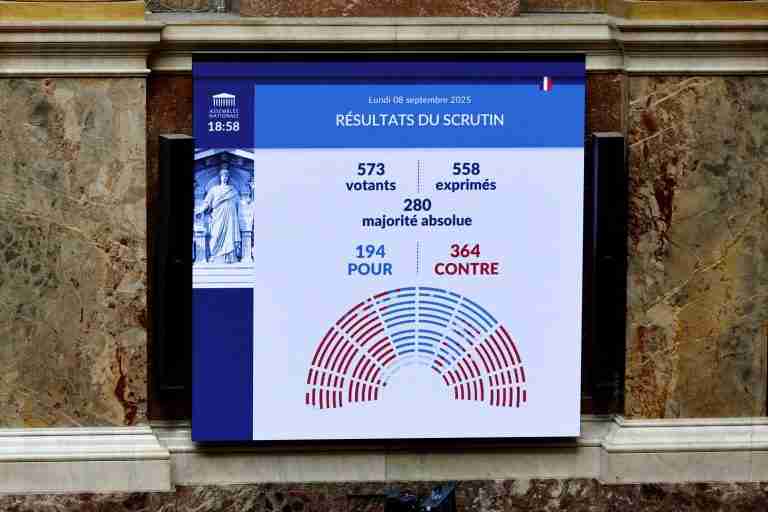
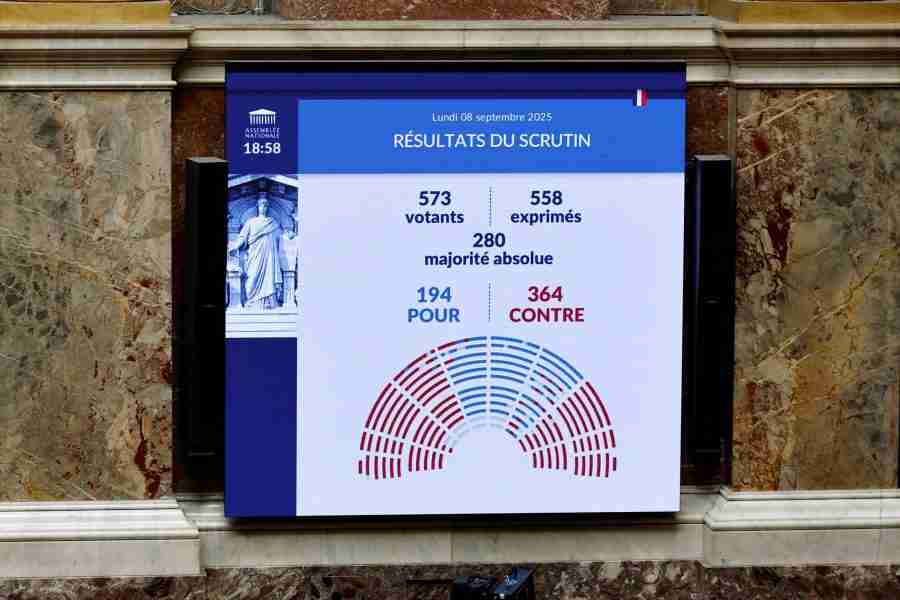
Lawmakers voted to oust Prime Minister Francois Bayrou and his minority government with 364 votes against the veteran centrist politician and 194 in his favour
International News via Reuters:

France’s parliament brought down the government on Monday over its plans to tame the ballooning national debt, deepening a political crisis that is weakening the euro zone’s second-largest economy.

Lawmakers voted to oust Prime Minister Francois Bayrou and his minority government with 364 votes against the veteran centrist politician and 194 in his favour.

President Emmanuel Macron, who is facing calls from the opposition to dissolve parliament and resign, will instead hunt for his fifth prime minister in less than two years. His office said he would appoint one in the next few days.

The next government’s most pressing task will be to pass a budget, the same challenge Francois Bayrou faced when he took office nine months ago. Securing the backing of a very divided parliament will be equally hard.

“You have the power to bring down the government, but you do not have the power to erase reality,” Bayrou told lawmakers before losing the confidence vote.

“Reality will remain relentless: expenses will continue to rise, and the burden of debt, already unbearable, will grow heavier and more costly,” he said.

Bayrou will tender his resignation on Tuesday, his office said.

He had called the confidence vote to try to win parliamentary support for his strategy to lower a deficit that stands at nearly double the European Union’s 3% ceiling, and to start tackling a debt pile equivalent to 114% of GDP.

But opposition parties were in little mood to rally behind his planned savings of 44 billion euros ($51.51 billion) in next year’s budget, with an election for Macron’s successor looming in 2027.

“This moment marks the end of the agony of a phantom government,” far-right leader Marine Le Pen said, pushing for a snap parliamentary election, which Macron has so far ruled out.

“Macron is now on the front line facing the people. He too must go,” Jean-Luc Melenchon, leader of the hard-left France Unbowed, said on X.

WHO’S NEXT?

A lengthy period of political and fiscal uncertainty risks undermining Macron’s influence in Europe at a time when the United States is talking tough on trade and security, and war is raging in Ukraine on Europe’s eastern flank.  

The French president could now nominate a politician from his own centrist minority ruling group or from the ranks of conservatives as the next premier, but that would mean doubling down on a strategy that has failed to yield a stable alliance.

He also could tack to the left and nominate a moderate socialist, or choose a technocrat.

No scenario would be likely to hand the next government a parliamentary majority. It was inevitable that the need to form a new government would result in a dilution of the deficit reduction plan, Finance Minister Eric Lombard said before the vote.

Macron may eventually decide the only path out of the crisis lies in calling a snap election, but he has so far resisted calls from Le Pen’s National Rally and from France Unbowed to dissolve parliament a second time. 

FISCAL MESS

Financial markets had anticipated the confidence vote would fail and there was little immediate reaction on Monday. French markets face another test on Friday, when Fitch Ratings reviews its sovereign rating for France. Moody’s and S&P Global follow with their own rating reviews in October and November.

“Over the near-term, I’m sure everyone in markets expects paralysis and downward pressure on ratings,” said Chris Scicluna, head of economic research for Daiwa Capital Markets. As for now, “the outcome was as expected, so markets should react in a modest way.”

France’s EU peers will be watching closely. 

France holds the highest deficit as a percentage of GDP in the euro zone – the bloc using the EU’s single currency. It pays more to service its debt than Spain and spreads against benchmark German 10-year bonds are at their highest level in four months. 

A rating downgrade would hamper France’s ability to raise money at low interest rates from investors, potentially deepening its debt problems. 

The Socialists have offered a counter-budget that would impose a tax of at least 2% on personal wealth greater than 100 million euros ($117.5 million) and generate savings of 22 billion euros – a proposal that would be tough to marry with the pro-business reform agenda of Macron’s presidency.

Discontent may also start brewing on the streets. A grassroots protest movement called “Bloquons Tout” (“Let’s Block Everything”) is calling for nationwide disruption on Wednesday. Trade unions are plotting walkouts the week after.

Like many in France, Mohamed, 80, who sells produce at the Aligre market in Paris, doesn’t think the politicians will find a way out. 

“Come back in 10 days and you’ll see nothing will have changed. There won’t be a majority, there will be no budget.”

($1 = 0.8511 euros)

Additional reporting by Dominique Vidalon, Benoit Van Overstraeten, Tassilo Hummel, Makini Brice and Lucien Libert; writing by Ingrid Melander and Richard Lough; Editing by Aidan Lewis, Hugh Lawson, Timothy Heritage and Bill Berkrot


Wealthy ancient Roman’s tomb discovered in Albania

The tomb, which measures nine metres by six metres (29 ft by 19 ft), is the first discovery in Albania of what the experts believe to be a wealthy person’s resting place

International News via Reuters:

Archaeologists in Albania have discovered a large Roman burial chamber dating from the third to fourth century AD, the first of its kind found in the Balkan country that was once part of the Roman Empire.

Tipped off by locals who had noticed some unusual stones on a plateau near the North Macedonia border, staff from the Institute of Archaeology began excavating in early August and found the underground structure whose large limestone slabs were inscribed with Greek lettering. 

“The inscription tells us that the person buried here was named Gelliano, a name typical of the Roman period. We are uncertain about the identity of the second individual, but it is likely a family member,” said Erikson Nikolli, the project’s lead archaeologist.

The tomb, which measures nine metres by six metres (29 ft by 19 ft), is the first discovery in Albania of what the experts believe to be a wealthy person’s resting place, grander than other burial sites found in the area.

Local authorities in Albania, where tourism is booming, are already planning to develop the site into a tourist attraction, while residents flocked to the area upon hearing the news of the discovery.

Last week, Nikolli’s team used brushes to reveal the intricately carved edges of the tomb’s white roof stone and walls. 

“We also uncovered a piece of fabric embroidered with gold thread, which confirms our belief that we are dealing with a member of the upper class.”

Other findings include glass plates and knives.

Nikolli said that the tomb had been looted at least twice – once in antiquity and later when heavy machinery was used to move a massive rock on top of the chamber.

He explained that the occupant’s name was inscribed in Greek letters but carried a Latin meaning, while a second inscription indicates that the tomb was dedicated to the god Jupiter.

Experts have yet to decipher additional inscriptions on stones found nearby, which are believed to have belonged to another monument now surrounded by cornfields and a quarry.

Reporting by Fatos Bytyci and Florion Goga; editing by Edward McAllister and Sharon Singleton

Automakers debut new EVs, affordable models at Munich car show

European automakers at the IAA Mobility show in Munich, running until Friday, also face sinking sales in China

International News via Reuters:

Major automakers showcased their latest models at the Munich car show on Monday, unveiling new EVs and lower-cost models as Europe’s auto sector fights crises ranging from tariff hikes to rising costs and rivalry with Chinese firms on their home turf.

With many companies concerned over Europe’s tough-to-meet carbon emissions targets for 2035, several said they would widen their production focus rather than restrict themselves to electric or other alternative-fuel vehicles.

European automakers at the IAA Mobility show in Munich, running until Friday, also face sinking sales in China, the biggest single market for Volkswagen, BMW and Mercedes-Benz.

“The main problem is that we have many crises at the same time,” VW Chief Executive Oliver Blume told Reuters, citing challenges in China, U.S. tariffs and a huge price tag if restructuring is part of the firm’s cost-cutting drive.

Still, automakers appeared to now be confronting Chinese competition head on, some analysts said.

European automakers are showcasing a number of new models this year, after learning their lesson two years ago when they did not have any new models to counter the Chinese onslaught, said Tu Le, founder of consultancy Sino Auto Insights.

“The Europeans have demonstrated that they are absolutely taking the Chinese seriously,” he told Reuters.

COSTLY TARIFFS

VW’s Blume said U.S. tariffs were costing the firm “several billion euros on our balance sheet” this year.

Still, he said Volkswagen was in positive talks with the U.S. government over substantial investments to mitigate the impact of tariffs, including a plant for its Audi brand.

VW’s luxury sportscar brand, Porsche, meanwhile, was unlikely to reach its 20% long-term margin target as it was “sandwiched” between tariffs and a weak Chinese market, said Blume, who is also CEO of Porsche.

Franco-Italian carmaker Stellantis will no longer only produce EVs as part of its target through 2030, Jean-Philippe Imparato, head of enlarged Europe and European brands, said during a roundtable at the auto show.

Imparato cited EU carbon emissions targets for 2035 as no longer achievable for any carmaker, adding weight to Stellantis’ decision not to restrict production just to EVs.

With high price tags a barrier to broader EV adoption in Europe, automakers have been racing to bring models priced under 25,000 euros ($29,362.50) to the market.

NEW OFFERINGS

China’s No. 1 automaker BYD said it would make its EVs – that are meant for sale in Europe – locally within three years, helping it avoid EU tariffs, while plug-in hybrids should dominate its European sales in the short term, Stella Li, BYD’s No. 2 executive, told Reuters on Monday.

“We are training ourselves to be more European in production,” she said.

The EU imposed tariffs on Chinese-made EVs last year because it believed China’s automakers benefited from government subsidies.

China’s Leapmotor unveiled the B05, a new hatchback model, adding to its EV lineup in Europe as competition heats up for affordable electric models.

The B05 will be delivered in Europe from the second quarter of 2026 after its launch in China in the fourth quarter of this year, the company said, without disclosing price details.

CEO Zhu Jiangming described the model as a sporty coupe that will come in six colours, including Lightning Yellow and Morgan Pink.

Turkish EV startup Togg unveiled a new sedan and said it would launch sales in Europe starting with Germany as it sought new profit avenues in the region’s largest car market.

Togg announced the European launch of its T10X electric SUV, and unveiled the T10F, an electric five-door sedan. Orders for both vehicles will start in Germany at the end of September and pricing details were not disclosed.

For more announcements by individual companies, click on this FACTBOX.

($1 = 0.8514 euros)

Reporting by Nick Carey and Christoph Steitz; Additional reporting by Gilles Guillaume; Editing by Bernadette Baum and Susan Fenton

Lisbon to design new mechanism ensuring funicular safety after crash

The group will include technicians from municipal public transport company Carris, which operates the funicular, and experts from universities

International News via Reuters:

Lisbon’s city council has tasked a team of experts with designing a new mechanism to ensure the safety of the Gloria funicular railway that had a deadly crash last week and will remain closed until its revamp, a city official said on Monday.

“We must guarantee maximum security,” the council’s Vice President, Filipe Anacoreta Correia, told reporters, adding the country needed to be reassured that this was the case before the cable car could reopen.

The group will include technicians from municipal public transport company Carris, which operates the funicular, and experts from universities, Portugal’s engineering regulatory organization, and national civil engineering laboratory LNEC, Correia added.

During an extraordinary meeting, the council also voted to give the expert team the final say on when it was safe to resume the funicular’s operation.

A preliminary report said problems with a cable likely caused the funicular railway popular with tourists to hurtle down a hill, killing at least 16 people and injuring another 22 when it crashed into a building.

It said the accident happened in just 50 seconds because, although the pneumatic and manual brakes were activated, they did not have enough capacity to stop the funicular, and there was no other redundant safety system.

Gloria, which opened in 1885, is one of three old funiculars operated by Carris and is used by tourists as well as local residents.

The line connects Lisbon’s downtown area near the Restauradores Square with the Bairro Alto and transports around 3 million people a year.

Reporting by Sergio Goncalves; Editing by David Latona and Rod Nickel

Trade ties strengthened with the EU during Brussels visit

Minister of Economy and Labour, Jason Hayward travelled to Brussels recently to attend the Bermuda Insurers and Reinsurers (ABIR) 18th Annual International Insurance Regulatory Dialogue

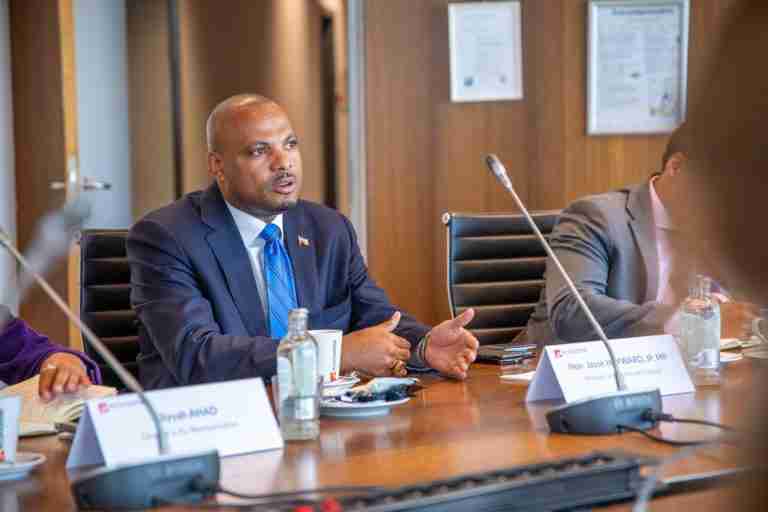
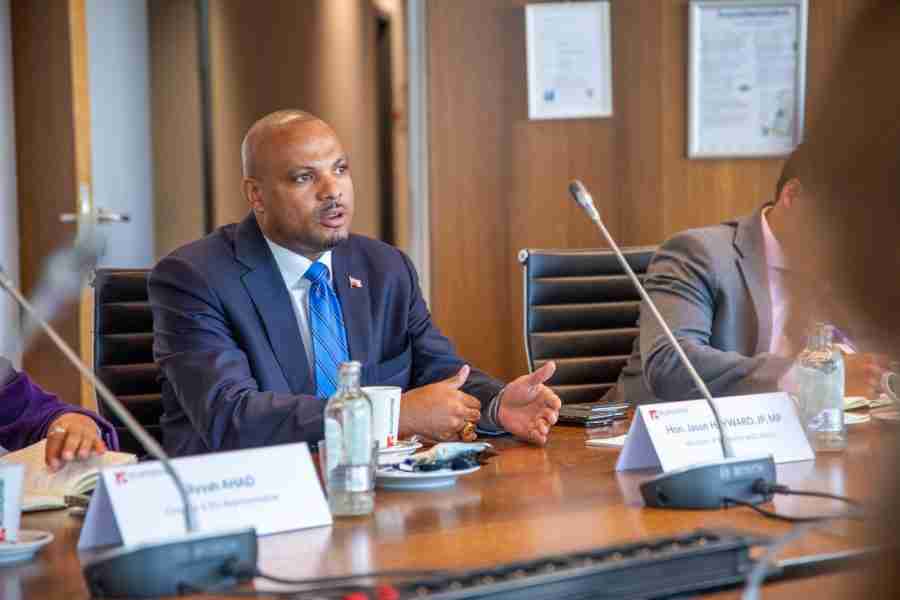
Minister of Economy and Labour, Jason Hayward in Brussels. Photo: Government of Bermuda

Full press release from the Ministry of Economy and Labour:

The Minister of Economy and Labour, the Hon. Jason Hayward, JP, MP, attended the Association of Bermuda Insurers and Reinsurers (ABIR) 18th Annual International Insurance Regulatory Dialogue in Brussels on 4–5 September 2025, where he highlighted Bermuda’s leadership in international reinsurance.

Minister Hayward was also the guest of honour at the Government of Bermuda Brussels Office’s annual reception, held on 4 September in partnership with ABIR.

Alongside showcasing the Government’s strong support for Bermuda’s reinsurance industry, the visit was an opportunity to build new connections while strengthening existing ones within Belgium and the EU institutions, particularly in entrepreneurship and digitalisation.

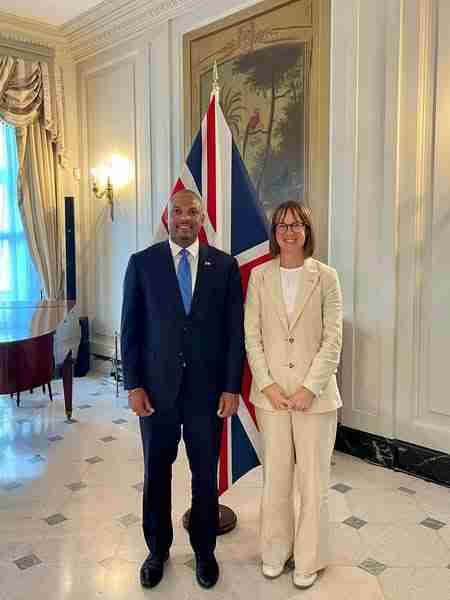
The Minister held four high-level bilateral meetings, including with H.E. Anne Sherriff, the UK Ambassador to Belgium, where discussions centred on trade collaboration, pathways for Bermudian entrepreneurs and creatives, and potential youth mobility schemes.

Minister Hayward pictured with Anne Sherriff, UK Ambassador to Belgium. Photo: Government of Bermuda

He also met with senior representatives from the Belgian Federal Ministry of the Middle Class, the Self-Employed, and SMEs, the Belgian Federal Public Service Economy, and the Brussels Agency for Entrepreneurship (Hub.Brussels), to exchange best practices in labour market policy, entrepreneurs and SME support, and the digital economy.

Minister Hayward also attended a private lunch organised by the Government of Bermuda Brussels Office with stakeholders from the European Commission and the private sector, focusing on fintech and digital assets.

Minister Hayward reflected on his visit, saying, “It was a pleasure to be in Brussels supporting ABIR and Bermuda’s reinsurance industry, which plays an important role on the international stage. There are many untapped opportunities for partnership with the EU and Belgium that could benefit Bermuda’s international businesses, entrepreneurs, and SMEs. This visit marked an important step in opening new avenues for dialogue, knowledge exchange, and trade.”

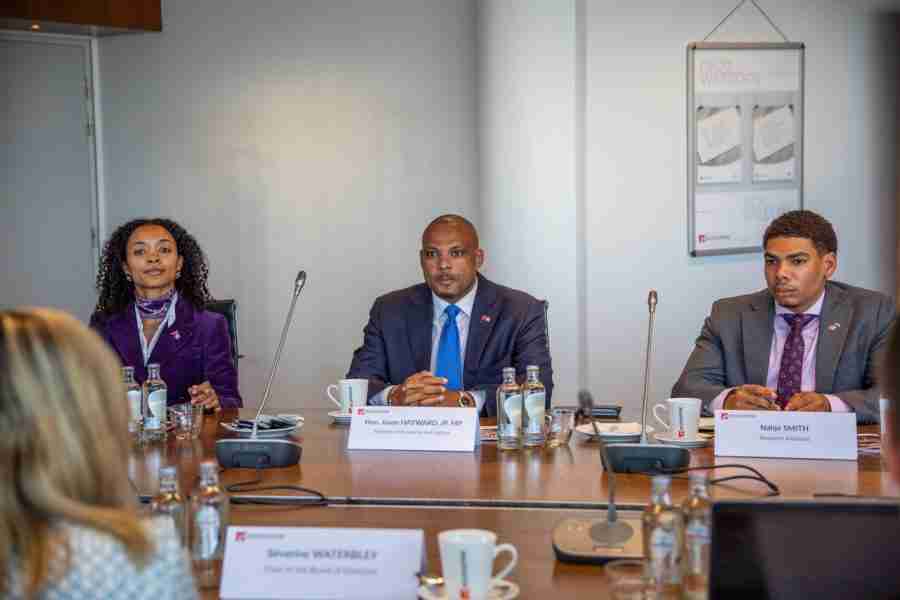
Aliyyah Ahad, Bermuda Government Brussels Office, Minister Hayward and John Huff, President & CEO, ABIR. Photo: Government of Bermuda

Brazil’s Lula calls for tighter trade ties for BRICS as tariffs bite

BRICS members Brazil and India are among the countries hardest-hit by U.S. President Donald Trump’s tariffs

International News via Reuters:

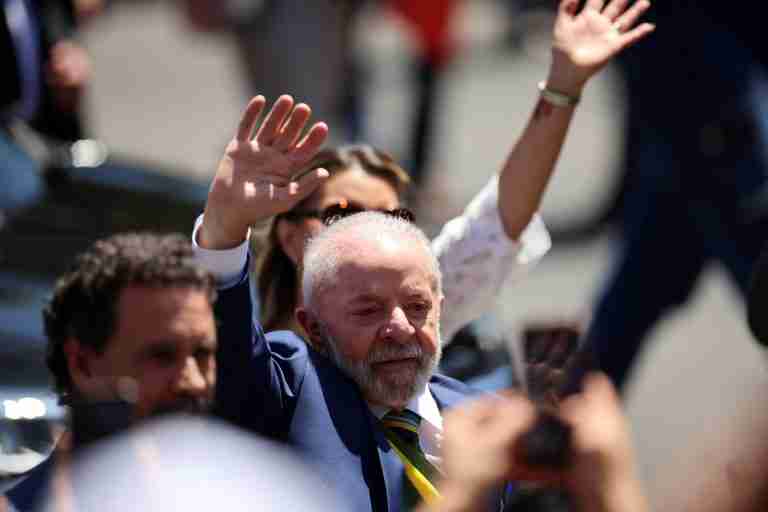
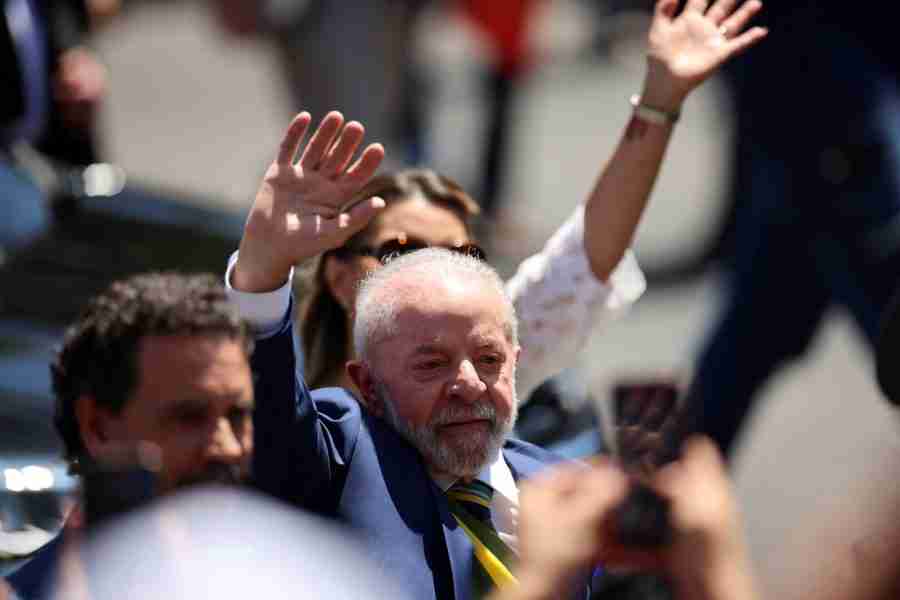
Brazilian President Luiz Inacio Lula da Silva said on Monday that more trade and financial integration between the BRICS group of developing nations would help mitigate the effects of protectionism.

“Tariff blackmail is being normalized as a tool for conquering markets and interfering in domestic issues,” Lula said in the government’s published remarks of a virtual meeting of BRICS leaders, without directly citing the United States.

BRICS members Brazil and India are among the countries hardest-hit by U.S. President Donald Trump’s tariffs, while new sanctions against Russia over the war in Ukraine are expected.

Lula had told Reuters in an interview last month he would raise the issue of Trump’s tariffs with BRICS.

The 50% levies on most Brazilian exports are linked to what Trump has described as a “witch hunt” against his ally and former Brazilian President Jair Bolsonaro, who is currently on trial for allegedly plotting a coup.

Tariffs on Indian goods were doubled last month to as high as 50% in response to India’s continued imports of Russian oil.

The virtual meeting, which lasted one and a half hours, brought together leaders from Brazil, Russia, India, China, South Africa, Egypt, Indonesia, Iran, the United Arab Emirates and Ethiopia, Brazil’s government said in a separate statement.

The group discussed the risks posed by the resurgence of unilateral measures, particularly in international trade, and explored ways to strengthen mechanisms for solidarity, coordination, and trade among BRICS nations, the statement said.

Reporting by Lisandra Paraguassu; Writing by Isabel Teles; Editing by Aida Pelaez-Fernandez and Alistair Bell

African leaders seek to offer climate model after US pullback

The continent, which has been buffeted by landslides, floods and droughts this year, is holding its second climate summit in Ethiopia

International News via Reuters:

African leaders aim to offer a global model for tackling the climate crisis through green investments, they said on Monday, after the United States’ withdrawal from the Paris climate agreement deflated the fight against climate change. 

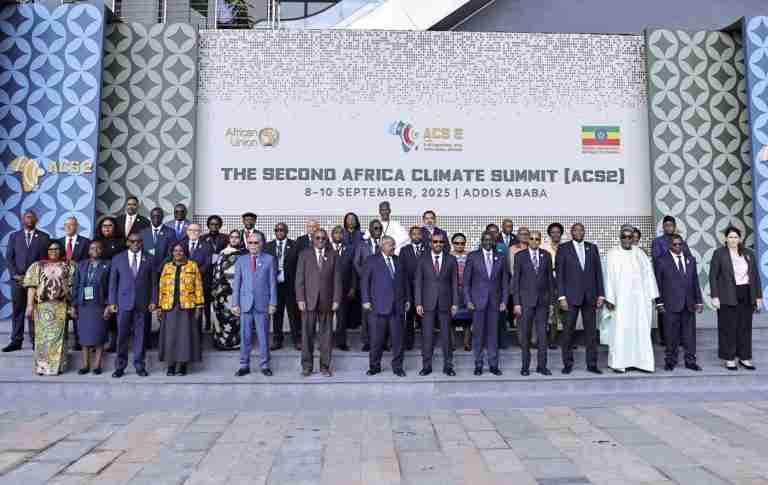
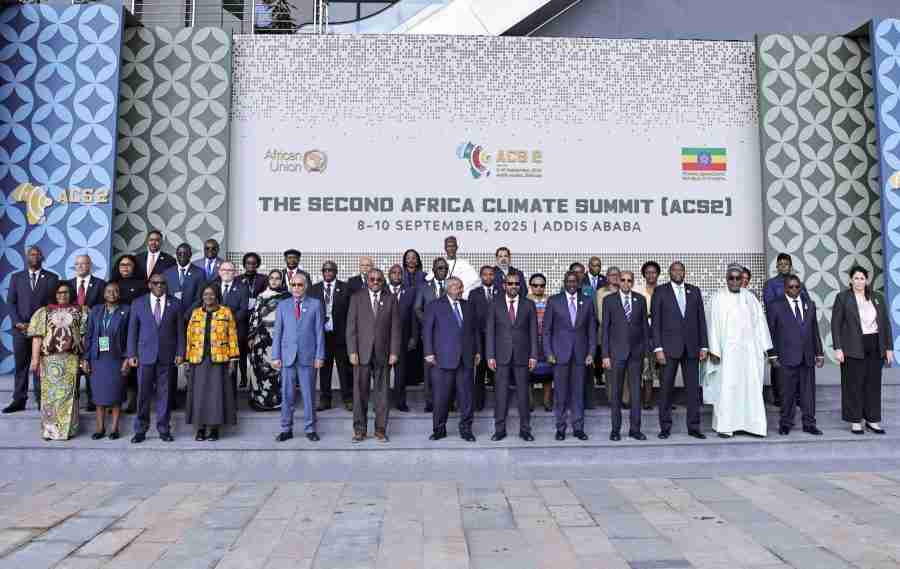
The continent, which has been buffeted by landslides, floods and droughts this year, is holding its second climate summit in Ethiopia, seeking a common voice before global climate talks in Brazil, COP30.

“We are not here to negotiate our survival. We are here to design the world’s next climate economy,” Ethiopian Prime Minister Abiy Ahmed told the opening ceremony. 

Africa’s development lenders and commercial banks signed a deal at the summit to mobilise up to $100 billion to power a “green industrialisation” using renewable energy, said Kenyan President William Ruto.

Participating institutions include the Africa Export-Import Bank, the African Development Bank and commercial lenders like Ecobank Transnational and KCB Group, Ruto said.

Abiy proposed a new Africa climate innovation initiative, funded by the continent, bringing together African universities, research institutions, startups, rural communities and inventors to deliver 1,000 solutions to tackle climate challenges by 2030.

“If we make the right choices now, Africa can be the first continent to industrialize without destroying its ecosystems,” said Abiy, who wants his country to host COP32 in 2027.

Leaders sought more financing at the inaugural summit in Nairobi two years ago to help governments to tackle climate challenges amid fiscal constraints and heavy debt burdens, but the continent is still badly short of funding, receiving just 1% of the annual global climate financing, officials say.

African countries, which are among the most vulnerable to the adverse effects of manmade global warming despite being among those least responsible for it, have long demanded that COP meetings yield more funds to help them adapt.

“Climate finance must be fair, significant and predictable,” said Mahamoud Ali Youssouf, chair of the African Union Commission. 

Leaders also expressed concerns about the potential damage from a fraying of the multilateral approach to tackling climate change.

U.S. President Donald Trump’s administration pulled out of the landmark Paris agreement on climate change for the second time earlier this year and has also withdrawn from clean energy partnerships with countries such as South Africa.

“Commitments are broken and international solidarity is dismissed as weakness precisely when the scale of the climate crisis demands enhanced cooperation, not less,” said Ruto.

Reporting by Dawit Endeshaw in Addis Ababa and Duncan Miriri in Nairobi; Editing by Kevin Liffey

China’s BYD to produce all EVs for Europe locally by 2028, executive says

BYD is building a factory in Hungary that should commence output this year, and is due to start production in Turkey in 2026

International News via Reuters:

China’s No. 1 automaker BYD will make its EVs for sale in Europe locally within three years, helping it avoid EU tariffs, while plug-in hybrids should dominate its European sales in the short term, a top executive said on Monday.

“We are training ourselves to be more European in production,” executive vice president, Stella Li, BYD’s No. 2 executive, told Reuters at the IAA Mobility car show in Munich.

BYD is building a factory in Hungary that should commence output this year, and is due to start production in Turkey in 2026.

The EU imposed tariffs on Chinese-made EVs last year because it believed China’s automakers benefited from government subsidies.

Asked how long it would take BYD to produce all of the EVs it needs to supply European demand, Li said: “Give us like two to three years.”

BYD originally sold only fully-electric cars in Europe, and late last year, announced it would also start selling plug-in hybrids. Those have proven popular with consumers and in Britain, for instance, the automaker’s top-selling model is a plug-in hybrid (PHEV).

Li said that within the next six months, BYD will launch another three to four PHEVs and expects them to soon outsell fully-electric models in Europe.

“In the next one or two years, our plug-in hybrids will be dominating sales,” in Europe, She said.

Li said BYD would launch its luxury Yangwang brand in Europe in 2027.

BYD’s global sales soared to 4.2 million cars in 2024, up tenfold from 2019. But it has seen several months of falling sales and production declines at home in China.

This was normal after a prolonged period of growth, Li said.

“BYD is still the number one in China, we’re happy with the results,” she said. “Maybe in the past one or two years our share was too high as number one, so now we go back to living normal.”

The company’s sales are still up by double digits this year and she said BYD’s growth in 2025 will be driven by sales outside China.

Under new Chinese government policy, BYD Chairman Wang Chuanfu, who is 59, may have to retire in early 2027.

Asked if Wang had a succession plan and which executive might be tapped to replace Wang, Li said: “Let’s keep it a secret.”

Reporting By Nick Carey; Editing by Bernadette Baum

Kiwon Waldron wins Stake Race at Napanee Track

Bermudian harness driver Kiwon Waldron made a long journey pay off, driving over two hours to compete in the International Trotting & Pacing Association Stakes Races, where he secured a victory at the Napanee Track.

Competing in the Race 19 Pace 2 Year Old Filly Pace Class, Waldron was in the bike of Kickinwin Speed, guiding the young horse to a winning time of 1:06 flat. The victory is a significant one, as the International Trotting & Pacing Association (ITPA) Stakes races are a series of important events for developing horses.

The win adds to Waldron’s growing list of solid performances on the competitive US harness racing circuit, and the result is a testament to his dedication and skill as a driver. His ability to secure a win in his only race of the night after a long journey highlights his focus and determination to compete at a high level.

Britain could cut visas from countries that don’t accept migrant returns

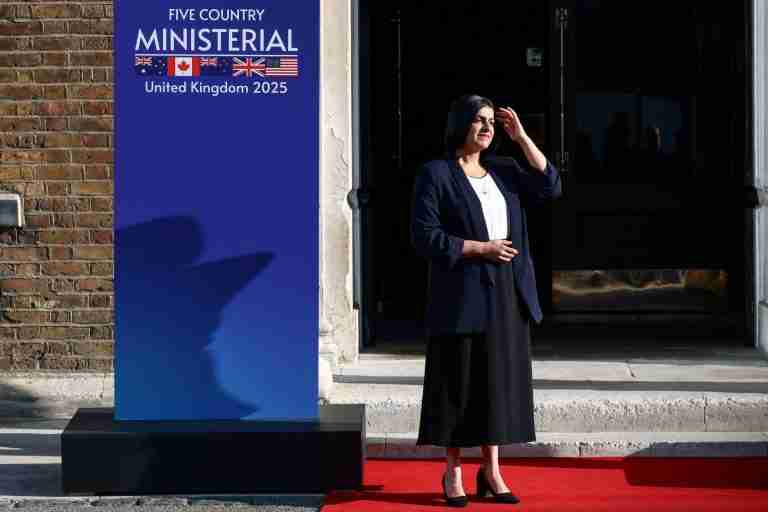
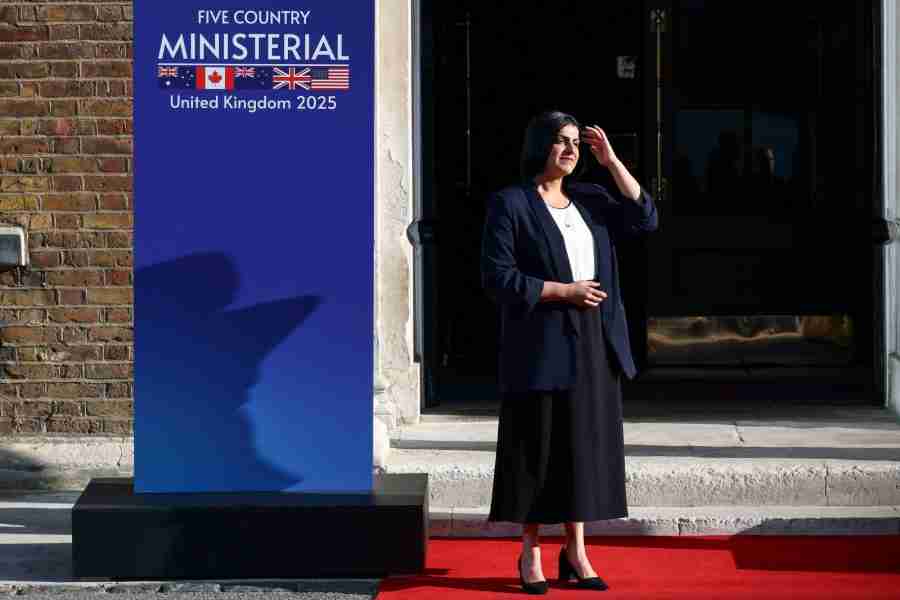
Britain’s new interior minister Shabana Mahmood said counterparts from the United States, Australia, Canada and New Zealand agreed to the principles at a meeting in London

International News via Reuters:

Britain said on Monday it could cut the number of visas granted to countries that do not accept the return of migrants with no right to remain, after talks with allies including the United States on how to assert more control over borders.

Britain’s new interior minister Shabana Mahmood said counterparts from the United States, Australia, Canada and New Zealand – a decades-old intelligence-sharing partnership collectively known as Five Eyes – agreed to the principles at a meeting in London.

Prime Minister Keir Starmer appointed Mahmood to the role on Friday in a shake-up of his government as he faces mounting public criticism over immigration and the arrival of migrants via illegal small boat crossings.

“This announcement sends a clear message to anyone seeking to undermine our border security. If you have no legal right to remain in the UK, we will deport you. If countries refuse to take their citizens back, we will take action,” Mahmood said in a statement.

U.S. Secretary of Homeland Security Kristi Noem, who has been a leading figure in the Trump administration’s crack-down on illegal immigration, said that the countries agreed to share background information on any criminal history of migrants, and work against cartels “utilising social media and technology companies to push their message”.

“We need to be just as aggressive in partnering together to push back on those kinds of new developments,” she told reporters on the sidelines of the meeting.

Noem defended the detention of hundreds of mainly South Korean workers on a Hyundai Motor car battery facility under construction in Georgia last Thursday, saying the administration was following the law, and adding the tough U.S. measures might be an inspiration for other countries to do the same.

Starmer is a former human rights lawyer who took office in July last year after his Labour Party won an election landslide. His new-look government is prioritising a harder line on immigration – an issue that leads opinion polling as the public’s top concern and that has fuelled a poll lead for Nigel Farage’s populist Reform UK.

Mahmood said she would take a strong approach.

“That does mean saying to countries who do not take their citizens back, that we’re not simply going to allow our laws to remain unenforced, that they do have to play ball,” she told broadcasters in an interview. “And if cutting visas is one of the ways to do that, then I’ll do whatever it takes.”

Reporting by Alistair SmoutAdditional reporting by William James and Sam TabahritiEditing by Frances Kerry

Mixed fortunes for Bermudian footballers in England

It was a day of mixed results for Bermudian footballers and coaches playing across the leagues in England and the United States, with some teams celebrating victories while others faced difficult defeats.

Mia Fishel’s Seattle Reign FC went down 2-0 to the Washington Spirit at Audi Field in a National Women’s Soccer League clash. The Bermudian forward came on as a late substitute but was unable to prevent the defeat. In a more positive result in the same league, Lielanni Nesbeth and her Chicago Stars FC teammates secured a 5-2 win over the Orlando Pride.

In the USL Championship, Khano Smith’s Rhode Island FC suffered a narrow 1-0 defeat to league leaders Louisville City FC. Despite a weather delay and a solid defensive performance that limited Louisville’s attack, the Ocean State club was unable to find a way to score, falling to a lone first-half goal.

In the FA Women’s National League Cup, goalkeeper coach Dashun Cooper’s QPR Women secured a comprehensive 6-1 victory over Charlton Athletic, in a wide-open affair that saw them advance to the next round. Meanwhile, Kenni Thompson’s Bournemouth Women also advanced with a 2-0 victory over Moneyfields, with a double from Sophie Quirk sealing the win.

However, it was a more difficult day for other Bermudian players in the FA Women’s National League Cup. Camryn Lines and her Bridgwater United Women teammates went down to a 5-1 defeat against Plymouth.

In the North West Women’s Regional League, Keunna Dill and her FC United of Manchester Women teammates edged Poulton Vics Ladies 1-0, securing a hard-fought victory.

Jasmine Spence scored in Newport Pagnell Town Women’s 3-1 win at home to Biggleswade United in the Women’s FA Cup First Round Qualifier.

Finally, in the London & South East Regional Football League, K’Shaela Burch Waldron and her Sutton United Women teammates suffered a difficult 3-1 defeat to Brentford Women, condemning them to back-to-back losses.