Monday, October 19, 2026
Home Blog Page 7

Oceanographer outlines difficulties in locating missing aircraft

Families in Bermuda and Canada are dealing with the loss of loved ones on a missing air ambulance. A U.S. marine scientist says the search for the aircraft may take time, but he is confident it will be found

Families in Bermuda and Canada are trying to come to terms with the loss of their loved ones on a medical flight that went missing en route from Bermuda to Boston.

Canadian and U.S. Transport safety investigators have been deployed to determine exactly what happened that led to the disappearance of the Latitude Air Ambulance on October 3rd.

While debris was found some 20 miles south of Nantucket Island, the aircraft is yet to be located. According to an expert in the field, that search may take some time.

Professor Mark Moline is an oceanographer, Marine Science Director at the University of Delaware, and a developer of underwater robotic tools for research. He recently spoke with our Coastal ABC affiliates, WJAR news.

Over the last decade and a half he has traveled the world looking for aircraft that went missing in World War 2, in the hope of returning fallen soldiers to their families.

“I have a lot of experience looking for aircraft underwater”, he says, “trying to look for their small signature on the seafloor.”

He told Jake Baum at WJAR that the aircraft in this circumstance is relatively small. Multibeam sonar from a ship on the surface, which is what is used to map an ocean floor, would be unlikely to find parts of the aircraft.

Professor Moline said, “they have to use what’s called side scan sonar, or synthetic aperture sonar… either a towed system or an autonomous system close to the seafloor, and [it] pushes sound out to the side of the instrument.”

He adds that the ocean in the area of the search is relatively shallow, but we don’t know how wide it may be.

“…within seconds, you can get miles with an aircraft traveling at those speeds”, he says. “If you don’t have an idea about maybe plus or minus five miles, you have to search an area of 25 square miles.”

“It’s not surprising that it’s going to take a few weeks to find this aircraft.”

The Latitude Air Ambulance flight was lost en route from Bermuda to Boston on Saturday October 3rd.

The aircraft reported electrical difficulties sometime after 1am, after which it descended rapidly, and contact with air traffic control was lost south of Nantucket Island, Massachusetts.

Bermudian patient Marilyn Lavonne Bean and her son Sergio Wayne Lottimore, Canadian Pilot Captain Philip Gregory Childerhose and First Officer Thomas Henry Farquhar, flight nurse Sarah Jane Paton and respiratory therapist Jolene Beth Weir were on the flight, and are presumed to have died.

Professor Mark Moline says he is fairly certain that the investigators will, eventually, be able to find the aircraft and its black box recorder, which may be able to provide answers as to what led to the flight’s descent and disappearance.

“It’s hard to work in the ocean”, he says, “these vast areas, it does take time.”

“I have a high confidence it’s going to be found.”

As EU debates local-content rules, Chinese automakers are already adapting

The European Union’s proposed “Made in Europe” rules, part of a planned Industrial Accelerator Act, are designed to strengthen the bloc’s industrial base by encouraging more manufacturing and sourcing within Europe

Xiaopeng He, Chairman and CEO of Xpeng, speaks during a press conference on media day at the 2026 Paris Auto Show in Paris, France, October 12, 2026. REUTERS/Benoit Tessier

International News via Reuters:

As Europe debates new local-content rules aimed at boosting local manufacturing, Chinese automakers are already building factories and supply chains across the continent, getting ahead of the measures before they have even been finalised.

The European Union’s proposed “Made in Europe” rules, part of a planned Industrial Accelerator Act, are designed to strengthen the bloc’s industrial base by encouraging more manufacturing and sourcing within Europe. The measures would also push foreign manufacturers seeking access to the EU market to produce more goods locally and rely on European suppliers.

The plan comes as Chinese automakers have rapidly gained market share in Europe, with more entrants on the way.

But “Made in Europe” has sparked a political dispute within Europe over which countries should be covered by the rules.

Many Chinese automakers, meanwhile, appear unwilling to wait for the outcome. Pressing ahead with localisation plans, they are expanding manufacturing and supplier networks in Europe before the details of any new requirements are settled.

Battered by an EV price war and slowing sales in China, the world’s largest auto market, Chinese automakers increasingly see Europe as a key growth opportunity.

“We are committed to building our local production capacity and exploring opportunities here,” Changan Automobile Zhao Fei told reporters at the Paris car show.

Zhao said he had already visited Europe twice for “in-depth discussions” with suppliers and was also talking to European automakers about producing vehicles together.

Changan plans to make 180,000 cars a year in Europe by 2028 and 350,000 by 2030, The company’s president said he hopes Changan can build its first vehicle in Europe in early 2027, well before any EU local-content requirements are expected to take effect.

Other Chinese automakers, including Xpeng, Chery and GAC, are also pursuing European production plans built around local supply bases.

“We’re looking to start production at the same time” as ‘Made in Europe’ rules take effect, Xpeng Vice President Yeqing Zheng said of plans to add production capacity in Europe. Magna already builds EVs for Xpeng in Austria.

Some industry experts argue Chinese automakers are moving faster than EU policymakers, raising questions about how much impact the final rules will have.

John Bozzella, CEO of US auto industry lobby group Alliance for Automotive Innovation, said Europe is viewed as a “cautionary tale” in the US for acting too late in response to Chinese competition.

The US Senate is working to pass a bill permanently banning Chinese cars, which Bozzella said reflects concerns over data security.

“The policy responses seem to be happening in response to market realities in Europe,” he said. “But in the US all sides are saying, ‘let’s try and address these issues up front.'”

‘WE GREW TOGETHER’

In a speech at the Paris motor show, Volkswagen CEO Oliver Blume backed ‘Made in Europe’, saying “a strong Europe depends on a strong industry”.

But in its current form, the proposal excludes non-EU countries such as Turkey, Britain and Morocco, where vehicle production and supplier networks are deeply integrated with Europe’s automotive industry.

Automakers with operations in those countries, along with local industry groups, argue that limiting the definition of Europe to the EU would damage supply chains that have developed across the wider region.

Turkey’s Automotive Industry Exporters’ Association (OIB) says the country’s automotive industry supports 250,000 EU jobs.

More than 50% of the parts by value in Ford’s Turkish-made electric Transit vans come from EU suppliers, including batteries from Hungary and Poland and components from Germany, Italy and elsewhere.

“We grew together,” said OIB chairman Kemal Yazici. “Turkey is an integral part of Europe’s” auto industry.

Alongside drafting local content rules, the EU has also brokered a deal with China to more than halve hybrid vehicle imports into the bloc.

When asked about the deal, Chery Chairman Yin Tongyue told Reuters the company would first study the details.

But he was more interested in discussing Chery’s plans for Europe.

“We want to design locally,” Yin said. “We want to have local engineering, local production and a local supply chain.”

Automotive analyst Felipe Munoz said Chinese automakers were unlikely to be deterred by the policy debate as they have demonstrated an ability to “do anything, very fast”.

When the EU imposed tariffs on Chinese-made EVs in October 2024, many shifted their focus to tariff-free plug-in hybrids.

‘Made in Europe’ is “making life a bit more difficult for the Chinese,” Munoz said. “But it won’t stop them.”

Reporting By Nick Carey and Rachel More. Additional reporting by Giulio Piovaccari and Gilles Guillaume. Editing by Mark Potter

South Korean police detain man over stabbing of eight people at shopping mall

Officers are investigating the motive and circumstances of the attack

International News via Reuters:

South Korean police said they had detained a man suspected of stabbing eight people on Tuesday at a shopping mall in the city of Incheon, and the Yonhap news agency said one of the victims was in a life-threatening condition.

Officers are investigating the motive and circumstances of the attack, a police spokesperson said by telephone.

A witness cited by Yonhap said the suspect appeared to have knives tied to both hands and moved through several floors of the shopping mall, attacking people as he went before being subdued by bystanders and handed over to police.

President Lee Jae Myung urged a swift and rigorous investigation after visiting the Incheon Metropolitan Police Agency and being briefed on the case, according to his office.

“I pray for a swift recovery of those who were harmed in today’s stabbing rampage incident,” Lee said in an X post.

The victims included six women and two men, Yonhap reported. One woman in her 20s underwent surgery at a nearby hospital after suffering life-threatening injuries, it added.

Yonhap said the 59-year-old suspect had previously served a four-year prison sentence for attempted murder.

The suspect has been fitted with an electronic monitoring ankle bracelet since his release in 2019, and had been receiving treatment for mental health issues and alcohol addiction, the Justice Ministry said in a statement.

The electronic monitoring system is a crime prevention programme that covers people convicted of a range of crimes including murder.

The ministry pledged to conduct a thorough investigation of the system, which uses real-time GPS tracking to monitor high-risk offenders after their release from prison.

Incheon, west of Seoul, is home to South Korea’s main airport and forms part of the wider Seoul metropolitan area.

South Korea was shaken by a series of stabbing rampages in 2023, including attacks that left multiple people dead and injured.

More recently in May, a 17-year-old girl was fatally stabbed and another teenager hurt in the southwestern city of Gwangju by a man in his 20s, who was later sentenced by a court to life in prison.

Reporting by Kyu-seok Shim and Hyunjoo Jin; Additional Reporting by Hyunsu YimEditing by Ed Davies and Gareth Jones

Meta challenges UK online safety watchdog over how fees and fines are calculated

The 2023 law allows Ofcom to impose fines of up to 10% of qualifying worldwide revenue, or £18 million ($23.9 million), whichever is greater, and to recover the costs of running its regime through fees calculated by reference to revenue

FILE PHOTO: The logo of Meta is seen during the Viva Technology conference dedicated to innovation and startups at Porte de Versailles exhibition center in Paris, France, June 12, 2025. REUTERS/Benoit Tessier/File Photo

International News via Reuters:

Facebook and Instagram owner Meta challenged Britain’s media regulator on Tuesday over how it calculates fees and potential fines under the Online Safety Act, arguing that the watchdog’s methods are disproportionate.

The 2023 law allows Ofcom to impose fines of up to 10% of qualifying worldwide revenue, or £18 million ($23.9 million), whichever is greater, and to recover the costs of running its regime through fees calculated by reference to revenue.

Meta’s challenge comes a week after Ofcom opened an investigation into whether the company properly assessed the risks posed by its Instagram Instants feature before launching it in May.

The case brought by Meta opened in London’s High Court on Tuesday and centres on Ofcom’s use of worldwide rather than UK revenue to determine fees and maximum potential fines.

Meta argued that Ofcom had exceeded its statutory powers by defining qualifying worldwide revenue as broadly as possible, with the objective of imposing the highest possible penalties.

That was Ofcom’s “overriding concern”, Meta said in its legal submission.

Meta is also challenging Ofcom’s method of calculating fines where two or more providers owned by the same organisation are found jointly liable for breaches.

Ofcom argues that its approach is proportionate and that it has struck a “careful balance” in defining qualifying revenue. Its court submission said that qualifying worldwide revenue was used only to calculate the maximum potential penalty and that any actual fine must be proportionate to the failure.

Meta is also fighting Ofcom on other fronts. It joined TikTok and X in a separate legal hearing last week over the amount of information the regulator is demanding.

Meta said it was committed to cooperating constructively with Ofcom.

“However, we and others in the tech industry believe its decisions on the methodology to calculate fees and potential fines are disproportionate,” a Meta spokesperson said.

“We believe fees and penalties should be based on the services being regulated in the countries they’re being regulated in. This would still allow Ofcom to impose the largest fines in UK corporate history.”

Ofcom said it had been tasked with regulating an industry that had been unregulated and unaccountable for more than 20 years.

An Ofcom spokesperson said Meta’s case was one of a number of legal challenges it faced. 

“On all these fronts, we will robustly defend our reasoning and decisions,” the spokesperson said.

($1 = 0.7547 pounds)

Reporting by Paul SandleEditing by David Goodman

Apple unveils new smart home products, showcasing updated Siri AI

Apple is launching these products as it tries to fend off competition from rivals, including traditional competitors like Amazon.com

A man points at the Apple HomeView, an iPad-like device meant to hang on walls or perch on tabletops that will showcase its AI-upgraded Siri virtual assistant, during a launch of smart home products in New York City, US, October 13, 2026. REUTERS/Shannon Stapleton

International News via Reuters:

Apple on Tuesday began showing off a new round of smart home products, including an iPad-like device dubbed the HomeView meant to hang on walls or perch on tabletops that will showcase its AI-upgraded Siri virtual assistant.

The HomeView device, which starts at $299 and starts shipping next month, is Apple’s latest entry into a highly competitive market for home connected devices. It will feature a 7-inch screen and face recognition, will help users control doorbells, thermostats and smart locks in a market where Apple has tinkered for a decade without major success.

Apple is launching these products as it tries to fend off competition from rivals, including traditional competitors like Amazon.com, which has invested heavily in its Echo speakers and Ring doorbells and last week launched premium tablets, as well as newer AI upstarts like OpenAI that have hardware ambitions of their own.

Investors are looking more closely at Apple’s hardware sales for growth as the company’s services revenue has come under regulatory pressure.

Apple this summer upgraded Siri’s capabilities with assistance from Google but analysts said it is unclear whether its AI assistant is competitive enough to lure consumers to a crowded connected home device space.

“Apple needs to demonstrate that its AI capabilities can deliver meaningful benefits beyond basic voice commands, simplifying everyday tasks and bringing greater intelligence to the home,” said PP Foresight analyst Paolo Pescatore.

“The opportunity is considerable, given its vast installed base, but reliability, trust and ease of use will ultimately determine whether consumers embrace these features,” he added. “AI alone will not be enough to convince households to invest in more devices.”

The launches also coincide with growing worries that connected devices, including refrigerators and smart TVs, could be vulnerable to hackers.

OTHER BELLS AND WHISTLES

Apple’s HomeView launch was accompanied by updates to its HomePod smart speaker and Apple TV devices. It also introduced a range of accessories, including doorbells, cameras and thermostats, made by LG and Schneider Electric and designed with help from Apple.

“It is interesting to see Apple partnering with LG and Schneider, as it typically likes to have full control of the hardware it sells,” said Ben Wood, co-founder of CCS Insight. “However, looking closely, it appears like there has been very deep collaboration between Apple and these partners to ensure the design, engineering and experience closely match what users would expect from Apple.”

During a video demonstrating the device, Apple showed the HomeView and its Siri virtual assistant juggling voice requests from multiple members of a family at the same time.

The HomeView device will not be sold in the European Union, because Siri AI remains unavailable there due to EU regulations, Apple said.

Apple first released its Home app to control smart gadgets in 2016, with HomePod smart speakers following in 2018, but those offerings are competing with Alphabet’s Google Home speakers and Amazon’s Echo line. Analysts said two major hurdles for Apple were making its devices work with a variety of third-party gadgets and the limited ability of Siri to give useful answers.

Apple $299 price for HomeView is above Amazon’s Echo Show 8 at $199.99 and Google’s Nest Hub at $99.99, as it seeks a bigger role in connected homes.

The new Apple TV 4K enters the market at $299, more than double the price of its predecessor and in line with Nvidia’s Shield TV Pro, while rival offerings from Amazon, Google and Roku cost $200 or less.

Shares were up fractionally in Tuesday trading.

Reporting by Stephen Nellis in San Francisco; Editing by David Gaffen and Christian Plumb

Nagel beats 10-hour barrier with superb Kona display

Bermudian sailor-turned-triathlete Emily Nagel produced a standout performance on the global stage, dipping under the elusive 10-hour mark at the Ironman World Championships in Kona, Hawaii.

Tackling one of endurance sport’s ultimate tests, Nagel crossed the line in nine hours, 58 minutes and 23 seconds to finish 542nd overall in a massive international field.

Her performance saw her take 51st place among all female competitors and secured sixth in a fiercely contested Female 30–34 Age Group category.

Nagel laid the foundation for her sub-10 milestone in Kailua Bay, exiting the water in a brisk 57 minutes and 10 seconds.

From there, she maintained a disciplined rhythm across the windswept lava fields of the Queen Ka’ahumanu Highway, clocking 5:21:34 on the bike split.

Despite brutal humidity and rising afternoon temperatures, she rounded off her day with a resilient 3:31:39 marathon.

The result marks another major step forward in Nagel’s transition to long-course triathlon, showcasing world-class pacing on one of the sport’s most unforgiving stages.

Smith primed for second SSL Gold Cup tilt with Bermuda

Sailor Jade Smith has set his sights on the world stage once again after securing his spot for a second consecutive SSL Gold Cup campaign.

The 22-year-old will provide crucial regatta experience as the island’s crew prepares to lock horns with sailing’s elite nations in Rio de Janeiro, Brazil.

A dedicated waterman who developed his craft across multiple marine sports before committing to competitive sailing, Smith balances his own racing pursuits with coaching Bermuda’s rising prospects.

His debut outing at the event—often billed as sailing’s equivalent of the World Cup—proved an eye-opener, particularly the physical challenge of mastering the fleet’s one-design SSL47 yachts.

“It’s a high achievement representing Bermuda in any sport,” Smith said. “This means I get a chance to show and promote Bermudian talent on a global stage.”

Looking forward to the South American assignment, his outlook is clear: “Great racing and good vibes.”

With preparations gathering pace, Bermuda’s squad is zoning in on tactical details. Smith believes securing a dedicated coach is vital if the crew are to bridge the gap against heavyweight rivals.

“Everyone has room to improve,” he noted, underlining the need for dedicated tactical input to iron out mistakes.

The team has launched a funding appeal to ensure coaching staff travel with the squad to Brazil, targeting the extra edge needed to mount a serious podium challenge.

Daley stars as Tennessee cruise to dominant dual-meet victory

Swimmer Elan Daley helped the University of Tennessee launch their competitive campaign in emphatic fashion with a commanding dual-meet triumph over Carson-Newman.

The Lady Vols proved far too strong for the visitors, storming to a comprehensive 152-84 victory to cap an impressive opening weekend for the programme. Tennessee’s men completed the clean sweep, claiming a 164-121 win of their own.

Daley was right at the sharp end of the sprint freestyle duels, delivering a pair of composed runner-up finishes to secure crucial points for her team.

The rising star laid down an early marker in the 50-yard freestyle, stopping the clock in a blistering 23.09 seconds.

She carried that momentum into the 100-yard event shortly after, touching the wall in a swift 49.77 to take another second-place finish and underline an encouraging start to the collegiate season.

EU expands migration cooperation with eastern Libya through new funding

The funding will support border management, search-and-rescue and anti-smuggling activities in eastern Libya

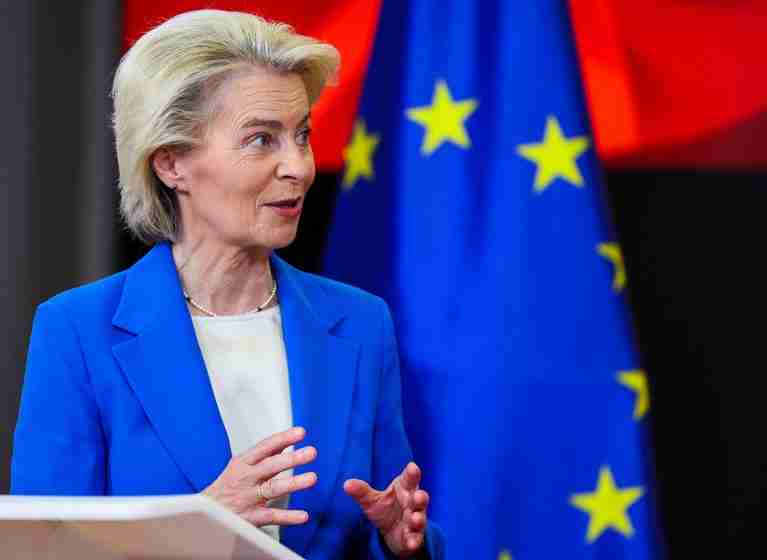
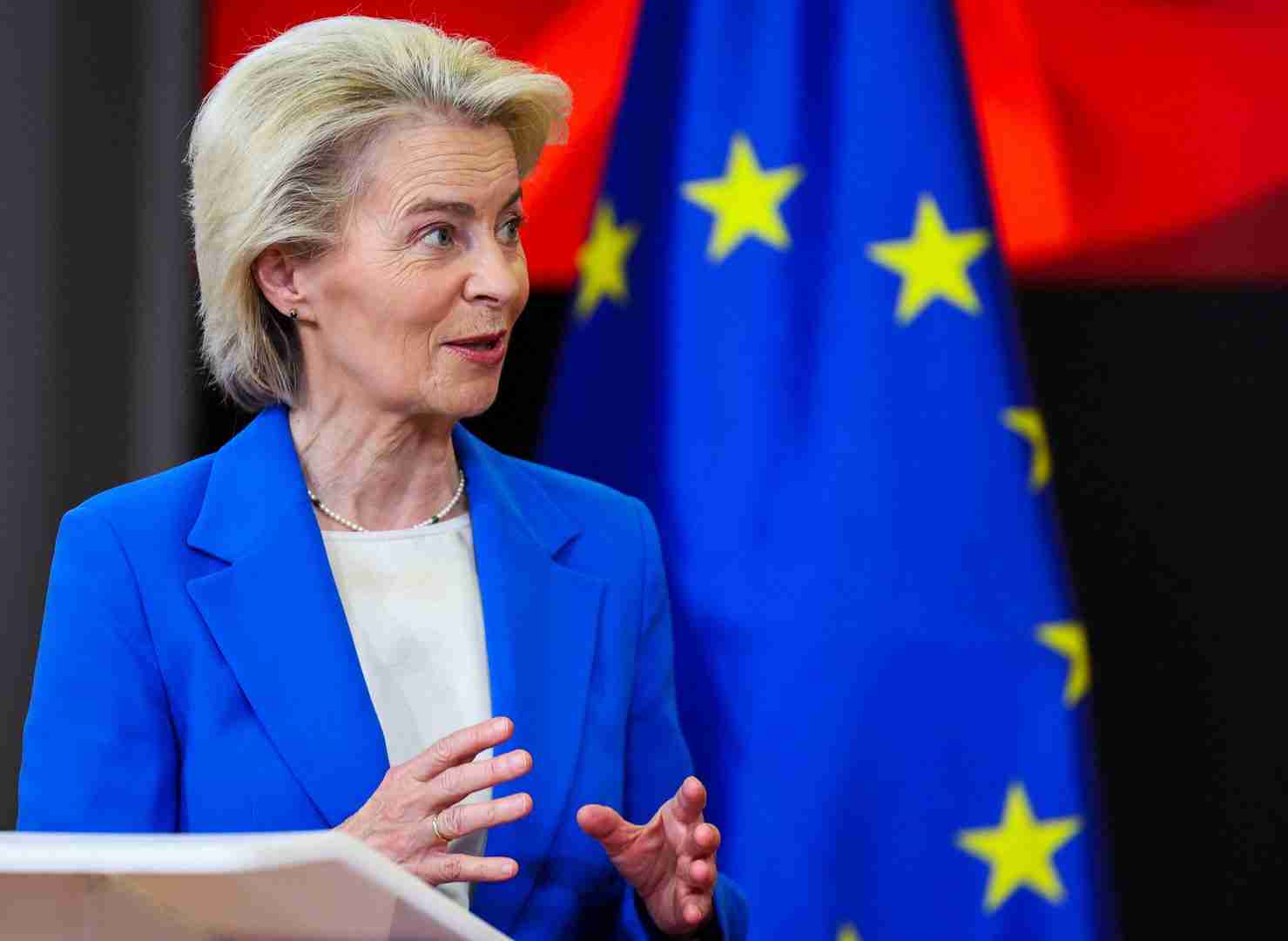
European Commission President Ursula von der Leyen attends a press conference, during her visit to Skopje, North Macedonia, October 2, 2026. REUTERS/Ognen Teofilovski

International News via Reuters:

The European Union has signed an additional €25 million ($29 million) in funding to expand migration cooperation into eastern Libya, according to a letter from European Commission President Ursula von der Leyen to EU leaders seen by Reuters.

The funding will support border management, search-and-rescue and anti-smuggling activities in eastern Libya. It is a further sign of deepening EU engagement with the region controlled by military commander Khalifa Haftar as Brussels seeks to curb irregular migration across the Mediterranean.

Libya, where control is split between rival western and eastern administrations, has been a major transit route for migrants attempting the dangerous sea crossing to Europe since the 2011 NATO-backed uprising that toppled Muammar Gaddafi.

The EU and its member states have long supported and trained the Libyan coastguard, which intercepts migrants at sea. While the EU formally recognises only the Tripoli-based government, it has stepped up contacts with authorities in eastern Libya since last year as migrant departures from areas controlled by Haftar in eastern Libya have risen.

The move follows the July announcement by the EU that it would establish a Maritime Rescue Coordination Centre in the eastern Libyan city of Benghazi, further expanding cooperation with authorities in the east.

“Libya remains the top country of departure for illegal crossings to the EU,” von der Leyen wrote, describing an upcoming EU-Libya meeting as a way to keep cooperation going.

She said the EU and the International Organization for Migration were supporting voluntary returns from Libya to countries of origin.

“We are equally focused on reducing the number of migrants arriving to Libya with the sole intention to cross illegally into the EU,” she added.

Reporting by Amina Ismail, Editing by Charlotte Van Campenhout and Alex Richardson

Iran and Russia are stepping up hybrid campaigns in Britain, UK spy chief says

In his annual speech on wide-ranging threats to Britain, MI5 Director General Ken McCallum also said the greatest concern about the misuse of AI was terrorists being able to develop bioweapons or even create new pathogens

Director General of MI5 Ken McCallum speaks at Thames House, the headquarters of the UK’s Security Service in London, Britain, October 13, 2026. Jonathan Brady/Pool via REUTERS

International News via Reuters:

Iran is stepping up attempts to hit harder targets such as military sites in Britain and Russia is increasing its hybrid warfare against Ukraine’s allies, the UK’s domestic spy chief said on Tuesday.

In his annual speech on wide-ranging threats to Britain, MI5 Director General Ken McCallum also said the greatest concern about the misuse of AI was terrorists being able to develop bioweapons or even create new pathogens.

McCallum said state threats had quadrupled over the last decade, and his organisation now devoted more resources to the issue than during the Cold War.

On Monday, British Prime Minister Andy Burnham said Tehran was “highly likely” behind a suspected plot against RAF Fairford, an airbase used by US bombers to carry out strikes on Iran. It prompted a security alert and led to US President Trump withdrawing planes from the air base.

Tehran has rejected accusations of involvement in the Fairford incident or any other accusations of malign activity in Britain where the authorities have for a number of years accused it of being involved in plots and attempted assassinations against dissidents and Israeli and Jewish targets.

Russia also denies involvement in hostile acts in Britain and other Western countries, but McCallum said it remained the “aggressor number one”.

MORE THAN 50 ARRESTS LINKED TO IRAN, MCCALLUM SAYS

McCallum said he could not speak about the Fairford incident because of an ongoing investigation, but he said there had been a major shift this year in “Iranian ambitions to come at harder targets, like military sites”.

“The RAF Fairford incident … is not unique. There have been other examples, not just in the UK but around the world,” he said.

McCallum said over the past year Iran-linked operations had led to more than 50 arrests.

Asked if Iran had the capability to launch complex attacks perhaps using explosive drones, McCallum said it was limited by the sophistication of the criminals and proxies it used for operations in Britain.

“Given what we’ve actually seen in practice in the UK in recent years, that has not been anywhere near (that) level of capability,” he said.

“That said, clearly it is the case that in countries closer to its own homeland, the IRGC (Islamic Revolutionary Guard Corps) has quite deep experience of using more conventional and hybrid technology in a more aggressive and sophisticated way.”

AI ‘SUPERCHARGING’ THREAT

McCallum echoed comments from other European spy agencies that Russia was using tactics just short of conventional conflict, citing the attempted drone ​attack on a cargo plane at a German airport and a cyber attack on Polish energy infrastructure.

“It’s no accident that Russian aggressors are trying to unsettle other European homelands at a time when their military progress in Ukraine is minimal and horrifically costly.”

Russia has rejected Germany’s accusations over the incident at Leipzig/Halle Airport in August as “entirely fabricated”.

Speaking about AI, McCallum said the technology was “supercharging the cybersecurity contest between attackers and defenders” and terrorists were exploiting it to improve reconnaissance and attack methodologies.

“Not yet realised – the misuse case to which I’d attach greatest weight – is AI’s potential to change the stakes on existing or even new bioweapons,” he said, adding it was the area on which he and his colleagues were “particularly focused”.

“These risks are real.”

Reporting by Michael Holden; Editing by Kate Holton and Alison Williams

Stocks dip on AI jitters, big banks kick off US earnings season

Investors have ridden the AI wave in the past four years as massive spending powered corporate profits and economic growth

The chart of the German share price index DAX (Deutscher Aktienindex) at the stock exchange in Frankfurt, Germany, October 12, 2026. REUTERS/Staff

International News via Reuters:

World stocks dipped on Tuesday as renewed AI concerns hit high-flying chipmakers and drove investors to the safety of government bonds, while big Wall Street banks kicked off the US quarterly reporting season.

Reports of progress by Chinese memory chip maker CXMT fuelled concerns about increased competition from China’s AI players, while Broadcom CEO Hock Tan likened some of the flows into the broader AI sector to “casino gambling”.

The MSCI’s main world stocks index dipped 0.13%, with tech-heavy stock markets of Asia and the United States feeling the brunt of the selloff.

Investors have ridden the AI wave in the past four years as massive spending powered corporate profits and economic growth, although worries over concentration risks and whether a payoff will come soon enough have weighed.

US Nasdaq futures fell 0.7%, with memory chipmaker Micron Technology down 3.8% in premarket trading and Nvidia dropping 0.8%. 

South Korea’s KOSPI, a market at the heart of the global AI boom, sank more than 5%, in its sharpest one-day drop since mid-August. 

European stocks bucked the trend, helped by limited exposure to the tech sector as well as a drop in oil prices. The pan-European STOXX 600 rose 0.4% to a one-week high.

“Markets have become increasingly aware of the fact that the chip industry, especially on the memory side, is ultimately a cyclical industry,” said Julien Lafargue, chief market strategist at Barclays Private Bank.

“People were potentially expecting the sector to remain undisrupted maybe for another couple of years. It looks like the news overnight means that maybe this timeline has to shrink and the competition could be more fierce as soon as next year.”

STEADYING BOND YIELDS 

The benchmark 10-year yield dipped to 5.187%, inching away from the 24-year high of 5.364% it hit last week. 

A toxic mix of inflationary pressure from elevated energy prices and worries about ballooning government debt has triggered several bond selloffs in recent weeks, pushing borrowing costs to multi-decade highs across the globe. 

Charu Chanana, chief investment strategist at Saxo Bank, said investors were moving back into Treasuries after the recent sharp rise in yields, but she saw it as “a tactical rally”.

“Sticky inflation, elevated oil prices and heavy government borrowing remain obstacles to a sustained bond recovery,” she said.

Traders are awaiting US inflation data on Wednesday for clues on the Federal Reserve’s policy path. They are pricing in an 80.6% chance that it holds rates steady later this month, up from 51% a month earlier, the CME FedWatch tool showed.

EARNINGS TEST AWAITS

Investor attention was on US bank earnings to get a gauge on the impact of the recent surge in Treasury yields on dealmaking, lending growth and funding costs.

JPMorgan Chase inched up 1% in early trading after it reported a profit increase in the third quarter, driven by investment banking and trading performances. Wells Fargo dropped 0.8%, while Goldman Sachs climbed 3% after their results. 

Oil prices eased as traders assessed supply risks from attacks on Saudi Arabia while weighing the prospect of additional diesel supplies from Russia. Brent crude futures dipped 1.8% to $104.76 per barrel, holding just below a two-week high touched a day earlier. [O/R]

The dollar eased from 18-month highs, along with a drop in yields and oil prices. The euro last bought $1.1188, while the Japanese yen was at 158.12 per dollar. [FRX/]

Reporting by Ankur Banerjee in Singapore and Sruthi Shankar in Bengaluru; Editing by Saad Sayeed, Kate Mayberry and Alexander Smith

LSEG in talks to buy Permira’s Octus financial data group for about $3.5 billion

No final agreement has been reached and no transaction is guaranteed

A worker walks near an LSEG (London Stock Exchange Group) branded cube inside the LSEG headquarters in Paternoster Square, London, Britain, September 8, 2026. REUTERS/Toby Melville

International News via Reuters:

The London Stock Exchange Group is in talks with private equity firm Permira to acquire Octus for about $3.5 billion, the London-listed group said Tuesday, confirming a Reuters report. 

No final agreement has been reached and no transaction is guaranteed, LSEG said, adding that the New York-headquartered financial data group has a strong track record of double-digit revenue growth based on a high-retention subscription model.

LSEG shares, which had dipped more than 2% on the Reuters report earlier on Tuesday, extended losses to fall 4.7% by 1342 GMT.

“Octus’ coverage and solutions are highly complementary to LSEG’s existing fixed income data & analytics and private markets solutions,” LSEG said, adding that a deal would be immediately accretive to LSEG’s Data & Analytics and group revenue growth.

PERMIRA BOUGHT CONTROLLING STAKE IN OCTUS IN 2022

London-based Permira is working with advisers to evaluate interest in Octus, two people with knowledge of the situation said. Permira declined to comment.

The private equity firm, which has been planning a sale of Octus since last year, has also held talks with other potential buyers, one of the people said. It acquired a controlling stake in Octus at a valuation of $1.3 billion from Warburg Pincus in 2022. 

Octus provides information on credit markets, with a focus on companies in financial distress, for banks and investors. It employs journalists, analysts and legal experts, using technology to scour regulatory and court filings. 

A potential Octus transaction, if it went ahead, would mark a further uptick in dealmaking in the data analytics sector, despite a ​selloff in listed stocks earlier this year.  

YipitData, backed by investors including Carlyle Group, is exploring a sale that could value the data analytics provider at more than $2.5 billion, while Vista Equity Partners is exploring a sale of private markets data provider Allvue. 

LSEG has been under pressure to improve its performance from activist investor Elliott Management, which disclosed a stake in the exchange operator in February.

LSEG is the largest customer of Reuters, which provides news for its Workspace news and data platform and other products. 

Reporting by Amy-Jo Crowley in London; Additional reporting by Milana Vinn in New York and Tommy Reggiori Wilkes in London; Editing by Anousha Sakoui, Elisa Martinuzzi, Alexander Smith and Jan Harvey