
The European Union’s proposed “Made in Europe” rules, part of a planned Industrial Accelerator Act, are designed to strengthen the bloc’s industrial base by encouraging more manufacturing and sourcing within Europe
International News via Reuters:
As Europe debates new local-content rules aimed at boosting local manufacturing, Chinese automakers are already building factories and supply chains across the continent, getting ahead of the measures before they have even been finalised.
The European Union’s proposed “Made in Europe” rules, part of a planned Industrial Accelerator Act, are designed to strengthen the bloc’s industrial base by encouraging more manufacturing and sourcing within Europe. The measures would also push foreign manufacturers seeking access to the EU market to produce more goods locally and rely on European suppliers.
The plan comes as Chinese automakers have rapidly gained market share in Europe, with more entrants on the way.
But “Made in Europe” has sparked a political dispute within Europe over which countries should be covered by the rules.
Many Chinese automakers, meanwhile, appear unwilling to wait for the outcome. Pressing ahead with localisation plans, they are expanding manufacturing and supplier networks in Europe before the details of any new requirements are settled.
Battered by an EV price war and slowing sales in China, the world’s largest auto market, Chinese automakers increasingly see Europe as a key growth opportunity.
“We are committed to building our local production capacity and exploring opportunities here,” Changan Automobile Zhao Fei told reporters at the Paris car show.
Zhao said he had already visited Europe twice for “in-depth discussions” with suppliers and was also talking to European automakers about producing vehicles together.
Changan plans to make 180,000 cars a year in Europe by 2028 and 350,000 by 2030, The company’s president said he hopes Changan can build its first vehicle in Europe in early 2027, well before any EU local-content requirements are expected to take effect.
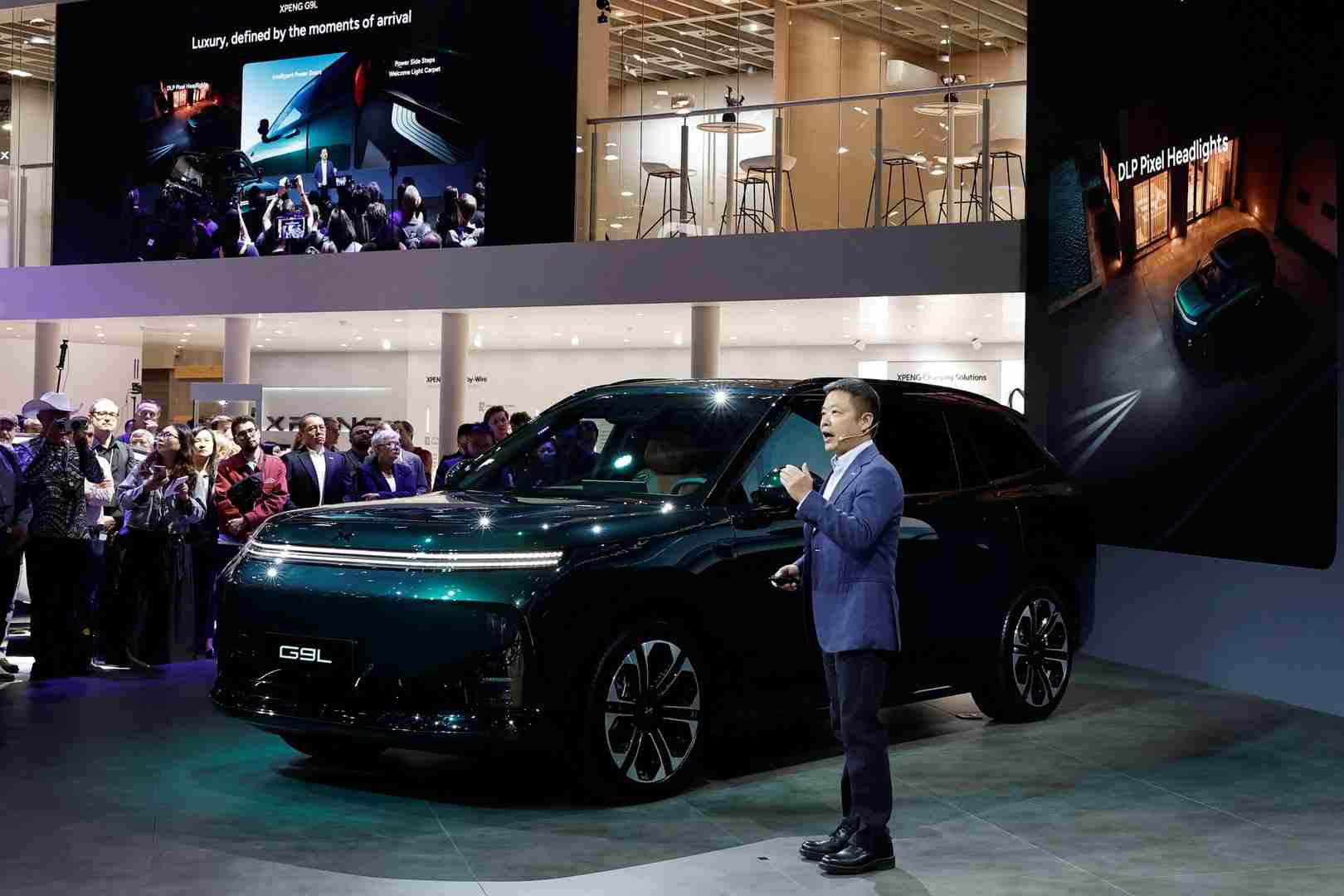
Other Chinese automakers, including Xpeng, Chery and GAC, are also pursuing European production plans built around local supply bases.
“We’re looking to start production at the same time” as ‘Made in Europe’ rules take effect, Xpeng Vice President Yeqing Zheng said of plans to add production capacity in Europe. Magna already builds EVs for Xpeng in Austria.
Some industry experts argue Chinese automakers are moving faster than EU policymakers, raising questions about how much impact the final rules will have.
John Bozzella, CEO of US auto industry lobby group Alliance for Automotive Innovation, said Europe is viewed as a “cautionary tale” in the US for acting too late in response to Chinese competition.
The US Senate is working to pass a bill permanently banning Chinese cars, which Bozzella said reflects concerns over data security.
“The policy responses seem to be happening in response to market realities in Europe,” he said. “But in the US all sides are saying, ‘let’s try and address these issues up front.'”
‘WE GREW TOGETHER’
In a speech at the Paris motor show, Volkswagen CEO Oliver Blume backed ‘Made in Europe’, saying “a strong Europe depends on a strong industry”.
But in its current form, the proposal excludes non-EU countries such as Turkey, Britain and Morocco, where vehicle production and supplier networks are deeply integrated with Europe’s automotive industry.
Automakers with operations in those countries, along with local industry groups, argue that limiting the definition of Europe to the EU would damage supply chains that have developed across the wider region.
Turkey’s Automotive Industry Exporters’ Association (OIB) says the country’s automotive industry supports 250,000 EU jobs.
More than 50% of the parts by value in Ford’s Turkish-made electric Transit vans come from EU suppliers, including batteries from Hungary and Poland and components from Germany, Italy and elsewhere.
“We grew together,” said OIB chairman Kemal Yazici. “Turkey is an integral part of Europe’s” auto industry.
Alongside drafting local content rules, the EU has also brokered a deal with China to more than halve hybrid vehicle imports into the bloc.
When asked about the deal, Chery Chairman Yin Tongyue told Reuters the company would first study the details.
But he was more interested in discussing Chery’s plans for Europe.
“We want to design locally,” Yin said. “We want to have local engineering, local production and a local supply chain.”
Automotive analyst Felipe Munoz said Chinese automakers were unlikely to be deterred by the policy debate as they have demonstrated an ability to “do anything, very fast”.
When the EU imposed tariffs on Chinese-made EVs in October 2024, many shifted their focus to tariff-free plug-in hybrids.
‘Made in Europe’ is “making life a bit more difficult for the Chinese,” Munoz said. “But it won’t stop them.”
Reporting By Nick Carey and Rachel More. Additional reporting by Giulio Piovaccari and Gilles Guillaume. Editing by Mark Potter