The week’s advances were fueled by growing optimism surrounding potential U.S. interest rate cuts
International News via Reuters:
Britain’s FTSE 100 was flat on Friday, despite momentarily scaling to an all-time intraday high, as defence stocks weighed ahead of crucial U.S-Russia talks regarding a potential resolution to the conflict in Ukraine.
The blue-chip index was steady as of 1000 GMT, yet appears poised to end the week with gains.
The week’s advances were fueled by growing optimism surrounding potential U.S. interest rate cuts, better-than-expected UK Gross Domestic Product data and a series of largely positive corporate earnings reports.
The aerospace and defence sector emerged as Friday’s underperformer, declining 1.8%, ahead of the scheduled high-stakes meeting between U.S. President Donald Trump and Russian President Vladimir Putin in Alaska later in the day.
Investors will be watching the summit closely for any signs of a credible peace deal, with any substantive outcomes likely setting the market tone for the coming week.
Energy sector, up 0.2%, was also in focus as a potential ceasefire could result in the easing of sanctions on Russian oil exports, potentially placing downward pressure on global crude prices. [O/R]
Supporting the gains on London’s benchmark, industrial metal miners strengthened 2%, as weak economic data from key commodities consumer China fueled hopes that it would spur Beijing to unleash more stimulus measures. [MET/L]
The midcap index gained 0.3% in the day, though it remains on track to close the week with losses.
Bytes Technology was the top performer on the index, rising 7.4% as the IT firm announced a 25 million pounds ($33.89 million) share repurchase program.
($1 = 0.7379 pounds)
Reporting by Ragini Mathur in Bengaluru; Editing by Vijay Kishore
Gushing mudslides and floodwaters inundated the village of Chasoti on Thursday
A general view of an area affected by the deadly flood caused by sudden, heavy rain in Chasoti town of Kishtwar district, Indian Kashmir, August 15, 2025. REUTERS/Stringer
International News via Reuters:
Rescuers in Indian Kashmir used shovels and earthmovers to search for survivors under boulders and debris on Friday, a day after sudden floods triggered by heavy rains killed at least 60 people and left 200 others missing.
Gushing mudslides and floodwaters inundated the village of Chasoti on Thursday, washing away pilgrims who had gathered for lunch before trekking up the hill for a popular religious site, in the second such disaster in the Himalayas in a little over a week.
“We heard a huge sound and it was followed by a flash flood and slush. People were shouting, and some of them fell in the Chenab River. Others were buried under the debris,” said Rakesh Sharma, a pilgrim who was injured.
Bags, clothes and other belongings, caked in mud, lay scattered amid broken electric poles and mud on Friday, as rescue workers used ropes and crossed makeshift bridges in an attempt to extricate people from the debris.
At least 60 people were killed, more than 100 injured and another 200 still missing, Chief Minister of Jammu and Kashmir Omar Abdullah told reporters on Friday.
The Himalayas are prone to floods and landslides, but some scientists say the intensity and frequency of these events are increasing due to climate change.
The Machail Yatra is a popular pilgrimage to the high-altitude Himalayan shrine of Machail Mata, one of the manifestations of the Goddess Durga. Pilgrims trek to the temple from Chasoti, where the road for vehicles ends.
Thursday’s incident comes a little over a week after a similar flood and mudslide engulfed an entire village in the Himalayan state of Uttarakhand.
“Nature has been testing us. In the last few days, we have had to deal with landslides, cloudbursts and other natural calamities,” Prime Minister Narendra Modi said at the start of a nearly two-hour speech on the country’s 79th independence day.
A cloudburst, according to the Indian Meteorological Department, is a sudden, intense downpour of over 100 mm (4 inches) of rain in just one hour that can trigger sudden floods, landslides, and devastation, especially in mountainous regions during the monsoon.
In neighbouring Nepal, at least 41 people have died, 21 are missing and 121 injured in floods, heavy rains, landslides and hailstorms since early monsoon rains started in June this year, according to data provided by the country’s disaster management authority.
And more than 50 people were killed overnight in rain-related incidents across the mountainous north of Pakistan, rescue officials said on Friday. Flooding and the collapse of the roofs of houses caused the deaths.
In Pakistan-administered Kashmir, where eight people were killed – including six members of a family buried in the debris of their home – evacuation operations were ongoing for stranded domestic tourists.
Reporting by Fayaz Bukhari in Srinagar, Gopal Sharma in Kathmandu, Mushtaq Ali in Peshawar and Tariq Maqbool in Muzaffarabad. Writing by Shilpa Jamkhandikar; Editing by Michael Perry and Saad Sayeed
Associated British Foods said on Friday it would acquire the 135-year old Hovis brand from private equity firm Endless
International News via Reuters:
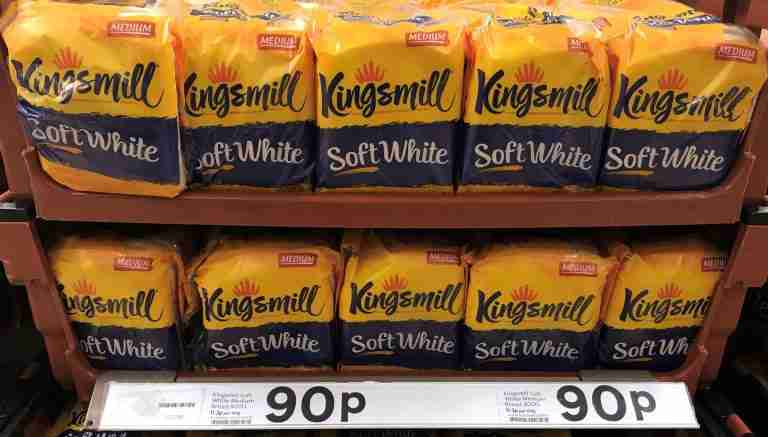
Associated British Foods has agreed to buy Hovis, giving it another big UK bread brand on top of Kingsmill so they can better compete in a market that has seen a decline in demand for the packaged sliced loaf.
Associated British Foods said on Friday it would acquire the 135-year old Hovis brand from private equity firm Endless, bolstering the group’s Allied Bakeries unit which in addition to Kingsmill owns the Sunblest and Allinson’s brands.
The purchase price was not disclosed but a person with knowledge of the situation told Reuters it was about 75 million pounds ($102 million).
AB Foods said in April it was “evaluating strategic options” for Allied Bakeries, saying it continued to face a “very challenging market”. The group said in May it was in talks with Endless about a potential deal.
In recent years, Allied Bakeries and Hovis, which are both loss-making, have been hit by a decline in demand for pre-sliced, packaged bread, reflecting increased competition from speciality bread producers as well as changing consumer tastes with more opting for diets with lower amounts of carbohydrates.
AB Foods said the deal, combining two of the UK’s best known bread brands, will bring together production and distribution activities, driving significant cost synergies and efficiencies.
It said the combined business will be better placed to compete effectively and deliver product innovation in the segments of UK bakery that are growing, such as sourdough.
“This transaction will create a UK bakeries business that is both profitable and sustainable over the long term,” CEO George Weston said.
The deal is subject to regulatory approval. It will likely face a lengthy probe by the competition authorities given the combined group’s market share.
Hovis has about 18% of the pre-sliced, packaged bread market, while Allied Bakeries has about 6%. Industry leader Warburtons has about 28%.
However, the figures for Hovis and Allied Bakeries exclude bread they manufacture for own-label customers.
The regulator, the Competition and Markets Authority, is, however, under pressure from the UK government to support growth.
“While the deal would face regulatory scrutiny, precedents in similar industries do suggest an approval is possible as one company’s survival is at risk,” analysts at Panmure Gordon said.
AB Foods also owns major grocery brands such as Twinings tea, Jordans cereals and Ovaltine drinks, the Primark clothing chain, and sugar, ingredients and agriculture divisions.
In April, the group reported a 10% fall in first half profit, mainly reflecting a weak performance and outlook in sugar. Its shares are, however, up 11% so far this year.
($1 = 0.7378 pounds)
Reporting by James Davey in London and Yamini Kalia in Bengaluru; editing by William James and Susan Fenton
The MSCI All Country World Index consolidated recent gains as European stocks edged higher in early trading
International News via Reuters:
Global stocks traded near record highs on Friday as investors awaited key talks between Donald Trump and Vladimir Putin over Ukraine in Alaska and for U.S. retail data that may give clues on the health of the world’s biggest economy.
The MSCI All Country World Index consolidated recent gains as European stocks edged higher in early trading. The index was last up 0.2% at 953.4, just shy of the record level of 954.21 set on Wednesday.
Wall Street futures were also up slightly around 0.1-0.2%.
The White House has said the Trump-Putin meeting will take place at 11 a.m. Alaska time (1900 GMT), with the U.S. president’s hopes of a ceasefire agreement on Ukraine uncertain. Trump has said a second summit involving Ukrainian President Volodymyr Zelenskiy could follow if the talks go well.
“There’s still a small degree of risk premium in European markets because of the war. Any type of resolution will ultimately pare that back,” said Shaniel Ramjee, co-head of multi-asset at Pictet Asset Management, adding that oil and other commodity prices could also react.
“But I think that the market has learnt not to expect too much from these negotiations. Ultimately, Zelenskiy and the Europeans are not invited. They will need to be involved in any final negotiation.”
Investors are also training their sights on U.S. retail data due later, after an unexpected spike in producer price data on Thursday renewed inflation concerns and pared market expectations for Federal Reserve rate cuts this year.
“What it did was to get rid of all the chat about a 50 basis point cut (in September),” said Mike Houlahan, director at Electus Financial Ltd in Auckland.
The 10-year U.S. Treasury yield was flat at 4.287%, after the previous day’s 5 basis point rise in the aftermath of the PPI data. [US/] The dollar index, which tracks the greenback against a basket of six major currencies, was last trading down 0.2% at 97.965.
Japanese GDP data released on Friday showed the economy expanding by an annualised 1.0% in the April-June quarter, beating analyst estimates. The dollar weakened 0.4% against the yen to 147.16.
In commodities markets, Brent crude was down 0.7% at $63.52 per barrel. Gold edged up 0.2% to $3,342 per ounce. [GOL/]
Cryptocurrency markets stabilised after bitcoin touched a record $124,480.82 on Thursday. The digital currency was last up 0.9%.
Reporting by Iain Withers in London; Additional reporting by Gregor Stuart Hunter in Singapore; Editing by Stephen Coates, Kate Mayberry and Alex Richardson
The chair of the negotiations Ecuador’s Luis Vayas Valdivieso adjourned the session with a pledge to resume talks at an undetermined later date
International News via Reuters:
Delegates discussing the world’s first legally binding treaty to tackle plastic pollution failed to reach consensus, diplomats said on Friday, voicing disappointment and even rage that the 10-day talks produced no deal.
Delegates had been seeking a breakthrough in the deadlocked United Nations’ talks in Geneva, but states pushing for an ambitious treaty said that the latest text released overnight failed to meet their expectations.
The chair of the negotiations Ecuador’s Luis Vayas Valdivieso adjourned the session with a pledge to resume talks at an undetermined later date, drawing weak applause from exhausted delegates who had worked into the early hours.
French ecology minister Agnes Pannier-Runacher told the meeting’s closing session that she was “enraged because despite genuine efforts by many, and real progress in discussions, no tangible results have been obtained.”
In an apparent reference to oil-producing nations, Colombia’s delegate Haendel Rodriguez said a deal had been “blocked by a small number of states who simply did not want an agreement.”
Diplomats and climate advocates had warned earlier this month that efforts by the European Union and small island states to cap virgin plastic production – fuelled by petroleum, coal and gas – faced opposition from petrochemical-producing countries and the U.S. under President Donald Trump.
U.S. delegate John Thompson from the State Department declined to comment as he left the talks.
The path forward for the negotiations is uncertain.
U.N. officials and some countries, including Britain, said that negotiations should resume but others described a broken process.
“It is very clear that the current process will not work,” South Africa’s delegate said.
More than 1,000 delegates have gathered in Geneva for the sixth round of talks, after a meeting of the Intergovernmental Negotiating Committee (INC) in South Korea late last year ended without a deal.
Negotiations had gone into overtime on Thursday as countries scrambled to bridge deep divisions over the extent of future curbs. Many, including Danish environment minister Magnus Heunicke, who negotiated on behalf of the EU, were disappointed that the final push did not yield any results.
“Of course we cannot hide that it is tragic and deeply disappointing to see some countries trying to block an agreement,” he told reporters while vowing to keep working on the treaty necessary to tackle “one of the biggest pollution problems we have on earth.”
Inger Andersen, Executive Director of the United Nations Environment Programme, also pledged to continue work. “We did not get where we want but people want a deal,” she said.
The most divisive issues include capping production, managing plastic products and chemicals of concern, and financing to help developing countries implement the treaty.
Anti-plastics campaigners voiced disappointment at the outcome but welcomed states’ rejection of a weak deal that failed to place limits on plastics production. “No treaty is better than a bad treaty,” said Ana Rocha, Global Plastics Policy Director from environmental group GAIA.
Reporting by Emma Farge, Writing by Miranda Murray; Editing by Jacqueline Wong, Christian Schmollinger and Tomasz Janowski
Sterling, which has gained 8.5% this year against the dollar, was last up 0.15% at $1.3549
International News via Reuters:
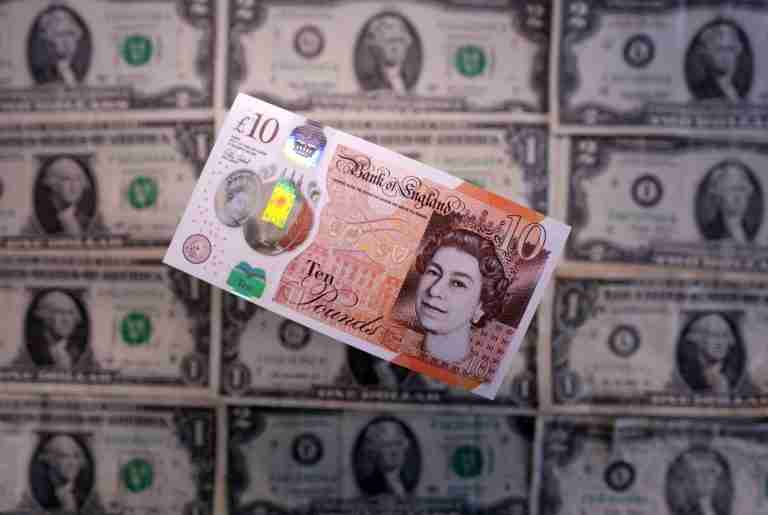
Sterling rose against a weakening dollar on Friday and was set to end the week higher after upbeat economic data and a hawkish rate cut by the Bank of England.
Sterling, which has gained 8.5% this year against the dollar, was last up 0.15% at $1.3549. It hit a session peak of $1.3594 on Thursday, the highest since July 7. It was about to end the week with a 0.70% rise.
The greenback slipped, after rising the day before, as investors remained cautious about the rate outlook ahead of import price data.
“RBC BlueBay retains a negative view on UK assets but doesn’t think that gilts are an attractive short at the time being due to valuation,” said Mark Dowding, BlueBay chief investment officer, RBC BlueBay Asset Management.
“However, should sterling continue its recent rally as hopes for further BoE rate cuts fade, then the pound may be an attractive way to express a structurally negative view on the dynamics within the UK over the months to come,” he added.
Dowding expects inflation to remain around 4%, even as the economy grapples with negligible growth.
The Bank of England cut interest rates by 25 basis points to 4% last week, but only after a narrow 5-4 vote. That suggested the BoE may adopt a cautious stance on further cuts due to persistent inflation concerns, even as job losses worsen.
The euro rose against the pound after recent falls, and was last up 0.19% at 86.22 pence. It hit 87.69 pence late last month, its highest since May 2023. The single currency was also set for a weekly drop of 0.35%.
Some analysts flagged that the positive impact on the pound from Thursday’s stronger headline growth could be dampened somewhat by the less favourable breakdown of expenditure.
Growth was mainly driven by increases in government consumption and the other category of gross capital formation, which includes changes in inventories, while private consumption and business investment were weaker than expected.
Reporting by Stefano Rebaudo; editing by Alex Richardson
The ban concerns the unfair dismissal of Chris Furbert Jr, son of the BIU President.
Mr Furbert Snr made the allegations when it was highlighted that the industrial action involves his son.
Mr Furbert said that “several years ago, while my son was walking on the dock, he receives a threat from one of his coworkers… ‘I’m going to get my son to shoot you’… That was reported to management, and they done absolutely nothing about it. Nothing.”
When asked if that was on record, Mr Furbert said it was reported to management, and that it was six or seven years ago, prior to Chris Furbert Jr. being terminated.
Mr Furbert also went on to state that “we have another worker, who is still there, who’s tried to stab workers. Got a knife in his locker.”
We reached out to Randy Rochester, CEO of Polaris, parent company of Stevedoring Services.
Regarding the allegation that a fellow worker had threatened to get their son to shoot Mr Furbert Jr, Mr Rochester said: “This pre-dates me by a number of years so the first I am hearing of this. However, if the BIU was not satisfied with the way in which it was handled, surely there was a line of recourse for them to follow at that time.”
On the allegation that there is a worker who has tried to stab other workers and has a knife in his locker, Mr Rochester said, quote: “Not sure what this is about but this matter could have been addressed with the appropriate authorities during the time this action was live.”
At the BIU press conference, after journalists had asked about reporting the incidents to the police or to other union members, Dawud Tucker, Division President of the Port Workers Division said that part of their agreement with the Docks operator is to try and deal with things internally first.
A Bermuda Police Service spokesperson advised that if someone is being threatened at work or at any location, do not take matters into your own hands, but instead make an official report by visiting the nearest police station, call the main police number, 295-0011, 211, or speak with a police officer you know.
The hot measure of inflation at the wholesale level follows the release on Tuesday of a better than feared rise in consumer prices in July
International News via Reuters:
The U.S. dollar rose across the board on Thursday as data showed U.S. producer prices increased more than expected in July amid a surge in the costs of services and goods, suggesting a broader pickup in inflation in the months ahead.
The hot measure of inflation at the wholesale level follows the release on Tuesday of a better than feared rise in consumer prices in July, which emboldened traders to boost bets on interest rate cuts from the Federal Reserve in coming months.
While Thursday’s data did not upset the case for a September rate cut, it did raise worries that tariffs could still stir up inflation in coming months and change the course of interest rate cuts for the rest of the year.
It also hurt the case for the Fed to resume cutting rates with a 50 basis point cut in September, something Treasury Secretary Scott Bessent suggested in an interview on Wednesday.
“I think that was never particularly likely, but presumably this PPI report quashes that,” Matt Weller, global head of market research at StoneX.
A half-point rate cut at the Fed’s September meeting is not warranted by the current state of the economy, with the country near full employment, inflation running above the Fed’s 2% target, and businesses still in the early stage of adapting to higher import taxes, St. Louis Fed President Alberto Musalem said on Thursday.
The inflation data does raise questions about whether the Fed can deliver an aggressive pace of cuts for the rest of the year, StoneX’s Weller he said.
“Some people were saying that we could see three consecutive 25 basis point rate cuts … but if anything approaching this level of inflation is in place it seems like we might be looking at more of a max of two interest rate cuts and even that might be questionable,” Weller said.
While financial markets have priced in an interest rate cut from the Federal Reserve next month, rising services inflation and the expectation tariffs could still significantly boost goods prices left some economists doubtful of an aggressive resumption in policy easing in the absence of further labor market deterioration.
Traders still see a Fed rate cut on September 17 as a near certainty, according to LSEG data.
The dollar index, measuring the currency against a basket of peers, was 0.5% higher at 98.25. The euro was 0.5% weaker at $1.16413 while the British pound eased 0.3% to $1.35325.
Still, analysts warned against expecting a sustained rebound in the buck.
“The market is very much likely to remain ‘all in’ on the idea of a September cut, at least until we hear from Powell at Jackson Hole next week,” Michael Brown, market analyst at online broker Pepperstone in London, said, referring to the Fed’s Jackson Hole Economic Symposium later this month.
The dollar, which fell against the yen earlier in the session after Bessent suggested the Bank of Japan needs to raise rates again soon, reversed course to trade 0.3% higher at 147.87 yen.
The stronger greenback weighed on the Australian dollar even as upbeat jobs data calmed concerns about a downturn in the labor market and lessened the need for another rate cut in the very near term. The Aussie was last down 0.8% to $0.6495..
Meanwhile, bitcoin, which earlier hit its first record peak since July 14, pushing as high as $124,480.82, sold off and was last down nearly 4% at around $118,157.
Bitcoin was already underpinned by increased institutional money flows this year in the wake of a spate of regulatory changes spearheaded by Trump, who has billed himself the “cryptocurrency president.”
In the latest move, an executive order last week paved the way to allow crypto assets in 401(k) retirement accounts.
“Corporate treasuries like MicroStrategy and Block Inc. continue to buy bitcoin,” said IG analyst Tony Sycamore.
Reporting by Saqib Iqbal Ahmed; Additional reporting by Kevin Buckland in Tokyo and Lucy Raitano in London; Editing by Shri Navaratnam; Editing by Sam Holmes, Jane Merriman, Giles Elgood and Diane Craft
The owners are in the early stages of exploring a potential sale of Moneris
International News via Reuters:
Royal Bank of Canada and Bank of Montreal have placed their Canadian payments joint venture up for sale, in a deal that may value the business as highly as $2 billion, four people familiar with the matter said.
Moneris is one of the largest payment processors in Canada, handling one in every three business transactions in the country. It was founded in 2000 by the two banks, and offers digital, mobile, and in-store payment systems for about 325,000 merchant locations, according to its website.
The owners are in the early stages of exploring a potential sale of Moneris, according to the people, who asked not to be named because the talks are private. Boutique investment bank PJT Partners, as well as investment bankers from RBC Capital Markets and BMO Capital Markets, are advising on the sale effort.
Moneris generates nearly $700 million in annual revenue, so the sources estimated this could equate to a $2-billion valuation, or slightly below that amount.
A sale is not guaranteed, and the owners could ultimately retain some or all of the business, the people added.
BMO, Moneris, and PJT declined to comment. RBC did not respond to a request for comment.
As the pace of digitization has increased in the North American payments industry in recent years, with the need to regularly spend capital to remain competitive, many banks have shed their payments businesses.
They have found willing buyers in payments companies, which have been growing through mergers and acquisitions to boost geographic scale and product offerings, as well as private equity firms, which value the recurring fee revenue that payments businesses generate.
Last month, Canada’s TD Bank said it was forming a strategic partnership with Fiserv in relation to its Canadian merchant payments business.
Reporting by Milana Vinn and David French in New York; Additional Reporting by Nivedita Balu in TorontoEditing by Rod Nickel
The company said tariffs imposed by President Donald Trump would cost it about $160 million for its fiscal 2026
International News via Reuters:
Coach parent Tapestry forecast annual profit below expectations due to rising tariffs, sending its shares plunging 14%, and said it planned to cut the number of handbag styles offered as retailers try to offset the impact of import duties.
The company said tariffs imposed by President Donald Trump would cost it about $160 million for its fiscal 2026, following warnings from other upmarket retailers such as Gucci-owner Kering and French luxury group LVMH on the hit from the levies.
The retail industry relies heavily on production from Southeast Asian countries, and now must bear the cost of roughly 20% tariffs on goods brought in from those nations. Tapestry makes its Coach and Kate Spade handbags primarily in countries such as Vietnam, Cambodia, the Philippines, and India.
The tariffs will disproportionately affect Kate Spade as the vast majority of its business is in the United States, chief financial officer Scott Roe said.
Tapestry said it would cut the number of Kate Spade handbags it offers by 30% across all regions. Several retailers have reduced the range of inventory they are importing as weaker-selling brands become less attractive to ship with added tariffs.
“Tariffs are now forcing brands across the consumer spectrum to take a closer look at their assortments and focus on their most profitable SKUs, which can also help preserve margins by reducing the need to markdown,” eMarketer’s Sky Canaves said.
The company’s quarterly sales came in at $1.72 billion, ahead of the LSEG analyst consensus for $1.68 billion. Tapestry also said it expects annual revenue of $7.2 billion, ahead of expectations.
Adjusted profit for the quarter ended June 28 was $1.04 per share, topping estimates of $1.02 per share.
Tapestry expects fiscal 2026 earnings-per-share in the range of $5.30 to $5.45, compared with estimates of $5.49 per share, according to LSEG data. The company expects a 60-cent tariff hit to its annual profit, with the end of the “de minimis” exemption on small shipments accounting for about a third of the impact.
“Even within Tapestry, the sought-after Coach brand should be able to pass down more of the tariff costs to customers via higher prices than Kate Spade, which is less in demand,” Canaves added.
Companies this year aggressively increased imports ahead of Trump’s imposition of tariffs. So far, U.S. businesses have mostly absorbed the rising import costs, but Goldman Sachs economists believe that will change in the coming months. While consumer-level inflation has remained relatively steady, inflation at the producer level spiked in July.
Tapestry sales declined 11% in Japan and revenue decreased 1% in other Asian countries.
Shares of the company have risen about 74% this year, largely due to the appeal of Coach bags that have won over younger consumers.
Reporting by Anuja Bharat Mistry in Bengaluru; Samantha Marshak in New York, Editing by Leroy Leo
Bermuda’s youth shine on the international stage and more drama in Hamilton Harbour
Bermuda’s swimmers were back in the pool for day 4 of the Junior Pan Am Games in Paraguay and another challenging outing for the young gombey warriors on the cricket pitch. These stories and more in today’s sports round up.
To provide the best experiences, we use technologies like cookies to store and/or access device information. Consenting to these technologies will allow us to process data such as browsing behavior or unique IDs on this site. Not consenting or withdrawing consent, may adversely affect certain features and functions.
Functional
Always active
The technical storage or access is strictly necessary for the legitimate purpose of enabling the use of a specific service explicitly requested by the subscriber or user, or for the sole purpose of carrying out the transmission of a communication over an electronic communications network.
Preferences
The technical storage or access is necessary for the legitimate purpose of storing preferences that are not requested by the subscriber or user.
Statistics
The technical storage or access that is used exclusively for statistical purposes.The technical storage or access that is used exclusively for anonymous statistical purposes. Without a subpoena, voluntary compliance on the part of your Internet Service Provider, or additional records from a third party, information stored or retrieved for this purpose alone cannot usually be used to identify you.
Marketing
The technical storage or access is required to create user profiles to send advertising, or to track the user on a website or across several websites for similar marketing purposes.