




Bermuda women’s national team set for 2026 CONCACAF W Qualifiers draw


Bermuda’s Women’s National Team is on the path to the 2026 CONCACAF W Championship, with the draw for the 2025/26 CONCACAF W Qualifiers scheduled for Wednesday, August 20. The draw will determine Bermuda’s opponents in the group stage, where they will compete for one of six spots in the W Championship.
Bermuda’s national team has been placed in Pot 1, alongside Trinidad and Tobago, Dominican Republic, Puerto Rico, Guyana, and Cuba. This seeding places them in a strong position, as they will be drawn into a group with one of the six pre-seeded teams: Costa Rica (Group A), Mexico (Group B), Jamaica (Group C), Panama (Group D), Haiti (Group E), and El Salvador (Group F).
The qualifiers will be played across three FIFA Women’s International Match Windows in November 2025, and February and April 2026. Each team will play two home matches and two away matches. The six group winners will advance to the CONCACAF W Championship, which serves as a qualification path to the 2027 FIFA Women’s World Cup and the 2028 Summer Olympic Games.
Fans can watch the official draw live on the CONCACAF YouTube channel on Wednesday, August 20th, at 8:00 p.m. Bermuda Time.
BermudAir CEO predicts positive outlook for the company
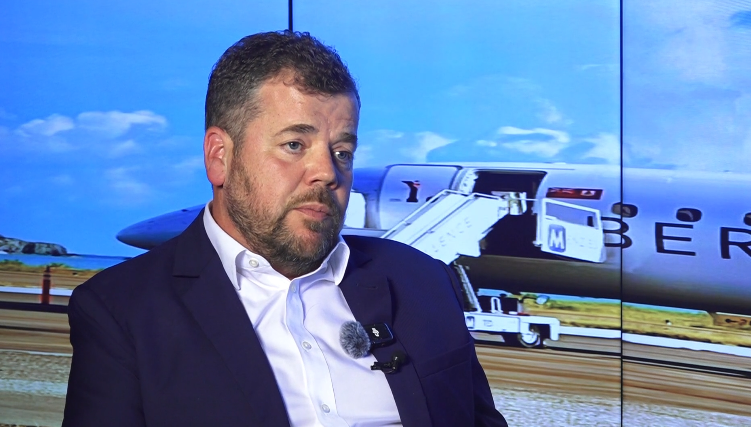
Adam Scott, the CEO and Founder of Bermuda’s flagship airline, BermudAir boasts new plans for the future growth of the company
Flying high and going places.
An upbeat Adam Scott offering an assurance today that his airline, BermudAir, has a bright future.
Logistical issues, he says, are “just a fact of business”.
We asked to sit down with Mr. Scott after some customer complaints and amid a legal tussle with operators of the L.F. Wade International Airport, Skyport.
He told us today that his proudest achievements are…his staff.
For the full 19 minute interview, watch below:
Enhancements made to Shelly Bay playground

The upgrades are part of a wider initiative to modernise playgrounds across Bermuda’s National Park System

Government press release:
The Ministry of Public Works and Environment is delighted to share that it has made upgrades to the playground facilities at Shelly Bay Beach Park, which includes the installation of a brand-new playground piece.
And earlier today, the Minister of Public Works and Environment, the Hon. Jache Adams, alongside Hamilton Parish area MP Wayne Furbert, unveiled the enhancements as part of a broader initiative to enrich recreational spaces for families and children at the park.
The centerpiece of the upgrade is a brand-new playset called Landon’s Lair, designed specifically for children aged 2 to 5. The piece was installed by Horsfield Landscape and Design.

Manufactured by PlayTopia, a trusted supplier of eco-friendly and durable playground equipment, Landon’s Lair supports toddlers’ physical, social, and cognitive development during a critical growth phase.
Today, Minister Adams emphasised the importance of investing in public spaces that foster community and childhood development, saying, “Shelly Bay Park is a beloved destination for families, and these upgrades reflect our commitment to creating safe, engaging, and sustainable environments for our youngest citizens. I’m grateful to Horsfield Landscape and Design as well as members of the Department of Parks for their swift work. I also am grateful to MP Wayne Furbert for his continued advocacy for the Hamilton Parish community.”

MP Wayne Furbert echoed the sentiment, noting the collaborative effort to enhance the area, “This is a wonderful step forward for Shelly Bay and for the families who enjoy this space year-round. I’m pleased to work alongside Minister Adams to ensure our parks remain vibrant and welcoming for all generations.”
Minister Adams notes that there are still additional repairs to be made to the playground space and those works are underway. He noted that all upgrades are part of a wider initiative to modernise playgrounds across Bermuda’s National Park System with equipment that is both visually cohesive and environmentally responsible.
Italy approves nearly $700 million in new subsidies for EVs

The ministry will offer up to 10,000 euros to individuals and up to 20,000 euros to small firms

International News via Reuters:
Italy has approved new subsidies worth almost 600 million euros ($698 million) for the purchase of electric vehicles as sales lag, the environment and energy ministry said on Friday.
The ministry will offer up to 10,000 euros to individuals and up to 20,000 euros to small firms, covering up to 30% of the total purchase price of a new electric car or commercial vehicle.
The subsidies, financed by European Union’s post-COVID recovery funds, will be restricted to individuals or companies based in larger urban areas with the aim of reducing pollution and improving air quality.
To qualify for the programme, beneficiaries will be required to scrap an internal combustion vehicle of up to the Euro 5 emission class, dating from 2015 or earlier, the ministry said.
EV sales are struggling in Europe, hindered by high prices and lack of charging stations, even as the EU is using regulations in an effort to phase out combustion engine cars to meet carbon emissions goals.
In Italy, battery electric vehicles accounted for only 6% of new car sales in June, compared to more than 15% across the European Union.
Next year, the bloc is due to review its ban on the sale of new petrol and diesel cars from 2035 under pressure from the auto industry and some national governments to slow the transition.
($1 = 0.8596 euros)
Reporting by Alvise Armellini; Editing by Joe Bavier
UK regulator clears Boeing takeover of Spirit AeroSystems

The news is likely to reassure investors after a series of crises depleted Boeing’s finances

International News via Reuters:
Britain’s competition regulator has cleared Boeing’s planned acquisition of Spirit AeroSystems, it said on Friday, after deciding against an in-depth investigation into whether the deal would be anti-competitive.
The news is likely to reassure investors after a series of crises depleted Boeing’s finances, strained employee morale and damaged public trust.
The planemaker did not immediately respond to a Reuters request for comment. A spokesperson for Spirit said the deal is expected to be closed in the fourth quarter of this year.
The UK’s Competition and Markets Authority did not provide details in its initial statement, but said the investigation would not go to a “phase 2” stage based on available data. The full text of its decision would be published shortly, it said.
Last year, Boeing agreed to buy back Spirit in a $4.7 billion all-stock deal to streamline its operations and improve quality control, years after spinning off the supplier.
The acquisition marked an end to nearly two decades of independence for the world’s largest standalone aerostructures company.
In July, Boeing also agreed to take over a portion of Spirit’s operations in Belfast, Northern Ireland, from Europe’s Airbus, which in April had finalised a deal to buy several of Spirit’s facilities tied to its aircraft programmes.
The watchdog began its initial investigation in June and had a deadline of August 28 for a decision.
Reporting by Pushkala Aripaka, Nithyashree R B and Prerna Bedi in Bengaluru; Editing by Sonia Cheema, Shilpi Majumdar and Barbara Lewis
Canada is trying to salvage its relationship with Mexico after falling out with Trump
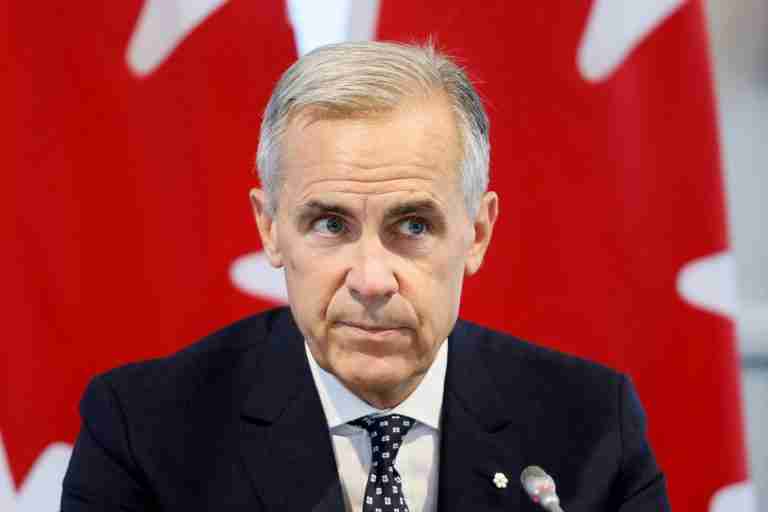
Mexico and Canada are in many ways natural allies
International News via Reuters:
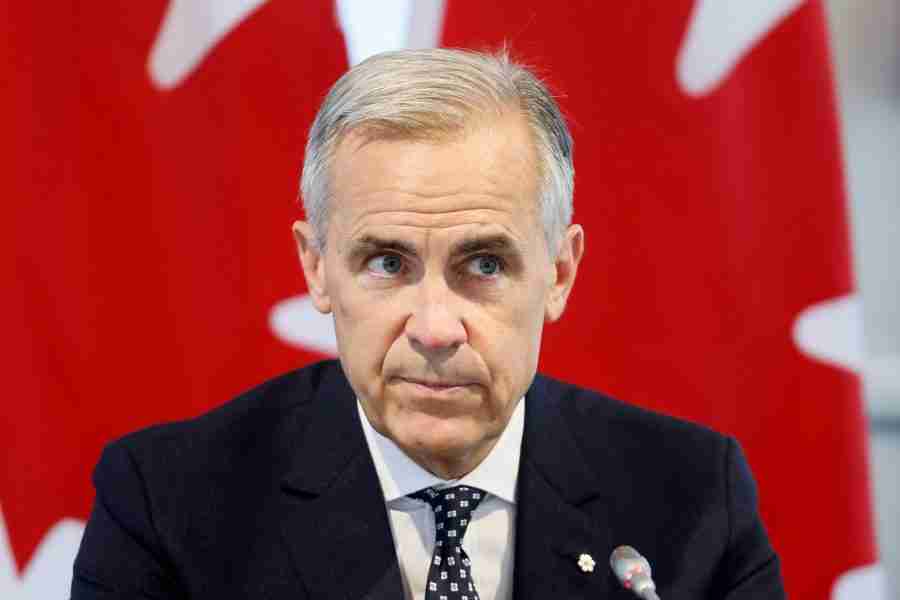
Prime Minister Mark Carney is scrambling to save his country’s relationship with Mexico after it disintegrated late last year when Canadian officials suggested they’d be better off negotiating a trade deal with the Trump administration alone.
Carney attempted to break the ice in a phone call with Mexican President Claudia Sheinbaum in July by complimenting an indigenous-made soccer ball she had gifted him at their last meeting and saying he hoped to visit Mexico soon.
The warm overture, relayed to Reuters by three people familiar with the call, highlights Canada’s attempt to repair the damage after a string of public slights by Canadian officials, including Ontario Premier Doug Ford, who said in November that any comparison of Canada to Mexico was “the most insulting thing I’ve ever heard.”
Mexico and Canada are in many ways natural allies. They’ve benefited from trilateral trade deals with the U.S. for 31 years: first the North American Free Trade Agreement in 1994 and subsequently the U.S.-Mexico-Canada Agreement that replaced it in 2020.
But the relationship between the two countries has been beset by allegations of betrayal on both sides and memories of fraught negotiations with Trump. Top officials virtually stopped talking in November after former Canadian Prime Minister Justin Trudeau mused about cutting a trade deal with the U.S. without Mexico, suggesting the U.S. and Canada were more aligned on issues like China.
A few days later, Trudeau flew to Mar-a-Lago for a surprise visit with U.S. President Donald Trump, stunning Mexican officials. It seemed as if Canada had already developed a strategy for dealing with Trump while Mexico was wringing its hands, one Mexican official said.
An infuriated Sheinbaum directed her lieutenants to stop dealing with the Canadians, at least until Trudeau left office, according to the official, who spoke on condition of anonymity.
Nine months later, Canada finds itself on the back foot with Trump while Mexico is reveling in its relative success. Last week, Trump gave Mexico a 90-day pause on new tariffs going into effect, keeping the rate at 25%, while raising tariffs on Canada to 35%.
Now, in a remarkable about-face, Canadian officials are on a campaign to win back Mexico’s favor and save the trilateral trade deal Trudeau suggested he was willing to ditch, according to two people with knowledge of the countries’ tense relationship.
That treaty continues to shield a large number of Canadian and Mexican exports to the U.S. from Trump’s latest rounds of tariffs.
Carney said on Tuesday that “it’s important to preserve” the trilateral agreement while Canada’s foreign minister and finance minister traveled this week to Mexico for a two-day visit with top officials.
Asked by Reuters whether the purpose of her visit was to repair shattered ties with Mexico, Canadian Foreign Minister Anita Anand said: “It is extremely important for Canada to have a resilient relationship with Mexico, and indeed, I’m here to kick start that relationship.”
Sheinbaum, on X, reiterated that message. “We’re strengthening the relationship between our countries,” she wrote.
A spokesperson for Sheinbaum declined to comment.
‘LOOK IN THE MIRROR’
Whether they repair their partnership and become a tightly-knit bloc in negotiations with the U.S. will have lasting consequences not only for the three countries but the thousands of companies that depend on free trade in the region, from automakers to medical suppliers, three trade analysts said.
“The big question I have is whether there’s a real sense of communication or coordination between Mexico and Canada,” said Kenneth Smith Ramos, a former trade negotiator for Mexico. “I don’t get the sense that is the case. I think both are operating bilaterally with the U.S. and that’s it.”
He said Mexico saved Canada from being ousted from the USMCA treaty when Canadian and U.S. negotiators got into a “severe fight” during negotiations in 2018.
“Mexico insisted that the agreement remain trilateral,” said Smith, who represented Mexico in those negotiations, adding it’s that history that likely made Mexican officials especially bitter when Canada appeared to spurn Mexico to curry favor with Trump.
A Canadian source involved in the 2018 talks sharply disputed that characterization.
“The Mexican team went behind our back and negotiated their own bilateral deal with the U.S. Trump then used that to pressure Canada to make concessions,” said the source, who spoke on condition of anonymity.
The source said the bad blood with Mexico stemming from the 2018 negotiations is part of the reason Canadian officials expressed interest last year in a bilateral deal with the U.S.
“If there are Mexicans who feel Canada betrayed them, they should look in the mirror.”
TRADING BARBS
After Trudeau came away from Mar-a-Lago empty-handed at the beginning of the year, the relationship became openly hostile with him and Trump trading barbs. Sheinbaum, meanwhile, insisted on staying on Trump’s good side, virtually at any cost, according to three people familiar with her strategy.
As the Canadians fell into a deeper rut with Trump, Carney, who replaced Trudeau as prime minister in March, sought to make amends with Mexico by inviting Sheinbaum to attend the Group of 7 summit in Canada.
Sheinbaum delayed accepting for nearly three weeks but eventually assented. Trump left the summit early without meeting Sheinbaum, a development that “worried” Mexico’s president, one of her advisors said.
Carney’s invitation and Sheinbaum’s attendance appeared to be a reset of sorts in the two countries’ relationship, said Pedro Casas, CEO of the American Chamber of Commerce of Mexico. It sent a “clear message” that the two leaders are “in this together,” he said.
The Canadian prime minister extended his good-faith gestures to Sheinbaum during their follow-up phone call in July. He told her that the following day Canada would announce limits on imports of steel produced in other countries in an effort to help the country’s domestic steel sector, which is reeling from Trump’s 50% tariffs.
But Carney assured Sheinbaum that the measure wouldn’t affect imports from Mexico, according to two people with knowledge of their conversation.
Whatever her reservations about Canada, Sheinbaum has made clear she is completely invested in saving the trilateral trade deal with it and the U.S. If the three countries fail to renew the pact next year, the treaty will automatically expire in 2036, creating a potentially disastrous economic blow to Mexico.
U.S. Secretary of Commerce Howard Lutnick has privately raised the idea of ditching the agreement in favor of a bilateral trade deal with Mexico, according to the Mexican official – a scenario the person said Mexico is not keen to pursue.
Secretary Lutnick did not respond to a Reuters request for comment. The White House did not respond to a request for comment.
“Mexico knows very well that if we try to go head-to-head, toe-to-toe with Washington the asymmetry in the negotiations is going to favor the U.S,” said former Mexican trade negotiator Juan Carlos Baker. “It’s always better to have a three-player game.”
Reporting by Emily Green, David Ljunggren and Stephen Eisenhammer. Editing by Christian Plumb and Michael Learmonth
EM central banks plough on with easing in July as major peers linger

The moves were driven by policy makers in Turkey returning to easing with a 300-bp cut and Russia’s central bank pegging the benchmark 200 bps lower

International News via Reuters:
Emerging market central banks implemented their largest rate-cutting push in years in July, while their developed market counterparts held steady as uncertainty over U.S. trade and tariff policies reverberated across global economies.
Seven central banks from a Reuters sample of 18 developing economies delivered 625 basis points (bps) of cuts – the highest monthly cut since at least 2022 – in July, data showed.
The moves were driven by policy makers in Turkey returning to easing with a 300-bp cut and Russia’s central bank pegging the benchmark 200 bps lower. Central banks in Indonesia, South Africa, Malaysia, Poland and Chile all reduced rates by 25 bps each in July, while another six opted for no change.
Across developing economies, idiosyncratic stories were dominating, said Roger Mark, analyst in the fixed income team at Ninety One.
“We’ve got South Africa targeting a new inflation target. We’ve got Turkey, where the focus is all about trying to keep the lira stable,” said Mark.
“It does vary a lot by country and we’re seeing divergence in inflation, and divergence to an extent in the sensitivity to what’s happening in the U.S. and the ECB,” he said, adding for developed economies’ central banks it was more a degree of “wait and see.”
Meanwhile, the picture looked less dynamic in developed economies, with policy makers warning of uncertainty ahead
and growth and inflation trajectories in flux.
All six of the central banks overseeing the 10 most heavily traded currencies that held meetings in July kept rates on hold – namely Australia, New Zealand, Japan, the ECB, Canada and the United States Federal Reserve. Sweden, Switzerland, Norway and the Bank of England did not hold rate-setting meetings last month.
Policy makers were sifting through the impact from the U.S. trade policy with a raft of deadlines and announcements having come out in recent days and more deadlines ahead.
While August tends to be quiet on the monetary policy front, September is expected to bring more moves from major central banks, such as the Fed.
“The developed market monetary-easing cycle hasn’t been entirely synchronised, and there are some central banks that have fallen behind,” said Dario Perkins at TS Lombard.
“Current market pricing suggests these central banks (the Fed, the BoE etc.) will catch up in 2026.”
The year-to-date tally across G10 central banks on rate cuts is 500 bps across 19 moves, while on hikes there was just one 25 bps move by the Bank of Japan.
Across emerging economies, year-to-date rate cuts stood at 1,910 bps across 32 moves while rate rises tallied up to 625 bps through four hikes in Brazil and one in Turkey.
Reporting by Karin Strohecker and Sumanta Sen, editing by Harikrishnan Nair
UK stocks ease as BoE rate split clouds outlook; Fed revamp in focus

Both the blue-chip FTSE 100 and the domestically focused midcap FTSE 250 index slipped 0.1%

International News via Reuters:
British stocks edged lower on Friday, following the previous session’s decline after a Bank of England rate decision stirred inflation concerns, while investors assessed U.S. President Donald Trump’s interim pick for Federal Reserve governor.
Both the blue-chip FTSE 100 and the domestically focused midcap FTSE 250 index slipped 0.1% as of 0915 GMT. But both indices were on track for a weekly gain.
Investors this week weighed a slew of strong corporate earnings that helped British equities recover from last Friday’s steepest drop in nearly four months.
However, sentiment remained fragile following the BoE’s split rate decision, where four of nine policymakers voted to hold rates steady amid persistent inflation concerns – signaling that the central bank’s rate-cutting cycle may be nearing its end.
Meanwhile, expectations for rate cuts in the U.S. solidified after Trump said he will nominate Council of Economic Advisers Chairman Stephen Miran to fill a vacant seat at the Federal Reserve for a few months, as the White House continues its search for a successor to Fed Chair Jerome Powell, whose term ends on May 15, 2026.
The market is weighing the possibility that by appointing Miran to the Fed, even temporarily, may be a potential move by Trump to exert greater influence over monetary policy, aligning with his long-standing push for lower interest rates.
On the day, precious and industrial metal miners were the leading sectoral gainers, up between 1.5% and 1.1%, tracking higher gold and copper prices, respectively. [GOL/] [MET/L]
Miners such as Glencore and Fresnillo were among the top percentage gainers on FTSE 100, up 2.5% and 3.2% respectively.
London-listed shares of Georgia’s TBC Bank fell the most in the FTSE 250, down 11%, after the lender reported its half-year results.
Heading into the weekend, most of the firms pared back gains from earlier in the week, led by declines in chemical and travel & leisure stocks, which fell 1.4% and 1.2%, respectively.
Reporting by Sanchayaita Roy in Bengaluru; Editing by Maju Samuel
Oil set for steepest weekly losses since June

Higher U.S. tariffs against a host of trade partners went into effect on Thursday

International News via Reuters:
Oil prices were stable on Friday but poised for the steepest weekly losses since late June on a tariff-hit economic outlook and a potential meeting between U.S. President Donald Trump and Russian counterpart Vladimir Putin.
Brent crude futures were up 21 cents, or 0.32%, at 6.64 a barrel by 0901 GMT. U.S. West Texas Intermediate crude futures rose 18 cents, or 0.28%, to $64.06.
Brent was on track to be down 4.3% over the week while WTI was set to finish 4.9% lower than last Friday’s close.
Higher U.S. tariffs against a host of trade partners went into effect on Thursday, raising concern over economic activity and demand for crude oil, ANZ Bank analysts said in a note.
The latest tariffs arrive against a backdrop of an already weaker than expected U.S. labour market and Thursday’s announcement by the Kremlin that Putin and Trump would meet in the coming days as trade tensions rise between the U.S. and Russia’s oil customers.
Trump this week threatened to increase tariffs on India if it kept buying Russian oil, which the market viewed as putting further pressure on Russia to reach a deal with the U.S., said independent analyst Tina Teng.
Trump also said China, the largest buyer of Russian crude, could be hit with tariffs similar to those levied against Indian imports.
The potential meeting raises expectations of a diplomatic end to the war in Ukraine, which could lead to eased sanctions on Russia, with Russian stocks rallying after the news.
However, some analysts remain cautious.
“The Russian leader is expected to insist on having his territorial demands granted, a hard sell for the invaded country, while his U.S. counterpart will push for a ceasefire,” said PVM analyst Tamas Varga.
“No breakthrough is anticipated, and the U.S. following through on its threat to impose secondary sanctions on those dealing in Russian energy – including China and India – remains a possibility.”
Reporting by Robert Harvey in London, Shariq Khan in New York and Colleen Howe in BeijingEditing by David Goodman
Hungry goat herds help fight fires in Spain’s Catalonia

The herd wandering from town to town is part of a pilot project set up in the city of Mataro

International News via Reuters:
Amid a symphony of tinkling bells, some 300 black, brown and dappled goats trot along a paved road in Spain’s northeastern Catalonia region, stopping every now and then to nibble with gusto on the dry shrubs lining the edge of a forest.
The herd wandering from town to town is part of a pilot project set up in the city of Mataro, which forms part of a broader European Union-funded effort to mitigate the risk of wildfires.
Jose Antonio Ricis, Mataro’s local councillor in charge of agriculture, said the project was a success and was “here to stay”.
Each summer, scorching heat sparks wildfires in countries across southern Europe ravaging vast swathes of land as climate change intensifies. In Catalonia last year, despite being in the third year of the worst drought in a century, the number of outbreaks decreased, with the regional government attributing the decline to improved fire prevention measures, of which goats are just one part.
Goats are known for their voracious appetites, even feeding on thorny plants like cacti or thistles, making them ideal for clearing brush and other combustible materials to create natural firebreaks.
The practice of using livestock to clear flammable undergrowth dates back centuries, but some farmers are turning away from machines favoured in modern times and back to goats and other animals in search of more sustainable farming techniques. In Spain’s Galicia region, wild horses perform the job.
Whistling in short bursts, Francesc Teixido and Pedro Alba, both 38, instruct their working dogs to get the goats moving along the perimeter of a residential area in wildfire-prone Maresme county, hugging central Catalonia’s coast.
The two business partners recently decided to combine their respective flocks and embrace the nomadic goat-herding life.
Teixido’s story began 14 years ago with a small experiment in goatherding in the Barcelona suburb of Badalona. However, others in the original group soon grew tired of the demanding lifestyle, and Teixido was left alone with his modest flock of seven goats.
CHANGE OF LIFESTYLE
“At first, it wasn’t even a profession. I did it as a hobby, to learn,” says Teixido, who had worked as a skiing, sailing and windsurf instructor before.
“When you’re an instructor, you’re also looking after a group of children or adults and have to try to make sure they behave as well as possible,” he quips, adding that he prefers his current sense of freedom.
Alba also left a very different life behind: He had been a touring musician, but then the pandemic hit and travel restrictions became the norm.
Faced with an unintended career change, he prioritised finding a job in which he could also spend time with his young son, so he started by buying a few goats from Teixido after meeting him at a party.
Aside from the ability to bring his child along, Alba says he loves to consume high-quality milk and meat, but he intensely dislikes dealing with the red tape.
The goatherders are paid by individual municipalities who use their services and by cheesemakers who particularly prize milk from the roving goats. However, these income streams also mean they have to deal with more bureaucracy related to tax and health regulations.
The constantly moving animals graze on a wide variety of plants and don’t require supplemental feed such as lucerne – resulting in a sweeter, fattier and more protein-rich curd with a higher yield and flavours that change with the season, the pair explain.
“What seemed like a handicap at first became our main strength,” Teixido says, referring to the goats’ lack of fixed abode.
Most of the income from milk sales and the municipalities that pay for the wildfire prevention programme is spent on getting better equipment.
Ultimately, neither of them is in it for the money. “If you count the hours, it doesn’t add up,” says Alba. “We do it because we believe in another way of life and of managing the land.”
Reporting by Albert Gea and Horaci Garcia; Writing by David Latona; Editing by Sharon Singleton
European shares on track for biggest weekly gain in 12; Novo Nordisk jumps

A largely upbeat corporate results and firming bets of more interest rate cuts from the Federal Reserve have helped European stocks rise

International News via Reuters:
European stocks edged higher on Friday, led by upbeat corporate earnings and a jump in Novo Nordisk shares, and were set for their biggest weekly gain in twelve.
Novo Nordisk, rose 4.6% after rival Eli Lilly’s weight-loss pill’s late-stage study showed that it lagged Novo’s injectable obesity treatment Wegovy.
The pan-European STOXX 600 index was up 0.2%, taking its weekly gains to 2.1% as of 0840 GMT. Most regional bourses were in the green, except Germany’s blue-chip DAX down 0.3%.
A largely upbeat corporate results and firming bets of more interest rate cuts from the Federal Reserve have helped European stocks rise from five-week lows last Friday.
Of the 198 companies in the STOXX 600 that reported earnings through Tuesday, 53% exceeded analysts’ estimates, according to data compiled by LSEG.
“Equities have overall held up fairly well … earnings have been on the whole decent and maybe because you’re getting greater certainty around trade,” said Richard Flax, chief investment officer at Moneyfarm.
“The underlying question as we kind of head into the next few months is will that stagflationary kind of narrative persist and if it does, will it begin to impact more on equities.”
Munich Re shares fell 7.4% and ranked among top decliners on the benchmark index after the German reinsurer trimmed its fiscal-year outlook for insurance revenue.
Insurance stocks declined 1.8%, a day after hitting a record high.
Shareholders in Germany’s Thyssenkrupp are set to vote on a spin-off of its defence division, sending its shares rising 2.5% with European spending on defence raising expectations for the company’s value.
Lotus Bakeries’ shares added 7% after the Biscoff brand owner reported strong first-half results with the company on track for its best year in over a year if gains hold.
Bechtle’s shares jumped 13.8% to the top of the benchmark after the German IT service provider confirmed its full-year guidance.
Global markets got a lift after U.S. President Donald Trump said he will nominate Council of Economic Advisers Chairman Stephen Miran to serve out the final few months of a newly vacant seat at the Fed, while the White House continues its search for a successor to Fed Chair Jerome Powell, whose term ends May 2026.
Trump has tried to pressure Fed officials including Powell to cut interest rates. By appointing Miran to the Fed, even temporarily, he may gain a more direct way to pursue a looser monetary policy.
Reporting by Twesha Dikshit and Medha Singh; Editing by Harikrishnan Nair and Sonia Cheema
