The Somerset Trojans have been crowned the Bermuda Football Association’s Under 23 Knock-out Champions, emerging victorious after a dramatic 5-2 win over FC Bascome in a captivating final.
The Trojans, who replaced the disqualified Dandy Town Hornets in the showpiece event, found themselves behind early on. Ben Osset put FC Bascome ahead in the 12th minute, but Keyni Mills quickly equalised for Somerset in the 23rd. The see-saw action continued as Hunter Outerbridge restored Bascome’s lead a minute later, only for Michari Tear-Deleon to level for the Trojans in the 39th, making it 2-2 at the break.
The second half, however, saw a dominant performance from the Somerset Trojans. Keyni Mills netted his second goal just a minute after the restart, giving his side their first lead of the night. The advantage was extended in the 78th minute by Enrique Mendes, and five minutes later, Kai Sampson sealed the victory, giving the Somerset Trojans a commanding 5-2 lead and the championship title.
Kamran McNeil was deservedly named the Most Valuable Player for the Somerset Trojans, while Jaiyden Robinson received the MVP honours for FC Bascome. This memorable final truly showcased the exciting emerging talent within Bermudian football.
The car brands have been under investigation in Europe
International News via Reuters:
A Dutch court on Wednesday said diesel cars sold by Opel, Peugeot, Citroen and DS in the Netherlands from 2009 contained software designed to cheat emissions tests.
In its intermediary ruling in a class action suit brought by three organisations against Stellantis, which now owns the targeted car companies, the court did not determine whether any compensation should be paid.
The car brands have been under investigation in Europe, along with several other automakers, in the wake of Volkswagen’s dieselgate emissions scandal.
The Dutch court said it was clear that diesel cars introduced by the four brands since 2014 were equipped with software that manipulated their emission control system, keeping nitrogen oxide emissions artificially low during official tests.
It said this was also the case for Opel diesels introduced since 2009, while it suspected the same for the Peugeot, Citroen and DS diesels of this generation.
Stellantis was not immediately available for comment.
The Fed is widely expected to leave interest rates unchanged
International News via Reuters:
The dollar advanced against major peers on Wednesday following better-than-expected U.S. GDP data and as investors awaited the outcome of the Federal Reserve’s policy meeting later in the session.
U.S. economic growth rebounded more than expected in the second quarter, expanding by 3% compared with an estimate of 2.4% based on a Reuters poll of economists.
The Fed is widely expected to leave interest rates unchanged, rebuffing persistent calls by President Donald Trump to cut interest rates.
The euro extended losses against the dollar following the U.S. GDP data. It was down 0.65% to $1.1471, on track for the fifth straight session of losses and trading at its lowest level since June 23.
The euro is also poised to record its first monthly drop in 2025, following a sharp reaction to a U.S.-European Union trade deal earlier this week.
The dollar index added to its gains after the GDP report. It was up 0.56% at 99.442, hitting its highest since May 20 and on course to post its first month of gains this year.
U.S. Treasury yields were mostly higher ahead of news from the Fed. The 2-year note yield, which typically moves in step with interest rate expectations for the Fed, rose 2.7 basis points to 3.902%.
“I think people are reading too much into the GDP numbers; nobody in markets should think GDP was that weak in Q1 and that strong in Q2 even though the big drivers were inventories and net exports,” said Steve Englander, head of global G10 FX Research at Standard Chartered in New York.
“I will add the two quarters together and they averaged about 1.5% GDP growth per quarter, which is not a recession but qualifies as mediocre.”
Trade agreements struck with Japan last week and the EU over the weekend signalled a renewed U.S. commitment to global engagement, easing investor concerns.
Investors’ focus is now on negotiations between China and the U.S. after officials agreed to seek an extension of their 90-day tariff truce. But Trump upped the ante against India on Wednesday, announcing that a 25% tariff on imports starting August 1.
“Trump can afford to be harsh on India because he’s gotten a bunch of deals already and he’s trying to pressure them to be more forthcoming. . . I don’t think the tariffs will end as harsh as he hinted but he does want to negotiate with India on terms favorable to the US,” Englander said.
Data showed on Wednesday that the German economy contracted in the second quarter, while France’s economy beat forecasts.
The spotlight will be on comments from BoJ Governor Kazuo Ueda as investors hope the trade deal between Japan and the U.S. paves the way for the central bank to raise rates on Thursday.
The dollar was firmer 0.28% to 148.88 against the yen, hitting a two-week high. Against the Swiss franc, the dollar strengthened 0.65% to 0.811 francs, reaching its highest since June 24.
Reporting by Chibuike Oguh in New York and Stefano Rebaudo; Editing by Kate Mayberry, Bernadette Baum, Ros Russell and Frances Kerry
Four of Bermuda’s most promising junior golfers have begun their quest for glory at the 37th Annual Caribbean Amateur Junior Golf Championships, showcasing their skills across various age divisions.
In the Girls 11 to 13 Division, Darina Betschart has made an exceptional start, leading the field after an impressive first round of three-under par 69. Betschart’s stellar round included six birdies, nine pars, and just three bogeys, putting her firmly in contention for the title.
Meanwhile, in the Boy’s 18 & Under Division, Arman Newton and Johnny Bart are representing the island. Newton finished the opening day tied for 10th after carding a four-over par 76, a round highlighted by two birdies and 12 pars. Bart sits just behind in 13th, having posted a six-over par 78, which included one birdie.
In the Boys 11 to 13 Division, Lewis MacFarlane concluded his first round tied for 13th. MacFarlane posted a 17-over par score, navigating his way through the course with six pars and nine bogeys.
The Bermudian quartet will be looking to build on their opening performances as the prestigious regional championship continues.
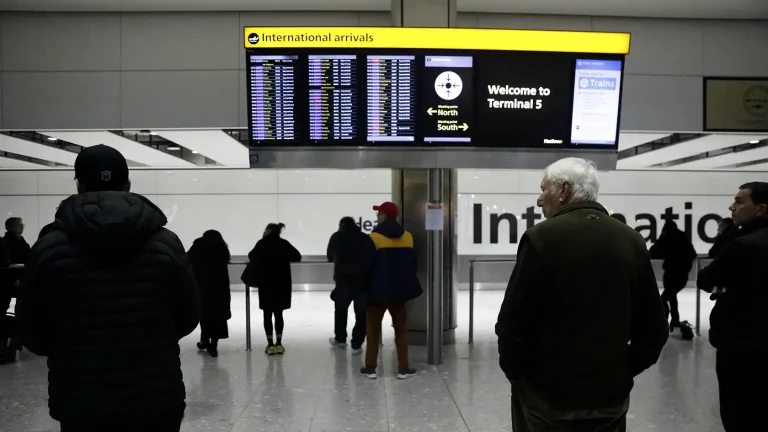
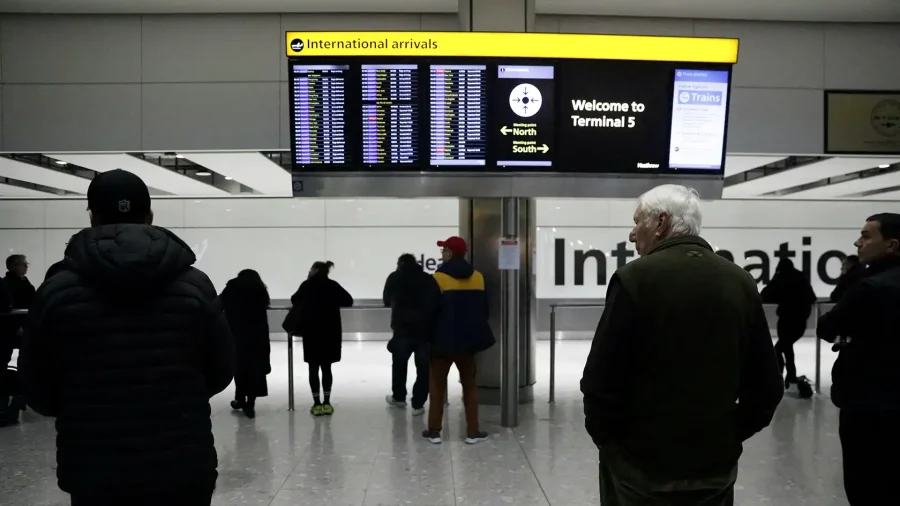
Flights out of London were held up today, although Bermuda Broadcasting understands British Airways flight 159 to Bermuda had already departed prior to the disruption.
Britain’s air traffic controllers reported a technical issue that disrupted flights at major airports in London and elsewhere in the country, though later said the issue had been resolved.
At 12:30pm Bermuda time, NATS stated on X, “Our engineers have now restored the system that was affected this afternoon. We are in the process of resuming normal operations in the London area”.
Heathrow Airport earlier said all departures had been paused.
At 12:50pm Gatwick Airport stated on X that the technical issue affecting outbound flights has been resolved, and “as a result there are some delays at London Gatwick while operations resume.”
“Passengers should check the status of their flights with their airline.”
Last year, Britain’s aviation regulator said NATS needed to review its contingency plans for outages after a major disruption in 2023.
The U.S. decision singles out India more severely than other major trading partners
International News via Reuters:
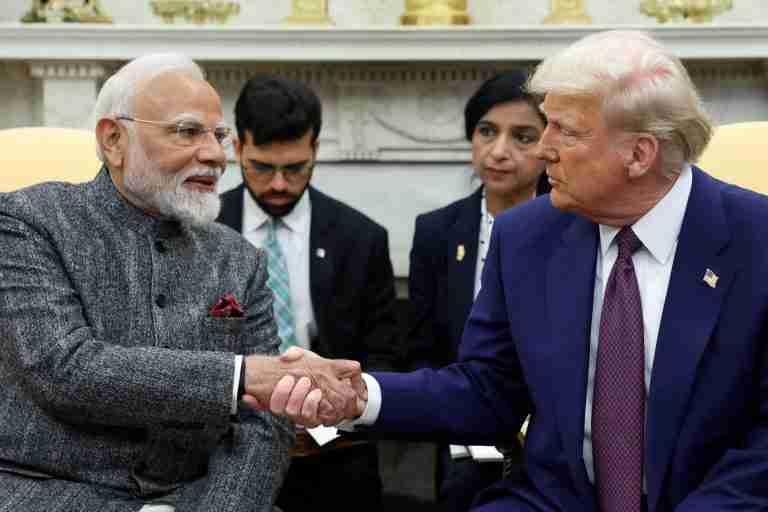
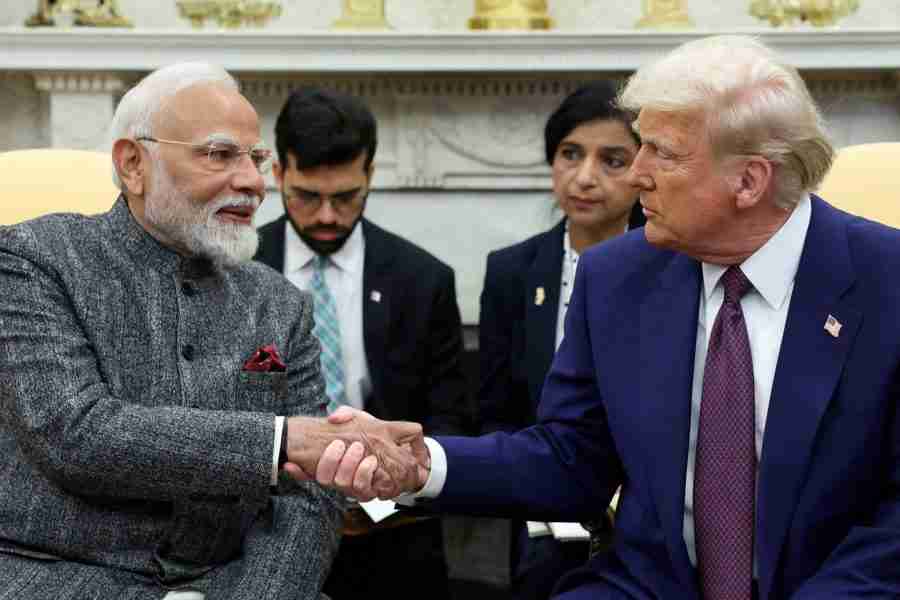
U.S. President Donald Trump on Wednesday imposed a 25% tariff on goods imported from India starting August 1, along with an unspecified penalty for buying Russian weapons and oil, potentially straining relations with the world’s most populous democracy.
The U.S. decision singles out India more severely than other major trading partners, and threatens to unravel months of talks between the two countries, undermining a key strategic partner of Washington’s and a counterbalance to China.
“While India is our friend, we have, over the years, done relatively little business with them because their Tariffs are far too high, among the highest in the World, and they have the most strenuous and obnoxious non-monetary Trade Barriers of any Country,” Trump wrote in a Truth Social post.
“They have always bought a vast majority of their military equipment from Russia, and are Russia’s largest buyer of ENERGY, along with China, at a time when everyone wants Russia to STOP THE KILLING IN UKRAINE — ALL THINGS NOT GOOD!”
The White House has previously warned India about its high average applied tariffs – nearly 39% on agricultural products – with rates climbing to 45% on vegetable oils and around 50% on apples and corn.
Russia continued to be the top oil supplier to India during the first six months of 2025, making up 35% of overall supplies.
The U.S. currently has a $45.7 billion trade deficit with India.
The news pushed the Indian rupee down 0.4% to around 87.80 against the U.S. dollar in the non-deliverable forwards market, from its close at 87.42 during market hours. Gift Nifty futures were trading at 24,692 points, down 0.6%.
CONTENTIOUS ISSUES
“Higher tariffs for India compared to countries it competes with, for exports to the U.S., are going to be challenging,” said Ranen Banerjee, a partner of economic advisory services at PwC India.
India’s commerce ministry, which is leading the trade talks, did not immediately respond to a request for comment.
U.S. and Indian negotiators had held multiple rounds of discussions to resolve contentious issues, particularly over market access into India for U.S. agricultural and dairy products.
Despite progress in some areas, Indian officials resisted opening the domestic market to imports of wheat, corn, rice and genetically modified soybeans, citing risks to the livelihood of millions of Indian farmers.
The U.S. had flagged concerns over India’s increasing and burdensome import-quality requirements, among its many barriers to trade, in a report released in March.
The new tariffs are expected to impact India’s goods exports to the U.S., estimated at around $87 billion in 2024, including labour-intensive products such as garments, pharmaceuticals, gems and jewelry, and petrochemicals.
India now joins a growing list of countries facing higher tariffs under Trump’s “Liberation Day” trade policy, aimed at reshaping U.S. trade relations by demanding greater reciprocity.
The setback comes despite earlier commitments by Prime Minister Narendra Modi and Trump to conclude the first phase of a trade deal by autumn 2025 and expand bilateral trade to $500 billion by 2030, from $191 billion in 2024.
Indian officials have previously indicated that they view the U.S. as a key strategic partner, particularly in counterbalancing China. But they have emphasized the need to preserve policy space on agriculture, data governance, and state subsidies.
HOPES FOR A DEAL
It was not immediately clear whether the announcement was a negotiating tactic. While Trump railed against Japan in a June 30 Truth Social post and said there would likely be no deal with the North Asian nation, a deal was agreed on July 22.
An Indian government official told Reuters that New Delhi continued to remain engaged with the United States to seal an agreement.
Economists, too, remained hopeful.
“While the negotiations seems to have broken down, we don’t think the trade-deal haggling between the two nations is over yet,” Madhavi Arora, an economist at Emkay Global.
Reporting by Susan Heavey, Katharine Jackson in Washington, Manoj Kumar and Aftab Ahmed in New Delhi; editing by Doina Chiacu, Mark Heinrich and Bernadette Baum
Bermudian equestrian Nick Lopes has once again underlined his growing reputation in the showjumping world, clinching a significant win at the prestigious Kentucky Summer Horse Show in Lexington.
Competing in the renowned Rolex Stadium, Lopes, riding Aquiles Del Caribe Z, delivered a masterful performance in the 1.45M JR/AM CLASSIC. The pair executed a flawless clear round, stopping the clock with an impressive time of 81.36 seconds, which was enough to secure them the top spot in the highly competitive class.
Lopes also competed with G-STAR in the same event. While they finished 8th with a time of 104.48 seconds, they incurred four penalty faults, highlighting the immense precision demanded at this elite level of competition.
This strong showing at the Kentucky Summer Horse Show adds another notable achievement to Lopes’s burgeoning career. The Rolex Stadium is a premier outdoor equestrian venue, known for hosting top-tier events, making this victory a significant one for Bermuda’s equestrian talent.
Bermudian rider Jediah Cumbermack experienced a weekend of mixed fortunes as he competed in Round 5 of the 2025 AJN Steelstock Kawasaki British Superteen Championship, part of the wider Bennetts British Superbike Championship, at the iconic Brands Hatch circuit.
In Race 1, Cumbermack demonstrated a solid performance amidst a competitive field. Over 10 laps of the 24.33-mile circuit, he guided his Kawasaki to a 12th-place finish, crossing the line in a time of 16 minutes, 42.096 seconds. This result showcased his consistency and ability to compete within the demanding Superteen category, which features young riders from across the globe.
However, the second race of the weekend proved to be a more challenging affair for the young Bermudian. Unfortunately, Cumbermack was unable to complete Race 2, meaning he registered a ‘Did Not Finish’ for the final outing at Brands Hatch.
Despite the retirement in the second race, Cumbermack’s top-12 finish in Race 1 highlights his ongoing development and adaptation to the high-stakes environment of the British Superteen Championship. As a newcomer to the series this year, competing against riders with extensive experience, his progress remains a key focus.
The BTA said there was strong consensus around the need for structural realignment to ensure they’re best positioned to deliver on its core mandate – to promote Bermuda as a world-class tourism destination.
The search for a new leader of the Bermuda Tourism Authority is to beginning “imminently,” according to the Board of Directors.
This comes after the Board concluded its internal investigation into the company culture following successive high-level departures and accusations of mismanagement.
The tech giant’s revenue likely increased 9.5% in the second quarter to $162.08 billion, according to data from LSEG
International News via Reuters:
Amazon will seek to reassure investors on Thursday that its cloud business, a critical driver of profits, is growing at a fast enough clip to offset any pullback in consumer spending that could throttle its retail operations.
The tech giant’s revenue likely increased 9.5% in the second quarter to $162.08 billion, according to data from LSEG, accelerating from the first quarter and largely in line with the year-ago period. Amazon Web Services (AWS), the cloud unit that accounts for less than a fifth of the company’s sales but typically about 60% of its profit, likely grew 17% in the April-June period.
Amazon, like its rivals Alphabet and Microsoft, has invested heavily to increase capacity at its data centers to meet demand for its traditional cloud services as well as the surge in generative AI services. While AWS and Microsoft’s Azure are the dominant cloud providers, Alphabet’s Google has recently bagged some big deals, including one with OpenAI, and last week it cited massive demand for its cloud services for boosting spending plans for the year.
Google’s strong performance has sparked worries that the company could be taking market share from AWS, which analysts said could prompt Amazon to increase its own capital expenses as well, as could Microsoft when it announces its results on Wednesday.
“We have heard murmurs that AWS’ struggle to develop a strong AI model has fueled a perception that it is trailing behind Google within AI development,” Scotiabank analysts said, adding they expect margins at AWS to also pull back from the 39.5% seen in the first quarter.
On Thursday, though, investors will pay more attention than usual to Amazon’s e-commerce business, which has so far well withstood the pressures stemming from U.S. President Donald Trump’s tariff threats and trade deals. Sellers still prefer to hawk their wares on Amazon.com, as the e-commerce giant has cemented the top spot in offering low prices, convenience, and product selection.
Amazon said in May that third-party sellers on Amazon.com were pulling forward orders to boost inventory, and the company was pushing them to keep prices as low as possible. Walmart, the world’s largest retailer, said in May it would start raising prices due to tariffs.
“Amazon remains the go-to destination for online deals and continues to draw strong consumer and brand engagement … price increases have been more muted than expected, and second-quarter sales were solid as consumer spend stayed resilient,” Jefferies analyst Brent Thill said.
Inventory levels also “appear healthy” across most sellers on Amazon heading into the key back-to-school and holiday shopping seasons, Thill added.
Many consumer-facing companies have warned that tariffs are hitting their business. Automakers and consumer food giants including Coca-Cola have indicated that some segments of the buying public have pulled in their spending.
While major retailers slowed or halted orders for China-made goods and discretionary merchandise earlier in the year, brands are expecting improvements in sales in the current quarter as trade negotiations settle, analysts said.
Evercore analysts said a survey conducted by the brokerage found that 95% of respondents picked Amazon as their most common go-to website for shopping online this year. That represented an increase of 5% from 2024.
Preference for the No. 2 and No. 3 rivals – Walmart and Target – declined 7% and 3%, respectively.
“While tariff uncertainty creates a challenge for Amazon and every other retailer, our strong belief is that given its scale, supply diversification, and logistics sophistication, Amazon will be better able to manage tariff challenges than practically any other company,” Evercore analysts said.
Reporting by Deborah Sophia in Bengaluru and Arriana McLymore in New York; Editing by Sayantani Ghosh and Maju Samuel
The most active Brent crude futures lost 58 cents, or 0.81%, to $71.10 a barrel by 1014 GMT
International News via Reuters:
Oil prices fell on Wednesday as investors awaited developments on U.S. President Donald Trump’s tighter deadline for Russia to end the war in Ukraine and his tariff threats to countries that trade its oil.
The most active Brent crude futures lost 58 cents, or 0.81%, to $71.10 a barrel by 1014 GMT while U.S. West Texas Intermediate crude slipped by 58 cents, or 0.84%, to $68.63.
The Brent crude September contract that expires on Wednesday was down 59 cents, or 0.81%, at $71.92.
Both contracts had settled on Tuesday at their highest since June 20.
Trump had said on Tuesday that he would start imposing measures on Russia, such as secondary tariffs of 100% on trading partners, if it did not make progress on ending the war within 10 to 12 days, moving up from an earlier 50-day deadline.
China and India are the main beneficiaries of Russian crude, with the latter being more vulnerable, PVM Associates analyst John Evans said in a note.
“Alternative crudes will have to be sourced and while Saudi Arabia and its OPEC cohort would be more than willing and able to fill in, the time it takes to solve the lag will add another prop to near-term price strength,” Evans added.
JP Morgan analysts wrote that while China was unlikely to comply with U.S. sanctions, India has signalled it would do so, which could affect 2.3 million barrels per day (bpd) of Russian oil exports.
“The $4 to $5 a barrel of supply-risk premium injected in recent days can be expected to be sustained unless Putin makes a conciliatory move,” said Vandana Hari, founder of oil market analysis provider Vanda Insights.
The United States also warned China, the largest buyer of Russian oil, that it could face huge tariffs if it kept buying, Treasury Secretary Scott Bessent told a news conference in Stockholm.
Barclays analyst Amarpreet Singh, however, does not expect Russian barrels to leave the market any time soon.
Low energy prices have been a priority for the Trump administration and Russia working around Western sanctions since its invasion of Ukraine has made its exports resilient to the price cap mechanism, Singh said.
Reporting by Seher Dareen in LondonAdditional reporting by Mohi Narayan in New Delhi and Colleen Howe in BeijingEditing by David Goodman
To provide the best experiences, we use technologies like cookies to store and/or access device information. Consenting to these technologies will allow us to process data such as browsing behavior or unique IDs on this site. Not consenting or withdrawing consent, may adversely affect certain features and functions.
Functional
Always active
The technical storage or access is strictly necessary for the legitimate purpose of enabling the use of a specific service explicitly requested by the subscriber or user, or for the sole purpose of carrying out the transmission of a communication over an electronic communications network.
Preferences
The technical storage or access is necessary for the legitimate purpose of storing preferences that are not requested by the subscriber or user.
Statistics
The technical storage or access that is used exclusively for statistical purposes.The technical storage or access that is used exclusively for anonymous statistical purposes. Without a subpoena, voluntary compliance on the part of your Internet Service Provider, or additional records from a third party, information stored or retrieved for this purpose alone cannot usually be used to identify you.
Marketing
The technical storage or access is required to create user profiles to send advertising, or to track the user on a website or across several websites for similar marketing purposes.