Sunday, November 8, 2026
Home Blog Page 865

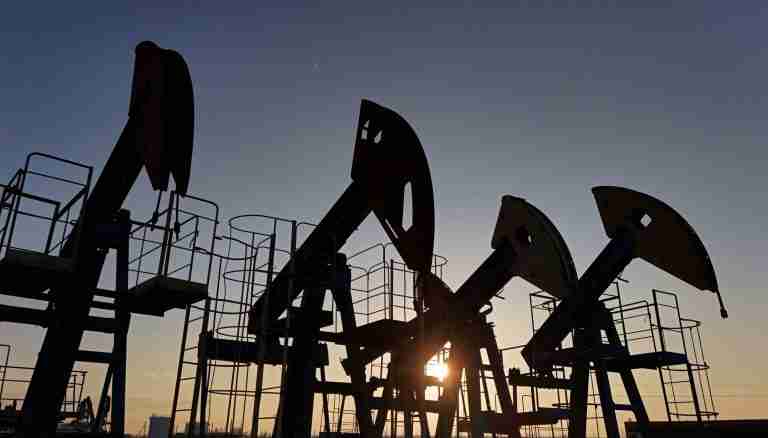
Oil rises 2% on US-EU trade deal, Trump’s shorter deadline for Russia

Brent touched its highest price in 10 days after Trump said he was reducing the 50-day deadline he gave Russia

International News via Reuters:

Oil prices rose 2% on Monday after a trade deal between the U.S. and the European Union, and U.S. President Donald Trump’s announcement that he would shorten the deadline for Russia to end its war in Ukraine or face sanctions.

Brent crude futures were up $1.36, or 2%, at $69.80 a barrel by 10:58 a.m. EDT (1458 GMT), while U.S. West Texas Intermediate crude rose $1.33, or 2%, at $66.49.

Brent touched its highest price in 10 days after Trump said he was reducing the 50-day deadline he gave Russia over its war in Ukraine to 10-12 days. 

The deal between the U.S. and EU and a possible extension of the U.S.-China tariff pause are also supporting global financial markets and oil prices, said Tony Sycamore, a market analyst at IG.

The framework trade pact with the EU announced on Sunday sets a 15% U.S. import tariff on most EU goods. Trump also said it called for $750 billion of EU purchases of U.S. energy in the coming years.

“Europe is going to have to give up a big percentage of everything they’re getting from Russia,” said Phil Flynn, senior analyst with Price Futures Group. “Not only does it (the trade pact) give U.S. producers a huge boost with this commitment, it also puts more pressure on (Russian President Vladimir) Putin to come to the table.”

Senior U.S. and Chinese officials are meeting in Stockholm on Monday to try to extend their tariff truce before an August 12 deadline.

The U.S.-EU deal removed another layer of uncertainty, and the focus seems to be shifting back towards fundamentals, said Tamas Varga, an analyst at PVM, adding that a strong dollar and falling Indian oil imports have weighed on crude prices.

On the supply side, an OPEC+ panel on Monday stressed the need for full compliance with oil production agreements, ahead of Sunday’s separate gathering of eight OPEC+ members to decide on increasing oil output for September.

ING expects OPEC+, the group that includes the Organization of the Petroleum Exporting Countries and allies such as Russia, to at least complete the full return of 2.2 million barrels per day of additional voluntary supply cuts by the end of September.

Reporting by Stephanie Kelly in New York; Additional reporting by Enes Tunagur and Seher Dareen in London, Florence Tan in Singapore and Sam Li in Beijing; Editing by Giles Elgood, Barbara Lewis, David Goodman, Paul Simao, Rod Nickel

Cup Match teams confirmed – five colts set for debuts

The highly anticipated Cup Match teams have been officially selected, with five promising colts set to make their debuts in Bermuda’s iconic sporting spectacle.

Cup holders Somerset Cricket Club will be led by Terryn Fray, with Dominic Sabir as vice-captain. They’ve made three changes, bringing in fresh talent with Zeri Tomlinson, Alex Dore, and Dalin Richardson all earning their maiden call-ups.

The challengers, St. George’s Cricket Club, will be marshalled by captain Sinclair Smith, supported by former captain Macai Simmons as vice-captain. St. George’s have also opted for new talent, with Luke Horan and Isiah O’Brien selected to make their first appearances in the big match.

With both teams finalised and new faces emerging, the countdown to Cup Match has truly begun, promising another thrilling chapter in Bermuda’s rich sporting history.

Somerset Cricket Club 2025 Cup Match Team

Terryn Fray – Captain

Dominic Sabir – Vice Captain

Kamau Leverock

Tre Manders

Dion Stovell

Malachi Jones

Derrick Brangman

Macquille Walker

Zeri Tomlinson – Colt

Alex Dore – Colt

Dalin Richardson – Colt

Reserves

Callum Mcintosh

Jaiden Manders

Amari Ebbin

St. George’s Cricket Club 2025 Cup Match Team

Sinclair Smith – Captain

Macai Simmons – Vice Captain

Jonte Smith

Nzari Paynter

Delray Rawlins

Zeko Burgess

Onias Bascome

Luke Horan – Colt

Isiah O’Brien – Colt

Marcus Scotland

Kevon Fubler

Reserves

Aaron Paynter

Keegan Jones

Luke Fulton

EU opens in-depth probe into ADNOC’s Covestro deal over subsidies

The EU investigation will also look into possible negative effects in the internal market

International News via Reuters:

Abu Dhabi state oil giant ADNOC’s 14.7 billion euro ($17.2 billion) bid for German chemicals company Covestro may face hurdles after EU antitrust regulators opened an investigation on Monday into potential distortions caused by foreign subsidies.

ADNOC struck the deal to buy Covestro last October, marking its biggest ever acquisition and one of the largest foreign takeovers of an EU company by a Gulf state.

The European Commission, which has been reviewing the deal under its foreign subsidies rules since May, opened an in-depth investigation on Monday, warning that subsidies granted by the United Arab Emirates could distort the EU internal market.

The Commission, which acts as the EU competition enforcer, said the possible foreign subsidies include an unlimited guarantee from the UAE, as well as a committed capital increase by ADNOC into Covestro.

“ADNOC may have offered an unusually high price and other favourable conditions, which may have deterred other investors from making an offer,” it said in a statement.

The EU investigation will also look into possible negative effects in the internal market resulting from the merged company’s activities once the deal is concluded.

“XRG and Covestro remain in constructive discussions with the European Commission and are cooperating to conclude the FSR review,” the German company said in a statement. XRG is the international investment arm of ADNOC.

The Commission set a December 2 deadline for its decision on the deal.

The EU’s Foreign Subsidies Regulation (FSR) focuses on unfair foreign aid for companies in a bid to rein in unfair competition from non-EU companies subsidised by their governments.

UAE telecoms group e& secured EU approval to buy parts of Czech telecoms company PPF last year after agreeing to scrap an unlimited state guarantee and not to channel foreign subsidies to the activities of the merged company in the EU.

($1 = 0.8569 euros)

Reporting by Bart Meijer. Additional reporting by Patricia Weiss in Frankfurt and Bartosz Dabrowski in Gdansk. Writing by Foo Yun Chee. Editing by Louise Heavens and Mark Potter

Pink ferry service resumes operation

The Department of Marine and Ports has issued a revised schedule

Newly updated schedule for the Pink Ferry Route (Paget, Warwick and Hamilton). Photo: Dept. of Marine and Ports

Full press release from the Government of Bermuda:

The Ministry of Tourism, &Transport, Culture & Sport is pleased to advise the public that the Pink Ferry Route, which services the Paget and Warwick communities, will officially resume operations this morning, Monday, July 28, 2025, starting with the 7:15 a.m. departure from Hamilton.

Following the successful completion of all scheduled repairs by the Department of Marine and Ports, and a subsequent test run, the ferry is now fully operational.

The Pink Route will operate on a revised schedule (below), which will be available to the public via the official Government portal and local ferry terminals.

We extend our sincere gratitude to our Pink Route commuters for their patience and understanding during the service suspension

US LNG producers soar as EU agrees to $250 billion in annual purchases

The EU committed to buying $250 billion annually in U.S. LNG as part of the framework trade agreement unveiled on Sunday

International News via Reuters:

Shares of U.S. liquefied natural gas developers surged in premarket trading on Monday, after the European Union pledged to purchase $750 billion worth of the super-cooled fuel over the next three years as part of a sweeping trade pact.

NextDecade, Venture Global, and Cheniere Energy jumped between 7% and 8.8%, with the deal bolstering the prospects for American LNG exporters as they expand to meet growing demand for cleaner-burning fuels.

The EU, seeking to phase out its dependence on Russian gas, committed to buying $250 billion annually in U.S. LNG as part of the framework trade agreement unveiled on Sunday.

The U.S. became the world’s biggest LNG supplier in 2023, surpassing Australia and Qatar, as surging global prices fed demand for more exports, due in part to supply disruptions and sanctions linked to Russia’s 2022 invasion of Ukraine.

The agreement imposes a 15% U.S. import tariff on most EU goods, a softer blow than markets had feared.

“Terms of the EU-U.S. trade deal were at the forefront, with the 15% tariff level better than feared (30% was mooted previously),” said Ashley Kelty, an analyst at Panmure Liberum.

“This should see less of a drag on industrial activity between the two.”

Still, Kelty noted the deal could weigh on gas prices.

“The demand for the EU to buy more U.S. energy will see more U.S. LNG imports in the future,” Kelty said, signalling a potential supply glut.

Shares of U.S. natural gas producers Expand Energy and EQT Corp were up 1.6% and 3%, respectively, before the bell.

Reporting by Arunima Kumar in Bengaluru; Editing by Sriraj Kalluvila

French PM says EU-US trade deal an act of ‘submission’ and a dark day for Europe

The high-level French criticism stood in contrast with the more benign reaction from Berlin and Rome

International News via Reuters:

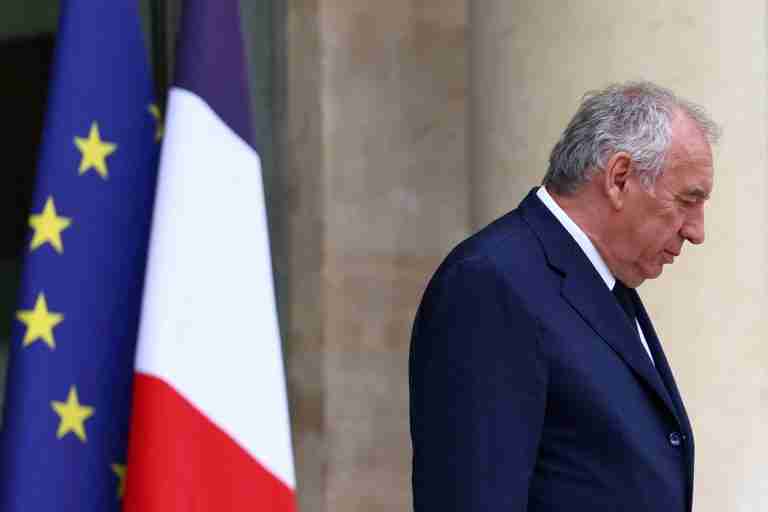
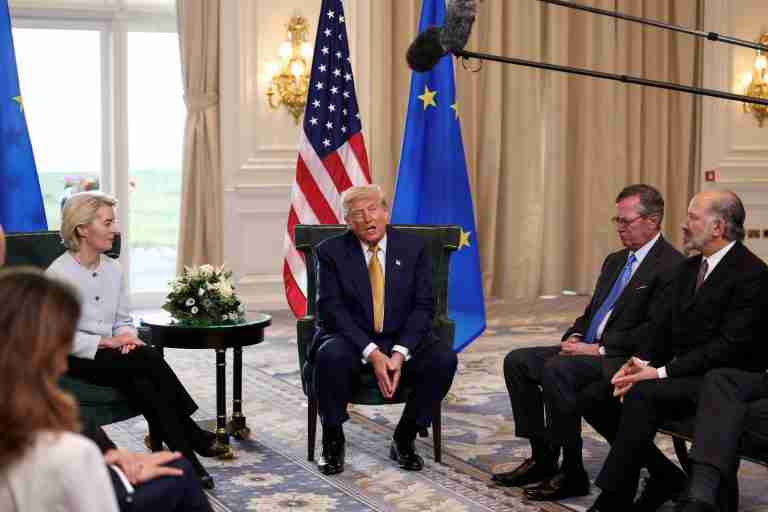
France called a framework trade deal between the United States and European Union a “dark day” for Europe, saying the bloc had caved in to U.S. President Donald Trump with an unbalanced deal that slaps a headline 15% tariff on EU goods while sparing U.S. imports from any immediate European retaliation.

The criticism from Prime Minister Francois Bayrou followed months of French calls for EU negotiators to take a tougher stance against Trump by threatening reciprocal measures — a position that contrasted with the more conciliatory approaches of Germany and Italy.

“It is a dark day when an alliance of free peoples, brought together to affirm their common values and to defend their common interests, resigns itself to submission,” Bayrou wrote on X of what he called the “von der Leyen-Trump deal”.

The high-level French criticism, and President Emmanuel Macron’s silence since the deal was signed between Trump and European Commission President Ursula von der Leyen, stood in contrast with the more benign reaction from Berlin and Rome.

French government ministers acknowledged the agreement had some benefits — including exemptions for sectors such as spirits and aerospace — but said it remained fundamentally unbalanced.

“This state of affairs is not satisfactory and cannot be sustained,” French European Affairs Minister Benjamin Haddad said on X, urging the EU to activate its so-called anti-coercion instrument, which would allow for non-tariff retaliation.

Trade Minister Laurent Saint-Martin criticised the EU’s handling of the negotiations, saying the bloc should not have refrained from hitting back in what he described as a power struggle initiated by Trump.

“Donald Trump only understands force,” he told France Inter radio. “It would have been better to respond by showing our capacity to retaliate earlier. And the deal could have probably looked different,” he added.

Macron had said that the EU should respond in kind if the United States slapped tariffs on EU goods, and apply equivalent measures on U.S. imports into the bloc, in particular on services, in which the U.S. enjoys a surplus with the EU.

But the softer line advocated by German Chancellor Friedrich Merz and Italian Prime Minister Giorgia Meloni, whose countries are more dependent than France on exports to the U.S., prevailed.

(Reporting by Sudip Kar-GuptaEditing by Kim Coghill, Toby Chopra, Peter Graff)France called a framework trade deal between the United States and European Union a “dark day” for Europe, saying the bloc had caved in to U.S. President Donald Trump with an unbalanced deal that slaps a headline 15% tariff on EU goods while sparing U.S. imports from any immediate European retaliation.

The criticism from Prime Minister Francois Bayrou followed months of French calls for EU negotiators to take a tougher stance against Trump by threatening reciprocal measures — a position that contrasted with the more conciliatory approaches of Germany and Italy.

“It is a dark day when an alliance of free peoples, brought together to affirm their common values and to defend their common interests, resigns itself to submission,” Bayrou wrote on X of what he called the “von der Leyen-Trump deal”.

The high-level French criticism, and President Emmanuel Macron’s silence since the deal was signed between Trump and European Commission President Ursula von der Leyen, stood in contrast with the more benign reaction from Berlin and Rome.

French government ministers acknowledged the agreement had some benefits — including exemptions for sectors such as spirits and aerospace — but said it remained fundamentally unbalanced.

“This state of affairs is not satisfactory and cannot be sustained,” French European Affairs Minister Benjamin Haddad said on X, urging the EU to activate its so-called anti-coercion instrument, which would allow for non-tariff retaliation.

Trade Minister Laurent Saint-Martin criticised the EU’s handling of the negotiations, saying the bloc should not have refrained from hitting back in what he described as a power struggle initiated by Trump.

“Donald Trump only understands force,” he told France Inter radio. “It would have been better to respond by showing our capacity to retaliate earlier. And the deal could have probably looked different,” he added.

Macron had said that the EU should respond in kind if the United States slapped tariffs on EU goods, and apply equivalent measures on U.S. imports into the bloc, in particular on services, in which the U.S. enjoys a surplus with the EU.

But the softer line advocated by German Chancellor Friedrich Merz and Italian Prime Minister Giorgia Meloni, whose countries are more dependent than France on exports to the U.S., prevailed.

Reporting by Sudip Kar-GuptaEditing by Kim Coghill, Toby Chopra, Peter Graff

Climate, gender in focus for World Bank in aid-reliant Pacific Islands

Six Pacific Island countries are at high risk of debt distress, the bank says

International News via Reuters:

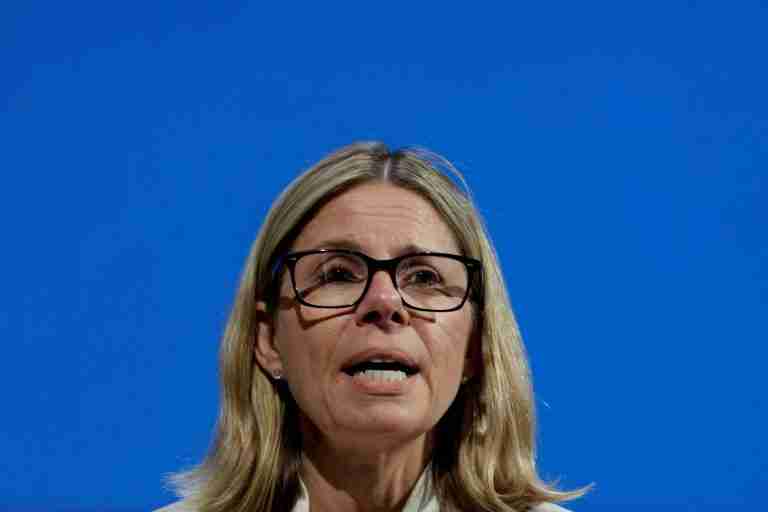
The World Bank has maintained its focus on climate change and gender equality issues in the Pacific, managing director of operations Anna Bjerde said on a visit to Australia, even as its largest shareholder the United States reduces aid in those areas.

After meeting Pacific Islands economic ministers in Fiji, Bjerde said countries in the region continued to worry about being exposed to the accelerating effects of climate change, and had grave concerns about food security and rising debt levels.

Six Pacific Island countries are at high risk of debt distress, the bank says.

The World Bank is moving a regional vice president from Washington to Singapore, and will move directors from Australia to Fiji and Papua New Guinea, to be closer to a $3.4 billion Pacific aid programme that has grown seven-fold in 10-15 years, she said in an interview on Monday.

“We are committed to designing projects that really take into account the vulnerabilities of countries we work in. In this part of the world, countries are vulnerable to the impact of climate change,” she said.

“We haven’t really changed our language around that,” she added.

Pacific road projects designed to be flood-resilient provide better infrastructure that can withstand the changing climate and also be counted in climate finance programmes, Bjerde said.

The World Bank was focussed on boosting women’s workforce participation to help lift the region’s economic growth, she said, after meeting women leaders in Fiji who highlighted the need for childcare so women can work.

On Monday, Bjerde also met officials from the Australian government, the largest bilateral donor to the region.

Under reforms introduced last year by its president Ajay Banga, the World Bank has started to roll out region-wide programmes to have a bigger impact among Pacific countries with small populations.

Eight countries have joined an arrangement that stops small island states being cut off from the international financial system, while a health programme targeting non-communicable disease will potentially reach 2 million people across the Pacific Ocean and train 16,000 health workers.

A trade programme is also being designed to give access to goods faster and more cheaply, she said.

Banga will attend the region’s annual leaders’ meeting, the Pacific Islands Forum, for the first time in September.

Reporting by Kirsty Needham in Sydney; Editing by Kate Mayberry and David Holmes

Europe reacts with mix of relief and concern to US trade deal

The agreement, announced on Sunday between two economies that account for almost a third of global trade

International News via Reuters:

European governments and companies reacted with both relief and concern on Monday to the framework trade deal struck with U.S. President Donald Trump, acknowledging what was seen as an unbalanced deal but one that avoided a deeper trade war.

The agreement, announced on Sunday between two economies that account for almost a third of global trade, will see the U.S. impose a 15% import tariff on most EU goods – half the threatened rate but much more than what Europeans hoped for.

Many of the specifics of the deal were not immediately known, however.

“As we await full details of the new EU–U.S. trade agreement, one thing is clear: this is a moment of relief but not of celebration,” Belgian Prime Minister Bart De Wever wrote on X. “Tariffs will increase in several areas and some key questions remain unresolved.”

Trump said the deal, including an investment pledge topping the $550 billion deal signed with Japan last week, would expand ties between the trans-Atlantic powers after years of what he called unfair treatment of U.S. exporters.

It will bring clarity for European makers of cars, planes and chemicals. But the EU had initially hoped for a zero-for-zero tariff deal. And the 15% baseline tariff, while an improvement on the threatened rate of 30%, compares to an average U.S. import tariff rate of around 2.5% last year before Trump’s return to the White House.

European Commission chief Von der Leyen, describing Trump as a tough negotiator, told reporters on Sunday that it was “the best we could get”.

European stocks opened up on Monday, with the STOXX 600 at a four-month high and all other major bourses also in the green. Tech and healthcare stocks led the way.

“The 15% rate is better than the market was fearing,” said Jefferies economist Mohit Kumar.

German Chancellor Friedrich Merz welcomed the deal, saying it averted a trade conflict that would have hit Germany’s export-driven economy and its large auto sector hard.

MORE CLARITY, BUT ‘NOT THE END OF THE STORY’

French government ministers said on Monday that the deal had some merits – such as exemptions they hoped to see for some key French business sectors such as spirits – but was nevertheless not balanced.

Industry minister Marc Ferracci stressed more talks – potentially lasting weeks or months – would be needed before the deal could be formally concluded.

“This is not the end of the story,” he told RTL radio.

European companies, meanwhile, were left wondering whether to cheer or lament the accord.

“Those who expect a hurricane are grateful for a storm,” said Wolfgang Große Entrup, head of the German Chemical Industry Association VCI.

“Further escalation has been avoided. Nevertheless, the price is high for both sides. European exports are losing competitiveness. U.S. customers are paying the tariffs,” he said.

Stellantis shares were up 3.5% and car parts maker Valeo jumped 4.7% while German pharma group Merck KGaA rose 2.9%, in a sign of relief for those sectors.

Among the many questions that remain to be answered, however, is how the EU’s promise to invest hundreds of billions of dollars in the U.S. and steeply increase energy purchases can be turned into reality.

It was not immediately clear if specific pledges of increased investments were made or whether the details still must be hammered out.

And while the EU pledged to make $750 billion in strategic purchases over the next three years, including oil, liquefied natural gas (LNG) and nuclear fuel, the U.S. will struggle to produce enough to meet that demand.

While U.S. LNG production capacity is due to almost double over the next four years it will still not be enough to ramp up supplies to Europe, and oil production is expected to be lower than previously forecast this year.

Despite the lingering unknowns, analysts stressed the deal still helped decrease uncertainty. Oil prices rose on Monday, as did the euro.

“Now that there is more clarity, you would think that not only in the United States, but around the globe, there will be a little bit more willingness to look at investment, to look at expansions, and to look at where the opportunities are,” said Rodrigo Catril, senior currency strategist at National Australia Bank.

Reporting by Phil Blenkinsop, Sudip Kar-Gupta, Adam Jourdan; Writing by Ingrid Melander; Editing by Joe Bavier

Spanish oil company Moeve’s profit falls on blackout impact

Its net income dropped to 324 million euros ($378 million)

International News via Reuters:

Spain’s second-largest oil refiner Moeve, formerly known as Cepsa, said on Monday its net profit fell 19% in the first half of the year mainly due to the impact of a massive power blackout in April in Spain and Portugal on its refineries.

Its net income dropped to 324 million euros ($378 million), while earnings before interest, taxes, amortisation and depreciation fell 33% from a year ago to 733 million euros ($855.92 million).

The company attributed the core profit’s decline mainly to the cost of halting and restarting its two oil refineries during and after the April 28 blackout. It can take one or two weeks for such plants to be fully operational after shutdowns.

The Moeve refineries also halted for scheduled maintenance during the first six months of this year, which further reduced utilisation ratios.

The company did not release an estimate of the cost of the outage, though rival Repsol, which operates five refineries in Spain, said the blackout and other smaller power-supply issues cost it 175 million euros in the second quarter.

Owned by Abu Dhabi fund Mubadala and U.S.-based private equity firm the Carlyle Group, Moeve rebranded last year to reflect its shift towards low-carbon businesses under an 8-billion-euro plan. It has sold 70% of its oil production assets since 2022, including operations in Abu Dhabi and South America.

($1 = 0.8564 euros)

($1 = 0.8570 euros)

Reporting by Inti Landauro

Dollar stablecoins threaten Europe’s monetary autonomy, ECB blog argues

Stablecoins, crypto assets pegged to a currency such as the dollar, have gained popularity in recent years

International News via Reuters:

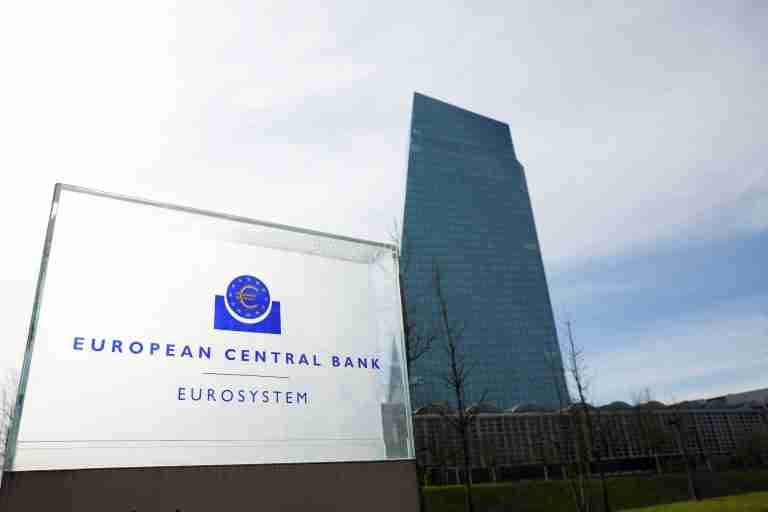
The dollar’s early dominance of stablecoins gives the U.S. an advantage that could ultimately push up borrowing costs for Europe, reduce the ECB’s autonomy and increase geopolitical dependency on the U.S., an ECB blog post argued on Monday.

Stablecoins, crypto assets pegged to a currency such as the dollar, have gained popularity in recent years and got a big boost earlier this month when U.S. President Donald Trump signed a law to create a regulatory regime, aimed at cementing the dollar’s status as the global reserve currency.

“Such dominance of the U.S. dollar would provide the United States with strategic and economic advantages, allowing it to finance its debt more cheaply while exerting global influence,” ECB adviser Jürgen Schaaf said in a post that does not necessarily reflect the ECB’s own views.

“For Europe, this would mean higher financing costs relative to the United States, reduced monetary policy autonomy and geopolitical dependency,” he added.

If dollar-based stablecoins become widely used in the euro area, for payments, savings or settlement, the ECB’s control over monetary conditions could be weakened, Schaaf argued.

Dollar-pegged stablecoins issued by Tether and Circle have dominated the global market and the share of euro-denominated stablecoins remains marginal, with market capitalisation of less than 350 million euros, the blog post said.

Europe should thus act quickly, creating the digital version of its euro currency, a project, that is being held up by legislative delays, and should foster the creation of more euro-based stablecoins.

The EU should also foster the use of distributed ledger technology to speed up cheap cross-border payments, the blog argued.

“Finally, stronger global coordination on stablecoin regulation is pivotal,” the blog said. “If we forgo a common approach, we risk fuelling instability, regulatory arbitrage and global U.S. dollar dominance.”

Reporting by Balazs Koranyi, Editing by Louise Heavens

UK retail downturn stretches into 10th month, CBI says

A measure of expected sales for August rose to -31 from -49, the CBI said

International News via Reuters:

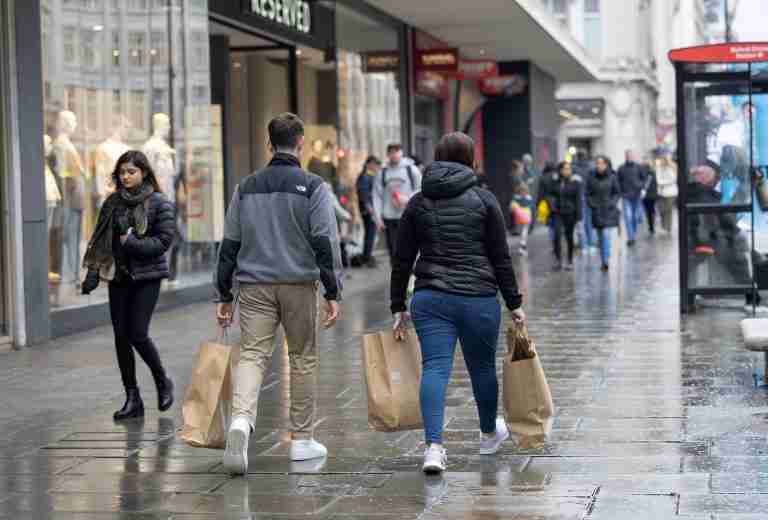
A downturn in British retail sales extended into its 10th month in July as rising prices weighed on consumers, although the pace of the fall was less severe than in June, a Confederation of British Industry survey showed on Monday.

The CBI’s monthly gauge of how retail sales compared with a year earlier stood at -34 this month, an improvement on June’s -46 but still a sign of weakness in demand.

A measure of expected sales for August rose to -31 from -49, the CBI said.

“Firms reported that elevated price pressures – driven by rising labour costs – and economic uncertainty continue to weigh on household demand, which has contributed to sales volumes falling since October 2024,” Martin Sartorius, principal economist at the CBI said.

Employers groups have said finance minister Rachel Reeves’ decision to increase the social security contributions they pay for their staff, as well as an increase in the minimum wage, is contributing to higher prices.

Weak demand was mirrored across the distribution sector, with wholesale and motor trades also seeing declining sales, Sartorius said.

Official data published last week showed British consumers shopped more in June after May’s big fall with hot weather helping to increase sales of drinks, clothes and car fuel.

However, in the three months to June, sales volumes rose by 0.2%, the weakest increase since the three months to February.

Many households are feeling the squeeze again from an inflation rate that rose to 3.6% in June.

While the CBI’s overall sales gauge remained in negative territory, online sales volume rose for a third month in a row, albeit marginally.

The data was collected between June 27 and July 15 and was based on responses from 56 retailers and 91 wholesalers.

Writing by William SchombergEditing by William James

UK stocks edge higher as investors assess US-EU deal

The internationally oriented FTSE 100 rose 0.1% as of 0926 GMT

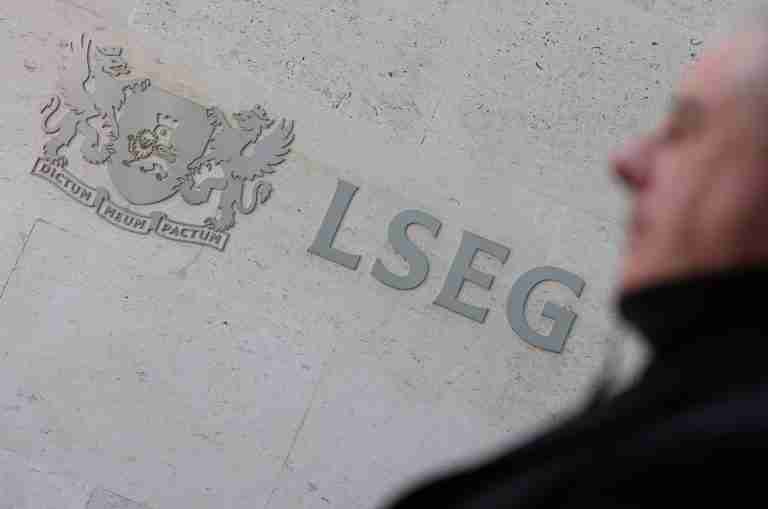
Signage is seen outside the LSEG (London Stock Exchange Group) headquarters in Paternoster Square, London, Britain, April 25, 2025. REUTERS/Toby Melville/File Photo

International News via Reuters:

London’s main stock indexes inched higher on Monday as investors assessed a trade deal between the United States and the European Union.

The internationally oriented FTSE 100 rose 0.1% as of 0926 GMT, while the midcap FTSE 250 index was up 0.3%.

The U.S. struck a framework trade agreement with the EU on Sunday, which imposes a 15% tariff on most EU goods and requires the bloc to invest around $600 billion in the U.S.

British Prime Minister Keir Starmer will meet U.S. President Donald Trump in Scotland on Monday for talks ranging from their recent bilateral trade deal to the worsening hunger crisis in Gaza.

Automobiles and parts stocks led the sectoral gains, up 1.1%. The real estate sector advanced 0.8%, with Rightmove up 2.3% and Segro rising 1.1%.

On the flip side, industrial miners led the sectoral declines, down 0.9%, tracking lower metal prices. [MET/L]

Miners Glencore lost 1.4% and Rio Tinto fell 1%.

In company news, GSK rose 1.3% after the drugmaker and China’s Jiangsu Hengrui Pharmaceuticals agreed on a $500 million deal to develop up to a dozen new medicines, including a promising candidate for a chronic lung condition.

Ocean Wilsons Holdings lost 10.6%, top loser on the mid-cap FTSE 250 index, after the investment holding company and Hansa Investment agreed to an all-share merger to create a diversified investment firm with more than 900 million pounds ($1.21 billion) in net assets.

Meanwhile, the Bank of England is expected to slow the pace soon at which it shrinks its 558 billion-pound ($754 billion) holdings of government bonds, with economists hoping for some clarity next week on the central bank’s longer-term goals for the stockpile.

Traders are currently pricing in an 86.5% chance of a 25 basis point BoE cut on August 7, according to data compiled by LSEG.

Reporting by Sukriti Gupta in Bengaluru; Editing by Shinjini Ganguli