Sunday, November 8, 2026
Home Blog Page 868

Wall Street, dollar firms ahead of a big week for market risk

All three indexes were modestly green in early trading, and were on course for weekly gains

International News via Reuters:

Wall Street and the dollar firmed on Friday as investors girded themselves for the week ahead, which includes a Federal Reserve policy meeting, crucial corporate results and U.S. President Donald Trump’s August 1 deadline for negotiating trade deals. 

“Some deals will be done and talks will continue, and Trump may push out the deadline further,” said Tim Ghriskey, senior portfolio strategist at Ingalls & Snyder in New York. “Trump’s process is to shock and then be reasonable in terms of tariffs.”

All three indexes were modestly green in early trading, and were on course for weekly gains. 

Gold lost some shine, pressured by the dollar as healthy risk appetites lured investors away from the safe-haven metal.

With Trump’s negotiating deadline just a week away, the U.S. and its trading partners are scrambling to reach trade agreements, with European negotiators heartened by the deal with Japan announced on Tuesday.

Intel’s shares INTC.O dropped 8.8% after the chipmaker forecast steeper-than-expected quarterly losses and said it had halted or scrapped new factory projects in the U.S. and Europe.

More than a third of the companies in the S&P 500 have posted results, 80% of which have beaten estimates, according to LSEG data.

Analysts now expect year-on-year second-quarter earnings growth of 7.7%, compared with the 5.8% estimate as of July 1. 

Four members of the Magnificent 7 group of Artificial Intelligence-related megacap stocks – Amazon, Apple, Meta and Microsoft are on next week’s earnings docket, and market participants will scrutinize the companies’ conference calls for signs that AI expenditures are beginning to pay off and whether tariff-related uncertainties continue to weigh on forward guidance.

U.S. economic data released on Friday showed an unexpected decline in new orders for core capital goods, as companies hold back on big ticket purchases amid the fog of ongoing trade talks.

The Fed is expected to convene next week for its two-day monetary policy meeting, which is expected to culminate in a decision to let its federal funds target rate stand in the 4.25% to 4.50% range. The meeting comes at a moment in which Fed Chair Jerome Powell is facing criticism from Trump for not cutting rates.

“I don’t expect Powell to change what he does, nor should he,” Ghriskey added. “The idea of lower interest rates should scare us because Fed has had this huge job of bringing down inflation, and to ease rates at this point is clearly going to be inflationary.”

The Dow Jones Industrial Average rose 113.54 points, or 0.25%, to 44,806.30, the S&P 500 rose 16.19 points, or 0.26%, to 6,379.67 and the Nasdaq Composite rose 44.40 points, or 0.21%, to 21,102.36.

European shares gave back some of the previous session’s gains as market participants parsed mixed corporate earnings and awaited developments in the U.S.-EU trade negotiations. 

MSCI’s gauge of stocks across the globe  fell 1.01 points, or 0.11%, to 940.34.

The pan-European STOXX 600 index fell 0.29%, while Europe’s broad FTSEurofirst 300 index fell 5.34 points, or 0.24%.

Emerging market stocks  fell 10.36 points, or 0.82%, to 1,256.93. MSCI’s broadest index of Asia-Pacific shares outside Japan closed lower by 0.95%,  to 661.07, while Japan’s Nikkei  fell 370.11 points, or 0.88%, to 41,456.23.

U.S. Treasury yields drifted higher in a subdued trading as investors braced for a data-heavy week, updates on U.S. trade talks, and a Federal Reserve policy meeting.

The yield on benchmark U.S. 10-year notes rose 0.2 basis points to 4.41%, from 4.408% late on Thursday.

The 30-year bond yield  rose 0.5 basis points to 4.9543% from 4.949% late on Thursday.

The 2-year note yield, which typically moves in step with interest rate expectations for the Federal Reserve, fell 0.6 basis points to 3.919%, from 3.925% late on Thursday.

The dollar gained strength but remained on course for its biggest drop in a month as investors focused on tariff negotiations and central bank meetings on the calendar for next week. 

The dollar index, which measures the greenback against a basket of currencies including the yen and the euro, rose 0.28% to 97.72, with the euro down 0.2% at $1.173.

Against the Japanese yen, the dollar strengthened 0.4% to 147.57.

In cryptocurrencies, bitcoin fell 3.08% to $115,133.22. Ethereum declined 2.63% to $3,641.43.

Oil prices softened as investors mulled the global demand outlook and a potential supply increase from Venezuela.

U.S. crude fell 0.56% to $65.63 a barrel and Brent fell to $68.91 per barrel, down 0.39% on the day. [O/R]

Gold prices dropped in opposition to the firming dollar, amid growing optimism surrounding U.S.-EU trade talks.

Spot gold fell 0.93% to $3,336.52 an ounce. U.S. gold futures fell 0.85% to $3,342.50 an ounce.

Reporting by Stephen Culp; Additional Reporting by Kevin BucklandEditing by Marguerita Choy

U15 boys set for CONCACAF Championship challenge

Football: Team Bermuda to face regional rivals August 2nd to 10th in Aruba

Bermuda’s young footballing talent is preparing for a significant regional test at the 2025 CONCACAF Boys’ Under 15 Championship, running from August 2nd to 10th. This fifth edition features a record 38 CONCACAF nations, plus guest Saudi Arabia, across three host countries.

Matches will be split, with League A in Costa Rica, and Leagues B and C in Aruba and Curacao respectively. The format includes a group stage followed by direct elimination knockout rounds, with each league crowning a champion. Team placement is based on the CONCACAF Men’s Under 17 Ranking.

Bermuda, ranked 12th, has been drawn into League B, Group E. This sets up intriguing clashes against regional rivals Trinidad and Tobago, Barbados, and Antigua and Barbuda. This crucial platform offers Bermuda’s Under 15 squad invaluable international experience and a chance to test their mettle against competitive opposition.

Sarepta fails to win EU backing for muscle disorder gene therapy

The EU committee’s negative opinion for Elevidys is yet another major setback for the company

International News via Reuters:

Sarepta Therapeutics failed to win the European drug regulator’s backing for its muscle disorder gene therapy on Friday, as the company faces intense regulatory scrutiny after two recent patient deaths tied to the treatment.

Shares of the Cambridge, Massachusetts-based company slumped 11%. They have lost 88.8% so far this year.

The EU committee’s negative opinion for Elevidys is yet another major setback for the company, which was directed by the U.S. health regulator earlier this month to stop all shipments of the gene therapy — the only one approved by it for treating Duchenne muscular dystrophy (DMD).

Sarepta had already halted dosing in non-ambulatory patients, meaning those unable to walk independently, and later complied with the U.S. Food and Drug Administration’s request to pause all shipments, along with Roche — its partner outside the U.S.

“While we are disappointed by CHMP’s (Committee for Medicinal Products for Human Use) negative opinion, we understand the urgent need for continued dialogue and collaboration to bring transformative therapies to people with Duchenne,” said Sarepta’s research and development head, Louise Rodino-Klapac.

DMD is primarily seen in males, affecting 1 in 5,000 boys born worldwide. The average life expectancy for someone with the disorder is 22 years.

William Blair analyst Sami Corwin said the fall in Sarepta shares reflected the reduced revenue from potential future milestone and royalty payments from Roche.

“While we believe there is a possibility the pause on Elevidys shipments in the U.S. is lifted before year-end specifically for young and ambulatory patients… the uncertainty will continue to pressure stock.”

Roche said on Friday it would continue its dialogue with the European Medicines Agency to explore a potential path forward to make Elevidys available in the EU.

The benefit-risk profile remains positive in the ambulatory patients, the Swiss drugmaker said.

Sarepta said it continues to work with the FDA in the U.S. to address recent safety concerns related to Elevidys.

Reporting by Christy Santhosh in Bengaluru; Editing by Shilpi Majumdar

AXA wins $908 million UK court ruling against Santander over protection insurance

The dispute between AXA and Santander centred on PPI policies sold before 2005 by GE Capital Bank

International News via Reuters:

French insurer AXA won a London court ruling on Friday worth nearly 675 million pounds ($908 million) against Santander over the mis-selling of payment protection insurance more than two decades ago.

The dispute between AXA and Santander centred on PPI policies sold before 2005 by GE Capital Bank, formerly part of General Electric Co’s GE Capital and which was acquired by Santander in 2009.

AXA sued at London’s High Court in 2021 over losses related to over 650,000 individual customer complaints about PPI policies, one of Britain’s costliest retail financial scandals, with banks paying out around 40 billion pounds in compensation.

The insurer, which inherited liabilities for the policies in its 2015 acquisition of two Genworth units, paid out almost 500 million pounds in redress to consumers and over 70 million pounds relating to complaints, Judge Julia Dias said in Friday’s judgment.

Dias ruled that AXA “has a valid claim for an indemnity” against Santander Insurance Services UK Limited in relation to redress payments and ombudsman fees.

AXA’s lawyers at Quinn Emanuel said the ruling was worth around 675 million pounds, though an AXA spokesperson said it will “only be entitled to a minority of the final amount awarded by the court as Genworth has already reimbursed AXA for a substantial portion of the mis-selling losses”.

Genworth Financial said in a statement that it expected to receive approximately $750 million, depending on the applicable exchange rate.

A Santander spokesperson said in a statement: “We disagree with the outcome and are seeking to appeal.

“We do not expect the net impact of the judgment to be material for Santander given provisions already made and the potential legal actions available.

“No customers have suffered loss as a consequence of the claim brought by AXA France or the judgment, nor does it impact upon past redress paid to customers for PPI complaints.”

Reporting by Sam Tobin; Editing by Emelia Sithole-Matarise

Tennis: Mixed results for U12 teams in Dominican Republic

Bermuda’s U12 boys team advances to the semis, girls bow out

Bermuda’s Under 12 Girls’ and Boys’ tennis teams continued their campaigns in the 2025 International Tennis Federation (ITF)/COTECC Sub Region 3 competition in the Dominican Republic, experiencing a day of mixed fortunes against strong regional opponents.

Girls’ Team Battles Hard in Loss to Dominican Republic

In their latest match, the Bermudian Girls’ squad went down 2-1 to the Dominican Republic.

Arianna Parra Delgado, playing in the No.1 Singles spot, faced a tough challenge, falling in straight sets, 6-0, 6-1, to Kyara Khayyat. In the No.2 Singles match, Chloe McBrearty also went down in straight sets, 6-0, 6-1, to Ana Paula Vega.

However, Bermuda refused to be swept. The doubles pairing of Lee Terciera and Chloe McBrearty delivered a thrilling comeback. After losing the first set 7-6 to Vega and Elaine Martinez, they fought back valiantly to level the match by taking the second set 6-4. The Bermudian duo then clinched the decisive third-set tie-breaker 10-5, securing a crucial point for their team.

Boys’ Team Sees Maldonado Advance to Semi-Finals

The Bermudian Boys’ squad, led by captain Evan Heyliger, shifted to a singles event format, with Manuel Maldonado making a strong run to the semi-finals.

Oliver Anderson started well, winning his first-round match in straight sets, 4-1, 4-1, against Michael Almeida from the Dominican Republic. However, Anderson’s journey ended in the Quarter-Finals, where he fell to Francisco Perez from Puerto Rico in a tough three-set tie-breaker, 4-1, 4-5, 10-4.

Manuel Maldonado delivered two commanding performances to reach the semi-finals. He defeated Derek Javier Diclo from the Dominican Republic in straight sets, 4-0, 4-0, in the first round. Maldonado then continued his strong form, winning his Quarter-Final match against Matias Rosario from Puerto Rico in straight sets, 4-0, 4-1.

Trystan Thompson also had a solid start, defeating Jose Ureña from the Dominican Republic in straight sets, 4-0, 4-0, in his first-round match. However, Thompson’s run was halted in the Quarter-Finals, where he went down in straight sets, 4-0, 4-2, to Jose Juan Betancourt from Puerto Rico.

The performances of both the Girls’ and Boys’ teams highlight their competitive spirit and the valuable international experience they are gaining in the Dominican Republic.

Waldron continues winning form at Hoosier Park

Harness Racing: Bermudian driver Kiwon Waldron back in the winner’s circle in Indiana

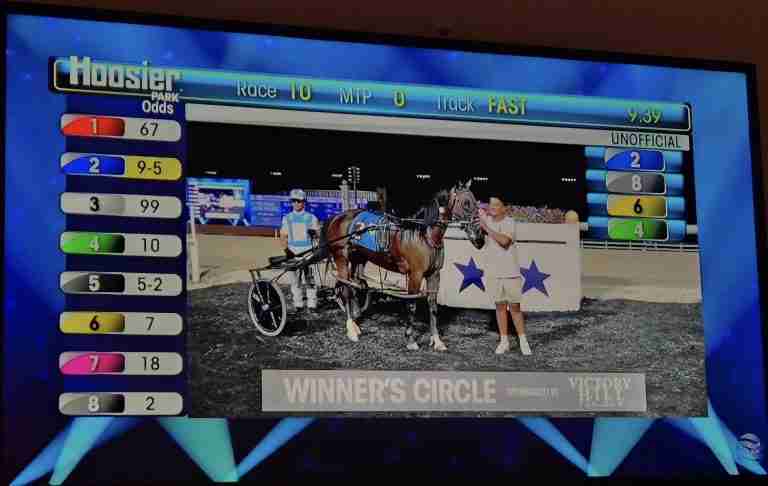
Bermudian harness racing driver Kiwon Waldron enjoyed another memorable night at Harrah’s Hoosier Park in Indiana, securing a win and a second-place finish across a busy three-race card.

The highlight came in RACE 10, a Pace Class event, where Waldron expertly guided Firing Onall Fours to victory, clocking a winning time of 1 minute, 54 and two-fifths seconds (1:54&2).

Waldron then competed in RACE 12 in the Trot Class, piloting First Responder to a strong second-place finish with a time of 1 minute, 57 and four-fifths seconds (1:57&4).

In his final outing of the night, RACE 14 in the Pace Class, Waldron and Friendly’s Scooter finished seventh, stopping the clock in 1 minute, 56 and two-fifths seconds (1:56&2).

Waldron’s win and consistent top placings across both Pace and Trot disciplines underscore his growing form and skill on the competitive Indiana circuit.

Nahki Wells disappointed about Bristol City departure

Football: Bermudian international never afforded opportunity to extend his contract at Ashton Gate

Bermudian international striker Nahki Wells has revealed his deep disappointment regarding his recent exit from Bristol City, stating he was never afforded an opportunity to extend his stay at Ashton Gate. Wells left the club this summer upon the expiry of his contract.

In an interview with the One Stream in Bristol podcast, Wells, who spent five and a half years with the Robins, scoring 48 goals in 237 appearances, expressed his dismay. He explained that he had been led to believe a new offer would be forthcoming, only to be informed just days before pre-season that he was not needed.

Wells, who played under four different managers during his time at City, described the situation as “being stabbed in the heart,” clarifying that assumptions about his wage or contract length demands were inaccurate. He simply wasn’t given any option to remain at the club, a turn of events he never envisioned. His candid comments shed light on an upsetting summer for the experienced forward.

AstraZeneca’s eco-friendly version of smoker’s lung inhaler gets EU panel backing

The inhaler, with an older propellant, is already approved in Europe for the treatment of adults with chronic obstructive pulmonary disease

International News via Reuters:

A panel of the European medicines regulator has recommended approving an eco-friendly version of AstraZeneca’s inhaler for the treatment of a chronic lung condition, the drugmaker said on Friday.

The European Medicines Agency’s Committee for Medicinal Products for Human Use has backed the use of a new type of a pressurised gas in the company’s triple-drug inhaler Trixeo Aerosphere.

In this version, Trixeo Aerosphere, also called Breztri Aerosphere in some regions, will use a next-generation, medical-grade propellant from Honeywell to deliver metered-doses to patients’ lungs as part of AstraZeneca’s green push.

The inhaler, with an older propellant, is already approved in Europe for the treatment of adults with chronic obstructive pulmonary disease, commonly referred to “smoker’s lung” as the disease typically affects cigarette smokers. But it can also be caused by air pollution and related occupational hazards.

Trixeo Aerosphere’s eco-friendly version was approved by British regulators in May, marking the world’s first, and is currently under review in other countries, including China.

CHMP’s recommendation for European Union’s approval is based on the results from trials, which showed the latest propellant was comparable to the current one in delivering doses, without any new safety risks.

“CHMP’s positive opinion of Trixeo Aerosphere with the next-generation propellant allows us to address the needs of both patients and the planet,” AstraZeneca executive Ruud Dobber said.

Honeywell’s new propellant offers up to 99.9% lower global warming potential compared to those currently used, leaving a lower carbon footprint.

If formally approved by the European Commission, which has the final authority, Trixeo Aerosphere would be the first in the EU to use the new delivery mechanism. The EC typically follows the advise of the EMA, but is not bound to do so.

The inhaler made $978 million in revenue for AstraZeneca in 2024. Rival therapies for COPD include Sanofi-Regeneron’s Dupixent, GSK’s Trelegy Ellipta and Verona Pharma’s Ohtuvayre.

AstraZeneca said it would now begin to transition its Trixeo supply to the new propellant in Europe, based on CHMP’s backing.

Reporting by Pushkala Aripaka and Unnamalai L in Bengaluru; Editing by Shilpi Majumdar

Euro zone companies warn of slowing economy, China competition, ECB poll shows

The ECB left interest rates unchanged on Thursday

International News via Reuters:

Euro zone companies are facing a slowing economy and increased competition from China as U.S. tariffs dent confidence and force rivals to seek new markets, a European Central Bank poll showed on Friday.

The ECB left interest rates unchanged on Thursday and offered a modestly upbeat assessment of the euro zone economy, raising doubts among investors about further policy easing even as U.S. tariff threats cloud the outlook.

But an ECB survey of 72 large companies operating in the euro area pointed to a slowdown in the manufacturing and services sectors, resulting in a more subdued outlook for employment and prices.

The ECB contacted the companies between June 23 and July 2.

“Contacts reported a slowdown in activity in recent months as tariffs, geopolitical tensions and the resulting uncertainty dented business and consumer confidence,” the ECB said. “The feedback from contacts was consistent with very modest growth in both the second and third quarters.”

The companies contacted by the ECB viewed U.S. tariffs – the extent of which is currently being negotiated – as a negative for growth and said competition from Chinese goods was playing an “increasing role”.

“The downward pressure on both activity and prices reflected reduced demand, in part caused by trade diversion from Asia (and China in particular) as exporters from the region sought alternatives to the U.S. market,” the ECB said.

This had mostly affected intermediate goods so far and had “little to no impact on final consumer prices,” but it was expected to broaden in the coming months and quarters.

“By contrast, contacts in the retail and consumer services sectors reported minimal, if any, impact on their activity or prices to date, and did not anticipate much impact in the near future,” the ECB added.

Wage growth was expected to slow from the 4.5% pace recorded last year, but by less than in the previous survey. Companies now forecast pay rising by 3.3% this year and by 2.8% in 2026.

Reporting by Francesco Canepa; Editing by Jamie Freed

Britain, Australia to deepen AUKUS commitment, economic ties

The new treaty will underpin submarine programmes for 50 years

International News via Reuters:

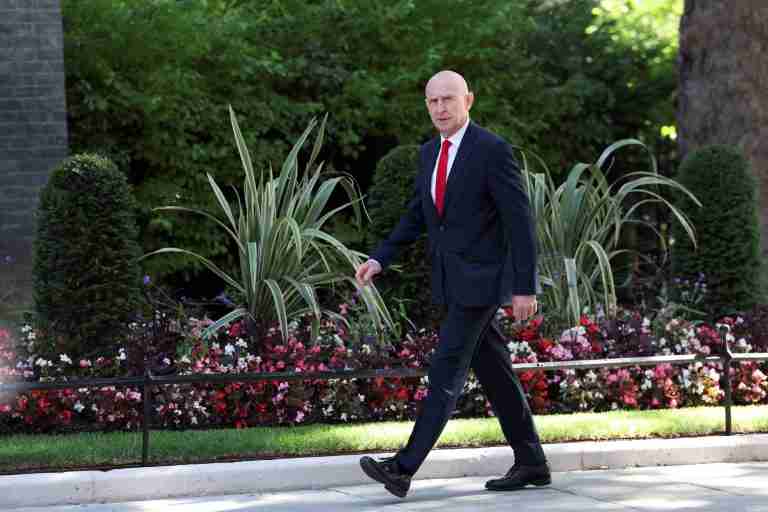
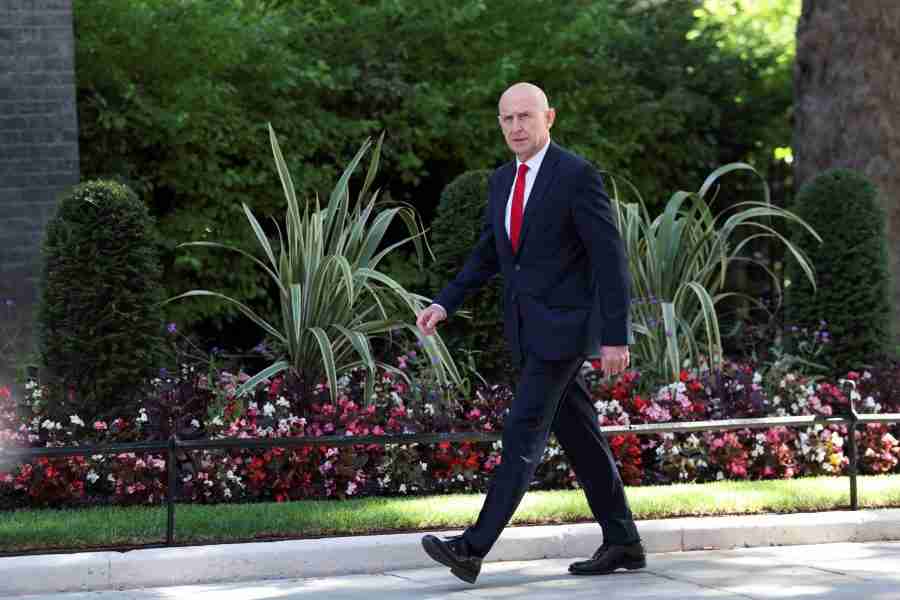
Britain’s commitment to Australia is “absolute”, Defence Secretary John Healey said on Friday as both nations’ defence and foreign ministers held talks in Sydney on issues such as deepening commitment to the AUKUS nuclear submarine partnership.

Healey and British Foreign Secretary David Lammy were met by Prime Minister Anthony Albanese in Sydney ahead of talks focused on boosting trade ties and advancing the AUKUS partnership to build a new class of nuclear-powered submarine.

U.S. President Donald Trump’s administration is reviewing the three-way deal struck in 2021, before he returned to power, and has pressed Australia to increase defence spending to counter China’s military build-up in the Indo-Pacific region.

Defence Minister Richard Marles said a treaty to be signed with Britain on submarine production on Saturday was their most significant since Australia’s self-governing federation in 1901.

The new treaty will underpin submarine programmes for 50 years, creating tens of thousands of jobs, and is expected to be worth up to 20 billion pounds ($27 billion) to Britain in exports over the next 25 years, its defence ministry said.

It will also see increased port visits to Western Australia by Britain’s Astute-class nuclear submarines.

“Our UK commitment to Australia is absolute,” Healey said, adding that the militaries of the two countries were deepening ties to tackle growing uncertainty and threats.

A joint statement after the meeting said Britain and Australia “reaffirmed that the security, resilience and prosperity of the Indo-Pacific and Euro-Atlantic regions are interconnected”, and deeper Australian-British engagement would shape a favourable strategic balance in the Indo-Pacific.

The treaty with Britain is “a shot in the arm for AUKUS”, said Michael Fullilove, executive director of the Lowy Institute think-thank in Sydney. “Support for AUKUS from the UK is particularly important at this moment,” he told Reuters.

“Australia’s relationship with the Trump administration is thin, so our ability to influence U.S. policies on important issues for us, including the AUKUS review, is limited.”

Healey told reporters he expected the Pentagon’s review of AUKUS to underline its benefit for the United States.

“The AUKUS partnership is one that does not cost the U.S. taxpayer any more. Indeed we are putting more in, Australia and the UK,” he said.

After their talks, the ministers are set to travel to Melbourne and the northern garrison city of Darwin, where the British aircraft carrier HMS Prince of Wales has arrived for the Talisman Sabre war games.

As many as 40,000 troops from 19 countries are taking part in the exercises held from July 13 to August 4, which Australia’s military has said are a rehearsal of joint war fighting that contributes to stability in the Indo-Pacific.

Britain has significantly increased its participation in the exercise co-hosted by Australia and the United States, with 3,000 troops joining in.

“While those aiding Russia, providing drones, supplying technology, supplying troops to the front line may be focused on Ukraine today, they could turn their sights to the Indo-Pacific next,” Healey said.

The joint statement criticised Chinese companies for supplying components to Russia’s war effort in Ukraine, and condemned North Korea’s supply of munitions and troops to Russia.

Australia agreed to extend its contribution to training Ukraine forces in Britain.

Foreign Minister Penny Wong said the nations had committed to cooperate on critical minerals and cyber security in the Pacific.

They would also collaborate on protecting gender equality internationally, “countering rollback of rights”, the statement said. Australia has said gender equality will become a key part of its foreign policy and aid programmes, after the United States overhauled its international assistance.

Reporting by Kirsty Needham in Sydney and Sachin Ravikumar; Editing by Lincoln Feast and Clarence Fernandez

UK equities slip as investors assess mixed earnings, economic data

A survey showed consumer confidence dipped this month

International News via Reuters:

London’s main stock indexes slipped on Friday as investors assessed a mixed bag of corporate earnings and awaited updates on EU-U.S. trade talks.

The internationally oriented FTSE 100 fell 0.3% as of 0939 GMT, pulling back from its all-time peak reached on Thursday, but was on track to register its fifth straight weekly gain. The midcap FTSE 250 index also lost 0.3%.

Data showed British retail sales rose by 0.9% in June, a partial rebound from May’s 2.8% plunge which was the biggest fall since December 2023.

A survey showed consumer confidence dipped this month ahead of possible tax increases later this year and households added to their savings.

Construction and materials stocks led the sectoral decline, falling 1.8%, dragged down by Marshalls, which tumbled 21.6%, on downbeat full-year adjusted pre-tax profit forecast.

Precious metal miners lost 1.7%, tracking a fall in gold prices. Hochschild Mining fell 2.8%, Endeavour Mining lost 1.3%, and Fresnillo down 2.2%. Automobiles rose 0.7%.

In corporate updates, NatWest rose 1.9% after the lender said its profit increased by 18% in the first half and the company announced a new share buyback worth 750 million pounds ($1.01 billion).

Wizz Air jumped 8.8% after Barclays upgraded the budget carrier to “overweight”.

Close Brothers surged 8.6% after announcing the sale of its execution services and securities business, Winterflood, to Marex for 103.9 million pounds.

On the flip side, Rightmove fell 1.2% after warning it expects sales growth in the second half of 2025 to be lower than the first half’s 10%.

Jupiter Fund Management fell 5.1% after the wealth manager reported lower half‑yearly pre‑tax profit.

Investors await to see whether the European Union can reach a trade deal with the U.S. before U.S. President Donald Trump’s August 1 deadline.

Meanwhile, British Prime Minister Keir Starmer will lobby Trump to accelerate a final deal to cut tariffs on British steel, the Financial Times reported.

Reporting by Sukriti Gupta; Editing by Shailesh Kuber

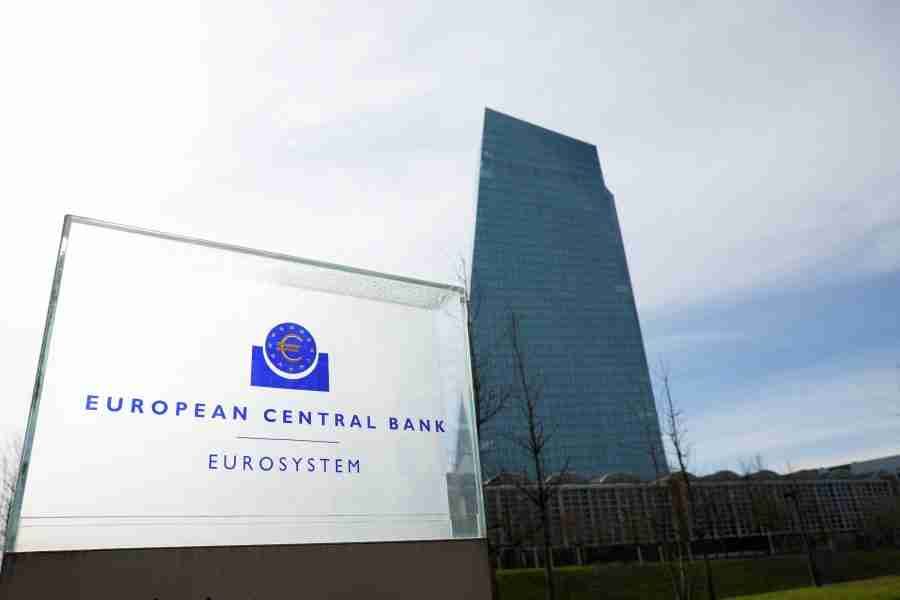
ECB picks new top adviser for Lagarde

The Belgian economist would now become Lagarde’s principal counsellor and the coordinator of the counsel to the ECB’s Executive Board

International News via Reuters:

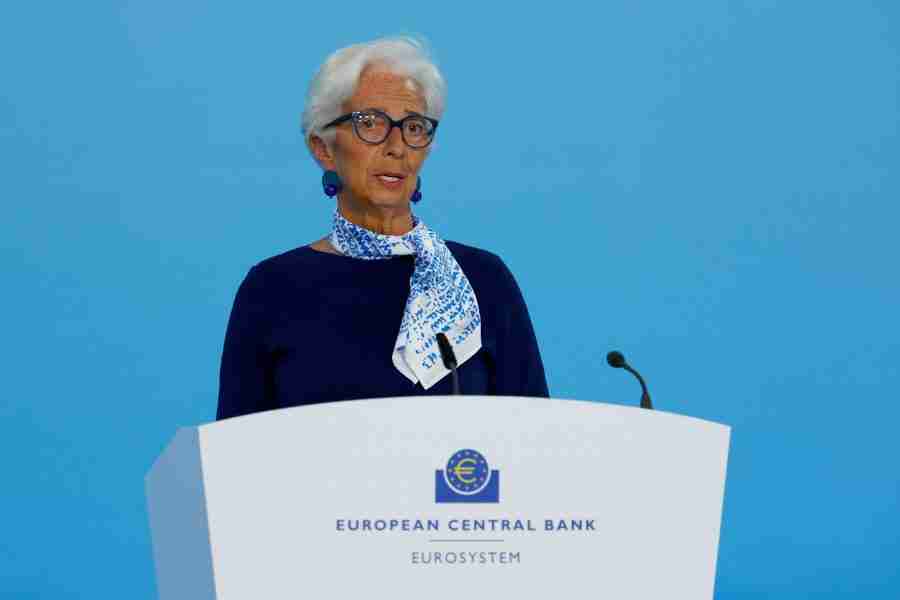
The European Central Bank said on Friday it had picked Isabel Vansteenkiste as President Christine Lagarde’s new top adviser, replacing Roland Straub who would take up a new role at the ECB.

Vansteenkiste, currently director general for the ECB’s international and European relations, rose to prominence during the debt crisis of 2010-12, when she represented the central bank in the so called troika of institutions that bailed out Portugal, among other countries.

The Belgian economist would now become Lagarde’s principal counsellor and the coordinator of the counsel to the ECB’s Executive Board, a role that Straub had occupied since 2017.

The German economist was now set to become the deputy director general of the ECB’s market operations. Both appointments would become effective on 15 September, the ECB said.

Reporting By Francesco Canepa