Police issue warning after spate of road accidents at the weekend
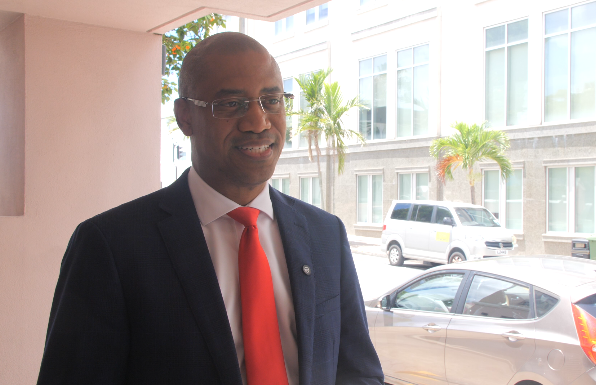
Supt. Glasford: “One moment of inattention or poor judgement can have lifelong consequences.” File photo
Statement by Superintendent Arthur Glasford, the officer in charge of the Roads Policing Unit:
The Bermuda Police Service (BPS) is once again urging all road users to exercise greater care and caution when travelling on our island’s roads. This comes following a concerning number of serious road traffic collisions over the past weekend. Speeding, impaired driving, and distracted driving, particularly the use of mobile phones, continue to be key contributing factors to collisions that result in injury or worse. These behaviours put not only the driver at risk, but also passengers, pedestrians, cyclists, and other motorists. With schools currently on summer break, and an increase in tourist arrivals, our roads are seeing much more activity. Visitors unfamiliar with our traffic regulations along with children traveling to summer camps, heading to the beach or cycling through our neighbourhoods are especially vulnerable. Motorists are urged to bear this this in mind and to remain alert and patient. We are also concerned about the issue of speeding in the City of Hamilton. This creates a risk in this high pedestrian area for residents and visitors alike. As a community, we must all do our part to ensure the safety of everyone on our roads. That means: – Never drive while impaired by alcohol or drugs – Do not use mobile phones or other distractions while driving – Obey the speed limit and adjust your speed to suit road conditions – Remain vigilant, especially in residential areas, near parks, beaches and schools.
The BPS will continue its enforcement efforts to promote road safety, but we urge the public to take personal responsibility for their actions behind the wheel. One moment of inattention or poor judgment can have lifelong consequences. Let’s work together to make Bermuda’s roads safer for all.
The Swiss National Bank’s June decision to cut its benchmark rate to zero took the country’s borrowing costs to the lowest level among major economies
International News via Reuters:
Banks in Switzerland will be searching for other ways to squeeze borrowers as their lending margins are hit by the central bank’s introduction of zero rates, analysts say, suggesting banking services and some types of credit may soon get costlier.
The Swiss National Bank’s June decision to cut its benchmark rate to zero took the country’s borrowing costs to the lowest level among major economies – far lower than the neighbouring European Central Bank’s key 2.0% deposit rate, for example.
Following the SNB’s two rate cuts this year, banks may see their net interest income fall by about 660 million Swiss francs ($830 million) this year, Daniel Geissmann from banking consultancy zeb estimates. Banks made roughly 20 billion francs from this business in 2024.
“Zero interest rates are the worst-case scenario for banks,” Geissmann said. “The banks lose because they can’t pass on the rate cut to deposits.”
When interest rates were last around 0% between 2011 and 2015, Swiss banks’ net interest rate margin fell from 1.4% to 1.1%, hitting profits, SNB data show.
Geissmann estimated banks lost out on nearly 4 billion francs between 2011 and 2014, but noted the effect would likely be less pronounced this time because lenders are starting from a lower margin level.
Reluctant to pass the cost on to depositors via sub-zero rates, if banks want to protect their profits they must make up for the missing revenues elsewhere.
Martin Hess, chief economist of the Swiss Bankers Association (SBA), said credit could become more expensive as banks have to rely on costlier sources of funding such as capital market instruments instead of deposits.
“Ultimately, this will be passed on to the real economy and customers,” he said, pointing to higher mortgage costs.
PROPERTY
Ultra-low interest rates tend to fuel demand for property, with the 2011 to 2015 period seeing house prices jump by 15%, triple the rate in 2000-2005, SNB data show.
“This increased risks in the property market of overvaluations and a correction, although it didn’t happen last time,” said GianLuigi Mandruzzato, an economist at EFG Bank.
“These risks could emerge again.”
It was also challenging for insurers and pension funds, which found it hard to generate returns to cover their commitments as yields from bond investments plunged, he noted.
UBS economist Maxime Botteron said that banks may also become increasingly reluctant to lend if the yield curve flattened further or inverted with rates at zero.
The stock market is also not immune to the impact of the SNB’s zero rates. With official rates well below those of other central banks in Europe and North America, shares of Switzerland’s main listed banks have already begun to underperform those of their rivals.
Shares of UBS, which faces tougher capital rules following its 2023 takeover of Credit Suisse, are up just 2.2% in 2025, while Julius Baer’s shares are down 6.7% as new management seeks to draw a line under a recent run of setbacks.
The Stoxx European Banks Index, by contrast, has risen 29.3% this year, highlighting the Swiss underperformance.
Savings and loans banks are likely to be most affected by the erosion of lending margins.
Banks that primarily collect deposits and issue mortgages such as Raiffeisen and Valiant generate more than 70% of their revenue from their interest business, company data show.
Less affected are outright wealth and asset managers like Julius Baer and Vontobel, which derive only around 10% from interest income. Diversified lenders like UBS at about 15% and ZKB with 54% lie in between.
Vontobel banking analyst Andreas Venditti said that how hard banks are hit by zero rates will ultimately depend on how long those rates stay in place.
“The problem gets worse if you stay at zero for a longer period of time,” he said. “Interest margins in Europe and especially in the U.S. are much higher.”
($1 = 0.7966 Swiss francs)
Reporting by Oliver Hirt, Ariane Luthi and John Revill; Additional reporting by Balazs Koranyi in Frankfurt; Writing by John Revill; Editing by Dave Graham and Hugh Lawson
Higher crude imports by China and expectations around U.S. President Donald Trump’s announcement on Russia are supporting prices
International News via Reuters:
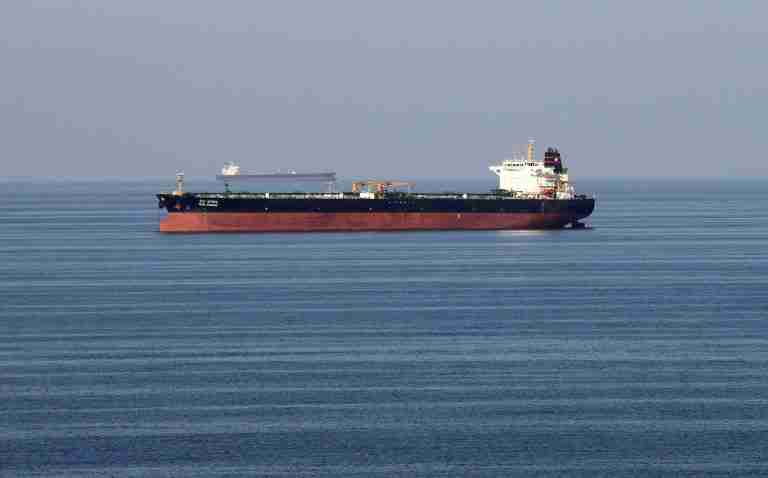
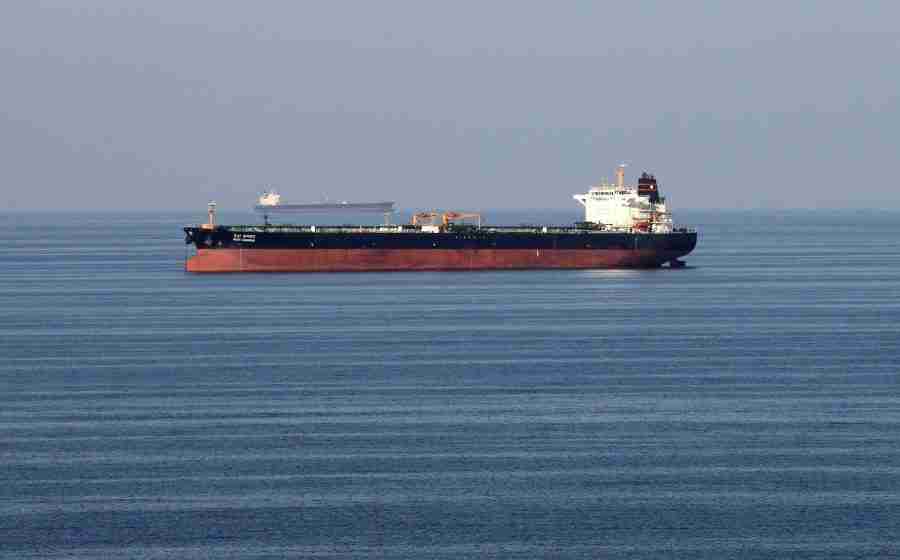
Oil prices steadied on Monday, holding close to their highest level in three weeks, as investors eyed further U.S. sanctions on Russia that may affect global supplies, while tariff uncertainty weighed.
Brent crude futures rose 16 cents, or 0.2%, to $70.52 a barrel by 1326 GMT, while U.S. West Texas Intermediate crude futures climbed 12 cents, also 0.2%, to $68.57.
Higher crude imports by China and expectations around U.S. President Donald Trump’s announcement on Russia are supporting prices, UBS analyst Giovanni Staunovo said.
“There is still a perceived tightness in the market, with most of the inventory build in China and on ships, and not in key locations,” he said.
Russia’s seaborne oil product exports in June were down 3.4% from May at 8.98 million metric tons, data from industry sources and Reuters calculations showed.
Trump said on Sunday that he will send Patriot air defence missiles to Ukraine. He is due to make a “major statement” on Russia on Monday, having expressed his frustration with Russian President Vladimir Putin due to the lack of progress in ending the war in Ukraine.
A bipartisan U.S. bill that would hit Russia with sanctions gained momentum last week in Congress. European Union envoys, meanwhile, are on the verge of agreeing an 18th package of sanctions against Russia that would include a lower oil price cap.
China’s June oil imports increased 7.4% on the year to 12.14 million barrels per day, the highest since August 2023, according to customs data released on Monday.
Last week, Brent rose 3%, while WTI had a weekly gain of around 2.2%, after the International Energy Agency said the global oil market may be tighter than it appears.
Investors are also eyeing the outcome of U.S. tariff talks with key trading partners.
The European Union and South Korea said on Monday they were working on trade deals with the U.S. that would soften the blow from looming tariffs as Washington threatens to impose hefty duties from August 1.
EU member states find Trump’s tariff threat “absolutely unacceptable”, Danish Foreign Minister Lars Lokke Rasmussen said on Monday during a joint press conference with EU’s Trade Chief Maros Sefcovic in Brussels.
Additional reporting by Florence Tan in Singapore, Sam Li in Beijing and Ahmad Ghaddar in London; Editing by Jamie Freed, Kate Mayberry, Susan Fenton and Joe Bavier
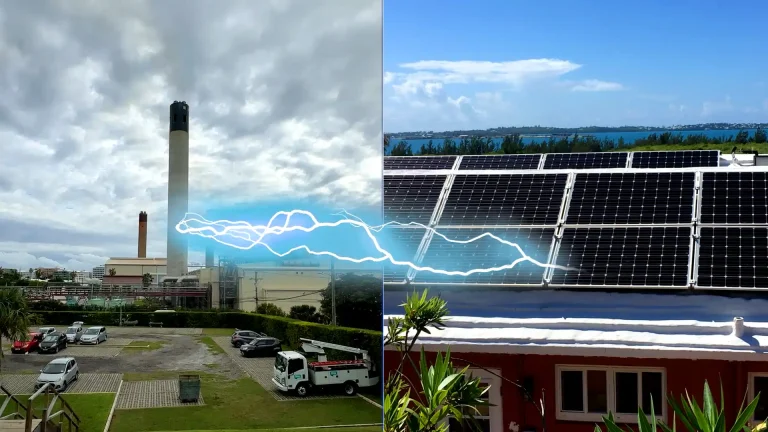
At a recent presentation, BELCO representatives showed how battery storage can stabilise renewable energy on the grid
The end of the road to net-zero, with Bermuda fully powered by renewables, is an ideal destination that many want to reach.
…but it’s not a straight or smooth journey.
For one, renewable energy sources are unreliable and inconsistent when compared to fossil fuels.
At the recent BELCO ‘Energy Equation’ presentation, Managing Director Shelly Leman said batteries are critical for present and future grid stability due to the “volatility that renewables bring”.
Furthermore, Dr Jeffrey Steynor, Director of Energy Transition, provided a recent example from the local energy grid to show how battery storage is a vital for a renewable energy future.
Jarion Richardson, the leader of the Opposition One Bermuda Alliance was not satisfied with the government’s agreement to public consultation on the matter
Jarion Richardson, leader of the OBA. Photo: Bermuda Broadcasting
As Government appears to edge closer towards full membership of Caricom, the Opposition today raised the question of whether the public will have its say.
The OBA has called for a referendum on the subject.
Premier and Finance Minister David Burt recounted his attendance at the 49th Regular meeting of the conference of CARICOM heads of government this week in Jamaica reaffirming the country’s interest in regional integration.
Jarion Richardson, Opposition Leader of the One Bermuda Alliance asked the Premier on whether a public vote and parliamentary approval would be sought before a decision is taken on CARICOM membership.
He says he’s not satisfied with the Premier’s response.
More than half secured competitive summer internships with leading ILS and re/insurance organisations
ILS Bermuda 2024/25 student cohort graduate at Bermuda College, Image supplied.
Press release:
ILS Bermuda is proud to announce that thirteen Bermuda College students have successfully completed the 2024–2025 ILS Bermuda College Programme, earning the programme’s first-ever Completion Certificate. The initiative, which aims to expose students to Bermuda’s globally respected insurance, reinsurance and Insurance-Linked Securities (ILS) sectors, combines real-world experience, professional development, and industry mentorship to help young students forge pathways into the island’s risk industry.
The certificate recognises outstanding achievement in insurance education and career readiness. Students recognised in this year’s cohort are: Chelsea Almeida, Aydin Arouzi, Jayden Coleman, Diamond DeShield, Natalia Dill, I’Aura Golding, Zynésia Nisbett, Malachi O’Leary, Lucien Penacho, Deidré Smith, Kaitelyn Smith, Skyah Walker, and Jaden-Alex Walrond.
To earn the Certificate of Completion, students undertook a six-module programme that included training in business etiquette and professional conduct, one-on-one mentorship, participation at the ILS Convergence conference, development of resumés, LinkedIn profiles and social media presence, interview preparation through mock interview sessions, and strategies for applying to scholarships and industry internships.
Students also had the opportunity to take part in several Lunch and Learn sessions, which offered informal career discovery conversations with professionals from across the risk industry.
ILS Bermuda students at Convergence 2024. Image supplied.
In addition, seven students from the programme secured competitive summer internships with leading ILS and re/insurance organisations, including the Bermuda Monetary Authority, Hiscox ILS, Integral ILS, Marsh Management Services, and Price Forbes Re.
Student feedback has been overwhelmingly positive, with many describing the experience as transformative.
“The programme truly changed my life,” said Jaden-Alex Walrond. “It exposed me to a world I was never fully aware of. To anyone interested in (re)insurance, the ILS programme is a must, even if you don’t plan to work in ILS.”
Aydin Arouzi added, “It has given me a sense of purpose by helping me better understand what I want in both my career and my life.”
And Zynésia Nisbett shared, “This programme isn’t just about learning, it’s about being seen, supported, and given a seat at the table. If you’re unsure of your path or looking for something that will challenge and inspire you, ILS Bermuda’s Education Initiative will do exactly that. I’m walking away more confident, connected, and clear about my future.”
Since 2017, ILS Bermuda has partnered with Bermuda College to deliver this unique educational opportunity. The programme runs alongside students’ academic studies and is exclusively open to full-time or dual-enrollment Bermuda College students. It is designed and delivered entirely by a team of dedicated volunteers from across the ILS and re/insurance sectors.
“We believe in creating access, confidence and opportunity for Bermuda’s young people,” said Jo Stanton, Chair of ILS Bermuda. “Our education initiatives are built on real relationships, with students, with mentors, and with the firms that make up our industry. We’re immensely proud of this year’s cohort and grateful to the organisations who have once again stepped up to offer internships to the students.”
Looking ahead, ILS Bermuda is now accepting expressions of interest for the 2025–2026 ILS Bermuda College Programme and is calling on professionals across the sector to volunteer as mentors or mock interviewers. Industry organisations interested in hosting a student intern in summer 2026 are also encouraged to get in touch.
The preliminary report found no mechanical or maintenance faults
International News via Reuters:
The probe into last month’s crash of an Air India plane in Ahmedabad is far from over and it is unwise to jump to any premature conclusions, airline CEO Campbell Wilson said in an internal memo on Monday after the release of a preliminary report by investigators.
The memo, reviewed by Reuters, comes after the report depicted confusion in the cockpit shortly before the crash of the Boeing Dreamliner that killed 260 people. It said the plane’s engine fuel cutoff switches flipped almost simultaneously and starved the engines of fuel.
“The release of the preliminary report marked the point at which we, along with the world, began receiving additional details about what took place. Unsurprisingly, it provided both greater clarity and opened additional questions.” the memo said.
Wilson added: “The preliminary report identified no cause nor made any recommendations, so I urge everyone to avoid drawing premature conclusions as the investigation is far from over.”
The Boeing 787 Dreamliner bound for London from the Indian city of Ahmedabad began to lose thrust and sink shortly after takeoff, according to the report released by India’s Aircraft Accident Investigation Bureau (AAIB).
The memo said the preliminary report found no mechanical or maintenance faults and that all required maintenance had been carried out.
The preliminary report, released on Saturday, suggested no immediate action for Boeing or GE, whose engines were fitted on to the aircraft.
The AAIB, an office under India’s civil aviation ministry, is leading the probe into the crash, which killed all but one of the 242 people on board and 19 others on the ground.
Air India has come under heightened scrutiny on multiple fronts following the crash.
On July 4, the European Union Aviation Safety Agency said it would investigate budget unit Air India Express, after a Reuters report revealed the airline failed to promptly replace engine parts on an Airbus A320 as mandated, and falsified records to indicate compliance.
ALPA India, which represents Indian pilots at the Montreal-based International Federation of Air Line Pilots’ Associations, rejected the presumption of pilot error in the Ahmedabad crash and called for a “fair, fact-based inquiry.”
“The pilots body must now be made part of the probe, at least as observers,” ALPA India President Sam Thomas told Reuters on Sunday.
Reporting by Aditya Kalra in New Delhi, writing by Chandini Monnappa and Hritam Mukherjee in Bengaluru; Editing by Nivedita Bhattacharjee and Raju Gopalakrishnan
Industries such as mechanical engineering, electrical equipment and energy-intensive sectors like chemicals were among the hardest hit
International News via Reuters:
German exporters have lost significant ground in global markets since 2021 due mainly to a broad-based deterioration in the country’s competitiveness, the Bundesbank said on Monday.
According to the Bundesbank’s monthly report, more than three-quarters of Germany’s export market share losses between 2021 and 2023 resulted from worsening supply-side conditions that left domestic exporters less competitive internationally.
The report found that the decline was widespread across sectors and comparatively severe by international standards, signalling deep-rooted structural challenges for Europe’s largest economy.
Industries such as mechanical engineering, electrical equipment and energy-intensive sectors like chemicals were among the hardest hit, according to the report.
The study also pointed to the impact of rising energy prices and persistent supply chain disruptions, which weighed heavily on German exporters during the 2021-to-2023 period covered by the report.
The report called for urgent reforms to improve Germany’s business climate, including measures to boost incentives to work, reduce barriers for skilled migrants, cut red tape and enhance tax breaks for private investment.
The findings come after the German government unveiled a series of measures aimed at boosting investment and innovation, but analysts warn that more comprehensive reforms may be necessary to restore the country’s competitive edge on the world stage.
Reporting by Maria Martinez and Klaus Lauer, editing by Rachel More
The company said it expects peak annual sales for the drug to exceed $5 billion
International News via Reuters:
AstraZeneca said on Monday its experimental drug baxdrostat significantly lowered blood pressure in a late-stage trial of patients with treatment-resistant hypertension.
The news sent shares of the Anglo-Swedish drugmaker up by almost 2%.
The company said it expects peak annual sales for the drug to exceed $5 billion, driven by its use as a standalone therapy and in combination with Farxiga, its blockbuster treatment – one that generates $1 billion or more in annual sales – for type 2 diabetes, heart failure and chronic kidney disease.
Baxdrostat met the main and secondary goals of the study, showing a statistically significant and clinically meaningful reduction in systolic blood pressure at 12 weeks when added to standard treatment at two doses, and compared with placebo, AstraZeneca said.
It acquired baxdrostat through its 2023 purchase of CinCor Pharma as part of efforts to expand its pipeline in heart and kidney disease.
The drug targets aldosterone, a hormone that raises blood pressure, offering a new approach distinct from older treatments like ACE inhibitors that do not address hormonal drivers, AstraZeneca says. High blood pressure affects more than 1 billion people worldwide, according to the World Health Organization.
AstraZeneca is testing baxdrostat in four indications, including chronic kidney disease and prevention of heart failure, in a clinical programme involving more than 20,000 patients.
Shares in London’s biggest listed company by market value were up 1.9% at 0834 GMT and among the top gainers on the FTSE 100 index in early trading.
Mineralys Therapeutics is developing a similar drug, lorundrostat, and expects to submit data to the U.S. Food and Drug Administration by the end of the year.
AstraZeneca said it will present full trial results at a medical conference in August but did not say when it will seek U.S. approval.
Its shares are flat this year to date though they have outperformed Europe’s benchmark healthcare index by about 5.5%, Barclays analysts said in a note on Monday.
Reporting by Pushkala Aripaka in Bengaluru and Maggie Fick in London, additional reporting by Raechel Thankam Job and Unnamalai L in Bengaluru; Editing by Janane Venkatraman, Nivedita Bhattacharjee and Susan Fenton
The EU said it would extend a suspension of countermeasures to U.S. tariffs until early August
International News via Reuters:
World shares ticked lower on Monday, with European shares slipping as the latest salvo of threats in the U.S. tariff wars kept investors on edge, although there were some hopes this would prove to be mostly bluster by President Donald Trump.
The pan-European STOXX 600 index was last down 0.3%. Other regional indexes also declined, barring the UK’s FTSE 100 .FTSE, which was up 0.4%. MSCI’s broadest index of world shares dipped 0.1%.
Trump on Saturday said he would impose a 30% tariff on most imports from the European Union and Mexico from August 1, even as they are locked in long negotiations.
The EU said it would extend a suspension of countermeasures to U.S. tariffs until early August and continue to press for a negotiated settlement, though Germany’s finance minister called for firm action if the levies went ahead.
German 10-year government bond yields briefly hit their highest since early April on Monday after settling back to 4.63%. Yields move inversely to price.
“To use the biggest cliché in the book, it continues to be a rollercoaster ride for all of us following the trade story, even if the market has increasingly overcome its queasiness and ensured it has been well stocked up on motion sickness tablets,” said Deutsche Bank strategist Jim Reid in a note to clients.
A rise in Japanese government bond yields also added to upward pressure on borrowing costs elsewhere, said Jens Peter Soerensen, chief analyst at Danske Bank. JGB yields surged as concerns grew that an upcoming election could pave the way for increased fiscal spending.
Chinese blue chips closed 0.1% higher as data showed annual export growth topped forecasts at 5.8% in June, even as exports to the U.S. fell almost 10%. Retail sales figures, industrial output and gross domestic product are due Tuesday.
S&P 500 futures and Nasdaq futures both eased 0.4%. Earnings season kicks off this week with the major banks leading the pack on Tuesday.
S&P companies are expected to have increased profits by 5.8% from the year-earlier period, down from an expectation of a 10.2% gain on April 1, according to LSEG IBES.
PRESSURING POWELL
In bond markets, Treasuries got a very marginal safety bid and 10-year yields held at 4.41%. Futures for the Federal Reserve funds rate edged higher as markets priced in a little more policy easing for next year.
While Fed Chair Jerome Powell has signalled a patient outlook on cuts, Trump is piling up political pressure for more aggressive easing.
White House economic adviser Kevin Hassett over the weekend warned Trump might have grounds to fire Powell because of renovation cost overruns at the Fed’s Washington headquarters.
Trump said on Sunday that it would be a great thing if Powell stepped down.
U.S. consumer prices data for June are due on Tuesday and could finally start to show early upward pressure from tariffs, though retailers still have pre-levy inventory to draw on and some companies are absorbing the costs into margins.
The impact on supply chain costs could show in producer price and import price figures this week, while a reading on retail sales will indicate how consumers are faring.
Among currencies, the euro dipped 0.1% to $1.1684, edging away from its recent four-year top of $1.1830. The dollar lost 0.1% on the yen to 147.29 while the dollar index was little changed at around 97.89.
The dollar rose 0.25% against the Mexican peso to around 18.67, with Mexican President Claudia Sheinbaum confident a trade deal could be reached before the August deadline.
Bitcoin crossed the $120,000 level for the first time to reach a top around $123,153.
In commodity markets, gold picked up a modest safe-haven bid and rose 0.1% to $3,359 an ounce. [GOL/]
Oil prices rose over 1% on speculation Trump could announce stiffer sanctions on Russia later on Monday, including levies on major customers buying Russian oil. [O/R]
Any move from Trump wishing to arm Ukrainians more vigorously will find enthusiastic support in Congress, said Christopher Smart, founder and a managing partner of consultancy firm, Arbroath Group.
“In a famously divided legislature, there is overwhelming bipartisan support for a bill that will deliver its own sharp escalation to the conflict,” said a research note by Smart sent Monday.
The legislation threatens 500% tariffs on countries that buy Russian oil, gas, uranium or other exports, said the letter.
Brent jumped 67 cents to $71.03 a barrel, while U.S. crude added 70 cents to $69.15 per barrel.
Reporting by Nell Mackenzie, Wayne Cole; Editing by Christopher Cushing
Tremors were felt in several small towns in eastern Indonesia, the agency said
International News via Reuters:
An earthquake of magnitude 6.7 struck off the coast of Indonesia’s Tanimbar Islands region on Monday, the country’s geophysics agency said, adding there was no tsunami potential.
The quake was at a depth of 98 km (60.89 miles), the agency said.
The German Research Centre for Geosciences (GFZ) reported that the quake was of 6.8 magnitude and at a depth of 10 km (6.21 miles).
Tremors were felt in several small towns in eastern Indonesia, the agency said.
There was no immediate reports of damage, said Indonesia’s disaster mitigation agency.
Indonesia straddles the so-called Pacific Ring of Fire, a highly seismically active zone, where different plates on the Earth’s crust meet and create a large number of earthquakes and volcanic activity.
Reporting by Gnaneshwar Rajan in Bengaluru and Ananda Teresia in Jakarta; Editing by Jacqueline Wong and David Stanway
The EU has so far held off on retaliatory measures to avoid a spiralling tit-for-tat escalation
International News via Reuters:
The European Union and South Korea said on Monday they were working on trade deals with U.S. President Donald Trump that would soften the blow from looming tariffs as Washington threatens to impose hefty duties from August 1.
Trump stepped up his trade war on Saturday, saying he would impose a 30% tariff on most imports from the EU and Mexico from next month, adding to similar warnings for other countries including Asian economic powerhouses Japan and South Korea.
White House Economic Adviser Kevin Hassett said on Sunday that countries’ trade deal offers so far have not satisfied Trump and “the tariffs are real” without improvements to their proposals.
“The president thinks that deals need to be better,” Hassett told ABC’s This Week program. “And to basically put a line in the sand, he sent these letters out to folks, and we’ll see how it works out.”
European Trade Commissioner Maros Sefcovic expressed optimism that Washington and the EU were approaching a positive outcome for both sides. He warned, however, that a 30% tariff would practically eliminate trade between the U.S. and the 27-nation bloc, which are currently each other’s largest trading partners.
“We continue to engage with the U.S. administration and prioritise a negotiated solution by the new deadline of August 1. I cannot imagine walking away without any effort,” Sefcovic said ahead a meeting with EU trade ministers in Brussels.
German Chancellor Friedrich Merz, meanwhile, issued a stark warning on Sunday regarding the impact of a tariff at that level on the EU’s largest economy.
“If that were to happen, we would have to postpone large parts of our economic policy efforts, because it would interfere with everything and hit the German export industry to the core,” Merz said.
The EU has so far held off on retaliatory measures to avoid a spiralling tit-for-tat escalation in the trade war while there remains a chance of negotiating an improved outcome.
But Italy’s Foreign Minister Antonio Tajani said the EU has already prepared a list of tariffs worth 21 billion euros ($24.5 billion) on U.S. goods if the two sides fail to reach a trade deal.
MARKETS’ MUTED REACTION
Since returning to the White House earlier this year, Trump has sought to use an array of tariffs to boost the U.S. economy, push companies to invest in the United States, and revitalise sectors including manufacturing.
His initial “Liberation Day” tariff announcement in April, which set a baseline tariff of 10% on all imports and higher duties on certain products or countries, raised fears of global supply chain disruptions, sending shockwaves through markets.
But subsequent U-turns and delays, including a 90-day pause on most duties aimed at allowing time for trade deal negotiations, have left investors largely inured to Trump’s chaotic policy roll-outs.
Stocks eased moderately on Monday, while the dollar gained little on the euro.
The impact on European spirits companies, many of which rely heavily on the U.S. market, was also mixed.
Shares in Diageo, whose U.S. business is driven by sales of Canadian whisky and Mexican tequila, rose 1% in early European trade. Rival Pernod Ricard, maker of Jameson Irish whiskey, saw its shares fall 1%, while cognac maker Remy Cointreau dropped 2.4%
SCRAMBLE FOR DEALS
The looming August 1 deadline has set off a scramble by governments around the world to seal trade agreements.
South Korea’s top trade envoy said on Monday it may be possible to strike an “in-principle” deal by the deadline and signalled that Seoul may be open to allowing the U.S. greater access to its agriculture markets, local media reported.
Minister for Trade Yeo Han-koo, who held high-level talks with U.S. officials last week, said South Korea was seeking to avoid “unfair” U.S. tariffs on sectors key to its industrial prowess that would undermine industrial cooperation with its main security ally and trading partner, media reports said.
“I believe it’s possible to reach an agreement in principle in the U.S. tariff negotiations, and then take some time to negotiate further,” the Newsis news agency quoted Yeo as telling local media reporters.
“Twenty days are not enough to come up with a perfect treaty that contains every detail,” he added.
South Korea is in a race to reach a compromise trade pact in the hope of avoiding a 25% tariff slapped on its exports, the same level faced by Japan.
Additional reporting by Milan Strahm, Cristina Carlevaro, David Lawder, John Revill, Andreas Rinke, Wayne Cole and Emma RumneyWriting by Keith WeirEditing by Joe Bavier
To provide the best experiences, we use technologies like cookies to store and/or access device information. Consenting to these technologies will allow us to process data such as browsing behavior or unique IDs on this site. Not consenting or withdrawing consent, may adversely affect certain features and functions.
Functional
Always active
The technical storage or access is strictly necessary for the legitimate purpose of enabling the use of a specific service explicitly requested by the subscriber or user, or for the sole purpose of carrying out the transmission of a communication over an electronic communications network.
Preferences
The technical storage or access is necessary for the legitimate purpose of storing preferences that are not requested by the subscriber or user.
Statistics
The technical storage or access that is used exclusively for statistical purposes.The technical storage or access that is used exclusively for anonymous statistical purposes. Without a subpoena, voluntary compliance on the part of your Internet Service Provider, or additional records from a third party, information stored or retrieved for this purpose alone cannot usually be used to identify you.
Marketing
The technical storage or access is required to create user profiles to send advertising, or to track the user on a website or across several websites for similar marketing purposes.