Wednesday, October 28, 2026
Home Blog Page 872

Dollar a touch higher, currency reaction muted as Trump’s deals 30% tariff threat to EU and Mexico

More significant moves were seen in cryptocurrencies

International News via Reuters:

The euro briefly hit a three-week low on Monday before partially recovering, while the dollar gained marginally after U.S. President Donald Trump threatened to impose a 30% tariff on imports from two of the largest U.S. trading partners from August 1.

Analysts pointed to the so-called TACO (Trump always chickens out) trade as keeping a cap on any bigger moves in forex markets.

More significant moves were seen in cryptocurrencies with bitcoin scaling a record high and surpassing the $120,000 mark, as investors bet on long-sought policy wins for the industry this week.

The world’s largest cryptocurrency last traded 2.9% higher at $122,549.70, while ether gained 1.5% to $3,039.48.

Trump on Saturday announced the latest tariffs in separate letters to European Commission President Ursula von der Leyen and Mexican President Claudia Sheinbaum that were posted on his Truth Social media site.

Both the European Union and Mexico described the tariffs as unfair and disruptive, while the EU said it would extend its suspension of countermeasures to U.S. tariffs until early August and continue to press for a negotiated settlement.

“If Trump actually manages to extract significant concessions from U.S. trading partners by threatening them with tariffs, this could be seen as positive for the dollar. This is especially true if the concessions involve trading partners lowering their tariffs on U.S. products,” wrote Commerzbank analysts in a morning note.

However they also flagged a downside to the U.S. dollar being the high uncertainty facing U.S. companies as they face potential tariffs at any time, and the impact on their willingness to invest.

Reaction in the currency market to Trump’s latest tariff threats was largely muted, though the euro did slip to a roughly three-week low early in the session.

The single currency later regained some ground and last traded 0.1% lower at $1.168175.

Elsewhere, sterling was down 0.1% to $1.3475, while the Japanese yen rose marginally to 147.33 per dollar.

Against the Mexican peso, the dollar rose 0.3% to 18.683.

Investors have grown increasingly desensitised to Trump’s slew of tariff threats, with his latest upheaval in the global trade landscape doing little to prevent U.S. stocks from scaling record highs and offering just a slight boost to the dollar.

“It seems like financial markets have become insensitive to President Trump’s tariff threats now, after so many of them in the past few months,” said Carol Kong, a currency strategist at Commonwealth Bank of Australia.

“Judging by the limited market reaction, markets might think that the latest threat from Trump is actually a manoeuvre to extract more concessions.”

In other currencies, the Australian dollar fell 0.11% to $0.65665, while the New Zealand dollar slid 0.36% to $0.5988.

Outside of tariff news, Trump on Sunday said that it would be a “great thing” if Federal Reserve Chair Jerome Powell stepped down, again threatening to undermine the central bank’s independence as he called for interest rates to be lowered.

Traders could get a better clue on the future path for U.S. rates when inflation data for June comes due on Tuesday, where expectations are for U.S. consumer prices to have picked up slightly last month.

Markets are currently pricing in just over 50 basis points worth of Fed easing by December.

In Asia, data on Monday showed China’s exports regained momentum in June while imports rebounded, as exporters rushed out shipments to capitalise on a fragile tariff truce between Beijing and Washington ahead Trump’s August deal deadline.

Reporting by Rae Wee; Editing by Christopher Cushing and Ros Russell
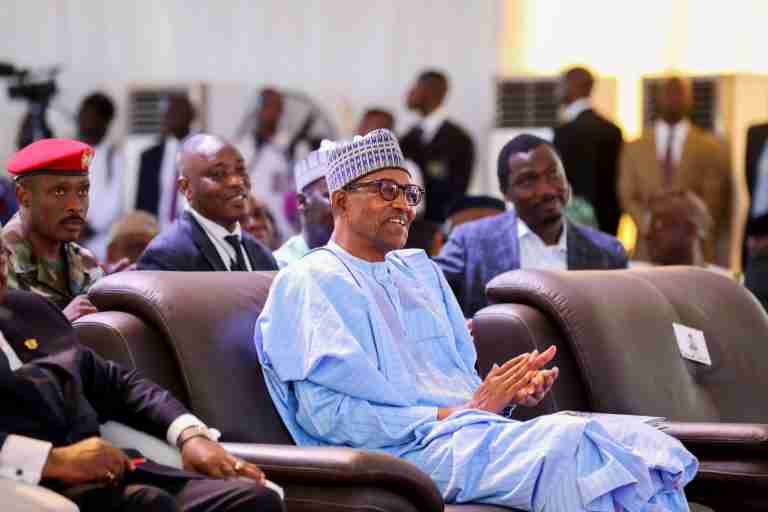
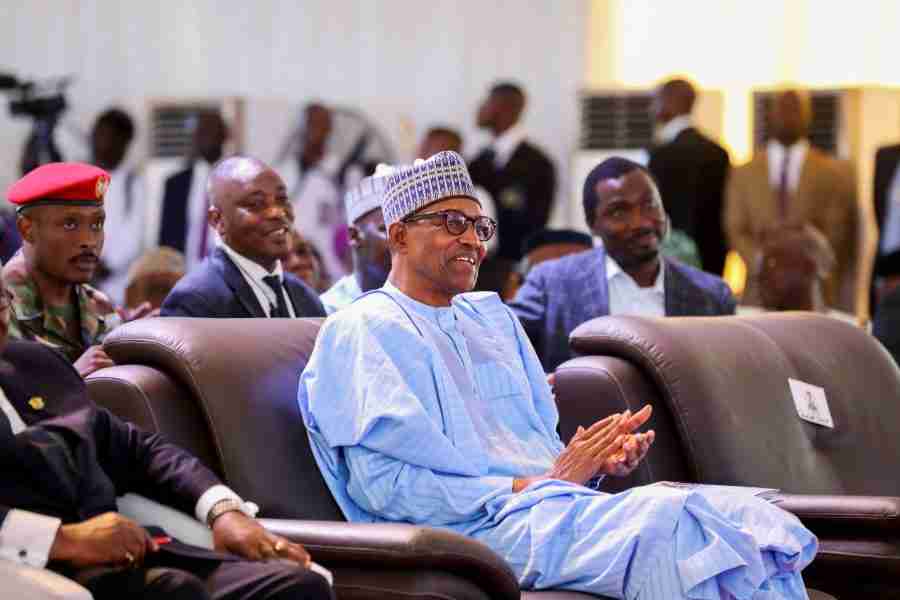
Nigeria’s former President Muhammadu Buhari dies in London

Buhari, 82, earned a devoted following for his brand of anti-corruption conviction politics

International News via Reuters:

Nigeria’s former President Muhammadu Buhari, who led Africa’s most populous country from 2015-23 and was the first Nigerian president to oust an incumbent through the ballot box, died in London on Sunday, a presidential spokesperson said.

“President Buhari died today in London at about 4:30 p.m. (1530 GMT), following a prolonged illness,” President Bola Tinubu’s spokesperson said in a post on X.

Buhari, 82, who first led the country as a military ruler after a coup in the 1980s, earned a devoted following for his brand of anti-corruption conviction politics.

He referred to himself as a “converted democrat” and swapped his military uniform for kaftans and prayer caps.

“I belong to everybody and I belong to nobody,” was a constant refrain Buhari told supporters and critics alike.

Buhari defeated Goodluck Jonathan in 2015 in what was judged to be Nigeria’s fairest election to date. Many hoped the retired major general would crack down on armed groups, just as he had as the country’s military head of state.

Instead, violence that had mostly been confined to the northeast spread. That left swathes of Nigeria outside the control of its stretched security forces as gunmen in the northwest, armed separatists and gangs in the southeast roamed unchecked.

    Much of his appeal lay in the anti-corruption ethos that was a central plank of his agenda both as a military and civilian ruler. He said endemic corruption in Nigeria’s political culture was holding people back.

‘BABA GO SLOW’

But Buhari quickly disappointed after his 2015 win.

He took six months to name his cabinet. During that time, the oil-dependent economy was hobbled by low crude prices, prompting people to call him “Baba Go Slow”.

    His second victory in 2019 came despite his first term being blighted by Nigeria’s first recession in a generation, militant attacks on oilfields, and repeated hospital stays.

Born on December 17, 1942, in Daura in the northwestern state of Katsina state, Buhari enrolled in the army at 19. He would eventually rise to the rank of major-general.

    He seized power in 1983 as a military ruler, promising to revitalise a mismanaged country. Buhari took a tough line on everything from the conditions sought by the International Monetary Fund to unruliness in bus queues.

    In 1984, his administration attempted to kidnap a former minister and vocal critic living in Britain. The plot failed when London airport officials opened the crate containing the abducted politician.

    His first stint in power was short-lived. He was removed after only 18 months by another military officer, Ibrahim Babangida.

Buhari spent much of the following 30 years in fringe political parties and trying to run for president until his eventual victory over Jonathan in 2015.

Reporting by Benjamin Ezeamalu, Writing by MacDonald DzirutweEditing by Alison Williams, Olivier Holmey and Ros Russell

Europe should activate countermeasures against Trump tariffs, lawmaker says

The bloc had also suspended all countermeasures after the U.S. imposed an initial tariff of 20% on European imports in April

International News via Reuters:

A senior European lawmaker said on Saturday Brussels should react immediately with countermeasures against U.S. President Donald Trump’s “outrageous” threat to hike tariffs on imports from the European Union.

The EU had been negotiating intensively with Washington for more than three weeks and had made concessions, said Bernd Lange, the head of the European Parliament’s trade committee.

The bloc had also suspended all countermeasures after the U.S. imposed an initial tariff of 20% on European imports in April.

“It is brazen and disrespectful to increase the tariffs on European goods announced on April 2 from 20% to 30%,” Lange told Reuters.

“This is a slap in the face for the negotiations. This is no way to deal with a key trading partner,” he added.

Europe should make it clear that these “unfair trade practices” were unacceptable, Lange said.

“We have postponed the first stage of our countermeasures for the time being, but I am firmly convinced that they must now be implemented immediately,” he said.

“The first list of countermeasures must be activated on Monday as planned, and the second list should also follow quickly.”

Reporting by Andreas Rinke, writing by John Revill, editing by Thomas Seythal

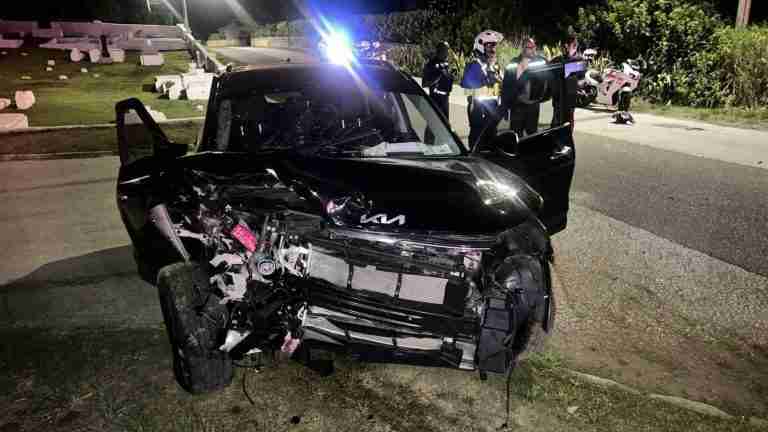
Two-car collision in Southampton

One driver was trapped inside the vehicle

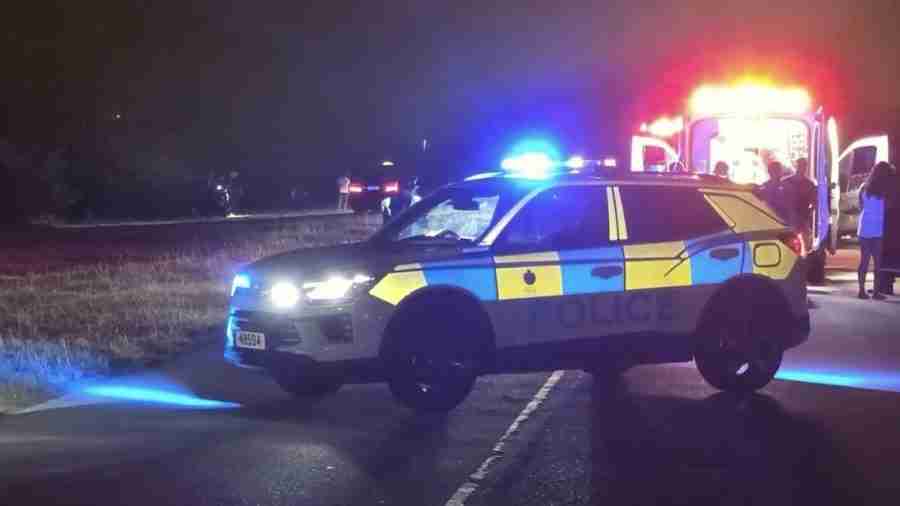
Photo courtesy of Bermuda Police Service

Bermuda Police Service press release:

At approximately 2:15 a.m.  on Sunday, July 13, 2025, police and other first responders were dispatched to a serious road traffic collision involving two motorcars, near the junction of South Road and Church Road, Southampton.

Upon arrival, officers were informed the vehicles were traveling in opposite directions when they collided head-on.

The drivers, both female, sustained head injuries and were attended to at the scene by Emergency Medical Services personnel, before being transported by ambulance to King Edward VII Memorial Hospital for further treatment.

The extent of their injuries is unknown at this time.

One of the drivers became trapped inside her vehicle and had to be extricated by Bermuda Fire and Rescue Services.

The roadway remained closed to vehicular traffic while the scene was forensically processed, but has since been reopened.

Motorists are urged to exercise caution when going through the area, as despite efforts to clear the road surface of oil, it may still be somewhat slick.

An investigation into this collision has commenced and eyewitnesses, or anyone with information about the incident, are asked to contact Police Constable, Tashun Simons, on 515-2566 or via e-mail at, tsimons@bps.bm. You may also call the main police number, 295-0011.

Opinion: Government has lost track of its priorities

Hundreds of millions of dollars are being spent in the health sphere with limited or delayed accountability

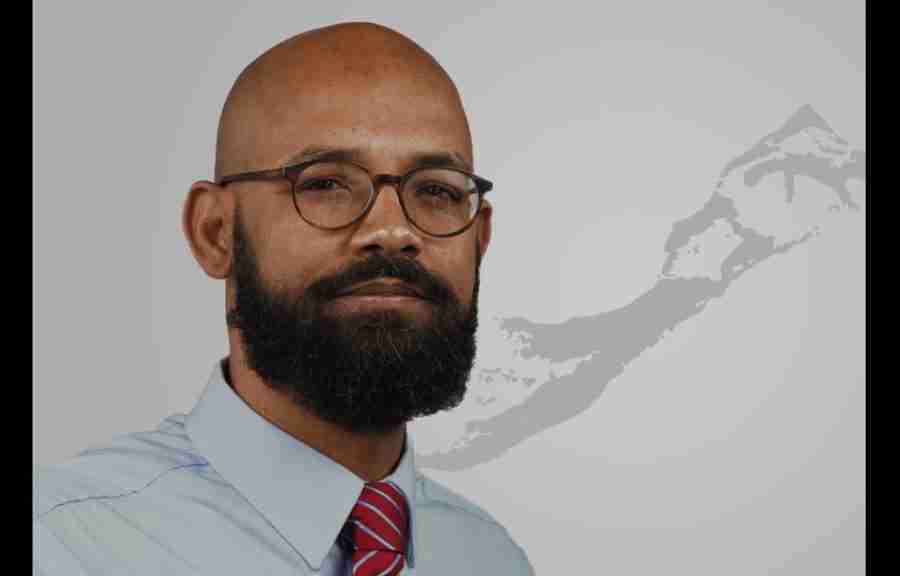
David Rogers: “I support the value of this survey [2025 Steps to Wellness]. It can provide important insights to help improve public health. But here’s the issue, much of this health information already exists elsewhere.”

Statement by David Rogers, who ran in the 2025 General Election for the One Bermuda Alliance in Constituency 14, Devonshire North West.

When the Minister of Health, the Hon Kim Wilson, recently urged the public to take part in the 2025 Steps to Wellness Survey, she said, “What gets measured gets managed.”
That statement is true but feels deeply ironic.
As a country, we are still waiting for key health financial reports to be completed and shared with the public. The Bermuda Health Council’s National Health Accounts from 2019 to 2023 remain pending, and the Bermuda Hospitals Board’s audited financial statements from 2021 are still missing.
At the same time, the Steps to Wellness Survey, which is supposed to guide future health decisions, is far behind schedule. Out of the 1,600 survey responses needed for it to be statistically accurate, less than 400 have been collected so far.
I support the value of this survey. It can provide important insights to help improve public health. But here’s the issue, much of this health information already exists elsewhere. Thanks to the Bermuda Health Council Amendment Act 2024, much of the same data could be gathered through health claims analysis and electronic records from healthcare providers. So why are we pushing forward on one survey while leaving basic financial reporting unfinished?
It feels like the Government has lost track of its priorities.
Let’s not forget, the Bermuda Hospitals Board manages $307 million in health funding, and the Bermuda Health Council oversees $736 million in total public and private health spending. This is not pocket change. This is taxpayer money, hundreds of millions of dollars, being spent with limited or delayed accountability.
And yet, the public is expected to trust the system without having the full picture.
As a health policy professional and now as a political candidate, I believe we must demand better.
Here are the key questions every Bermudian taxpayer deserves answers to:
What steps are being taken to ensure that the Bermuda Hospitals Board and the Bermuda Health Council release their financial reports on time going forward?
Why have these important reports been delayed for years, and who is responsible for making sure this doesn’t happen again?
What penalties or accountability measures are in place if reporting deadlines continue to be missed?
How is the Government measuring whether the hospital’s block grant funding is controlling costs and improving health outcomes? Has there been an independent review of the block grant system?
What safeguards are in place to ensure that the hospital’s block grant funding reflects its actual needs for the outcomes we as a country are expecting?
How can the Government move forward with a universal healthcare plan in 2026 without up-to-date, reliable financial data? Have proper risk assessments been done to protect this critical reform?
What improvements are being made to our health data systems to prevent these types of reporting delays in the future? How will data collection and sharing be strengthened?
How did the pandemic specifically disrupt the reporting process, and what is the Government doing to prevent the same problems in future emergencies?
Will the Government commit to regular, timely public updates on healthcare spending and financial performance from now on?
These questions are not just political. They are about good governance and protecting our public resources.
Our health system can only be managed well if it is measured properly, and that starts with giving the public the full, honest picture.
It’s time for transparency. It’s time for accountability. And it’s time for answers.

David Rogers ran in the 2025 General Election for the One Bermuda Alliance in Constituency 14, Devonshire North West. 

Air India crash report shows pilot confusion over engine switch movement

The report by AAIB about the June 12 crash raises fresh questions over the position of the critical engine fuel cutoff switches

International News via Reuters:

A preliminary report depicted confusion in the cockpit shortly before an Air India jetliner crashed and killed 260 people last month, after the plane’s engine fuel cutoff switches flipped almost simultaneously and starved the engines of fuel.

The Boeing 787 Dreamliner bound for London from the Indian city of Ahmedabad began to lose thrust and sink shortly after takeoff, according to the report on the world’s deadliest aviation accident in a decade released on Saturday by Indian accident investigators.

The report by India’s Aircraft Accident Investigation Bureau (AAIB) about the June 12 crash raises fresh questions over the position of the critical engine fuel cutoff switches.

Almost immediately after the plane lifted off the ground, closed-circuit TV footage showed a backup energy source called a ram air turbine had deployed, indicating a loss of power from the engines.

In the flight’s final moments, one pilot was heard on the cockpit voice recorder asking the other why he cut off the fuel. “The other pilot responded that he did not do so,” the report said. 

It did not identify which remarks were made by the flight’s captain and which by the first officer, nor which pilot transmitted “Mayday, Mayday, Mayday” just before the crash.

The commanding pilot of the Air India plane was Sumeet Sabharwal, 56, who had a total flying experience of 15,638 hours and, according to the Indian government, was also an Air India instructor. His co-pilot was Clive Kunder, 32, who had 3,403 hours of total experience.

The fuel switches had almost simultaneously flipped from run to cutoff just after takeoff. The preliminary report did not say how the switches could have flipped to the cutoff position during the flight. 

“We care for the welfare and the well-being of pilots so let’s not jump to any conclusions at this stage, let us wait for the final report,” Civil Aviation Minister Ram Mohan Naidu told local news channels.

The crash is a challenge for Tata Group’s ambitious campaign to restore Air India’s reputation and revamp its fleet, after taking the carrier over from the government in 2022.

Air India acknowledged the report in a statement. The carrier said it was cooperating with Indian authorities but declined further comment.

FUEL SWITCHES

Experts have said a pilot would not be able to accidentally move the fuel switches.

“If they were moved because of a pilot, why?” asked U.S. aviation safety expert Anthony Brickhouse.

The switches flipped a second apart, the report said, roughly the time it would take to shift one and then the other, according to U.S. aviation expert John Nance. He added that a pilot would normally never turn the switches off in flight, especially as the plane is starting to climb.

Flipping to cutoff almost immediately cuts the engines. It is most often used to turn engines off once a plane has arrived at its airport gate and in certain emergency situations, such as an engine fire. The report does not indicate there was any emergency requiring an engine cutoff. 

At the crash site, both fuel switches were found in the run position and there had been indications of both engines relighting before the low-altitude crash, said the report, which was released around 1:30 a.m. IST on Saturday (2000 GMT on Friday).

Asked about the report, the father of first officer Kunder told reporters “I am not from the airline”, declining to comment further during a prayer meeting held in the memory of the airline’s crew on Saturday in Mumbai, where emotional scenes played out among grieving relatives.

The U.S. National Transportation Safety Board thanked Indian officials for their cooperation in a statement and noted that there were no recommended actions in the report aimed at operators of Boeing 787 jets or the GE engines.

The U.S. Federal Aviation Administration said its priority was to follow the facts where they lead and it was committed to promptly addressing any risks identified throughout the process.

Boeing said it continued to support the investigation and its customer, Air India. GE Aerospace did not respond immediately to a request for comment.

CRASH PROBE

The AAIB, an office under India’s civil aviation ministry, is leading the probe into the crash, which killed all but one of the 242 people on board and 19 others on the ground.

Most air crashes are caused by multiple factors, with a preliminary report due 30 days after the accident, according to international rules, and a final report expected within a year.

The plane’s black boxes, combined cockpit voice recorders and flight data recorders, were recovered in the days following the crash and later downloaded in India.

The report said “all applicable airworthiness directives and alert service bulletins were complied (with) on the aircraft as well as engines.”

The airport closed-circuit TV recording from Ahmedabad had earlier shown the Air India plane rose to a height of 650 feet after it took off, but then suddenly lost altitude, crashing in a fireball into a nearby building.

The investigation report said as the Dreamliner lost altitude, it initially made contact with several trees and an incineration chimney, before hitting the building.

Air India has faced additional scrutiny on other fronts after the crash.

The European Union Aviation Safety Agency said last week it plans to investigate its budget airline, Air India Express, after Reuters reported the carrier did not follow a directive to change engine parts of an Airbus A320 in a timely manner and falsified records to show compliance.

India is banking on a boom in aviation to support wider development goals, with New Delhi saying it wants India to be a job-creating global aviation hub along the lines of Dubai.

Reporting by Hritam Mukherjee and Gursimran Kaur in Bengaluru and Aditya Kalra and Abhijith Ganapavaram in New Delhi and by Allison Lampert in Montreal, David Shepardson in Washington, Rajesh Kumar Singh in Chicago,Francis Mascarenhas in Mumbai and Dan Catchpole in Seattle; Editing by Jamie Freed and Muralikumar Anantharaman

Trump intensifies trade war with threat of 30% tariffs on EU, Mexico

The EU and Mexico responded by calling the tariffs unfair and disruptive

International News via Reuters:

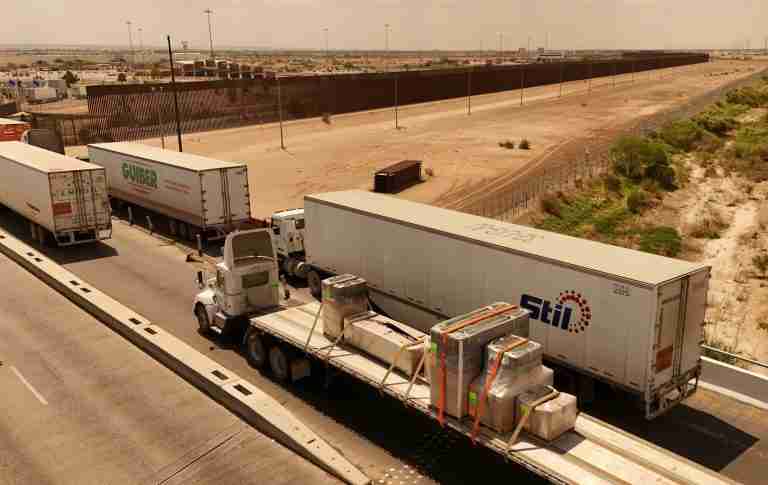
President Donald Trump on Saturday threatened to impose a 30% tariff on imports from Mexico and the European Union starting on August 1, after weeks of negotiations with the major U.S. trading partners failed to reach a comprehensive trade deal.

In an escalation of a trade war that has angered U.S. allies and rattled investors, Trump announced the latest tariffs in separate letters to European Commission President Ursula von der Leyen and Mexican President Claudia Sheinbaum that were posted on his Truth Social media site on Saturday.

The EU and Mexico, both among the largest U.S. trading partners responded by calling the tariffs unfair and disruptive while pledging to continue to negotiate with the U.S. for a broader trade deal before the deadline.

Mexican President Claudia Sheinbaum said she was sure an agreement can be reached. “I’ve always said that in these cases, what you have to do is keep a cool head to face any problem,” Sheinbaum said at an event in the Mexican state of Sonora.

“We’re also clear on what we can work with the United States government on, and we’re clear on what we can’t. And there’s something that’s never negotiable: the sovereignty of our country,” she said.

Trump sent similar letters to 23 other trading partners this week, including Canada, Japan and Brazil, setting blanket tariff rates ranging from 20% up to 50%, as well as a 50% tariff on copper. 

The U.S. president said the 30% rate was “separate from all sectoral tariffs,” indicating 50% levies on steel and aluminum imports and a 25% tariff on auto imports would remain.

The August 1 deadline gives the targeted countries time to negotiate agreements that could lower the threatened tariffs. Some investors and economists have also noted Trump’s pattern of backing off his tariff threats.

The spate of letters showed Trump has returned to the aggressive trade posture that he took in April when he announced a slew of reciprocal tariffs against trading partners that sent markets tumbling before the White House delayed implementation.

‘UNFAIR TREATMENT’

But with the stock market recently hitting record highs and the U.S. economy still resilient, Trump is showing no signs of slowing down his trade war. 

He promised to use the 90-day delay in April to strike dozens of new trade deals, but has only secured framework agreements with Britain, China and Vietnam. 

The EU has hoped to reach a comprehensive trade agreement with the U.S. for the 27-country bloc.

Trump’s letter to the EU included a demand that Europe drop its own tariffs. “The European Union will allow complete, open Market Access to the United States, with no Tariff being charged to us, in an attempt to reduce the large Trade Deficit,” he wrote.

Von der Leyen said the 30% tariffs “would disrupt essential transatlantic supply chains, to the detriment of businesses, consumers and patients on both sides of the Atlantic.”

She also said while the EU will continue to work towards a trade agreement, it “will take all necessary steps to safeguard EU interests, including the adoption of proportionate countermeasures if required.”

Mexico’s economy ministry said Saturday it was informed the U.S. would send a letter during a meeting on Friday with U.S. officials.

“We mentioned at the roundtable that it was unfair treatment and that we did not agree,” the ministry’s statement said.

RATE FOR MEXICO LOWER THAN CANADA

Mexico’s proposed tariff level is lower than Canada’s 35%, with both letters citing fentanyl flows even though government data shows the amount of the drug seized at the Mexican border is significantly higher than the Canadian border.

“Mexico has been helping me secure the border, BUT, what Mexico has done, is not enough. Mexico still has not stopped the Cartels who are trying to turn all of North America into a Narco-Trafficking Playground,” Trump wrote.

China is the main source of the chemicals used to make the opioid fentanyl. According to U.S. authorities, only 0.2% of all fentanyl seized in the U.S. comes from across the Canadian border, while the vast majority originates from the U.S.-Mexico border.

Mexico sends more than 80% of its total exported goods to the U.S. and free trade with its northern neighbor drove Mexico to become the top U.S. trading partner in 2023.

The EU had initially hoped to strike a comprehensive trade agreement but more recently had scaled back its ambitions and shifted toward securing a broader framework deal similar to the one Britain brokered that leaves details to be negotiated. 

The bloc is under conflicting pressures as powerhouse Germany urged a quick deal to safeguard its industry, while other EU members, such as France, have said EU negotiators should not cave into a one-sided deal on U.S. terms.

Bernd Lange, the head of the European Parliament’s trade committee, said Brussels should enact countermeasures as soon as Monday. “This is a slap in the face for the negotiations. This is no way to deal with a key trading partner,” Lange told Reuters.

Jacob Funk Kirkegaard, a senior fellow at the Brussels-based think tank Bruegel, said Trump’s letter raised the risk of retaliatory moves by the EU similar to the flare-up between the U.S. and China that rattled financial markets.

“U.S. and Chinese tariffs went up together and they came back down again. Not all the way down, but still down together,” he said.

Trump’s cascade of tariff orders since returning to the White House has begun generating tens of billions of dollars a month in new revenue for the U.S. government. U.S. customs duties revenue topped $100 billion in the federal fiscal year through to June, according to U.S. Treasury data on Friday.

The tariffs have also strained diplomatic relationships with some of the closest U.S. partners.

Japanese Prime Minister Shigeru Ishiba said last week that Japan needed to lessen its dependence on the U.S. The fight over tariffs has also prompted Canada and some European allies to reexamine their security dependence on Washington, with some looking to purchase non-U.S. weapons systems.

Reporting Bhargav Acharya, Cassandra Garrison and Jarrett Renshaw; Additional reporting by Julia Payne in Brussels and John Revill in Berlin; Writing by Patricia Zengerle; Editing by Don Durfee, Diane Craft and Paul Simao

Strategy launched for entrepreneurs

Goal is to create jobs and help diversify the economy

A heads-up for entrepreneurs: A Government survey is seeking your input

Government has announced the implementation of a National Entrepreneurship Strategy.
Jason Hayward, Minister of the Economy and Labour, said it will help create jobs, drive innovation, and contribute to “a more diversified and resilient economy”.
The Strategy will utilize the UN Entrepreneurial Ecosystem Framework, which aims to foster: Supportive policies and regulations; access to finance; culture; infrastructure and support services; nettworking and collaboration.
Minister Hayward told the House of Assembly that entrepreneurship is “a key driver of our economic future … We recognize that small and medium-sized enterprises are the backbone of our economy, and we are dedicated to providing the support they need to flourish.”
The Ministry of Economy and Labour, in collaboration with the Bermuda Economic Development Corporation, has engaged PricewaterhouseCoopers Advisory Limited for support.
The Ministry and BEDC are seeking input from stakeholders, including: Entrepreneurs; investors; financial institutions; entrepreneur support organisations; Government departments and quangos.
Mr Hayward said: “The aim is to gain a comprehensive understanding of the current business landscape, identify barriers to growth, and gather innovative ideas for overcoming these challenges.
Stakeholders are being asked to complete a brief survey no later than Monday, July 28th, at 5pm.

Information about the survey can be found on the Bermuda Government’s Bermuda Citizens Forum webpage [https://forum.gov.bm] 

Bermuda secures second Google cable link

‘Sol’ cable to boost global cloud and AI capacity, solidifying Bermuda’s role in digital infrastructure

Bermuda is set to play a key role in global digital connectivity once again, as Google recently announced a second subsea cable that will transit through the island.

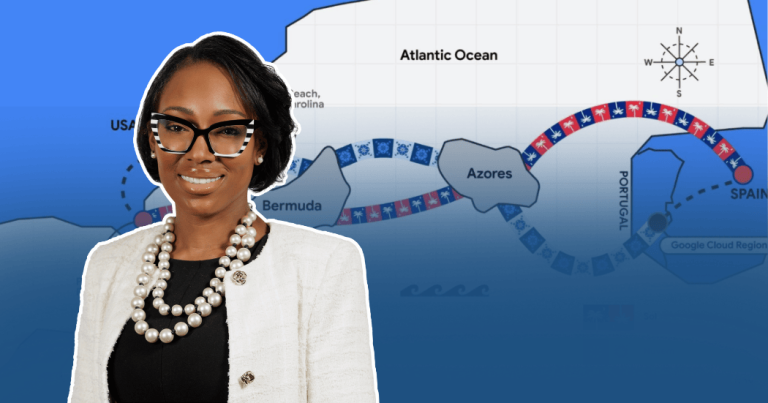
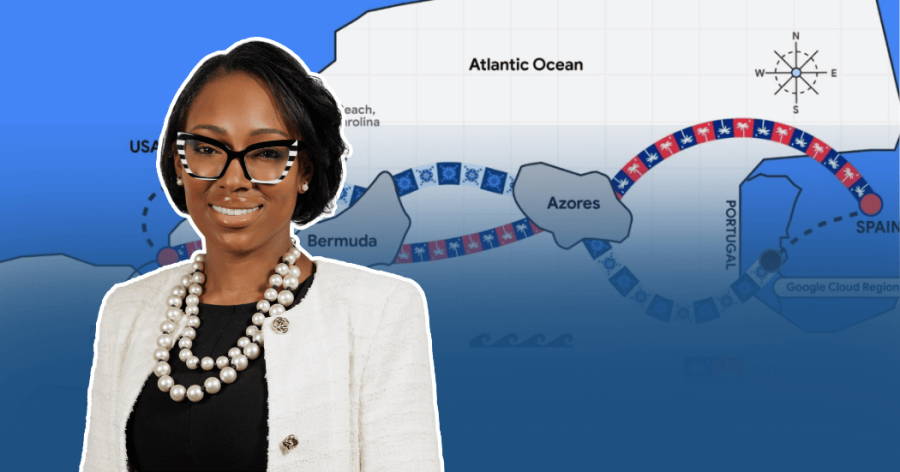
Speaking in the House of Assembly on Friday, Home Affairs Minister Alexa Lightbourne described the development as a “tremendous accomplishment” and credited it to “good governance, good policy, and good legislation.”

The new transatlantic cable, named Sol. the Spanish word for “sun”, will link Florida to Spain, passing through Bermuda and the Azores. It will be the only direct in-service fibre-optic connection between Florida and Europe.

This follows Google’s first cable, Nuvem, announced in 2023, which established Bermuda’s role in global connectivity by linking South Carolina to Portugal via the island.

Minister Lightbourne said: “This second cable confirms that Bermuda is a deliberate choice based on our regulatory clarity, technical preparedness, and geographical relevance. Google’s further investment in our shores through the establishment of Sol signals that our jurisdiction is one of trust, regulatory certainty, and sound governance.”

Google’s subsidiary in Bermuda, Sea Grass Services Limited, plans to build a landing station at Southside, St. David’s, pending final approval from the Department of Planning. Minister Lightbourne said today that the station will be capable of housing up to four subsea fibre-optic cables.

Last month, Google held a Town Hall meeting in St. David’s, where it reaffirmed its commitment to training local talent, diversifying Bermuda’s economy, and supporting climate-positive innovation.

The tech giant says the Sol cable will be manufactured in the United States and, once operational, will strengthen capacity and reliability for its global network of 42 Google Cloud regions. The company says it will help meet rising demand for Google Cloud and AI services across the U.S., Europe, and beyond.

Minister Lightbourne said the project represents more than just infrastructure.

“It is an evolution and investment in our future—a future where Bermuda moves beyond being known simply for insurance or tourism and entrenches its role in the digital economy,” explained Minister Lightbourne. “This economy powers financial systems, health networks, AI services, digital finance, and international research. The new cable, alongside Nuvem, will carry cloud traffic, provide expanded capacity for our local providers, and deliver AI models across the Atlantic.”

You can read Minister Lightbourne’s full statement below.

De Couto sees red on pink ferry problems

Opinion: Why can’t Government share its plans to get the service working reliably?

De Couto: “While we can’t expect Government to magically get old boats working perfectly, we can expect them to keep taxpayers and ferry riders informed…”

Statement by Douglas De Couto, OBA MP for Constituency 25, Warwick North East

Over the past months, the Pink Ferry route which serves Paget and Warwick has seen a string of mechanical failures, breakdowns, and cancellations. This route serves a wide variety of people in Paget and Warwick, including seniors, tourists, and workers commuting to and from Hamilton.
Unsurprisingly, cancellations at the last minute or even without notice can upend ferry riders, just like bus cancellations. The difference is, there isn’t another ferry coming later.
The Pink Ferry is an iconic and historical part of Bermuda’s landscape, particularly tourism. And, for residents of Hinson’s island, especially seniors, the Ferry is an important lifeline.
To their credit, the ferry crew and Marine and Ports staff have innovated, using tools like WhatsApp to keep riders updated on the ferry status (there are hundreds of members!), and juggling parts between multiple boats. However, despite their best efforts, they can’t work miracles and provide a reliable ferry service when the equipment is old and worn out, and there isn’t an alternate boat available.
Ferry users want to know, what are Government’s plans to get this route working reliably? Does the ferry need an overhaul? Can a back-up boat be provided? What can they count on from the Government?
Over the past month I have contacted Minister of Transport Darrell by phone and email multiple times, asking what the Ministry’s plans were. I was grateful that the Minister initially pledged to look into the issue, but no information has been provided since then.
While we can’t expect Government to magically get old boats working perfectly, we can expect them to keep taxpayers and ferry riders informed, properly plan ahead and make sure this ferry route, like all public transport, works reliably. 

[Editor’s note: This opinion piece was written prior to Minister Owen Darrell making a statement in the House of Assembly about the Pink Route, on Friday, July 11]

SUV & motorcycle collision

Police investigating incident on Kindley Field Road

Photo courtesy of Bermuda Police Service

Bermuda Police Service press release:

Shortly after 2:30 AM on Saturday, July 12, 2025, Police and Emergency Medical Services personnel were dispatched to a two vehicle road traffic collision involving a motorcycle and an SUV on Kindley Field Road, St. George’s.

Initial reports suggest both vehicles were traveling in a westerly direction, when the motorcycle collided with the back of the SUV.

Upon arrival, officers were informed there were two males traveling on the motorcycle at the time of the collision.

One of them was transported to King Edward VII Memorial Hospital via private vehicle. It is unclear what if any injuries he may have sustained

The second male sustained head injuries and bruises to the body. He was reportedly in and out of of consciousness.

He was attended to at the scene by EMTs and was subsequently transported by ambulance to the King EdwardVII Memorial Hospital, for further treatment.

The extent of his injuries is unknown at this time.

The female driver of the SUV sustained a neck injury which was not considered serious. Her female passenger did not appear to have been injured.

The scene was forensically processed without any major disruption to the flow of traffic.

An investigation into this incident is now underway and anyone with information, is asked to contact, Police Constable, Zachary Edmund, by calling the main police number 295-0011 or, via email at zedmund@bps.bm

College is training people to care for seniors

Course designed to support Bermuda’s ageing population and working caregivers

Press release:
A course at Bermuda College is helping to equip Bermudians with the knowledge and skills to care for seniors — both professionally and within their own families.
The Certificate for Nursing Assistants, developed in collaboration with the Bermuda Nursing and Midwifery Council, prepares participants to become certified nursing assistants, a growing need as the island’s elderly population increases.
The course provides students with foundational knowledge and practical skills, including how to monitor vital signs, understand medical terminology, support individuals needing medical care, and navigate the legal and ethical landscape of the healthcare industry.
Tawana Flood, Director of the Athora Division of Professional & Career Education (APACE), emphasised the importance of local training: “As Bermuda’s senior population grows, so does the demand for certified nursing assistants. The more local people we can train, the better we can care for our community.”
She noted that participants come from a variety of backgrounds — including members of the so-called “sandwich generation” who are caring for both children and ageing parents.
“We’ve had students leave full-time employment to better support their loved ones,” said Ms. Flood. “This course empowers them with the knowledge and confidence they need to provide compassionate care.”
The qualification also opens doors to career opportunities at the Bermuda Hospitals Board and within the island’s residential care homes — including for young people exploring their future.
“We often hear that young people aren’t interested in this field, but that’s simply not true,” said Ms. Flood. “We’ve seen a real passion and dedication from our dual enrolment students.
“Even if they aren’t the top academic performers, they show up with enormous heart and a desire to serve.”
Funding is available to help offset the cost of the course and places are limited. Register by August 11.

The course runs from August 25 to December 3, 2025. For more information contact cna@college.bm or call APACE on 236-9000 ext. 4117