Sunday, November 8, 2026
Home Blog Page 874

Russia and Ukraine to hold first peace talks in seven weeks

Russia played down expectations of any breakthrough at the meeting
International News via Reuters:

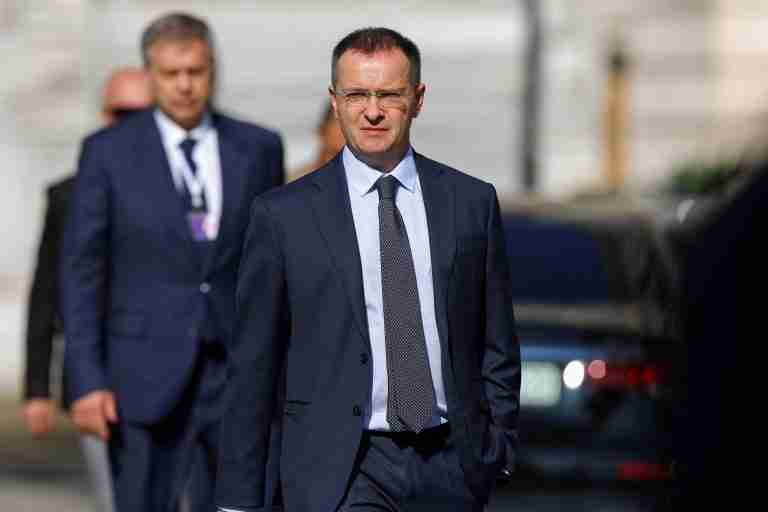
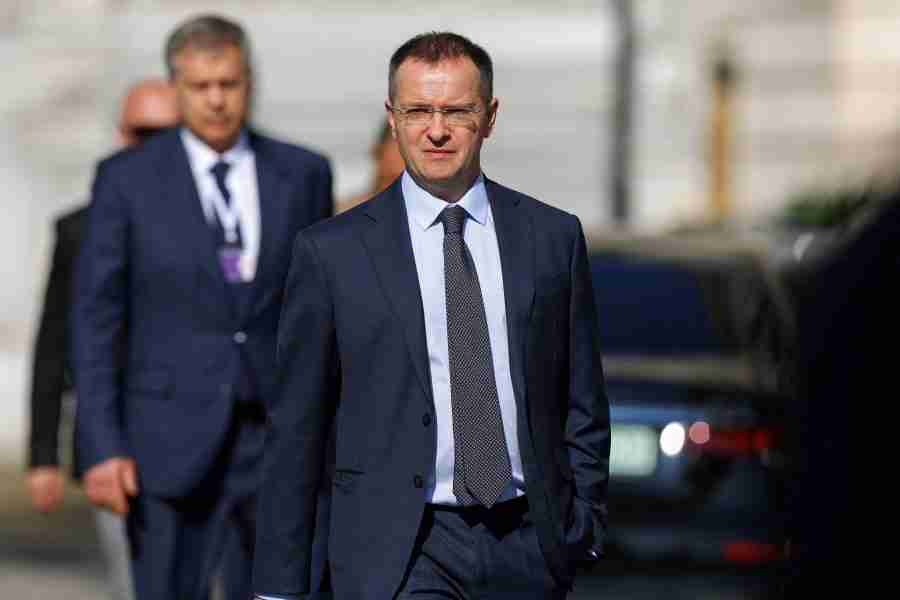
Russian negotiators flew to Turkey to hold peace talks with Ukraine on Wednesday, the Kremlin said, before what will be the first direct discussions between the warring sides in more than seven weeks.

Russia played down expectations of any breakthrough at the meeting, which Ukrainian President Volodymyr Zelenskiy said this week should focus in part on preparing a summit between himself and President Vladimir Putin.

“Naturally, no one expects an easy road. Naturally, this will be a very difficult conversation. The projects (of the two sides) are diametrically opposed,” Kremlin spokesman Dmitry Peskov told reporters.

Previous talks in Istanbul on May 16 and June 2 led to the exchange of thousands of prisoners of war and the remains of dead soldiers. But those meetings lasted less than three hours in total and made no breakthrough towards a ceasefire or a settlement to end almost three and a half years of war.

U.S. President Donald Trump last week threatened heavy new sanctions on Russia and countries that buy its exports unless a peace deal was reached within 50 days.

But three sources close to the Kremlin told Reuters that Putin, unfazed by Trump’s ultimatum, would keep on fighting in Ukraine until the West engaged on his terms for peace, and that his territorial demands may widen as Russian forces advance.

On Wednesday, Russia said its forces had captured the settlement of Varachyne in Ukraine’s Sumy region, where Putin has ordered his troops to create a buffer zone after Ukraine mounted a shock incursion into Russia last year and held onto a chunk of its territory for months. Reuters could not independently confirm the battlefield report.

In recent weeks, Russian forces have launched some of their heaviest air attacks of the war, focusing especially on the Ukrainian capital Kyiv.

Ukraine has hit back with attacks of its own, and last month inflicted serious damage on Russia’s nuclear-capable strategic bomber fleet by smuggling drones close to air bases deep inside the country.

CONFLICTING DEMANDS

Zelenskiy said earlier this week that the agenda for talks was clear: the return of prisoners of war and of children abducted by Russia, and the preparation of a meeting between himself and Putin.

Putin turned down a previous challenge from Zelenskiy to meet him in person and has said he does not see him as a legitimate leader because Ukraine, which is under martial law, did not hold new elections when Zelenskiy’s five-year mandate expired last year. Russia also denies abducting children.

The Kremlin said this week it was unrealistic to expect “miracles” from the talks.

At the last meeting on June 2, Russia handed Ukraine a memorandum setting out its key demands, including: full withdrawal of Ukrainian forces from four regions of the country that Russia has claimed as its own; limits on the size of Ukraine’s military; enhanced rights for Russian-speakers in Ukraine; and acceptance by Kyiv of neutral status, outside NATO or any other alliance.

Ukraine sees those terms as tantamount to surrender, and Zelenskiy described the Russian stance as an ultimatum.

Ukraine wants an immediate ceasefire, reparations, international security guarantees and no restrictions on its military strength.

Reporting by Dmitry Antonov in Moscow and Mark Trevelyan in London; Editing by Toby Chopra

Intel’s chip contracting plan in spotlight on earnings day

The storied chipmaker, once synonymous with America’s chipmaking heft, has lagged due to years of strategic missteps

International News via Reuters:

Faced with slumping quarterly sales and a burgeoning loss, Intel shareholders will want to know new CEO Lip Bu-Tan’s plans for the chipmaker’s nascent contract manufacturing business. 

Intel is set to report its sixth consecutive net loss on Thursday, while revenue is expected to drop for a fifth straight quarter, according to estimates from LSEG data.

The storied chipmaker, once synonymous with America’s chipmaking heft, has lagged due to years of strategic missteps.

Rival Nvidia <NVDA,O> has leaped ahead in the booming artificial intelligence chip industry, while rival AMD has been gaining share in Intel’s mainstay personal computer and server semiconductor markets. 

CEO Tan has been focusing on a next-generation chipmaking process called 14A to win big external customers, shifting away from 18A, a technology that his predecessor Pat Gelsinger had spent billions of dollars to develop.

Such a move could lead to a big writedown, an expense that would surely displease investors even as Intel has signaled that the new technology will help it be more competitive against Taiwan’s TSMC, the world’s biggest chipmaking factory.

Longer-term commentary on the company’s plans for the 14A technology “will hold more weight this earnings call than anything else”, Stifel analysts wrote ahead of the earnings. 

Intel is expected to report a net loss of about $1.25 billion for the April-June quarter, while its sales are expected to drop more than 7% to $11.92 billion. Last year was Intel’s first unprofitable year since 1986.

Writedowns could amount to hundreds of millions, if not billions, of dollars, according to analysts, and might impact the timeline for the foundry to break even.

Intel’s finance boss David Zinsner said in May he expected the unit to break even in 2027 and that would require external customers to generate low- to mid-single-digit billions in revenue. 

Intel’s foundry unit is expected to generate $4.49 billion in sales in the second quarter, though a majority of this would come from chips Intel produces for itself, analysts said. 

STREAMLINING

Since taking over as CEO in March, Tan has focused on shedding non-core assets. In April, Intel agreed to sell a 51% stake in its Altera programmable chip business for $4.46 billion. The company has also considered divesting its network and edge businesses as well.

Intel’s stock has risen 16% so far this year, compared with a 13.23% rise in the broader chip index.

Investors will watch if Tan sells more assets, further flattens out the management structure, or expands the global layoffs the company announced last year.

Intel, as with other chipmakers, is facing customers who are dragging their feet on their spending, due to uncertainty from U.S. President Donald Trump’s trade war. 

Revenue at Intel’s personal computer unit is expected to dip some 2% to $7.25 billion in the second quarter after customers pulled forward orders to the first three months of the year due to the threat of tariffs.

Analog chipmaker Texas Instrument flagged similar troubles on Tuesday, sending its shares down 11% after hours. Chip-equipment maker ASML and TSMC have also warned tariff-related uncertainty has muddied the outlook for them.

Revenue in Intel’s data center unit, however, is expected to jump about 20% to $3.66 billion, signaling improving demand for traditional server chips after several quarters of poor sales.

Reporting by Arsheeya Bajwa in Bengaluru; Editing by Sayantani Ghosh and Arun Koyyur

Iberdrola launches $5.9 billion capital increase to fund growth in US, Britain

The planned investment represents a 75% increase over the previous six years

International News via Reuters:

Europe’s largest utility Iberdrola launched a five billion euro ($5.87 billion) capital increase on Wednesday to help pay for a big increase in investments in power grids in Britain and the United States.

The company plans to increase its annual investments to around 15 billion euros from around 12 billion euros, building on its shift towards upgrading and expanding power grids in countries where returns are steady and healthy, such as the U.S. and Britain.

In the next six years, it will invest some 55 billion euros in power grids, more than 80% in these two countries as they offer “an unprecedented investment opportunity,” Executive Chairman Ignacio Sanchez Galan said in a call with analysts.

The planned investment represents a 75% increase over the previous six years.

As a result, the value of its grid assets, whose returns are regulated and guaranteed, will top 90 billion euros by 2031 – 75% of which will be in Britain and the U.S. – from 55 billion euros this year and just 30 billion euros at the beginning of the decade.

The weight of its Spanish home market in the network business is set to decline significantly, as a share of both investments and regulated assets.

Spanish utilities have recently warned that the country risked losing critical investments in grids to other countries as the remuneration on grid assets proposed by regulators was set below what they expect.

“The draft proposal, in my opinion, is providing a clear negative signal to the market,” Galan said.

The cash raised by Iberdrola’s capital increase, along with debt, operating cash flow, asset sales and partnerships will help fund the new strategy to be set out in September. No further equity raises are expected until at least the end of the decade, Galan said.

The shares offered through a process of accelerated book-building were set to be priced at 15.10 euros and investor interest covered the entire amount, one of the bookrunners said. Iberdrola’s share price closed at 15.895 euros on Tuesday.

Spain’s stock market regulator suspended trading of Iberdrola’s shares on Wednesday morning.

The issue, though unexpected, was of a scale expected to be digested by the market, Citi analysts said in a note.

Iberdrola also said first-half net profit declined 14% from a year earlier to 3.56 billion euros, when results were boosted by the inclusion of the sale of gas assets in Mexico.

($1 = 0.8523 euros)

Reporting by Pietro Lombardi, editing by Inti Landauro, Louise Heavens and Elaine Hardcastle

World Court is poised to mark the future course of climate litigation

Known as an advisory opinion, the deliberation of the 15 judges of the International Court of Justice in The Hague is legally non-binding

International News via Reuters:

The United Nations’ highest court will deliver an opinion on Wednesday that is likely to determine the course of future climate action across the world.

Known as an advisory opinion, the deliberation of the 15 judges of the International Court of Justice in The Hague is legally non-binding. It nevertheless carries legal and political weight and future climate cases would be unable to ignore it, legal experts say.

“The advisory opinion is probably the most consequential in the history of the court because it clarifies international law obligations to avoid catastrophic harm that would imperil the survival of humankind,” said Payam Akhavan, an international law professor.

In two weeks of hearings last December at the ICJ, also known as the World Court, Akhavan represented low-lying, small island states that face an existential threat from rising sea levels.

In all, over a hundred states and international organisations gave their views on the two questions the U.N. General Assembly had asked the judges to consider.

They were: what are countries’ obligations under international law to protect the climate from greenhouse gas emissions; and what are the legal consequences for countries that harm the climate system?

Wealthy countries of the Global North told the judges that existing climate treaties, including the 2015 Paris Agreement, which are largely non-binding, should be the basis for deciding their responsibilities. 

Developing nations and small island states argued for stronger measures, in some cases legally binding, to curb emissions and for the biggest emitters of climate-warming greenhouse gases to provide financial aid.

PARIS AGREEMENT AND AN UPSURGE IN LITIGATION

In 2015, at the conclusion of U.N. talks in Paris, more than 190 countries committed to pursue efforts to limit global warming to 1.5 degrees Celsius (2.7 degrees Fahrenheit).

The agreement has failed to curb the growth of global greenhouse gas emissions. 

Late last year, in the most recent “Emissions Gap Report,” which takes stock of countries’ promises to tackle climate change compared with what is needed, the U.N said that current climate policies will result in global warming of more than 3 C (5.4 F) above pre-industrial levels by 2100. 

As campaigners seek to hold companies and governments to account, climate‑related litigation has intensified, with nearly 3,000 cases filed across almost 60 countries, according to June figures from London’s Grantham Research Institute on Climate Change and the Environment. 

So far, the results have been mixed.

A German court in May threw out a case between a Peruvian farmer and German energy giant RWE, but his lawyers and environmentalists said the case, which dragged on for a decade, was a still victory for climate cases that could spur similar lawsuits.

Earlier this month, the Inter-American Court of Human Rights, which holds jurisdiction over 20 Latin American and Caribbean countries, said in another advisory opinion its members must cooperate to tackle climate change.

Campaigners say Wednesday’s court opinion should be a turning point and that, even if the ruling itself is advisory, it should provide for the determination that U.N. member states have broken the international law they have signed up to uphold.

“The court can affirm that climate inaction, especially by major emitters, is not merely a policy failure but a breach of international law,” said Fijian Vishal Prasad, one of the law students that lobbied the government of Vanuatu in the South Pacific Ocean to bring the case to the ICJ. 

Although it is theoretically possible to ignore an ICJ ruling, lawyers say countries are typically reluctant to do so.

“This opinion is applying binding international law, which countries have already committed to. National and regional courts will be looking to this opinion as a persuasive authority and this will inform judgments with binding consequences under their own legal systems,” Joie Chowdhury, senior attorney at the Center for International Environmental Law, said.

The court will start reading out its opinion at 3 p.m. (1300 GMT). 

Reporting by Stephanie van den Berg, additional reporting by Ali Withers in Copenhagen; editing by Barbara Lewis

FTSE 100 hits record high as investors assess earnings, US-Japan trade deal

U.S. President Donald Trump struck a trade deal with Japan, lowering tariffs on auto imports and sparing Tokyo from punishing new levies on other goods

International News via Reuters:

London’s main stock indexes hit a fresh record high on Wednesday, helped by positive corporate updates, while a U.S.-Japan trade deal also boosted global sentiment.

The benchmark FTSE 100 was last up 0.5% by 0936 GMT. The domestically oriented midcap FTSE 250 gained 0.3%.

U.S. President Donald Trump struck a trade deal with Japan, lowering tariffs on auto imports and sparing Tokyo from punishing new levies on other goods in exchange for a $550 billion package of U.S.-bound investment and loans.

The UK’s automobiles and parts index rose 1.7%, tracking strength in Asian rivals. Aston Martin rose 7.1%.

Media stocks led sectoral gains, up 2.4%, boosted by Informa’s 5.4% rise after the events and academic publishing group raised its annual underlying revenue growth forecast.

Healthcare stocks rose 2.2%, with AstraZeneca extending its yesterday’s gain, up 2.7%, following the announcement of a $50 billion investment to expand U.S. manufacturing.

Conversely, construction and materials stocks lost 0.9%, with Breedon Group down 10.8%, after the company forecast annual results at the low end of market expectations.

In company news, J D Wetherspoon gained 3% after the pub group reported a rise in sales in recent weeks since May.

Shares of precious metals company Hochschild Mining rose 7.1% on stronger-than-expected quarterly silver output.

British stocks have rallied this year, pushing the FTSE 100 to all-time highs in recent weeks, as hopes of interest rate cuts, optimism over the UK-US trade deal and a surge in commodity prices lifted sentiment.

Traders are currently pricing an 87.9% chance of a 25-basis-point BoE cut next month, as per data compiled by LSEG.

This week, attention is on the UK flash Purchasing Managers’ Index for July and retail sales data for June.

Meanwhile, India and Britain will sign a free trade agreement on Thursday during Indian Prime Minister Narendra Modi’s UK visit, officials said.

Reporting by Sukriti Gupta; Editing by Vijay Kishore

Inside Bermuda’s shifting gang landscape

Enforcement evolves alongside gangs, with police citing greater use of search powers and strategic targeting of offenders

Internal conflict, younger recruits, and growing female involvement – these are among the latest trends in gang activity, according to Acting Deputy Commissioner of Police Antoine Daniels.

He says gang dynamics are shifting, and the police are adapting their response. 

WATCH the full report above.  

Theatre group all abuzz about upcoming show

Actin’ Up! Theater Camp co-founders talk passion, purpose, and the magic Behind Alice in Wonderland

As the curtain rises on their fourth annual summer production, Alice in Wonderland, co‑founders of Actin’ Up! Theater Camp — Myah Bridgewater and Sanzia Pearman — sit down with Kendal Trott to share the heart and vision behind Bermuda’s beloved youth theater program.

What began as a mission to create a space for young Bermudians to explore the performing arts has blossomed into a summer camp dedicated to nurturing homegrown talent and building confidence on and off the stage.

In this interview, Myah and Sanzia talk to Kendal Trott about what inspired them to launch the camp, their hopes for the next generation, and what audiences can expect from this weekend’s whimsical show at the Earl Cameron Theatre.

Bermuda Tonight – 22 July 2025

In tonight’s news at 7pm…

  • Four cruise visitors arrested for drugs possession
  • Police say gang dynamics are shifting, and police are adapting their response
  • Government seeking input on Southlands project
  • Youth Library renamed after Theatre Boycott organiser

Exclusive-France’s EDF to withdraw from some overseas projects, cut jobs, sources say

France is pulling back at a time of global calls for nuclear expansion

International News via Reuters:

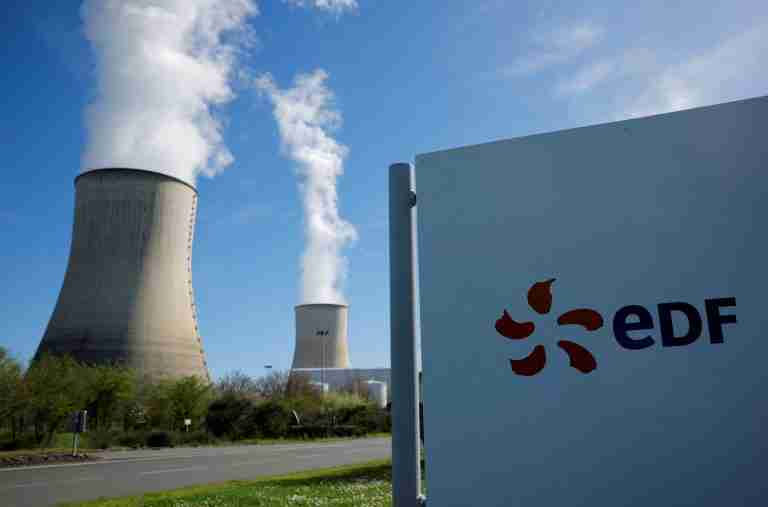
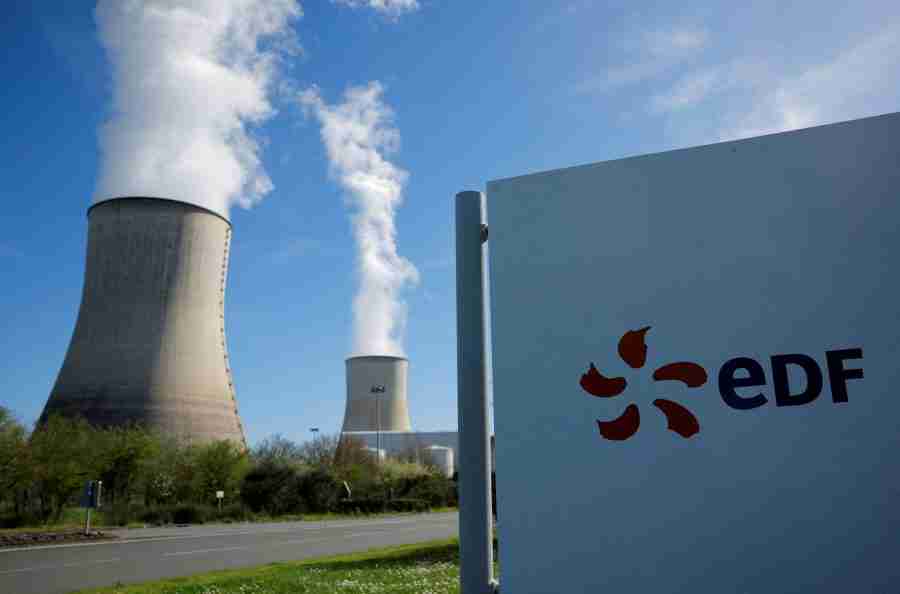
France’s EDF is cutting its headcount overseas and scrapping bids on some nuclear projects abroad as it focuses on a major construction programme at home under new CEO Bernard Fontana, said two sources familiar with the matter.

France, once a global leader in nuclear energy and Europe’s largest nuclear power producer, is pulling back at a time of global calls for nuclear expansion, opening the door to new players as high costs and design issues hurt its ability to compete internationally.

Fontana was appointed in April to take over the state-run utility after the government became increasingly frustrated with EDF’s slow progress in revamping the French nuclear fleet.

The new chief executive told a parliamentary hearing on his nomination that he would focus on developing the company’s domestic nuclear projects rather than its international business, which employs hundreds of people and has previously built reactors in China, Finland and Britain.

He has outlined changes to the overseas business in recent weeks, said the sources, including pulling back from some bids to build reactors outside Europe.

The company will focus on tenders for nuclear projects in the Netherlands, Sweden and Finland, where it has a higher chance of winning the bids, said an industry source familiar with the plans.

It will also de-prioritise projects in Poland, India, Canada and elsewhere outside Europe, the person said.

Reducing its international footprint will allow it to cut costs and redirect people to higher-priority projects, said another industry source familiar with the situation.

EDF’s recent international projects have faced long delays and cost overruns. Last year it lost out to South Korea’s KHNP in a bid for two new reactors in the Czech Republic.

Fontana will also reduce headcount on the international sales team, said the sources, with one saying there are plans to cut about 60 jobs, including 10 managers.

EDF declined to comment.

“The new French nuclear programme is the group’s priority,” said an official in Prime Minister Francois Bayrou’s office.

President Emmanuel Macron announced plans in early 2022 for six new French reactors to replace ageing plants and secure future energy supplies, with costs estimated at 67 billion euros ($78.7 billion), according to a media report last year.

The company is heavily indebted, however, after expensive repairs to its nuclear fleet in recent years.

EDF is also looking to sell some of its renewable energy assets in North America and Brazil.

The company’s subsidiaries Framatome and Arabelle, which produce reactor parts, will continue to bid to supply international projects, such as the AP 1000 in Canada, one of the sources added.

($1 = 0.8516 euros)

Reporting by Forrest Crellin and Elizabeth Pineau; Editing by Dominique Patton and David Holmes

‘Minimum wage rise benefits locals & guest workers’

Minister Jason Hayward also affirmed that the long-term plan is to table a living wage report

Bermuda’s minimum wage is set to go up by 73 cents per hour to $17.13 in September.

Jason Hayward, Minister of Economy & Labour, tabled the amendment on Friday, reflecting the recommendations of the Wage Commission’s Report.

Minister Hayward told the House, “Taking the annual average rate of inflation for 2023 and 2024 of 3.3% and 1.9% respectively, the Wage Commission proposes a statutory minimum hourly wage rate of $17.13, an increase of $0.73 per hour from the current rate.”

“It is anticipated that more than 2,500 workers will benefit from this adjustment, primarily those in the service and sales sectors. These workers include individuals employed in hotels and restaurants, retail workers, personal care workers, cleaners, beauticians, and domestic workers.”

Some of the roles highlighted by Minister Hayward, according to the 2023 Employment Survey, appear to be heavily dominated by guest workers – including general waiters and waitresses – whereas more cleaners and housepersons are Bermudian.

Responding to our questions about who will benefit the most from the minimum wage increase, Minister Hayward also pointed to protected categories such as bartenders – filled almost entirely by Bermudians.

He also affirmed that the long-term plan is to table a living wage report…

Billionaire Ortega buys stake in UK’s PD Ports from Brookfield

Brookfield will remain invested in the business as a long-term shareholder

International News via Reuters:

Zara founder Amancio Ortega’s investment vehicle Pontegadea Inversiones has agreed to acquire a 49% stake in PD Ports from Brookfield Asset Management, the British ports and logistics company said on Tuesday.

Brookfield will remain invested in the business as a long-term shareholder, PD Ports said without disclosing the terms of the deal.

PD Ports operates across 11 locations in the UK, including Teesport and Hartlepool.

PD Ports and Brookfield did not immediately respond to Reuters requests for further details on the sale.

Reporting by Shanima A in Bengaluru; Editing by Alan Barona

UniCredit’s bid for Banco BPM halted again amid government row

UniCredit CEO Andrea Orcel has repeatedly said he would not pursue the deal without complete clarity on the government conditions

International News via Reuters:

Italy’s market watchdog has suspended UniCredit’s bid for smaller rival Banco BPM for another 30 days, saying it was too difficult for BPM investors to make a decision amid disputes over the government’s conditions for a deal.

UniCredit’s swoop on BPM, and a similar hostile bid by Spain’s BBVA for Sabadell, which also faces government opposition in Madrid, have sparked a debate over the role of governments in European banking deals. 

While European authorities have urged the bloc’s players to gain scale to counter expanding U.S. rivals, some governments are reluctant to sanction deals that may lead to job losses or excessively distance lenders from local communities. 

Three people familiar with the matter told Reuters that UniCredit had been ready to ditch the 14.6 billion-euro ($17 billion) all-share bid had the Consob watchdog decided that extra time was not necessary. 

UniCredit CEO Andrea Orcel has repeatedly said he would not pursue the deal without complete clarity on the government conditions.

With Banco BPM valued by the market at 15.4 billion euros, Orcel was loath to add the cash top-up needed for the bid to succeed, and would rather let the offer lapse to possibly submit it again later, the people said.

UniCredit had no immediate comment.

The bank’s board started preliminary discussions over Orcel’s acquisition strategy on Monday, a day ahead of approving quarterly results that UniCredit will present on Wednesday.

UNCERTAINTY

Italy’s second-biggest bank has challenged in court the conditions imposed by Italy on the deal on grounds of national security, saying they would damage the enlarged company. 

A court ruling this month axed some of the conditions, but left intact a demand that UniCredit cease operations in Russia, apart from payments handled for Western companies.

The European Commission has also criticised Rome’s interference in the deal, saying this month that it could order the government to forgo the conditions altogether.

Consob said in a document on its website that the uncertainty caused by the court ruling and the Commission’s scrutiny made it too hard for BPM shareholders to take a view on the offer.

The offer had been due to expire on Wednesday, with take-up currently standing at just 0.5%. With the suspension running from July 23 to August 21, the tender is now set to resume on August 22. 

With only one day of the tender period left when the offer restarts at the height of Italy’s summer break, UniCredit is expected to seek an extension of up to 15 days, which would be allowed under local regulation.

Consob had already granted UniCredit a 30-day suspension after the government in April set its terms for the bid, which launched soon after.

UniCredit unveiled its offer in November, with Orcel saying the bank could not be sidelined as the sector embarked on long-awaited consolidation. 

UniCredit has also expressed an interest in tying up with Germany’s Commerzbank, acquiring a 20% equity stake and a further 9% in derivatives, a move staunchly opposed in Berlin.

($1 = 0.8554 euro)

Reporting by Valentina Za and Andrea Mandala in Milan; Additional reporting by Stefano Bernabei; Editing by Keith Weir, Mark Potter and Matthew Lewis