Golfer Daniel Augustus has concluded his challenge at The Rabat Open, part of the Clutch Tour, held at the picturesque Brocket Hall Estate in the United Kingdom.
Augustus carded a second-round two-over-par 66 on the demanding Palmerston Course. Despite flashes of good play, including three birdies, a mixed scorecard featuring bogeys and a double bogey proved costly.
The two-over 66 saw him finish in a tie for 83rd place, ultimately missing the cut by four strokes. Augustus will now regroup and look ahead to his next challenge on the Clutch Tour as he continues his professional journey.
Written by Margot Shane, Co-Founder and Program Director of SkillCraft
The picture that often accompanies this story is not of me. That’s intentional.
It shows something bigger than any one person. It shows a community – business owners and employees – who believe their work is more than just a job. They believe in shaping the next generation. That’s the SkillCraft Bermuda community.
Finding a path from school to meaningful work is tough. It was tough for many of us. Today, it’s even harder. Youth unemployment in Bermuda (ages 16–24) is 13.5%. And that struggle is not equally shared. These challenges are intensified by socio-economic disadvantage and other systemic inequities, which means groups of young people are underrepresented in clear, supported career pathways.
Young Bermudians face unemployment at four times the rate of non-Bermudians. Black youth are twice as likely to be unemployed as white youth. Men are seven times more likely to be unemployed than women. Without targeted support, too many young people – especially from underrepresented groups are left behind, without access to clear, meaningful career pathways.
SkillCraft Bermuda was created to change that. We connect young people with real work experience, mentorship, and training. Our goal is simple: to open doors and build workplace skills before the job search even begins. Each year, we run a Social Media Internship Programme that includes: ● Professional development and digital marketing training ● Workplace skill building and coaching ● Hands-on, real-world experience
By the end of our 2024 programme, one intern, Henok Simons, told us: “SkillCraft helped me understand what I would be doing in an office-based job … and helped me figure out that it’s not what I want.”
That’s powerful. Without this chance, Henok might have ended up in a career that didn’t fit. Because of this experience, he’s clearer – and more confident – about his future.
We also train host businesses to support and mentor interns – many of whom successfully transition to full-time jobs. Jessica Bowers, Marketing and Communications Manager at BUEI, said:
“The SkillCraft Youth Internship Team does a phenomenal job preparing both the interns and host businesses. We’ve been consistently impressed with the growth and confidence in our interns.”
In fact, BUEI went on to hire both of the interns placed with them.
Since our launch in 2022 we’ve supported over 40 interns. Here’s what we’ve seen: ● 46% of interns were offered jobs by their host businesses ● 100% showed growth in core professional skills such as openness to feedback, willingness to learn, punctuality and problem-solving. ● 3 interns have already launched careers in marketing as a direct result of their SkillCraft placements
Our long-term vision is ambitious but necessary: we want youth unemployment in Bermuda reduced to a low single-digit percentage. We want every young person to have access to career exposure, training and professional networks – regardless of their background.
Our program’s successes are not just SkillCraft’s success. They belong to the community. Business owners, mentors, team leaders – they are the ones who make space, give time and invest in young people. Our job is simply to connect the pieces.
Our work matters. But it only works because we do it together.
So, enjoy the picture. Every face in it represents someone who showed up for Bermuda’s future.
We hope you’ll be part of the next one.
For more information about Skillcraft, visit: www.skillcraft.bm
This op-ed is part of the Third Sector Spotlight Series, a collective media campaign coordinated by the Nonprofit Alliance of Bermuda. This campaign aims to raise awareness of the value, impact and contributions of Bermuda’s nonprofit sector
The deadline for Overseas Territories to implement a public register of beneficial ownership for their respective finance industries was June 2025
British Virgin Islands flag. Photo: Dorian Hodge/ Pexels
Sister territory, the British Virgin Islands government has been put on alert after UK MPs called for an Order in Council for failing to make their beneficial ownership list public.
The deadline to create a list for its financial services industry was revised for June 2025.
Labour MP Stephen Doughty responded to questions raised in the House of Commons last week to explain that the UK Government expects “rapid and robust action to be taken, given the crucial importance of tackling illicit finance and increasing transparency.
He added, “We have set out that we expect access to be granted to a wide range of legitimate users, that registers should enable proactive investigations and should act as a deterrent to those seeking to conceal illicit gains.”
The British Virgin Islands failed to meet the deadline last month and instead delivered a new policy stating limiting those who request beneficial ownership details, who have legitimate purpose.
Currently, the Bermuda Monetary Authority hold information of Bermuda’s centralised register of beneficial owners.
Under Bermuda law, the information on the central register will not be publicly available although consultation on the matter began in November 2024, to establish a unified register.
The Bermuda government appears to be on track to align with UK guidelines, to make public a beneficial ownership register by October this year.
A spokesperson for the Ministry of Finance explained, “Bermuda already maintains a live electronic Beneficial Ownership register and has done so since 2019.”
“What is being executed upon is the implementation of an updated register, that will facilitate the revised FATF Recommendation 24 requirements, and eventually permit legitimate interest access.”
The system is expected to go live in October, in keeping with EU member states under the deadline of July 2026.
The UK Parliament, against wishes of the former Conservative government, legislated to require a draft Order in Council forcing any British Overseas Territory that has not introduced a publicly accessible register of beneficial ownership to do so by 2020.
That deadline was revised to June 2025.
The spokesperson added, “It is intended that this system will go live in October of 2025 and legitimate interest access will be aligned with the timeline provided to EU member states under the 6AMLD in July of 2026.
OTs include as Bermuda, B.V.I., Turks and Caicos and Anguilla.
Timeline imminent for online work permit processing; Three arrests for possession of bladed articles; Bermuda appears to be on track to meet UK Beneficial Ownership rules
Truck orders in North America have fallen more than 40% in recent months compared to last year
International News via Reuters:
Swedish truckmaker Volvo reported higher than expected quarterly earnings on Thursday, as signs of recovery in Europe helped it offset sluggish demand in North America.
Truck orders in North America have fallen more than 40% in recent months compared to last year, adding to the pressures on pricing and sentiment across the sector.
The second quarter was characterized by a general stabilization of the European market, contrasted by more uncertainty and a wait-and-see mode among customers in North America, Volvo said.
“The results are better than feared, but the heat does appear to be coming out of Europe,” analysts from Jefferies said in a research note.
The downturn in North America is likely to last for quarters, CEO Martin Lundstedt told Reuters, although there might be a positive a pre-buy effect next year if new U.S. emissions rules become clearer. Those rules could make trucks more expensive and harder to maintain from 2027.
Analysts have said that Volvo, which makes vehicles under brands such as Mack Trucks and Renault as well as its own name, looks better positioned than its peers to weather U.S. tariffs as it builds a larger share of its trucks locally, reducing its exposure to import-related costs.
Volvo’s truck order intake was similar to last year’s at 47,761 vehicles, while deliveries fell 10.5% to 52,764 vehicles. Analysts from J.P.Morgan said they expected deliveries to improve in Europe in the second half of 2025.
Lundstedt said he was “rather confident” that the recovery in Europe would continue, as Volvo had a full order coverage through the third quarter and bookings were also coming in for the fourth.
Future tailwinds from infrastructure and defence investments should also help the business in Europe, he added.
Volvo’s operating profit, excluding currency exchange effects and one-off charges tied to lower battery volume commitments and asset impairments in its electric vehicle operations, fell to 13.5 billion Swedish crowns ($1.39 billion) in the second quarter. Analysts polled by LSEG had expected 13.3 billion on average.
The Volvo shares, which jumped more than 3% in early trading, were broadly flat by 0945 GMT.
($1 = 9.7384 Swedish crowns)
Reporting by Jesus Calero in Gdansk, editing by Milla Nissi-Prussak
The 30% duty is steeper than the ECB’s worst-case projection last month of 20%
International News via Reuters:
A steady outlook for the euro zone economy remains intact, at least for now, according to most economists in a Reuters poll, despite a recent U.S. threat of a 30% tariff on European Union goods.
The EU has warned of retaliatory measures if a deal is not reached before U.S. President Trump’s proposed tariffs take effect on August 1, adding complexity for European Central Bank policymakers before next week’s policy meeting.
The 30% duty is steeper than the ECB’s worst-case projection last month of 20%. But those uncertainties will not be enough to derail the central bank’s intention to pause its year-long rate-cutting campaign, some ECB policymakers told Reuters.
All 84 economists in a July 10-17 Reuters poll expected the central bank to hold the deposit rate at 2.00% on July 24.
Respondents were hesitant to change economic forecasts, citing the lack of clarity around the trade conflict, but some hinted risks were skewed to the downside.
Poll median forecasts suggested the euro zone economy will expand 1.0% this year, pick up to 1.2% next year and 1.5% in 2027, largely unchanged from a month ago.
“A deal that would prevent the 30% is still likely. It remains our base case scenario … we haven’t changed that. But I’m leaning towards a more downbeat base case with a high risk there won’t be a deal,” Carsten Brzeski, global head of macro at ING, said.
“Given everything is even more uncertain, another preemptive rate cut doesn’t make sense … There is still a point to be made to cut rates in September and this is not so much to support growth but driven by the stronger euro that would continue if we were to see a deal.”
The euro has strengthened 12% so far this year against the U.S. dollar, one of the key reasons behind the recent ease in inflation. The common currency will gain nearly 3.5% to hit $1.20 in a year, a separate Reuters survey suggested.
A more than 58% majority, 49 of 84, predicted the ECB would cut rates once more, likely in September, a slightly bigger majority than around 53% last month. Twenty economists said there would be no more reductions, while only 15 said two cuts were coming.
That coincides with a steady price outlook which showed inflation averaging around 2%, where the ECB targets it to be, over the coming three years, largely the same as predicted in a June survey.
“The ECB can’t say they are done because there’s so much fundamental uncertainty. But the burden of proof for further rate cuts is quite high,” Bas van Geffen, senior macro strategist at Rabobank, said.
“The risk is a worse outcome. A deal is not guaranteed and it’s become pretty clear Europe would not be very happy with a 30% tariff. They won’t just accept that. Europe will initially retaliate with their own rebalancing tariffs.”
Germany’s economy – the largest in the region – will grow a mere 0.2% this year and 1.2% in 2026, according to the poll, largely unchanged from April’s forecasts. That was despite optimism around infrastructure spending plans.
Growth in France will be 0.5% this year and 0.9% in 2026, the poll predicted.
(Other stories from the Reuters global economic poll)
Reporting by Indradip Ghosh; Polling by Renusri K, Mumal Rathore and Anant Chandak; Editing by Ross Finley and Andrew Heavens
Labour had said it would lower the voting age if elected
International News via Reuters:
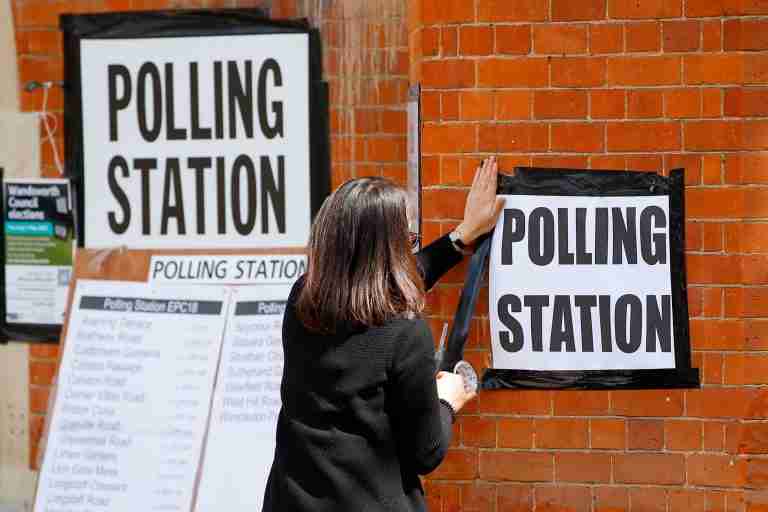
The British government said on Thursday it planned to give 16 and 17-year-olds the right to vote in all UK elections in a major overhaul of the country’s democratic system.
The government said the proposed changes, which are subject to parliament approvals, would align voting rights across the UK with Scotland and Wales, where younger voters already participate in devolved elections.
“We are taking action to break down barriers to participation that will ensure more people have the opportunity to engage in UK democracy,” Deputy Prime Minister Angela Rayner said in a statement.
Turnout at the 2024 general election was 59.7%, the lowest at a general election since 2001, according to a parliamentary report.
According to the House of Commons library, research from countries that have lowered the voting age to 16 shows it has had no impact on election outcomes, and that 16-year-olds were more likely to vote than those first eligible at 18.
Labour, whose popularity has fallen sharply in government after being elected by a landslide a year ago, had said it would lower the voting age if elected.
The reforms would also expand acceptable voter ID to include UK-issued bank cards and digital formats of existing IDs, such as driving licences and Veteran Cards.
To tackle foreign interference, the government said it also planned to tighten rules on political donations, including checks on contributions over 500 pounds ($670) from unincorporated associations and closing loopholes used by shell companies.
($1 = 0.7462 pounds)
Reporting by Sam Tabahriti and Muvija M; Editing by Kate Holton
Data showing a 109,000 drop in the number of employees on company payrolls in May was revised to show just a 25,000 decline
International News via Reuters:
The pound strengthened against the euro on Thursday, after data showed that a cooling in the British labour market, which had alarmed some policymakers, now appears less acute than the previous report had suggested.
The euro was last down 0.22% on the pound at 86.52 pence, as the data reduced pressure on the Bank of England to accelerate the pace of its rate cuts, supporting sterling.
The labour market numbers presented a mixed picture. Annual wage growth in the three months to May was 5.0%, its lowest since the second quarter of 2022, but was still slightly higher than the 4.9% median forecast from economists in a Reuters poll.
In addition, data from the previous month showing a dramatic 109,000 drop in the number of employees on company payrolls in May was revised to show just a 25,000 decline.
“Today’s labour market report continues to paint a picture of a loosening jobs market. That said, the labour market picture looks better than it did last month,” said Sanjay Raja, Deutsche Bank’s chief UK economist, in emailed comments.
In combination with Wednesday’s hotter than expected British inflation data, the jobs numbers leave the Bank of England in a somewhat tricky situation, balancing sticky inflation, and slowing, if not collapsing employment.
However, for this year, “this takes some of the pressure off the Bank of England to cut rates more quickly”, said James Smith, developed markets economist, UK, at ING in a note.
As well as the euro, the pound was stronger on most other currencies including the yen, and Swiss franc.
Versus the dollar, however the pound was down 0.15% at $1.1340, as the U.S. currency strengthened across the board, recovering from its Wednesday selloff.
On Wednesday, media reports saying U.S. President Donald Trump was likely to soon fire Federal Reserve Chair Jerome Powell sparked a drop in the dollar.
Trump said later that day he was not planning on firing Powell, but kept the door open to the possibility and renewed his criticism of the central bank chief for not lowering interest rates.
The computer will be named Magne, inspired by Norse mythology
International News via Reuters:
The Novo Nordisk Foundation and Denmark’s state-owned credit fund said on Thursday they will invest in what they say will be the world’s most powerful quantum computer, aiming to revolutionize areas such as drug discovery and materials science.Quantum computing holds the promise of carrying out calculations that would take today’s systems millions of years and could unlock discoveries in medicine, chemistry and many other fields where near-infinite seas of possible combinations of molecules confound classical computers.
The Novo Nordisk Foundation, the non-profit which controls pharmaceutical giant Novo Nordisk, and Denmark’s Export and Investment Fund (EIFO), said in a statement they would invest 80 million euros ($92.93 million) in the initiative called QuNorth.
Microsoft, which has its largest quantum lab in Denmark, will provide software and Atom Computing will build the quantum computer.
The computer will be named Magne, inspired by Norse mythology where Magne, the son of Thor, is known for his immense strength.
Construction will begin in autumn and the computer is expected to be ready by the end of next year.
The quantum computer will start operating with 50 logical qubits, Jason Zander, Microsoft’s executive vice president, told Reuters.
A qubit, short for quantum bit, is the basic unit of information in a quantum computer and a logical qubit is a virtual qubit built from many physical qubits to reliably process quantum information.
Last November, Microsoft and Atom created 24 logical qubits, the highest number ever created.
“When we get to about 50 logical qubits, that’s when we start hitting true quantum advantage,” Zander said.
“I get to the point where I can run something on a quantum computer that I could not run on a classic computer.”
“When the machine gets up to 100 (logical qubits), we can start doing science problems, get up to a couple 100s, we can start doing some chemistry and starting to answer things, and then when all the way up to 1,000, now you are solving everything,” Zander said.
($1 = 0.8606 euros)
Reporting by Supantha Mukherjee in Stockholm and Stine Jacobsen in CopenhagenEditing by Frances Kerry
The number of employees on company payrolls dropped by a provisional 41,000 in June after a 25,000 decline in May
International News via Reuters:
British pay growth slowed in May and employee numbers dropped further last month, but the cooling in the labour market which had alarmed some policymakers appeared less acute than previous data had suggested, official figures showed on Thursday.
Annual wage growth, excluding bonuses, slowed to its lowest since the second quarter of 2022 in the three months to May at 5.0%. But the figure was still slightly higher than the 4.9% median forecast from economists in a Reuters poll and April’s pay growth was revised up to 5.3% from 5.2%.
The number of employees on company payrolls dropped by a provisional 41,000 in June after a 25,000 decline in May.
However, the May decline was far less sharp than the originally reported reading of 109,000, which represented the biggest decline since early in the COVID-19 pandemic and had triggered concern that businesses were retrenching rapidly in the face of higher labour costs and a weak growth outlook.
“The latest figures ease immediate pressure on the Bank of England to accelerate interest rate cuts. Though the labour market continues to soften, the hefty revision to May’s payrolled employees figure paints a less alarming picture than previously,” said Jack Kennedy, senior economist at recruitment site Indeed.
Five-year British government bond yields rose to a one-month high after the data and financial market expectations for an August rate cut softened marginally.
The ONS said May’s initial estimate of the fall in payroll numbers had been more provisional than usual due to an earlier-than-usual publication date for the labour market data last month.
INFLATION PRESSURE
The Bank of England is closely watching wage growth and employee numbers for signs of how persistent domestic price pressures are likely to prove, especially after data on Wednesday showed inflation in June rose to its highest since January 2024 at 3.6%.
Most BoE policymakers view annual wage growth of around 3% as desirable for consumer price inflation to stay near its 2% target over the medium term.
In May, the BoE forecast that annual private-sector wage growth, excluding bonuses, would be 5.2% in the three months to June and slow to 3.8% in the final quarter of this year.
Thursday’s data showed that this measure of pay growth slowed to 4.9% in the three months to May.
Despite the above-target inflation – which the BoE does not forecast to be back on track until early 2027 – most economists expect the BoE to cut rates by a quarter point next month and again later this year.
A combination of fewer job vacancies and more people looking for work is one of the key reasons why the BoE thinks it needs to keep cutting interest rates at a gradual pace to stop inflation falling too far below target in the longer term.
Some employers have been saying that they expect to scale back hiring due to an increase in the minimum wage and employers’ social security contributions that took effect in April, as well as a planned tightening of employment laws.
Thursday’s data showed that the number of job vacancies fell by 56,000 in the second quarter to 727,000, the lowest number since the three months to April 2021.
There was also potentially concerning news on unemployment, though long-standing problems with the response rate to the ONS’ labour force survey means the BoE places less weight on it and related employment and inactivity numbers than in the past.
Britain’s unemployment rate in the three months to May rose from 4.6% to 4.7%, its highest since the second quarter of 2021, in contrast to economists’ expectations in a Reuters poll for it to stay unchanged.
The increase appears to reflect more people entering the labour market to look for work.
The number of people in work rose by 134,000 on the quarter – far above economists’ forecasts for a 46,000 rise – while there was a 139,000 drop in “economic inactivity”, a category that includes the long-term sick, students and unpaid carers but not unemployed people looking for work.
Higher inactivity since the COVID-19 pandemic has been a major concern of British governments and this fall reduced the inactivity rate to its lowest since April 2020 at 21.0%, down from 21.4% in the three months to February.
“The LFS data suggest the labour market is easing in a positive way, with the inactivity rate falling as employment continues to growth. That could be disinflationary if it continues,” said Rob Wood, chief UK economist at Pantheon Macroeconomics.
Reporting by David Milliken and Suban Abdulla; Editing by Catarina Demony and Toby Chopra
Merz’s day trip follows a three-day state visit to Britain by French President Emmanuel Macron
International News via Reuters:
Friedrich Merz embarks on his first trip to London as German chancellor on Thursday to sign a wide-ranging friendship treaty with British Prime Minister Keir Starmer, part of a broader push to reset the EU’s relationship with Britain.
Merz’s day trip follows a three-day state visit to Britain by French President Emmanuel Macron, signalling greater cooperation between Europe’s top three powers at a time of threats to the continent and uncertainty about their U.S. ally.
Europe has been confronted with new U.S. tariffs since President Donald Trump returned to the White House as well as questions about the U.S. commitment to defend its European allies, including Ukraine in the face of Russia’s invasion.
“The agreement comes at a time when, as Europeans, we are particularly challenged in terms of security policy,” a German government official said in a briefing ahead of the trip.
“Not stated in the preamble is that transatlantic matters are also — let’s put it this way — in flux. This too is part of the context.”
Germany has such friendship treaties with just a handful of countries like France, symbolizing the closeness of their ties.
Coming nearly a decade after Britain voted to leave the European Union, the treaty includes a clause on mutual assistance which, “in light of the Russian war of aggression against Ukraine, is highly significant”, the official said.
It builds on a defence deal agreed last year that included the joint development of long-range strike weapons, and comes after France and Britain agreed last week to reinforce cooperation over their respective nuclear arsenals.
As part of the announcement on Thursday, Britain and Germany will pledge to “pursue joint export campaigns” to drum up orders from other countries for equipment they make jointly, such as the Typhoon Eurofighter jet and the Boxer armoured vehicle.
That could help boost sales, and represents a significant reversal from the previous ten years, when Germany blocked Saudi Arabia and Turkey from buying Typhoons.
Typhoons are made by a consortium of European companies, including BAE Systems in Britain and Airbus in Germany, with the different partner governments responsible for orders to different countries; the Boxer is made by a German-British joint venture, Rheinmetall BAE Systems Land.
Further deepening ties, a German defence tech company, Stark, has also agreed to build a new factory in Britain, the first production facility outside of Germany, to create AI-powered unmanned systems.
Beyond defence, the treaty will also include an agreement to jointly combat smuggling and human trafficking, the German official said – addressing a key demand of Starmer’s government which is under pressure to show it can control migration.
The British government said Germany would make a landmark commitment to outlaw the facilitation of illegal migration to Britain, with a law change to be adopted by the end of the year.
That would give law enforcement the tools to investigate warehouses and storage facilities used by migrant smugglers to conceal dangerous small boats intended for illegal crossings to Britain, it said in a statement.
Reporting by Sarah Marsh in Berlin and Elizabeth Piper and Sarah Young in London;Editing by Ros Russell
Shares of rivals Siemens and Schneider Electric drove the European industrials index to a new record high, up 2%
International News via Reuters:
European shares rose on Thursday after four consecutive sessions of losses, supported by strong quarterly results from Switzerland’s ABB and optimism over a potential U.S. trade deal.
The pan-European STOXX 600 index was up 0.7% as of 0854 GMT. All the major regional indexes traded higher, with Germany’s trade-sensitive DAX up 1%, leading the pack.
ABB jumped 7.2% after the engineering firm posted a record quarterly order intake, driven by strong U.S. demand and for products used in data centres to support artificial intelligence.
Shares of rivals Siemens and Schneider Electric added 2.9% and 5.5%, respectively, and drove the European industrials index to a new record high, up 2%.
The sector also led broader market gains in the European benchmark index.
European chipmakers recouped some losses from the previous session as TSMC, the world’s main producer of advanced AI chips, posted a record profit in the second quarter. ASML rose 1.5%, following an 11% drop on Wednesday.
“European markets today are bouncing back … the earnings, of course, have an impact on the stock market, but also everything to do with President Trump seems to still be at the forefront,” said Axel Rudolph, senior technical analyst at IG Group.
Rudolph added that Trump would likely strike a deal with EU by August 1 despite tough talk on tariffs, noting “EU’s threat will be taken seriously by the U.S. because it would definitely hamper their trade”.
Meanwhile, investors awaited for clarity on U.S.-EU trade talks as the bloc readied retaliatory measures if ongoing negotiations with Washington failed.
On Wednesday, U.S. President Donald Trump eased market anxiety after denying reports that said he was planning to fire Federal Reserve Chair Jerome Powell soon.
He, however, confirmed that he had floated the idea with Republican lawmakers and renewed his criticism of the Fed chief for not cutting interest rates.
Among individual stocks, Ocado rose 12.7%, to the top of the STOXX 600, after the British online supermarket and technology firm said it targets positive cash flow in its next financial year.
Evolution gained 7% after the Swedish gaming technology company reported its second-quarter results.
Conversely, UK’s Wise slumped 9.4% after the money transfer firm missed its quarterly income estimates.
British budget airline EasyJet fell 6% after warning that French air traffic strikes and rising fuel costs would weigh on annual profit.
Reporting by Sanchayaita Roy in Bengaluru; Editing by Nivedita Bhattacharjee and Sonia Cheema
To provide the best experiences, we use technologies like cookies to store and/or access device information. Consenting to these technologies will allow us to process data such as browsing behavior or unique IDs on this site. Not consenting or withdrawing consent, may adversely affect certain features and functions.
Functional
Always active
The technical storage or access is strictly necessary for the legitimate purpose of enabling the use of a specific service explicitly requested by the subscriber or user, or for the sole purpose of carrying out the transmission of a communication over an electronic communications network.
Preferences
The technical storage or access is necessary for the legitimate purpose of storing preferences that are not requested by the subscriber or user.
Statistics
The technical storage or access that is used exclusively for statistical purposes.The technical storage or access that is used exclusively for anonymous statistical purposes. Without a subpoena, voluntary compliance on the part of your Internet Service Provider, or additional records from a third party, information stored or retrieved for this purpose alone cannot usually be used to identify you.
Marketing
The technical storage or access is required to create user profiles to send advertising, or to track the user on a website or across several websites for similar marketing purposes.