In tonight’s TV news starting at 7pm…
- Bermuda’s first drug bust involving ‘pink cocaine’
- Police investigate firearms incident in Warwick
- Overcrowding puts hospital on alert
- Bermuda footballer Nahki Wells transferred to Luton Town


In tonight’s TV news starting at 7pm…

A member of the regional assembly for Irish nationalists, called the display “deplorable” and a “clear incitement to hatred”

International News via Reuters:
A model of refugees in a boat, placed on a bonfire in a pro-British town near Belfast, prompted condemnations by politicians across Northern Ireland’s political divides on Thursday, weeks after migrants’ homes were attacked nearby.
Bonfires are lit across the British region in mainly Protestant “loyalist” neighbourhoods on the eve of the July 12 commemorations of William of Orange’s victory over the Roman Catholic King James at the Battle of the Boyne in 1690.
Pictures and effigies of Catholic Irish politicians and anti-Catholic slogans are often placed on some of the bonfires, which are built from wooden pallets in the weeks ahead of July 12.
Effigies of eight immigrants in life jackets were placed in a model boat alongside an Irish flag on top of the bonfire that is due to be lit on Thursday evening in the town of Moygashel, 65 km (40 miles) west of Belfast. Banners below the boat read “Stop the Boats” and “Veterans before Refugees.”
A member of the regional assembly for Irish nationalists Sinn Féin, Colm Gildernew, called the display “deplorable” and a “clear incitement to hatred” that must be removed immediately.
Ulster Unionist Party leader Mike Nesbitt called for the effigies to be removed and said he condemned them “without reservation”.
“This image is sickening, deplorable and entirely out of step with what is supposed to be a cultural celebration,” Nesbitt, who is the region’s health minister, wrote on X.
A statement from the pro-British Democratic Unionist Party to the BBC said the effigy placement “should not take place”.
Bonfires and parades to mark July 12 have often prompted violence – by both supporters and opponents – even after a 1998 peace deal largely ended three decades of conflict between Catholic nationalists aspiring to unification with Ireland, the British state and Protestant unionists seeking to retain the status quo.
Supporters, who have recently moved to rebrand July 12 celebrations as Orangefest, say the marches and bonfires represent centuries-old traditions.
In June, masked rioters attacked police and set homes and cars on fire in Ballymena, 65 km northeast of Moygashel.
Writing by Amanda Ferguson and Clodagh Kiloyne; Editing by Conor Humphries and Andrew Heavens

Deal making in the snacking space has picked up pace as food brands battle with muted sales

International News via Reuters:
WK Kellogg on Thursday agreed to be bought by the owner of Ferrero Rocher in a deal worth around $3.1 billion, uniting two of the world’s most recognizable consumer brands to weather a tough spending backdrop marked by persistent inflation.
Deal making in the snacking space has picked up pace as food brands battle with muted sales in the wake of price hikes owing to higher input costs and a shift in consumer preference for healthier options.
Kellanova, which was created at the same time as WK Kellogg when Kellogg Company split into two, is also in the process of being acquired by candy giant Mars in a nearly $36 billion deal.
Shares of WK Kellogg jumped 30.6% at $22.85 in mid-day trading on Thursday, nearly matching the premium that Ferrero’s $23 per share deal represented.
The acquisition, Ferrero’s biggest since 2018, will bring legacy brands such as Nutella, Kinder, Tic Tac, Frosted Flakes, Froot Loops and Special K under one roof when the transaction closes, expectedly in the second half of 2025.
“WK Kellogg’s (acquisition) gives it diversification from its cocoa heavy portfolio and instant U.S. distribution, shelf space, and a brand portfolio … in a lucrative market that it can drizzle with innovation at a relatively good price,” Michael Ashley Schulman, chief investment officer of Running Point Capital Advisors said.
Strong demand and strained supply had pushed cocoa prices to a record high last year, sparking concerns among companies that use the chocolate-making ingredient for packaged food items.
Several U.S. packaged food companies, including J.M. Smucker, Kraft Heinz and PepsiCo, have also been hit by uncertainties sparked by President Donald Trump’s erratic trade policy.
More recently, they even came under pressure from Health Secretary Robert F. Kennedy Jr.’s Make America Healthy Again Commission to eliminate the use of synthetic dyes.
Ferrero, the maker of Nutella hazelnut spread, has turned into a global group, boosted by the aggressive acquisition campaign launched by its executive chairman, Giovanni Ferrero.
In 2018, Ferrero bought Nestle’s U.S. confectionery business for $2.8 billion.
The group reported a turnover of 18.4 billion euros ($19.2 billion) in the financial year ending on August 31 and said it had increased its investments to boost manufacturing capabilities and expand across categories.
Reporting by Medha Singh, Savyata Mishra and Aishwarya Venugopal in Bengaluru; Editing by Janane Venkatraman, Mrigank Dhaniwala, Sriraj Kalluvila and Shinjini Ganguli
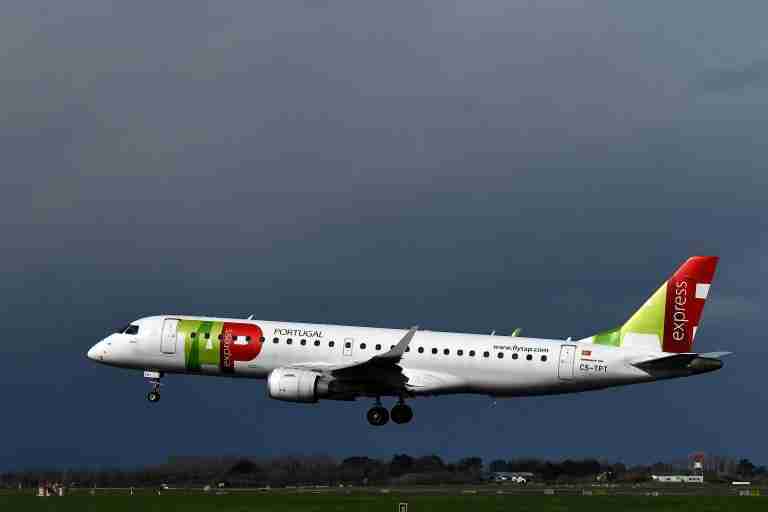
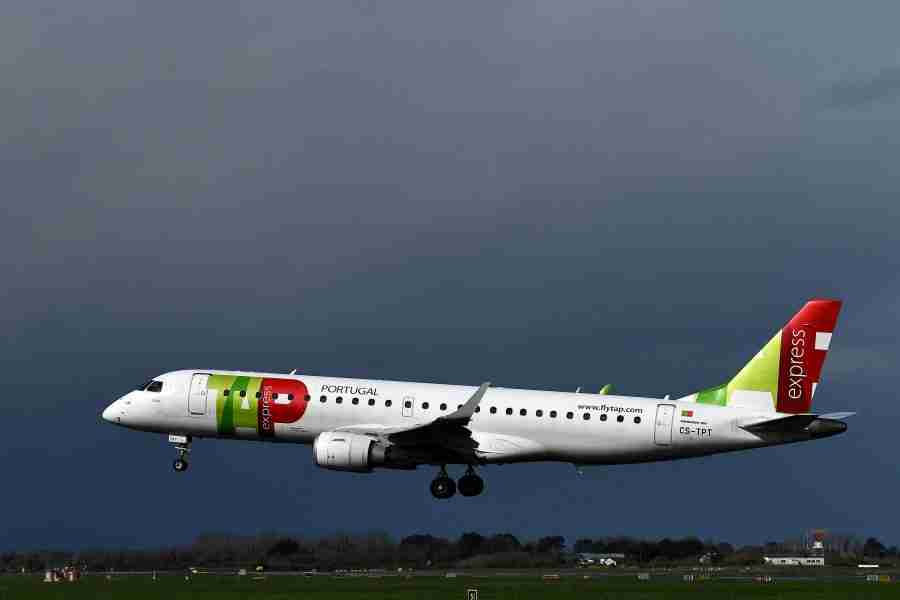
The airline’s privatisation has already attracted interest from the three major European airlines
International News via Reuters:
Portugal relaunched the long-delayed privatisation of flag carrier TAP on Thursday, with Prime Minister Luis Montenegro saying the government aimed to sell 49.9% including a 5% stake to be offered to employees.
The airline’s privatisation has already attracted interest from the three major European airlines – Lufthansa, Air France-KLM, and British Airways owner IAG — which have held meetings with the government over the past year.
Air France-KLM reiterated its interest, saying in a statement it “will participate in this process once all details are released”.
IAG was more ambiguous: “As we have previously stated, IAG looks forward to reviewing the terms of the potential sale of TAP and will carefully consider all details and conditions of the process as soon as they are made available”.
Lufthansa declined to comment.
“We are convinced that there will be many interested parties,” Montenegro said. By choosing a strategic partner, the government “wants to ensure the company’s sustainability and profitability, and to be able to contribute to the country’s economic development”, he said.
“We took this decision (to privatise) because we’ve already spent a lot of money … We don’t want to continue pouring money into a bottomless pit,” Montenegro said in a brief televised statement.
TAP’s most attractive assets are its key slots to Brazil, Portuguese-speaking African countries, and the United States from its Lisbon hub, which the government wants to maintain and even grow.
Montenegro also said that TAP is crucial for Portugal as it flies in the bulk of air travellers, supporting the tourism boom the country has experienced in recent years.
TAP made a record 1.6 billion euro ($1.87 billion) loss in 2021 during the COVID-19 pandemic, leading to an extensive restructuring and a 3.2-billion-euro bailout by the state, but returned to the black in the last three years.
In 2024, TAP, which employs around 8,000 people, transported more than 16 million passengers with its main fleet of 99 aircraft and the 19 aircraft of its subsidiary TAP Express, which focuses on short and medium-haul flights.
TAP has long been earmarked for privatisation, but the process stalled again when the centre-right minority government collapsed in March.
The coalition returned to power after a national election in May, still well short of a majority in parliament, which could block the sale of TAP.
($1 = 0.8557 euros)
Reporting by Sergio Goncalves and Andrei Khalip; Editing by Susan Fenton
Shadow Health Minister says it also raises concern over insurance company mergers

One Bermuda Alliance Press Release from Robin Tucker, Shadow Health Minister:
Bermuda’s children and their families have been receiving quality care from Boston Children’s Hospital for decades so the news that Argus/BF&M will limit full insurance coverage to higher coverage tiers is concerning. Boston Children’s is ranked as the number one children’s hospital in the US and is consistently ranked amongst the best globally. The result of this decision is that some families will have to go elsewhere because of an inability to pay the portion of medical costs that will be uncovered by insurance.
This issue raises further concern about the impact of mergers of key service provider, such as insurance companies and the impact it has on the people of this tiny island.
As the working population continues to shrink health premiums continue to rise at unsustainable rates and we see coverage options shifting. The merger of two of three major health insurance providers has basically stripped Bermudians of choice and we find ourselves at the mercy of the insurance companies.
During the budget the Government promised refinement of regulatory oversight for health insurers. I would hope that as part of that refinement, that they will strengthen the Bermuda Health Council’s powers sufficiently to ensure that there is greater protection for Bermudians in the health insurance space.

Various factors indicate that Europe’s grids need a massive overhaul

International News via Reuters:
The European electricity transmission system operator’s (TSO) investment plans to upgrade and expand power grids over the next five years face a 250 billion euro ($293 billion) shortfall, a report by Boston Consulting Group (BCG) said on Thursday.
WHY IT IS IMPORTANT
At the end of April, Spain and Portugal lost power in their worst blackout. Last week there was a power outage in large parts of the Czech Republic. Such incidents have added to concerns about the resilience of Europe’s electricity system.
Increased electrification, power demand growth from AI and data centres, renewables integration and ageing infrastructure mean that Europe’s grids need a massive overhaul.
The report did not provide detail on subsidies some grid operators might receive. Some TSOs can receive subsidies through EU funding programmes or member state initiatives.
BY THE NUMBERS
Europe’s 15 largest TSOs are expected to increase operating cash flow to 120 billion euros from 2025-2029, up from 57 billion euros for 2020-2024, the report said.
They plan to triple capital investment to 345 billion euros over the next five years.
Assuming dividends between 25 billion and 30 billion euros would also need to be paid, this would leave a funding gap of about 250 billion euros, the report said.
This would need to be plugged through debt, equity, divestitures or lower dividends, the report added.
CONTEXT
Europe needs to build more grid infrastructure over the next five years than it has over the past two decades, the report said.
Balance sheets of TSOs are under strain. Many are operating with high debt and publicly traded TSOs are struggling to raise equity in the face of fierce competition.
KEY QUOTE
“Without rapid innovation in how we finance grid infrastructure, Europe risks having world-class renewable generation that can’t reach consumers because the grid hasn’t kept pace,” said Tom Brijs, BCG partner and co-author of the report.
($1 = 0.8528 euros)
Reporting by Nina ChestneyEditing by David Goodman

Customs officers intercept new synthetic party drug at the airport leading to one arrest, hospital moves to alert level 3 due to overcrowding, new taxi pre-booking service aims to end long customer wait times, says BTOA plus all the latest sports news

Bermudians Gazzard & Weikl wrap their campaign with a hard battle

Bermuda’s dynamic beach volleyball duo of Olivia Gazzard and Sophie Weikl concluded their campaign at the North, Central America and Caribbean Volleyball Confederation (NORCECA) Under 18 Beach World Championship Qualifier today, finishing in 10th place overall. The event, held on the sands of Juan Dolio Beach, served as a crucial qualifier for the FIVB U18 World Championship later this year in Doha, Qatar.
In their final match, a play-off for 9th and 10th position, Gazzard and Weikl faced Mariana Vindas and Luciana Soto from Costa Rica. The Bermudian pair battled hard but ultimately went down 2-0 to their Central American opponents. Vindas and Soto secured the win with set scores of 22-20 and 21-9 in a 30-minute battle, showcasing their strong performance in a tight first set.
This final match followed a series of hard-fought encounters for Gazzard and Weikl throughout the tournament. While they secured a convincing 2-0 victory over Anguilla (21-14, 21-11) earlier in the competition, they faced tough opposition from Mexico (21-8, 21-4) and the United States (21-3, 21-10) in their group stage.
Despite not achieving World Championship qualification – a feat that typically requires a top-five finish at the NORCECA qualifier – the experience gained by Gazzard and Weikl against top-tier international competition from the NORCECA region will be invaluable for their continued development in beach volleyball. Their performance in this highly competitive qualifier provided a significant platform for them to gain experience, learn, and grow as athletes, boding well for their future in the sport. The tournament concluded yesterday.

Daniel Augustus out after two rounds in Oxford, having gained valuable experience

Bermudian professional golfer Daniel Augustus has concluded his highly anticipated debut on The Clutch Tour, competing in The Rapsodo Open at the Oxford Golf Club in England. Unfortunately for Augustus, his campaign ended after two rounds, as he missed the cut for the weekend’s play.
After carding an even-par 70 in his opening round, which initially placed him in a tie for 48th, Augustus faced a tougher challenge in his second round. He shot a five-over-par 75, bringing his total to five-over-par for the tournament and seeing him finish in a tie for 129th position among the strong field.
Augustus’s second round scorecard included one birdie and thirteen pars, but these positive scores were offset by two bogeys and two double bogeys, preventing him from advancing.
While the result was not what he had hoped for, competing on The Clutch Tour represents a significant step for the Bermudian.
This debut provides invaluable experience against a strong field on Europe’s leading developmental tour, which offers Official World Golf Ranking (OWGR) points. Augustus will now look to regroup and apply the lessons learned as he continues his pursuit of competitive opportunities on the professional circuit.
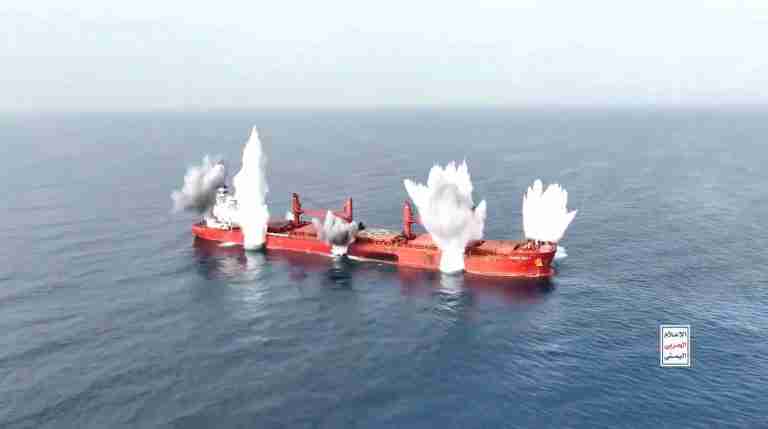
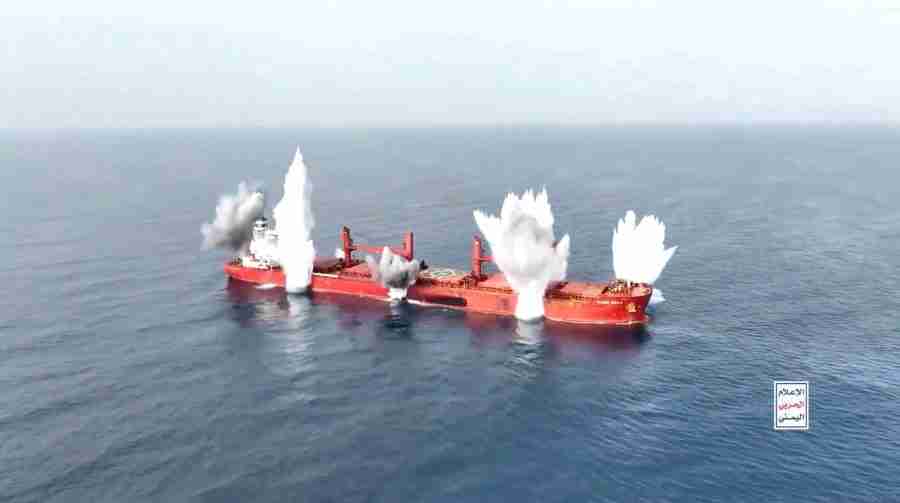
It was the second Greek bulk carrier sunk this week by the Iran-aligned Houthi militia
International News via Reuters:
Rescuers pulled three more crew members and a security guard alive from the Red Sea on Thursday, maritime security sources said, a day after Houthi militants sank the Greek ship Eternity C and said they were holding some of the crew still missing.
It was the second Greek bulk carrier sunk this week by the Iran-aligned Houthi militia, shattering months of relative calm off Yemen’s coast, the gateway to the Red Sea and a critical route for oil and commodities to the world.
Many shipping companies have suspended voyages due to the fear of attack. The Houthis are believed to be holding six of the Eternity C’s complement of 22 crew and three guards, maritime security sources said.
“These are blameless victims who were simply doing their job,” the UK-based Seafarers’ Charity association said.
“Seafarers should be able to work safely at sea. Instead, they are being unfairly forced into the firing line.”
Eternity C was first hit on Monday with sea drones and rocket-propelled grenades fired from speed boats. Four people are believed to have been killed in the attacks, maritime security sources say. If confirmed, the deaths would be the first fatalities in the area since June 2024.
Following a second attack on Tuesday morning, the crew were forced to jump into the water. Rescuers have been searching for survivors since Wednesday morning. The vessel’s operator, Cosmoship Management, has not responded to Reuters’ requests for comment.
A total of 10 survivors from the Eternity C have been rescued so far – eight Filipino crew members, one Indian and one Greek security guard. The four people rescued on Thursday morning had spent nearly 48 hours in the water.
“This fills us with more courage to continue to search for those missing, as the Greek vessel operator requested, and shows that our search plan was correct,” said Nikos Georgopoulos, an official at the Greece-based maritime risk firm Diaplous.
Another 11 people are still missing.
The United States’ Mission in Yemen has accused the Houthis of kidnapping crew members and has called for their immediate, unconditional release.
On Wednesday, the Houthis’ military spokesperson said in a televised address that the Yemeni navy had “responded to rescue a number of the ship’s crew, provide them with medical care, and transport them to a safe location”.
FRAUGHT PASSAGE
The Eternity C sank on Wednesday, days after Houthis hit and sunk the Magic Seas, reviving a campaign launched in November 2023 that has seen more than 100 ships attacked in what the group said was solidarity with the Palestinians in the Gaza war.
Both of the vessels hit this week flew Liberian flags and were operated by Greek companies. All crew from the Magic Seas were rescued before it went down.
Some of their sister vessels in the respective fleets had made calls to Israeli ports in the past year, an analysis of shipping data showed.
Abdul Malik al-Houthi, the leader of Yemen’s Houthi fighters, reiterated in a televised address on Thursday the group’s ban on companies transporting goods related to Israel through the Red Sea, Gulf of Aden and the Arabian Sea.
He said this week’s attacks were part of that ban, which has been in place since 2023.
“It was never stopped or cancelled, and it is a valid decision,” he said. “What was discovered (this week) was the violation by some companies of the decision.”
The insurance cost of shipping goods through the Red Sea has more than doubled since this week’s attacks, with some underwriters pausing cover for some voyages, industry sources said on Thursday.
The number of daily sailings through the narrow Bab al-Mandab strait, at the southern tip of the Red Sea and a gateway to the Gulf of Aden, was 32 vessels on July 9, down from 43 on July 1, Lloyd’s List Intelligence data showed.
Several ships on Thursday broadcast messages referring to Chinese crew and management or armed guards on board, according to MarineTraffic data. One vessel broadcast that it had no relation with Israel.
Reporting by Renee Maltezou and Yannis Souliotis in Athens, Jonathan Saul in London, Jana Choukeir in Dubai; Writing by Renee Maltezou, Jonathan Saul and Andrew Mills; Editing by Gareth Jones and Alex Richardson

Shares of the company rose more than 5%.

International News via Reuters:
Polestar reported a surge in second-quarter sales on Thursday, bolstered by strong demand for its electric vehicles in its home market of Europe, even as it faces challenges in markets such as the U.S.
Shares of the company rose more than 5%.
Demand for Polestar’s EVs has remained resilient in Europe due to offers and discounts, while several other markets have been weighed by high interest rates, inflation and availability of more affordable hybrid or gas-powered options.
The Sweden-based company sold an estimated 18,049 vehicles in the second quarter, it said, a rise of 38% from the same quarter last year.Europe accounts for 76% of the company’s total sales, CEO Michael Lohscheller told Reuters, adding that Polestar remains “laser focused” on the continent.
Lohscheller reiterated the company’s commitment to localize manufacturing as American import tariffs threaten to hike production costs and disrupt global supply chains.
“In a world where you have more and more tariffs, and also changing tariffs… the only way forward is to localize.”
The tariffs have affected Polestar more than most European automakers because the majority of its cars are produced in China, either by Volvo Cars or Geely. Polestar last week said it would make its Polestar 7 SUV model at a Volvo Cars factory in Slovakia in order to minimize exposure to tariffs. Its vehicle sales in the U.S. fell 56% in the second quarter, Lohscheller said, as the country has seen strong competition and reluctance from consumers to splurge on pricey battery vehicles.
U.S. EV makers Tesla and Rivian also reported drops in second quarter deliveries earlier this month. The country’s EV market is likely to see further pressure from the end of a $7,500 tax credit – which has boosted sales in recent years – this fall.
Reporting by Zaheer Kachwala in Bengaluru; Editing by Leroy Leo
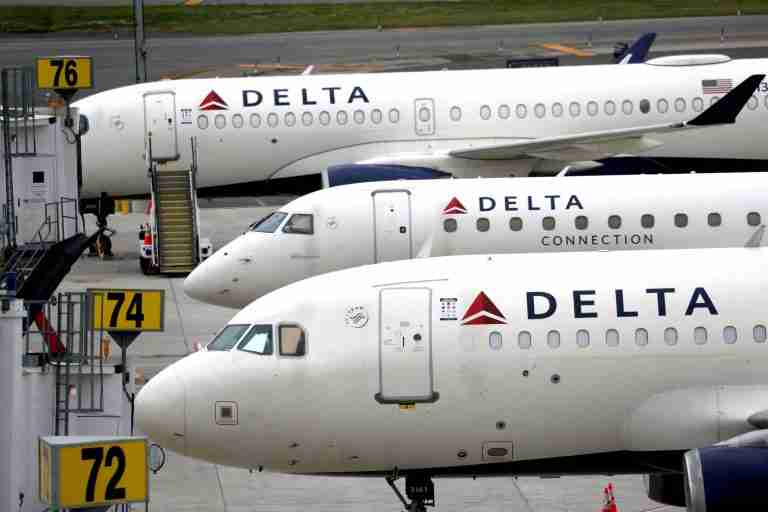
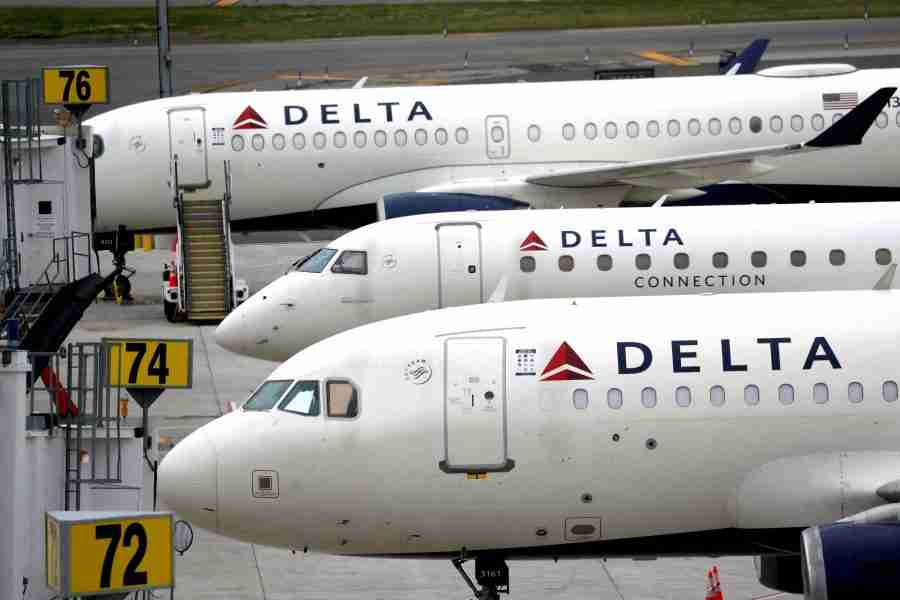
Many airline services remain disrupted in the Middle East
International News via Reuters:
Many airline services remain disrupted in the Middle East following the 12-day air war between Iran and Israel that ended with a U.S.-brokered ceasefire which took hold at the end of June.
Tehran’s main Imam Khomeini Airport opened on July 4 at the end of a 20-day suspension of flights imposed due to Israeli attacks on Iran. But air space closures and safety concerns continue to weigh on airline traffic in the region.
Below are some of the airlines that have cancelled their flights to and from the region:
AEGEAN AIRLINES
The Greek airline will resume part of its flight schedule to and from Beirut starting from July 10, as of July 16 to and from Erbil and as of July 19 to and from Amman. Flight cancellations from and to Tel Aviv will continue up to and including its early morning flight on September 8.
AIR ARABIA
The UAE low-cost airline is resuming flights to Damascus starting on July 10.
AIRBALTIC
Latvia’s airBaltic said that all flights to and from Tel Aviv until September 30 had been cancelled.
AIR CANADA
The Canadian carrier is suspending its flights from Toronto to Dubai until August 4. It had previously postponed resumption of service between Canada and Israel to September 8.
AIR EUROPA
The Spanish airline said that it had cancelled its flights to and from Tel Aviv until July 13. From July 14 to July 31, it will operate on Mondays, Wednesdays, Thursdays and Sundays, and from August 1 onwards, it will operate every day of the week except Saturdays.
AIR FRANCE-KLM
The group’s Dutch arm KLM said it had cancelled all its flights to and from Tel Aviv until August 30.
DELTA AIR LINES
The U.S. carrier said that travel to, from or through Tel Aviv may be impacted between June 12 and August 31.
EMIRATES
Emirates said that it had cancelled all flights to and from Tehran through July 17.
FINNAIR
The Finnish airline said that all Doha flights will be rescheduled to depart 25-30 minutes earlier between July 10 and September 2. The carrier added that, currently, it is not flying through the airspace of Iraq, Iran, Syria or Israel.
IAG
IAG-owned British Airways said its flights to Tel Aviv were suspended until July 31. IAG’s low-cost airline, Iberia Express, has cancelled its flights to Tel Aviv until October 25.
ITA AIRWAYS
The Italian Airline said that it would extend the suspension of Tel Aviv flights until July 31, including two flights scheduled on August 1.
LUFTHANSA GROUP
Lufthansa said that it had suspended all flights to and from Tel Aviv until and including July 31 and to and from Tehran until August 17. Flights to and from Amman are cancelled until and including July 11.
PEGASUS
The Turkish airline said that it had cancelled all flights to Iran until the end of July.
QATAR AIRWAYS
The Qatari carrier said that flights to Iran remain temporarily suspended.
RYANAIR
Ryanair said that it had cancelled flights to and from Tel Aviv and to and from Amman until October 25.
UNITED AIRLINES
The U.S. carrier said that it would restart its services to Tel Aviv on July 21, with a second daily flight resuming on July 22.
WIZZ AIR
The Hungarian airline said that it will resume its flights to and from Tel Aviv on August 8. Flights to Amman are suspended until September 15.
Reporting by Reuters bureaus; compiled by Agnieszka Olenska, Elviira Luoma and Tiago Brandao, Editing by Matt Scuffham, Alison Williams and Milla Nissi-Prussak