Move comes after scores injured in devastating van crash at a parade in Liverpool
FILE PHOTO: A Police officer stands guard on the Champs Elysees avenue, next to the Arc de Triomphe, in Paris, France, April 26, 2025. REUTERS/Abdul Saboor/File Photo
International news via Reuters:
Paris will deploy 5,400 police officers for Saturday’s UEFA Champions League final between Paris Saint-Germain and Inter Milan, police chief Laurent Nunez said on Friday in an interview with French broadcaster Cnews.
Although the match will be held in Munich, a PSG victory would be expected to spark celebrations in the club’s home city which could escalate into disturbances.
In light of the incident in Liverpool earlier this week in which a car ploughed into soccer fans, Nunez said traffic around the Arc de Triomphe – one of the city’s best-known landmarks – will be blocked from midday Saturday, with the Champs-Élysées boulevard and nearby streets also closed that evening.
PSG’s win over Arsenal earlier this month, which secured their place in the final, sparked a night of unrest in Paris, with 47 people arrested and three others injured after being hit by a car.
“From 6 p.m. (1600 GMT) this Saturday, there will be no more traffic on the Champs-Élysées and in the perpendicular streets,” Nunez said.
“Individuals who come solely to commit vandalism and loot businesses, that’s a pattern we’re obviously working to systematically put an end to. That will also be the case on Saturday evening,” he added.
“We will obviously be extremely firm. As soon as there is damage, attacks on law enforcement, there will be interventions.”
Reporting by Charlotte Van Campenhout; Editing by David Holmes
Students from Britain and the European Union showing hesitancy towards U.S. universities
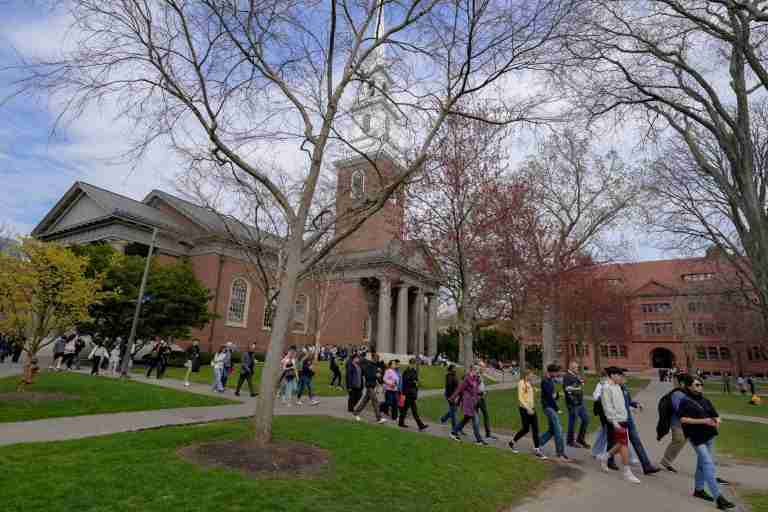
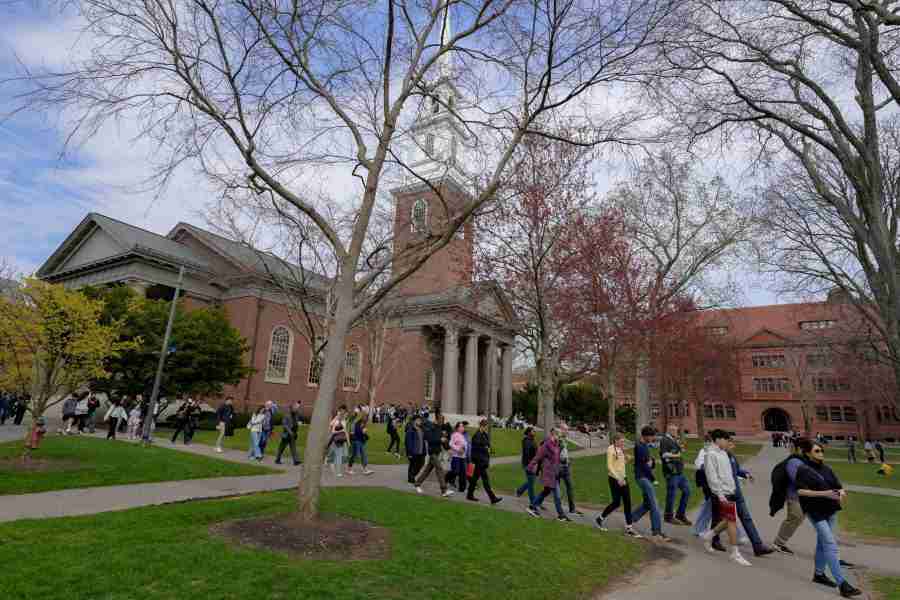
FILE PHOTO: Students walk on the campus of Harvard University in Cambridge, Massachusetts, U.S., April 15, 2025. REUTERS/Faith Ninivaggi/File Photo
International news via Reuters:
Universities around the world are seeking to offer refuge for students impacted by U.S. President Donald Trump’s crackdown on academic institutions, targeting top talent and a slice of the billions of dollars in academic revenue in the United States.
Osaka University, one of the top ranked in Japan, is offering tuition fee waivers, research grants and help with travel arrangements for students and researchers at U.S. institutions that want to transfer.
Japan’s Kyoto University and Tokyo University are also considering similar schemes, while Hong Kong has instructed its universities to attract top talent from the United States. China’s Xi’an Jiaotong University has appealed for students at Harvard, singled out in Trump’s crackdown, promising “streamlined” admissions and “comprehensive” support.
Trump’s administration has enacted massive funding cuts for academic research, curbed visas for foreign students – especially those from China – and plans to hike taxes on elite schools.
Trump alleges top U.S. universities are cradles of anti-American movements. In a dramatic escalation, his administration last week revoked Harvard’s ability to enrol foreign students, a move later blocked by a federal judge.
Masaru Ishii, dean of the graduate school of medicine at Osaka University, described the impact on U.S. universities as “a loss for all of humanity”.
Japan aims to ramp up its number of foreign students to 400,000 over the next decade, from around 337,000 currently.
Jessica Turner, CEO of Quacquarelli Symonds, a London-based analytics firm that ranks universities globally, said other leading universities around the world were trying to attract students unsure of going to the United States.
Germany, France and Ireland are emerging as particularly attractive alternatives in Europe, she said, while in the Asia-Pacific, New Zealand, Singapore, Hong Kong, South Korea, Japan, and mainland China are rising in profile.
SWITCHING SCHOOLS
Chinese students have been particularly targeted in Trump’s crackdown, with U.S. Secretary of State Marco Rubio on Wednesday pledging to “aggressively” crack down on their visas.
More than 275,000 Chinese students are enrolled in hundreds of U.S. colleges, providing a major source of revenue for the schools and a crucial pipeline of talent for U.S. technology companies.
International students – 54% of them from India and China – contributed more than $50 billion to the U.S. economy in 2023, according to the U.S. Department of Commerce.
Trump’s crackdown comes at a critical period in the international student application process, as many young people prepare to travel to the U.S. in August to find accommodation and settle in before term starts.
Dai, 25, a Chinese student based in Chengdu, had planned to head to the U.S. to complete her master’s but is now seriously considering taking up an offer in Britain instead.
“The various policies (by the U.S. government) were a slap in my face,” she said, requesting to be identified only by her surname for privacy reasons. “I’m thinking about my mental health and it’s possible that I indeed change schools.”
Students from Britain and the European Union are also now more hesitant to apply to U.S. universities, said Tom Moon, deputy head of consultancy at Oxbridge Applications, which helps students in their university applications.
There has been an uptick in applications to British universities from prospective students in the U.S., said Universities UK, an organisation that promotes British institutions. It cautioned, however, that it was too early to say whether that translates into more students enrolling.
REPUTATIONAL EFFECTS
Ella Ricketts, an 18-year-old first year student at Harvard from Canada, said she receives a generous aid package paid for by the school’s donors and is concerned that she won’t be able to afford other options if forced to transfer.
“Around the time I was applying to schools, the only university across the Atlantic I considered was Oxford… However, I realised that I would not be able to afford the international tuition and there was no sufficient scholarship or financial aid available,” she said.
If Harvard’s ability to enrol foreign students is revoked, she would most likely apply to the University of Toronto, she said.
Analytics firm QS said overall visits to its ‘Study in America’ online guide have declined by 17.6% in the last year — with interest from India alone down over 50%.
“Measurable impacts on enrolment typically emerge within six to 18 months. Reputational effects, however, often linger far longer, particularly where visa uncertainty and shifting work rights play into perceptions of risk versus return,” said QS’ Turner.
That reputational risk, and the ensuing brain drain, could be even more damaging for U.S. institutions than the immediate economic hit from students leaving.
“If America turns these brilliant and talented students away, they will find other places to work and study,” said Caleb Thompson, a 20-year-old U.S. student at Harvard, who lives with eight international scholars.
Reporting by John Geddie in Tokyo; Laurie Chen and Larissa Liao in Beijing and Sam Tabahriti in London; Editing by Michael Perry
The European Commission said trade talks between Brussels and Washington would continue
FILE PHOTO: European Union flags are seen outside the EU Commission headquarters in Brussels, prior to a meeting between Britain’s Secretary of State for Exiting the EU Dominic Raab and EU’s chief Brexit negotiator Michel Barnier, Belgium October 14, 2018. REUTERS/Francois Lenoir
International news via Reuters:
The European Union has gained leverage in trade talks with the United States after a U.S. court cast doubt on the legality of Washington’s “reciprocal” tariffs, EU officials said on Friday.
The European Commission said trade talks between Brussels and Washington would continue, with Europe sticking to its offer of mutual zero tariffs on industrial goods.
“There’s no change in our approach, we proceed as planned with both technical and political meetings next week,” a Commission spokesperson said.
A U.S. federal appeals court temporarily reinstated President Donald Trump’s tariffs on Thursday, a day after a U.S. trade court ruled that Trump had exceeded his authority in imposing the duties and ordered an immediate block on them.
“The uncertainty as to the legality of the ‘reciprocal’ tariffs certainly gives us extra leverage,” one EU official close to the talks said. “The talks will continue, as formally we still look for zero-for-zero tariffs,” the official said.
The EU was also willing to discuss some non-trade barriers with the U.S., officials said, but would not touch the EU’s taxation system — such as the value added tax or digital tax — or food safety standards.
The Commission, which conducts all trade negotiations on behalf of the 27-nation bloc, would not comment on the rulings because they were internal U.S. procedures.
EU Trade Commissioner Maros Sefcovic in a post on the X social media platform said he held a phone call with U.S. Commerce Secretary Howard Lutnick on Friday.
“Our time and effort fully invested, as delivering forward-looking solutions remains a top EU priority. Staying in permanent contact,” Sefcovic said on X.
More trade talks between the U.S. and the EU are scheduled for next week, on the sidelines of the OECD Ministerial Council Meeting in Paris on June 3-4.
EU officials said the U.S. courts’ rulings validated the EU view that the sweeping “reciprocal” tariffs, imposed on all goods from the EU and many other countries around the world on April 2, were unjustified.
The officials also said that while U.S. courts did not question Washington’s 25% tariffs imposed on European steel, aluminium and cars, the rulings could also play a role in the EU’s efforts to get those tariffs lowered or removed.
They also said the uncertainty created by the court rulings and the Trump administration’s tariff policy also had a positive aspect for Europe, which was seen by markets as an oasis of stability in comparison.
“This is the watchword: uncertainty. It is impossible to know what the status of the tariffs will be next week, not to mention next month!” the EU official said.
“If you want sane, stable, even boring, rules-based order and predictable business environment, Europe is the place for you!” the official said.
Additional reporting by Julia Payne; Reporting by Jan Strupczewski. Editing by Jane Merriman
The proposal will set an EU goal to cut net greenhouse gas emissions 90% by 2040
Wind turbines spin near Zahara de los Atunes, southern of Spain May 28, 2025. REUTERS/Nacho Doce
International news via Reuters:
The European Commission will propose a new EU climate target in July that includes flexibilities for how countries meet it, as Brussels attempts to fend off mounting criticism of Europe’s environmental aims, EU diplomats told Reuters.
The European Union’s climate commissioner, Wopke Hoekstra, confirmed plans to present an EU climate target for 2040 on July 2, during a meeting with EU countries’ representatives on Wednesday, diplomats familiar with the closed-door talks told Reuters.
The proposal will set an EU goal to cut net greenhouse gas emissions 90% by 2040, compared with 1990 levels, the diplomats said. However, the EU executive plans to add flexibilities to that target, which could reduce what it demands from domestic industries.
The flexibilities include setting an emissions-cutting target for domestic industries that is lower than 90% and letting countries buy international carbon credits to make up the rest, to reach 90%, the diplomats said.
A European Commission spokesperson declined to comment on the plans.
The Commission has promised not to weaken Europe’s ambitious climate aims, despite mounting criticism from governments and lawmakers concerned about the cost for European businesses, which are struggling with high energy prices and looming U.S. tariffs.
Europe is the world’s fastest-warming continent. The Commission has delayed its 2040 climate proposal for months, and has weakened other green laws in recent months to try to calm the political pushback.
EU countries are split over the 2040 goal, which they and EU lawmakers must approve. Finland, the Netherlands and Denmark are among those backing a 90% emissions cut. Opponents include Italy and the Czech Republic.
Germany has backed a 90% target if countries can use international carbon credits to meet three percentage points of the goal.
The Commission is also considering softening requirements for countries to cut emissions in specific sectors – giving them more choice over which industries do the heavy lifting to meet the goal, the diplomats said.
The 2040 goal will aim to keep EU countries on track between their 2030 emissions target – which they are nearly on track to meet – and the EU’s aim to reach net zero emissions by 2050.
Sterling rose around 0.25% to 84.06 pence per euro
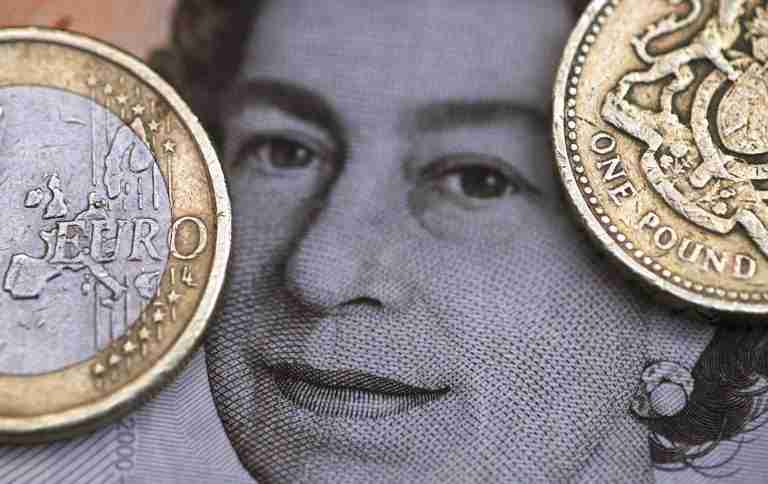
A two Euro coin is pictured next to a one Pound coin on top of a portrait of Britain’s Queen Elizabeth in this file photo illustration shot March 16, 2016. REUTERS/Phil Noble/Illustration/Files
International news via Reuters:
Sterling held steady on Friday, set for its fourth month in a row of gains against the dollar, as recent favourable economic data support Britain’s currency just as worries over U.S. tariffs and high debt weigh on the greenback.
“Sterling looks well supported,” said Kit Juckes, chief FX strategist at Societe Generale, pointing to “reasonably good” data trends.
Sterling was last trading at $1.3472, little changed on the day and down around 0.5% on the week after gaining about 2% last week.
That leaves the pound set to end May with a gain of around 1%, which would mark a fourth straight month of increases against a weakened greenback.
It last recorded four consecutive monthly gains against the dollar in 2022.
The dollar, meanwhile, was en route to its fifth-straight monthly decline on Friday, as further uncertainty around trade policy and U.S. fiscal health weighed.
Sterling rose around 0.25% to 84.06 pence per euro.
Still, it was set for its first week of declines after six weeks of increases as gains seen after UK retail sales and inflation numbers last week and optimism around Britain’s trade deals with the U.S. and India faded.
Last week’s stronger than expected UK inflation print caused markets to do away with bets for a rate cut at the Bank of England’s policy meeting in June, with about 97% of traders now anticipating that the central bank will hold rates after a cut by 0.25 percentage points to 4.25% in May.
“The economy has not got the legs to justify a significant strengthening (of the pound) from here,” Juckes said. “I just think it’s going to frustrate all the bears, left, right, and centre.”
Further out, traders looked ahead to a multi-year spending review by finance minister Rachel Reeves on June 11, with the government facing the challenging task of boosting economic growth while limiting spending and tax increases as it has pledged.
Reporting by Linda Pasquini. Editing by Dhara Ranasinghe and Mark Potter
During the appearance the 53-year-old confirmed his name, address and date of birth
Police officers stand outside the entrance of the Liverpool Magistrates’ Court, on the day Paul Doyle, the 53-year old charged with multiple offences including dangerous driving and causing grievous bodily harm after a car drove into a crowd at Liverpool FC’s trophy parade, appears at court, in Liverpool, Britain, May 30, 2025. REUTERS/Phil Noble
International news via Reuters:
A British man appeared in court on Friday charged with causing grievous bodily harm after a car ploughed into a crowd of Liverpool soccer fans injuring almost 80 during this week’s Premier League title victory parade.
Paul Doyle, from the West Derby area of Liverpool, is charged with seven offences including dangerous driving and two counts of causing grievous bodily harm with intent.
The 53-year-old appeared at Liverpool Magistrates’ Court on Friday morning and confirmed his name, address and date of birth.
Prosecutor Philip Astbury told the court: “These charges arise from events around about 6 p.m. on May 26 … in the city centre.
“As significant crowds left the waterfront after the parade for the local football team, this defendant, say the crown (prosecution), drove deliberately at people amongst the crowd as they tried to leave the area.”
Doyle was remanded into custody ahead of a further hearing at Liverpool Crown Court later on Friday. He was not asked to enter a plea to any of the seven charges.
The incident took place in Liverpool’s packed city centre on Monday evening, as about a million people had come out to celebrate Liverpool’s title win and watch an open-top bus parade featuring the team and its staff with the trophy.
Police have said the incident, which left a total of 79 people injured, was isolated and not an act of terrorism. Seven people remained in hospital in a stable condition as of Thursday evening.
Reporting by Phil Noble in Liverpool and Sam Tobin and Sam Tabahriti in London; editing by William James and Michael Holden
Exports of goods and services, and tourism fell 0.4% from the previous three months
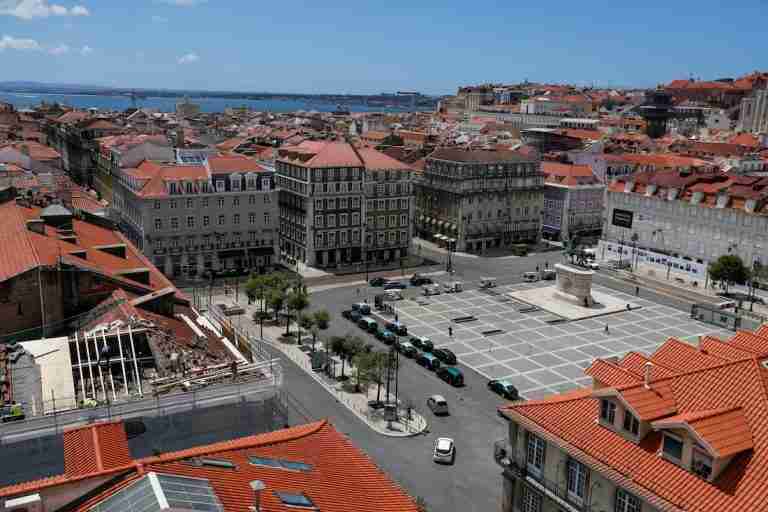
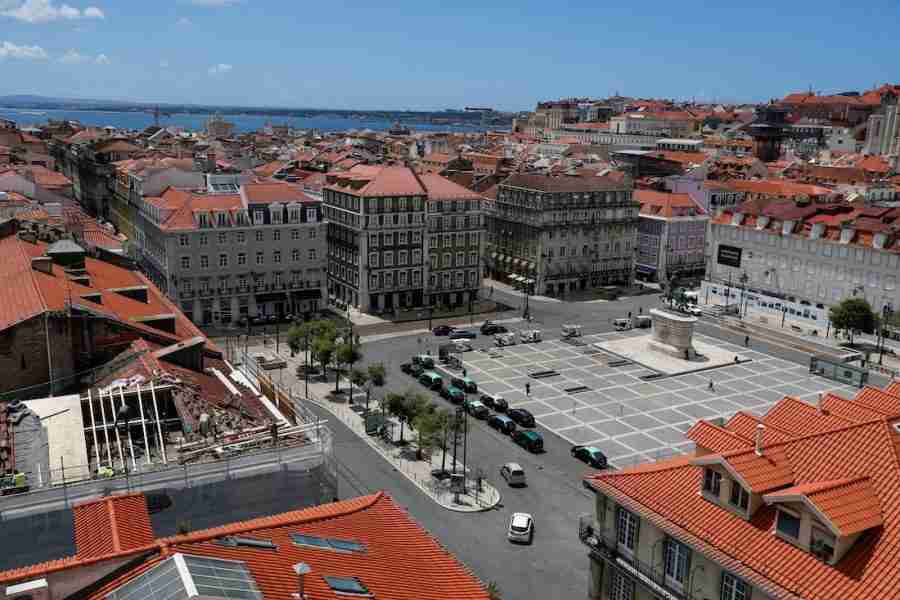
FILE PHOTO: General view of Praca da Figueira in Lisbon, Portugal, May 11, 2021. REUTERS/Pedro Nunes/File Photo
International news via Reuters:
Portugal’s economy shrank 0.5% in the first quarter from the previous three months, when it grew 1.4%, as exports fell and imports rose in anticipation of higher tariffs amid global trade tensions, official data showed on Friday, confirming the flash estimate.
In its second reading of gross domestic product, the National Institute of Statistics (INE) also confirmed its year-on-year growth figure of 1.6% released at the beginning of the month. In the fourth quarter, Portugal’s economy grew 2.8%.
INE said the contribution of net external demand to the quarter-on-quarter GDP was minus 0.7 percentage points, while in the fourth quarter it had contributed positively with 0.7 pp, “reflecting a decline in exports and an increase in imports”.
Exports of goods and services, including the key tourism sector, fell 0.4% from the previous three months.
Meanwhile, imports increased 1% anticipating the tariffs announced by U.S. President Donald Trump – most of which have been temporarily suspended – and a potential response from the European Union.
INE said the positive contribution of domestic demand also decreased to 0.1 pp, from 0.7 pp in the fourth quarter, “with a reduction in private consumption”, which fell 1.1% in the first three months after growing 2.8%.
Total investment increased by 3.8% with the help of European Union funds, after it fell 5.0% in the previous quarter.
The Bank of Portugal has forecast the economy should grow 2.3% this year in an acceleration from last year’s 1.9%, but it said a tariff war could reduce that projected growth by 0.9 percentage points.
Reporting by Sergio Goncalves and Andrei Khalip; editing by Giles Elgood
Document highlights community engagement and stakeholder consultation endeavours
Data from the Regulatory Authority of Bermuda says that the regulator has saved consumers approximately 90 million dollars from revenue allowance sought by BELCO between 2020 and 20204. Their newsletter, released earlier this week, affirming their “unwavering dedication to safeguarding Bermuda’s regulated sectors.”
The 6 page document details current movements in the energy sector, including progress being made in renewable energy—specifically wind and solar.
Craig Simmons says a portion of pension funds and other savings should provide investment capital for local businesses
Would you risk a little less cashback on your savings – if it could increase the number and diversity of locally-owned businesses?
That’s a question lingering behind Economist Craig Simmons’ proposition – that a portion of Bermudians’ savings should be invested locally.
Citing the need to promote small and medium size business, and even to finance Government debt, Mr Simmons says we need to stop sending local capital overseas.
“In any given year, Bermuda residents save in excess of $3 billion”, Mr Simmons told Bermuda Broadcasting.
“The problem is that just about all of that capital goes overseas to finance the growth of Microsoft, of NVIDEA, of overseas enterprises.”
“[A] difficult decision needs to be made, requiring Bermuda pension funds, insurance companies, local insurance companies to keep a portion of their savings, $3 billion, on island so that we can funnel that toward small and medium sized enterprises.”
Up until the early 1990s, there was a limit on the amount of money Bermudians could invest overseas, plus a local 10% tax on those investments.
Mr Simmons is not suggesting a tax on savings, but he does say the loss of the Overseas Investment Tax meant there was less incentive to keep money on island.
“As a result”, he says, “all the money, including that which is in my pension fund, ends up in going into someone else’s pot to grow someone else’s economy.”
“What I’m suggesting is that Bermuda produces, or has enough savings, to finance its debt. I don’t understand why the $3.2 billion in debt is all denominated in foreign currency.”
Government debt is almost entirely made-up of borrowing from the international capital markets, save $50 million in local financing that was repaid from the Sinking Fund in 2023.
Mr Simmons says, “one suggestion would be for more of our Bermuda government debt to be denominated in Bermuda dollars, given that Bermuda is flush with savings.”
Mr Simmons also cites large Bermuda companies that are now-foreign owned…
“Digicel and Cellular One, and even BELCO… Bermuda companies that are no longer owned by Bermudians.”
“It’s not because we don’t have the money to own them… We seem to prefer to own overseas companies.”
“Why aren’t Bermuda residents interested in investing in their own economy? That’s a good question to put to your viewers.”
Mr Simmons is not suggesting that all of the local savings and pension fund monies, possibly invested in overseas stock markets, should instead be invested in Bermuda.
He says, “I’m not in any way, shape or form suggesting that all of those moneys be prevented from going overseas, but a portion.”
“That doesn’t seem to be unreasonable – to sit down with pension funds, sit down with insurance companies and have this negotiation, because it’s in our mutual interest to have some of those monies kept on the island. But again, it’s about convincing people of the efficacy of that kind of move.”
Gary Foster Skelton asked Mr Simmons how one might expect an investor to potentially risk a lower rate of return, without it seeming punitive.
Mr Simmons responded, “if you have a garden and you want it to produce crops, you need to put fertilizer, put stuff back into the garden so that you get another crop… I would argue that we Bermudians have not been doing that.”
“We have not been putting enough resources back into our economy… ensuring that the infrastructure of Bermuda is what it needs to be to grow our economy.”
“I would argue the same logic would apply with respect to the private sector. The private sector needs infrastructure. We seem to be totally reliant on the rest of the world for our capital.”
Acting CEO Erin Wright sent a letter to BTA staff notifying them of Tashae Thompson’s departure
The Bermuda Tourism Authority has confirmed a high-level executive within the organisation is no longer employed with the marketing quango subsequent to being placed on leave in March.
In a letter seen by Bermuda Broadcasting, Acting CEO Erin Wright told BTA staff today about departure of Tashae Thompson.
Ms Wright stated, “Please be advised that with immediate effect, our VP of Experiences, Tashae Thompson, is no longer with the BTA.
“Tashae has been a member of the BTA since 2014 and through the years, developed many close relationships with team members both here and in NYC, as well as with our stakeholders and visitors.”
Ms. Thompson was one of two staff members suspended late March this year, along with Tracey Berkeley, the CEO of the BTA. No details on the reason for their suspension was provided by the organisation.
The suspension followed the publication of an independent culture review conducted following a slew of high profile departures from the BTA, including Olympian Hazel Clarke. The former Director of Sports and Global Business Development resigned in December 2024, after six years at the organisation.
The culture review highlighted concerns from staff critical of the leadership style, gossip and lack of accountability stemming from an underserved human resources department.
Responding to our queries today, a spokesperson for the BTA said, “We can confirm that Tashae Thompson is no longer with the Bermuda Tourism Authority.
“Ms Thompson joined the organisation in 2014 and made valued contributions during her tenure.
“We are grateful for the contributions she made during her time with the BTA and wish her all the best in her future endeavours,” they continued.
“As this is a personnel matter, we will not be providing further comment.”
Chair of the Board, Wayne Caines resigned from his post in February 2025.
To provide the best experiences, we use technologies like cookies to store and/or access device information. Consenting to these technologies will allow us to process data such as browsing behavior or unique IDs on this site. Not consenting or withdrawing consent, may adversely affect certain features and functions.
Functional
Always active
The technical storage or access is strictly necessary for the legitimate purpose of enabling the use of a specific service explicitly requested by the subscriber or user, or for the sole purpose of carrying out the transmission of a communication over an electronic communications network.
Preferences
The technical storage or access is necessary for the legitimate purpose of storing preferences that are not requested by the subscriber or user.
Statistics
The technical storage or access that is used exclusively for statistical purposes.The technical storage or access that is used exclusively for anonymous statistical purposes. Without a subpoena, voluntary compliance on the part of your Internet Service Provider, or additional records from a third party, information stored or retrieved for this purpose alone cannot usually be used to identify you.
Marketing
The technical storage or access is required to create user profiles to send advertising, or to track the user on a website or across several websites for similar marketing purposes.