The 239-year-old monarchy was voted out in 2008 following weeks of bloody street protests
FILE PHOTO: A Pro-monarchy supporter affiliated with Rastriya Prajatantra Party (RPP) with a badge of former King of Nepal Gyanendra Bir Bikram Shah Dev and former Queen Komal Rajya Laxmi Devi Shah takes part during a protest demanding the restoration of constitutional monarchy in Kathmandu, Nepal April 8, 2025. REUTERS/Navesh Chitrakar/File Photo
International news via Reuters:
Thousands of supporters of Nepal’s former king rallied in the capital Kathmandu on Thursday, calling for the restoration of the constitutional monarchy that was abolished 17 years ago, amid rising unhappiness with successive elected governments.
Flag-waving protesters marched into the city centre from different directions shouting: “Our king is dearer than lives … king come back and save the country,” as riot police stood guard but did not intervene.
At a similar rally in March, two people were killed and several injured.
The 239-year-old monarchy was voted out in 2008 following weeks of bloody street protests. The last king of the Himalayan nation, 77-year-old Gyanendra, has lived with his family in a private house in Kathmandu as a commoner since being toppled.
He has not commented on Thursday’s demonstration but expressed sorrow at the violence that killed two people in March.
Demonstrators are also calling for the country of 30 million people, wedged between China and India, to become a Hindu state again, a status it lost with the monarchy.
“Governments formed in the last 17 years have failed to deliver on their promises of development, creation of jobs and improvement of the living conditions of people,” said 35-year-old street vendor Rajendra Tamang.
“Thousands of young people are forced to leave the country in search of work as they see no hope here,” he said.
Millions of young Nepalis are working in the Middle East, South Korea and Malaysia, mainly at construction sites, and the money they send home is a key source of income for Nepal.
Supporters of the government staged a separate but smaller rally nearby in support of the republican system that replaced the monarchy.
The three major political parties that jointly control nearly 200 of the 275 seats in parliament say the monarchy was consigned to history and cannot be restored.
All three jointly campaigned against the monarchy and voted it out in 2008 and say their faith in the republican system was unshakeable.
The Rastriya Prajatantra Party, which is campaigning for the monarchy, holds only 13 seats in parliament.
A two-thirds majority or 184 lawmakers is needed to change the constitution, which was adopted in 2015, turning Nepal into a federal democratic republic.
The royalists say their protests will continue until the monarchy is restored.
Reporting by Gopal Sharma; Editing by YP Rajesh and Giles Elgood
All 2026 decals on boats and moorings must be displayed by June 1. Photo: Tony McWilliam
Press release: The Department of Marine and Ports Services, Boats and Moorings section, reminds boat owners and mooring licensees that the deadline for licensing renewals is midnight on Saturday, May 31st, 2025, for online payments and 4:30 p.m. on Friday, May 30th, 2025, for in-person payments. All 2026 decals must be displayed on boats and moorings by June 1st. Licenses not renewed by May 31st will be subject to a late fee. Boat and mooring owners are urged to ensure their address is up to date with the Department. If you need to update account details or transfer ownership of a boat or mooring, this must be done in person at the Boats and Moorings office. Please bring a valid photo ID. Renewal notices are no longer being sent out. Once a customer updates their information, they will receive an email with a link to access their details online for future renewals. A list of current licensing fees is available at http://www.marineandports.bm. Payment Options: – In-person: Cash, cheque, or card payments can be made at 108 Middle Road, Paget (Old Paget Post Office) during office hours, Monday to Friday, 8:30 a.m. to 4:30 p.m. – Online: Payments can be made on http://www.marineandports.bm through an individual’s account after signing up. Online payments will be processed and mailed. Payments made in the final week of May may risk delays in receiving the decals on time. For further inquiries, please contact the Department of Marine and Ports Services on 444-1221 or 246-8222.
Information session to be held at 7pm on Friday, May 30 at Warwick Camp
Lt Corrie Cross joined by other RBR members in Public Order Kit (Image Supplied)
Residents motivated by challenge and with their sights set on leadership are invited to an informal session to learn more about joining the Royal Bermuda Regiment as a commissioned officer.
The RBR seeks two to four people each year to take part in an eight-week reserve commissioning course at the Royal Military Academy, Sandhurst, in the UK, before the successful participants take up command positions as part of the battalion.
Candidates need not be serving soldiers and the opportunity is well-suited to young professionals interested in equipping themselves with the skills required to confidently and successfully lead others.
The information session will be held from 7pm on Friday, May 30, in the dining hall at Warwick Camp.
The regiment is a primarily part-time military unit that conducts maritime security and search-and-rescue functions, humanitarian and disaster response operations, force protection and ceremonial support.
This work helps to ensure Bermuda’s safety and resilience, while protecting the island’s interests.
After completing a commissioning course and professional military education, commissioned officers enter the regiment with a rank, ordinarily that of second lieutenant.
They hold a Governor’s commission, which grants them authority to command, manage and lead personnel, and are responsible for ensuring the wellbeing and effectiveness of the soldiers under their command.
Officers will be found in leadership positions, taking roles such as platoon or company commanders.
Lieutenant Corrie Cross, 26, who completed the commissioning course in 2021 and is a claims analyst in civilian life, said: “As a commissioned officer in the Royal Bermuda Regiment, I am challenged to push myself so that I may draw out the best in others.
“The course at Sandhurst prepared me well to take on a leadership role in the battalion. But the learning really lies in leading a platoon, finding ways to inspire soldiers and keep them motivated, and making tough decisions under pressure.
“In addition to thoroughly enjoying the opportunities I have in the regiment to meet and spend time with people from different backgrounds, the skills and experiences that I continue to develop as an officer unquestionably assist me outside of the military, both personally and professionally.
“The role of a platoon commander is demanding but I am motivated by helping my community and supporting the development of those around me.”
The information session on Friday aims to provide an overview of the role of the regiment and the responsibilities of officers, and will outline the process of selection, training and commissioning.
Lieutenant-Colonel Duncan Simons, the RBR Commanding Officer, said: “We are looking for young, educated Bermudians who are robust and physically fit, who are motivated by challenge and who have a passion for public service.
“The opportunity to attend one of the world’s top military colleges and then to put that training into practice as a Royal Bermuda Regiment officer, leading a platoon of 24 soldiers, is unparalleled – particularly for someone early in their professional career.
“I would encourage anyone who has an interest to come and learn more.”
Following a presentation, attendees will have the chance to ask questions of serving officers.
The information session is open to anyone interested in potentially becoming a commissioned officer, and attendance is not limited RBR members.
Any questions can be directed to the Adjutant, Captain Gavin Rayner, on 444-0120.
Douglas De Couto on cell phone taxes: “… is it fair that those who earn at the top range of salary bands get the same break as those who earn the least?”
Photo: Creative Commons
Statement by Dr. Douglas De Couto, MP for Constituency 25, Warwick North East & Shadow Minister of Finance
Today [May 28] in the House of Assembly the One Bermuda Alliance supported the Government’s $6 per month cut to cell phone taxes. However, we raised several concerns and exhorted the Government to do better and come up with better ideas. While we would all like to keep an extra $6 per month in our pockets, the reality is that some Bermudians need this break more than others. The One Bermuda Alliance continues to advocate that the Government provides more targeted support, so that those who need the most, get the most. For example, targeted tax breaks to seniors and those at the lower end of the earnings scale. For example, is it fair that those who earn at the top range of salary bands get the same break as those who earn the least? Is it fair that large companies get the same $6 per month break for their employees’ corporate cell phones as those making minimum wage? We would have preferred to support an initiative that was more focused and gave bigger breaks to those who need them most. The One Bermuda Alliance also recognizes the critical role of communications as a basic need for everyone – right up there with housing, energy, and food. But basic packages at Bermuda’s mobile providers can cost as much as $100 to $120 a month. That’s why tonight we proposed that the Government work with cellphone providers to provide basic packages at a reduced cost for those in need. In our view, this would be a more targeted and meaningful initiative than the Government’s proposal. We remain hopeful that Government will take on ideas like this that can really help those in need.
Gen Z men are voting for right-wing parties while women leaning more progressive
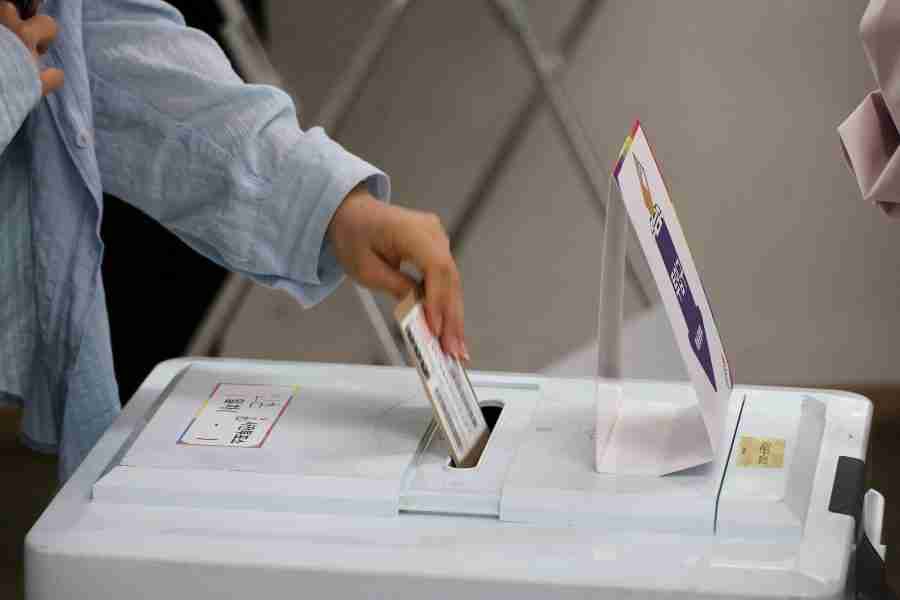
A woman casts her early vote for the upcoming presidential election at a polling station in Seoul, South Korea, May 29, 2025. REUTERS/Kim Hong-Ji
International news via Reuters:
South Korea’s young women are expected to lead a broad political backlash against the main conservative party at presidential elections on June 3, punishing it for months of chaos.
Multitudes of young men, though, are unlikely to join them.
In democracies worldwide, a political gender divide is intensifying among Gen Z voters, with young men voting for right-wing parties and young women leaning left, a break from pre-pandemic years when both tended to vote for progressives.
Recent elections spanning North America, Europe and Asia show this trend is either consolidating or accelerating, with angry, frustrated men in their 20s breaking to the right.
First-time South Korean voter Lee Jeong-min is one of them.
He says he will vote for the right-wing Reform Party’s candidate, Lee Jun-seok, on June 3. Lee, the candidate, vows to shut down the ministry of gender equality, speaking to an issue that resonates with men like Lee, the voter, who particularly resents that only men have to do military service.
“As a young man, I find this to be one of the most unfair realities of living in Korea. At the prime of their youth — at 21 or 22 years old — young men, unlike their female peers, are unable to fully engage in various activities in society because they have to serve 18 months in the military.”
In South Korea, almost 30% of men aged 18-29 plan to back the Reform Party compared with just 3% of young women, according to a Gallup Korea poll this month.
Overall, more than half of the men back right-wing parties while almost half the women want the left-wing Democratic Party candidate to win. The divergence shrinks for older age groups.
Political economist Soohyun Lee, of King’s College London, said many young South Korean men felt unable to meet society’s expectations: find a good job, get married, buy a home and start a family.
And they blame feminism, many believing that women are preferred for jobs. With negligible immigration in South Korea, Lee said, “women become the convenient scapegoat”.
ANGRY YOUNG MEN
In South Korea and other democracies, Gen Z men are seeing an erosion of their relative advantage, especially since the pandemic — to the point where in a few countries the gender pay gap among 20-somethings favours young women.
EU data shows one of them is France, where men aged 18-34 voted in larger numbers for Marine le Pen’s far-right party than women in last year’s legislative elections.
In the UK, where more young men than women vote conservative, males aged 16-24 are more likely to be neither employed, nor in education than female counterparts, official data shows.
In the West, young men blame immigration as well as diversity programmes for competition for jobs.
In Germany’s general election in February, the anti-immigrant Alternative for Germany (AfD) won a record 20.8% of the vote, tugged along by an undercurrent of support from young men — though the leader of the party is a woman.
Men aged 18-24 voted 27% for the AfD while young women ran to the other end of the political spectrum, voting 35% for the far-left Linke party, according to official voting data.
“A lot of young men are falling for right-wing propaganda because they’re upset, they have the feeling they’re losing power,” said Molly Lynch, 18, a Berliner who voted for Linke, drawn by its stand on climate change and economic inequality.
“But it’s actually losing power over women that wasn’t actually equal in the first place.”
The gender divide is not restricted to Gen Z, voters born since the mid-to-late 1990s. Millennials, aged in their 30s and early 40s, have felt the winds of change for longer.
In Canada last month, men aged 35-54 voted 50% for opposition conservatives in an election turned upside down by U.S. President Donald Trump’s tariffs on his northern neighbour. The Liberals, which had been braced for defeat, rode an anti-Trump wave back to power, thanks in large part to female voters.
“It tends to be men who have a bit more life experience and are now in that situation where they’re saying, ‘This isn’t working out for me and I want change’,” said Darrell Bricker, global chief executive of public affairs at polling firm Ipsos.
Nik Nanos, founder of Canadian polling outfit Nanos Research, agreed, saying social media was accelerating democracy’s “angry young men symptom”, especially in areas where blue collar jobs have dried up.
A FOREVER WAR?
Trump’s 2024 presidential campaign, which promised a manufacturing renaissance and attacked diversity programmes, also resonated with young white and Hispanic men, but turned off young women, fuelling the country’s big political gender gap.
Roughly half of men aged 18-29 voted for Trump, while 61% of young women went for his opponent, Kamala Harris. Young Black voters of both genders still overwhelmingly backed Harris.
In Australia, which went to the polls this month, the Gen Z war did not play out at the ballot box. There was no clear divergence, with compulsory voting perhaps helping to explain why radicalised gender politics have not taken root.
“It tends to iron out extreme ideas, ideologies,” said political scientist Intifar Chowdury of Australian National University.
So how does the Gen Z war end?
Pollsters said it could drag on unless governments addressed core issues such as home affordability and precarious employment. One cited young men’s health as another policy challenge, especially high suicide rates.
Lee, of King’s College, said the divide could make consensus on over-arching tax and welfare reforms harder to achieve.
“If the future generation is ever so divided along the lines of gender and then refuses to engage with each other to build social consensus, I do not think we can successfully tackle these huge issues,” she said.
Additional reporting by Ju-min Park and Jisoo Kim in SEOUL, Byron Kaye in SYDNEY, Riham Alkousaa in BERLIN, Michel Rose and Elizabeth Pineau in PARIS, Jason Lange in WASHINGTON; Writing by Mark Bendeich; Editing by Sharon Singleton
Trump has promised Americans the tariffs would draw manufacturing jobs back to U.S. shores
A drone view shows a cargo ship at Kwai Tsing Container Terminals in Hong Kong, China, April 16, 2025. REUTERS/Tyrone Siu/File Photo
International news via Reuters:
A U.S. trade court blocked most of President Donald Trump’s tariffs in a sweeping ruling on Wednesday that found the president overstepped his authority by imposing across-the-board duties on imports from U.S. trading partners.
The Court of International Trade said the U.S. Constitution gives Congress exclusive authority to regulate commerce with other countries that is not overridden by the president’s emergency powers to safeguard the U.S. economy.
“The court does not pass upon the wisdom or likely effectiveness of the President’s use of tariffs as leverage,” a three-judge panel said in the decision to issue a permanent injunction on the blanket tariff orders issued by Trump since January. “That use is impermissible not because it is unwise or ineffective, but because [federal law] does not allow it.”
Financial markets cheered the ruling. The U.S. dollar rallied following the court’s order, surging against currencies such as the euro, yen and the Swiss franc in particular. Wall Street futures rose and equities across Asia also jumped.
The judges also ordered the Trump administration to issue new orders reflecting the permanent injunction within 10 days. The Trump administration minutes later filed a notice of appeal and questioned the authority of the court.
The court invalidated with immediate effect all of Trump’s orders on tariffs since January that were rooted in the International Emergency Economic Powers Act (IEEPA), a law meant to address “unusual and extraordinary” threats during a national emergency.
The court was not asked to address some industry-specific tariffs Trump has issued on automobiles, steel and aluminum, using a different statute.
The decisions of the Manhattan-based Court of International Trade, which hears disputes involving international trade and customs laws, can be appealed to the U.S. Court of Appeals for the Federal Circuit in Washington, D.C., and ultimately the U.S. Supreme Court.
TRADE TURMOIL
Trump has made charging U.S. importers tariffs on goods from foreign countries the central policy of his ongoing trade wars, which have severely disrupted global trade flows and roiled financial markets.
Companies of all sizes have been whipsawed by Trump’s swift imposition of tariffs and sudden reversals as they seek to manage supply chains, production, staffing and prices.
A White House spokesperson on Wednesday said U.S. trade deficits with other countries constituted “a national emergency that has decimated American communities, left our workers behind, and weakened our defense industrial base – facts that the court did not dispute.”
“It is not for unelected judges to decide how to properly address a national emergency,” Kush Desai, the spokesperson, said in a statement.
The ruling, if it stands, blows a giant hole through Trump’s strategy to use steep tariffs to wring concessions from trading partners. It creates deep uncertainty around multiple simultaneous negotiations with the European Union, China and many other countries.
However, analysts at Goldman Sachs noted the order does not block sector-specific levies and there were other legal avenues for Trump to impose across-the-board and country-specific tariffs.
“This ruling represents a setback for the administration’s tariff plans and increases uncertainty but might not change the final outcome for most major U.S. trading partners,” analyst Alec Phillips wrote in a note.
Trump has promised Americans the tariffs would draw manufacturing jobs back to U.S. shores and shrink a $1.2 trillion U.S. goods trade deficit, which were among his central campaign promises.
Without the instant leverage provided by tariffs, the Trump administration would have to find new forms of leverage or take a slower approach to negotiations with trading partners.
Initial reaction among Asian policymakers was muted, with Japan’s economy minister saying he would examine the details of the ruling, while the Bank of Korea said it saw the effective tariff rate on South Korean exports under the ruling falling to 9.7% from 13.3%.
Hong Kong’s financial secretary said the court decision would “at least bring President Trump to reason”.
BUSINESSES HURTING
The ruling came in a pair of lawsuits, one filed by the nonpartisan Liberty Justice Center on behalf of five small U.S. businesses that import goods from countries targeted by the duties and the other by 12 U.S. states.
The companies, which range from a New York wine and spirits importer to a Virginia-based maker of educational kits and musical instruments, have said the tariffs will hurt their ability to do business.
“There is no question here of narrowly tailored relief; if the challenged Tariff Orders are unlawful as to Plaintiffs they are unlawful as to all,” the judges wrote in their decision.
At least five other legal challenges to the tariffs are pending.
Oregon Attorney General Dan Rayfield, a Democrat whose office is leading the states’ lawsuit, called Trump’s tariffs unlawful, reckless and economically devastating.
“This ruling reaffirms that our laws matter, and that trade decisions can’t be made on the president’s whim,” Rayfield said in a statement.
Trump has claimed broad authority to set tariffs under IEEPA. The law has historically been used to impose sanctions on enemies of the U.S. or freeze their assets. Trump is the first U.S. president to use it to impose tariffs.
The Justice Department has said the lawsuits should be dismissed because the plaintiffs have not been harmed by tariffs that they have not yet paid, and because only Congress, not private businesses, can challenge a national emergency declared by the president under IEEPA.
In imposing the tariffs in early April, Trump called the trade deficit a national emergency that justified his 10% across-the-board tariff on all imports, with higher rates for countries with which the United States has the largest trade deficits, particularly China.
The country-specific tariff rates were paused for 90 days a week later though the baseline 10% duty was put in place for most nations. The Trump administration on May 12 said it was also temporarily reducing the steepest tariffs on China while working on a longer-term trade deal. Both countries agreed to cut tariffs on each other for at least 90 days.
Reporting by Dietrich Knauth and Daniel Wiessner; Additional reporting by Alexia Garamfalvi, David Lawder, Jasper Ward, Dan Burns and Jonathan Allen; Writing by Jonathan Allen; Editing by Leslie Adler, Jamie Freed and Lincoln Feast
Harvard student Alfred Williamson, who comes from Wales, stands in a street in Copenhagen, Denmark, May 28, 2025. REUTERS/ Tom Little
International news via Reuters:
When Alfred Williamson packed his bags to travel to Denmark for summer break after a whirlwind first year at Harvard University, he could not wait to return.
Now, the Welsh student fears he may never go back – one of thousands of international students caught in U.S. President Donald Trump’s battle with the Ivy League institution, which has centred on preventing Harvard from enrolling or retaining international students.
Many students have told Reuters they are worried about complaining, for fear of being targeted by the U.S. authorities, and while Williamson said he shared those fears, he felt he had an obligation to speak out.
“When people start to self-silence, we are no longer living in a democracy,” he told Reuters in Copenhagen where he was staying with family. “For me, it’s absolutely critical that I voice my opinion so that we preserve these values that America was founded on. In fact, the ideals of freedom and rights.”
Since taking office in January, the Trump administration has repeatedly attacked Ivy League schools, accusing Harvard of fostering violence, antisemitism and coordinating with the Chinese Communist Party, without providing evidence.
Last week, his administration revoked Harvard’s ability to enrol international students and said it would force current foreign students to transfer to other schools or they would lose their legal status, in a dramatic escalation of the dispute.
UTTER SHOCK
“When the news hit, I was in complete and utter shock,” said Williamson, an undergraduate who is working towards a double major in physics and government and who described his first year as the best year of his life.
“I didn’t know how to respond; I didn’t know what to feel; I didn’t know what to think; I didn’t know if I’d be an illegal immigrant suddenly, or as they describe people like us, aliens. It was very devastating news.”
Harvard, where international students make up more than a quarter of enrolment, filed a lawsuit last week challenging the order. A federal judge has issued a temporary two-week injunction, but the uncertainty persists.
Williamson said he hadn’t heard anything about his visa, but knew that some classmates had struggled to get renewals.
He said he appreciated Harvard’s response, and the support it had shown to international students at the university in Cambridge, Massachusetts, which has emerged as one of Trump’s most prominent institutional targets.
“That’s the only way you can deal with someone like Trump,” he said. “He will make demand after demand. One demand will turn into three, and three will turn into five.”
Williamson said he was not willing to contemplate the prospect of transferring to a different university, and despite the fears he has over the administration, he is desperate to stay at Harvard, arguing that the international community contributes a lot to the U.S.
But he said the current situation is deeply uncomfortable: “We’re being used like pawns in the game that we have no control of, and we’re being caught in this crossfire between the White House and Harvard, and it feels incredibly dehumanising.”
Writing and reporting by Sam Tabahriti in London; Editing by Kate Holton and Aurora Ellis
Vietnam’s ministry of foreign affairs said it had no information about the matter
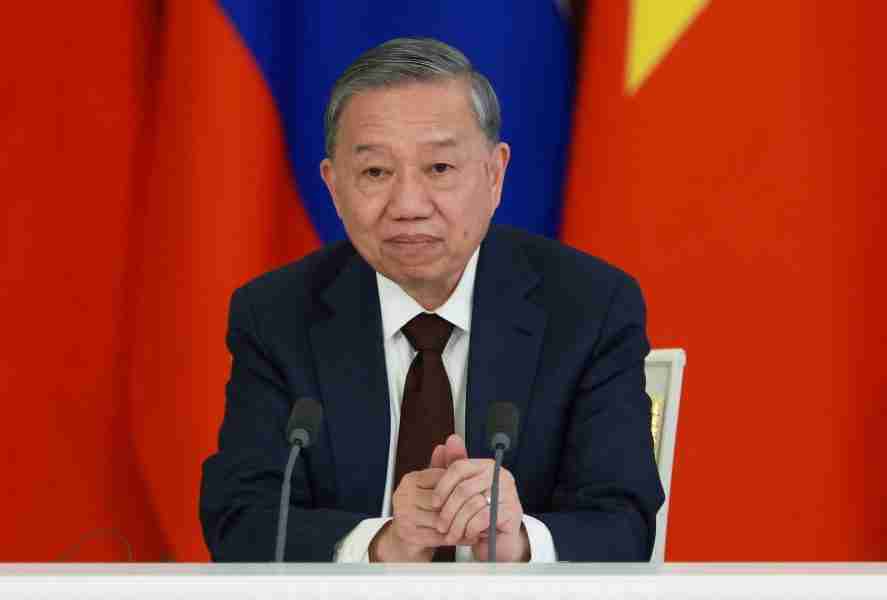
FILE PHOTO: Vietnam’s Communist Party General Secretary To Lam attends a signing ceremony with Russia’s President Vladimir Putin following their meeting in Moscow, Russia May 10, 2025. REUTERS/Anton Vaganov/File Photo
International news via Reuters:
The Economist’s latest printed edition for Asia featuring Vietnam’s top leader To Lam on its cover has been banned in Vietnam, sources at two local media distributors told Reuters, in a new instance of censorship in the Communist-run country.
The May 24 issue, which is still available in the country in its electronic version, portrays Lam with two stars on his eyes on a red backdrop, in a reference to the country’s national flag, with the title: “The man with a plan for Vietnam”.
The subheading on its main Vietnam story said: “A Communist Party hard man has to rescue Asia’s great success story”.
Vietnam’s ministry of foreign affairs said it had no information about the matter.
The ministry in charge of public information did not reply to requests for comment on the reported banning.
The Economist did not immediately reply to a request for comment outside UK business hours.
Vietnam routinely prohibits books, movies and other cultural works and multiple media outlets are also banned.
“We were given orders to tear off the cover and the article about him (Lam), making the magazine no longer sellable. Later, we were ordered not to sell it at all,” said an executive at distributor Ngay Moi, declining to be named because she was not allowed to speak to media.
An employee at a second distributor, Global Book Corporation, said Vietnam’s ministry in charge of public information banned the distribution of that particular issue, without elaborating on the motivations.
A third source at distributor Xunhasaba said it did not have that issue because it had not received enough orders.
Vietnam, a Southeast Asian industrial hub, faces a pivotal moment as it seeks to consolidate a prolonged economic boom amid U.S. tariff trade tensions that may undermine its export-oriented growth.
The Economist’s article described Lam as an ambitious leader who emerged “from the security state” and who “must turn himself into a reformer” to adjust the country’s economic model and make it richer.
Lam, 67, rose from the powerful ministry of public security, which he had led for years, to reach the top of Vietnam’s political hierarchy last year after a months-long power struggle, first becoming president and then head of the communist party, the country’s top job.
The Economist’s cover and articles were reposted thousands of times on social media by users in Vietnam with mixed reactions.
“Vietnam is stepping confidently into a new era of growth —and the world is taking notice,” Yumi Thao Nguyen, a sales manager, said on LinkedIn with a link to The Economist.
Le Thi Kim Ngoc, a self-described “Citizen of the Socialist Republic of Vietnam”, said on Facebook The Economist’s characterisation of Lam as a hard man “undermine the serious political and social developments currently taking place in Vietnam”.
The country is ranked 173th out of 180 surveyed nations in the latest press freedom index published by Reporters Without Borders, a non-profit organisation.
Authorities in the one-party nation often detain people for “anti-state” online comments and maintain a strict control on the press and social media.
Last week Vietnam’s technology ministry ordered the ban of messaging app Telegram over alleged crimes committed by its users, noting in an internal document the platform hosted groups created by “opposition and reactionary subjects”.
Multiple users of the app in the country cannot access it this week. Telegram did not reply to a request for comment about the enforcement of the ban. It had earlier said it was “surprised” by the measure, noting it was responding to newly introduced requirements.
Reporting by Reuters staff; Editing by Michael Perry
Another pause in Trump’s stop-start trade policy could be helpful to opponents of his tariffs
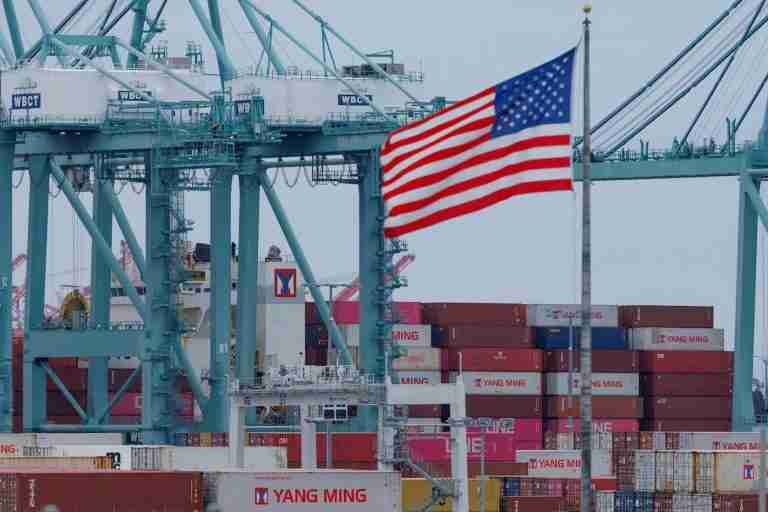
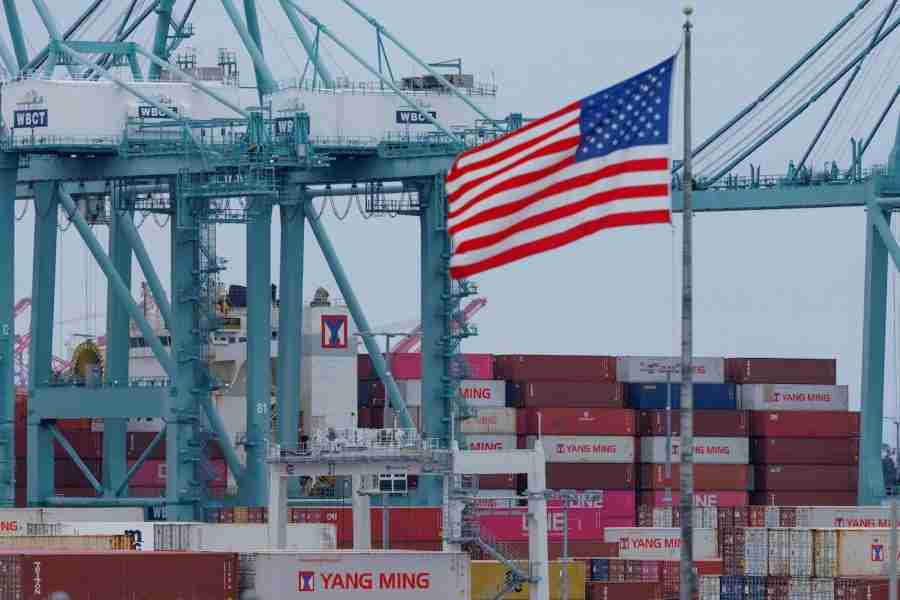
FILE PHOTO: A U.S. flag flutters near shipping containers as a ship is unloaded at the Port of Los Angeles, in San Pedro, California, U.S., May 1, 2025. REUTERS/Mike Blake/File Photo
International news via Reuters:
A U.S. trade court ruling that blocked most of President Donald Trump’s tariffs and found he had overstepped his authority triggered some relief on financial markets on Thursday, while adding to the uncertainties weighing on the global economy.
Among the United States’ big trading partners, in the throes of negotiation with the Trump administration, Germany said it could not comment, as did the European Commission.
“We ask for your understanding that we cannot comment on the legal proceedings in the U.S., as they are still ongoing,” a spokesperson for Germany’s economy ministry said.
“We continue to hope that a mutually beneficial solution can be reached in the negotiations between the EU Commission and the U.S. government.”
Winners on financial markets included chip makers, banks, luxury stocks and auto industry, all hit hard by tariff-led disruptions.
The U.S. dollar rallied 0.2% against the yen and 0.3% against the Swiss franc as currencies and assets that have benefited from the tariff-induced market turmoil fell.
Wall Street stock index futures rose by more than 1.5%
The trade court ruling on Wednesday dealt a blow to Trump’s central policy of using tariffs to wring concessions from trading partners.
His administration immediately said it will appeal and analysts said investors will remain cautious as the White House explores its legal avenues.
Following a market revolt after Trump’s major tariff announcement on April 2, the U.S. president paused most import duties for 90 days and said he would hammer out bilateral deals with trade partners.
But apart from a pact with Britain this month, agreements remain elusive and the court’s stay on the tariffs may dissuade countries like Japan from rushing into deals, analysts said.
Another pause in Trump’s stop-start trade policy could be helpful to opponents of his tariffs and to traders who relish volatility.
“Assuming that an appeal does not succeed in the next few days, the main win is time to prepare, and also a cap on the breadth of tariffs – which can’t exceed 15% for the time being,” George Lagarias, chief economist at Forvis Mazars international advisers, said.
TURMOIL
Trump’s trade war has shaken makers of everything from luxury handbags and trainers to household appliances and cars as the price of raw materials has risen, supply chains have been disrupted and company strategies redrafted.
Drinks company Diageo, automakers General Motors and Ford are among those who have abandoned forecasts for the year ahead.
Non-U.S. companies including Honda, Campari and pharmaceutical companies Roche and Novartis have said they are considering moving operations or expanding their U.S. presence to mitigate the impact of tariffs.
As markets assessed the latest twist in the trade upheaval, European export-sensitive sectors, such as autos and luxury stocks, were among leading gainers on Thursday.
The pan-continental STOXX 600 was up 0.4%, while France’s CAC 40, which has a heavy weighting of luxury and bank stocks, rose 0.8%. Overall sentiment was also lifted by strong results late on Wednesday from AI bellwether Nvidia.
Spot gold declined for a fourth straight day, while U.S. Treasury yields rose. Bond yields move inversely with prices.
But the gains in shares may be short-lived, analysts said, with those who relish risk making the most of them.
“I think we are in a period of higher volatility – we will get some more spikes on the way, I think. But volatility is the friend of the active investors,” Kevin Barker, global head of active equities, UBS Asset Management, told a media briefing.
Reporting by Summer Zhen, Samuel Indyk and Sarah Marsh; Writing by Barbara Lewis; Editing by Catherine Evans
Penalties applied to pension funds that don’t meet the 25 billion pounds assets threshold by 2030
FILE PHOTO: Britain’s Chancellor of the Exchequer Rachel Reeves meets with defence suppliers at RAF Northolt on March 6, 2025 in Ruislip, Britain. Dan Kitwood/Pool via REUTERS/File Photo
International news via Reuters:
The UK government will tell some British pension schemes to merge to become ‘megafunds’ with at least 25 billion pounds ($34 billion) of assets by 2030, it said on Thursday, part of its wider drive to channel more investment into the economy.
The government also confirmed it would create a ‘backstop’ power to potentially force investment firms to meet set investment allocation targets if they fell short.
The controversial new power – which the government has previously indicated it may not need to use – has been criticised by some investment firms who say it risks worse outcomes for pension savers.
Planned reforms will require certain smaller pension schemes to merge, in a bid to emulate Australia and Canada’s pension systems that feature fewer, larger funds that are better able to invest at scale.
“We’re making pensions work for Britain. These reforms mean better returns for workers and billions more invested in clean energy and high-growth businesses,” finance minister Rachel Reeves said in a statement.
The UK government has been pursuing a range of policies to try to boost domestic investment, including signing up 17 investment firms to a pledge to pump 50 billion pounds of additional cash into UK businesses and infrastructure.
Those targets could be made mandatory if the government exercises its planned new powers.
The latest changes to create ‘megafunds’, to be laid out in a forthcoming pensions scheme bill, will apply to multi-employer defined contribution schemes and local government pension schemes, the government added.
Penalties will be applied to pension funds that don’t meet the 25 billion pounds assets threshold by 2030, such as losing access to auto-enrollment contributions that would be diverted into larger schemes, a government official told Reuters.
Schemes worth over 10 billion pounds that are unable to reach the minimum size by that time will be allowed to continue, as long as they demonstrate a clear plan to reach it by 2035, the government added.
The government’s push to create ‘megafunds’ has been welcomed by some investment firms, but has caused consternation with others who worry it could lessen competition.
“Supporting UK growth is a worthwhile goal, but fiduciary duty must remain at the heart of any reform. Bigger isn’t always better – it’s outcomes that matter most,” said Martin Willis, partner at consultancy, Barnett Waddingham.
Local government pension schemes will also be given investment targets, which the government said would help put 27.5 billion pounds into local projects. These schemes will also be told to combine assets split across more than 86 authorities into just six pools.
($1 = 0.7426 pounds)
Reporting by Iain Withers; Editing by Mark Potter and Emelia Sithole-Matarise
To provide the best experiences, we use technologies like cookies to store and/or access device information. Consenting to these technologies will allow us to process data such as browsing behavior or unique IDs on this site. Not consenting or withdrawing consent, may adversely affect certain features and functions.
Functional
Always active
The technical storage or access is strictly necessary for the legitimate purpose of enabling the use of a specific service explicitly requested by the subscriber or user, or for the sole purpose of carrying out the transmission of a communication over an electronic communications network.
Preferences
The technical storage or access is necessary for the legitimate purpose of storing preferences that are not requested by the subscriber or user.
Statistics
The technical storage or access that is used exclusively for statistical purposes.The technical storage or access that is used exclusively for anonymous statistical purposes. Without a subpoena, voluntary compliance on the part of your Internet Service Provider, or additional records from a third party, information stored or retrieved for this purpose alone cannot usually be used to identify you.
Marketing
The technical storage or access is required to create user profiles to send advertising, or to track the user on a website or across several websites for similar marketing purposes.