Broadcasting Partnership with Willow TV Means NCAA Can Be Viewed Live
Good news for Cricket fans. The North American Cricket Cup has partnered with streaming service Willow TV to ensure that all matches can viewed live from Bermuda. Cal Blankendal, Executive Director of the Bermuda Cricket Board shares the details.
t Team Bermuda is currently in the Cayman Islands for final preparations ahead of Saturday’s inaugural North American Cricket Cup. The squad is training under the guidance of High Performance Consultant Andre Coley, who also serves as head coach of the West Indies. Although the NACC falls during Bermuda’s traditional off-season, Cal Blankendal, Executive Director of the Bermuda Cricket Board, says the tournament is a valuable opportunity that aligns well with the team’s build-up to the main event—the World Cup Qualifiers in June.
The North American Cricket Cup takes place in Cayman starting on Saturday April 19th.
Vasco U15 Boys Team disappointed following unprecedented disqualification
For the first time in Kappa Classic history, organizers made the unprecedented decision to disqualify a team. Speaking to Bermuda Broadcasting from the Azores, Germano Botelho, Director of the Vasco Youth Program, shared that the players were devastated to miss the remainder of the tournament following an incident allegedly involving two parents, which led to the disqualification of the Vasco U15 boys team. Despite the disappointment, Botelho said the Club respects the decision made by the organizers.
Governor Andrew Murdoch takes part in annual royal tradition for the first time
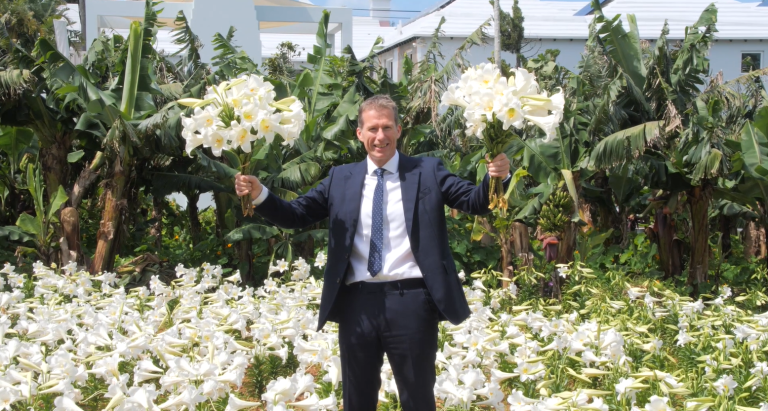
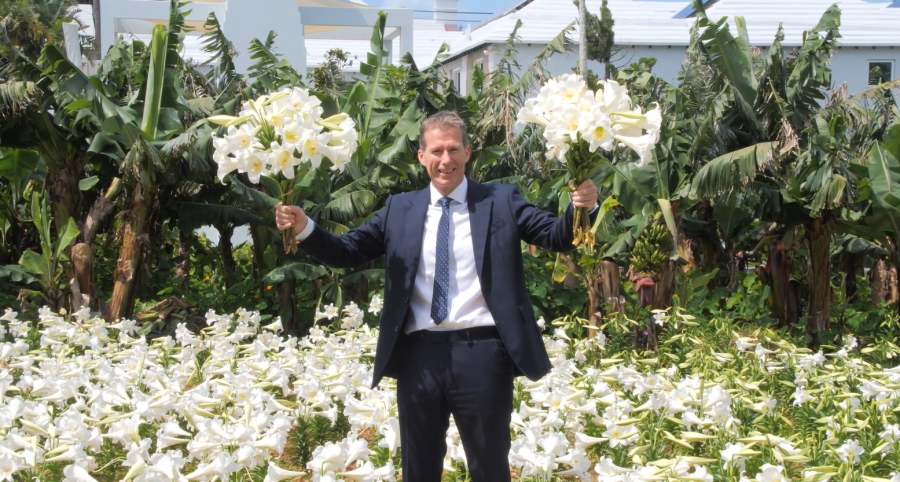
Bermuda-grown Easter Lilies have once again made their way to Windsor Castle.
The annual cherished tradition sees the Governor of Bermuda select Easter Lilies as a floral gift for King Charles.
Governor Rena Lalgie’s successor, Andrew Murdoch, took part in his first official picking this year at Windybank Farm in Smith’s.
The bouquet of lilies departed on Tuesday’s British Airways flight to London and arrived safely at Windsor Castle yesterday, in time for Good Friday.
Government House extended its thanks to Malcolm and Benn Smith, the British Airways team, and the Department of Environment and Natural Resources for “facilitating this long-standing tradition”.
Around six demonstrators said they will demonstrate every Thursday afternoon until a ceasefire is reached
Demonstrators made their voices heard outside the U.S. Consulate, today calling for a ceasefire in the Israel/Hamas war.
A small group was protesting the killing of civilians and children in Gaza, after a ceasefire fell apart earlier this year.
The current conflict began 18 months ago when Hamas attacked Israel. It has resulted in more than 50,000 deaths, most of them Palestinian, according to Gaza’s health officials.
Local teacher Maha Turner says the group will protest every Thursday at 1.30pm until a ceasefire is reached.
A spokesperson for the US Consulate responding to the demonstration today stated, “We don’t have a statement to provide.”
Minister Owen Darrell says ferry and bus services could be extended … but seeks proof of safety benefits and cites cost and the need for union consultation
Could extending public transportation later into the night improve road safety? If the answer is yes, Government will take a serious look.
That’s according to Minister of Tourism, Transport, Culture and Sport, Owen Darrell, who didn’t rule out the idea when questioned by Bermuda Broadcasting at a recent press conference.
During his remarks, he praised his Ministry’s collaboration with the Bermuda Road Safety Council in sponsoring ferry service from Hamilton to Dockyard for the Pastels party at the weekend.
“This initiative ensured that attendees had access to safe and reliable transport to and from the event, highlighting the importance of planning ahead and choosing responsible options when travelling to large gatherings,” Minister Darrell said. “It’s another example of the kind of practical, thoughtful action that helps prevent road incidents and supports safer choices.”
When asked by Bermuda Broadcasting whether his Ministry would consider expanding bus and ferry services on popular drinking nights such as Fridays and Saturdays, instead of for singular events, Minister Darrell responded:
“That’s a very interesting question, and it’s something that we are committed here at the Ministry of Tourism, Transport, Culture and Sport to look to see if we have the resources to do such. You would know that putting on additional ferries comes with an additional cost so that will be a discussion that has to be held around the Cabinet table if we can allocate funds to that.
“Obviously, we’re going to have to include our union partners and to see if we have the infrastructure that will be able to do so. But to answer your question, once those discussions have been held, if it is proven and has been proven that it will enhance road safety, it’s something that we need to and will look at very seriously.”
According to the most recent available statistics from the Bermuda Police Service, drink driving reached a three-year high in 2023. Police recorded 170 impaired driver arrests in 2021, 229 in 2022, and 263 in 2023.
Internationally, research supports the role of late-night transit in reducing impaired driving. A study published in the Journal of Public Economics found that extended public transportation hours provide drinkers with a safe way to get home, leading to fewer DUI arrests in areas where transit stops are located near bars.
In Ontario, Canada, residents are strongly encouraged to use late-night transit as a means of avoiding drinking and driving. Meanwhile, in Queensland, Australia, the introduction of 50-cent fares has proven popular with commuters and provided a safer alternative for late-night travellers.
Currently in Bermuda, the last buses depart around midnight, and ferry service on the Blue Route typically ends around 9pm – except on Wednesday evenings during the summer months for Harbour Nights.
It remains to be seen whether our island will move toward expanding its public transport schedule, but the conversation around safety, affordability, and accessibility appears to be on the minds of policy makers.
Activists say the government has not used the land to extract meaningful concessions in land or money for local communities
International news via Reuters:
A dispute between a British-owned tea plantation and a local community in western Kenya has come to the boil in what could be a sign of turbulent times ahead for tea producers facing a growing backlash over colonial-era injustices.
On the rolling green hills of the Sitoi estate in Nandi County, more than 100 residents are occupying 350 acres (140 hectares) of land, picking tea and living in huts made of mud and rusty iron sheets while grazing their cattle.
They say the land was gifted to them in 1986 by Eastern Produce Kenya. EPK, which is majority owned by London-listed Camellia Plc, says the gift was for 202 acres (82 hectares), not the 550 acres (222 hectares) that the local Kimasas farmers’ cooperative claims.
Members of the Kimasas cooperative society, accused by Eastern Produce Kenya (EPK) of invading the Sitoi Tea Estate causing substantial financial losses to the company, pluck tea leaves at a plantation in Mosine village of Nandi County, Kenya, January 22, 2025. REUTERS/Monicah Mwangi
Kimasas chairman Daniel Biwott said his grandfather lived on the land before it was seized by British colonists around 1905 and that reclaiming the disputed 350 acres would right a historical wrong.
“Nothing has happened all these years,” said Biwott, standing among knee-high bushes where he, his father and his grandfather once worked as EPK employees. “This is the time to solve it.”
The standoff follows several violent incidents at estates in Kenya, the world’s fourth-leading tea producer. In January, a farm belonging to Sri Lankan-owned Browns Plantations was attacked and more than 100 eucalyptus trees uprooted, according to the Kenya Tea Growers Association (KTGA).
The industry group said in a statement that “criminal gangs who appear to enjoy political cover” were behind the “Zimbabwe-like illegal land invasion” of Sitoi, referring to seizures of white-owned farms in the early 2000s.
It said EPK was losing over $200,000 per month and the incidents threaten an industry that accounts for nearly a quarter of Kenya’s export revenues and supports 5 million livelihoods.
Several people working on land issues said the attacks reflect broader frustration with a failure to remedy colonial land grabs.
“I have tried hard to use the legal system,” said Joel Kimutai Bosek, a lawyer who has brought litigation against tea companies and the UK government on behalf of local communities without success. “I think the new or coming generation will be more aggressive.”
A general view of houses belonging to members of the Kimasas cooperative society, accused by Eastern Produce Kenya (EPK) of invading the Sitoi Tea Estate causing substantial financial losses to the company, pluck tea leaves at a plantation in Mosine village of Nandi County, Kenya, January 22, 2025. REUTERS/Monicah MwangiEastern Produce Kenya (EPK) tea pickers sort tea leaves, as the company accuses members of Kimasas Cooperative Society of invading the Sitoi Tea Estate causing substantial financial losses, in Mosine village of Nandi County, Kenya, January 22, 2025. REUTERS/Monicah Mwangi
FEW REMEDIES
During the colonial era from 1895-1963, British authorities seized vast tracts of land, much of which became tea plantations, according to a 2021 U.N. report.
Awareness of historical injustices has grown since 2010, when Kenya established the National Land Commission (NLC) to address the issue, said Samuel Tororei, who was a commissioner until 2019.
But Tororei said the commission’s effectiveness was undermined by its limited mandate and an “unholy marriage” between tea companies and political elites.
Under Kenya’s 2010 constitution, tea companies’ previous 999-year leases were reduced to 99 years but activists complain the government has not used its ownership of the land to extract meaningful concessions in land or money for local communities.
“The underlying cause of tension is that you have overseas owners of large-scale plantations which are based on land that was taken from the community,” said Guy Chambers, managing director from 2015-2022 of Britain’s James Finlay, which had tea estates in Kenya until 2023.
Kenyan government spokespeople did not respond to requests for comment. The companies say they comply with Kenyan law and accuse some politicians of exploiting historical tensions to undermine their land tenures and advance personal business interests.
Other community attempts to reclaim land have yielded little. Legal options are constrained by statutes of limitations and official immunities, the U.N. report said.
The private equity firm Chambers runs and a community group in the tea-growing county of Kericho jointly bid last year for estates belonging to CVC Capital-owned Lipton in an arrangement that would have fully transferred control to the community within two decades.
Lipton eventually sold to Browns. A spokesperson for Lipton said it chose the best bidder who could help raise standards in the industry. Browns did not respond to a request for comment.
In a 2019 report, the NLC called on the British government to apologise to communities in Kericho and provide reparations.
The British government has not directly responded to that call. Asked for comment, the Foreign, Commonwealth & Development Office said: “We are concerned by the attacks on tea farms in Nandi and are in contact with the Kenyan authorities.”
Members of the Kimasas cooperative society, accused by Eastern Produce Kenya (EPK) of invading the Sitoi Tea Estate causing substantial financial losses to the company, walk after plucking tea leaves at a plantation in Mosine village of Nandi County, Kenya, January 22, 2025. REUTERS/Monicah Mwangi
‘DANGEROUS PRECEDENT’
EPK first acquired land in Nandi in 1948. It said the current dispute is not over a historical land injustice but rather a gift made on a “willing donor, willing donee basis”.
The NLC found in 2019 that all 550 acres belonged to Kimasas. EPK contested that in court, saying Kimasas’ evidence was forged.
As litigation proceeded, more than 200 people, including a national lawmaker from the area, overran the disputed plot on August 3, 2023 and began plucking tea. A court issued an injunction the following day, ordering them to leave.
Most did, but many then returned. In January, squatters attacked a company car and employees, EPK said.
The company said police have not enforced the injunction, while the public prosecutor’s office told it that any prosecutions risked interfering with the civil case.
“If we allow this kind of situation where the younger generations now start saying they don’t have enough and they want more, then it is a dangerous precedent that should be stopped at all costs,” said EPK general manager Peter Goin.
The police and prosecutor’s office did not respond to requests for comment. Biwott said Kimasas felt justified occupying the land because there was no final ruling against it.
Reporting by Jefferson Kahinju, Aaron Ross and Monicah Mwangi; Editing by Giles Elgood
Mandate was delivered by the Ministry of Industry and Information Technology on Wednesday
FILE PHOTO: Xiaomi’s new EV sedan SU7 Ultra is displayed after an event in Beijing, China October 29, 2024. REUTERS/Tingshu Wang/File photo
International news via Reuters:
China is banning automakers from using the terms “smart driving” and “autonomous driving” when they advertise driving assistance features, and will tighten rules around such technology upgrades, the government told industry representatives, according to a transcript of a meeting.
The mandate on vehicle advertising was delivered by the Ministry of Industry and Information Technology in a meeting with nearly 60 representatives from automakers on Wednesday, according to a transcript seen by Reuters and confirmed by one of the attendees.
The move follows a fatal accident involving Xiaomi’s best-selling SU7 sedan in March that triggered widespread concerns over vehicle safety.
Preliminary findings showed the Xiaomi car caught fire after hitting a cement roadside pole at a speed of 97 kph (60 mph), seconds after its driver took over control from the advanced driving assistance system (ADAS).
The ministry confirmed the meeting on Wednesday had taken place in a short statement that said it provided clarity to automakers about new requirements published in February involving driving-related over-the-air technology upgrades of intelligent and connected vehicles.
Under the updated rule, automakers are no longer allowed to test and improve their ADAS via remote software updates for vehicles already delivered to customers without approval, according to the meeting transcript.
They are now required to carry out sufficient tests to verify reliability and to obtain approval from the authorities before such roll-outs.
Huawei, which supplies its ADAS to at least seven brands including Audi in China, was among the firms that attended the meeting, according to the transcript. Huawei did not immediately respond to a request for comment.
The regulatory move comes as automakers have been rushing to launch new models equipped with ADAS, touting the “smart driving” capability as a key selling point to battle a brutal price war that has extended into a third year in the world’s largest auto market.
BYD rolled out at least 21 affordable modelsin February priced from less than $10,000 that are equipped with free “smart driving” features. Many of its peers including Leapmotor and Toyota followed suit, introducing affordable vehicles with similar features.
China’s public security ministry’s traffic safety research centre said on Monday that automakers which misled consumers by fabricating or exaggerating assisted driving functions in advertisements could face fines of five to 10 times the advertising fee or have their business licence revoked, citing China’s advertising law.
False advertising of an assisted driving function could constitute a criminal law violation when it causes serious consequences, such as traffic accidents resulting in casualties, the research centre said in an article, cautioning that perpetrators may be sentenced to less than two years in prison.
Chinese regulators are tightening scrutiny of electric vehicle technologies as the industry has grown faster than expected, with sales of EVs and hybrids accounting for more than half of total vehicle sales late last year, a milestone achieved ahead of policymakers’ schedule.
The regulators are also tightening EV battery standards, aiming to reduce the risks of fires and explosions.
Analysts and industry sources cautioned stricter regulations would increase costs and slow the pace of technology development and adoption. But it could also accelerate a long-overdue consolidation in China’s crowded auto industry that has been grappling with overcapacity, they added.
Reporting by Zhang Yan and Brenda Goh; Additional reporting by Beijing Newsroom; Editing by Miyoung Kim and Jamie Freed, Kirsten Donovan
Reuters has contacted Sinner’s team and WADA for comment
FILE PHOTO: Serena Williams attends the 2024 ESPY Awards at Dolby Theatre in Los Angeles, California, U.S., July 11, 2024. REUTERS/Aude Guerrucci/File Photo
International news via Reuters:
American great Serena Williams said she would have been banned for 20 years and stripped of her Grand Slam titles had she failed drug tests like men’s world number one Jannik Sinner did last year.
Sinner accepted a three-month ban in February following an agreement with the World Anti-Doping Agency, which challenged an independent tribunal’s decision to clear him of wrongdoing after two positive tests for the anabolic agent clostebol.
“I love the guy, love this game,” Williams, who retired in 2022 after winning 23 Grand Slam trophies, told Time Magazine.
“He’s great for the sport. I’ve been put down so much, I don’t want to bring anyone down. Men’s tennis needs him.
“(But) if I did that, I would have gotten 20 years. Let’s be honest. I would have gotten Grand Slams taken away from me.”
Reuters has contacted Sinner’s team and WADA for comment.
Reigning Australian Open and U.S. Open champion Sinner, whose ban will end on May 4, has always maintained his innocence though his case raised questions about whether he had received preferential treatment from the authorities.
Iga Swiatek’s case also caused some surprise with the women’s world number two accepting a one-month suspension in November after testing positive for the banned substance trimetazidine.
Former world number one Simona Halep was also banned despite denying knowingly taking the banned drug roxadustat and her four-year suspension was cut to nine months in 2024 after an appeal at sport’s highest court.
Williams also said she took extra care with what she put into her body during her career in case she ingested something that got her in trouble.
Reporting by Shrivathsa Sridhar in Bengaluru; Editing by Peter Rutherford
Says use of A.I. would lead to more innovative and challenging classrooms
FILE PHOTO: AI (Artificial Intelligence) letters are placed on computer motherboard in this illustration taken, June 23, 2023. REUTERS/Dado Ruvic/Illustration/File Photo
International news via Reuters:
China will integrate artificial intelligence (AI) applications into teaching efforts, textbooks and the school curriculum as it moves to overhaul education, authorities said in an official paper released on Wednesday.
The move targeting pupils and educators across primary, secondary and higher levels comes as the world’s second-largest economy looks to boost innovation and find new sources of growth.
Promoting artificial intelligence would help “cultivate the basic abilities of teachers and students,” and shape the “core competitiveness of innovative talents,” the education ministry said.
For students, such basic abilities range from independent thinking and problem-solving to communication and cooperation, it said in a statement on its website.
Use of artificial intelligence would also lead to more innovative and challenging classrooms, it added.
The effort comes after Chinese universities launched AI courses and widened enrolment after the DeepSeek startup drew global attention in January with the launch of a competitive large-language model cheaper to develop than U.S. peers.
That month China also unveiled its first national action plan to attain a “strong-education nation” by 2035, aiming to harness innovation efficiencies in reaching the goal.
Reporting by Farah Master; Editing by Clarence Fernandez
Beijing raised its own levies on U.S. goods in response and has not sought talks
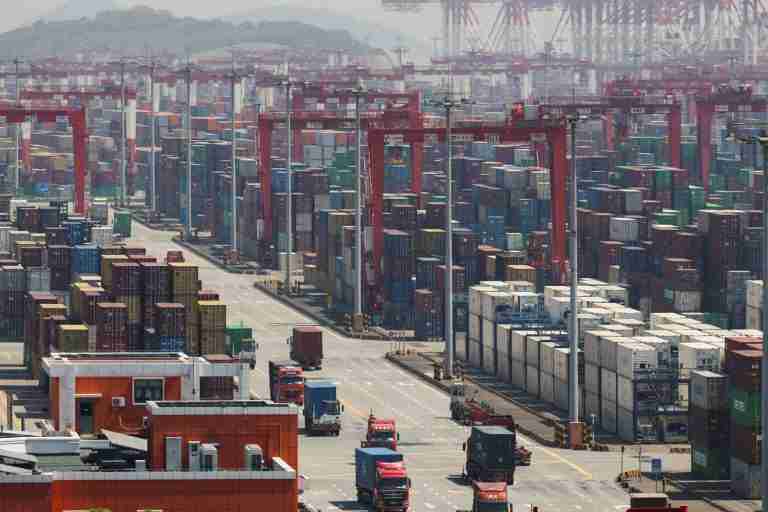
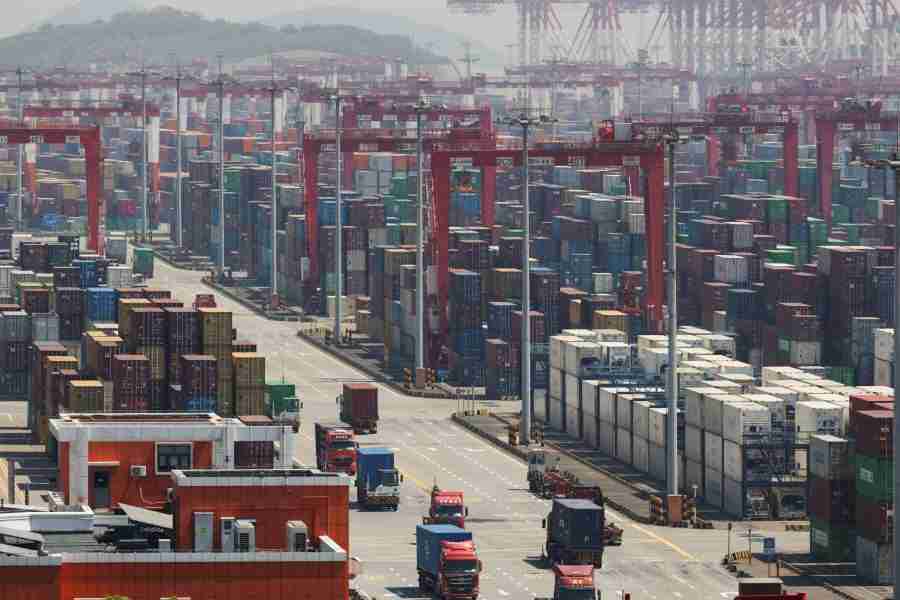
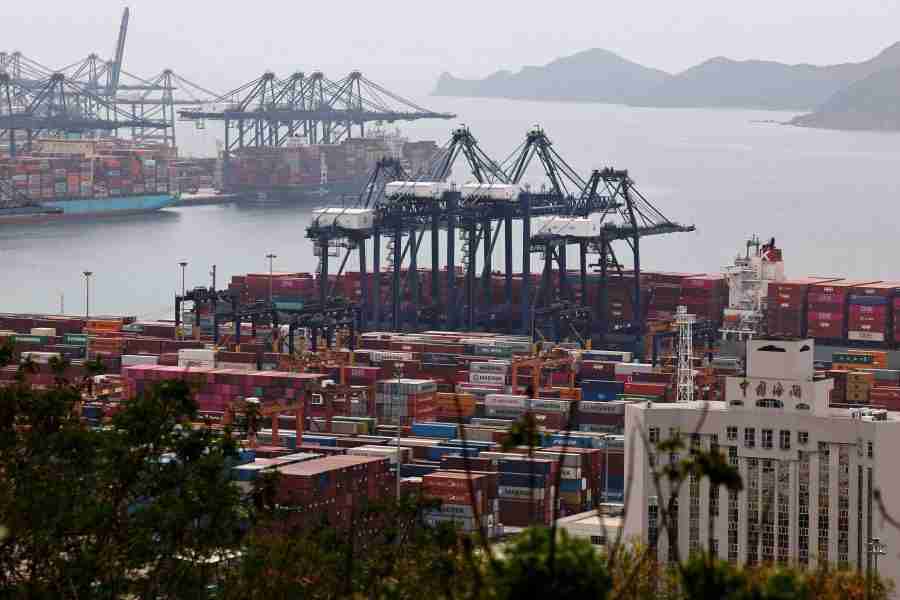
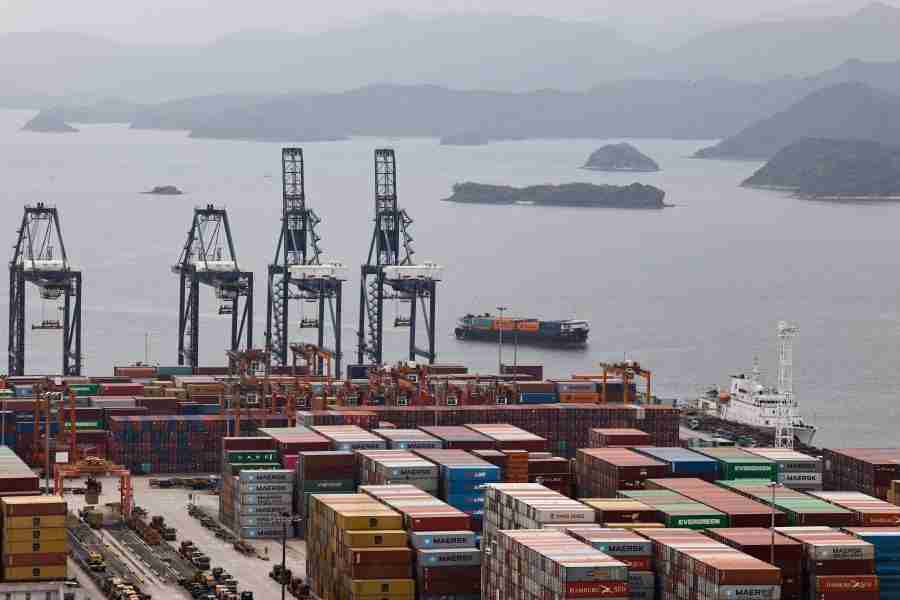
FILE PHOTO: Gantry cranes stand near shipping containers at Yangshan Port outside of Shanghai, China, April 15, 2025. REUTERS/Go Nakamura/File Photo
International news via Reuters:
China will pay no attention if the United States continues to play the “tariff numbers game”, China’s foreign ministry said on Thursday, after the White House outline how China faces tariffs of up to 245% due to its retaliatory actions.
In a fact sheet released on Tuesday, the White House said China’s total duties include the latest reciprocal tariff of 125%, a 20% tariff to address the fentanyl crisis, and tariffs of between 7.5% and 100% on specific goods to address unfair trade practices.
Cranes and cargo ships with containers are seen near a building of China Customs at the Yantian port in Shenzhen, Guangdong province, China April 17, 2025. REUTERS/Tingshu Wang
U.S. President Donald Trump announced additional tariffs on all countries two weeks ago, before suddenly rolling back higher “reciprocal tariffs” for dozens of countries while keeping punishing duties on China.
Beijing raised its own levies on U.S. goods in response and has not sought talks, which it says can only be conducted on the basis of mutual respect and equality. Meanwhile, many other nations have begun looking at bilateral deals with Washington.
Last week, China also filed a new complaint with the World Trade Organization expressing “grave concern” over U.S. tariffs, accusing Washington of violating the global trade body’s rules.
A cargo ship carrying containers approaches towards the Yantian port in Shenzhen, Guangdong province, China April 17, 2025. REUTERS/Tingshu Wang
China this week unexpectedly appointed a new trade negotiator who would be key in any talks to resolve the escalating tariff war, replacing trade tsar Wang Shouwen with Li Chenggang, its envoy to the WTO.
Washington said Trump was open to making a trade deal with China but Beijing should make the first move, insisting that China needed “our money”.
Reporting by Liz Lee and Shanghai newsroom; Editing by Christopher Cushing and Lincoln Feast
Department of Homeland Security terminating two DHS grants totaling more than $2.7 million to Harvard
A woman walks on the campus of Harvard University in Cambridge, Massachusetts, U.S., April 15, 2025. REUTERS/Faith Ninivaggi
International news via Reuters:
The U.S. Department of Homeland Security said Harvard University will lose its ability to enroll foreign students if it does not meet demands from the Trump administration to share information on some visa holders, marking the government’s latest escalation against the educational institution.
Department of Homeland Security Secretary Kristi Noem also announced on Wednesday the termination of two DHS grants totaling more than $2.7 million to Harvard.
Noem said she wrote a letter to Harvard demanding records on what she called the “illegal and violent activities” of Harvard’s foreign student visa holders by April 30.
“And if Harvard cannot verify it is in full compliance with its reporting requirements, the university will lose the privilege of enrolling foreign students,” Noem said in a statement.
A Harvard spokesperson said the university was aware of Noem’s letter “regarding grant cancellations and scrutiny of foreign student visas.”
The spokesperson said the university stood by its statement earlier in the week to “not surrender its independence or relinquish its constitutional rights” while saying it will comply with the law.
President Donald Trump’s administration has threatened universities with federal funding cuts over pro-Palestinian campus protests against U.S. ally Israel’s devastating military assault on Gaza after a deadly October 2023 attack by Palestinian Hamas militants.
Trump casts the protesters as foreign policy threats who are antisemitic and sympathetic to Hamas. Protesters, including some Jewish groups, say the Trump administration wrongly conflates their advocacy for Palestinian rights and criticism of Israel’s actions in Gaza with support for extremism and antisemitism.
The Trump administration is also attempting to deport some foreign protesters and has revoked hundreds of visas across the country.
“With a $53.2 billion endowment, Harvard can fund its own chaos – DHS won’t,” Noem said, adding an “anti-American, pro-Hamas ideology” existed at Harvard.
Harvard has previously said it worked to fight antisemitism and other prejudice on its campus while preserving academic freedoms and the right to protest.
TRUMP’S CRACKDOWN
The Trump administration said late last month it was reviewing $9 billion in federal contracts and grants to Harvard and later called for restrictions – including a mask ban and removal of diversity, equity and inclusion programs – to be put in place for the university to continue receiving federal money.
Harvard on Monday rejected numerous demands that it said would cede control to the government. The Trump administration subsequently said it was freezing $2.3 billion in funding.
Trump also threatened on Tuesday to strip Harvard of its tax-exempt status. CNN reported on Wednesday the U.S. Internal Revenue Service was making plans to rescind the tax-exempt status of Harvard and that a final decision was expected soon.
Harvard said there was no legal basis to rescind its tax-exempt status, saying such an action will be unprecedented, will diminish its financial aid for students and will lead to abandonment of some critical medical research programs.
Human rights advocates have raised free speech and academic freedom concerns over the crackdown by the government.
The Trump administration has frozen or canceled some funding for universities like Columbia, Princeton, Brown, Cornell and Northwestern as well.
It has also threatened to withhold funding over culture war issues such as DEI programs and transgender policies.
Rights advocates have also raised concerns about Islamophobia and anti-Arab bias during the Israel-Gaza war. The Trump administration has not announced steps in response.
Reporting by Kanishka Singh in Washington; Additional reporting by Brad Brooks in Colorado and Ismail Shakil in Ottawa; Editing by Sandra Maler, Tom Hogue and Gerry Doyle
To provide the best experiences, we use technologies like cookies to store and/or access device information. Consenting to these technologies will allow us to process data such as browsing behavior or unique IDs on this site. Not consenting or withdrawing consent, may adversely affect certain features and functions.
Functional
Always active
The technical storage or access is strictly necessary for the legitimate purpose of enabling the use of a specific service explicitly requested by the subscriber or user, or for the sole purpose of carrying out the transmission of a communication over an electronic communications network.
Preferences
The technical storage or access is necessary for the legitimate purpose of storing preferences that are not requested by the subscriber or user.
Statistics
The technical storage or access that is used exclusively for statistical purposes.The technical storage or access that is used exclusively for anonymous statistical purposes. Without a subpoena, voluntary compliance on the part of your Internet Service Provider, or additional records from a third party, information stored or retrieved for this purpose alone cannot usually be used to identify you.
Marketing
The technical storage or access is required to create user profiles to send advertising, or to track the user on a website or across several websites for similar marketing purposes.