Kiwon Waldron, the Bermudian harness racing driver, enjoyed a productive night at Harrah’s Hoosier Park in Indiana. Competing in three races across both Trot and Pace classes, Waldron showed his adaptability in the sulky.
His evening began with a solid third-place finish in Race 2, a Trot event, aboard Simsam, clocking a time of 1:57.2. He then switched to the Pace in Race 3, guiding Miki’s Big Guy to a sixth-place finish in 1:53.4 in a competitive field.
But Waldron saved the best till last. In Race 7, another Pace event, he partnered Friendly’s Scooter, and the duo powered to victory lane. They recorded a winning time of 1:54.2, marking a successful return to the winners’ circle for the Bermudian reinsman.
Heartbreak on the pitch for Bermuda’s Women’s National Field Hockey team as they narrowly lost their Central American and Caribbean Games bronze medal match to Puerto Rico, 1-0. The single goal in a hard-fought contest meant qualification hung in the balance at the final whistle.
However, there’s a silver lining for the Bermudian side. With Mexico pre-qualified as tournament winners and the Dominican Republic hosting the 2026 Games and therefore receiving an automatic spot, the qualification rules have shifted.
Despite finishing fourth in the tournament, Bermuda has officially secured their place at the CAC Games in 2026, joining Venezuela and bronze medallists Puerto Rico. This hard-earned qualification is a testament to the team’s resilience and performance throughout the tournament.
While the bronze medal eluded them on this occasion, Bermuda’s women will now look forward to representing their nation at the prestigious Central American and Caribbean Games.
Initiative aims to drive “long-term environmental change”
Keep Bermuda Beautiful (KBB) issued the following media release.
Keep Bermuda Beautiful (KBB) is delighted to announce the launch of Race to Recycle – a dynamic, month-long recycling challenge taking place from 12 May to 13 June. This fun and impactful initiative encourages students across Bermuda to bring in Tin, Aluminium, and Glass (TAG) recyclables, while promoting environmental awareness and positive action.
This year’s participating schools include: Bermuda High School (BHS), East End Primary, Francis Patton School, Saltus Grammar School, St. David’s Primary School, Victor Scott, and West Pembroke Primary. These schools are leading the charge in instilling responsible recycling habits among Bermuda’s young people.
“This competition is about more than collecting cans and bottles – it’s about driving long-term environmental change,” said Angel Smith, Executive Director of KBB. “We’re excited to see students, families, and teachers unite with enthusiasm and school spirit. The momentum already shown is truly inspiring – it’s shaping up to be a fun and impactful month for our island!”
Throughout the challenge, students are encouraged to bring in clean (rinsed) TAG recyclables from home using reusable, branded KBB tote bags. Weekly weigh-ins will track each school’s progress, with updates and highlights shared on KBB’s social media platforms. Top-performing schools will earn exciting prizes, including grub days, pizza lunches, and the ultimate bragging rights as Bermuda’s top recycling school.
For schools not participating this round, KBB plans to relaunch the initiative in the upcoming school year. Follow the race and cheer on your favourite school by following Keep Bermuda Beautiful on Facebook and Instagram.
KBB extends sincere thanks to all participating schools for their commitment to environmental stewardship.
Special thanks also go to Recycle Bermuda for supplying recycling bins and blue liners to each school, and to MB Enterprise for providing weekly trucking services and managing the weigh-ins of recyclable materials.
KBB hopes Race to Recycle will inspire ongoing sustainability efforts in classrooms and communities across Bermuda.
For more information, please contact KBB at office@kbb.bm or visit www.kbb.bm.
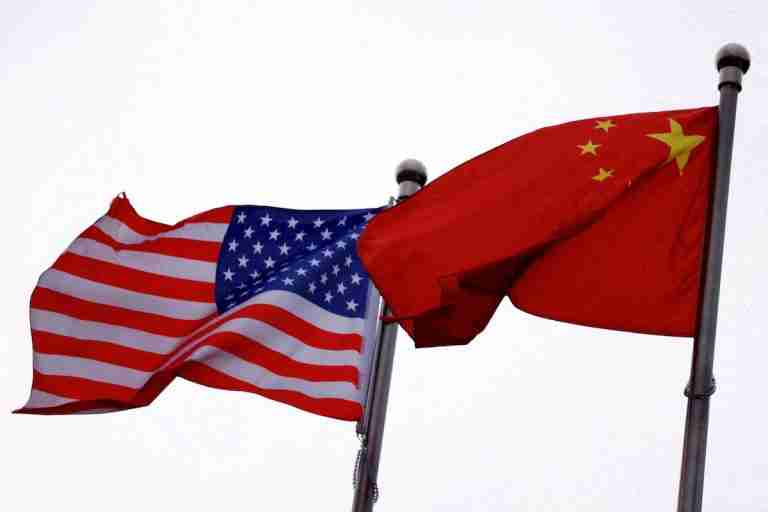
China is trying to marshal a global coalition against what it called an “abuse of tariffs” by the United States
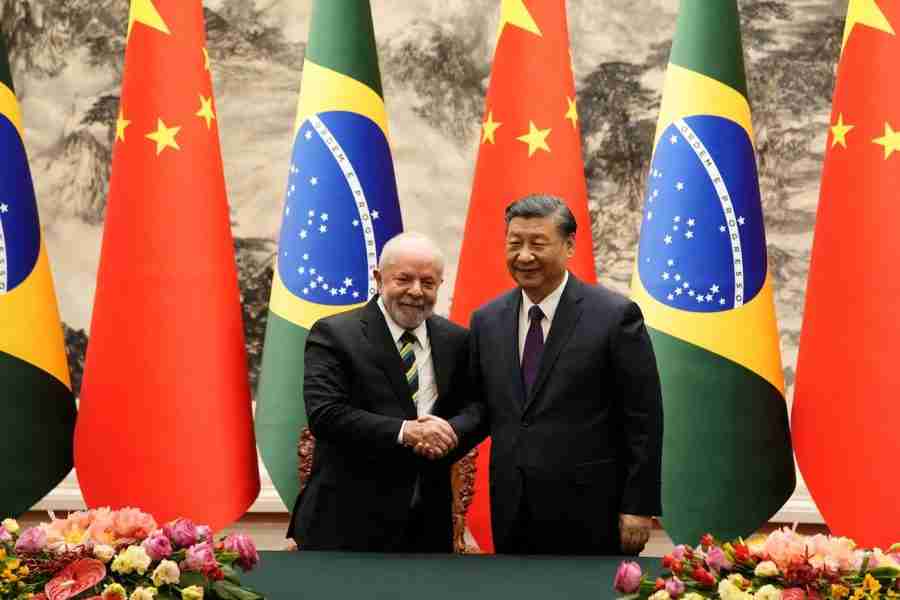
Brazilian President Luiz Inacio Lula da Silva shakes hands with Chinese President Xi Jinping after a signing ceremony held at the Great Hall of the People in Beijing, China, April 14, 2023. Ken Ishii/Pool via REUTERS/File Photo
International news via Reuters:
China will host a summit that includes its key Latin American trade partners this week in an effort to advance influence and partnerships in the region, as Beijing and Washington try to defuse their trade war.
Latin American and Caribbean officials including the presidents of Brazil, Colombia and Chile are set to attend the China-CELAC Forum ministerial meeting in Beijing on Tuesday.
Bilateral trade with the bloc was worth $427 billion from January to September 2024, according to Chinese data.
China’s President Xi Jinping will deliver a speech to the summit. The last time Xi addressed the forum was at the first of such meeting 10 years ago.
The China-CELAC Forum challenges long-standing American geopolitical and economic dominance in the region, which the Trump administration has sought to counter, and takes place after a weekend of high-stakes trade talks between the U.S. and China that ended on a positive note.
U.S. officials touted a “deal” to reduce the U.S. trade deficit, while Chinese officials said both had reached “important consensus” and agreed to launch another new economic dialogue forum. Both will release a joint statement on Monday.
China has been trying to marshal a global coalition against what it called an “abuse of tariffs” by the United States.
Since the world’s two largest economies imposed steep tariffs well above 100% on each other’s goods last month, China has reached out to Southeast Asia and Central Asia calling on its trade partners to hold the line against “unilateral bullying” and to uphold multilateralism.
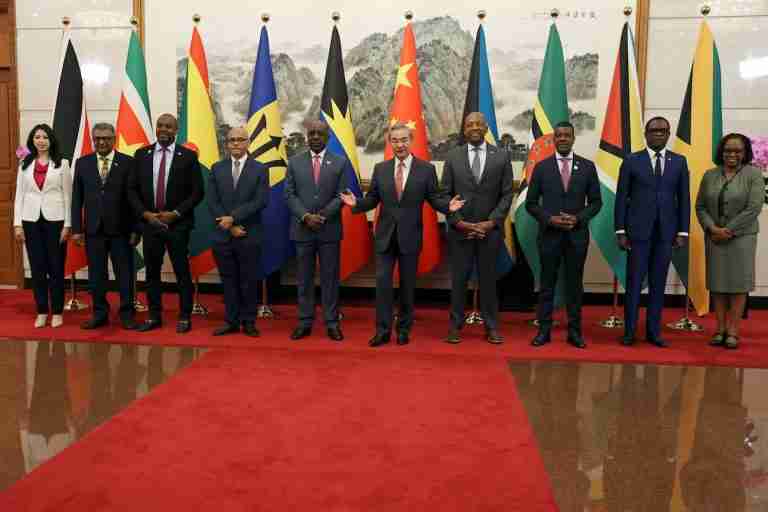
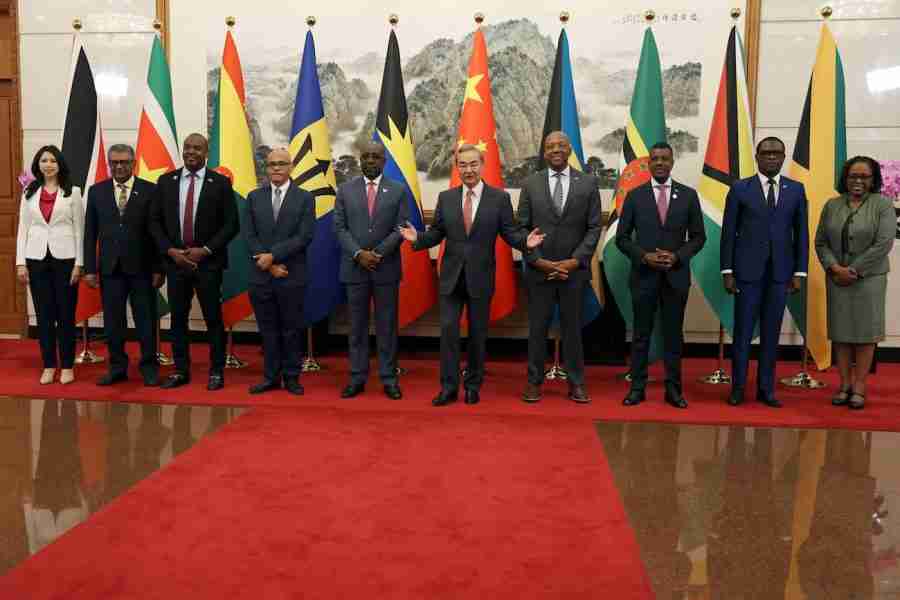
Chinese Foreign Minister Wang Yi poses for group photos with foreign ministers and representatives from the Caribbean countries, ahead of the the China-CELAC Forum ministerial meeting, at the Diaoyutai State Guesthouse in Beijing, China May 12, 2025. REUTERS/Florence Lo/Pool
China also made progress on trade issues with the European Union, agreeing to discuss setting minimum prices on Chinese-made electric vehicles.
The China-CELAC Forum, an intergovernmental cooperation platform between China and Latin American and Caribbean nations, has been a vehicle to deepen dialogue between China and the bloc over trade, investment and infrastructure cooperation under China’s Belt and Road Initiative (BRI).
Highlighting tensions between China and the U.S. in the region has been the Panama Canal, which U.S. President Donald Trump has threatened to take back.
The U.S.-based BlackRock consortium’s $23-billion deal to acquire Hong Kong-based CK Hutchison’s port operations near the Panama Canal, which Trump hailed as “reclaiming” the waterway, triggered Beijing’s concerns and prompted a regulatory review.
COMMODITIES TRADE
China is the primary buyer of raw materials from Latin America, including copper, iron ore and minerals, but its trade with Brazil could feature this week.
Co-inciding with the summit, Beijing will also welcome Brazilian President Luiz Inacio Lula da Silva’s state visit on Tuesday. More than a dozen bilateral signings were expected.
China is Brazil’s largest export market by some length, a trade dominated by commodities like soybeans, iron ore and crude oil.
Last year, China bought $37 billion worth of soybeans from Brazil, making it China’s primary soybean supplier as the world’s largest soybean buyer diversifies away from the United States. China resumed imports of Brazilian soybean shipments last week from five firms previously suspended over phytosanitary concerns.
In a social media post, Chilean President Gabriel Boric confirmed attending the summit in Beijing and said he would meet Xi.
The meeting could discuss business interests from Chinese firms in the world’s No. 2 lithium producer after metals group Tsingshan said it remains keen on investment opportunities in Chile’s downstream lithium sector.
On other fronts, more infrastructure cooperation could be highlighted as the high-profile meeting paves a path towards the BRICS Summit to be hosted in Rio de Janeiro in July.
Unlike Panama, which exited the BRI earlier this year, Colombia has ambitions to join China’s flagship BRI programme, following the footsteps of Peru which BRI-linked Port of Chancay was inaugurated half a year ago to serve better maritime connectivity between China and South America.
Reporting by Liz Lee and Laurie Chen; additional reporting by Lisandra Paraguassu, Manuela Andreoni, Julia Symmes Cobbs and Ella Cao; Editing by Michael Perry
Less than 10% of white South Africans are unemployed, compared with more than a third of blacks
FILE PHOTO: Demonstrators hold placards in support of U.S. President Donald Trump’s stance against what he calls racist laws, land expropriation, and farm attacks, outside the American Embassy in Pretoria, South Africa, February 15, 2025. REUTERS/Siphiwe Sibeko/File Photo
International news via Reuters:
The first 49 white South Africans deemed victims of racial discrimination and granted refugee status under an offer by U.S. President Donald Trump were flying to the U.S. on Monday in a move deepening frictions between the two nations.
The U.S. government has blocked mostly non-white refugee admissions from the rest of the world but is prioritising Afrikaners, the descendants of mostly Dutch settlers.
Giving refugee status to white South Africans has been met with a mixture of alarm and ridicule by South African authorities, who say the Trump administration has waded into a domestic political issue it does not understand.
It comes at a time of heightened racial tensions in South Africa over land and jobs that has divided the ruling coalition.
The charter plane carrying the 49 from Johannesburg was expected to arrive at Washington Dulles airport on Monday morning.
“The government unequivocally states that these are not refugees,” South African foreign ministry spokesperson Chrispin Phiri told local broadcaster Newzroom Afrika.
“But we are not going to stand in their way.”
WEALTH INEQUITIES
Since Nelson Mandela brought democracy into South Africa in the 1994, the once-ruling white minority has retained most of the wealth amassed under colonialism and apartheid.
Whites still own three-quarters of private land and have about 20 times the wealth of the Black majority, according to international academic journal the Review of Political Economy.
Less than 10% of white South Africans are out of work, compared with more than a third of their Black counterparts.
Yet the claim that minority white South Africans face discrimination from the Black majority has become an established trope in right-wing online chatrooms, and has been echoed by Trump’s white South African-born ally Elon Musk.
Since his return to the White House in January, Trump has cut all U.S. financial assistance to South Africa last month, citing disapproval of its land policy and of its genocide case at the International Court of Justice against Washington’s ally, Israel.
Reporting by Tim Cocks; Additional reporting by Sfundo Parakozov; Editing by Andrew Cawthorne
Automatic settlement and citizenship for people who move to Britain will apply after 10 years
British Prime Minister Keir Starmer visits the Economic Crime Team at the City of London Police HQ where he will meet police officers and representatives from different law enforcement teams and set out details of the government’s new sanctions regime, January 9, 2025. Paul Grover/Pool via REUTERS/File Photo
International news via Reuters:
Prime Minister Keir Starmer promised on Monday to cut net migration to Britain significantly over the next four years, saying greater control was needed to maintain social cohesion and drive investment in the local workforce.
Controlling immigration was a key factor in Britain’s 2016 vote to leave the European Union, yet net arrivals have quadrupled since it left the bloc, helping boost the popularity of Nigel Farage’s right-wing, anti-immigration Reform UK party.
Starmer said nations depend on rules that set out rights, responsibilities and obligations, and that without them Britain risked “becoming an island of strangers”.
He said his new plan meant migration would fall sharply by the end of this parliament in 2029, though he gave no numerical targets.
“That’s a promise, but I want to be very clear on this, if we do need to take further steps, if we do need to do more to release pressure on housing and our public services, then mark my words, we will,” he told a press conference at his Downing Street office.
Among the measures announced on Monday was a move to restrict skilled worker visas to graduate-level applicants, to prevent care sector firms from recruiting abroad and to require businesses to increase training for local workers.
Automatic settlement and citizenship for people who move to Britain will apply after 10 years, up from five years now, although highly skilled workers – such as nurses, doctors, engineers and AI experts – would be fast-tracked.
The government also said it planned to raise English language requirements to include all adult dependents who will have to show a basic understanding of English. It said the change would help integration and reduce the risks of exploitation.
HOT TOPIC
Migration has long been a hot political issue in Britain, with critics arguing that social cohesion can be damaged if the government does not build enough houses or public services to accommodate a larger population.
But many business sectors, including the adult care sector, argue they cannot hire enough staff locally, and employers in science, technology and other areas warn that tough restrictions will damage their potential and hit overall economic growth.
The number of European Union migrants to Britain fell sharply after Brexit but new visa rules, higher net numbers of foreign students, and a rise in people arriving from Ukraine and Hong Kong led to an overall surge in recent years.
Net migration – the number of people coming to Britain minus the number leaving – hit a record 906,000 in the year to June 2023, up from 184,000 who arrived in the same period during 2019, when Britain was still in the EU.
Neil Carberry, chief executive of the Recruitment and Employment Confederation (REC), said Starmer’s “major intervention” would spark alarm among bosses.
Asked about concerns of business, Starmer said Britain had endured largely stagnant growth when immigration was high, adding “so that link doesn’t hold on that evidence”.
Writing by Kate Holton and William SchombergEditing by Giles Elgood and Gareth Jones
The survey also ranked the perception of countries from -100% to +100%
People walk over Brooklyn Bridge in New York City, U.S., December 30, 2024. REUTERS/Marko Djurica/File Photo
International news via Reuters:
Global perceptions of the United States have deteriorated across the world over the past year and are now worse than views of China, according to an annual study of perceptions of democracy published on Monday.
The survey did not go into details on the criteria used, but the Alliance of Democracies Foundation which commissioned it says its aim is to defend and advance democratic values.
When asked why perceptions of the U.S. had slipped, Alliance founder and former NATO Secretary General Anders Fogh Rasmussen said: “President Trump has triggered a trade war, scolded Ukraine’s president in the Oval Office, left allies feeling vulnerable and enemies emboldened.”
“It’s no surprise that opinions have slipped even among people like me who spent their lives admiring the United States and what it stood for,” he added.
Trump has said he is pushing for a peace deal between Russia and Ukraine and on Thursday called for a 30-day unconditional ceasefire between the two countries.
He has also said that tariffs are defending the U.S. economy against what his administration sees as unfair trade conditions.
The conclusions in the Democracy Perception Index survey, conducted between April 9 and 23 with polling firm Nira Data, were based on more than 111,000 respondents worldwide, the Alliance said.
The perception of Trump was negative in 82 of the 100 countries surveyed, higher than Russian President Vladimir Putin and Chinese President Xi Jinping, who were viewed negatively in 61 and 44 countries, respectively.
The survey also ranked the perception of countries from -100% to +100%.
The net perception rating of the United States fell to -5% from +22% last year, indicating a greater number of respondents with a negative view of the country compared with those with a positive view.
The share of countries with a positive image of the U.S. dropped to 45% from 76% last year, the survey showed.
For China, the net perception rose to +14% this year from +5% last year, the survey found.
The report was published ahead of the Copenhagen Democracy Summit, which takes place on May 13-14.
Reporting by Louise Breusch Rasmussen and Jacob Gronholt-Pedersen; Editing by Andrew Heavens
The U.S. remained the most important foreign investor with Switzerland in second
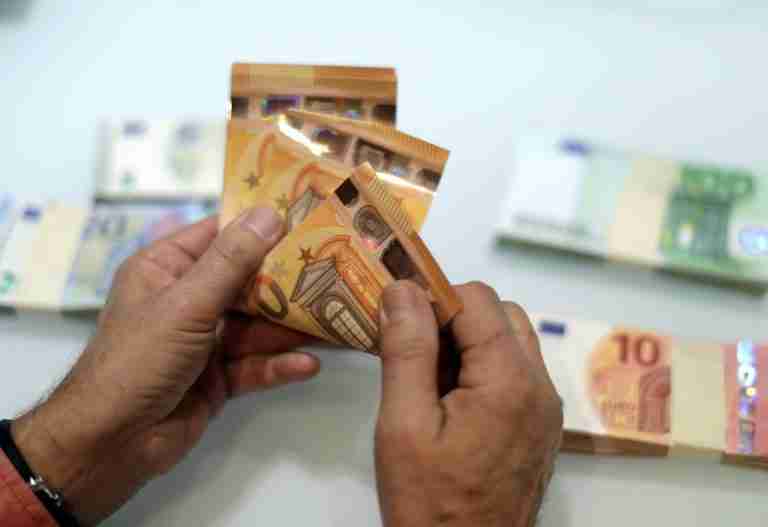
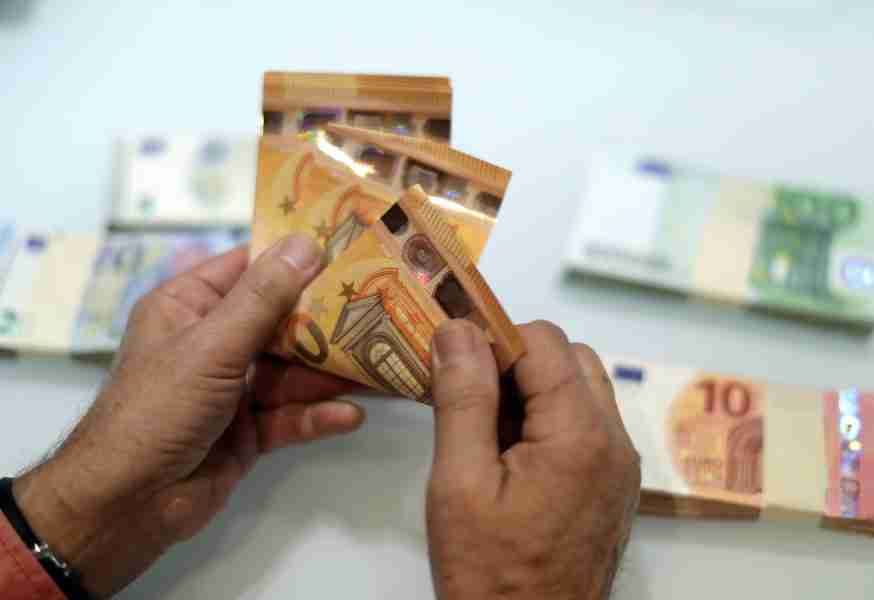
FILE PHOTO: A money changer counts Euro banknotes at a currency exchange office in Nice, France November 17, 2017. REUTERS/Eric Gaillard/File Photo
International news via Reuters:
The number of foreign investments in Germany fell for the third year in a row in 2024, international economic promotion agency Germany Trade & Invest (GTAI) said on Monday.
Last year there were 1,724 new establishments and expansions, down from 1,759 projects in 2023 – a 2% year-on-year decline – 1,783 in 2022 and 1,806 in 2021.
Foreign direct investment fell much more sharply in Europe last year, by 4.6%, and by almost 6% in Western Europe, GTAI data showed.
Foreign companies announced investments totalling 23.2 billion euros ($25.83 billion) in 2024, down from the record sums of 34.8 billion euros in 2023 and 25.3 billion euros in 2022, due to catch-up effects following the pandemic.
The United States has remained the most important foreign investor with three big projects from Amazon, Microsoft and Apple in 2024 and a total of 229 projects for relocation or expansion.
Switzerland followed in second place with 202 projects, ahead of China with 199, the U.K. with 137 and the Netherlands with 97, according to GTAI data.
($1 = 0.8981 euros)
Reporting by Rene Wagner, writing by Maria Martinez, editing by Friederike Heine
The CIPD’s survey of 2,000 employers has run since 2014
FILE PHOTO: Signs are seen outside a job centre in Borough, in London, Britain, December 1, 2024. REUTERS/Mina Kim/File Photo
International news via Reuters:
Gloom surrounds British employers’ hiring plans after recent tax hikes and surging uncertainty in the global economy, according to surveys on Monday that chimed with the Bank of England’s forecasts for a weakening labour market.
The Chartered Institute of Personnel and Development, a professional body for human resources, said its gauge of employment intentions for the next three months fell in the latest quarter from +13 to +8 – a record low, excluding the COVID-19 pandemic.
The CIPD’s survey of 2,000 employers has run since 2014.
Large private-sector employers – which account for roughly half of all private-sector employment, according to official data – drove the drop in the latest quarter, the CIPD said.
A separate survey from accountants KPMG and the Recruitment and Employment Confederation showed another drop in job placements by recruiters last month, albeit less than in March. Overall demand for staff, however, contracted at a faster pace.
Both surveys reinforced the picture of a cooling labour market, emphasised by the BoE last week as it cut interest rates. It remains concerned about the strength of wage growth as a source of inflation pressure.
First-quarter official data due on Tuesday is likely to show annual wage growth of nearly 6%.
The CIPD survey showed annual pay settlements, which are typically somewhat lower than headline pay growth, holding at 3% in the latest quarter – below the 3.5%-4% range for settlements which BoE staff had found during recent company visits.
“Employer confidence is low which is being reflected in their hiring plans,” said James Cockett, senior labour market economist at the CIPD.
Jon Holt, group chief executive of KPMG, said the slight easing of the downturn in recruitment signalled in the REC report did not amount to “green shoots” as the number of job-seekers continued to rise.
“This is unsurprising. With businesses facing several pressures due to current global economic uncertainty and rising costs, it is unlikely to lead to a sudden turnaround in the market in the near term,” Holt said.
A gauge of employment from accountants BDO which aggregates previously-released business surveys fell to a 12-year low in April.
Reporting by Andy Bruce; editing by David Milliken
Pharma stocks across Europe, UK, Australia, India and Japan also declined
FILE PHOTO: Used blister packets that contained medicines, tablets and pills are seen, in this picture illustration taken June 30, 2018. REUTERS/Russell Boyce/Illustration/File Photo
International news via Reuters:
Global pharmaceutical stocks took a hit on Monday after U.S. President Donald Trump pledged to slash prescription prices by about 30%–80%, which aligns with price levels paid by other wealthy nations.
Shares of major U.S. drugmakers AbbVie, Amgen, Pfizer, Eli Lilly and Merck fell between 2.1% and 3.6% in premarket trading.
Trump revealed he would sign an executive order on Monday morning to pursue “most favored nation” pricing, which is also called international reference pricing.
The U.S. pays the highest prices for prescription drugs, often nearly three times more than other developed nations. Trump has pledged to close the gap but has yet to outline how he will implement it.
Pharma stocks across Europe, UK, Australia, India and Japan also declined.
In Europe, a basket of healthcare stocks fell 2.9%, with AstraZeneca, GSK and Roche Holding down between 3.3% and 6.8%.
“This announcement could impact EU/US tariff talks,” said Kathleen Brooks, research director at trading platform XTB.
“Will the U.S. president use price caps on pharma imports rather than tariffs to reduce the cost for U.S. patients? If yes, this could have big ramifications for pharma companies and their profits in Europe and elsewhere.”
Indian pharma stocks including Biocon and Lupin also saw declines. India sends a third of its total pharmaceutical exports to the United States.
Australian healthcare stocks fell 1.4% to their lowest since late April, with CSL Ltd and Mayne Pharma Group particularly vulnerable to U.S. pricing pressures as a significant portion of their revenue comes from the American market.
In Asia, Japan’s pharmaceutical sector closed 6.5% lower and was the worst performer among the Tokyo Stock Exchange’s 33 industry sub-indexes. Shares of Daiichi Sankyo sank over 8%.
Shares of Alphamab Oncology plunged 14.4% to HK$6.28, leading declines in Hong Kong-listed pharmaceutical stocks.Meanwhile, the U.S. and China said they have agreed to slash reciprocal tariffs, aiming to ease a trade war that has unsettled global markets.
Reporting by Joel Jose and Siddarth S in Bengaluru and Danilo Masoni in London; Editing by Amanda Cooper and Krishna Chandra Eluri
The U.S. to cut extra tariffs imposed on Chinese imports in April this year to 30% from 145%
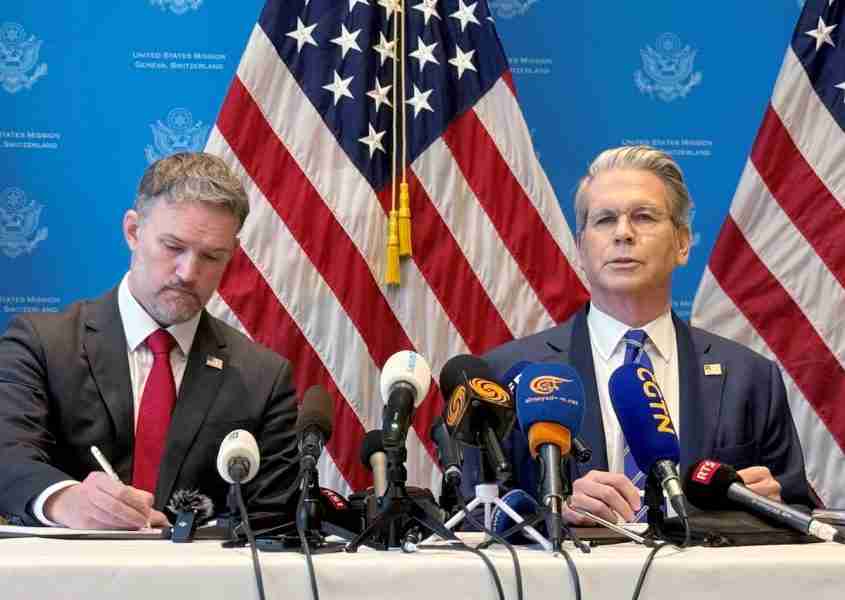
U.S. Secretary of the Treasury Scott Bessent and U.S. Trade Representative Jamieson Greer attend a news conference after trade talks with China in Geneva, Switzerland, May 12, 2025. REUTERS/Olivia Le Poidevin
International news via Reuters:
The United States and China have agreed to temporarily slash reciprocal tariffs in a deal that surpassed expectations as the world’s two biggest economies seek to end a damaging trade war that has stoked fears of recession and roiled financial markets.
The U.S. will cut extra tariffs it imposed on Chinese imports in April this year to 30% from 145% and Chinese duties on U.S. imports will fall to 10% from 125%, the two countries said on Monday. The new measures are effective for 90 days.
The dollar rose against other major currencies and stock markets lifted following the news, which helped allay concerns about a downturn triggered last month by U.S. President Donald Trump’s escalation of tariff measures aimed at narrowing the U.S. trade deficit.
“Both countries represented their national interest very well,” U.S. Treasury Secretary Scott Bessent said after talks with Chinese officials in Geneva. “We both have an interest in balanced trade, the U.S. will continue moving towards that.”
Bessent was speaking alongside U.S. Trade Representative Jamieson Greer after the weekend talks in Switzerland in which both sides had hailed progress on narrowing differences.
“The consensus from both delegations this weekend is neither side wants a decoupling,” Bessent said. “And what had occurred with these very high tariffs … was the equivalent of an embargo, and neither side wants that. We do want trade.”
The Geneva meetings were the first face-to-face interactions between senior U.S. and Chinese economic officials since Trump returned to power and launched a global tariff blitz, imposing particularly hefty duties on China.
Bessent said the deal did not include sector-specific tariffs and that the U.S. would continue strategic rebalancing in areas including medicines, semiconductors and steel where it had identified supply chain vulnerabilities.
Since taking office in January, Trump had hiked the tariffs paid by U.S. importers for goods from China to 145%, in addition to those he imposed on many Chinese goods during his first term and the duties levied by the Biden administration.
China hit back by putting export curbs on some rare earth elements, vital for U.S. manufacturers of weapons and electronic consumer goods, and raising tariffs on U.S. goods to 125%.
REPRIEVE
Shares in European companies hit hard by the escalating trade war rallied on Monday. Maersk was the biggest gainer in Europe, up more than 12% after the deal. It warned last week that container volumes between the world’s top two economies had plunged due to the trade war.
Shares in luxury firms LVMH and Gucci-owner Kering were up 7.4% and 6.7% respectively.
“This is better than I expected. I thought tariffs would be cut to somewhere around 50%,” said Zhiwei Zhang, chief economist at Pinpoint Asset Management in Hong Kong.
“Obviously, this is very positive news for economies in both countries and for the global economy, and makes investors much less concerned about the damage to global supply chains in the short term,” Zhang added.
The tariff dispute brought nearly $600 billion in two-way trade to a standstill, disrupting supply chains, sparking fears of stagflation and triggering some layoffs.
Wall Street stock futures climbed as the talks boosted hopes a global recession might be avoided.
Trump gave a positive reading of the talks before they had concluded, saying that the two sides had negotiated “a total reset… in a friendly, but constructive, manner.”
He levied the tariffs in part after declaring a national emergency over fentanyl entering the United States, and Greer said conversations over curbing the deadly opioid were “very constructive” though on a separate track.
Reporting by Emma Farge and Olivia Le Poidevin;Writing by Dave Graham and Emelia Sithole-Matarise; Editing by Sharon Singleton
To provide the best experiences, we use technologies like cookies to store and/or access device information. Consenting to these technologies will allow us to process data such as browsing behavior or unique IDs on this site. Not consenting or withdrawing consent, may adversely affect certain features and functions.
Functional
Always active
The technical storage or access is strictly necessary for the legitimate purpose of enabling the use of a specific service explicitly requested by the subscriber or user, or for the sole purpose of carrying out the transmission of a communication over an electronic communications network.
Preferences
The technical storage or access is necessary for the legitimate purpose of storing preferences that are not requested by the subscriber or user.
Statistics
The technical storage or access that is used exclusively for statistical purposes.The technical storage or access that is used exclusively for anonymous statistical purposes. Without a subpoena, voluntary compliance on the part of your Internet Service Provider, or additional records from a third party, information stored or retrieved for this purpose alone cannot usually be used to identify you.
Marketing
The technical storage or access is required to create user profiles to send advertising, or to track the user on a website or across several websites for similar marketing purposes.