Thursday, October 22, 2026
Home Blog Page 994

EU pledges unity on trade challenges, notes US tariffs harder on own economy than on EU

IMF estimates internal EU trade barriers equal a 44% tariff on goods within the bloc
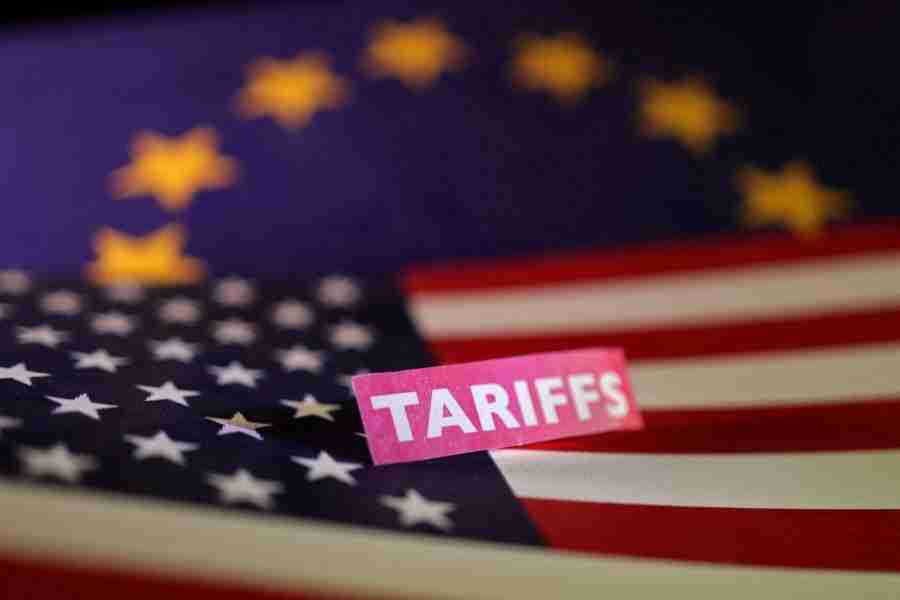
FILE PHOTO: U.S. and European Union flags and a “tariffs” label are seen in this illustration taken April 10, 2025. REUTERS/Dado Ruvic/Illustration/File Photo

International news via Reuters:

With higher U.S. tariffs postponed by 90 days, European Union finance ministers pledged unity on Friday in negotiating a trade deal with Washington during that window, noting the U.S.’ levies were more hurtful for its own economy than for Europe’s.

U.S. President Donald Trump said on Wednesday he was suspending for 90 days the reciprocal tariffs of 20% he had imposed on Europe on from that day, though his 10% rate remains in place as it does for most other countries globally.

“All finance ministers agreed on the need for a unified stance,” the chairman of the talks Paschal Donohoe told a news conference, as EU finance ministers met in Warsaw for talks for the first time since the tariff announcement.

EU Economic Commissioner Valdis Dombrovskis told reporters the Commission estimated the negative impact of U.S. tariffs on the European economy at 0.2% of GDP by 2027 if the measures were only temporary and there was no retaliation.

But if companies started perceiving the higher tariffs as permanent, or if there was more retaliation to them, European economic growth could lose 0.5%-0.6% of GDP by 2027, he said.

At the same time the U.S. economy itself would be reduced by 0.8% to 1.4% until 2027 in the benign scenario and 3.1%-3.3% in a scenario of permanent tariffs and more retaliation.

“These model simulations do not account for an additional loss of investor and business confidence in the U.S. economy, which would further the negative GDP impact,” Dombrovskis said.

He said that, by contrast, increased investment in Germany, which has reformed its debt brake to spend more freely on defence and created a 500 billion euro infrastructure fund, could provide a positive stimulus for the European economy.

Some European Central Bank officials were more pessimistic and estimated the impact of the U.S. tariffs on the EU economy at between 0.5% and 1.0% of GDP, depending on how the trade dispute develops.

The Commission has forecast the EU economy as a whole would grow 0.9% this year, so the tariffs could put the EU in recession.

“It is very difficult to put figures on it now, but it is obvious that global trade difficulties will affect growth ..in the euro area,” Donohoe told Bloomberg TV.

EU’S OWN MARKET A PRIORITY

The ministers agreed that the trade turbulence called for more urgent action to make the EU’s own internal market of 450 million consumers work better.

This could include more urgency in the introduction of a digital euro, the creation of the EU’s savings and investment union and trade diversification to make the European Union less dependent on the U.S.

The International Monetary Fund has estimated that internal EU barriers to trade were equivalent to a 44% tariff on goods and 110% tariffs on services within the bloc.

“We need to use the 90 days wisely, we need a good deal for European citizens and for European companies,” Polish Finance Minister Andrzej Domanski said.

Ministers also made clear the EU was ready to retaliate.

“The U.S. side has to be aware that if the negotiations don’t work, we will have another discussion around the response mechanisms,” German Finance Minister Jorg Kukies said.

Negotiations with Washington on how to avoid higher tariffs altogether are handled by the European Commission, which is in charge of trade policy for the 27-nation EU.

If a deal can be agreed within the next three months, possibly along the lines of the EU’s zero-tariff proposal on all industrial goods, the issue would be resolved.

But a no-deal outcome is also possible. That would leave the job of shielding national economies and industry sectors in the hands of the 27 EU governments.

The sectors at greatest risk from U.S. tariffs are steel, aluminium, cars, timber, microchips and pharmaceuticals. U.S. tariffs of 25% are already in place on EU steel, aluminium and cars.

Coordination of industry support will be key because some governments have stronger public finances and can afford to help their companies while others cannot. Such inequality would distort fair competition in the single EU market.

Additional reporting by Benoit van Overstraeten, Karol Badohal, Pawel Florkiewicz and Lewis Macdonald; Reporting by Jan Strupczewski; Editing by Jamie Freed and Hugh Lawson


Sterling falls against euro, rises versus dollar as traders focus on trade war

Heavy dollar selling has seen the greenback plunge versus a range of currencies

A two Euro coin is pictured next to a one Pound coin on top of a portrait of Britain’s Queen Elizabeth in this file photo illustration shot March 16, 2016. REUTERS/Phil Noble/Illustration/Files

International news via Reuters:

The pound fell versus the euro and rose versus the dollar on Friday, reflecting a sell-off in U.S. assets as traders flee to safe-haven currencies amid an escalating global trade war, while better-than-expected UK GDP figures barely moved the dial. 

At 1004 GMT, the pound was 1% higher versus the dollar at $1.30950, and 0.5% lower versus the euro at 0.8675. 

Heavy dollar selling has seen the greenback plunge versus a range of currencies, as investors’ confidence in the world’s largest economy flags. 

Safe-haven currencies such as the Swiss franc and euro are meanwhile at multi-year highs as traders dump U.S. assets. 

“The story with sterling it is more sensitive to risk sentiment than the euro … and it’s less liquid than the euro, in general it makes sense in these conditions to have euro/sterling move higher. When it comes to cable, it is just a dollar story,” Francesco Pesole, FX strategist at ING, said.

Earlier on Friday, official figures showed Britain’s economy returned to growth in February with its fastest expansion in 11 months, beating economists’ expectations.

The pound barely moved on the news as attention remained squarely on tariff-related developments, with China slapping additional tariffs on the U.S. on Friday morning in a further escalation of the trade war. 

One additional factor weighing on sterling is the gilt market, Pesole said. 

“At a moment where bond market instability is driving outflows from the U.S. dollar in the U.S., markets are looking at bond market instability in the UK,” he said. 

Thirty-year gilt yields plunged 16.8 bps on Thursday – their biggest daily drop in over two years – but on Friday resumed the upward climb seen since Trump’s tariffs roiled markets.

Reporting by Lucy Raitano; Editing by Editing by Alison Williams

More Sudanese refugees fleeing as far as Europe, UN refugee agency says

12 million people displaced by the conflict between the Sudanese army and the paramilitary forces

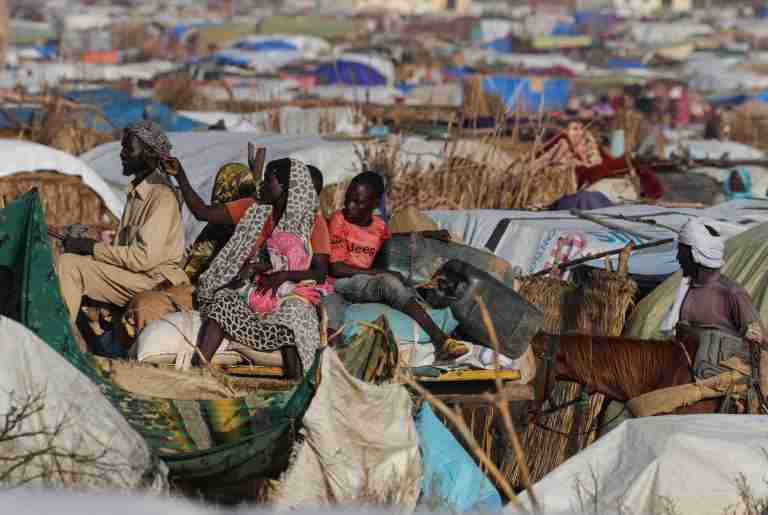
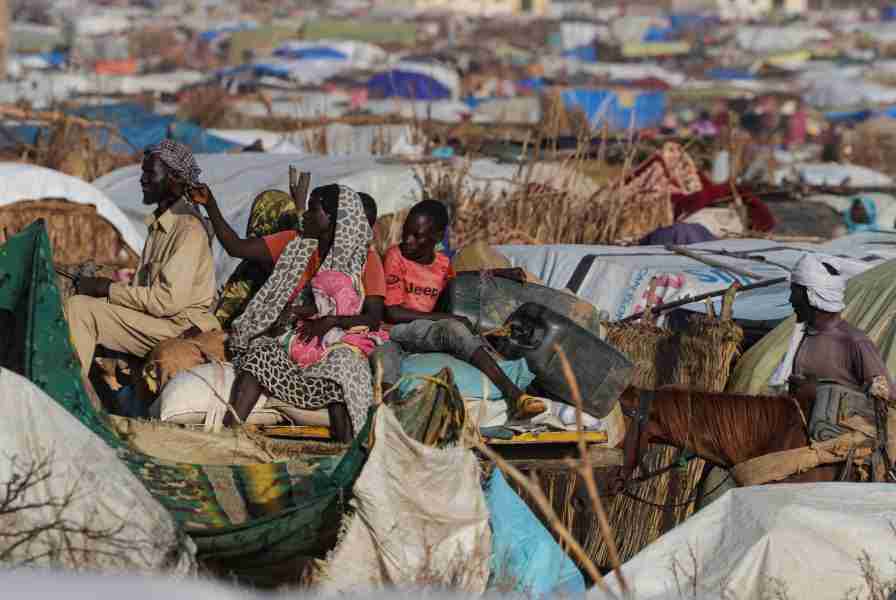
A Sudanese woman, who fled the conflict in Geneina in Sudan’s Darfur region, reacts as she rides a cart alongside makeshift shelters in Adre, Chad August 5, 2023. REUTERS/Zohra Bensemra/File Photo


International news via Reuters:

Over a thousand Sudanese refugees have reached or attempted to reach Europe in early 2025, the United Nations’ refugee agency said on Friday, citing growing desperation in part due to reduced aid in the region.

Some 12 million people have been displaced by the two-year conflict between the Sudanese army and the paramilitary Rapid Support Forces that has fuelled what U.N. officials call the world’s most devastating aid crisis.

While some have recently returned home to Khartoum, millions of others in neighbouring countries like Egypt and Chad face tough choices as services for refugees are being cut, including by the United States as part of an aid review.

Olga Sarrado, U.N. refugee agency spokesperson, told a press briefing in Geneva that some 484 Sudanese had arrived in Europe in January and February, up 38% from the same period last year.

Around 937 others were rescued or intercepted at sea and returned to Libya – more than double last year’s figures for the same period, she added.

“As humanitarian aid crumbles and if the war does not abate, many more will have little choice than to join them,” she said.

Migrant deaths hit a record last year, the U.N. migration agency said, with many perishing on the Mediterranean crossing which is one of the world’s most dangerous.

Reporting by Emma Farge and Olivia Le Poidevin; Editing by Ludwig Burger

Australia wants AUKUS submarines for deterrence, stealth, says PM Albanese

Opposition leader Peter Dutton said Australia needed nuclear submarines because it is an island nation

International news via Reuters:

Australia is buying nuclear-powered submarines as a deterrent, Prime Minister Anthony Albanese said on Friday, adding that the AUKUS treaty that has come under scrutiny amid President Donald Trump’s trade policy was also in the United States’ interests. 

The U.S. sale of three nuclear-powered submarines to Australia under AUKUS is facing new doubts as Trump’s tariffs take hold, and amid concern in Washington that providing the subs to Canberra may reduce deterrence to China.

The U.S. Navy in September set a deadline of 2027 for its forces to be prepared for a conflict with China. 

Reuters reported, citing U.S. defence experts and documents, consternation that Australia’s reluctance to even discuss using the attack submarines against China means transferring them out of the U.S. fleet in 2032 could hurt deterrence efforts. 

Campaigning for a May 3 election in the northern garrison town of Darwin, Albanese told reporters he was “confident about AUKUS”.

“We’re investing in our assets so that we’re more secure. Obviously you have assets there as deterrents,” he said. “The great benefit of nuclear-powered submarines, as I’ve spoken about many times, the reason why the Government supports them is because of their stealth capacity.”

Asked about comments by a U.S. defence strategist who told Reuters that Australia was unwilling to talk about the offensive capability of the submarines, Albanese said it was not responsible “to talk up war”.

Australia faces a 2025 deadline to pay the United States $2 billion under AUKUS to assist with improving U.S. submarine shipyards. 

“We support the existing arrangements that we have with the United States,” Albanese said when asked whether he would agree to a request for more money from the Trump Administration.

Opposition Liberal Party leader Peter Dutton said Australia needed nuclear submarines because it is an island nation.

“The nuclear submarine allows us to project strength. It makes us a more reliable partner for our Five Eyes partners, and in addition to that Japan and other countries including the Philippines, India,” he said on Friday, referring to the intelligence sharing agreement between Australia, the U.S., Canada, New Zealand and Britain.

Albanese’s government had cannibalised spending from other parts of the defence budget to pay for AUKUS, he said.

“I do think it is at risk under Labor, because they are not putting money in. If the Americans think or the Brits think we are not serious about the programme, why would they proceed with it?” he told reporters in Western Australia.

Labor has said it is spending A$50 billion more over a decade on defence.

Reporting by Kirsty Needham in Sydney. Editing by Gerry Doyle

Italy’s sex workers get business code in a step out of shadows

National statistics institute ISTAT placed sex workers under the category of personal services

FILE PHOTO: General view of the Colosseum next to a subway construction site in Rome, Italy, February 16, 2023. REUTERS/Remo Casilli/File Photo

International news via Reuters:

Italy has made its first direct reference to prostitution in the business classification it uses for data collection and tax purposes, the national statistics institute said, including escort services, events and the management of premises.

Prostitution in Italy lies in a limbo where individuals are allowed to offer sex services, but that activity lacks specific rules. On the other hand, organising sex workers such as in a brothel is strictly prohibited. 

Sex workers are now expected to use the business classification adopted by Italian authorities to get a VAT number and try to regularise their status.

In Italy, such workers often have no access to labour rights and are unable to declare income or pay taxes, in sharp contrast with other European nations such as the Netherlands and Germany, where sex work is regulated.

The so-called ATECO system helps government agencies and researchers categorize activities to develop policy and analysis across the Italian business landscape. It was updated this year, with new codes taking effect as of April 1.

National statistics institute ISTAT placed sex workers under the category of personal services, which also includes tattoo studios and party organisers, in a move which brings into formal visibility the historically obscured industry.

In a statement issued late on Thursday, ISTAT said sex workers were already eligible to be listed in previous ATECO classifications but the 2025 update makes direct mention of them in line with a change to European Union accounting rules.

EU accounting rules also refer to activities which are illegal in Italy, such as organising groups of sex workers.

ISTAT, however, made clear that with regard to the Italian classification, only legal activities will be taken into account for the ATECO code.

An official with knowledge of the matter said Italian sex workers over the years have registered under alternative descriptions, like masseuse, to formalize their work.

Successive governments in Italy have failed to cripple a flourishing grey economy in a country where dodging the system is often considered a necessity or even an art.

Latest available figures show the shadow economy was worth over 200 billion euros ($220 billion) in 2022, amounting to roughly 10% of the gross domestic product and up 9.6% compared to the previous year.

($1 = 0.8991 euros)

Reporting by Angelo Amante and Giuseppe Fonte; Editing by Toby Chopra

Impact of tariffs on developing countries could be ‘catastrophic’, says UN trade agency

Global trade could shrink by 3-7% and global gross domestic product by 0.7%

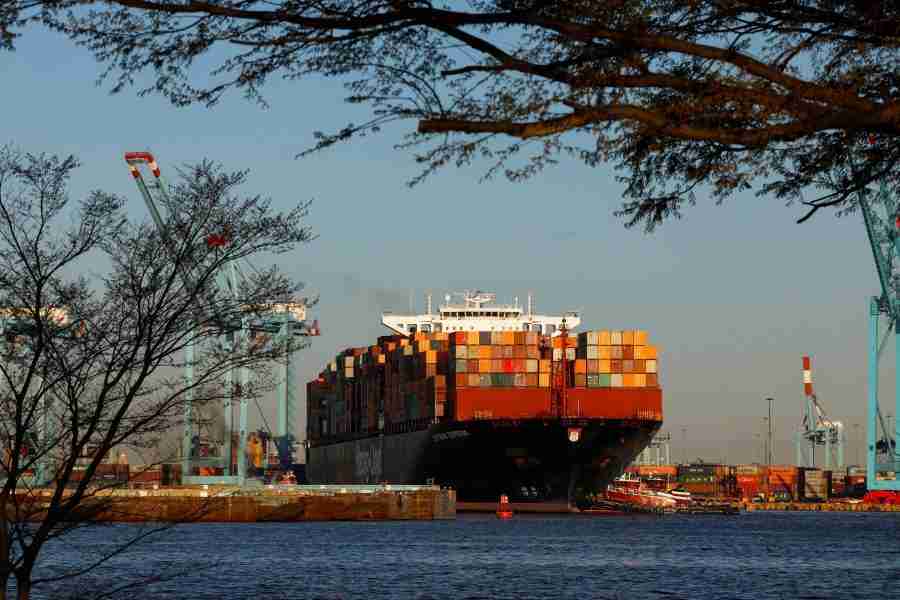
FILE PHOTO: A cargo ship sits outside of the Port of Elizabeth marine terminal seen from Bayonne, New Jersey, U.S., April 9 2025. REUTERS/Shannon Stapleton/File Photo

International news via Reuters:

Sweeping tariffs on imports imposed by U.S. President Donald Trump and countermeasures could have a “catastrophic” impact on developing countries, hitting even harder than foreign aid cuts, the director of the United Nations trade agency said on Friday. 

Global trade could shrink by 3-7% and global gross domestic product by 0.7%, with developing countries the worst affected, the International Trade Centre said. 

“It is huge,” Pamela Coke-Hamilton, executive director of the International Trade Centre, told Reuters. “If this escalation between China and the U.S. continues it will result in an 80% reduction in trade between the countries, and the ripple effect of that across the board can be catastrophic.”

Global markets remained in turmoil on Friday. Trump this week announced a 90-day tariff pause on dozens of countries but hiked the duties on Chinese goods to an effective rate of 145%.

On Friday, Beijing increased its tariffs on U.S. imports to 125% in a trade war that threatens to up-end global supply chains.

“Tariffs could have a much more harmful impact than the removal of foreign aid,” Coke-Hamilton said, warning that developing economies risk sliding back on the economic gains they made in recent years.

Some of the world’s least developed countries, including Lesotho, Cambodia, Laos, Madagascar and Myanmar, may look to improve regional trade relations to absorb the loss of some of the U.S. market for their exports, the ITC said.

Bangladesh, the world’s second largest apparel exporter, could lose $3.3 billion in annual exports to the U.S. by 2029 if the U.S. tariff of 37% stays after the pause, ITC data found.

It may look to European markets as an alternative as they still hold growth potential, Coke-Hamilton suggested.

The projections by the International Trade Centre, the joint agency of the World Trade Organization and the United Nations, which seeks to help countries develop through exports, are based on data it gathered before Trump’s 90-day pause and subsequent hikes on duties on Chinese imports.

Reporting by Olivia Le Poidevin; Editing by Friederike Heine, Ludwig Burger and Frances Kerry

China warns Hong Kong’s last major opposition party to disband, members say

Senior Democratic Party members said they had been warned by Beijing-related individuals

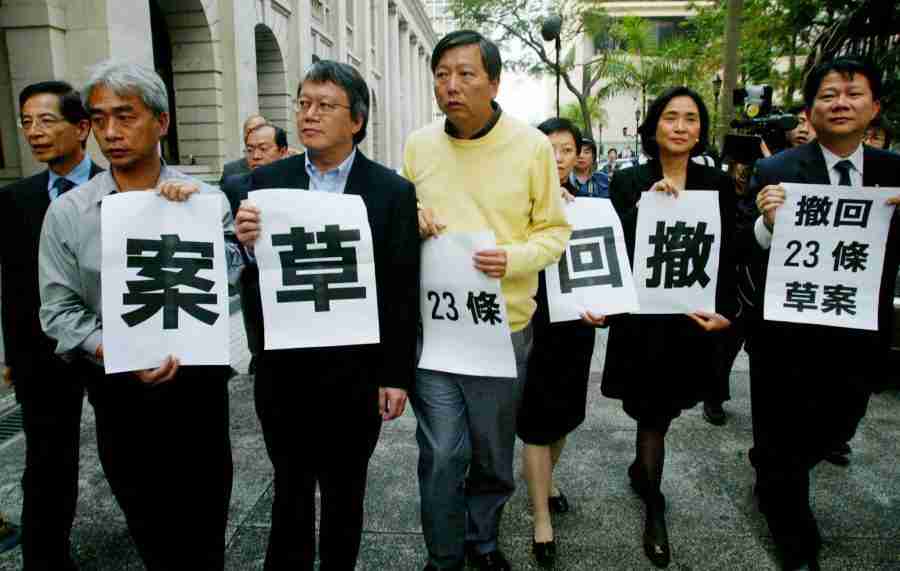
FILE PHOTO: Pro-democracy legislators, including Martin Lee (L) and Emily Lau (2nd-R), walk out of a Legislative Council meeting in Hong Kong February 26, 2003, to protest against a planned anti-subversion law. The territory’s government proposed its contentious law to the legislature on Wednesday and promptly drew fierce opposition from a small but feisty band of pro-democracy lawmakers and rights champions. Chinese characters read “Withdraw the draft for Article 23”, refering to the anti-subversion law. Under the proposed law, people found guilty of acts of treason, sedition, secession from or subversion against China could be imprisoned for life. REUTERS/Kin Cheung/File Photo

International news via Reuters:

Five senior members of Hong Kong’s Democratic Party, the city’s biggest and last remaining major opposition party, say Chinese officials or middlemen have warned the parties to disband or face serious consequences, including possible arrests.

The Democratic Party, which was founded in 1994 in the years before Hong Kong’s historic return from British to Chinese rule, has over the past few decades been the flagship opposition party that has united the city’s democratic forces to push Beijing on democratic reforms and to uphold the financial hub’s freedoms.

Amid a years-long national security crackdown by China after pro-democracy protests in 2019, the Democratic Party will hold an extraordinary general meeting on April 13 to seek members’ views and possibly pave the way for the group’s dissolution.

The group’s chairman, Lo Kin-hei, has not given a concrete reason for the likely disbandment, but five senior Democratic Party members told Reuters they had been told in meetings with Chinese officials or individuals linked to Beijing in recent months that the party should close.

Fred Li, a veteran democratic party member and former lawmaker, said a Chinese official had told him this should be done before this December’s legislative elections.

“The meaning is that we should be gone by then,” Li told Reuters. “The message was very direct.” 

Li declined to identify the individual but said the tone was very different from frequent exchanges he has had with Chinese officials over many years.

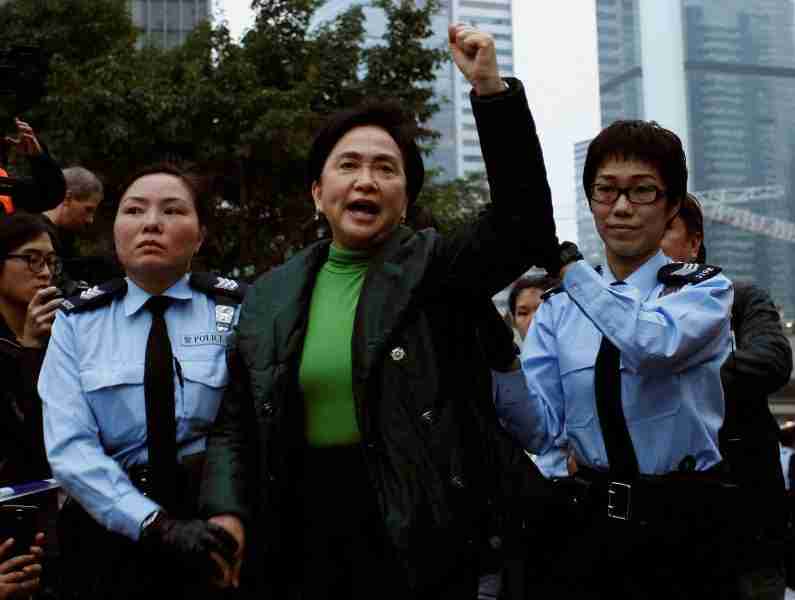
FILE PHOTO: Pro-democracy lawmaker Emily Lau chants slogans as she is taken away by the police outside the government headquarters in Hong Kong, December 11, 2014. Hong Kong police arrested pro-democracy activists and cleared most of the main protest site on Thursday, marking an end to more than two months of street demonstrations in the Chinese-controlled city, but many chanted: “We will be back”. REUTERS/Liau Chung-ren/File Photo

There were no immediate responses to requests for comment from the Hong Kong Liaison Office, China’s main representative body in Hong Kong, or from the Hong Kong government.

Four other senior Democratic Party members also said they had been warned in recent months by middlemen linked to Beijing, some of whom warned the party would face “serious consequences” if it didn’t disband. Three declined to be identified given the sensitivity of the matter. 

Yeung Sum, one of the founding members of the Democratic Party, said Beijing’s move in 2021 to overhaul the city’s electoral system to only allow “patriots” to run for public office had effectively marginalised the party by removing it from mainstream politics.

The party now holds no seats in Hong Kong’s legislature. 

“We just keep a voice of advocacy for the people of Hong Kong on social and political issues, but still we are under pressure,” Yeung, who was also approached by a middleman, told Reuters.

Two Asian and two Western diplomats say they are aware of the veiled threats to the Democratic Party. 

“For a long time it seemed like Beijing could live with the situation of having the party around as a figment of opposition,” said one Western envoy.

“It seems they are leaving nothing to chance. The message is it is time to close down once and for all,” said the diplomat, who was not authorised to speak publicly.

The envoys see the demise of the Democratic Party as further denting Hong Kong’s international reputation amid U.S.-China geopolitical tensions. China’s recent criticism of CK Hutchison’s port sale to a U.S. consortium has also raised questions about the city’s autonomy, they say.

Founded in 1994 and led by barrister Martin Lee, the democratic Party has played a pivotal role in Hong Kong’s transition from British to Chinese rule, shaping the financial hub’s democratic development and civil society.

Emily Lau, a former Democratic Party chairwoman, said she was saddened by the likely dissolution, as she had always believed in engagement rather than confrontation with Beijing, including a 2013 meeting with the deputy head of the Liaison Office, Li Gang.

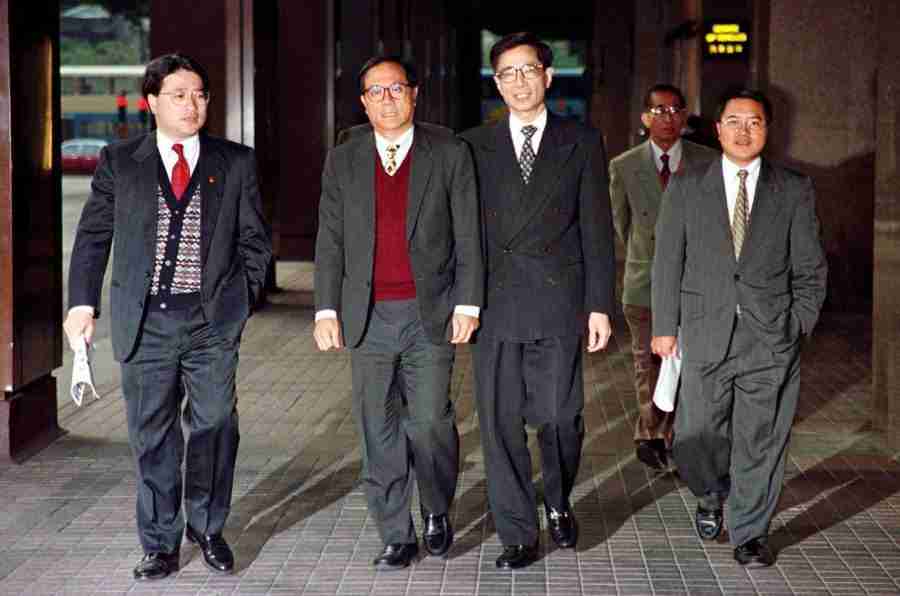
FILE PHOTO: Hong Kong’s Democratic Party leaders Martin Lee and Sum Yeung and a group of the party’s legislators arrive at Chief Executive designate Tung Chee-hwa’s offices in Hong Kong, January 9, 1997. This will be their first meeting with the future Chief Executive to discuss a number of key transitional issues before the colony returns to Chinese rule in the middle of the year. Lee Wah Ming, Yeung, Lee, Szeto Wah, Lee Wing Tat. REUTERS/John Pryke/File Photo

“What we want is to see a safe, just and ultimately free Hong Kong,” she said. Lau declined to comment on whether she’d been approached about disbanding.

If the democrats disband, it would mark the end of nearly 30 years of opposition party politics in Hong Kong.

At least five democratic party members are currently in jail or held in custody under the national security law.

China says the security laws have brought stability to Hong Kong and rejects claims by some countries such as the United States that it has been used as a tool of repression against the democrats. 

“Hong Kong’s international reputation was built on its openness, its freedoms, and its respect for the rule of law,” said David Alton, a life peer of Britain’s House of Lords and patron of Hong Kong Watch, a rights advocacy group.

“The disbanding of the Democratic Party is another sign that Hong Kong is now being subjected to the same censorship and repression already familiar in mainland China.”

Reporting by James Pomfret, Jessie Pang and Greg Torode; editing by Gerry Doyle

Michael Miranda has been found

This after nearly two weeks of searching

The Bermuda Police can reporting that 57-year old Mr. Michael Miranda has been located, safe and well.

A BPS spokesperson thanking the public for “all the calls and other efforts, which assisted in Mr. Miranda’s safe return.”

Cricket: Clay Smith New U19 Boys National Coach

BCB to hold meet and greet with new coach and open trials at NSC April 14th from 6-8pm

 Clay Smith has been appointed as the Under-19 Boys National Team Coach. Coach Smith has been contracted until September 2027, along with his assistant coach, Mr. Reggie Tucker Jr.

Coach Clay Smith stated, “It is indeed an honour to be given this opportunity to coach the U19

national team. Reggie Tucker and I are looking forward to this challenge, as it is a talented group

of cricketers who are keen to learn and improve. We will do everything in our power to prepare

the players in the hope of giving them every opportunity for success.”

The BCB will hold open trials and a meet and greet with Coaches Smith and Tucker on Monday, April 14th

from 6- 8 pm and Wednesday, April 16th from 6 – 8 pm at the National Sports Centre (NSC) North Field

– BCB Axis Training Centre. The trials for young men ages 15 – 17.

Politicians spar over planned seniors’ home

OBA calls on Minister to urgently move forward; Minister cites ‘rigidity’ of planning policy

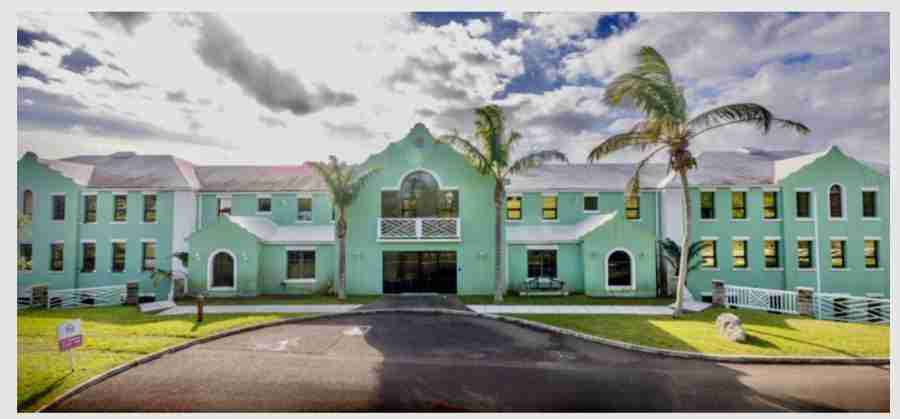
Channel House at Southside, St. David’s, built by the U.S. Navy in 1942, has been earmarked for conversion into a Seniors’ Residential Living Facility.       Photo: Bermuda Broadcasting

A hold-up on the development of a new seniors’ home has prompted a back-and-forth between the two main political parties.
Here’s a statement issued by the OBA today:

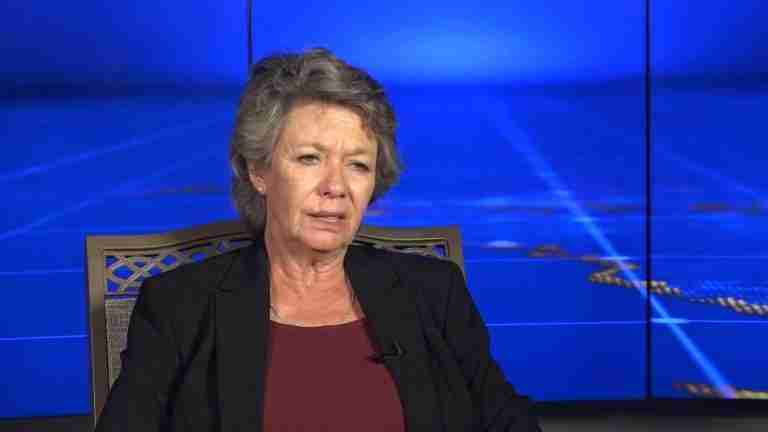
“Shadow Minister for Youth, Social Development and Seniors, Linda Smith, is calling on the Minister of the Cabinet and Digital Innovation, The Hon. Diallo Rabain, to facilitate approval for a new 45-bedroom seniors’ residential facility. 
This coming after the Development Applications Board rejected an application for the redevelopment of Channel House on Longfield Road, in Southside.
Ms Smith says, “The urgent need for senior care facilities is at a crisis point, which is a major contributor to the lack of available beds at KEMH as patients medically fit to leave have nowhere to go. We also know that there are often long wait lists for spaces at the island’s care homes. We desperately need appropriate facilities for our seniors.”
In a split vote, the DAB rejected an application to convert a large office building into a residential facility for seniors. While recognising the urgent need for residential care facilities the DAB said the application went against a policy of the Bermuda Plan 2018 relating to mixed use zones.
The building, which has been vacant for an extended time, previously housed government offices. The DAB’s rejection of the application noted that its previous use was commercial, and policy requires that the reuse include some level of commercial activity on the ground floor.
A similar DAB rejection for repurposing the former BLDC Head Office, Triton House, for residential use was overturned by the former Minister of the Cabinet in February, who at the time referred to the urgent need for affordable housing. Ms. Smith said the same urgent consideration should be given to seniors.”

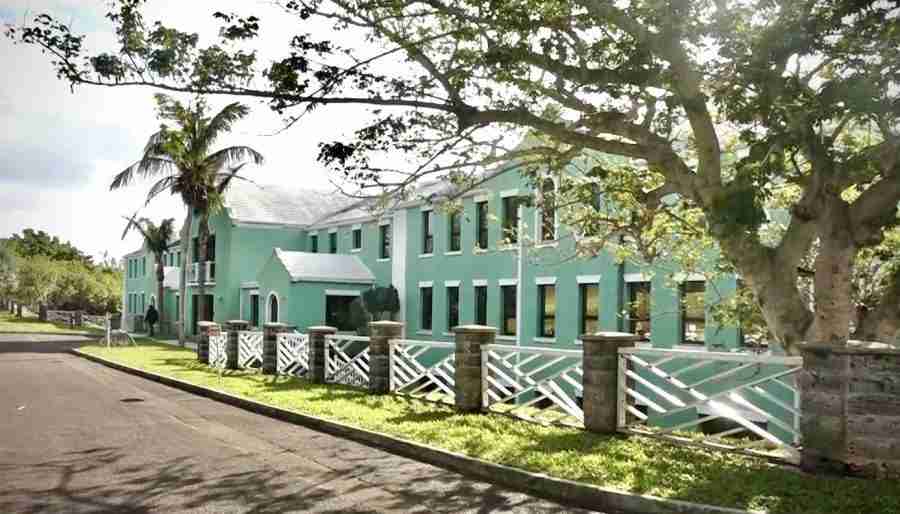
Channel House at Southside.         Photo: Bermuda Government

Government issued the following statement:
‘The Minister for Cabinet Office and Digital Innovation, the Hon. Diallo Rabain, JP, MP, explained, “The public and this Government fully understand the urgent need for quality senior care facilities in Bermuda.”
“To that end, the application for this project was submitted on March 5, 2025. Immediately upon receipt, and due to the project’s importance, the Department of Planning expedited the application to obtain a DAB decision, which was made on April 2, 2025. Once the applicant submits an application for appeal, I will prioritise my review of the submission to make a swift determination in accordance with the Appeal Procedure Rules. I have every intention of seeing this project move forward without unnecessary delay.
“That said, this case also highlights a broader issue with the rigidity of existing planning policy in the 2018 Bermuda Plan. When applications with clear benefits, no detrimental planning impacts and social value — like housing for our seniors — are supported by the Department of Planning but blocked by technical policy constraints, it becomes clear that change is needed.
“Pending the wider review of the 2018 Plan, legislative amendments will be advanced to ensure that developments in the public interest don’t become hostage to procedural red tape in the future. These changes will allow the planning system to respond more effectively and pragmatically without sacrificing accountability or standards.
“While others are quick to comment, we are focused on delivering tangible outcomes — both for this project and for the future of planning in Bermuda.”’