
Carcasses are supposed to be incinerated or buried … so why are they being found in public spaces?
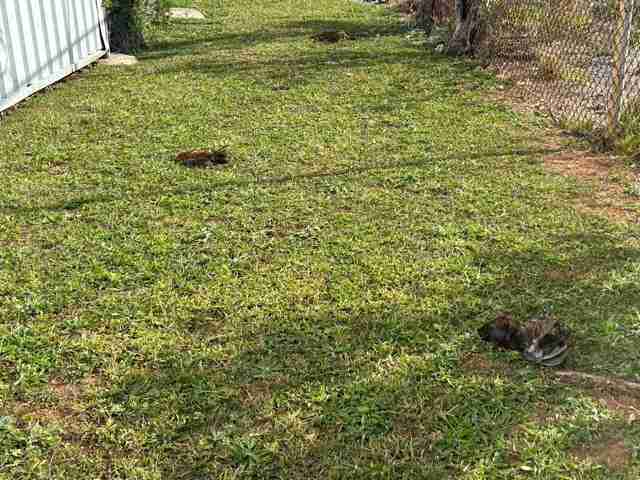
Dead, dying and injured birds are turning up in public spaces.
Allegedly, it’s the result of feral chicken culling by the Department of Environment and Natural Resources.
Alisa Bernardo spoke with concerned residents who accept the need for population control but reject what they describe as “haphazard methods”.
A warning: some images in this report may be distressing to viewers.
Most agree Bermuda’s feral chicken population must be managed … but are the authorities following their own protocols?
That’s the question residents are asking as dead birds continue to appear in public spaces – allegedly poisoned or shot by DENR officials.
According to Government’s Feral Chicken Management Plan, carcasses are to be incinerated at Tynes Bay or buried at Marsh Folly.
So why are they being left out in the open?
Recently, chicken carcasses were seen at Waller’s Point Road in St George’s, reportedly left exposed for over two weeks – prompting concern about public health and environmental contamination.
“I feel, you know, to come upon an animal that’s suffering and dying is distressing—or at least it’s distressing to me,” said concerned community resident, Tania. “And so, I can only imagine that families, walking with children, that tourists—that’s the vision of Bermuda that they see—is very, very sad.”
An anonymous source claims to have encountered around 200 dead or wounded birds since 2018 – though they say this is only a small fraction of the overall total.
Government figures show that over 65,000 feral chickens have been culled since 2015, mostly through trapping, alpha-chloralose sedation, and targeted air rifle shooting.
Yet the birds remain a nuisance to both the public and farmers, with populations rebounding.
Bermuda Broadcasting was recently alerted to three dead birds and a wounded rooster at Northlands Primary School Field. The carcasses were later moved into nearby bushes to shield children from the scene.
While residents understand the need for control, they’re calling for a more humane and effective approach.
“We are responsible for the problem as a community,” said Tania, “yet I feel that the way the birds have [been] managed is highly irresponsible. There’s a better, more humane way for us to manage these issues than what’s currently been happening.”
She continued: “To tell a quick story, I came upon a bunch of baby chicks, the mother had been shot, one of the babies had been maimed and lost a leg. Another baby had a mark across on its head, which I assumed was a stray bullet shot as well. I don’t understand how anyone could possibly feel like that’s the right type of solution to this problem.”
There are claims of birds being poisoned but not monitored – leaving them to suffer and raising risks to non-target animals.
One worrying allegation involves 20 show birds that escaped from a private coop and were allegedly culled by DENR within the two-week grace period for owners to recover them.
Residents say they’ve raised these concerns before to Government without meaningful response, but they remain open to collaboration and alternative solutions.
“There are so many residents that would be happy to work in a co-op if we had a piece of land where we could have proper chicken coops,” said Tania, “and then you could actually keep the population under control, because what’s happening right now is they’re culling a few there and a few over here. And so, we’ve still got remaining birds, so they’re still reproducing.”
Tania believes such a co-op could also educate the public, reduce animal dumping, and improve food security by boosting egg production.
The Ministry of Public Works and Environment, along with the Department of Environment and Natural Resources (DENR), has acknowledged public concern following the aforementioned reports of dead or injured chickens in public spaces. In a statement, government reaffirmed its commitment to humane and environmentally responsible population control and stressed that while culling methods may seem harsh, they are guided by established protocols aimed at minimising suffering.
The Ministry also addressed concerns around dependent chicks, domestic birds, and proposals for managed care sites, noting the biological and logistical complexities of feral chicken management. The Ministry says it remains open to dialogue and refining their approach to achieve better outcomes for both the public and the environment.
Read the Government’s full response, HERE.