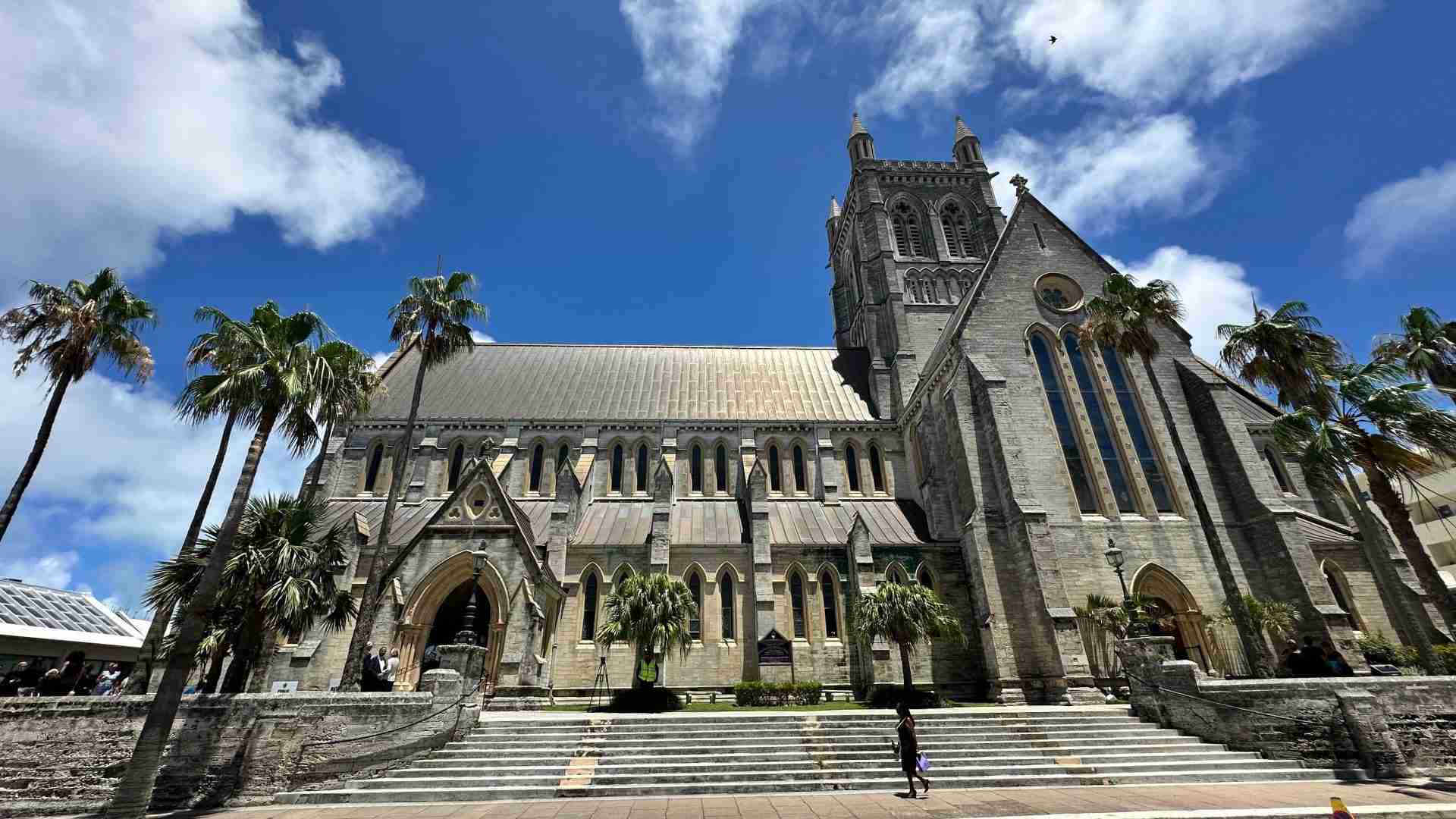
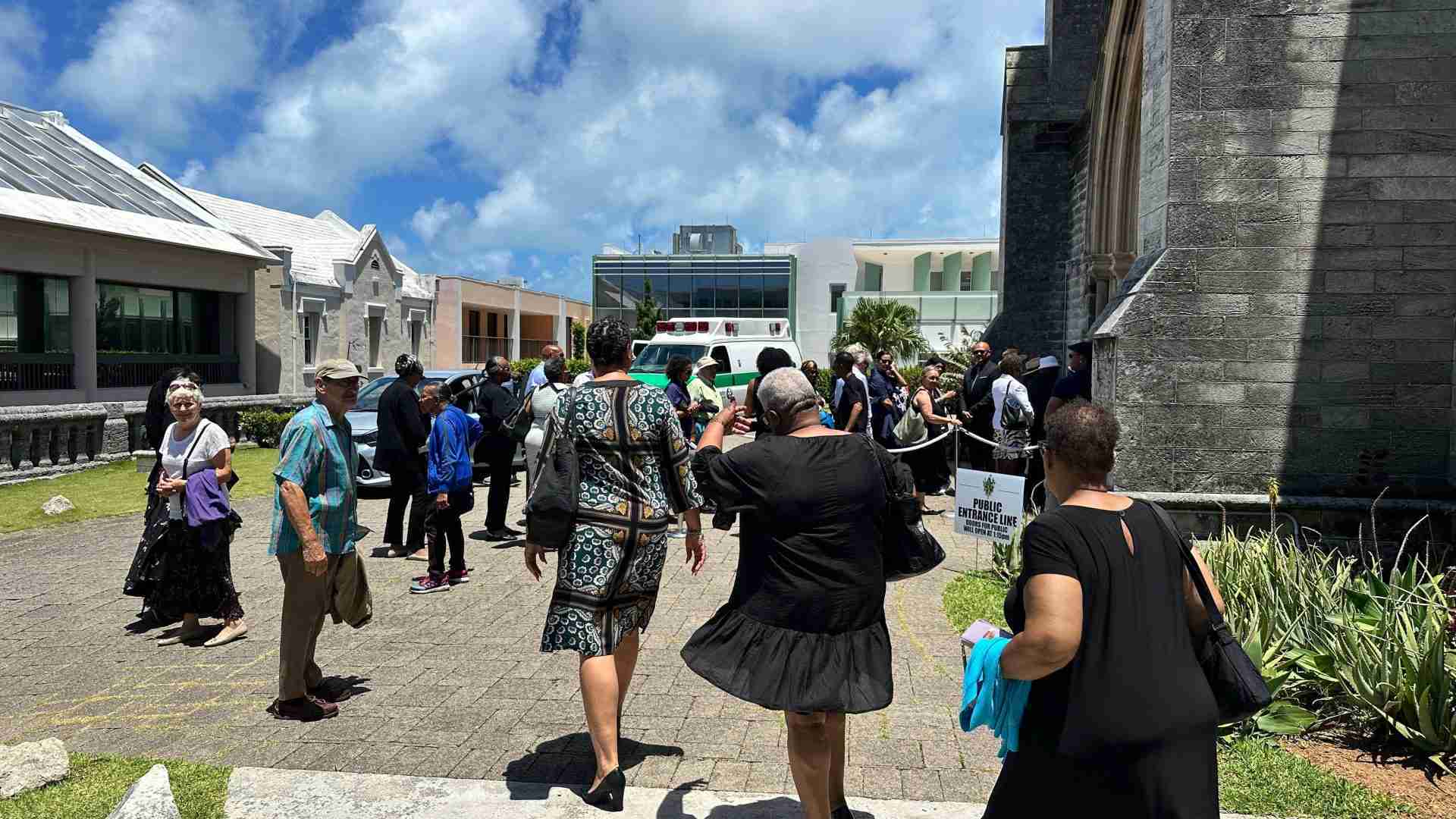
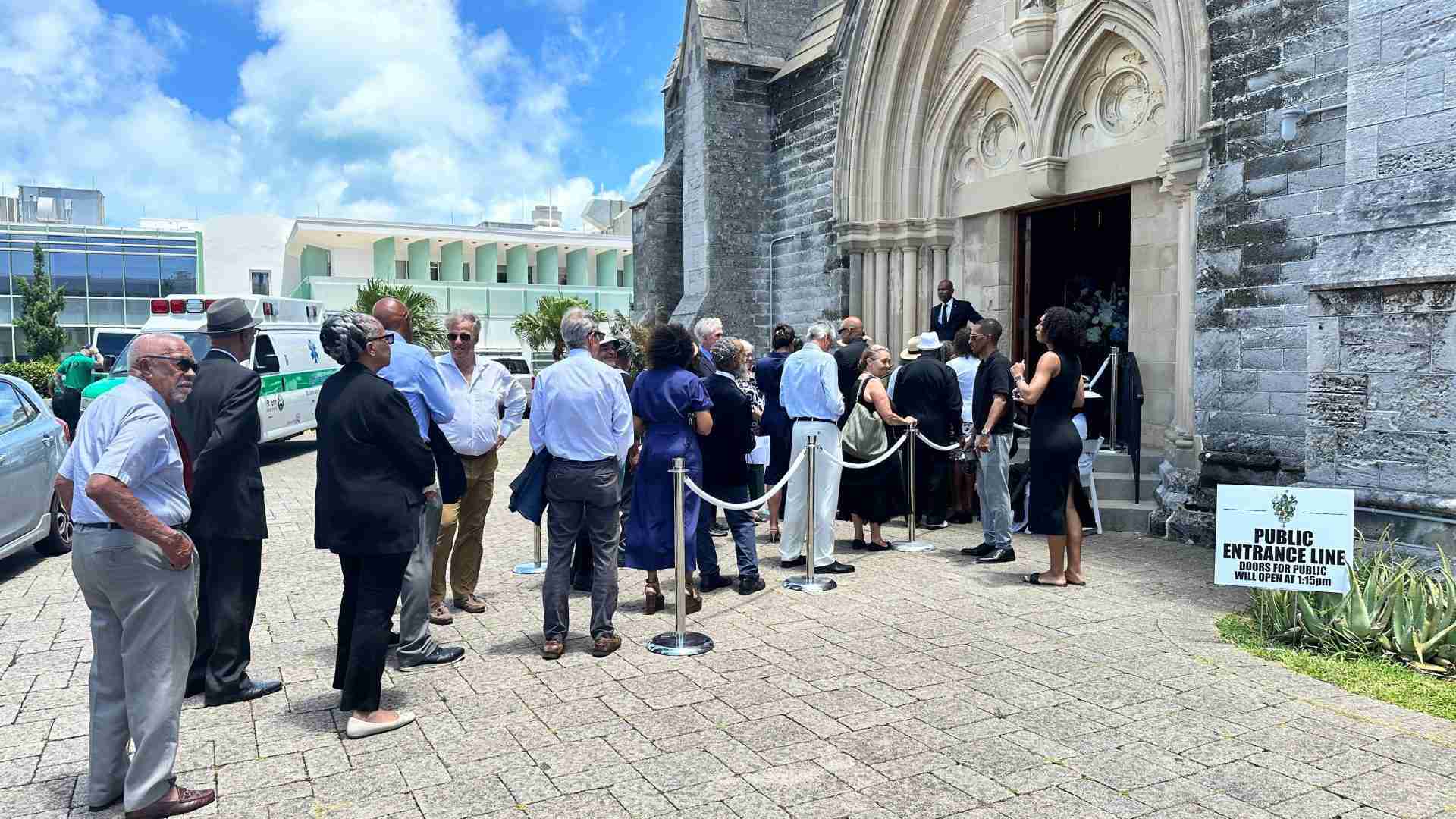
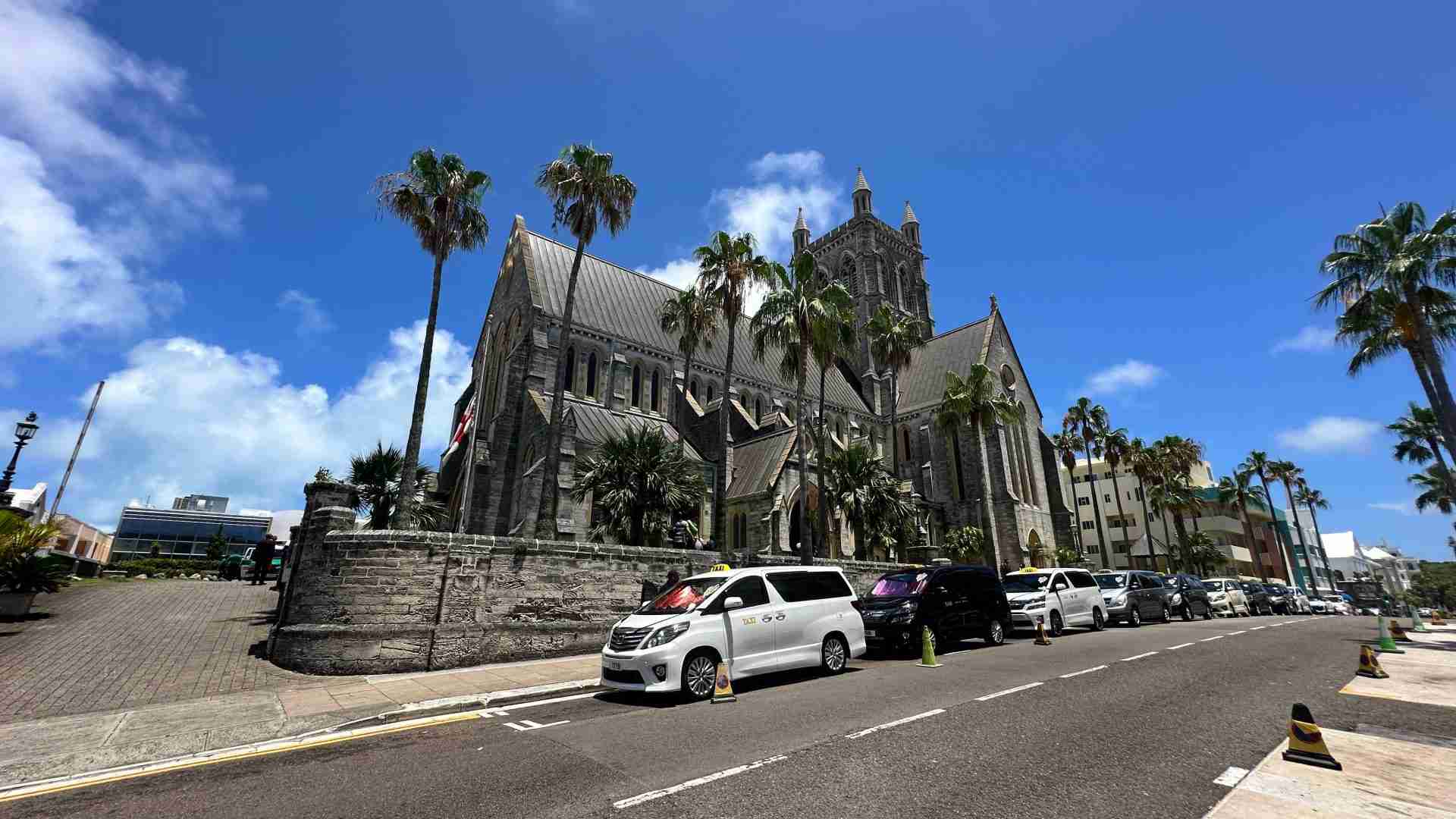
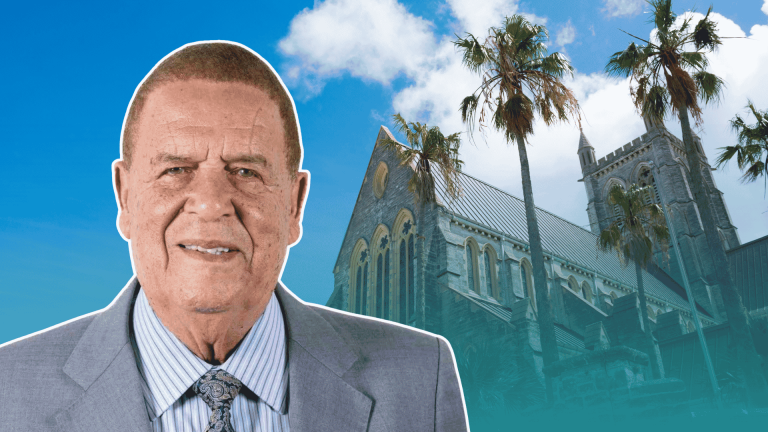
Outside of the Cathedral of the Most Holy Trinity on Wednesday, a queue had been growing since two hours before the funeral of Sir John Swan was scheduled to begin
Outside of the Cathedral of the Most Holy Trinity on Wednesday, a queue had been growing since two hours before the funeral of Sir John Swan was scheduled to begin.
Bermuda Broadcasting understands that Sir John, as he is affectionately known, wanted a short one-hour Anglican church funeral, not a State Funeral. The proceedings fell close to his wishes, lasting about one hour and fifteen minutes.
In expectation of both the influx of people at the Cathedral, and the stifling heat, the proceedings were also broadcast live to air-conditioned locations in the Cathedral Hall, the Earl Cameron Theatre at City Hall, and Pier 6 on Front Street.
However, it became clear that most people wanted to brave the heat to ensure they were present – both to offer condolences to the Swan family, and to honour the life and legacy of Sir John Swan.
The U.S.-Iran accord reached last week — the first signed by American and Iranian presidents since Iran’s 1979 Islamic Revolution — includes a proposed $300 billion fund and the waiver of some sanctions for Tehran
International News via Reuters:
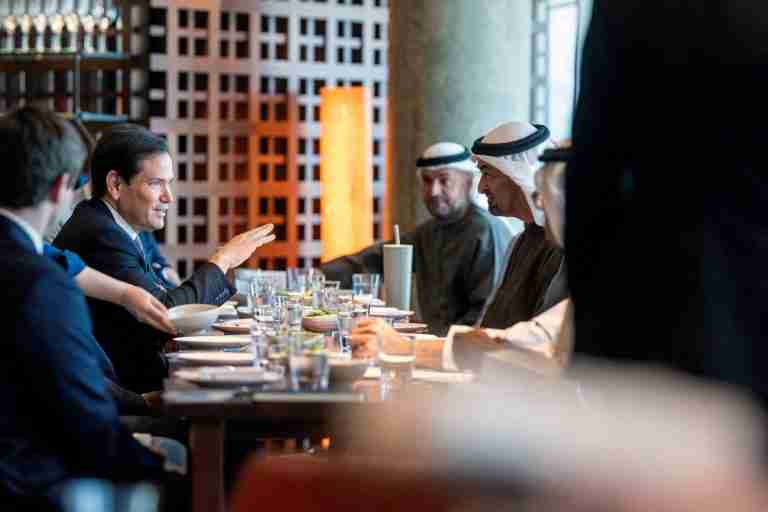
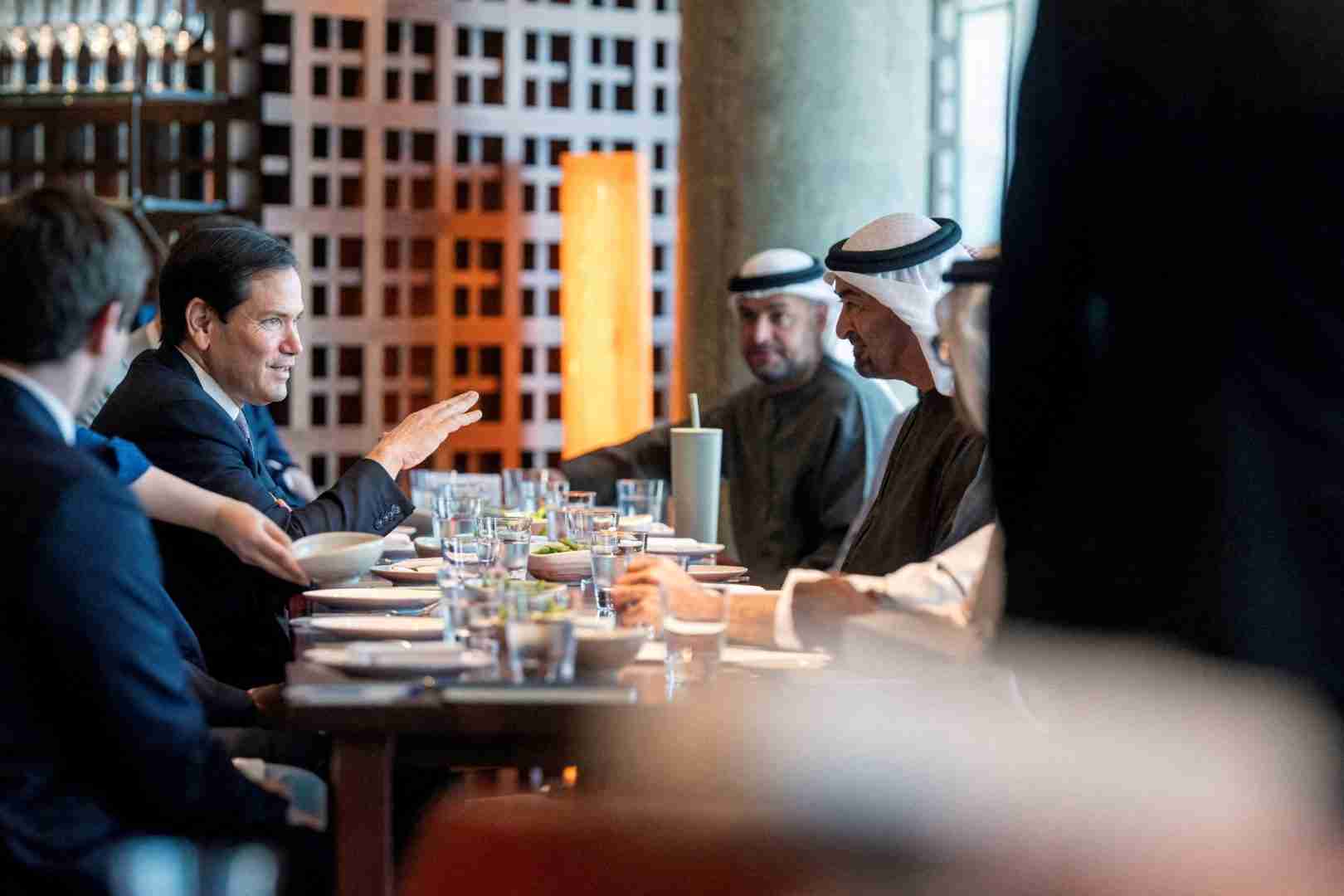
U.S. Secretary of State Marco Rubio met the leaders of the United Arab Emirates and Kuwait on Wednesday, vowing not to undermine their security as he sought to reassure Gulf allies sceptical of a proposed deal to end the U.S.-Israeli war with Iran.
The U.S.-Iran accord reached last week — the first signed by American and Iranian presidents since Iran’s 1979 Islamic Revolution — includes a proposed $300 billion fund and the waiver of some sanctions for Tehran.
Arriving in the UAE capital Abu Dhabi late on Tuesday for a three-day tour of the oil-rich Gulf, Rubio is undertaking his first high-level diplomatic mission on the agreement to end the four-month-old war with Iran.
“We’re not going to do anything that undermines the security of our allies, our longstanding allies in the region,” he told reporters in Kuwait, his second stop on the tour.
During the war Tehran fought two of the world’s most powerful militaries and took effective control of the Strait of Hormuz, where commercial shipping of oil and gas was heavily disrupted, rattling energy markets and the world economy.
Rubio held a working lunch in the UAE capital Abu Dhabi with President Sheikh Mohammed bin Zayed Al Nahyan and other senior figures, including National Security Adviser Sheikh Tahnoun bin Zayed Al Nahyan and Foreign Minister Sheikh Abdullah bin Zayed Al Nahyan.
Rubio then went to Kuwait and will later head to Bahrain. All three nations host strategic American military bases and were hit by an onslaught of Iranian missiles in the conflict, resulting in civilian deaths.
Rubio held talks with Kuwait’s Emir Sheikh Meshal al-Ahmad al-Sabah on efforts to bolster security and stability, Kuwait’s state news agency KUNA said. He also attended a flag-raising at the U.S. Embassy, which resumed operations after Iran-linked drone attacks forced a suspension, the State Department said.
“The American flag: a symbol of liberty, unity and freedom now flies proudly once again over Kuwait City. Kuwait is an indispensable partner for regional security and stability,” Rubio wrote on social media following the ceremony.
RUBIO TO ADDRESS REGIONAL CONCERNS
The State Department said Rubio discussed the memorandum of understanding with Iran, safe transit through the Strait of Hormuz, and the importance of peace in the region in a meeting with the UAE president.
Rubio also reaffirmed the U.S. commitment to the security of the Emirates, a major oil producer.
U.S. regional allies are especially concerned that Iran could use the proposed $300 billion to rebuild its military. The accord also does not address Tehran’s ballistic missile capacity, a concern for Gulf states, which were struck by Iranian missiles and drones in the war.
America’s top diplomat, Rubio has been largely absent from Iran-related discussions in recent weeks, with Vice President JD Vance instead leading a round of talks with Iranian counterparts over the weekend in Switzerland.
The UAE, a global financial centre which prides itself on stability in a volatile Middle East, faces significant economic strains as a result of the war.
SEPARATE NEGOTIATIONS OVER STRAIT OF HORMUZ
Qatari Prime Minister Sheikh Mohammed bin Abdulrahman al-Thani visited Muscat on Wednesday for talks with Oman on initiating negotiations involving Iran, Iraq and Gulf Arab states on the Strait of Hormuz, a diplomat briefed on the talks said. The discussions are separate from U.S.-Iran peace talks.
Shipping has begun flowing through the Strait of Hormuz, leading to a fall in oil prices, although the longer-term operation and management of the waterway remain under discussion between Iran, Oman and other Gulf states.
Separately, there are plans for regional reconciliation talks to be held in Saudi Arabia between Iran, Gulf Arab states and possibly other regional countries, a diplomat told Reuters.
Rubio’s remarks during his swing through the region will be closely scrutinised to see how the man once known as a hawkish critic of Iran frames a deal that many congressional Republicans argue amounts to capitulation.
Rubio’s mission is delicate: While he needs to defend a preliminary accord that Trump firmly supports, he also has to credibly address the concerns of his Gulf counterparts.
Iran and the United States signed a 14-point memorandum of understanding last week setting out broad agreements in principle to end the war. The interim accord paved the way for 60 days of talks aimed at resolving thornier details, including issues related to Iran’s nuclear programme.
A central issue in talks is what will happen to Iran’s highly enriched uranium, including material enriched to up to 60% purity, a short step from the roughly 90% needed for weapons grade.
Tehran says its nuclear programme is for peaceful purposes.
Additional reporting by Francois Murphy in Vienna and Doina Chiacu and Katharine Jackson in Washington; Writing by Gram Slattery and Michael Georgy; Editing by Don Durfee, Howard Goller, Sharon Singleton and Alison Williams
The appointments reflect the bloc’s current focus on boosting European defence, triggered by Russia’s war in Ukraine and U.S. President Donald Trump’s decision to reduce Washington’s commitments to NATO
International News via Reuters:
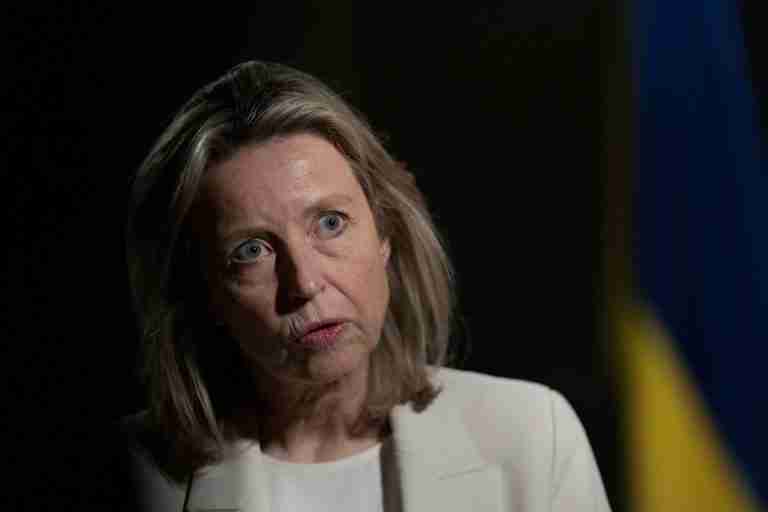
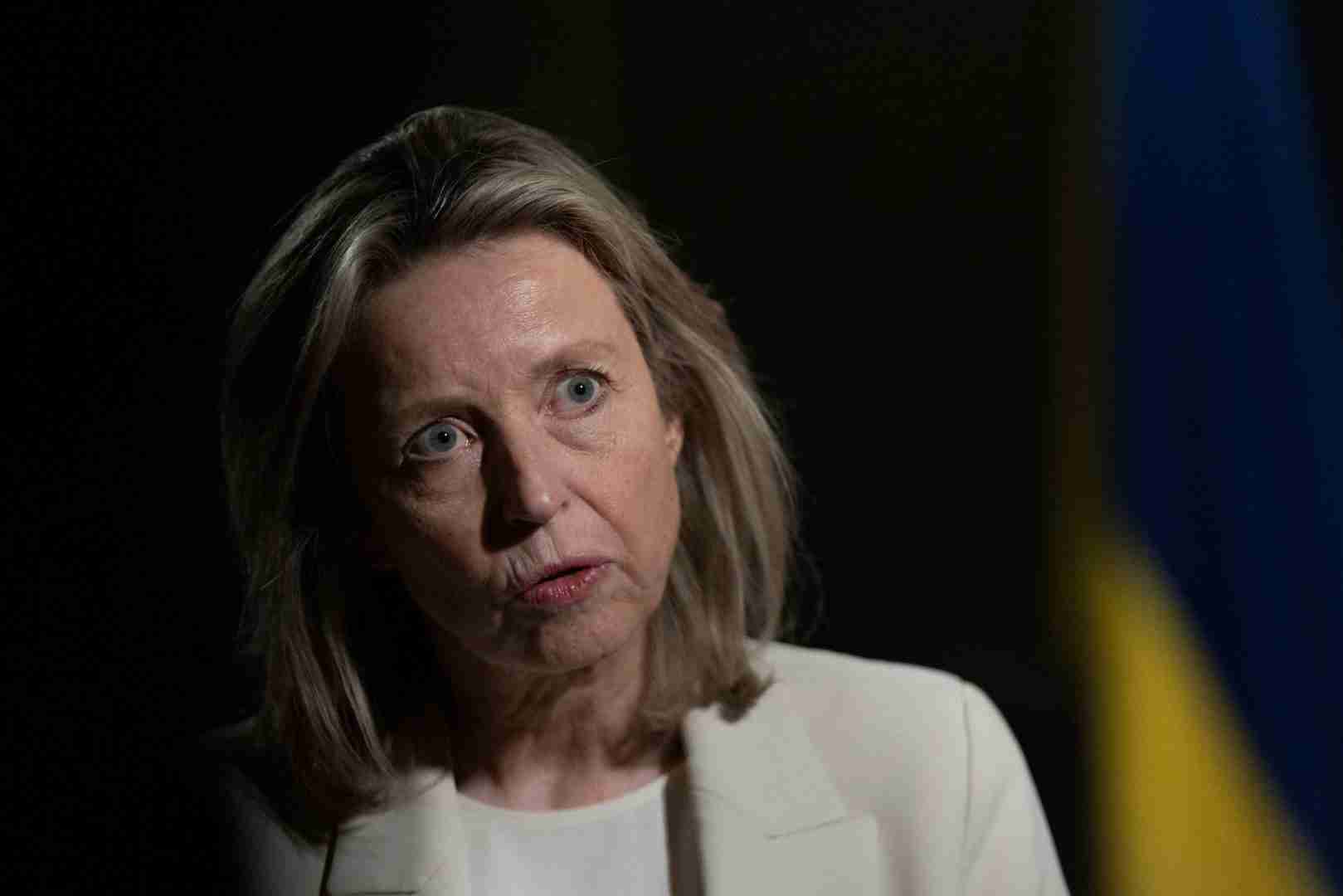
European Union foreign policy chief Kaja Kallas on Wednesday named a former Dutch defence minister and France’s ambassador to NATO to top posts in the EU diplomatic service as the bloc seeks to strengthen its security.
• Kajsa Ollongren, who served as Dutch defence minister from 2022-2024 and is currently a senior EU human rights official, will become secretary-general, the top civil servant, at the European External Action Service (EEAS) on September 1, Kallas said.
• Kallas also announced that David Cvach, France’s NATO envoy since 2024, will take over as the service’s top official for defence and security.
• The appointments reflect the bloc’s current focus on boosting European defence, triggered by Russia’s war in Ukraine and U.S. President Donald Trump’s decision to reduce Washington’s commitments to NATO.
• An EU official said the appointments would strengthen EU cooperation with NATO, whose Secretary General Mark Rutte was Dutch prime minister when Ollongren was defence minister.
• The moves come as the EU debates a possible revamp of its diplomatic efforts amid widespread criticism that its response to crises such as the war in Gaza have been too slow and disjointed, beset by differences between member countries and among EU institutions.
Reporting by Lili Bayer and Andrew Gray; Editing by Mark Porter
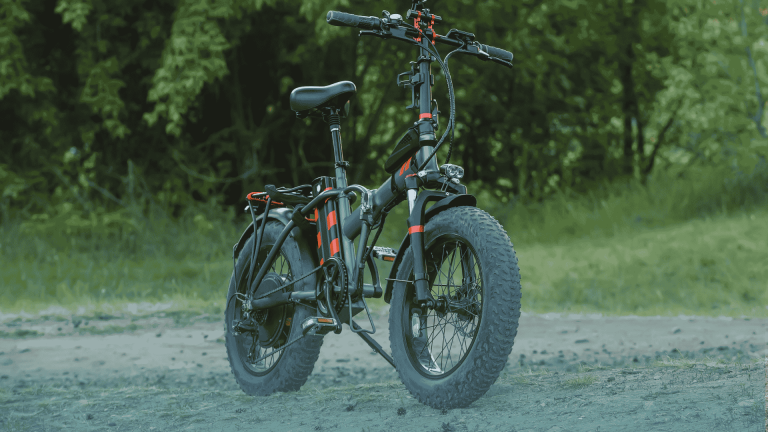
Enforcement follows growing reports of speeding and dangerous riding on the island’s roads
In recent weeks, the Bermuda Police Service has received an increasing number of reports regarding the manner of riding by persons who operate battery-powered fully electric bikes (e-bikes) and electric assisted pedal bikes, on Bermuda’s roads.
These include reports of excessive speeds as well as dangerous riding by persons using this mode of transport.
In light of the growing concern surrounding these issues, the public are advised that the Bermuda Police Service will be targeting traffic offences outlined in the Road Traffic Act 1947, which are applicable to all vehicles, including e-bikes and electric assisted pedal bikes, operated on the island’s roads.
These offences include, but are not limited to:
• Speeding
• Riding in a careless manner
• Due care and attention
• Dangerous riding
• Failure to obey traffic signals or stop signs.
Please note, the offences listed above are enforceable regardless of the type of pedal/electric cycle being ridden and irrespective of whether the rider is in possession of a valid driver’s licence at the time of the offence, or not.
Enforcement action will be applied consistently and in accordance with established procedures.
Media release supplied by the Bermuda Police Service.
Output was reduced by 4.1 gigawatts, or 7%, of total power demand at midday, data from French utility EDF showed
International News via Reuters:
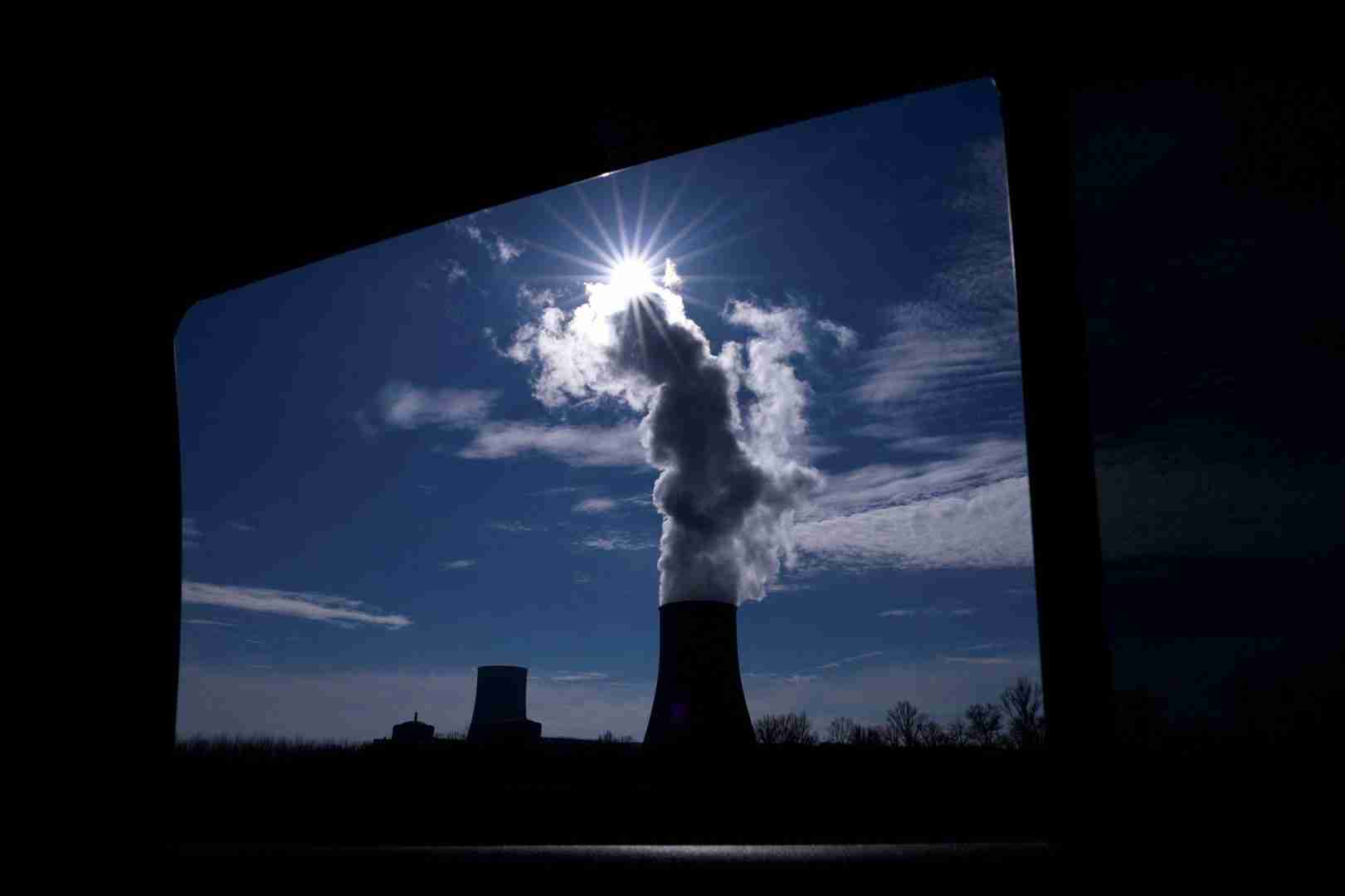
A heatwave sweeping western Europe reduced France’s nuclear output on Wednesday as high temperatures across the country reduced access to water needed to cool reactors.
Output was reduced by 4.1 gigawatts, or 7%, of total power demand at midday, data from French utility EDF showed.
Temperatures have topped 40 degrees Celsius (104 degrees Fahrenheit) in some places in France, which, combined with reduced wind speeds, has boosted wholesale electricity prices.
Wholesale spot power prices in France and Germany on Tuesday reached their highest level since mid-January 2025 as electricity systems grappled with the heat and relied on gas generation.
France is also usually a large net exporter of cheap electricity to neighbouring countries, but as the temperatures have risen exports have dropped, data from grid operator RTE showed.
Exports from France dropped to around 3 GW during the afternoon on Wednesday compared to 10 GW to 12 GW recorded last week at the same time, reducing the cheap supply for neighbours and cutting into profits from transmission.
“Climate change is demonstrating how extreme heat can be as disruptive as the (price spikes from cold weather and low renewables) witnessed during winter,” Kpler analyst Alessandro Armenia said.
“We are surprised now, but we should expect next summer to exhibit similar dynamics, as climate change is undeniable,” he said.
The heat has reduced output at the Saint-Alban 2 and Bugey 3 reactors on the Rhone river in eastern France, and the Nogent 2 reactor on the Seine southeast of Paris.
The Golfech 2 reactor on the Garonne river in southwest France went offline late Monday due to the heat.
French environmental regulations force nuclear operator EDF to reduce output when river temperatures reach a certain threshold to protect local ecosystems.
It was not certain how long the current heatwave, driven by a weather pattern known as an Omega block due to its shape, which allows temperatures to build day after day, would last.
Europe is warming at more than twice the global average, the World Meteorological Organisation has said, which makes prolonged heat episodes increasingly likely.
The European power system is increasingly reliant on renewable power generation, where the evening drop in solar power is replaced by wind and baseload power from nuclear, coal and gas, driving up prices when the sun goes down.
Nearly all countries have seen an increase in thermal generation, which includes gas and coal, in the evenings, including France where gas-fired generation is usually minimal, Kpler data showed.
This week, the pattern is exacerbated by overall higher cooling demand and below-normal wind generation, requiring the use of more gas-fired power, with the most expensive plants setting the wholesale price, LSEG analyst Nathalie Gerl said.
This week is an outlier, however, as the summer has seen regular oversupply on the electricity market, she added.
Reporting by Tristan Veyet and Hugo Lhomedet in Gdansk and Forrest Crellin in Paris; editing by Tomasz Janowski and Jason Neely
The manufacture of private jets cannot be excluded from a list of activities deemed to be environmentally sustainable, the European Union’s second-highest court said on Wednesday
International News via Reuters:
The manufacture of private jets cannot be excluded from a list of activities deemed to be environmentally sustainable, the European Union’s second-highest court said on Wednesday, annulling a decision by the European Commission.
• The contested list, the sustainable finance taxonomy, is intended to provide investors with an overview of green investments.
• The Commission in 2023 excluded aircraft for private or commercial business aviation from the list, based on CO2 emissions per passenger kilometre compared with other modes of transport.
• That decision was contested by French planemaker Dassault Aviation, which called it unlawful.
• The EU’s General Court said that other modes of transport could not necessarily be seen as low-carbon alternatives because private jets have specific characteristics in terms of flexibility, speed and connectivity.
Gudrun Hafsteinsdottir, chair of the Independence Party, Iceland’s largest opposition party, told Reuters on Tuesday that Iceland’s security rested on NATO and its bilateral defence agreement with the United States
International News via Reuters:
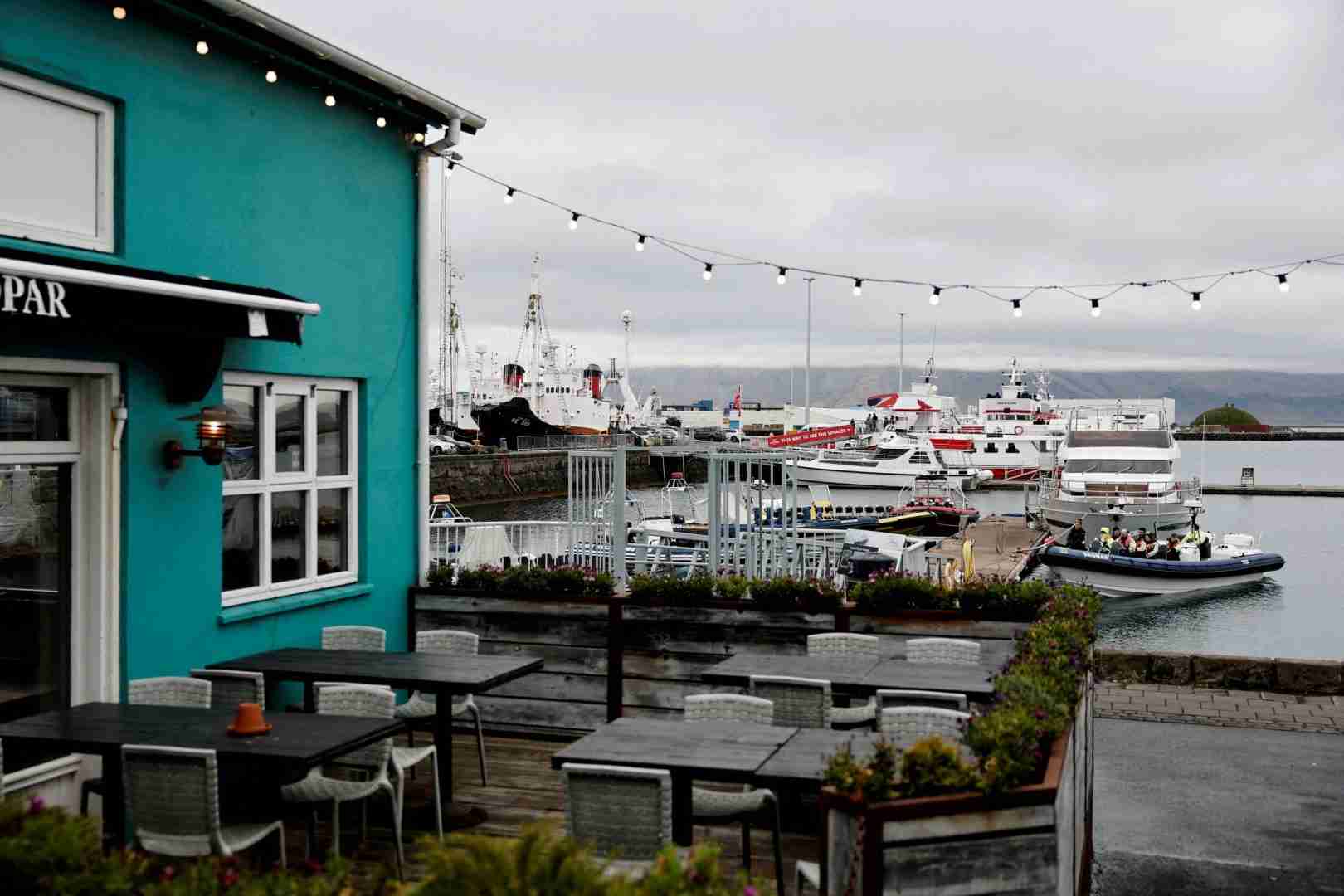
Iceland’s main opposition leader said European Union membership would not fix the country’s economic problems or strengthen its security, making the case for a “no” vote ahead of a referendum on whether to reopen accession talks.
Gudrun Hafsteinsdottir, chair of the Independence Party, Iceland’s largest opposition party, told Reuters on Tuesday that Iceland’s security rested on NATO and its bilateral defence agreement with the United States.
She said Iceland should work closely with the EU on sanctions, energy security and foreign policy, but that membership was not the answer.
“The EU is not a substitute for NATO, and EU membership is not a magic shield against geopolitical risk,” Hafsteinsdottir said in an interview.
The August 29 ballot is not a vote on membership itself and any deal would require a second referendum. Reykjavik abandoned previous negotiations in 2013 when a eurosceptic government took power.
A recent poll showed that 44.5% of Icelanders plan to vote “yes” to reopening talks, with 39.4% opposed and 14.6% undecided. A majority oppose actual EU membership.
The Arctic nation’s Finance Minister Dadi Mar Kristofersson, who recommends a “yes” in the vote, told Reuters last week that EU membership had become vital for Iceland to shield itself from great power coercion and tackle some of the world’s highest cost of living.
U.S. President Donald Trump’s threats to acquire Greenland, Iceland’s Arctic neighbour, triggered one of the sharpest transatlantic confrontations in years, prompting Kristofersson to say the geopolitical situation had changed to a certain extent.
Asked whether Trump’s threats had changed her thinking on EU membership, Hafsteinsdottir said: “No, I don’t think so.”
On the economy, she said Iceland’s high cost of living reflected structural problems that EU membership could not fix.
Iceland is a small, remote market with little competition in sectors such as food and housing, and the economy has been struggling with years of high inflation and interest rates following the COVID-19 outbreak.
Fisheries, along with tourism and aluminium, is one of the pillars of Iceland’s economy and national identity, and the industry fears that joining the EU’s Common Fisheries Policy could mean opening Icelandic waters to foreign fleets.
“Fisheries is in our DNA like a part of our independence. It’s just totally unacceptable that we will share the fisheries with other countries. We will never accept that,” Hafsteinsdottir said.
Reporting by Stine Jacobsen, editing by Milla Nissi-Prussak
The Financial Conduct Authority said on Wednesday it provisionally considered the traders’ commitments appropriate
International News via Reuters:
Eleven commodity day traders have offered to donate £1 million ($1.32 million) to a crisis fund as part of a deal to end a three-year investigation by Britain’s markets regulator into a possible breach of competition law.
The Financial Conduct Authority said on Wednesday it provisionally considered the traders’ commitments appropriate, which included changing the way they handle sensitive information and annual training alongside a payment that is likely to exceed any penalty the FCA could impose.
The traders, who traded mainly energy futures, have proposed arranging a contribution to the Crisis and Resilience Fund, a government scheme that provides support to low-income families and individuals in financial hardship.
The traders, who focused on commodities such as natural gas and crude oil futures, were part of a group called Futures Trading Facilities, which was run and owned by one of the traders along with another individual.
The FCA said it was concerned that they frequently exchanged information about their future trading intentions, their current trading positions and recent orders or trades and that they might have coordinated trading strategies between November 2019 and May 2020.
The FCA, which has to consult on its intention to accept the commitments, has asked for feedback from interested parties by the end of July 14. It could then close the investigation without deciding whether the law had been broken.
“The FCA has reached no view on whether competition law has been breached,” it said in a statement. “Offering commitments does not amount to an admission of competition law infringement and the traders have made no such admission in this case.”
Day traders tend to trade their own funds and seek to profit from short-term price movements by dipping into markets but avoid holding open positions overnight.
Under the Competition Act, the FCA can accept commitments from individuals under investigation before it reaches a decision on any infringement.
($1 = 0.7594 pounds)
Reporting by Kirstin Ridley in London and Ankita Bora in Bengaluru; Editing by Tasim Zahid and Louise Heavens
Hampton University Director of Intercollegiate Athletics Anthony D. Henderson, Sr. has announced the hiring of Bermudian Jovan Jordan-Whitter as the new head coach of the Pirates’ men’s and women’s tennis programs.
Jordan-Whitter joins the NCAA Division I institution following a highly successful two-season stint as the inaugural head coach at the University of New England, where he built both programs from scratch and guided them to a combined 17 wins last season. He previously earned 2023 Little East Conference Coach of the Year honors at UMass Boston, leading the women’s team to a perfect 8-0 conference record and an NCAA Tournament berth.
“Jovan brings a dynamic combination of leadership, international experience, and a proven ability to build and elevate programs,” said Henderson. “His track record of success aligns perfectly with our vision for the future of Hampton tennis.”
A former Davis Cup player for Bermuda, Jordan-Whitter also served as the head coach of the Bermuda National Tennis Teams from 2017 to 2022. In a poetic twist, he was coached in his junior career by Arthur Carrington, who is set to be inducted into the Hampton University Athletics Hall of Fame.
“I am truly honored and excited to join the Hampton University family,” Jordan-Whitter said. “My goal is to develop student-athletes who excel both on the court and in the classroom, while fostering a culture of discipline, accountability, and pride.”
Bermudian cyclist Gabriella Arnold produced a monumental display of physical endurance and mental fortitude to conquer the grueling 2026 Life Time UNBOUND Gravel event—affectionately dubbed a “mudbound” epic by riders—in Emporia, Kansas.
Testing herself in the showpiece Elite Women’s 200-mile division, which ultimately tracked at a punishing 206.9 miles, Arnold crossed the finish line in a superb 43rd place overall. She navigated the treacherous off-road course in a chip time of 12 hours, 36 minutes and 10 seconds, maintaining an impressive average pace of over 16.4 miles per hour.
The Flint Hills region threw its absolute worst at the elite international field, making the already taxing course a war of attrition. Riders had to contend with a chaotic cocktail of weather systems that shifted violently throughout the day.
“I took a second to process this one,” Arnold admitted after recovering from the grueling journey. “An insane day racing through thunder, lightning, torrential downpours, brutal winds and then sunshine to end the day.
“Probably one of the most mentally challenging days I’ve ever had on the bike, made better ending celebrating with my Velocio-ENVE teammates.”
Having pushed her body to the absolute limit in Kansas, the top-tier Bermudian rider is utilizing a brief competitive intermission to reset before launching into a packed schedule of late-summer programming.
“Some time off post-Unbound was good for the soul,” Arnold added. “With a little bit of weight training in the form of moving boxes before the second half of the season kicks off.”
To provide the best experiences, we use technologies like cookies to store and/or access device information. Consenting to these technologies will allow us to process data such as browsing behavior or unique IDs on this site. Not consenting or withdrawing consent, may adversely affect certain features and functions.
Functional
Always active
The technical storage or access is strictly necessary for the legitimate purpose of enabling the use of a specific service explicitly requested by the subscriber or user, or for the sole purpose of carrying out the transmission of a communication over an electronic communications network.
Preferences
The technical storage or access is necessary for the legitimate purpose of storing preferences that are not requested by the subscriber or user.
Statistics
The technical storage or access that is used exclusively for statistical purposes.The technical storage or access that is used exclusively for anonymous statistical purposes. Without a subpoena, voluntary compliance on the part of your Internet Service Provider, or additional records from a third party, information stored or retrieved for this purpose alone cannot usually be used to identify you.
Marketing
The technical storage or access is required to create user profiles to send advertising, or to track the user on a website or across several websites for similar marketing purposes.