Officials forced to replay cameras as multiple pacers cross lines inseparable
Race officials were pushed to the limit during an extraordinary afternoon of harness pony racing at Bermuda’s National Equestrian Centre, as the opening five heats delivered an unprecedented run of razor-thin finishes.
The drama on Vesey Street ignited immediately in the premier 1:04 flat and faster division. Kirista Rabain produced a storming drive from the sulky aboard Gold Rush, going wheel-to-wheel down the homestretch with DJ Burchall on Double Time. Both pacers stopped the clock simultaneously at a blistering 1:03.3, with officials scrutinising the replay before awarding the nod to Rabain.
The photo-finish camera was summoned again in heat two. Mitch Robinson, in the bike behind Kool The Fire, locked horns with Darico Clarke at the lines of Google Me Twice. The pair crossed the wire inseparable at 1:13.2 to share the spotlight, with Eilidh Redmond trailing in third aboard Victorias Secret (1:15.2).
Deadlocks continued to dictate proceedings in heat three’s 1:04.1 to 1:05.2 time bar. Flood produced a tactical masterclass in the sulky of Inwoods Realist, trading blows right to the line with Jashaun Young on Holy Grail. Both stopped the clock at 1:07.3, but the judge delivered the verdict in favour of Flood.
Top-tier excitement returned in heat four, where Maurice Raynor held his nerve under intense pressure behind Rockeyed Optimist to repel a fierce late surge from Teshi Zuill and Somegoldsomewhere. Both clocked 1:05.4, with Raynor awarded the victory by the barest of margins.
The breathless run of split decisions concluded in heat five’s 1:05.3 to 1:06.4 bracket. Keizaah Busby guided Inwoods Progress through a gruelling duel against Liam Stones on Reel Desire. Matching stride for stride across the dirt to clock 1:12.4, it was Busby who earned the final verdict to cap a thrilling showcase.
Zuill’s eye-catching finish the highlight as Bolton and Peterborough draw
Bermudian prospect Na’Im Zuill produced a moment of individual brilliance as Bolton Wanderers Academy were held to an entertaining 2-2 draw by Peterborough United.
Zuill handed the young Trotters the dream start, breaking the deadlock early on with a sensational strike from distance.
Latching onto a loose defensive clearance outside the penalty area, the Bermudian attacker connected cleanly with an emphatic half-volley, drilling the ball with venom into the bottom corner beyond the reach of the despairing Peterborough goalkeeper.
In an open, end-to-end clash, the Posh responded well to test the Bolton backline, ensuring the spoils were ultimately shared after a hard-fought four-goal contest.
However, Zuill’s eye-catching finish proved the undisputed highlight of the afternoon, continuing the young Bermudian’s impressive momentum within the Wanderers youth setup.
Bermudian golfer battles testing conditions to sit second at The Melee
Bermudian golfer Dylan Muso produced an eventful, battling level-par opening round to fire himself straight into contention at The Melee in Williamsburg, Virginia.
Representing McDaniel College at the Williamsburg National Golf Club, Muso blended aggressive attacking flair with grit to reach the clubhouse tied for second on the individual leaderboard.
In testing conditions, the Bermudian endured a rollercoaster day across the 18 holes. A dramatic card featured five birdies, eight pars, and five bogeys, but his persistence ensured he stayed hot on the heels of the clubhouse leader heading into the decisive final round.
Muso’s individual heroics provided the undisputed highlight of the day for McDaniel.
His team, the Green Terror, found the going much tougher across the board, finishing day one in seventh place overall on the team leaderboard with a combined 28-over-par total. They now face an uphill task to bridge the gap when play resumes on Tuesday.
CBC News, Canada’s government-funded national broadcaster, called the result late Monday after 33% of the vote had been counted
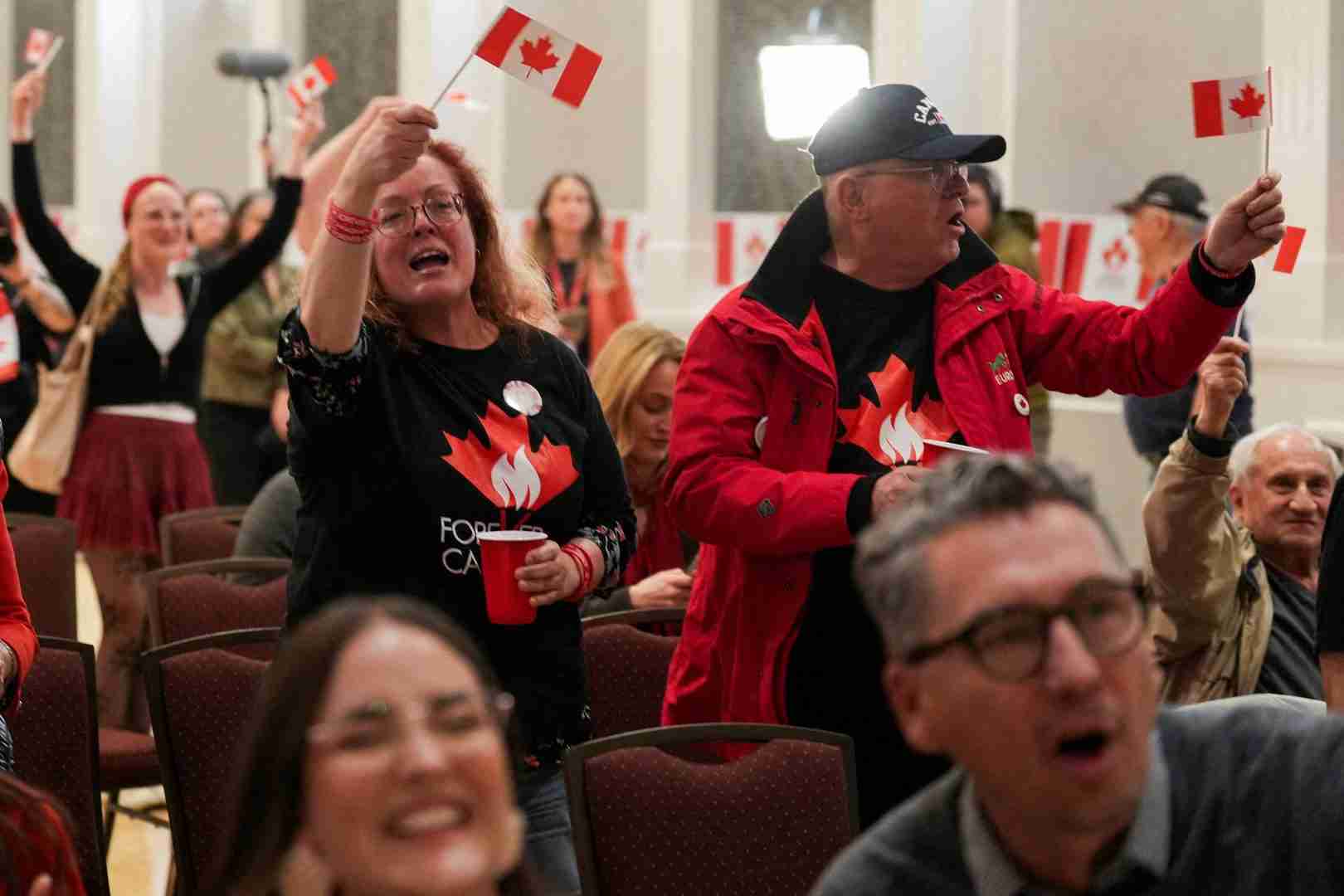
Supporters of the Forever Canadian group, who want Alberta to remain in Canada, wave Canadian flags as they watch the results of a non-binding referendum on Alberta sovereignty in Edmonton, Alberta, Canada October 19, 2026. REUTERS/Todd Korol
International News via Reuters:
Alberta residents voted to remain part of Canada in the province’s first-ever referendum on separation, in a much-needed win for Prime Minister Mark Carney as he attempts to unify the country amid a trade war with the US.
CBC News, Canada’s government-funded national broadcaster, called the result late Monday after 33% of the vote had been counted. At the time of the call, 76% of tallied votes were in support of the “remain” side versus 23% in favor of the province moving forward with a binding vote on separation. The referendum was nonbinding.
“Albertans made a clear choice,” Prime Minister Mark Carney said in a statement. “They chose unity, to build together, and to take care of each other.”
“Canada is greater than the sum of its parts,” he said.
Pollsters and analysts had repeatedly dismissed the possibility of a separatist victory, citing data that showed about one-third of residents in the western province supported a future referendum on leaving.
Alberta Premier Danielle Smith announced the referendum in May, saying it was “time to have a vote, understand the will of Albertans on this subject, and move on.”
Late Monday, Smith issued a statement on social media saying she was “very pleased” that early results show widespread support for remaining in Canada. She said she would address Albertans on Tuesday to discuss the results and “where our province goes from here.”
A small but vocal group of separatists has campaigned for months for an independent Alberta, arguing that the province’s energy wealth is subsidizing poorer parts of Canada and that Alberta would be far richer without Ottawa bureaucracy impeding its path.
Last week, Carney told a rally in Calgary that voting to leave Canada would be “a dangerous bluff that will lead to years of deep division,” and appealed to Albertans to “vote like Canada depends on it.”
Carney, who grew up mostly in Alberta, acknowledged that Albertans have often felt slighted by Ottawa and said his government had approved a proposed new pipeline, adding that Alberta is critical to helping Canada reduce its dependence on the US.
Alberta’s referendum follows two previous referendums on separation in the majority French-speaking province of Quebec. Quebecers voted to stay in Canada in both instances.
First Nations groups have also objected to the idea of an independent Alberta, as their land treaties with Ottawa predate the province’s creation within Canada.
CBC News reported strong turnout from First Nations. One southern Alberta polling station in an area that is home to the Siksika Nation temporarily ran out of ballots, and then stayed open until after 10 p.m. MT (0400 GMT) to ensure everyone in line had the chance to vote.
Still, Monday’s referendum is unlikely to end the separatist movement in Alberta. Before the referendum, some separatist leaders said they would continue to pursue another vote even if most Albertans voted to remain.
According to data released on October 16 by the pollster Angus Reid, 62% of Albertans believe “there will never be an end to the separatist movement” in the province.
Alberta’s referendum also included nine other nonbinding questions on topics including immigration, access to provincial services — such as education, social care and healthcare — and voter identification requirements. Results for those questions were still trickling in.
Reporting by Amanda Stephenson in Calgary and Maria Cheng in Ottawa; Editing by Cynthia Osterman, Jonathan Spicer and Kevin Buckland
The Competition and Markets Authority said its proposals would result in “substantially lower access fees” and easier access to Apple’s contactless technology, opening the market to competition from digital banks and other providers
FILE PHOTO: Apple Pay logo is seen in this illustration taken May 10, 2023. REUTERS/Dado Ruvic/Illustration/File Photo
International News via Reuters:
Britain’s competition regulator said on Tuesday it was seeking to loosen Apple’s grip on contactless payments by proposing that the company lower fees and remove technical barriers, helping rival services compete with Apple Pay.
The Competition and Markets Authority said its proposals would result in “substantially lower access fees” and easier access to Apple’s contactless technology, opening the market to competition from digital banks and other providers.
The proposed measures are less onerous than those imposed by the European Union in 2024, which included giving third-party wallet developers free access. Since then, companies including Vipps, PayPal, Klarna, Curve and BBVA have launched alternative payment apps, the CMA said.
CMA Chief Executive Sarah Cardell said the proposals would open the door to more innovation and more choice, as well as boosting Britain’s important fintech sector.
“We have heard that high fees, strict terms, and technical restrictions relating to Apple’s contactless technology make it too difficult for challengers to innovate and compete,” she said.
“By removing barriers to entry, we can help create the conditions for brilliant British businesses with great ideas to develop new products and services here – from payment apps and digital IDs to travel passes and digital keys.”
The CMA is consulting on the proposals until November 17, before making a final decision.
Contactless payments have grown rapidly in popularity, accounting for 39% of all payments, compared with just 3% a decade ago, the CMA said. More than 60% of adults use a digital wallet, with Apple Wallet the most popular in Britain, it added.
Apple said it had already made it possible for developers to offer contactless payments in their apps through NFC, which allows an iPhone to talk to a payments terminal or reader, and through its secure element, which stores sensitive material such as card credentials and cryptographic keys.
The company said this allowed developers to create products and services, including in-store payments, transit passes and event tickets, while ensuring users’ sensitive data remained protected by the highest security standards.
“We do not believe the CMA should require Apple to adopt an approach with lower privacy and security protections,” an Apple spokesperson said.
“We will continue to engage constructively to reach an outcome that is in the best interest of our users.”
Reporting by Paul Sandle; editing by William James
he blue-chip FTSE 100 index fell 0.8% to 10,680.25 points by 1006 GMT
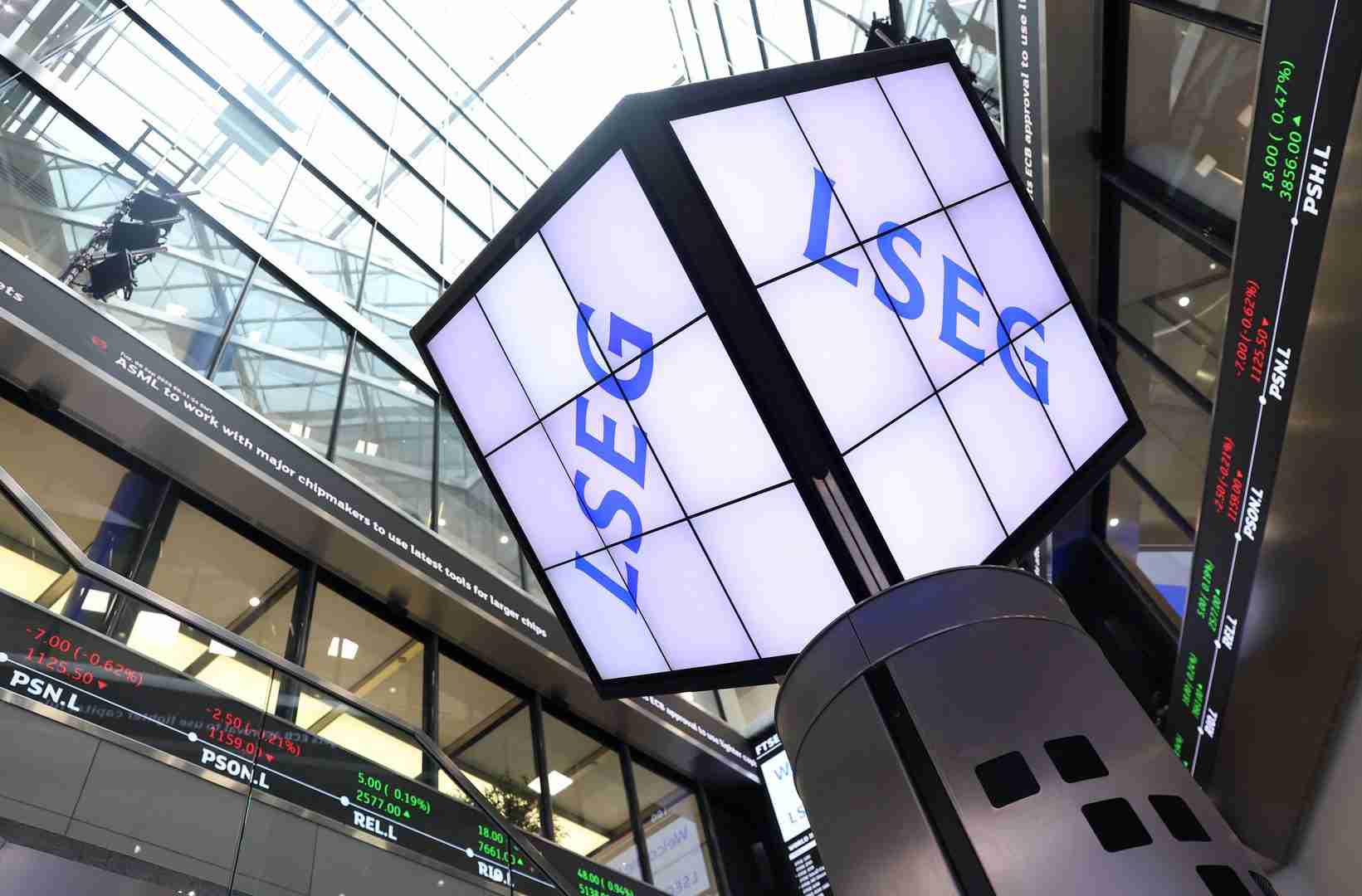
Financial markets data and information are displayed around an LSEG (London Stock Exchange Group) branded cube inside the LSEG headquarters in Paternoster Square, London, Britain, September 8, 2026. REUTERS/Toby Melville
International News via Reuters:
The FTSE 100 declined on Tuesday, with banks dragging the most, as elevated oil prices continued to weigh even as gains in defensive sectors helped cushion the fall.
The blue-chip FTSE 100 index fell 0.8% to 10,680.25 points by 1006 GMT. The midcap FTSE 250 lost 1% and was on track for its biggest one-day fall in nearly two weeks.
• Banks fell nearly 2% to an over four-month low. Heavyweight lenders HSBC, Lloyds and NatWest fell between 1.6% and 2.3%
• Industrial stocks lost 1.8%, with Diploma and Rolls-Royce down 3.3% and 1.7% respectively
• Bunzl slipped 2.2% despite reporting a 3.7% rise in third-quarter revenue and maintaining annual forecasts
• Oil prices advanced with Brent reaching a five-month high of $111.05 a barrel [O/R]
• Investors flocked to sectors considered traditionally defensive, with healthcare up 0.5%. The personal care, drug and grocery sector added 0.3%
• Data showed a modest rise in the pace of pay growth for British workers and hints of a small recovery in the jobs market, which could bolster the case for a Bank of England interest rate hike next month, pressuring rate-sensitive midcaps
• The Times reported that Finance Minister John Healey rejected calls to raise capital gains tax ahead of his October 28 budget, amid concerns that higher taxes could prompt wealthy individuals to leave Britain or delay asset sales
• Miner Anglo American dipped 1.6% after maintaining its 2026 copper production guidance despite a 5% drop in third-quarter copper output
• Technology and online grocery firm Ocado rose 6.6% to top the FTSE 250 after J.P. Morgan raised its price target on the stock to 460 pence from 290 pence
• Investors will watch for UK inflation and retail sales figures this week, while markets enter another corporate earnings season
Reporting by Darshan Kumar in Bengaluru; Editing by Harikrishnan Nair
A preliminary measure of payrolled employees rose, the unemployment rate fell and average hourly earnings grew faster than expected in the three months to August
International News via Reuters:
The British pound rose on Tuesday after jobs data pointed towards a bottoming in the labour market, reinforcing the case for a rate hike from the Bank of England when it meets next month.
A preliminary measure of payrolled employees rose, the unemployment rate fell and average hourly earnings grew faster than expected in the three months to August, official figures showed.
The labour market figures were the latest in a string of better-than-forecast economic data that could allow the BoE to raise rates at next month’s meeting.
“The UK economy is surprising on the upside. There’s room for more hiking,” said Tommy von Brömsen, FX strategist at Handelsbanken.
“Rate differentials are going to go in favour of the pound going forward.”
Sterling was last up 0.3% against the dollar at $1.3343.
Against the euro, the pound was also up 0.3% at 84.04 pence. It hit its strongest level against the single currency since May 2025 on Monday at 83.95 pence.
BOE TO HIKE NEXT MONTH
Money market futures were almost fully pricing in a quarter-point rate hike when the BoE announces policy on November 5. Investors were also fully pricing in four rate hikes by the middle of next year.
Lloyds’ senior UK economist Nikesh Sawjani believes some of the underlying metrics in Tuesday’s labour market data do not strengthen the case for more rate rises from the BoE, notably a decline in vacancies which suggests subdued labour demand.
“The release reinforces expectations of a November hike, rather than making a compelling case in itself for a more aggressive path thereafter,” Sawjani said, adding that labour market developments remain secondary to the wider monetary policy narrative.
“The outlook for bank rate continues to hinge primarily on developments in the Middle East, their implications for energy prices and whether higher costs generate second-round effects in domestic wages and prices.”
Oil prices were up sharply on Tuesday on few signs of progress in efforts to end the Middle East war. Brent crude futures were last above $111 per barrel, their highest since May.
Reporting by Samuel Indyk; Editing by Shailesh Kuber
Simons names club murder victim, confirms shooting arrests, and reveals culling suspect bailed
The Bermuda Police Service has named the man who died after an incident at Southampton Rangers Sports Club as 39-year-old Lindley Scott, a father of four.
Commissioner of Police Darrin Simons said Mr Scott had been socialising with family and friends on the evening of Thursday, 15 October 2026 when his life was cut short.
Police responded to a report of a disturbance at the club shortly before 8.00pm that night. During an altercation, Mr Scott sustained multiple stab wounds, according to the Commissioner.
Patrons attempted lifesaving measures until emergency services arrived, but Mr Scott later succumbed to his injuries, the Commissioner said.
A 32-year-old man was arrested shortly after the incident in connection with Mr Scott’s death. A murder investigation is now underway, and a Family Liaison Officer has been appointed to support the family.
Commissioner Simons said that based on current information, the incident is not believed to be gang related.
The Commissioner appealed to anyone who was at the club that evening, particularly those who may have witnessed the altercation, to come forward. Information can be shared with Detective Chief Inspector Derricka Burns on 247-1062 or by email at dburns@bps.bm.
As a result of the incident, Southampton Rangers Sports Club has been served with a 24-hour closure notice, effective from 8.00pm on Friday, 16 October 2026.
Other investigations
The Commissioner also provided updates on two further serious incidents. Regarding a shooting in Hamilton Parish on Sunday, 11 October, two men, both aged 25, have been arrested and are in police custody. The victim has been discharged from hospital and the investigation remains ongoing.
On the chicken culling incident on Wednesday, 14 October, a 42-year-old man who sustained serious injuries remains in critical condition in hospital. The man arrested in connection with that incident has had his firearms licence revoked and has been released on police bail while enquiries continue.
Prime Minister Sebastien Lecornu had ruled out a blanket curfew in Paris but not a state of emergency, and had said it was more appropriate for now to apply partial and localised curfews
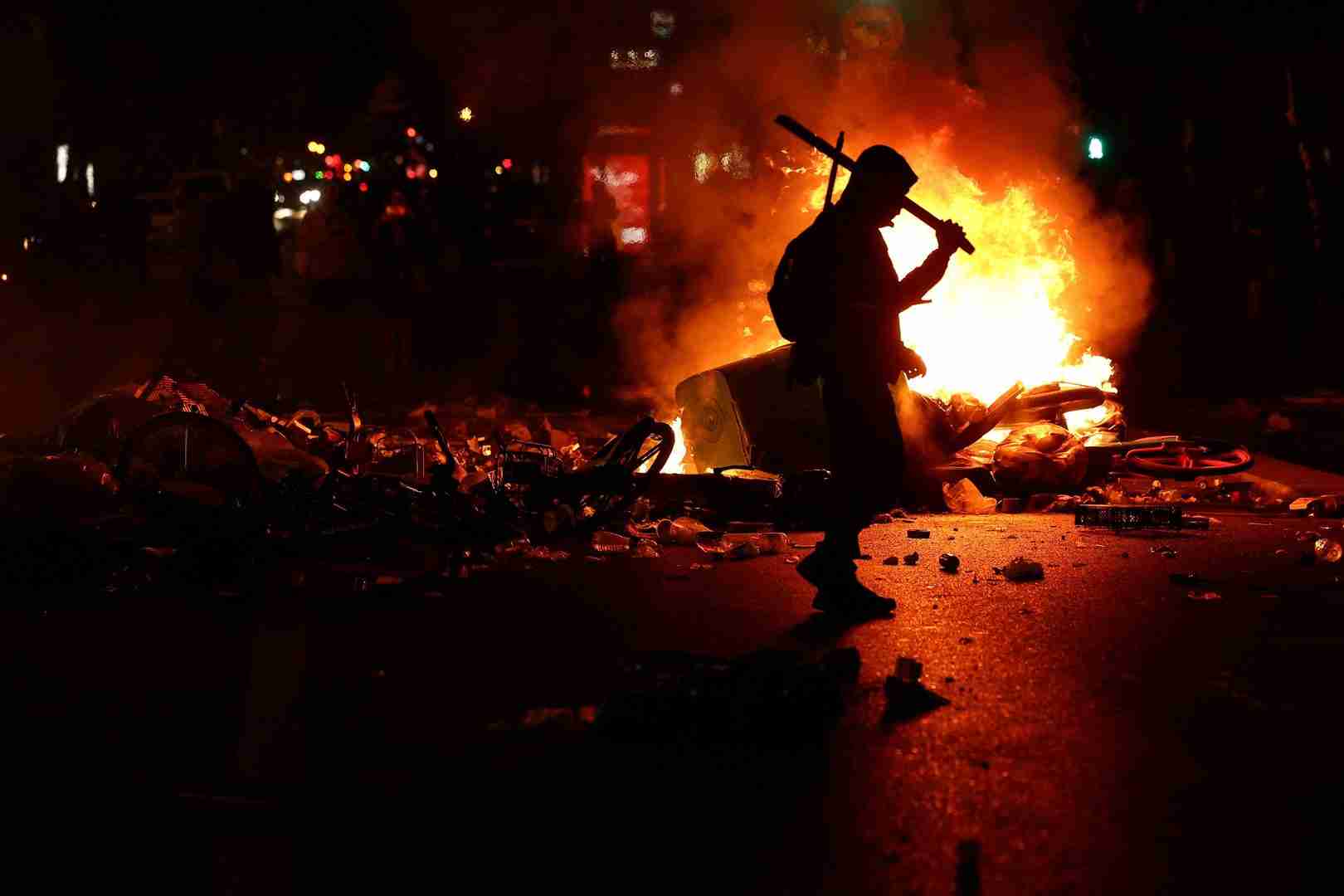
A person walks as flames rise during civil unrest, the day after a national day of demonstrations against the cost of living and rising fuel prices, in Paris, France, October 18, 2026. REUTERS/Abdul Saboor
International News via Reuters:
French authorities set curfews in parts of several cities on Monday, including Paris, Lille and Nice, as they faced pressure over security failings after a weekend of riots and looting stemming from nationwide anti-government protests.
Prime Minister Sebastien Lecornu had ruled out a blanket curfew in Paris but not a state of emergency, and had said it was more appropriate for now to apply partial and localised curfews.
“My determination to restore order is absolute,” he told reporters.
Paris police said they had issued orders barring protests in certain areas of the French capital from 8 p.m. (1800 GMT) and had issued a curfew around the Place de la Republique and Les Halles from 11:00 p.m. Both would remain in effect until 6 a.m. on Tuesday morning.
“A police deployment is in place to ensure strict compliance with these measures,” the police said in a statement.
A source in Lecornu’s office said a curfew for minors had been set between 8 p.m. and 6 a.m. for the next two days in Lille, Douai, Wattignies and Denain with the agreement of the local mayors.
In Nice, mayor Eric Ciotti said in a video posted online that he had signed an order installing a curfew for minors in central Nice overnight.
Marseille banned gatherings and demonstrations. French unions meanwhile called for a new round of strikes and rallies on November 5.
The weekend of looting and violence between some protesters and police followed weeks of student demonstrations, rocking France six months ahead of its next presidential election and highlighting pressures from a weak economy and surging debt.
MINISTER BLAMES FAR LEFT
Lecornu blamed far-left groups for some of France’s worst unrest in years. “There is, after all, a far-left movement that wants to cause — we can’t put it any more strongly — profound unrest in the country in the run-up to the presidential election,” he said.
Hard-left presidential candidate Jean-Luc Melenchon urged him to provide evidence. “Otherwise, he should apologise, keep quiet and stop fanning the flames of unrest,” he said on X.
The Federation of Trade and Retail said almost 3,000 shops had been affected over the weekend.
“Behind every ransacked shop are business owners, employees and families who have seen years of work and effort wiped out in a matter of hours,” it added, calling for social security and tax relief for affected businesses.
Lecornu said the government would provide furlough measures from Tuesday.
Standing before a boarded-up shopfront, Gerard Nouchi, manager of two clothing stores in Marseille, said there weren’t enough police to stop the looters.
“They trashed everything, broke things, insulted us,” Nouchi said. “It was like a real tornado.”
The government ordered platforms selling looted goods to take down announcements and collaborate to prosecute resellers, Junior Digital Minister Anne Le Hénanff wrote on X.
Some 2,400 people were arrested and one protester died from a cardiac arrest on Saturday while nearly 1,000 officers were injured, according to the Interior Ministry.
‘LEFT WITHOUT PROTECTION’
French assets were underperforming broader European markets on Monday, though moves were more contained than at some other moments of recent political friction.
Tensions in President Emmanuel Macron’s fragile government over apparent security shortcomings — coming as the government needs to pass a budget bill to rein in its finances — could further unsettle investors.
Macron’s office said on Monday he had turned down his Interior Minister Laurent Nunez’s offer to resign, telling him instead to put an end to barricades and looting and be transparent over what Macron called “intelligence and foresight failings”.
Nunez told reporters that Tuesday evening’s Champions League soccer match between Paris Saint-Germain and Barcelona would go ahead as planned.
The mayors of Paris, Marseille and Lyon said in a joint op-ed in the newspaper Liberation that they were used to demonstrations and protests.
“But on Saturday … for the first time, we had the feeling that whole sections of our cities had been left without protection,” said the mayors, all from the centre-left.
The start of school holidays on Monday may provide relief, but students were staging more gatherings and blockades in some places, including the Louvre gallery and Sciences Po university in central Paris.
LUXURY BOUTIQUES DAMAGED
At the weekend, hundreds of thousands took to the streets to protest over what many say are declining and dysfunctional public services.
At the Place Vendome in Paris, home to luxury hotels and boutiques, most shops were shuttered and surrounded by security guards on Monday. The front door of a Dior boutique was smashed, while windows belonging to other luxury brand stores in central Paris, including Rolex, Louis Vuitton, Ralph Lauren and Gucci, were damaged.
In Marseille, Ligue 1 club Olympique de Marseille said its official store on the city’s historic main avenue had been looted, while a town hall in central France was torched.
France deployed 60,000 police and other security forces on Saturday, Nunez told France Inter radio, but he acknowledged that was not enough to control violent crowds.
Cost-of-living issues also drove weekend protests in other European countries including Italy, Belgium and Albania.
European governments have advised citizens travelling to France to avoid large crowds and exercise caution.
As France was busy cleaning up its streets, Macron arrived in Kuwait for a Gulf trip aimed at securing additional petrol and diesel supplies to bring down pump prices.
Reporting by Zhifan Liu, Tassilo Hummel, Elizabeth Pineau, Dominique Vidalon, Alessandro Parodi and Makini Brice in Paris, Sudip Kar-Gupta in Brussels, Amanda Cooper, Alun John and Helen Reid in London; Writing by Tassilo Hummel and Charlie Devereux; Editing by Aidan Lewis and Andrew Cawthorne
Residents of the Ukrainian town, occupied by Russian forces since February 2022, have reported a deepening food crisis
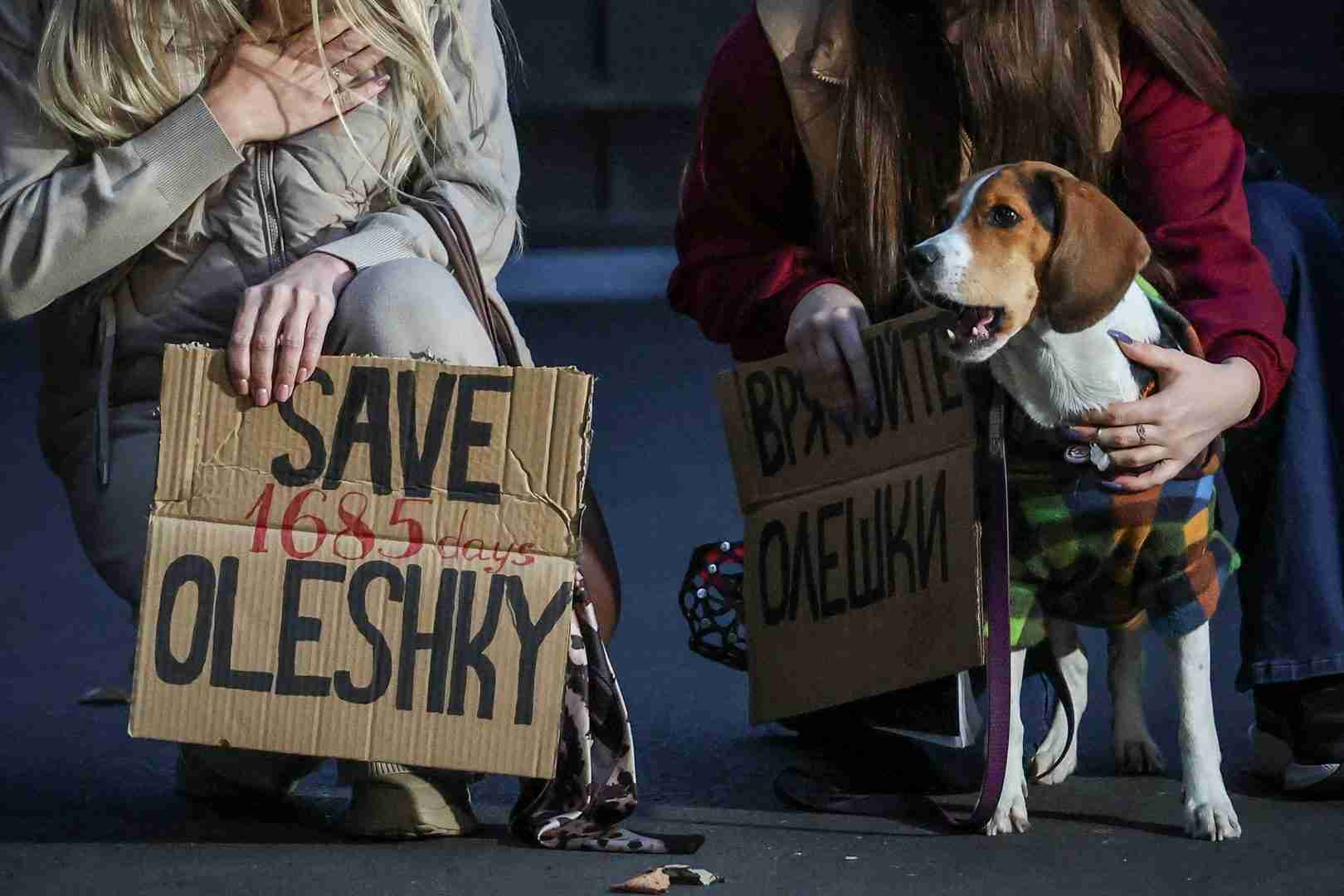
A dog looks on while women hold posters as they participate in a rally demanding the establishment of a humanitarian corridor to evacuate Ukrainian civilians from the town of Oleshky in Kherson region, amid Russia’s attack on Ukraine, in Kyiv, Ukraine October 6, 2026. REUTERS/Alina Smutko
International News via Reuters:
Pope Leo held a phone call on Monday with Ukrainian President Volodymyr Zelenskiy, the Vatican said, and urged Ukraine and Russia to cooperate to let aid and food into the blockaded town of Oleshky.
Residents of the Ukrainian town, occupied by Russian forces since February 2022, have reported a deepening food crisis.
The call came three days after Leo asked Russian President Vladimir Putin to arrange a ceasefire so aid could enter Oleshky, a request the Kremlin did not address when it said Putin would help organise supplies.
Leo “expressed the hope that cooperation between both parties will allow for the delivery of food and medical aid, and for the voluntary and safe evacuation of the civilian population,” the Vatican said in a statement about Monday’s call.
Zelenskiy, in comments posted on Telegram, said he and the Pope discussed the situation in Oleshky, adding: “We are working on helping our people there. We are preparing a solution.”
The pope, he said, outlined his talks with Russia on the situation.
Zelenskiy also said discussions focused on “security challenges and threats” and three recent instances in which Ukraine received no advance warning from its partners of impending Russian missile attacks.
The pope, who is recovering from lung cancer surgery, spoke on Friday with Putin and asked him to arrange a ceasefire to facilitate the entry of aid into Oleshky.
The Kremlin said afterwards that Putin had agreed to cooperate with the pope to organise supplies for the town, but did not mention a ceasefire.
Leo, who became pope in May 2025, has met with Zelenskiy several times.
They last saw each other in December, at the pope’s residence in Castel Gandolfo in Italy, after which Leo urged European leaders to take a collective approach in negotiating peace between Russia and Ukraine.
Russia overnight launched one of its broadest air assaults against Ukraine in months, firing 16 ballistic missiles at Kyiv and the surrounding region and more than 200 drones across the country.
Reporting by Joshua McElwee in Vatican City; Editing by Ron Popeski, Alvise Armellini and Matthew Lewis
Governments around the world are racing to build AI capabilities, driven by concerns that countries without their own expertise, computing infrastructure and models could become increasingly dependent on a handful of mostly U.S.-based companies that dominate the technology
A banner shows message reading “AI” is displayed during the London Tech Week at Olympia, in London, Britain, June 8, 2026. REUTERS/Isabel Infantes
International News via Reuters:
Britain risks becoming a “high-value AI customer” rather than a country able to shape the technology unless it takes urgent action to build domestic capabilities, the government’s top science advisers said on Monday.
Governments around the world are racing to build AI capabilities, driven by concerns that countries without their own expertise, computing infrastructure and models could become increasingly dependent on a handful of mostly U.S.-based companies that dominate the technology.
The Council for Science and Technology, an independent advisory body that advises the government on science and technology policy, said decisions made now would determine whether Britain captures the economic and public benefits of AI while maintaining resilience and strategic autonomy.
“The way for us to achieve AI sovereignty is to build trusted systems that deliver real public, economic and security benefits,” the advisers said in an emailed letter to the AI minister, Kanishka Narayan.
The council warned that Britain was at risk of falling behind and becoming a “high-value AI customer, rather than a country able to shape the technology and its usage,” without what it described as “deliberate and urgent action.”
It recommended appointing a single government lead to coordinate AI sovereignty policy, investing in skills, data and computing infrastructure, and testing AI systems in areas including national security, health and education.
The advisers also said Britain should maintain access to the world’s most advanced AI systems while developing some domestic capabilities of its own, including exploring a publicly governed British AI model that could be made available to researchers, startups and public services.
The government did not immediately respond to a request for comment.
Reporting by Sam Tabahriti, editing by Paul Sandle
To provide the best experiences, we use technologies like cookies to store and/or access device information. Consenting to these technologies will allow us to process data such as browsing behavior or unique IDs on this site. Not consenting or withdrawing consent, may adversely affect certain features and functions.
Functional
Always active
The technical storage or access is strictly necessary for the legitimate purpose of enabling the use of a specific service explicitly requested by the subscriber or user, or for the sole purpose of carrying out the transmission of a communication over an electronic communications network.
Preferences
The technical storage or access is necessary for the legitimate purpose of storing preferences that are not requested by the subscriber or user.
Statistics
The technical storage or access that is used exclusively for statistical purposes.The technical storage or access that is used exclusively for anonymous statistical purposes. Without a subpoena, voluntary compliance on the part of your Internet Service Provider, or additional records from a third party, information stored or retrieved for this purpose alone cannot usually be used to identify you.
Marketing
The technical storage or access is required to create user profiles to send advertising, or to track the user on a website or across several websites for similar marketing purposes.