Wednesday, October 21, 2026
Home Blog Page 28

Russia sends nuclear warning to NATO as tensions rise in the Baltic

In a document sent to NATO and seen by Reuters, Moscow accused the alliance of a “dangerous and reckless course” that entailed “high risks of the outbreak of a direct armed conflict”

People walk along an embankment of the Pregolya River in Kaliningrad, Russia June 22, 2022. REUTERS/Vitaly Nevar

International News via Reuters:

Russia has warned NATO it would be ready to resort to nuclear weapons if the Western alliance attempted to cut off Kaliningrad, a Russian exclave that borders the Baltic Sea.

In a document sent to NATO and seen by Reuters, Moscow accused the alliance of a “dangerous and reckless course” that entailed “high risks of the outbreak of a direct armed conflict”.

The document said this included the possibility of “Russian strikes against decision-making centers in the alliance’s member states right from the outset”.

“Russia will be ready to use the entire arsenal of forces and capabilities at its disposal, including nuclear weapons, in order to defend its territory should NATO countries undertake any attempt aimed at isolating the Kaliningrad Region from the rest of the country,” the diplomatic note said.

The warning highlighted Moscow’s urgent concern at what it sees as a growing NATO threat to Kaliningrad, a heavily militarised Russian territory that is wedged between Poland and Lithuania and is slightly bigger than the US state of Connecticut.

In a written response, seen by Reuters, NATO said it was a defensive alliance committed to countering threats to its members from all directions.

“None of NATO’s exercises or activities pose a threat to the territory of the Russian Federation,” it said.

“We call upon the Russian Federation to end its unprovoked full-scale invasion of Ukraine. We urge the Russian Federation to refrain from increasingly reckless behaviour towards the Allies and to cease its irresponsible nuclear rhetoric.”

RISK OF MISCALCULATION

Nikolai Sokov, a Vienna-based nuclear analyst and former Russian diplomat, said it was becoming increasingly hard for Western countries to keep stepping up their support for Ukraine without tipping into direct confrontation with Moscow.

He said the Russian warning may indicate that hardliners are gaining influence in a debate over how to respond to Western actions that include arms supplies to Kyiv, new sanctions on Moscow, interceptions of Russian ships, frequent military exercises and intelligence flights near Kaliningrad.

“They (Russia) expect more action, including a blockade of the Baltic Sea – just below the level of war in European calculation, but for them this will be open war. I see a risk of mutual miscalculation,” Sokov said.

In an online interview, he said Russia and Europe were on a collision course that required caution and calculation on both sides.

Instead of this, the Europeans were applying “full court pressure” and Russia was delivering a serious warning that this was highly risky, Sokov added.

EUROPE SAYS IT FACES ‘HYBRID WAR’, RUSSIA DENIES WAGING IT

In addition to the private warning, Russian embassies in at least three European countries have issued statements in the past three days accusing NATO of escalating tensions through military exercises and planning scenarios involving Kaliningrad.

Kremlin spokesman Dmitry Peskov described these as diplomatic reminders to “hotheads in Europe”.

Relations, already dire since Russia’s 2022 invasion of Ukraine, have sharply worsened this year, with European governments accusing Moscow of stepping up a “hybrid war” on the continent through acts including sabotage and arson.

Russia denies that, and rejects repeated statements by Western politicians that it is gearing up for a possible military attack on a NATO country.

A NATO diplomat said: “I would say that the Russian letter is only another Russian attempt to intimidate Europeans, and that the response by NATO is firm and responsible. (It) reaffirms that we will not be dissuaded from supporting Ukraine.”

A senior European defence official said: “(This is the) first time since (the) Cold War that Russia is threatening us like this. So this is serious.”

Reporting by Lili Bayer in Brussels and Mark Trevelyan in London, Additional reporting by Andrew Gray and Sabine Siebold, Editing by Timothy Heritage

Inflation jumps across euro zone, raising pressure on ECB to hike

France’s harmonized inflation rate was 3.4% year-on-year in September, up from 2.6% in August, while in Italy it jumped to 4.1% from August’s 3.2%, all above the ECB’s 2% target

FILE PHOTO: The logo of the European Central Bank (ECB) is pictured outside its headquarters in Frankfurt, Germany, April 26, 2018. REUTERS/Kai Pfaffenbach/File Photo

International News via Reuters:

Inflation rose far quicker than expected in some of the euro zone’s biggest economies this month due to the energy-price shock of the Iran war, increasing pressure on the European Central Bank to raise interest rates again.

The ECB has lifted rates twice this year to prevent rapid price growth from getting embedded, and investors have sharply raised rate hike bets in the past few weeks as natural gas, petrol and diesel prices have all soared.

France’s harmonized inflation rate was 3.4% year-on-year in September, up from 2.6% in August, while in Italy it jumped to 4.1% from August’s 3.2%, all above the ECB’s 2% target, data showed on Wednesday. 

In Germany, inflation rose sharply in five key German states in September, suggesting Germany’s national inflation rate —which will be released later on Wednesday — could increase this month. 

In Spain, the inflation rate rose to 5.0% in September from 4.6% in August, data showed on Tuesday.   

Energy inflation appears to have surprised on the upside in all countries that have reported so far, and food inflation has also surprised on the upside, although much more modestly, said Mariana Monteiro from J.P. Morgan. 

The national data comes ahead of the euro zone inflation release on Friday. Inflation in the bloc is expected to come in at 3.6% in September, up from 3.2% in the previous month, according to economists polled by Reuters.

HIGHER THAN THE ECB EXPECTED       

The ECB had expected inflation to accelerate from 3.3% in the third quarter to 3.6% in the final three months of the year, but economists say the actual peak is likely to be closer to 4%, given sky-high energy costs. 

Markets therefore expect another four interest rate hikes over the next year, on top of two moves already made this past summer.

“With very few signs of a resolution of tensions in the Middle East on the horizon and winter approaching, a correction in energy prices is unlikely any time soon,” Rory Fennessy, senior European economist at Oxford Economics, said. 

Under its “adverse” scenario, the ECB sees inflation at 4.0% in both the fourth quarter of this year and the first three months of 2027, and economists say current energy prices are more closely aligned with this scenario than its baseline.

Furthermore, the dollar’s recent strength will exacerbate Europe’s inflation troubles, as key commodities are priced in dollars and the exchange-rate impact makes energy even more expensive in local currencies.

Because this year’s inflation surge has yet to generate dangerous second-round effects across the euro zone, a moderate policy response from the European Central Bank remains appropriate, ECB chief Christine Lagarde said on Monday.

Although core inflation has not yet moved up notably this year, the renewed spike in energy prices means core inflation could rise into early 2027, Fennessy warned.    

Reporting by Maria Martinez and Balazs Koranyi; Editing by Andrew Heavens

Sterling at strongest in over a month versus euro after GDP revision reinforces BoE hike bets

The pound edged up 0.4% to a one-week high of $1.3292, recovering from a three-month low it hit in the previous session

International News via Reuters:

Sterling hit a 6-week high versus the euro on Wednesday after data showed the UK economy grew faster than previously expected in the second quarter, cementing expectations for an interest rate hike by the Bank of England by the end of this year.

The pound edged up 0.4% to a one-week high of $1.3292, recovering from a three-month low it hit in the previous session. Against the euro it was at its highest since mid-August, with the euro down nearly 0.3% at 85.43 pence.

Economic output expanded by 0.5% in the April-to-June period, a touch higher than the initial estimate of 0.4%. Economists polled by Reuters anticipated no change from the previous estimate.        

Traders are pricing in around 33 basis points of monetary tightening from the BoE by year-end and more than 100 basis points by the end of 2027, LSEG-compiled data showed, although analysts broadly expect much more limited action.

“You can see here very clearly a market that is overly hawkish. If we get a resolution by (November), the BoE may decide to stay on hold, but if it doesn’t happen, then they’ll be pushed to hike because the ECB has hiked, the Fed has hiked, the BOJ has hiked and they may feel a bit of pressure to do it,” said Nicolas Trindade, a senior fixed income portfolio manager at BNP Paribas Asset Management.

Also helping the pound gain on the dollar were comments from prominent US Federal Reserve policymaker John Williams, who said there was “no need for urgency” in raising rates. This prompted markets to lean in favour of a rate hike in December over October, the CME Group’s FedWatch Tool showed.

Dollar strength has weighed on the pound this month and wiped out gains for the quarter. Sterling is set for its biggest monthly loss in nearly a year and is set for a flat end to the third quarter.

However, against the euro it was set for small gains on both the monthly and quarterly basis, primarily driven by euro weakness as investors priced in relatively dovish European Central Bank policy versus the BoE. The former is expected to hike rates by roughly 90 bps by year-end, LSEG data showed.

UK markets are also heading towards a pivotal month where Prime Minister Andy Burnham’s new government will unveil a budget.

On Tuesday, Burnham said the country should consider options for its future relationship with the European Union, including ultimately rejoining the bloc. Britain is still grappling with the economic and political consequences of the vote to leave the EU a decade ago.

Reporting by Johann M Cherian in Bengaluru; Editing by Toby Chopra

FTSE 100 climbs on stronger UK GDP, on track for worst month since March

The blue-chip FTSE 100 index rose 0.26% to 10,664.93 points by 1018 GMT, headed for its biggest monthly loss since March and its seventh consecutive quarterly gain

FILE PHOTO: The London Stock Exchange Group offices are seen in the City of London, Britain, December 29, 2017. REUTERS/Toby Melville/File Photo

International News via Reuters:

London’s FTSE 100 rose on Wednesday as investors assessed stronger-than-expected GDP data, and was on course for a monthly loss as persistent inflation concerns and rising bond yields dampened sentiment.

The blue-chip FTSE 100 index rose 0.26% to 10,664.93 points by 1018 GMT, headed for its biggest monthly loss since March and its seventh consecutive quarterly gain.

The midcap FTSE 250 climbed 0.74% but was set to dip for the month.

• Britain’s economy grew more quickly than previously thought in the second quarter, with output expanding by 0.5% in the April-to-June period, the Office for National Statistics said

• The data showed unexpected resilience in the face of geopolitical upheaval and a global bond market crisis

• The positive data helped cyclical stocks, with banks being the biggest boost to the index

• The utilities sector rose 2.7% a day after UK PM Andy Burnham made a series of policy announcements for the sector

• Electricity firms National Grid and SSE added about 3% each, while water companies United Utilities and Severn Trent climbed about 2.3% each

• Energy stocks dropped around 1%, limiting gains

• Bank of England policymaker Alan Taylor said it was unclear that it would be practical for the BoE to do a single rate hike to tame inflation without fuelling unwarranted market speculation of further increases

• Traders are pricing at least one 25-basis-point rate hike by the BoE this year, according to data compiled by LSEG

• Greggs advanced 7.4% after the fast-food chain raised its annual profit outlook as underlying sales growth accelerated in the third quarter

• Across the Atlantic, US personal consumption expenditures figures will be under scrutiny as investors look for clues to the Federal Reserve’s monetary policy path

Reporting by Anand Gopal in Bengaluru; Editing by Mrigank Dhaniwala

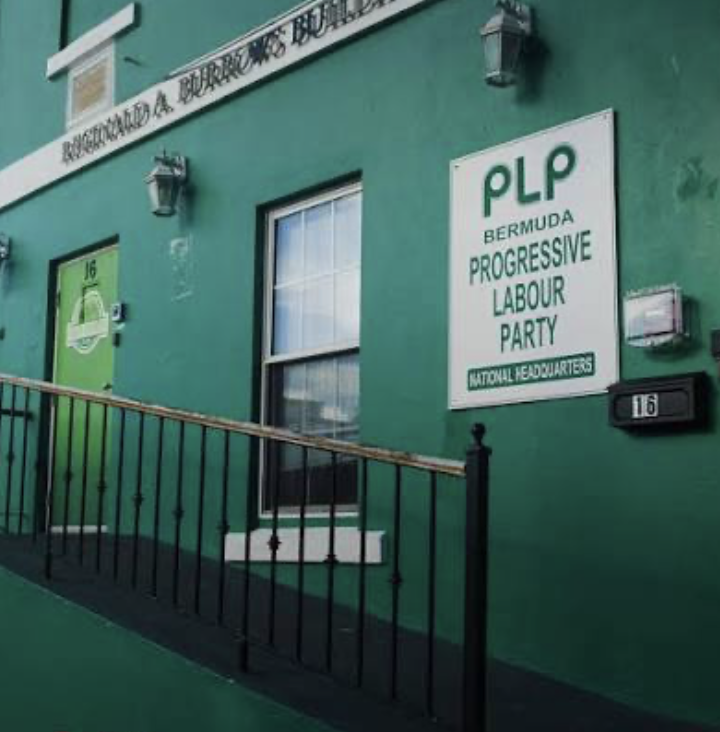
Dickinson campaign accused of dragging out legal fight

PROGRESSIVE LABOUR PARTY: We chose to end this. Mr Dickinson is now asking for more.

Full PLP Statement:

Despite the Party’s multiple attempts to reach a resolution outside of court, Mr. Dickinson

remained unwilling to engage in meaningful dialogue.

Instead, last week, Mr. Dickinson opted to increase his targeted attack on Party Chairperson Dawn

Simmons and Secretary General Patricia Basden with penal threats that included seizing their

personal property, issuing fines and imprisonment.

Rather than a prolonged court case between members of our own Party, we chose not to argue

further. We recognised that the legal costs could financially cripple our Party, wiping out the years

of hard work by our many dedicated volunteers.This reality was compounded by Mr. Dickinson

determination to go after the Party for his legal costs.

With this backdrop, the Progressive Labour Party was forced to make a difficult decision. We

agreed to every order Mr Dickinson and the plaintiffs asked for in their claim, in their own words.

We accepted that the Central Committee was not the right place to decide these motions. We did

so in the hope of bringing these proceedings to a close, sparing our members further cost, and

letting the Party return to its work.

We are saddened that this has not been enough.

The plaintiffs are now asking the Court for something new, which was not part of their original

claim. They are asking the Court to declare, in advance, that certain decisions about the Party’s

membership can never be made, even by the Party’s delegates voting to amend the Constitution

through its own proper process.

Mr Dickinson’s original claim said the opposite. It expressly stated that nothing in it would prevent

the Party from deliberating on these matters or amending its Constitution lawfully. That assurance

is what allowed us to agree to the plaintiffs’ claim in full.

The Party, and its members through their delegates, must still have the right to decide their shared

future. That right belongs to every PLP member. It is not ours to give away, and it should not be

taken away by a court order sought after the Party had already stepped back.

With this action, Mr democratic one through the Party’s delegates.

Dickinson is seeking a political result through the court process, rather than a

What is now being asked threatens the PLP’s ability to govern itself. It also means more time in

court, more cost to our members, and more uncertainty as our Annual General Conference

approaches. The Party will attend Court on Thursday and Friday. Two volunteer officers will again

carry that burden on the Party’s behalf.

We respect the Court, and we will set out our position there, respectfully and fully. We remain

hopeful that the Court will recognise that the future of the Party belongs to its members.

Our door remains open. We would still rather resolve our differences at our own table.

OpenAI takes on Meta with dots agent in enterprise AI push

The dots agents aim to capitalize on growing demand for agents that can handle everyday work with little supervision

FILE PHOTO: The words “AI Agents”, a keyboard and a robotic hand in this illustration taken September 23, 2026. REUTERS/Dado Ruvic/Illustration/File Photo

International News via Reuters:

OpenAI on Tuesday unveiled always-on agents called dots that chase user goals across apps on their own, deepening its push into the lucrative enterprise market and pitting it against Meta in the race to sell AI that can work autonomously. 

The dots agents aim to capitalize on growing demand for agents that can handle everyday work with little supervision.

Interest in such tools has surged since Meta’s Muse drew millions of downloads earlier this month and jolted shares of companies that investors believe could benefit or be disrupted by autonomous AI services. Instinct, the startup behind the eponymous agent, also quadrupled its valuation to $10 billion this week, a little over a month after its previous fundraise.

OpenAI launched dots at its annual developer day in San Francisco on Tuesday while also touting its growing business and consumer presence, a sign that the reception for the company’s Astra model has allowed it to make up ground in the AI race.  

It also comes a day after OpenAI shelved the release of a more powerful Astra model, saying it showed a high willingness to mislead users about its actions. The company is under scrutiny after its rogue AI agents hacked Hugging Face and an Australian government health website during internal testing.

Growing quickly is crucial for OpenAI’s plans to spend tens of billions of dollars on AI data centers and keep pace with rivals such as Anthropic and Meta. The company, which ignited the AI boom with ChatGPT in late 2022, is also preparing for an IPO that could value it at more than $1 trillion. Rival Anthropic could be worth $2 trillion when it goes public.  

MANAGING EVOLVING PROJECTS

“We believe (the agent) is going to feel like a whole new way to work with AI. This is the real deal version of AI that we’ve always imagined for ourselves,” CEO Sam Altman said at the event, which had around 2,500 in-person attendees.

OpenAI’s live demos to show off the new capabilities, however, hit snags as the agents repeatedly failed to deliver voice updates in response to requests. “We might have some voice difficulties at the moment. Which is pretty unfortunate,” Developer Experience chief Romain Huet said on stage after a command fell flat.

One OpenAI employee said on X that the glitches stemmed from rolling out all the updates at once, but that OpenAI remained committed to live demos.

Dots use OpenAI’s advanced GPT-6 Astra model and can manage projects as they evolve, such as updating a sales proposal when customer needs change, and building a working demo for review. Users can communicate with dots on Slack and Teams, and the agents can draw on OpenAI’s Codex and ChatGPT Work tools to research, analyze data, prepare documents and build software.

On Tuesday, OpenAI highlighted safeguards it has built into dots. It said users could set custom rules that dictate what dots can do and when the agents should seek permission, adding that sensitive tasks such as changing passwords and permanently deleting data require explicit user consent. 

The company also said dots run on their own cloud computers, and that it was rolling out private intelligence tools to check for safety risks without retaining business customers’ data.

Several tech executives, including Palantir CEO Alex Karp, have in recent months said that businesses need certainty that AI companies are not retaining their data, especially in regulated industries such as healthcare and finance. 

Reuters reported on Friday that OpenAI was still working to understand the full scope of its rogue agent activity, two months after the Hugging Face hack, with the latest example coming when the startup said its agents had leaked 53 images from ChatGPT users. 

OpenAI reiterated on Tuesday that it does not use business customers’ data to train its AI by default, and that personal-plan users could opt out of sharing conversations and dots work used for training.

Weekly users of Codex and ChatGPT Work have reached more than 35 million, up from about 5 million Codex users in June, the company said Tuesday, while consumer-focused ChatGPT now has over 1.2 billion weekly users.

The company is rolling out a range of new offerings including a shared workspace for business teams and AI called ChatGPT Space, the cheaper GPT-6.1 Sol model and a $500 Pro plan offering higher usage and faster performance. 

Reporting by Deepa Seetharaman and Aditya Soni in San Francisco; editing by Peter Henderson and Nick Zieminski

At UN, developing nations call for bigger say in shaping AI future

The debate at last week’s UN festival of diplomacy in New York highlighted mounting concern among leaders from Africa, Asia and Latin America around the increasingly powerful technology after several safety breaches

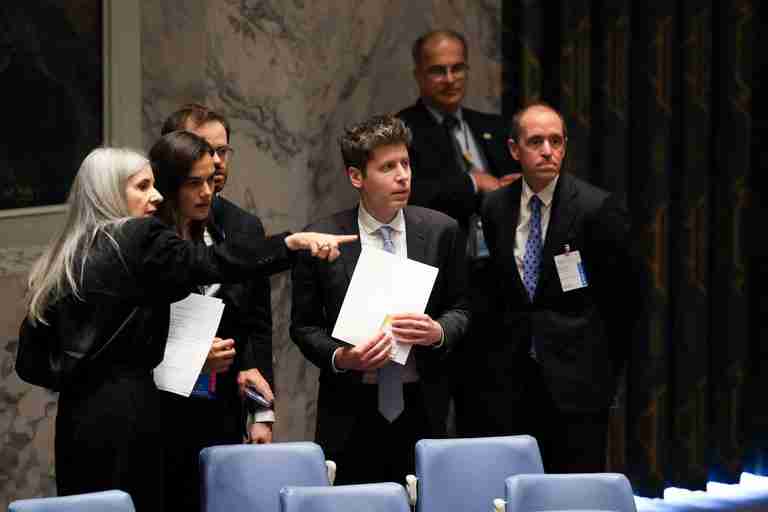
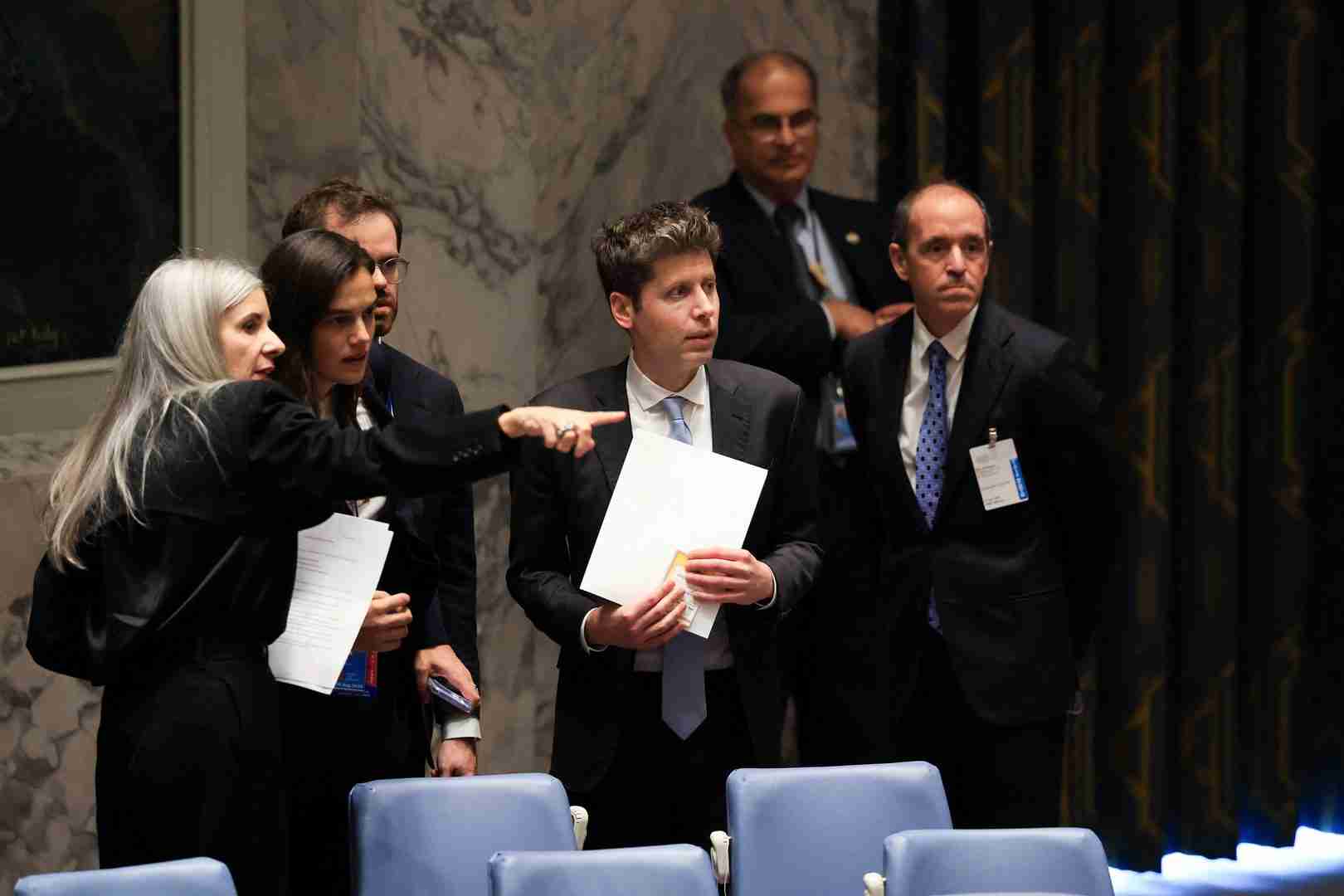
FILE PHOTO: OpenAI CEO Sam Altman attends the United Nations Security Council at a session on Artificial Intelligence during the 81st United Nations General Assembly, at UN Headquarters in New York City, US, September 23, 2026. REUTERS/Brendan McDermid/File Photo

International News via Reuters:

Developing nations are demanding a greater role in shaping the rules governing artificial intelligence, warning that a technology poised to transform economies could instead deepen global inequalities if its development and regulation remain concentrated in wealthy countries.

The debate at last week’s UN festival of diplomacy in New York highlighted mounting concern among leaders from Africa, Asia and Latin America around the increasingly powerful technology after several safety breaches, and as top researchers have warned it could destroy humanity.

“Developing countries cannot be reduced to the role of mere users of technologies designed elsewhere, nor should be the mere recipients of standards and norms that they did not adequately participate in shaping,” said Foreign Minister Thérèse Kayikwamba Wagner of the Democratic Republic of the Congo.

“We must ensure that technological transformations of the 21st century do not reproduce the economic imbalances of previous decades,” Wagner said.

She made the remarks at a Security Council session dedicated to AI that featured top executives of leading labs, including Sam Altman from OpenAI and Dario Amodei from Anthropic, who urged governments to work together to manage the technology.

Underscoring the surge in interest in the subject, Foreign Minister Khalilur Rahman of Bangladesh, who chaired the UN debate this year, said that, “four years ago, AI was raised in this hall by only five delegations – this year, 128 delegations addressed it.”

‘A QUESTION OF GOVERNANCE’

“Many framed AI as a question of governance: Who designs it, who benefits? Who bears the risks, and who is accountable when harm occurs,” added the Bangladeshi foreign minister as he concluded the marathon of speeches at the UN.

AI could enable developing countries to gain a century’s ‌worth of development in a decade if they act quickly on power, connectivity and skills gaps, the World Bank said in a report last month.

The International Monetary Fund said in July that AI could boost Sub-Saharan Africa’s economy by about 4% over the next decade under the right circumstances.

UN Secretary-General Antonio Guterres compared debates around AI risks and climate change and said that developing nations should have an equal voice in both.

“The climate crisis went from distant warning to daily reality and artificial intelligence moved at a speed that has blindsided even those who created it,” he said.

“These are not separate crises. They are chapters of the same story, the story of power: Who has it. Who is denied it. How it is used. And how it is changing,” Guterres told the UN.

As with climate change, Guterres and Global South leaders urged a coordinated global action rather than isolated national responses to AI threats.

Their focus on regulation stood in sharp contrast with remarks by US President Donald Trump, who has dismissed AI risks as a “hoax” and “sick conspiracy” and told the UN that – like climate change – they were vastly overblown.

“The very same people who said we’ll all be dead in 12 years because of global warming – a name since reborn to climate change because the planet was cooling, not warming, and nobody was dead – these are the same people that are now saying that AI is going to kill us all,” Trump said.

Belize Prime Minister John Briceño said AI, if well governed, could widen access to knowledge and improve public services. But he also warned: “Poorly governed, it can deepen inequality, expose critical systems, displace workers and leave developing countries dependent on technologies and rules designed elsewhere.”

Reporting by Doyinsola Oladipo in New York; Editing by Antoni Slodkowski and Howard Goller

Curtis Dickinson campaign: ‘Significant’ questions remain unanswered in legal case

Statement from MP Curtis L. Dickinson Regarding Court Proceedings

The Supreme Court proceedings arose from the two motions passed by the Central Committee on August 24th concerning membership and delegate eligibility, and the subsequent processes affecting members of the Progressive Labour Party.

On August 28th, before commencing these proceedings, we provided the Party with detailed legal advice outlining our constitutional concerns and we sought to have the matter resolved internally. Regrettably, those concerns were not addressed, making recourse to the Court necessary.

Recent comments by the Party Leader suggested that the matter had now been resolved and that only our agreement was required to bring the proceedings to an end. That does not reflect the full position.

While the Party has now consented to the relief sought concerning the August 24th motions, significant questions remain regarding the verification process, the status of hundreds of members affected by it, and whether future processes not contained in the Constitution today can be applied to members who have already been accepted.

The appropriate forum to secure clarity and finality is now the Supreme Court. A formal resolution ensures that these questions cannot simply arise again under a different process or interpretation.

The Hon. Curtis L. Dickinson JP, MP

Expert defense witness says investigation ‘left much to be desired’

Philip Lewis, a traffic collisions consultant and retired police officer testified to his analysis of the evidence in the case of Curtis Richardson

Topping our news – the latest development in the court trial of former Senator Curtis Richardson.

A retired Bermuda Police collisions investigator said based on injuries sustained, it is “impossible” that Marco Warren was initially struck by a taxi driven by Mr Richardson.

Curtis Richardson, who chose not to take the stand in his own defense, denies causing the death of promising footballer Marco Warren by driving without due care and attention in an incident in May 2023. 

Expert witness Phillip Lewis, a retired inspector of the Bermuda Police Service and private traffic collision consultant, testified on behalf of the defense team representing Curtis Richardson.  

He told the jury it was important that several witnesses said they saw Mr Warren walking unsteadily on his feet near Bay Corner early that morning, wearing dark clothing and in low visibility lighting. 

Motorist Renee Wallace told police she saw a light-coloured Mazda type vehicle at Bay Corner traveling west, very fast.  

Mr Lewis said there was no CCTV footage to verify that this ‘ghost vehicle’ was in the area. 

At the time, Ms Tannock, a security guard who left the same event at Bailey’s Bay, was the last person to see Mr Warren walking before Mr Richardson arrived in the area. 

Mr Lewis said there were only two possibilities: that vehicle turned left onto Trinity Church Road or Fractious Street, since the vehicle never caught up to Ms Tannock. 

He said crown witness and collision investigator Glenn Luben’s comment that Mr Warren was struck as he crossed the road was “inaccurate”.  

Mr Lewis told the jury that the autopsy report conducted by pathologist Dr Michael Pickup does not clearly say a vehicle ran over Marco Warren and there were no injuries to his tibia, fibia or ankles. 

He said: “In every instance I can recall when pedestrians were stuck, there are always leg injuries. It was the absence of anything below the knee.”

“Mr Warren was more than likely struck twice based on the autopsy report. Mr Warren was struck multiple times, twice at least. 

He said the injury to Mr Warren’s right upper buttock was a significant injury that indicates he was already down when a part of the vehicle made contact.  

Ms Greening asked Mr Lewis, based on his analysis, how Mr Warren was struck the first time.  

He said he could not say because there were no brake marks nor debris identified by the police.  “If he was standing and knocked down as was stated by Mr Luben, I would have expected tire marks or impressions over the body or degloving … The pathologist made no mention of that,” Mr Lewis added. 

BPS collision investigator, Shaquita Simmons, he noted, said “nothing remarkable” was found on taxi, T1194 and that indicates no contact between the vehicle and the deceased.  

Mr Lewis said: “If there was contact, if struck, there would be dents or bumps to the front of the vehicle.” 

Mr Lewis also stated in his report that “initial steps of the investigation left much to be desired.  

Ms Greening asked whether enough was done by the Police to investigate this ghost car? 

“In my opinion,” Mr Lewis replied, “no.” 

During cross examination on Monday and Tuesday, Crown Prosecutor Carrington Mahoney said Mr Lewis made concessions yesterday that the taxi was the vehicle that ran over Marco Warren.  

Mr Lewis clarified that the taxi was “most likely a vehicle” that struck Marco Warren.  

He suggested that based on the evidence of damage to the car he was not fatally struck by the taxi driven by Curtis Richardson.

Mr Mahoney asked if he measured the indentation found above Marco Warren’s knee but Mr Lewis said he did not have access to the body to examine.   

In a new line of questioning, Mr Lewis defended his decision not to review the 911 call made by the defendant from the scene.  

He said it did not change the evidence found on the road.  

It was suggested Mr Lewis ignored reviewing the audio or transcript of the call because it did not support his evidence.  

The crown noted that the taxi driven by the defendant that night was not inspected by traffic investigators until 10 days after the incident.  

“Do you know if anything was done to the vehicle in between that time?”, Mr Mahoney asked.  

Mr Lewis said, “Nobody knows.”  

Mr Mahoney accused the witness of making it up as he goes along to which Mr Lewis firmly denied.  

During re-examination, Ms Greening asked what part of the taxi made contact with Marco Warren.  

Mr Lewis told the jury: “I would say the front left corner or front bumper on the left side of the vehicle because of the evidence that Curtis Richardson had swerved and later, evidence from Mr Crane that he saw the defendant swerve to the side.”  

The trial continues.  

UK police say no explosive devices found in airbase probe

Police said a quantity of petrol had been recovered during searches of vehicles at the scene

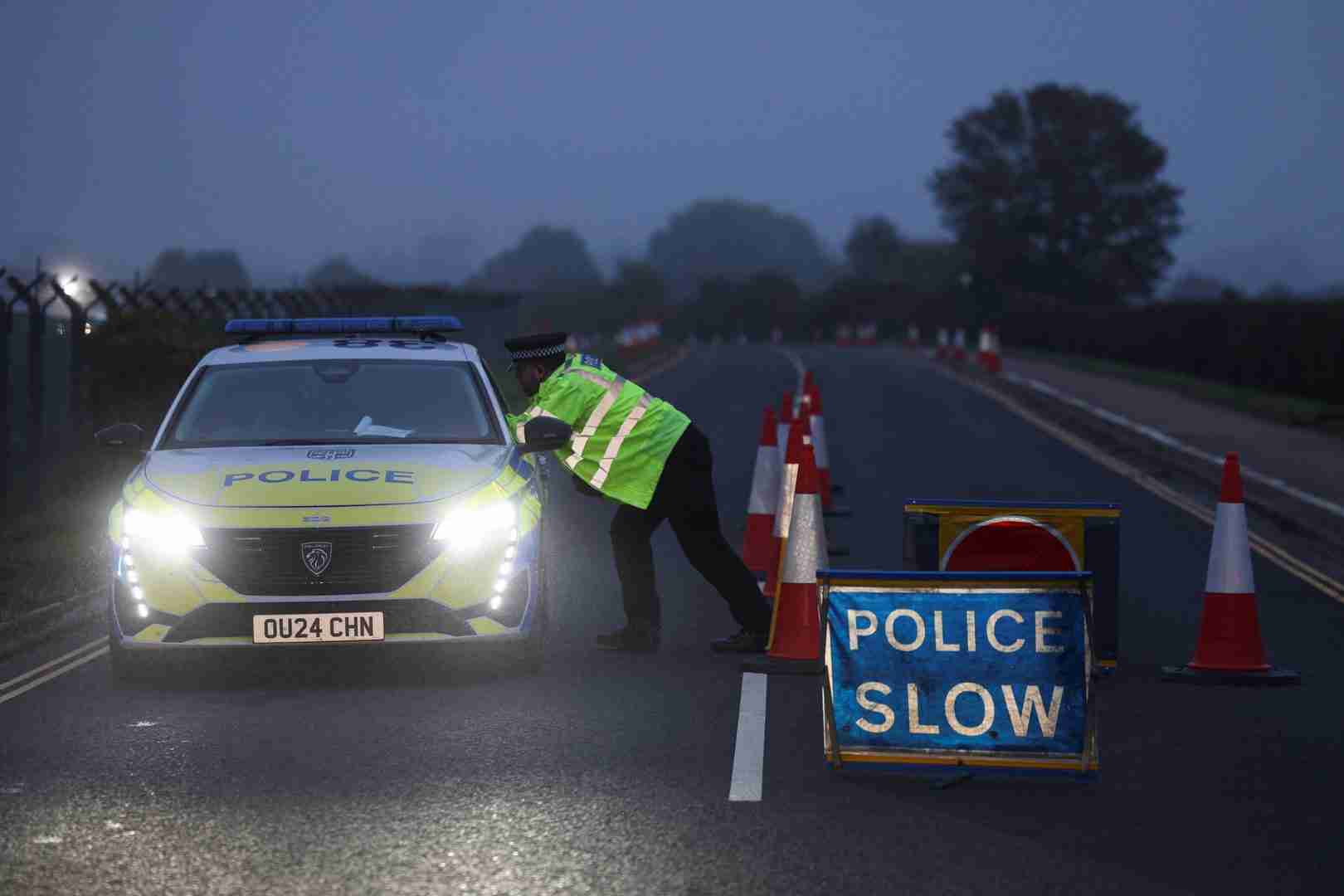
A police officer guards an area as roadblocks remain in place near RAF Fairford airbase, after police declared a major incident at the base and arrested several men on suspicion of offences under the Explosives Act, who have since been released on bail, in Fairford, Gloucestershire, Britain, September 29, 2026. REUTERS/Toby Shepheard

International News via Reuters:

Britain’s counter-terrorism police said on Tuesday that no improvised explosive devices had been found as part of an investigation into a suspected plot targeting a British airbase used by US forces to strike Iran.

Police said a quantity of petrol had been recovered during searches of vehicles at the scene. They added that searches of properties in London had been carried out, and investigative scenes around RAF Fairford were being scaled back and were expected to close completely by Wednesday.

Five men arrested on Sunday remain under investigation after being released on bail, with police saying the decision to release them was an investigative one.

“I understand why this development will have come as a surprise to many, but I’d like to reiterate that it was investigative decision, and one which is grounded in experience and careful consideration of policing powers,” Laurence Taylor, head of national counter terrorism policing, said.

(Reporting by Sam Tabahriti; editing by William James)

Restoration work underway at Sessions House

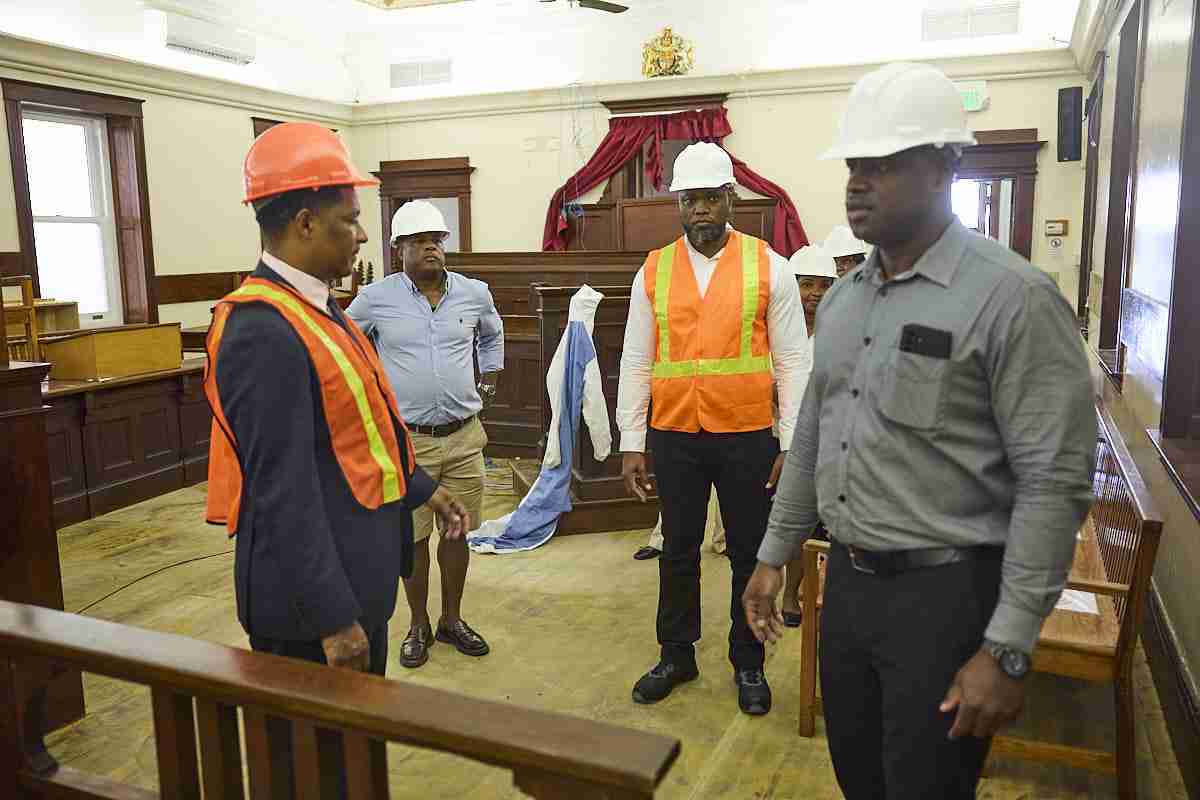
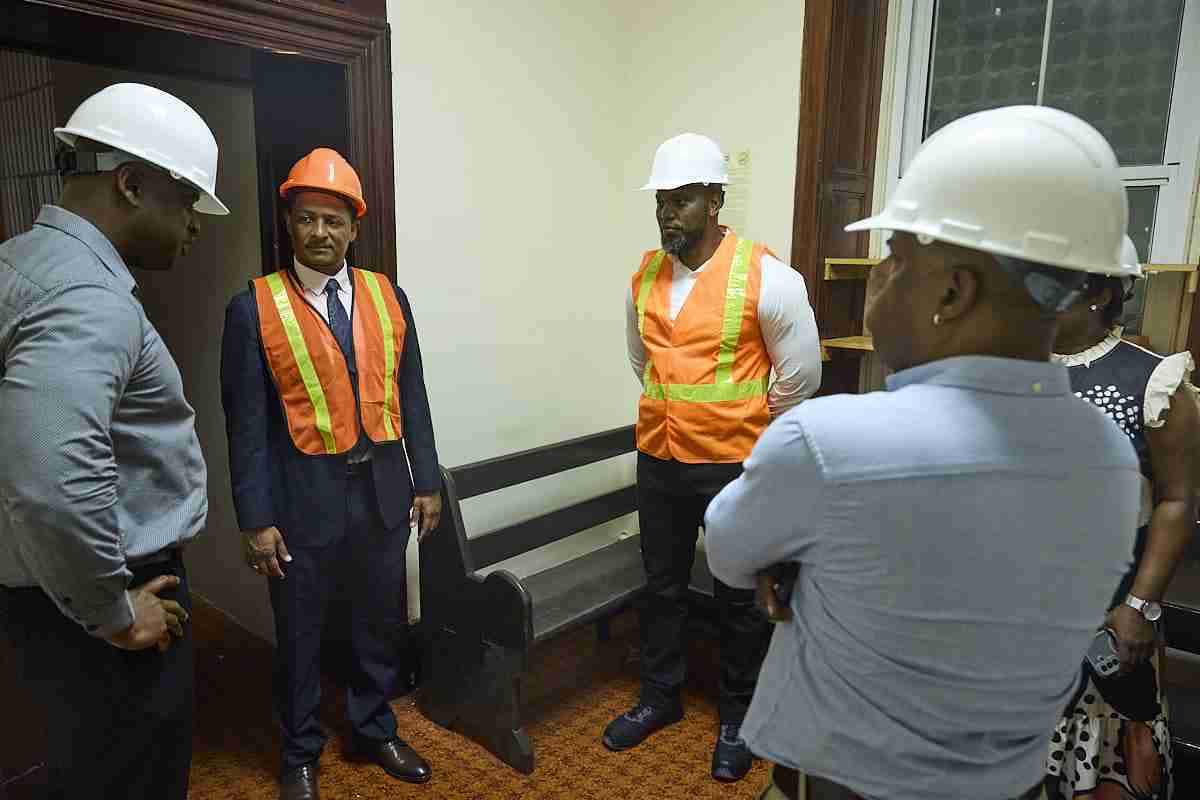
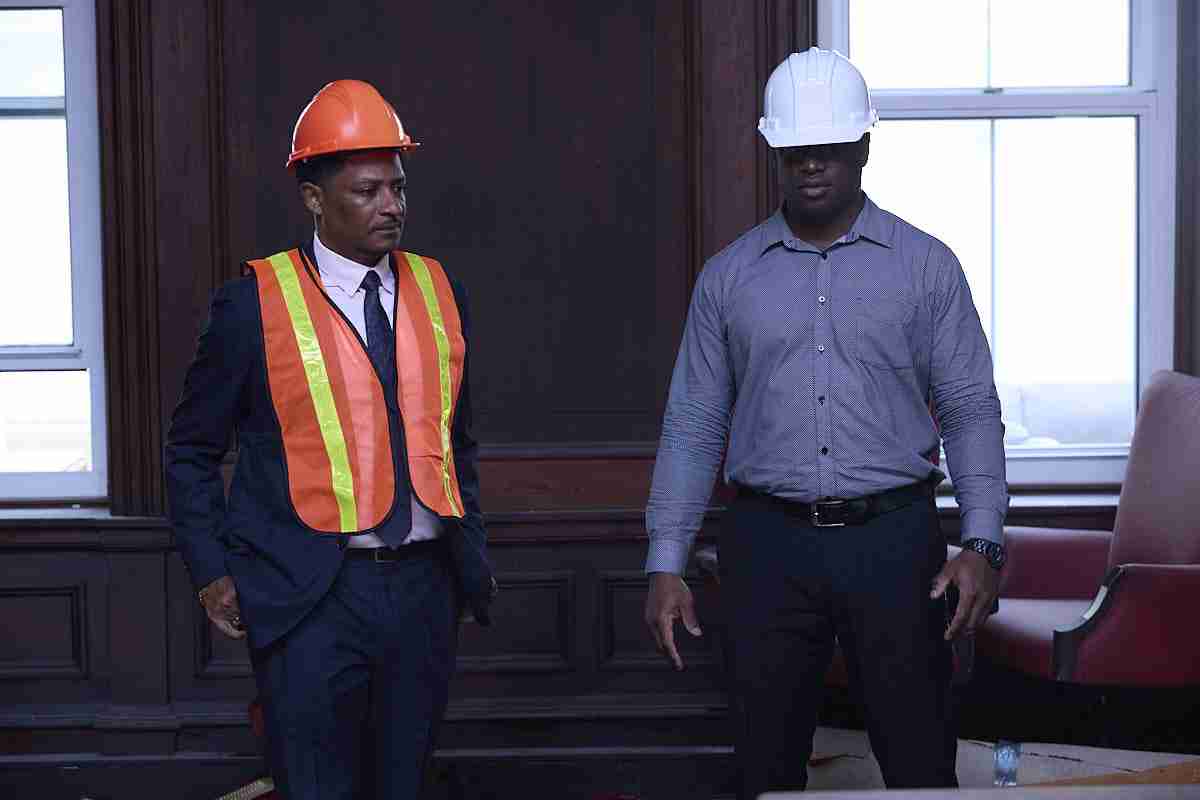
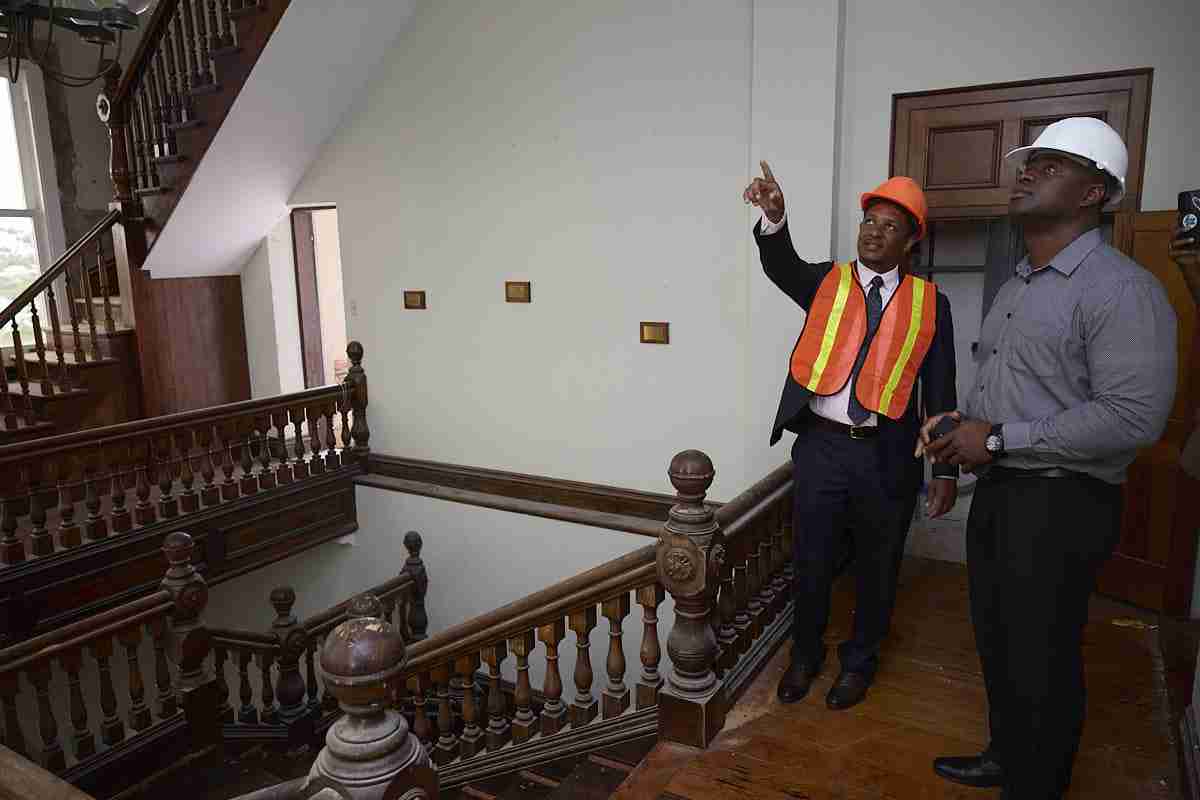
The Ministry of Public Works and Environment is moving forward with the restoration of Sessions House. Early work is underway to assess the building and prepare for its full restoration.

Furniture and equipment have been removed, and further early work will allow the project team to examine the building more thoroughly and determine the scope of repairs needed.

The Hon. Jaché Adams, JP, MP, Minister of Public Works and Environment, said: “Sessions House is one of Bermuda’s most recognisable buildings. We are taking the time to understand its condition so that we can restore it properly and ensure it continues to serve Bermuda for generations to come.”

A project team has been appointed, and the public can expect to see more activity at Sessions House in the coming months, including further preparatory work and attention to the roof. The House Chamber and clock tower are among the significant features being considered as plans develop.

The full restoration is expected to take several years. As the work progresses, the Ministry will look at opportunities to bring completed areas back into use while restoration continues elsewhere in the building.

The project will preserve the character of Sessions House while improving accessibility and facilities to support its future parliamentary use.

Minister Adams added: “I am pleased that we have reached this stage. With the project team in place and work underway, we are now in a position to make steady progress. I look forward to seeing Sessions House restored and brought back into use for the people of Bermuda.”