Wednesday, October 21, 2026
Home Blog Page 27

Bonds post worst month in years; stocks decline for September and oil gains

For the quarter, 10-year US yields were showing their biggest rise since 2009, while France’s 10-year bond yield had its biggest jump in nearly four decades

Traders work on the floor at the New York Stock Exchange (NYSE) in New York City, U.S., September 25, 2026. REUTERS/Brendan McDermid

International News via Reuters:

Global bonds closed out their worst month in years on Wednesday, with the benchmark 10-year US Treasury yield rising on the day and posting its biggest monthly increase since 2022, while the S&P 500 registered a decline for September and European shares suffered their first monthly fall in six.

For the quarter, 10-year US yields were showing their biggest rise since 2009, while France’s 10-year bond yield had its biggest jump in nearly four decades. France’s 10-year yield had its biggest monthly rise in almost four years. 

Bond yields have surged this month as prices tumbled, with soaring energy costs fueling inflation fears and the AI boom boosting economic growth, leaving investors to position for a period where interest rates stay higher for longer. Higher rates are seen as a negative for stocks because they increase borrowing costs for businesses and consumers.

Among the latest data on inflation was a report Wednesday that showed US inflation increased less than expected in August and price pressures were more moderate in the prior month than previously reported.

Stocks rose and two-year US bond yields initially fell on the news as expectations that the Federal Reserve will hike interest rates next month decreased. Separately, the final reading of second-quarter GDP data was revised higher to a 2.2% annualized rate, thanks to solid consumer spending and investments helping to fuel the buildout of AI infrastructure.

“The market was able to breathe a collective sigh of relief today,” said Adam Sarhan, chief executive of 50 Park Investments in New York. “It takes pressure off the Fed to raise rates.”

The Fed increased interest rates this month for the first time since 2023 in an effort to combat inflation. The market was last pricing in a roughly 63% chance that the Fed will keep rates steady next month compared with a 55% chance before the US inflation release, according to the latest data from LSEG.

Elsewhere, inflation rose sharply in five German states in September, while France’s harmonised inflation rate was 3.4%, up from 2.6% in August, and Italy’s jumped to 4.1% from August’s 3.2%.

The spread between French and German 10-year borrowing costs was last at its highest since 2012.

On the last trading day of the month, 10-year US yields were up 53 basis points for their biggest monthly climb since September 2022. Yields on 30-year bonds have risen about 39 basis points this month for their largest increase since December 2024.

Sovereign yields are an anchor for global markets, a reference price for investing in riskier assets.

Stocks were mostly lower on the day. The Dow Jones Industrial Average fell 443.87 points, or 0.86%, to 50,906.05, the S&P 500 fell 19.30 points, or 0.25%, to 7,651.54 and the Nasdaq Composite rose 63.52 points, or 0.24%, to 26,861.06. 

While down on the month, the S&P 500 notched its second straight quarterly gain.

MSCI’s gauge of stocks across the globe fell 1.86 points, or 0.16%, to 1,134.00. The index was down more than 1% for the month.

The pan-European STOXX 600 index fell 0.5% on the day.  It is down 2.5% for the month and 1% for the third quarter.

OIL GAINS FOR DAY, MONTH

Oil prices rose by about $1 a barrel on the day and registered steep monthly gains, on stalled US-Iran peace talks and tightening US fuel markets.

The Brent November futures contract, which expires on Wednesday, settled up 91 cents, or 0.9%, at $103.50 a barrel. The more active December contract was up $1.87, or 1.9%, at $98.03. US West Texas Intermediate crude settled at $90.42, up $1.04, or 1.2%.

Brent recorded a monthly gain of around 14%, its biggest since July, while WTI increased by about 5% on the month.

The US dollar was last flat against major currencies on the day following the US inflation data. But the greenback, which has been strengthening along with rising US Treasury yields and expectations of more Fed rate hikes, gained for the month against some major currencies. 

The euro had a monthly loss against the dollar after two consecutive months of gains.

Spot gold fell 0.64% to $4,154.17 an ounce and was down for the month.

Reporting by Caroline Valetkevitch in New York and Danilo Masoni in Milan; additional reporting by Rae Wee and Rocky Swift; Editing by Thomas Derpinghaus, Christian Schmollinger, Chizu Nomiyama, David Gaffen and Sanjeev Miglani

Historic El Niño-fueled hurricane drought continues

We’re now at the end of September, traditionally the heart of hurricane season, but something has been noticeably missing from the Atlantic this year — hurricanes.

While several tropical storms have formed, not one has managed to reach hurricane strength, making 2026 an exceptionally unusual season so far.

But does the quiet Atlantic mean Bermuda can finally relax?

Qian Dickinson has more in this report.

Viruses run rampant across Havana as water, power fails

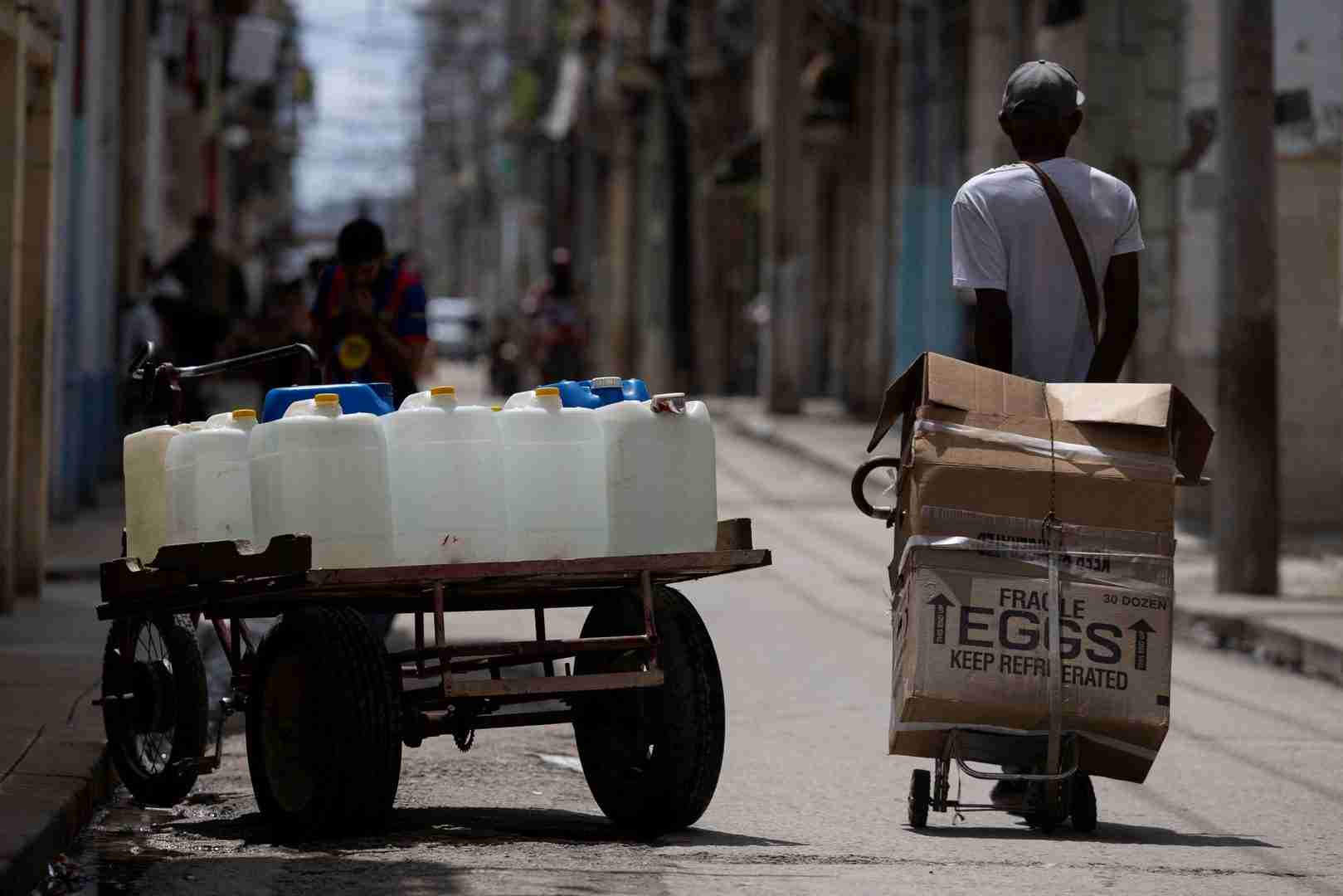
This scenario plays out in neighborhoods across Cuba’s capital of Havana daily, where power outages exacerbated by a US oil blockade have crippled the already crumbling infrastructure that supplies water to the city’s nearly two million people

International News via Reuters:

Cuban housewife Yuamilka Hechavarria was asleep last Tuesday when water rushed into the cistern of the crumbling tenement where she lives in old Havana.

She jumped from bed, scrambling in the darkness of a blackout to top off a bucketful before the tap went dry. It was the first time her building had seen water in two months.

This scenario plays out in neighborhoods across Cuba’s capital of Havana daily, where power outages exacerbated by a US oil blockade have crippled the already crumbling infrastructure that supplies water to the city’s nearly two million people. Many regularly go without running water for days or weeks.

Hygiene is among the first casualties of the situation, explains Hechavarria, a healthcare worker, who for weeks had been forced to buy water from street vendors or scavenge it from nearby broken pipes.

Diarrhea has run rampant throughout her building, she says, as tenants struggle to keep even tiny apartments clean.

“There’s no one in this building who hasn’t gotten sick,” said Hechavarria, adding that she too was recovering from a recent bout of fever and diarrhea.

Officials in both the United States and Cuba have begun to sound the alarm.

Health authorities in Cuba have warned in recent days of the spread of viruses, including a strain of viral hepatitis, as power and water increasingly fail. And a US health alert earlier this month warned travelers and residents of a “significant increase in diarrheal illness across Cuba, associated ​with the continuing degradation of the water and energy infrastructure.”

Since the US imposed a fuel blockade in January, blackouts across Havana now regularly surpass 24 hours, hampering refrigeration and further crippling antiquated water infrastructure of which nearly 90% depends on electric-powered pumps, according to Cuba’s National Institute of Hydraulic Resources.

Around 3.5 million people, or just under half the island’s population, now suffer from water shortages, the United Nations Office for the Coordination of Humanitarian Affairs has said.

NO ESCAPE FROM NEW REALITY

Hechavarria’s home — a poorly ventilated, one-room hovel she shares with her 7-year-old son and husband — would make any doctor cringe, despite her best efforts to maintain order and hygiene.

Thirty families live in similarly cramped quarters in the same small two-story building.

A recent power surge damaged her refrigerator, leaving her without a way to conserve food. She uses it instead to store medicine, beans, and rice.

Plates litter her kitchen counter and sink. She reuses dirty dish water to clean the floor or flush the toilet. She uses soap only when she can afford it.

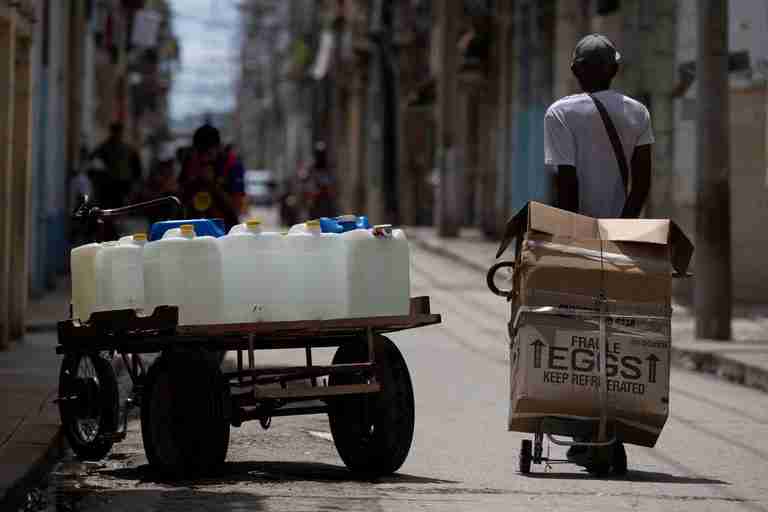
Her husband, meanwhile, is responsible for pushing a homemade handcart fitted with two large barrels at least once weekly to a pipe that juts from the wall of a local school.

If classes are in session and there is power, the school fires an electric pump that allows water to flow from the pipe into an alleyway.

On a recent weekday morning, neighbor Andres Jimenez, a 76-year-old retired metal worker, had arrived at the spot just as the power went out. Only a trickle of water remained.

“If there’s no power, they don’t run the pump,” he said.

Concerns over hygiene would have to wait, he added.

Nurse Maria Elena Parlado, who lives nearby and works in a clinic in the neighborhood, said there is no escaping the new reality.

“Look around us,” she said, pointing to a roadside trash heap beside a small stream of sewage running along the sidewalk.

Even the clinic where she treats local residents for fast-spreading viral outbreaks is without water, she said.

“Between one patient and another I should be washing my hands, but sometimes I can’t.”

Reporting by Ayose Naranjo and Dave Sherwood, additional reporting by Alien Fernandez and Mario Fuentes; Editing by Bill Berkrot

Butterfield’s Halesowen claim derby spoils as Clemons’ Leiston edged in five-goal thriller 

Milan Butterfield helped Halesowen Town claim local bragging rights with a hard-fought 1-0 home victory over Rushall Olympic to headline an eventful weekend for Bermudian footballers in England.

Butterfield anchored the midfield at The Grove, where the Yeltz absorbed late pressure from the visitors to preserve a disciplined clean sheet and bank three vital points.

Over in the Southern League Premier Central, Willie Clemons and Leiston FC fell on the wrong side of an end-to-end battle, losing 3-2 to Real Bedford FC despite pushing relentlessly for a second-half equalizer.

Meanwhile, Bermudian coach Daizhari Tucker guided Worcester Raiders to a solid 1-1 draw against Melksham Town at Oakfield Stadium, showcasing strong defensive organization away from home.

There was disappointment for forward Ayleal Dill, however, as Southwell FC were shut out in a 2-0 defeat on the road at Shirebrook Town.

Bonds suffer bruising September, but stocks remain resilient

Stocks fared better, however, largely unfazed by the recent surge in bond yields, supported by robust earnings growth, strength in the global economy and continued enthusiasm for artificial intelligence

International News via Reuters:

Global bonds inched up on Wednesday but were set for their worst month in years, hit by a mix of deteriorating government finances, a glut of debt issuance and rising inflation as the seven-month-old US-Israeli war on Iran keeps energy costs elevated.

Stocks fared better, however, largely unfazed by the recent surge in bond yields, supported by robust earnings growth, strength in the global economy and continued enthusiasm for artificial intelligence. Equity indexes rose across Asia overnight and were broadly unchanged in Europe, while US futures pointed to a slightly lower open on Wall Street.

The rise in borrowing costs has been front-and-centre for investors, given that sovereign yields are an anchor for global markets, a reference price for investing in riskier stocks and a benchmark for mortgages and corporate borrowing.

Benchmark 10-year US Treasury yields held just below their highest level since June 2007 at 5.2363% in the European hours, down 1.9 basis points (bps). They were set for a rise of more than 47 bps this month, the largest move in about two years. Bond yields move inversely to prices. 

The 2-year Treasury yield dipped 1.0 bps to 4.8787% after New York Federal Reserve President John Williams pushed back against expectations for earlier policy tightening, though it remained more than 50 bps higher for the month.

“We have reached yield levels that are becoming genuinely significant,” said Carlo Franchini, head of institutional clients at Milan-based Banca Ifigest. “The temptation to move out of equities could become an issue.”    

However, Franchini said he was not yet taking profits on stocks, betting that equities could remain supported through October if easing tensions around the Strait of Hormuz helped bring down oil prices and relieve some of the pressure on bond yields. “In my view it is better to stay long,” he said.

With bond markets searching for fresh direction, investors were awaiting the Fed’s preferred inflation measure, the PCE index, for August later in the day. Economists polled by Reuters expect annual inflation of 3.7%, while money markets now see roughly even odds of an October rate hike by the Fed, down sharply from more than 70% on Tuesday.

Yields on 10-year German and French government bonds hit 17-year and 18-year highs this week and were set for rises of about 26 bps and 63 bps, respectively, for the month. [GVD/EUR]

German inflation figures for September were also due, while data in Europe showed French consumer prices rising more than expected in September and Italy’s annual EU-harmonised inflation rate accelerating to 4.1% amid soaring energy costs. .

In Japan, the 10-year government bond yield hovered near multi-decade highs, up 11 bps this month. [JP/]

STOCKS DEFY THE YIELD SURGE

Despite the sharp rise in sovereign borrowing costs this quarter, stock markets have remained broadly resilient.

Europe’s pan-regional STOXX 600 was down 0.07% at 1111 GMT, coming off opening highs and setting the index for a monthly loss of around 2%. It is down 0.6% for the quarter.

MSCI’s broadest index of Asia-Pacific shares excluding Japan rose 0.16% and was down  1.3% this month. Japan’s Nikkei jumped 1.9%, ending the month up 0.7%, while South Korea’s Kospi scored a monthly gain of 0.3%.

Nasdaq futures edged 0.14% lower and S&P 500 futures were down 0.04%. The S&P 500 was broadly unchanged this month, and up 2.3% so far in the quarter.

“What was surprising to us was the sanguine reaction of the equity market where the growth in nominal GDP was driving earnings optimism,” said Mohammed Apabhai, Citi’s head of Asia-Pacific trading strategy, in a note, referring to the recent rise in bond yields.

“US equity markets are reacting to the rise in bond yields but only outside of the tech space.”

In Chinese shares, the blue-chip CSI 300 index rose 0.3%, struggling to lift off a one-year low made earlier in the week. The gauge is down 12.5% this quarter, the largest since the height of COVID-19 lockdowns.

DOLLAR GETS A LIFT

In currency markets, the dollar was on track for a monthly gain of almost 2% against a basket of currencies, helped by the rise in yields, though it fell 0.19% on the day.

That left the euro trading just above a 16-month low at $1.1357, up 0.15% on the day. It was headed for a monthly loss of 2.2% as the currency struggled in the face of a global energy shock and growing political risk in Europe.

Sterling was up 0.44% to $1.3288 after data showed the British economy grew faster than previously estimated in the second quarter, bolstering expectations of a Bank of England rate hike by year-end. It remained down 1.9% for the month.

The yen added 0.14% to 157.05 per dollar and was eyeing a monthly gain of around 1.7%, with investors wary of pushing the currency lower due to the threat of a joint intervention by Tokyo and Washington.

In commodities, US crude was up 1.04% at $90.31 a barrel and Brent rose 0.85% to $103.47, both set for monthly gains on concerns about prolonged supply disruptions due to the ongoing Middle East war. [O/R]

Spot gold added 0.08% to $4,184.3 an ounce, down almost 6% this month. Bitcoin was up 0.4% at $83,915, set for an over 6% monthly gain. [GOL/]  

Reporting by Danilo Masoni, Rae Wee and Rocky Swift; Editing by Thomas Derpinghaus, Christian Schmollinger and Chizu Nomiyama

Joy mixed with fear as US forces quit Iraq leaving potential security vacuum

The withdrawal of the final troops, mainly from an airbase in Erbil in the semi-autonomous Kurdish region, ended the biggest US war of the century

International News via Reuters:

Iraqis celebrated the departure of US forces after more than two decades of war on Wednesday, though many were worried that a security vacuum could increase the power of Iran-backed militia or provide an opening for the return of Islamic State.

The withdrawal of the final troops, mainly from an airbase in Erbil in the semi-autonomous Kurdish region, ended the biggest US war of the century, which brought widespread devastation and chaos from which Iraq has yet to fully emerge.

Tehran and its allies hailed the withdrawal as a victory in their campaign to drive US forces from the Middle East.

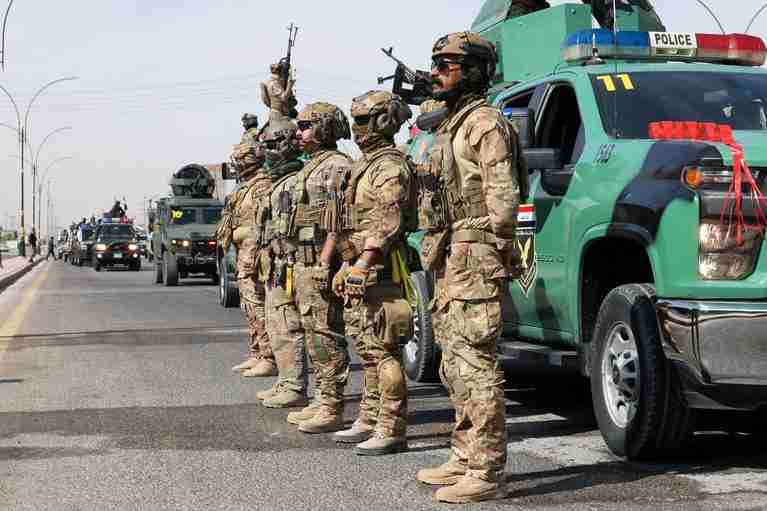
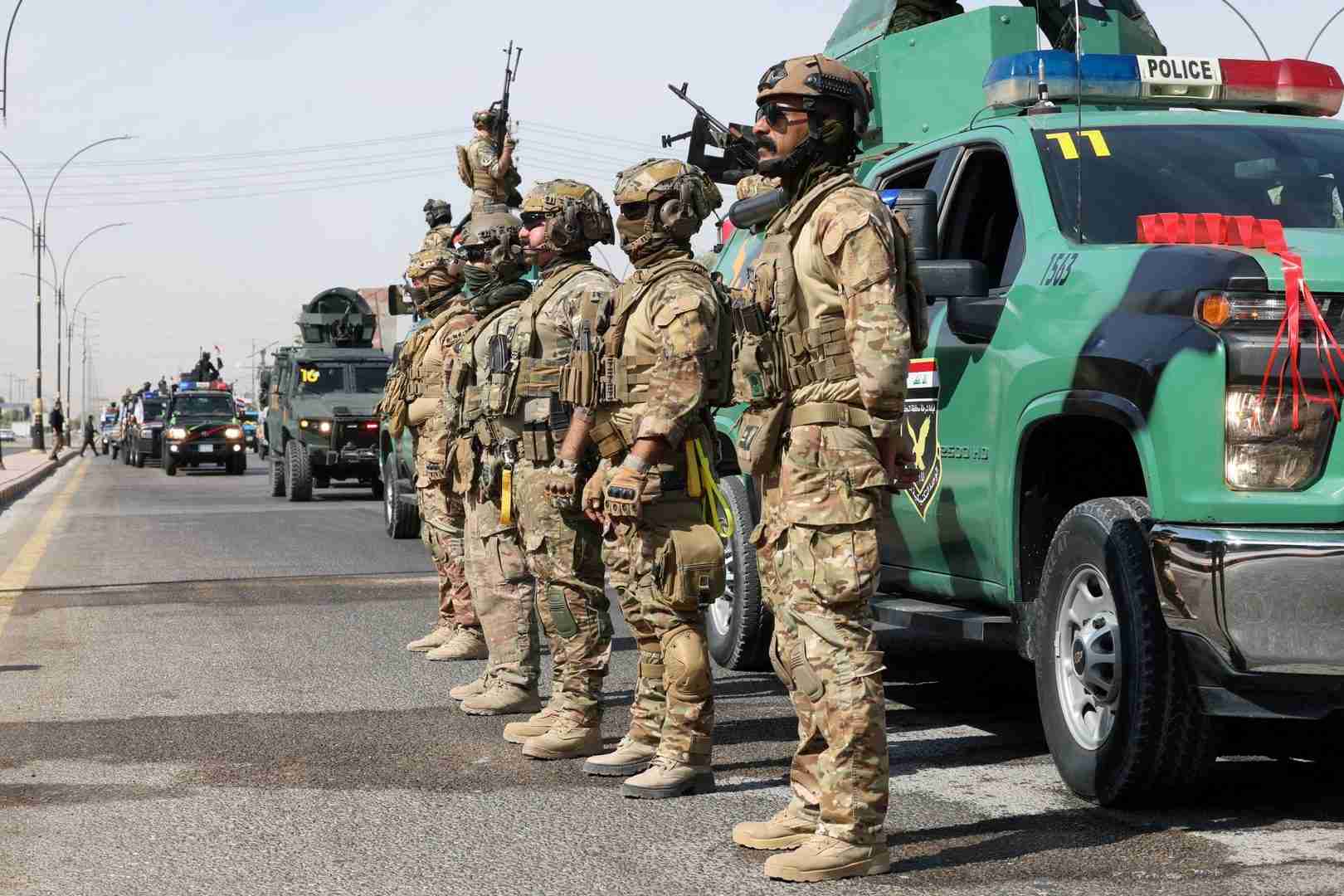
Iraqi troops paraded in vehicles through the streets of Baghdad and the Shi’ite holy city of Najaf to mark the pullout.

The withdrawal “fills our hearts with joy,” said Baghdad resident Ahmed Salah, who said he felt reborn at the age of 70. But he also said it was now time for powerful militia groups to surrender their weapons, “and let the government be the one responsible to protect me and you on the ground, sky and water.”

The pullout was agreed in 2024 under President Joe Biden and carried out by Donald Trump’s administration even as it wages war against Iran next door.

US forces invaded to topple Iraqi dictator Saddam Hussein in 2003, triggering years of upheaval and chaos. The Americans initially left at the end of 2011 but came back less than three years later to assist Iraqi forces after Islamic State fighters seized a third of Iraq and imposed violent rule.

More than 4,500 US troops died in Iraq, around twice as many as in the parallel war in Afghanistan. The Iraq Body Count project says more than 200,000 Iraqi civilians were killed.

The Pentagon said the United States and its coalition partners formally concluded “Operation Inherent Resolve” and Washington would continue to provide targeted training and intelligence support to Iraqi partners.

The Iraqis are expected to lead the effort to secure the country, an ally of both Washington and Tehran, and keep the remnants of Islamic State suppressed.

“The end of the international coalition’s mission does not mean the end of our battle against terrorism, but rather Iraq’s transition to a phase in which it assumes full responsibility for its security and stability,” said Iraqi Prime Minister Ali Faleh al-Zaidi in a statement.

‘SECURITY VACUUMS CAN BE EXTREMELY DANGEROUS’

While the departure of US forces is broadly popular among Iraqis, some worry that security forces trained and funded by the United States still can’t protect the country.

“The lesson from the past two decades is that security vacuums can be extremely dangerous,” said Jassim al-Bahadli, an Iraqi analyst who advises the security forces.

Adil Salman, 45, a high school English teacher, said Iraqis “should not rush to celebrate” the withdrawal.

“Militias still operate outside the state’s control and (Islamic State) still has not disappeared,” he said. “I’m concerned that the US departure could lead to a new period of instability. In the end, people will judge this decision by one thing: whether security remains stable in the coming years.”

With US forces present alongside armed groups allied to Iran, Iraq has been caught up in this year’s war.

Of the 18 US service members listed as killed since Trump launched “Operation Epic Fury” alongside Israel in February, seven died in Iraq. The last was an army sergeant who died during the controlled detonation of a drone at a base near Erbil in July.

IRAN, ALLIES ARE THE WINNERS

Iran, which has entrenched its influence in Iraq through allied armed groups since Saddam’s fall, casts the US pullout as a triumph for its “axis of resistance” of allied armed groups across the region. 

The withdrawal raises “the possibility that Iran’s proxies will feel increasingly empowered in the absence of a Western military presence. These groups may attempt to expand their role in shaping state policies and consolidating their presence within key institutions,” said Baghdad-based political analyst Ahmed Younis.

Some Iraqi security officials, both in the federal government and the semi-autonomous northern Kurdish region, say the US pullout also risks giving new life to Islamic State fighters, who, despite the defeat of their self-proclaimed caliphate nearly a decade ago, retain a sleeper cell network.

The last time the US withdrew, the Iraqi army proved no match for Islamic State: soldiers took off their uniforms and fled when the group captured Mosul, Iraq’s second-largest city, in 2014.

Since Islamic State’s self-proclaimed caliphate was defeated in 2017, US troops have been providing Iraqi security forces with critical intelligence on the group’s movements, aerial surveillance and reconnaissance.

“The most important question now is whether Iraq’s security institutions have prepared a viable Plan B for the post-coalition phase,” said retired Iraqi Army General Mohammed al-Jubouri, who led a brigade in the war against Islamic State.

“One of the worst-case scenarios would be Islamic State obtaining armed drones or improvised explosive drones at a time when Iraq still lacks sufficient air defense capabilities to counter such threats effectively.”

Additional reporting by Maher Nazeh; Writing by Michael GeorgyEditing by Peter Graff

Battling final round earns golfer Mosquera top-15 finish in New Jersey 

Bermudian golfer Sienna Mosquera produced a determined final-round display to secure a tie for 13th place at the Autumn Harvest tournament at The Architects Golf Club.

Competing as an individual for Lehigh University, the sophomore carded a resilient three-over-par 74 to climb inside the top 15 on the final leaderboard.

Mosquera maintained an aggressive mindset throughout Tuesday’s concluding 18 holes in Lopatcong, New Jersey, rolling in three birdies and steadying her card with 11 pars.

Despite giving strokes back with two bogeys and a pair of double-bogeys, the Bermudian held her nerve down the stretch to close out an encouraging 54-hole campaign against a competitive collegiate field.

France, Britain in talks to end ‘one in, one out’ migrant deal

France’s interior ministry had no immediate comment on why France was seeking to wind down the agreement. Britain’s interior ministry did not respond to a request for comment

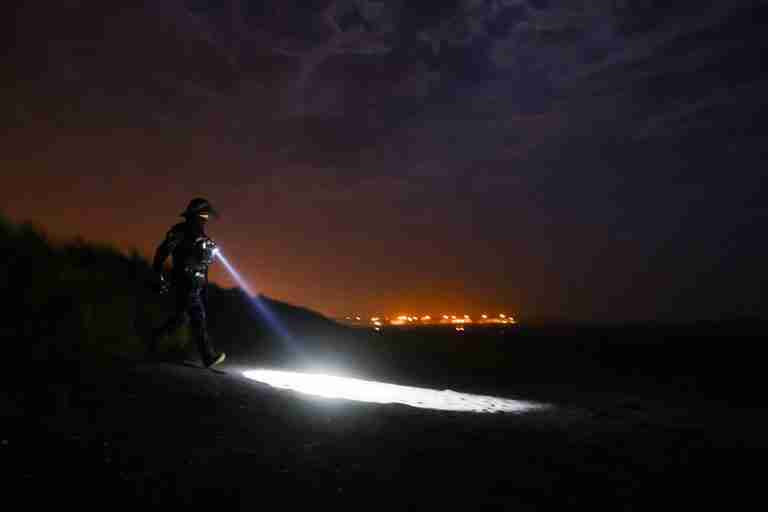
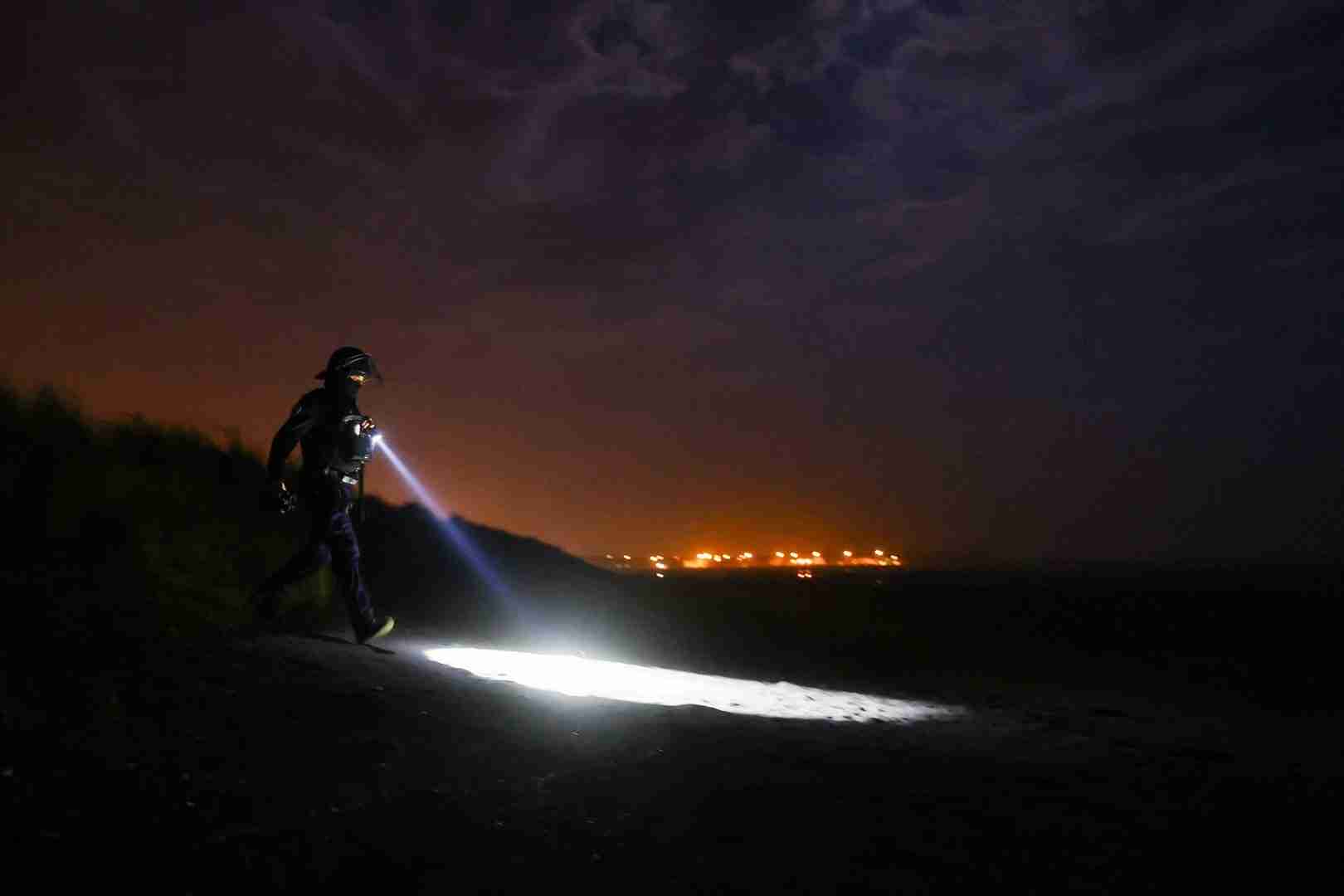
Police officers patrol on the beach in Petit-Fort-Philippe, Gravelines, near Calais, northern France, an area frequently used by migrants attempting to cross the English Channel to reach Britain, France, September 29, 2026. REUTERS/Hannah McKay

International News via Reuters:

France and Britain are in talks to end their “one in, one out” migration deal, a French interior ministry source said on Wednesday.

“We are discussing the terms of withdrawal from the agreement with the British,” the source said.

Under the agreement, announced last year in a bid to reduce small-boat crossings of the English Channel, Britain deported undocumented people arriving in small boats to France, in exchange for accepting an equal number of legitimate asylum seekers with British family connections.

France’s interior ministry had no immediate comment on why France was seeking to wind down the agreement. Britain’s interior ministry did not respond to a request for comment.

Under the terms of the deal, there was a target timeframe of no more than three months from someone’s arrival in Britain to transfer to France.

Britain had to return an individual within 14 days of their arrival, and France did not have to accept unaccompanied minors or people who pose a pre-existing security threat, the treaty said.

Reporting by Makini Brice in Paris; Writing by Mateusz Rabiega in Gdansk; Editing by Alison Williams

Rodrigues and Vieira guide Eckerd to fourth in Florida

Bermudian sailors PJ Rodrigues and Jordan Vieira helped Eckerd College secure a fourth-place finish after shifting, unstable winds disrupted the SAISA Open Top 6 Invite at the Doyle Sailing Center in Florida.

Challenging conditions dictated the regatta from the outset in St Petersburg. On day one, oscillating four-to-six-knot breezes forced organisers to call an early lunch break following several aborted attempts to get racing under way.

A steadier southerly wind arrived in the afternoon, allowing eight races to be completed before the breeze faded, leaving Eckerd fourth overall on 239 points.

Rodrigues delivered a composed showing in the A Division alongside Will Alvarado, placing fifth with 50 points after registering seven top-10 finishes. Vieira was equally solid in the B Division, partnering Avery Guck to claim sixth with 53 points, aided by five top-10 efforts.

In the C Division, Wesley Kaser and Lily Tracey handled races one through six before Nic Dowling and Oaklee Burnham took over for the final two contests, combining for 136 points.

Hopes of a final-day fightback were dashed on Sunday when persistent wind holds ended with officials formally abandoning competition at noon.

Dominican Republic beat Trinidad & Tobago with Bermudian Hayward on touchline

Bermudian assistant referee Clinton Hayward was in the thick of the action as the Dominican Republic came from behind to defeat Trinidad & Tobago 2-1 in their Concacaf Nations League Group A clash.

FIFA-listed official Hayward formed part of the officiating team at the Hasely Crawford Stadium in Port of Spain for the dramatic encounter.

The hosts drew first blood on 37 minutes when midfielder Daniel Phillips sent the home support into raptures, rifling a sensational right-footed strike into the net from the edge of the box.

However, Trinidad & Tobago’s advantage lasted just five minutes. Heinz Mörschel unleashed a swerving long-range effort in the 42nd minute to level the scores before the interval.

Los Quisqueyanos completed the turnaround five minutes after the restart. Former Real Madrid striker Mariano Díaz found space inside the area and calmly slotted home a 50th-minute winner, leaving the visitors to withstand late pressure and secure all three points.

Final phase of Swing Bridge detour route underway

The Ministry of Public Works and Environment advises motorists and residents that the final phase of roadworks for the Swing Bridge detour route is underway, marking another important step towards construction of the new Swing Bridge.

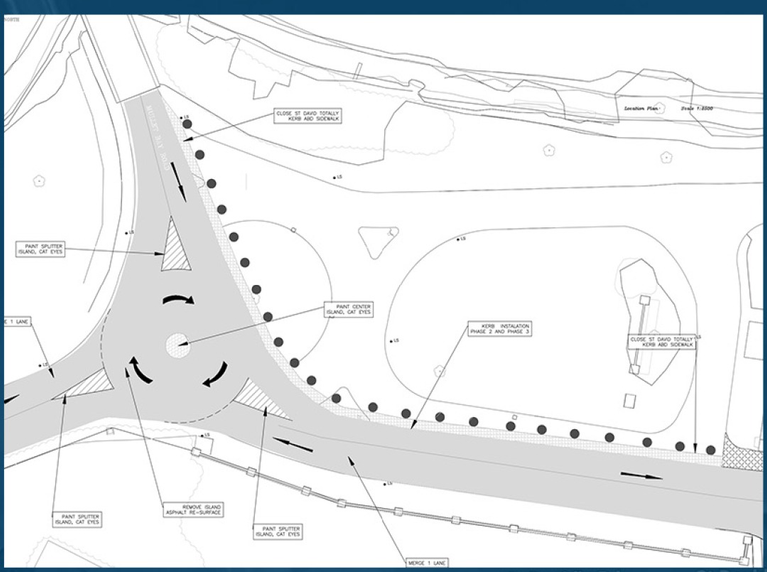
Work has begun on the temporary mini-roundabout at the existing Swing Bridge. Paving, road markings and new signage must be completed before the new traffic arrangement can safely open.

Due to delays affecting paving works, the change is now expected to take effect in early October, weather permitting. Until then, the current one-way oval traffic system will remain in place. Motorists should continue following the existing route and posted signage until the Ministry confirms the changeover date.

Once the mini-roundabout opens, the current one-way oval will be removed, and the longer-term detour route will take effect. St. David’s Road will be closed to public traffic from both the Swing Bridge and Marginal Wharf sides. Access to Stocks Harbour will continue until bridge construction begins. St. David’s Road will then be used by contractors working on the bridge. All vehicles travelling to and from St. David’s, including cars, buses and tractor-trailers, will instead use Southside Road, Kindley Field Park and Gate Number One. At the new mini-roundabout, motorists will be able to continue towards St. George’s or travel around the roundabout to access St. David’s through Gate Number One and Kindley Field Park.

When the new traffic arrangement begins, the St. David’s bus stop will move to the new bus turnaround inside Kindley Field Park. A bus shelter is already available within the park, with an additional shelter canopy also planned. The Ministry is also exploring additional lighting at the bus stop and along Southside Road to improve visibility.

The detour route, including the mini-roundabout, bus turnaround and new roundabout at Waller’s Point Road, is expected to remain in place throughout construction of the new Swing Bridge, currently estimated at approximately three years.

Minister of Public Works and Environment, the Hon. Jaché Adams, JP, MP, said: “We recognise that this will be a significant change, particularly for residents and commuters who travel these roads every day. There will naturally be an adjustment period, but I want to reassure the public that access to both St. David’s and St. George’s will be maintained throughout the bridge works.

“These changes are necessary to allow construction of the new Swing Bridge to move forward safely, and we have worked to put arrangements in place that keep traffic moving while that work takes place. I encourage motorists to familiarise themselves with the new route, follow the signage and take a little extra care as everyone adjusts.”

The Ministry will confirm the changeover date before the new traffic arrangement takes effect and will provide maps, traffic advisories and video updates to help motorists prepare.

For the latest project and traffic information, follow the Ministry’s official communication channels and @swingbridgebda on Instagram.

‘The way you charge batteries can prevent home fires’

Fire Safety Awareness Week starts on Monday

The Bermuda Fire & Rescue Service is teaming up with the US National Fire Protection Association® (NFPA®) to support Fire Safety Awareness Week, which takes place from October 5-9, 2026.

This year’s FSAW theme, “Charge into Fire Safety: Safe Charging Is a Superpower,” focuses on the simple steps people can take to recharge safely. Safe charging means making smart choices every time you plug in.

Chief Fire Officer (CFO), Dana Lovell, said: “The way you charge your lithium-ion battery devices can make a difference in helping prevent home fires. It comes down to using simple habits each time you plug in.

“Lithium-ion batteries are now part of everyday life, so we want residents to understand the warning signs and develop safe charging habits that can reduce the risk of a fire.

As part of Fire Safety Awareness Week, the Bermuda Fire & Rescue Service will host a series of activities designed to increase public awareness, provide practical fire safety information and give residents opportunities to engage directly with firefighters.

The week will begin with an opening ceremony at 10:00 a.m. on Monday, October 5. From Monday through Thursday, pre-scheduled station tours and demonstrations will also be held for schools between 10:00 a.m. and 2:00 p.m. at the Hamilton Fire Station and Clearwater Fire Station, allowing students to learn more about fire safety and the work of the BFRS.

On Wednesday, 7 October, the BFRS will host free giveaways outside the Hamilton Fire Station from 8:00 a.m. as part of Welch’s Wednesday.

Members of the public are also encouraged to attend an electric vehicle Safety Panel Talk at 6:00 p.m. on Thursday, October 8, at the Hamilton Fire Station Recreational Hall. Spaces are limited. Those interested in attending should email bfrsinfo@gov.bm.

The session will provide an opportunity to learn more about electric vehicle safety, the risks associated with lithium-ion batteries and the precautions that can be taken to help prevent fires.

Residents will also hear directly from those involved in fire safety and ask questions about an area that is becoming increasingly relevant as the use of electric vehicles and battery-powered devices grows.

In addition to the week’s activities, the BFRS is sharing the following useful tips to help residents charge their devices safely and recognise potential warning signs:

• Use the cord and charger that came with your device or one approved by the manufacturer. Using the wrong charger can damage the battery and increase the risk of fire.

• Charge devices on a table, desk, or other hard, flat surface. Do not charge them on beds, couches, or under pillows. Devices and chargers produce heat during normal charging. Soft surfaces can trap heat and block airflow, which can cause the battery to overheat.

• Stop using your device if it feels very hot, starts to swell, is smoking, or has a strange smell. These are warning signs that the battery may be damaged or failing.

• Unplug your device when it is fully charged. Do not leave it plugged in longer than needed. Leaving a device plugged in too long can increase heat and stress on the battery.

• Charge larger items like e-bikes, scooters, and power tools outside and away from exits. These batteries are larger and store more energy. If they fail, fires can grow quickly and spread.

• When on a plane, keep your device where you can see it while charging. Do not charge devices in overhead compartments. Do not charge e-cigarettes or vapes on a plane. If a battery overheats or fails, it is important for the flight crew to respond quickly.

CFO Lovell added: “Fire Safety Awareness Week gives us an important opportunity to remind the community that simple precautions can make a significant difference.

“We encourage residents to take part in the week’s activities, ask questions and use the information being shared to make their homes and families safer.”

For more information about FSAW programs in Bermuda contact the Bermuda Fire & Rescue Service at 292-5555 or bfrsinfo@gov.bm. To learn more about lithium-ion battery safety, visit fpw.org.