Nahki Wells and Luton Town kept their Premier League promotion dreams firmly alive this afternoon with a clinical 2-0 victory over Rotherham United at the AESSEAL New York Stadium.
The Hatters travelled north knowing only three points would suffice in their pursuit of a play-off berth. While the victory provides a significant boost, Luton remain seventh, agonisingly poised just three points outside the crucial promotion spots. The performance, however, will give the Kenilworth Road faithful plenty of heart as the season reaches its dramatic crescendo.
The most significant celebrations, however, were reserved for Reggie Lambe and Needham Market FC. In the Suffolk Premier Cup Final against Felixstowe and Walton United, the Bermudian international demonstrated his trademark composure.
Awarded a penalty in the 38th minute, Lambe smartly sent the goalkeeper the wrong way, clipping the ball home off the post to break the deadlock. Needham doubled their lead before the interval and added a third in the second half to wrap up a comprehensive 3-0 win. With Lambe’s strike proving to be the match-winner, he led his teammates to the podium to be crowned champions, adding yet another trophy to his distinguished career.
The Earl Cameron Theatre was transformed into a sea of sporting nostalgia last evening as hundreds flocked to City Hall for the local premiere of Transforming the Beautiful Game: The Clyde Best Story.
In what has been described as the island’s most eagerly awaited cinematic event in years, the feature-length documentary finally arrived on Bermudian soil following its standing-ovation debut in the United Kingdom last month.
The film traces the remarkable ascent of Clyde Best, the Somerset-born trailblazer who arrived at West Ham United as a teenager in 1968. At a time when the English game was often a hostile environment for players of colour, Best’s dignified presence and clinical finishing served as the blueprint for a “quiet revolution” that dismantled racial barriers across the Football League.
For the local audience, many of whom grew up listening to Best’s exploits on the radio, the screening offered an intimate look at the challenges their hometown hero overcame to score 58 goals in the famous claret and blue.
Featuring rare archival footage and poignant interviews with contemporaries, the documentary serves as both a historical record and a celebration of one of Bermuda’s most influential global ambassadors.
For those who missed the opening night, the film will air for a second time tonight at the Earl Cameron Theatre, before moving to the Ruth Seaton James Centre for the Performing Arts on Thursday, April 23rd.
The Transport Ministry advised the online ridesharing application process will open on 30 April and close on 14 May
Those interested in applying to join the Government’s ridesharing program are asked to check their eligibility ahead of the application period opening at the end of the month. The Transport Ministry has advised the online ridesharing application process will open on April 30th, closing on May 14th.
Up to 150 ridesharing permits will be issued through a randomised selection process. A spokesperson said applicants are not guaranteed selection. To be eligible for a ridesharing license, applicants must hold a public service vehicle license.
They add that license holders of heavy truck or community service vehicles, alone, do not qualify.
A Ministy spokesperson said the introduction of ridesharing is meant to ‘complement the existing taxi industry’ by offering alternative services during peak demand.
To register to become PSVL holder, you can apply through the TCD online portal at transportcontrol.gov.bm.
Minister of Tourism & Transport, Culture & Sport, Owen Darrell, said: “Ridesharing forms an important part of our broader efforts to modernise Bermuda’s transport network and improve service availability, particularly during periods of high demand.
“We encourage those interested to ensure they meet the eligibility requirements and are prepared to apply within the designated timeframe.”
Individuals who do not currently hold this licence are encouraged to submit an application as soon as possible via the Transport Control Department’s online portal using the shortcut link:
Criminal threats such as ransomware remain the most common risk facing organisations, Horne told the government’s annual CYBERUK conference in Glasgow, according to a copy of his speech
International News via Reuters:
Britain should brace for a rise in cyberattacks linked to hostile states, the head of the country’s cybersecurity agency said on Wednesday, as the government urged tech firms to help build defences powered by artificial intelligence.
Richard Horne, chief executive of the National Cyber Security Centre, said the agency continues to handle about four nationally significant cyber incidents a week on average and that the highest-impact attacks are increasingly tied to governments rather than criminal gangs alone. The NCSC is part of the UK’s intelligence agency GCHQ.
Criminal threats such as ransomware remain the most common risk facing organisations, Horne told the government’s annual CYBERUK conference in Glasgow, according to a copy of his speech.
But he said the majority of the most serious incidents now originate “directly or indirectly” from nation states, including China, Iran and Russia. He said such activity was being directed at Britain and its European partners.
Horne also warned that the UK is living through “the most seismic geopolitical shift in modern history.”
Britain’s domestic spy agency MI5 said last year that authorities had disrupted more than 20 Iran-linked plots since 2022, some of which targeted individuals living in Britain.
“Were we to be in, or near, a conflict situation, the UK would likely face hacktivist attacks at scale,” Horne warned, adding that such campaigns could cause disruption comparable to major ransomware attacks, but without the option of paying to restore systems.
Mathieu Cousin, a cyber risk and threat intelligence strategist at insurers AXA XL, said last month that there was also likely to be a rise in cyberactivity linked to the U.S.-Israeli war on Iran.
“When geopolitical tensions rise, cyber activity follows. In this conflict, Iranian state-aligned and affiliated groups are using cyber operations as another way to respond,” he said.
Horne said on Wednesday that advances in artificial intelligence were expected to accelerate cyberattacks by enabling faster identification of vulnerabilities, even as the technology offers opportunities to strengthen defences.
At the same conference, Security Minister Dan Jarvis called on leading AI companies to work with the government to build AI-powered cyber-defence capabilities to protect critical national infrastructure.
Jarvis also invited businesses to sign a voluntary Cyber Resilience Pledge and announced 90 million pounds ($122 million) of additional investment over three years to bolster cybersecurity, including support for small and medium-sized firms.
($1 = 0.7393 pounds)
Reporting by Sam Tabahriti; Editing by Hugh Lawson
The rally in European semiconductor shares and other companies seen as beneficiaries of the AI infrastructure build-out in the region mirrors gains in the Philadelphia SOX index, the U.S. benchmark for the sector
International News via Reuters:
Shares in European chip and electrical equipment makers rallied on Wednesday as investors piled into stocks set to benefit from the artificial intelligence investment boom, following upbeat earnings reports and an outsized surge in U.S. peers.
Computer chip equipment maker ASM International surged 9% to an all-time high after it guided for second‑quarter sales well ahead of market expectations, with analysts highlighting robust AI-driven demand.
Swiss engineering company ABB raised its full-year outlook, saying booming demand from data centres and other parts of its electrification business offset heightened uncertainties linked to the Iran war. Its shares also hit a new record.
The rally in European semiconductor shares and other companies seen as beneficiaries of the AI infrastructure build-out in the region mirrors gains in the Philadelphia SOX index, the U.S. benchmark for the sector.
The index has risen for 15 consecutive sessions—the longest winning streak since at least 2014—gaining 35% over that period, its strongest performance in around 24 years.
Barclays said a long stretch of weak investment in developed markets is giving way to an AI-led upswing, lifting demand for semiconductors and related infrastructure.
The UK bank expects investment growth to accelerate from 2026 as AI build-outs gather pace, alongside spending on defence, energy security and supply-chain security.
“While AI spending has lifted U.S. corporate capex cycle higher, investments are yet to pick up meaningfully in Europe. We think the U.S.-Iran war should add further impetus to the theme,” Barclays strategist Emmanuel Cau wrote.
“AI/Hyperscaler spending continues to drive strong earnings uplift in Semis, Electricals and boosting infrastructure names despite elevated valuations/positioning,” he added.
German chipmakers and suppliers Aixtron, Infineon and Siltronic rose between 2.2% and 3.1%, while ASML, STMicroelectronics and BESI gained between 1.5% and 2.3%.
ASML, the world’s largest supplier of chipmaking tools, last week reported stronger-than-expected earnings and lifted its 2026 revenue outlook as AI boosts demand for its equipment.
Elsewhere in the engineering and electrical equipment sector, Schneider Electric and Legrand were also up 1.5% and 2%, respectively.
The broader European tech index was up 1.2%, among the best performers on the wider STOXX 600.
Reporting by Ozan Ergenay in Gdansk and Danilo Masoni in Milan, editing by Milla Nissi-Prussak
The prices paid by factories for their inputs jumped by much more than expected, the figures from the Office for National Statistics also showed on Wednesday
International News via Reuters:
British inflation rose to 3.3% in March from 3.0% in February, according to data showing the first impact on prices from the Iran war which the Bank of England fears could lead to a return of the country’s persistently high inflation problem.
The prices paid by factories for their inputs jumped by much more than expected, the figures from the Office for National Statistics also showed on Wednesday.
Economists said the increases – driven largely by fuel – were unlikely to push the BoE’s Monetary Policy Committee into raising interest rates at next week’s meeting.
The key question was whether the leap in energy prices would ignite broader inflation or whether the weak jobs market would keep a lid on demands for higher pay and price increases by companies.
“For the Bank of England, the spectre of stagflation will stalk MPC members as they sit around the table next week,” Danni Hewson, head of financial analysis at fund management firm AJ Bell, said.
“If they don’t hike rates and inflation becomes embedded they will be accused of not acting soon enough, but if the UK does more than flirt with recession in the second half of the year they will face criticism for not doing enough to stimulate an economy struggling to remain steady,” Hewson said.
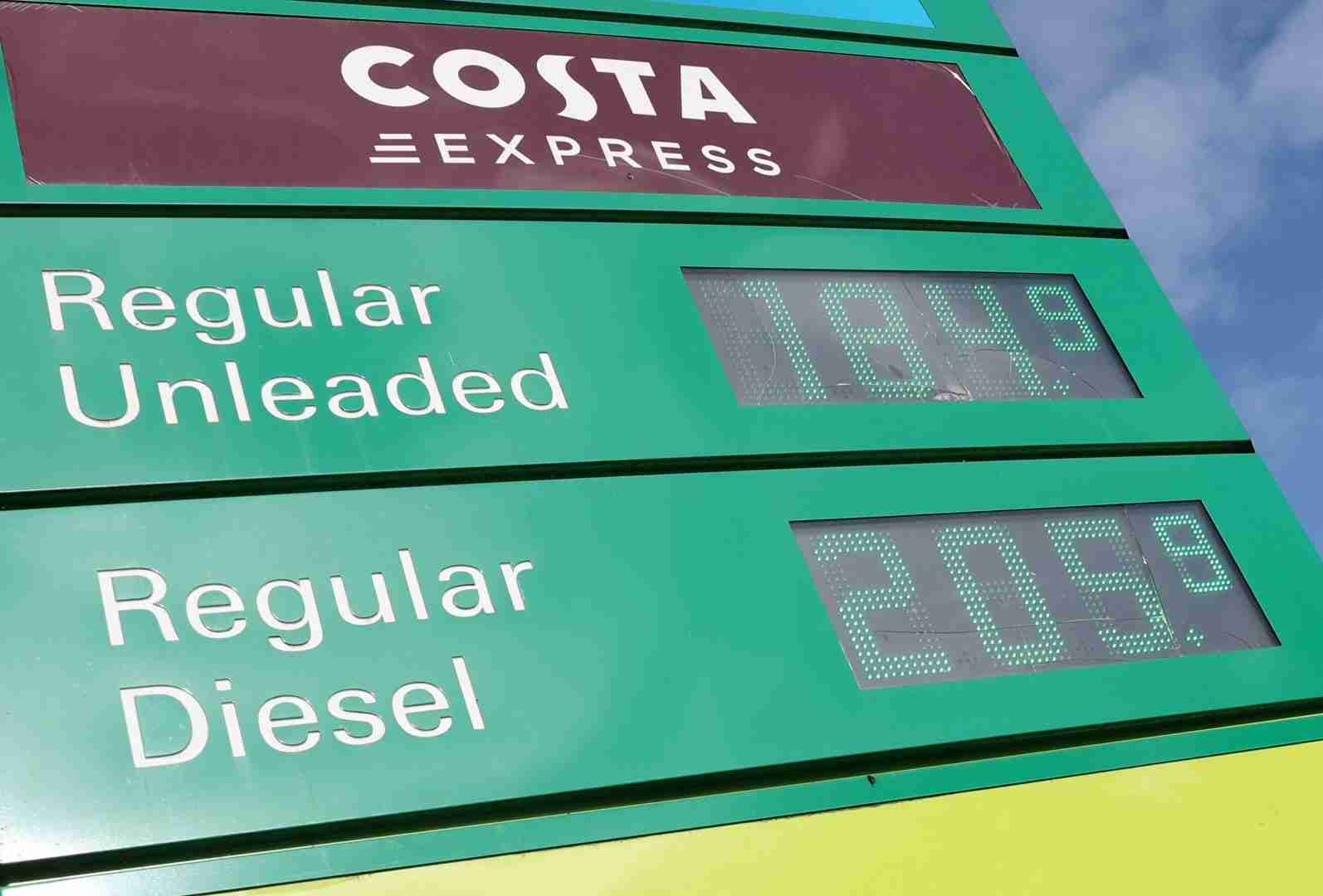
The price of motor fuels shot up by 8.7% on the month, the biggest rise since June 2022, shortly after Russia’s full-scale invasion of Ukraine, the ONS said.
The data showed services price inflation – which the BoE watches closely as a sign of longer-term inflation pressures – rose unexpectedly to 4.5% from 4.3% in February.
But much of that increase was due to a rise in air fares driven by the timing of the Easter holidays.
Core inflation, excluding volatile food, energy, alcohol and tobacco prices, weakened to 3.1% from 3.2% in February.
Ruth Gregory, deputy chief UK economist at Capital Economics, said headline inflation would probably fall to 2.9% in April as last year’s big increases in utility bills dropped out of the comparison.
“But the next eight months will be an uncomfortable ride for the MPC,” she said.
The rise in Britain’s inflation rate in March was less severe than a jump in the euro zone to 2.6% from 1.9% in February, due mostly to the way that UK household energy bills are set on a quarterly basis and are due to rise only in July.
WAR IMPACT
Before the U.S.-Israeli war on Iran began on February 28, the BoE said British inflation – the highest among the Group of Seven economies for much of the last four years – was likely to be close to its 2% target in April.
But last month it sharply increased its inflation forecast due to the energy price shock, predicting it would rise towards 3.5% by the middle of 2026. The International Monetary Fund last week said British inflation would peak at 4%.
The British central bank is expected to keep borrowing costs on hold on April 30 after an MPC meeting.
Governor Andrew Bailey said last week that the BoE should not be in a rush to move on rates, given the uncertainty about the extent to which the rise in headline inflation will affect wages and price-setting by companies.
But BoE Chief Economist Huw Pill said it would be a mistake to adopt a wait-and-see approach because people in Britain would probably be quick to assume a damaging bout of inflation is on the way, given the surge in price growth to above 11% in 2022.
Financial markets on Wednesday were betting on one or possibly two quarter-point interest rate rises this year. Most economists in a Reuters poll expected no change in borrowing costs during 2026.
The inflationary impact of the Iran war has dashed finance minister Rachel Reeves’ hopes of finally speeding up Britain’s economy in the short term, adding to the headaches facing Prime Minister Keir Starmer whose popularity has slumped.
The ONS figures showed cost inflation reported by manufacturers – some of which will filter through into consumer prices – soared last month.
Producer input price inflation leapt in March alone by 4.4%, the second-biggest monthly increase since records began in 1984.
Writing by William Schomberg; Editing by Andrew Cawthorne and Toby Chopra
The number of drug launches in Europe has fallen sharply, potentially, hindering patient access to some of the latest medicines, since U.S. President Donald Trump last May introduced a new U.S. drug pricing policy
International News via Reuters:
European Union authorities need a broader remit to secure access to newly approved drugs, including collective procurement negotiations for several countries, the head of European Medicines Agency Emer Cooke said on Wednesday.
The number of drug launches in Europe has fallen sharply, potentially, hindering patient access to some of the latest medicines, since U.S. President Donald Trump last May introduced a new U.S. drug pricing policy.
“I think we’re at a very critical point at the moment,” Cooke told the Reuters Pharma Europe 2026 event in Barcelona, Spain.
“Everybody’s struggling with what the impacts of the U.S. policy on pricing will be. And that’s not just on pricing, it’s on where you do your clinical trials, where you market, where you launch.”
Europe is the second biggest market for pharmaceuticals and has universal healthcare, putting it in a “very strong place in terms of access” overall, Cooke noted, while urging a more joined-up European approach.
Cooke also said in the interview that the EU regulatory review of the first of a new generation of weight-loss pills would be concluded “very soon”, indicating it would be in the coming weeks or months ahead of the northern hemisphere summer when institutional decision-making generally slows.
Two new oral drugs by Eli Lilly’s LLY.N and rival Novo Nordisk have been cleared for a U.S. launch this year.
Reporting by Maggie Fick; Writing by Ludwig Burger; Editing by Barbara Lewis and Adam Jourdan
Software CEOs such as Salesforce’s Marc Benioff have tried to reassure shareholders that proprietary data, decades of enterprise experience and in-house AI offerings would keep customers loyal
International News via Reuters:
Salesforce will likely report its fastest quarterly revenue growth in three years, but analysts say that may not be enough, as fears that artificial intelligence would decimate software makers have sapped investor confidence in the industry.
Software CEOs such as Salesforce’s Marc Benioff have tried to reassure shareholders that proprietary data, decades of enterprise experience and in-house AI offerings would keep customers loyal, even as AI tools from the likes of Anthropic encroach on legal, marketing and customer-service work.
But that has not stemmed a selloff in the sector, with the software and services index down around 16% since the start of the year, widely underperforming the broader S&P 500’s 3.2% rise.
• ServiceNow will kick off earnings for major software-as-a-service firms on Wednesday, followed by Workday and Salesforce likely in May.
• Wall Street expects Salesforce’s first-quarter revenue to have increased 12.5% to $9.83 billion, its fastest growth in 13 quarters, according to analysts polled by LSEG.
• But profit growth at the company, one of the most aggressive AI adopters with its Agentforce autonomous agent platform, will likely slow to a near three-year low as costs rise.
• Meanwhile, ServiceNow is expected to post slightly faster quarterly revenue growth of 21.1%, while Workday’s revenue will likely increase at a slightly slower pace at 12.4%.
• “From a short-term stock market perspective, nothing (software) companies report this quarter or next quarter can really refute that long-term bear case,” said Joe Maginot, portfolio manager at Madison Investments.
• “It’s this more existential question on how things will evolve over the coming three, four, five years and even longer.”
• Experts expect software makers to use earnings to show more aggressively how AI is boosting revenue, how wide their adoption is and whether they are helping retain customers.
• “The opportunity is there for many incumbents to be successful, especially as the rollout of AI in enterprise is going to take many years,” Bernstein analysts said.
Reporting by Aditya Soni and Deborah Sophia in Bengaluru; Editing by Maju Samuel
It was unclear whether Iran or Israel – Washington’s ally in the two-month conflict – agreed with the extension, and the prospect of peace talks was uncertain as the vital Strait of Hormuz shipping route remained blocked
International News via Reuters:
The British pound was little changed on Wednesday as markets grappled with continued uncertainty over the Middle East conflict, even after U.S. President Donald Trump indefinitely extended a ceasefire with Iran.
It was unclear whether Iran or Israel – Washington’s ally in the two-month conflict – agreed with the extension, and the prospect of peace talks was uncertain as the vital Strait of Hormuz shipping route remained blocked.
Meanwhile, British inflation data showed early price pressures linked to the conflict. Consumer price inflation rose to an annual rate of 3.3% in March from 3.0% in February, in line with expectations.
“In aggregate, inflation was a little bit higher than previously, but nothing aggressive,” said Dominic Bunning, head of G10 FX strategy at Nomura, adding that inflation readings were likely to climb further later in the year.
“I think sterling’s going to look at this like, it could be better, it could be worse,” he said.
The pound was last marginally higher at $1.3516, while the euro was little changed against sterling at 86.88 pence.
Markets have also been closely focused on interest-rate expectations after the Iran war pushed up inflation forecasts. Money markets were last pricing in one Bank of England rate hike this year, with some chance of a second.
The BoE is, however, widely expected to leave rates unchanged when it meets later this month, with markets assigning only about a 10% chance of a hike.
Policymakers face “an unenviable balancing act,” said Zara Nokes, global market analyst at J.P. Morgan Asset Management.
“There are clear upside risks to inflation, particularly if households – who have become accustomed to persistent price pressures for some time – demand higher wages to restore their eroded purchasing power,” she said, while noting that a weakening labour market and falling vacancies could hit consumption and amplify downside risks to growth.
The BoE will want to assess which of those risks dominates, Nokes added.
Reporting by Sophie Kiderlin. Editing by Mark Potter
The blue-chip FTSE 100 index edged down 0.03% to 10,495.22 points by 1048 GMT, while the midcap FTSE 250 edged up 0.2%
International News via Reuters:
London’s benchmark index FTSE 100 was subdued on Wednesday as investors monitored the fragile truce in the Middle East and assessed Britain’s March inflation data.
The blue-chip FTSE 100 index edged down 0.03% to 10,495.22 points by 1048 GMT, while the midcap FTSE 250 edged up 0.2%.
Lingering doubts over peace in the Middle East weighed on sentiment, despite U.S. President Donald Trump extending the ceasefire with Iran, with uncertainty persisting over whether Iran or Israel would uphold the deal.
• Oil prices jumped on Wednesday, with Brent crude rising above $100 a barrel, following reports that at least three container ships were hit by gunfire in the Strait of Hormuz.
• The rise in crude prices weighed on airline stocks with British Airways owner IAG down 2.1%, EasyJet dipping 1.6% and Wizz Air losing 1.3%, respectively.
• Oil majors BP and Shell rose 1.9% and 0.8%, respectively.
• Miners Fresnillo, Rio Tinto, Glencore and Anglo American gained more than 1%, tracking a rise in prices of precious and base metals.
• Official data showed British consumer price inflation rose to 3.3% in March from 3% in February, underscoring the Iran war’s impact on price levels.
• “The CPI figures confirm that the supply chain and energy pressures are beginning to bite and the Bank of England’s room for manoeuvre is narrowing fast,” said Nick Saunders, CEO of Webull UK in a note.
• Reckitt, which makes Dettol soap and Durex condoms, missed quarterly like-for-like revenue estimates, pushing shares down 6.2%.
• Business supplies distributor Bunzl gained 3% after posting a rise in first-quarter revenue.
• Stocks of wealth-managing firms gained after Quilter reported record first-quarter inflows: Quilter rose 4.9%, Liontrust Asset Management was up 0.7%, and Aberdeen advanced 0.4%.
Reporting by Utkarsh Tushar Hathi; Editing by Diti Pujara
The published plans show the EU will, for now, avoid major market interventions such as capping gas prices or taxing energy companies’ windfall profits
International News via Reuters:
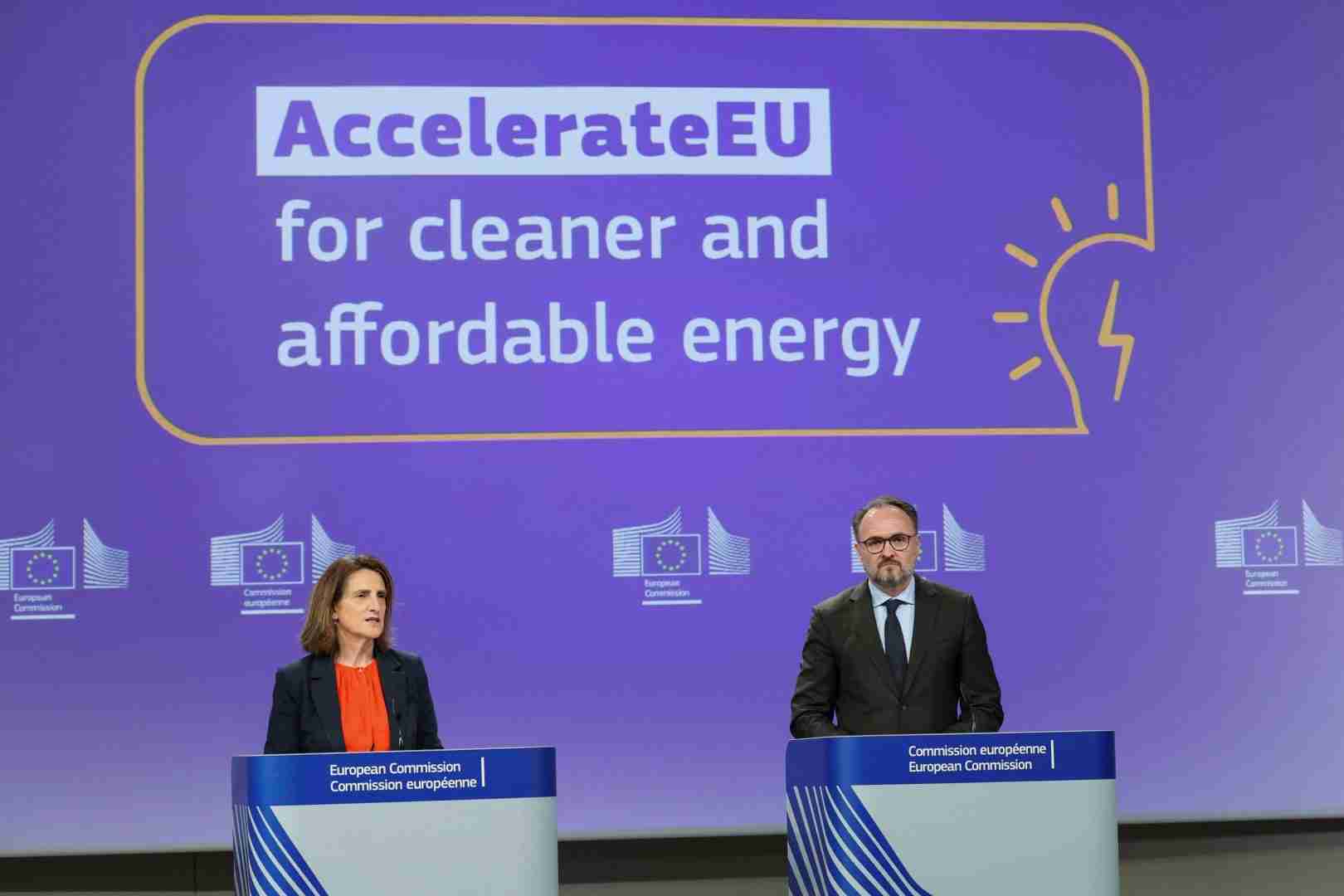
The European Commission set out plans on Wednesday to cut electricity taxes and coordinate the summer refill of countries’ gas storage, as it seeks to cushion the energy fallout from the Iran war.
The published plans show the EU will, for now, avoid major market interventions such as capping gas prices or taxing energy companies’ windfall profits – measures it used in 2022 when Russia cut gas supplies and prices hit record highs.
The Commission said it would amend EU rules to ensure electricity is taxed less than gas, and make it easier for governments to cut industries’ and vulnerable households’ electricity taxes to zero, to curb their bills, confirming plans previously reported by Reuters.
UNANIMOUS APPROVAL NEEDED FOR TAX CHANGES
The Commission will publish legal proposals to change the tax rules in May. Tax changes require unanimous approval from EU countries, making them difficult to pass.
Europe’s heavy reliance on oil and gas imports has left it exposed to spiralling prices since the Strait of Hormuz, a vital fuel shipping route, was effectively closed. European gas prices have increased by a third since the U.S.-Israeli war with Iran began on February 28.
Still, gas prices remain far below 2022 levels and so far, the Iran crisis has not triggered fuel shortages in Europe, though airlines have warned jet fuel shortages could emerge in weeks. The EU’s biggest oil and gas suppliers – the U.S. and Norway – are outside the Middle East.
Brussels said it would also coordinate countries’ efforts to fill gas storage in the coming months, to avoid price spikes when a lot of firms rush to buy at the same time. It will advise countries on when and where to release emergency oil stocks.
The Commission will also work on measures to maximise capacity at Europe’s oil refineries, to shore up jet fuel supply and propose measures on how to distribute jet fuel imports between countries to avoid shortages.
EU officials told Reuters the bloc’s relatively restrained response reflects that national governments, rather than Brussels, control many crisis-management levers, including fuel subsidies and national tax cuts.
EU governments have already earmarked billions of euros from national budgets to cushion consumers from higher prices.
Some officials noted that the war-driven energy shock could last for months, making it prudent to hold back more extreme measures now, in case they are needed later.
In the longer term, the EU plans to replace fossil fuels with locally produced renewable and nuclear energy faster, to shield against future oil and gas supply shocks. The Middle East conflict has triggered less severe European power price spikes than in 2022, in part, because countries have significantly expanded renewable electricity.
The EU produced 71% of its electricity from renewables and nuclear energy last year, up from around 60% in 2022, data from think tank Ember showed.
Reporting by Kate Abnett; Editing by Mark Potter and Emelia Sithole-Matarise
To provide the best experiences, we use technologies like cookies to store and/or access device information. Consenting to these technologies will allow us to process data such as browsing behavior or unique IDs on this site. Not consenting or withdrawing consent, may adversely affect certain features and functions.
Functional
Always active
The technical storage or access is strictly necessary for the legitimate purpose of enabling the use of a specific service explicitly requested by the subscriber or user, or for the sole purpose of carrying out the transmission of a communication over an electronic communications network.
Preferences
The technical storage or access is necessary for the legitimate purpose of storing preferences that are not requested by the subscriber or user.
Statistics
The technical storage or access that is used exclusively for statistical purposes.The technical storage or access that is used exclusively for anonymous statistical purposes. Without a subpoena, voluntary compliance on the part of your Internet Service Provider, or additional records from a third party, information stored or retrieved for this purpose alone cannot usually be used to identify you.
Marketing
The technical storage or access is required to create user profiles to send advertising, or to track the user on a website or across several websites for similar marketing purposes.