

‘Lives at risk’ due to hospital overcrowding

Dr Ed Shultz, a veteran of front line emergency care, cites dangers and offers solutions to a ‘worsening’ problem
We are facing a worsening healthcare crisis that puts lives at risk – and the hospital is not doing enough to prevent it.
This is the position of 30-year veteran of emergency care in Bermuda, former hospital Chief of Emergency, Dr Edward Shultz. (READ his letter below, WATCH his comments above)
Going public with his concerns for the first time today, he cites poor building design and inadequate planning for an aging population as factors that have led to near-constant overcrowding at the hospital.
Admitted patients are remaining in emergency when they should be transferred to wards, while patients fit for discharge are blocking beds.
He says Government must provide more funding to enable the necessary level of care, but he praises their commitment to providing better aftercare in the community for exiting patients.
However, he says it’s the hospital itself that is failing to take immediate on-site measures which could relieve the burden on emergency staff, and reduce the risk to patients.
Ultimately, Dr Shultz is calling for an independent, non-partisan commission of enquiry into Emergency Care in Bermuda.
Dr Shultz notes that this is not on the emergency staff, who he says are doing a stellar job trying to manage a terrible situation.
Dr Shultz lays out a number of potential solutions…
He calls on Government to adjust the cap on financial support for the hospital that was implemented in 2019, to, for example, help fund any necessary new staff to address overcrowding, and to create more nursing home beds in the community.
He acknowledges Government’s efforts in providing more community care, but notes that is a long-term solution.
It’s the hospital that must act now, he says, by creating a discharge lounge with a strict 24-hour collection policy, by converting available space to hold patients at ties of peak capacity, and – what he says would be the first thing he would do – boarding admitted patients on wards or overflow units.
WATCH the report above…
Gov’t defends Boaz housing plan, confirms appeal

Residents’ concerns noted, but modular housing deemed essential to tackle urgent demand says Government

The Government acknowledges the concerns raised by residents of Boaz Island regarding the proposed modular housing development, and we thank community members for taking the time to engage in this important discussion.
We recognise that Boaz Island is a close-knit residential area, and it is entirely appropriate that residents seek clarity on how any proposed development may impact their neighbourhood. Issues such as density, infrastructure, traffic, safety, and environmental considerations are all valid and are taken seriously as part of the planning and review process.
The planning application for this development remains active and subject to the full planning process, which includes considering objections, technical assessments, and all relevant environmental and safety requirements. The concerns raised by residents will form an important part of that review. As modular housing is one of several essential tools to address Bermuda’s urgent housing needs, the Bermuda Housing Corporation will be appealing the Development Applications Board’s refusal of a recent application.
Regarding on-site activity, the Government is aware of concerns regarding tree clearing and the subsequent pause in work. If environmental safety issues arise, appropriate steps will be taken to ensure all work is carried out safely and in accordance with regulations. It should be noted that, contrary to recent reporting, no asbestos has been found on the site to date. Further clarification on the site’s status and next steps will be provided as the relevant assessments are completed.
At the same time, Bermuda is facing a very real and urgent housing challenge. Increasing housing supply, including through transitional and modular solutions, is a critical part of ensuring that more Bermudians have access to safe and stable housing as soon as possible.
The benefits of modular housing are significant and should not be overlooked. It enables faster delivery of homes while longer-term housing solutions are progressed, helping to meet immediate demand. At the same time, any such development must be carefully assessed to ensure it is appropriate for its location and responsive to the concerns of the surrounding community.
We also acknowledge the call for greater communication. While initial engagement has taken place, we accept that residents are seeking more detailed, site-specific information. The Government, through the Bermuda Housing Corporation and relevant departments, will continue to engage with the community to provide clarity on the proposal, including its scope, duration, and management.
The Government remains committed to a balanced approach, one that addresses the urgent need for housing while respecting the character and concerns of our communities. We will continue to listen, to engage, and to ensure that decisions are made transparently and in the best interest of Bermuda as a whole.
Media release supplied by the Government of Bermuda.
What’s on this weekend


From film screenings and networking after-hours events to circus-style entertainment – lots of events coming up this weekend.
Kendal Trott has an update on what’s happening.
Equities turn around on renewed Middle East hopes, oil loses some steam

Wall Street stocks turned from red to green after the statement seemed to ease worries that Israel’s actions in Lebanon would torpedo U.S. President Donald Trump’s truce with Iran

International News via Reuters:
MSCI’s global equities gauge reversed course to turn higher on Thursday and oil’s rally eased after Israel indicated willingness for peace talks with Lebanon, renewing hopes for the fragile Gulf truce.
The U.S. dollar added to losses and U.S. Treasury yields turned lower after Israeli Prime Minister Benjamin Netanyahu said he has given an instruction for Israel to begin peace talks with Lebanon that would also include the disarming of Hezbollah, which is linked to Iran.
Wall Street stocks turned from red to green after the statement seemed to ease worries that Israel’s actions in Lebanon would torpedo U.S. President Donald Trump’s truce with Iran. Earlier, Israel had bombed Lebanon killing more than 250 people. This was after Iran had indicated that Lebanon should be part of the ceasefire.
The strikes and scant signs of opening the Strait of Hormuz by Iran had sent oil prices sharply higher earlier in the day. After earlier rising above $102, U.S. crude was up 3.43% at $97.71 a barrel in early afternoon trading and Brent, after rising earlier to $99.50 was trading at $95.50 per barrel, up 0.8% on the day.
While Michael O’Rourke, chief market strategist at JonesTrading in Stamford, Connecticut said that weekend peace talks could bring some insight and promise, he noted that it could “take a little while before investors have confidence in the outlook for the war and where oil prices are going.”
“You’ve had a major equity rally where the index is only down a little more than a percent on the year. There’s nothing attractive about chasing this tape at these prices,” he said.
On Wall Street at 12:18 p.m., the Dow Jones Industrial Average was up 281.82 points, or 0.59%, to 48,191.74, the S&P 500 rose 42.46 points, or 0.63%, to 6,825.27 and the Nasdaq Composite was 172.96 points, or 0.76%, higher at 22,807.95.
MSCI’s gauge of stocks across the globe rose 2.77 points, or 0.27%, to 1,033.82.
The pan-European STOXX 600 index closed down 0.15%.
Overnight in Asia, Japan’s Nikkei fell 0.7% after jumping more than 5% on Wednesday. South Korea dipped 1.6%, following a leap of 6.8% in the prior session and MSCI’s broadest index of Asia-Pacific shares outside Japan eased 0.7% after Wednesday’s roughly 5% rally.
ASSETS TURN ON MID EAST HOPES
In U.S. Treasuries, the yield on benchmark U.S. 10-year notes fell 2.2 basis points to 4.269%, from 4.291% late on Wednesday while the 30-year bond yield fell 1 basis point to 4.8755%.
The 2-year note yield, which typically moves in step with interest rate expectations for the Federal Reserve, fell 4.4 basis points to 3.75%, from 3.794%.
In currencies, the dollar index, which measures the greenback against a basket of currencies including the yen and the euro, fell 0.37% to 98.69, with the euro up 0.43% at $1.1712.
Against the Japanese yen, the dollar strengthened 0.09% to 158.72.
In precious metals markets, spot gold rose 1.63% to $4,793.07 an ounce while spot silver was up 2.66% at $76.09 an ounce.
With oil prices still sharply higher than pre-war levels, inflation has been a major concern for investors, with March U.S. Consumer Price Index (CPI) data due to be released on Friday before the market open.
Thursday’s data showed the PCE index of U.S. core prices for February up 2.8% on an annual basis and 3% excluding the volatile food and energy components. Both figures were in line with economists’ forecasts although a separate report showed fourth-quarter U.S. economic growth of 0.5% versus estimates for 0.7%.
Reporting by Sinéad Carew, Marc Jones; Editing by Hugh Lawson, Kirsten Donovan
Spain ramps up criticism of Israel, US, defying Trump threats
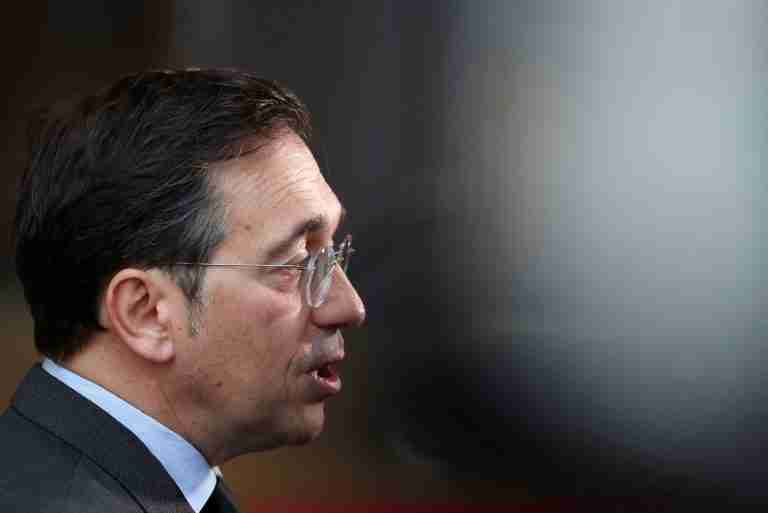
Spain’s opposition to the Iran conflict has further strained its relations with Washington, and figures within President Donald Trump’s MAGA movement are increasingly urging the U.S. leader to punish Madrid
International News via Reuters:
Spain decried Israeli strikes on Lebanon as well as the broader war on Iran on Thursday, cementing Madrid’s role as an outspoken critic of the U.S. and Israeli military campaigns despite U.S. threats to punish uncooperative NATO allies.
Spain’s opposition to the Iran conflict has further strained its relations with Washington, and figures within President Donald Trump’s MAGA movement are increasingly urging the U.S. leader to punish Madrid.
In remarks to lawmakers, Foreign Minister Jose Manuel Albares described the conflict as an attack on civilization, echoing scathing criticism heaped by Prime Minister Pedro Sanchez on Trump’s decision to attack the Islamic Republic.
“We’re facing the greatest assault on the civilisation built upon the humanist ideals of reason, peace, understanding and universal law over the abuse of power, brute force and arbitrariness,” Albares said.
He accused Israel of violating international law and the newly brokered two-week ceasefire after a massive wave of airstrikes across Lebanon killed more than 250 people on Wednesday.
Sanchez, who has emerged as a leading opponent of the war, has closed Spanish airspace to any aircraft involved in a confrontation he has described as reckless and illegal.
On Wednesday night, he reiterated his call for the European Union to scuttle its association agreement with Israel, urging an end to “impunity for (Israel’s) criminal actions”.
FUTURE OF AIR BASES
In a post on X, Sanchez said Israeli Prime Minister Benjamin Netanyahu’s “contempt for life and international law is intolerable”.
Sanchez has welcomed the Pakistani-brokered ceasefire, but said Spain would “not applaud those who set the world on fire just because they turn up with a bucket,” in reference to the U.S. administration.
Also on Wednesday, Spain and Italy both summoned Israeli envoys in protest at separate incidents involving U.N. peacekeepers in Lebanon. Madrid said a Spanish UNIFIL member had been unjustly detained by the Israeli army.
Spanish ties with the U.S. took a hit last year when Madrid rejected Trump’s demand that NATO allies ramp up their defence spending to 5% of gross domestic product. Madrid’s stance led Trump to threaten to cut off all trade.
Republican Senator Lindsey Graham said in March the U.S. should pull out from two jointly operated air bases in southern Spain and move “to a country that will allow us to use them”.
Earlier this week, Albares said Trump publicly mulling a withdrawal from the alliance was prompting European countries to consider alternative security arrangements.
HOPES FOR PEACE
In Spain, the government’s position remains widely popular, as polls show an overwhelming majority rejects the war. According to recent surveys, Sanchez’s Socialist Party has gained voter support while far-right Vox, which backed the U.S. and Israel, has seen a decline.
In European capitals, however, his approach has been met with some derision.
“I never agree with Sanchez because he has a vision of the world that is the opposite of mine. He says one thing and then does another,” said Matteo Salvini, Italy’s Deputy Prime Minister and leader of the far-right League party, when asked at a press conference on Wednesday about Sanchez’s condemnation of the war in Iran.
German officials told Reuters they viewed Sanchez’s confrontational stance as aimed at a domestic audience and unconstructive for preserving NATO unity. Germany has been openly critical of Spain’s refusal to increase its defence spending in line with other members of the alliance.
Among the conservative-led German government’s Social Democrat coalition partners there is more sympathy.
“Sanchez expresses things about the U.S. policy we would like to say as well,” one lawmaker said.
Jimena Blanco, chief analyst for risk consultancy Verisk Maplecroft, said Sanchez saw himself as a standard bearer among dwindling leftist leaders in the West.
“My sense is he is trying to create unity by not allowing NATO partners in Europe to be pushed around or engage in a conflict that is not conducive to NATO’s interests,” she said.
Spain’s foreign ministry said in a statement that Spain and Europe and the U.S. were natural allies and Spain was determined to maintain its long relationship with the U.S. based on dialogue, mutual respect and mutual benefit.
“Spain is a responsible ally and committed to NATO, European and Transatlantic security,” it added.
Reporting by David Latona and Emma Pinedo; Additional reporting by Aislinn Laing, Andreas Rinke, James Mackenzie and Giselda Vagnoni, Editing by Andrei Khalip, William Maclean and Nia Williams
European shares pull back as fragile US-Iran truce weighs on sentiment

The pan-European STOXX 600 index was down 0.2% at 612.59 points, after paring earlier losses following reports Israel and Lebanon could start direct negotiations soon

International News via Reuters:
European shares retreated on Thursday, after their strongest rally in over four years, as investors remained wary about a fragile U.S.-Iran ceasefire and its implications for oil prices and global inflation.
The pan-European STOXX 600 index was down 0.2% at 612.59 points, after paring earlier losses following reports Israel and Lebanon could start direct negotiations soon.
Major regional bourses were also lower, with Germany’s DAX down 1.1%, while France’s CAC 40 <.FCHI> fell 0.2%.
European markets rallied on Wednesday after U.S. President Donald Trump agreed to a two-week ceasefire, sparking optimism that oil and gas shipments through the crucial Strait of Hormuz might resume operations.
However, Israel continued military operations in Lebanon on Wednesday while Tehran did not lift its near-total blockade of the Strait leading to renewed concerns over the economic impact of the conflict.
“(Yesterday’s) rebound was very overdone given the fact that it is still just the two-week ceasefire and today obviously there is concerns over the durability of that ceasefire and the key focus for the market remains the Strait of Hormuz,” said Fiona Cincotta, senior market analyst at City Index.
“With or without a ceasefire, if the Strait remains closed, the economic impact of the conflict remains … we’re seeing the market price in this caution.”
European markets have been under pressure since February when the conflict began, given the continent’s heavy reliance on oil imports and vulnerability to an energy shock.
The industrial sector weighed the most, down 0.5%. Germany’s Siemens dropped 2.1% while Airbus fell 2.5%.
Travel, banks and technology stocks all traded in the red, after logging strong gains in the previous session.
Software and IT stocks came under pressure tracking their Wall Street peers. German software maker SAP dropped 6.8%, hitting its lowest level since January 2024.
IT budget growth is set to slow to 2.6% over the next 12 months with macro uncertainty potentially leading to delays in big projects, according to Citi’s quarterly survey of chief information officers.
The luxury sector dropped 0.7% with heavyweight LVMH sliding 3%.
Conversely, the energy sector gained almost 2% as oil prices rose on the day.
Investors parsed official data that showed headline inflation in the U.S. picked up on a monthly basis. Economists expect the surge in energy prices amid Middle East tensions to show up globally within inflation figures.
Traders scaled back expectations for the European Central Bank to hike rates following Wednesday’s ceasefire announcement, but still expect two quarter-point tightening moves before year-end.
Meanwhile, a European industry lobby group that includes alcoholic drink companies has asked India for an exemption from a 10% import duty on glass bottles and aluminum cans.
Reporting by Ragini Mathur and Twesha Dikshit in Bengaluru; Editing by Rashmi Aich and Toby Chopra
NATO’s Rutte told allies Trump wants Hormuz commitments within days, diplomats say
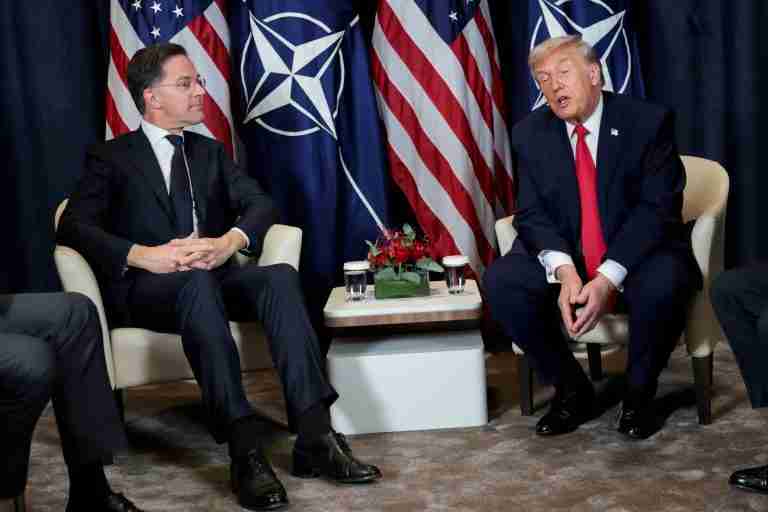
Rutte met with Trump in Washington on Wednesday, amid tensions within the alliance over the Iran war
International News via Reuters:
NATO Secretary General Mark Rutte has briefed some capitals that U.S. President Donald Trump wants concrete commitments within the next few days for help securing the Strait of Hormuz, three European diplomats told Reuters on Thursday.
Rutte met with Trump in Washington on Wednesday, amid tensions within the alliance over the Iran war.
“The Secretary General is in contact with Allies about his discussions in Washington,” NATO spokesperson Allison Hart said on Thursday. “It’s clear that the United States expects concrete commitments and action to ensure freedom of navigation in the Strait of Hormuz,” she added.
The U.S. president has repeatedly called NATO a “paper tiger” and threatened to withdraw from the 32-member transatlantic alliance in recent weeks, arguing that Washington’s European allies have relied on U.S. security guarantees while providing inadequate support for the U.S.-Israeli bombing campaign in Iran.
“We note the frustration in Washington, but they did not consult allies either before or after starting this war,” said one of the diplomats.
“NATO as such would not play a role in the war against Iran, but allies want to be helpful in seeking longer-term solutions for Hormuz. With negotiations ongoing with Iran, this could be helpful,” the diplomat said.
Although Trump said on Tuesday the attacks on Iran would be paused under a two-week ceasefire, the fallout from the conflict has continued to strain ties.
Trump posted on Truth Social after the meeting in capitalized letters that “NATO wasn’t there when we needed them, and they won’t be there if we need them again.”
Dutchman Rutte, known in Europe as a “Trump whisperer” and who has faced criticism for frequently praising the U.S. leader, said in an interview with CNN after Wednesday’s meeting that Trump “is clearly disappointed with many NATO allies, and I can see his point”.
A senior European official said “the NATO community is more worried right now than confident” and “the meeting did not take the worry away”.
EARLY PLANNING UNDER WAY BUT QUESTIONS REMAIN
Britain is leading a group of around 40 countries seeking to come up with a military and diplomatic plan to reopen and safeguard Hormuz but there is little indication it will yield any near-term breakthrough. French President Emmanuel Macron said on Wednesday about 15 countries were planning to facilitate the resumption of traffic through the strait.
France’s foreign minister Jean-Noel Barrot said on Thursday that Hormuz would be unable to fully reopen until there was a lasting agreement between the U.S. and Iran, while Italy and Britain said Iran’s position that it could impose a toll to cross the strait was unacceptable.
“We have an ongoing track on Hormuz, which is largely unrelated to what happened in the White House yesterday,” said a fourth European diplomat.
“We know the urgency on the U.S. side, and we know that Rutte is trying to position himself in a way that he is helpful in that conversation. We are willing to make the right noises and even the right actions down the line. But ultimately the problem is not to please the U.S. but to have the right conditions in place,” the diplomat added.
Reporting by Lili Bayer and Tom Balmforth; Editing by Bart Meijer, Keith Weir and Hugh Lawson
BHB introduces measures to alleviate bed shortages at KEMH

The Ministry of Health and the Bermuda Hospital’s Board issued a joint statement to acknowledge the emergency department wait times are too long, too many surgeries are being cancelled, and we are taking decisive, systemwide action to fix these issues

The Bermuda Hospital’s Board and the Ministry of Health have made fresh pledges to alleviate pressures in the emergency department at King Edward VII Memorial Hospital.
The Emergency Department’s acute care beds are being occupied by patients medically fit for discharge but have no other place to go for long-term care.
They said, “ED wait times are too long, and too many surgeries are being cancelled, and we are taking decisive, systemwide action to fix these issues so that care at Bermuda’s only hospital is faster, safer, and more reliable for everyone.”
The Ministry of Health and BHB issued a joint statement to highlight the key steps they are taking to ease patient flow in the Emergency Department.
The problem stems from several root causes – a rapidly aging population with complex mental health and other chronic illness and lack of long-term or home care options for families to safely medically discharge patients.
The BHB explained that, “At times, more than 40 of the hospital’s 90 acute care beds, and over 60 beds across the hospital, have been filled by medically fit patients.”
The hospital continues to experience unprecedented demand for emergency care.
And delays are having significant impacts on patient care and clinical teams.
Acting BHB CEO, Ms Judy Richardson, said: “The BHB has expanded care within both the KEMH and MWI to manage increased demand and maintain patient flow. Numerous bed flow initiatives are underway to support timely decision-making. We are also making full use of all available clinical spaces, and beyond where feasible.
“In addition, existing inpatient units within the Acute Care Wing are accommodating increased numbers, and planning is underway for a dedicated overflow unit once staffing allows.”
Health Minister Kim Wilson reaffirmed the government’s pledge to respond to the challenges by directing funds to develop a 30-bed transitional care unit at MWI.
Furthermore, the Health Ministry was allocated an additional $55 million in this year’s budget for BHB operational support and $12million towards capital improvements.
However, the Minister acknowledged these measures will not resolve current pressures immediately.
She explained that the pressures at KEMH reflect longstanding, generational challenges across the community and the growing population of the so-called sandwich generation.
Minister Wilson said “When a patient is medically ready to leave the hospital, transitioning to home or an appropriate community setting is the best next step for their continued recovery. This also helps ensure that hospital beds remain available for those who require acute care.”
To ease the burden on the hospital itself, the government said it has invested in long term care facilities such as the rebuild of the Lefroy House and additional Sylvia Richardson Care Facility.
Other measures taken include the shortened wait period for seniors to receive home care benefits for HIP and FutureCare policyholders.
Minister Wilson said, “Every bed represents a person in need.
“Together, we can ensure that Bermuda’s hospital remains strong, compassionate, and responsive for our loved ones and for future generations.”
Both BHB and the Ministry of Health stressed that solving the issue requires partnership across the Government, the hospital, physicians, long-term care providers, families, and the wider community.
Burrows untouchable as Virginia State sweep aside rivals


Bermuda’s Alexcie Burrows produced a masterclass in efficiency as Virginia State University (VSU) delivered a ruthless performance to defeat Virginia Union 4-0 in their latest CIAA encounter.
The Trojans were in imperious form from the opening serves, with Burrows playing a pivotal role in ensuring a clean sheet for the visitors. The tone was set early in the doubles competition, where Burrows partnered with Damita Bollers in the number three spot. The duo showcased clinical chemistry, dismantling the Virginia Union pairing of Marianna Brooks and Andrea Sanjurjo with a flawless 6-0 victory to help secure the all-important doubles point.
Burrows carried that momentum directly into the singles matches, where she proved equally untouchable. Competing in the number five position against Maya Mercer, the Bermudian standout didn’t drop a single game. Her precise baseline play and aggressive serving forced a succession of errors from Mercer, resulting in a dominant 6-0, 6-0 straight-sets win.
The victory further solidifies VSU’s standing in the conference as they continue their push toward the postseason. For Burrows, the afternoon served as a definitive reminder of her value to the Trojans’ lineup, combining tactical awareness with a clinical edge that left the Panthers with no answers on the court.
With the team firing on all cylinders, the focus now shifts to their upcoming road trip, where they will look to maintain this momentum against further CIAA opposition.
UK stocks lose steam on Middle East ceasefire doubts

The blue-chip FTSE 100 closed 0.1% lower at 10,603.5 points and the FTSE 250 was down 1%

International News via Reuters:
The UK’s FTSE 100 edged lower and mid cap stocks posted a bigger fall on Thursday after recording their strongest session in months a day earlier, as oil prices rebounded on growing doubts over a fragile ceasefire in the Middle East conflict.
The blue-chip FTSE 100 closed 0.1% lower at 10,603.5 points and the FTSE 250 was down 1%.* The FTSE 350 energy index climbed 2% as oil prices jumpedon concerns that energy flows through the crucial Strait ofHormuz will remain restricted. [O/R] * The viability of the ceasefire is in question amidcontinued Israeli strikes on Lebanon, causing Iran to suggest itwould be “unreasonable” to proceed with talks to forge apermanent peace deal. * The FTSE 100 recorded its biggest daily percentage gain ina year on Wednesday after the deal between the U.S. and Iran fora two-week ceasefire. * Rate-sensitive homebuilders came under pressure as bondyields edged higher. The two-year gilt yield, which reflectsnear-term rate expectations, rose to 4.221% a day after itslargest one-day fall since March 2023. * Traders were betting on around 34 basis points of ratehikes from the Bank of England by the end of this year, comparedto 32 bps on Wednesday. * Britain’s housing market cooled noticeably last month aseconomic uncertainty stemming from the Iran war unnerved buyerswho face rising mortgage rates, a survey from the RoyalInstitution of Chartered Surveyors showed. * Ceres Power Holdings fell 6.2% after brokerage Peel Huntdowngraded the clean energy technology developer’s stock to”sell” from “hold.” * Insurer Standard Life and speciality chemicals maker CrodaInternational dropped more than 3% each, as their shares weretrading ex-dividend.
Reporting by Sruthi Shankar and Shashwat Chauhan in Bengaluru; Editing by Sahal Muhammed
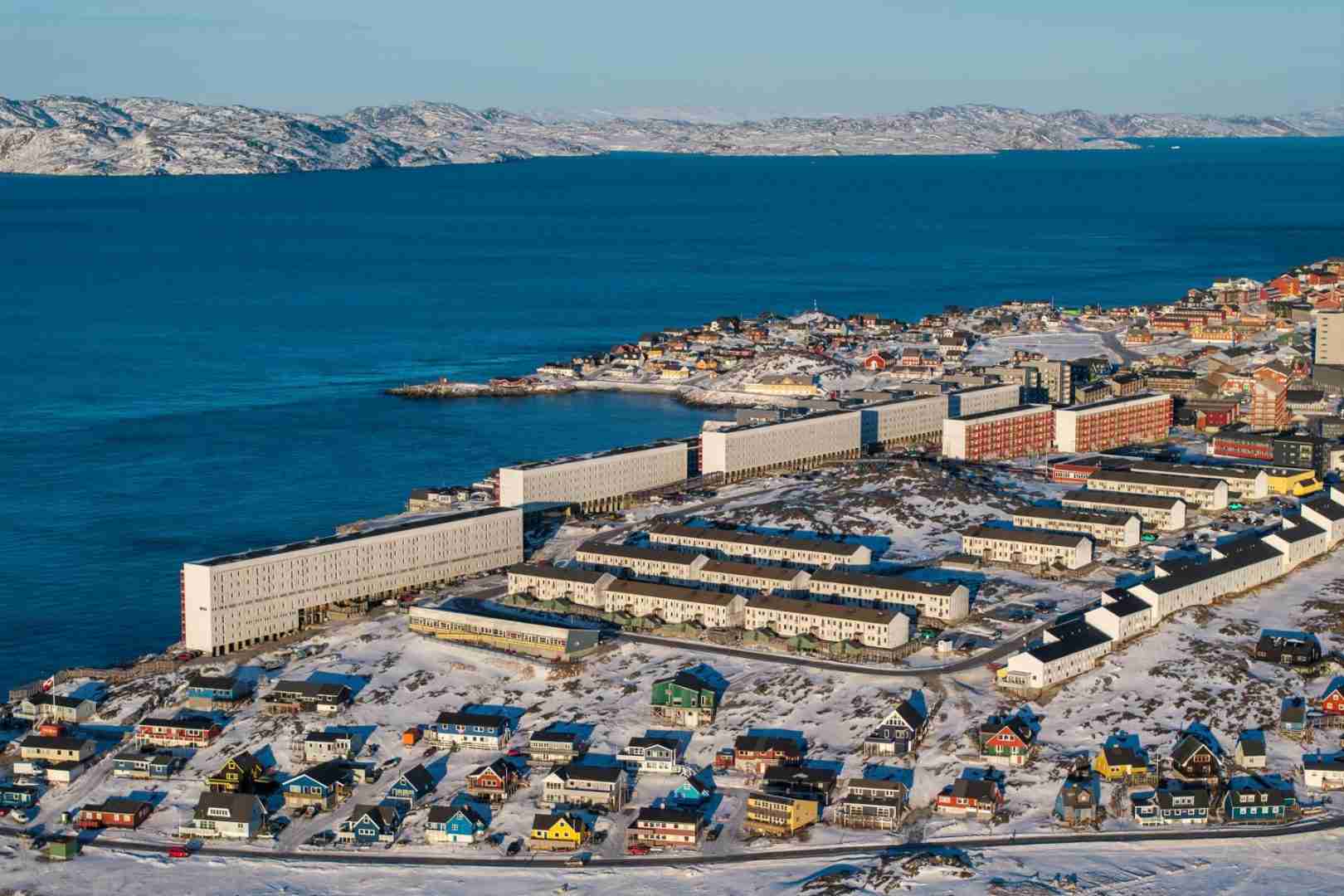
‘We are not some piece of ice’: Greenland hits back at Trump’s Arctic insult

Trump vented his frustration with NATO’s unwillingness to get involved in the war on Iran that he launched with Israel
International News via Reuters:
Greenland’s Prime Minister Jens-Frederik Nielsen called on NATO allies to stand together to defend international law as he pushed back against U.S. President Donald Trump’s latest comments about the Arctic island.
Trump vented his frustration with NATO’s unwillingness to get involved in the war on Iran that he launched with Israel, saying in a social media post that the military alliance was not around when needed and would not be there “if we need them again. REMEMBER GREENLAND, THAT BIG, POORLY RUN, PIECE OF ICE”.
Nielsen rejected the characterisation.
“We are not some piece of ice. We are a proud population of 57,000 people, working every single day as good global citizens in full respect for all our allies,” he told Reuters.
Nielsen underlined the importance of maintaining the post-war geopolitical order, including the NATO defence alliance and globally respected international law.
“Those things are being challenged now, and I think all allies should stand together to try to maintain them. I hope that will happen,” he said.
DIPLOMATIC TALKS CONTINUE BUT GREENLAND IS WARY OF US GOALS
NATO allies had already been scrambling earlier this year to find ways to keep the alliance together after Trump revived his push to seize Greenland from Denmark, a fellow NATO member.
The White House in January said Trump was weighing a use of military force in Greenland, leading Germany, France and other European nations to send small contingents of troops to the island in a message of solidarity and deterrence.
Trump later backed down after talks with NATO Secretary General Mark Rutte, stating that “the framework of a future deal” had been formed and moving the Greenland conflict to a diplomatic track. His latest social media post on the island followed a new meeting with Rutte on Wednesday.
Greenland, Denmark and the U.S. in late January launched diplomatic talks and Nielsen said they were still going on, with more meetings scheduled.
Trump and his backers have insisted the U.S. needs Greenland to fend off threats from Russia and China in the Arctic and that Denmark cannot ensure its security.
The United States already has a base on the island and the ability to expand its presence there under a 1951 treaty.
“It would be strange, when all parties want to discuss increased defence cooperation, not to factor in that agreement (from 1951),” Nielsen said, declining to go into further detail on what was being discussed in the negotiations.
Despite the talks, Nielsen made clear he did not believe Trump had abandoned his ambitions regarding the island: “I cannot see that his desire to either take over or control Greenland has been taken off the table,” he said.
Reporting by Stine Jacobsen, editing by Louise Rasmussen, Terje Solsvik, Philippa Fletcher
