The annual Soul 2 Soul event is set to return for its 7th year, bringing together music, fashion, and entertainment.
Organizers say the event continues to grow, with a focus on creating an experience where attendees can dress up, enjoy themselves, and connect in a vibrant atmosphere.
We spoke to event coordinator Greashena Spence, who shared her excitement about this year’s return as she looks to expand the audience and welcome new attendees.
Cultural ties, political growth, and economic potential highlighted in ‘The Story of Us’ consultation
Cultural identity, heritage, and historical ties with the Caribbean took centre stage during a town hall meeting on full CARICOM membership.
With Bermuda weighing a move from associate membership to full membership, the public was invited to have its say as part of ongoing consultation on the Government’s Green Paper, entitled The Story of Us.
Dozens of residents turned out at St. Paul’s Centennial Hall for the meeting, chaired by Dr Dana Selassie.
Former Attorney General Phil Perinchief added that in Bermuda, “all of us need to mature politically” and that the Story of Us shows the potential of political evolution that he has observed first hand in Africa and across the Caribbean.
Home Affairs Minister Alexa Lightbourne said she believes that The Story of Us, highlights an opportunity to align with CARICOM in areas such as food security and agriculture, and tourism.
The Bermuda Musical and Dramatic Society opens its production of Boeing Boeing at Daylesford Theatre on April 23, running through May 2
The Bermuda Musical and Dramatic Society (BMDS) is staging Boeing Boeing, a seven-door farce set in 1960s Paris, from April 23 to May 2 at Daylesford Theatre.
The play centres on bachelor Bernard, played by Geoffrey Faiella, who is juggling relationships with three stewardesses — each of whom believes she is engaged to him. The three fiancées are portrayed by Lucy Russell, Kate Farmer and Allie Zuckerman.
The plot reaches a crisis point when all three arrive at Bernard’s flat on the same day, leaving him, his housekeeper Berthe (Donna Nicholson) and his school friend Robert (Gregg Smith) to keep them apart.
Director Robbie Godfrey said the play’s origins lie in the rapid expansion of commercial air travel in the early jet age.
“Marc Camoletti, the playwright, was spitballing about what would happen, now that people were travelling so much quicker to somebody who was a player like this guy,” Mr Godfrey said.
He said the technical demands of staging a farce were part of its appeal.
“It will be non-stop laughter. It’s going to be an absolute hoot. If the actors have not left the stage absolutely exhausted, I have told them they have not done their job,” he said. “It’s an incredible situational comedy with high stakes. At every point, just when you think it can’t get worse, it gets worse.”
Mr Godfrey said rehearsals had been progressing well, and that the production had attracted significant interest — with the society having to turn away some would-be participants.
“We have been absolutely thrilled by the amount of interest that a play like this has pulled in even though it is relatively unknown in the farce genre to most people,” he said.
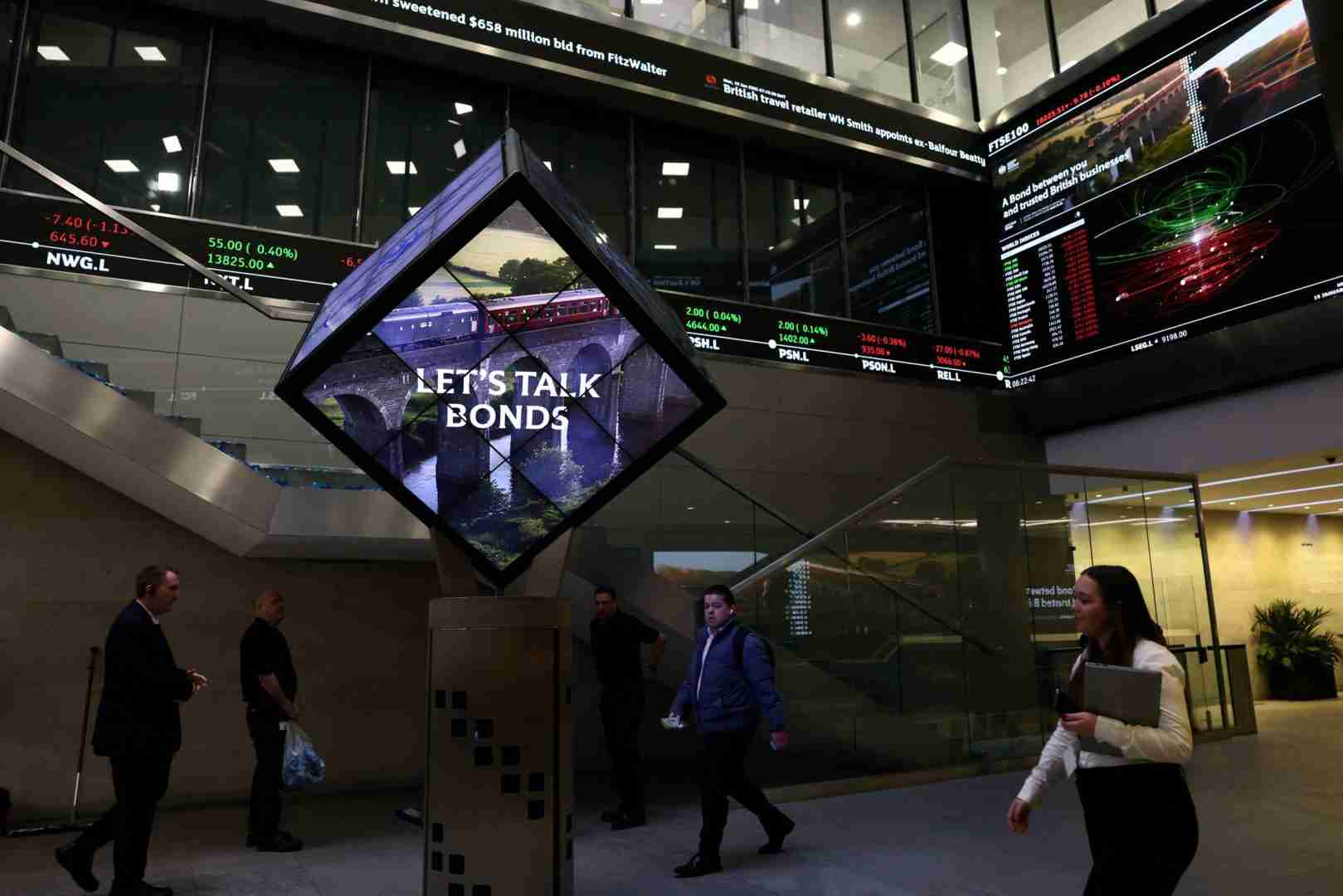
The blue-chip FTSE 100 dipped 0.3% by 0927 GMT, while the midcap FTSE 250 slipped 1.1%
International News via Reuters:
The main UK stock indexes eased on Thursday after recording their strongest session in months a day earlier, as oil prices rebounded on growing doubts over a fragile ceasefire in the Middle East conflict.
The blue-chip FTSE 100 dipped 0.3% by 0927 GMT, while the midcap FTSE 250 slipped 1.1%.* The FTSE 350 energy index climbed 1% as oil prices jumpedalmost 3% on concerns that energy flows through the crucialStrait of Hormuz will remain restricted. [O/R] * Viability of the ceasefire is in question amid continuedIsraeli strikes on Lebanon, causing Iran to suggest it would be”unreasonable” to proceed with talks to forge a permanent peacedeal. * The FTSE 100 recorded its biggest percentage gain in ayear on Wednesday after the two-week ceasefire deal between theU.S. and Iran. * Rate-sensitive homebuilders came under pressure as bondyields edged higher. Two-year gilt yield, which reflectsnear-term rate expectations, rose to 4.25% after its largestone-day fall since March 2023. * Traders were betting on 40 basis points of rate hikes fromthe Bank of England by the end of this year, compared to 32 bpson Wednesday. * Britain’s housing market cooled noticeably last month aseconomic uncertainty stemming from the Iran war unnerved buyerswho face rising mortgage rates, a survey from the RoyalInstitution of Chartered Surveyors showed. * Ceres Power Holdings fell 7.7% after brokerage Peel Huntdowngraded the clean energy technology developer’s stock to”sell” from “hold.” * ME Group International climbed 3.7% after the vendingmachine operator secured a partnership with retailer ASDA toinstall Wash.ME laundry machines.
Reporting by Sruthi Shankar in Bengaluru; Editing by Sahal Muhammed
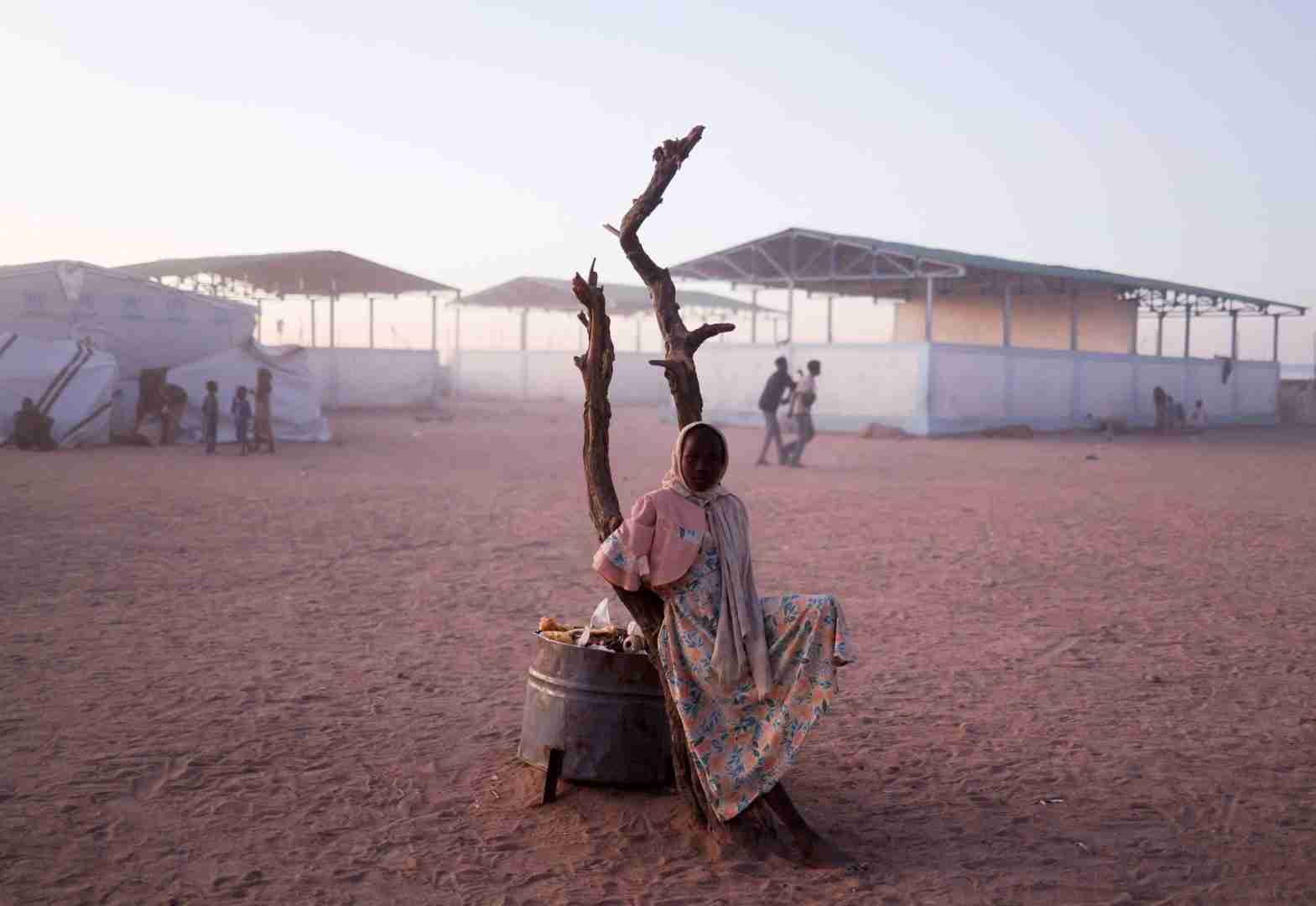
Over 1.3 million Sudanese refugees are living in neighbouring Chad, with most of them arriving since the start of the conflict in Sudan between the army and the paramilitary Rapid Support Forces in April 2023
International News via Reuters:
More than a million Sudanese refugees face drastic cuts in life-saving aid such as food and water unless donors fill a funding shortfall of over $400 million, two U.N. agencies said on Thursday.
Over 1.3 million Sudanese refugees are living in neighbouring Chad, with most of them arriving since the start of the conflict in Sudan between the army and the paramilitary Rapid Support Forces in April 2023. Among them are survivors of mass killings and famine from Darfur.
The World Food Programme and the U.N. refugee agency do not have enough funds to help them all and envisage further cuts in the coming months unless a $428 million shortfall can be met, they said in a joint statement.
“…With less than half the resources we require, we cannot deliver sufficient food to the people who need it most,” said WFP Chad Country Director Sarah Gordon-Gibson. “This will force them into devastating coping strategies and put lives at risk.”
The U.N. joint statement did not specify which donors had cut money although the UNHCR refugee agency has previously said that U.S. cuts in foreign aid are a major reason for funding gaps. Still, both Sudan and Chad are on a list of 17 countries set to receive $2 billion in U.S. aid in 2026.
Other Western donors have also cut back foreign aid as they shift funds to defence.
Already, the UNHCR said it can only help four of every 10 refugees in Chad, leaving many without access to shelter, while most classrooms have over 100 children for every teacher. In the northeastern province of Ennedi Est, refugees are surviving on less than half the minimum amount of daily water, it said.
The Norwegian Refugee Council described extreme hunger levels in Chad, citing a survey showing that 70% of refugee families in Chad reported reducing meals in the past month.
After more than five weeks of strikes against Iran’s missile launchers, military sites and weapons industry, Trump reverted to tariffs as leverage
International News via Reuters:
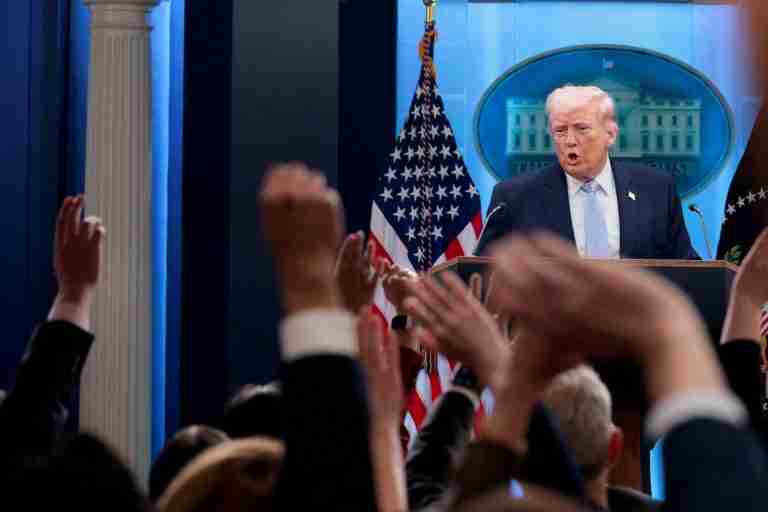
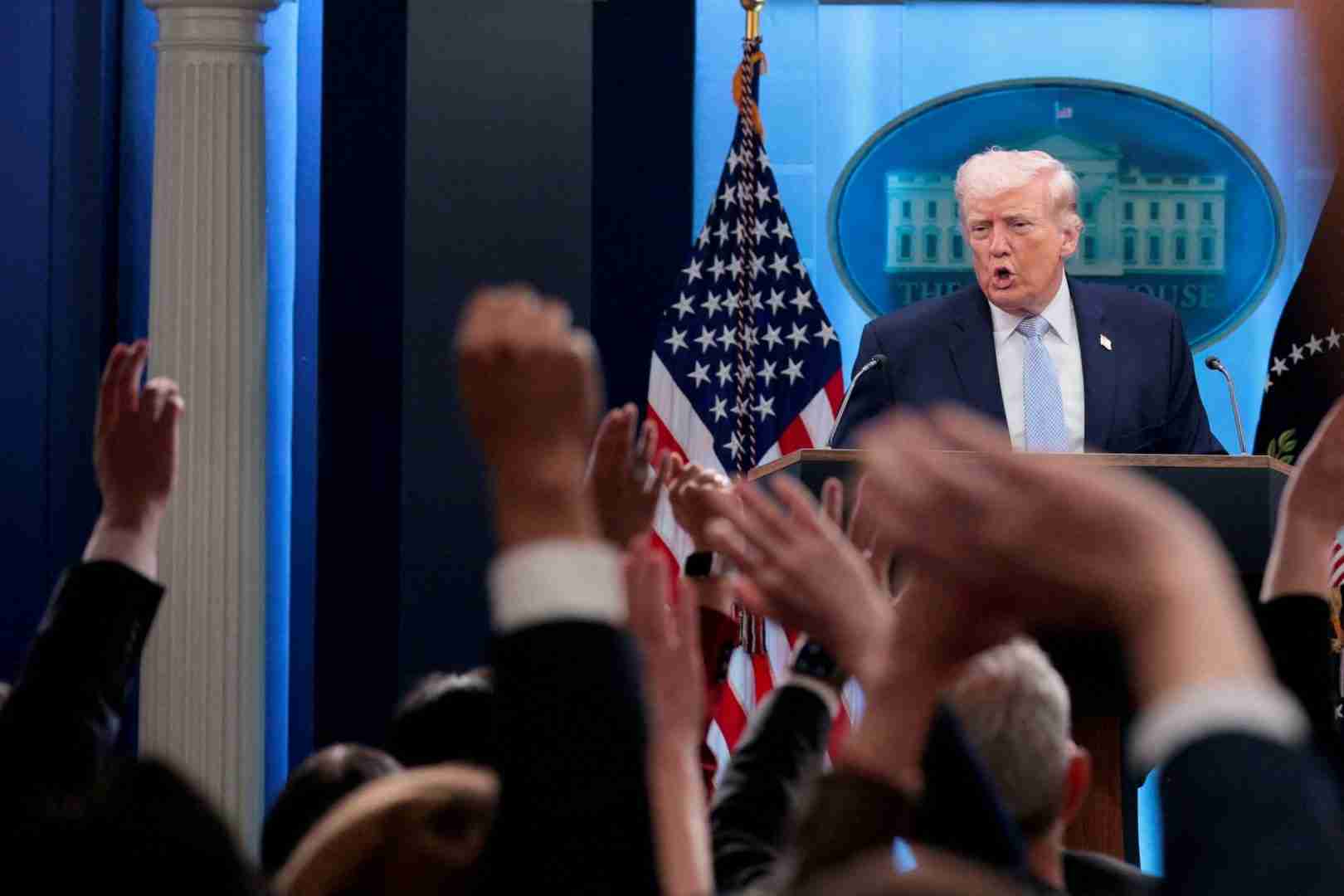
U.S. President Donald Trump said on Wednesday that imports from countries supplying Iran with military weapons will face immediate 50% tariffs with no exemptions, threatening the move just hours after agreeing to a two-week ceasefire with Tehran.
After more than five weeks of strikes against Iran’s missile launchers, military sites and weapons industry, Trump reverted to tariffs as leverage, using a social media post to warn China and Russia against restocking Tehran’s arsenals.
Beijing and Moscow have denied supplying any weapons recently, although allegations against Russia have persisted.
But the U.S. Supreme Court stripped Trump of his fastest and broadest tariff authority, the International Emergency Economic Powers Act, in February, ruling that his broadest global tariffs imposed under the 1977 law were illegal.
“A Country supplying Military Weapons to Iran will be immediately tariffed, on any and all goods sold to the United States of America, 50%, effective immediately, There will be no exclusions or exemptions! President DJT,” Trump wrote on the Truth Social site, without naming any countries.
China and Russia have helped Iran build military capacity to counter U.S. and Israeli pressure, including by supplying missiles and air-defense systems. That support appeared capped during the U.S.-Israeli strikes on Iran.
‘A CHINA-RELATED THREAT,’ LIPSKY SAYS
Reuters reported in February, prior to the first U.S. and Israeli strikes on Iran, that Tehran was considering a purchase of supersonic anti-ship cruise missiles from China.
Reuters reported in March that China’s top semiconductor maker, SMIC, had sent chipmaking tools to Iran’s military, according to two senior Trump administration officials.
“This is a China-related threat, the way I read it. And China will read it that way,” said Josh Lipsky, vice president and chair of international economics at the Atlantic Council.
Although drone and missile parts routinely flow from Chinese entities to Iran, evading U.S. sanctions, Lipsky said Trump was unlikely to follow through with new tariffs in the near term because that would derail his planned trip to Beijing to meet with Chinese President Xi Jinping.
China’s defense ministry spokesperson Zhang Xiaogang on Thursday denied reports of Chinese firms providing Iran with chip equipment and satellite imagery.
“China has always been open and above board on the Iran issue, maintaining an objective and impartial stance, and has consistently worked to promote peace talks while never engaging in any activities that could fan the flames or add fuel to the fire,” Zhang said in a statement.
“The international community can clearly see who is saying one thing and doing another, and who is creating war and conflict everywhere.”
On Tuesday, U.S. Trade Representative Jamieson Greer said Trump wanted to preserve stability in U.S.-China ties, safeguarding U.S. access to Chinese rare-earth minerals while maintaining prior tariff levels and avoiding a “massive confrontation” with Xi.
ALTERNATIVE TARIFF TOOLS
Of Trump’s still available trade tools, an active “Section 301” unfair trade practices action against Chinese goods from his first term would be the most likely vehicle for adding new tariffs quickly, Lipsky said.
A more limited tool would be Section 232 of the Cold War-era Trade Expansion Act of 1962, aimed at protecting strategic domestic industries on national security grounds, but it would limit duties to specific sectors.
Trump’s tariffs on Chinese goods over nearly eight years already have cut U.S. imports from China sharply, from a peak of $538.5 billion in 2018 to $308.4 billion in 2025, with further declines in January and February.
Russia has been another source of arms technology for Iran, but U.S. imports of Russian goods also have shriveled since the invasion of Ukraine in 2022 and financial sanctions imposed on Moscow as a result of that move.
U.S. imports from Russia, one of the only countries not subject to Trump’s now-cancelled “reciprocal” tariffs, jumped 26.1% to $3.8 billion in 2025. These imports are dominated by palladium used in automotive catalytic converters, fertilizers and their ingredients, and enriched uranium for nuclear reactors.
The Commerce Department is moving to impose punitive tariffs on Russian palladium after an anti-dumping investigation.
Reporting by Susan Heavey and David Lawder in Washington; Additional reporting by Beijing newsroom and Jessie Pang in Hong Kong; Editing by Sharon Singleton, Matthew Lewis, Paul Simao and Bernadette Baum
The BoE’s quarterly Credit Conditions Survey also showed demand for unsecured consumer lending was likely to remain unchanged
International News via Reuters:
British lenders expect to see demand for mortgages rise in the three months to the end of May after being flat at the start of 2026, according to a Bank of England survey published on Thursday.
The BoE’s quarterly Credit Conditions Survey also showed demand for unsecured consumer lending was likely to remain unchanged.
The survey of lenders took place between February 23 and March 13.
Writing by William SchombergEditing by Suban Abdulla
TAP said it sees positive booking momentum, while “actively monitoring” developments in the Iran war, adding it will be “nimble” in responding to any operating environment changes
International News via Reuters:
Portugal’s airline TAP said on Thursday its 2025 profit fell 92% due to a one-off fourth‑quarter charge which outweighed higher revenue from increased passenger numbers and stronger margins.
TAP said it sees positive booking momentum, while “actively monitoring” developments in the Iran war, adding it will be “nimble” in responding to any operating environment changes.
TAP’s CEO Luis Rodrigues said that despite a challenging environment, with cost inflation and significant industry-wide supply chain and operational constraints, it “maintained resilient margins and strengthened its financial position”.
Rodrigues said TAP will launch two new routes to Brazil, increasing its network there to 15 destinations, while expanding operations at Porto with new routes and a maintenance hub.
The state-owned flag carrier, which is being partially privatised, booked a net profit of just 4.1 million euros ($4.78 million), down from 53.7 million euros in 2024. This still marked a fourth straight year of profit for the airline.
The drop was mainly due to a 42 million euros one-off fourth-quarter charge from a downward revaluation of deferred tax assets – future tax credits it will use – after parliament in November cut the corporate tax rate from 20% to 17% by 2028.
TAP posted a 51 million euros loss in the fourth quarter.
Rodrigues said that despite the one-off charge, TAP delivered “solid results, supported by resilient demand across its network, particularly in the second half of the year”, and by a relevant contribution from the maintenance business.
TAP said “resilient demand and positive booking momentum” should support higher load factors and stronger unit revenues, with fuel price rises partly offset by ticket price increases.
Full‑year revenue rose 1.2% to 4.31 billion euros on a 1.6% increase in passenger numbers to more than 16 million.
Operating costs rose 1.8% to 4.02 billion euros in 2025, as higher traffic, staff and depreciation expenses were partly offset by lower fuel costs.
Earnings before interest, taxes, depreciation and amortisation rose 4.4% to 725.8 million euros, while EBITDA margin – a measure of profitability – increased to 16.8% from 16.3% in 2024.
($1 = 0.8579 euros)
Reporting by Sergio Goncalves; Editing by Alexander Smith
Crucially, there was scant sign that the Strait of Hormuz was open in any meaningful way, with Iran flexing its control over the vital oil artery and demanding tolls for safe passage
International News via Reuters:
Share markets sagged on Thursday as cracks quickly began to appear in the fragile Gulf truce, nudging oil prices back up toward $100 a barrel and reminding investors the inflationary fallout would last a long while yet.
Crucially, there was scant sign that the Strait of Hormuz was open in any meaningful way, with Iran flexing its control over the vital oil artery and demanding tolls for safe passage.
President Donald Trump took to social media to declare U.S. forces would remain in the Gulf until a deal was reached and complied with, otherwise the “‘Shootin’ Starts,’ bigger, and better, and stronger than anyone has ever seen before.”
Meanwhile, Israel has carried out its heaviest strikes on Lebanon since its conflict with Iran-backed Hezbollah militia began last month, killing more than 250 people on Wednesday.
As a result, Brent crude futures rose 2.5% to $97.28 a barrel, U.S. WTI futures bounced 3.3% to $97.55 and the pan-European STOXX 600 index opened 0.2% lower having leapt 3.7% on Wednesday following the ceasefire announcement. [O/R][.EU]
UBP’s Head of Investment Services UK Peter Kinsella said the moves showed markets remained focused on trading headlines, although apart from the big swings in oil prices, he stressed volatility in most of the main currencies was still limited.
“It is very difficult for investors as they are dealing with a conflict where the protagonists don’t even know what they want,” Kinsella said.
SPLUTTERING GERMANY
Europe’s government bond yields – which drive the cost of borrowing – were also nudging higher again in early trading having plunged on Wednesday.
Data from Germany showed industrial production fell unexpectedly in February, showing Europe’s largest economy was subdued and on course for another quarter of contraction even before the Iran war.
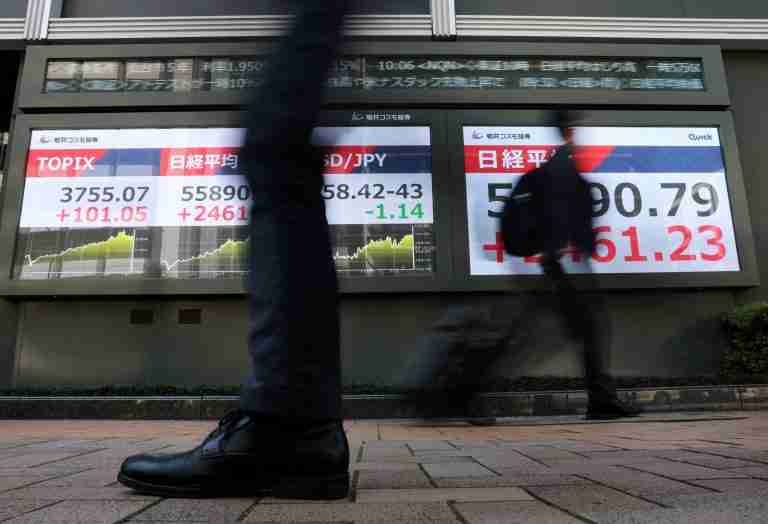
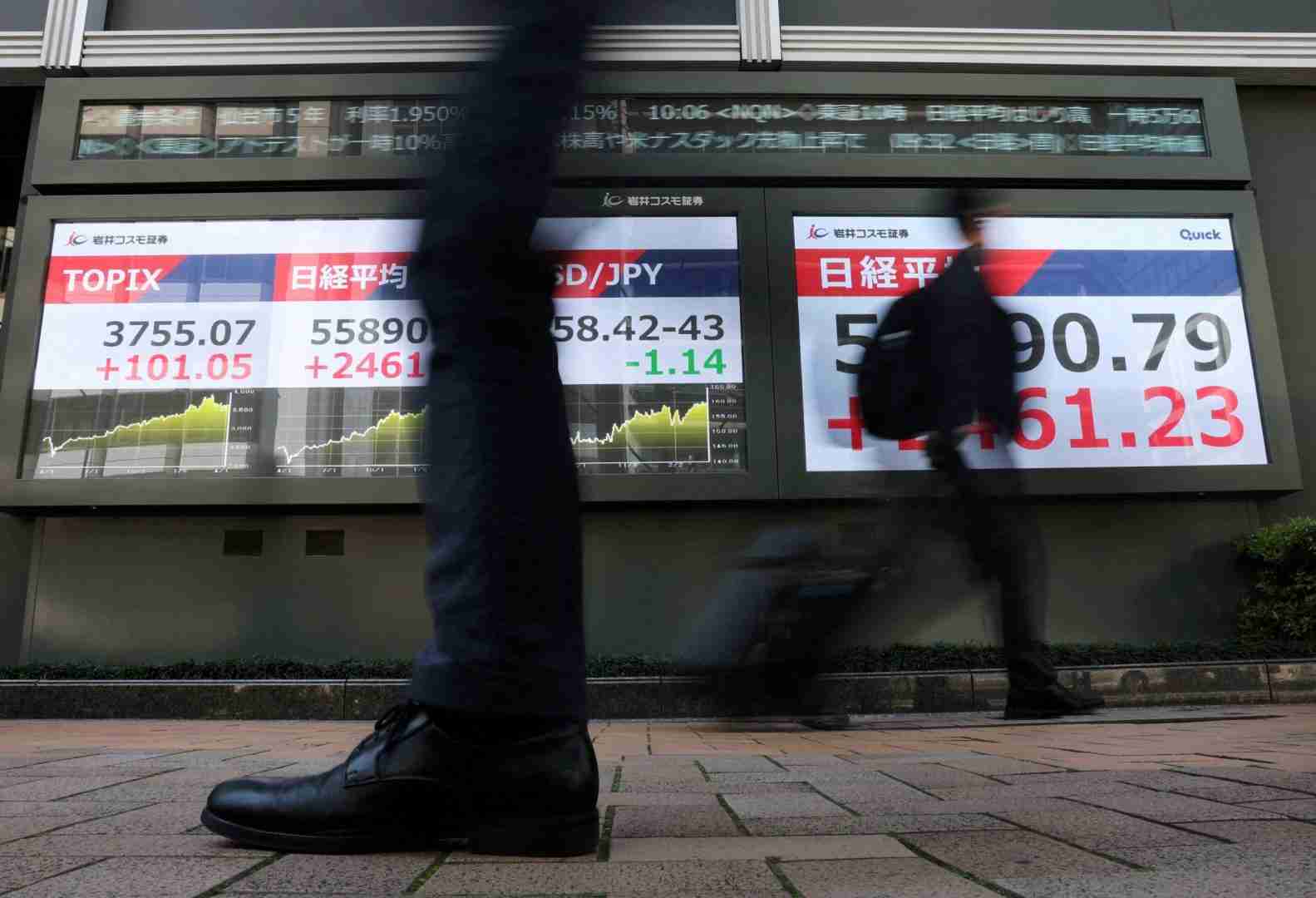
Overnight in Asia, Japan’s Nikkei had ended 0.7% lower after jumping 5.4% the previous session. South Korea dipped 1.6%, following a leap of 6.8%.
Chinese blue chips also slipped 0.6%, while MSCI’s broadest index of Asia-Pacific shares outside Japan eased 0.7%.
On Wall Street, S&P 500 futures and Nasdaq futures were both off around 0.4% ahead of their restart later.
INFLATION IS INEVITABLE
With oil prices still around 40% higher than pre-conflict, an inflationary spike is about to show up in the hard data across the globe.
Figures on U.S. core prices for February due later Thursday are expected to show a chunky 0.4% rise for a second month, and that was before the surge in energy costs.
State Street’s PriceStats’ inflation metrics meanwhile show March has seen the biggest month-on-month increase in prices since at least 2008 when its data series began, according to its head of Macro Strategy Michael Metcalfe.
Minutes from the Federal Reserve’s last policy meeting on Wednesday showed a growing number of members felt a rate hike might be needed to contain inflation, though many hoped the next move would still be a cut.
That tempered a rally in Treasuries, which proved modest compared to the big gains seen in European debt markets on Wednesday. Yields on U.S. 10-year notes sat at 4.296%, compared to 3.96% before the attack on Iran.
Fed fund futures imply only 6 basis points of easing for the rest of this year, having given up on 50 basis points of cuts since the end of February. Europe’s money markets though still, by contrast, price in at least two ECB rate hikes this year.
“The committee broadly agreed that it was too early to act, suggesting the Fed will likely remain on hold this year, in line with our view,” said analysts at JPMorgan in a note.
The shifting outlook for rates saw the dollar pare some of its knee-jerk losses, with the dollar index at 99.06 and the euro flat at $1.1660 and off its previous day’s top of $1.1721.[/FRX]
The dollar inched up to 158.93 yen, having fallen as far as 157.89 at one stage on Wednesday.
In commodity markets, gold inched back to $4,713 an ounce, after bouncing as high as $4,777 while European natural gas prices rebounded to 45.65 euros per megawatt hour (MWh) although the move was far more modest than in oil markets. [GOL/]
The deal appeared to be on thin ice, as Israel continued its parallel war against the Iran-aligned militia Hezbollah in Lebanon, while Tehran accused both Israel and the U.S. of violating the agreement
International News via Reuters:
There was a fragile calm across currency markets on Thursday as traders kept their eyes fixed on whether the ceasefire between the U.S. and Iran would hold, a day after its announcement sent the dollar tumbling across the board.
The deal appeared to be on thin ice, as Israel continued its parallel war against the Iran-aligned militia Hezbollah in Lebanon, while Tehran accused both Israel and the U.S. of violating the agreement and said that proceeding with peace talks would be “unreasonable.”
The Strait of Hormuz also remained shut to vessels sailing without a permit and shippers said they needed more clarity before resuming transit, sending oil prices higher.
U.S. President Donald Trump said all of its ships, aircraft, and military personnel would stay in place in and around Iran until it fully complied with a deal.
The uncertainty left currency markets on edge.
The euro was flat at $1.1661. It gained 0.6% on Wednesday, but retreated late in the day having touched a one-month high of $1.1721 earlier in the session.
It was a similar story for the pound and Japanese yen. Sterling was flat at $1.3393, after gaining 0.77% on Wednesday, but retreating from as high as $1.348.
The Japanese currency was slightly softer with the dollar up 0.2% at 158.9 yen, having briefly dropped below 158 on Wednesday. <JPY=?
With the Strait of Hormuz closed, “the entire ceasefire remains tenuous,” said Derek Halpenny head of research global markets EMEA at MUFG. But, he added, “while the U.S. dollar has rebounded, the moves in general have been modest.”
He said the fact that further talks scheduled in Pakistan were still going ahead was keeping any retracement of Wednesday’s moves in check.
There are also a few bits of economic data in the mix around the world, but they are playing second fiddle to war headlines.
Japan’s consumer confidence worsened in March for the first time in three months, a government survey showed on Thursday, adding to a recent string of data pointing to the potential economic hit from the Middle East war, which would complicate the BOJ’s rate-hike decision. The yen showed little reaction to the data.
Speaking in parliament, BOJ Governor Kazuo Ueda said real interest rates are clearly negative and keeping the country’s financial conditions accommodative.
The U.S. is set to release February personal spending and the PCE data on Thursday, though as this covers the period before the war, it is unlikely to have a major effect on markets.
Other currencies were also broadly steady. The Swiss franc was flat at 0.7913 francs per dollar and 0.9228 per euro.
The Australian dollar dropped 0.3% to $0.7024.
Reporting by Satoshi SugiyamaEditing by Shri Navaratnam and Kim Coghill
Jayvee Sangha, who admitted to running a “stash house” for illegal narcotics out of her home in the North Hollywood district of Los Angeles, pleaded guilty in September
International News via Reuters:
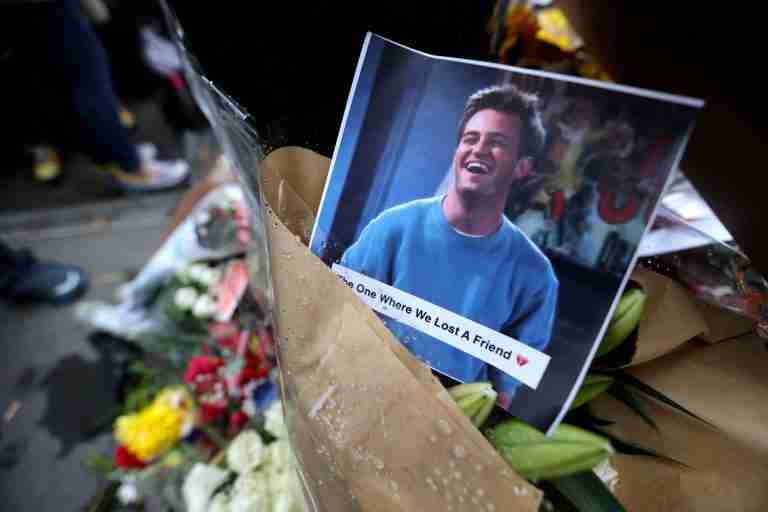
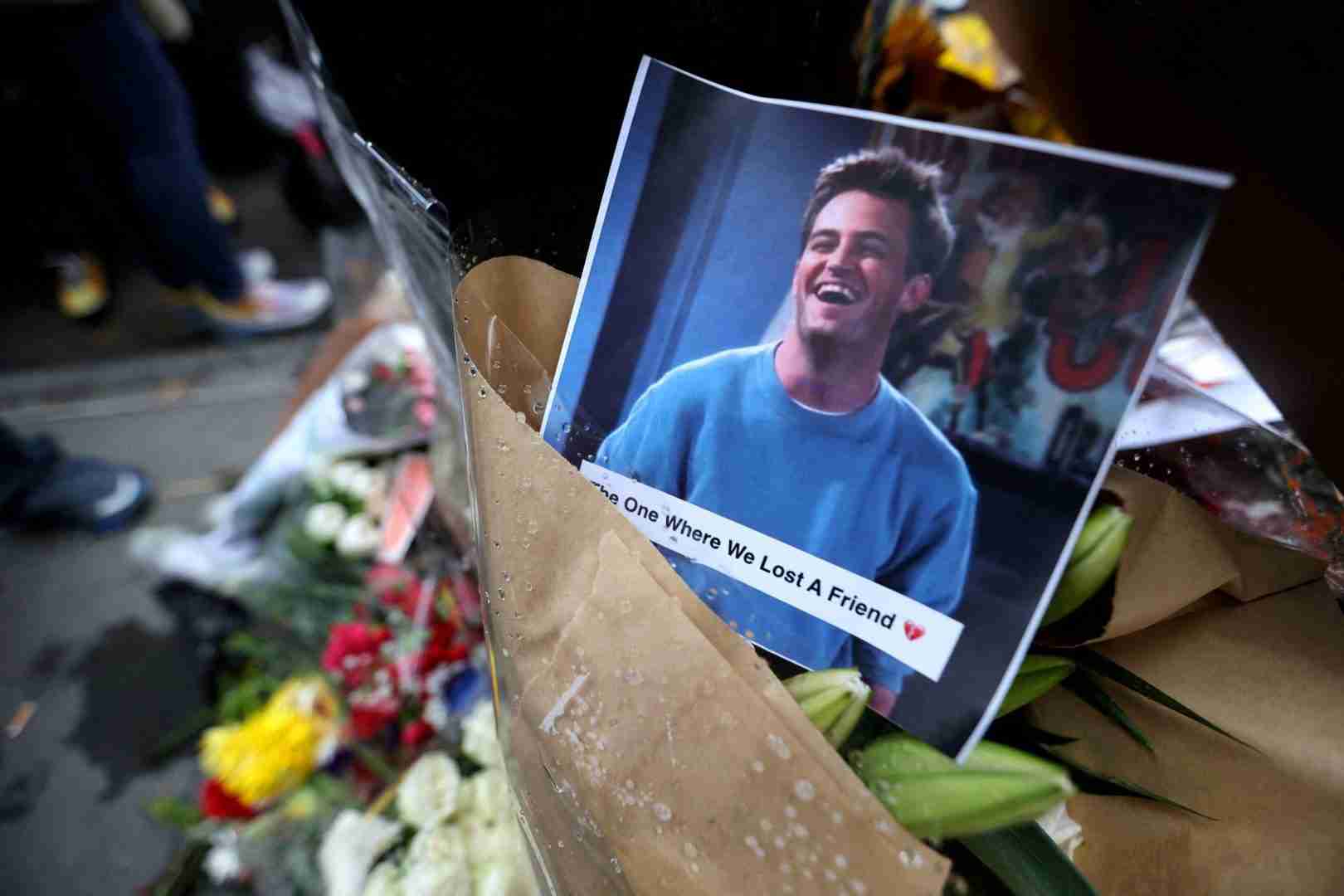
A drug dealer dubbed the “Ketamine Queen” was sentenced on Wednesday to 15 years in prison in connection with the fatal overdose of “Friends” star Matthew Perry, including her role in supplying the dose of the powerful anesthetic that killed the actor.
Jayvee Sangha, who admitted to running a “stash house” for illegal narcotics out of her home in the North Hollywood district of Los Angeles, pleaded guilty in September to five felony drug counts stemming from Perry’s 2023 death.
Sangha, 42, a dual U.S.-British citizen, had faced a sentence of up to 65 years in prison. U.S. District Judge Sherilyn Garnett imposed a 15-year sentence, harsher than the penalties received by any of her four co-defendants in the case, including two physicians.
Federal prosecutors had recommended a 15-year prison term. The defense had urged the judge to limit Sangha’s sentence to time already served. Sangha has been incarcerated since August 2024.
Perry was found by his live-in personal assistant floating face down and lifeless in a hot tub at his Los Angeles home on October 28, 2023. He was 54.
An autopsy report concluded Perry died from the “acute effects of ketamine,” which combined with other factors in causing the actor to lose consciousness and drown.
Ketamine is a short-acting but potent anesthetic with hallucinogenic properties that is sometimes prescribed to treat depression and other psychological disorders. It also has gained popularity for abuse as an illicit party drug.
Perry had publicly acknowledged decades of substance abuse that overlapped with the height of his fame playing the sardonic but charming Chandler Bing on the 1990s hit NBC television comedy “Friends.”
His death came a year after publication of Perry’s memoir, “Friends, Lovers, and the Big Terrible Thing,” which chronicled bouts with addiction to prescription painkillers and alcohol that he wrote had come close to ending his life more than once.
In the months before he died, Perry had claimed to have regained sobriety. But according to federal law enforcement officials, Perry had been undergoing medically supervised ketamine infusions for depression and anxiety at a clinic where he became addicted to the drug.
When doctors there refused to increase his dosage, Perry turned to unscrupulous providers willing to exploit his drug dependency for their own financial benefit, authorities said.
Within weeks, he was dead from an overdose of ketamine supplied by Sangha, who was known to her customers on the street as the “Ketamine Queen.” Sangha acknowledged selling a total of 51 vials of ketamine to a go-between dealer, Erik Fleming, who in turn sold the doses to Perry through the actor’s personal assistant, Kenneth Iwamasa.
It was Iwamasa, prosecutors said, who later injected Perry with at least three shots of ketamine from the vials Sangha had supplied, resulting in the actor’s death.
As part of her deal with prosecutors, Sangha pleaded guilty to one count of maintaining a drug-involved premises, plus three counts of illegal distribution of ketamine and one count of distributing ketamine resulting in death.
Sangha admitted then that she was aware that vials she sold to Fleming were intended for Perry. She also admitted to selling ketamine to a person in August 2019 who died hours later from an overdose.
Fleming, Iwamasa and the two medical doctors charged in the case – Mark Chavez and Salvador Plasencia – have all pleaded guilty to federal drug offenses in the case.
Reporting by Lisa Richwine in Los Angeles; Writing and additional reporting by Steve Gorman in Los Angeles; Editing by David Gregorio and Will Dunham
To provide the best experiences, we use technologies like cookies to store and/or access device information. Consenting to these technologies will allow us to process data such as browsing behavior or unique IDs on this site. Not consenting or withdrawing consent, may adversely affect certain features and functions.
Functional
Always active
The technical storage or access is strictly necessary for the legitimate purpose of enabling the use of a specific service explicitly requested by the subscriber or user, or for the sole purpose of carrying out the transmission of a communication over an electronic communications network.
Preferences
The technical storage or access is necessary for the legitimate purpose of storing preferences that are not requested by the subscriber or user.
Statistics
The technical storage or access that is used exclusively for statistical purposes.The technical storage or access that is used exclusively for anonymous statistical purposes. Without a subpoena, voluntary compliance on the part of your Internet Service Provider, or additional records from a third party, information stored or retrieved for this purpose alone cannot usually be used to identify you.
Marketing
The technical storage or access is required to create user profiles to send advertising, or to track the user on a website or across several websites for similar marketing purposes.