Tuesday, November 3, 2026
Home Blog Page 367

Hospital overcrowding: The eye-opening figures

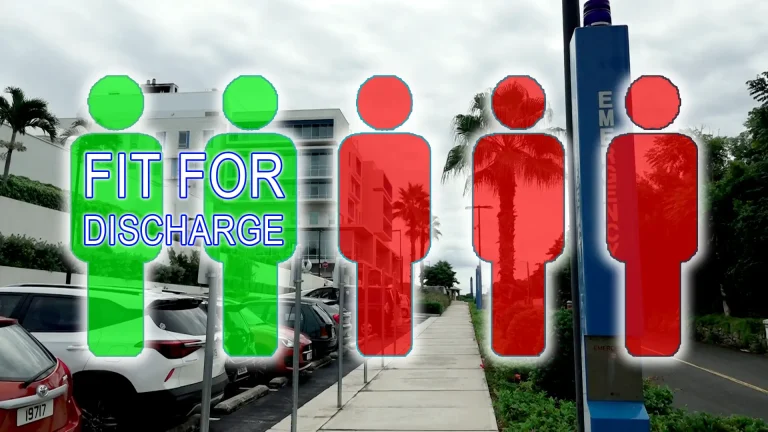
Two in five acute care patients don’t need to stay at the hospital… As pressure on the Emergency Department builds, overcrowding once more highlights the need for more care in the community

About two in five patients occupying beds in the hospital’s Acute Care Wing could be cared for elsewhere.

That has been the case so far in 2026, according to a Bermuda Hospitals Board spokesperson, who stated: “Over the last three months, around 40% of the 90 beds in the KEMH acute care wing have been occupied by people who are medically fit to be discharged.”

Bermuda Broadcasting reached out to the hospital after a concerned resident cited growing numbers of patients waiting in the Emergency Department for beds.

The BHB spokesperson said that, as of Tuesday morning, “34 patients in the acute care wing were medically able to be discharged, with another six medically fit patients in other areas of the hospital – a total of 40 … That means the beds are not available for acutely ill patients who are admitted through the Emergency Department.

“These patients are cared for in Emergency while they wait for space to open up in the acute care units.”

Such circumstances mount pressure on an already beleaguered ED, which saw an average of 82 patients a day in March – up from 77 in March 2025, with five days exceeding 90 patients.

However, admissions for the first three months of 2026 are similar to 2025. The spokesperson says the public can help ease pressure on ED by only going there for emergency care, and seeing a family doctor or visiting Lamb Foggo Urgent Care Centre for less serious cases.

The comments from the hospital highlight a perrenial problem – the dearth of care outside of KEMH.

Last March, BHB was reported 40 fit-for-discharge patients left in the hospital, and one Emergency patient waiting five days for admission.

At that time, Chief of Staff Dr. Anna Neilson-Williams told Bermuda Broadcasting that the answers lie external to the hospital, and “what is needed is more facilities”. She added: “It’s likely that we may be facing this scenario again.”

A year on, the hospital spokesperson told us that about 60% of patients who are medically fit to leave are waiting for nursing home placements, which can be difficult in complex cases such as dimentia, and with young people who need long-term care.

“Other discharges are postponed until home care can be arranged or changes are made in the home to ensure a safe environment,” the spokesperson said. “In some cases, family members are not available, or they are unable or unwilling to take on the responsibility of home care.”

The hospital points to Government’s commitment to increase nursing home availability, plus funding for BHB to convert spaces for transitional care, as potentially easing pressure.

“This will allow us to move medically fit patients out of the acute care units, placing acutely ill patients from Emergency in the vacated beds.”

“Moving one long-stay patient out of an acute bed means multiple acute patients can be treated and discharged from the same bed over just a few weeks.”


Sailor Penruddocke surges into second at Trofeo Princesa Sofía

Bermudian sailor Adriana Penruddocke produced a tactical masterclass on the Bay of Palma to storm into second place overall at the 55th Trofeo Princesa Sofía.

On a day plagued by erratic offshore winds, the Olympic sailor erased the memory of a frustrating Monday with a remarkably consistent triple-header in the ILCA 6 fleet.

After languishing in 63rd following the opening day’s solitary race, Penruddocke returned to the water with clinical intent. Her scoreline for the day—4th, 5th, and 2nd—leaves her on 11 net points, trailing only Ireland’s Evie McMahon in the overall standings.

In the ILCA 7 class, compatriot Sebastian Kempe faced a more turbulent afternoon. The young Olympic hopeful slipped from 26th to 32nd overall after a day of fluctuating fortunes.

  • Race 1: A solid 18th.
  • Race 2: Caught by a wind shift to finish 56th.
  • Race 3: A resilient 5th-place finish to stay within the mix.

With 52 net points, Kempe remains well-placed in a massive 1,100-strong international field, though he sits six spots lower than his overnight position.

Conditions remain the primary adversary in Mallorca. With the reliable sea breeze not expected until the weekend, both fleets spent hours waiting for raceable windows on Wednesday.

For Penruddocke, the challenge is now maintaining momentum at the front of the pack. For Kempe, the goal is a return to the top 20 as the regatta enters its high-stakes middle phase.

Biometrics collection set for Canadian visa applications

The Ministry of Economy and Labour stated that biometric collection is compulsory for work or study visas, visitor visas and all international students, including Bermudian students

Full media release from the Ministry of Economy and Labour:

The Ministry of Economy and Labour is pleased to announce an upcoming biometric collection session for Bermudians seeking Canadian Visas.

Specific identification criteria are mandatory for some individuals applying for a Canadian visitor visa, work or study permit, or permanent residency in Canada. It is also compulsory for all international students, including Bermudian students.

Thanks to an ongoing partnership with the Consulate General of Canada, biometric collection will take place in Bermuda on April 16-17th 2026. 

The Minister of Economy and Labour, the Hon. Jason Hayward, said, “We remain committed to making essential services more accessible for Bermuda’s residents. This biometric collection session is an invaluable opportunity for those applying for Canadian visas and work or study permits to complete an important step in the process without the added burden of overseas travel. I appreciate the Consulate General of Canada’s continued collaboration in providing this convenient service, and I strongly encourage those eligible to take advantage of it.”

Biometrics Collection Details

Date: Thursday, 16th and Friday, 17th April 2026

Time: 9:00 am to 12:00 pm and 1:00 pm to 4:00 pm by appointment only

Location: Department of Immigration, 1st Floor Government Administration Building, 30 Parliament Street, Hamilton

Who Can Use This Service?

First, please make sure that you do need to give your biometrics.

You can use the service if you:

·                  Reside in Bermuda

·                  Have applied for a study or work permit, visitor visa, or permanent residency in Canada

·                  Have paid the biometrics fee (CAD $85 per individual; CAD $170 maximum fee per family applying at the same time)

·                  Possess a biometrics instruction letter from Immigration, Refugees and Citizenship Canada (IRCC).

Note: If you apply online for your study or work permit, or visitor visa and pay the biometrics fee when you submit your application, you can receive the biometrics instruction letter within 24 hours of applying. Please note that you have 30 days after receiving the letter to provide your biometrics.

How to Book an Appointment

To avoid long wait times, you must book an appointment in advance. To schedule your appointment, email CNGNYConsular@international.gc.ca and include your:

·                  Surname

·                  Given name

·                  Date of birth

·                  Phone number

·                  A copy of your Biometrics Instruction Letter (BIL)

The Consulate General will respond to your email within two business days, beginning April 1, 2026.

What to Bring to Your Appointment

·                  Your valid passport or other travel documents

·                  Your Biometrics Instruction Letter

Please arrive 15 minutes before your scheduled appointment.

Other Biometrics Collection Options.

If you cannot use the service on April 16th-17th in Hamilton, the following options are available: https://www.cic.gc.ca/english/information/where-to-give-biometrics.asp.

The public is advised not to direct queries to the Bermuda Department of Immigration because they cannot assist with this process.

Governor sends Bermuda Easter Lilies to Royals

Governor Andrew Murdoch took part in the annual picking of Bermuda Easter Lilies for the King

Full news statement from Government House:

Yesterday (March 31), His Excellency the Governor, Andrew Murdoch CMG, was delighted to take part in the annual picking of Bermuda Easter Lilies.

The beautiful lilies were grown at Windybank Farm and departed Bermuda yesterday evening to be delivered to Their Majesties today, in time for Good Friday.

The cherished tradition of sending Easter lilies has been in place for many decades and brings a small piece of Bermuda to the royal household every year.  

This year, as part of the 60th Anniversary celebrations of the Royal Bermuda Regiment, lilies will also be sent to Her Royal Highness The Duchesses of Gloucester, the RBR’s Colonel in Chief.

Government House extends a huge note of thanks to Malcom and Benn Smith for providing the flowers, as well as those at British Airways for their support in getting the flowers to their destination.

Inside Sports with Chris Smith & Philip Corriea

This week on Inside Sports, Nick Jones & Darren ‘Butchy B’ dives into an in-depth discussion with Bermuda’s Carting Association president Chris Smith and vice president Philip Correia. They share insights into the sport’s history, current state, upcoming events, and development programs, highlighting Bermuda’s vibrant motorsport scene and preparations for the upcoming CAC Games.

Inside Sports Carifta Games 2026

Join us for a lively discussion covering the upcoming CARIFTA Games and the world class athletes representing Bermuda
We explore the significance of youth programs, international tournaments, and community support for sports growth.

EU fines on US companies are biggest source of friction, State Department official says

He was speaking during a visit to Europe to deepen economic ties, advance partnerships in emerging technologies and push for what Washington calls a fair regulatory environment

International News via Reuters:

A senior U.S. State Department official said on Wednesday that European Union fines on U.S. companies are the biggest source of friction in transatlantic economic relations, singling out the bloc’s Digital Markets Act, which targets dominant tech platforms.

“The biggest single source of friction in the U.S.-EU relationship from an economic standpoint is the recurrent fines, very onerous punitive fines instituted on U.S. companies,” Under Secretary of State for Economic Growth Jacob Helberg said on a call with journalists.

Helberg said Washington was concerned by reports that another round of fines could be imposed on U.S. companies in the near future.

He was speaking during a visit to Europe to deepen economic ties, advance partnerships in emerging technologies and push for what Washington calls a fair regulatory environment. Helberg said he had had productive talks with the European Commission, including on European companies that play an important role in global supply chains, an area he said could offer scope for closer transatlantic cooperation.”I believe we would be moving a lot faster if we didn’t also have to simultaneously address the sources of friction that directly stem from the DMA,” he said.

Helberg said he would meet with executives at Dutch chip equipment giant ASML, Europe’s most valuable firm, on Thursday. He declined to answer questions on whether the U.S. government is satisfied with current U.S.-Dutch controls on ASML’s exports to China.

Reporting by Toby Sterling; Editing by Andrew Heavens and Ros Russell

Stronger polls buy Flavio Bolsonaro time on economic team as Brazil race heats up

Since announcing his candidacy last year, the senator has spent much of his time traveling overseas to meet conservative allies, or visiting with his father, ex-President Jair Bolsonaro

International News via Reuters:

Rising public support for Brazilian opposition Senator Flavio Bolsonaro’s presidential run has allowed him to put off naming key economic advisers, his aides say, even as right-wing rivals enter the field ahead of an October election.

Since announcing his candidacy last year, the senator has spent much of his time traveling overseas to meet conservative allies, or visiting with his father, ex-President Jair Bolsonaro, who is serving a sentence in Brasilia for a failed coup plot.

Yet the 44-year-old has risen to draw even with President Luiz Inacio Lula da Silva in opinion polls simulating a likely matchup, as the 80-year-old leftist leader grapples with a cooling economy and a banking scandal rattling Brasilia.

Two sources close to the senator said the momentum he has gained while signaling a platform broadly in line with his father’s approach should give him more breathing room to draft advisers and craft proposals to cement a winning coalition.

If the trend continues, the rollout of his economic team, which had been slated for May, could be delayed further, one of the sources said. In December, when Bolsonaro was first scrambling to reassure business, an aide suggested he could present his economic program by February.

It is a sharp contrast with the 2018 campaign run by the elder Bolsonaro, then a backbench congressman, who tapped future Economy Minister Paulo Guedes as his all-purpose economic guru nearly a year before the election to assuage nervous investors.

Senator Bolsonaro’s more cagey approach so far will face a fresh test as other right-wing parties launch their candidates. Brazil’s Social Democratic Party this week tapped Ronaldo Caiado, governor of Goias state, and Minas Gerais Governor Romeu Zema is running for the Novo Party.

“It will be a turbulent campaign,” said Carlos Melo, a political scientist at Insper in Sao Paulo, regarding the more crowded conservative field, while noting that the governors face long odds of overtaking Bolsonaro.

On Monday, Caiado made a direct appeal to supporters of Jair Bolsonaro by pledging a broad amnesty to those convicted for links to a 2023 coup plot, including the former president, who is now serving his sentence at home due to health issues.

Zema told Reuters he will leverage his executive track record in Minas Gerais and his clean record in a country plagued by corruption scandals to offer voters an alternative on the right, playing down the uphill climb he faces in early polls.

“All political campaigns are somewhat unpredictable,” Zema said.

Flavio Bolsonaro, who was a Rio de Janeiro state lawmaker before his father’s 2018 campaign helped him win a Senate seat, has offered few details of his economic proposals, promising to cut taxes and spending while improving the business environment.

His advisers said the momentum in the polls should help draw more interest from potential cabinet members.

Sources close to Bolsonaro said his campaign has made informal contact with potential advisers including former Treasury Secretary Mansueto Almeida, now at BTG Pactual, and former central bank governor Roberto Campos Neto, now vice chairman at digital bank Nubank.

Both worked in the 2019-2022 Bolsonaro administration.

At a conference in Boston over the weekend, Almeida said he remains in the private sector and has not been approached by any candidate. Campos Neto did not respond to a request for comment.

Reporting by Marcela Ayres and Ricardo Brito in Brasilia, Luciana Magalhaes in Sao PauloEditing by Brad Haynes and Alistair Bell

How an Indian LPG tanker escaped Hormuz via an unusual route

Pine Gas Chief Officer Sohan Lal said the ship’s 27 Indian crew had seen missiles and drones flying overhead every day as they waited

International News via Reuters:

A day before Israel and the United States attacked Iran on February 28, the Indian‑flagged LPG tanker Pine Gas loaded cargo at the United Arab Emirates’ Ruwais port, hoping to reach home within a week.

However, it would be nearly three weeks before the vessel safely transited the Strait of Hormuz, after Iran began selectively allowing ships through the narrow waterway.

Pine Gas Chief Officer Sohan Lal said the ship’s 27 Indian crew had seen missiles and drones flying overhead every day as they waited. In a video seen by Reuters, at least five projectiles can be seen streaking through the night sky above the vessel.

Lal said Indian officials had asked the crew to be on standby to set sail around March 11, but with the war escalating, it took until March 23 before the ship was cleared to move, but not through the normal Hormuz shipping lanes. 

Instead, Iran’s Islamic Revolutionary Guard Corps instructed the tanker to navigate a narrow channel north of Larak Island off Iran’s coast. Lal said Indian authorities and the ship’s owner, Mumbai‑based Seven Islands Shipping, agreed to proceed only if every crew member consented to the voyage.

“They needed a yes or a no from all crew,” he said. “Everyone onboard agreed.” Lal added that the Larak route, not generally used by shipping, was recommended by the IRGC as the regular passage through Hormuz was mined.

He said the Indian Navy guided the ship during the transit before four Indian warships escorted it for nearly 20 hours from the Gulf of Oman to the Arabian Sea. Lal said they did not pay a fee for the transit and the IRGC did not board the vessel at any time. 

The Indian navy confirmed it was escorting Indian-flagged ships after they crossed the strait.  The foreign ministry said this month that the Indian Navy has been present in the Gulf of Oman and the Arabian Sea for years to secure sea lanes for Indian and other ships.

LPG CRUNCH IN INDIA

India relies heavily on seaborne imports of liquefied petroleum gas with hundreds of millions of households using it for cooking.

The Pine Gas, carrying 45,000 metric tons of LPG, was originally scheduled to unload at the west coast port of Mangalore but Indian authorities directed it to discharge equal volumes at the eastern ports of Visakhapatnam and Haldia.

Iran has said it has permitted “friendly nations” including China, Russia, India, Iraq and Pakistan passage through the Strait of Hormuz.

While six Indian ships have exited the Strait, 18 Indian‑flagged vessels carrying around 485 Indian seafarers remain in the Persian Gulf.

Reporting by Saurabh Sharma in New Delhi; Writing by Krishna N. Das; Editing by Kirsten Donovan

From plastic jars to transport, Iran war drives up beauty industry costs

Cost pressures were a recurring theme last week at one of the sector’s largest trade fairs in the northern Italian city of Bologna

International News via Reuters:

The Iran war is seeping into the cosmetics supply chain, pushing up the cost of everything from plastic jars and lipstick tubes to transport, and reminding the beauty industry that even a tub of face cream depends on fragile global trade routes.

Cost pressures were a recurring theme last week at one of the sector’s largest trade fairs in the northern Italian city of Bologna, as executives watched Iran’s blockade of the vital Strait of Hormuz shipping route approach a fifth week.

The Cosmoprof fair drew 3,100 exhibitors from 68 countries and 255,000 visitors from 150 nations, ranging from companies seeking packaging solutions to retailers scouting new products.

Cosmetics companies are primarily worried about higher raw material and transport costs due to rising oil prices and disrupted shipping, five industry executives told Reuters.

“We are beginning to see cost increases driven by energy price inflation, compounded by delivery delays,” said Simone Dominici, CEO of Italian cosmetics group Kiko, who estimates additional logistics-related costs of about 1.5 million euros ($1.7 million) for the group over the year.

Kiko, which sells lipsticks starting at 5 euros and mascaras from 7.5 euros, operates more than 1,000 stores worldwide.

“With so many containers stuck in the Middle East, there is a tighter container availability … and goods are not being moved efficiently”, Dominici said, adding that higher prices for some chemical components and packaging – much of it sourced from the Far East – would add further pressure.

As the Iran crisis upends supply chains, Yonwoo, a container maker for L’Oreal and K-beauty firms, said it was scrambling to secure stocks of plastic resin to manufacture the pots used for skincare and cosmetics.

ALTERNATIVE ROUTES

Beyond higher costs, the industry could also face softer demand from consumers whose purchasing power is being eroded by inflation, Dominici said.

“It’s the perfect storm,” he warned.

Milan-listed Intercos and privately owned Ancorotti Group, among Italy’s largest contract manufacturers in the sector, said they had not yet faced major supply shortages but cited higher logistics costs, longer delivery times and rising raw material prices as challenges.

“Lead times have lengthened as routes have become longer and ports more congested. What once took eight weeks now can take 12 to 14 weeks”, said Ancorotti Chief Executive Roberto Bottino.

Some clients have turned to rail transport to reach Asia, Bottino added.

Ancorotti Group makes around 220 million euros in revenues per year from selling products to beauty brands worldwide.

Bottino said it was difficult to imagine supply-chain cost increases not ultimately being passed downstream.

“Middle East customers value quality and are willing to pay a premium for added value, so being unable to access these markets can have a negative impact”, said Fabio Franchina, chairman of haircare products maker Framesi.

Franchina said the company’s distributor in the region was exploring alternative delivery routes.

“They are looking at … (options such as) shipping to Jeddah and then moving goods by road instead of routing them through Persian Gulf ports,” he said.

Some goods are currently being shipped by air rather than by sea, he added, further lifting costs.

Italy produced 18 billion euros of cosmetics in 2025, including 8.4 billion euros in exports, according to industry body Cosmetica Italia, making the country the world’s fifth-largest exporter of beauty products and one of the leading producers of hair dyes, eye make-up and fragrances.

($1 = 0.8623 euros)

Reporting by Elisa Anzolin. Editing by Mark Potter

UK equities climb 1% as Trump signals end to Iran war

The blue-chip FTSE 100 rose 1.6% at 1044 GMT, while the midcap FTSE 250 climbed 1.8%

International News via Reuters:

London’s main indexes climbed on Wednesday after U.S. President Donald Trump signalled that the Iran war could end soon, prompting investors to scale back expectations for further interest rate hikes by the Bank of England.

The blue-chip FTSE 100 rose 1.6% at 1044 GMT, while the midcap FTSE 250 climbed 1.8%. On Tuesday, both indexes marked their biggest monthly drop since 2020 on fears that the war-led increase in oil prices will stoke inflation.* Trump and his Secretary of State Marco Rubio said the endof the war on Iran could be near, with Washington signallingpotential for both direct talks with Tehran’s leadership and awinding down of the conflict even without a deal. * Interest rate futures were fully pricing in one 25basis-point increase in the BoE’s bank rate by the end of 2026,and the possibility of a second compared with two or threehikes. * Most FTSE 350 sub-sectors traded higher, except energy,which fell 1% after oil slid more than 3% amid Middle Eastvolatility. [O/R] * Heavyweight banks rose 3.4%, providing the biggest boostto the benchmark index, with Standard Chartered, Lloyds BankingGroup and Barclays up between 3.4% and 4.1%. * Precious metal miners rose 4.7%, as gold rose onde-escalation hopes. [GOL/] * Britain’s food prices will be rising by almost 10% by theend of 2026 due to the Iran war, the country’s food and drinkmanufacturers’ lobby warned, around three times faster than itsprevious forecast. * British factory cost pressures soared in March, anddelivery delays – due to ships avoiding the Strait of Hormuz -were the longest since mid-2022, according to an S&P Globalsurvey. * Berkeley fell 15.1% after the home builder forecast thatprofit growth would slow through 2030. The firm said it wouldhalt land purchases as the war and the risk of higher interestrates dampen hopes of a housing market recovery.

Reporting by Tharuniyaa Lakshmi in Bengaluru; Editing by Harikrishnan Nair

World markets rocket higher on optimism Iran war could end soon

Europe’s STOXX 600 jumped as much as 2.5% in early trade and was last up 2% – still on track for its biggest daily jump in a year – as travel stocks surged 3.4% and aerospace and defence stocks added 3.9%

International News via Reuters:

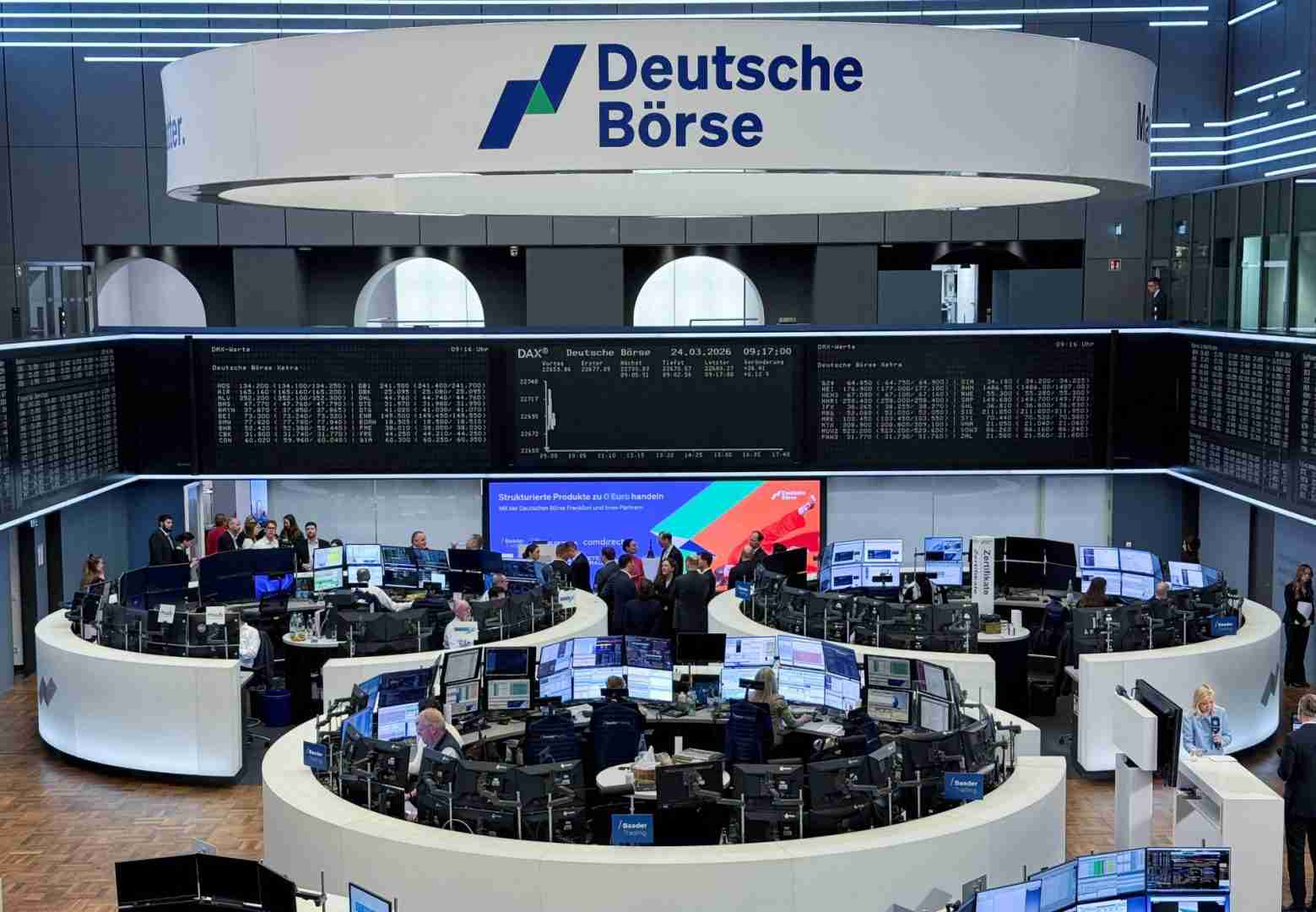
Stocks soared, bonds rallied and the dollar languished on Wednesday, as hopes of a de-escalation in the Iran conflict fuelled the biggest rebound in regional equities in more than three years.

Europe’s STOXX 600 jumped as much as 2.5% in early trade and was last up 2% – still on track for its biggest daily jump in a year – as travel stocks surged 3.4% and aerospace and defence stocks added 3.9%. German bund yields slipped 5 basis points.

S&P 500 e-mini futures are pointing to more moderate gains of about 0.5%. Earlier, MSCI’s broadest index of Asia-Pacific shares outside Japan rose 4.7% – its biggest one-day increase since November 2022.

On Tuesday, U.S. President Donald Trump said the U.S. could end its military attacks on Iran in two to three weeks. 

“Markets are trading this narrative that the war could be over, or at least that the US could withdraw. That is creating this positive sentiment in risk assets,” said Evelyne Gomez-Liechti, multi-asset strategist at Mizuho, though she added she is more inclined to be sceptical about the rally.

 “We still have strikes going on. Israel hasn’t really been talking about a ceasefire yet and they are also a very important mix of the equation,” she said.  “Iran doesn’t seem like it is willing to negotiate in any case.”

IRAN WAR DEVELOPMENTS

But the aggressive re-pricing that happened when the war started means it is hard to stand against momentum when the narrative is positive, said Gomez-Liechti.

The rally shrugged off a report in the Wall Street Journal that the UAE may enter the conflict and is lobbying for a UN Security Council Resolution to authorise it to take part in military action to force open the Strait of Hormuz. U.S. Secretary of State Marco Rubio said Washington will have to reexamine its relations with NATO after the war ends.

Trump will provide an update on Iran in an address to the nation  at 9 p.m. ET on Wednesday (0100 GMT on Thursday), White House spokeswoman Karoline Leavitt said on X.Stocks on Wall Street soared on Tuesday as traders bet on the potential off-ramp to the war, sending the S&P 500 2.9% higher, while oil markets followed through on earlier declines in Asian trading.

Brent crude futures pared some losses and were last 1% lower at $102.94 a barrel, having earlier moved below the $100 mark in volatile trading. Gold was 1% higher at $4,720 per ounce. 

DATA DELUGE      Elsewhere, the U.S. dollar index slipped 0.1% to 99.59, extending its biggest one-day drop in two weeks on Tuesday into a second consecutive day of declines, as traders reassessed the odds that the Federal Reserve may resume easing policy earlier than thought. 

The yield on the U.S. 10-year Treasury bond was down 3.4 basis points at 4.277%.        Fed funds futures are pricing an implied 17.9% chance that a 25-basis-point cut to interest rates could come at the Fed’s two-day meeting ending on July 29, up from a 7.5% chance a day earlier, according to the CME Group’s FedWatch tool. 

Even so, swaps pricing indicates the odds of a cut by April next year are viewed as little better than a coin toss.

Traders are awaiting some key economic data releases for an insight into the state of the U.S. economy.        ADP employment numbers for March are due later in the session and will serve as a precursor to Friday’s more closely watched non-farm payrolls report.  Meanwhile ISM manufacturing numbers for March are due, with RBC Economics expecting an acceleration to 52.6. U.S. retail sales for February will also hit screens.

On Wednesday, a PMI survey showed euro zone manufacturing growth bounced to its strongest in nearly four years in March as supply chain disruptions inflated growth figures.

The euro was close to a three-week high versus the dollar, up 0.3% at $1.158.          Some strong economic data in Asia also boosted regional stocks. South Korean stocks logged their strongest day in a month as Samsung Electronics surged 13.5% and SK Hynix gained 11.5%, after exports soared 48.3% in March, smashing market expectations. 

A separate purchasing managers’ index gauge for South Korea showed the country’s factory activity expanded at the strongest pace in more than four years in March, led by chip demand and new product launches, while corresponding measures of factory activity in China and Taiwan cooled.  In cryptocurrencies, bitcoin was up 0.4% at $68,469.85 while ether rose 1.2% to $2,130.41.

Reporting by Gregor Stuart Hunter, Rae Wee and Lucy Raitano; Editing by Lincoln Feast, Arun Koyyur and Keith Weir