Saturday, November 7, 2026
Home Blog Page 491

Stellantis plunges on $27 billion bill for EV pullback

The move is the biggest in a series of writedowns as many Western automakers pull back from battery-powered models in response to Trump administration policies and weaker-than-expected demand

International News via Reuters:

Stellantis announced 22.2 billion euros ($26.5 billion) of charges on Friday as it scales back its electric-vehicle ambitions, hammering its shares as automakers pay the price of misjudging the switch to cleaner driving.

The move is the biggest in a series of writedowns, including at Ford and General Motors, as many Western automakers pull back from battery-powered models in response to Trump administration policies and weaker-than-expected demand.

Stellantis’ Milan-listed shares slumped as much as 25% to their lowest since the group was created in 2021 through the merger of Fiat Chrysler and Peugeot maker PSA. The drop means the writedown is now larger than the company’s market value.

“The charges announced today largely reflect the cost of overestimating the pace of the energy transition that distanced us from many car buyers’ real-world needs, means and desires,” CEO Antonio Filosa said in a statement.

“The reset we have announced today is part of the decisive process we started in 2025, to once again make our customers and their preferences our guiding star.”

Alongside tariffs, slower demand in top market China, and cheap competition from Chinese manufacturers, legacy automakers are having to grapple with a slower-than-expected take-up of EVs, particularly in the U.S. where President Donald Trump has rolled back subsidies and dismissed green technologies.

Chinese EV giant BYD posted weak January sales, hitting its shares and local peers, while Japan’s Toyota – which has fared better than most thanks to a contrarian bet on hybrids – named a new CEO on Friday.

STELLANTIS TO MAKE CASH PAYMENTS OVER FOUR YEARS

Fabio Caldato, portfolio manager at AcomeA SGR, which owns Stellantis shares, told Reuters that higher-than-expected charges had become more likely after hefty impairments by GM and Ford in recent months.

“Further encouraging data is needed to restore full investor confidence in Stellantis, also because we are not seeing strong signs of recovery in the automotive semiconductor cycle, which could limit the group’s sales recovery potential,” he said.

The charges, booked in results for the second half of 2025, mainly relate to re-aligning models with customer preferences and new emission rules in the U.S., “reflecting significantly reduced expectations for EV products”, Stellantis said.

They also reflect reductions to the group’s EV supply chain, revised estimates for contractual warranty provisions due to poor product quality, and previously announced job cuts in Europe.

The writedowns include about 6.5 billion euros in cash payments expected to be spread over four years from 2026.

“Whilst an impairment was very much expected, the magnitude and larger cash out component at 6.5 billion euros, albeit spread over 4 years to suppliers is a key negative,” Citi analysts said in a note.

SCALING BACK EV AMBITIONS

Filosa began scaling back the Fiat to Jeep maker’s EV ambitions last year after taking over from Carlos Tavares, whose aggressive push into electrification contributed to a prolonged sales decline in Europe and in the group’s former profit powerhouse, the North American market.

As part of that shift, the Italian-French-American group on Thursday agreed to sell its 49% stake in a battery joint venture in Canada to South Korean partner LG Energy Solution.

Gartner analyst Pedro Pacheco warned that Stellantis and others risked shifting too far away from EVs.

“There is an overreaction in terms of the strategic pivoting,” he said. “They need to go into this and do things right because their survival might depend on this.”

Due to the writedowns, Stellantis now expects a preliminary net loss of between 19 billion and 21 billion euros in the second half of fiscal 2025 and won’t pay a dividend this year.

It expects industrial cash burn of between 1.4-1.6 billion euros in the second half.

The group will also issue up to 5 billion euros in non-convertible subordinated perpetual hybrid bonds.

“These actions will contribute to preserving a strong balance sheet, with approximately 46 billion euros in industrial available liquidity at year-end,” it said.

For 2026, Stellantis forecast a mid-single-digit increase in net revenue and a low-single-digit adjusted operating income margin. It expects positive industrial free cash flows in 2027.

The company will release final second-half and full-year 2025 results on February 26.

($1 = 0.8477 euros)

Reporting by Giulio Piovaccari; Editing by Emelia Sithole-Matarise and Mark Potter
More storms coming as Leonardo swells rivers, bursts aquifers in Spain and Portugal

Over 7,000 people have been forced to leave their homes in the Andalusia region so far amid a so-called “storm train” in which several consecutive storms have pounded Portugal and Spain

International News via Reuters:

Authorities in southern Spain have evacuated residential areas out of fear a major river could overflow, and warned of landslides caused by bursting aquifers on Friday after Storm Leonardo swept over the Iberian Peninsula.

Over 7,000 people have been forced to leave their homes in the Andalusia region so far amid a so-called “storm train” in which several consecutive storms have pounded Portugal and Spain with torrential rains and strong winds over the past weeks.

State weather agency AEMET warned that another storm, Marta, would hit the peninsula on Saturday, bringing more abundant rainfall.

Several residential areas near the Guadalquivir riverbed in Cordoba province were evacuated overnight due to the dramatic rise in water levels.

LANDSLIDE RISK IN THE GRAZALEMA MOUNTAINS

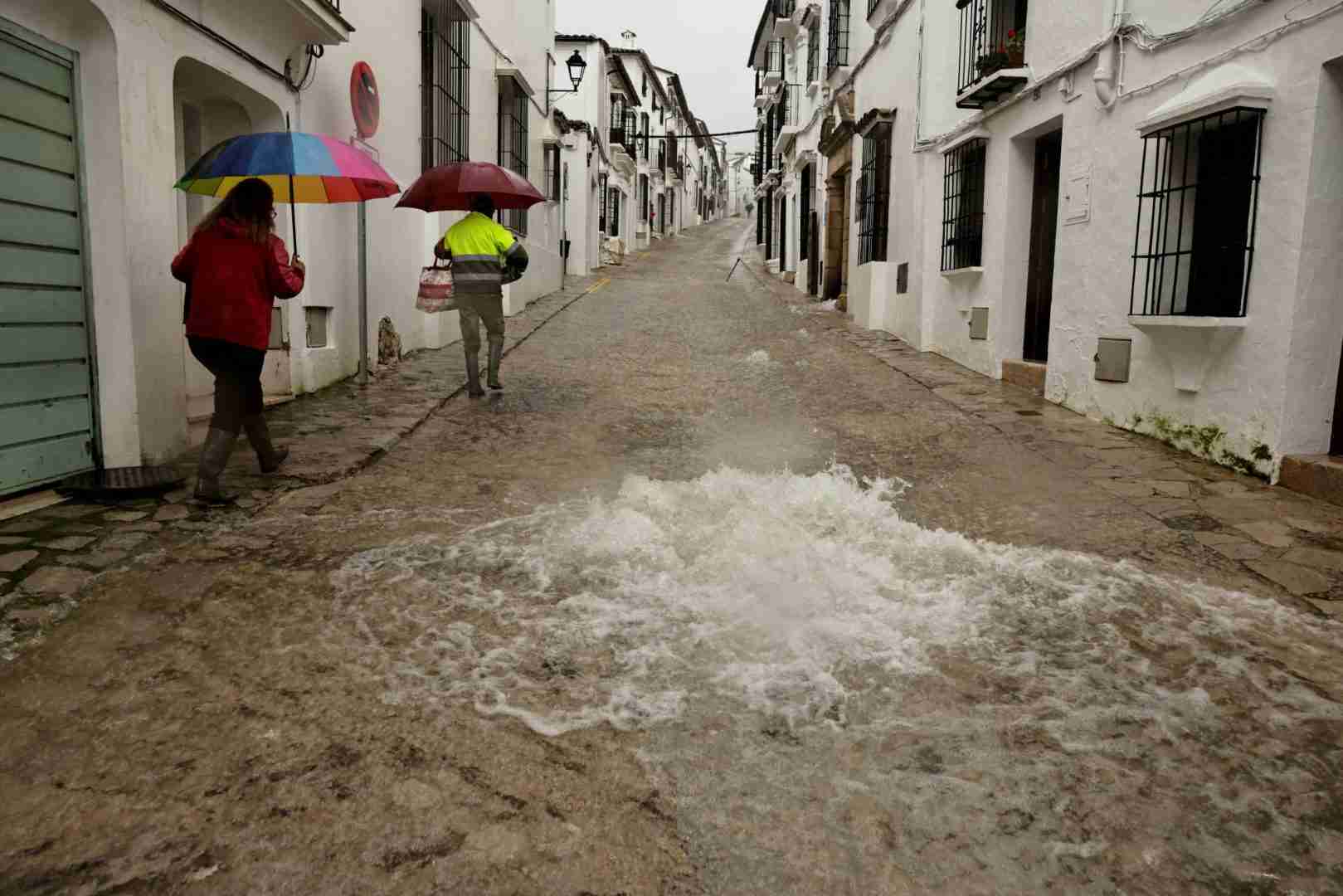
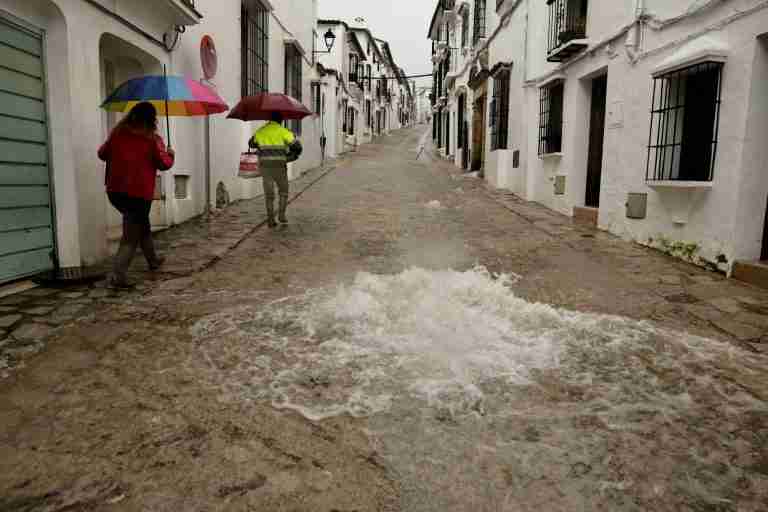
Also evacuated were the approximately 1,500 residents of Grazalema, a mountain village popular with hikers, as water seeped through the walls of houses and cascaded along steep cobbled streets.

“We couldn’t sleep because we’re so stressed and anxious,” evacuee Maria Fernandez told state broadcaster TVE at a sports hall in Ronda, some 30 km (20 miles) away, where villagers were taken.

Andalusia’s regional leader, Juan Manuel Moreno, told radio station SER that aquifers in the Grazalema mountains were full and could provoke landslides due to pent-up pressure.

He added geologists were assessing the situation in Grazalema to determine when residents would be able to return to their homes.

The Grazalema mountains are made of permeable rock that dissolves when absorbing large volumes of water, potentially leading to structural collapse, Nahum Mendez-Chazarra, a professor of geology at Valencia University, told Reuters.

“It’s possible these cavities will widen and eventually cause the ground to sink, which will obviously affect any house or road on top,” he said.

PORTUGAL EXTENDS CALAMITY STATE

In southern Portugal, large parts of the town of Alcacer do Sal by the River Sado remained semi-submerged for the third straight day.

“I’m left with nothing, nothing. I only kept the clothes I had on,” Alcacer resident Rita Morgado told Reuters, adding that more than 1,000 people needed help.

In Portugal’s second-biggest city Porto, the River Douro overflowed in the early hours on Friday, causing minor flooding at riverside cafe terraces.

Prime Minister Luis Montenegro said late on Thursday his government had extended a state of calamity in 69 municipalities until mid-February, adding “unprecedented” rainfall and flood risks threatened several regions.

The commander of Portugal’s ANEPC civil protection service, Mario Silvestre, said six rivers – including the Tagus – were at risk of significant flooding.

The Tagus river basin was placed on red alert on Thursday due to the abrupt rise in water flow.

($1 = 0.8482 euros)

Reporting by Paolo Laudani, Emma Pinedo, Sergio Goncalves and Andrei Khalip; Editing by David Latona and Peter Graff

Norway set to probe Epstein revelations as scandal reverberates round Europe

The release of an enormous cache of new files last week has revealed a host of new Epstein connections with politicians, royals and the ultra-rich

FILE PHOTO: Late financier and convicted sex offender Jeffrey Epstein appears with a woman, whose identity has been obscured, in this image from the Epstein estate released by House Oversight Committee Democrats in Washington, D.C., U.S., on December 18, 2025. House Oversight Committee Democrats/Handout via REUTERS/File Photo

International News via Reuters:

Norway looks set to launch an inquiry into its own foreign ministry over links to late U.S. sex offender Jeffrey Epstein, one of several European nations to feel the heat from a scandal that has yet to cause major political repercussions in the U.S.

The release of an enormous cache of new files last week has revealed a host of new Epstein connections with politicians, royals and the ultra-rich.

British Prime Minister Keir Starmer’s future is looking increasingly uncertain over his decision last year to name Peter Mandelson, who had a close friendship with Epstein, as ambassador to Washington.

The king’s brother, Andrew Mountbatten-Windsor, had already been forced to relinquish his royal title and lavish residence, and pressure is now growing on him to testify in the U.S.

In Slovakia, Prime Minister Robert Fico’s national security adviser has resigned after emails were revealed in which he discussed young women with Epstein.

And former French culture minister Jack Lang is being urged to resign as president of the Arab World Institute.

NORWAY IN EPSTEIN SCANDAL SPOTLIGHT

But Norway, home of the Nobel Peace Prize and often a fulcrum of international diplomacy, seems to have more than its share of fallout.

Public figures including Crown Princess Mette-Marit and former prime minister and foreign minister Thorbjoern Jagland are all under fresh scrutiny.

So are former foreign minister Boerge Brende, now leader of the World Economic Forum; Mona Juul, ambassador to Jordan and Iraq; and her husband Terje Roed-Larsen.

Jagland is also a former chairman of the Norwegian Nobel Committee. Juul and Roed-Larsen helped set up the secret channel for contacts between the Palestine Liberation Organization and the Israeli government that led to the 1993-1995 Oslo Accords.

All were known to have had ties to Epstein, but the new files have offered much more detail.

A majority of parties in Norway’s parliament appear ready to support an independent inquiry into the foreign ministry, Norwegian media reported.

Norway’s economic crime police unit said on Thursday it was investigating Jagland on suspicion of aggravated corruption. Jagland’s lawyer said his client was confident of demonstrating his innocence and would cooperate.

JAGLAND CORRUPTION INVESTIGATION

The foreign ministry said it would seek to lift the diplomatic immunity Jagland enjoys as ex-head of the Council of Europe, from 2009 to 2019. The Council did not immediately reply to a request for comment.

Neither Roed-Larsen nor Juul immediately answered requests for comment sent respectively to his lawyer and the ministry, which has suspended Juul while she addresses an internal probe.

Brende has said he was unaware of Epstein’s past and criminal activities before first meeting him in 2018, and that he regrets not having investigated him more thoroughly.

The files published by the U.S. Justice Department showed extensive email correspondence between Epstein and the Norwegian crown princess, even after he was found guilty of child sex crimes in 2008. Mette-Marit has apologised.

Norway’s royal family is already dealing with several challenges. Marius, Mette-Marit’s son from a relationship predating her marriage to Crown Prince Haakon, is currently on trial for rape and domestic violence. 

Reporting by Gwladys Fouche; additional reporting by Nora Buli in Oslo, Gianluca Lo Nostro, Elizabeth Pineau, John Irish and Dominique Vidalon in Paris; writing by Niklas Pollard; Editing by Kevin Liffey

Bitcoin claws up to $65,000, set for largest weekly drop since late 2022

The world’s largest cryptocurrency was last up 4.4% at $65,894.20, clawing back losses after having slid 5% to hit a low of $60,008.52 earlier on

International News via Reuters:

Bitcoin broke back above $65,000 on Friday, as a global rout in technology stocks that had vaporised many risky bets across asset classes showed tentative signs of slowing.

Bitcoin was still set for its worst weekly performance since late 2022 as cryptocurrencies have struggled for months since a record crash last October sent bitcoin tumbling from an all-time peak and investor sentiment towards digital assets has cooled. 

The world’s largest cryptocurrency was last up 4.4% at $65,894.20, clawing back losses after having slid 5% to hit a low of $60,008.52 earlier on. So far this week, it’s lost nearly 14% in value, the most in a week since November 2022.

The price is still around its weakest since early October 2024. That was just before bitcoin’s rally accelerated as Donald Trump closed in on winning the U.S. presidential election, having signalled his intention to support crypto on the campaign trail.

“Bitcoin’s been going down since October (2025), maybe you could ask if it was the canary in the coalmine, or a coincidence,” said Chris Weston, head of research at brokerage Pepperstone in Melbourne.

“A lot of these big crowded positions are being unwound very, very quickly.”

Ether was last up 4% at $1,921, having similarly slid close to a 10-month low of $1,751.94 earlier in the session. It was headed for a weekly decline of nearly 16% and a year-to-date decline of 35%.

The global crypto market has lost some $2 trillion in value since hitting a peak of $4.379 trillion in early October, CoinGecko data showed, with more than $1 trillion wiped out over the past month alone.

Sentiment towards crypto had been affected by the latest selling in precious metals and stocks. Gold and silver, for instance, have become more volatile as a result of leveraged buying and speculative flows.

Bitcoin’s fortunes have been tied to the broader tech sector for some time. The price tended to rise, particularly on the back of investor enthusiasm over artificial intelligence. 

“Bitcoin drifting back toward $60,000 is not crypto dying, it is the bill coming due for Treasuries and funds that treated bitcoin as a one-way asset without real risk controls, just as we have seen sharp corrections in self-proclaimed safe-haven assets like gold and silver when leverage and narrative ran ahead of reality,” said Joshua Chu, co-chair of the Hong Kong Web3 Association.

“Those who bet too big, borrowed too much or assumed prices only go up are now finding out the hard way what real market volatility and risk management look like.”

Analysts from Deutsche Bank said in a note that U.S. spot bitcoin ETFs witnessed outflows of more than $3 billion in January, following outflows of about $2 billion and $7 billion in December and November, respectively.

“February is not panning out well for stock market bulls so far, we shall have to see if bitcoin’s recovery above $65,000 is a sign that a deeper recovery is on the cards,” XTB research director Kathleen Brooks said.

Reporting by Rae Wee and Tom Westbrook in Singapore and Amanda Cooper in London; Editing by Jacqueline Wong, Michael Perry and Susan Fenton

Pricier iPhones? Global memory chip crunch puts spotlight on Apple

The iPhone maker predicted strong sales growth last week, spurred by demand for its iPhone 17 models

International News via Reuters:

As the global memory chip shortage hits the smartphone market, a key question is echoing from Silicon Valley to Shenzhen: Will Apple raise prices, or sacrifice profit to gain new customers?

The iPhone maker predicted strong sales growth last week, spurred by demand for its iPhone 17 models. CEO Tim Cook told investors he expected memory chip prices to increase sharply, but declined to answer analysts’ questions about whether Apple would raise prices in response.

“There are different levers that we can push, and who knows how successful they’ll be, but there’s just a range of options,” Cook said on the post-earnings call.

He did not address whether the shortage offered Apple a chance to increase its iPhone and Mac marketshare by maintaining prices at the expense of rivals who might have greater supply constraints.

Analysts assume that even amid a shortage, Apple has the clout with long-time suppliers such as Samsung Electronics, SK Hynix and Micron to secure enough chips to make iPhones, unlike smaller phone makers.

A rapid build-out of AI infrastructure by tech firms such as Meta, Google and Microsoft has absorbed much of the supply of memory chips, lifting prices as manufacturers prioritize components for higher-margin data centers over consumer devices. Memory chips, or DRAM, are crucial to smartphones as they allow power-hungry applications to run smoothly.

APPLE’S DECISION WILL SHAPE INDUSTRY DECISIONS

Apple’s decision will likely have far-reaching consequences.

By some estimates, the company led the global smartphone market last year with a nearly 10% rise in shipments.

If it holds prices while smaller rivals raise theirs as analysts expect, iPhones would look more attractive. If Apple hikes prices, that would give competitors room to follow.

“This the biggest question for the industry now,” said Nabila Popal, a senior research director at IDC. “This is a two-sided sword because if Apple doesn’t raise prices, while it will help grow market share, it will also upset investors.”

The memory chip crunch faced by these competitors is in part expected to drive this year the first annual decline in the global smartphone market since 2023, according to IDC data.

Qualcomm, the world’s biggest designer of smartphone chips and a major supplier for high-end Android phones, fanned those fears on Wednesday with a forecast that missed Wall Street estimates due to a lack of memory chips at its handset customers.

The company’s finance chief, Akash Palkhiwala, said that key customers in China don’t have enough memory chips to build phones, despite robust demand from customers.

“We’ve seen several OEMs (device makers), especially in China, take actions to reduce their handset build plans and channel inventory,” Palkhiwala said.

On Qualcomm’s conference call, analysts again pointed to Apple. “It just seems like they are going to continue to get disproportionate share of the available DRAM,” said Ben Reitzes of Melius Research.

One veteran smartphone industry executive, who asked not to be named because was he was discussing sensitive supply matters, said Android phone makers are cautiously watching if Apple will increase prices.

“If Apple absorbs their whole memory increase and doesn’t change their phone price, then the Android phones become more expensive, and much volume they expect to have is going to be a question,” the executive said.

Some Apple investors think a price hike is coming.

“Apple generally holds priority over competitors … but is immune to market shortages,” said Dan Morgan, portfolio manager at Synovus Trust. “Apple will most likely continue to raise prices on newer iPhone model introductions,” Morgan added.

What Samsung does could also influence matters.

Analysts believe the South Korean company’s phone division may also be able to absorb memory price increases because it sources memory from another Samsung unit.

“We’re observing Apple and Samsung,” said Emarketer analyst Gadjo Sevilla. “If they raise prices, then they raise the ceiling and other manufacturers will likely need to adjust pricing.”

Reporting by Stephen Nellis in San Francisco and Aditya Soni in Bengaluru; Editing by Saumyadeb Chakrabarty

FTSE 100 rises as heavyweight banks offset RELX drop

The blue-chip index was up 0.2% at 1133 GMT, on track to post a second straight weekly gain, also helped by the Bank of England signalling on Thursday that interest rates could fall if the drop in inflation is sustained

International News via Reuters:

London’s FTSE 100 ticked higher on Friday, as gains in heavyweight lenders offset another slide in data analytics firm RELX, which joined a global selloff this week on fears over disruption from advancements in artificial intelligence.

The blue-chip index was up 0.2% at 1133 GMT, on track to post a second straight weekly gain, also helped by the Bank of England signalling on Thursday that interest rates could fall if the drop in inflation is sustained. 

The domestically focused mid-cap FTSE 250 was little changed and was set to fall for a second straight week.

Business information group RELX slid 3.5%, falling for the fourth straight week. London Stock Exchange Group rose 1.2% after sharp losses earlier this week.

But financial stocks, heavily weighted on the index, were up; banks Barclays, NatWest Group and Lloyds rose between 1% and 1.6%.

Across the pond, megacap tech stocks stumbled after Amazon.com’s 50% boost in spending plans rattled sentiment.

Domestic political uncertainty also weighed, as Prime Minister Keir Starmer faced his most serious political threat yet after emails revealed the depth of UK ambassador Peter Mandelson’s ties to Jeffrey Epstein.

The Eurasia Group, a political risk consultancy, put the probability of Starmer’s removal this year at 80%, up from 65%, saying the controversy had dealt “irreparable damage.”

On the flip side, London-listed miners rose; Fresnillo was up 1.8%, among the top gainers of the benchmark index. [GOL/].     

Separately, British house prices rose by the most in more than a year in January, mortgage lender Halifax said, adding to signs of a recovery in the housing market.

Next rose 0.5% after the fashion retailer said it has purchased British footwear brand Russell & Bromley through an insolvency process, paying 2.5 million pounds ($3.4 million).

Reporting by Tharuniyaa Lakshmi in Bengaluru; Editing by Sahal Muhammed

‘King ousting was necessary to move forward’

As Ben Smith takes over as Opposition Leader, he must still win the support of the party membership that elected Robert King last September

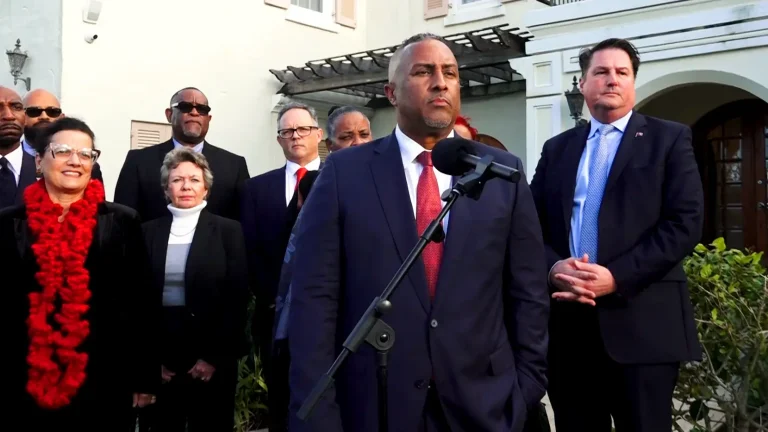
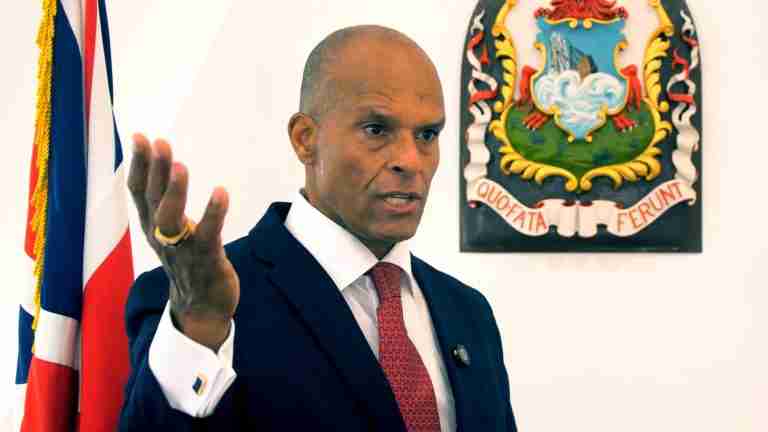
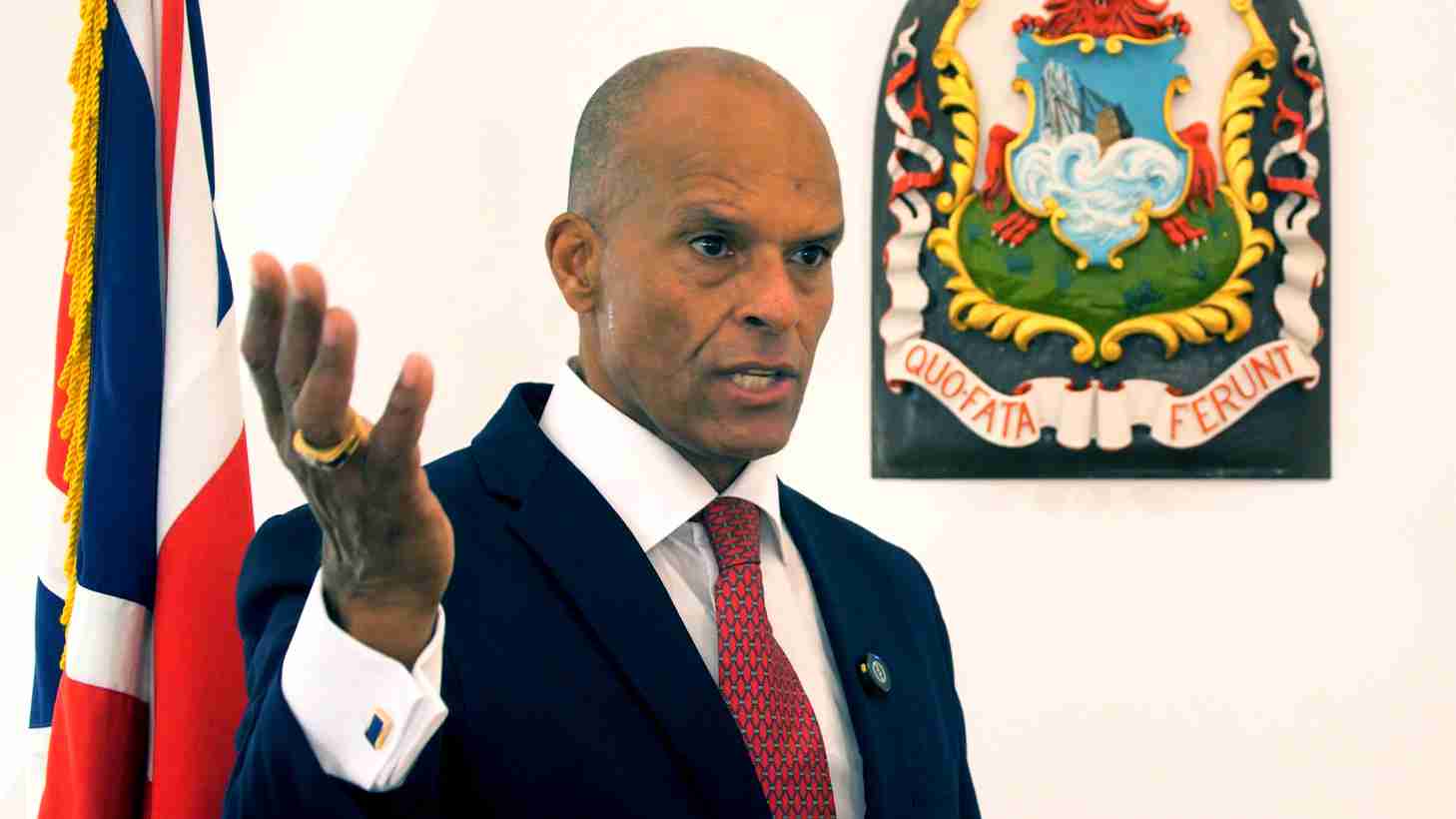
Ben Smith, the new Opposition Leader, says the ousting of predecessor Robert King was not a political coup, but necessary for the OBA parliamentary team to move forward.

He feels that a Ben Smith-led OBA will now be able to do what they were elected to do.

Adding some context today, Deputy OBA Leader Scott Pearman said that many MPs had approached Mr King over the past few months with concerns about his leadership style, and his ability to unite the party.

This reached a climax yesterday, as several OBA MPs asked Robert King to resign.

After he refused, nine of the eleven sitting opposition MPs brought a no confidence motion to Governor Andrew Murdoch, forcing his removal as Opposition Leader.

Today, the man he beat for the OBA leadership at a party conference last September was sworn in as new Oppostion Leader, with the support of OBA MPs.

However, when we asked Ben Smith for more detail on the issues OBA MPs had with Robert King’s leadership, Mr Smith said he will not speak poorly about him.

“Robert King is a member of this team”, he said, “…we will not speak badly of members of our team.”

All the same, Robert King remains the party leader until he resigns or the membership meets to vote on the leadership position.

So, while his fellow MPs support him, we must wait to hear the voices of the party members.

WATCH the highlights above, or watch the full live coverage of the Swearing-In Ceremony and press conference HERE…

Dethroned King: ‘My commitment to my constituency remains unwavering’

Robert King makes brief statement after being ousted as Opposition Leader

“I was called to Government House by Governor Andrew Murdoch this morning. He informed me that he had a letter signed by members of the One Bermuda Alliance (OBA) parliamentary caucus asking to remove me as Opposition Leader. My commitment to my constituency, the membership of the OBA and the people of Bermuda remains unwavering.”

New reserves officers start their police service

In the photo: Front row (left to right) – Reserve Inspector Mikkel Harris, Deputy Commandant Shawn Russell, Commissioner Darrin Simons, Commandant Ron-Michel Davis, Assistant Commissioner Martin Weekes, Superintendent Arthur Glasford and Inspector Derrick Golding.

Back row (left to right) – Reserve Police Constables Bharani Mookaiya, Sharmaric Ali, Kenneth Vandrine, Jessica James, Sadoya Peynado and Michell James.

The Bermuda Reserve Police (BRP) recently welcomed new officers during a passing out ceremony held 7pm Thursday, 29th January 2026, at the Police Recreation Club hall in Prospect, Devonshire.

The latest Reserve Constables were officially sworn into voluntary service by Commissioner of Police Darrin Simons, Commandant Ron-Michel Davis and Deputy Commandant Shawn Russell, in front of members of the Bermuda Police Service (BPS) Senior Leadership Team, the BRP executive team, as well as family and friends.

The new BRP Constables are:

1577 Lorry Fernandies (not pictured – off island when the ceremony took place)

1578 Sadoya Peynado

1580 Jessica James

1581 Michell James

1583 Bharani Mookaiya

1584 Kenneth Vandrine

1585 Sharmaric Ali

Volunteering as a Reserve officer allows individuals to contribute to the safety of our community, while still pursuing their primary professions. By working alongside career police officers, Reserve officers help enhance overall policing efforts in Bermuda, making it a safer place to live.

They also gain the satisfaction of serving, while acquiring valuable skills and experiences – because Reserve police officers are trained to the same standards as their career BPS colleagues.

For more information on the Bermuda Reserve Police, please call 247-1787, e-mail joinreserves@bps.bm, or visit https://joinus.bps.bm to apply.

Search and rescue stood down after false alarm

0

Four vessels were tasked before Harbour Radio confirmed no one was in danger

Four vessels were tasked with a reported search and rescue operation this morning. However, Harbour Radio has since confirmed the incident was a false alarm.

Nonetheless, the response has underscored the importance of filing a float plan.

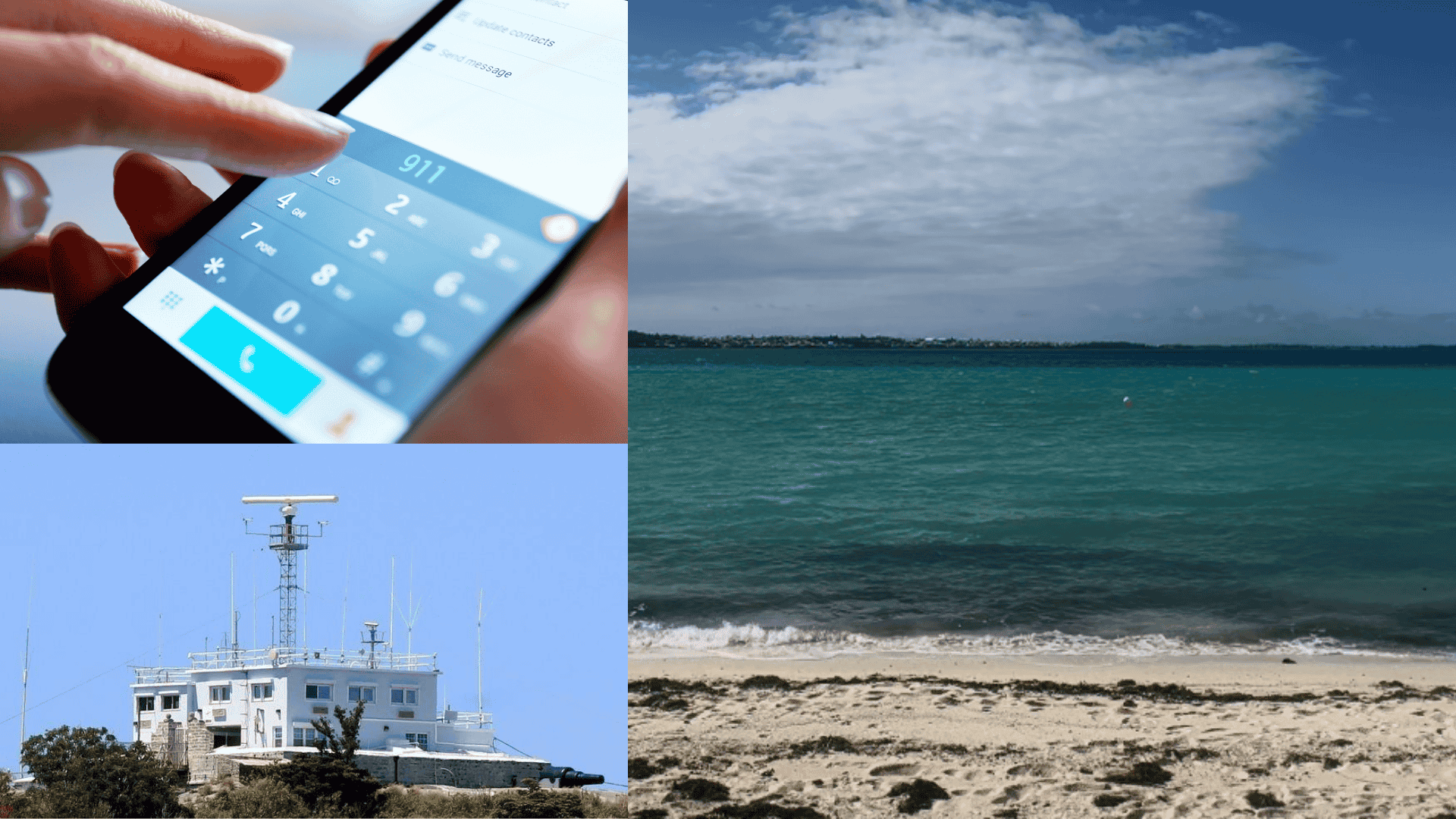
Concerned bystanders reported seeing what they believed was a paddleboarder in distress in waters north of Hamilton Parish this morning. However, the individual was actually a wind foiler surfing the waves.

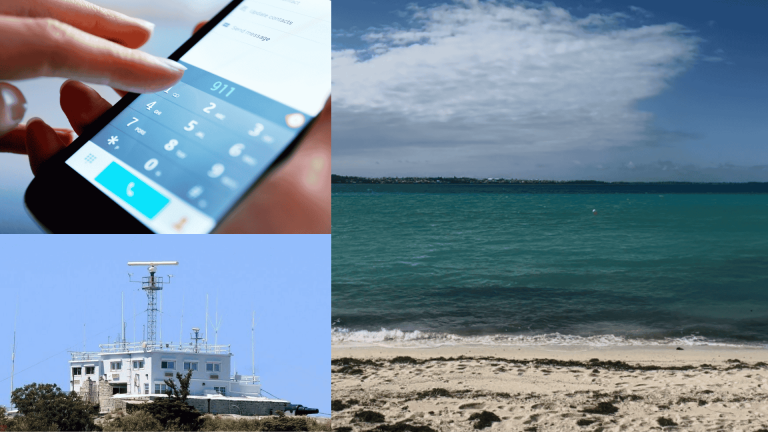
The duty officer at Harbour Radio confirmed the 911 call was received at around 8:30 am.

A land police unit was dispatched to rendezvous with the callers, but by the time officers arrived, the person at sea was no longer in sight.

With southwest winds at the time, there was concern the reported paddleboarder was drifting offshore and unable to get back … prompting a coordinated rescue response.

The pilot boat St. David, the tugboat Faithful, and a Coast Guard vessel were dispatched. The container ship Somers Isle, which had just departed the island, was also alerted, and then diverted its route to assist.

However, Harbour Radio later confirmed through its contacts that the person believed to be in distress was a man on a foil board, using a paddle to surf the waves – an activity that from shore would closely resemble paddleboarding.

The wind foiler had travelled from the Shelly Bay area toward Fort St. Catherine and was likely ashore within 20 to 30 minutes of the initial distress call.

“It was a great result knowing the man was safe ashore,” said the duty officer, adding that based on the initial information received, the situation had to be treated as a serious incident.

They noted that seeing someone use a foil board with a paddle is a relatively rare activity.

The search was stood down just after 11 am. The duty officer said it would have come to a natural conclusion regardless, as no one had been reported missing.

Harbour Radio adds that it regularly receives calls concerning windsurfers and wind foilers, and is reminding those heading out alone to file a float plan with a friend or relative.

Such a plan lets someone know where you’re going out on the water and when you’ll be back, so help can be called if you don’t return as planned.

Storm Leonardo flooding kills man in Portugal, woman swept away in Spain

Leonardo is the latest in a wave of half a dozen winter storms to hit Portugal and Spain since the start of 2026, killing several people, ripping roofs off homes and flooding towns

International News via Reuters:

Storm Leonardo pounded the Iberian peninsula with torrential rains on Thursday, prompting more flood warnings, as a man was killed by a deluge in Portugal and Spanish rescuers searched for a woman swept away by a river as she tried to save her dog.

Leonardo is the latest in a wave of half a dozen winter storms to hit Portugal and Spain since the start of 2026, killing several people, ripping roofs off homes and flooding towns. 

Flooding is becoming more frequent across Europe as the atmosphere warms and holds more moisture due to climate change, scientists say. Unprecedented flash floods killed 237 people in Spain’s Valencia region in October 2024.

A man of around 70 died on Wednesday in Portugal’s southern Alentejo region after his car was swept away on a flooded road near a dam, Portuguese authorities said.

In southern Spain’s Malaga province, authorities searched for a woman dragged away in the strong current of the Turvilla River while trying to rescue her dog.

 “We spent the whole afternoon and night yesterday searching. We found the dog, but not her,” Malaga fire chief Manuel Marmolejo said on Spanish television.

‘AT FIRST WE THOUGHT IT WAS AN EARTHQUAKE’

Authorities ordered the evacuation of Grazalema’s approximately 1,500 residents as water seeped through the walls of houses and down steep cobbled streets of the mountain village popular with hikers.

“From beneath the ground, the pipes creak…We were very scared. At first we thought it was an earthquake, but it wasn’t. It was the creaking. It was a very bad night,” said resident Maria Fernandez, as she swept water from her home.

Juan Manuel Moreno, president of Andalusia’s regional government, said Grazalema had received the same amount of rain in 16 hours as falls in the Madrid region in a year.

Two reservoirs down the mountain from Grazalema were at risk of overflowing. Authorities planned to drain them, he said.

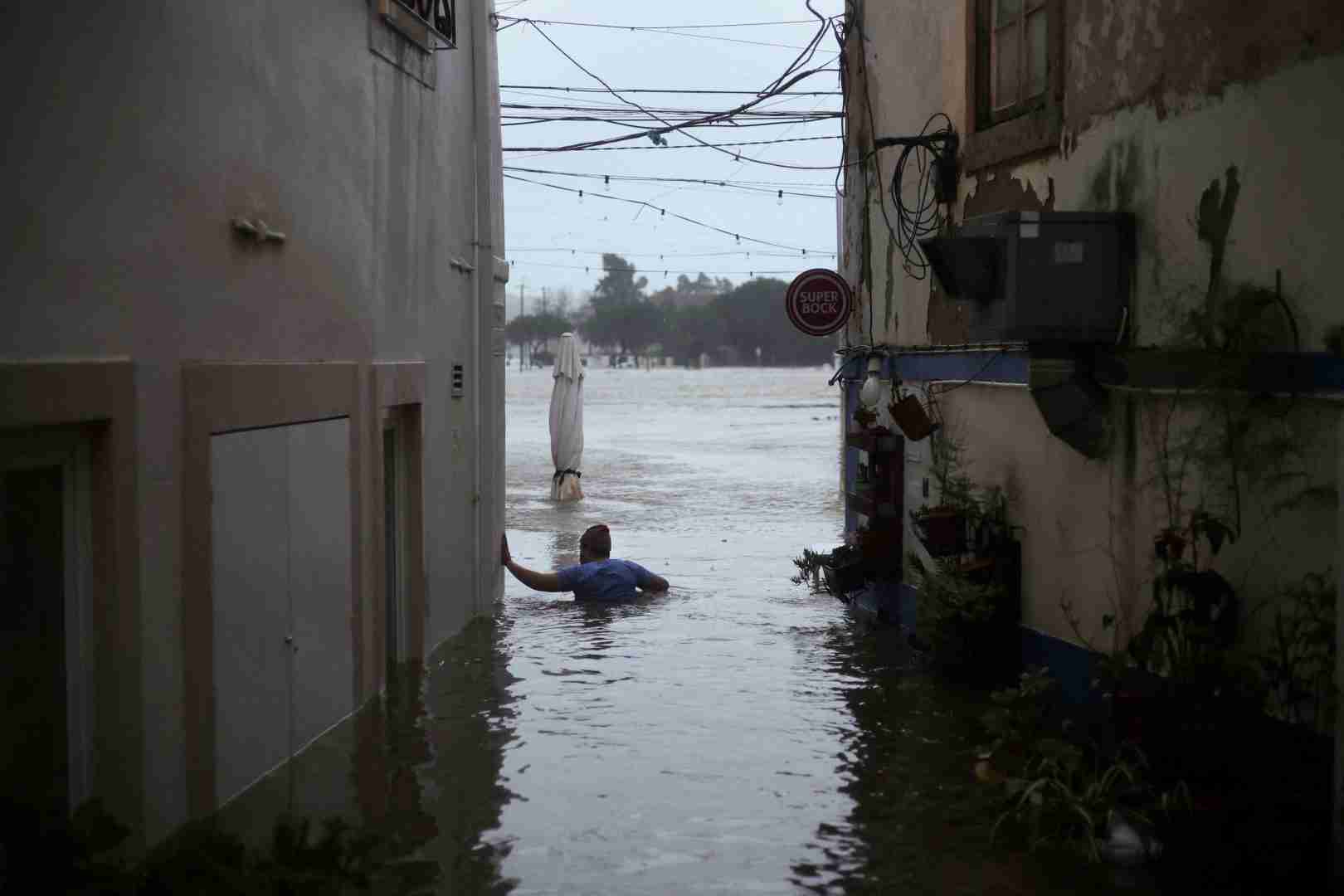
In southern Portugal, people waded waist-deep through Alcacer do Sal after the river Sado breached its banks. Restaurant terraces were completely underwater, with sandbags stacked in front of doors to protect homes and shops.

Anabela Ramalho, a 59-year-old nursing home worker, said everything in the care home was destroyed.

“Only the walls are left,” she said. “There’s a feeling like we can’t do anything… I don’t remember seeing anything like this.”

Storm Marta, the next weather front in the so-called “storm train”, is expected to hit the region over the weekend, according to state weather agency Aemet.

Reporting by Jon Nazca in Grazalema, Miguel Pereira in Alcacer do Sal; Paolo Laudani in Gdansk, Emma Pinedo in Madrid and Andrey Khalip in Lisbon; editing by Charlie Devereux, Alexandra Hudson and Ros Russell