Omeros shares more than doubled to $9.90 in morning trading
International News via Reuters:
Danish drugmaker Novo Nordisk and Omeros have signed a licensing deal worth up to $2.1 billion for the U.S.-based company’s experimental drug, which is being developed for rare blood and kidney disorders, they said on Wednesday.
Omeros shares more than doubled to $9.90 in morning trading.
As part of the agreement, Novo gains exclusive global rights to develop and commercialize Omeros’ drug zaltenibart, designed to inhibit MASP-3 — a protein that acts as a key activator of the alternative pathway of complement.
The complement pathway is a system of proteins in the blood that enhances the immune system’s ability to fight infections.
Omeros is eligible to receive up to a total of $2.1 billion, including $340 million upfront and near-term milestone payments.
The company had said in March it began enrollment for late-stage trials studying the drug for paroxysmal nocturnal hemoglobinuria (PNH), a rare blood disorder in which part of the immune system attacks and damages the red blood cells and platelets.
Zaltenibart has shown several potential advantages over other alternative pathway inhibitors currently in development or on the market, the companies said.
The drug was safe and well tolerated in the trials.
After the deal closes, expected in the fourth quarter of 2025, Novo aims to start a global program for zaltenibart in PNH and explore development in a range of other rare blood and kidney disorders.
Omeros remains focused on securing approval for its other experimental drug, narsoplimab, this quarter.
The company is pursuing approval for narsoplimab in the U.S. and in Europe to treat transplant-associated thrombotic microangiopathy, a complication that can arise after hematopoietic cell transplantation.
Omeros also retains certain rights to its preclinical MASP-3 programs unrelated to zaltenibart, including the ability to develop and commercialize small-molecule MASP-3 inhibitors with limited indication restrictions.
Reporting by Sriparna Roy in Bengaluru; Editing by Shilpi Majumdar
Bermuda’s Jordan Vieira and Paul Rodrigues Jr., competing for Eckerd College, helped their team secure a 10th-place finish at the Nevins Trophy regatta in New York, which was cut short by the forecast arrival of a Nor’easter.
The opening day at the US Naval Academy Sailing Center saw racing suspended and later cancelled due to unpredictable winds and poor weather, with gusts of 40-60 knots expected on the second day.
Eckerd held a strong third-place position early on but eventually finished 10th out of 17 teams with 107 points after six races in both divisions.
Jordan Vieira (Division A) secured a 10th-place divisional finish with 59 points, recording two top-five results.
Paul Rodrigues Jr. (Division B) had an excellent showing, placing 7th in his division with 48 points, including top-five finishes in his last two races.
The strong individual efforts were key to Eckerd’s respectable top-half finish despite the weather disruption.
Bermuda has learned their schedule for the 2025/26 Concacaf W Qualifiers, marking the start of their campaign to reach the 2027 FIFA Women’s World Cup and the 2028 LA Olympics.
The qualifying tournament, which excludes the US and Canada, sees Bermuda drawn into the challenging Group C alongside Costa Rica, Guatemala, Grenada, and the Cayman Islands. The six group winners will advance to the final Concacaf W Championship next April.
Bermuda’s journey begins on the road during the November international window:
Thursday, 27 November 2025: Cayman Islands vs. Bermuda
Monday, 1 December 2025: Guatemala vs. Bermuda
The team will then play their home fixtures early next year. The Concacaf W Championship serves as the crucial pathway for qualification to both the 2027 World Cup in Brazil and the 2028 Summer Olympics.
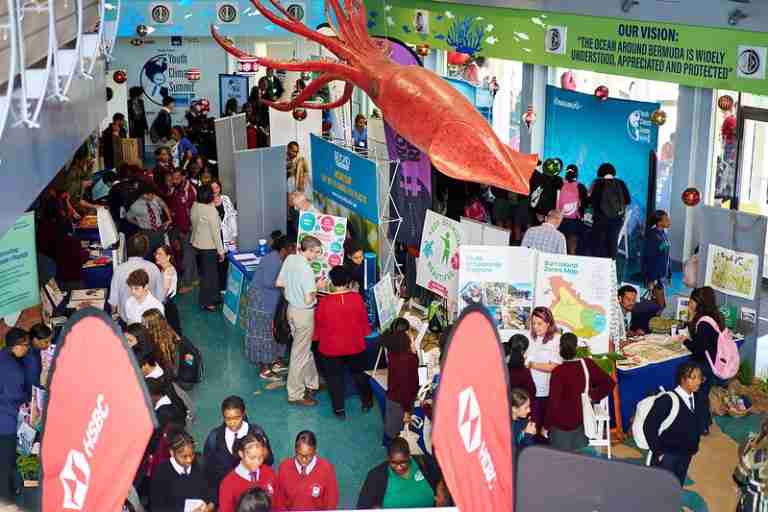
The Bermuda Underwater Exploration Institute (BUEI) is excited to announce that registration is now open for the Island’s milestone 5th Annual Youth Climate Summit, taking place November 17-22, 2025. This week-long event for students ages 13-22 engages and educates young people on global climate issues and serves as the foundation for a year of youth-led activities focused on local climate matters.
Registration is open through October 22 at www.ycsbda.com.
A Milestone Year of Climate Leadership As the Youth Climate Summit (YCS) marks its fifth year, the programme has grown into Bermuda’s premier platform for youth environmental engagement and leadership development. Since 2021, YCS has welcomed more than 150 young Bermudians annually, bringing together students from across the island’s public and private schools to engage with local and global climate and environmental experts, leaders and young activists. “Five years ago, BUEI set out to create a platform where Bermuda’s young people could find their voice on climate action,” said Traci Burgess, BUEI CEO. “What we’ve built together— with our incredible partners and participants—has exceeded our hopes. YCS is not just an event, it’s an opportunity for Bermuda’s youth to learn directly from global experts, to be inspired, and to join a growing community of young people committed to protecting our planet.”
Opening with The Hip Hop Scientist This year’s Summit kicks off with an electrifying opening session featuring Maynard Okereke, MD, known globally as ‘The Hip Hop Scientist’. Dr. Okereke brings a unique blend of science education and hip-hop culture that engages young audiences on critical environmental issues. His dynamic presentation style has inspired youth around the world to see themselves as scientists and environmental leaders.
New Partnership Expands Opportunities For the first time, YCS has partnered with the United Nations Development Programme (UNDP) Multi Country Office in Jamaica, significantly expanding the Summit’s Caribbean reach and impact. This collaboration brings exciting new programming, including an exclusive “Green Jobs of the Future” masterclass panel for YCS alumni, featuring career pathways in the growing green economy. “BUEI is both honoured and elated to expand YCS throughout the Caribbean and connect like-minded young people, many of whom face similar climate challenges living in small island nations that are on the front lines of battling climate change,” said Traci Burgess, BUEI CEO. “This significant collaboration provides greater opportunities for youth from Bermuda and around the region to connect, educate and inspire each other.”
Special Alumni Programming This milestone year includes enhanced programming for YCS alumni, recognising the growing community of young climate leaders who continue their engagement beyond their initial experiences during the week-long Summit event in November. In addition to the UNDP green jobs panel, alumni will participate in exclusive environmental education deep-dive sessions and contribute to developing a youth-driven climate action declaration.
Continued Support from Valued Partners BUEI’s Youth Climate Summit maintains strong support from its corporate and NGO partners who have remained committed since the programme’s inception. Founding Partners AXA XL and HSBC Bermuda continue to champion young people pursuing systemic climate solutions, contributing knowledge, expertise and resources alongside financial support. Visionary Partners Aspen Bermuda, Renaissance Re, and Deloitte, along with Inspire Partners Conduit Re, Chubb, and Neuberger Berman, continue their support of this vital programme.
A Call to Action Parents, educators and community leaders: we need your help identifying and encouraging the young people in your lives to participate in this transformative experience. Whether they’re already passionate about environmental issues or just beginning to explore climate concerns, YCS provides the tools, knowledge and networks to turn interest into meaningful action.
“As hurricanes increase in size and frequency, and ocean temperatures and sea levels continue rising, Bermuda is by no means free from the threats of climate change,” said Ms. Burgess. “The ocean regulates climate and Bermuda, with our tiny 21-square miles in the middle of the deep blue Atlantic Ocean, is at just as much risk of the negative impacts from climate change as anywhere else in the world. Our unique biodiversity, delicate eco-systems and geographical positioning, combined with an abundance of professional experience in fields like re/insurance and finance, places Bermuda in a prime position to continue leading on climate initiatives, thus resulting in a greater impact on the environment and all life above and below water. The Youth Climate Summit is one of the lasting ways to achieve these objectives.”
Throughout the week, students ages 13-22 will connect with subject matter experts and youth activists in areas related to Conservation, Sustainability, and Climate Justice. Most importantly, YCS equips students with a voice and provides the necessary tools for young people to act with intention and a sense of hope that their efforts are contributing to real and positive changes.
Register Now Registration for the 5th Annual Youth Climate Summit is open through October 22, 2025. Space is limited. Register at www.ycsbda.com.
For more information about the 2025 Youth Climate Summit, visit www.YCSBDA.com
The tragedy, which killed 16 and critically injured several more, spotlights Bangladesh’s poor record on industrial safety
International News via Reuters:
Toxic gas and a locked door that barred access to a roof were responsible for most of the deaths in a devastating fire in a Bangladesh garment factory and an adjoining chemical warehouse, a fire official said on Wednesday.
The tragedy, which killed 16 and critically injured several more, spotlights Bangladesh’s poor record on industrial safety, despite improvements following incidents in 2012 and 2013 that drew global attention to unsafe working conditions.
Thick smoke rose from the charred structure amid cooling operations by firefighters a day after the blaze on the third floor of a four-storey building in Dhaka, the capital, quickly engulfed the warehouse packed with plastic and chemicals.
“The victims could not escape because the roof door was locked,” said fire service official Talha Bin Jashim. “Most of them died from inhaling toxic gas, rather than burns.”
He added, “There’s still smoke because of the stored chemicals, and the toxic fumes are making it difficult to bring the fire under control.”
Dozens of relatives waited outside the blackened building, some clutching photographs of those missing. Identification of the bodies, many badly burned, is being carried out at Dhaka Medical College Hospital.
The government has launched an inquiry to determine the cause of the fire and identify those responsible for safety lapses.
Many workers in garment factories nearby fell ill from inhaling the smoke that shrouded the site in the capital’s Mirpur area. Authorities later ordered all surrounding factories to shut down temporarily, as a safety measure.
Many small factories and warehouses in Bangladesh operate with little oversight, though conditions in the garment industry have improved since the 2012 Tazreen Fashions fire and the 2013 Rana Plaza collapse that killed more than 1,200 workers.
The world’s second-largest exporter of apparel, Bangladesh supplies major retailers such as Walmart, Gap, and H&M, employing 4 million people and generating about $40 billion a year, or more than a tenth of GDP.
Fires are common in densely populated Dhaka, often caused by faulty wiring, gas leaks or unsafe storage of chemicals.
In 2021, a similar fire at a food processing factory killed 54, while in 2019, a fire in the capital’s old quarter killed at least 70.
Reporting by Ruma Paul; Editing by Clarence Fernandez
Greensill’s collapse made Credit Suisse close $10 billion of funds linked to the financial firm
International News via Reuters:
Credit Suisse on Wednesday lost its $440 million London lawsuit against Japan’s SoftBank Group Corp over losses linked to collapsed finance firm Greensill Capital.
Greensill’s collapse made Credit Suisse close $10 billion of funds linked to the financial firm and, along with other scandals, led to the 2023 state-backed rescue of the 167-year-old Swiss bank by rival UBS Group.
UBS pursued the case against SoftBank, with a trial heard at London’s High Court in June. Judge Robert Miles said in a written ruling that he had dismissed the lawsuit.
The case, which centred on funds Greensill lent to Katerra, a SoftBank-backed U.S. construction group, was the latest concerning Greensill’s demise, which caused heavy losses for investors and prompted lawsuits and regulatory probes.
Credit Suisse alleged that Greensill, at SoftBank’s behest, gave up rights to Katerra’s debts in return for shares which it then passed on to a SoftBank Group entity, leaving Credit Suisse out of pocket in relation to $440 million of notes.
But Miles said in a summary of his ruling that SoftBank “believed in good faith” that the $440 million would be used to pay noteholders.
A SoftBank spokesperson said the ruling “fully vindicates SoftBank and confirms the allegations were simply a baseless attempt to redirect blame”.
A UBS spokesperson said: “We acknowledge the court’s decision in this legacy matter.
“The CS Fund is reviewing the judgment and evaluating next steps. We remain committed to taking all appropriate actions to maximize recovery for the benefit of all stakeholders.”
Lawyers representing Greensill Limited did not immediately comment.
A second vehicle containing explosives was found nearby, but did not detonate and was immediately neutralized
International News via Reuters:
A vehicle exploded outside a shopping mall in Ecuador’s largest city, Guayaquil, killing one person and injuring several others, the country’s prosecutor’s office said on Tuesday.
A second vehicle containing explosives was found nearby, but did not detonate and was immediately neutralized, Interior Minister John Reimberg said, adding that police were carrying out controlled detonations and collecting evidence.
“The devices were professionally manufactured by criminal groups aiming to sow chaos,” Reimberg said in a post on X.
Authorities released surveillance footage from traffic cameras showing the vehicle catching fire before the explosion, with large flames visible coming from the car.
Guayas provincial governor Humberto Plaza, told reporters: “We will hunt down those who perpetrated this act of terrorism. We will capture them, and they will be prosecuted to the fullest extent of the law.”
Authorities urged residents to stay away from the area while investigations continued. Guayaquil is one of the most violent cities in Ecuador.
The explosion follows a similar incident last month, when a vehicle detonated outside the city’s regional jail. No injuries were reported in that case.
Last week, President Daniel Noboa’s car was attacked by protesters with rocks, cracking windows as the vehicle sped past.
Reporting by Alexandra Valencia, Writing by Natalia Siniawski; Editing by Michael Perry
The deal will be executed in collaboration with Dell Technologies, Nscale said
International News via Reuters:
British artificial intelligence group Nscale has signed an expanded agreement with Microsoft to deploy around 200,000 Nvidia AI chips across its data centers in Europe and the United States, it said on Wednesday.
While Nscale did not disclose the financial terms of the agreement, the Financial Times, based on a comparable contract, reported that the deal could bring in up to $14 billion in revenue for the start-up.
The deal will be executed in collaboration with Dell Technologies, Nscale said.
Microsoft did not immediately respond to a Reuters request for comment.
Nscale will begin supplying Nvidia graphics processing units to Microsoft via its data centers in Texas and Portugal starting next year. The company also plans to expand its Texas operations over the coming years.
The agreement builds on earlier plans announced by Nscale. It said its joint venture with Norway’s Aker has signed a multi-year deal to supply Microsoft with around 52,000 Nvidia GPUs from its hyperscale AI campus in Narvik, Norway.
The start-up in September raised $1.1 billion from investors, including Aker and Finland’s Nokia, to help accelerate its data centre buildout.
Reporting by Disha Mishra in Bengaluru; Editing by Harikrishnan Nair
The pound was up 0.2% against the dollar at $1.3349 and 0.1% firmer versus the euro at 87.15 pence
International News via Reuters:
The pound firmed against a broadly weaker dollar on Wednesday, as Britain’s finance minister Rachel Reeves confirmed tax rises and spending cuts are on the horizon, and market focus stays on the Bank of England’s rate path.
The pound was up 0.2% against the dollar at $1.3349 and 0.1% firmer versus the euro at 87.15 pence.
Britain’s currency was benefiting from broad pressure on the dollar, which softened as markets interpreted comments made by Federal Reserve Chair Jerome Powell on Tuesday as dovish, and risk sentiment improved.
Reeves said on Wednesday she was looking at both tax rises and spending cuts for her budget on November 26, confirming widely held expectations given her pledges about balancing the country’s books.
Neil Wilson, UK investor strategist at Saxo Markets, said the pound’s 2025 gains versus the dollar will be tougher to hold on to amid pressure coming from the UK’s precarious fiscal position.
“I’m not sure how many sellers are left in the short USD trade but I would tend to favour a pre-Budget retreat to the 1.30 support before we maybe see some fiscal tightening that is more than the market is expecting,” he said, adding that this could push down yields and weigh on the pound into the year-end.
The pound came off a peak of $1.3787 in July but remains up 6.8% versus the dollar in 2025.
Markets are still digesting Tuesday’s data that showed growth in average British earnings slowed slightly in the three months to August, suggesting the Bank of England may be able to continue cutting rates cautiously.
But British inflation, which looks set to remain the highest in the Group of Seven advanced economies this year and next, has also been under the spotlight.
The International Monetary Fund’s chief economist said on Tuesday that the Bank of England needs to be “very cautious” about future rate cuts.
Money markets are placing an 87% chance of no change at the BoE’s next meeting on November 6.
Odinga was for decades at the heart of Kenyan politics, striking alliances with former foes, serving as prime minister for a term, and inspiring lifelong loyalty from his base
International News via Reuters:
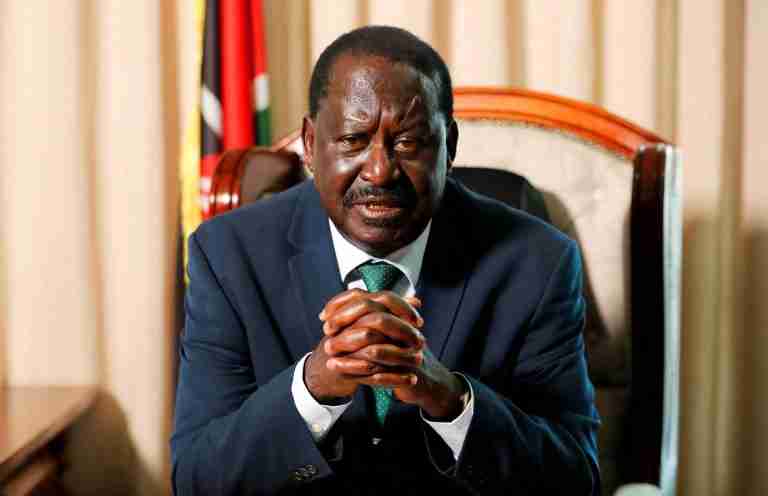
Kenya’s veteran opposition leader Raila Odinga, who was imprisoned while fighting one-party autocracy and ran five times unsuccessfully for the presidency, has died at the age of 80, sources close to him said on Wednesday.
A family source told Reuters he had died in India receiving medical treatment, while the hospital where he died in Kochi city said he suffered a cardiac arrest.
Odinga was for decades at the heart of Kenyan politics, striking alliances with former foes, serving as prime minister for a term, and inspiring lifelong loyalty from his base, particularly among fellow Luos in the west and in the capital Nairobi.
Odinga’s ability to work with rivals earned him the nickname “Agwambo” (“mysterious one”) in the Luo language.
On Wednesday, Kenya’s President William Ruto visited the Odinga family home in Nairobi’s wealthy Karen suburb.
Odinga’s supporters called him simply “Baba” (“father” in Swahili), refusing to leave his side even when he was accused of exploiting ethnic divisions for political gain or of sealing deals with opponents to access power.
As news of his death reached the streets, hundreds of supporters from the Nairobi slum of Kibera, many crying and waving twigs to ward off bad omens, made their way in a procession to Odinga’s home.
His legacy as a democracy activist over the years helped seal two of the country’s most important reforms: multiparty democracy in 1991 and a new constitution in 2010.
Odinga led protests after the disputed 2007 election that plunged Kenya into its most serious political violence since independence. About 1,300 people were killed and hundreds of thousands displaced from their homes in the battles.
The western Luo tribe targeted then-President Mwai Kibaki’s ethnic Kikuyu group, Kenya’s largest and most economically dominant tribe, in much of the fighting.
Violence also followed the 2017 vote.
In 2017, Odinga told Reuters: “Each community believes that they are not safe unless their man is at the top”.
SOLITARY CONFINEMENT
Odinga was the son of Oginga Odinga, Kenya’s first vice-president under independence leader Jomo Kenyatta. The rivalry between the elder Kenyatta and Odinga continued with their sons.
Despite his family’s extensive business interests, Odinga spent his early years as a left-wing firebrand, naming his son Fidel in honour of the Cuban Communist leader Fidel Castro.
Odinga was first imprisoned in 1982 after a coup attempt against then-President Daniel arap Moi, whose government jailed, tortured and murdered opponents. He served a total of nine years in jail, six in solitary confinement.
“Detention is a good school. You learn to reflect and think,” Odinga told Reuters in 2007. “You also learn tolerance, to be forgiving, particularly against your adversaries.”
Odinga first won his parliamentary seat in 1992, which included Kibera. He held the constituency until 2013, his bright orange Hummer mobbed whenever it bounced into the muddy lanes.
He lost his first presidential bid in 1997 against Moi. Four years later, Odinga formed a coalition government with him, a move some saw as opportunistic but he said was pragmatic.
“Democratisation is not like an instant coffee you brew and drink at the same time. It is a process,” Odinga said at the time.
The pattern continued, with Odinga breaking and building alliances with rivals over the next two decades.
He became prime minister in 2008 in a national unity government headed by his former foe Kibaki, as a part of a deal to end the bloodletting.
Following the 2017 election, he reconciled with his opponent, President Uhuru Kenyatta in what is dubbed the “Handshake”.
He then lost the 2022 election to Ruto and challenged the result, which was upheld by the Supreme Court.
PROTESTS
Undeterred, Odinga, by then in his late seventies, launched street protests against the government, only to strike a pact with Ruto in 2024 and effectively leaving Kenya without an official opposition.
Some observers saw the move as cynical but to many, it was part of a familiar playbook he used to the end.
The head of the African Union commission, Mahmoud Ali Youssouf, who defeated Odinga in the AU’s leadership contest this year, hailed him as “a steadfast champion of democracy”.
Indian Prime Minister Narendra Modi said he was a “towering statesman”. Condolences also came from Ethiopia’s Prime Minister Abiy Ahmed and Tanzanian President Samia Suluhu Hassan, who described his death as a tragedy “not just for Kenya, but for all of us.”
Reporting by George Obulutsa and Ammu Kannampilly in Nairobi; Additional reporting by Ruth Nesoba, Vincent Mumo, Edwin Okoth, Humphrey Malalo, Emma Ogao, Monicah Mwangi in Nairobi; Jose Devasia in KochiEditing by Andrew Cawthorne
The shifter cable may detach from the transmission, preventing the vehicle from shifting into the park position, the NHTSA said
International News via Reuters:
Stellantis is recalling 298,439 vehicles in the U.S. due to a shifter cable defect that could disable the park function and allow the vehicle to roll away, the U.S. National Highway Traffic Safety Administration said on Wednesday.
The shifter cable may detach from the transmission, preventing the vehicle from shifting into the park position, the NHTSA said.
The recall covers certain 2013-2016 Dodge Dart vehicles, the auto safety regulator said, adding that a remedy is currently under development.
Stellantis had to recall over 123,000 Jeep vehicles last month due to the risk posed by detached trim pieces.
Reporting by Ananya Palyekar and Nandan Mandayam in Bengaluru; Editing by Rashmi Aich and Janane Venkatraman
To provide the best experiences, we use technologies like cookies to store and/or access device information. Consenting to these technologies will allow us to process data such as browsing behavior or unique IDs on this site. Not consenting or withdrawing consent, may adversely affect certain features and functions.
Functional
Always active
The technical storage or access is strictly necessary for the legitimate purpose of enabling the use of a specific service explicitly requested by the subscriber or user, or for the sole purpose of carrying out the transmission of a communication over an electronic communications network.
Preferences
The technical storage or access is necessary for the legitimate purpose of storing preferences that are not requested by the subscriber or user.
Statistics
The technical storage or access that is used exclusively for statistical purposes.The technical storage or access that is used exclusively for anonymous statistical purposes. Without a subpoena, voluntary compliance on the part of your Internet Service Provider, or additional records from a third party, information stored or retrieved for this purpose alone cannot usually be used to identify you.
Marketing
The technical storage or access is required to create user profiles to send advertising, or to track the user on a website or across several websites for similar marketing purposes.