Agitated employees at a local company have sought Union advice because of upcoming changes to how they are paid
Agitated employees at a local company have sought Union advice because of upcoming changes to how they are paid.
Bermuda Industrial Union President Chris Furbert turned up at BGA this morning for a meeting with its members who work at the Pitt’s Bay Road wholesaler.
The complaint is that a new payroll system could effectively leave employees short for the month of September – although the company has made efforts to support its staff through the changes.
All the companies in the BDC2000 family – such as BGA, Brown & Co, Phoenix and Pitt & Co – have, up until now, paid employees their monthly wages three weeks in advance – including weeks that were still to be worked…
However, the company is now updating its payroll system to pay in arrears, or, after an employee has worked for the full month for which they are being paid.
To adjust to the new system, BDC2000 is only going to pay its employees a week’s remuneration for the month of September.
Acknowledging that an employee may find themselves suddenly short on money, a BDC2000 spokesperson told us that they are offering an interest-free loan to cover the three week’s wages, and repayments won’t start until after six months.
Employees with large amounts of accrued vacation can also exchange that for three weeks’ wages to cover the gap. Alternatively, those who have saved money in the company’s Christmas Gift account can withdraw an amount to cover the gap, without any penalty for withdrawal.
However, the spokesperson told us that employees must choose one of these options by signing the relevant agreement before September 9th. If not, they will receive a week’s remuneration for the month of September and nothing else.
The spokesperson said they felt they were acting fairly and with consideration for BDC2000 employees, while aligning the company’s payroll with how most modern businesses operate.
We understand that the BIU had been called upon to represent its members in the matter, and that there was concern from the union that the company was bringing hardship on its staff. However, we have sought comment from BIU President Chris Furbert following the meeting today, and had not received a response by newstime.
Sweden in May said it would order the vessels from the French company in a $4 billion deal that will triple its air defence capacity in the face of security threats in the Baltic Sea
International News via Reuters:
Sweden’s defence material administration on Monday signed an order for four Naval Group navy frigates during a ceremony in Stockholm attended by French President Emmanuel Macron and Swedish Prime Minister Ulf Kristersson.
Sweden in May said it would order the vessels from the French company in a $4 billion deal that will triple its air defence capacity in the face of security threats in the Baltic Sea.
Sweden, NATO’s newest member, is racing to build up its military in the wake of Russia’s invasion of Ukraine. The first of the four new frigates, which will be the Swedish navy’s biggest ships, is expected to be delivered in 2030.
The deal comes as France and Sweden deepen defence ties, pushing for greater European military self-reliance at a time when doubts over U.S. President Donald Trump’s commitment to Europe are prompting governments across the continent to rethink their dependence on American weapons and security guarantees.
Reporting by Anna Ringstrom, additional reporting by Michel Rose in Paris, editing by Terje Solsvik
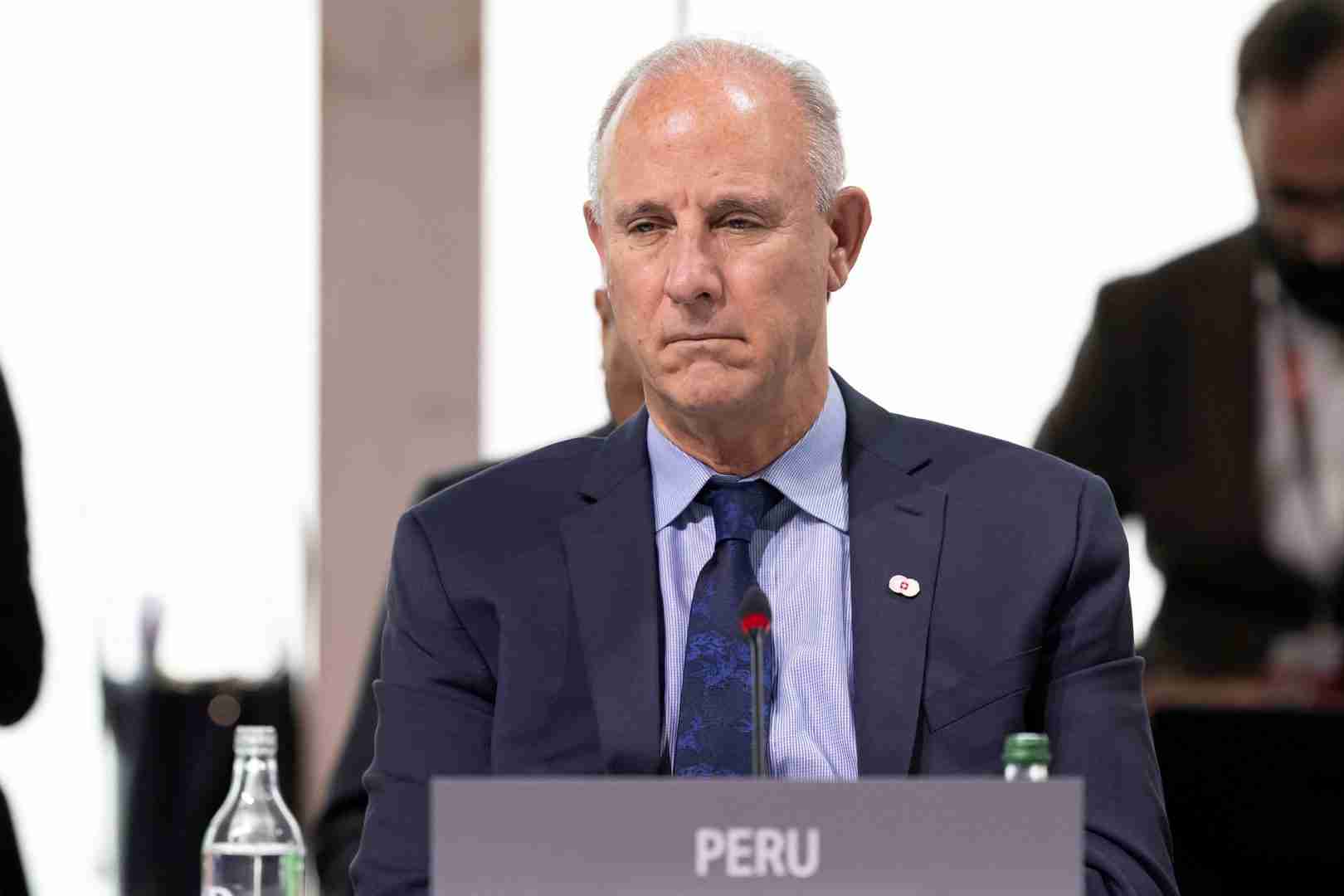
Peru has nominated its former Foreign Affairs Minister Javier Gonzalez-Olaechea to lead the ILO, a letter posted on the ILO website showed
International News via Reuters:
Peru has entered the race to lead the International Labour Organization, its website showed on Monday, as the body grapples with a financial shortfall that may force it to cut jobs.
• Peru has nominated its former Foreign Affairs Minister Javier Gonzalez-Olaechea to lead the ILO, a letter posted on the ILO website showed.
• Spain has also nominated Labour Minister Yolanda Diaz and they will both run against current head, Togo’s Gilbert Houngbo, who is seeking a second term.
• In his mission statement, Gonzalez-Olaechea, who worked at the ILO for two decades, pledged reform and to help protect dignity in the workplace amid major disruptions caused by artificial intelligence and automation.
• Candidates’ hearings are planned in November, followed by a secret ballot. The new Director-General’s term begins in October 2027.
• The ILO, like the wider UN system, is facing a challenging financial and liquidity situation due to delayed assessed contributions.
• The U.S. has outlined plans to not pay its ILO contributions for the next fiscal year. Long the largest contributor, the U.S. owes 257 million Swiss francs ($315 million) in assessed contributions and arrears as of July.
• The ILO’s governing body will discuss possible job cuts in a meeting next month. A draft document showed it proposes to cut up to 120 full-time positions for the 2026-2027 period, or around 7% of the workforce.
Reporting by Emma Farge, Editing by Friederike Heine, Alexandra Hudson
In new demographic projections extending to 2080, ISTAT said Italy’s resident population would fall to 55 million in 2050 from 58.9 million at the start of 2025, before dropping to 45.8 million by 2080
International News via Reuters:
Italy’s population will shrink by almost 4 million by 2050, undermining the sustainability of its economy and welfare system as the proportion of elderly people increases, national statistics bureau ISTAT warned on Monday.
In new demographic projections extending to 2080, ISTAT said Italy’s resident population would fall to 55 million in 2050 from 58.9 million at the start of 2025, before dropping to 45.8 million by 2080.
Prime Minister Giorgia Meloni said when she took office in 2022 that boosting the birth rate would be a government priority, but her efforts have produced scant results.
Births have declined steadily since 2008 and fell last year to around 355,000, the lowest number since Italy’s unification in 1861, while deaths have risen as the population ages.
ISTAT said annual births would now remain broadly stable until 2030, before falling to 335,000 by 2050.
Deaths were projected to rise from about 652,000 last year to a peak of 869,000 in 2058 as Italy’s large post-war baby boom generation reaches old age.
The share of Italians aged 65 or over is expected to jump to 34.5% in 2050 from 24.7% in 2025, while the proportion of people of working age, defined as 15 to 64 years old, will fall to 55.3% from 63.4%.
A shrinking pool of workers and a surging number of pensioners will pose “new challenges to the economic system and welfare,” ISTAT noted.
The demographic decline will be uneven across the country. Poorer southern Italy was forecast to suffer the steepest losses, with its population falling from 19.7 million in 2025 to 16.7 million in 2050, while central and northern regions will see a more modest decline.
Reporting By Gavin Jones, editing by Alvise Armellini
Collision happened on Happy Valley Road in Pembroke
Around 12:01am Monday, 31st August 2026, a reported serious single vehicle collision occurred along Happy Valley Road in Pembroke, near Tribe Road Number 3.
Police, Bermuda Fire & Rescue Service, as well as ambulance personnel responded.
Details are limited at this time. However, initial information indicates that an injured motorcyclist, understood to be a 41-year-old Devonshire man, was found lying semi-conscious in the roadway, with a damaged motorcycle nearby.
EMTs treated the injured man at the scene. He was then transported to King Edward VII Memorial Hospital via ambulance, for further medical care.
At last check, the 41-year-old had been admitted into the Intensive Care Unit.
Inquiries continue regarding the circumstances of this reported collision and any additional witnesses, or members of the public with relevant information, are encouraged to call Constable Tahis Barrow on 211, or e-mail tbarrow@bps.bm, as soon as possible.
The unprecedented deluge of ice, rock, mud and debris on the Nepal-Tibet border on Wednesday – blamed on a glacier collapse – killed more than 900 people and nearly 5,000 are still missing
International News via Reuters:
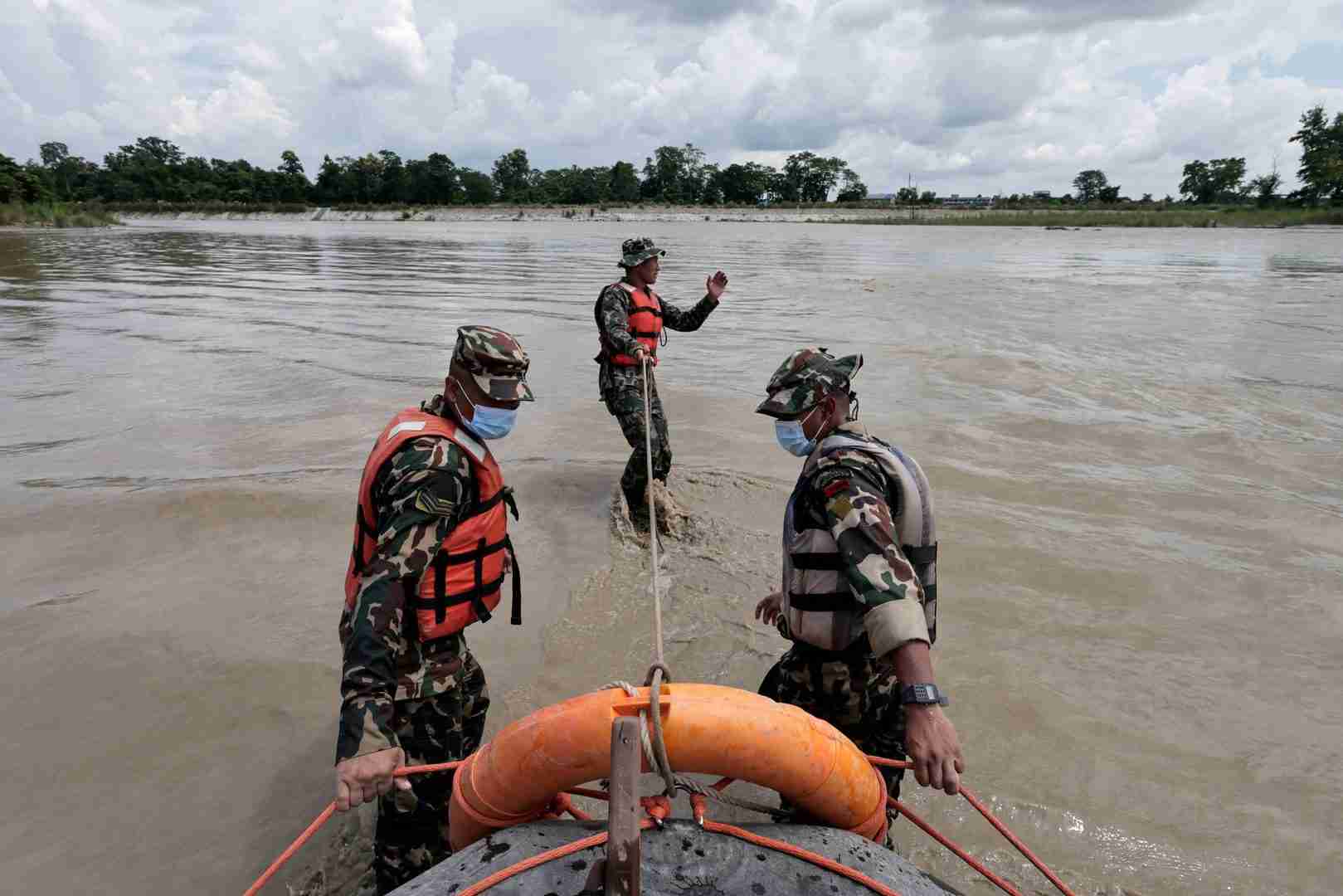
Nepal’s rescue teams, helped by Chinese and Indian experts, stepped up efforts on Monday to reach hundreds of people believed to be stuck inside blocked hydropower project tunnels in the aftermath of last week’s Himalayan flood that carved a trail of destruction in the country’s valley towns and villages as well as across the border in China.
The unprecedented deluge of ice, rock, mud and debris on the Nepal-Tibet border on Wednesday – blamed on a glacier collapse – killed more than 900 people and nearly 5,000 are still missing.
Hundreds of bodies, many unidentified, have been buried in shallow graves as they began decomposing in the humid weather in the plains of the Himalayan country after being swept down the mountains by the torrent.
Nepali officials said that the focus was on reaching the 933 workers believed to be trapped at 11 hydropower projects, including many who were working in about half a dozen tunnels, in the two hard-hit districts of Rasuwa and Nuwakot.
Pictures and videos shared by rescue teams showed earth-moving equipment digging and shovelling mud and rocks under lights in the dark of the night as workers watched. Soldiers used torchlight in a big pit they had created to look for space to get into one tunnel.
The Nepali army said search-and-rescue teams were using controlled blasts, excavators and searchlights to clear water and mud and reach trapped people. Teams recovered three bodies after entering two tunnels, while other sections remained buried in mud and were still being searched, it said.
“A large amount of debris has been deposited and that is posing us a big challenge to open the tunnels,” Nepal army spokesperson Raja Ram Basnet told Reuters. “Our main focus is on opening the tunnels.”
NEPAL’S HYDROPOWER PROJECTS BOOM
On Monday, Nepali authorities said 903 people had died, with 4,247 missing, including the 933 at hydropower projects. On the Chinese side, authorities said 16 people were killed in Gyirong County and 546 were missing.
The Red Cross has estimated that more than 90,000 people are likely to have been affected by the disaster, which China has linked to the effects of climate change.
There has been a boom in hydropower projects in Nepal since the turn of the century as the mountainous country sought to take advantage of its Himalayan water resources to address chronic domestic power shortages and exploit prospects of selling electricity to southern neighbour India.
Hydropower projects in Nepal’s mountains need tunnels to carry water through the steep terrain, allowing developers to exploit the sharp elevation drop between Himalayan rivers and powerhouses to generate electricity.
Prime Minister Balendra Shah said the flood was an “unprecedented and devastating natural disaster” and it remained challenging to compile a complete assessment of the damage.
Beijing has said 261 foreign nationals from 23 countries were unaccounted for in Tibet, near a key border crossing with Nepal.
On Monday, Chinese foreign ministry spokesperson Guo Jiakun said that nearly 100 Chinese citizens have not been contactable on the Nepalese side. Besides tunnel experts, Beijing has provided emergency cash assistance and humanitarian aid to Nepal, he said.
“Currently, China is making every effort to search for and rescue missing persons both domestically and internationally, while maintaining close communication with foreign embassies in China to jointly conduct a thorough investigation of missing foreign nationals,” Guo added.
RISK FROM LAKES AND LANDSLIDES
Although Nepal has said that it does not need foreign help in general rescue and search, it has leaned on giant neighbours India and China for their expertise in tunnel rescue.
Rescue operations have been suspended several times because of bad weather and concerns that a lake formed across the Nepal-China border by the disaster could trigger fresh flooding after it began overflowing into Nepal’s rivers.
On Monday, China’s state television CCTV said that glaciers around an impact crater carved out near the site of last week’s glacier collapse on the Nepalese side remained at risk of collapse. Drone footage showed multiple landslide deposits along both riverbanks, posing a risk of further collapses and the formation of new lakes, it said.
Last week’s flood was “caused by glacier instability under the long-term effects of global warming”, the state broadcaster reported, saying it was a “new and prominent feature of cryosphere disasters” on the Tibetan plateau.
Two Nepali officials told Reuters that China had not shared much information on glacier risks and water levels following a meeting to strengthen cooperation earlier this year, and they feared that a lack of data sharing could hamper future disaster preparedness.
The Chinese foreign ministry said that Beijing had continuously provided Nepal with meteorological and hydrological data and will continue to “strongly support” Nepal’s disaster relief efforts and safeguard the two countries’ common interests.
Reporting by Gopal Sharma, Saurabh Sharma, Sahana Bajracharya, Navesh Chitrakar, Ethan Wang, Qiaoyi Li, Liz Lee, Shilpa Jamkhandikar and Hritam Mukherjee; Writing by YP Rajesh; Editing by Saad Sayeed
The services have declared that they reach at least 45 million monthly users in the EU
International News via Reuters:
The European Commission on Monday said ChatGPT, Reddit and Roblox will need to adhere to the EU regulations for very large online platforms and search engines.
• The services have declared that they reach at least 45 million monthly users in the EU.
• This qualifies them for the “very large” designation under the bloc’s Digital Services Act, the Commission said.
• ChatGPT, Reddit and Roblox have four months to comply with additional obligations following their designation.
• This includes assessing and mitigating risks of illegal content being disseminated through their platforms.
• They also need to mitigate the negative effects on minors, and on the physical and mental wellbeing of users.
• Very large platforms and search engines also need to limit risks for fundamental rights, electoral processes and public security.
• The Commission can supervise compliance with the DSA and will get investigative powers to assess functionalities behind the services.
• AI-system ChatGPT qualifies as an online search engine under the DSA.
• Gaming platform Roblox and discussion-based platform Reddit qualify as online platforms, as they enable users to disseminate third-party content to the public.
Reporting by Bart Meijer;Editing by Sudip Kar-Gupta
Calls for reparations – ranging from official apologies to financial compensation – have gained momentum internationally, though opponents argue states and institutions should not be held responsible for historical crimes
International News via Reuters:
A U.N. committee said countries are legally obliged to consider reparations for the transatlantic slave trade and take other measures to address the enduring legacy of racial discrimination it says persists today.
Guidance published on Monday by the Committee on the Elimination of Racial Discrimination stated that the obligations arise from a legally binding 1965 convention on racial discrimination, not from the legal standards that existed when the slave trade took place.
The committee described the approach as a “paradigm shift” away from debates over historical responsibility that have often been used by governments to resist reparations claims.
“States Parties must implement comprehensive reparatory measures for people of African descent, covering all aspects of remedies,” said the U.N. document, which may be cited in courtrooms.
At least 12.5 million Africans were taken and sold between the 15th and 19th centuries in what the Committee on the Elimination of Racial Discrimination called the largest forced displacement in history.
Calls for reparations – ranging from official apologies to financial compensation – have gained momentum internationally, though opponents argue states and institutions should not be held responsible for historical crimes. The European Union and Britain abstained from a U.N. resolution on slavery in March.
Some states have sought to dodge claims for justice in courtrooms by arguing that there were no international laws outlawing the slave trade at the time – the so-called intertemporality principle.
But the U.N. document argues that, regardless of whether slavery and the slave trade were illegal under the laws of the day, countries remain responsible under current international obligations to tackle their continuing effects.
“Irrespective of the legal characterization of the original historical acts, States Parties remain bound by their present obligations under the Convention to address structural inequalities,” the U.N. document states.
Financial compensation alone is not sufficient, it adds, urging “transformative” measures including opening archives, revising public memorials and establishing independent truth commissions.
Pela Boker-Wilson, a committee expert from Liberia who helped draft the document, said she expects states to move beyond broad expressions of regret and review policies and laws.
“We are calling on state parties to take concrete and meaningful action,” she told Reuters. “We want to affirm the dignity of those whose suffering was denied, whose suffering was minimised or forgotten.”
Reporting by Emma Farge; Additional reporting by Layli Foroudi in Paris;Editing by Ros Russell
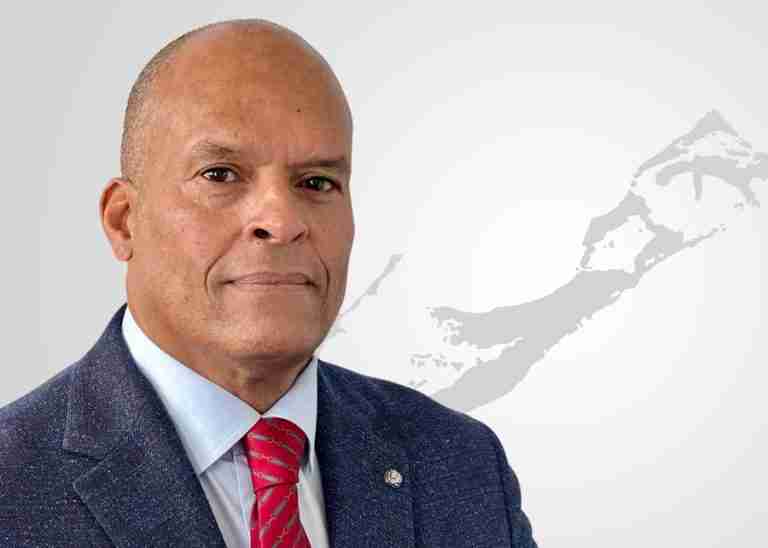
Former leader of the Opposition Robert King has quit the OBA and declared himself as an independent MP. Mr. King claims his values no longer align with the party.
But he pledges to continue to advocate for his constituents in parliament.
Jasmine Patterson tells us more.
Full Statement by Robert King:
“Dear Constituents,
I am writing to personally inform you of an important decision I have made regarding my service in Parliament.
I have resigned from the One Bermuda Alliance and will now serve as an Independent Member of Parliament.
This has not been an easy decision, nor is it one I have taken lightly.
When I first sought your support in the Smith’s North by-election on May 22, 2024, I made a commitment to represent you, to listen to your concerns and to stand up for the interests of our community.
You placed your trust in me, and on February 18, 2025, you gave me that trust again.
That commitment has not changed.
My decision to become an Independent is about ensuring that I can continue to represent you according to my principles, my conscience and what I believe is in the best interests of Bermuda — without being bound by party politics.
I AM NOT LEAVING PUBLIC SERVICE.
I am continuing my work as your Member of Parliament.
I will continue to:
– Represent the people of Smith’s North – Hold the Government accountable – Speak up on issues affecting our community – Fight for better government and greater accountability – Listen to your concerns and bring them to Parliament – Work constructively when it benefits Bermuda – Oppose policies when I believe they are not in the best interests of our people
Being an Independent MP means that my first responsibility is to you, the people who elected me.
I am grateful for the confidence you have placed in me and for the many conversations, emails, calls and personal interactions we have shared since I became your representative.
I intend to continue earning your trust.
MY COMMITMENT TO SMITH’S NORTH REMAINS THE SAME.
The party has changed. My commitment to you has not.
I look forward to continuing to serve you as your Independent Member of Parliament for Smith’s North.
With sincere thanks,
Robert King, JP, MP Constituency 10 – Smith’s North Independent Member of Parliament”
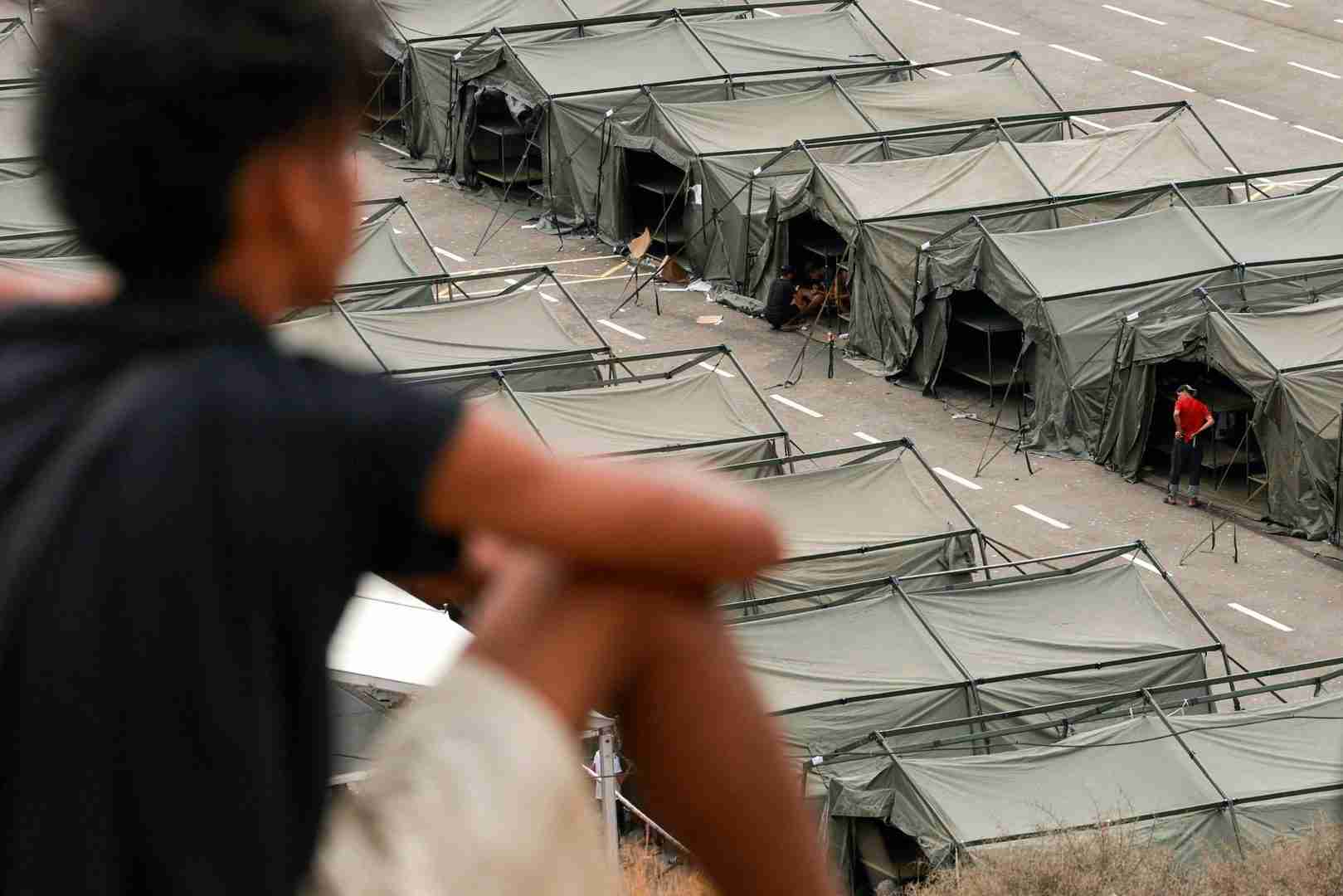
Spanish authorities say between 5,000 and 8,000 people remain in Ceuta after at least 72,000 crossed from neighbouring Morocco on July 30
International News via Reuters:
Italy said on Monday it would suspend its open-border arrangements with Spain for another 15 days, extending restrictions it imposed after a mass rush of migrants into the Spanish enclave of Ceuta a month ago.
The suspension of the EU passport-free Schengen arrangements — which Rome’s right-wing government says was brought in to make sure no migrants entering Ceuta could travel on to Italy — had been due to expire on Monday.
The decision to extend the suspension “was taken … due to the persistence of the factors that had led to the reintroduction of the measures on Aug. 1,” Italy’s interior ministry said in a statement.
Spanish authorities say between 5,000 and 8,000 people remain in Ceuta after at least 72,000 crossed from neighbouring Morocco on July 30.
At least 82 migrants were found dead on the Spanish side of the border and Morocco confirmed 14 more deaths.
The ministry said Italy was aware of “the steps already undertaken by Spain, together with the European Union, to help bring the situation in the area back to normal in the near future.”
Prime Minister Giorgia Meloni, who has taken a hard line against illegal immigration, is under pressure from a new far-right party, Futuro Nazionale, whose rhetoric is resonating with some voters ahead of elections due next year.
The centre-left opposition criticised the decision to reinstate border checks saying it was unnecessary, as there was no indication migrants in Ceuta may travel to Italy, and would undermine ties with Spain.
Reporting by Angelo Amante, editing by Gavin Jones and Andrew Heavens
Federal Reserve policymakers went out of their way to ease their counterparts’ concerns this week, promising to honor all of their commitments
International News via Reuters:
Europe’s central bankers are leaving an annual getaway with their U.S. counterparts far from reassured that long-standing norms in global cooperation remain intact and worried that more turmoil is ahead for an already testy relationship with Washington, sources familiar with the discussion said.
Federal Reserve policymakers went out of their way to ease their counterparts’ concerns this week, promising to honor all of their commitments.
But, given the separation between the central bank and the administration, they could offer no guarantees against sudden policy shifts by President Donald Trump, more than half a dozen officials on the sidelines of the Kansas City Fed’s annual Jackson Hole Economic Symposium said.
Recent U.S. Treasury interventions to prop up the Japanese yen and to lower longer-term U.S. borrowing costs were particularly concerning as they foreshadowed more intervention and breaks with norms, the officials, who asked not to be named, said.
After the August 1 yen transaction, U.S. Treasury Secretary Scott Bessent confirmed that the Treasury had sold euros for the Japanese currency and said he reassured central banks in the region that the move was “just a reallocation of resources.” On Friday, he said that the foreign exchange assets to buy yen came from the Treasury’s Exchange Stabilization Fund.
But European officials were especially annoyed the U.S. did not give them a customary heads-up that euro sales were part of the transaction, the sources said.
“That was infuriating,” one of them said. “You always pick up the phone and give heads-up.”
“The message to me is that the U.S. does whatever it wants.”
Others were more forgiving and said the transaction was so unusual that it may have been an honest oversight.
Spokespeople for the European Central Bank and the Federal Reserve declined to comment.
A U.S. official said the U.S.-Japan intervention was undertaken to counter disorderly movements in the yen and to support stability in global financial markets.
“It was not directed at anyone else,” the official said. “Treasury maintains close and ongoing communication with our international counterparts, but we do not comment on the operational details of those discussions.”
DEBT BUYBACK CONCERNS
The sources also said that Bessent’s plan to increase buybacks of longer-dated bonds — transactions that may need to be financed by issuance of more shorter-term maturities — was also a concern to European central bankers because, like the yen purchase, it indicates the administration was willing to take unusual measures to cap borrowing costs.
“These interventions normally offer just temporary relief,” a second source said. “But they are clearly worried. So what is next? Will they put pressure on the Fed to start buying bonds on the market?”
While the Fed is the sole U.S. monetary policymaking body, independent in that mission by design from the elected administration, the sources said Trump has shown he is willing to go to extraordinary lengths to get his will across.
Their concern was that this could then set off upheaval in markets that would go far beyond the U.S.
The U.S. official responded by repeating earlier statements that the increased long-end bond buybacks were aimed at providing greater liquidity in longer-dated sectors where Treasury gets high-quality buyback offers.
“They are not monetary policy or an effort to impose a cap on interest rates,” the official said.
On Thursday, however, a U.S. Treasury official had told reporters the Treasury was “really focused on bringing those long-end yields lower” because they had risen above what the department viewed as “fair value.”
SWAP LINES AT RISK?
Another of the Europeans’ worries was that political meddling could eventually involve the dollar liquidity backstops provided by the Fed to the world’s biggest central banks, considered a cornerstone of global financial stability, some of the sources said.
These swap lines ensure that commercial banks around the world retain their access to U.S. dollars, especially in moments of financial stress.
The Fed renews this facility year after year on the premise that it actually safeguards U.S. interests and markets, since overseas banks in moments of global market upheaval could otherwise be forced to dump U.S. bonds.
“But rationality doesn’t always prevail with this administration,” a third source said. “When they run retaliatory trade policies with their closest allies, Trump could just say, ‘Hey, they’re ripping us off’ and the swap lines could be gone overnight.”
The sources said there has not been even a hint that these backstops are in danger, and they still expected them to remain unchanged. The swap lines are authorized by the Federal Open Market Committee itself and operated exclusively by the Fed, not the administration.
“Decisions concerning Federal Reserve facilities and swap-line arrangements rest with the Federal Reserve,” the Treasury official said. “Nothing Treasury has announced regarding either yen operations or debt buybacks suggests otherwise.”
The official added that Bessent looked forward to discussing financial stability issues with G20 finance ministers and central bank governors in the coming days in Asheville, North Carolina, seeking to further press the administration’s agenda on isolating Iran, fostering growth and reducing global imbalances.
Fed Chairman Kevin Warsh travelled to Europe just over a month into his job and went out of his way to foster good relations with officials there, leaving a predominantly positive impression, the sources said.
In his debut Jackson Hole conference as Fed leader, he also posed for a customary photo with Bank of Canada Governor Tiff Macklem, a small but still notable gesture since Trump is now engaged in an escalating and bitter trade war with Canada.
Additional reporting by David Lawder in Washington; Editing by Dan Burns and Hugh Lawson
Brent crude futures were up $3.15, or 3.58%, to $91.25 a barrel at 0903 GMT, while U.S. West Texas Intermediate crude was up $2.96, or 3.55%, to $86.36
International News via Reuters:
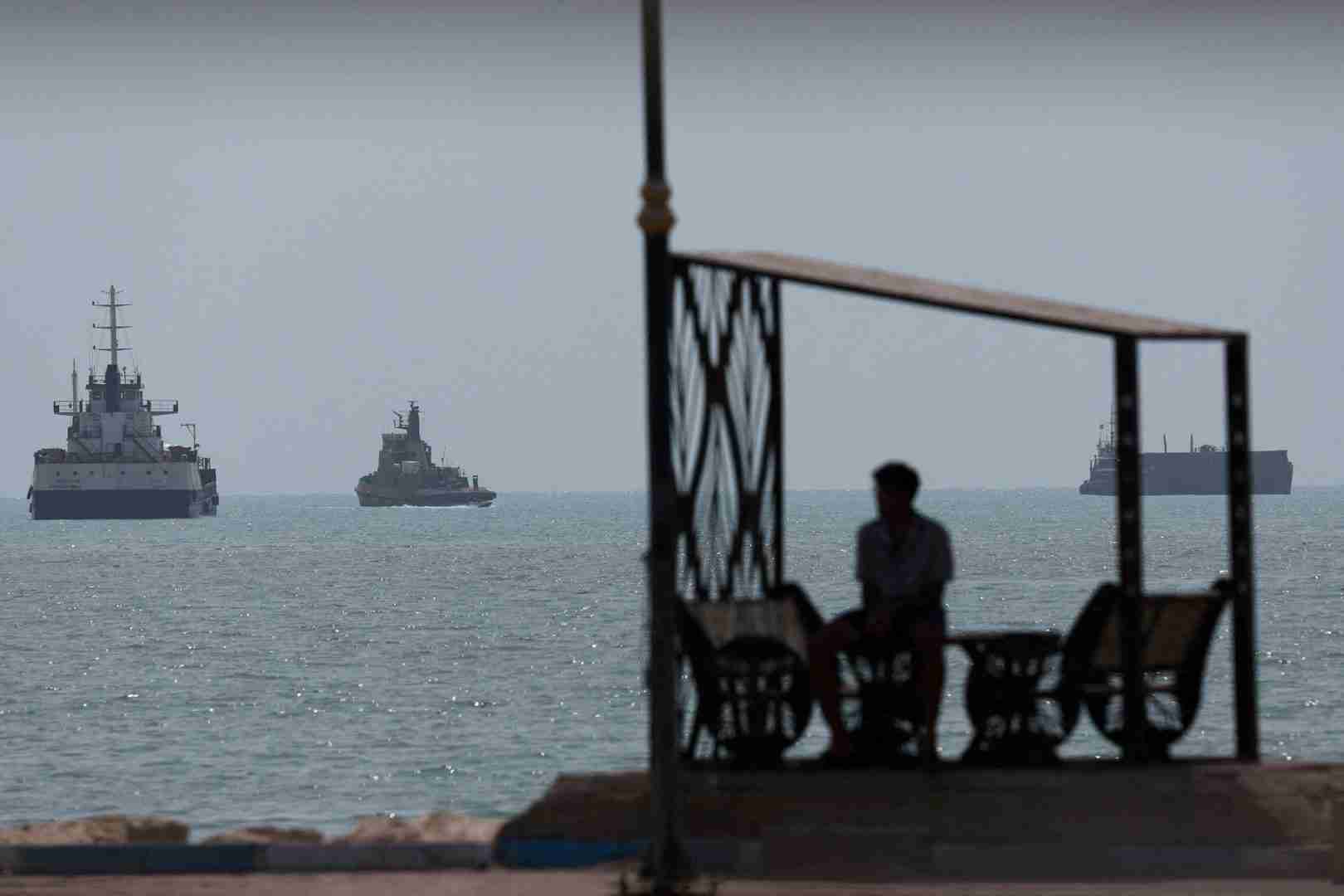
Oil prices rose more than 3.5% on Monday after the U.S. attacked an Iranian island in the Strait of Hormuz and Tehran said it had retaliated, as their conflict extended into its sixth month.
Brent crude futures were up $3.15, or 3.58%, to $91.25 a barrel at 0903 GMT, while U.S. West Texas Intermediate crude was up $2.96, or 3.55%, to $86.36.
U.S. forces struck two launchers on Iran’s Larak Island in the Strait of Hormuz on Sunday, the first known American strikes on the country since late July.
In response, Iran attacked two U.S. air bases in Jordan, Iranian media reported on Monday, citing Iran’s Revolutionary Guards.
“Renewed military strikes in the Middle East and concerns of further oil supply disruptions have lifted oil prices,” said UBS analyst Giovanni Staunovo, adding that markets will now focus on whether the situation de-escalates or not.
U.S. President Donald Trump said in a social media post on Sunday that Iran’s energy hub of Kharg Island was being “blown to smithereens”, but there was no evidence the island was under attack. The post, which included an AI-generated video, provided no further details. Iran denied any attack on the island and said oil operations were continuing.
Efforts to negotiate an end to the conflict remain stalled as mediators seek to reopen the Strait of Hormuz, through which a fifth of global oil supplies passed before the war began at the end of February.
Part of the sharp market reaction reflected thin trading volumes due to a UK public holiday, said Saxo Bank analyst Ole Hansen.
Shipping data showed the number of visible commodity vessels transiting the strait over the weekend fell to five a day, highlighting caution among operators concerned about attacks on shipping.
The United Kingdom Maritime Trade Operations agency said on Sunday that a tanker had been struck by a projectile while entering the strait on Saturday.
U.S. Treasury Secretary Scott Bessent told Reuters on Sunday that the U.S. was likely to impose new secondary sanctions on Iran every week.
Despite Monday’s rally, Brent and WTI were still on track to post modest losses for August after falling more than 4% last week, their first weekly declines in three weeks.
Trump also said on Sunday that oil secured under a recently struck deal with Venezuela would be used to replenish the U.S. Strategic Petroleum Reserve, which has fallen to near its lowest level in 44 years.
Reporting by Florence Tan and Colleen Howe. Editing by Kirsten Donovan and Mark Potter
To provide the best experiences, we use technologies like cookies to store and/or access device information. Consenting to these technologies will allow us to process data such as browsing behavior or unique IDs on this site. Not consenting or withdrawing consent, may adversely affect certain features and functions.
Functional
Always active
The technical storage or access is strictly necessary for the legitimate purpose of enabling the use of a specific service explicitly requested by the subscriber or user, or for the sole purpose of carrying out the transmission of a communication over an electronic communications network.
Preferences
The technical storage or access is necessary for the legitimate purpose of storing preferences that are not requested by the subscriber or user.
Statistics
The technical storage or access that is used exclusively for statistical purposes.The technical storage or access that is used exclusively for anonymous statistical purposes. Without a subpoena, voluntary compliance on the part of your Internet Service Provider, or additional records from a third party, information stored or retrieved for this purpose alone cannot usually be used to identify you.
Marketing
The technical storage or access is required to create user profiles to send advertising, or to track the user on a website or across several websites for similar marketing purposes.