Amazon argued that the Competition Appeal Tribunal should certify the cases to proceed
International News via Reuters:
Amazon faces two mass lawsuits from retailers and consumers worth up to 4 billion pounds ($5.4 billion) for allegedly abusing its dominant position, after a London tribunal on Thursday certified the cases could proceed.
Andreas Stephan, a competition law academic, is bringing one of the cases on behalf of over 200,000 third-party retailers, worth up to 2.7 billion pounds.
His lawyers allege that Amazon manipulates the “Buy Box” feature on its website to its own advantage and favours products that use Amazon’s own logistics centres and delivery network.
Consumer advocate Robert Hammond is separately bringing a case valued at up to 1.3 billion pounds on behalf of millions of Amazon customers for similar alleged abuses of dominance.
Amazon argued that the Competition Appeal Tribunal should certify the cases to proceed, an early step in the proceedings, including because the economic methodology for proving the cases was flawed.
But the tribunal certified both cases on an opt-out basis, meaning members of the claimant class will be part of the case unless they decide otherwise.
An Amazon spokesperson said: “These claims are without merit and we’re confident that will become clear through the legal process.
“Amazon has always focused on supporting the 100,000 businesses that sell their products on our UK store, and more than half of all physical product sales on our UK store are from independent selling partners.”
Reporting by Sam Tobin; Editing by Sachin Ravikumar
Bavarian Nordic has a market capitalisation of close to $3.0 billion following Thursday’s share price rally
International News via Reuters:
Danish biotech Bavarian Nordic said on Thursday it is in discussions with a consortium of Nordic Capital and Permira regarding a potential takeover offer from the two private equity groups, sending its share price up 24%.
“As these discussions are continuing, there can be no certainty as to whether any offer for Bavarian Nordic A/S by Nordic Capital and Permira will be made, or the timing or the terms of such offer,” the vaccine maker said in a statement.
Bavarian Nordic, which specialises in vaccines for mpox, smallpox and other infectious diseases, has a market capitalisation of close to $3.0 billion following Thursday’s share price rally, a Reuters calculation showed.
The company did not disclose how much the private equity groups might offer for its shares.
Bavarian is a key supplier to governments globally, including the United States, where it contributes to public health preparedness programmes.
(Reporting by Stine Jacobsen, editing by Terje Solsvik, Kirsten Donovan)Danish biotech Bavarian Nordic said on Thursday it is in discussions with a consortium of Nordic Capital and Permira regarding a potential takeover offer from the two private equity groups, sending its share price up 24%.
“As these discussions are continuing, there can be no certainty as to whether any offer for Bavarian Nordic A/S by Nordic Capital and Permira will be made, or the timing or the terms of such offer,” the vaccine maker said in a statement.
Bavarian Nordic, which specialises in vaccines for mpox, smallpox and other infectious diseases, has a market capitalisation of close to $3.0 billion following Thursday’s share price rally, a Reuters calculation showed.
The company did not disclose how much the private equity groups might offer for its shares.
Bavarian is a key supplier to governments globally, including the United States, where it contributes to public health preparedness programmes.
Reporting by Stine Jacobsen, editing by Terje Solsvik, Kirsten Donovan
The country has put offshore wind at the heart of its plans to decarbonise its electricity sector by 2030
International News via Reuters:
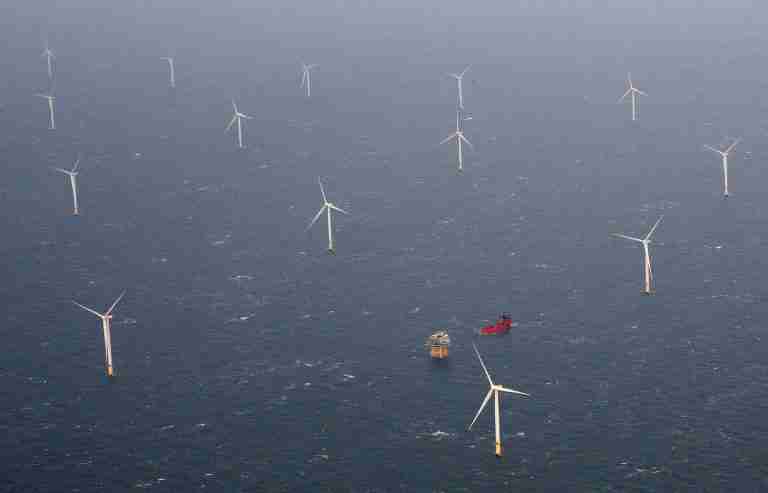
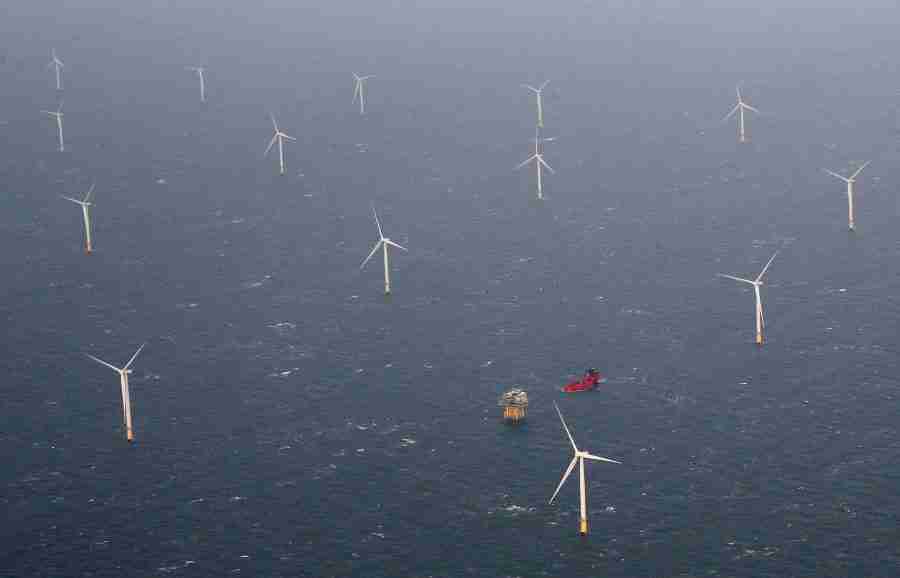
Britain will increase the guaranteed price offered for offshore wind projects in this year’s renewables auction by 11%, government documents showed, amid rising costs for projects due to inflation and supply chain bottlenecks.
The Labour government is facing mounting pressure from opposition parties over the affordability of its net-zero plan and following a 66% rise in the prices offered for offshore wind during last year’s auction.
“Renewable technologies continue to face macroeconomic uncertainty and supply chain constraints – this is particularly true for wind technologies,” the Department for Energy Security and Net Zero said in a document published late on Wednesday.
The country has put offshore wind at the heart of its plans to decarbonise its electricity sector by 2030. It aims to boost capacity to 43-50 gigawatts (GW) by the end of the decade, from around 15 GW currently.
In Britain’s annual renewables auctions project, developers bid for contracts-for-difference (CfD), which offer them a guaranteed price for their electricity.
If wholesale prices go below the guaranteed level, or strike price, the government makes up the difference with this cost ultimately recovered by levies on consumer bills. If wholesale prices are below the strike price, the developers pay back the difference.
Offshore wind projects will be offered a strike price of 81 pounds per megawatt hour (MWh) in 2012 prices, up from the 73 pounds per MWh offered in last year’s auction.
Floating wind projects, the technology for which is at an earlier stage of development, will be offered at 194 pounds per MWh, up from 176 pounds previously.
“Whilst construction costs have increased over recent years, this has also been felt across major infrastructure projects… This is the case for gas-fired power plants, as it is for wind turbines,” Adam Berman, director of policy and advocacy at industry group Energy UK, said in a separate statement.
Application rounds for the auction, called AR7, will begin in August with the results announced between December and the end of February 2026.
Reporting by Susanna Twidale, editing by Ed Osmond
Such figures are likely to add to speculation about a Bank of England interest rate cut next month
International News via Reuters:
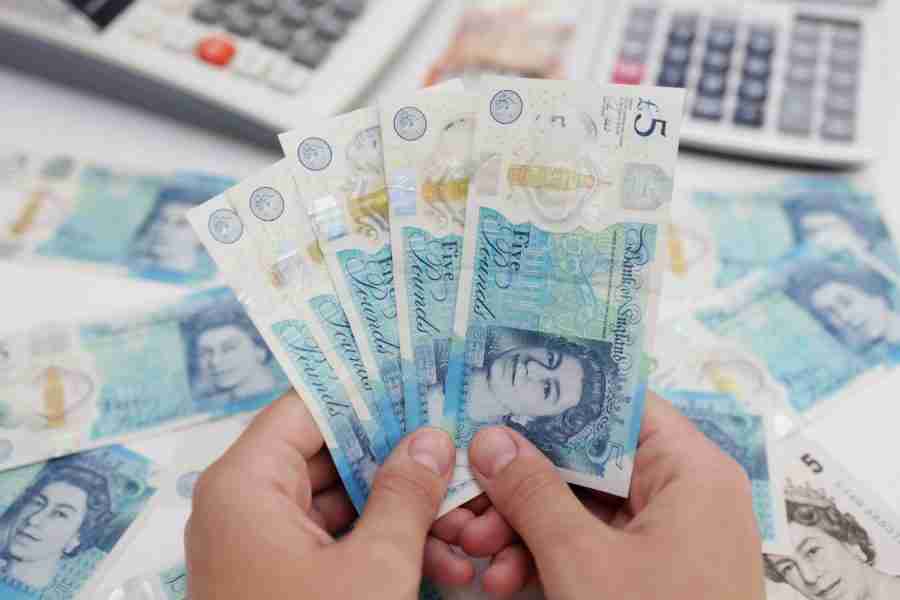
Sterling was set to snap a three-day winning streak against the dollar on Thursday, pressured by concerns over the UK economy and potential tax hikes.
Progress in U.S. trade talks with key partners eased investor worries about a global trade war, sparking a rally in risk assets and lifting the pound earlier this week.
However, UK PMI data showed that business activity grew only weakly in July and employers cut jobs at the fastest pace in five months, according to a survey.
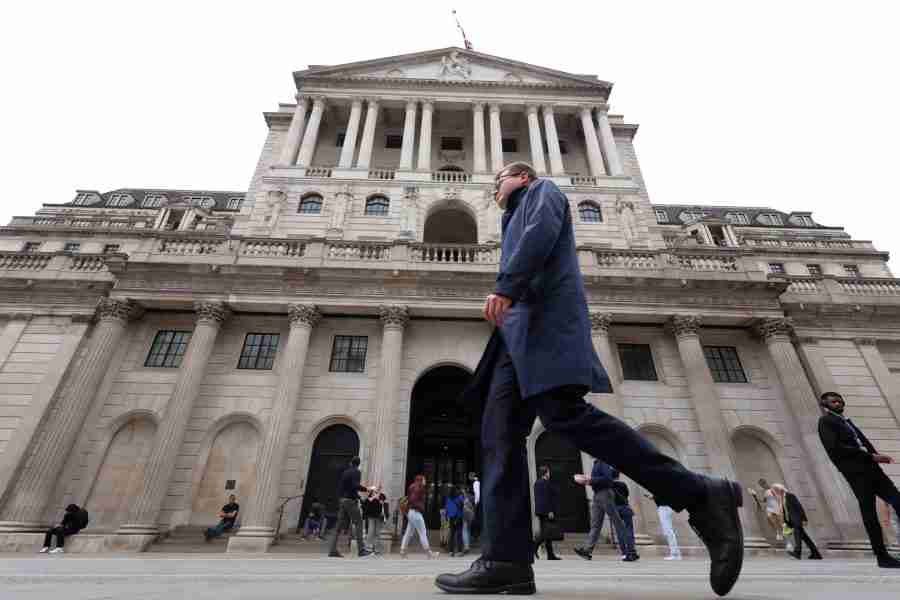
Such figures are likely to add to speculation about a Bank of England interest rate cut next month.
Markets are currently pricing an 80% chance of a rate cut in August and two easing moves by year-end.
The pound dropped 0.28% to $1.3544, after hitting a fresh two-week high early in the session at $1.3588.
The dollar edged up versus the euro and the yen after progress in trade negotiations.
Sterling weakened against the single currency, which was down 0.16% at 86.81 pence.. The euro hit 86.98 pence last week, its highest level since April 11.
The rate differential between the UK and the euro area has been affecting the cross.
Markets are pricing in a European Central Bank terminal rate of 1.75%, down from the current 2%, while expecting the Bank of England to cut rates by 85 basis points by the end of next year.
“Fears over strained public finances, the growing likelihood of more tax bumps and its implications for the UK economy are weighing on the pound against the euro,” said Matthew Ryan, head of market strategy at global financial services firm Ebury, after mentioning June data on government borrowing released on Tuesday.
Britain’s government borrowed £20.68 billion ($27.86 billion) in June. A Reuters poll forecast had pegged public sector net borrowing at a median of £16.5 billion.
Reporting by Stefano RebaudoEditing by Frances Kerry
The trend reflects shifting political priorities in Europe as some member countries have scaled back green measures
International News via Reuters:
The European Union’s expansion of solar energy is on track for its first annual downturn in more than a decade, industry data showed on Thursday, as some governments reduce subsidies for rooftop solar panels.
The trend reflects shifting political priorities in Europe as some member countries have scaled back green measures or support for clean energy from budgets stretched by spending on defence and local industries.
The EU is on track to install 64.2 gigawatts of new solar energy capacity in 2025, a 1.4% decrease compared with the 65.1GW installed last year, industry association SolarPower Europe said.
The drop would mark the first time since 2015 that the growth of Europe’s solar market has slowed year on year – denting an area of fast progress in Europe’s shift to clean energy. Solar capacity growth soared by 51% in 2023, although last year growth had already slowed to 3%.
Last month, solar generated 22% of total EU electricity, making it the EU’s largest single source of power generation that month.
But current deployment rates now indicate the EU will fall short, by about 27GW, of the 750GW of solar capacity which SolarPower Europe said is needed by 2030 for the EU’s climate targets and plans to phase out Russian energy.
The main cause of the downturn is fewer residential rooftop solar panel installations – a sector that is set to make up 15% of total new capacity this year, halving the roughly 30% share it held over 2020 to 2023.
Germany and France are among the countries reducing their feed-in tariff payments for rooftop solar energy, while the Netherlands is also reducing support for households that export their excess solar power to the grid.
Brent crude futures gained 79 cents, or 1.15%, to $69.30 a barrel by 0934 GMT. U.S. West Texas Intermediate crude futures climbed 83 cents, or 1.3% to $66.08 per barrel
International News via Reuters:
Oil prices rose more than 1% on Thursday, buoyed by optimism over U.S. trade negotiations that would ease pressure on the global economy and a sharper-than-expected decline in U.S. crude inventories.
Brent crude futures gained 79 cents, or 1.15%, to $69.30 a barrel by 0934 GMT. U.S. West Texas Intermediate crude futures climbed 83 cents, or 1.3% to $66.08 per barrel.
“The U.S. crude inventory draw and the trade efforts are adding some support to prices,” said Janiv Shah, analyst at Rystad.
Two European diplomats said on Wednesday that the EU and the U.S. are moving towards a trade deal that could include a 15% U.S. baseline tariff on EU imports and possible exemptions, potentially paving the way for another major trade agreement following the Japan deal.
On the supply side, U.S. Energy Information Administration data on Wednesday showed U.S. crude inventories fell last week by 3.2 million barrels to 419 million barrels, exceeding analysts’ expectations in a Reuters poll for a 1.6 million-barrel draw. [EIA/S]
Meanwhile, news of issues in loading CPC exports from Kazakhstan through the Black Sea due to Russian administrative interference, along with reports of contamination around loadings for Azeri crude from Ceyhan in Turkey led to some strength, PVM Associates analyst John Evans said in a note.
But follow-through will depend on their longevity, he added.
Kazakhstan’s energy ministry, however, said that the country had not halted oil loadings via the Russian sea ports, the Interfax news agency reported earlier on Thursday.
“Uncertainty over U.S.-China trade talks and peace negotiations between Ukraine and Russia is limiting further gains,” said Hiroyuki Kikukawa, chief strategist of Nissan Securities Investment, a unit of Nissan Securities, predicting WTI would likely remain range-bound between $60 and $70 a barrel.
Russia and Ukraine held peace talks in Istanbul on Wednesday, discussing further prisoner swaps, though the two sides remain far apart on ceasefire terms and a possible meeting of their leaders.
“Next to watch would be the demand indicators as we are in the peak season and any upside or downside would impact refining margins,” Shah added.
Reporting by Seher Dareen in London, Yuka Obayashi in Tokyo and Emily Chow in Singapore; Editing by Jacqueline Wong, Rachna Uppal and Kate Mayberry
Hospital summer students recently got a look at their potential future.
Throughout June, ten select students were able to watch ‘live surgeries’ on video as part of the work experience – and apeak with the doctors who performed them.
Through a partnership between Bermuda Hospitals Board and Liberty Science Centre in New Jersey, students watched a kidney transplant, robotic surgery and neurosurgery.
One student said the opportunity to witness live surgeries was “insightful and inspiring”.
Sanaa Simmons, a first year medical student at the University of Liverpool, also said they were “further educated on triage processes, organ rejection, and long-term lifestyle changes to patients – ultimately reinforcing how imperative it is to showcase empathy in the medical field.”
Bermuda Hospitals Board press release:
BHB partnered with Liberty Science Center for the first time this year to give a select group of its summer students the opportunity to watch ‘live surgeries’ as part of their work experience at BHB.
BHB’S Coordinator-HR Programmes Erin Basden explains: “We secured ten spots for a number of surgeries. It was great to be able to offer such ah meaningful experience as part of our summer student programme and we will be looking to continue this partnership in the future. It was very informative, eye-opening and offered our students another avenue to benefit their career journey.”
The live video events were held throughout June. The BHB summer students were able to peer into an operating room to see a kidney transplant, robotic surgery and neurosurgery, and were able to communicate with the doctors. There was also a Meet the Surgeon session with a paediatric orthopaedic surgeon who joined live and presented students with recorded footage from one of her procedures and discussed her career path.
One of the ten BHB summer students who participated was Bermudian Sanaa Simmons, a first year medical student who is studying at the University of Liverpool, who worked in the Quality & Risk Department at BHB over the summer.
“The opportunity to witness live surgeries provided by the Liberty Science Centre was insightful and inspiring,” she says.
“I particularly enjoyed observing the paediatric ACL reconstruction, and Dr. Samara Friedman was eager to answer our questions and share her story. From growing up as an athlete, to employing her dexterous skills throughout her younger life, she explained how paediatric orthopaedic surgery was best fit for her.
“Moreover, the kidney transplant surgery was well delivered; the procedure was narrated in an accessible way.
“We became further educated on triage processes, organ rejection, and long-term lifestyle changes to patients – ultimately reinforcing how imperative it is to showcase empathy in the medical field.”
Church members deliver humanitarian aid to Ukrainian troops and villages near the frontline and nuns offer comfort to families and especially children fleeing the war
International News via Reuters:
About 25 miles (40 km) from a slowly advancing Russian frontline, a community of Ukrainian Catholics is tending to people exiled from occupied territory to the country’s eastern city of Zaporizhzhia.
Church members deliver humanitarian aid to Ukrainian troops and villages near the frontline and nuns offer comfort to families and especially children fleeing the war.
“When kids come, especially little ones, they feel safe and cling to us, needing hugs and warmth. New kids always need that embrace,” said Sister Lukia Murashko, the mother superior at Zaporizhzhia’s Order of Saint Basil the Great monastery.
The monastery provides a cheerful environment adorned with Ukrainian flags and greeting cards from soldiers. In June, Sister Lukia and two other nuns made a cake for the 15th birthday of Evhen, a boy who fled the occupied city of Melitopol with his mother and now lives in a drab hostel in Zaporizhzhia.
The Ukrainian Greek Catholic Church, a Ukrainian denomination loyal to the Vatican named for its rites similar to eastern Orthodox churches, has over 4 million followers in Ukraine and is the country’s largest branch of Catholicism.
Orthodox Christianity remains the most popular religion but has declined during the past decade amid tensions over ties to Moscow. Meanwhile, the Catholic Church has grown and its followers now make up 12% of the population, according to a 2024 study by the Razumkov Centre, a Ukrainian think-tank.
Catholicism is traditionally predominant in Ukraine’s West, but has been growing in the East of the country, much of which Russia claims as its own, including lands it occupied in 2014 and in the 2022 full-scale invasion.
Moscow does not control Zaporizhzhia city and it has become a centre for internally displaced Ukrainians from occupied territories. With membership growing, the wooden St. Volodymyr chapel is getting an extension in the city, where Roman Catholicism also has a small presence.
During a visit in June, about two dozen faithful and three priests in gold-brocade vestments observed a Divine Liturgy conducted by Father Andriy Bukhvak in the chapel, most of them among the displaced.
After Russia occupied most of Zaporizhzhia region in 2022, it installed an administration that banned the Ukrainian Catholic Church and Catholic charities in a December 6, 2022 decree, saying they worked in the interests of foreign intelligence services and stored weapons.
The decree accused parishioners of participating “in riots and anti-Russian rallies in March-April 2022.”
The office of the Russia-installed governor of the occupied area of Zaporizhzhia region did not immediately respond to a detailed request for comment.
Father Oleksandr Bohomaz, 36, served in Melitopol, a coastal city in Zaporizhzhia region, for nine months after Russia took the town on March 1 that year along with two other priests, caring for four parishes and faithful who could not flee after authorities cracked down on the church there, he said.
“We travelled around, serving as much as possible until they eventually deported us,” he told Reuters.
During his time under occupation, he said, the authorities stormed church services, collecting fingerprints from worshippers. In December 2022, he was interrogated and taken to a checkpoint where he was told to cross to the territory under Ukrainian control.
Other Catholic priests in the Zaporizhzhia region suffered harsher treatment.
In November 2022, Russia’s troops raided a Greek Catholic church in Berdiansk, a city about 100 km along the coast from Melitopol.
Two priests, Ivan Levitsky and Bohdan Geleta, were arrested on illegal weapons charges. They were not freed until a June 2024 exchange of Ukrainian and Russian prisoners, according to a December 2024 report by the U.N. Human Rights Monitoring Mission in Ukraine. The church denied the weapons charges.
HOLY STRIFE
Religion has become intertwined with the war. In Moscow, the Russian Orthodox Church’s Patriarch Kirill has given his blessing to the invasion of Ukraine, which he calls a Holy War
Last August, Ukrainian authorities banned the branch of Ukrainian Orthodox Church loyal to Moscow and in 2023 placed its leader, Patriarch Pavlo, under house arrest.
The International Religious Freedom and Belief Alliance (IRFBA), a U.S. State Department-backed initiative of 43 countries promoting freedom of religion, has accused Russia of widespread religious persecution in Ukraine.
In a February report, IRFBA said Russian troops had killed 67 clergy of various denominations since the beginning of the invasion of Ukraine, without giving specifics. IRFBA said more than 630 religious buildings had been damaged during the Russian occupation, including 596 Christian churches.
Reuters was unable to independently verify IRFBA’s claims, which have been repeated by Ukrainian officials. Russia’s Foreign Ministry has described the alliance’s reports as based on partisan and biased information, and said any actions were taken in accordance with the law.
The Ukrainian Catholic Donetsk Exarchate, the body of the church in much of East Ukraine, has operated in exile in Zaporizhzhia since 2014. Out of 77 parishes, 36 are under control of the Russian authorities, it said.
Stepan Meniok, 75, who was the bishop heading the Donetsk Exarchate until his retirement in 2024, said that when Russia-led separatists took over the eastern city of Donetsk in 2014 they drove him from the diocese’s seat. He settled in Zaporizhzhia.
“Many displaced people pass through here, and I’ve heard countless stories of loss: property, lives,” he said, adding he hoped for peace talks between Kyiv and Moscow.
Father Bohomaz said Russian authorities saw the Ukrainian Catholic church as a threat because it was outspoken against the occupation.
“We see our people being beaten, killed, robbed, and destroyed,” he said. “We stand with the people.”
Reporting by Thomas Peter and Aleksandar Vasovic; Editing by Frank Jack Daniel, Alexandra Hudson
Lloyds shares rose 1.5% in early trading, outperforming a 0.3% gain in the benchmark FTSE 100 index
International News via Reuters:
Lloyds Banking Group reported an estimate-beating 5% increase in first-half profit on Thursday, driven by higher income from mortgages and unsecured consumer lending, but said corporate defaults rose in one sector.
The British lender said that statutory profit before tax for the first six months of the year was 3.5 billion pounds ($4.75 billion), above a forecast of 3.2 billion pounds.
The bank also said it would pay an interim ordinary dividend of 1.22 pence per share, equivalent to 731 million pounds, up 15% on the prior year.
Lloyds shares rose 1.5% in early trading, outperforming a 0.3% gain in the benchmark FTSE 100 index.
The strong performance update from Britain’s biggest mortgage lender showed that it grew income and managed costs, even as storm clouds gather over the UK economy.
Lloyds maintained its performance targets for the year, as improved house price expectations helped offset a decline in its economic outlook, including higher predicted unemployment.
The lender took an impairment charge of 442 million pounds in the first half, up from 101 million the year before, which it said included a small number of companies in one sector.
That was the fibre broadband sector, Chief Financial Officer William Chalmers told reporters on a conference call, where higher construction costs and lower subscriber numbers have hit some providers hard.
Overall, impairments were down quarter-on-quarter and not a major concern, Chalmers said, with the negative comparison to the first six months of last year due to a one-off credit in that period.
“The impairments picture as a whole is looking extremely benign off the back of retail and commercial performance,” he said.
The bank’s performance could be overshadowed in the coming days by the outcome of a landmark Supreme Court ruling on a probe into Britain’s motor finance sector.
Lloyds is among the lenders most exposed to an adverse ruling on the cases about how banks disclosed historical commissions paid on car finance deals, which analysts have said could cost the banking industry up to 30 billion pounds.
Conversely, a favourable ruling that banks were not culpable would remove a significant source of uncertainty for Lloyds.
Fleet growth and higher average vehicle rental values boosted revenue from motor finance, driving total income for the bank for the half-year to 9.4 billion pounds, an increase of 6% from the same period in 2024.
($1 = 0.7368 pounds)
Reporting By Lawrence White; Editing by Tommy Reggiori Wilkes and Rachna Uppal
The BoE is expected to cut interest rates for the fifth time in 12 months
International News via Reuters:
British business activity grew only weakly in July and employers cut jobs at the fastest pace in five months, according to a survey that is likely to add to speculation about a Bank of England interest rate cut next month.
The S&P Global UK Composite Purchasing Managers’ Index (PMI), published on Thursday, slowed to 51.0 points from 52.0 in June, not far above the 50.0 level that separates growth from contraction. A Reuters poll had forecast a smaller fall to 51.8.
The survey’s employment gauge dropped to 45.1, its lowest since February, with businesses in part blaming the decision by British finance minister Rachel Reeves to make them pay more in social security contributions for their staff from April.
“Particularly worrying is the sustained impact of the budget measures on employment,” Chris Williamson, chief business economist at S&P Global Market Intelligence, said.
“Higher staffing costs have exacerbated firms’ existing concerns over payroll numbers in the current environment of weak demand, resulting in another month of sharply reduced headcounts in July.”
Worries about weak demand were also weighing on hiring decisions, S&P Global said.
The BoE is expected to cut interest rates for the fifth time in 12 months on August 7 as it focuses on signs of a slowdown in the jobs market, even as inflation remains above the central bank’s 2% target and rose to 3.6% in June.
Williamson said Thursday’s survey suggested Britain’s economy was growing at a quarterly pace of just 0.1% with a risk that it could prove weaker.
However, the PMI underscored the BoE’s dilemma with growth in prices charged by firms speeding up for the first time since April as suppliers sought to offset some of the tax increase and higher wage bills.
The PMI for the services sector slipped to 51.2 in July from June’s 52.8. The manufacturing sector PMI rose for a fourth month in a row to 48.2 from 47.7 but remained in contraction territory for a 10th consecutive month.
Writing by William Schomberg; Editing by Joe Bavier
The EU and United States appear to be heading towards a possible trade deal
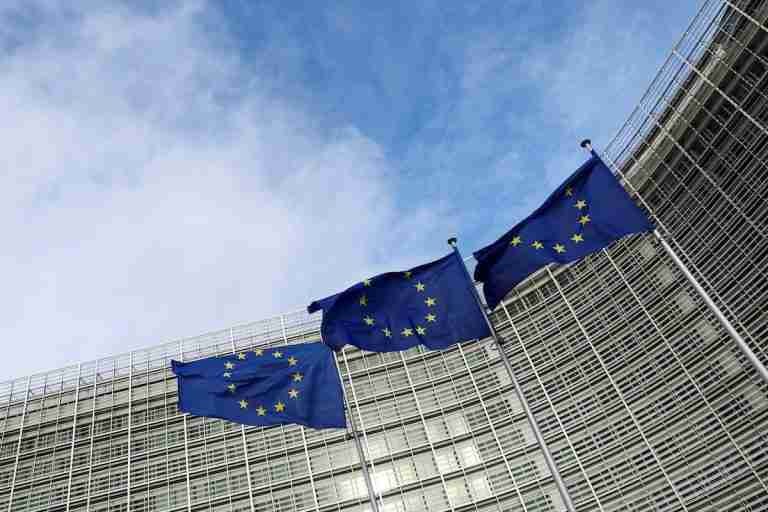
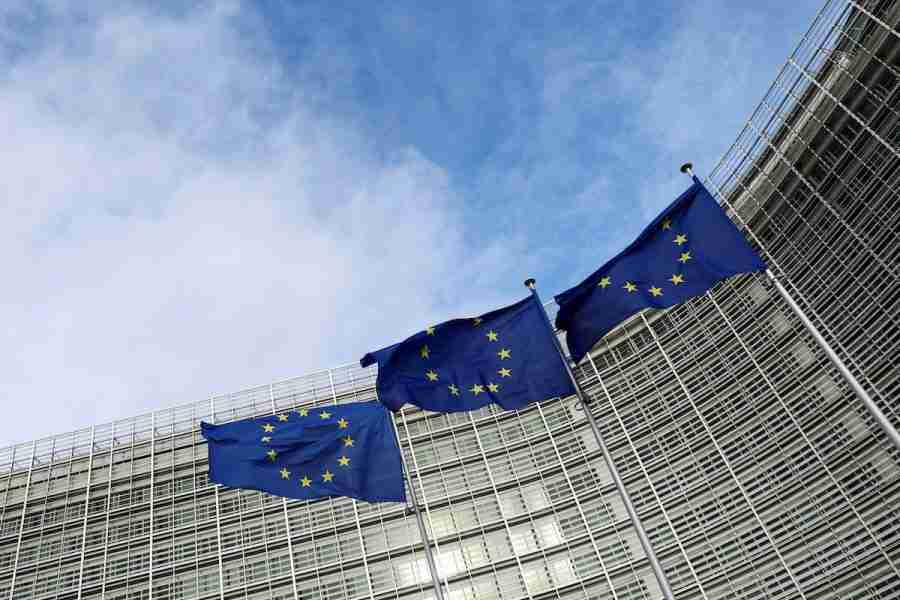
FILE PHOTO: European Union flags fly outside the European Commission in Brussels, Belgium November 8, 2023. REUTERS/Yves Herman/File Photo
International News via Reuters:
The European Union’s member countries voted on Thursday to approve counter-tariffs on 93 billion euros ($109 billion) of U.S. goods, which could be imposed should the bloc fail to reach a trade deal with Washington, EU diplomats said.
The 27-nation bloc’s executive European Commission had said on Wednesday its primary focus was to achieve a negotiated outcome with Washington to avert 30% U.S. tariffs that U.S. President Donald Trump has said he will apply on August 1.
The Commission said it would press on in parallel with plans for potential countermeasures, merging two packages of proposed tariffs of 21 billion euros and 72 billion euros into a single list and submitting this to EU members for approval.
No countermeasures would enter force until August 7. So far the EU has held back from imposing any countermeasures, despite Trump’s repeated announcements of tariffs, the broadest of which have been postponed. EU member states authorised the first package of countermeasures in April, but these were immediately suspended to allow time for negotiations.
The EU and United States appear to be heading towards a possible trade deal, according to EU diplomats, which would result in a broad 15% tariff on EU goods imported into the U.S., mirroring a framework agreement Washington struck with Japan. Trump would still need to take any final decision.
Under the outlines of the potential deal, the 15% rate could apply to sectors including cars and pharmaceuticals and would not be added to long-standing U.S. duties, which average just under 5%.
There could also be concessions for sectors such as aircraft, lumber as well as some medicines and agricultural products, which would not face tariffs, diplomats said.
Washington does not, however, appear willing to lower its 50% tariff on steel.
($1 = 0.8501 euros)
Reporting by Philip Blenkinsop and Benoit Van OverstraetenEditing by Tomasz Janowski and Peter Graff
To provide the best experiences, we use technologies like cookies to store and/or access device information. Consenting to these technologies will allow us to process data such as browsing behavior or unique IDs on this site. Not consenting or withdrawing consent, may adversely affect certain features and functions.
Functional
Always active
The technical storage or access is strictly necessary for the legitimate purpose of enabling the use of a specific service explicitly requested by the subscriber or user, or for the sole purpose of carrying out the transmission of a communication over an electronic communications network.
Preferences
The technical storage or access is necessary for the legitimate purpose of storing preferences that are not requested by the subscriber or user.
Statistics
The technical storage or access that is used exclusively for statistical purposes.The technical storage or access that is used exclusively for anonymous statistical purposes. Without a subpoena, voluntary compliance on the part of your Internet Service Provider, or additional records from a third party, information stored or retrieved for this purpose alone cannot usually be used to identify you.
Marketing
The technical storage or access is required to create user profiles to send advertising, or to track the user on a website or across several websites for similar marketing purposes.