

Government unveils twelve new affordable housing units at Harmony Hall in Paget, Dock workers divided on union action that lead to overtime ban, Finance consultant Michael Branco elected new City of Hamilton councillor plus all the latest sports news



WHO pushes countries to raise prices on sugary drinks, alcohol and tobacco by 50%

United Nations health agency said the move would help cut consumption of the products

International News via Reuters:
The World Health Organization is pushing countries to raise the prices of sugary drinks, alcohol and tobacco by 50% over the next 10 years through taxation, its strongest backing yet for taxes to help tackle chronic public health problems.
The United Nations health agency said the move would help cut consumption of the products, which contribute to diseases like diabetes and some cancers, as well as raising money at a time when development aid is shrinking and public debt rising.
“Health taxes are one of the most efficient tools we have,” said Jeremy Farrar, WHO assistant-director general of health promotion and disease prevention and control. “It’s time to act.”
The WHO launched the push, which it is called “3 by 35” at the UN Finance for Development conference in Seville.
WHO said that its tax initiative could raise $1 trillion by 2035 based on evidence from health taxes in countries such as Colombia and South Africa.
The WHO has backed tobacco taxes and price rises for decades, and has called for taxes on alcohol and sugary drinks in recent years, but this is the first time it has suggested a target price rise for all three products.
WHO Director-General Dr Tedros Adhanom Ghebreyesus told the conference that the taxes could help governments “adjust to the new reality” and bolster their own health systems with the money raised.
Many low and middle-income countries are coping with cuts to aid spending led by the United States, which is not attending the Seville conference. The U.S. is also in the process of withdrawing from the WHO.
FROM $4 to $10
As an example, the initiative would mean a government in a middle-income country raising taxes on the product to push the price up from $4 today to $10 by 2035, taking into account inflation, said WHO health economist Guillermo Sandoval.
Nearly 140 countries had already raised tobacco taxes and therefore prices by over 50% on average between 2012 and 2022, the WHO added.
Sandoval said the WHO was also considering broader taxation recommendations, including on ultra-processed food, after the agency finalises its definition of that type of food in the coming months. But he added that the agency expected pushback from the industries involved.
The initiative is also backed by Bloomberg Philanthropies, the World Bank and the Organization for Economic Co-operation and Development (OECD), and involves support for countries who want to take action.
Reporting by Jennifer Rigby and Virginia Furness; editing by David Evans
Tennis player advances again in Turkey

Daniel Phillips chalks up third win in the qualifying stages of ATP Tour events

Phillips: Proving to be a resilient competitor
Tennis player Daniel Phillips has continued his impressive journey on the professional circuit, securing yet another victory in the qualifying rounds of the M15 Kayseri Tournament in Turkey. This marks his third win in the qualifying stages of ATP Tour events.
Phillips, who has been building significant momentum since his strong performances in the Davis Cup World Group II playoffs, took to the court for his Second Round Qualifier today. He faced Aleksandar Lavrnja from Sweden (ITF Rank #2430). Phillips, proving to be a resilient competitor, had to battle hard but ultimately prevailed in straight sets, securing a 7-6, 6-1 victory.
This win propels Phillips into the next round of qualifiers at the M15 Kayseri event, a crucial step on the ITF Men’s World Tennis Tour for players looking to climb the professional ranks. His continued success in these challenging qualifying draws highlights his adaptability and growing confidence against a variety of international opponents.
Analysis-Emerging market debt sale surge defies global turmoil amid signs of de-dollarisation
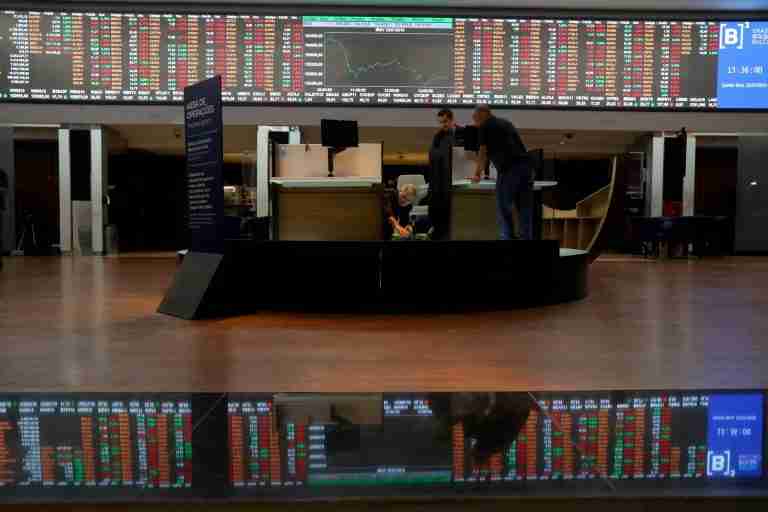
Record supplies of new bonds could continue, with low oil prices driving exporting countries to keep borrowing to fund spending

International News via Reuters:
Emerging market debt sales boomed in the first half of the year, defying tariff tantrums, missile attacks and gyrating oil prices, on track for another year of records – and with nascent signs of a shift away from the dollar, bankers told Reuters.
Cash-rich investors keen for margins – and to diversify their portfolios – hardly paused their buying spree even during U.S. President Donald Trump’s “Liberation Day” sweep of tariff announcements or Israel’s attacks on Iran.
Record supplies of new bonds could continue, with low oil prices driving exporting countries to keep borrowing to fund spending.
“What is astonishing this year is how markets … were still active, if not very active, in the toughest moments of the globe,” said Alexis Taffin de Tilques, global head of emerging markets sovereigns and head of Central and Eastern Europe, Middle East and Africa debt capital markets with BNP Paribas.
“The volumes of issuance have been incredible.”
Stefan Weiler, head of debt capital markets for CEEMEA at JPMorgan, said debt sales in the group of regions surpassed $190 billion in the first half of the year, on course to beat last year’s all-time record of $285 billion.
The surge is another sign of investor interest in emerging market assets in a year that has been marked by the sort of turmoil that typically sends investors fleeing for safe-havens.
“Investors are very cash rich … eagerly looking to deploy their cash in the primary market,” said Weiler, predicting that if oil prices fell, issuance from the Middle East and North Africa could rise further.
The Gulf, led by behemoth Saudi Arabia, issued just over 40% of CEEMEA debt, bankers said, as companies and countries took advantage of a dip in interest rates and the expectation that U.S. Treasury yields would remain elevated for some time.
“It has been definitely a record first half of issuances this year” for the Middle East, said Khaled Darwish, head of CEEMEA Debt Capital Markets at HSBC, calculating that Middle East issuers had raised bond and sukuk deals worth $106 billion so far this year, compared with $139 billion for the whole of 2024.
“The impact of all the geopolitical developments that happened this year has been quite minimal on the GCC market,” he added.
Geopolitical upheaval has even helped demand for certain issues. Investors who may once have been cautious about defence companies have become keener in response to higher military spending in NATO countries following Russia’s invasion of Ukraine. Czech defence and industrial company CSG more than doubled its dual-tranche 2031 bond issue to 1 billion euros and $1 billion in response to strong investor demand.
DIVERSIFICATION
Fixed-income investment is better shielded from geopolitical turmoil than equity markets, Taffin de Tilques said. Weiler said crossover investors are keen for the bigger margins emerging market debt offers.
Citi’s debt finance team said global emerging-market issuance volumes were up 20% year-on-year for the first half of 2025, with corporate issuance growing particularly quickly.
While much of it is refinancing, new issuers have joined the fray such as Saudi mining giant Maaden, with a sukuk worth $1.25 billion, and Angola’s Azul Energy, which debuted with a $1.2 billion bond.
Victor Mourad, Citi’s co-head of CEEMEA debt financing, said the growing list of debut issuers offered investors diversification.
Darwish and Weiler said there are also more governments and corporates turning to other currencies – chiefly the euro – to diversify away from the dollar.
Saudi Arabia issued in euros this year, as did Sharjah in the United Arab Emirates. Weiler said other currencies were being explored too, from Japanese yen to “Panda bonds” issued on China’s domestic market in yuan. Uruguay sold its first sovereign bond in Swiss francs.
“There’s definitely a theme among global issuers currently exploring more non-USD financing alternatives as borrowers are seeking to achieve less reliance on USD-denominated funding,” Weiler said, adding it was an early sign of de-dollarisation. “I think it’s the start of a clear trend.”
Mourad said the other notable trend was a move away from 30-year issues; he said there were only two 30-year transactions from the CEEMEA region in the first half of the year. Yield curves have become steeper globally, making longer-term issues more costly to governments and corporates than before.
“The long end supply has been replaced by a surge in volumes for three-year transactions as issuers took a view on short-term rates,” Mourad said.
Reporting by Libby George in London and Federico Macconi in DubaiEditing by Karin Strohecker and Peter Graff
UK bonds suffer biggest selloff since October 2022 as worries build over finance minister
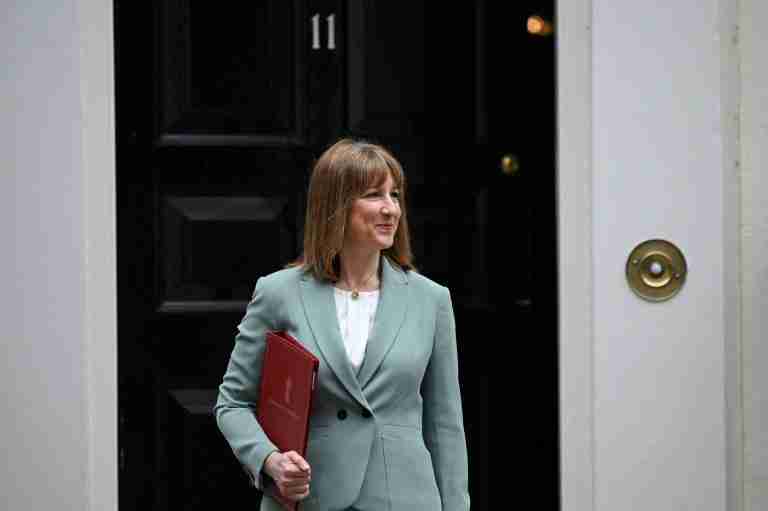
Sterling dropped by more than 1% against the dollar, set for its largest one-day decline since mid-June

International News via Reuters:
British government bond prices fell by the most since October 2022 and the pound tumbled on Wednesday, after finance minister Rachel Reeves appeared visibly distressed in parliament, a day after the government sharply scaled back plans to cut benefits.
Reeves has repeatedly emphasised her commitment to fiscal rules, limiting the amount Britain will borrow, and, analysts said, the market moves reflected fears that she would be replaced, creating even more uncertainty.
The yield on the 10-year government bond, or gilt, rose as much 22 basis points on the day at one point, to 4.681%, as investors ditched UK debt.
That would be the largest one-day jump in the British benchmark yield since October 2022, in the aftermath of then Prime Minister Liz Truss’ chaotic fiscal announcement that cost her premiership.
The selloff hit the entire gilt curve. Thirty-year yields rose nearly 22 basis points, and 2-year yields rose 11 bps
“Gilt yields were moving up but started to spike during (Prime Ministers Questions) as Reeves looked utterly shaken,” said Neil Wilson, UK investor strategist at Saxobank.
Prime Minister Keir Starmer’s press secretary later said Reeves has his full support, and she was upset because of “a personal matter”.
Investors are watching Reeves’ position after the British government’s U-turns on welfare reforms mean the plans will no longer save taxpayers any money and have shredded the margin Britain relies on to meet its fiscal rules, analysts said on Wednesday.
“The market is pricing in the possibility of a replacement chancellor with a more left-leaning agenda, which is spooking the bond market and waking up the bond vigilantes from their slumber,” said Kathleen Brooks, research director at XTB
Sterling dropped by more than 1% against the dollar, set for its largest one-day decline since mid-June and also weakened sharply against the euro, after Reeves appeared to wipe tears away in parliament.
The pound was last down 1% on the dollar at $1.361. The euro was up 0.6% at 86.4 pence. That would be the euro’s largest one-day rise against the pound in two months.
Britain’s domestically focused mid-cap index was down 1.65% on the day, sharply underperforming European stocks.
“It’s about Rachel Reeves finding herself in a very difficult situation following a series of U-turns, which means that the savings that had been anticipated … (are) not going to be had,” said Dani Hewson, head of financial analysis at AJ Bell
“What’s gone on in parliament today has absolutely unsettled (investors) because what is happening is the market is becoming increasingly concerned with Reeves’ position.”
Reporting by Alun John, Andy Bruce and Johann Cherian; Editing by Amanda Cooper and Alison Willliams
Inside the airline seat industry crisis delaying jet deliveries
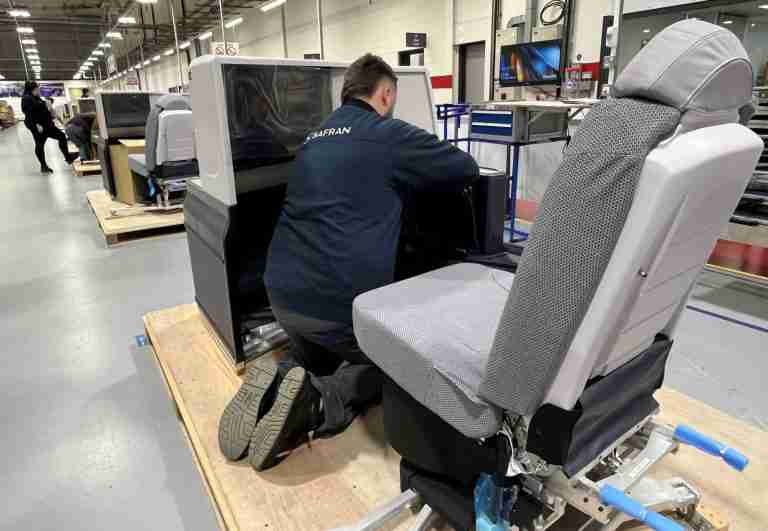
Beneath a luxury business class armrest lies a key bottleneck slowing global aircraft deliveries

International News via Reuters:
Tucked beneath the armrest of a luxury business class seat in a factory in Wales lies a clue to a global aviation bottleneck that has left many airlines waiting impatiently for new jets.
Before the armrest can support the pampered elbow of a premium passenger, a complex manufacturing jigsaw with as many as 3,000 parts from 50 suppliers in 15 countries needs to be meticulously assembled to produce the luxury seat.
As air travel grows, this niche but critical part of the aerospace industry is at the centre of efforts to clear a logjam that has contributed to billions of dollars of aircraft delays for industry giants Airbus and Boeing, and higher fares for passengers.
“If you look at this, all you would see is a top-level arm cap and think that’s very nice,” Dafydd Davies, industrial vice president at Safran Seats GB, said during a visit to the company’s factory in Cwmbran, South Wales. “If you look below, there is a lot more to the mechanical assembly.”
To understand the often overlooked issue of how something as outwardly simple as a seat can slow the entire jet supply chain, Reuters spoke to over a dozen people involved in seat making and purchasing, airline chief executives and designers.
Coupled with bottlenecks in certification, growing airline demand for bespoke features has made it hard for a fragmented seat industry – only now getting back on its feet after the COVID pandemic – to achieve economies of scale and boost output.
“There has been a perfect storm of what would otherwise not be industry-stopping problems,” said aircraft interiors expert John Walton, founder of specialist publication The Up Front. “It’s still very much a cottage industry.”
Airbus warned airlines in May that delivery delays could persist for another three years as it works through a backlog of supply problems, which it blames chiefly on engines and seats.
With air travel rebounding from the pandemic, airlines will need more than 8 million seats in the next decade, according to a study by Tronos Aviation Consultancy and AeroDynamic Advisory.
It’s a business worth $52 billion over 10 years.
The cabin of a long-haul jet contains some of the world’s prime revenue-generating real estate, which is why airlines are prepared to pay $80,000-$100,000 for a business-class seat and an astonishing $1 million for a first-class suite, insiders say.
“There are only a few truly differentiated things you can do onboard as an airline: the crew, the seat, the catering. Not so much the aircraft. So that’s where we’re going in the premium classes,” said Lufthansa Group Chief Executive Carsten Spohr.
ALADDIN’S CAVE
At the airline industry’s annual Oscars every April in the German city of Hamburg, honours are handed out for inventions such as smart lavatories, smart seats and even smart bins.
Entrance to the Aircraft Interiors exhibition is strictly by invitation and rows of showrooms are protected by security worthy of a jewellery store. Inside, each is an Aladdin’s cave of fast connectivity, eco-friendly materials and recently launched comforts such as headrests with built in audio.
The most advanced innovations are even further out of sight.
“It’s a secretive world. Sometimes they have the little back rooms where they’ve got a seat or product they haven’t publicly talked about,” Steven Greenway, CEO of Saudi carrier Flyadeal, said as he shopped for premium seats for Airbus A330neo jets.
But behind the curtain is an industry struggling to graduate from a craftsman-like approach and small production runs to industrial scale – despite waves of consolidation which have whittled the sector down to two main rivals in premium seats: France’s Safran and RTX unit Collins Aerospace.
Then comes Germany’s Recaro Aircraft Seating, which dominates economy seating but has struggled to break into premium, and rivals including China-owned Thompson Aero Seating and ventures backed by Airbus and Boeing: Stelia and Elevate.
“They compete on innovation, yes, but when they produce, it’s not as reliable as the car industry,” said Lufthansa’s Spohr, whose airline has waited months for Boeing 787s grounded by missing seats, commenting on the overall seat industry.
Longer ranges for smaller planes have also triggered a scramble to adapt premium seat designs to tighter spaces. Even the tapered shape of a fuselage and differences between left and right mean few luxury seats are exactly the same.
Added to that are tough certification requirements designed to protect head impact, and a dearth of certification engineers.
Seats typically last about seven years whereas planes themselves fly for 20-25 years, so even when jets are finally delivered, the need for new seats soon comes around again.
“It’s been a problem for 20 years. It’s not just a recent issue. But I think it’s got worse,” Willie Walsh, director general of the International Air Transport Association and former head of British Airways, told Reuters.
INDUSTRY REBOOT
Failing to put the industry on a more solid footing could crimp the growth plans of airlines or force carriers to fly older planes for longer, and focus more on refurbishments.
Now, some seat makers are trying to simplify production as they rebuild fragile global supply chains.
Safran is one. Its seats unit finally broke even in the fourth quarter of 2024 after being battered, like many of its rivals, by the slump in demand during the global pandemic.
“We’ve almost had to restart this industry. We’ve had to ramp back up again. We lost some longevity in talent because they decided to do something else,” said Safran Seats Chief Executive Victoria Foy.
“The fact that we got 2.5 times more out the door in 2024 than the year before demonstrates we can ramp up,” she said in an interview at the company’s Cwmbran factory.
On the factory floor, chips, screens and motors are pieced together in individual bays rather than on a moving production line since few luxury seats are the same. A walled-off workshop for first-class seats guarantees even more individual attention.
“We are managing a similar level of requirements to that of a landing gear or an engine,” Foy said.
Under pressure to avoid those spiralling out of control, Safran and others are now rethinking the way they build seats to marry the customised flourishes required by many airlines with the cookie-cutter approach needed for efficient assembly.
Instead of developing each seat from scratch, manufacturers are looking to re-use underlying designs, much in the way auto makers often use one chassis for different models and brands.
Using a limited set of underlying designs allows seat companies to do the basic engineering and certification earlier on, avoiding the risk of delays later in the process.
But it’s not just about improving the factory floor.
Air travel is changing, said Stan Kottke, president of interiors at Collins Aerospace.
In the Middle East, more families fly in business class. In the United States, retirees want to travel in an ergonomic seat. Millennials are investing in high-end travel experiences.
They all want something different from the typical business nomad and airlines may even have to cater to different users at different times of day, Kottke told Reuters in an interview.
“You can build a platform that is deliberately designed for differentiation in a bunch of different directions,” he said.
STRAINED RELATIONSHIPS
The disciplined approach is reshaping negotiations with airlines, where the CEO is often personally involved in the finer points of cabin design.
In a change of tone, suppliers are increasingly turning away business rather than chasing every deal, four people with direct knowledge of such talks said. In tenders, the reply “no bid” has become common, as seat suppliers avoid piling up financial risk.
The industrial blockage has strained the delicate three-way relationship between planemakers, suppliers and carriers.
Airlines often buy seats directly from suppliers such as Safran, Collins or Recaro but get Airbus or Boeing to fit them.
Airbus is now exploring ways of charging seat firms penalties for delays that hold up deliveries of jets from its factories, two people familiar with the discussions said.
None of the companies commented on contractual matters.
Planemakers must also walk a tightrope between marketing the flexibility of their cabins while nudging airlines towards accepting greater standardisation to alleviate supply problems.
Airbus has said it is acting to reduce risks to its own ramp-up plans from the “divergent complexity” of bespoke interiors, while Boeing has said the resulting bottlenecks in certification will be a challenge for the rest of this year.
The two giants have a powerful ally in the leasing industry.
“My advice to all airline CEOs would be … stop inventing more seats. I know every airline CEO wants to design their own business class seat – don’t do it,” said Aengus Kelly, chief executive of the world’s largest aircraft lessor AerCap.
“Take one that is certified, that’s a very good product, and you’ll get your airplane in the air faster.”
Airlines aren’t willing to give up one of their biggest branding weapons just yet.
One of the latest carriers to unveil plush seating, Saudi startup Riyadh Air, ruled out any retreat from customisation.
“I want a brand that’s unique and that uniqueness is presented in the cabin,” CEO Tony Douglas told Reuters.
Additional reporting by Allison Lampert in Montreal, Joanna Plucinska in London, Rajesh Kumar Singh in Chicago and Lisa Barrington in Seoul; Editing by David Clarke
Stocks gain after weak ADP, gilt yields surge on finance minister worries
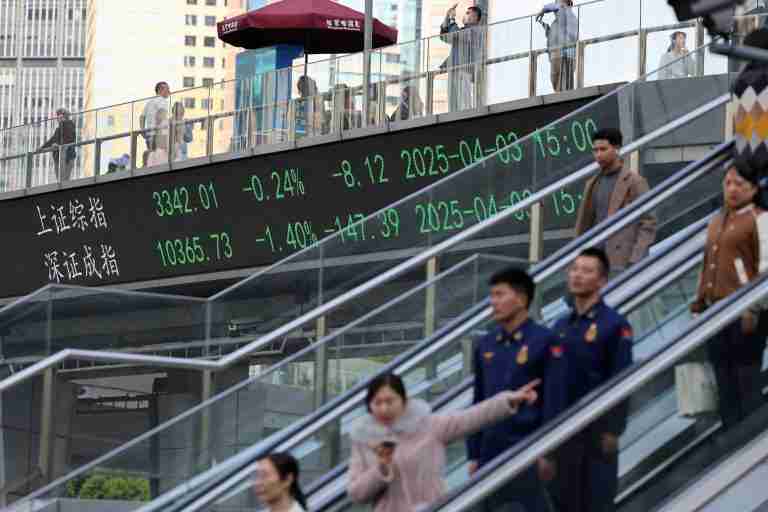
Market expectations for a July rate cut by the U.S. Federal Reserve climbed to just over 27%

International News via Reuters:
Global stocks were roughly unchanged after U.S. data showed a surprisingly weak reading on the labor market while British government bond yields surged on growing speculation about the future of the country’s finance minister.
The ADP National Employment Report showed private payrolls dropped by 33,000 jobs last month after a downwardly revised 29,000 increase in May and well below the 95,000 increase expected by economists polled by Reuters.
The data comes ahead of Thursday’s government payrolls report, although there is little, if any, correlation between the two.
Market expectations for a July rate cut by the U.S. Federal Reserve climbed to just over 27% after the data, up from 20.7% in the prior session, according to CME’s FedWatch Tool.
“I take it as a mixed bag. On one hand, the wage is still strong, which is terribly important to the U.S. economy. On the downside, if this isn’t seasonality, this is the beginning of a long-term trend in white collar jobs that’ll spill over into the total labor market,” said Ross Mayfield, investment strategist at Baird in Louisville, Kentucky.
On Wall Street, the S&P 500 and Nasdaq were modestly higher, buoyed in part by a bounce in Tesla after the stock dropped 5.3% on Tuesday. Tesla shares were last up 4.5% after the electric automaker posted its quarterly deliveries.
The Dow Jones Industrial Average fell 41.48 points, or 0.09%, to 44,453.72, the S&P 500 rose 13.84 points, or 0.22%, to 6,211.70 and the Nasdaq Composite rose 138.79 points, or 0.69%, to 20,341.01.
MSCI’s gauge of stocks across the globe rose 1.39 points, or 0.15%, to 918.79 and was on track for its fourth gain in the past five sessions, while the pan-European STOXX 600 index rose 0.09% as investors looked for signs of trade deals ahead of U.S. President Donald Trump’s July 9 tariff deadline.
Longer-dated U.S. Treasury yields rose, with the benchmark U.S. 10-year note up 4.8 basis points to 4.297%, while the shorter-end was lower after the ADP data.
The 2-year note yield, which typically moves in step with interest rate expectations for the Federal Reserve, fell 0.9 basis points to 3.768%.
British government bond yields surged, at one point jumping nearly 23 basis points, the most since October 2022, after finance minister Rachel Reeves appeared visibly distressed in parliament, a day after the government sharply scaled back plans to cut benefits.
The yield on the 10-year government bond, or gilt, was last up 11.5 basis points at 4.572%.
Sterling tumbled 1.17% to $1.3584 and was on pace for its biggest daily percentage drop since April 7.
The dollar index, which measures the greenback against a basket of currencies, rose 0.44% to 97.06 and was on track to snap a streak of nine straight declines, with the euro down 0.33% at $1.1766.
Trump said on social media on Wednesday that the U.S. has struck a trade deal with Vietnam. He had previously said he was not considering extending the deadline for countries to negotiate trade deals, even as negotiations with top trade partner Japan failed to make headway, although he expected a deal with India.
Investors were also watching for signs of progress in Trump’s massive tax and spending bill – which is expected to add $3.3 trillion to the national debt, slash taxes and reduce social safety net programs – as it now heads to the House of Representatives. Republican leaders set an initial procedural vote on the bill at 1300 GMT.
U.S. crude ticked up 0.03% to $65.47 a barrel and Brent rose to $67.23 per barrel, up 0.18% on the day as Iran suspended cooperation with the U.N. nuclear watchdog. But a surprise build in U.S. crude supplies limited gains.
Reporting by Chuck MikolajczakAdditional reporting by Sruthi Shankar and Nikhil Sharma in BengaluruEditing by Frances Kerry
BBC Radio News: Wednesday Noon – 2 July 2025

Dock workers divided over union stance, Branco secures City Council seat & AG warns against youth exposure to cannabis


Blockchain under the spotlight

Upcoming webinar will also focus on cybersecurity and regulatory compliance

Government press release:
The Economic Development Department (EDD) is pleased to announce the next instalment in its Fintech Webinar Series 2025 on Friday, 4 July 2025, at 12:00 PM. This event will spotlight blockchain innovation through a live session featuring Adrian Lodge, Founder and CEO of Bermuda Island Games. Mr. Lodge is a Bermudian IT professional and entrepreneur focusing on web and mobile app development, e-commerce, and cybersecurity.
The virtual session is part of the Government’s ongoing efforts to promote education, engagement, and international collaboration in support of Bermuda’s Fintech ecosystem.
“I’m pleased to see the EDD’s FinTech Webinar Series continuing its vital work with a deep dive into cybersecurity,” said the Hon. Jason Hayward, JP MP, Minister of Economy & Labour. “The insights from our subject-matter experts on topics like regulatory compliance, emerging threats, and practical simulations will give participants a clear understanding of Bermuda’s robust framework for secure FinTech. This series firmly underscores our commitment to fostering secure innovation, supporting resilient economic growth, and positioning Bermuda as a premier jurisdiction for responsible and secure FinTech solutions.”
The presentation will offer participants an overview of Cybersecurity in Fintech, including:
– What is cybersecurity, and why is it important to the Intech sector
– Regulatory Compliance – best practices on cyber and fintech
– Recent case studies
– Emerging trends and technologies – risks and rewards, and
– Interactive cybersecurity simulation.
“I’m excited to share Bermuda’s commitment to a secure and compliant FinTech ecosystem,” said Adrian Lodge. “This webinar will offer clear insights into our cybersecurity regulations and best practices, showing how Bermuda is becoming a top choice for secure FinTech innovation. We’ll cover everything from core cybersecurity principles and recent case studies to emerging trends, all with an interactive simulation to help you effectively navigate today’s digital challenges.”
“We are excited to present this month’s webinar on Cybersecurity in Fintech,” said Ray Jones, Director of the EDD. “This session exemplifies our commitment to strengthening the security and compliance frameworks within our digital financial landscape, and positioning Bermuda as a jurisdiction of choice for innovative, ethical, and resilient FinTech solutions.”
This event aligns with Bermuda’s broader Economic Development Strategy, which seeks to leverage emerging technologies to generate new economic opportunities, develop skillsets, and attract strategic partnerships to the jurisdiction.
The webinar is open to the public, and those interested are encouraged to register early via the following link: https://forms.office.com/r/h2YcA3mC3e.
About the Economic Development Department (EDD):
The EDD is dedicated to advancing Bermuda’s economy through innovation, policy development, and industry support. By fostering an environment for digital transformation, the EDD plays a key role in ensuring Bermuda remains at the forefront of global economic trends. For more information, visit: www.gov.bm/department/economic-development-department.
Exclusive: Dock workers divided over union stance

Some workers feel the vote for the overtime ban was intimidating
Dock workers are divided over union action being taken in response to the unfair dismissal of Chris Furbert Jr. in 2020.
Five long-serving Stevedoring Services employees approached Bermuda Broadcasting.
They say there are now about 14 out of 35 unionised port workers who were not employed at SSL at the time of the dismissal.
They feel that the voting process to implement the overtime ban was flawed and intimidating. Several members were not present at the union meeting, they say, and it was not a secret ballot – it was known who voted, and how.
We have confirmed that Chris Fubert Jr. was present at the meeting, but left ahead of the vote.
We understand between 21 and 23 members were present, and all but two voted in favour of the overtime ban.
The dock workers who spoke to us are concerned about the fact that this matter centres around the son of BIU President Chris Furbert.
They all agree that they would not be happy if the dismissed individual returned to work, and suggest this matter is creating a division between the newer port workers and those who have been there longer.
Some of the older staff, they say, are no longer attending union meetings.
Last year, a tribunal ruled that the dismissal of Chris Furbert Jr was unfair, because SSL had not followed its own grievance procedures.
The Tribunal awarded Mr Furbert Jr $250,000 in compensation, but did not order that he should be reinstated.
However, the union maintains that the Collective Bargaining Agreement requires that an unfairly dismissed employee must be reinstated and repaid all lost wages.
The BIU Port Workers Division implemented a six-month overtime ban, beginning in June, and the union stated that it could set a dangerous precedent for organised labour across Bermuda, if “employers can pick and choose which CBS articles to follow”.
Meanwhile, the BIU claims SSL brought in non-unionised workers to perform overtime work normally handled by BIU members. The union cited concerns about a return to a divisive practice in the 1940s, when “non-union “volunteers” were brought in to break the back of dockworkers’ collective action”.
However, Stevedoring boss Randy Rochester said the employees that the union may be referring to are long-serving SSL employees who choose not to be a part of the union.
“They are free to work when they wish”, Mr Rochester said.
Furthermore, the five port workers who spoke to Bermuda Broadcasting suggested the union’s comments are misleading, because the non-unionised workers who worked overtime on the weekend were responding to the emergency of a crane breaking down – it was not a normal case of overtime.
The industrial action continues.
US open to ‘creative solutions’ on pharma trade with EU, Irish minister says

The EU also wants a deal to cover commercial aircraft and parts, pharmaceuticals and semiconductors

International News via Reuters:
U.S. Trade Representative Jamieson Greer made clear in a meeting with Irish Trade Minster Simon Harris last month that Washington was open to “creative solutions” on pharmaceutical trade between the U.S. and European Union, Harris said on Wednesday.
“He made it clear that he was open to creative solutions when it comes to pharma and I think that’s an important recognition that actually pharma between the U.S. and the EU, the U.S. and Ireland, is much more interdependent than perhaps people were led to believe in certain quarters at the start of this process,” Harris told reporters.
The European Union wants immediate relief from tariffs in key sectors as part of any trade deal with the U.S. due by a July 9 deadline, EU diplomats have told Reuters, even as they accept the U.S. baseline tariff of 10% as unavoidable.
The EU also wants a deal to cover commercial aircraft and parts, pharmaceuticals and semiconductors, sectors the U.S. is investigating, but has not yet imposed extra duties on. Trump said in June the pharma duties would be announced “very soon”.
“I think it’s important to be truthful with people, the EU is negotiating with an administration that believes in tariffs and clearly I think 10% seems to be the baseline in any agreement they (the U.S.) have reached so far,” Harris said.
“But we will be seeking at an EU level to maximise the number of sectors where there is zero-for-zero (tariffs).”
Harris highlighted pharma, aviation and agriculture as areas Dublin would like trade between the EU and U.S. to flow freely.
He added that there was a welcome intensity to the talks between the EU and U.S. and that while a brief extension to the July 9 deadline is something that can considered, it would be preferable to at the very least deliver a framework agreement and set forward a roadmap for further engagement on key sectors.
Reporting by Conor Humphries, writing by Padraic Halpin; editing by William James and Chizu Nomiyama
Branco secures City council seat in by-election

Michael Branco triumphed over Mia Chambray by 32 votes
Michael Branco, new City of Hamilton councillor. Photo: Bermuda Parliamentary Registry
Finance and tech consultant Michael Branco was elected new City of Hamilton councillor last night in a by-election.
The Parliamentary Registry recorded 88 votes out of 387 registered business ratepayers. Mr. Branco secured the victory with 60 votes or 68.18%.
While first time candidate and city retailer, Mia Chambray earned 28 votes or 31.82% of the votes.