Saturday, November 7, 2026
Home Blog Page 917

Stocks and dollar dip as investors assess data, Powell comments

Market expectations for a July cut inched up to 21.2% from 18.6%
International News via Reuters:

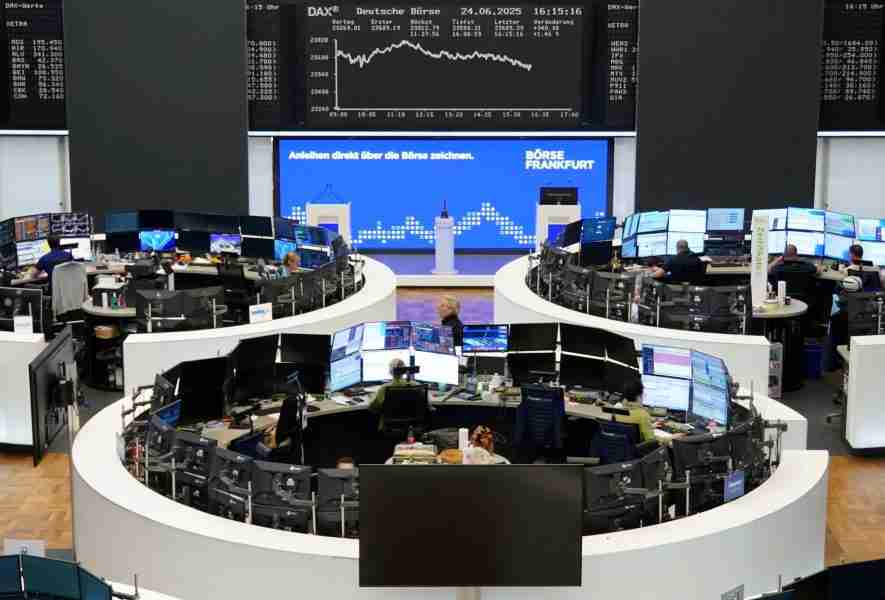
Global shares edged lower and the dollar was lower for a ninth straight session on Tuesday, as investors digested a flurry of U.S. economic data and comments from Federal Reserve Chair Jerome Powell to gauge the timing of any interest rate cuts.

Powell, speaking at a central banking conference in Sintra, Portugal, said he could not say if July was too early for a rate cut, but it “is going to depend on the data, and we are going meeting by meeting”.

Market expectations for a July cut inched up to 21.2% from 18.6% in the prior session, according to CME’s FedWatch Tool.

On Wall Street, the Dow advanced but the S&P 500 and Nasdaq retreated from record levels weighed down by a drop of more than 5% in Tesla after U.S. President Donald Trump threatened to cut off the billions of dollars in subsidies that Elon Musk’s companies receive from the federal government.

The Dow Jones Industrial Average rose 227.77 points, or 0.52%, to 44,322.06, the S&P 500 fell 19.78 points, or 0.32%, to 6,185.17 and the Nasdaq Composite fell 181.49 points, or 0.89%, to 20,190.00.

MSCI’s gauge of stocks across the globe fell 1.69 points, or 0.18%, to 916.20 while the pan-European STOXX 600 index fell 0.3% as concerns over the impact of tariffs on global growth were rekindled as a July 9 deadline by Trump draws closer.

On the economic front, U.S. data showed manufacturing remained in contraction territory in June, according to the Institute for Supply Management (ISM).

In the first reading of the week on the labor market, the Job Openings and Labor Turnover Survey, or JOLTS report, showed openings were up 374,000 to 7.769 million by the last day of May, but a decline in hiring indicated the market may have slowed.

“Despite a large jump in job openings in May, the economy continues to be stuck in Powell’s ‘no hire, no fire’ equilibrium,” said Brian Jacobsen, chief economist at Annex Wealth Management in Menomonee Falls, Wisconsin.

“It’s not a stable equilibrium and considering the ISM Manufacturing data, things may tilt towards a weaker job market over the summer.”

Investors will closely watch Thursday’s key government payrolls report, expected a day earlier than usual due to the Independence Day holiday on July 4, to help shape expectations for rate cuts from the Fed.

U.S. Treasury yields reversed course and turned higher after the data, with the yield on benchmark U.S. 10-year notes up 2.9 basis points to 4.255%.

The 2-year note yield, which typically moves in step with interest rate expectations for the Federal Reserve, rose 4.3 basis points to 3.764%.

Markets were also awaiting a resolution to Trump’s tax-cut and spending legislation, which U.S. Senate Republicans were struggling to pass.

The dollar index, which measures the greenback against a basket of currencies and is coming off its biggest first half drop since 1973, rose 0.09% to 96.85, with the euro down 0.08% at $1.1776. Sterling weakened 0.17% to $1.3709.

Against the Japanese yen, the dollar weakened 0.34% to 143.52. Earlier readings from the Bank of Japan’s tankan index of business sentiment indicated the biggest economies in the region were probably weathering the tariff storm for now, while a separate private sector survey showed the country’s manufacturing sector expanded in June for the first time in 13 months.

U.S. crude rose 0.48% to $65.42 a barrel and Brent rose to $66.92 per barrel, up 0.27% on the day.

Reporting by Chuck Mikolajczak; editing by David Evans

Oil rises on signs of strong demand, investors await OPEC+ output decision

The gains were likely due to supportive data from a private-sector survey in China

International News via Reuters:

Oil prices edged higher on Tuesday as investors took stock of positive demand indicators, while also treading cautiously ahead of an OPEC+ meeting to decide the group’s August output policy.

Brent crude was up 18 cents, or 0.3%, to $66.92 a barrel at 11:36 a.m. ET (1536 GMT), while U.S. West Texas Intermediate crude was up 27 cents, or around 0.4%, to $65.38 a barrel.

The gains were likely due to supportive data from a private-sector survey in China, which showed factory activity returned to expansion in June, said Randall Rothenberg, risk intelligence expert at U.S. oil brokerage Liquidity Energy.

Expectations that Saudi Arabia will raise its August crude oil prices for buyers in Asia to a four-month high, and firm premiums for Russian ESPO Blend crude oil, were also supporting the notion of robust demand, Rothenberg said.

Meanwhile, oil’s gains were kept in check by expectations that the OPEC+ group will raise its August crude oil output by an amount similar to the outsized hikes agreed in May, June, and July. Four OPEC+ sources told Reuters last week that the group plans to raise output by 411,000 bpd next month when it meets on July 6.

“All eyes will be on OPEC+’s decision over the weekend, when the group is expected to add another 411,000 bpd of production in an effort to gain more market share, primarily over the US shale producers,” StoneX energy analyst Alex Hodes wrote to clients.

Besides gaining market share from U.S. shale producers, which pumped oil at a record pace in April according to official data released on Monday, the group has also been trying to punish overproducing members.

OPEC+ member Kazakhstan, one of world’s 10 largest oil producers, raised oil production last month to match an all-time high, a source familiar with the data told Reuters on Tuesday.

Saudi Arabia, the de facto leader of the OPEC+ group, raised its June crude oil exports to the fastest rate in a year, data from Kpler showed.

“These exports are flooding out even faster than the OPEC+ deal implies during the summer when peak domestic demand typically keeps oil supplies closer to home,” Hodes said.

Investors are also watching trade negotiations ahead of U.S. President Donald Trump’s tariff deadline of July 9.

U.S. Treasury Secretary Scott Bessent warned that countries could be notified of sharply higher tariffs despite good-faith negotiations as that deadline approaches, when tariff rates are scheduled to revert from a temporary 10% level to the ones Trump announced on April 2 and then suspended.

The European Union wants immediate relief from tariffs in key sectors as part of any trade deal with the U.S. due by the July 9 deadline, EU diplomats told Reuters.

Morgan Stanley expects Brent futures to retrace to around $60 by early next year, with the market being well supplied and geopolitical risk abating following the de-escalation of the Israel-Iran conflict. It expects an oversupply of 1.3 million bpd in 2026.

Reporting by Shariq Khan, Anjana Anil, Jeslyn Lerh and Enes Tunagur. Editing by Mark Potter, Chizu Nomiyama, Paul Simao and David Evans

Tariff risks muddy global outlook for factories

Analysts said the underlying softness in surveys highlights the challenges facing businesses and policymakers

International News via Reuters:

Worries over future U.S. tariffs are clouding the outlook for factories across much of Asia and Europe, according to surveys released on Tuesday which nonetheless showed some were able to shrug off the uncertainty and keep growing.

Among the bright spots, Japan’s manufacturing read-out showed growth for the first time in 13 months, South Korea’s activity contracted at a milder pace and China’s Caixin PMI index also expanded in June – confounding an official survey that showed activity shrinking for a third straight month.

In Europe, Ireland, Spain and the Netherlands were among the star performers even as the wider euro zone read-out was broadly flat and Britain continued to contract, albeit more slowly.

Analysts said the underlying softness in surveys highlights the challenges facing businesses and policymakers as they try to navigate U.S. President Donald Trump’s moves to shake up the global trade order with sweeping tariffs.

“We must recognise that the external environment remains severe and complex, with increasing uncertainties,” said Wang Zhe, economist at Caixin Insight Group. The Caixin/S&P Global survey showed Chinese manufacturing PMI rose to 50.4, surpassing expectations in a Reuters poll.

Japan’s final au Jibun Bank PMI rose to 50.1 due to an upswing in output, but overall demand remained weak as new orders shrank on concern over U.S. tariffs.

Factory activity in South Korea contracted for the fifth straight month though the pace of decline eased on relief over a snap presidential election on June 3 that ended six months of uncertainty.

In manufacturing, India was a significant outlier in the region last month, as activity accelerated to a 14-month high, driven by a substantial rise in international sales that helped spark a record-breaking spurt in hiring.

DEADLINE

Negotiators from major U.S. trading partners are rushing to reach deals with Trump’s administration by a July 9 deadline to avoid import tariffs jumping to higher levels.

While China is continuing its negotiations for a broader trade deal with the U.S., Japan and South Korea have so far failed to win concessions on the tariffs imposed on their mainstay export items like automobiles. The 27-member European Union is embarking on new talks in Washington later this week.

The euro zone HCOB manufacturing Purchasing Managers’ Index, compiled by S&P Global, edged up to 49.5 in June from 49.4 in May, its highest level since August 2022 – but still remaining below the 50 mark denoting growth in activity.

Moreover, national surveys revealed stark differences across the currency bloc. Ireland recorded the highest PMI at a 37-month peak of 53.7, while Greece, Spain, and the Netherlands also posted readings above 50.

“We seem to be in a sweet spot at the moment where it’s domestic activity that’s driving the index,” John Fahey, senior economist at AIB, said of the Irish read-out.

“There may be some level of activity and investment that was postponed for two or three years, and you’re just at the point now where that has to happen, even though there’s a more uncertain global backdrop.”

While Germany’s manufacturing PMI reached its highest in nearly three years, it still indicated contraction. France, Italy and Austria on the other hand registered faster declines in manufacturing conditions.

In Britain, outside the European Union, the manufacturing sector showed some signs of turning a corner in its long slump.

“That said, any hoped for stabilisation remains fragile and subject to potential headwinds that could severely impact demand, supply chain reliability and future growth prospects,” said Rob Dobson, director at S&P Global Market Intelligence.

Speaking at the start of a central bankers’ annual get-together in Sintra, Portugal, European Central Bank President Christine Lagarde said the global environment had changed fundamentally since the inflation spurt of the pandemic years.

“The world ahead is more uncertain – and that uncertainty is likely to make inflation more volatile,” Lagarde said.

Data on Tuesday showed euro zone inflation last month stood at the ECB’s 2% target, confirming that the era of runaway prices is over.

Additional reporting by Padraic Halpin in Dublin; Writing by Jonathan Cable and Mark John; Editing by Shri Navaratnam and Hugh Lawson

UK energy bills may rise as regulator approves 24 billion pound network upgrade

The announced investments would add a total of 104 pounds to the average household bill by 2031

International News via Reuters:

Britain’s energy watchdog has given the go-ahead to a 24 billion pound ($33.08 billion) investment to upgrade the country’s transmission system, but said the move could push up network charges on household bills by more than 100 pounds.

Tuesday’s provisional decision from Ofgem comes as the Labour government faces mounting pressure from opposition parties over the affordability of its net zero plan, despite its pledge to cut bills by 300 pounds a year by 2030.

Ofgem said the announced investments would add a total of 104 pounds to the average household bill by 2031, but that once savings from the projects were included the net cost to consumers would be around 24 pounds each year.

“Ofgem’s price controls prioritise value for money for consumers while enabling this essential investment. This will more than pay for itself by getting more renewable electricity on the grid to protect bill payers from volatile fossil fuel markets,” a spokesperson for Britain’s Department for Energy Security and Net Zero said in an email.

Under Britain’s regulatory framework, gas and electricity network companies must submit project plans and expected costs of investment which are assessed by Ofgem.

Consumers pay for the investment through network charges, which currently make up almost a quarter of an average household energy bill.

The funding will allow for 80 transmission projects, with 15 billion pounds to be spent on upgrading the country’s gas network and 8.9 billion on expanding the electricity network, Ofgem said.

Ofgem said the country’s gas grids will still be needed to provide back-up power as the system transitions to more renewables while shifting away from gas for home heating and industrial use is expected to take many years.

SSE, which owns Scottish and Southern Electricity Networks Transmission, said that Ofgem’s plan was not sufficient to deliver the scale of investment needed to deliver the government’s 2030 clean power plan.

“(It) does not go far enough to deliver the investible, financeable and ambitious framework required to unlock the unprecedented levels of investment needed to deliver lower and more stable bills,” it said in a statement.

National Grid said it would review the details of the draft determination.

A consultation on the plans will be open until August 26, Ofgem said.

($1 = 0.7256 pounds)

Reporting by Susanna Twidale in London, additional reporting by Raechel Thankam Job in Bengaluru; Editing by Jan Harvey and Louise Heavens

Victors emerge after Amateur Stroke Play Championships

Dillas, Burgess, and Fernandez come out on top at Port Royal

Men’s Championship winner, Jarryd Dillas

Three days of challenging golf at the Port Royal Golf Course culminated with Jarryd Dillas, Tracy Burgess, and Baldonick Fernandez being crowned the 2025 Bermuda Amateur Stroke Play Champions in their respective divisions.
In the Men’s Championship Division, Jarryd Dillas produced a strong final round of 74 (+3) to claim the title, finishing atop the leaderboard with a three-round total of nine-over-par 222. Eric West, the leader after two rounds, finished a close second.
The Ladies Championship Division saw Tracy Burgess claim the coveted title. Fresh from her international experience at Pinehurst, Burgess carded a final round of 84 (+13), giving her a three-round total of 31-over-par 244. Vanessa Chychrun finished second, and overnight leader Darina Betschart took third.
In the Senior Men’s Championship Division, Baldonick Fernandez led from start to finish, maintaining his composure to secure the title with a three-round total of 21-over-par 234. Mark Ray finished second, with Hav Trott and Arthur Jones tied for third. 

Opinion: Honouring the past, inspiring the future

NAB Third Sector Spotlight: National Museum of Bermuda

Images courtesy of the National Museum of Bermuda

By Elena Strong, Executive Director, National Museum of Bermuda

Museums do more than preserve artefacts. They are powerful centres for learning, keepers of memory, and knowledge generators and sharers. They are also critical in shaping identity, strengthening communities and are places that spark the imagination.

In times of uncertainty, people turn to stories, spaces, and shared histories to feel grounded. That’s why museums have never been more relevant or more essential. In a world that feels increasingly fast-moving and unpredictable, places like the National Museum of Bermuda (NMB) offer something essential: perspective, connection and a deeper understanding of who we are.

Located in Bermuda’s largest fort at the Royal Naval Dockyard, NMB is a custodian of over a 16- acre property with 11 historic buildings. For 50 years, NMB has conducted and facilitated archaeological investigations and historical research and built a collection of over 80,000 objects reflecting 500 years of Bermuda history and culture. In 2024, we welcomed over 72,000 visitors – including more than 15,000 young people – offering experiences that make Bermuda’s diverse history accessible, inclusive, and meaningful. Through our exhibitions, educational programs and community initiatives, we are cultivating culturally literate, critically thinking individuals.

NMB also serves as a dynamic educational resource, offering free programmes to students, teachers and life-long learners. Through our Early Years Programme we use play and inquiry-based learning to introduce Bermuda’s youngest learners to the Island’s maritime heritage. Through our hands-on Learning Labs, middle school students engage with Bermuda’s past using primary sources and, object-based learning to develop historical thinking skills. Moving the Needle, our Teacher Professional Development initiative, has trained nearly 200 educators in teaching methods that encourage empathy, critical thinking, and connection. One teacher described it as “Awesome! …An invaluable learning experience that raises the bar for teaching history.”

NMB’s internship programme – our longest-running educational initiative – has provided hands-on experience in museum work and heritage management for hundreds students. Many of our interns have gone on to work in cultural institutions both locally and internationally, shaping the next generation of heritage stewards.

Our outreach efforts go beyond the classroom. Community-centred initiatives like Portuguese Voices, The Bermuda Family Scrapbook, and The Objects That Make Us use storytelling to reflect Bermuda’s diversity and ensure all residents see themselves in our shared history. Participants share stories about their family photographs and personal artefacts that challenge the traditional historical record, making space for underrepresented voices and experiences. As one participant in The Objects That Make Us shared: “Thank you for the opportunity… Sharing this story was emotional and meaningful – I’d never expressed it in words before.”

NMB also supports personal and collective discovery through programmes like Tracing Our Roots/Routes, which helps Bermudians explore family histories through workshops and online presentations. Our use of digital platforms has helped broaden accessibility and participation, ensuring that our work reaches people where they are.

Every February, we open our doors to thousands of residents for free and host our annual Community Day filled with cultural activities, art, music and cannon fire – ensuring cost is not a barrier to engaging with Bermuda’s past.

At NMB, we are not only preserving the past – we are cultivating a living legacy that invites participation, encourages dialogue, and strengthens our community. To better connect with Bermuda’s heritage, we invite you to visit us, participate in our programmes, become a member, or volunteer. Together, we can ensure that Bermuda’s history remains vibrant, inclusive and alive for generations to come.

NMB is open every day 10am–5pm (last admission 4pm). Visit www.nmb.bm/visit for more information. NMB is a non-government, not-for-profit Bermuda Registered Charity No. 136.


This op-ed is part of the Third Sector Spotlight Series, a collective media campaign coordinated by the Nonprofit Alliance of Bermuda. This campaign aims to raise awareness of the value, impact and contributions of Bermuda’s nonprofit sector.

National Sprint Triathlon Champions crowned

Racing took place on the streets of Hamilton

Winners: Nicholas Pilgrim and Maddie Durkin

Nicholas Pilgrim and Maddie Durkin were crowned the Male and Female Liberty Mutual National Sprint Triathlon Champions after a challenging day of racing through the streets of Hamilton.
Nicholas Pilgrim put in a dominant performance in the Open Male category, clocking a winning time of 58 minutes flat. His victory was emphatic, finishing more than three minutes clear of his nearest rival, Jackson Langley (1:01:08), with Alex Pilgrim rounding out the podium (1:04:32).
In the Open Female division, Maddie Durkin claimed the national title, finishing an impressive sixth overall with a time of 1:07:30. Lynsey Palmer secured second among the women (1:11:41), and Meghan Diel took third (1:14:49).
The Junior Triathlon categories also saw strong competition. Jens Drea claimed the Junior Male title with a time of 37:36, while Isla Cooze emerged victorious in the Junior Female event, crossing the line in 43:09.
The event, held in the heart of Hamilton on Sunday, showcased the strength and depth of Bermuda’s triathlon talent across all age groups.

UK shares edge down with focus on company news, rate path

Gains on Tuesday were led by precious metal stocks that rose 2.1%

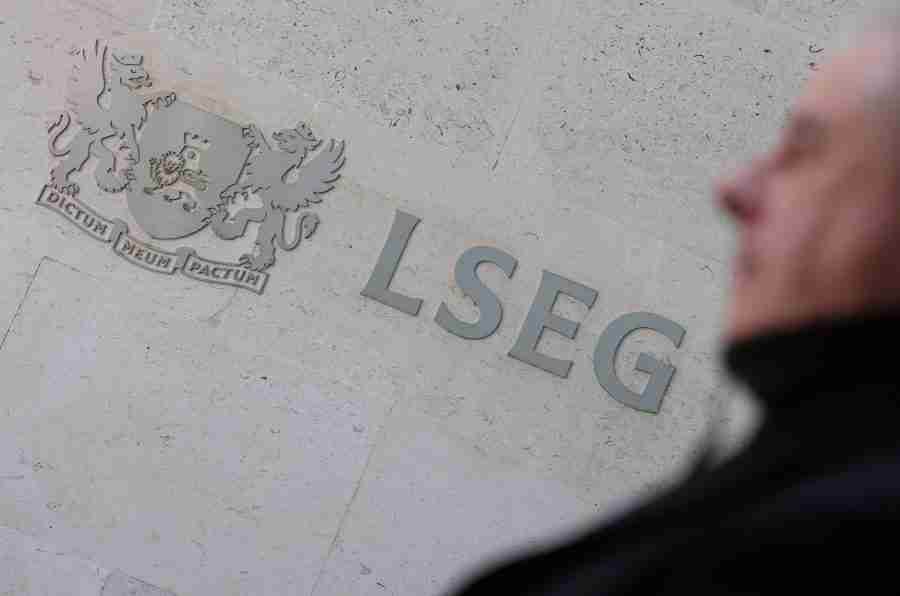
Signage is seen outside the LSEG (London Stock Exchange Group) headquarters in Paternoster Square, London, Britain, April 25, 2025. REUTERS/Toby Melville/File Photo

International News via Reuters:

London’s main stock indexes edged lower on Tuesday, with last week’s relief rally driven by the Israel-Iran truce coming to an end, as investors assessed a mixed bag of company news.

The internationally oriented FTSE 100 fell 0.2% by 1025 GMT, while the domestically focussed midcap index slipped 0.1%. Midcap stocks ended June by logging their best quarter in over four years while the blue-chip index logged monthly losses.

Gains on Tuesday were led by precious metal stocks that rose 2.1% with safe-haven gold edging up on a weaker dollar and U.S. tariff uncertainty.

Endeavour Mining and Fresnillo were among the top gainers on the blue-chip, adding 1.8% and 2.2%, respectively. Hochschild Mining gained 3.2% on the midcap index.

Meanwhile, losses were led by the household goods and home construction index, which was down 1.6%.

Barratt Redrow, Taylor Wimpey and Bellway all slipped over 2%.

Bank of England Governor Andrew Bailey stressed on Britain’s softening labour market and pointed to rising uncertainity in global economy hurting economic growth and investment intentions.

Traders are currently pricing in a 76% chance of a rate cut from the BoE in August.

Meanwhile, S&P’s manufacturing PMI data showed that the sector improved for the third month in a row, but remained below the growth threshold as businesses increased prices to offset higher labour costs.

In individual stocks, food retailer Sainsbury’s shares slid 1.3% despite reporting a higher-than-expected rise in quarterly sales.

Standard Chartered Bank shares fell 2.7% after liquidators for Malaysia’s sovereign wealth fund 1MDB sued the bank in Singapore alleging fraud that led to more than $2.7 billion in losses more than 10 years ago.

Packaging automation firm Mpac Group shares slumped 25% after the company warned of lower-than-expected annual results due to U.S. tariffs weighing on orders.

In company news, Britain’s competition watchdog cleared Aviva’s 3.7-billion-pound ($5.08 billion) takeover of smaller rival Direct Line that will create the UK’s largest home and motor insurer.

Shares of Direct Line were marginally up.

Reporting by Twesha Dikshit; Editing by Shailesh Kuber

ECB policymakers set pain threshold for euro rise in weak economy

The ECB has cut rates eight times in the space of a year as inflation eased to its 2% target

International News via Reuters:

Two European Central Bank policymakers warned on Tuesday about the hit from a further appreciation of the euro on a weak euro zone economy that is bracing for painful U.S. tariffs.

The euro has risen some 9% against the dollar since April as investors, spooked by U.S. President Donald Trump’s unpredictable economic policy, warmed up to the European Union’s newfound military and industrial ambitions.

But a strong currency is a mixed blessing for the central bank because it makes exports more expensive and imports cheaper, pushing down both growth and inflation.

“If there is a 10% tariff plus a 10%-plus appreciation of the exchange rate, this is large enough to affect export dynamics,” Latvian central bank governor Martins Kazaks told Reuters at the ECB’s annual Forum on Central Banking in Sintra, Portugal.

EU officials have resigned themselves to a 10% tariff on goods exported to the United States as their baseline as they continue difficult negotiations with Trump’s administration ahead of a July 9 deadline.

The euro was trading at $1.18 on Tuesday, up 14% since the start of the year but still roughly in the middle of the range in which it has been for the past decade or so.

ECB vice-president Luis de Guindos said the central bank could ignore the euro’s rise against the dollar up to $1.20 but not higher.

“Beyond that, it will be much more complicated,” de Guindos told Bloomberg TV.

Euro zone manufacturing is only starting to recover from its 2022-24 – partly energy-related – slump, with new orders arresting a three-year slide last month.

Both Kazaks and de Guindos said the economy was weak but seemed to play down the prospect of more support from the ECB via interest rate cuts.

“The majority of the rate adjustment has been done,” Kazaks said. “If there are further cuts, they will be small and have signalling value, provided that we remain in the baseline.”

De Guindos said an additional cut was “not going to help the economy”, which instead needed certainty on trade and other policies.

The ECB has cut rates eight times in the space of a year as inflation eased to its 2% target, where it expects it to stay for the foreseeable future except for a short-lived dip in 2026.

It has signalled it will pause its rate-cutting streak in July and Lithuanian governor Gediminas Simkus said the central bank may keep rates on hold for longer.

“I don’t know if we’ll have all the information we need by September, but I remain open to every possibility,” Simkus said in an interview in Sintra on Monday.

“I believe a move, if any, is more likely towards the end of the year.”

Euro zone inflation came in at 2% in June, a flash reading showed on Tuesday, and consumers – who were stung by a cost of living crisis in 2022-23 – are also paring back their expectations for future price growth, according to an ECB survey.

Reporting by Francesco Canepa, Editing by Louise Heavens and Ros Russell

France shuts schools as heatwave grips Europe, sea off Spain at record high temperatures

Europe is the world’s fastest-warming continent, heating up at twice the global average

International News via Reuters:

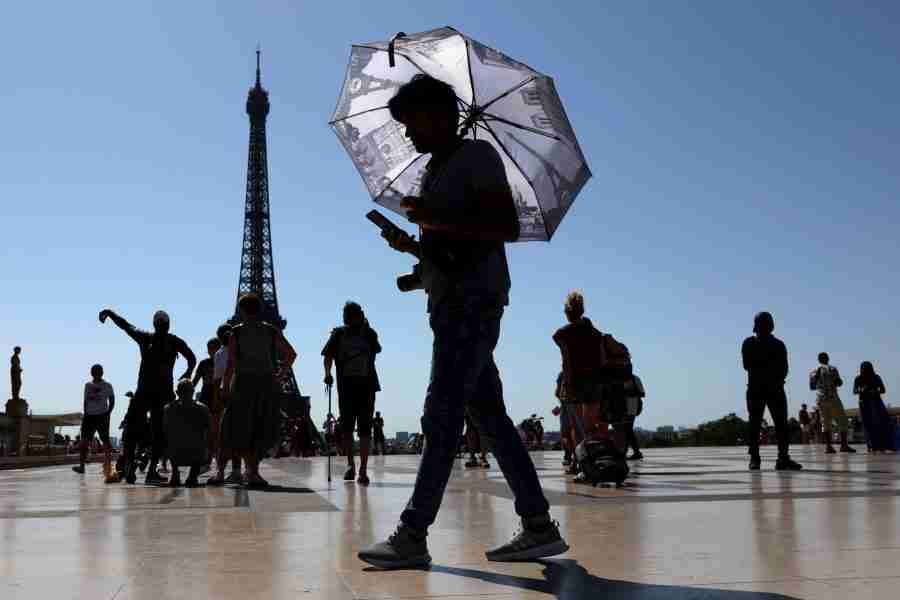
More than a thousand schools were closed in France on Tuesday and the top floor of the Eiffel Tower was shut to tourists as a severe heatwave continued to grip Europe, triggering health alerts across the region.

The Mediterranean Sea was up to 6 degrees Celsius warmer than usual for the time of year, hitting a record of as much as 30 C (86 F) in Spain’s Balearic Sea as a heat dome trapped hot air above Europe, the country’s Aemet weather forecaster said.

Europe is the world’s fastest-warming continent, heating up at twice the global average, according to the EU’s Copernicus Climate Change Service, making extreme heatwaves occur earlier in the year, and persist into later months.

In France, the heat was set to peak on Tuesday, reaching 40-41 C in some areas and 36-39 C in most others, weather forecaster Meteo France said. Sixteen departments will be on the highest level of alert from noon, with 68 on the second highest.

Some 1,350 schools will be fully or partially closed due to the heat, up significantly from around 200 on Monday, the Education Ministry said. The top floor of the Eiffel Tower will be closed on Tuesday and Wednesday, with visitors advised to drink plenty of water.

The extreme heat also raised the risk of field fires as farmers in France, the European Union’s biggest grain producer, start harvesting this year’s crop.

Some farmers were working through the night to avoid harvesting during peak temperatures in the afternoon. In the Indre region of central France, which has seen a spate of field fires since late June, authorities banned field work between 2 p.m. and 6 p.m.

HEALTH ALERTS

The intense heat could harm biodiversity, some experts said.

“In the past we have seen impacts like mass mortalities of invertebrate species, die-offs of seagrass beds and disease outbreaks in mussel farms. It’s likely that we’ll see similar impacts from this event,” said scientist Kathryn Smith of the Marine Biological Association of the United Kingdom.

Health alerts have been issued across Europe, with residents and tourists alike seeking ways to keep cool.

Extreme heat kills up to 480,000 people annually around the world, according to Swiss Re, which notes this exceeds the combined toll from floods, earthquakes and hurricanes.

In a retirement home in Grimbergen, Belgium, residents passed a ball to each other in a paddling pool.

“To me it’s a great activity,” said Marie-Jeanne Olbrechts, one of the residents.

The DGG association for geriatric care in Germany said most regions of the country were not adequately prepared for a heatwave.

“If they were, they could prevent tens of thousands of deaths in the future,” said Clemens Becker, author of a study conducted on behalf of the DGG.

Scientists say greenhouse gas emissions from burning fossil fuels are a key cause of climate change, with deforestation and industrial practices being other contributing factors. Last year was the planet’s hottest on record.

Additional reporting by Kate Abnett, Gus Trompiz, Rachel More; Editing by Bernadette Baum

Sainsbury’s sales boosted by warm weather, M&S cyber disruption

Shares in Sainsbury’s were flat at 290 pence in mid-morning trading

International News via Reuters:

Sainsbury’s reported a higher-than-expected rise in quarterly sales on Tuesday, as Britain’s second-largest food retailer benefited from warm weather and a disruption at rival Marks & Spencer, which suffered a major cyber attack.

Still, Sainsbury’s, which trails market leader Tesco, did not lift its forecast for annual profit, despite its robust sales performance and a rise in its share of Britain’s grocery market to a nine-year high exceeding 15%.

Chief Executive Simon Roberts, explaining why the outlook was maintained, said it was too early in the financial year.

“Let’s see how the rest of the summer plays out. Let’s hope that we continue to see good momentum,” he told reporters on a call.

The cyber attack on M&S in April hit sales for about six weeks as online shopping was suspended, and as food availability in stores was hampered.

Roberts said Sainsbury’s, whose strategy for winning market share has been to match discounter Aldi’s prices on hundreds of key items, had seen “a little bit of benefit” from the M&S issues.

“It stands to reason if you know, if a particular store is lower on stock in the moment, a customer will go somewhere nearby,” he said.

Shares in Sainsbury’s, which have surged 21% in the last three months matching a similar rise in Tesco’s stock, were flat at 290 pence in mid-morning trading.

For the 16 weeks to June 21, Sainsbury’s UK like-for-like sales, excluding fuel, rose 4.7%, against a rise of 3.7% in the previous quarter, as good weather drove spending across its food, clothing and Argos general merchandise brand, beating a consensus forecast of 3.4%.

Last month, Tesco reported a better-than-expected 5.1% rise in UK underlying sales for its first quarter which ran to May 24.

Sainsbury’s kept its guidance for retail underlying operating profit, its preferred measure, of around 1 billion pounds for the full year to March 2026, versus 1.04 billion pounds made in 2024/25, reflecting its pledge to sustain a competitive edge on prices.

Part of Sainsbury’s caution over forecasts is likely to be linked to fears of a price war, after Asda, Britain’s third largest grocer, said in March it planned a sustained campaign of price cuts and would take a profit hit to reset its business.

Reporting by Sarah Young; Editing by Sachin Ravikumar and Bernadette Baum