Saturday, November 7, 2026
Home Blog Page 918

EU wants upfront relief for key sectors in any US trade deal, sources say

The EU wants tariff relief to start as soon as an initial agreement is reached

FILE PHOTO: European Union flags fly outside the European Commission in Brussels, Belgium November 8, 2023. REUTERS/Yves Herman/File Photo

International News via Reuters:

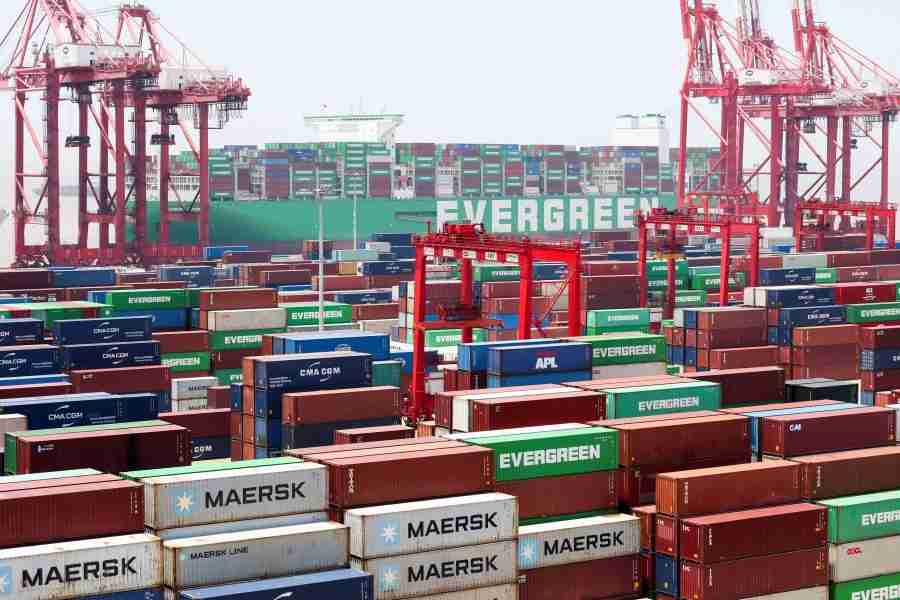
The European Union wants immediate relief from tariffs in key sectors as part of any trade deal with the United States due by a July 9 deadline, but the bloc expects even a best-case deal to include a degree of asymmetry, EU diplomats told Reuters.

The European Commission, which coordinates EU trade policy, is pushing three key points in Washington this week even as it accepts the U.S. baseline tariff of 10% as unavoidable.

Both sides are working towards an agreement in principle, with the final details to be ironed out later. In a short negotiation document Washington sent last week, the Trump administration only presented what it expects from Brussels without any concessions of its own, EU diplomats briefed on the matter said.

For any deal, Brussels wants in return a reduction of baseline tariffs to pre-Trump levels or a zero-for-zero tariff in cases when it existed.

That means specifically lower tariffs for alcoholic beverages and medical technology, on which the U.S. applies its 10% tariff.

The EU also wants a deal to cover commercial aircraft and parts, pharmaceuticals and semiconductors, sectors the U.S. is investigating, but has not yet imposed extra duties on. Trump said in June the pharma duties would be announced “very soon”.

Secondly, the EU wants a concession from U.S. President Donald Trump on the 25% tariff on cars and car parts, the diplomats said, and an immediate lowering of U.S. steel and aluminium import tariffs, which Trump hiked to 50% in June.

One diplomat said cars were a “red line” for the bloc. However, Brussels and Washington have conflicting goals as Trump wants to revive U.S. auto production while Brussels wants open markets for its sector, which is struggling with high energy costs and competition from China.

Thirdly, the EU wants tariff relief to start as soon as an initial agreement is reached, rather than waiting weeks or months for a final accord. A number of EU members said a deal without this would be unacceptable, the sources said.

EU trade chief Maros Sefcovic and the European Commission president’s head of cabinet Bjoern Seibert head to Washington later this week hoping to reach a deal.

Trump has suspended higher tariffs until July 9 in order to strike deals with global trade partners. He has said countries without deals will see 10% U.S. baseline tariffs on goods jack up to rates of as much as 50%. For the EU, that rate is 20%, although Trump has also threatened a 50% duty on all EU imports.

A week before the deadline, the Commission told its 27 member states all outcomes were still possible, from a successful framework agreement to higher U.S. tariffs covering additional sectors, the diplomats said.

If its goal of upfront tariff relief fails to materialise, Brussels will have to choose between accepting significant imbalances or responding with countermeasures.

Another scenario could be a deadline extension. U.S. Treasury Secretary Scott Bessent said on Monday any extension would be Trump’s decision, with deals to be wrapped up by September 1.

Reporting by Julia Payne and Philip Blenkinsop. Editing by Mark Potter
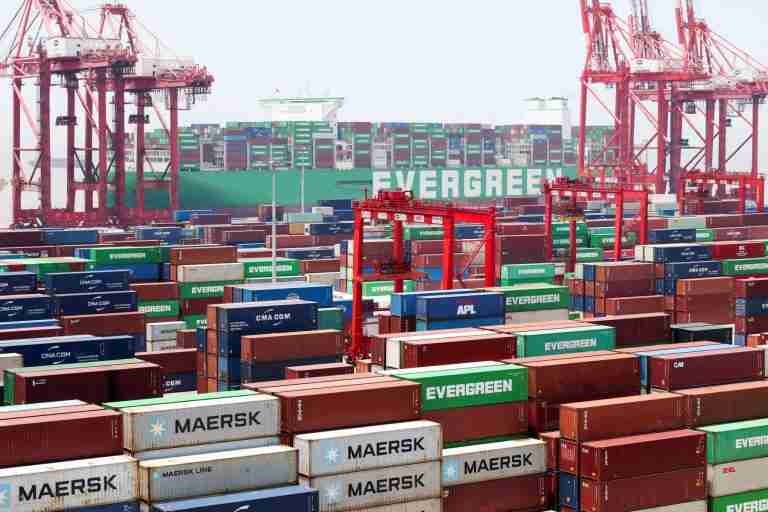
China ready to discuss tariffs and subsidies with US at WTO

The delegate’s remarks follow months of trade tension between the two economies

International News via Reuters:

China is ready to have discussions about trade policies, including tariffs and subsidies, that Washington has identified as obstacles to reforming the World Trade Organization, a senior delegate at China’s mission to the WTO said.

China had heard “every word” the U.S. had said at the WTO about its trade practices and is open to discussing tariffs, industrial policy and some benefits it gains from its developing country status, as part of broader conversations on reform ahead of a 2026 ministerial meeting in Cameroon, the delegate said.

The official declined to be identified. China’s mission does not publicly identify delegates below ambassador rank. China recalled its WTO ambassador in April to become a trade negotiator and the vacant position has yet to be filled.

The delegate’s remarks follow months of trade tension between the world’s two largest economies over sweeping tariffs imposed by the U.S. and retaliatory measures by China.

Washington argues there can be no meaningful WTO reform until China and other major economies relinquish privileges known as Special and Differential Treatment (SDT) granted to developing countries, which the U.S. says give them an unfair advantage.

Some major economies, including China and Saudi Arabia, self-identify as developing countries, granting them access to SDT benefits such as setting higher tariffs and using subsidies.

The delegate said China’s developing country status was non-negotiable, but it might forgo SDT in upcoming negotiations, as it did recently on fisheries and domestic regulations.

“I see that in the coming negotiations, generally speaking, I don’t think China will ask for the SDT,” the delegate told Reuters.

However, former WTO spokesperson Keith M. Rockwell, a senior research fellow at the Hinrich Foundation, was sceptical that China would fully relinquish SDT in areas like agriculture.

The U.S. opposes countries picking and choosing SDT benefits, and wants China to completely renounce them.

The delegate said China was open to discussing subsidies to ensure a fairer playing field provided it was met with goodwill in return. But it would not accept any attempts to try to change its economic system, they added.

Following positive trade talks in Geneva and London, China indicated openness towards discussing tariffs within the WTO.

“We welcome the U.S. to come back to the WTO,” the delegate said. “We are ready to renegotiate on Article 28 if the U.S. raises their requests here at the WTO.”

Article 28 of the WTO Agreement allows members to modify tariff commitments under certain conditions, providing a potential pathway for adjustments.

Reporting by Olivia Le PoidevinEditing by Dave Graham and Ros Russell

UK factory downturn shows signs of easing, morale ticks up, PMI shows

Companies passed on part of the higher costs to consumers

International News via Reuters:

Britain’s manufacturing sector showed some signs of turning a corner in its long slump and businesses pushed up their prices in June to offset higher labour costs, according to a survey published on Tuesday.

The S&P Global/CIPS manufacturing Purchasing Managers’ Index improved for a third month in a row to 47.7 in June from 46.4 in May although it remained below the 50.0 growth threshold for a ninth month in a row.

The reading was unchanged from a preliminary estimate.

The severity of the downturn eased in output, hiring and new orders, the PMI showed.

“That said, any hoped for stabilisation remains fragile and subject to potential headwinds that could severely impact demand, supply chain reliability and future growth prospects,” Rob Dobson, director at S&P Global Market Intelligence said.

The Bank of England, which kept interest rates at 4.25% last month, has said it is focusing on the conflicting inflation risks from a weaker labour market and from higher energy prices due to conflict in the Middle East.

Input costs rose for an 18th month with firms citing higher wages and suppliers raising prices due to finance minister Rachel Reeves’ employer payroll tax increase as well as geopolitics and concerns over future government policy.

Companies passed on part of the higher costs to consumers, S&P said.

Hiring shrank for the eighth month in a row and exports contracted at their fastest pace since November, reflecting uncertainty around U.S. President Donald Trump’s import tariffs, weaker demand from the United States, Europe and China.

But the share of manufacturers expecting higher output in a year’s time rose to 46% as sentiment reached a four-month high.

On Monday, a survey published by Lloyds showed business confidence rose to its highest in nine years.

Reporting by Suban Abdulla; Editing by Hugh Lawson

Dollar drops versus yen, Swiss franc as Trump’s tax bill and tariffs weigh

The euro was perched at a near four-year high of $1.1781

An employee holds U.S. dollar bank notes at a money changer in Jakarta, Indonesia, April 9, 2025. REUTERS/Willy Kurniawan/File Photo

International News via Reuters:

The U.S. dollar weakened on Tuesday, falling the most against the Japanese yen and the Swiss franc, as President Donald Trump’s massive tax-cut and spending bill stoked fiscal worries and uncertainty around trade deals weighed on sentiment.

Investors have also started wagering on a quicker pace of monetary policy easing by the Federal Reserve this year ahead of a slew of U.S. economic data this week, headlined by Thursday’s nonfarm payrolls report.

That spurred dollar-selling, which slipped 0.33% to a new 10-year low and fetched 0.790 Swiss francs, while the greenback dropped 0.64% to 143.08 Japanese yen. The yen capped the first half of the year with a 9% gain – its strongest performance since 2016.

The euro was perched at a near four-year high of $1.1781. The single currency surged 13.8% in the January-June period, its strongest-ever first half performance, LSEG data showed.

Sterling inched up 0.2% to $1.3757, not far from the three-and-a-half-year high it touched last week, while the dollar index, which measures the U.S. currency against six others, slipped to 96.698, its lowest since February 2022.

“There are many reasons not to like the USD. Some are structural, like the erratic trade policies and fiscal risks,” said Moh Siong Sim, a currency strategist at Bank of Singapore.

“They have earlier caused the USD to weaken despite its relative yield advantage. But the risk of a more dovish Federal Reserve eroding USD’s yield advantage is the latest source of USD weakness.”

Goldman Sachs now expects Fed to deliver three quarter-point interest rate cuts this year compared with its earlier forecast of a single reduction in December, citing muted tariff effects and labour market weakness.

Investors are also grappling with uncertainty over the U.S. Senate’s efforts to pass Trump’s budget bill, which faces internal party divisions over its projected $3.3 trillion addition to the national debt. The fiscal concerns have dampened sentiment and prompted some investors to diversify.

The world’s reserve currency is down more than 10% this year, its biggest first-half dive since the era of free-floating currencies began in the early 1970s.

TRUMP VERSUS FED

Meanwhile, Trump has continued hammering the Fed to ease monetary policy, sending Fed Chair Jerome Powell a list of central bank interest rates around the world adorned with handwritten commentary saying the U.S. rate should be between Japan’s 0.5% and Denmark’s 1.75%.

Trump’s constant tirade against the Fed and Powell has fuelled investor worries about the central bank’s independence and its credibility. Trump cannot fire Powell over a policy dispute, but last week urged him to resign.

Investor focus will be on comments from Powell, who joins several other central bank chiefs at the European Central Bank forum in Sintra, Portugal, on Tuesday. Traders are now pricing in 67 basis points of easing from the Fed this year.

A survey on manufacturing activity along with a report on job openings is due later in the day in the U.S., ahead of Thursday’s pivotal nonfarm payrolls figures.

Analysts say that any signs of labour market weakness could bolster bets for more interest rate cuts by the Fed and spark a new wave of dollar weakness.

With the July 9 deadline for Trump’s tariffs fast approaching, investors are also keeping an eye on trade deals between the U.S. and its partners although there have not been many agreements so far.

Reporting by Ankur Banerjee in Singapore and Johann M Cherian; Editing by Jacqueline Wong and Alex Richardson

Bermuda Tonight – 30 June 2025

Bermuda Evening News starting at 7pm…

CCTV system complete, town hall set for Thursday

Residents invited to learn how the upgraded island-wide network supports safety, protects privacy, and aids police

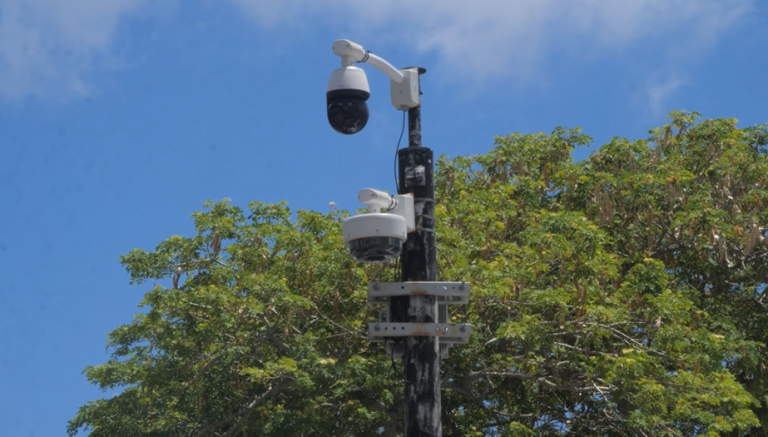
The installation of Bermuda’s upgraded island-wide CCTV system is now complete and close to being fully operational.

This update comes from Minister of National Security Michael Weeks, who is inviting residents to a town hall meeting later this week to learn how the network supports public safety, protects privacy, and assists law enforcement.

He will be joined by Commissioner of Police Darrin Simons and Privacy Commissioner Alexander White in a setting that aims to present the facts and give residents a voice.

“The aim ultimately is to make sure that we all understand that the CCTV is not here to be an invasion, but to help us all as a community feel safer,” said Minister Weeks.

The project was completed this month ahead of schedule, with 225 cameras now integrated across 130 locations.

According to the Ministry of National Security, an expansion phase is already underway, with plans to add 20 more sites.

Minister Weeks hopes the upcoming town hall will give residents greater peace of mind about the system’s benefits but also offered a reminder that public safety remains a shared responsibility.

“What I hope to take from the town hall meeting for that that attend, is that any fears can be alleviated as far as the privacy is concerned,” he said. “But I want to stress while I’m talking about it, having the cameras doesn’t mean that we as a community become complacent. We all still have our part to do in helping our community to remain safe. So as I’ve always said, if you see something, say something. So don’t get lulled into the false premise that we’ve got our CCTV cameras up now, I don’t have to participate in community safety. The cameras are only part of the overall us working together to keep us all safe.”

While the system is fully installed, some fine-tuning is still in progress.

“We are complete, but I wouldn’t say at this point in time we’re 100% operational because it’s still got some things to work out, but we’re very, very close,” said Weeks. “I’m excited about it and I’m really confident that the system that we promised the country that we will have – we are very much there now. It’s giving the police another tool in their arsenal of helping to address crime, hopefully get investigations completed quicker and you know to give the everyday Mister and Missus Bermuda safety knowing that there’s a CCTV camera there – you know, somehow if something goes wrong, it could help them.”

Minister Weeks also noted that the presence of cameras may help deter some people from committing crimes.

However, it will still be some time before the system can be used to issue speeding tickets.

“Speed cameras is phase two, and we are already testing some of the cameras and there’s some legislation involved in having speed cameras to be able to send you a ticket in the mail and whatnot,” he explained. “But rest assured that phase two hopefully will be well on its way in the first quarter of 2026. So, beware those of you — not you personally — but those that want to break the law and speed and whatnot, that there will be a camera coming near you.”

The town hall meeting will be held on Thursday from 6 pm to 8 pm at St. Paul AME Centennial Hall in Hamilton.

Monday Sports Round-Up

Earl Basden bring us the latest from home soil and around the world, where our athletes continue to push boundaries. We start tonight with Boccia, and an impressive showing from Yushae DeSilva-Andrade in Poland.

Fight night KO’d by rain

Disappointment for Dockyard crowd as top-of-the-bill clashes called off

Only three official bouts went ahead after the exhibition match-ups and pre-fight entertainment.             Photo by Kendal Trott

The highly anticipated Epic Entertainment Fight Night, set to electrify audiences with a night of boxing and kickboxing, ended in frustrating fashion as rain brought an early halt to proceedings.
With the open-air event’s ring uncovered, organisers were left with no option but to call off the evening for the safety of the fighters, as the heavens opened and rendered the canvas too dangerous for competition.
A large crowd had gathered at the Victualling Yard in Dockyard, eager to witness headline acts like Bermuda’s Dash Simmons against Jamaica’s Ian Darby, and the professional boxing debut of Bermudian Adrian Roach, who was set to face Canada’s Brent Coxworthy in the co-main event.
However, after all the exhibition bouts and pre-fight entertainment, only three official contests on the card were able to be completed. Sadie Woodstra secured a victory over Bermudian Muryah Swan by Unanimous Decision, while Jashun Thomas defeated Daniel Bacchus and the middleweight fight between Cole Durham and Michael Roldan, was won by Roldan.
The washout was a bitter disappointment for both fighters and fans who had eagerly awaited the night of combat sports.

Scooter Mart Motor Fest brings the heat with custom rides and Clutchup Corey

The Scooter Mart Motor Fest, held each summer, is a signature event organised by Bermuda Charge. 

It took place over the weekend with over 100 vendors, and featured custom and vintage bikes, modified cars, scooters, auto parts, eco-products, foodstalls – and an abundance of community spirit. 

While capturing the sights and sounds of the event, Kendal Trott spoke tocelebrity motor stunt rider Clutchup Corey.

Paralympian narrowly misses out on bronze medal

Boccia player Yushae DeSilva-Andrade enjoyed an impressive campaign in Poland

Yushae DeSilva-Andrade, one of the world’s leading BC1 athletes.

Paralympian and current Female Athlete of the Year, Bermuda’s Boccia star Yushae DeSilva-Andrade, has concluded her impressive campaign at the Poznan 2025 World Boccia Challenger in Poland.
After a dominant performance in the group stages and a tightly contested semi-final, she ultimately competed for the bronze medal.
DeSilva-Andrade faced off against Dora Basic from Croatia in the Bronze Medal match. In a hard-fought contest, the Bermudian went down by a score of 6-2.
Her journey in Poznan began with a sensational run through the group stages, where she won all four of her matches to top Pool A in the BC1 women’s division. She advanced to the semi-finals, where she was narrowly edged 3-2 by Desirée Segarra from Spain.
While a bronze medal eluded her in the final match, DeSilva-Andrade’s consistent high-level play throughout the tournament, including reaching the medal round, underscores her status as one of the world’s leading BC1 athletes.
Her performance adds valuable ranking points and crucial experience as she continues to compete on the international Boccia circuit.