An overtime ban at the docks is the latest in a five-year dispute that raises questions over Collective Bargaining Agreements
Fresh produce may take longer to hit the shelves after port workers have implemented an overtime ban, exacerbated by the breakdown of dock cranes.
The union’s dispute with the management of Hamilton Cargo Docks has dragged on for 5 years, over the unfair dismissal of Chris Furbert Jr, son of BIU President Chris Furbert, back in 2020.
The row may also raise questions about labour relations, and the strength of Collective Bargaining Agreements.
Late last year, an Employment and Labour Relations Tribunal ruled that the dismissal of Chris Furbert Jr was unfair, and awarded Mr Furbert just over $250,000 in compensation. The tribunal did not, however, order that he should be reinstated.
Dawud Tucker, President of the Port Workers Division of the BIU, argues that the Collective Bargaining Agreement states that a wrongfully terminated employee should be reinstated and receive any losses.
Union members cited the potential undermining of the Collective Bargaining Agreement as one of the reasons behind the industrial action.
With a cargo crane out of service, it appears the matter has further threatened local goods reaching the island.
In the report above, Gary Foster Skelton provides the background on the dispute, and speaks with Dawud Tucker, President of the Port Workers Division of the BIU.
One crane back online
Meanwhile, one of two cranes servicing the Hamilton Docks has been repaired.
Randy Rochester, the CEO of Polaris, the parent company for SSL, said one crane is in service, “with the second crane being worked on by the local and overseas technicians.”
He added, “if all goes well, we should have both cranes operating as soon as possible – and things will return to normal on the docks.”
The initiative is part of the BFRS’s fire prevention and community outreach programme
Images supplied
Government of Bermuda media release:
The Ministry of National Security is pleased to highlight the recent community outreach efforts of the Bermuda Fire and Rescue Service (BFRS), as part of its ongoing commitment to public safety.
A team from the BFRS visited the Elizabeth Hills seniors’ residences on Happy Valley Road in Pembroke, where they installed free smoke detectors in approximately 15 apartments.
This initiative forms part of the BFRS’s fire prevention and community outreach programmes and provides residents with fire safety literature and smoke alarm brochures.
The Minister of National Security, the Hon. Michael Weeks, JP, MP, praised the initiative, stating: “I want to extend my heartfelt thanks to the dedicated men and women of the Bermuda Fire and Rescue Service for their outstanding service to our community.
“Their proactive approach to fire prevention, particularly in safeguarding our seniors, reflects the very best of public service.
“Our seniors hold a special place in my heart, and I am deeply appreciative of efforts like these that help keep them safe. I also want to sincerely thank Mr. John Barritt, a former Parliamentarian and the chairman of the Bermuda Housing Trust for his support in facilitating this important initiative.”
(L-R): John Barritt, Minister Weeks, and BFRS Summer Student Jalon Smith help install a smoke alarm inside the apartment of Alan Bean.
Acting Chief Fire Officer Troy Furbert added: “The Bermuda Fire and Rescue Service is proud to serve our community in emergencies and through preventative measures like this.
“Our mission is to protect life and property, and initiatives such as these demonstrate the dedication of our team to making a positive impact. We will continue to engage with our most vulnerable residents to promote safety and peace of mind.”
Mr Barritt commented: “We very much appreciate the unsolicited contribution of the Bermuda Fire and Rescue Service in this important way. It was a pleasant and welcome surprise.
“The Trust’s legislated mandate is to provide affordable rental accommodation for our seniors, that is as affordable as possible. We have also had a long-standing policy of never raising rents on sitting tenants.
“There are challenges not the least of which are the rising costs to maintenance of the five properties we manage, some 200 units in total.
“So when the Fire Service stepped up with their offer to assist in this way we embraced it without hesitation. New smoke alarms also add to the safety and security of our seniors. The BFRS is to be commended for its charity and pro-active work in the community.”
UK-based Portal Biotech’s capability is essential for biosecurity defence and security
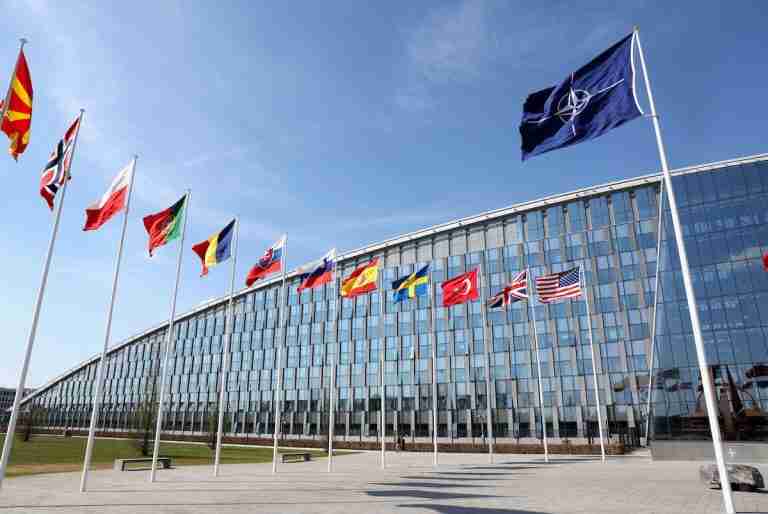
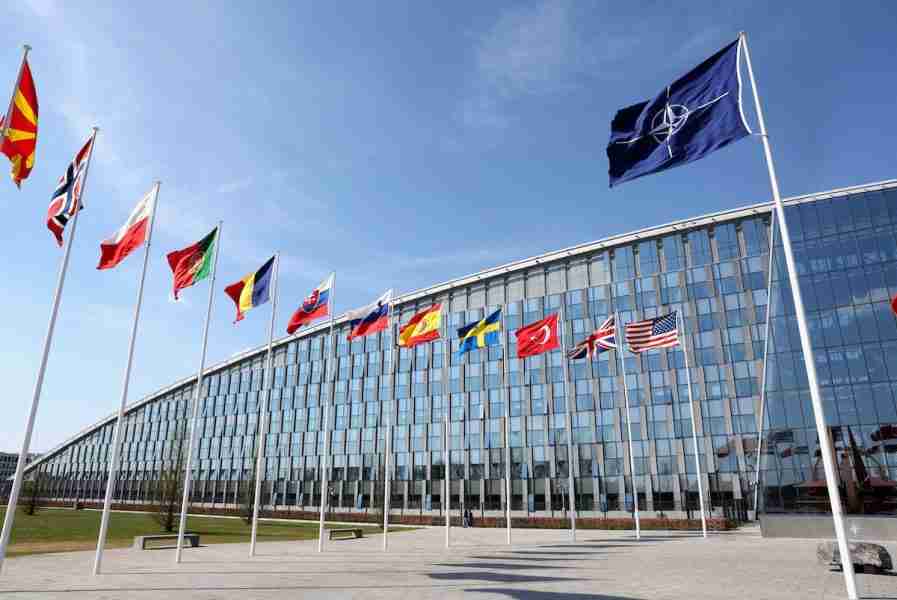
FILE PHOTO: National flags of NATO members flutter at the alliance’s headquarters in Brussels, Belgium, April 2, 2025. REUTERS/Yves Herman/File Photo
International news via Reuters:
The NATO Innovation Fund has made its first investment in a biotechnology company, it said on Monday, seeking to enhance defences against biological threats
The fund is co-leading a $35 million fundraising round for Portal Biotech, which uses protein sequencing to detect engineered threats and defend against biological warfare.
UK-based Portal Biotech’s capability is essential for biosecurity defence and security, said Ana Bernardo-Gancedo, senior associate at NATO Innovation Fund.
“We believe that it is absolutely imperative that we are able to detect, monitor and create countermeasures,” she said.
The fund, created in 2022 after the Russian invasion of Ukraine, plans to invest more than $1 billion in technologies that would enhance NATO’s defences.
Portal Biotech uses an AI-backed technology with biological sensors that can work at the single molecule level on-site, giving results within hours.
“It’s for everything from measuring diseases to better pandemic prevention … you can take this out of large labs with long turnaround times and into the field,” CEO Andy Heron told Reuters.
Heron said the company’s instruments can detect any pathogen and can be used for continuous monitoring of anything from a field to water supply.
“It allows you not just to detect what you did know was out there, but it allows you to detect what you didn’t know,” he said.
Beyond biosecurity, Portal Biotech expects its portable equipment to aid in drug discovery and precision medicine.
The company’s investors include Earlybird Venture Capital, Science Creates VC, Pillar VC, 8VC, We VC and British Business Bank.
Reporting by Supantha Mukherjee in StockholmEditing by David Goodman
Ships arriving last year from prominent Chinese ports carried solar panels, steel, tools and parts
A train passes by the ‘Uruguay’ sugar mill in Jatibonico, Cuba May 21, 2025 REUTERS/Norlys Perez
International news via Reuters:
Hours over rutted roads inland from Havana, the small Cuban city of Jatibonico is a snapshot of late 19th-century living, its streets crowded with horse-drawn carriages and lacking power much of the day and night.
The town’s decrepit sugar mill – once the country’s largest – sits idle, lacking the parts, electricity, and fuel it needs to operate.
Two years ago a Russian company, Progress Agro, announced it would import machinery, fertilizer, and know-how to revitalize the mill, which once employed 2,000 people.
“When are the (Russians) coming? That’s all anybody talks about,” said Carlos Tirado Pino, 58, a mill maintenance worker among the few to retain his post.
Meanwhile, just outside town and out of sight, three bulldozers clear an abandoned cane field to prepare for the installation of a Chinese-financed solar park that will deliver 21 MW of electricity – one of 55 similarly sized such solar parks underwritten by China across Cuba this year.
Cuba is in desperate need of help. Shortages of food, fuel and medicine, grueling hours-long blackouts and plunging tourism and exports – combined with renewed U.S. sanctions under the second Trump administration – have devastated its economy.
A Reuters review of various sites on the ground suggests that where many of Russia’s most recent promises have fizzled, China has discreetly stepped up to fill the void, pushing ahead with a number of critically-timed projects aimed at helping Cuba salvage its economy.
Cuba joined China’s Belt and Road Initiative in 2018, and China has since invested in several strategic infrastructure projects on the island, including major projects in transportation, port infrastructure and telecoms, while Russia, mired in a war in Ukraine and leery of lending more money to crisis-racked Cuba, has faded as a historic partner.
“Russia’s promises have always been bigger than its performance,” said William LeoGrande, a professor of Latin American politics at American University. “If China is now stepping up its assistance in light of Cuba’s desperate conditions, that could prove to be a real lifeline.”
Neither the Russian nor Chinese embassies in Havana responded to a request for comment.
CHINA DELIVERS
The solar park project positions China as a pivotal partner for Cuba at a time of nearly unprecedented crisis: the country’s national grid has collapsed four times in the past year alone, leaving millions in the dark and shuttering schools and businesses.
On February 21, Cuba inaugurated a solar park in Cotorro, outside the capital, in a ceremony that included China’s ambassador to Havana, Hua Xin and Cuban President Miguel Diaz-Canel, who lauded the project in a statement as a “collaboration from our sister Republic China.”
The fine print of the agreements between Russia and China and longtime ally Cuba remain largely confidential, making it difficult to discern how either country operates in Cuba, through private companies or via public financing and how the Cuban government might be repaying them.
Since then, at least another eight have come online, according to grid operator UNE, churning out nearly 400 MW of sun-fueled energy together with existing parks – about a third of the mid-day deficit.
New Chinese-funded projects alone are expected to push that figure over 1,100 MW by the end of the year, according to official estimates, nearly covering the daytime shortfall and saving Cuba precious fuel to burn at night.
Officials at the February event announced China was participating in a project to modernize Cuba’s entire electrical grid, with 55 solar parks to be built in 2025, and another 37 by 2028, for a total of 2,000 MW – a massive undertaking that, when complete, would represent nearly two-thirds of present-day demand.
The port of Mariel – Cuba’s main shipping center just west of Havana – saw traffic from China begin to tick up in August of 2024, according to shipping data and two foreign businessmen who declined to give their names for this story.
Ships arriving last year from Shanghai, Tianjin and other prominent Chinese ports carried solar panels, steel, tools and parts. The “kits” came complete with fuel for overland transport to assure the panels would make it to their destinations, the sources said.
The arrival of Chinese ships is being felt across the Cuban countryside, as tractor trailers with Chinese markings rumble across pot-holed roads to reach far-flung destinations like Jatibonico.
Truck driver Noel Gonzalez, who on a recent morning delivered a load of gravel fill to the solar park site on the city’s outskirts, said he was both amazed and grateful for the Chinese diligence.
“The Chinese (workers) come and periodically check every liter of petroleum, every route we take,” Gonzalez said.
Fulton Armstrong, a former U.S. National Intelligence Officer for Latin America, called China’s investments a “big benefit” but warned they won’t be enough to overcome the Trump administration’s renewed sanctions on the island.
“Havana can’t bank on either Russia or China coming in with magic pills,” he said. “Only massive amounts of Chinese trade and assistance could pull the island through – and that just doesn’t seem plausible.”
China’s strategic investments in Cuba coincide with U.S. accusations that China is installing “spy bases” on the nearby Caribbean Island, though Cuba and China have denied the allegations.
RUSSIAN ROULETTE
Two years ago, as Cuba’s economy was still reeling from the COVID-19 pandemic and U.S. sanctions, Russia too was ready to lend a hand.
In May 2023, Russian Deputy Prime Minister Dmitry Chernyshenko arrived in Cuba for a ribbon-cutting ceremony that marked the reopening of the island’s largest steel mill, a project made possible thanks to $100 million in Russian financing, Cuban state-run media reported.
Chernyshenko called the mill’s reopening a “fine example of Russian-Cuban cooperation.”
The mill’s plant director, Reinier Guillén, promised output of steel bars from the facility would soar to 62,000 metric tons in 2024. But Russia’s investment did not translate into production.
Cuba’s statistics agency ONEI reported in April that the island had churned out just 4,200 metric tons of steel bars in 2024.
On a recent weekday morning, the mill was quiet. A prominent smoke stack was idle, and no activity could be seen within the plant.
Esperanza Perez, a lifelong local resident who works at a small bakery in a ramshackle development of shanties and crudely-built homes, many without electricity or water, said the mill had sat idle for months.
“Talk is cheap. When (the mill) is running, we hear the noise, see the workers, but I haven’t seen any sign that it is operating,” said the 37-year-old Perez. “We’ve seen no benefits here.”
Cuba’s government did not reply to a request for comment on the discrepancy in output. But fuel and electricity generation shortages have affected industry across the island, crippling production.
The day after the ribbon-cutting at the steel mill, Chernyshenko appeared with Diaz-Canel to sign at least eight agreements between Cuban state agencies and Russian state and private companies, according to a document obtained by Reuters summarizing those deals.
The wide-ranging agreements included a deal to guarantee Cuba a supply of wheat for bread making, the opening of a well-stocked “Rusmarket” in Havana, the restoration of historic architecture in the capital’s historic district and cooperation in artificial intelligence.
There was even a bold plan to rebuild the crumbling Tarara residential beach community, whose coveted white sands and palm-fringed waterfront just minutes from Havana have been largely off-limits to foreign capital since 1959.
But on a recent visit, most of the homes at Tarara appeared abandoned or in disrepair, with only a small number near the beach refurbished and no sign of Russian investment.
At the community marina, a single boat, its bottom covered with slime, swayed at the dock, the harbor’s entrance blocked by sediments and its waters stagnant.
Plans to open the Rusmarket – initially celebrated as a foot in the door for Russian vendors and products – have been delayed for two years. The nearby Yumuri department store, where Russian investors planned to open a bigger shop in June or July stocked with everything from Russian auto parts to canned trout and children’s toys, also appeared largely abandoned.
A Russian agreement to restore the 19th century Santo Angel building in Havana’s historic Plaza Vieja, in a nod to Cuba’s rich architectural history, also appeared stalled.
Reuters was unable to make contact with CGC Investments, the Russian firm that had inked many of the 2023 deals.
Neither the Russian embassy nor its Foreign Ministry responded to a request for comment.
To be sure, some of Russia’s promised aid has come through. Russian state-backed companies have supplied cargos by sea of both wheat and oil to the island. And Russia, like China, has promoted tourism to the island, offering a bump in foreign visitors and much-needed foreign exchange.
In May, two years after the 2023 flurry of announcements, Russia’s Chernyshenko announced a plan to subsidize interest rates for businesses interested in investing as much as $1 billion on the island, calling Cuba a “reliable partner.”
“There’s still a lot of hard work to be done, we’ll advance little by little,” Chernyshenko told reporters in Moscow, adding that “it is impossible to achieve things immediately, as if by magic.”
Reporting by Dave Sherwood, additional reporting by Mario Fuentes, Marc Frank and Norlys Perez; Editing by Christian Plumb and Michael Learmonth.
Japan and China have repeatedly faced off over uninhabited Japanese-administered islands
Chinese Maritime Militia vessels are pictured near the Second Thomas Shoal in the South China Sea, March 5, 2024. REUTERS/Adrian Portugal/ File Photo
International news via Reuters:
Military leaders are working to enforce a “one-theatre” concept in both the East and South China seas, the Philippines’ defence minister said on Monday, adding that the Southeast Asian country faces threats in disputed waters that are similar to Japan’s.
Japanese newspaper Asahi reported in April that Japanese defence minister Gen Nakatani made a proposal to U.S. Pentagon Secretary Pete Hegseth to consider the East China Sea, the South China Sea, the Korean Peninsula and surrounding areas as a single “theatre”, referring to a military area of operation.
Gilberto Teodoro, the Philippines’ Secretary of National Defense, said it was “reasonable” to treat both the East and South China seas as a single area of operation, saying both are maritime areas with no land borders involved. However, he said the area should exclude the Korean Peninsula.
“That will involve synergy in operations, synergy in domain awareness, in intelligence exchange, and in mutually reinforcing our strengths to work doubly real-time,” he said at a briefing during the visit of his Lithuanian counterpart Dovile Sakaliene.
Japan and China have repeatedly faced off over uninhabited Japanese-administered islands in the East China Sea that Tokyo calls the Senkaku and Beijing calls the Diaoyu.
The Philippines and China, meanwhile, have clashed frequently in the South China Sea around disputed shoals and atolls that fall inside Manila’s exclusive economic zone.
China’s embassy in Manila did not immediately respond to a request for comment.
Japan’s Joint Operations Command is operationalising the single-theatre concept, and the “Squad” grouping that includes the defense ministers of Australia, Japan, the Philippines and the United States will establish a coordinating centre in December to enforce it, Teodoro said.
“So it is already an operating concept. It does not need any other agreement,” Teodoro said.
Japan and the Philippines last year signed a military agreement that could allow their soldiers on each other’s soil.
Under President Ferdinand Marcos Jr., the Philippines has extended its arc of alliances beyond the United States, its traditional ally, signing defence deals with Japan and New Zealand, and negotiating for similar agreements with Canada and France.
On Monday, the Philippines and Lithuania signed a memorandum of understanding to deepen defence cooperation in areas like cyber security, maritime security and munitions production.
“The interesting thing is that we’re facing absolutely similar threats and our hostile neighbours are using absolutely similar approach,” Lithuanian defence minister Dovile Sakaliene said in the joint briefing with Teodoro.
Reporting by Mikhail Flores; Editing by David Stanway
Mass killings grown from sectarian bitterness stemming from years of civil war
Syrian security forces stand alongside a vehicle on on the Latakia-Jablah highway in western Syria on March 21, 2025. The flag in the vehicle reads “There is No God but Allah. Muhammad is God’s Messenger”. A Reuters investigation found that thousands of forces carried out a wave of deadly attacks on Alawite villages in the region, leaving nearly 1,500 dead from March 7-9, 2025. REUTERS/Stringer
International news via Reuters:
On January 29, Ahmed al-Sharaa and more than 12 other commanders from armed factions that joined forces to overthrow Bashar al-Assad gathered in the presidential palace in Damascus in a show of unity among men who had fought each other almost as much as they’d fought Assad.
Al-Sharaa was named president and abolished the constitution, along with disbanding the Assad government’s army and security apparatus.
“The sun of a new Syria is rising,” he said.
Each commander received an army division and a rank, and they pledged to integrate their factions into the new Syrian army. In theory, al-Sharaa dissolved his militia, formerly known as Hayat Tahrir al-Sham, or HTS, which was previously al-Qaeda’s Syria branch, known as the Nusra Front.
A pro-Assad uprising in early March in Syria’s coastal regions was the first test of the tenuous unity.
A few hours into the insurgency, the new government called for reinforcements to defeat the uprising of remnants of the Assad government, known in Arabic as “fuloul.” Tens of thousands of vehicles, fighters and weapons flooded the coast.
The defense ministry divided the coast into sectors, placing them under the command of a top official to coordinate movements and positions, according to three security sources, including Mohammed al-Jassim, commander of the Sultan Suleiman Shah Brigade, also known as Amshat.
A Reuters investigation found 1,479 Syrian Alawites were killed and dozens were missing from 40 distinct sites of revenge killings, rampages and looting. Five major groups were involved in the mass killings that followed in Alawite towns and neighborhoods, many of which were struck by multiple groups over three days:
HTS UNITS
These include Unit 400, the Othman Brigade, and its main law enforcement body, known as the General Security Service. Reuters found their involvement in at least 10 sites, where nearly 900 people were killed.
Before Assad fell, the GSS was the main HTS law enforcement arm in the province of Idlib under its control. It is now part of Syria’s Interior Ministry.
In 2020, the U.N. described “deeply troubling” reports of executions and abuses at the hands of HTS law enforcement authorities. Human Rights Watch documented how HTS, then known as the Nusra Front, killed 149 Alawites in summary executions in Latakia in 2013.
Unit 400 is mentioned in a handful of online posts, none of them from official Syrian government accounts. Several of them posted in early December, using identical language, say Unit 400 fighters were being deployed to western Syria. The posts describe Unit 400 as “among the strongest units” in Hayat Tahrir al-Sham, having received “high levels of training and equipped with the most modern weaponry.”
Unit 400 was moved to the coastal regions after Assad’s falll, according to multiple witnesses and a member of the unit. A foreign intelligence source said the unit set up its headquarters in the former Syrian naval academy and answers only to the top levels of the Defense Ministry.
TURKISH-BACKED MILITIAS
Over the past decade, Turkey launched military incursions in Syria and backed rebels there to oppose both Assad and Kurdish forces it deems a threat.
These factions were part of the Turkish-backed Syrian National Army, Syria’s second largest opposition coalition. SNA factions have a track record of abductions, sexual violence and widespread looting, according to Human Rights Watch and other rights groups.
Among those Turkey backed during the civil war were the Sultan Suleiman Shah Brigade and the Hamza division.
In the Alawite killings, Reuters found the involvement of those two groups in at least eight different sites where nearly 700 people were killed.
On his Facebook page, a militiaman affiliated with the Sultan Suleiman Shah division posted: “Turn off cameras. Kill every male. Their blood is as dirty as pigs.”
SUNNI FACTIONS
These include the anti-Assad rebel forces of Jayish al-Islam, Jayish al-Ahrar and Jayish al-Izza. Reuters found they were present in at least four sites where nearly 350 people were killed.
In 2013, Jayish al-Islam captured a number of Alawite women and men and put them in large metal cages to use as human shields from Syrian and Russian airstrikes in Damascus. The group is also blamed by rights groups for the disappearance of prominent activists during the revolution.
FOREIGN FIGHTERS
These include the Turkistan Islamic Party, or TIP, Uzbeks, Chechens, and some Arab fighters in six sites where Reuters found nearly 500 people were killed.
ARMED SUNNI CIVILIANS
Sectarian bitterness stemming from years of civil war and Assad’s abuses led people to attack neighboring villages and neighborhoods of Alawites, a minority linked to the Assad family. Reuters found the two main sites of these revenge killings were the village of Arza and in the city of Baniyas, where a total of 300 people were killed.
Reporting by Maggie Michael. Edited by Lori Hinnant.
Five people were arrested as a result of the operation on the Canary Islands and in Madrid
FILE PHOTO: Representations of cryptocurrency Bitcoin are seen in this illustration taken November 25, 2024. REUTERS/Dado Ruvic/Illustration/File Photo
International news via Reuters:
A cryptocurrency investment fraud ring that investigators said laundered 460 million euros ($540 million) using a worldwide network of accomplices has been dismantled in Spain, European police body Europol said on Monday.
Europol said Spanish police led the operation against the criminal network, and that law enforcement agencies from France, Estonia and the United States were also involved.
Five people were arrested as a result of the operation, with three arrested on the Canary Islands and two in Madrid.
Europol, headquartered in The Hague, said the network allegedly used associates around the world to raise funds through cash withdrawals, bank transfers and crypto-transfers.
Investigators suspect the organisation of establishing a corporate and banking network based in Hong Kong, using payment gateways and user accounts in the names of different people and in different exchanges to receive, store and transfer criminal funds.
The investigation continues, added Europol.
($1 = 0.8527 euros)
Reporting by Sudip Kar-Gupta, Editing by William Maclean
Iranian officials have long beet at odds with the IAEA over regional conflics
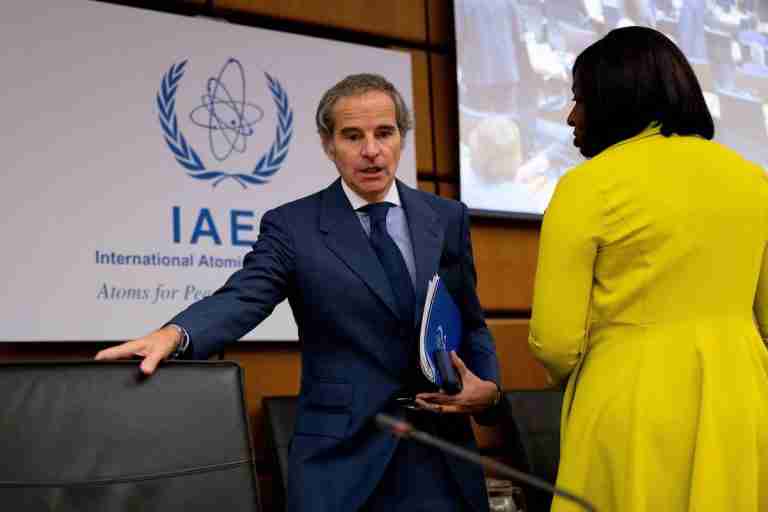
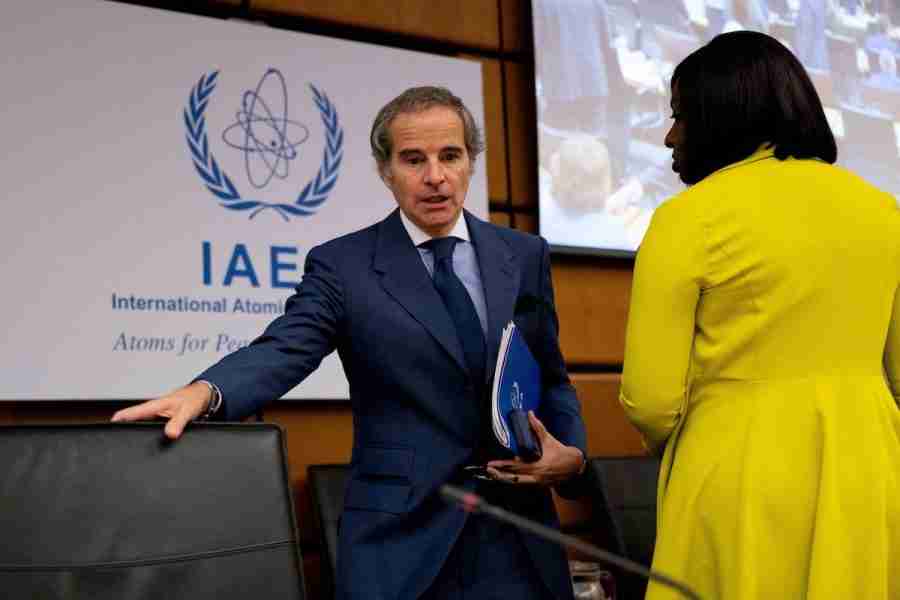
International Atomic Energy Agency (IAEA) Director General Rafael Grossi arrives for an exceptional meeting of the agency’s Board of Governors to discuss Israel’s strike on Iran that have hit nuclear targets including the Natanz nuclear complex, at the IAEA headquarters in Vienna, Austria, June 16, 2025. REUTERS/Elisabeth Mandl
International news via Reuters:
Britain, France and Germany condemned on Monday what they described as threats against the head of the U.N. nuclear watchdog, after a hardline Iranian newspaper said IAEA boss Rafael Grossi should be tried and executed as an Israeli agent.
“France, Germany and the United Kingdom condemn threats against the Director General of the IAEA Rafael Grossi and reiterate our full support to the Agency and the DG in carrying out their mandate,” said a joint statement issued by the foreign affairs ministries of those three countries.
“We call on Iranian authorities to refrain from any steps to cease cooperation with the IAEA. We urge Iran to immediately resume full cooperation in line with its legally binding obligations, and to take all necessary steps to ensure the safety and security of IAEA personnel,” they added.
The three European countries are parties to a 2015 nuclear agreement with Iran.
Their joint statement did not specify what threats had been made against Grossi, but it follows an article in Iran’s Kayhan newspaper, known for hardline views and closely associated with Supreme Leader Ayatollah Ali Khamenei, which accused Grossi of having ties to Israel’s Mossad intelligence agency.
The newspaper said that, should Grossi enter Iran, he should be tried and sentenced to death.
Iranian officials have not publicly endorsed the newspaper article. Iran’s ambassador to the United Nations, Amir Saeid Iravani, said there was no threat against Grossi.
Foreign Minister Abbas Araqchi said Grossi was not currently welcome in Iran, accusing him of having carried out “malign action” and playing a “regrettable role” that had led to Iran’s parliament voting to suspend cooperation with the IAEA.
Iranian officials have long blamed the IAEA for providing justification used by Israel for its 12-day campaign of airstrikes against Iran, which began on June 13, a day after the IAEA’s board declared Iran in violation of treaty obligations.
“Misleading narratives have dire consequences, Mr Grossi, and demand accountability,” Iran’s Foreign Ministry spokesperson Esmaeil Baghaei said on June 19.
On Monday, Iran said it could not be expected to guarantee the safety of IAEA inspectors so swiftly after its nuclear sites were hit by Israeli and U.S. strikes in war, which ended with a ceasefire last week.
“How can they expect us to ensure the safety and security of the agency’s inspectors when Iran’s peaceful nuclear facilities were attacked a few days ago?” Baghaei told a news conference.
Baghaei said the parliamentary bill calling for the government to withdraw cooperation with the IAEA had been approved by the Guardian Council, a security body controlled by appointees of the supreme leader, and carrying it out was now mandatory.
“Iran shouldn’t be expected to accept its obligations under the nuclear Non-Proliferation Treaty (NPT) when the UN nuclear watchdog has stopped short of condemning the attacks on Iran’s nuclear sites,” Baghaei said.
Reporting by Dubai Newsroom and Sudip Kar-Gupta;Editing by Alison Williams and Peter Graff
The Digital Markets Act (DMA) seeks to rein in the power of major tech firms
FILE PHOTO: European Union flags fly outside the European Commission in Brussels, Belgium November 8, 2023. REUTERS/Yves Herman/File Photo
International news via Reuters:
The European Union on Monday pushed back against U.S. criticism of its landmark tech rules that many feared could be included in ongoing trade negotiations with the United States and subsequently watered down.
Adopted recently, the Digital Markets Act (DMA) seeks to rein in the power of Alphabet, Amazon, Apple, Meta Platforms, Microsoft, China’s ByteDance and Booking.com.
The Digital Services Act (DSA) requires big online platforms to do more to tackle illegal and harmful content. Both legislations have come under fire from the U.S. administration which says it unfairly targets U.S. tech companies.
“The legislations will not be changed. The DMA and the DSA are not on the table in the trade negotiations with the U.S.,” spokesperson Thomas Regnier told a daily news conference.
He said the EU would not brook any interference from foreign governments on how it enforces its landmark rules which come with hefty fines for violations.
“We are not going to adjust the implementation of our legislation based on the actions of third countries. If we started to do that, then we would have to do it with numerous third countries,” Regnier said.
The EU handed out its first fines to Apple and Meta earlier this year, with both risking further daily fines if regulators find that they have yet to comply with the rules in the coming months.
Reporting by Foo Yun Chee and Bart Meijer;Editing by Sudip Kar-Gupta and Louise Heavens
Trump has scored a series of victories at the Supreme Court since returning to office in January
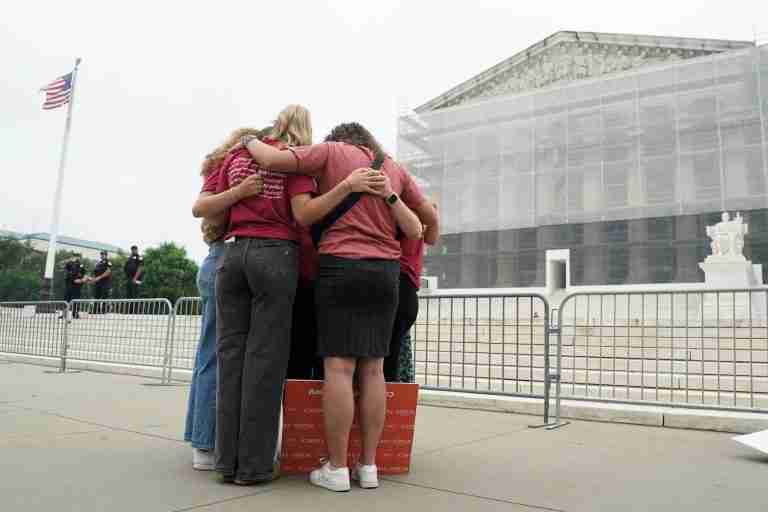
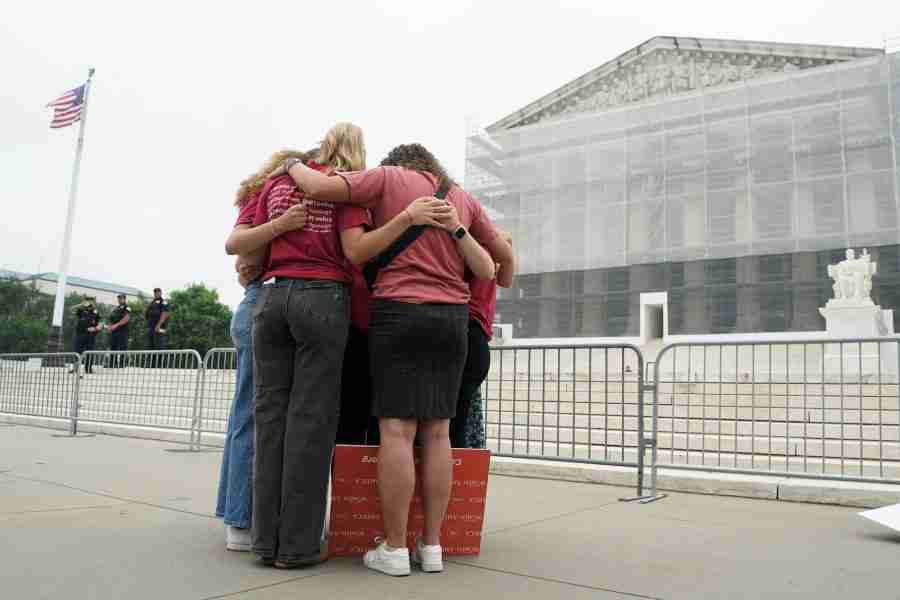
Concerned Women for America (CWA) activists pray, outside the U.S. Supreme Court, as justices issue rulings in pending cases in Washington, D.C., U.S., June 27, 2025. REUTERS/Nathan Howard
International news via Reuters:
The U.S. Supreme Court on the last day of rulings for its current term gave Donald Trump his latest in a series of victories at the nation’s top judicial body, one that may make it easier for him to implement contentious elements of his sweeping agenda as he tests the limits of presidential power.
With its six conservative members in the majority and its three liberals dissenting, the court on Friday curbed the ability of judges to impede his policies nationwide, resetting the power balance between the federal judiciary and presidents.
The ruling came after the Republican president’s administration asked the Supreme Court to narrow the scope of so-called “universal” injunctions issued by three federal judges that halted nationally the enforcement of his January executive order limiting birthright citizenship.
The court’s decision has “systematically weakened judicial oversight and strengthened executive discretion,” said Paul Rosenzweig, an attorney who served in Republican President George W. Bush’s administration.
Friday’s ruling said that judges generally can grant relief only to the individuals or groups who brought a particular lawsuit.
The decision did not, however, permit immediate implementation of Trump’s directive, instead instructing lower courts to reconsider the scope of the injunctions. The ruling was authored by Justice Amy Coney Barrett, one of three conservative justices who Trump appointed during his first term in office from 2017-2021.
Trump has scored a series of victories at the Supreme Court since returning to office in January. These have included clearing the way for his administration to resume deporting migrants to countries other than their own without offering them a chance to show the harms they could face and ending temporary legal status held by hundreds of thousands of migrants on humanitarian grounds.
The court also permitted implementation of Trump’s ban on transgender people in the military, let his administration withhold payment to foreign aid groups for work already performed for the government, allowed his firing of two Democratic members of federal labor boards to stand for now, and backed his Department of Government Efficiency in two disputes.
‘A BULLY PULPIT’
“President Trump secured the relief he sought in most of his administration’s cases,” George Mason University law school professor Robert Luther III said.
“Justice Barrett’s opinion is a win for the presidency,” Luther said of the decision on nationwide injunctions. “It recognizes that the executive branch is a bully pulpit with a wide range of authorities to implement the promises of a campaign platform.”
Once again, as with many of the term’s major decisions, the three liberal justices found themselves in dissent, a familiar position as the court under the guidance of Chief Justice John Roberts continues to shift American law rightward.
The rulings in favor of Trump illustrate that “the court’s three most liberal justices are proving less relevant now than at any earlier point in the Roberts Court with respect to their impact on its jurisprudence,” Luther said.
The cases involving Trump administration policies this year came to the court as emergency filings rather than through the normal process, with oral arguments held only in the birthright litigation. And those arguments did not focus on the legality of Trump’s action but rather on the actions of the judges who found that it was likely unconstitutional.
“One theme is the court’s struggle to keep pace with a faster-moving legal world, especially as the Trump administration tests the outer boundaries of its powers,” Boston College Law School professor Daniel Lyons said.
In other cases during the nine-month term, the court sided with a Republican-backed ban in Tennessee on gender-affirming medical care for transgender minors, endorsed South Carolina’s plan to cut off public funding to reproductive healthcare and abortion provider Planned Parenthood, and made it easier to pursue claims alleging workplace “reverse” discrimination.
The court also spared two American gun companies from the Mexican government’s lawsuit accusing them of aiding illegal firearms trafficking to drug cartels, and allowed parents to opt elementary school children out of classes when storybooks with LGBT characters are read.
‘NOT THE COURT’S ROLE’
In several cases involving federal statutes, the message from the justices is that people unhappy with the outcome need to take that up with Congress, according to Loyola Law School professor Jessica Levinson.
“The court is implicitly saying, ‘That’s Congress’ problem to fix, and it’s not the court’s role to solve those issues,'” Levinson said.
This is the second straight year that the court ended its term with a decision handing Trump a major victory. On July 1, 2024, it ruled in favor of Trump in deciding that presidents cannot be prosecuted for official actions taken in office. It marked the first time that the court recognized any form of presidential immunity from prosecution.
The Supreme Court’s next term begins in October but Trump’s administration still has some emergency requests pending that the justices could act upon at any time. It has asked the court to halt a judicial order blocking mass federal job cuts and the restructuring of agencies. It also has asked the justices to rein in the judge handling a case involving deportations to so-called “third countries.”
Recent rulings “have really shown the court for what it is, which is a deeply conservative court,” Georgia State University law professor Anthony Michael Kreis said.
The court’s jurisprudence reflects a larger shift in the national discourse, with Republicans feeling they have the political capital to achieve long-sought aims, Kreis said.
The court’s conservative majority, Kreis said, “is probably feeling more emboldened to act.”
Reporting by Jan Wolfe and Will Dunham, Editing by Rosalba O’Brien
To provide the best experiences, we use technologies like cookies to store and/or access device information. Consenting to these technologies will allow us to process data such as browsing behavior or unique IDs on this site. Not consenting or withdrawing consent, may adversely affect certain features and functions.
Functional
Always active
The technical storage or access is strictly necessary for the legitimate purpose of enabling the use of a specific service explicitly requested by the subscriber or user, or for the sole purpose of carrying out the transmission of a communication over an electronic communications network.
Preferences
The technical storage or access is necessary for the legitimate purpose of storing preferences that are not requested by the subscriber or user.
Statistics
The technical storage or access that is used exclusively for statistical purposes.The technical storage or access that is used exclusively for anonymous statistical purposes. Without a subpoena, voluntary compliance on the part of your Internet Service Provider, or additional records from a third party, information stored or retrieved for this purpose alone cannot usually be used to identify you.
Marketing
The technical storage or access is required to create user profiles to send advertising, or to track the user on a website or across several websites for similar marketing purposes.