Harness Racing: Bermudian in the driver’s seat in Indianapolis
Harness racing driver Kiwon Waldron was busy at Harrah’s Hoosier Park last night, taking part in four qualifying races across both Trot and Pace classes.
Waldron’s first outing came in RACE 3, a Trot Class event, where he steered First Responder to a fifth-place finish with a time of 1 minute, 58 and one-fifth seconds (1:58&1).
He was back on the track for RACE 4, also in the Trot Class, driving Wiggle Me. They finished sixth, clocking 2 minutes, 4 and four-fifths seconds (2:04&4).
Later in the evening, Waldron guided Ima Mess in RACE 7, another Trot Class contest, securing a fourth-place finish in 2 minutes, 6 and one-fifth seconds (2:06&1).
His final drive of the night was in RACE 14, a Pace Class race, where he teamed up with Bluebirdmoderngirl. They completed the qualifying run in 1 minute, 59 and two-fifths seconds (1:59&2), finishing in sixth position.
While these were qualifying heats, Waldron’s multiple starts underscore his active presence and ongoing work on the competitive Hoosier Park circuit.
Bermuda powerboats, ‘Nuff Said Bermuda’ and ‘Team Bermuda’, in action on Lake Ozark
Two Bermudian offshore powerboats, ‘Nuff Said Bermuda’ and ‘Team Bermuda’, showcased remarkable resilience at the highly anticipated OffShore Super Stock Class Lake of the Ozarks Shootout. Both crews successfully made it to the starting line despite having experienced dramatic incidents earlier in the season, demonstrating their strong resolve.
As previously reported, ‘Nuff Said Bermuda’, piloted by Luis Martin and Andy Stoneham, and ‘Team Bermuda’, featuring David Selley and Steven Bridges, have both endured flips in recent competitions. However, extensive work by their respective teams ensured both vessels were fully recovered and ready to compete in the demanding conditions of Lake Ozark.
In the SUPER STOCK Race Two, the competition was fierce. Raymarine comfortably took the win, but ‘Nuff Said Bermuda’ demonstrated their restored form by finishing a commendable 5th place. ‘Team Bermuda’ also put in a strong showing, securing 6th place in a competitive field of 15 high-performance boats.
The ability of these Bermudian teams to overcome significant setbacks and still compete effectively against a deep field speaks volumes about their dedication and the spirit of their crews. Their participation and solid finishes at one of the premier powerboating events in the United States underscore Bermuda’s continued presence and competitive drive in offshore racing.
Bermudian middle distance runner makes strides in the UK
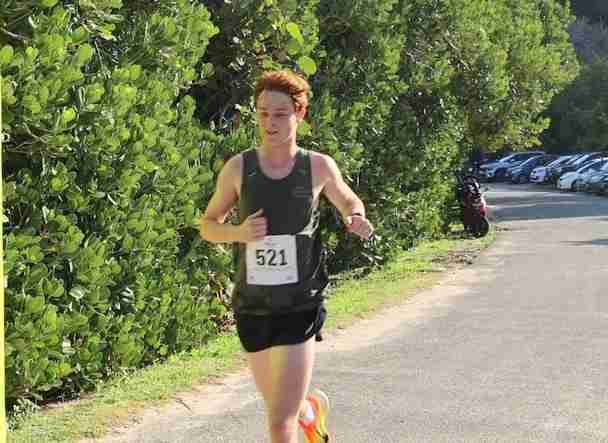
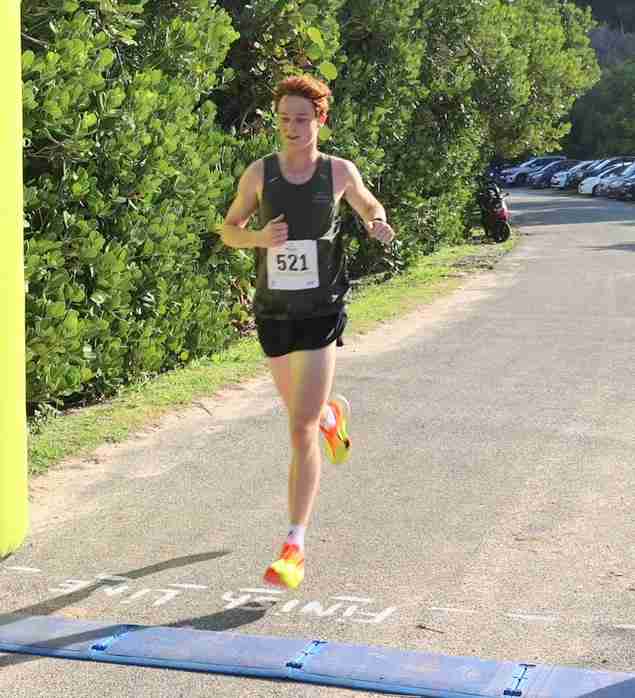
Bermudian middle-distance runner Jake Brislane was back on the track today, representing Tonbridge and Warwick University at the competitive St Mary’s University Record Breaker Track Meet.
Just a week after securing a victory in the 1500m at the British Milers Club (BMC) Regional Races in Loughborough, Brislane stepped up in distance to compete in the Men’s A 3000m race. Facing a strong field, he finished in 11th place, clocking a time of 8 minutes, 15.60 seconds.
This performance in the 3000m marks another solid outing for Brislane as he continues his track season in the UK, demonstrating his versatility across middle-distance events. His consistent efforts against competitive fields underscore his ongoing development as he continues to push his boundaries.
Daniel Phillips ‘displayed composure and resilience’
Tennis player Daniel Phillips has continued his impressive form on the professional circuit, clinching his second ATP Tour victory at the M15 Kayseri tournament in Turkey. Competing in his second match of the qualifying rounds, Phillips faced Aleksandre Shvangiradze from Georgia. In what proved to be another hard-fought encounter, Phillips displayed the same composure and resilience that saw him excel during the Davis Cup Group III in Costa Rica. He prevailed in straight sets, triumphing 7-6, 6-0. This victory moves Phillips into the third and final round of the qualifiers, where he will face his toughest test yet against the top seed in the qualifying draw, Ali Yazdani from Iran. Yazdani, currently ranked World No. 755 (as of June 23, 2025), represents a significant challenge for the young Bermudian. Phillips will be looking to build on this strong start as he aims to secure a coveted spot in the main draw of the M15 Kayseri event.
Visitor from the U.S. was driving an electric rental car on Crow Lane
A visitor was charged with causing grievous bodily harm by careless driving after the rental car she was driving collided with a motorcycle at the weekend.
Yesterday, the woman, who was visiting the island from the U.S., pleaded guilty to the offence in Plea Court and was fined two thousand dollars.
The collision happened after 9 pm on Saturday, near the Bermuda Underwater Exploration Institute.
According to police, it was reported that the electric microcar with three females inside, was traveling west on the city bound carriageway of Crow Lane, when it collided with the motorcycle.
A Bermuda Police Service Spokesperson further explained: “The occupants of the microcar became trapped inside the vehicle but were subsequently freed with the assistance of first responders.
“The male motorcycle rider, a Bermudian National, sustained serious, but non-life-threatening injuries and was transported by ambulance to King Edward VII Memorial Hospital, where at last check he continued to receive treatment.
“The occupants of the rental vehicle, three females who were visiting Bermuda from the United States, all sustained minor injuries in the collision. They were attended to at hospital and discharged.”
Shadow Minister of Youth, Social Development & Seniors seeks sustainable solutions
One Bermuda Alliance op-ed via press release:
As the island celebrated National Heroes Day, I was reminded that June 15th was also World Elder Abuse Awareness Day.
Perhaps this is fitting, given that may of our everyday heroes are seniors who have given their best to make Bermuda a better place for us all.
No one would argue that our seniors deserve a safe and happy environment where they are protected from abuse in any form. Unfortunately, that is not always the case. Often, much depends on the moral compass of family members and individuals who are closest to them.
Recently I read an article warning of power-of-attorney abuse, by local financial advisor, Carla Seely.
I also received the Age Concern newsletter, and in conjunction with World Elder Abuse Awareness Day, I learned that the organisation is launching a new advocacy campaign, Guardians for Justice: Protecting our Seniors.
The newsletter quotes data from the Department of Aging and Disability Services. According to the report, 161 senior abuse cases were reported in the past year. Of them: 35% were physical, 28% involved financial exploitation, 23% were psychological, 11% involved neglect, and 3% of the abuse cases were sexual.
The island needs an office of the public guardian for seniors and the disabled, or some similar service. This is not a new idea. In fact, in April 2022 a former PLP MP was appointed to lead a $60,000 one-year project to produce a paper on how such an office, or service, would be established and operated. Unfortunately, there has not been much progress since.
It has been estimated that by 2026, 25% of our population would be over the age of 65, and we are almost there. Given the fact that many people are living longer, we are also seeing a change in lifestyles where children of seniors are now becoming seniors themselves, which can sometimes compound or create additional difficulties.
These demographic changes were forecast. What was not foreseen was the large exodus of people from our shores who are no longer a part of the equation providing resources, financial and physical to care for our ageing population, which puts more pressure on everyone.
Last year the Bermuda Government published the National Seniors Strategy 2024, outlining key actions it intends to take over six years. Although, I did not see where it specifically mentioned establishing an office of the public guardian, it does say actions will be taken to enhance adult protection services and legislation, so they are appropriately resourced and structed to meet the protection needs of an ageing population.
Under the heading Empowering Citizens, the National Seniors Strategy lists actions that need to be taken these include, “Develop and implement
immigration policies to increase the number of persons working in our economy.”
We need more than workers. We need citizens to sustain our population.
I would like to see the Government commit to producing a collaborative, well-researched, comprehensive immigration and population study, leading to the development of a strategy and plan Bermudians can get behind.
The goal would be to develop a multi-generational, sustainable Bermuda, where citizens want to remain, and/or return and build their futures here with others they know share their aspirations, loyalty and commitment to our island home. There is nothing easy about this task, but for the good of us all, it must be done. As, disparate box-ticking solutions provide nothing more than an illusion of progress.
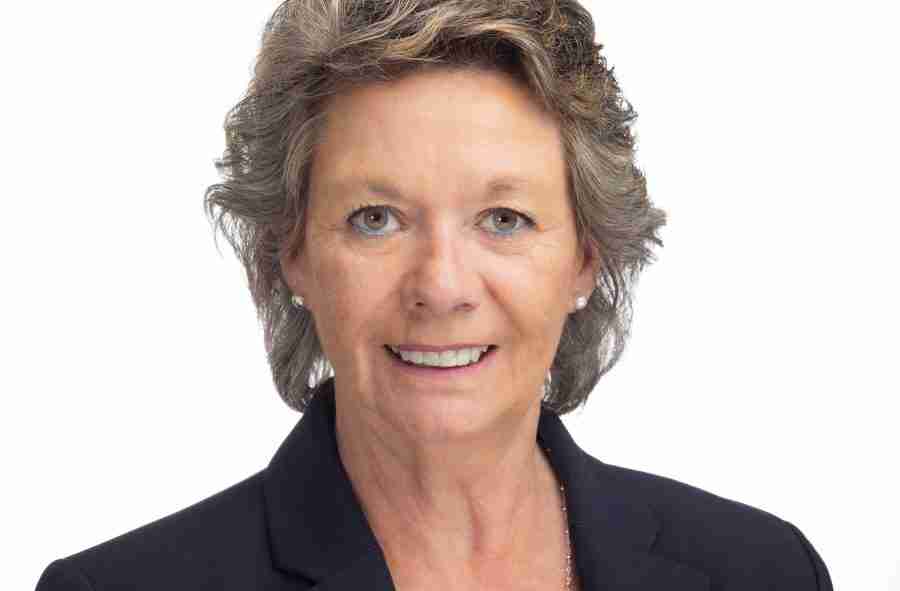
Linda Smith is the MP for C31, Southampton West Central. She is also the Shadow Minister Youth, Social Development & Seniors.
Data from the cameras could help inform decisions about the island’s marine resources
Images supplied
Government House issued the following media release.
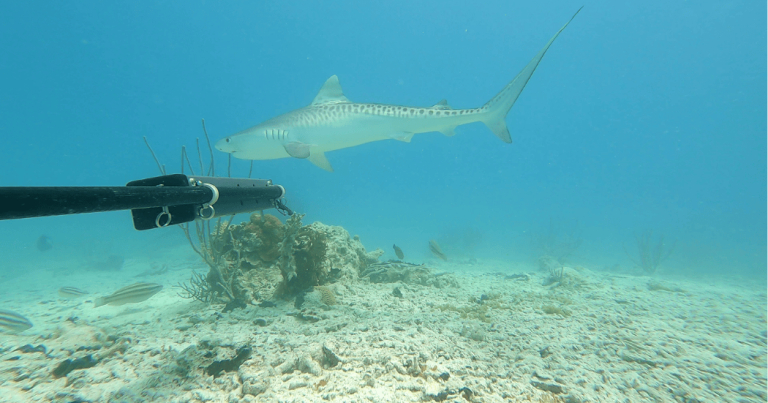
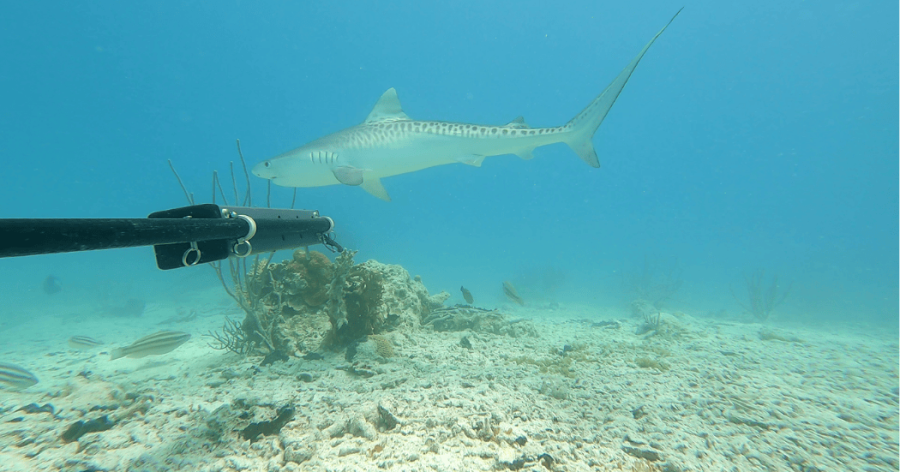
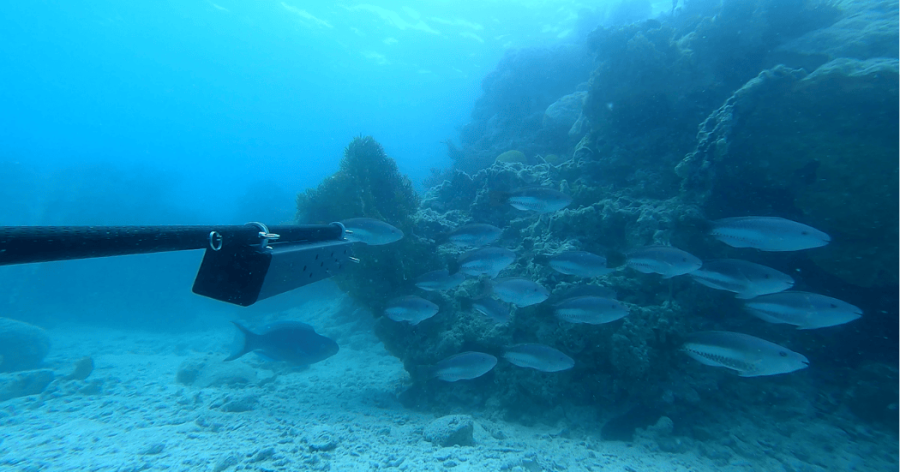
Using a Baited Remote Underwater Video System (BRUVS) with dual mounted cameras, marine scientists have been capturing footage of the pelagic fish community in Bermuda. In efforts to evidence Bermuda’s ocean biodiversity and ecosystems, the Department of Environment and Natural Resources (DENR) hosted Dr Jason Meeuwig of Blue Abacus to enable the deployment of a number of BRUVS in areas of sensitive habitats.
Dr Jason Meeuwig of Blue Abacus said “Deploying BRUVS allows us to get a visual and scientific understanding of what is going on beneath the surface of the water, providing the people of Bermuda an opportunity to make informed decisions about their critical marine resources.”
The Governor joined Dr Meeuwig and DENR marine scientists to observe and assist with the deployment of the BRUVS. The BRUVS are mostly made of carbon fibre, with special design and weighting to keep them in position. The cameras record marine life in their vicinity, attracted by bait held in a perforated container.
Supported by the Coastguard, the group visited a number of locations where they launched the BRUVS from a boat. The BRUVS were then left in the ocean for 1-2 hours before being retrieved and the data from the cameras downloaded. Marine scientists then study the footage, identify the species and count how many of each species are seen. The use of dual mounted cameras means that fish can be sized as well as counted.
On return to shore, the Governor was also able to view footage of species seen in the Bermuda waters, which included a juvenile tiger shark. Bermuda is one of ten Overseas Territories documenting the status of their open ocean wildlife through the Global Ocean Wildlife Analysis Network (GOWAN), to build ocean resilience. The data produced will provide DENR with the evidence needed to monitor and sustainably manage the marine environment around Bermuda.
Governor Andrew Murdoch CMG said: ‘The deployment of UK funds through the Blue Belt programme is designed to support the Overseas Territories in understanding their marine environment better. The strategic deployment of these innovative underwater devices can assist the Government of Bermuda in obtaining more accurate data on which to base their future policy decisions. This work by Blue Abacus will give DENR more data to build a fuller understanding of Bermuda’s marine ecosystems.’
Background
GOWAN, funded by the UK Government’s Blue Belt Ocean Shield programme, concentrates on pelagic fish (which live in the middle and upper sections of the water column and includes threatened species such as oceanic sharks, tunas, billfishes and forage species) as these are the base of resilient oceans.
To date BRUVS have identified, counted and measured more than 135,000 pelagic fish and sharks from more than 30 locations. BRUVS in Tristan da Cunha have recorded the first underwater sighting of the elusive Shepherd’s beaked whale at the appropriately-named Inaccessible Island; at Ascension Island, seamounts were clearly identified as biodiversity hotspots but roaming species like blue sharks, one of the most heavily exploited sharks globally, were most strongly associated with open ocean areas providing strong evidence for the need for large-scale protection rather than only localised protection at physical features like seamounts.
The Global Ocean Wildlife Analysis Network (GOWAN), is spearheading the data gathering effort across the Atlantic, Indian, Pacific and Southern Oceans. Working in collaboration with local governments and delivery partner Blue Abacus, Cefas scientists (the UK government’s marine and freshwater experts) and the Marine Management Organisation (who support sustainable development of the UK’s seas and coasts), are increasing our knowledge of what lies beneath Bermuda’s curtain with their underwater camera network.
Finland is beefing up an already-sizeable reservist force and will host a new command for NATO
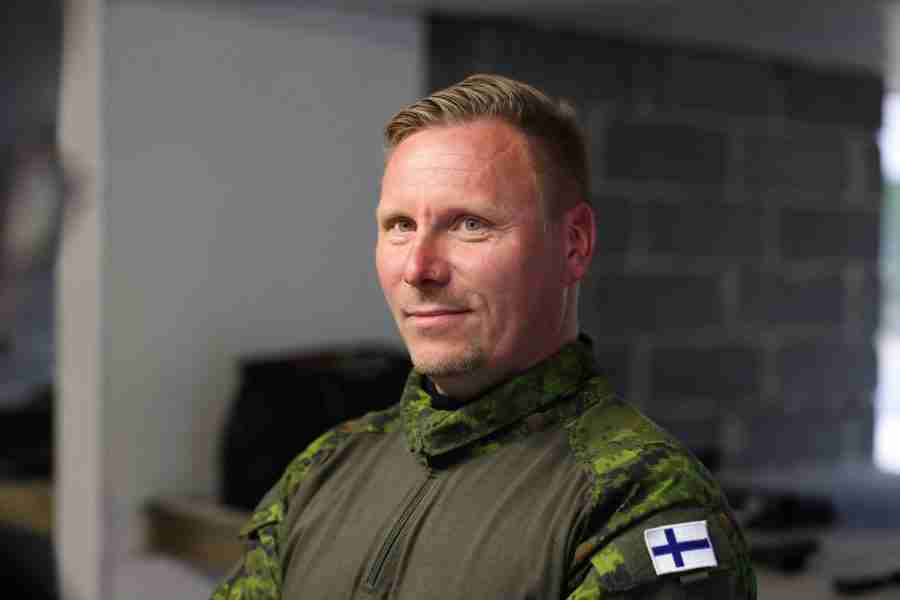
Finnish reservist Janne Latto stands at a shooting range near Lappeenranta, Finland, May 21, 2025. REUTERS/Leonhard Foeger
International news via Reuters:
At a shooting range 10 miles from the Russian border, Finnish army reservist Janne Latto opened the trunk of his car and unpacked a small surveillance drone and controller, equipment he sees as vital for any future conflict with Finland’s neighbour.
Since the invasion of Ukraine prompted Helsinki to join NATO two years ago, tensions reminiscent of the Cold War have resurfaced along the forested 1,340-km (833-mile) frontier, Europe’s longest with Russia.
The Nordic nation is beefing up an already-sizeable reservist force and will host a new command for NATO, whose members meet in the Hague on June 24 for an annual summit.
Still under construction, an imposing barbed-wire-topped fence now dominates a once-bustling section of the border, closed by Finland after it accused Russia of weaponising migration. Shopping malls and restaurants that buzzed with Russian visitors have fallen quiet.
On the other side, Russia has slowly begun dusting off Soviet-era military bases, satellite images show. Kyiv’s June 1 attack on Russia’s strategic bomber fleet, including at the Olenya airfield near northern Finland, brought the war in Ukraine closer to home.
For this story, Reuters spoke to a dozen people in Finland’s border region, where the emerging divisions have left some unable to visit relatives and caused economic losses. Others supported the measures, citing a need to prepare for and deter future conflict.
At the shooting range – near the lakeside town of Lappeenranta, some 100 miles from Russia’s second city, St Petersburg – Latto said the Lauritsala Reservists were training with three drones including the Parrot Anafi surveillance vehicle, used by the professional armies of several NATO members, including Finland.
A grant from Finland’s association of reservist groups meant ten more were on order, he said.
The 2022 assault on Ukraine hardened 47-year-old Latto’s perception of Russia.
“What if they decide to come and change the border, just like they went to Ukraine,” said Latto, who runs a small business assembling neon signs and billboards.
He recalled Soviet attempts to invade during World War Two, and how Finland was forced to cede approximately 10% of its territory to Russia, including Ayrapaa, a nearby municipality that his grandfather died defending in 1944.
The countries each insist they pose no threat to the other. Finnish President Alexander Stubb has said some level of Russian buildup is a normal response to Helsinki’s accession to NATO, which more than doubled the length of Russia’s border with the alliance.
However, a Finnish government defence report late last year described “a heightened risk of an armed conflict,” citing the development of Russia’s military capabilities since the start for the war in Ukraine, and saying Moscow had ambitions to create a “buffer zone” from the Arctic to Southern Europe.
Finland has since announced plans to stockpile landmines. It banned Finnish-Russian dual nationals from flying drones and Russians from buying property, and last week warned that mobile signals were disrupted in regions near Russia.
“Finland is responsible for over half of the entire land border between NATO countries and Russia,” Foreign Minister Elina Valtonen posted on X on Thursday, saying the country’s defence posture was to ensure the border “remains inviolable.”
Finland’s presidency declined to comment for this story. Russia’s foreign ministry did not respond to a comment request. President Vladimir Putin on Wednesday denied any plans to attack NATO. He said he did not see NATO rearmament as a threat. After Finland joined the alliance, Moscow announced plans to strengthen military capacity in Russia’s west and northwest.
The activities of the Finnish reservists, who also use firearms in target practice, are voluntary, although most have completed Finland’s long-standing mandatory male conscription.
More than 50,000 Finns take part in such clubs, up by about a third since before the Ukraine war, according to the Finnish Reservists’ Association, with a similar increase in the number of reservists called up by the military for refresher training.
Even older members of Latto’s band of volunteers could see service in a crisis, as Finland raises the reserve’s upper age limit to 65 to add 125,000 troops to a wartime army, and to take the number of reservists to one million by 2031.
He welcomed the extended military service, saying older reservists could be drone or radar operators.
“You don’t have to run with the infantry to be a part of the modern battlefield,” said Latto, a skilled hobbyist who has made his own first-person-view goggles to control a homemade drone.
SPLIT FAMILIES
Some businesses are unhappy with the changes. Shopping malls and restaurants once buzzing with Russian visitors are noticeably emptier. Up to 13 million annual cross-border trips have ended, affecting dual citizens with family in Russia.
The vanishing Russian tourists and dearth of trade has taken at least 300 million euros annually from a 5.5 billion euro local economy, the region’s council said. Unemployment soared to close to 15% at the end of last year, higher than the national average.
Antique shopkeeper Janne Tarvainen said that previously, some locals complained the Russian visitors had made it hard to get reservations in restaurants or find parking spots.
“I saw it differently – money was coming into the town,” said Tarvainen, who is now looking for online shoppers to replace Russian footfall.
Oksana Serebriakova, 50, whose grandfather was Finnish, moved to Lappeenranta from Moscow after the COVID-19 pandemic looking for better opportunities for her 17-year-old son Vitalik. Her older son and the boys’ father stayed in the Russian capital, with plans for frequent visits.
The border closure has split the family, creating “a very sad situation,” said Serebriakova, who is studying for a business administration diploma at a local vocational college.
The migration problem “could have been solved” with measures such as strict checks at entry points similar to airports, she suggested.
Finland has around 38,000 dual citizens, official data shows, considerably less than other countries bordering Russia. About 420,000 Finns who lived in territory ceded to Russia after World War Two settled in Finland.
Ivan Deviatkin, a local politician who has a son in Finland and an ageing mother in Russia, unsuccessfully challenged the border closure in Finland’s courts. Nine plaintiffs now have a complaint pending hearing at the European Court of Human Rights, which has asked Finland to justify the shutdown.
‘RE-BORDERING’
For decades after World War Two, Finland gradually opened trade and travel connections with Russia.
Now though, the E18 motorway that links Helsinki and St. Petersburg ends abruptly at metal barricades at the border, as do other previously busy roads.
Finland closed the frontier over the arrivals of undocumented migrants in 2023, which Helsinki viewed as a Russian policy response to its accession to NATO. Moscow said it was abiding by rules and that Finland had adopted an anti-Russia stance.
At the time, the borderline was hardly visible, mostly marked only by poles or a low barrier to keep domestic animals from wandering off, with a small trail for occasional canine patrols to follow.
In place of that, Finland is raising 200 km (124 miles) of 4.5-metre (15 ft)-high fence dotted with cameras and motion sensors in the most passable areas of the forest-covered 1,340-km (833 mile) border. A new dirt road runs parallel for quicker access by border guards.
The changes had made “a big, big impact,” said Finnish Border Guard Head of Operations Samuel Siljanen.
“We’ve moved kind of from an era of de-bordering to one of re-bordering,” he said.
NATO COMMAND
Hopes for a quick detente run low. Helsinki believes Russia will reinforce the neighbouring Leningrad military region once the war in Ukraine ends, president Stubb has said, although he downplays any threat from Russia so far.
Behind the border, satellite images show Russia beginning some work on garrisons, including building new warehouses.
A senior government official aware of Finland’s military planning described such work as minor and not a threat. Finland has long had a strong military. It has ordered 64 U.S.-made F-35s to modernise its fighter jet fleet. It has the largest artillery arsenal in Western Europe, another official said.
The sources requested anonymity to speak about sensitive matters.
It is important “to signal credibly to Russia that it’s not worth it,” said Chatham House associate fellow Minna Alander, whose research includes work on Finnish and Northern European security. She said Finland was not a threat to Russia.
“NATO will never attack Russia, and I believe they know this,” Alander said.
The new NATO northern headquarters will host around 50 officers from countries including the U.S. and UK together with the Finnish Army Command, in the eastern Finnish town of Mikkeli, a two-hour drive from the border.
“In the event that we ever moved into a conflict, this headquarters would be working alongside NATO forces in a command and control role,” Brigadier Chris Gent of the Allied Land Command told Reuters on a visit in Finland.
Reporting by Anne Kauranen in Lappeenranta, Imatra and Helsinki; Editing by Frank Jack Daniel
The death count was below the authorities’ earlier estimate of 270
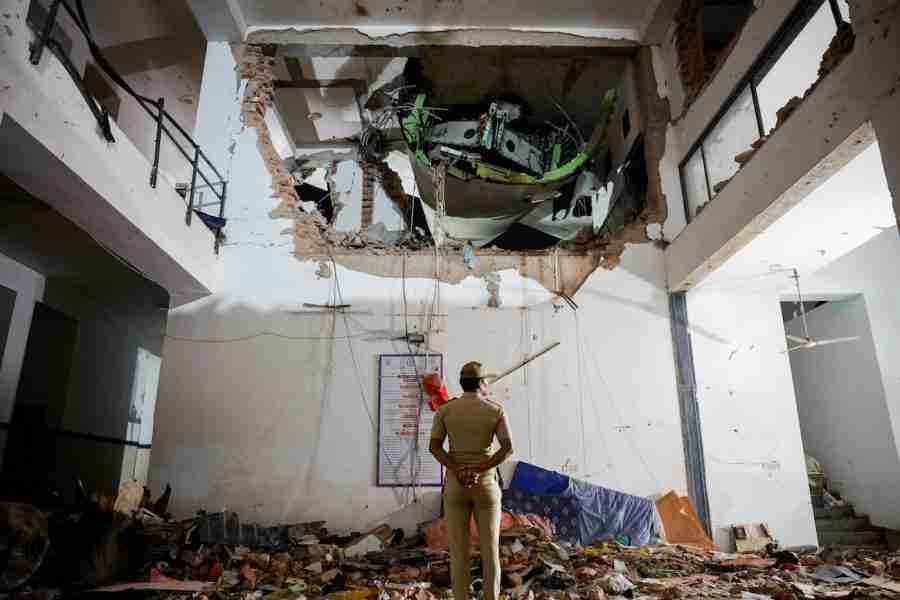
FILE PHOTO: A police officer stands in front of the wreckage of an Air India aircraft, bound for London’s Gatwick Airport, which crashed and landed on a hostel building minutes after take-off from an airport in Ahmedabad, India June 12, 2025. REUTERS/Adnan Abidi/File Photo
International news via Reuters:
Authorities in Gujarat state said on Tuesday they had identified all but one of 260 bodies recovered following an Air India plane crash earlier this month in the western city of Ahmedabad.
The Boeing 787-8 Dreamliner with 242 people on board, bound for London’s Gatwick Airport, lost height seconds after taking off from Ahmedabad on June 12 and erupted in a fireball as it hit a medical college hostel.
There was one survivor among those on the plane, and the crash also killed 19 people on ground.
The death count was below the authorities’ earlier estimate of 270 but officials remained cautious on the final toll.
“We have identified 259 victims. They include 240 passengers and 19 non-passengers. DNA test result of one passenger is still awaited,” said Rakesh Joshi, superintendent of Ahmedabad civil hospital.
“The site of the crash is still being cleared. Unless we are certain that no additional victims are going to be found, we cannot declare the final death toll,” Joshi added.
The remains of the 256 people have been handed over to their families, the local government said in a statement, adding that 253 victims were identified through DNA sample matching and the remaining six through facial identification.
Reporting by Sumit Khanna; Editing by Bernadette Baum
The two countries recently set out a 100-year partnership to deepen security and cultural ties
British Prime Minister Keir Starmer shakes hands with Ukrainian President Volodymyr Zelenskiy at Downing Street, in London, Britain June 23, 2025. REUTERS/Jaimi Joy/Pool
International news via Reuters:
Volodymyr Zelenskiy and British Prime Minister Keir Starmer announced a new defence co-production initiative on Monday during a short visit by the Ukrainian president to London to discuss his country’s defence against Russia.
The two leaders announced the deal in the garden of Starmer’s Downing Street residence, where they also met Ukrainian troops being trained in Britain.
“I’m really proud that this afternoon, we’re able to announce an industrial military co-production agreement – the first of its kind so far as Ukraine and the UK are concerned – which will be a massive step forward now in the contribution that we can continue to make,” Starmer said.
Speaking alongside Starmer, Zelenskiy said the deal would help strengthen both nations, as he thanked Britain for its support in the war against Russia.
The agreement to share battlefield technology would boost Ukraine’s drone production and link up Britain’s defence industry with the technology being developed on the front lines in Ukraine, Starmer’s office said in a statement.
The agreement, which covers the next three years, comes after the two countries set out a 100-year partnership to deepen security and cultural ties when Starmer visited Kyiv in January.
In a readout of the meeting between the two leaders, Starmer’s office said they agreed that the “coalition of the willing” – a grouping led by Britain and France, and not including the U.S. – should convene virtually in the coming weeks to update members on next steps.
Earlier on Monday, Zelenskiy met King Charles at Windsor Castle where the two shook hands for cameras on what was their third meeting this year and the latest gesture of Charles’, and Britain’s, support for Ukraine.
The Ukrainian leader also met the speakers of both houses of parliament.
Reporting by William James and Muvija M in London and Anastasiia Malenko and Pavel Polityuk; Editing by Kevin Liffey, Alex Richardson, Kate Holton and Nia Williams
The Iranian authorities did not immediately comment on the remarks
FILE PHOTO: Leader of People’s Mujahedin of Iran (MeK) and president of National Council of Resistance of Iran (NCRI) Maryam Rajavi takes part in a meeting with Italian MPs, in Rome, Italy, July 12, 2023. REUTERS/Guglielmo Mangiapane/File Photo
International news via Reuters:
The leader of a Paris-based Iranian opposition group said after the announcement of a ceasefire in the Iran-Israel air war on Tuesday that the Iranian people should now bring down Supreme Leader Ali Khamenei’s system.
Maryam Rajavi, President-elect of the National Council of Resistance of Iran, spoke a day after the last heir to the Iranian monarchy urged Western states to accept that “regime change” is needed to bring lasting peace and regional stability.
She made her comments before Defence Minister Israel Katz said he had ordered the Israeli military to strike Tehran after Iran fired missiles in violation of the ceasefire.
“The proposal for a ceasefire and ending the war is a step forward for the third option: neither war nor appeasement,” Rajavi said in a statement after U.S. President Donald Trump said a ceasefire between Israel and Iran was now in place in the aerial war that began on June 13.
“Let the people of Iran themselves, in the battle of destiny, bring down Khamenei and the dictatorship.”
She added: “We seek a democratic, non-nuclear republic, with the separation of religion and state, gender equality and also autonomy for Iran’s nationalities.”
After the United States bombed Iranian nuclear facilities on Saturday, Trump raised the possibility of Iran’s hardline clerical rulers being toppled but his administration said the aim was solely to destroy Iran’s nuclear programme.
The Iranian authorities did not immediately comment on Rajavi’s remarks. Tehran says its nuclear programme is for peaceful purposes and denies seeking a nuclear weapon.
BANNED IN IRAN
The Paris-based NCRI, which is banned in Iran, is also known by its Persian name Mujahideen-e-Khalq (MEK).
It was listed as a terrorist organisation by the U.S. and the European Union until 2012. Critics question its support inside Iran and how it operates, but it remains one of the few opposition groups widely considered able to rally supporters.
“The people of Iran, in their century-long struggle, at tremendous and bloody cost, have repeatedly rejected the dictatorships of the Shah and Sheikh through successive uprisings,” Rajavi said.
Reza Pahlavi, the exiled son of the toppled Shah, on Monday urged the police, military and security apparatus to abandon Iran’s leadership.
But opposition to Iran’s clerical government is fragmented, with no clear recognised leader and a multitude of ethnic groups.
Any direct challenge to the Islamic Republic would be likely to require some form of popular uprising. Political analysts familiar with the situation have said that whether such an uprising is likely – or imminent – is a matter of debate.
The NCRI had remained in the background during the air war, communicating little as it sought to avoid publicly supporting a foreign war led by Israel, sources aware of its actions said.
The Mujahideen joined the 1979 Islamic Revolution but later broke from the ruling clerics and fought against them during the Iran-Iraq war in the 1980s.
During earlier mass demonstrations against the Iranian authorities, the NCRI was active on social media, documenting as much as it could from sources in Iran. Iran regularly accuses the group of fermenting trouble and several of its activists have been executed over the last year.
In 2002, the group was the first to publicly reveal that Iran had a uranium enrichment programme.
The Netherlands has pledged about 10 billion euros in military support for Ukraine since 2022
FILE PHOTO: Dutch Defence Minister Ruben Brekelmans speaks during an interview with Reuters in Kyiv, Ukraine, October 6, 2024. REUTERS/Alina Smutko/File Photo
International news via Reuters:
The Netherlands will provide Ukraine with 100 drone-detection radars and 20 medical evacuation vehicles as part of a new 175 million euro ($202 million) aid package, Dutch Defence Minister Ruben Brekelmans said on Tuesday.
Delivery of the radars, which will help identify incoming drones and relay data to air defence systems, is expected to be completed by year-end.
In a statement on Friday, the Dutch Defence Ministry specified that 80 million euros of the package will go towards drone support through the international drone coalition.
The move on Tuesday follows a 500 million euro deal to produce 600,000 drones with the Ukrainian defence industry, Brekelmans said ahead of a NATO Summit in The Hague.
The Netherlands has pledged about 10 billion euros in military support for Ukraine since the beginning of the full-scale Russian invasion in early 2022.
($1 = 0.8629 euros)
Reporting by Charlotte Van Campenhout; Editing by Alison Williams and Bernadette Baum
To provide the best experiences, we use technologies like cookies to store and/or access device information. Consenting to these technologies will allow us to process data such as browsing behavior or unique IDs on this site. Not consenting or withdrawing consent, may adversely affect certain features and functions.
Functional
Always active
The technical storage or access is strictly necessary for the legitimate purpose of enabling the use of a specific service explicitly requested by the subscriber or user, or for the sole purpose of carrying out the transmission of a communication over an electronic communications network.
Preferences
The technical storage or access is necessary for the legitimate purpose of storing preferences that are not requested by the subscriber or user.
Statistics
The technical storage or access that is used exclusively for statistical purposes.The technical storage or access that is used exclusively for anonymous statistical purposes. Without a subpoena, voluntary compliance on the part of your Internet Service Provider, or additional records from a third party, information stored or retrieved for this purpose alone cannot usually be used to identify you.
Marketing
The technical storage or access is required to create user profiles to send advertising, or to track the user on a website or across several websites for similar marketing purposes.