HSBC, Lloyds, NatWest and Santander UK said they supported scrapping bank ring-fencing
FILE PHOTO: A rainbow appears over HSBC and Barclay’s buildings in the Canary Wharf financial district of London, Britain, November 19, 2018. REUTERS/Toby Melville/File Photo
International news via Reuters:
Senior executives at two of Britain’s banks disagreed over proposals to repeal the country’s post-crisis bank ring-fencing rules at a hearing of lawmakers on Tuesday, with the head of Barclays UK saying it could undermine financial stability.
Bosses from HSBC, Lloyds, NatWest and Santander UK said they supported scrapping bank ring-fencing in a letter to the finance ministry last month.
Changing laws that require banks to separate retail depositors’ savings from banks’ riskier activities would help kickstart growth, Ian Stuart, head of HSBC’s domestic British bank, told UK lawmakers at the hearing.
“We have two banks in the UK, a ring-fenced bank and a non-ring-fenced one, and we can’t move capital between them… just being able to do that would help businesses in the UK today,” he said.
Such a change could however undermine financial stability and the public’s trust in the sector, said Vim Maru, Chief Executive of Barclays UK, which did not sign the recent letter.
The rare public disagreement by two bank bosses over a key part of Britain’s post-crisis efforts to shore up the banking industry underscored the challenge facing Britain’s Labour government which is desperate to kickstart economic growth.
Under pressure from lawmakers, the country’s financial watchdog has said it will reevaluate its approach to risk to boost growth, and its antitrust regulator has likewise been told to get behind the push for growth.
The split between HSBC and Barclays over whether to unshackle Britain’s banks from ring-fencing rules could in part be because of the different ways in which those banks have implemented the rules, Conservative lawmaker John Glen said at the Treasury Committee hearing on Tuesday.
Barclays, in addition to its ring-fenced and non-ring-fenced entities, has created a third services unit which provides essential functions to both, reducing duplication of costs.
Reporting By Lawrence White; Editing by Tommy Reggiori Wilkes and Emelia Sithole-Matarise
Proposed deal could revive plans to build a gas pipeline from Pennsylvania’s drilling fields
FILE PHOTO: South Brookly Marine Terminal, which is being developed into a staging facility for Equinor’s Empire Wind offshore wind project, is seen in an undated aerial photograph in New York City, U.S. Equinor/Handout via REUTERS/File Photo
International news via Reuters:
The Trump administration has lifted a month-old stop-work order on Empire Wind, a $5 billion wind farm project off the coast of New York, in a compromise with the state that could also see cancelled plans for a gas pipeline revived, officials said on Tuesday.
Norway’s Equinor said construction work can now resume on the project, which is expected to provide power for half a million homes from 2027 onwards.
Shares in Equinor, which is mostly reliant on oil and gas, were up by 1.5% by 1016 GMT.
Denmark’s Orsted, the world’s largest offshore wind farm developer, which is constructing two plants off the coast of the United States, saw its shares jump by 15%.
U.S. Interior Secretary Doug Burgum, who had issued the stop order on Empire Wind on April 16, said he was encouraged that New York Governor Kathy Hochul will now allow new gas pipeline capacity to move forward.
The deal could revive plans to build a gas pipeline from Pennsylvania’s drilling fields which was blocked on environmental grounds in 2020.
“Americans who live in New York and New England would see significant economic benefits and lower utility costs from increased access to reliable, affordable, clean American natural gas,” Burgum wrote in a post on X on Monday.
Hochul in a statement said New York would work with the U.S. administration and private entities on projects that meet the legal requirements under New York law.
Norwegian Finance Minister Jens Stoltenberg, a former NATO chief who had discussed Equinor’s case with U.S. policy makers, said the deal to unblock the wind farm was ultimately a matter to be settled between U.S. authorities.
“This is an agreement about natural gas and wind made in the United States,” Stoltenberg told reporters in Oslo.
More broadly, he said the reversal was good news for investors in the U.S. as the stop-work order threatened to create uncertainty after permits had been granted by U.S. authorities.
Equinor had warned it stood to lose billions of dollars due to the order which sent shockwaves through the offshore wind industry, raising concerns that fully permitted developments representing billions in investment are not safe.
“This was an extraordinary situation where a fully concepted and approved project was stopped. I take it as a very positive sign that explaining the facts of this has changed the position,” Equinor CEO Anders Opedal told Reuters.
Officials from the U.S. Interior Department, who in issuing the stop-work order said the former Biden administration had rushed the project’s approval without sufficient environmental analysis, were not immediately available for comment.
Opedal said Equinor would give an update on the financial consequences of the delay when reporting second-quarter results on July 23.
Equinor, which had warned it was spending $50 million weekly to keep the project afloat during the suspension, said it would now work with suppliers and regulatory bodies to minimise the impact of the delay.
Equinor purchased the Empire Wind lease during Trump’s first administration in 2017, and the 810-megawatt project was approved under former President Joe Biden in 2023.
The project, which will use wind turbines from Vestas, is 30% complete, according to the company.
Trump has vowed to expand domestic energy production but wind is excluded from that effort. He issued an executive order on his first day in office, pausing new leasing and permitting of wind projects, which he says are ugly, expensive and harmful to wildlife.
An industry group praised the lifting of the stop-work order.
“The administration is clearing the way for major investments to move forward – activating American shipyards, creating high-quality jobs, and accelerating the build out of infrastructure needed to deliver reliable, domestic energy,” National Ocean Industries Association President Erik Milito said in a statement.
The U.S. has four operating offshore wind farms and four under development including Empire Wind, Orsted’s Sunrise Wind off New York and Revolution Wind off Rhode Island and Dominion Energy’s Coastal Virginia Offshore Wind.
Reporting by Nichola Groom in Los Angeles and Nora Buli in Oslo, additional reporting by Stine Jacobsen in Copenhagen and Gwladys Fouche in Oslo; Editing by Chris Reese, Stephen Coates and Terje Solsvik
U.S. provided Moscow with a list of jailed Americans that Washington wants to have returned
Gordon Black, a U.S. Army staff sergeant, who was detained in Russia on May 2 on suspicion of stealing from a woman he was in a relationship with, appears in a court in Vladivostok, Russia, June 19, 2024. REUTERS/Tatiana Meel
International news via Reuters:
U.S. President Donald Trump and Russian President Vladimir Putin discussed a possible prisoner exchange involving nine people from each side during a phone call on Monday, according to Kremlin foreign policy aide Yuri Ushakov.
A source close to the Kremlin said the U.S. side has previously provided Moscow with a list of nine Americans jailed in Russia that Washington wants to have returned.
These are the nine people that the source said were on the list:
STEPHEN JAMES HUBBARD
Hubbard, 73, was sentenced to six years and 10 months in prison in October after being convicted in a closed court in Moscow of serving as a mercenary for Ukraine. Russian state media said he pleaded guilty.
An English teacher who had previously lived in Japan and Cyprus, Hubbard had been living in the Ukrainian town of Izium and was arrested after Russian forces took control of the city in 2022. His relatives rejected claims that Hubbard served for Ukraine, pointing to his advanced age.
He was designated by the U.S. in January as “wrongfully detained”, meaning Washington is committed to try to negotiate his release.
ROBERT GILMAN
Gilman received a sentence of seven years and one month last October and in April a Russian court added an extra year on to his sentence. An ex-Marine, he was found guilty by a Russian court of assaulting a prison officer and a state investigator at a penal colony in Voronezh, south of the Russian capital.
Gilman was already in prison at the time of the offence, serving a 3-1/2-year sentence for attacking a police officer while drunk, a charge he was convicted of in October 2022.
GORDON BLACK
An active duty U.S. staff sergeant based in South Korea, Black was detained in May 2024 in Russia’s Far East on suspicion of stealing money from his Russian girlfriend.
A court in June found Black guilty of stealing 10,000 roubles ($104) from the woman and threatening to kill her, sentencing him to three years and nine months in prison.
In April, a Russian court cut Black’s sentence to three years and two months.
DANIEL JOSEPH SCHNEIDER
Schneider was sentenced to six years in prison in September by a court in the Kaliningrad region for kidnapping his own son, after he tried to leave Russia with the 4-year-old without permission from the boy’s mother.
Schneider was detained near Poland by Russia’s border service while trying to cross the border in a forest swamp, the court said.
JOSEPH TATER
Tater was sentenced to 15 days in jail last August for “petty hooliganism” after he was alleged to have abused staff at a Moscow hotel, which he denied. Russian news agencies later said he was also being investigated on a more serious charge of assaulting a police officer, which carries up to five years in prison.
On April 6 a court ordered Tater be removed from pre-trial detention and placed in hospital. State media said doctors have diagnosed him with a mental disorder.
A Russian court later ruled he was not criminally responsible for his actions and committed him for treatment in a Russian hospital.
MICHAEL TRAVIS LEAKE
A musician and former U.S. paratrooper, Leake was sentenced to 13 years in prison last July for drug smuggling.
It was not clear how Leake pleaded to the charges, filed following his arrest in June 2023.
ROBERT ROMANOV WOODLAND
A U.S. citizen adopted from Russia as a child, Woodland had moved back to Russia and was working as an English teacher when he was arrested on charges of attempting to sell drugs. He was sentenced on July 4 last year to 12-1/2 years in prison. His lawyer said Woodland had partially admitted guilt.
In April, a Russian court ordered that Woodland’s jail sentence be reduced to 9-1/2 years, his lawyer told Reuters.
EUGENE SPECTOR
Currently serving a 3-1/2-year sentence for bribery, Spector, who was born in Russia and then moved to the U.S., was charged last August with espionage.
Before his arrest in 2021, he served as chairman of the board of Medpolymerprom Group, a company specialising in cancer-curing drugs, state media said. Spector had pleaded guilty to helping bribe an assistant to an ex-Russian deputy prime minister. It was not clear how he pleaded to the espionage charge.
DAVID BARNES
Barnes was sentenced by a Russian court in February 2024 to 21 years on charges of abusing his two sons in the United States. He had been involved in a custody dispute with his Russian ex-wife.
The allegations had previously been investigated in Texas, where authorities found no grounds to charge him.
Another U.S. man imprisoned in Russia was not included in the list of names provided to Reuters by the Russian source:
ANDRE KHACHATOORIAN
An Armenian American from Los Angeles, Khachatoorian was sentenced to 8-1/2 years in prison in 2023 for arms trafficking. He was arrested in 2021, while traveling from California to Armenia via Moscow, after a firearm was found in his luggage.
Khachatoorian, 38, says that his firearm was legal, and that he was tricked into applying for a Russian visa at the airport, and removed from the transit zone, where he could be arrested under Russian law.
Reporting by Darya Korsunskaya and Lucy Papachristou in London, Lidia Kelly in Melbourne; Editing by Mark Trevelyan, Guy Faulconbridge and Alex Richardson
It remains unclear how the Trump administration would collect the fines and seize property
Wendy Elizabeth Ortiz Hernandez walks with her son Axel on a street in Lebanon, Pennsylvania, U.S., May 17, 2025. REUTERS/Eduardo Munoz
International news via Reuters:
Wendy Ortiz was surprised to find out she was being fined by U.S. immigration authorities for being in the country illegally – but it was the amount that truly shocked her: $1.8 million.
Ortiz, 32, who earns $13 an hour in her job at a meatpacking plant in Pennsylvania, has lived in the United States for a decade, after fleeing El Salvador to escape a violent ex-partner and gang threats, she said in an interview and in immigration paperwork. Her salary barely covers rent and expenses for her autistic 6-year-old U.S.-citizen son.
“It’s not fair,” she said. “Where is someone going to find that much money?”
In the last few weeks, U.S. President Donald Trump has started to operationalize a plan to fine migrants who fail to leave the U.S. after a final deportation order, issuing notices to 4,500 migrants with penalties totaling more than $500 million, a senior Trump official said, requesting anonymity to share internal figures.
Reuters spoke with eight immigration lawyers around the country who said their clients had been fined from several thousand dollars to just over $1.8 million.
The recipients of the notices were informed that they had 30 days to contest, in writing, under oath, and with evidence as to why the penalty should not be imposed.
The steep fines are part of Trump’s aggressive push to get immigrants in the U.S. illegally to leave the country voluntarily, or “self deport.”
The Trump administration plan, details of which were first reported by Reuters in April, include levying fines of $998 per day for migrants who failed to leave the U.S. after a deportation order.
The administration planned to issue fines retroactively for up to five years, Reuters reported. Under that framework, the maximum would be $1.8 million. The government would then consider seizing the property of immigrants who could not pay.
It remains unclear exactly how the Trump administration would collect the fines and seize property.
Wendy Elizabeth Ortiz Hernandez speaks to her son Axel at their home in Lebanon, Pennsylvania, U.S., May 17, 2025. REUTERS/Eduardo Munoz
IMMIGRATION LAWYERS BAFFLED
The fines reviewed by Reuters were issued by U.S. Immigration and Customs Enforcement, but a separate agency – Customs and Border Protection – has been asked to process them and handle potential forfeitures, Reuters reported in April.
CBP is still working out the complicated logistics to conduct seizures, a CBP official said, requesting anonymity.
The U.S. Department of Homeland Security did not respond to a request for comment. DHS spokesperson Tricia McLaughlin said in April that immigrants in the U.S. illegally should “self deport and leave the country now.”
The fines stem from a 1996 law that was enforced for the first time in 2018, during Trump’s first term in office, and target the roughly 1.4 million migrants who have been ordered deported by an immigration judge.
The Trump administration withdrew fines of hundreds of thousands of dollars against nine migrants who sought sanctuary in churches in his first term after a legal challenge, but proceeded with smaller penalties. Joe Biden’s administration dropped the fines in 2021.
Robert Scott, a New York City-based immigration lawyer, said he was baffled when one of his clients – a low-income Mexican woman who has lived in the U.S. for 25 years – also received a $1.8 million fine.
“At first you look at something like this and think it’s fake,” he said. “I’ve never seen a client receive anything like this.”
Scott said the woman received a final deportation order in 2013 but was not aware of it at the time. The woman filed a motion last year to reopen the removal order, which is still pending, Scott said.
“She hasn’t been hiding,” he said. “I find it curious that they would pick on someone like that. I don’t know if it’s random, I don’t know if she’s low-hanging fruit. I don’t know.”
SEEKING RELIEF, THEN TARGETED
After crossing the border in 2015, Ortiz was released to pursue her asylum claim when an officer found she had a credible fear of persecution, documents show. But she said she never received an immigration court hearing notice and was ordered deported after failing to show up to court in 2018.
Ortiz’s immigration lawyer requested humanitarian relief from the U.S. government on Jan. 8, saying she faced danger in El Salvador and that her son would not have access to services for autistic children. The petition asked for “prosecutorial discretion” and for the government to reopen and dismiss her case.
Twelve days later, Trump took office and launched his wide-ranging immigration crackdown.
Rosina Stambaugh, Ortiz’s attorney, said she had requested a 30-day extension and was considering ways to fight the fine in court.
“She is a mother of an autistic child, she has no criminal history, and they have all of her background information,” Stambaugh said. “I just think it’s absolutely insane.”
Lawyers said clients who received the notices also included spouses of U.S. citizens, who were actively trying to legalize their immigration status.
Rosa, a U.S. citizen in New York, said her Honduran husband was fined $5,000. She said her husband wasn’t able to leave the country after being granted voluntary departure in 2018 because she was diagnosed with uterine cancer. She hopes once she explains the situation, that the fine may be waived. If not, she said, he will have to work many extra hours to pay it.
“It’s one thing after the other,” she said. “This whole process has cost us so much money.”
Reporting by Ted Hesson in Washington and Kristina Cooke in San Francisco; Editing by Suzanne Goldenberg and Mary Milliken
A legally binding pact has been adopted by the World Health Assembly in Geneva
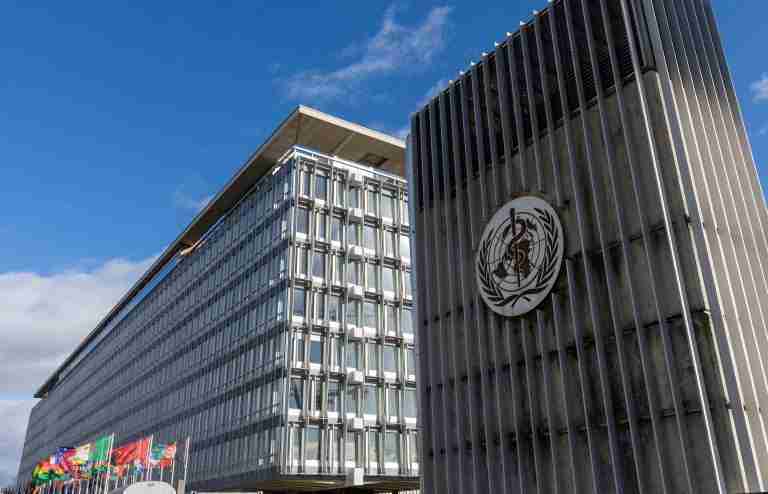
A view shows The World Health Organization (WHO) headquarters in Geneva, Switzerland, January 28, 2025. REUTERS/Denis Balibouse
International news via Reuters:
Members of the World Health Organization adopted an agreement on Tuesday to better prepare for future pandemics following the disjointed global response to COVID-19, but the absence of the U.S. cast doubt on the treaty’s effectiveness.
After three years of negotiations, the legally binding pact was adopted by the World Health Assembly in Geneva. WHO member countries welcomed its passing with applause.
The pact was touted as a victory for members of the global health agency at a time when multilateral organisations like the WHO have been battered by sharp cuts in U.S. foreign funding.
“The agreement is a victory for public health, science and multilateral action. It will ensure we, collectively, can better protect the world from future pandemic threats,” said WHO Director-General Tedros Adhanom Ghebreyesus.
The pact would ensure that drugs, therapeutics and vaccines are globally accessible when the next pandemic hits. It requires participating manufacturers to allocate a target of 20% of their vaccines, medicines, and tests to the WHO during a pandemic to ensure poorer countries have access.
However, U.S. negotiators left discussions about the accord after President Donald Trump began a 12-month process of withdrawing the U.S. – by far the WHO’s largest financial backer – from the agency when he took office in January.
Given this, the U.S., which poured billions of dollars into vaccine development during the COVID pandemic, would not be bound by the pact. And WHO member states would not face penalties if they fail to implement it.
LATE CHALLENGE
The deal was reached after Slovakia called for a vote on Monday, as its COVID-19 vaccine sceptic prime minister demanded that his country challenge the adoption of the agreement.
One hundred and twenty-four countries voted in favour, no countries voted against, while 11 countries, including Poland, Israel, Italy, Russia, Slovakia and Iran, abstained.
Some health experts welcomed the treaty as a step towards greater fairness in global health after poorer nations were left short of vaccines and diagnostics during the COVID-19 pandemic.
“It contains critical provisions, especially in research and development, that—if implemented—could shift the global pandemic response toward greater equity,” Michelle Childs, Policy Advocacy Director at Drugs for Neglected Diseases initiative told Reuters.
Others said the agreement did not meet initial ambitions and that without strong implementation frameworks it risked falling short in a future pandemic.
“It is an empty shell…It’s difficult to say that it’s a treaty with firm obligation where there is a strong commitment…It’s a good starting point. But it will have to be developed,” said Gian Luca Burci, an academic adviser at the Global Health Centre at the Geneva Graduate Institute, an independent research and education organisation.
The pact will not go into effect until an annex on sharing of pathogenic information is agreed. Negotiations on this will start in July with the aim of delivering the annex to the World Health Assembly for adoption, WHO said. A Western diplomatic source suggested it may take up to two years to be agreed.
Reporting by Olivia Le Poidevin, additional reporting by Jan Lopatka editing by Rachel More and Ros Russell
UK food and drink exports to Europe had fallen by a third since 2019
Andreas Georghiou, owner of Andreas, poses for a portrait at his gourmet grocery store in London, Britain, March 28, 2024. REUTERS/Isabel Infantes/File Photo
International news via Reuters:
Britain’s food sellers and producers, both large and small, welcomed a deal with the European Union to cut border red tape, saying it would reduce costs and ease trade for both sides.
Britain and the EU on Monday agreed to trade with vastly reduced paperwork and border checks on plant and animal products, while maintaining high food standards, under an agreement that is part of a wider reset in relations.
The UK did, however, concede concessions on fishing rights, with the two sides agreeing that British and EU vessels would have access to each other’s waters for 12 years.
When Britain left the EU’s single market in 2021, the EU immediately enforced its rules, leading to port delays and prompting some British exporters to stop selling to the bloc.
The industry’s Food and Drink Federation said UK food and drink exports to Europe had fallen by a third since 2019.
Britain was much slower implementing its post-Brexit border arrangements, and after repeated delays and confusion it started to set new rules in phases from January last year.
Andreas Georghiou, who imports from small producers in France, Italy, Spain and Greece for his fine foods and ingredients store in southwest London, said the post-Brexit years have been “long and painful” and he might cry out with relief.
“It has just been such an absolute shitshow,” he told Reuters.
“This will really help small business,” he said, noting it would make recent tax hikes imposed by the Labour government more bearable.
He added that some European food producers who had given up exporting to the UK would resume doing business.
View of fishing boats and a net in the coastal town of Macduff, Aberdeenshire, Scotland, Britain October 18, 2020. REUTERS/Alexander Smith/File Photo
Yvonne Yeoh, sales director at Neal’s Yard Dairy, a London-based artisanal cheesemaker, retailer and wholesaler that has been exporting British cheese into the EU for 30 years, said she hoped for lower costs and faster time to market.
She told Reuters that since Brexit, the company’s internal labour costs had doubled, its external transport costs had trebled and it takes three times as long from order to delivery.
Britain’s biggest retailers also welcomed the move, with Marks & Spencer’s food boss Alex Freudmann saying it would remove “pointless bureaucracy”. Helen Dickinson, CEO of the British Retail Consortium, which represents the country’s biggest supermarkets Tesco and Sainsbury’s, said it would create greater security in retail supply chains.
But the agreement on fish, which removed one of the UK’s strongest hands in any future talks, was condemned by the fishing industry, who said they had been sacrificed in order to secure better terms elsewhere.
Elspeth Macdonald, CEO of the Scottish Fishermen’s Federation, called it “a horror show” and a betrayal.
Reporting by James Davey; Editing by Kate Holton and David Evans
Venezuela is holding legislative and gubernatorial elections on Sunday
Venezuela’s Interior Minister Diosdado Cabello looks on, on the day Venezuelan migrants arrive on a flight after being deported from the United States, in Caracas, Venezuela, March 24, 2025. REUTERS/Leonardo Fernandez Viloria/File Photo
International news via Reuters:
Venezuela’s Interior Minister Diosdado Cabello said on Monday he has ordered flights from Colombia suspended after the arrests of more than three dozen people, including some 17 foreigners who arrived via Colombia, over allegations of “conspiracy.”
Venezuelan authorities regularly decry conspiracies and planned attacks against President Nicolas Maduro, the country’s power grid and other targets.
They often point the finger at the country’s opposition, which they say works hand-in-glove with the United States to attack the country, accusations both the opposition and Washington have always denied.
Thirty-eight people have been arrested in connection with the alleged conspiracy, Cabello said during a press conference with local media.
People traveling to Caracas wait inside El Dorado International Airport, after the cancellation of flights from Colombia to Venezuela, in Bogota, Colombia May 19, 2025. REUTERS/Luisa Gonzalez
“We have given the instruction to suspend all flights from Colombia to our country,” the minister said, adding that the measure was effective immediately.
“We have discovered a new plot of conspiracy and terrorism, we have captured a group of Venezuelans who were returning to the country with explosive artifacts,” Cabello said, adding that the group of 38 included “bombers, coyotes (migrant smugglers) and mercenaries.”
Venezuela’s aviation authority later said the measure will last until May 26 at 6 p.m. local time. Venezuela is holding legislative and gubernatorial elections on Sunday.
Colombia’s foreign ministry said it had been informed about the flight suspension by Venezuela’s government but had not yet received information about any detained Colombians.
Reporting by Mayela Armas and Deisy BuitragoWriting by Julia Symmes CobbEditing by Rosalba O’Brien
Government officials said Ukraine’s budget needs had been secured for 2025
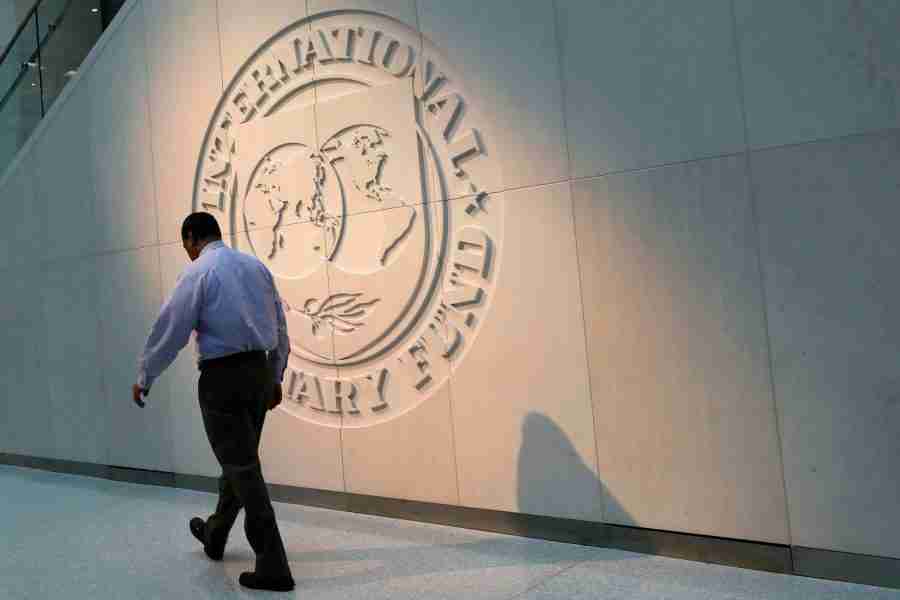
A man walks past the International Monetary Fund (IMF) logo at its headquarters in Washington, U.S., May 10, 2018. REUTERS/Yuri Gripas/File Photo
International news via Reuters:
An International Monetary Fund monitoring mission started a new review of its $15.5 billion program to Ukraine on Tuesday, with discussions expected to focus on the war-torn economy and budget needs, the lender and Ukrainian officials said.
IMF said in a statement that the policy discussions would be part of its eighth review of its four-year Extended Fund Facility program.
“We look forward to constructive and substantive discussions. We are starting from good positions,” said Central Bank Governor Andriy Pyshnyi. “The programme remains a particular factor of resilience for us, especially during this time.”
More than three years of the war against Russia have devastated the Ukrainian economy. Millions of people fled the fighting, cities and infrastructure were bombed, and exports and supply chains were disrupted.
In the first year of the war, Ukraine’s gross domestic product fell by nearly 30%. It is still lower than its pre-war levels, but delivered modest growth in 2023 and 2024.
Pyshnyi said the talks were expected to touch on how to finance Ukraine’s budget needs and ensure debt sustainability, both via attracting financing from partners and mobilising domestic revenues.
Government officials said Ukraine’s budget needs had been secured for 2025 thanks to financial aid from partners but uncertainty is growing over international economic support for the next year.
Ukraine spends the bulk of its domestic revenues to finance its defence efforts and relies on financial support from Western allies to finance humanitarian and social spending. Ukraine’s budget deficit is planned at about $38 billion this year.
Officials would also discuss the financial sector and further reforms needed to strengthen its stability, including state regulations of credit bureaus and developing financial market infrastructure, Pyshnyi said.
Reporting by Olena Harmash; Editing by Saad Sayeed
Bermudian athletes shine on the local and global stages
From high-speed crashes on the water to record-breaking sprints on the track Bermuda Broadcasting brings you the latest on Bermudian athletes making headlines across the globe this weekend.
The 2nd annual Kim Burns Memorial Pickleball Tournament served up top-tier action at the W.E.R. Joell Tennis Stadium over weekend. Details in this report
Boxer Dash Simmons continues to make waves in the professional ranks, extending his unblemished record with a swift and emphatic victory stateside. Fighting as part of the Carolina Fight Night event inside the Concord Event Center in North Carolina, Simmons delivered a performance that left no doubt about his power and potential in the Lightweight division.
Originally slated to face Anthony Williams, Simmons had to adjust his strategy at late notice as Tahlik Taylor stepped in as a replacement opponent. However, the change in adversary did little to disrupt the Bermudian’s focus and determination. From the moment the bell rang, Simmons took control of the centre of the ring, establishing his dominance with a clear display of power and ring generalship.
Simmons showcased his sharp striking from the outset, landing several significant blows that clearly troubled Taylor. His aggressive approach and relentless pressure kept his opponent on the back foot, unable to establish any meaningful offense. The Bermudian fighter’s precision in his attacks was evident, each punch carrying significant intent.
The fight reached its dramatic conclusion in the very first round. Simmons, sensing an opportunity, unleashed a powerful shot that landed cleanly, flooring Tahlik Taylor. The impact of the blow left Taylor unable to recover, and the referee swiftly stepped in to wave off the contest, securing another decisive victory for the undefeated Bermudian.
That was a statement victory from Dash Simmons. To secure a first-round knockout, especially against a late replacement opponent, speaks volumes about his adaptability and his raw power. This impressive win further solidifies his unblemished professional record and will undoubtedly generate even more excitement surrounding his future in the Lightweight division. Simmons continues to demonstrate his development with each fight, and his performance at Carolina Fight Night will have caught the attention of many in the boxing world. He’s certainly a name to watch as he climbs the ranks.
Another Sunday of compelling cricket action has unfolded across Bermuda’s Premier and First Divisions, delivering a familiar blend of tight finishes and dominant performances as the 2025 season continues to provide excitement.
In the Premier Division, St. David’s Cricket Club emerged victorious in a closely fought encounter against Bailey’s Bay at Sea Breeze Oval. Bailey’s Bay posted a respectable 156 for 7, with Coolidge Durham leading their scoring with a solid 73. However, St. David’s managed to edge out the win, reaching 157 for 7 in reply, thanks in large part to an impressive knock of 85 from Tre Manders. The match went down to the wire, with Sharye Tavares picking up two wickets for Bailey’s Bay but ultimately ending on the losing side.
Somerset Cricket Club continued their strong start to the season with a comfortable 7-wicket victory over Cleveland County at the PHC Stadium. Cleveland County struggled with the bat, being dismissed for a mere 73 runs, with Dominic Sabir proving the chief tormentor, taking three wickets for Somerset. The home side then made light work of the chase, reaching the target at 75 for 3, with Jermal Proctor unbeaten on a crucial 38.
The final Premier Division clash saw St. George’s Cricket Club claim a 4-wicket victory over Devonshire Recreation Club in a higher-scoring affair at Wellington Oval. Devonshire posted a competitive 159 for 4, built around an unbeaten 58 from Treadwell Gibbons and a quickfire 50 from Allan Douglas. However, St. George’s responded strongly, reaching 162 for 6, with Zeko Burgess smashing a rapid and unbeaten 64 off just 22 balls, supported by a valuable 45 not out from Jonte Smith.
In the First Division, Willow Cuts secured a hard-fought 15-run victory over Flatt’s Victoria at Sea Breeze Oval. Willow Cuts posted a total of 144 for 4, with Shaquille Bean leading their scoring with 46. Flatt’s Victoria fell just short in their chase, reaching 129 for 8, despite an unbeaten 36 from Kijuan Franks.
Warwick Workmen’s Club claimed a more decisive 41-run victory over Somerset Bridge at Wellington Oval. Malachi Jones led from the front with a well-constructed 65 as Warwick posted 153 for 4. Somerset Bridge were restricted to 112 for 7 in their reply, with Samir Tavares-Place top-scoring with 36.
PHC recorded a comfortable 77-run victory over Western Stars at the PHC Stadium. Charles Trott’s solid 74 powered PHC to 161 for 6, while Western Stars struggled to build an innings and were eventually restricted to just 84 for 9 in response, with Sage Carter leading the PHC bowling attack with three wickets.
To provide the best experiences, we use technologies like cookies to store and/or access device information. Consenting to these technologies will allow us to process data such as browsing behavior or unique IDs on this site. Not consenting or withdrawing consent, may adversely affect certain features and functions.
Functional
Always active
The technical storage or access is strictly necessary for the legitimate purpose of enabling the use of a specific service explicitly requested by the subscriber or user, or for the sole purpose of carrying out the transmission of a communication over an electronic communications network.
Preferences
The technical storage or access is necessary for the legitimate purpose of storing preferences that are not requested by the subscriber or user.
Statistics
The technical storage or access that is used exclusively for statistical purposes.The technical storage or access that is used exclusively for anonymous statistical purposes. Without a subpoena, voluntary compliance on the part of your Internet Service Provider, or additional records from a third party, information stored or retrieved for this purpose alone cannot usually be used to identify you.
Marketing
The technical storage or access is required to create user profiles to send advertising, or to track the user on a website or across several websites for similar marketing purposes.