Thursday, November 5, 2026
Home Blog Page 1031

One Beijing man’s quest to keep cooking – and connecting with Americans – on camera

Yu, 37, has 136,000 followers – including thousands in the United States

Yu Bo, a content creator on Chinese social media platform Xiaohongshu, also known as RedNote, speaks to his camera as he records a cooking session during an interview with Reuters at his apartment in Beijing, China February 26, 2025. REUTERS/Tingshu Wang

International news via Reuters:

From his kitchen in Beijing, Yu Bo is running a campaign to connect China with America – one slapstick cooking video at a time.

At a time when tensions between Washington and Beijing are high, it might seem like the odds are against him.

Yu Bo, a content creator on Chinese social media platform Xiaohongshu, also known as RedNote, cooks as he speaks to his camera while recording a cooking video, during an interview with Reuters at his apartment in Beijing, China February 26, 2025. REUTERS/Tingshu Wang

Yu, 37, is keeping his day job directing commercial videos. But since January he has spun up an alter-ego as an ambassador for speedy Chinese cooking in short English-language videos posted to RedNote, a social media app and go-to search engine.

He now has 136,000 followers, including thousands in the United States, many of whom send him daily messages and questions about Chinese food and life in China that keep him up late at night.

“All kinds of English messages, so every night I’m improving my English just to be able to communicate better with them,” he said.

When more than half a million Americans downloaded RedNote earlier this year, days before a proposed U.S. ban on the popular Chinese social media app TikTok, Yu saw an opportunity to turn his small kitchen into a studio.

Now, with a Saturday deadline set by the Trump administration for TikTok to find a buyer, Yu’s side hustle could be set for more change.

His online persona mixes the dramatic flourishes of Turkish restaurateur Salt Bae with self-deprecating humour, a wide-eyed look into the camera and an evolving series of heavily accented catchphrases. “So easy!” is a favourite. Another, as he fires up his gas cooker: “Open the fire!”

Yu Bo, a content creator on Chinese social media platform Xiaohongshu, also known as RedNote, speaks to his camera as he records a cooking session during an interview with Reuters at his apartment in Beijing, China February 26, 2025. REUTERS/Tingshu Wang

A fan of rapper Eminem, whose off-camera bookshelf includes Ayn Rand and David Foster Wallace, Yu was worried at first about how his limited spoken English would travel.

“I was a little scared because I thought, will everyone think I’m bad? Will everyone treat me like a joker? But later I found they love me.”

When Yu used five eggs in one dish, an American follower asked if he was rich. “How expensive are eggs in America?” When another asked how to grow rice, he advised against trying.

One single mother told him her daughter with ADHD found his videos soothing. He sent her a private message in which he baked a cake for the girl. “I was just so touched,” he said.

RedNote is sometimes described as China’s answer to Instagram. Its Chinese name Xiaohongshu translates to “Little Red Book” in English, a phrase that traditionally refers to a collection of sayings by Mao Zedong.


Privately owned RedNote, valued at $17 billion in its latest funding round, has probably benefited from the surge of attention whatever happens next for TikTok, said Yaling Jiang, founder of consultancy ApertureChina.

“Global investors, global users know them. They know the potential and how it is different from other Chinese apps,” she said.

Washington officials have said TikTok’s ownership by ByteDance makes it beholden to the Chinese government.

For now, Yu continues to cook and post. He started a stir-fry lesson this week by throwing a green pepper at the viewer. Off camera, his sphynx cat and a kitten were watching. The kitten was born when Yu’s channel took off. He named it Xiaohongshu.

Reporting by Kevin Krolicki and Josh Arslan; Editing by Kate Mayberry

Spotify royalty payouts to Nigerian, South African artists boom in 2024

The company paid out some $10 billion in royalties worldwide in 2024

FILE PHOTO: Tyla arrives at the Billboard Women in Music Awards in Los Angeles, California, U.S., March 29, 2025. REUTERS/Daniel Cole/File Photo

International news via Reuters:

Audio streaming giant Spotify’s royalty payments to artists from Nigeria and South Africa – its two biggest African markets – spiked to around $59 million last year as performers rode a wave of growing interest in music from the continent.

The Swedish company paid out some $10 billion in royalties worldwide in 2024.

And while Africa represents only a small part of its offering, interest in African artists has ballooned, buoyed in part by internationally recognised acts like South African singer Tyla and Nigeria’s Burna Boy.

Around 250 million user-created playlists now feature at least one Nigerian artist, and 220 million contain a South African, the company said on Thursday.

“What we’re seeing is an excellent evolution around more and more mid-tier or up-and-coming artists making a living,” said Jocelyne Muhutu-Remy, Spotify’s managing director for Sub-Saharan Africa.

Nigerian artists received over 58 billion Nigerian naira ($38 million) in royalties last year, more than double the 2023 figure.

Royalties for South African performers reached 400 million rand ($21 million), up 54% year-on-year.

Much of that came from outside their home markets.

Nigerian artists have seen a 49% increase in export growth over the past three years, while South Africa saw export growth of 104%.

The number of Nigerian artists earning 10 million Naira, meanwhile, doubled year-on-year and has tripled since 2022.

In South Africa, the number of those earning between 100,000 and 500,000 rand has doubled over the past three years.

($1 = 1,532.3400 naira)

($1 = 19.0170 rand)

Reporting by Siyanda Mthethwa; Editing by Joe Bavier

Delivery boom draws Russians to courier jobs in search of extra cash

Demand for couriers in Russia has surged following the COVID-19 pandemic

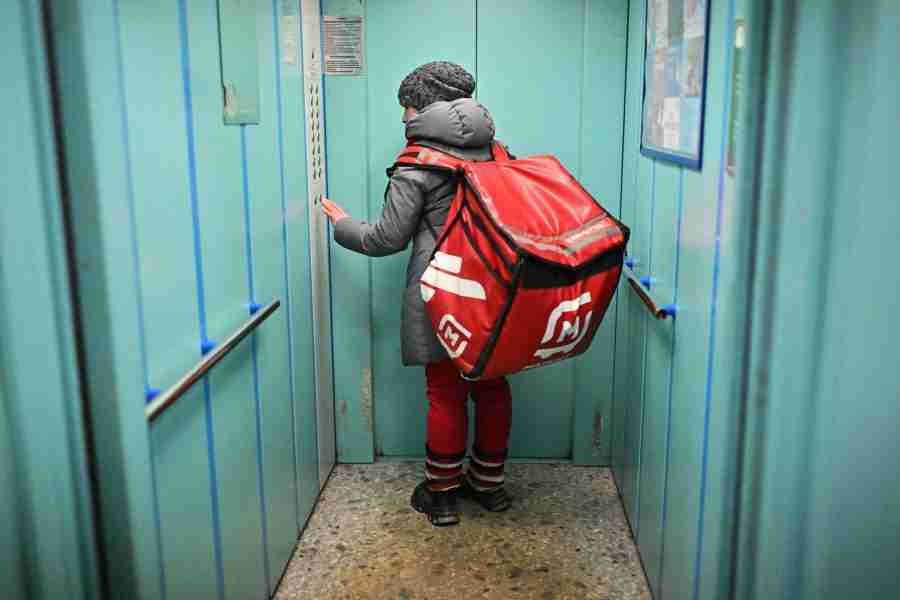
Architecture student Polina Kalinichenko, 22, who works part-time as a courier for the Yandex Food delivery service, delivers an order in Moscow, Russia March 16, 2025. REUTERS/Evgenia Novozhenina

International news via Reuters:

Elena and Viktor’s apartment is packed with large, colourful rucksacks and the two bicycles they call their “iron horses”. They have quit their regular jobs, seeking better pay and more flexible hours to work full time as delivery couriers.

Demand for couriers in Russia has surged in the last few years, fuelled partly by booming e-commerce growth in the wake of the COVID-19 pandemic. The market grew 34% in 2024 to 54.4 billion roubles ($645 million), according to Kommersant calculations from Rosstat data.

Roman Kolesnikov, 38, who runs his own fleet of cars to rent out to couriers, rides with his 3-year-old daughter Kira in a car as he delivers an order to a client, in Moscow, Russia March 21, 2025. REUTERS/Evgenia Novozhenina

Elena Kashayedova and Viktor Drovovoz, who started living together in 2023 soon after they started dating, battle cold, snowy winters in the Siberian city of Omsk and face the daily task of hauling their bikes up and down five flights of stairs in their apartment block.

But for Kashayedova, who quit her previous job as a boiler operator in January, the financial upside of being a courier makes it well worth it.

“They tried to talk me out of it for a long time, but now I understand that I made the right decision, because in addition to freedom, no management, no team, you also get a decent income,” she told Reuters.

“In many regions, wages leave much to be desired and … in courier services you can get three to four times more,” she said. “By the standards of our city, this is very good money.”

Roman Kolesnikov, 38, who runs his own fleet of cars to rent out to couriers, walks with his 3-year-old daughter Kira as he delivers an order to a client, in Moscow, Russia March 21, 2025. REUTERS/Evgenia Novozhenina

Russia’s spending on the conflict in Ukraine has boosted some wages and consumer spending; that has exacerbated already high inflation but led more people to use the relative luxury services offered by delivery companies like Samokat, Sberbank-owned Kuper, and those run by tech giant Yandex and major retailers X5 and Magnit.

Yandex Food, the technology company’s delivery arm, has attracted more couriers as the market has grown, said Sergei Dolgov, head of its operational management service, with people enjoying the flexibility and ease of setting up for deliveries.

“It’s not only, as it used to be, just guys working as couriers, but now there is a large number of girls, and, in fact, people with higher education, of course, also use delivery as an opportunity to quickly join in and have an additional income,” Dolgov said.

Elena Kashayedova, 37, who works full time as a courier, delivers an order in Omsk, Russia February 17, 2025. REUTERS/Alexey Malgavko

SIDE HUSTLES

Architecture student Polina Kalinichenko is one such example, earning around 50,000 roubles ($593) in March alongside her studies.

“Questions arise as to why I am not fully engaged in architecture,” Kalinichenko told Reuters in Moscow. “But in principle, this is my decision, so I don’t see anything wrong with it. This does not prevent me from working as an architect and studying.”

For some, the delivery boom has piqued entrepreneurial curiosity.

Roman Kolesnikov pivoted from developing a business and mobile app to running a fleet of delivery drivers in Moscow, realising that he could buy small, cheap cars manufactured by the likes of Daewoo and Suzuki and rent them out to couriers.

Elena Kashayedova, 37, and her civil partner Viktor Drovovoz, 31, who work full time as delivery couriers, ride their bicycles on a street in Omsk, Russia February 21, 2025. REUTERS/Alexey Malgavko

“It is better to receive 1% of the income of a hundred people than 100% of your own,” Kolesnikov said. “And today I already have about 30 cars in my fleet.”

When not managing the fleet, which can earn him over 300,000 roubles in a good month, Roman sometimes makes deliveries himself, bringing his young daughter along for the ride while his wife is at work.

“We help each other, we share a budget,” he said. “And this activity brings in the majority of the family income.”

($1 = 84.3000 roubles)

Reporting by Evgenia Novozhenina and Anastasia Bakhur; Writing by Alexander Marrow; Editing by Mark Trevelyan

Hungary plans legislation preventing blockade of bridges during protests, Orban says

Argues that the new law will prevent bridge blockades

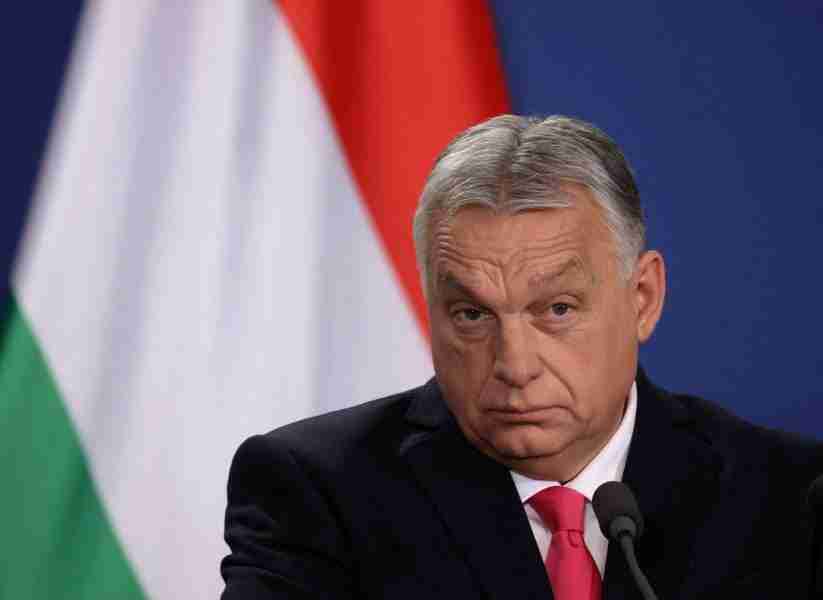
FILE PHOTO: Hungarian Prime Minister Viktor Orban attends a joint news conference with North Macedonian Prime Minister Hristijan Mickoski in Budapest, Hungary, March 4, 2025. REUTERS/Bernadett Szabo/File Photo

International news via Reuters:

 Hungary’s government is planning a law that would prevent protesters blocking bridges in order to defend the rights of those not protesting, Prime Minister Viktor Orban said on Friday.

Bridges, particularly in the capital Budapest, which is divided by the Danube river, have become a focal point of anti-government protests over the past years, as demonstrators seek to press their demands.

On Tuesday, thousands of people demonstrated on Elisabeth Bridge in the city as they again protested against a law that aims to ban the annual Pride march by LGBTQ+ groups, and which is seen by critics as part of a wider crackdown on democratic freedoms ahead of a 2026 parliamentary election.

Orban, who faces a strong challenge from a surging opposition party ahead of the vote, has criticised the LGBTQ+ community and pledged to curb foreign funding of independent media and non-governmental organisations in Hungary.

FILE PHOTO: A person holds a smoke flare as people gather at the Elisabeth Bridge as they take part in a demonstration against the banning of the annual Pride march and curbing the rights of assembly, in Budapest, Hungary, April 1, 2025. REUTERS/Bernadett Szabo/File Photo

“Freedom of assembly is important … but it is not normal that in the meantime thousands or tens of thousands are stuck in a traffic jam,” Orban said in an interview on state radio.

Orban, in power since 2010, said the new law was needed to prevent bridge blockades as currently a court decision allowed them to take place.

“Judges apply the law passed by the government … We can do one thing, we can change the law in order to prevent the blockage of several bridges based on court decisions,” said Orban, who promotes a Christian-conservative agenda.

Parliament, dominated by Orban’s Fidesz party, passed a law last month to ban the Pride march on the grounds that it could be harmful to children. Festival organisers say it poses no threat to children and plan to hold the event despite the ban.

FILE PHOTO: People gather at the Elisabeth Bridge as they take part in a demonstration against the banning of the annual Pride march and curbing the rights of assembly, in Budapest, Hungary, April 1, 2025. REUTERS/Bernadett Szabo/File Photo

Previously Orban has said the fact that rallies such as the one on Tuesday can take place means there is no threat to democracy in the country, calling opposition protests against the Pride ban a “provocation”.

Reporting by Anita Komuves and Gergely Szakacs; Editing by Alison Williams

Six new apprentices embark on career opportunity

Will pursue certification as carpenters, electricians, plumbing and HVAC technicians

Government update via press release:

The Public Service is committed to investing in new talent to develop a first-class workforce. 

As part of this ongoing recruitment initiative, the Ministry of Public Works and Environment has welcomed six new apprentices into its Skilled Trades Apprenticeship Programme, an initiative designed to train Bermudians for technical and hard-to-fill roles within the Public Service.

The new recruits will pursue National Center for Construction Education and Research (NCCER) Certificates as carpenters, electricians, plumbing and HVAC technicians.

This certification necessitates two years of theory and hands-on training accompanied by on-the-job experience, followed by a third and fourth year of independent supervised work. 

Today, the Head of the Public Service, Cherie Whitter said, “Owing to our aging workforce, the use of the apprenticeship programme supports succession planning initiatives and encourages goal-oriented jobseekers to consider careers in the public service.

“By fostering a culture of continuous learning and development, the public service aims to provide opportunities for both personal and professional growth.”

Sheridan Ming, Principal Facilities Manager in the Department of Public Lands and Buildings, has played a leading role in the initiative.

He is responsible for coaching and developing the apprentices throughout the programme, reinforcing the Ministry’s commitment to workforce development and local talent.

The six apprentices were selected through a competitive application process held in the fall of 2024.

Mr. Ming said, “The Skilled Trades Apprenticeship Programme is designed to prepare young Bermudians for entry-level positions in trades required by the Service, thereby ensuring a skilled workforce to maintain community infrastructure. The recruitment of the six new apprentices underscores our commitment to nurturing new talent through practical experience and comprehensive training.”

Ms. Whitter added, “The Public Service understands the importance of investing in the future of our community by fostering skilled craftsmanship. A steady flow of skilled tradesmen ensures the Service’s resilience, reduces dependence on external labour, and helps reposition the Public Service as an employer of choice.

“We remain dedicated to supporting the growth and development of apprentices and creating opportunities that empower them to succeed.

Our commitment to enhancing talent is steadfast, and we look forward to witnessing the continued excellence of our tradespeople.”

Police update: marine incident in Devonshire

Man pulled from ocean near Sandy’s Dock

BPS update via press release:

Around 4:25 P.M. on Thursday April 3, 2025, police and other first responders attended a reported marine incident near Sandy’s Dock, Devonshire.

Upon arrival officers observed a person floating in the water. Officers called out to the individual, but received no response.

Coast Guard personnel were contacted. They arrived shortly after and pulled the individual, a male, from the water onto their boat.

He was taken to the nearby Devonshire Dock where he was attended to by EMTs and conveyed via ambulance to King Edward VII Memorial Hospital for further treatment.

At last check, he was alert and talking.

‘Not good for business’ – Gosling’s on Trump tariffs

Rum exporter says US tariffs are a concern, but sees opportunity in Canadian market

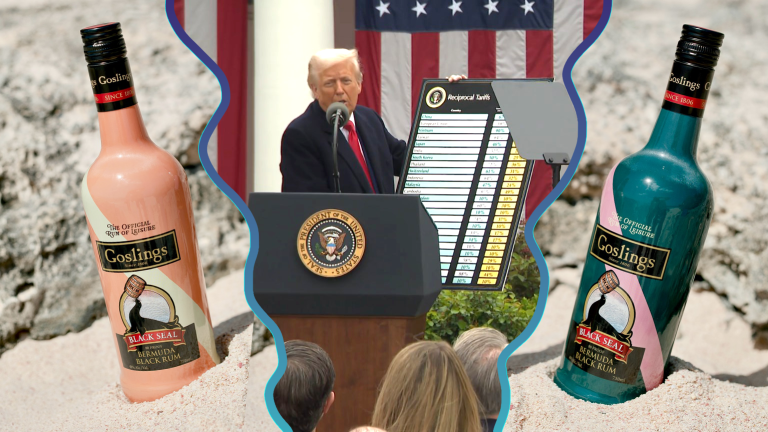
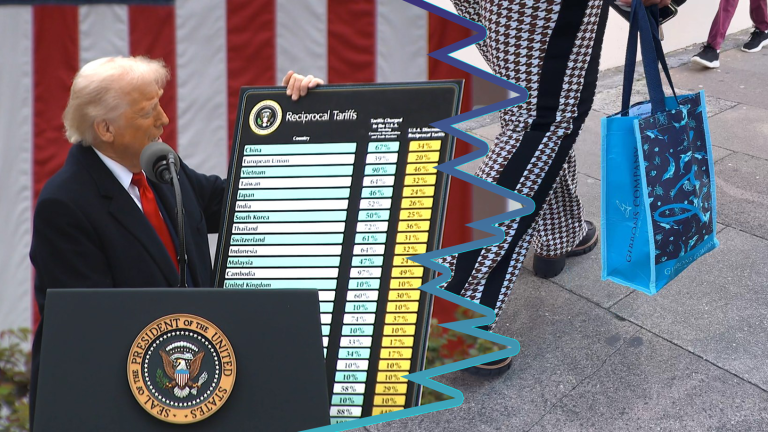
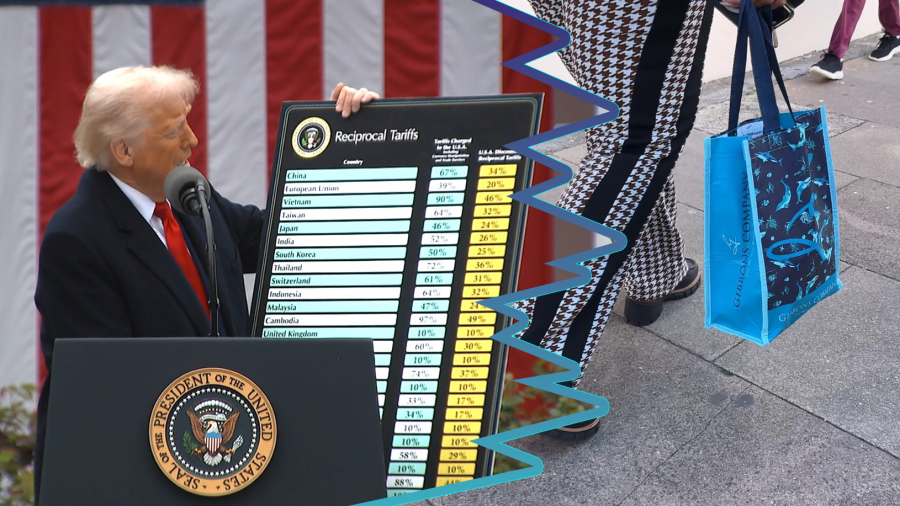
Image: US President Donald Trump’s new tariffs on imports are a concern, says Ambrose Gosling (CBS & Gosling’s photos)

Exporters of Bermuda’s world-famous Black Seal Rum are adjusting to the sobering reality of Donald’s Trump’s new tariffs.

While we’re not in line for some of the heavier charges other countries face, goods exported from Bermuda to the US could be in line for a 10% tariff.

Bermuda does not ship many local goods overseas, but Gosling’s Black Seal Rum is one of our most famous exports.

Ambrose Gosling, Managing Director (Export) at Gosling’s, responded to US President Trump’s announcement candidly.

“Tariffs aren’t good for business”, he said.

“We’re still trying to quantify exactly what the impact will be, and how the tariff will interact with the duty and Federal Excise Tax we are already paying, but the US is our largest market, so of course it is a concern.”

“Most rum is distilled outside of the US, so this will have an impact on the entire category and at the end of the day rum will simply be more expensive for the US consumer.”

However, the trade and tariff moves by the US against other countries may open the door to grow the Bermuda company’s market, Mr Gosling suggests…

“A potential silver lining is that with Canada boycotting and pulling US products off the shelves, there may be opportunity as a Bermuda product to grow our presence there.”

Perfumer Isabelle Ramsey-Brackstone says the new tariffs will affect Lili Bermuda negatively.

“It will add to our cost of doing business in Bermuda”, she said, “which is already quite incredible compared to other perfume houses around the world.”

“…hopefully our US clients will remain faithful to our beautiful products.”

Another famous Bermuda brand is Barritt’s Ginger Beer – but it’s not produced on-island, so any potential impact will be indirect.

Bruce Barritt, General Manager at John Barritt & Son, said “our Barritt’s Ginger Beer is produced in the USA from concentrate and essences that are made in the UK.”

Their American distributor, he says, buys the concentrate from the UK, and he will have to pay the relevant tariff on those ingredients when they land in the USA.

“As this is an added cost he may well pass it along, and add extra cost to the case price of Barritt’s Ginger Beer in that country.”

Mr Barritt continued, “because we buy cases of cans and glass bottles from the USA, there may be an increase in price to us on these packages at some point in the future.”

Barritt’s does order ingredients from the UK to supply facilities in the US, which then produce bottles of Barritt’s Ginger Beer for import into Bermuda. Mr Barritt said they will have to see what the tariff situation is when they order a new batch.

Bermudians could feel impact of Trump tariffs

Impacts may not be direct, but Gov’t says global supply chain could cause prices to rise for consumers

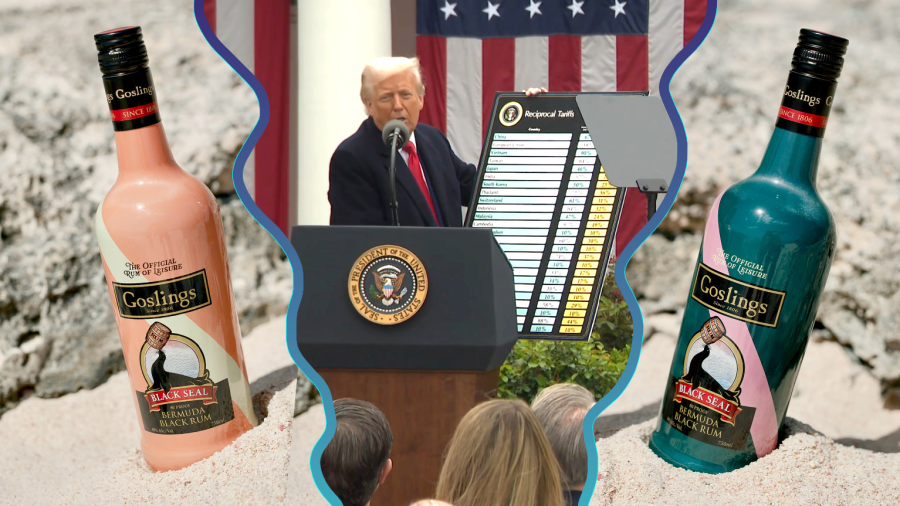
Image: US President Donald Trump announces ‘reciprocal tariffs’ on goods imported into the USA (CBS News) / Shoppers in Hamilton, Bermuda (File photo)

Government Press Release:

The Government of Bermuda is aware of the recent announcement by the United States that it will impose a global minimum 10% import tariff on items imported into the United States.

The public is advised that the tariff listed for Bermuda, which is the minimum 10%, is not expected to have any significant direct impact on Bermuda, as the island exports very few goods to the United States in a manner that would be affected by tariffs.

Premier David Burt said, “Bermuda and the United States remain strong partners, which was reaffirmed during my recent visit to Washington, D.C. Following my return to Bermuda, I also met with the new US Consul General Antoinette Hurtado.

“While the United States’ new tariff regime may not have a significant direct impact, its impact on other jurisdictions and global supply chains will likely increase global prices and the costs of goods that we import.

“The government will continue to engage directly with the United States on this and other critical issues, such as shipping. We will also continue to monitor the economic impact of the US’s new tariff regime as to how it may affect local prices.

The Government has acted in the past to protect Bermudians from 40-year high global inflation, and we will do whatever we can to minimise the impact of this change in US trade policy.”

Bermuda’s new Deputy Governor named

Dave Morgan is currently Deputy Governor of the Falkland Islands

Dave Morgan: “An absolute honour to have been appointed…”  Photo supplied

Press release:
His Excellency the Governor, Andrew Murdoch, today announced the appointment of the next Deputy Governor of Bermuda, Mr Dave Morgan. Dave will take over from the current Deputy Governor, Tom Oppenheim MBE, and is expected to be sworn in at the start of May.
Dave is currently the Deputy Governor of the Falkland Islands and has held this role since April 2021. He has worked for the UK Government for 25 years, across different departments, and has held roles in a number of disciplines including policy development and delivery; international trade; and project management.
Prior to his arrival Dave said “It is an absolute honour to have been appointed Deputy Governor. I am very excited to be taking up my post and delivering for the people of Bermuda on your beautiful islands. We are very much looking forward to immersing ourselves in Bermudian life.”
He will be accompanied on this posting by his wife, Shirley. 

Rubio: US is committed to NATO, but Europe must spend more on defence

Trump has said the military alliance should spend 5% of gross domestic product on defence

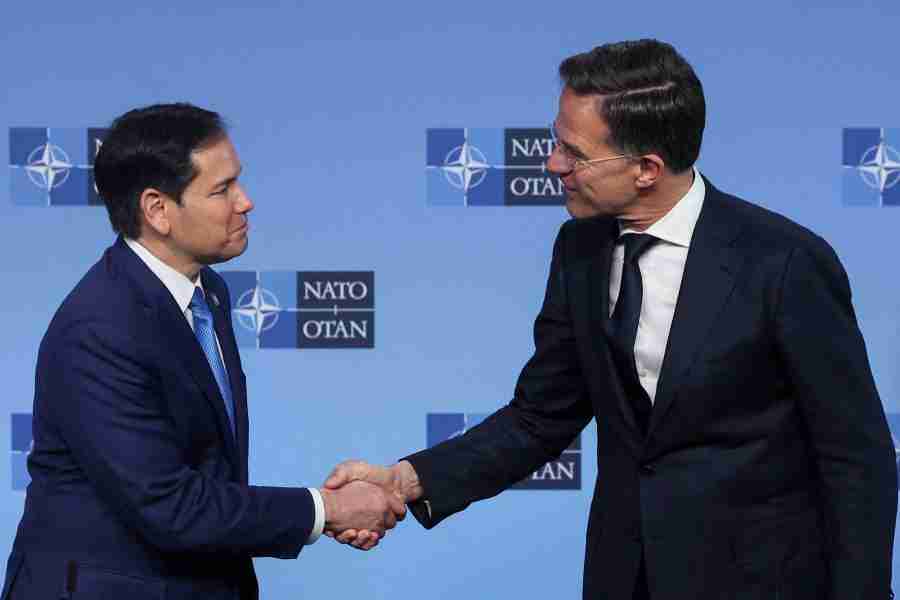
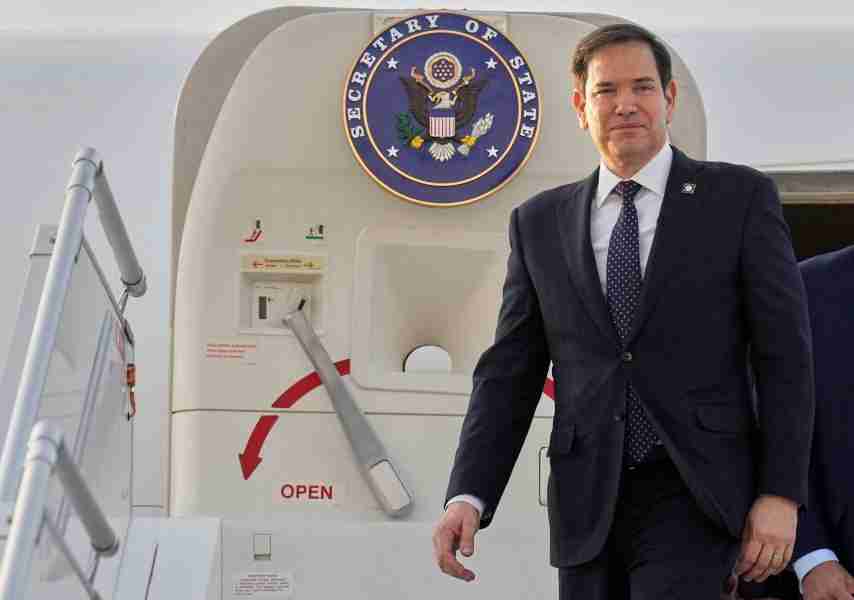
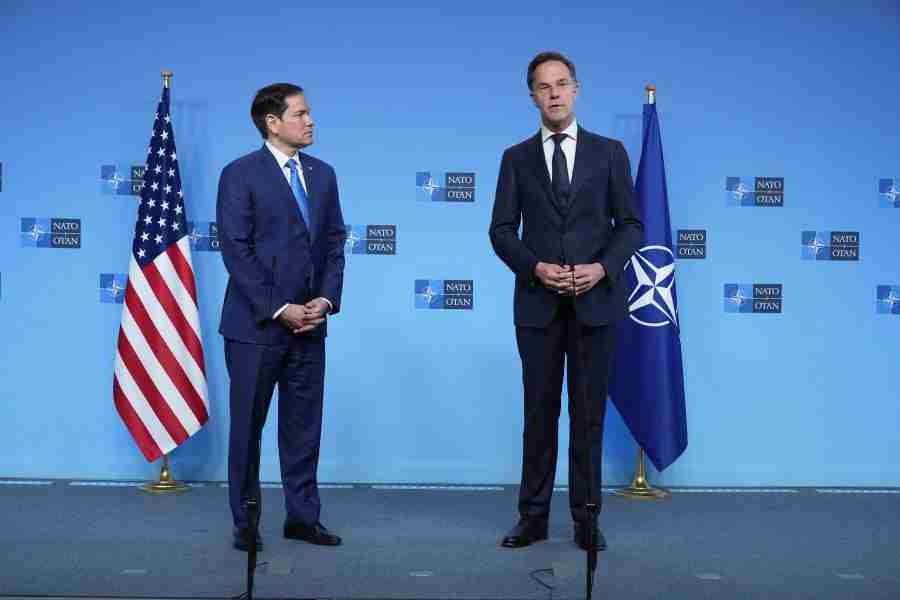
NATO Secretary General Mark Rutte and U.S. Secretary of State Marco Rubio shake hands on the day of a NATO foreign ministers’ meeting at the alliance’s headquarters in Brussels, Belgium April 3, 2025. REUTERS/Yves Herman

International news via Reuters:

-The United States is as committed to NATO as ever but demands that European allies spend substantially more on defence, U.S. Secretary of State Marco Rubio said on Thursday, while adding that the U.S. would give allies some time to do that.

Rubio spoke as he met fellow NATO foreign ministers gathered in Brussels, with Europeans hoping he would dispel doubts about the U.S. stance even with tensions rising over President Donald Trump’s steep new trade tariffs.

The Trump administration’s words and actions have raised questions about the future of NATO, the transatlantic alliance that has been the bedrock of European security for the past 75 years.

“The United States is in NATO…The United States is as active in NATO as it has ever been,” Rubio told reporters, dismissing doubts about that commitment as “hysteria”.

Rubio added that Trump was “not against NATO. He is against a NATO that does not have the capabilities that it needs to fulfil the obligations that the treaty imposes upon each and every member state.”

Trump has said the military alliance should spend 5% of gross domestic product on defence – a huge increase from the current 2% goal and a level that no NATO country, including the United States, currently reaches.

Washington has also bluntly told European countries that it can no longer be primarily focused on the continent’s security.

European allies have been anxiously seeking details on the timeframe and extent to which the U.S. aims to reduce its engagement in NATO for weeks, in order to coordinate the process of a European defence ramp-up to avoid security gaps in Europe.

SPEND MORE

In Brussels, Rubio brought some element of response on that.

“We do want to leave here with an understanding that we are on a pathway, a realistic pathway, to every single one of the members committing and fulfilling a promise to reach up to 5% of spending,” he said, adding that this included the United States.

“No one expects that you’re going to be able to do this in one year or two. But the pathway has to be real.”

European ministers are expected to use the meeting to showcase their plans to boost defence spending.

According to NATO estimates, 23 of the alliance’s 32 members met or exceeded the 2% target last year. Some of the continent’s big economies, such as Italy and Spain, were among those below the target, at around 1.5% and 1.3% respectively.

European ministers are also likely to use the meeting to try to influence the talks Trump has initiated with Russia over the war in Ukraine, which was triggered by Moscow’s 2022 invasion.

European belief in the U.S. as the continent’s ultimate protector against any attack from Russia has been severely shaken by Trump’s attempted rapprochement with Moscow and heavy pressure on Kyiv as he seeks to end the war.

Reporting by Sabine Siebold, Andrew Gray, Lili Bayer, Bart Meijer, Daphne Psadelakis, Ingrid Melander, Benoit Van Overstraeten and Alexander Ratz; writing by Ingrid Melander and Andrew Gray; editing by Mark Heinrich and Alex Richardson

China urges US to immediately lift tariffs, vows retaliation

Chinese exporters will face a 10% baseline tariff

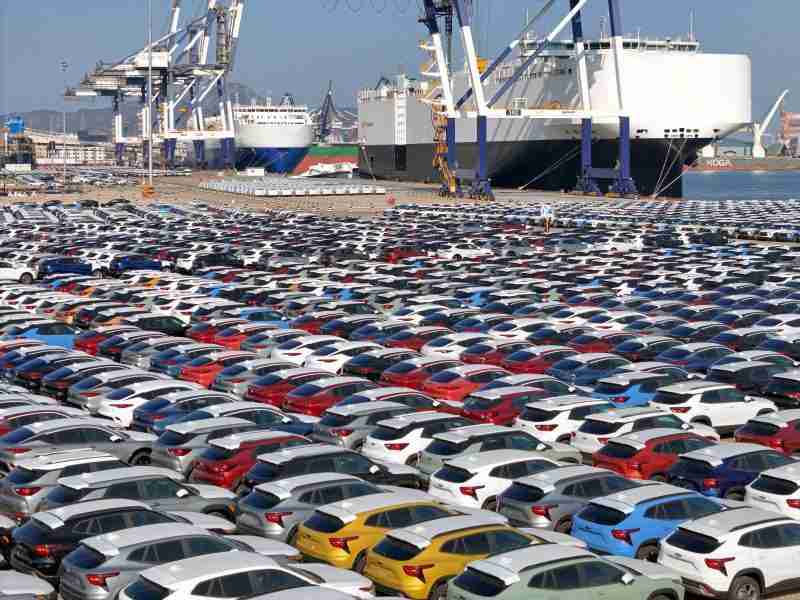
FILE PHOTO: Cars to be exported sit at a terminal in the port of Yantai, Shandong province, China January 10, 2024. China Daily via REUTERS/File Photo

International news via Reuters:

China on Thursday urged the United States to immediately cancel its latest tariffs and vowed countermeasures to safeguard its own interests, after President Donald Trump declared sweeping levies on U.S. trading partners around the world.

The U.S. move disregards the balance of interests reached in multilateral trade negotiations over the years and the fact that it has long benefited greatly from international trade, China’s Commerce Ministry said in a statement.

“China firmly opposes this and will take countermeasures to safeguard its own rights and interests,” the ministry said, as the world’s largest economies look set to spiral deeper into a trade war that stands to upend global supply chains.

Trump on Wednesday announced China would be hit with a 34% tariff, on top of the 20% he previously imposed earlier this year, bringing the total new levies to 54% and close to the 60% figure he had threatened while on the campaign trail.

Chinese exporters, like those from other economies around the world, will face a 10% baseline tariff, as part of the new 34% levy, on almost all goods shipped to the world’s largest consumer economy from Saturday before the remaining, higher “reciprocal tariffs” take effect from April 9.

The average U.S. tariff on Chinese goods will be 76%, according to Chad Brown, senior fellow at the Peterson Institute for International Economics and chief economist at the State Department for the last year of the Biden administration.

Trump also signed an executive order closing a trade loophole known as “de minimis” that has allowed low-value packages from China and Hong Kong to enter the U.S. duty free.

Trump had ordered the U.S. Trade Representative to determine whether China was living up to its commitments under the 2020 “Phase 1” U.S.-China trade agreement by April 1.

The deal required China to increase purchases of U.S. exports by $200 billion over a two-year period, but Beijing failed to meet its targets when the COVID-19 pandemic struck.

China bought $154 billion in U.S. goods in 2017, before the trade war began, Chinese customs data shows, and that figure rose to $164 billion last year.

WORLDWIDE TARIFFS

“Arguably, President Trump’s tariffs elsewhere will cause the most headaches,” said Ruby Osman, a China expert at the Tony Blair Institute for Global Change.

“Chinese firms have been rerouting trade through places like Vietnam and Mexico to avoid U.S. sanctions, but these markets are now being hit with significant tariffs of their own.”

“China+1” strategies caught on among Chinese exporters and multinational companies that had made the production powerhouse central to their supply chains during Trump’s first term.

But with India, Mexico, Vietnam and Malaysia – the countries that benefited most from this shift – facing tariffs of between 24% and 46%, the cost advantage of relocating manufacturing out of China is significantly diminished.

European Union Chamber of Commerce in China president Jens Eskelund said many companies had adjusted their supply chains specifically to limit their exposure to U.S.-China trade tensions and that “any subsequent restructuring of supply chains will not be possible overnight.”

The extra levies could encourage China to step up its trade with alternative markets, but no other country comes even close to U.S. consumption power, where Chinese producers sell more than $400 billion worth of goods annually.

“Trump’s tariffs certainly won’t help Chinese firms and will cause some real pain in some sectors, but they don’t make any definitive mark on the Chinese economy,” said William Hurst, Chong Hua Professor of Chinese Development at the University of Cambridge.

“U.S. exports are of declining importance to China. The American tariffs will spur more Chinese trade with other places, from Europe to Southeast Asia and Africa,” he added.

But Chinese producers have described shifting to alternative markets as a “rat race”, resulting in price wars among exporters that risk fanning deflationary forces in the world’s second-largest economy as firms continue to squeeze shrinking margins.

China has kept its economic target for this year unchanged at “around 5%” despite Trump’s tariff salvos which could halt a largely export-led recovery underway since the end of the COVID-19 pandemic.

The government has pledged more fiscal stimulus, increased debt issuance, further monetary easing and put an even greater emphasis on boosting domestic demand to cushion the impact of the trade war.

“China knew this day was coming well in advance, the relatively restrained stimulus announcements at March’s Two Sessions were a calculation, not an oversight,” Osman said, referring to China’s annual parliamentary meetings.

“Beijing has purposefully kept more in reserve, both in terms of domestic stimulus and retaliatory measures, in case it needs to respond more forcefully,” she added.

China’s President Xi Jinping might also enter the fray, following reports the two leaders could meet in June in the United States.

“Trump and Xi are locked in a paradox of pressure and pride,” said Craig Singleton, senior fellow at Washington-based research institute Foundation for Defense of Democracies.

“Trump’s strategy mixes maximum pressure with sudden diplomatic overtures — he sees leverage and engagement as complementary. Xi, by contrast, is methodical and risk-averse, relying on delay and discipline. But here’s the dilemma: if he refuses to engage, the pressure escalates; if he engages too soon, he risks looking weak,” he added.

“Neither wants to be seen as folding first, but delay could deepen the standoff.”

Reporting by Liz Lee, Ella Cao, Jing Wang, Joe Cash, Shi Bu, Yukun Zhang, Qiaoyi Li, Ethan Wang and Xiuhao Chen; Writing by Joe Cash; Editing by Kim Coghill, Michael Perry, Lincoln Feast, Philippa Fletcher