

Trump says US will win Iran war ‘very soon’

Trump also said that gas prices will come tumbling down after the US wins the war

International News via Reuters:
US President Donald Trump told reporters that United States officials talked with mediators trying to end Washington’s war with Iran on Monday, adding the US will win the Iran war “very soon.”
“We’re going to win, as far as I’m concerned, it’s going to be one way or the other,” Trump said in the Oval Office. “It’s going to go pretty quickly.”
Trump also said that gas prices will come tumbling down after the US wins the war.
Reporting by Bo Erickson and Trevor Hunnicutt in Washington; editing by Michelle Nichols
Oil prices up, but off highs as Qatari mediators plan US-Iran talks

In earlier trading, prices surged more than $4 a barrel after US President Donald Trump rejected a proposal from Iran that would reopen the Strait of Hormuz

International News via Reuters:
Oil prices rose on Monday, but eased off session highs on expectations that Qatari mediators would hold talks with the US and Iran to try to find a possible peace deal.
In earlier trading, prices surged more than $4 a barrel after US President Donald Trump rejected a proposal from Iran that would reopen the Strait of Hormuz.
Brent futures were up 91 cents, or 0.9%, to $105.23 a barrel at 1:33 p.m. EDT (1733 GMT). US West Texas Intermediate (WTI) crude was up 20 cents, or 0.2%, to $92.61.
Qatari mediators are expected to hold separate talks with Iranian Foreign Minister Abbas Araqchi in New York and with the US side on Monday or Tuesday, an official briefed on the negotiations told Reuters.
The talks are expected to focus on an amended version of a seven-day proposal that Iran presented last week on the sidelines of the United Nations General Assembly, said the official, who spoke on condition of anonymity.
Over the weekend, Iran insisted that only diplomacy can solve its conflict with the US and Israel, after Trump rejected the Iranian proposal to reopen the Strait of Hormuz and end hostilities.
Keeping the door to diplomacy open, however, Trump told Axios in a phone interview on Sunday that he expected US negotiators to engage in more talks this week.
Saudi Foreign Minister Prince Faisal bin Farhan, meanwhile, arrived in Washington on Monday for talks with US Secretary of State Marco Rubio, the Saudi state news agency said, amid escalating hostilities between Riyadh and Yemen’s Iran-backed Houthis.
MORE MIDDLE EAST CRUDE FLOWING
Crude oil exports from key Middle East producers rebounded in September to 12.8 million barrels per day, the highest since the war started in February, preliminary data from Kpler showed on Monday, as Saudi Arabia and the United Arab Emirates boosted exports.
The rebound came after a recovery in shipments via the Strait of Hormuz, which were set to hit about 7.4 million bpd this month, the data showed. Saudi Arabia diverted exports from the Red Sea port of Yanbu to its eastern Ras Tanura port following attacks that damaged its East-West pipeline.
“Despite more vessel traffic through the Strait of Hormuz, flows remain below pre-conflict levels, keeping the market undersupplied,” UBS analyst Giovanni Staunovo said.
About a fifth of the world’s oil supply — roughly 20 million bpd — passed through the Strait of Hormuz before the US and Israel attacked Iran in February.
Saudi Aramco is considering offering discounts on its official selling prices for oil loaded off Oman to compensate buyers for record freight rates, five people familiar with the matter said.
DIESEL PRICES SOARING
In an effort to bring down soaring gasoline and diesel prices, the White House is considering regulatory relief that would allow broader sales of red-dyed diesel, according to two people familiar with the discussions.
In addition, the US Transportation Department on Monday finalized sharply lower vehicle fuel economy standards.
Washington’s recent talk of a possible ban on diesel exports after prices of the fuel hit record highs in recent weeks is widening the gap between US crude oil futures and the global Brent benchmark, a signal that markets expect US refiners to process less crude oil if their diesel output gets stuck at home.
The premium of futures for Brent over WTI was on track to close on Monday at its highest since May for the third time in four trading sessions. That could prompt energy firms to send tankers to the US to pick up more US crude for export to other countries.
Diesel prices have soared due to supply disruptions related to the wars in the Middle East and Ukraine and export bans in Russia and China.
Goldman Sachs said that while Europe and especially Latin America are the key destinations for US diesel exports, a diesel tightening shock would likely quickly spread to the rest of the world.
Moscow imposed a ban on diesel exports to preserve domestic supplies due to refinery disruptions caused by Ukrainian attacks on Russia’s energy infrastructure.
On Monday, Ukrainian President Volodymyr Zelenskiy said Ukraine’s military had struck Russian oil facilities in the Krasnodar region.
Reporting by Scott DiSavino in New York, Anushree Mukherjee in London, Mohi Narayan in New Delhi and Florence Tan in Singapore; Additional reporitng by Ahmad Ghaddar in London; Editing by Jan Harvey, David Gregorio and Mark Potter
ECB eyes new currency safety nets to boost euro’s global role

The push comes amid concerns over financial fragmentation and growing uncertainty around the future of the US dollar under President Donald Trump

International News via Reuters:
The European Central Bank plans to expand currency safety nets to make it easier for foreign central banks to borrow euros, ECB President Christine Lagarde said on Monday, in a bid to strengthen the single currency’s global standing.
The push comes amid concerns over financial fragmentation and growing uncertainty around the future of the US dollar under President Donald Trump.
Lagarde said the ECB would work on swap lines, which act as a source of emergency liquidity at times of crisis by allowing foreign central banks to borrow euros in exchange for their own currency.
“We will be working on swap lines that will be more responsive to the imperative of having a sovereign euro area and a strong euro,” Lagarde told European lawmakers.
Swap lines relieve pressure on foreign borrowers but also prevent stress abroad from spilling over into the euro area. The ECB has such arrangements with the US Federal Reserve and the central banks of Japan, Britain, Canada and Switzerland.
The move is part of an ongoing ECB effort to expand the euro’s international footprint.
The ECB has received nearly 30 applications for a separate lending facility – known as repurchase agreements or repo – that allows foreign banks to borrow against euro collateral.
Central bank officials and investors worry that the US Federal Reserve might eventually cut its own swap lines, which currently serve as the main global lifeline for trillions of dollars in foreign loans.
Reporting by Francesco Canepa; Editing by Alexandra Hudson
UK first-time buyer scheme lifts housebuilders, but success hinges on design

Buyers will need deposits of just 2.5%, while the government will provide loans of up to 20% of a property’s value, allowing them to qualify for mortgages that would otherwise require larger deposits

International News via Reuters:
Britain’s new first-time buyer support scheme could provide the biggest boost to housebuilders in years, helping revive sales that have languished since the previous “Help to Buy” programme ended in 2023.
But investors and analysts say much will depend on next month’s budget, which will set out who qualifies for support and where it can be used.
The “Your First Home” programme is designed for first-time buyers who can afford mortgage payments but have struggled to save deposits amid high rents and broader cost-of-living pressures.
Buyers will need deposits of just 2.5%, while the government will provide loans of up to 20% of a property’s value, allowing them to qualify for mortgages that would otherwise require larger deposits. The loans will have an initial interest-free period.
Details including income thresholds and regional price caps are due when new finance minister John Healey delivers his first budget on October 28.
Housebuilder shares rallied on Monday as investors bet the scheme could unlock pent-up demand and support new-home sales.
Britain has been without a government-backed buyer support scheme since “Help to Buy” ended in March 2023, the longest gap in such support for decades. Developers have lobbied hard for its return as high borrowing costs and affordability pressures weighed on demand.
“Overall, I think this could help stimulate volumes in the housebuilding market,” said James Thorne, fund manager at Columbia Threadneedle, a shareholder in homebuilder Crest Nicholson and some building materials suppliers.
DEVIL IN THE DETAILS
The biggest question is whether the scheme is broad enough to stimulate demand while remaining targeted at lower-income buyers.
Unlike “Help to Buy”, the new programme will include income caps and tighter price restrictions aimed at concentrating support on those deemed most in need.
Analysts said the design of the caps would determine how much demand the scheme generates, particularly in higher-priced parts of southern England.
Peel Hunt analyst Sam Cullen said the two biggest unknowns were the level of regional price caps and how regions would be defined.
The previous scheme used England’s nine standard regions, but Cullen said builders sometimes struggled where affluent areas fell within lower-cap regions or straddled regional boundaries.
The new programme will also require developers to contribute financially, raising concerns that smaller builders could struggle to participate.
“Its success will largely be dependent upon the parameters set in terms of household income, house price and developer contribution limits,” said Steve Turner, executive director of the Home Builders Federation.
“Help to Buy” drew support from builders because it was accessible to a broad range of buyers and developers, Turner added.
Richard Donnell, executive director at property website Zoopla, said boosting first-time buyer purchasing power would help, but increasing housing supply remained equally important.
“The greatest impact on housing delivery will come if it is accompanied by more homes being built at the price points and in the sizes first-time buyers are looking for,” he said.
Analysts identified Persimmon and MJ Gleeson, both heavily exposed to first-time buyers, among the likely winners.
Building materials companies such as bricks supplier Ibstock could benefit even sooner, as construction activity typically rises before homes are sold.
“The parts of the market likely to see the greatest benefit are brick suppliers and other areas of the supply chain, which should benefit from that volume growth,” Thorne said.
Reporting by Raechel Thankam Job, Simone Lobo and Yadarisa Shabong in Bengaluru. Editing by Mark Potter
Lumina wraps up its second annual festival

The Lumina Festival wrapped up last night, following two days focused on financial empowerment, entrepreneurship, music and the arts.
Kendal Trott was on hand for the festival’s final night, capturing the atmosphere and speaking with founder Zach Wilson as he reflected on this year’s event.
Local artist Quinn also shared her experience performing and being part of the festival.
Curtis Dickinson campaign: ‘Issues yet to be resolved in court’


The Curtis L. Dickinson Campaign responds to the latest development from the Progressive Labour Party regarding the ongoing court proceedings.
“We welcome this new development from the Party which follows the communication we shared with PLP Parliamentary colleagues late yesterday. We are grateful that the Party consents to the relief we seek and we look forward to attending before the Court to formalize the now uncontested orders that we seek.
While this is a positive development, important legal and procedural matters remain before the Court and must be properly resolved before these proceedings can come to an end.
Given that these issues remain, we do not believe it would be appropriate to set them out or argue them through the media. They should be addressed through the proper legal process and with the benefit of the Court’s consideration.
From the outset, our objective has been to achieve clarity, fairness and respect for the Party’s Constitution and the rights of its members. We continue to be committed to moving forward together as a one Party.”
PLP says ‘case is closed’ on legal fight over membership rules
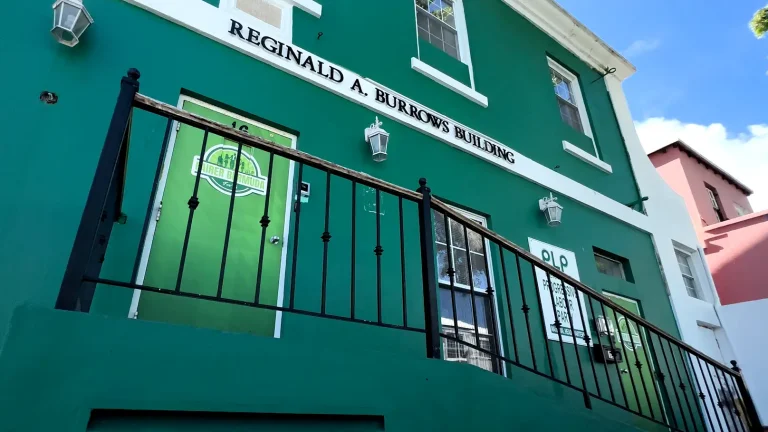
Two controversial motions have been dropped by the party, which now awaits final order from the Supreme Court to bring proceedings to a close
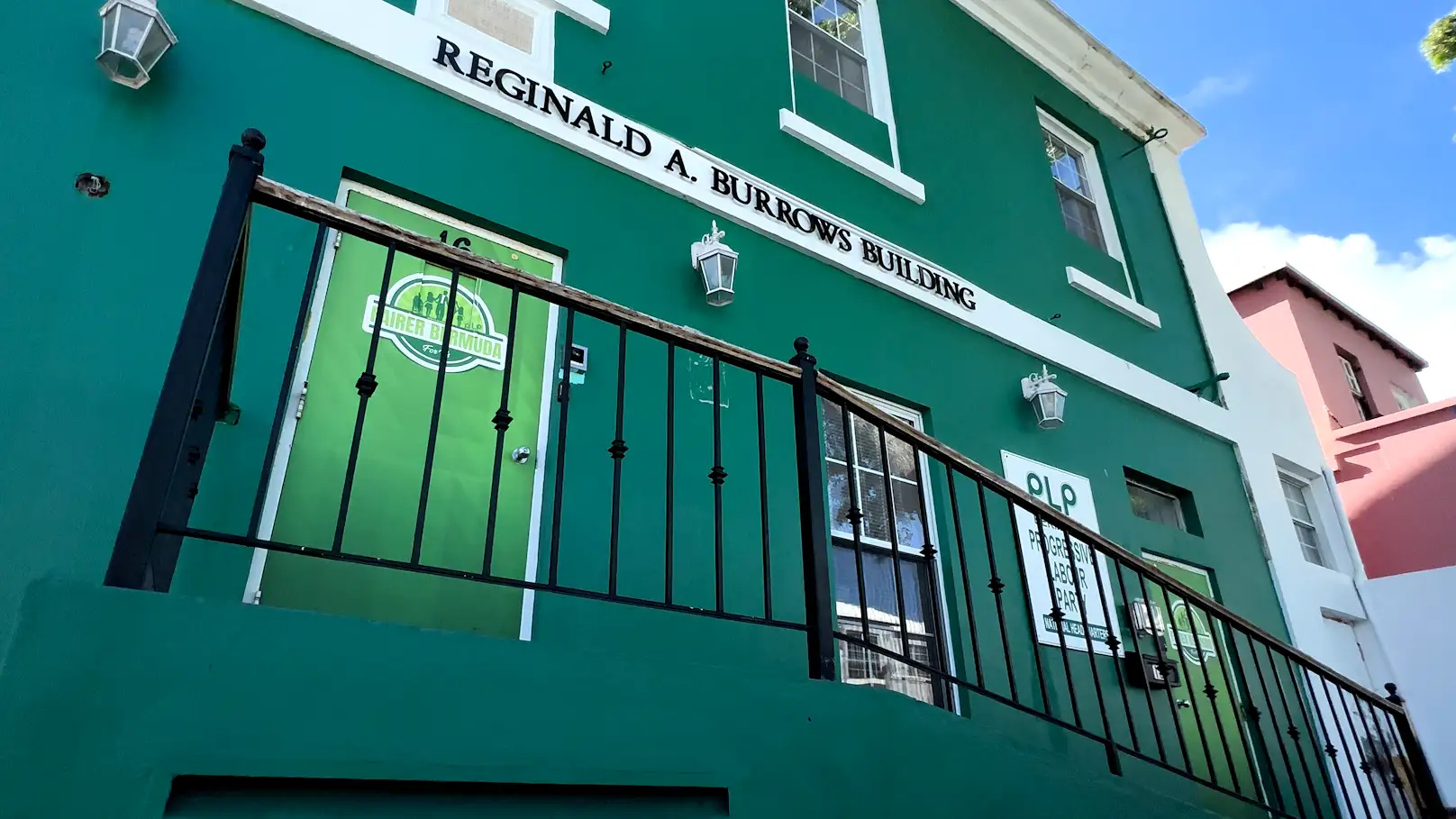
This afternoon, the Progressive Labour Party filed a notice with the Supreme Court that brings to a resolution the case brought by five of its members over two motions passed by the Central Committee on 24 August 2026. In that notice, the Party has consented to every order the plaintiffs asked the Court to make, in the terms they themselves drafted. All that remains is for the Court to make the final order to bring the proceedings to a close, and we have asked for that to happen as soon as possible.
What the case was about
The case asked one question: whether the Central Committee had the authority, under the Constitution as it is currently written, to pass the two motions it passed on 24 August.
The first motion dealt with new membership applications. It gave the Branch Chair, Secretary or MP of the relevant Branch the right to raise an objection, with evidence, where an applicant within their Branch had stood as a candidate against the PLP, or campaigned against the PLP, in a recent general election. The Central Committee would then consider each case individually. The second motion dealt with delegates, the members who represent their branch at conference. It required a member to have belonged to the Party for one year before being eligible to serve as a delegate. New members could still join, attend branch meetings, vote to choose their delegates and take part fully in the life of the Party.
The Central Committee acted in good faith, in what it believed was its duty under the Constitution to protect the Party and take the action it considered necessary, out of genuine concern for the integrity of our membership process.
The plaintiffs argued that changes of this kind are, in substance, changes to the Constitution, and that only the delegates can make them. For the purposes of these proceedings, and on the documents before the Court, the Party has chosen not to contest that argument.
Who the Central Committee is
Much of the public commentary has suggested that these motions were the act of the Party Leader, or of a handful of Party officers. That is not how the PLP works. Between conferences, the Party is governed by its Central Committee, which is made up of:
a representative from every PLP branch across the island, chosen by that branch;
six members elected directly by the delegates at conference;
the Party’s officers, elected at conference;
four members of the Parliamentary Group, including one Senator;
a representative of the Youth Wing; and
a representative of the Women’s Caucus.
The Central Committee is the voice of the Party’s membership between conferences, not a vessel for any one individual. The motions of 24 August were debated and passed by a majority vote.
They were not a decree.
Why we have chosen to bring this to a resolution
By filing this notice, the Party has given the plaintiffs everything they asked the Court for. There is nothing left to argue. We have invited the plaintiffs to sign a consent order so that the Court can close the matter quickly. We hope they will, and that when the Court next sits, it will be simply to bring these proceedings to an end, so that our members, our volunteers and our Party can move forward together.
Enough is enough. In less than three weeks, these proceedings produced multiple court orders, urgent applications, mounting legal costs, and an application asking the Court to warn our volunteer officers that they could face imprisonment, fines or the seizure of their assets. The people carrying that burden are volunteers who give their evenings and weekends to this Party for no pay. The toll – financial, reputational and personal – was no longer one we were willing to ask our members to bear.
We could have fought on. We chose not to. The PLP has always settled its differences at its own table, and that is where this belongs.
What this means
The Party has accepted that the two motions, as passed by the Central Committee on 24 August, will be set aside. This resolution does not decide what the Party’s rules should be. It decides only where those rules must be made.
Not arguing against the plaintiffs’ reading of the Constitution as it is written today is not the same as agreeing that this is how it should be written. The terms we have agreed to, which were proposed by the plaintiffs themselves, expressly preserve the Party’s right to hold future meetings, deliberate on these questions, and amend its Constitution through the proper process. The scope of the Central Committee’s authority, the conditions of membership and delegate eligibility, matters affecting future conferences, and anything else the Party chooses can now go before the delegates, at a Special Delegates Conference or the Annual General Conference. If the delegates believe the Central Committee should have the authority it exercised, they are free to say so, and to write it into our Constitution.
Looking forward
We will take this as a lesson. In the Party’s history, no one anticipated that a decision of the Central Committee – a democratic body drawn from every branch and organ of the Party, taken after debate and by majority vote – would be challenged by our own members in a court of law. That is not the PLP way. True PLP members argue hard, and then resolve their differences among themselves. Our Constitution was written in that spirit, which is why it never anticipated a moment like this.
Now that it has come, it gives us the opportunity to take a fresh look at our Constitution and our processes, and to ask what is needed to protect and preserve the spirit, intent and aims of the founders of this Party. That work belongs to our members, through their delegates, and that is where it will now go.
To every member of this Party, new and long-standing: the PLP is a family, and families disagree.
What matters is what we do next – together, and within the walls of our own meeting halls.
In service,
Progressive Labour Party
Thousands huddle in Bangkok shelters as Thai flood damages seen at over $320 million

Entire neighbourhoods in Bangkok were inundated and the drainage network swamped after 320 mm (12.6 inches) of rain fell during two or three days last week

International News via Reuters:
Residents of the Thai capital waded through waist-deep waters in some areas on Monday, while thousands sheltered in evacuation centres following flooding brought by weekend rains, as swelling reservoirs in an eastern province prompted evacuations.
Entire neighbourhoods in Bangkok were inundated and the drainage network swamped after 320 mm (12.6 inches) of rain fell during two or three days last week, or nearly as much as the sprawling low-lying city usually gets in all of September.
“We have no more food to eat, because we didn’t prepare in time,” said Bangorn Dednuam, 60, as she braved intermittent showers in a hunt for food, after supplies ran out at home.
“We didn’t manage to pack our things in time, so there’s nothing stocked in the fridge.”
Bangkok is among 41 provinces across Thailand hit by floods since September 16 that killed at least eight people and disrupted more than 580,000 homes, the interior ministry said.
“Over 80,000 residents living in flooded areas are unable to leave their homes,” Unsit Sampuntharat, the ministry’s permanent secretary, said in a statement, adding that mobile kitchens and boats were being pressed into the relief effort.
“The goal is to provide three meals a day to all residents throughout the … flooding period and for at least another seven after waters recede,” he added.
DAMAGE ESTIMATED AT 11 BLN BAHT
The floods could cause economic damage of at least 11 billion baht ($327 million) nationwide, with losses likely to rise unless the situation improves, said Aat Pisanwanich of Rangsit University’s economics department.
“The flooding is expected to shave 0.3 percentage points off this year’s GDP growth, reducing growth to 2.1%, and cut third-quarter growth by about 0.5 percentage points to 1.7%,” he told Reuters.
Southeast Asia’s second-largest economy, which has lagged regional peers since the COVID-19 pandemic, expanded 1.9% year-on-year in the year’s second quarter, but that was still down sharply from the previous quarter’s growth of 2.8%.
Bangkok and the eastern region are likely to take the brunt of the impact, particularly wholesale and retail businesses, while industry and agriculture will suffer elsewhere, Aat added.
Economic damage to the capital itself could reach about 7 billion baht, the University of the Thai Chamber of Commerce said in a statement that put the nationwide impact at about 12.3 billion baht.
FLOATING FLOOD MARKET
In Bangkok’s hard-hit neighbourhood of Bang Kapi, people trudged through floodwaters to buy essentials from vendors, some of whom set up stalls with floating plastic boxes and drums, three days after the incessant rains.
Marisa Singprakhon brought her wares out of a shop and moved to the market’s edge to make it easier for customers to buy, but she herself had to stand in waters knee-deep.
“Customers don’t want to go in, they don’t want to stand in the water for a long time,” she said. “So we have to stand in the water outside to sell.”
At least 5,901 people in Bangkok have moved to 234 evacuation centres, a city administration official said.
Sitting on a river delta of soft clay just 1.5 m (5 ft)above sea level, heavily-built up Bangkok is sinking by several millimetres a year, while its population of more than 8.4 million often battles floods in its six-month-long rainy season.
Further east, in the coastal province of Rayong abutting a major industrial belt, authorities ordered evacuations on Monday after flood waters swelled two reservoirs beyond their capacity.
Last year’s catastrophic southern floods, triggered by 630 mm (25 inches) of rain over three days, killed at least 145, inundated more than 33,000 homes and damaged critical facilities such as schools, hospitals and highways.
($1=33.5800 baht)
Additional reporting by Kitiphong Thaichareon and Chayut Setboonsarng; Writing by Devjyot Ghoshal; Editing by Clarence Fernandez
Rolls-Royce to invest $398 million in UK manufacturing

Rolls-Royce will invest more than £140 million in Derby, home to its civil aerospace operations, on new engineering and manufacturing facilities

International News via Reuters:
British engine maker Rolls-Royce will invest £300 million ($397.9 million) to build and upgrade manufacturing and engineering facilities in the UK for aerospace and defence, it said on Monday.
• Rolls-Royce will invest more than £140 million in Derby, home to its civil aerospace operations, on new engineering and manufacturing facilities.
• The company will also invest over £150 million across its sites in Bristol, Inchinnan, Rotherham and Ansty to upgrade defence-related operations and expand manufacturing capacity.
• “From Derby and Bristol to Rotherham, Glasgow and Warwickshire, it will back skilled jobs, strengthen our sovereign industrial capability, and help drive growth in communities across the United Kingdom,” UK finance minister John Healey said in a statement.
• The company has invested more than £3 billion in the UK since 2023 and spent over £2.8 billion with UK-based suppliers in 2025 alone, it said.
• Rolls-Royce reported a 46% rise in underlying operating profit to £2.5 billion for the first half of the year in July, benefiting from strong demand across its aerospace and defence businesses.
($1 = 0.7540 pounds)
Reporting by Atharva Singh in Bengaluru; Editing by Sahal Muhammed
SpaceX’s Starship launches on 14th flight, first headed to orbit

The uncrewed 40-story-tall vehicle, consisting of a Super Heavy booster rocket topped by the main upper-stage Starship vessel, thundered off its launch pad at around 7:46 a.m. CT (1246 GMT)

International News via Reuters:
SpaceX’s next-generation Starship rocket lifted off from Texas on Monday for its debut flight to orbit and first operational release of satellites, marking its 14th launch ahead of a routine service that Elon Musk’s company expects to begin later this year.
The uncrewed 40-story-tall vehicle, consisting of a Super Heavy booster rocket topped by the main upper-stage Starship vessel, thundered off its launch pad at around 7:46 a.m. CT (1246 GMT) from SpaceX’s Starbase complex along the Gulf of Mexico near Brownsville.
Starship, built to launch SpaceX’s Starlink satellites more frequently and carry future NASA missions to the moon, was expected to complete six Earth orbits during a 10-hour voyage — its longest yet — before splashing down in the Pacific Ocean west of Chile.
Reaching orbit, a primary benchmark for any new rocket designed to deliver payloads to space, has been a long-delayed feat for Starship, which Musk once predicted would be achieved in 2022, to be followed by satellite deployments in 2023.
Since 2023, however, all 13 of Starship’s previous test flights have been limited to suborbital space, despite a nearly decade-long development campaign that has cost SpaceX more than $15 billion to date. Musk has said he envisions ultimately flying hundreds or thousands of Starships a year, a launch pace unprecedented in the space industry.
Reporting by Joey Roulette; Editing by Christian Plumb
Healey vows to get ‘Britain working again’, offers few budget clues
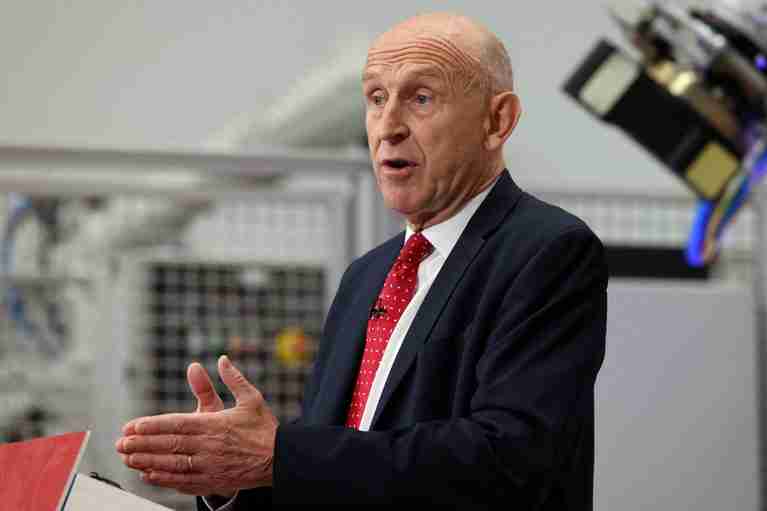
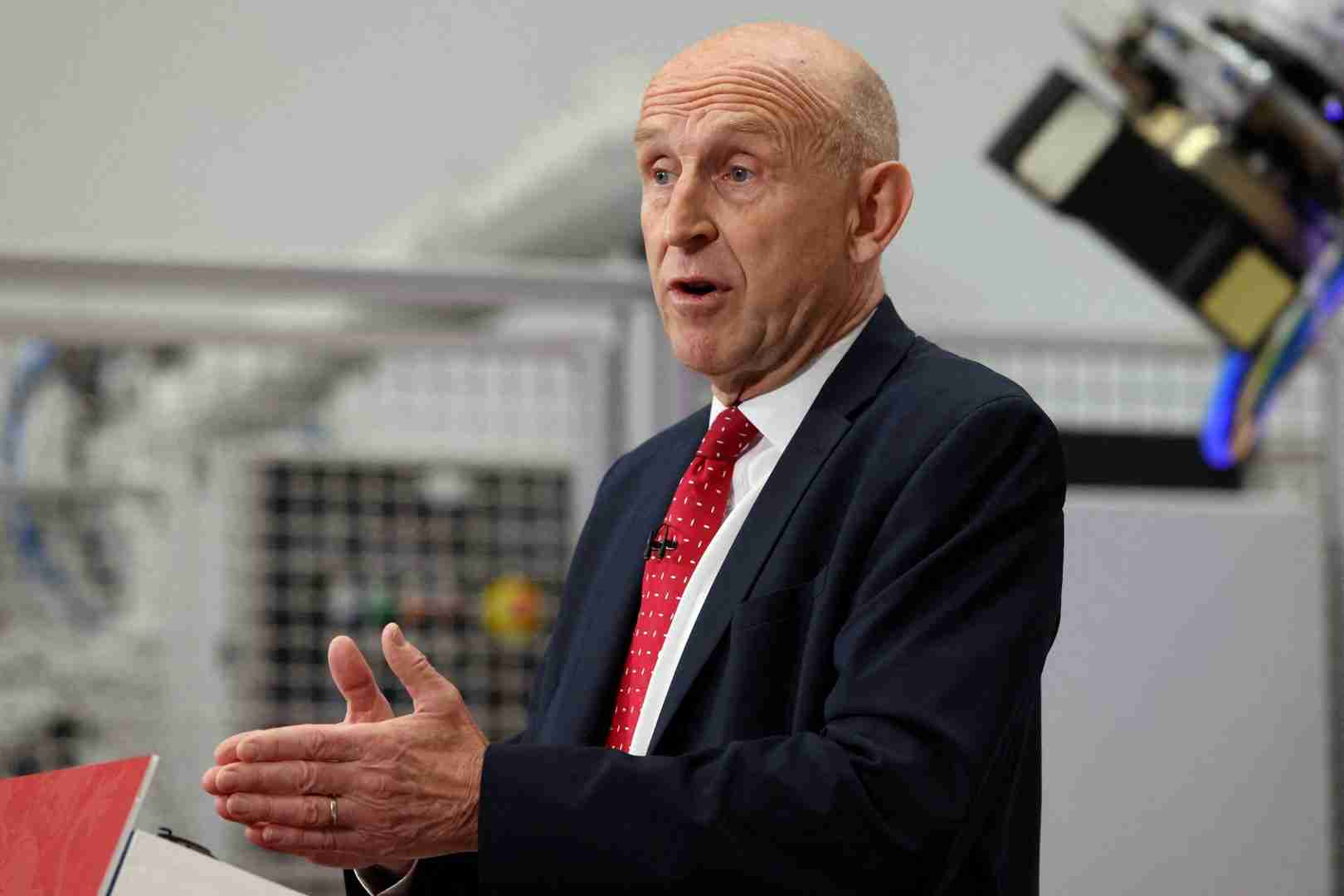
In a speech heavy on optimism but light on detail ahead of next month’s budget, Healey said Britain was entering a “new age of industrialisation” driven by technology and defence as the government seeks to revive sluggish economic growth
International News via Reuters:
Finance minister John Healey pledged on Monday to “get Britain working again”, vowing to create more jobs while bringing down borrowing and sticking to the government’s fiscal rules.
In a speech heavy on optimism but light on detail ahead of next month’s budget, Healey said Britain was entering a “new age of industrialisation” driven by technology and defence as the government seeks to revive sluggish economic growth.
Yet, he also seemed to caution the governing Labour Party at its annual conference in the northwestern city of Liverpool that the government’s room for manoeuvre was limited by high debt-servicing costs and strained public finances.
That appeared to set the tone for his October 28 budget, which officials have signalled will prioritise reassuring bond markets, with long-term borrowing costs at their highest levels since the 1990s.
HEALEY OFFERS HOPE, NEW JOBS
“I will bring fresh hope to Britain built on the rock of fiscal discipline, built on the growing economy and good work,” Healey told delegates.
“When I was first elected, I had as my first top three priorities jobs, jobs, jobs. And now, as then, I still have that burning determination. Good work, good jobs, Britain working again.”
Healey focused on the roughly one million young people not in work in Britain and said expanding jobs and apprenticeships would be central to the government’s plans.
The push forms part of Prime Minister Andy Burnham’s effort to curb a welfare bill that reached a record £324 billion ($429 billion) in real terms in the last financial year, equivalent to 11% of economic output.
Healey also backed investment in defence and technology as drivers of growth, arguing economic progress should be measured not just in statistics but in families being able to afford holidays and businesses hiring more workers.
But he offered few clues about next month’s budget beyond a firm commitment to fiscal discipline, including a pledge to balance day-to-day spending with revenue by the end of the decade.
Instead, his first conference speech as finance minister appeared aimed as much at lifting party morale as setting out policy, after Labour’s recent improvement in opinion polls following Burnham’s replacement of Keir Starmer as prime minister in July.
“The speech felt it was very much like it was a holding statement and we should check in a few months,” said one business executive on condition of anonymity. “I thought it was really disappointing.
($1 = 0.7548 pounds)
Reporting by Alistair Smout, Andy Bruce, Elizabeth Piper and Andrew MacAskill. Editing by Jan Harvey and Mark Potter
