Wednesday, November 4, 2026
Home Blog Page 393

US objectives in Iran have not changed, Hegseth says

The U.S. has carried out strikes against 7,000 targets inside Iran, and hit more than 40 Iranian mine-laying vessels and 11 submarines
International News via Reuters:

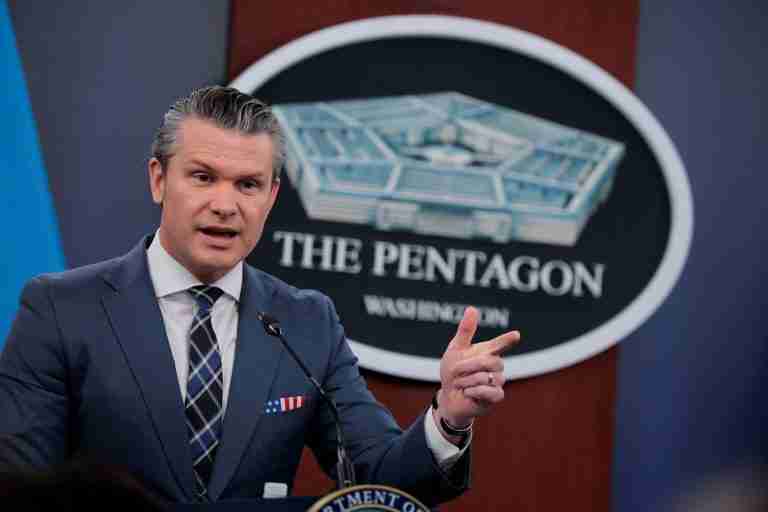
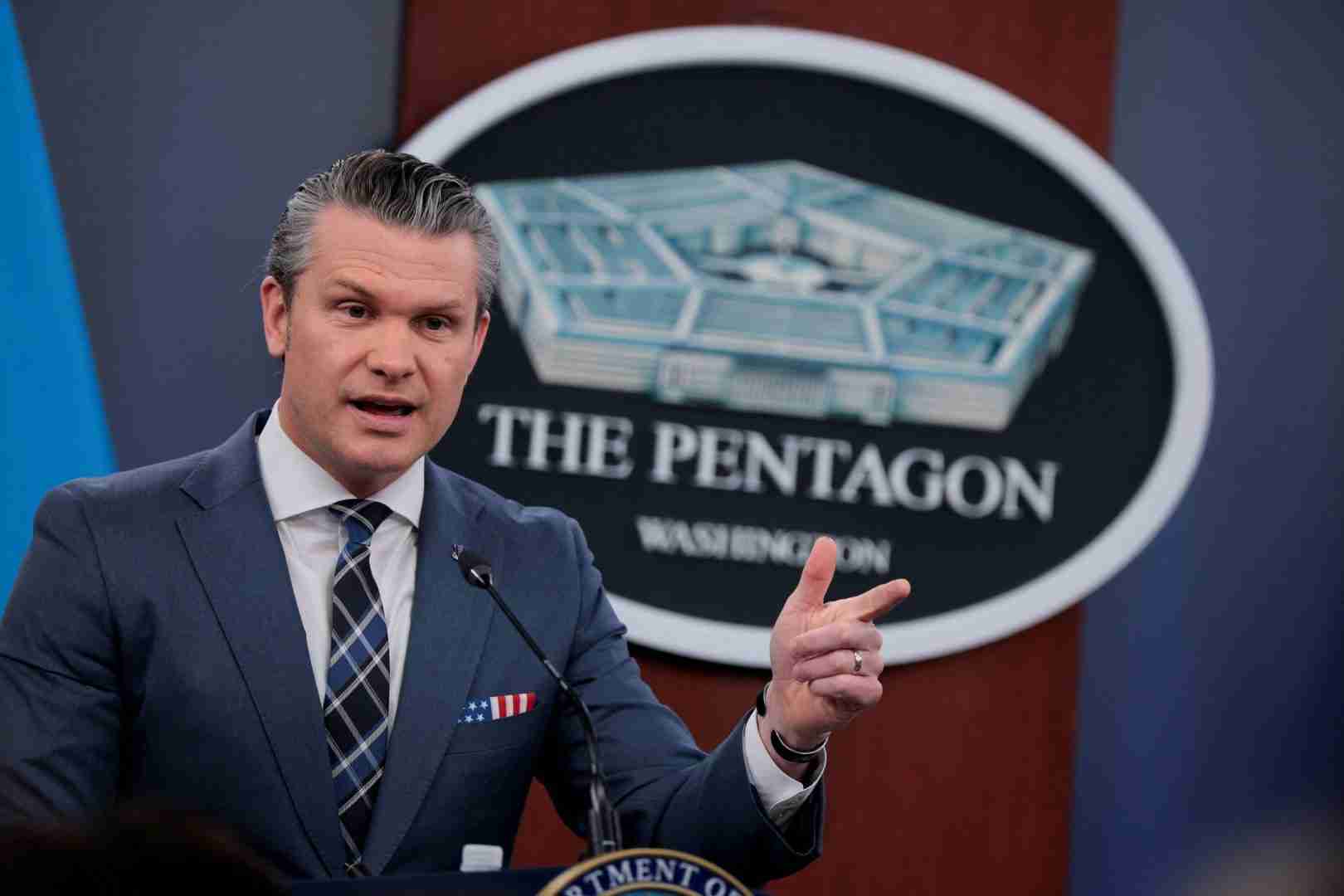
The U.S. objectives in its war against Iran have not changed since strikes started on February 28, U.S. Defense Secretary Pete Hegseth said on Thursday, and he accused the media of stirring up concerns that the U.S. risked being locked in an open-ended conflict with shifting priorities.

The U.S. has carried out strikes against 7,000 targets inside Iran, and hit more than 40 Iranian mine-laying vessels and 11 submarines.

“Our objectives, given directly from our America-first president, remain exactly what they were on day one,” Hegseth told reporters. 

“These are not the media’s objectives, not Iran’s objectives, not new objectives. Our objectives – unchanged, on target and on plan,” Hegseth added.

He spent several minutes in his opening statement criticizing the press, accusing it of trying to convince the American public that it was “spinning toward an endless abyss, or a forever war, or a quagmire.”

“Nothing could be further from the truth,” he said.

U.S. AIMS TO DESTROY IRAN MISSILE LAUNCHERS, DEFENSE INDUSTRY

Hegseth told reporters the objectives remained to destroy Iran’s missile launchers, its defense industrial base and its navy, and to never allow Iran to get a nuclear weapon.

Reuters reported on Wednesday that sources said President Donald Trump’s administration is considering deploying thousands of additional U.S. troops to reinforce its operation in the Middle East.

Options ‌for next steps include securing safe passage for oil tankers through the Strait of Hormuz, a mission that the sources said would be accomplished primarily through air and naval forces. Securing the strait could also mean deploying U.S. troops to Iran’s shoreline, sources told Reuters.

Trump, asked on Thursday whether he intended to put more troops in the region, told reporters he was not putting troops “anywhere,” but that if he was going to, he would not tell journalists.

Earlier, General Dan Caine, chairman of the Joint Chiefs of Staff, said the U.S. military remained on track to achieve its objectives and the U.S. was striking deeper into Iranian territory every day. 

But Caine acknowledged that Iran retained some missile capabilities.

“They came into this fight with a lot of weapons,” Caine said.

That became evident when the U.S. military said in a statement that a U.S. F-35 aircraft conducted an emergency landing after flying a combat mission over Iran. The military said the pilot was in stable condition.

A U.S. official, speaking on the condition of anonymity, said it appeared the aircraft had been hit by Iran, but an investigation was underway.

Some 13 U.S. troops have been killed so far in the war and about 200 have been wounded, the U.S. military said, adding that most of the injuries have been minor.

HEGSETH SAYS U.S. CONTROLS IRAN’S FATE

Iran’s attacks on energy infrastructure in response to Israeli attacks on its gas facilities marked the biggest escalation of the nearly three-week war, causing gasoline prices to surge and oil prices to rise further on Thursday. 

Reuters has reported that one of the locations where the Trump administration discussed sending ground forces was Kharg Island, the hub for 90% of Iran’s oil exports, where the U.S. carried out strikes on Friday, saying it had only hit military targets. 

Hegseth, in the press conference, cited the strikes against Kharg Island as an example of how the U.S. could control Iran’s fate, warning Iran against targeting Arab countries.

“The United States military controls the fate of that country,” he said.     

Kharg ⁠sits 16 miles (26 km) from Iran’s coast, about 300 miles (483 km) northwest of the Strait of Hormuz, in waters deep enough to enable the docking of tankers that are too large to approach the mainland’s shallow coastal waters.

“TAKES MONEY TO KILL BAD GUYS”

In a sign that the war could continue for some time, a U.S. official told Reuters the Pentagon had asked the White House to approve a more than $200 billion request to Congress to fund the war in Iran.

“Obviously, it takes money to kill bad guys,” Hegseth said, without confirming the number.

“So we’re going back to Congress and our folks there to ensure that we’re properly funded for what’s been done, for what we may have to do in the future,” Hegseth said.

The first six days of the war cost the U.S. at least $11.3 billion. That figure, from a closed-door briefing for senators, ​did not include the entire cost of the war, but was provided to ​lawmakers as they have clamored for more information about the conflict.

Reporting by Phil Stewart, Idrees Ali, Steve Holland, Katharine Jackson, Daphne Psaledakis; Editing by Andrew Heavens, Aidan Lewis, Rod Nickel and David Gregorio


Senate reform bill block draws strong reaction

The Upper House narrowly defeated the Municipalities Reform Act 2026, 6 vote to 5 votes yesterday

A senate block on plans to switch key powers from the corporations to central government has drawn strong reactions.
Yesterday, the Upper House narrowly voted down the Municipalities Reform Act 2026, which puts the issue on ice for at least a year.

Reform was designed to modernise systems and align the management of key public assets with the wider needs of the country.  
This from Zane DeSilva, Minister of Housing and Municipalities, in response to yesterday’s pushback by the Senate.

He reiterated the need to strengthen oversight, improve accountability, and ensure more consistent delivery of services for residents and businesses.

For many, however, the Municipalities Reform Act 2026 was seen as detrimental to the democratic process and a sign of government overreach. 

Minister DeSilva says while the Senate’s decision delays reform, it does not remove the need for it. Quote: “The question is not whether change is required, but how long Bermuda can afford to wait.” 

The Opposition, meanwhile, takes a very different view.  

 Shadow Housing Minister Michael Fahy said the act would have removed the right of ratepayers and residents of the Corporations to vote.

Quote: “Government should go back to the drawing board and listen to the concerns of residents and municipal ratepayers alike.”

 Urging the Minister to begin further consultation on the act, he said, quote “There is room for compromise, perhaps with some members of the Corporations appointed by way of a selection committee and others elected under the existing system with directly elected mayors,” end quote.

 For his part, Hamilton Mayor Charles Gosling welcomed yesterday’s Senate decision, describing it as an affirmation of the democratic process and local representation.

In a statement released yesterday, the mayor said defending the corporation had been a long and frustrating business.

The Mayor also acknowledged that the matter is not fully resolved.

In an interview with Bermuda Broadcasting prior to the Senate’s rejection of the act, the mayor expressed a willingness to find common ground.

Reflecting on the broader significance of the decision, the Mayor added: “Democracy is not theoretical; it is lived through participation, representation, and choice. Today’s result reinforces that those principles still matter and must continue to be protected.

“Municipal elections are now due to be held in May and I encourage all eligible residents and businesses within the City to ensure they are registered. We strongly encourage everyone to register and take part in the upcoming election.”

In his statement yesterday, the mayor rebuffed assertions that the integrity of the municipalities’ voting structure was compromised, and flatly rejected Senator Kim Wilkerson’s suggestion that individuals can cast multiple votes in a single election.  

Quote:  “There is no mechanism for double voting within the current system, and to suggest otherwise misrepresents both the legislation and the safeguards that are already in place.” 

The Government said it will consider the next steps for municipal reform, including further engagement and consideration of any available legislative options. 

Far from home, migrant children kick off own World Cup in Mexico

Hundreds of migrant and refugee boys and girls living in shelters in Mexico City have been training on makeshift pitches for a tournament to be held in late April at a sports complex in the capital

International News via Reuters:

Less than 90 days before the FIFA World Cup which will be co-hosted by Mexico, migrants are playing their own soccer tournament in the capital as thousands weigh whether to continue their journey north, return home, or settle in the Latin American country.

Since late February, wearing blue jerseys and boots provided by the European Union, hundreds of migrant and refugee boys and girls living in shelters in Mexico City have been training on makeshift pitches for a tournament to be held in late April at a sports complex in the capital.

More important than the winner, the project “Goals for Inclusion,” funded by the EU, aims to use soccer to promote integration, protection and peaceful coexistence among migrant children — who are frequently exposed to violence, disease, family separation and xenophobia.

“Sport has no borders. The ball is round here or there,” said Joel Orta, a 26‑year‑old Venezuelan migrant whose son, Matías, is part of the initiative, which is backed by the Mexico City government, the U.N. refugee agency UNHCR and the U.N.’s International Organization for Migration (IOM).

As Orta spoke, Matías, 8, tried to perform tricks with the ball and played with other migrant children in the courtyard of the shelter where they live, located in Tepito, one of Mexico City’s most dangerous neighborhoods.

Orta, who has been living in Mexico with his family for a year after fleeing the crisis in his native Venezuela, recalled that he himself took part last year in a soccer tournament promoted by the United Nations Development Programme (UNDP), where, he said, he learned that regardless of life’s ups and downs, one should “never lose hope.”

Since the start of Donald Trump’s second term in January, migrant crossings at the U.S.-Mexico border have fallen sharply. Humanitarian organizations say, however, that challenges for migrants have not stopped and that around 300,000 remain stranded in the Latin American country, some without the means to return home or unable to do so because of threats to their lives.

Locals have occasionally turned hostile towards foreigners, some migrants say, while obstacles to obtaining legal status have grown, pushing people into working in the informal economy where they often face exploitation.

“Sport is a tool for change, a tool for peace. It helps us build community, it helps us connect,” said Perla Acosta, director of the civil association Más Sueños, which is responsible for the program’s technical implementation.

“Having these integration activities allows children to get to know each other better and develop their skills,” she added, explaining that in many shelters children lack play spaces and are confined to their rooms.

Report by Diego Oré; Edited by Ana Isabel Martínez and Sonali Paul

ECB expects rate hike talks in April with move more likely in June, sources say

The ECB kept its key interest rate at 2% on Thursday and warned that the war in Iran was clouding the outlook for growth and inflation in the euro zone by pushing up the cost of energy

International News via Reuters:

The European Central Bank may need to begin discussing interest rate hikes in April and possibly tighten policy at their following meeting in June, unless the Middle Eastern conflict is quickly resolved, three sources told Reuters.

The ECB kept its key interest rate at 2% on Thursday and warned that the war in Iran was clouding the outlook for growth and inflation in the euro zone by pushing up the cost of energy.

The sources with direct knowledge of the discussion said that the recent escalation of the war made their central or ‘baseline’ scenario for the economy already outdated, so they may have to stat debating policy tightening at the April 29-30 meeting, barring a quick resolution of the conflict.

But they thought a policy move was more likely in June, when the ECB will have more information on the trajectory of energy prices and their impact on the rest of the economy.

An ECB spokesperson declined to comment.

Still, the sources noted that a hike as early as April could not be discarded, but that would require energy prices to surge even further, with one of the sources mentioning a $200 per barrel oil price as a trigger.

The ECB published baseline projections based on Brent crude at $81.3 a barrel this year and close to $70 in the following two — an assumption that some sources described as outdated with that price currently at $110.

The ECB said a severe scenario, which sees crude peaking at almost $150 per barrel by June, would likely require “tighter monetary policy”.

Reporting by Balazs Koranyi and Francesco Canepa

ECB keeps rates on hold as Iran war clouds outlook

Oil and gas prices have jumped since the U.S.-Israeli attacks on Iran began, raising the risk that higher energy costs will drive up consumer prices and depress activity across the 21-nation currency bloc

International News via Reuters:

The European Central Bank kept its key interest rate at 2% on Thursday and warned that the war in Iran was clouding the outlook for growth and inflation in the euro zone.

Oil and gas prices have jumped since the U.S.-Israeli attacks on Iran began, raising the risk that higher energy costs will drive up consumer prices and depress activity across the 21-nation currency bloc, which relies heavily on imported fuel.

“The war in the Middle East … will have a material impact on near-term inflation through higher energy prices,” the ECB said. “Its medium-term implications will depend both on the intensity and duration of the conflict and on how energy prices affect consumer prices and the economy.”

The euro zone’s central bank kept its options open, however, saying it was monitoring the war and its impact on inflation, both including and excluding energy prices, and growth.

“The Governing Council is well positioned to navigate this uncertainty,” the ECB said. “Inflation has been at around the 2% target, longer-term inflation expectations are well anchored, and the economy has shown resilience over recent quarters.”

Central banks in the United States, Canada, Japan, Britain, Sweden and Switzerland delivered broadly similar messages earlier in the day or on Wednesday.

Financial markets now expect euro zone inflation to climb close to 4% over the next year, then take years to return to the ECB’s 2% target.

Traders are pricing in two or three rate hikes by December, even as most economists still see no change, betting that the ECB would not tolerate another war-fuelled spike in inflation after being stung by Russia’s invasion of Ukraine four years ago.

With Thursday’s decision, the ECB left its policy rate at 2%, roughly matching February inflation, which pre-dates the first attacks on Iran on February 28.

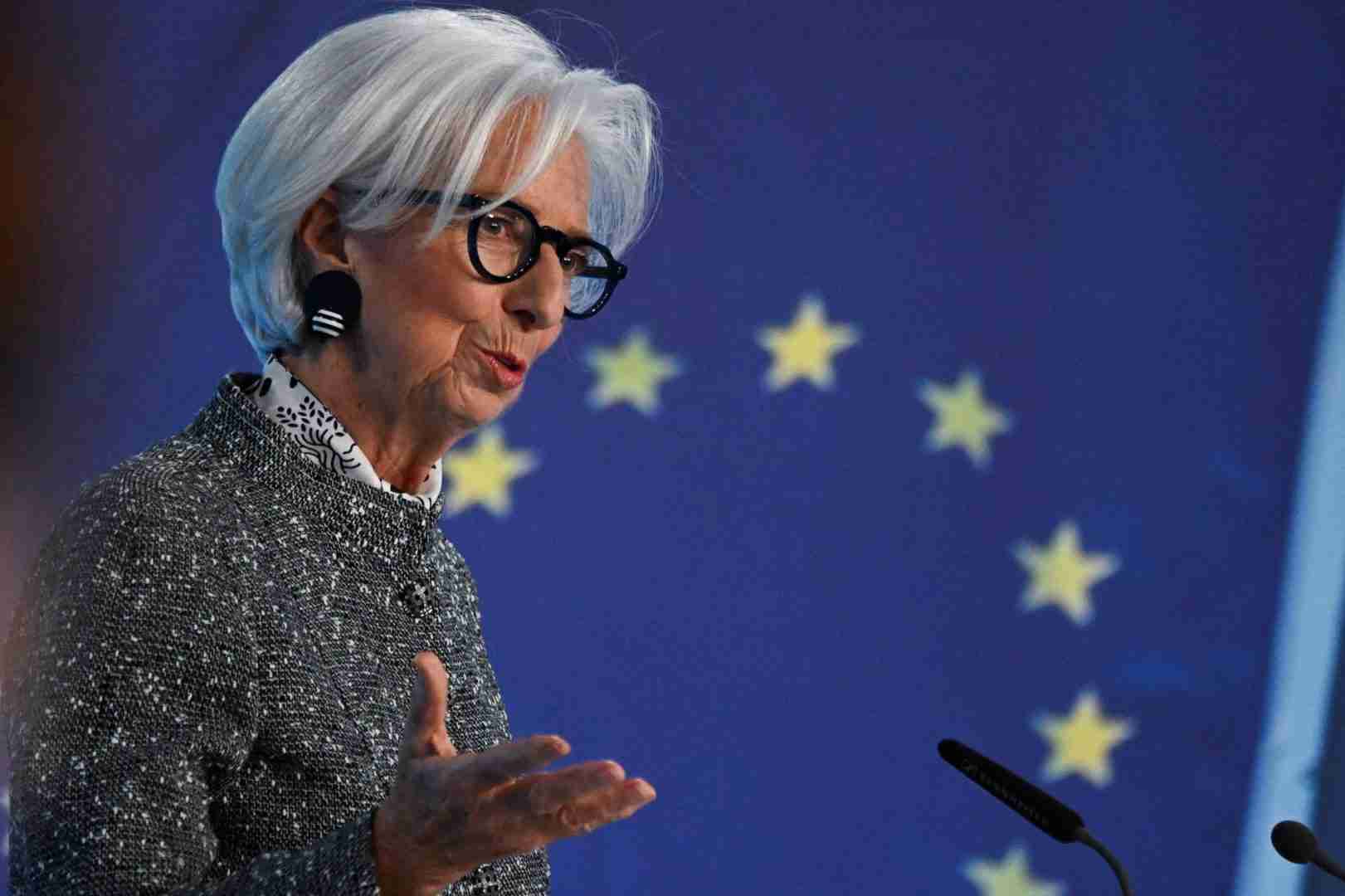
Investors’ focus will now turn to ECB President Christine Lagarde’s news conference starting at 1345 GMT.

ECB’S NEW SCENARIOS FOR GROWTH, INFLATION

The ECB’s updated quarterly projections put inflation at 2.6% in 2026, 2.0% in 2027 and 2.1% in 2028. Growth was seen at 0.9%, 1.3% and 1.4%.

But the central bank was also expected to publish an adverse scenario later on Thursday, predicated on higher energy costs.

“The implications for medium-term inflation depend crucially on the magnitude of indirect and second-round effects of a stronger and more persistent energy shock,” the ECB said.

Economists at Barclays said the ECB would raise rates in a scenario where Brent crude settled at around $100 a barrel, compared to $113 on Thursday, and natural gas at 70 euros per megawatt-hour, just above current prices.

“Headline and core inflation could increase to a point where the overshooting from the ECB’s target in the medium term would become large and persistent, leading the (ECB) to increase policy rates later this year,” they wrote in a note.

PAINFUL PRECEDENT HAS LEFT SCARS

Economics textbooks say central banks should look past temporary supply restrictions, such as the current closure of the Strait of Hormuz – a point underlined this week by the Bank for International Settlements.

But for many ECB policymakers, the Iran war will revive memories of the energy-driven surge in inflation that followed Russia’s 2022 invasion of Ukraine, which the ECB initially wrote off as transitory.

With other central banks across the developed world, it was then forced to raise borrowing costs sharply amid criticism it had reacted too late.

“The experience of the 2022 energy crisis, and consumers’ expectations still scarred from that episode, could make the ECB quicker to hike if energy pressures are sustained,” HSBC economist Fabio Balboni said.

Isabel Schnabel, a prominent anti-inflation “hawk” among ECB policymakers, has also warned about the “scars” that episode left on households and businesses. She notes an important difference, however: monetary and fiscal policies are not loose this time, which should help limit inflationary pressures.

MORE FISCAL SPENDING AHEAD?

But bond markets are already bracing for higher government borrowing in response to the Iran crisis – a shift that adds to Germany’s plans to ramp up military and infrastructure spending.

This rise in government bond yields is likely to push up borrowing costs for euro zone companies and households even before any ECB rate hike.

For now, however, the ECB is expected to tolerate this tightening of credit conditions.

“The objective at this stage has to be to prevent second-round effects – inflation expectations from rising and, in particular, manifesting themselves in wages,” Spyros Andreopoulos, founder of the Thin Ice Macroeconomics consultancy, said.

Editing by Catherine Evans

Europe and Japan ready to help steady energy prices and secure chokepoint

Countries have been scrambling to cushion the impact of soaring energy prices after Qatar reported “extensive damage” from Iranian missile strikes on Ras Laffan Industrial City

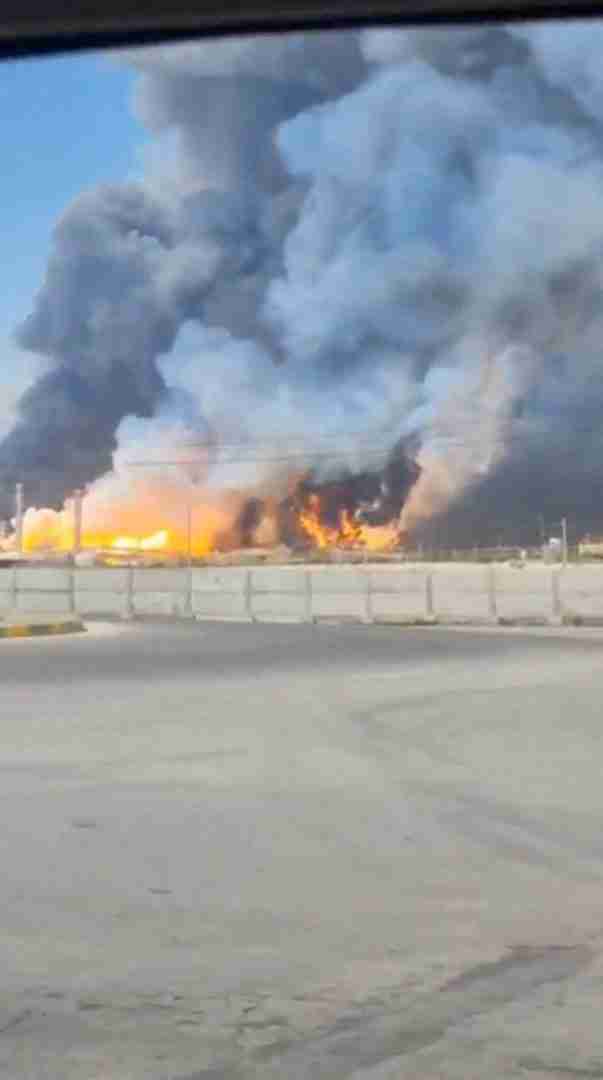
Smoke and fire rise near the South Pars gas field following an attack, amid the U.S.-Israeli conflict with Iran, in Bushehr Province, Iran, March 18, 2026, in this screengrab obtained from a social media video. Social Media/via REUTERS

International News via Reuters:

European powers and Japan said on Thursday they would act to stabilise energy markets and join “appropriate efforts” to open the Gulf’s energy chokepoint after tit-for-tat strikes on energy plants dramatically escalated the U.S.-Israeli war on Iran.

Countries have been scrambling to cushion the impact of soaring energy prices after Qatar reported “extensive damage” from Iranian missile strikes on Ras Laffan Industrial City in response to Israel’s bombing of Iran’s major gas field. Ras Laffan processes about a fifth of the world’s liquefied natural gas.

Saudi Arabia’s main port on the Red Sea, where it has been able to divert some exports to avoid Iran’s closure of the Gulf’s exit point, the Strait of Hormuz, was also attacked.

The strikes underscored Iran’s continued ability to exact a heavy price for the U.S.-Israeli campaign, and the limits of air defences in protecting the Gulf’s most valuable and strategic energy assets.

U.S. ALLIES OFFER HELP AS ENERGY CRISIS ESCALATES

With no end in sight almost three weeks into the war, and the threat of a global “oil shock” growing by the day, Britain, France, Germany, Italy, the Netherlands and Japan issued a joint statement expressing “our readiness to contribute to appropriate efforts to ensure safe passage through the Strait”.

They also promised “other steps to stabilise energy markets, including working with certain producing nations to increase output”.

The statement offered no details, but marked a significant shift after weeks of resistance by major U.S. allies to U.S. President Donald Trump’s demands they help secure the strait, intervening in a conflict with unclear objectives that they did not seek and over which they have little control.

In particular, Israel’s bombing of Iran’s South Pars gas field, which Trump said the U.S. had not known about, suggested gaps in coordination of strategy and war aims between the main protagonists.

U.S. Defense Secretary Pete Hegseth told a briefing on Thursday that U.S. objectives in the war were “unchanged, on target and on plan”.

But Director of National Intelligence Tulsi Gabbard told the House intelligence committee that U.S. and Israeli goals differed:

“…the Israeli government has been focused on disabling the Iranian leadership. The president has stated that his objectives are to destroy Iran’s ballistic missiles launching capability, their ballistic missile production capability, and their navy.”

QATAR LOSES A SIXTH OF GAS EXPORTS

QatarEnergy’s CEO told Reuters the Iranian attacks had knocked out a sixth of Qatar’s LNG export capacity, worth $20 billion a year, and that repairs would take three to five years.

Brent crude oil futures were up nearly 4.5% at $112 at 1430 GMT, having surged up to 10% before the joint statement. European near-term gas prices were up more than 15%, and have leapt by over 60% since the war began. [O/R]

Japanese and South Korean stocks fell around 3% while the pan-European index was down 2.3%, around its lowest in more than three months. On Wall Street, the Dow Jones Industrial Average was down about 1%. [.N] [MKTS/GLOB]

Fears of lasting inflation pressures encouraged both the European Central Bank and Bank of England to hold rates steady, and investors who once expected cuts were pricing in hikes by year-end. The ECB now sees 2026 inflation at 2.6%, above the 1.9% predicted in December.

At a summit in Brussels, European Union leaders sought ways to offset higher energy costs for industries and consumers already struggling with the rising cost of living.

Iranian attacks since Wednesday have also forced the UAE to shut its Habshan gas facility and set off fires at two Kuwaiti oil refineries.

Perhaps just as significantly, Saudi Arabia intercepted a ballistic missile heading for Yanbu, the port city that is the kingdom’s only outlet for crude exports since Iran in effect closed the Strait of Hormuz, through which around a fifth of the world’s crude oil and liquefied natural gas normally passes.

Israeli media reported that an Iranian strike hit oil facilities in Israel’s port of Haifa, causing damage but no casualties.

Iran’s military said strikes on Iran’s energy infrastructure had led to “a new stage in the war” in which it had attacked energy facilities linked to the United States.

“If strikes (on Iran’s energy facilities) happen again, further attacks on your energy infrastructure and that of your allies will not stop until it is completely destroyed,” spokesman Ebrahim Zolfaqari said, according to state media.

TRUMP SAYS ISRAEL ACTED ALONE IN ATTACKING GAS FIELD

Trump, politically vulnerable to rising fuel prices among his core voters, said Washington had had no advance knowledge of Israel’s attack on Iran’s gas field and that Qatar – host to the Gulf’s largest U.S. air base – had not been involved.

He said Iran had then “unjustifiably and unfairly attacked” Qatar’s LNG plant. He warned that if it did so again, the U.S. “with or without the help or consent of Israel, will massively blow up the entirety of the South Pars Gas Field”.

Yet three Israeli sources said the attack had in fact been carried out with his consent, but was unlikely to be repeated.

Israel has said sustained attacks, including the assassinations of senior figures, could weaken Iran’s government enough to trigger a mass uprising, but acknowledges there has been little sign Tehran is losing its grip.

A U.S. official and three other people familiar with the planning told Reuters that Trump was considering sending thousands more U.S. troops to the Middle East.

They could be used to help restore shipping through the Strait of Hormuz, potentially even landing in Iran or its Kharg Island oil hub.

Reporting by Andrew Mills in Doha and Timour Azhari in Riyadh; Additional reporting by Reuters bureaus; Writing by Kevin Liffey; Editing by Jon Boyle and Ros Russell

Phillips Shines as Tulane Edge Out New Mexico in Tight Encounter

Bermudian tennis standout Daniel Phillips produced a commanding performance on both the singles and doubles courts to help Tulane University secure a hard-fought 4–3 victory over the University of New Mexico.

The contest was decided by the narrowest of margins, but it was Phillips who set the tone early in the doubles competition. Occupying the number one spot alongside his partner Lance Nisbet, the duo was pushed to the limit by the New Mexico pairing of Jakub Prachar and Alberto Perez. In a high-pressure set defined by powerful serving and clinical net play, Phillips and Nisbet held their nerve to secure a vital 7–6 victory, clinching the tie-break and providing the Green Wave with crucial momentum heading into the singles flight.

Phillips then transitioned to the top of the singles lineup, where he faced a stern test against Dario Ciobotaru. Despite his opponent holding a world ranking of 1948 in the ITF singles standings, Phillips appeared unfazed and asserted his dominance from the opening game. Combining a relentless baseline game with a high first-serve percentage, the Bermudian dismantled Ciobotaru’s defense in a lopsided first set.

The second set proved to be a more tactical affair as Ciobotaru attempted to find a way back into the match, but Phillips remained composed under pressure. He ultimately closed out a convincing 6–1, 6–3 straight-sets win to secure a vital point for his team. His individual brilliance at the summit of the order proved to be the difference-maker in the overall scoreline, as Tulane continues to climb the collegiate rankings following this resilient mid-season triumph.

Hike in golf course fees explained

The Government Golf Courses today announce revisions to the membership rates and fee structures for both Port Royal Golf Course and Ocean View Golf Course. This was done following a comprehensive review aimed at ensuring the long-term sustainability and accessibility of these valued public facilities.

The Trustees of the Government Golf Courses have engaged in meaningful consultation with the memberships of both courses. This process included the exchange of proposals and counterproposals, reflecting a collaborative effort to arrive at a balanced and fair outcome. The Trustees wish to acknowledge and thank members for their constructive input and continued commitment to the success of the courses.

As publicly owned facilities, Port Royal and Ocean View Golf Courses serve a broader mandate beyond their memberships. While memberships remain an important and valued part of the golfing community, the primary responsibility of the courses is to provide equitable access to the wider public. These revisions have therefore been carefully structured to strike an appropriate balance between maintaining member benefits and ensuring that the general public can continue to enjoy these facilities.

The updated rates and policies are designed to better align with current operating costs, support the financial sustainability of the courses, and enhance the overall quality of the golfing experience. At the same time, the Trustees remain committed to preserving the value and benefits associated with membership, recognizing the important role members play in the vibrancy and success of both courses.

This initiative reflects an ongoing effort to establish a sustainable “middle ground” — one that respects the interests of members while upholding the public nature of the facilities.

The Government Golf Courses will continue to work closely with stakeholders to ensure that both Port Royal and Ocean View remain accessible, well-maintained, and enjoyable for all.

Details regarding the revised membership rates and fee structures have been communicated directly to members and will be made available to the public via the website at www.bermudagolf.bm

Rodrigues Jr. and Vieira Help Tritons Secure Fourth in Charleston

Bermudian sailors Paul Rodrigues Jr. and Jordan Vieira played pivotal roles for Eckerd College this weekend as the Tritons secured a solid fourth-place finish at the SAISA Top Six Fleet Race in Charleston.

Competing in a high-stakes environment featuring 18 boats across three divisions, the Eckerd squad navigated a grueling opening day on the South Carolina waters. The regatta began in challenging conditions, with sailors contending with outgoing tides and moderate winds of 6 to 8 knots. Paul Rodrigues Jr., alongside Avery Guck, spearheaded the Tritons’ efforts in the A Division, while Jordan Vieira teamed up with Tia Soultanakis to tackle the B Division.

The morning session was defined by consistency, as the A Division notched seven top-10 finishes and the B Division added a further six to the team’s tally. However, a midday lull in conditions forced a tactical shift. Following a lunch break, the breeze lightened significantly to 3 to 5 knots, coinciding with an incoming tide that tested the fleet’s technical precision.

As the competition transitioned from 420s to FJs for the final three sets, Eckerd sat in third place overall at the midpoint. Despite the shifting momentum, the Tritons remained composed to conclude the day in fourth position out of the six elite teams, finishing with a total of 274 points.

On an individual level, Rodrigues Jr. delivered a disciplined performance to place eighth in the A Division with 72 points. Vieira followed closely in the B Division, securing 10th place with 90 points, while the C Division pairing of Peter Miller and Peyton Elizabeth Seidle finished 13th with 112 points. The result provides a strong foundation for the Florida-based program as they continue their spring campaign against the top tier of the South Atlantic Intercollegiate Sailing Association.

Entrepreneur expands functionality of business app

A Bermudian-built digital platform is continuing to grow, offering payment solutions for local businesses. Shakeem Albouy, founder of Woi, has introduced a new feature that allows vendors to accept payments through a barcode system, making transactions more seamless for both businesses and customers. Launched in 2020, the platform has grown into a directory featuring more than 100 local businesses, helping to connect the community and support entrepreneurship across the island. Woi has also been nominated for the 9th Annual Bermuda Economic Development Corporation Business Awards. In an interview with Kendal Trott, Mr. Albouy talked about the journey, the latest developments, and advice for aspiring entrepreneurs.

Lambe Inspires Needham to Suffolk Premier Cup Final

Reggie Lambe was the catalyst for Needham Market FC this evening, scoring the decisive opening goal to help his side secure a place in the Suffolk Premier Cup Final.

In a high-stakes semi-final encounter staged at Stowmarket Town, the Marketmen wasted no time in asserting their dominance over local rivals Bury Town. The breakthrough arrived in the 4th minute following a period of sustained early pressure. A goalbound effort from the Needham frontline was initially blocked by the Bury defense, but the ball fell perfectly into the path of an onrushing Lambe, who showed clinical instincts to turn the ball home from close range.

The early strike proved to be the psychological blow Needham needed, as they controlled the tempo of the match throughout the first half. While Lambe’s clinical finish stood as the eventual winner, the victory was made comfortable in the 35th minute when Needham doubled their advantage to seal a professional 2–0 win.

Bury Town struggled to find a creative spark against a disciplined Needham backline, and despite several late attempts to find a way back into the contest, the Marketmen held firm to preserve their clean sheet. For Lambe, the performance adds another highlight to a prolific season, as he looks to add more silverware to his cabinet in the upcoming final.