Friday, November 6, 2026
Home Blog Page 479

Industry steps up pressure on EU to cut energy prices

The industries’ message was timed to land just before EU leaders gather in a Belgian castle on Thursday for an informal “retreat” to thrash out a plan for how Europe can compete economically with China and the U.S.
International News via Reuters:

Top business leaders urged the European Union on Wednesday to act urgently to bring down energy prices, saying that was key for European industries to compete with the U.S. and China.

The industries’ message was timed to land just before EU leaders gather in a Belgian castle on Thursday for an informal “retreat” to thrash out a plan for how Europe can compete economically with China and the U.S.

“The next five years will be the most challenging for Europe’s industry in many decades,” CEOs gathered in the city of Antwerp said in a written statement.

“While the situation is dire, the outcome is not inevitable. We can overcome, if you act,” they told the EU leaders, calling for a package of emergency measures to cut energy costs in Europe, and support demand for “made in Europe” products.

The statement was signed by hundreds of CEOs, including the world’s biggest chemical producer BASF and Europe’s biggest steel company ArcelorMittal, as well as several energy groups.

COSTLY ENERGY

Asked what his main message to EU leaders was, Jon Morrish, CEO for Europe of Heidelberg Materials, told Reuters: “Number one, on energy prices, that they must come down. They must take us seriously, and they must realize that that is really hampering Europe’s competitiveness.”

Cement-maker Heidelberg, whose home market is Germany, was starting to move some investments out of Europe due to high energy prices, he said.

Swiss specialty chemicals maker Clariant CEO Conrad Keijzer told Reuters: “Why is Europe so much behind compared to the rest of the world? It’s the energy situation.”

The loss of cheap Russian gas imports following Moscow’s 2022 full-scale invasion of Ukraine hiked bills for many energy-intensive industries. Congested power grids, national taxes and the EU’s CO2 emissions price also contribute to power prices – which for industries in Europe are more than double those in the U.S. and China, EU data shows.

HIGH TAXES

European Commission chief Ursula von der Leyen told the Antwerp summit that she agreed EU countries needed to better link up their power grids, among several proposals to reduce energy bills.

“While energy costs are going down, national taxes on energy are going up. And the taxes that industry pays on electricity are 15 times higher than taxes on gas. This is just wrong,” she said.

NO QUICK FIX

Yet, some companies also acknowledge there is no quick fix, in part because modernising power grids to ensure that cheaper low-carbon energy can flow freely across the bloc will take years.

The EU’s electricity system is designed so that the last power plant needed to meet total demand sets the power price. Often, that is a natural gas plant – leaving many consumers exposed to gas prices, which are significantly higher than in the U.S.

Political will to change that system is scarce. EU governments decided against redesigning the market when they updated the EU’s energy rules in 2024. They have also failed for five years to find the unanimous approval needed to reform EU-level energy tax rules to give low-carbon sources an advantage.

Philippe Kehren, CEO of chemicals multinational Solvay, said the sector now wanted leaders to intervene directly to guarantee stable power prices – potentially by setting a regulated price for industry.

“I don’t see any other option, frankly speaking. … Industries cannot cope with super-volatile, high-level electricity prices,” he told Reuters.

Reporting by Kate Abnett; Additional reporting by Jan Strupczewski and Alex Chituc; Writing by Ingrid Melander, Editing by William Maclean, Mark Porter and Aurora Ellis

Lewis storms to gold in Dubai season opener

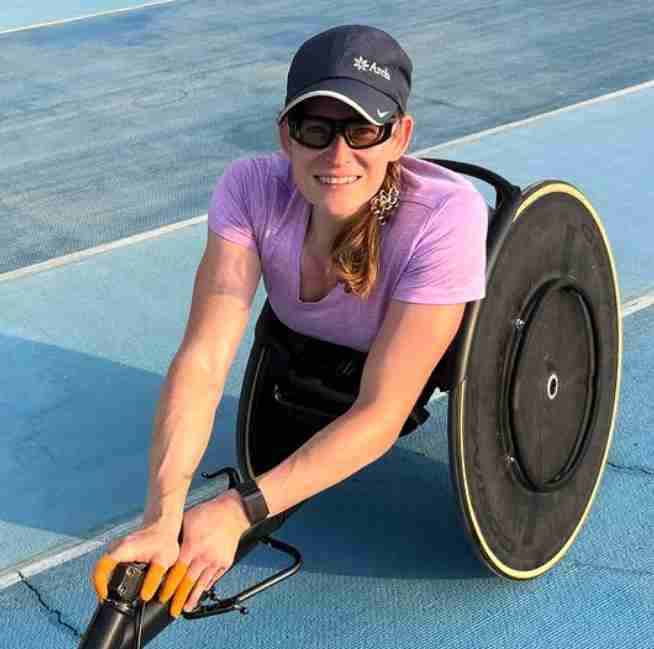
Bermuda’s Jessica Lewis has made a resounding statement at the start of the 2026 para-athletics season, storming to victory in the 100m at the Dubai World Para Athletics Grand Prix.

Competing in the 17th Fazza International Open Championship, the T53 specialist outclassed a combined field of T53 and T54 athletes to secure a dominant gold medal under the lights in Dubai.

Lewis clocked an impressive 16.32 seconds to take the tape, finishing nearly half a second clear of her nearest rival. The performance is particularly significant as it represents one of the fastest season-opening times of her illustrious career.

Despite being one of only two T53 athletes in the final, Lewis’s acceleration allowed her to power past the T54 competitors, showcasing the technical improvements made during a rigorous off-season.

Speaking exclusively with Islandstats.com following the race, Lewis revealed that a significant equipment change had added a layer of nerves to her season debut.

“I’m so happy with the race!” Lewis said. “In the off-season, I switched to using gloves with a groove in them which took about a month of training to get used to, so I was anxious to see how I would do in a race setting.”

The transition appears to have been seamless. Lewis credited a pre-competition training camp in Sharjah for helping her adjust to the time zone and fine-tune her “jump off the line”. With the first gold of the year secured, the Bermudian star remains “excited” for the remainder of the Dubai meet as she continues her journey toward major championships later this year.

Industry seeking new talent, Bermuda Airport Authority

Chair of the Board of the Bermuda Airport Authority Lawrence Scott spoke with Mark Bourne, Director Air Navigation Services

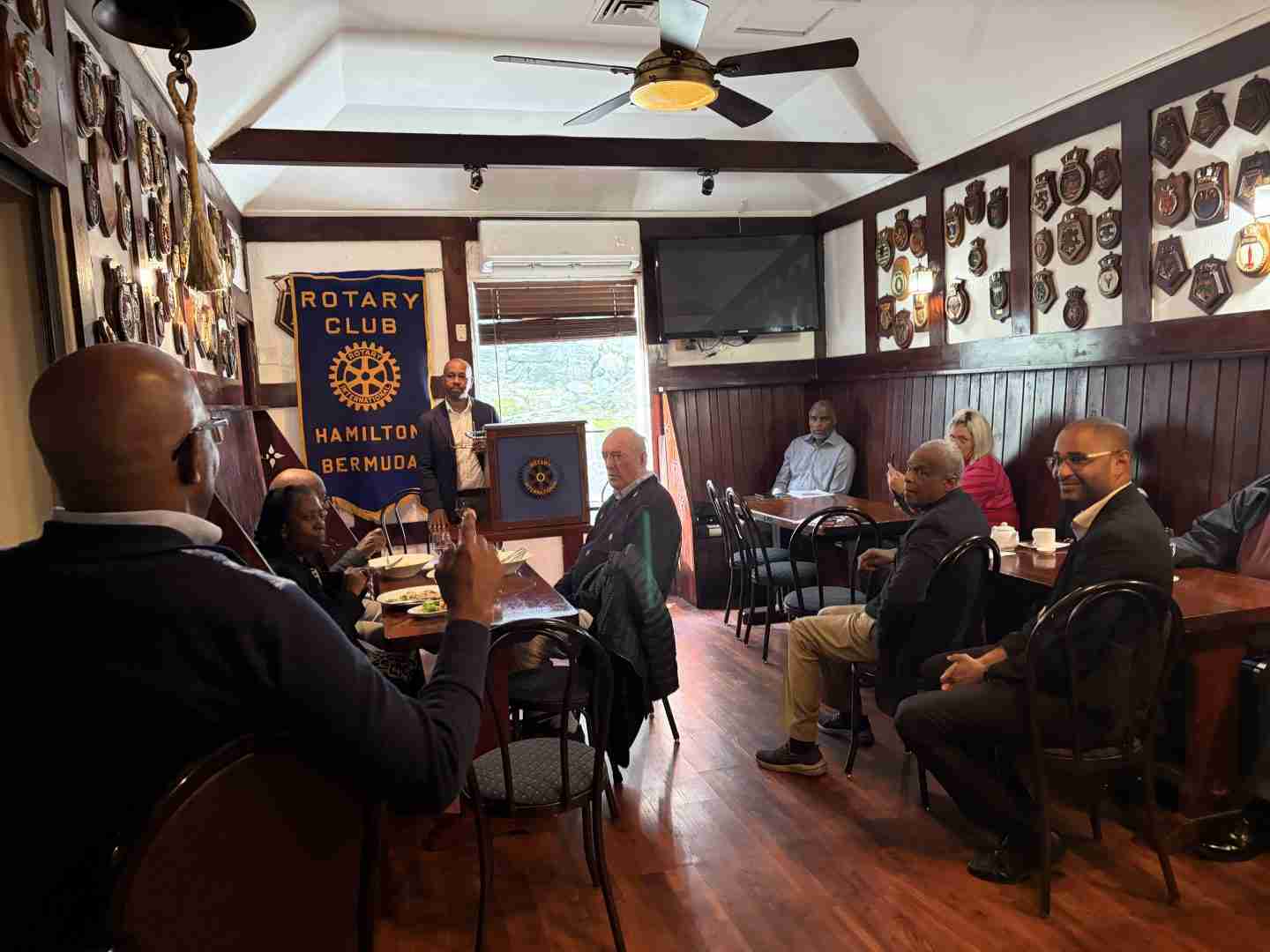
Members of the Hamilton Rotary Club gather at the Mariner’s Club. Photo: Jasmine Patterson

Bermuda’s aviation industry contributes some three quarters of a billion dollars to our economy annually.

This helps fuel efforts by the Bermuda Airport Authority to renew investment in human resources, the Hamilton Rotary Club heard on Tuesday.

At the Mariner’s Club today, Hamilton Rotarians learned about how the BAA is attracting new Bermudian talent.

Chairman of the Board of Directors at the BAA Lawrence Scott said a ‘Centre for Excellence’ unit is in development for aspiring aviation professionals.

Early STEM education, the use of flight simulators – plus a growing network of mentors – are all helping to open the skies to youngsters.


Mr. Lawrence hopes to raise awareness of the significance of Bermuda’s aviation industry.

Rego shines in Wellington with clear round success

Bermudian equestrian standout Cody Rego continued his impressive development on the world stage this week, producing a composed performance at the prestigious 2026 Winter Equestrian Festival (WEF) in Wellington, Florida.

Competing during Week 5—the high-stakes CSI5/2 Fidelity Investments week**—Rego showcased the technical precision that has made him one of Bermuda’s most exciting young prospects in the sport.

Partnered with Vico G, Rego lined up in a competitive field for the $2,000 1.30m Open Jumper II Class. Navigating a course that demanded both speed and accuracy, the pair delivered a clinical Clear Round, stopping the clock in a time of 65.704 seconds.

The performance was enough to secure a respectable 4th place overall, adding to what has been a busy month for the young rider. Rego has been a consistent presence at the Wellington International arena this season, notably representing team Oakland 12 in the Under 25 Grand Prix series earlier this month.

The result in the 1.30m class underscores Rego’s versatility as he balances high-stakes team events with individual developmental classes. Having already tasted success on the European circuit and in major US equitation finals, his partnership with Vico G appears to be flourishing under the Florida sun.

For Rego, every clear round at WEF is another step toward the upper echelons of international show jumping, as he continues to fly the Bermudian flag against some of the world’s most seasoned equestrian athletes.

Bermuda tennis hits historic heights in Davis Cup standings

Bermuda’s national tennis team has reached an unprecedented milestone, climbing to an all-time high in the Davis Cup world rankings following a historic weekend in Cyprus.

A stunning 3–2 victory over Georgia at the Herodotou Tennis Academy has propelled the island up 14 places in the global standings. Having started the tournament in 81st place, Bermuda is now officially ranked 67th in the world, amassing 215.5 points from 14 matches.

The victory was secured in dramatic fashion as veteran Wayne Montgomery fought back from a set down in the final singles rubber to clinch the tie. The result had a dual impact on the standings: while Bermuda soared, Georgia tumbled 13 places to 71st, now sitting four spots behind the Bermudians.

Bermuda now finds itself ranked ahead of several established tennis nations, including Uzbekistan (68th), Ireland (69th), and regional rivals Barbados (70th).

Michael Wolfe, President of the Bermuda Lawn Tennis Association (BLTA), hailed the achievement as a defining moment for the sport.

“Moving to an all-time high of 67th is an achievement that speaks directly to the shared tenacity, grit, and unity of these players,” Wolfe said. “They have punched so far above their weight and surpassed every expectation.”

The victory ensures Bermuda retains its status in World Group II. For young standouts like Daniel Phillips and Trey Mallory, the focus now shifts to the Group I play-offs later this year as the team looks to continue its remarkable ascent.

Hyperbaric chamber unavailable for diving emergencies this week

Hospital treating patient who requires daily use of the chamber, says Bermuda Hospitals Board

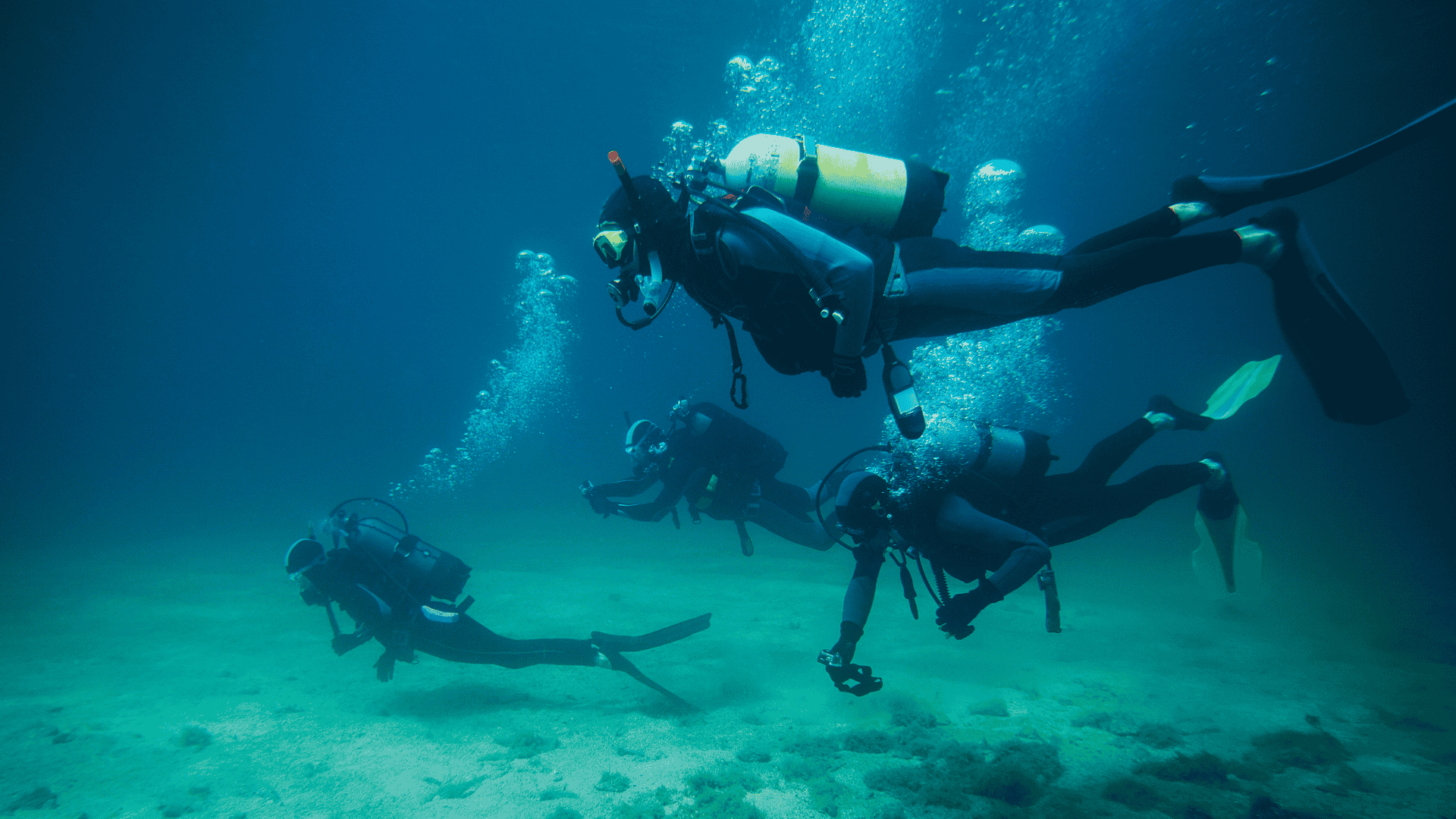
The hyperbaric chamber at the hospital will be unavailable for diving-related emergencies over the next week.

The Bermuda Hospitals Board said its hyperbaric team began emergency treatment yesterday for a patient who requires a series of sessions in the chamber throughout the week.

As a result, divers are being advised that hyperbaric treatment will not be available during this period.

The BHB said the chamber is expected to reopen to divers on Wednesday, February 18.

New BMDS production ‘an adventure into the unexpected’

The play, Donna Orbits the Moon will run February 19-21 and 26-28

The Bermuda Musical and Dramatic Society is inviting the public on an unusual voyage with its latest production.

Donna Orbits the Moon, a play written by Ian August, follows Donna, a Midwestern mother, wife and minor celebrity, not on a cosmic journey but an internal one as she struggles with a conflict she doesn’t fully understand.

Deborah Pharoah-Williams, who stars in the one-woman show, described the production as an adventure into the unexpected.

“If you haven’t seen a one-woman show before, it is not just one character,” she said. “I think some people are afraid sometimes that it is just going to be a monologue and it’s not. The characters come to life through this person.

“We have wonderful lighting, projections. You really go on a journey and it is going to be quite an experience for everyone.”

Mrs Pharoah-Williams said that, as an actress, the show offered her a rare opportunity to delve into the shoes of a deep and dimensional character.

She said: “Oftentimes women’s roles, especially after a certain age, are not as meaty as the male roles, so this is a wonderful opportunity, but it’s a character that is relatable to anybody.

“I don’t want to give too much away, but it goes into families and relationships and a little bit of everything. Something is going on with Donna, and we have to find out what.

“There is this conflict between being in a polite society, being a good little church goer and a baker and a good mother and then having these moments where she is totally out of character.”

Playwright Ian August said the show emerged through a writing exercise as a “love letter” for an actress he had worked with on a few previous projects.

He said: “I wrote the first two scenes for an open mic at a local theatre, and the reception was so positive that I had to write the rest of the play.

“I will say, when I wrote the opening pages, I didn’t know myself where it was going. The play is about a woman trying to solve her own mystery and that’s absolutely how I went about writing it.

“Why is Donna so angry? Why is she hearing that particular voice in her head? I didn’t know, either but I wanted to find out.”

Mr August said that the play was written in a turbulent time in the US, adding: “Donna is living in that world, a world in which it might have been easier to try to make sense of your own life rather than face the world outside.

“I think that idea still resonates today. Donna Orbits the Moon is a play about hiding, more than anything else. It’s a play about trying to maintain a sense of personal control even as the winds rage outside.”

Mr August said he was thrilled for the show to come to Bermuda after the warm welcome he had received from the island and BMDS.

“I hope, more than anything, that people walk away from the theatre thinking about the things in their own lives they may be too afraid to face, or acknowledge, or recognise, and use Donna’s story to help them work through those things,” he said.

“And I also hope they fall in love with this funny, quirky, lovable woman from the Midwestern US. And maybe, if the reception to her is warm enough, BMDS will want to see her come back, and then I can find my way back to Bermuda again.”

The play is directed by Nicola Flood and produced by Kate Farmer. It runs from Thursday to Saturday at 8pm for two weeks: 19, 20, 21 and 26, 27, 28 February. Tickets are $35 from www.ptix.bm/donna

European asset managers tumble as AI disruption jitters spread

Investors have become increasingly anxious that AI-first startups can automate complex tasks currently done by humans and undermine existing business models

International News via Reuters:

Shares of European money managers fell sharply on Wednesday following a steep selloff in U.S. rivals, the latest firms to be swept up in investor concerns that artificial intelligence will upend established businesses.

Investors have become increasingly anxious that AI-first startups can automate complex tasks currently done by humans and undermine existing business models.

Shares in some of Europe’s biggest asset managers, including Amundi, DWS Group and Schroders were all down around 2-3% on the day. The biggest falls were seen at wealth managers, with Britain’s St James’s Place dropping 11%, while Quilter shed 5% and Rathbones fell 4%.

The falls in Europe came after shares in U.S. brokerages tumbled on Tuesday, with analysts attributing the moves to wealth management startup Altruist introducing AI-enabled tax planning.

“We expect this to reignite the man vs machine debate in delivery of financial advice,” analysts at RBC said in a note.

The RBC analysts added they felt the selloff in UK wealth managers overlooked the value wealth advisers could bring, noting that the Altruist product appeared to be aimed at helping financial advisers rather than replacing them.

Software companies’ shares globally also suffered a sharp selloff earlier this month on similar investor concerns about the impact of new AI products.

A gauge of European financial services shares was last down 1.6%.

Italian asset managers’ shares were also heavily hit, with Banca Mediolanum and Azimut down 6% and 4%, respectively. Other big decliners on Wednesday included Generali which shed 7%, FinecoBank dropped 8%, as well as online trading platform Swissquote which fell 5%.

Reporting by Danilo Masoni in Milan and Iain Withers in London, additional reporting by Romolo Tosiani, Giancarlo Navach, Enrico Sciacovelli; Editing by Amanda Cooper and Emelia Sithole-Matarise

WTO chief urges members to discuss core MFN rule as reform debate grows

WTO members are considering a programme of reforms ahead of a ministerial conference in Cameroon in March

International News via Reuters:

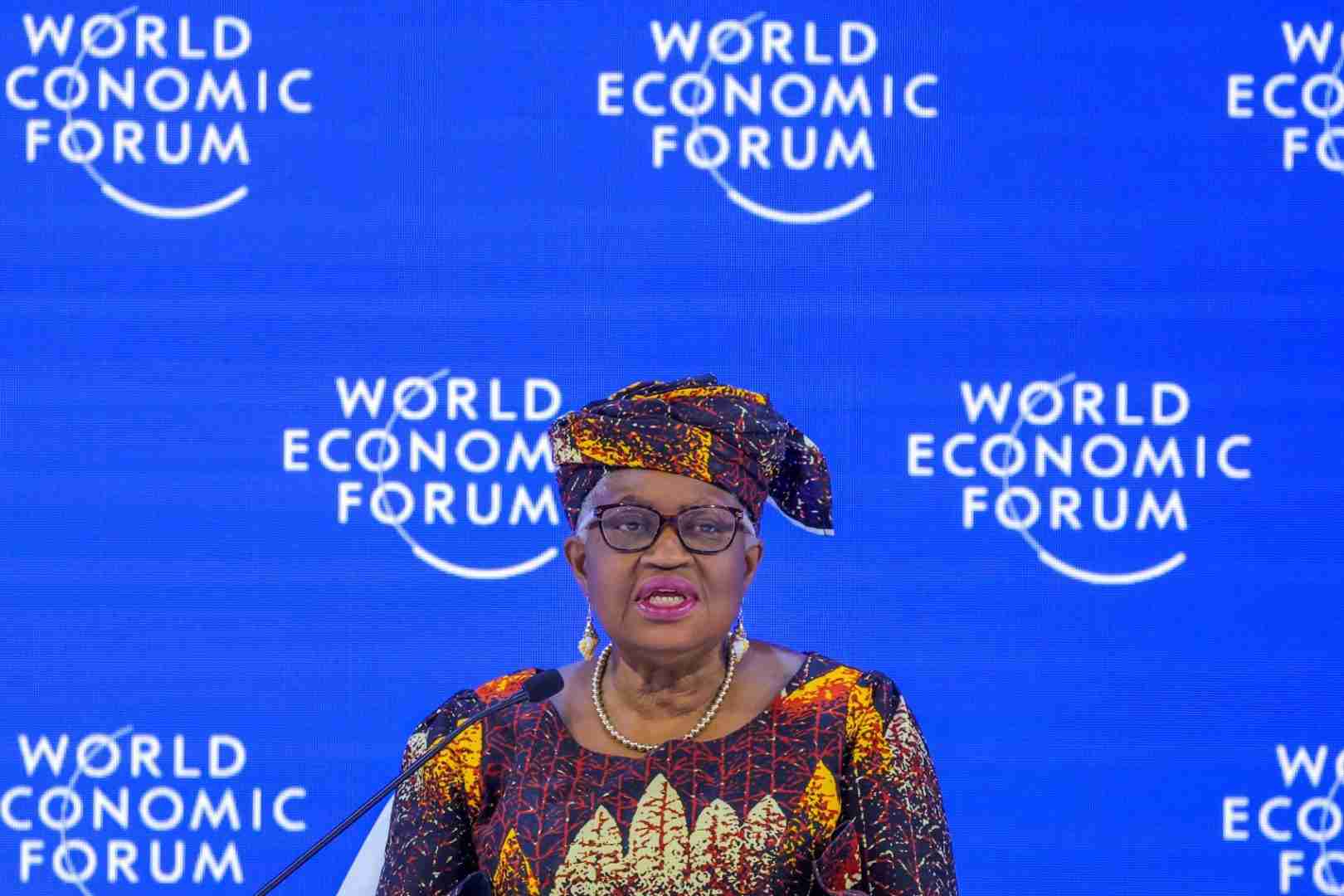
The head of the World Trade Organisation on Wednesday urged members to consider major reforms and hold discussions on its core Most Favoured Nation concept, as trade ructions threaten the global trade watchdog’s relevance. 

“The status quo is not enough,” Ngozi Okonjo-Iweala told reporters in Geneva.

“One should never be afraid to engage on the issues of the day, including foundational principles, especially at a time when you’re trying to in a world of uncertainty and geopolitics, you should have a conversation,” she added in response to a question about MFN.

“I believe ministers should have a conversation that looks at these key issues… Maybe then ministers will have a chance to reaffirm or not reaffirm, as the case may be,” she said. 

WTO members are considering a programme of reforms ahead of a ministerial conference in Cameroon in March, amid concerns that future global trade could be decided outside the 30-year-old watchdog unless it reforms itself quickly.

Global commerce was rocked last year after U.S. President Donald Trump unleashed sweeping tariffs on global trade partners, and companies are having to struggle with a rapidly shifting landscape.   

The U.S. said in a position paper on WTO reforms in December that MFN – one of the organisation’s foundational principles -was no longer suitable in a modern trading system, and favours moving towards a system where members can apply differentiated, non-MFN, and reciprocal trade measures.

In an opinion piece in the Financial Times in January, the European Union’s trade commissioner, Maros Sefcovic, also said members should question whether MFN remains fit for purpose. 

The MFN principle requires WTO members to treat others equally. The share of global trade conducted under MFN terms declined from about 80% to 72% since Trump imposed higher import tariffs on most trading partners, according to WTO data.

Sefcovic said countries should be allowed to change their tariffs more easily when their economies are threatened, adding: “Access to lower tariffs cannot be unconditional: it must be earned through stronger, credible commitments to the core principles of free and fair trade.”

Reporting by Olivia Le Poidevin; editing by Matthias Williams

‘Consultation is not optional,’ says Teachers’ Union

BUT criticises Ministry of Education for failing to meet directly with teachers on proposed reforms

The Bermuda Union of Teachers (BUT) is deeply concerned by the Ministry of Education’s continued lack of meaningful consultation with teachers regarding recent education reform proposals.

Following a meeting held yesterday with the Premier, it has become clear to the BUT that the Minister of Education does not intend to engage in direct consultation with teachers on matters that directly affect their professional practice and working conditions. The Union strongly reiterates that consultation is not optional – it is a fundamental obligation clearly outlined in the BUT’s governing documents and long-standing industrial relations principles.

Consulting with school principals, while important, does not constitute consultation with teachers. Teachers are the professionals working daily in classrooms, and their voices must be heard directly, not filtered through management structures. Meaningful consultation requires open dialogue with teachers themselves, through their duly recognized representative body.

The BUT is particularly concerned that the Ministry of Education has failed to respond to requests from the Union and from parish primary schools seeking the opportunity to provide feedback on the reform proposals circulated during the week of January 19th. Now, more than three weeks later, teachers have received no formal response, or indication of when, or if, such engagement
will occur.

We are also disappointed to learn that the Minister has indicated she will not respond directly to teachers, advising instead that teachers should communicate through their line managers. This position has contributed to widespread confusion and frustration across the system. At a time of significant proposed change, the Minister and her team should be taking every opportunity to meet
directly with teachers and other affected groups to clarify intentions, listen to concerns, and build trust.

The lack of consultation – both prior to the release of the proposals and in the weeks following – undermines confidence in the reform process and disregards the professional expertise of teachers. Education reform cannot succeed without the active involvement of those who deliver instruction to this country’s students every day.

The Bermuda Union of Teachers once again calls on the Ministry of Education to honour its obligation to consult, to engage directly with teachers in a timely and transparent manner, and to ensure that any proposed reforms are informed by those with firsthand classroom experience. We do not believe that this is too much to ask.

European defence needs more clarity to avoid wasting time and money, industry says

European countries have rushed to boost defence spending since Russia invaded Ukraine in 2022 and U.S. President Donald Trump made clear they should expect less U.S. support through the NATO military alliance

International News via Reuters:

European politicians need to provide more clarity on who should do what to boost the continent’s defences, or risk wasting money due to slow decision-making and overlapping projects, a leading figure representing Europe’s defence companies has said.

European countries have rushed to boost defence spending since Russia invaded Ukraine in 2022 and U.S. President Donald Trump made clear they should expect less U.S. support through the NATO military alliance.

Alongside national governments and NATO – the long-dominant players in European defence policymaking and funding – EU bodies such as the European Commission and the European Defence Agency have become increasingly involved in the sector in recent years.

Many of their initiatives seek to fill gaps in Europe’s defences such as counter-drone systems, reduce reliance on the United States and encourage joint procurement of weapons.

“It’s a bit of an alphabet soup of organisations that have a role,” Camille Grand, secretary-general of the Aerospace, Security and Defence Industries Association of Europe, told Reuters in an interview.

“We don’t have yet a clean governance for all of that, to define who does what and how decisions are taken,” said Grand, speaking at the Brussels office of his organisation, which represents more than 4,000 companies in 21 countries.

EU GETTING MORE INVOLVED IN DEFENCE SECTOR

Recent EU initiatives include Security Action for Europe, a 150 billion euro loan scheme for defence spending, the European Defence Industrial Programme to boost the sector and a Defence Readiness Roadmap to get the continent ready to defend itself by 2030.

“It all boils down to getting a little more clarity on: How do we govern this necessary collective effort to deliver capabilities faster?” Grand said.

He highlighted air and missile defence as an area that would benefit from more clarity, as projects and initiatives from different bodies have emerged to protect against missiles, drones and other threats.

Some European officials also see a need for greater coordination. European Defence Commissioner Andrius Kubilius has called for the establishment of European Security Council, which could include countries outside the EU such as Britain in some decisions.

But EU foreign policy chief Kaja Kallas has expressed scepticism about the idea. “I don’t think another institution will actually make it easier,” she told reporters in Brussels on Tuesday.

Reporting by Andrew Gray; Editing by Alex Richardson